Well-prepared, we start our tour for Ha'ena State Park. Weeks ago, I booked the tickets for the park with time slots, which are sold out within 30 seconds. We pack food and drinks and arrive at the park gate at 9 AM. There, we are informed that due to heavy rainfall, the hiking trails are closed. We wanted to hike at least 6 kilometers, possibly even 12 kilometers.
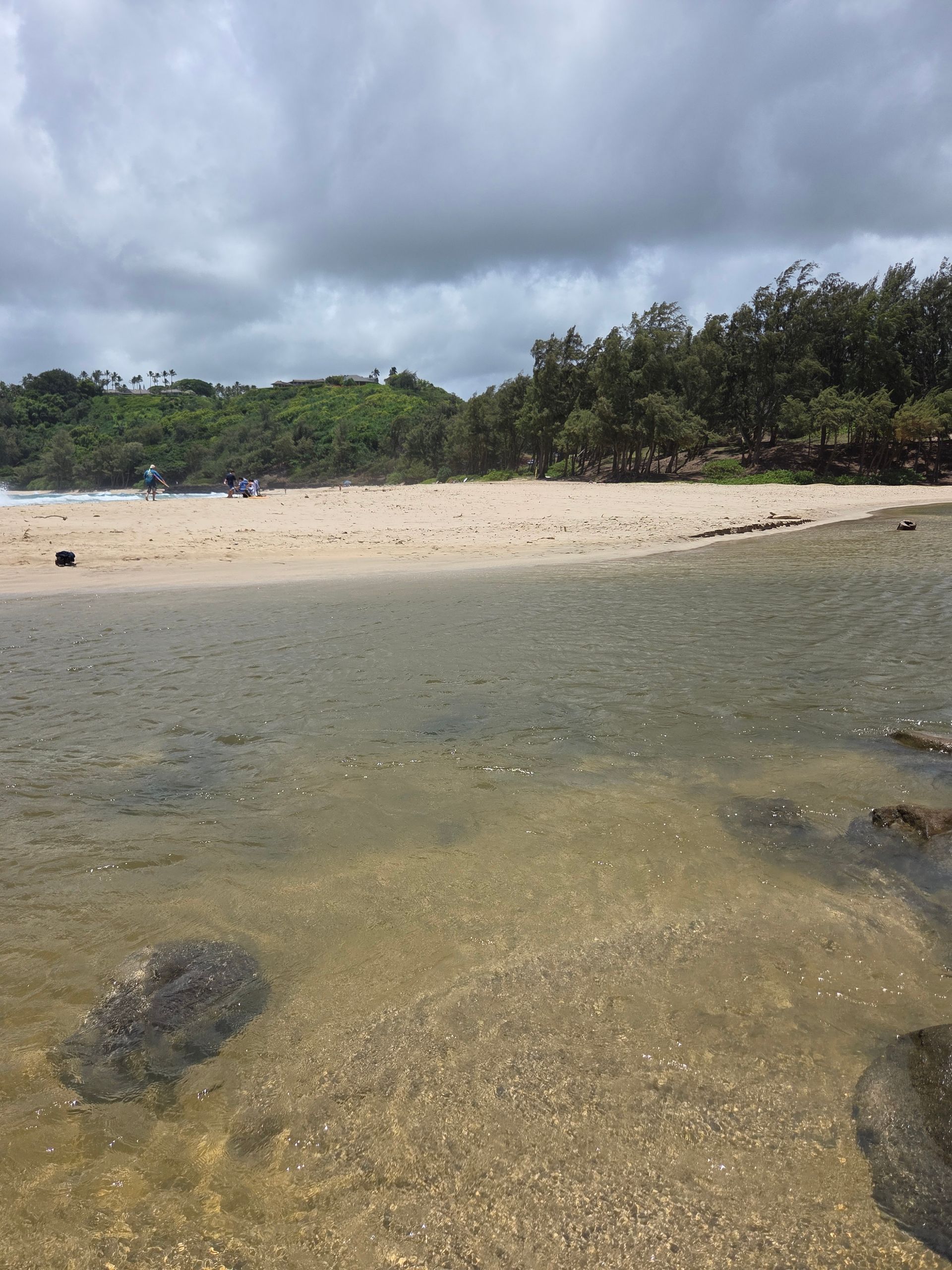
Too bad, I was looking forward to this hike on the Napali Coast. We now drive 30 minutes to Kilauea Bay. Our hike to Mokolea Point begins directly at the idyllic Kahili Beach. The waves are high, and swimming here seems too dangerous. There are lifeguards at many beaches, but none can be found here.
The special thing about this route: The path starts with a little cooling off. To reach the actual trail, one must first wade through the mouth of Kilauea Stream. At low tide, the water is wonderfully refreshing and comes up to about the waist. First, Erik wades through the stream. Since David isn't tall enough, René carries him across. I follow the two. The current is strong, and it takes some skill not to fall. This is only possible at low tide and in good weather.
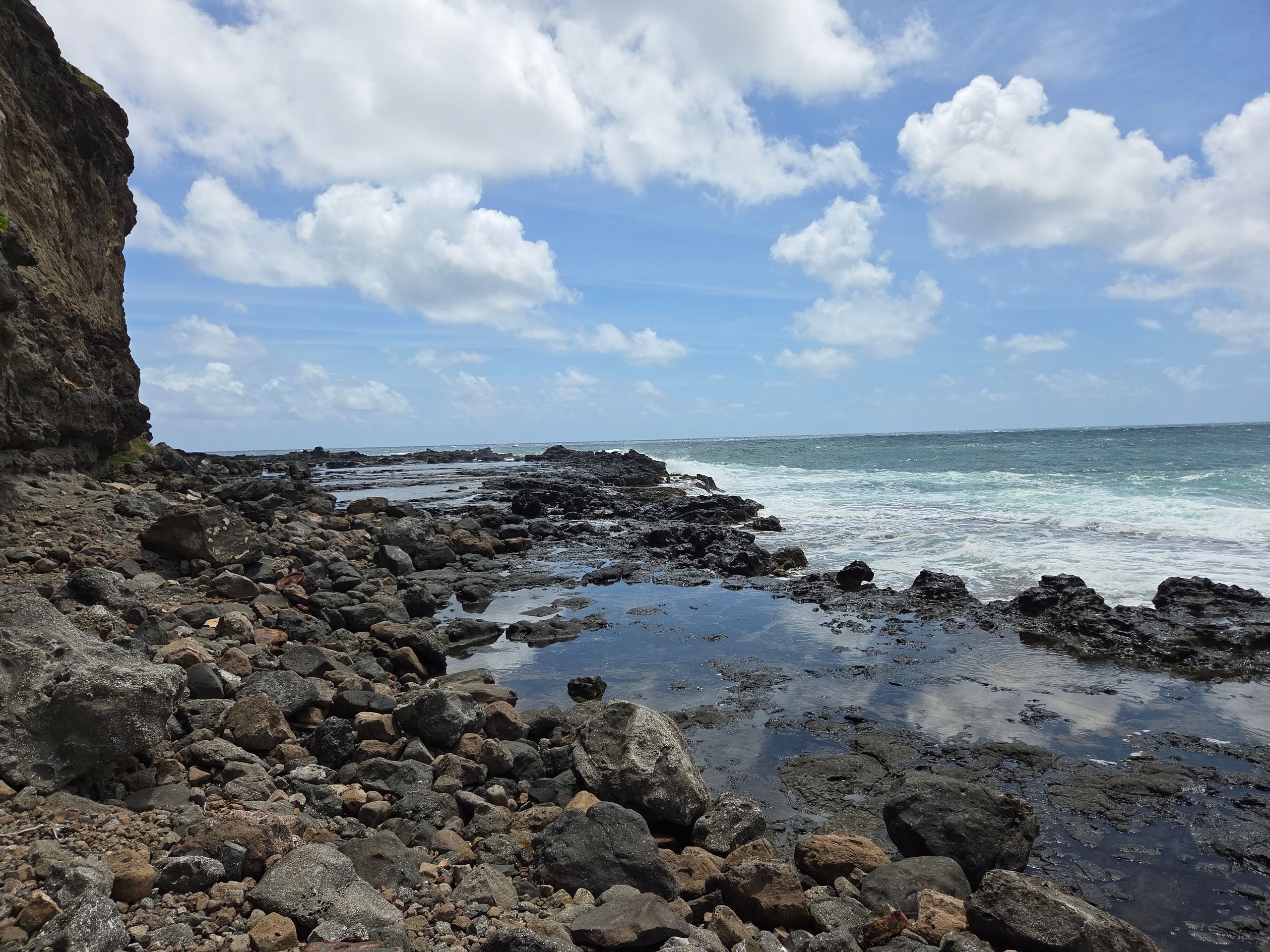
On the other side of the river, a short path leads up the bank to the cliff plateau. From there, you follow a pleasant, unpaved path along the coast. It is a nesting zone for Red-tailed Tropicbirds and Great Frigatebirds. We see some birds nesting in the reeds. We don’t want to disturb them and quickly move on. Then we reach the deep black, solidified lava rock, which shapes the entire picture.
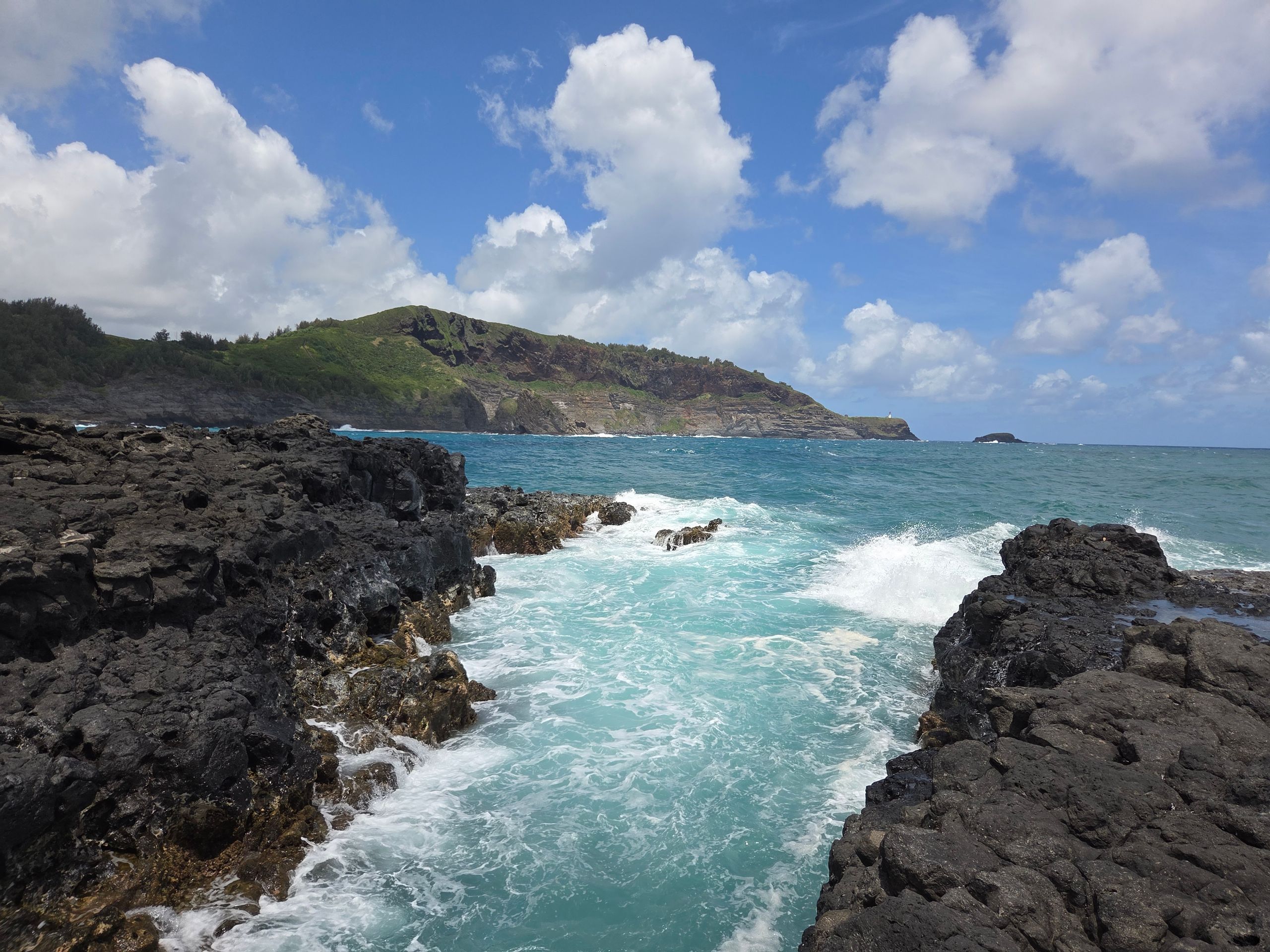
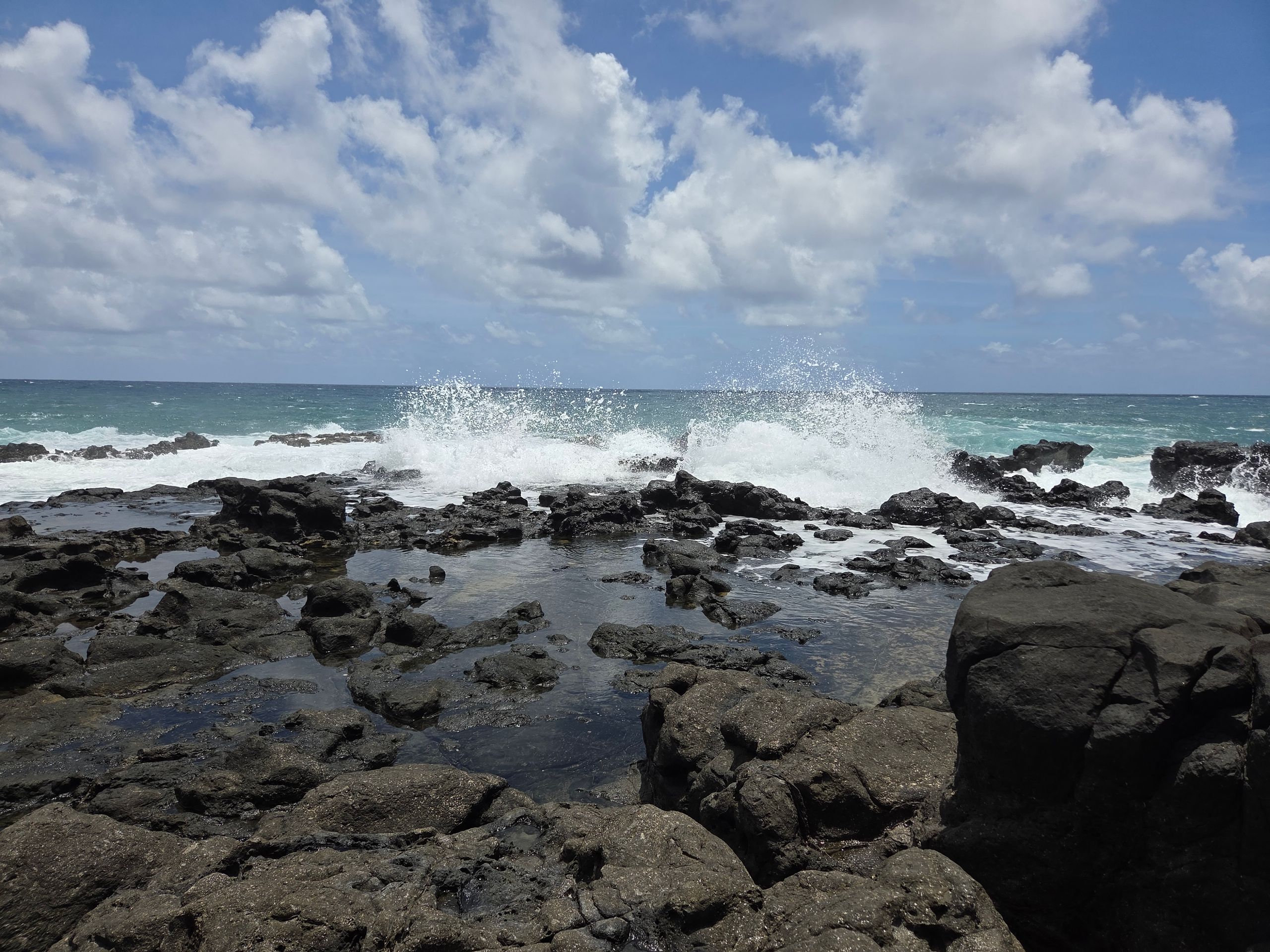
Walking on this terrain is a real experience but also feels a bit like an expedition on Mars. The volcanic rock is extremely uneven, sharp-edged, and interspersed with bizarre formations, cracks, and small crevices. Every step here requires concentration and sure-footedness.
The contrast is simply spectacular: Under our feet, the pitch-black lava, above us the majestic seabirds in the updraft, and right in front of us, the deep blue Pacific Ocean, whose white spray incessantly lashes against the dark rock. Upon reaching our destination, we stand on a huge platform of volcanic rock, where, depending on the season and tides, fascinating natural tide pools (Tidepools) have formed. We eat our lunch here and look at the lighthouse. It’s wise to keep an eye on the sea, but it’s low tide and the water is still far away. Unfortunately, one cannot walk around the entire Kilauea Bay, as the lava rock partially ends and the cliffs are too high. So we turn back. The kids swim in Kilauea Stream, and we wade through the water.
After our rough coastal adventure at Kilauea Bay, today's program was relaxation and snorkeling. Our destination: Anini Beach. The internet and many travel guides claim this beach is the absolute top spot for snorkelers on Kauaʻi. Protected by the longest and widest outer reef in Hawaii, reports promise a calm, fish-rich lagoon.
However, the reality on site was quite sobering.
Yes, the beach itself is beautiful, wonderfully quiet, and perfect for relaxing in the shade of the trees. But as soon as you glide into the water with a snorkel mask, disappointment follows. The way out to the reef was a real struggle. The wind whipped around our ears and whipped up the water. To make matters worse, there was an unexpectedly strong current that we had to fight against constantly. It was extremely exhausting to even paddle somewhat close to the reef – there was no trace of relaxed drifting.
When we finally made it, exhausted, another disappointment followed: Where colorful coral gardens are expected, you are greeted with extensive stretches of gray, lifeless, and destroyed coral structures. The underwater world also felt empty – almost no trace of the typically colorful fish schools of Hawaii was to be seen.
What is the reason for this? Due to the extremely shallow reef, the water in the lagoon heats up significantly at low tide, which has led to massive coral bleaching in recent years. Additionally, during rain, a lot of soil washes off the cliffs into the water, promoting algae growth and blocking the remaining corals from sunlight. Consequently, the fish retreat far to the outer reef edge. But right where the waves break, the current can quickly become uncomfortable and dangerous even for experienced swimmers. We quickly decide to turn back, sunbathe a bit, and then return to our accommodation. There, we use the pool and play Cornhole together. A throwing game where filled bags must land for points on a sloped platform or directly in the hole.
At a glance
Automatically extracted from the post
Length of time
1 Day
Accompaniment
With family
Mood
AdventurousRelaxing
Highlights
Sperrung der Wanderwege im Ha'ena State Park wegen starker Regenfälle
Wanderung am Mokolea Point ab Kahili Beach
Schnorcheln am Anini Beach
Cornhole und Pool an der Unterkunft
Equipment
Essen und Trinken
Topics
NatureBeachAdventure
die_labis_on_tourLike a newsletter: every new post arrives via email.
Answer (2)
3 months ago
Oh , das ist aber schade, dass ihr die Korallen nicht in ihrer Pracht sehen konntet und die Fische auch nicht. Höchste Zeit mehr zu tun gehen die Erderwärmung.
Liebe Grüße
Anna-KatharinaBy die_labis_on_tour3 months ago
Das habe ich mich bei. Schnorcheln auch gefragt, welchen Anteil der Zerstörung hat der Mensch und vielleicht auch ich gerade... Lg