
Himeji - A Castle and Its Garden
Yesterday there was once again no blog entry – simply because it was a rather uneventful travel day. We were still in Fukuoka, checked out early, and used the remaining time to do...

Published: 22.12.2025
Today, the plan was a day trip to one of the most historically significant places in Japan – to Hiroshima, the city that was targeted by an atomic bomb during World War II.
Relatively soon after getting up, we set off and reached Hiroshima after about two hours of subway and train travel. Then we headed directly to the A-Bomb Memorial Garden.
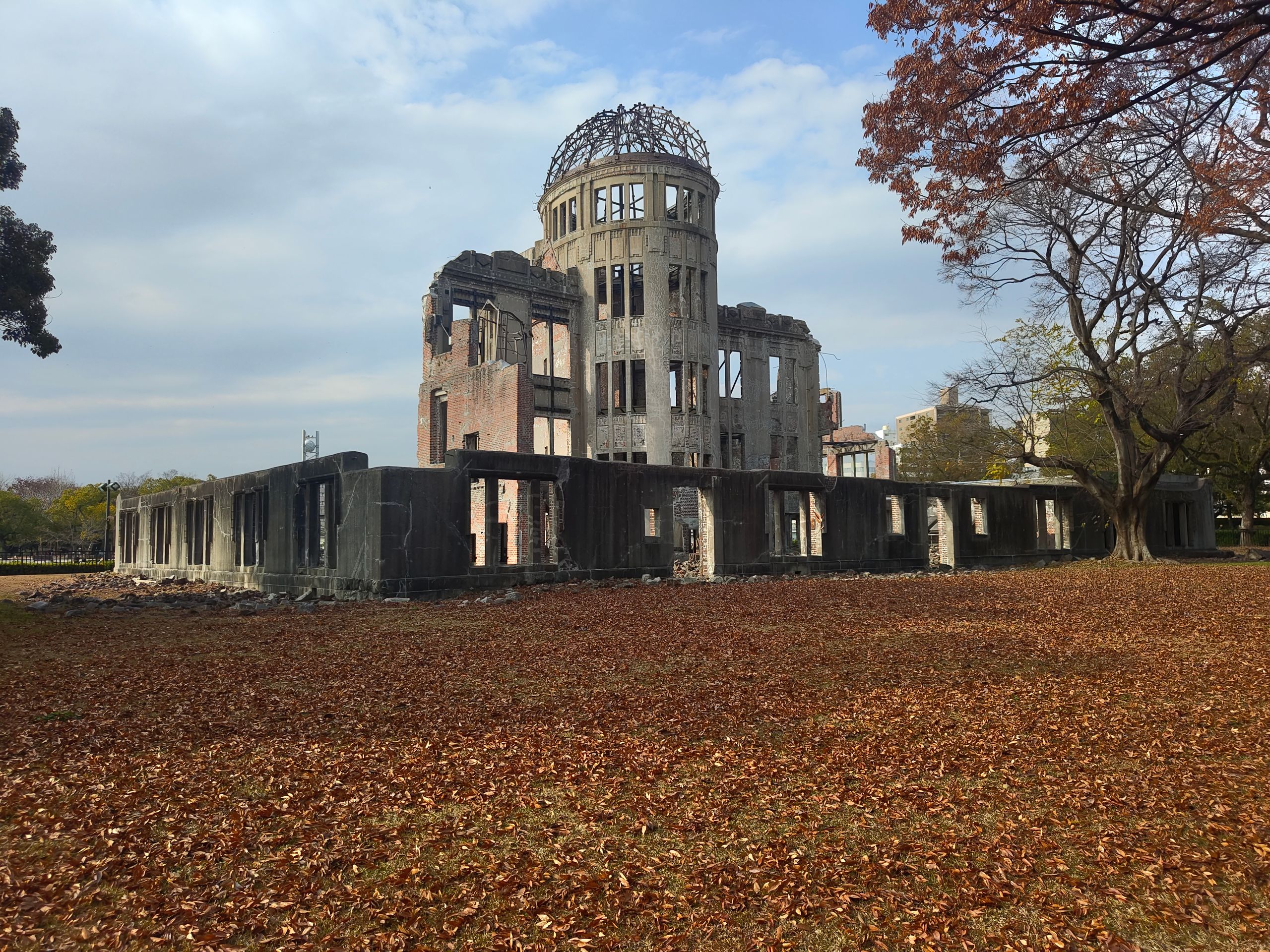
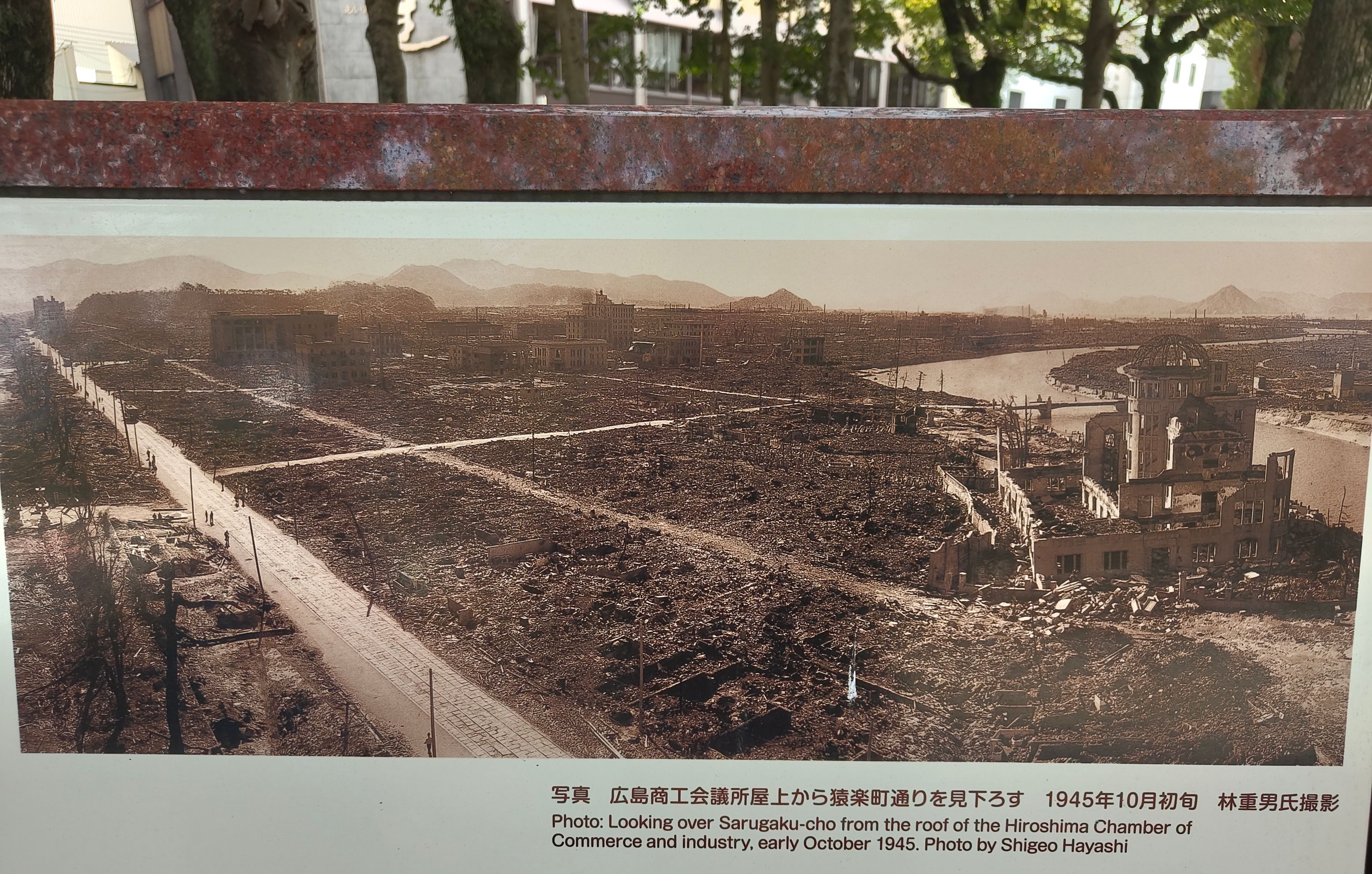
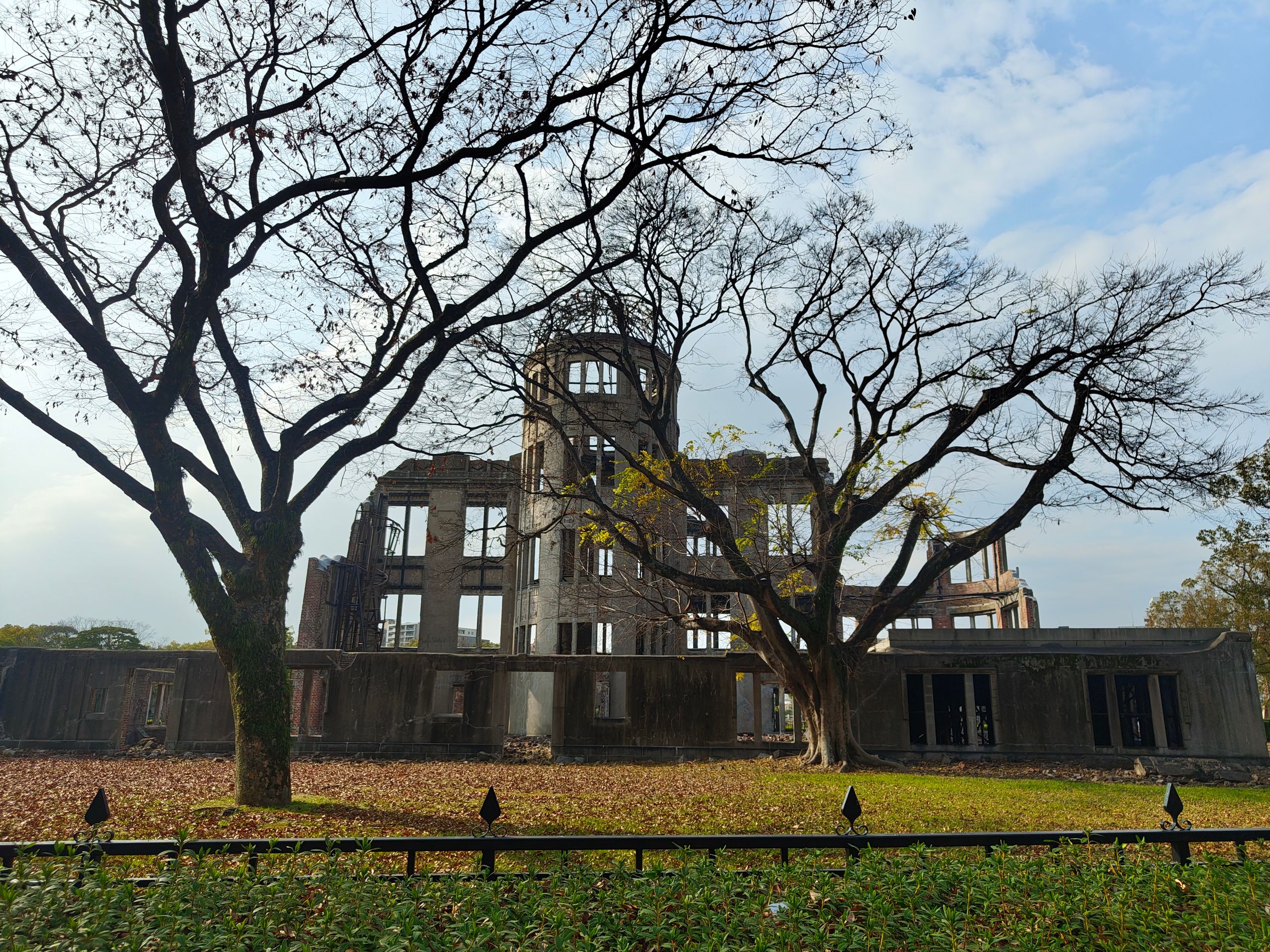
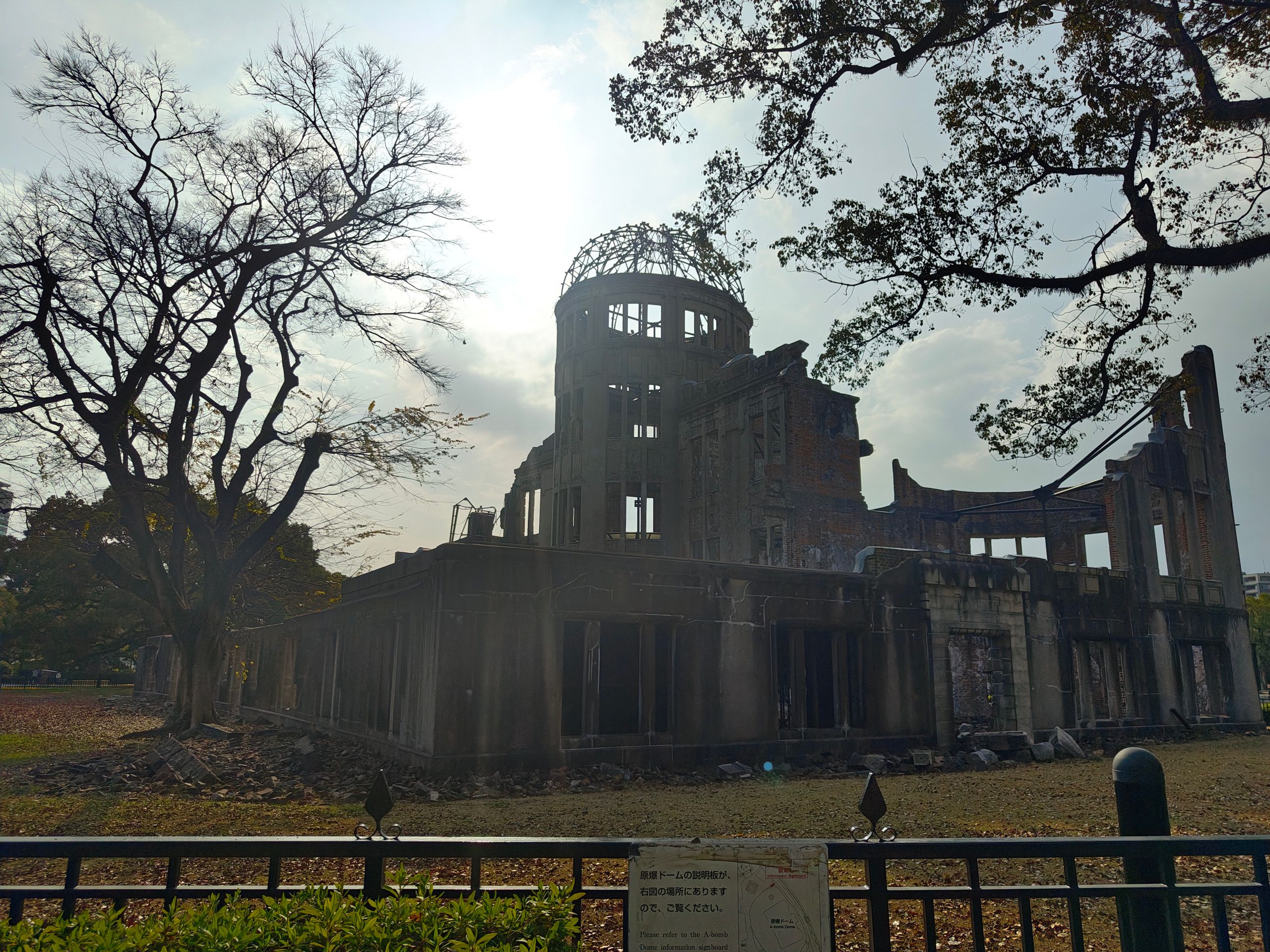
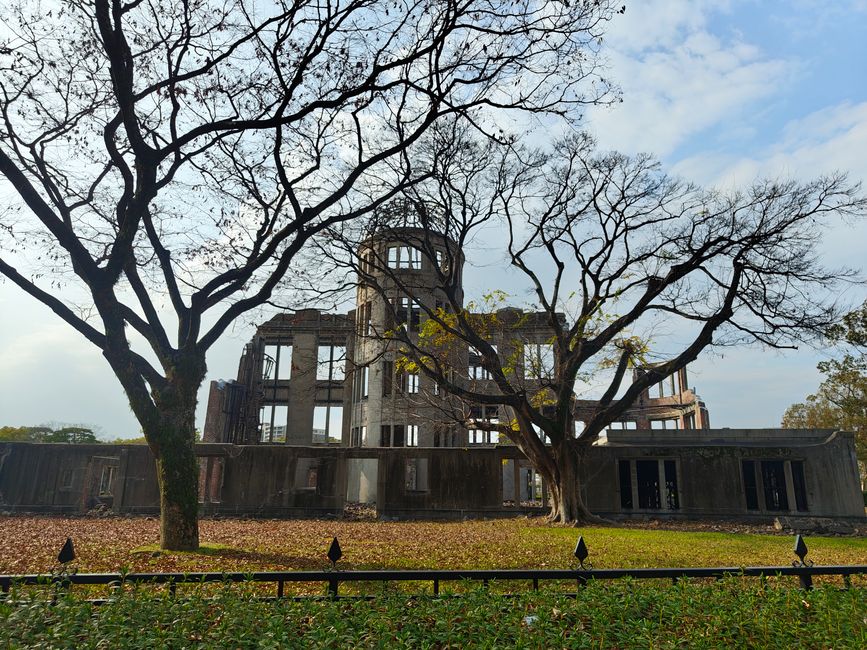
At the most famous monument, the Atomic Bomb Dome, there was a noticeably heavy atmosphere in the air – not surprisingly, considering what this building commemorates. The skeleton of the former industrial building is the only major structure that survived the explosion. The bomb detonated about 600 meters above ground and almost directly over the building, causing the shockwave to primarily act from above. As a result, some walls and steel structures remained standing – albeit heavily damaged – making the scale of the destruction tangible to this day.
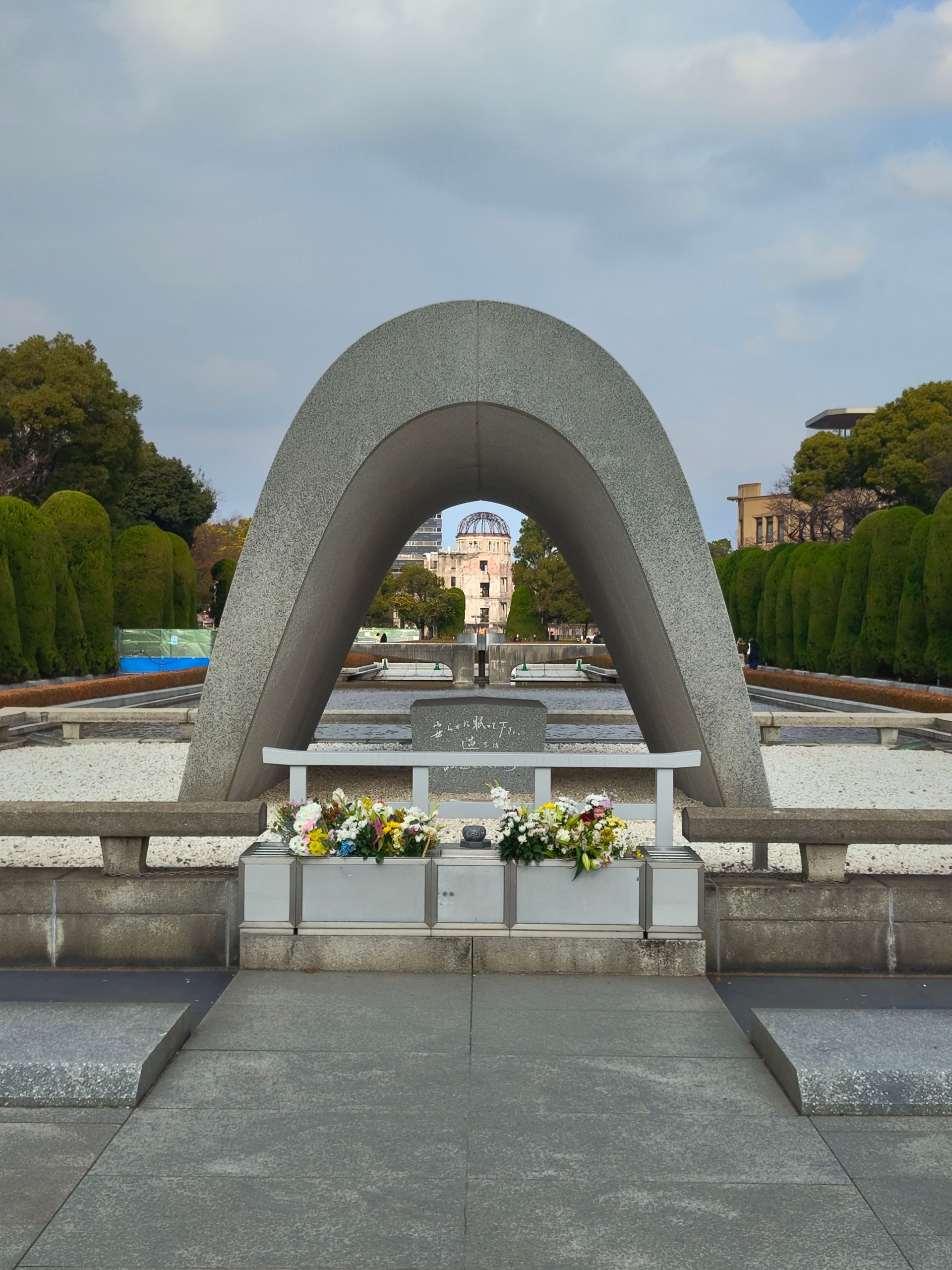
After this initial, very impressive moment, we continued through the Peace Memorial Park. There, the so-called Peace Pond and the Flame of Peace are also located, which burns as a symbol of the desire for a world free of nuclear weapons – and according to the inscription should only be extinguished when there are no nuclear weapons left. Realistically speaking, that is probably never, which makes the thought behind it all the more distressing.
The key elements of the park – including the memorial for the victims and the flame – are deliberately aligned in a straight line to the Atomic Bomb Dome, creating a clear visual and symbolic connection.
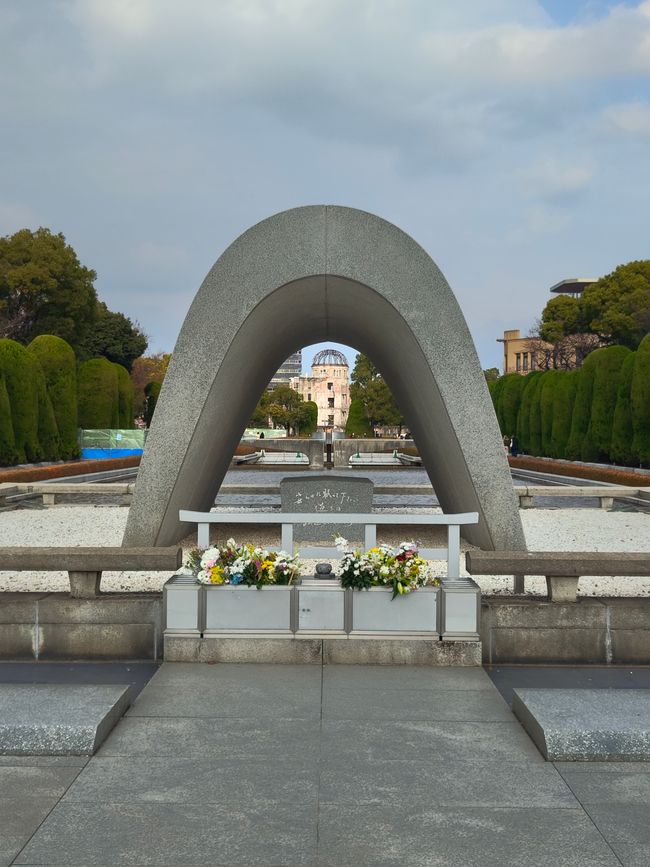
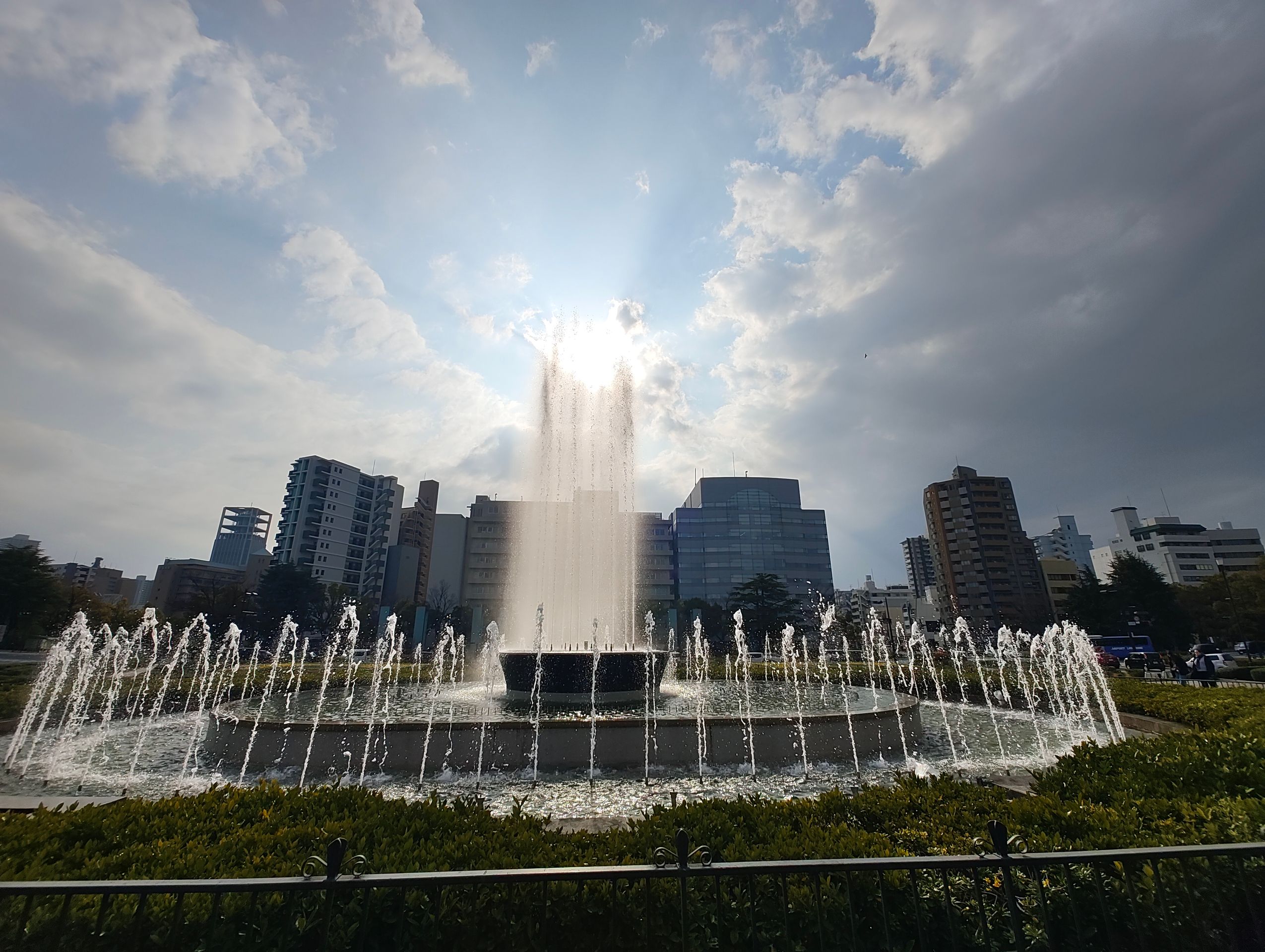
Despite the serious atmosphere, there are also quiet, even beautiful moments in the park. The large fountain in front of the memorial created a calming and almost meditative effect and cast a beautiful play of light in the sunlight:
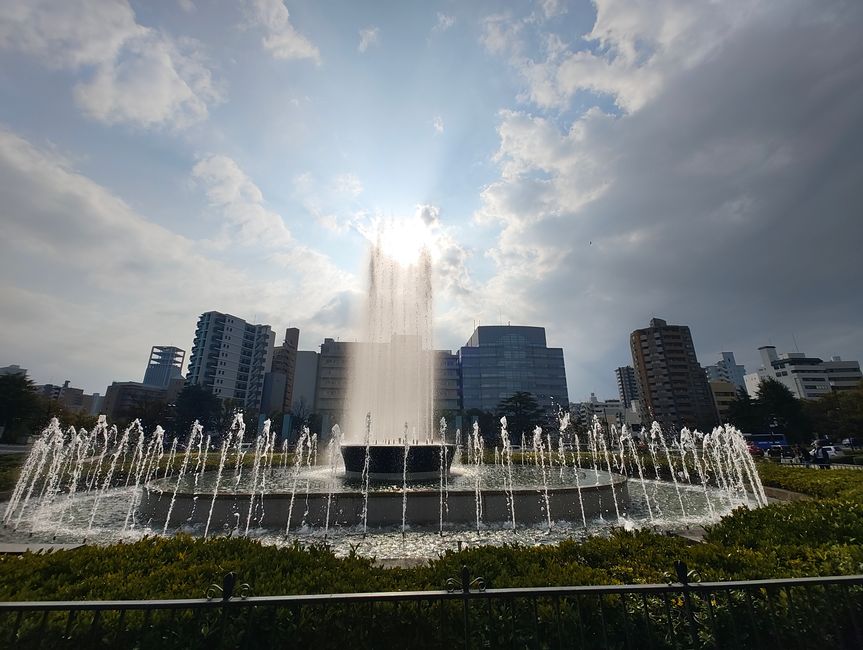
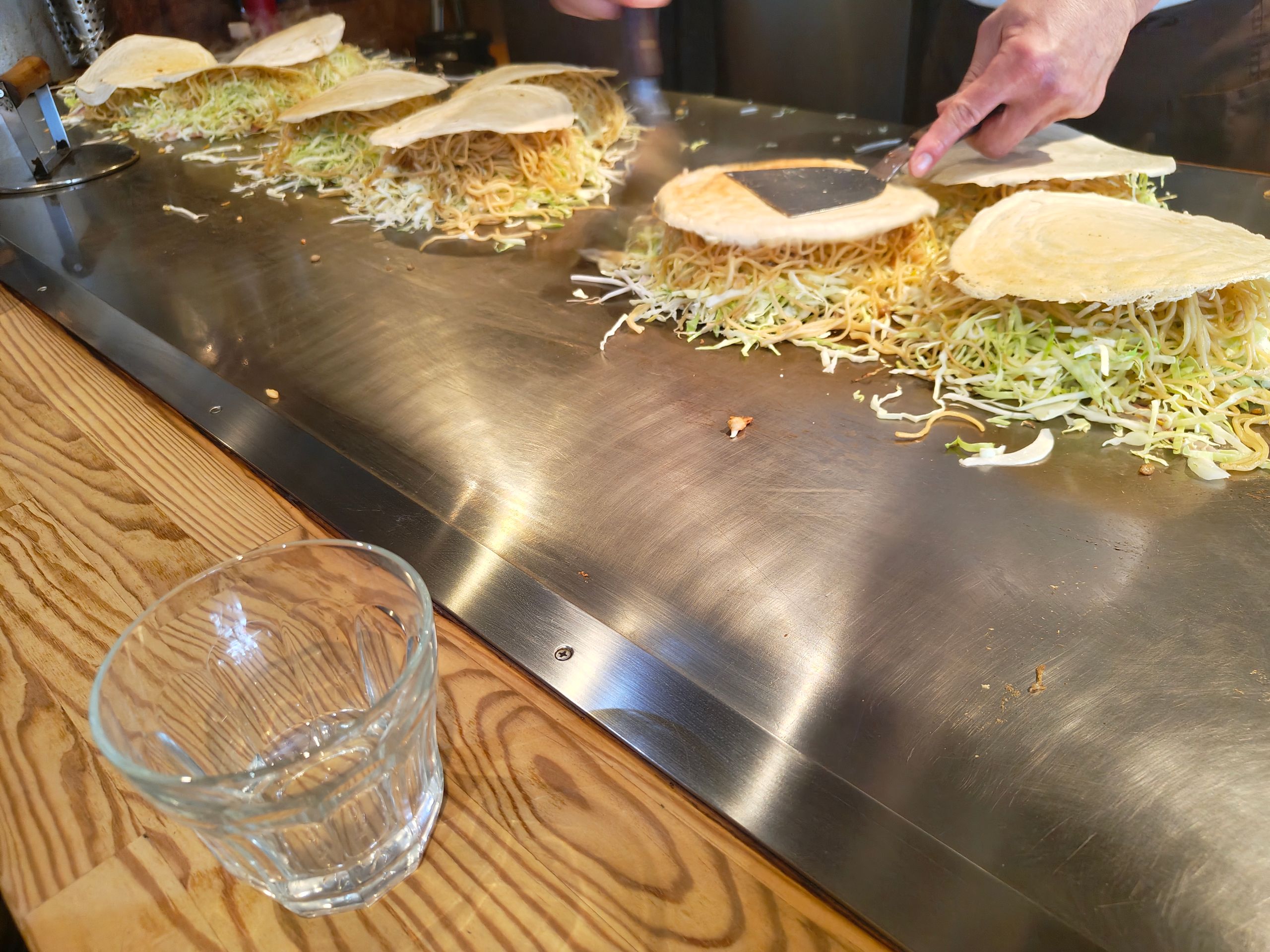
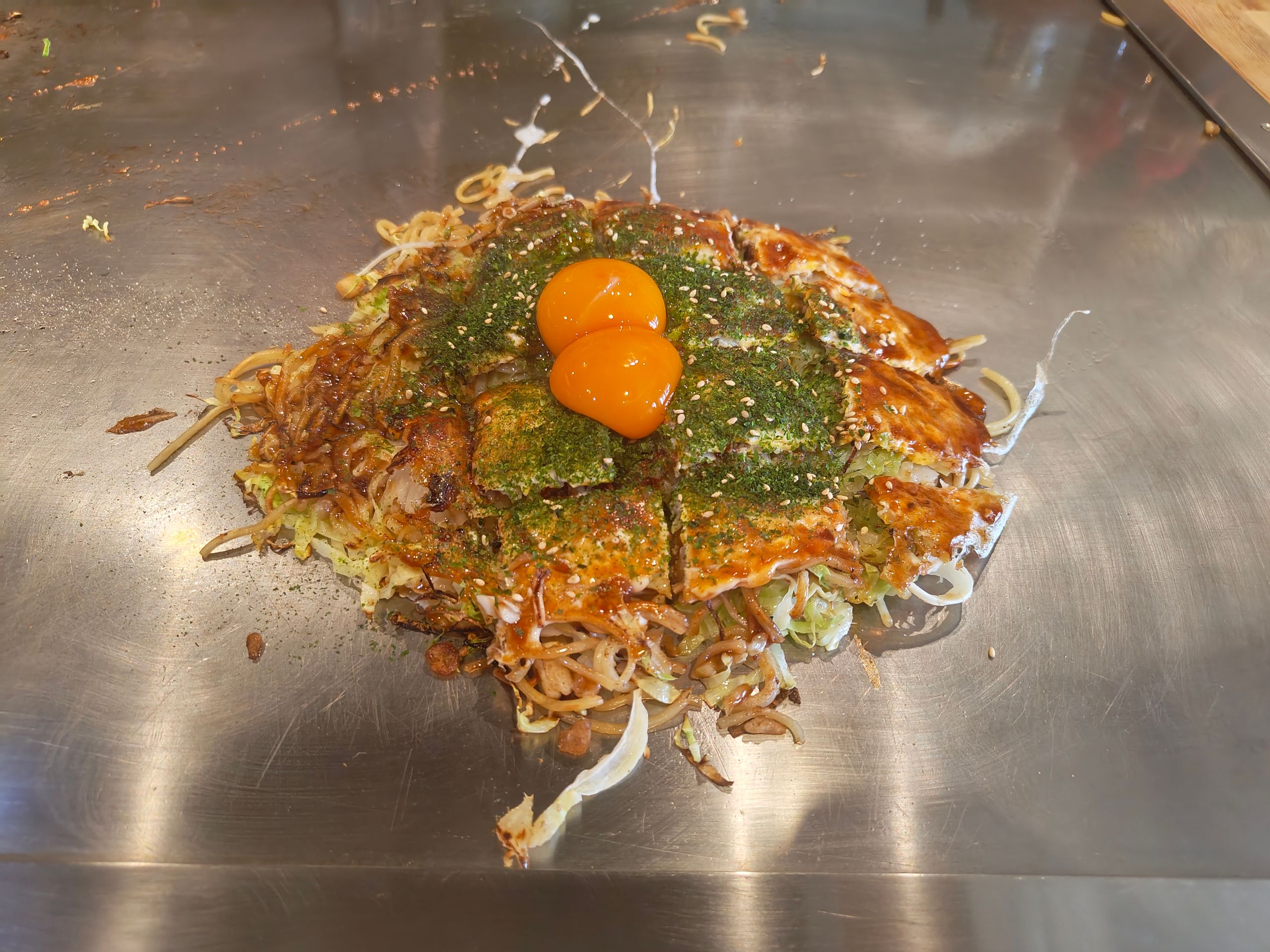
After all those impressions, we treated ourselves to a break. For lunch, we had Okonomiyaki, for which Hiroshima is particularly famous. And yes: I now understand why. Not only was it excellent in taste, but it was also delightful to watch the dish being prepared right in front of us.
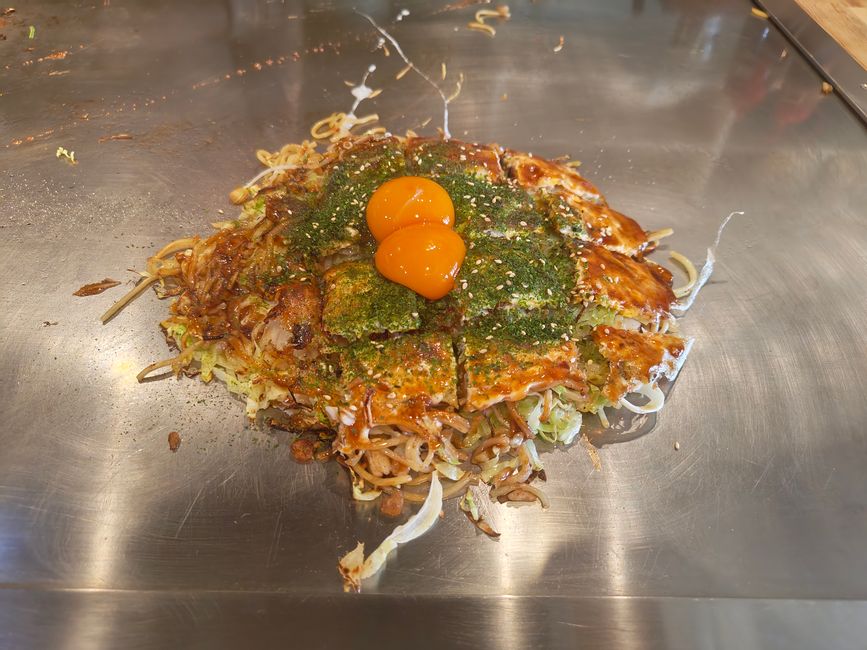
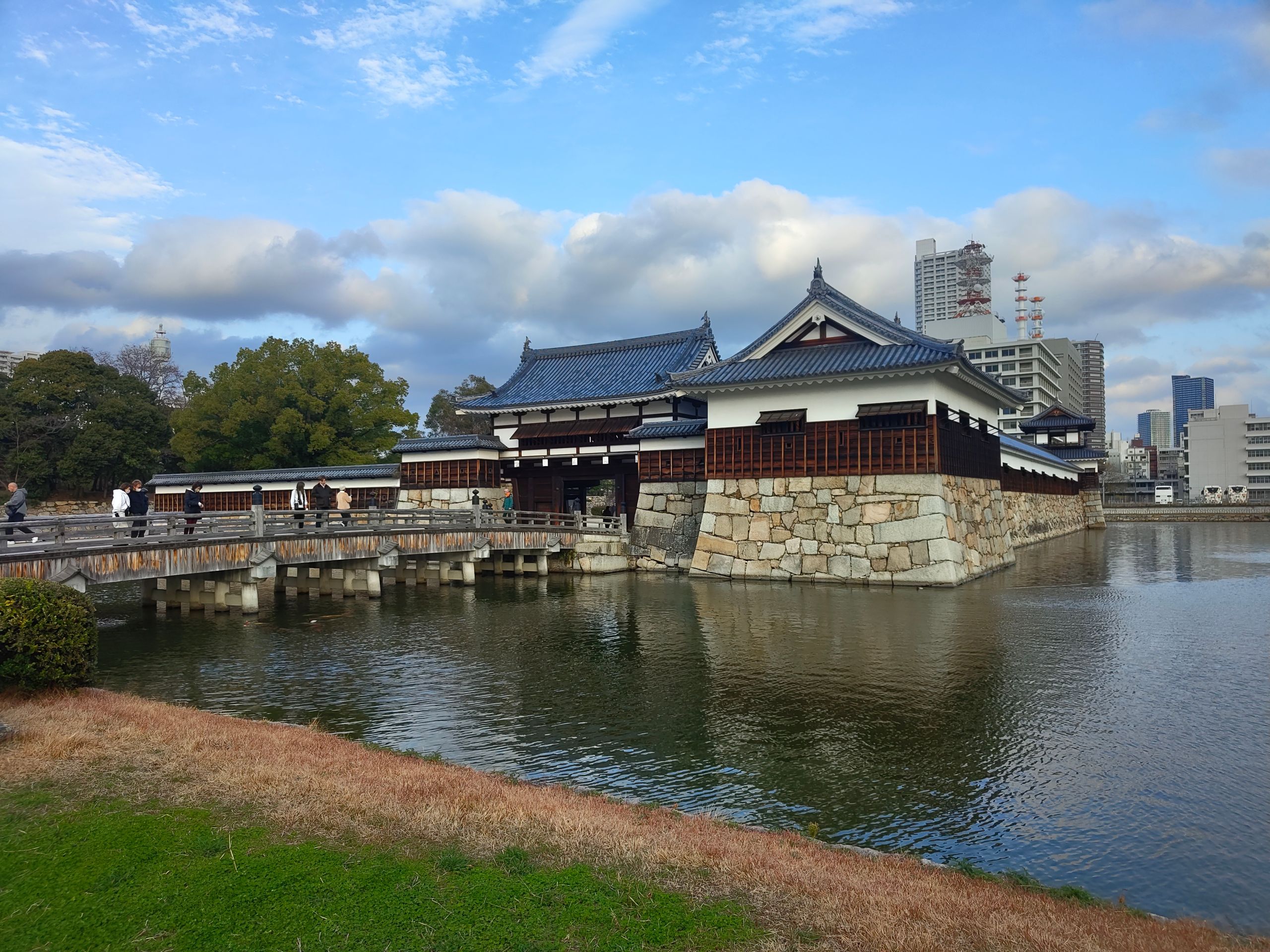
Rejuvenated and with a clearer mind, we decided to have an afternoon coffee. With the cup in front of us, we then decided to walk towards the train station and make a detour to Hiroshima Castle and the adjacent shrine along the way.
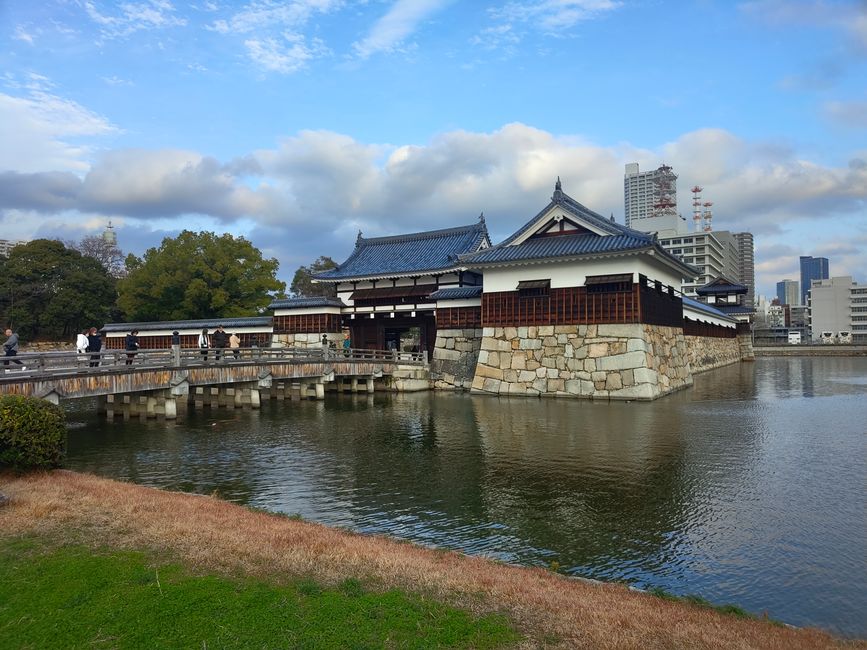
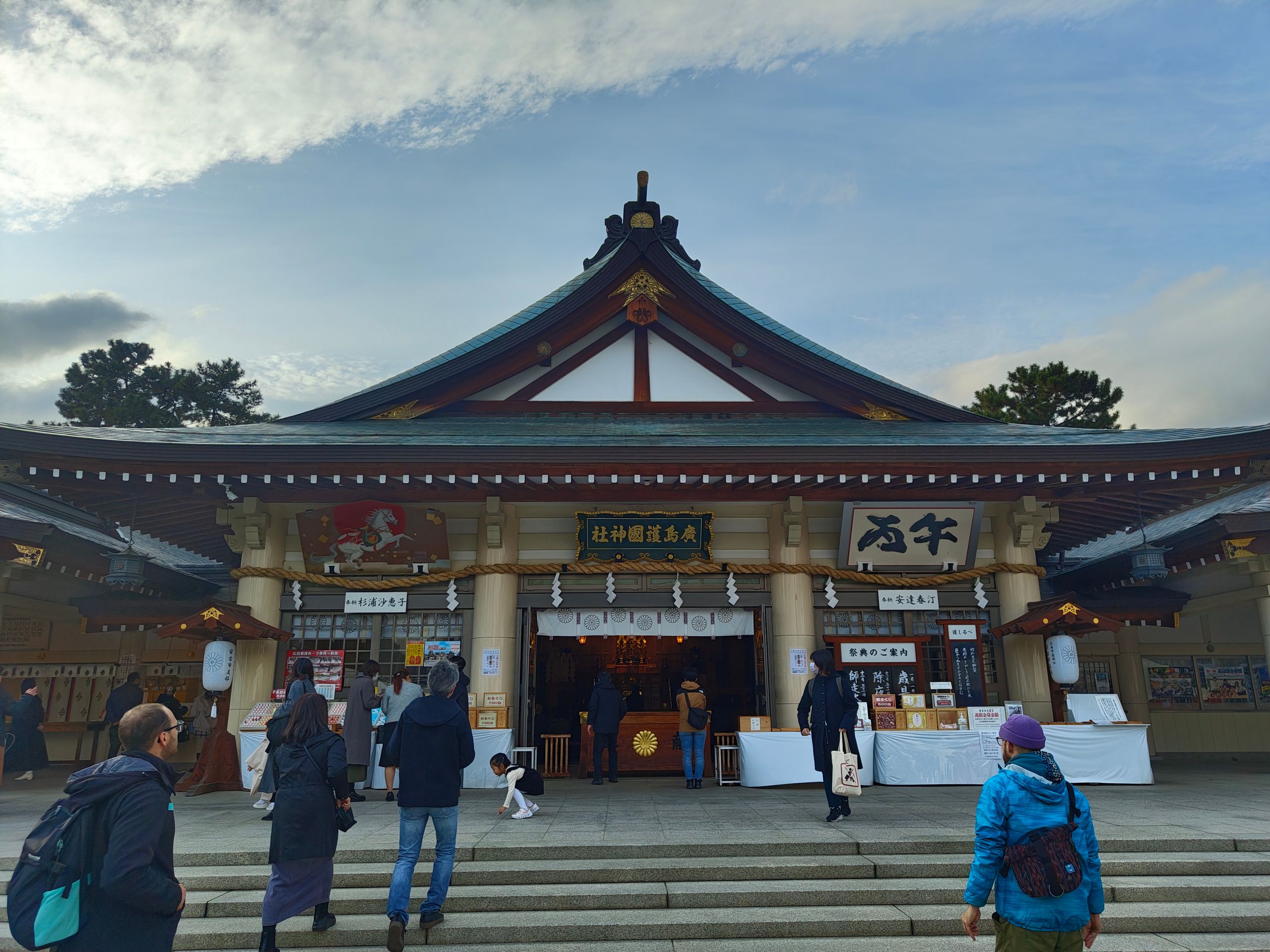
The shrine seemed very much designed to symbolically wish visitors a good future: For a small donation, one could perform luck and wish rituals. At the entrance, there were also age numbers indicated, which are said to be considered years of misfortune. Fortunately, since we both did not fall under this category, we could happily check this part off and stroll on to the castle.
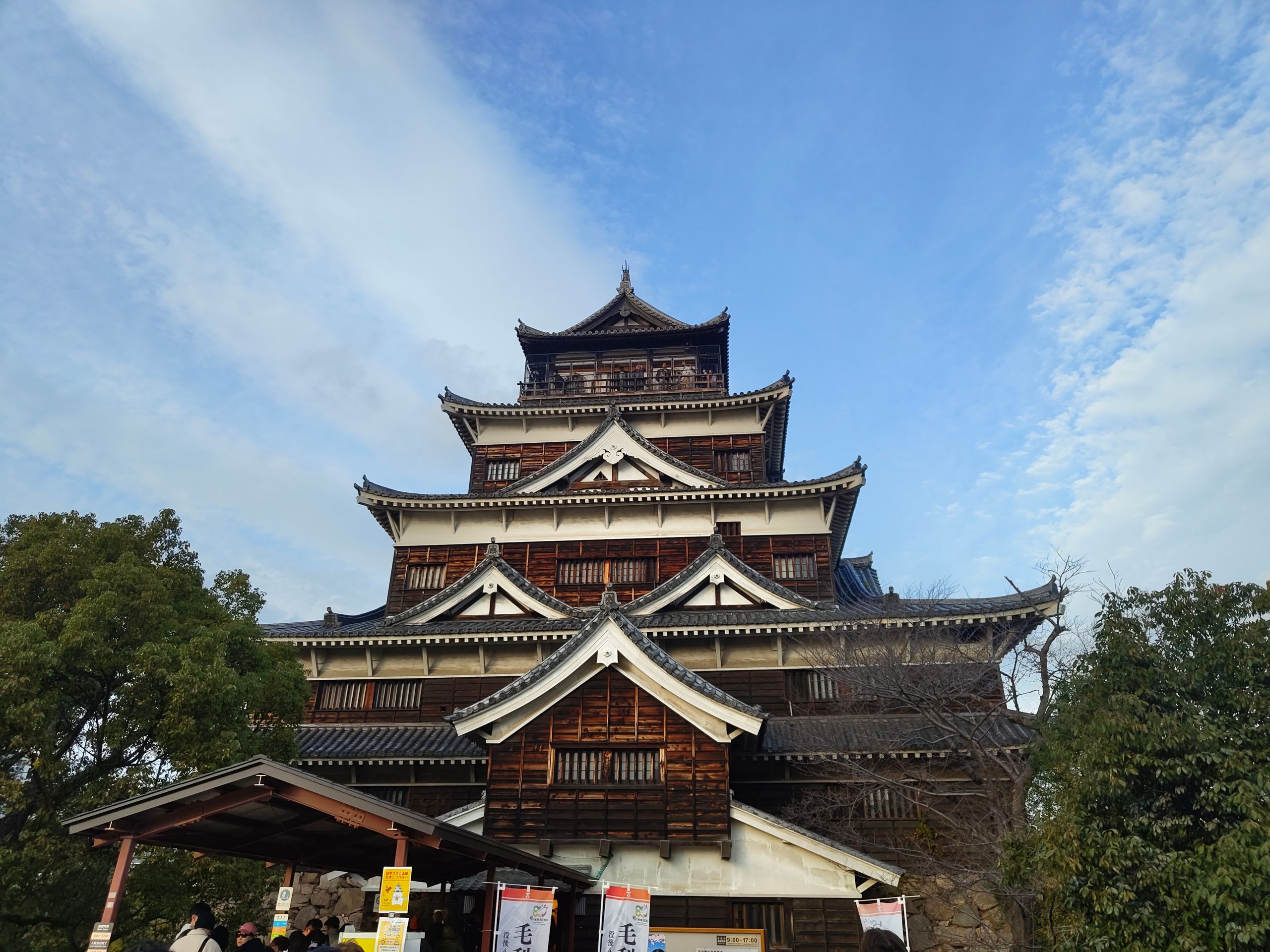
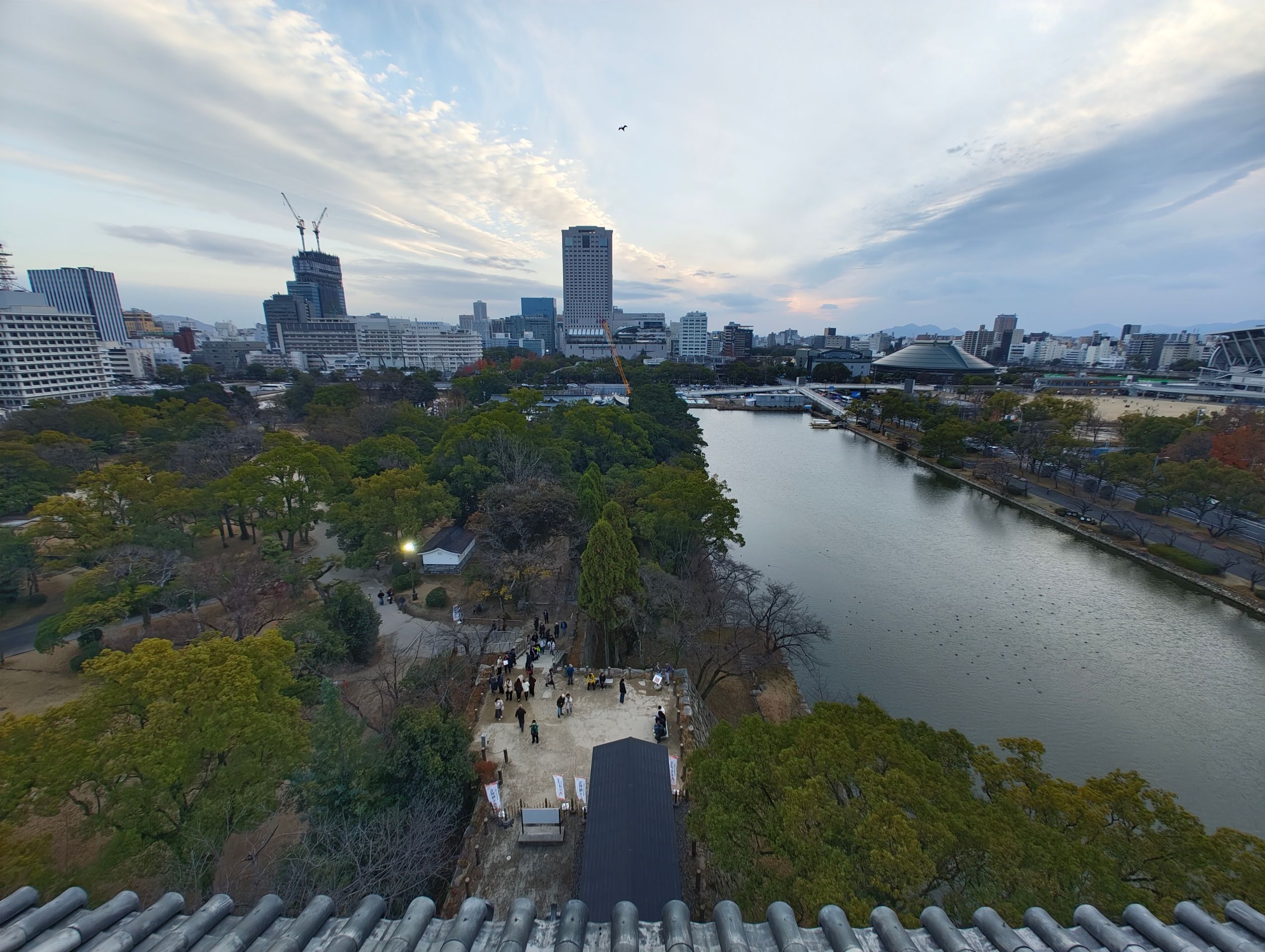
Hiroshima Castle, also known as