In the Etosha National Park
We set off for Etosha as early as 6 AM. It appeared to us as a 24,000 sq km paradise for all kinds of animals: zebras, giraffes, elephants, wildebeests, antelopes, ... By the...


Published: 02.05.2026
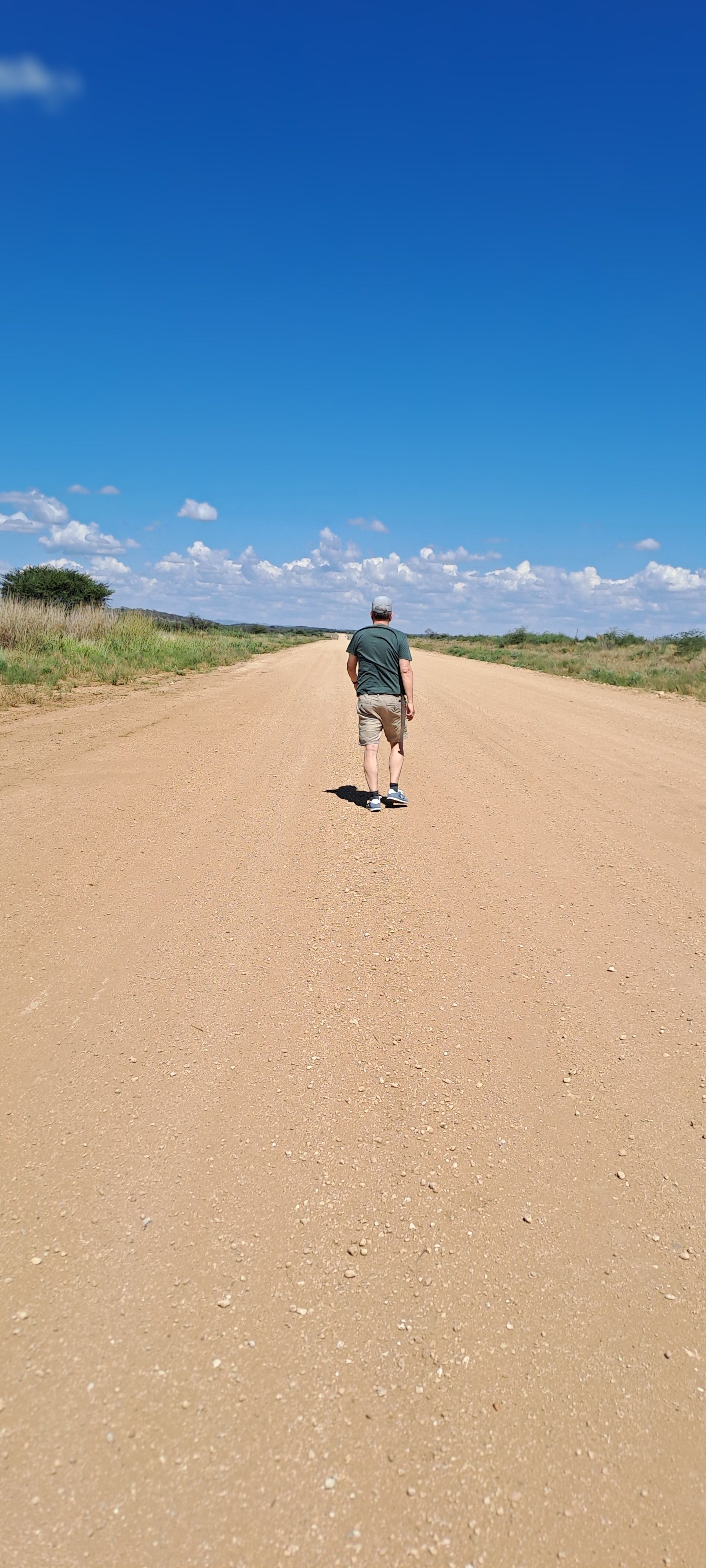
Streets that seemingly lead straight ahead endlessly. Cars rarely come toward us on the side roads. That's a good thing, as it allows us to better avoid the potholes.
Black men walking alone or in small groups along these roads, in the middle of nowhere, with no settlements nearby. Where do they come from, and where are they going?
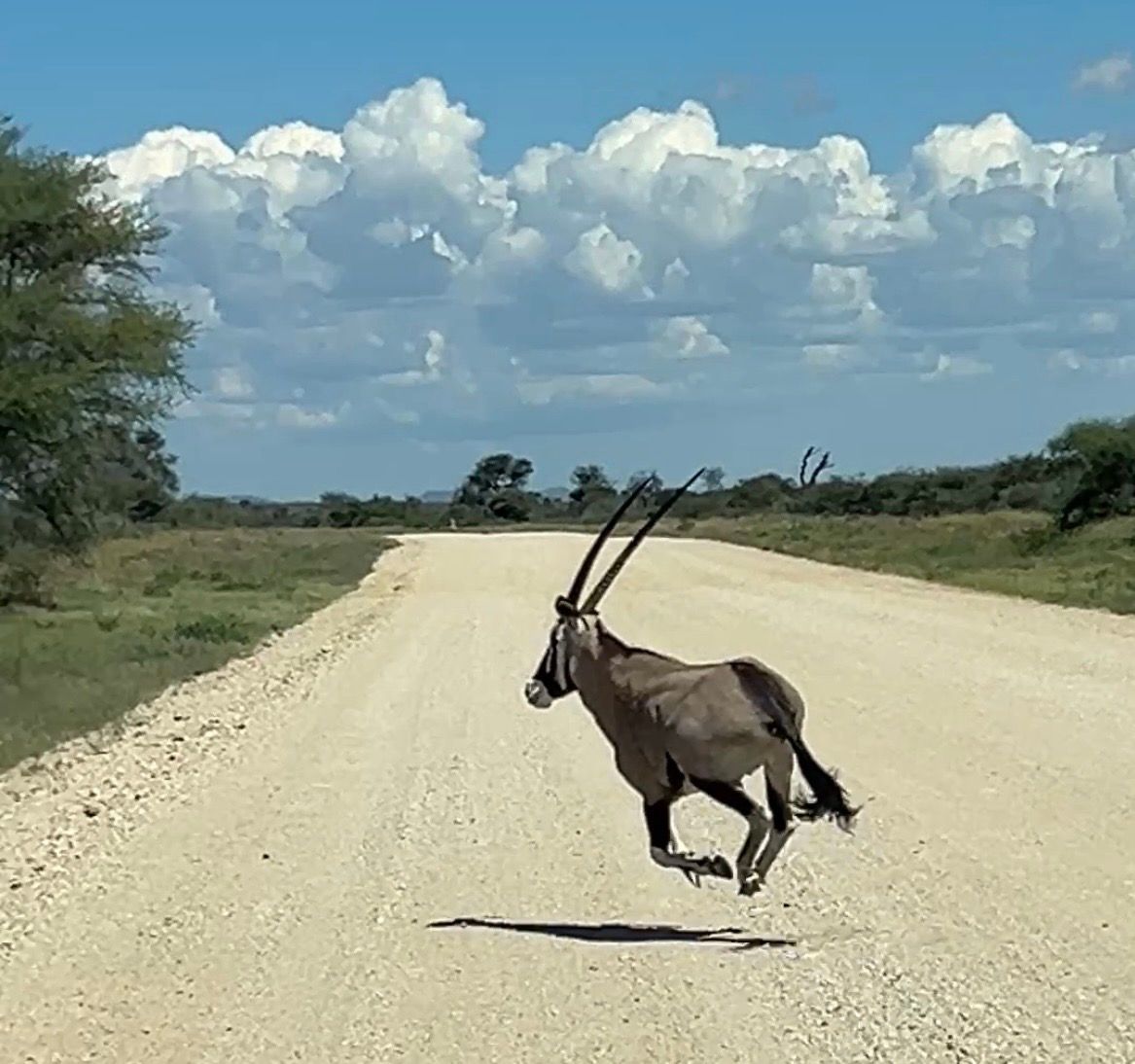
On the right and left of the roads, there is a strip where cattle herds are driven from A to B, or from where an antelope darting across the road can be seen.
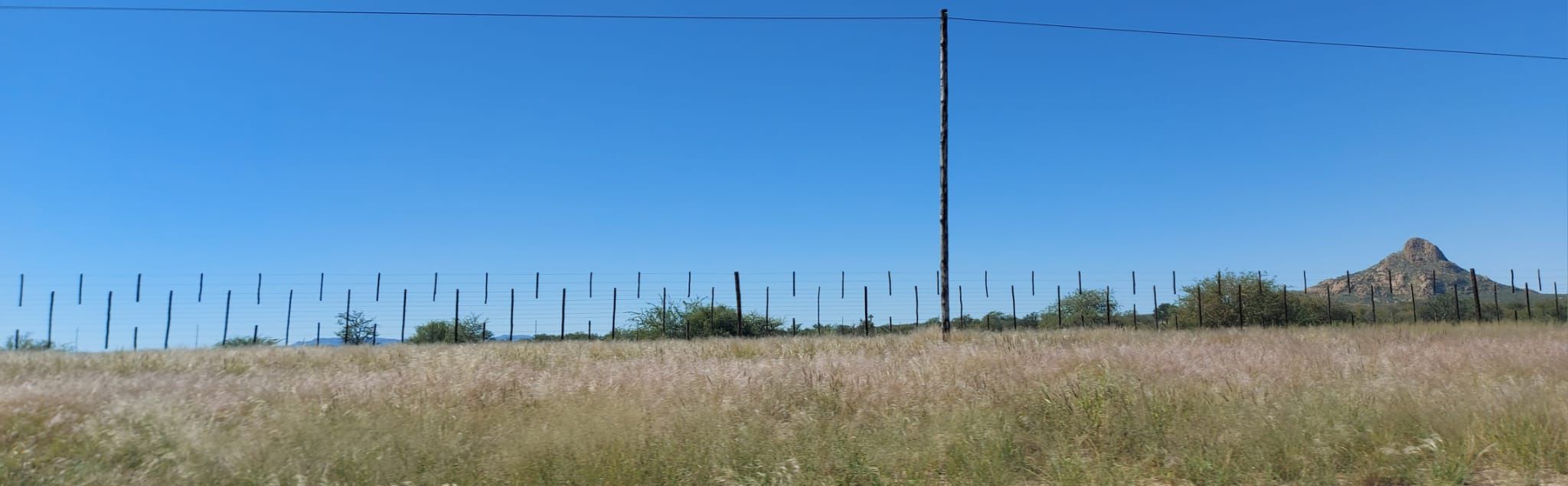
Beyond that, we always see fences. All land is fenced off. I have never seen so many fences in my life. The idea that land can be owned and therefore must be fenced to secure that possession was brought to Namibia by Europeans.
Only the giraffes chuckle at this fenced human effort as they casually step over the fence to visit their friends on the neighboring farm.😃
The farms are still largely in white hands after decades of German colonial policy and South African apartheid (with a population share of 6%).
For decades, land reform has been a central but very sensitive topic in independent Namibia.
The farms are enormous; at the 'Sophienhof(!)', we drove along for 20 km. Occasionally, you come across a farm, then a black gatekeeper is there to open the gate. Maybe ten cars pass through here daily. What does this
man do otherwise?
Some farms have been converted into lodges. All the owners we met are white; black men maintain the vast grounds, while black women work in the kitchen or in service. And yes, I know, this creates jobs, and yes, this is not really surprising, but still...