
Tag 27, 21. Mai, Great Barrier Reef
Today was entirely dedicated to the Great Barrier Reef, which stretches 2300 km along the east coast of Australia but is located 15 to 160 km from the shore. Near Cairns...

Published: 23.05.2026
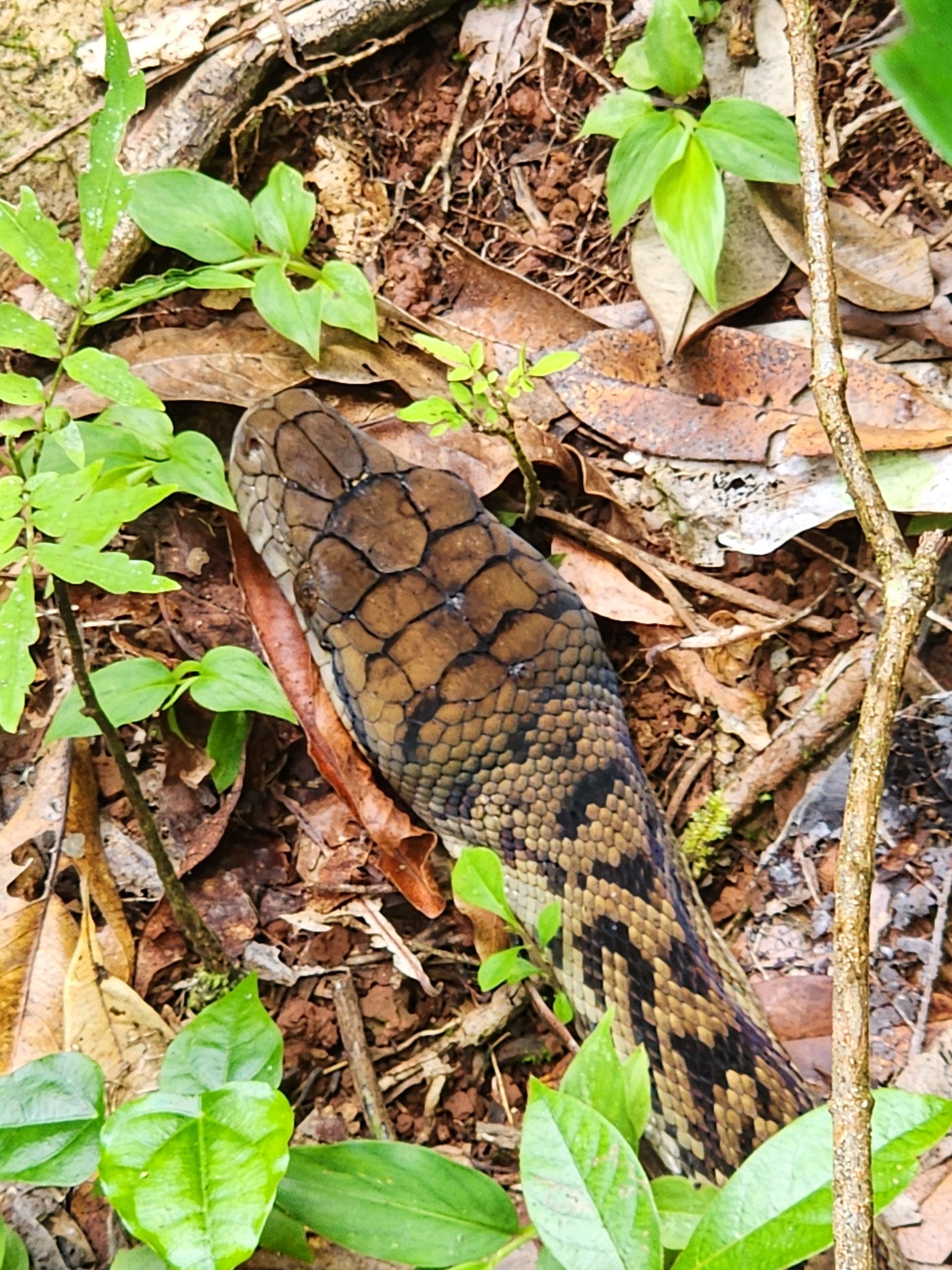
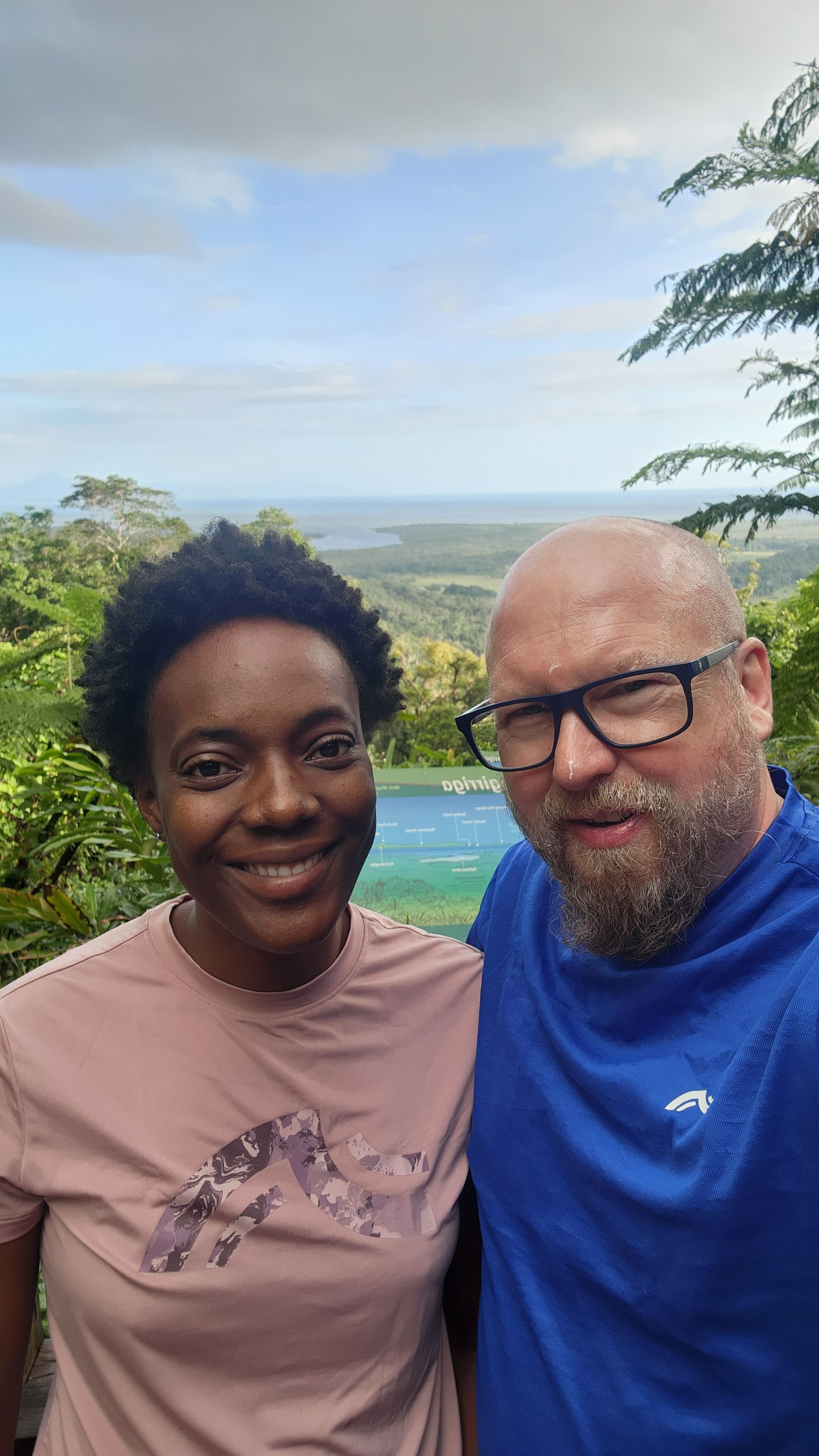
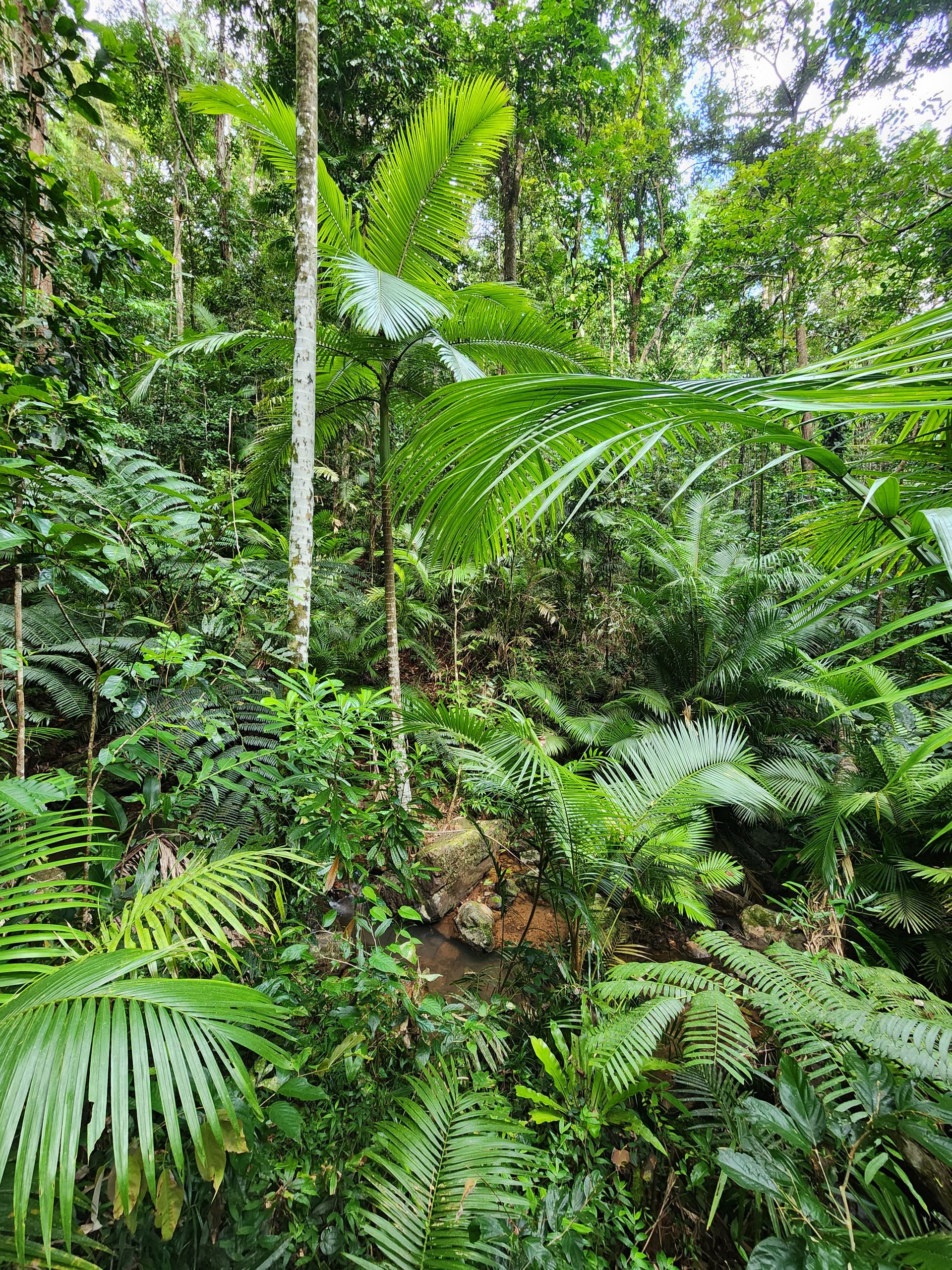
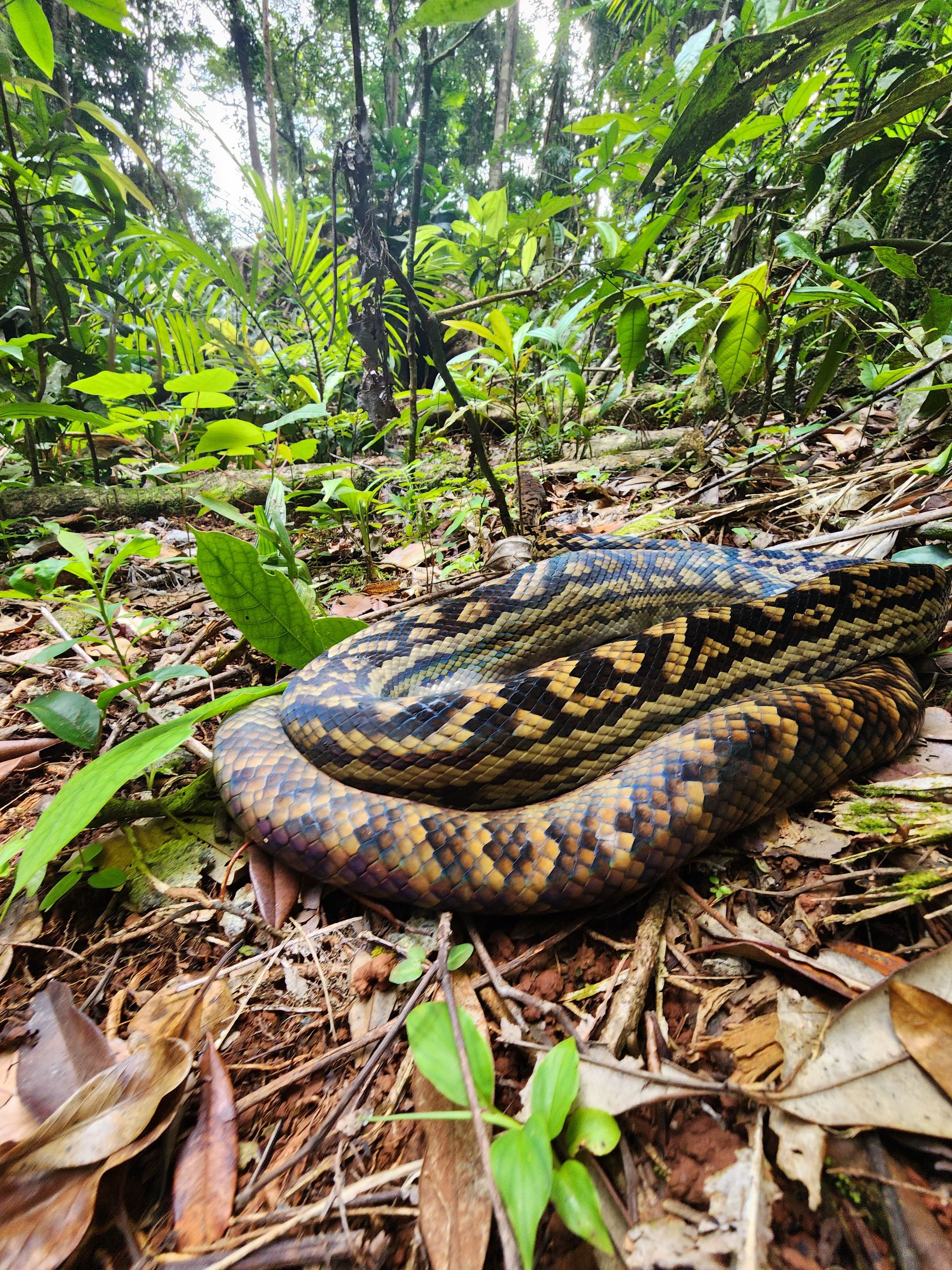
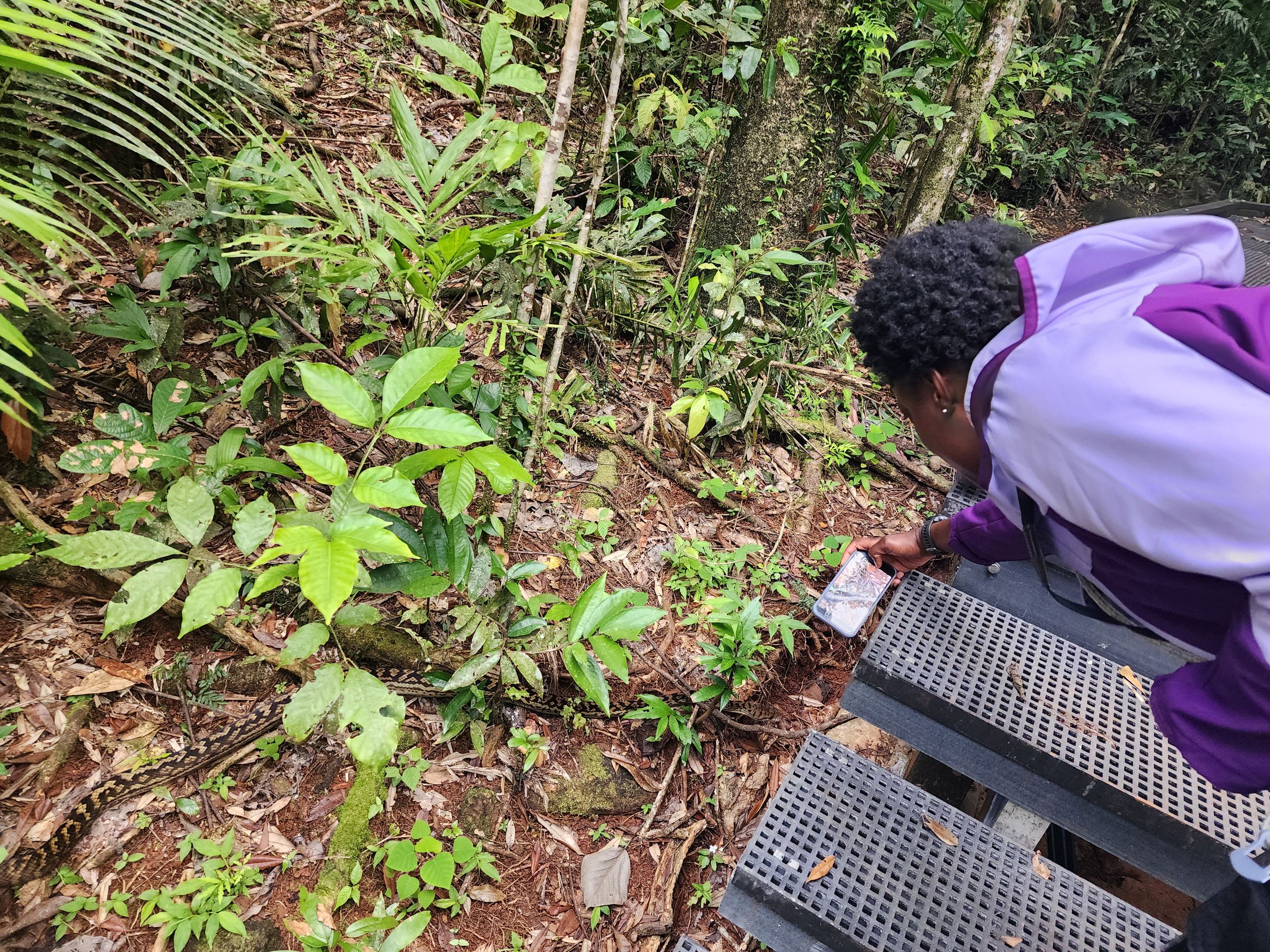
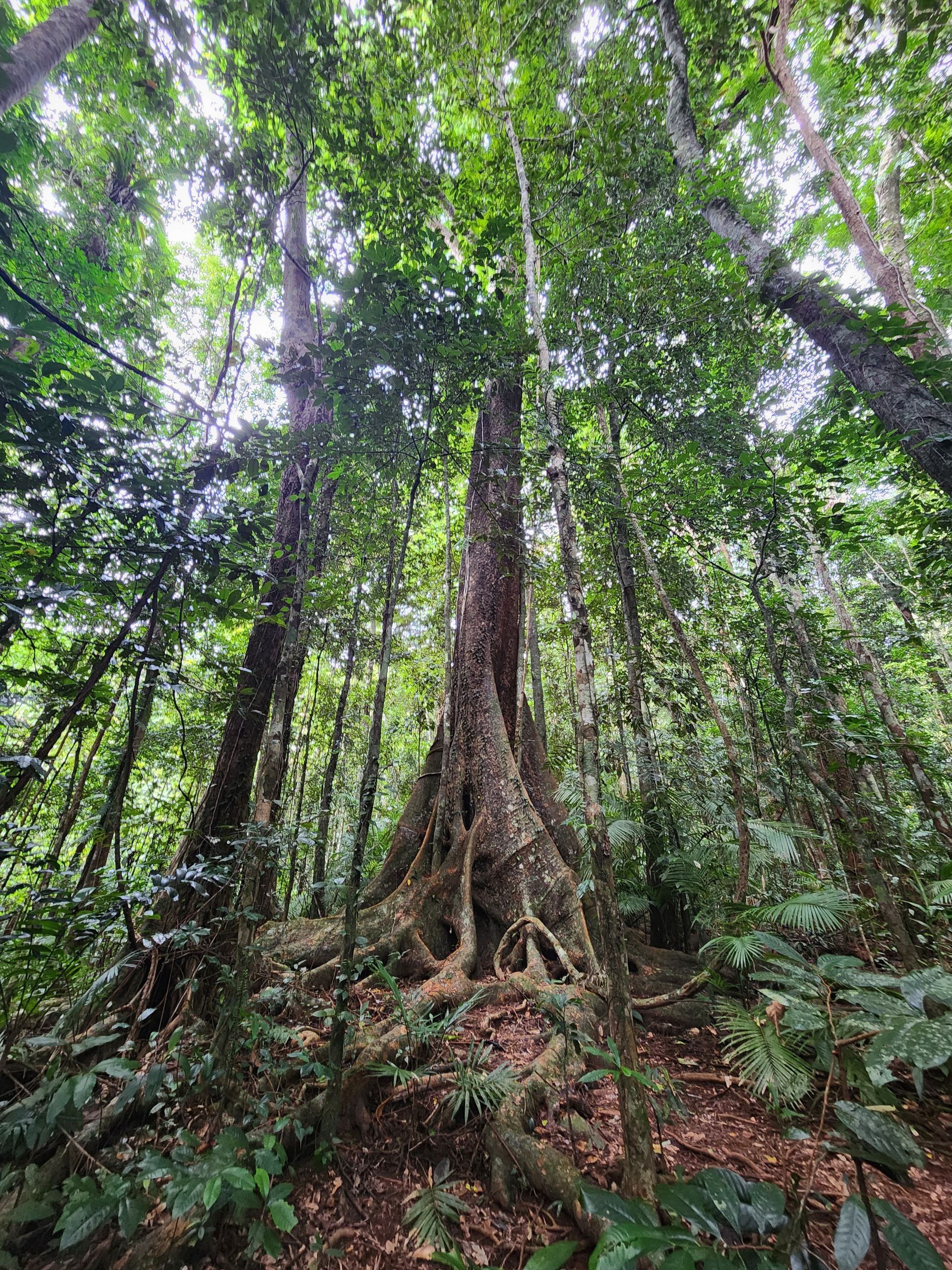
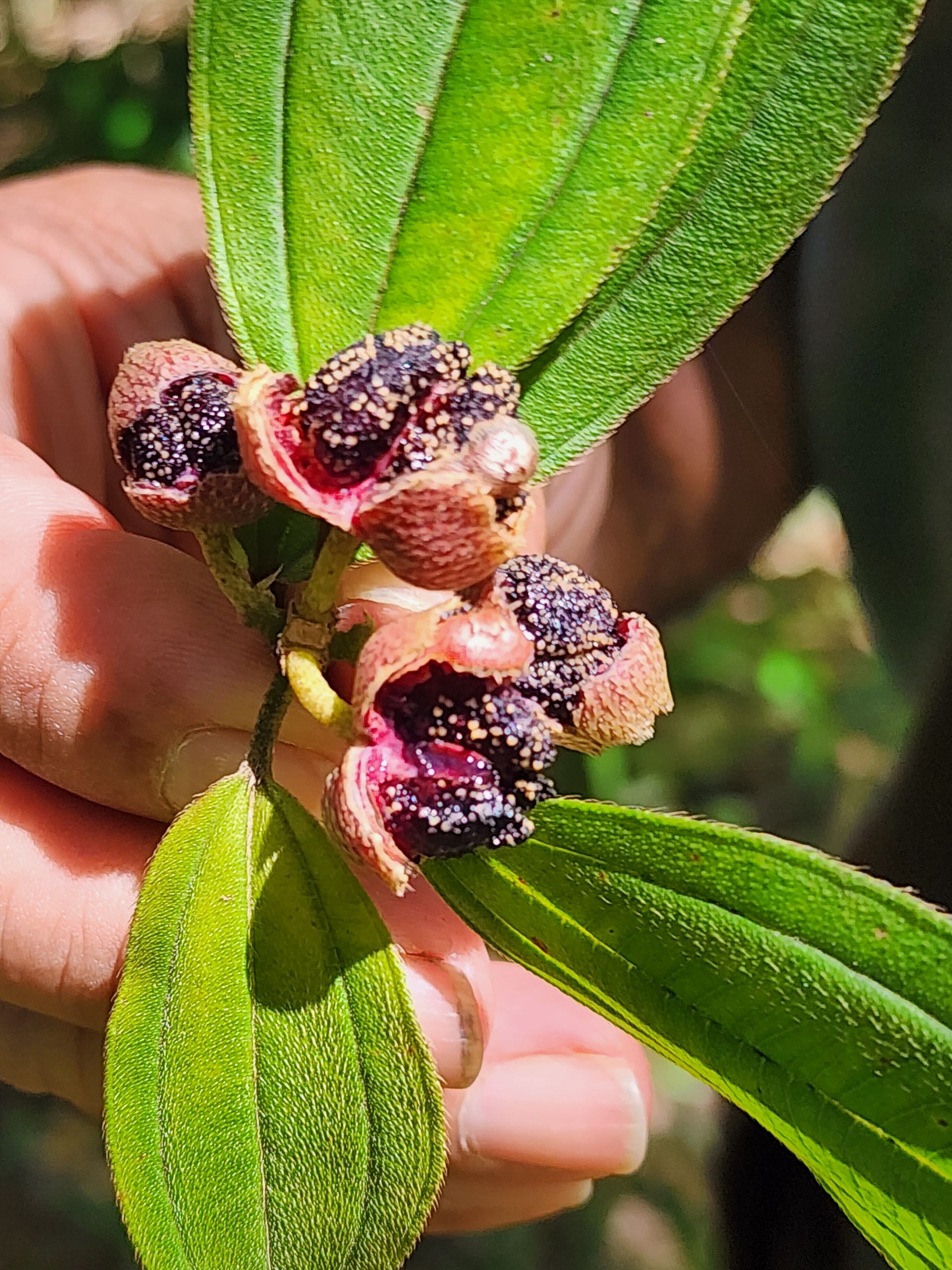
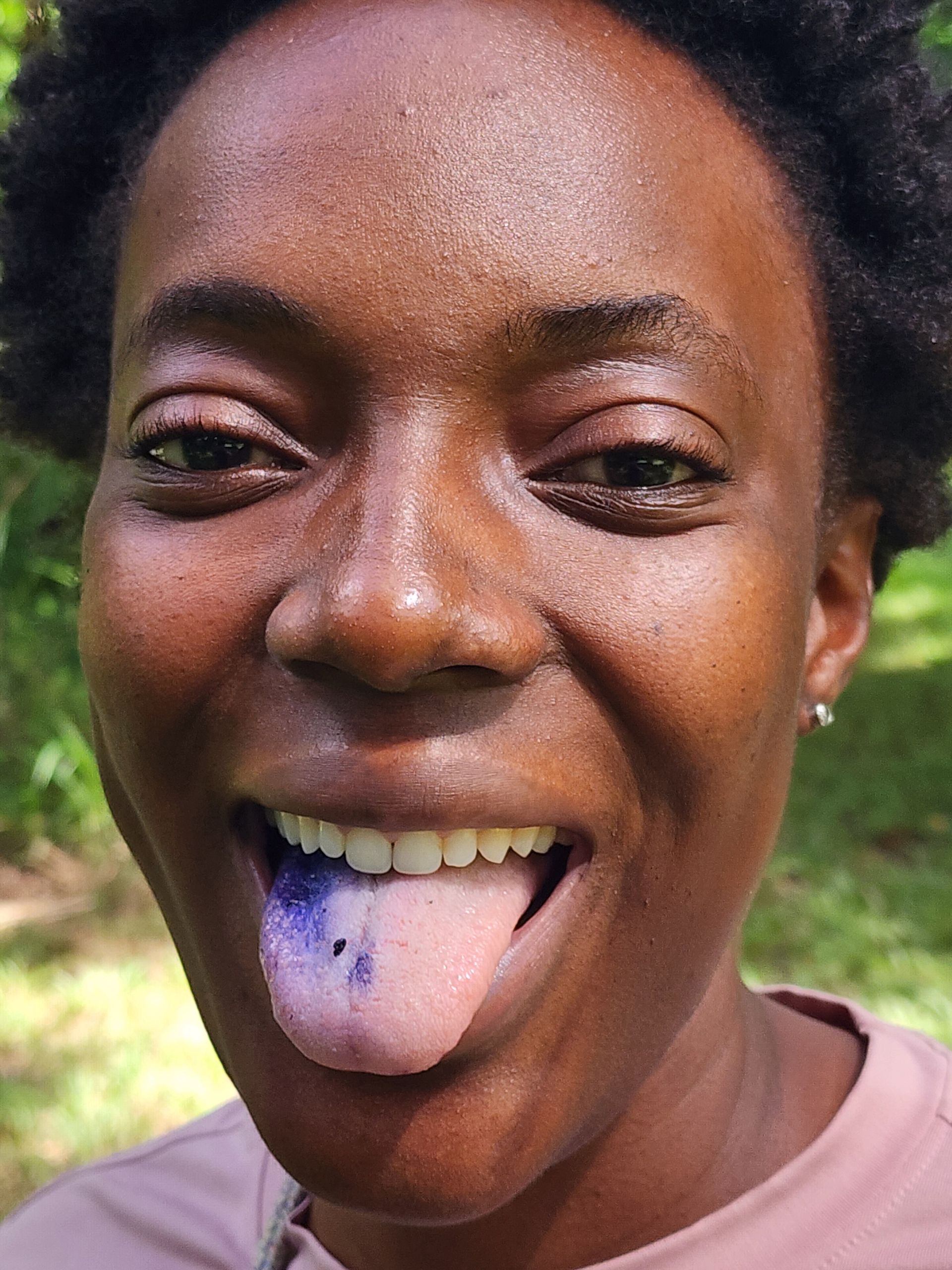
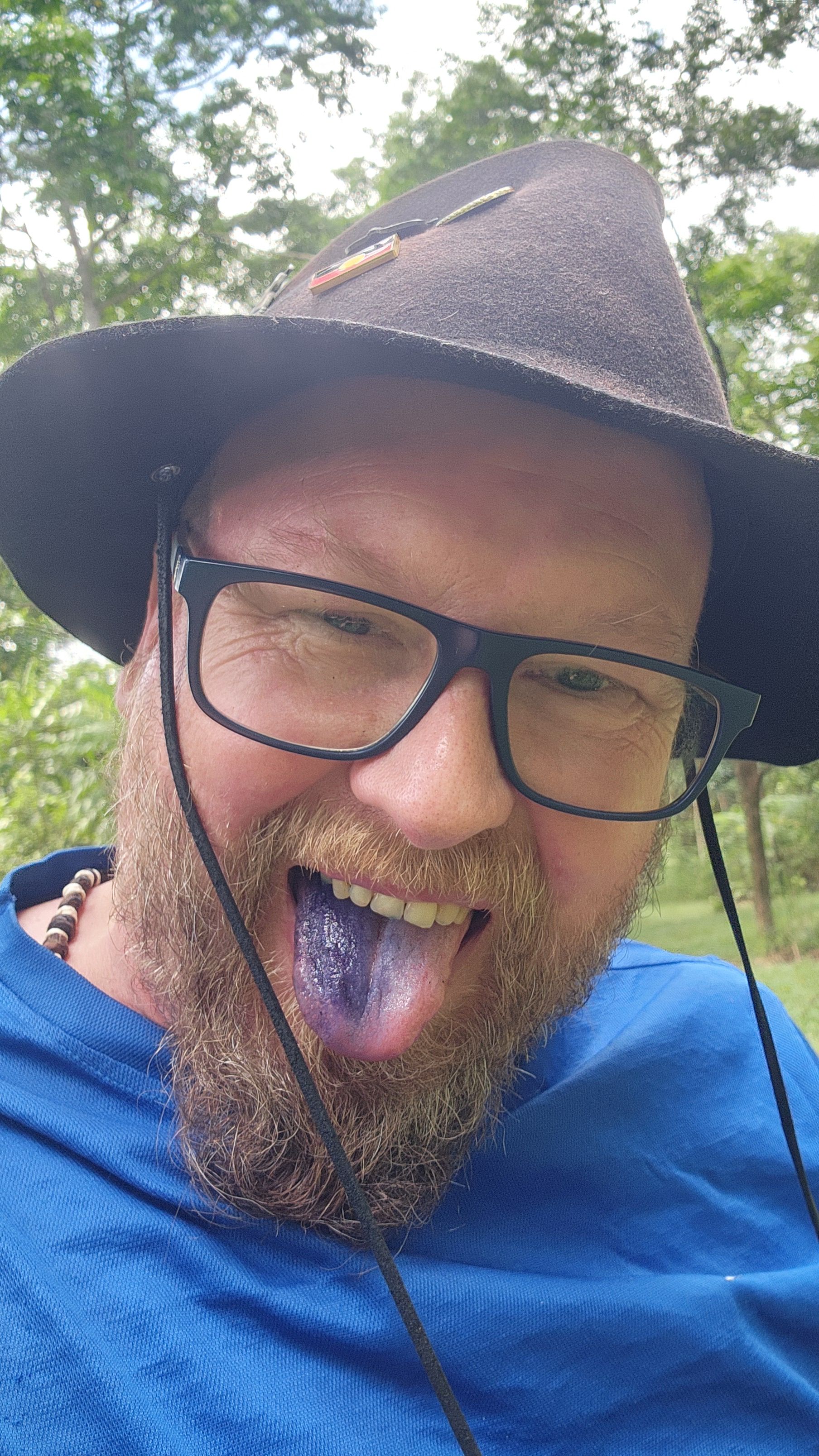
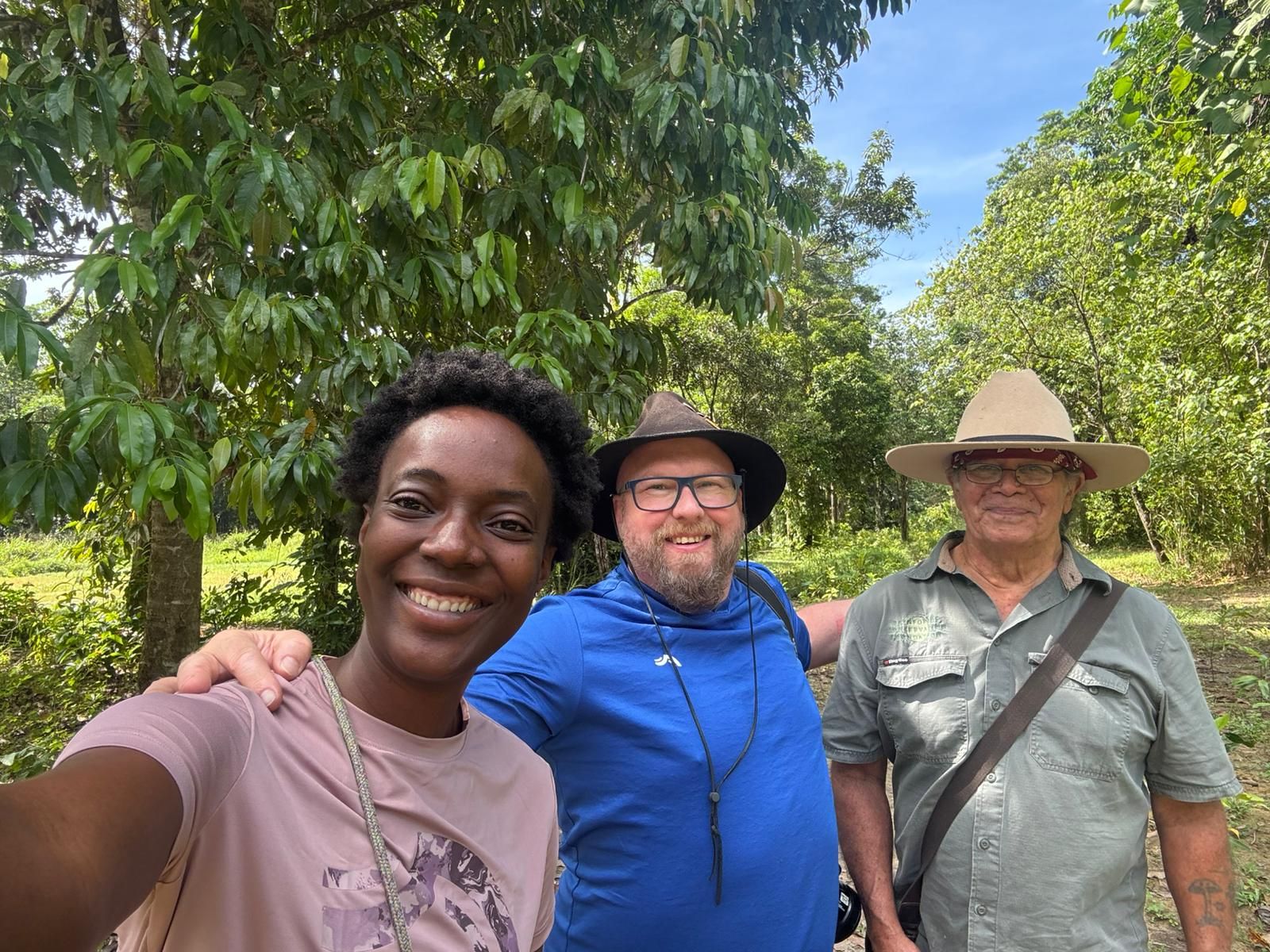
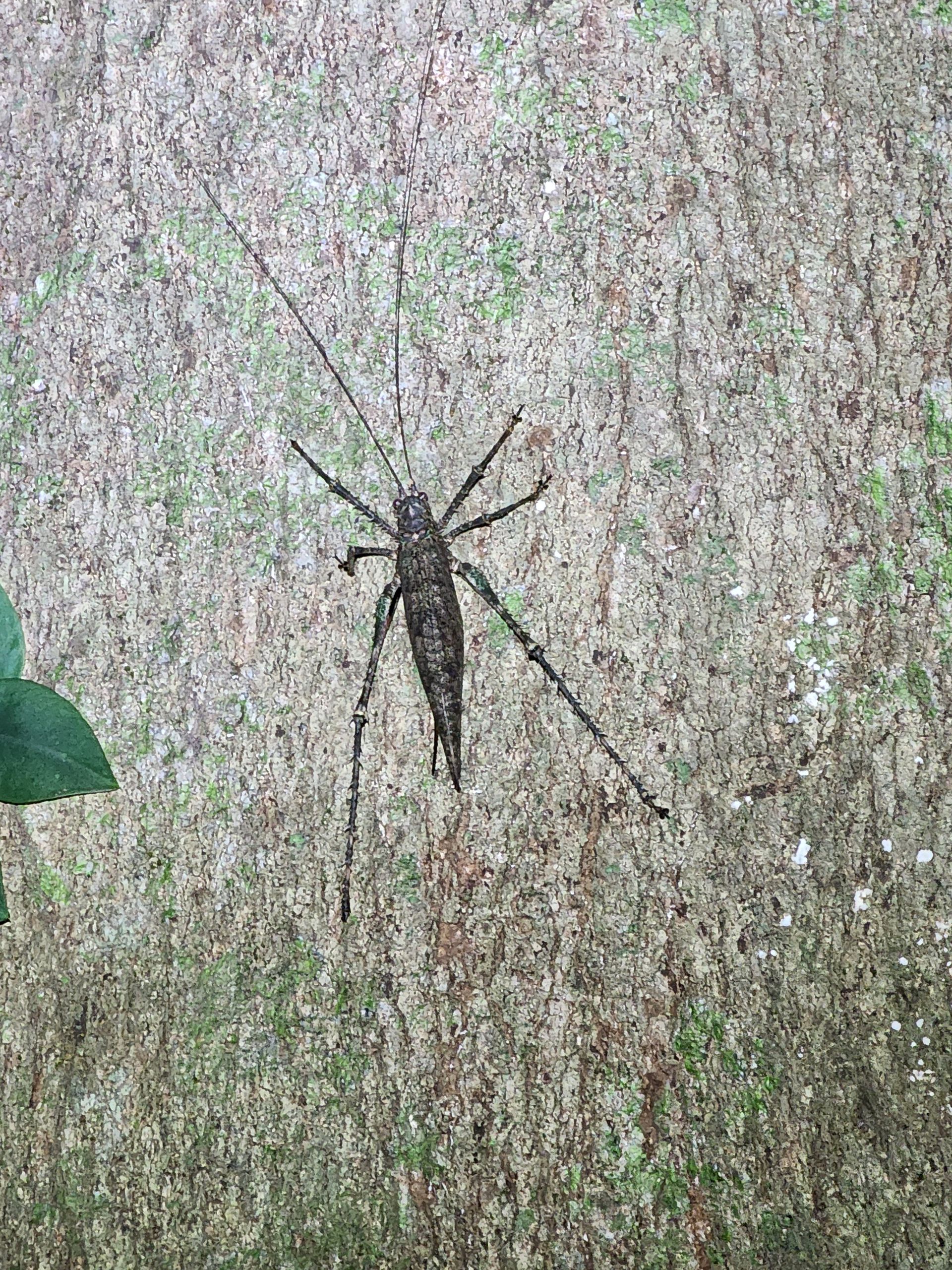
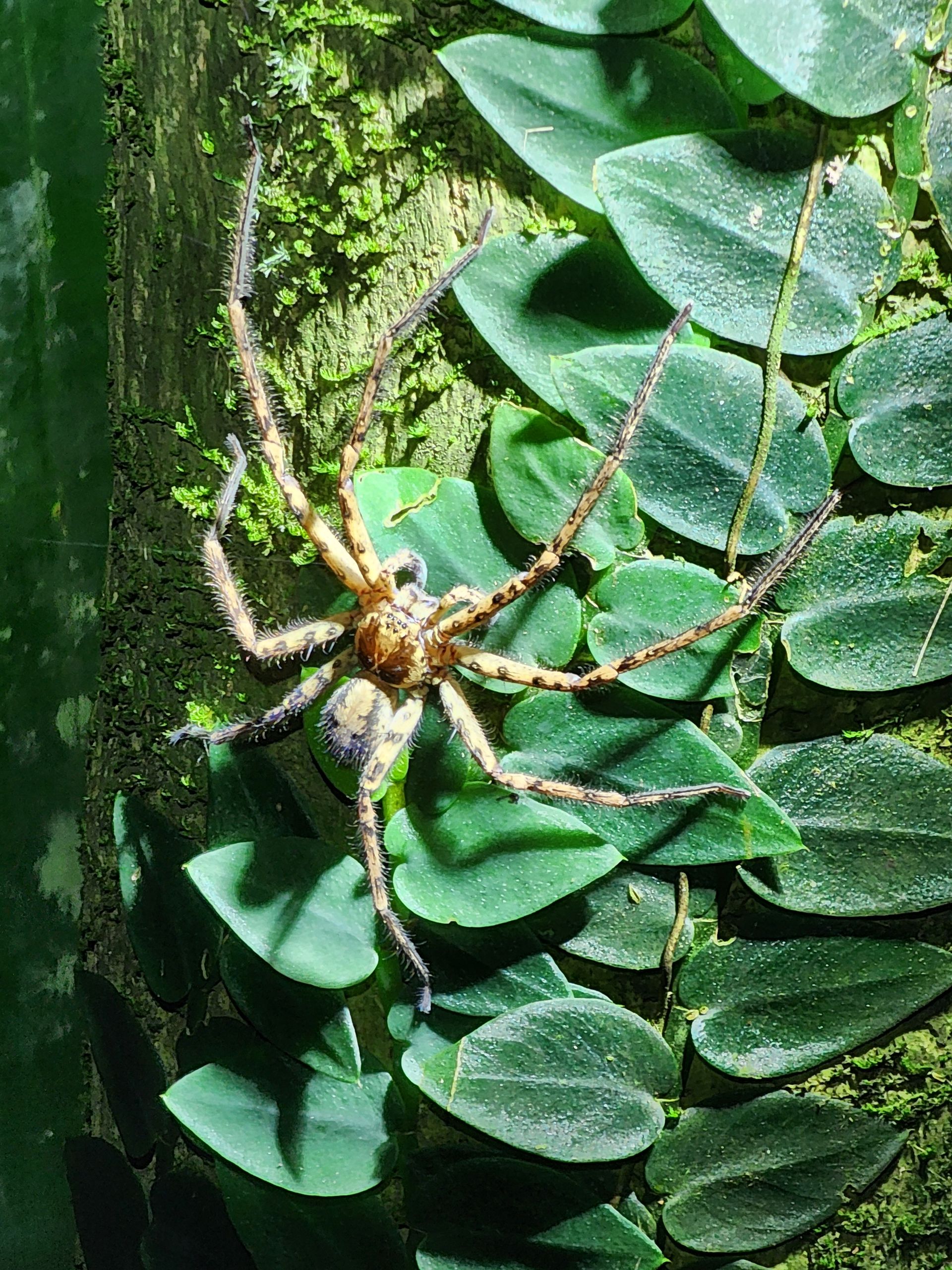
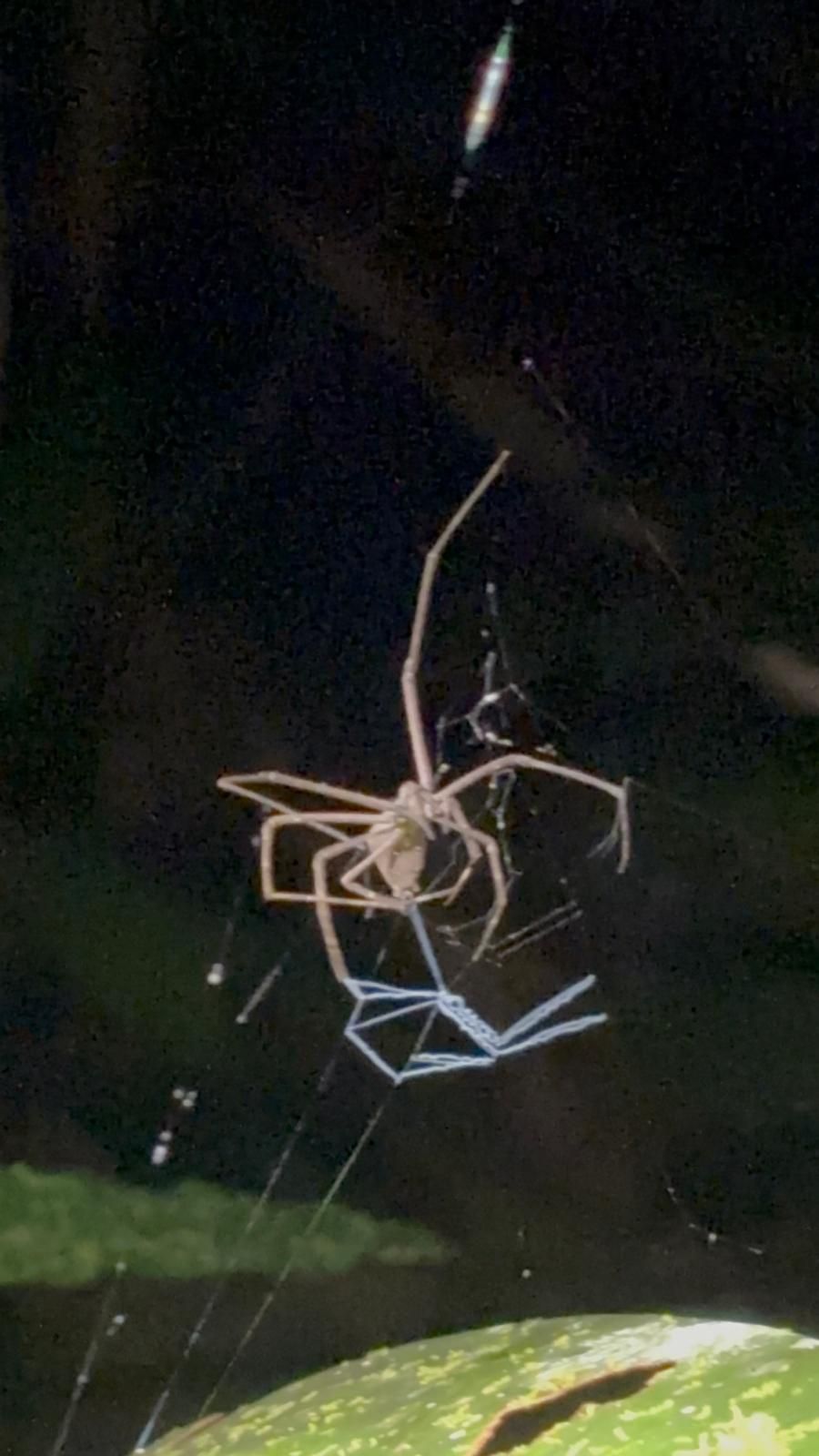
Today, we ventured into the oldest tropical rainforest in the world, the Daintree. Since Gondwana, for 180 million years, there has been continuous tropical rainforest here, much longer than in the Amazon or the Congo. The Daintree itself is only 1200 square kilometers in size, stretching just over 100km along the coast north of Cairns and being a maximum of 40km wide, before it meets the Dividing Range, behind which the grassland and desert of the Outback begins. So overall, it is a small, fragile ecosystem.
We set off early, at 6:30, because it only takes 1.5 hours from Cairns to reach the beginning of the Daintree, and then another hour to Cape Tribulation, where most of the lodges and such are located. Therefore, it is somewhat overrun by tourists and holidaymakers from Cairns.
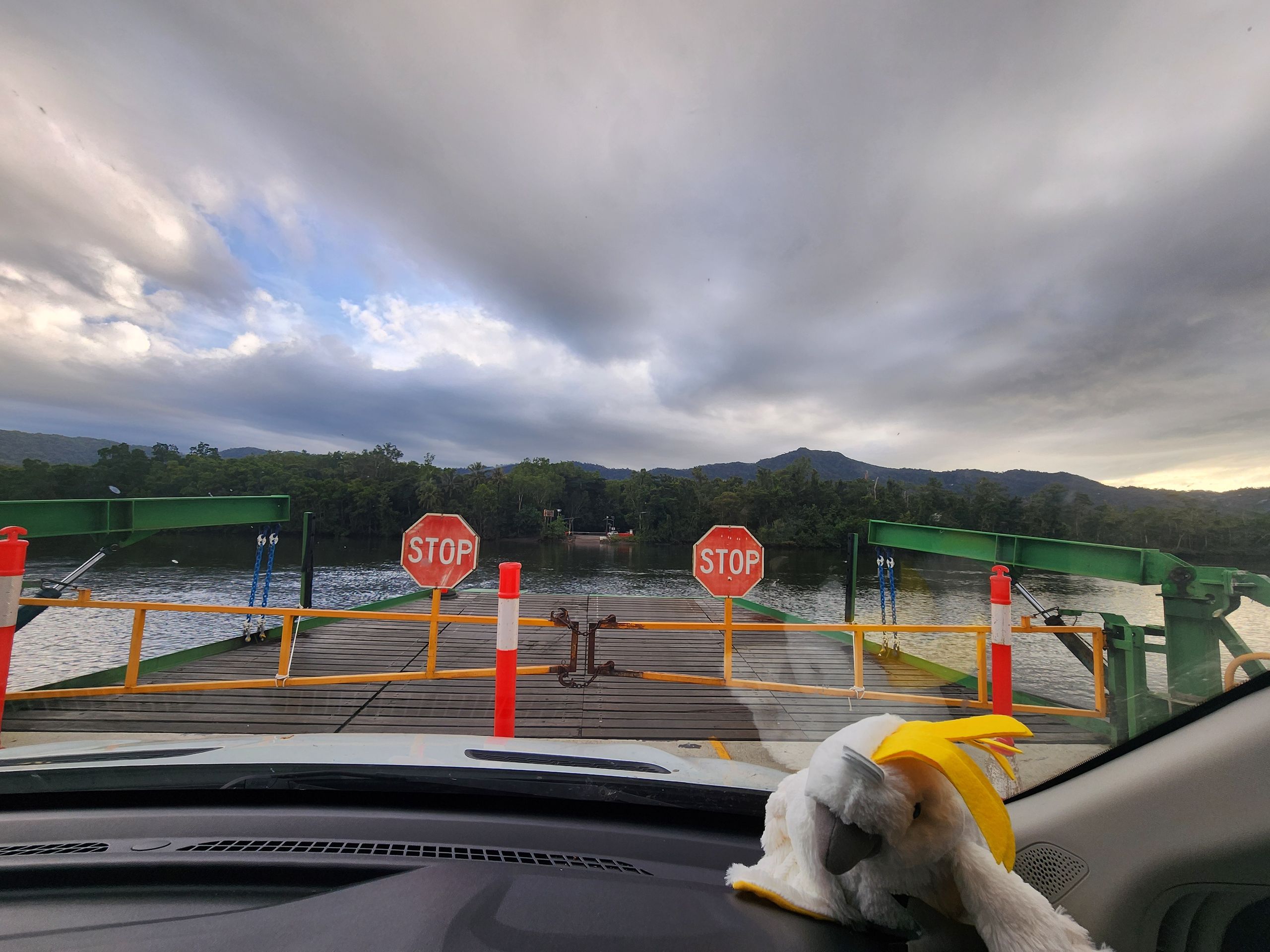
Around 8:00, we arrived at the ferry across the Daintree River. Since none of the toll booths were operating, we crossed for free for the first time. 15km later, we reached the Daintree Discovery Centre, the private information center, which was still closed. No matter, 1km later we found a Day Use Area where we parked and did two hikes: a short 700m hike on a so-called boardwalk, a sort of platform through the forest, and 3km on root paths through the jungle, partly climbing over fallen tree trunks.
And here we also saw the main attraction of the Daintree: there was heavy rustling in the bushes, I saw something black that I initially thought was a wild boar. But Lindelani spotted it correctly, and I finally saw the blue neck and head, with a red helmet: a cassowary! The view was not good and did not last long, so we could not take photos.
There are said to be about 3000 cassowaries left in Queensland, meaning Mission Beach, Tablelands, and Daintree, but due to the density of the rainforest, there are no reliable counts. Sightings are an impressive sensation for tourists, but only a few have the luck to see one stepping out of the forest onto the road or during a hike. Therefore, we were satisfied with our sighting. It would be the only one.
When we arrived, we were the only car. When we came out of the forest, the parking lot was full, even at the information center where we were kindly informed.
At 10:00, we were at the headquarters of the Rainforest Conservation Foundation. Two days ago, we had met Ron Baldwin, one of the directors; he had heard our presentation and invited us to visit here. The manager Golly was there and took a lot of time for us.
Golly is 70 years old, very fit, and had double braids of hair that reached down to his knees. He told us wild stories about the “locals” in the Daintree, aged hippies with fried brains, people hiding here from the police. When one of the crocodile cruise safari providers died in a traffic accident, it turned out that he was one of “America’s most wanted,” sought by the FBI for drug-related issues.
In the past, the Daintree was not yet protected, and the rainy area, with over 3000ml of rain per year, was unpopular, the real estate expensive. Many funny characters bought here, and there were also cattle farms and sugarcane plantations. For this, the ancient rainforest was deforested.
The conservation organization has purchased private properties and reforested them. To do this, Ronny grows seedlings of about 70 (of 900) tree species, which are then planted by him, volunteers, and students. He showed us on a neighboring private property how that looks. We saw newly growing rainforest in different stages. The trees grow quickly here, and after just 20 years, you have a healthy secondary forest with tree giants.
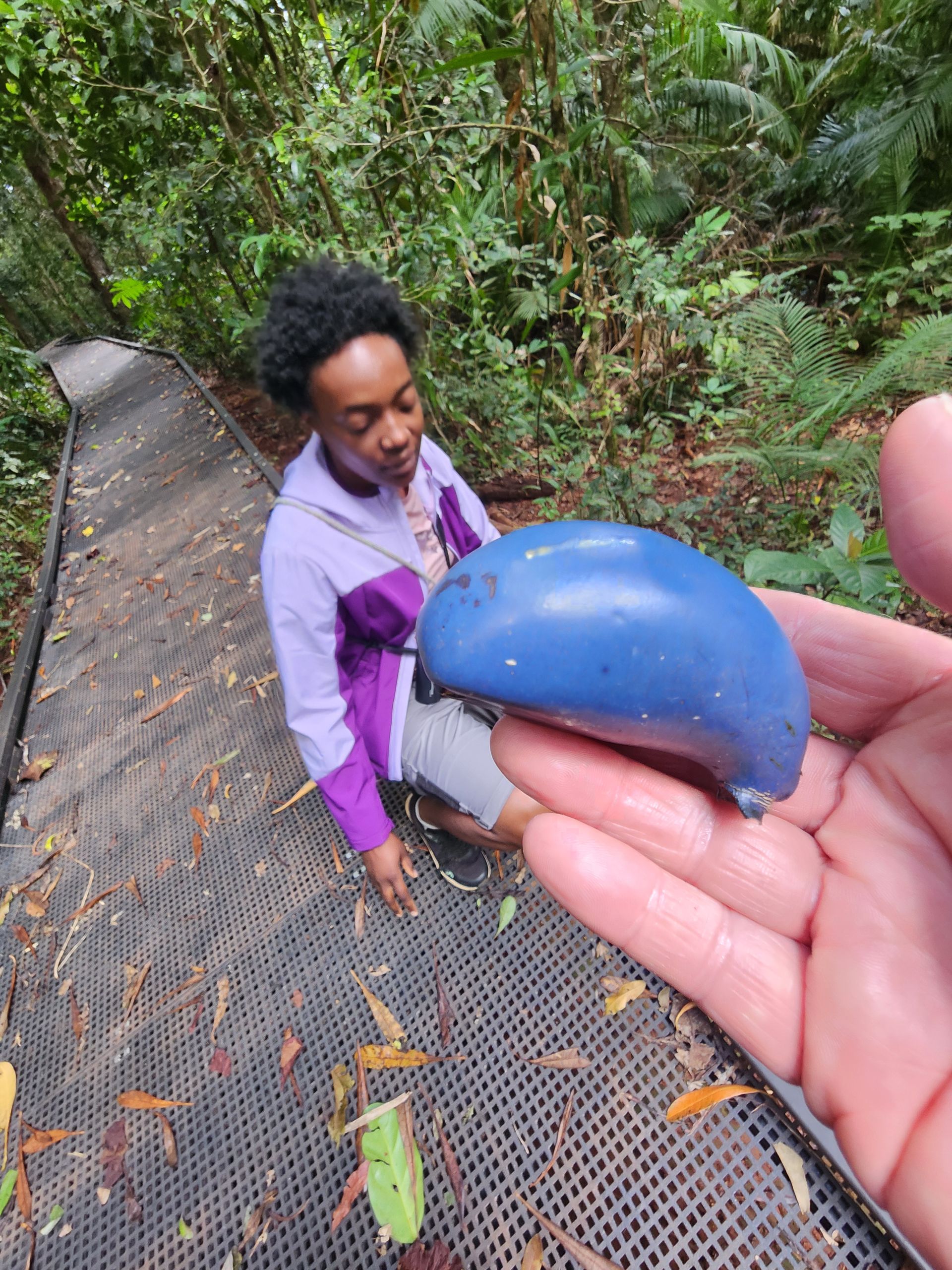
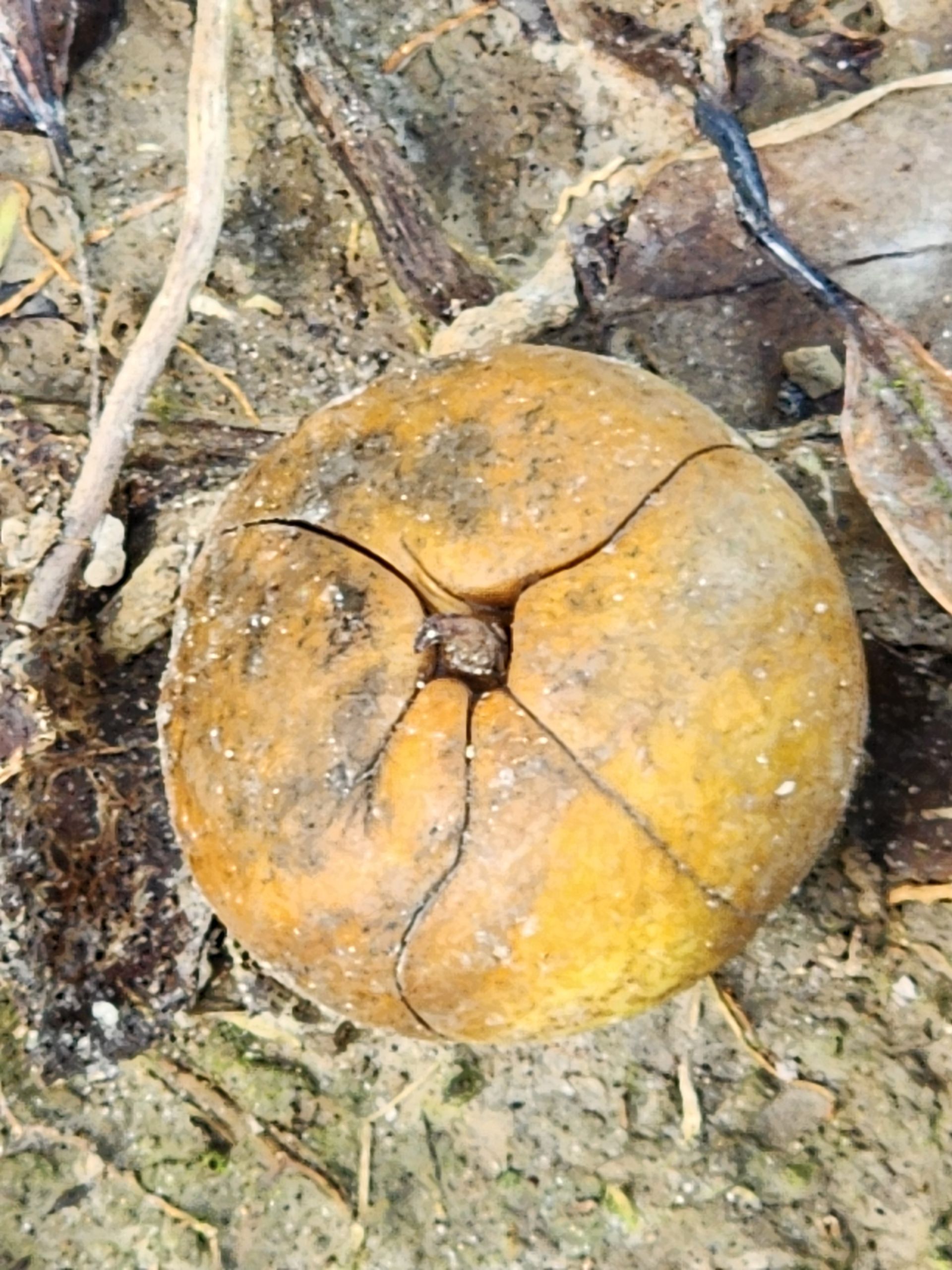
Since the forest is so old, there are also primeval tree species that no longer exist anywhere else, living fossils. Among them is Idiospermum, known as the dinosaur tree. 70 million years ago, its fruits were eaten by dinosaurs, and the seeds were thus spread. After the extinction of the dinosaurs, no other species took over this function, as the fruits are toxic to mammals. The tangerine-shaped hard fruits simply fall to the ground and roll somewhere, where they may germinate. This explains the very small distribution area of the species. Meanwhile, Golly has now planted them almost throughout the entire Daintree.
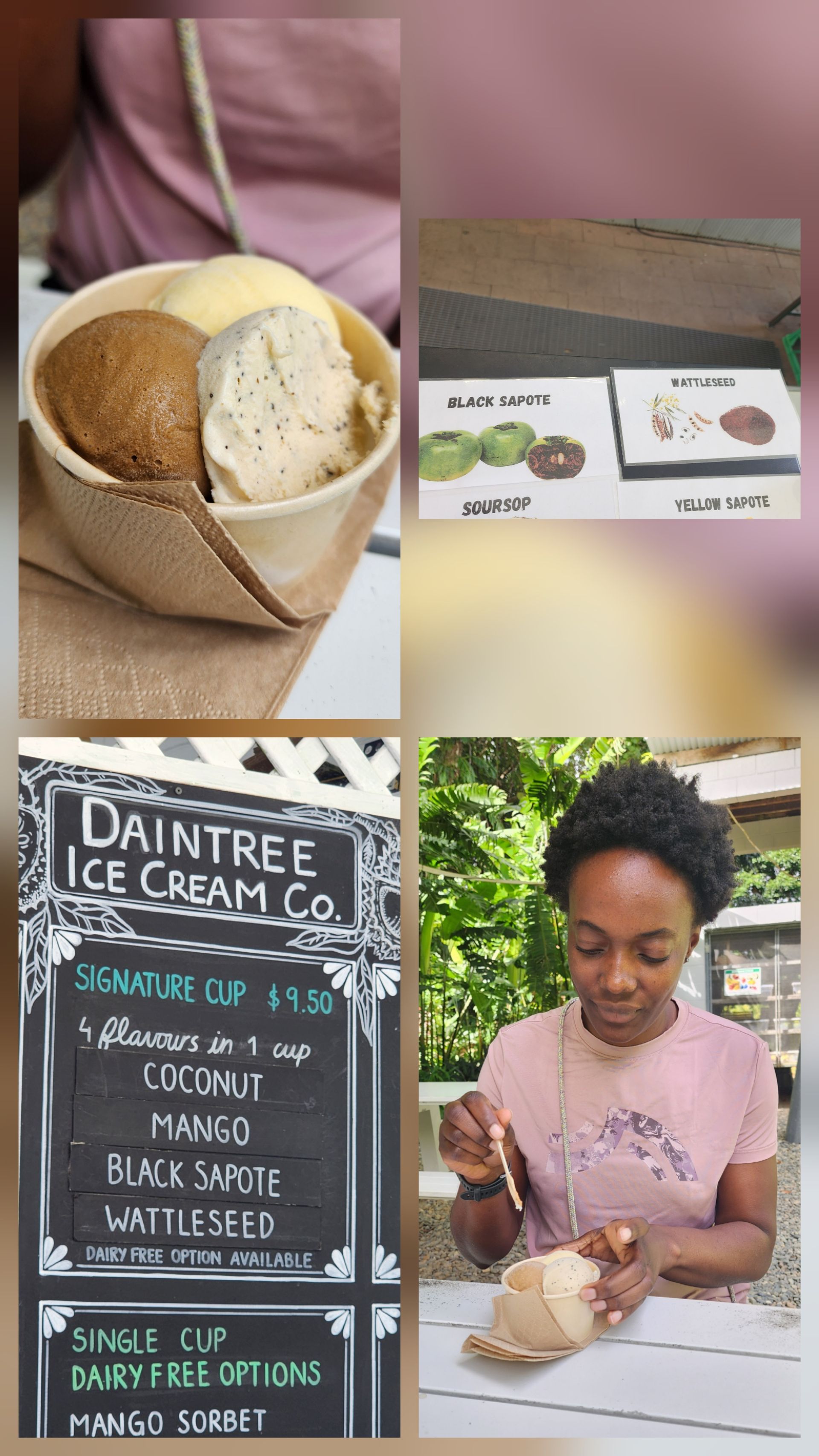
After three very interesting hours, we said goodbye to Golly. We went to the famous ice cream factory that everyone in Cairns recommended to us; however, the ice cream in Kehl tastes better. After 14:00, we arrived at our campsite in Cape Tribulation, almost right on the beach, with only a few trees as windbreaks between the parking space and the ocean.
James Cook named Cape Tribulation on his first South Sea voyage in June 1770 because that was where the 'tribulations began' at the Great Barrier Reef. The HMS Endeavour ran aground on a reef, and the crew had to repair the ship in present-day Cooktown for weeks.
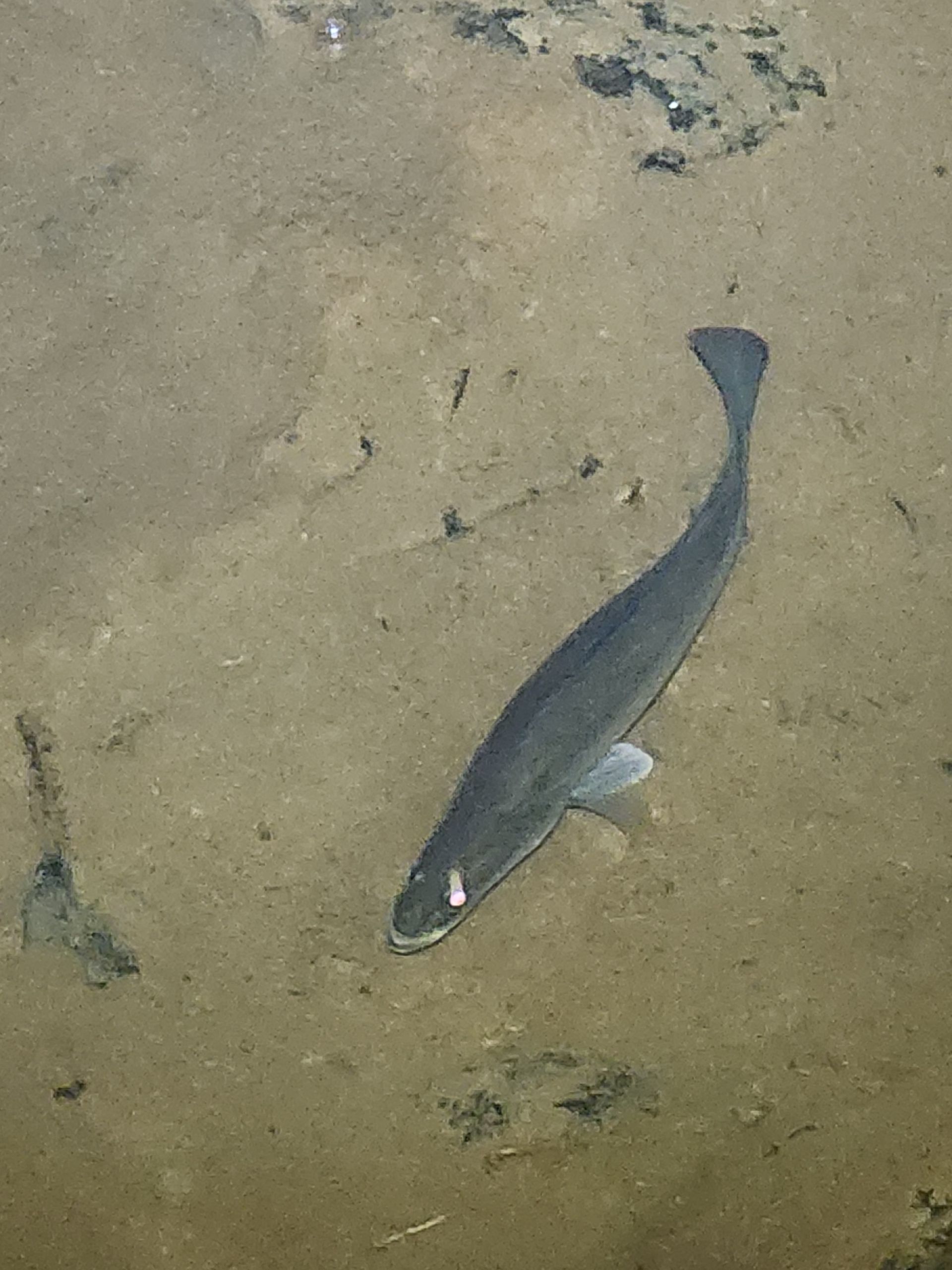
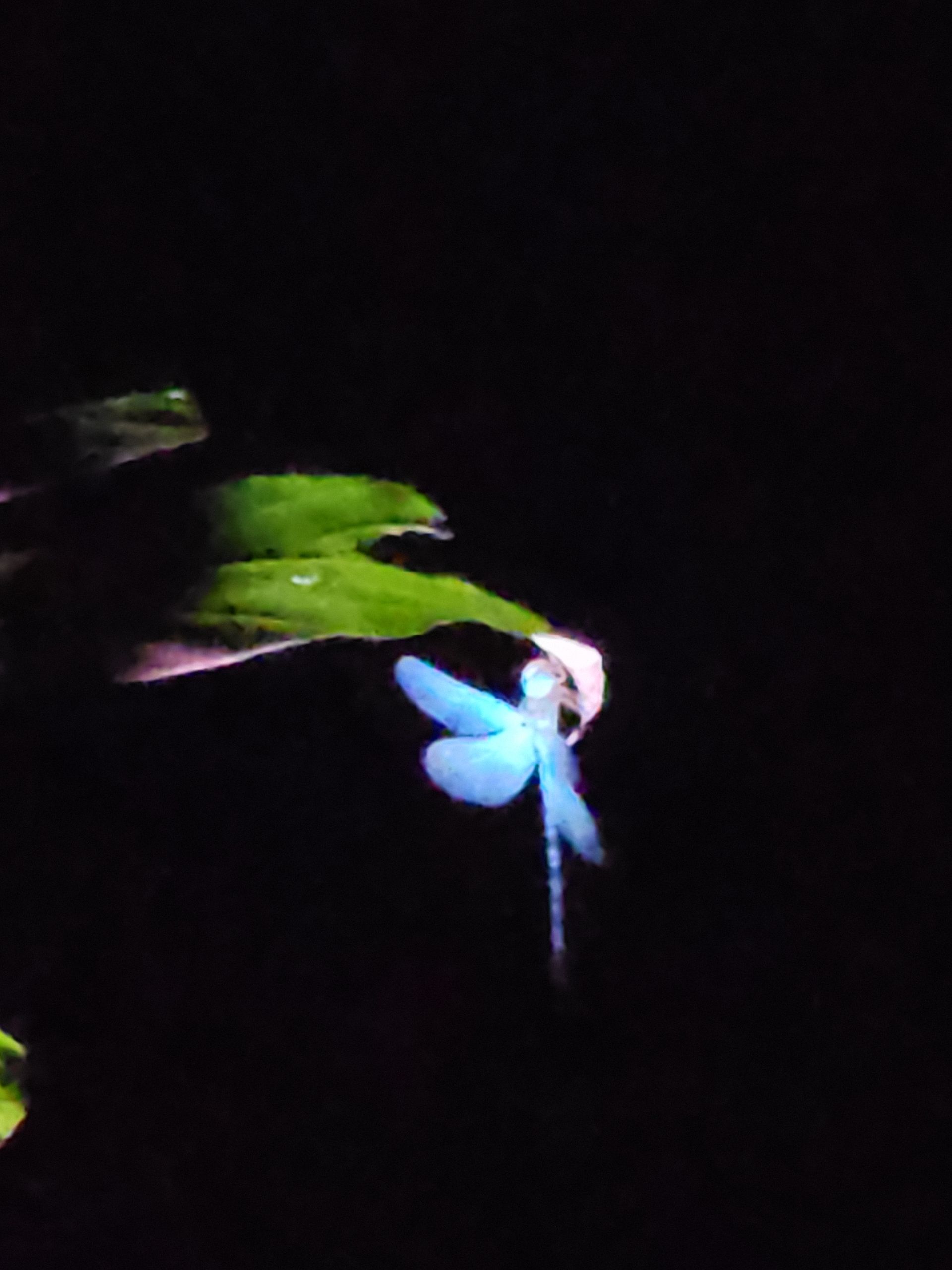
The weather was not particularly great; the sky was overcast, but we walked a bit along the beach and a nearby boardwalk of 1.2km. At night, we walked the route again and after about 20 minutes reached a nearby lodge for a two-hour night walk into the forest along the boardwalk. We did not see any mammals, but there were spiders and insects. The whole thing was rather tedious and boring for us. But there were highlights: glowing scorpions under the bark of dead trees, UV glowing mushrooms, an eel in the river.