Day 23, May 17, Big Crystal Creek (Paluma Range NP)
In the morning, we admired the platypuses by the river once again, and at 8:00 we set off through the misty rainforest, down into the sunny valley. Here, we could still admire...

Published: 18.05.2026
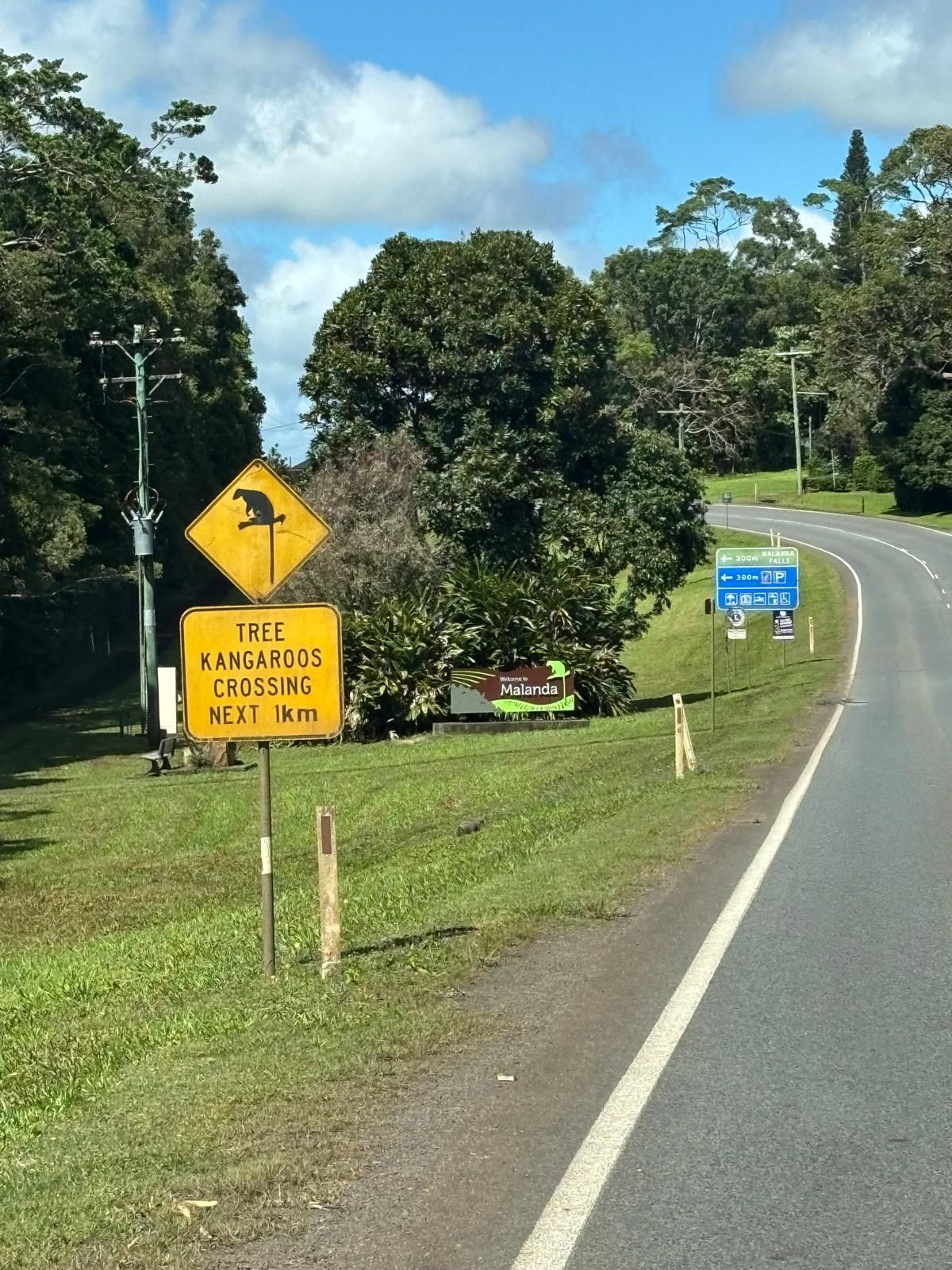
Day 24, May 18: The Tree Kangaroos of Malanda!
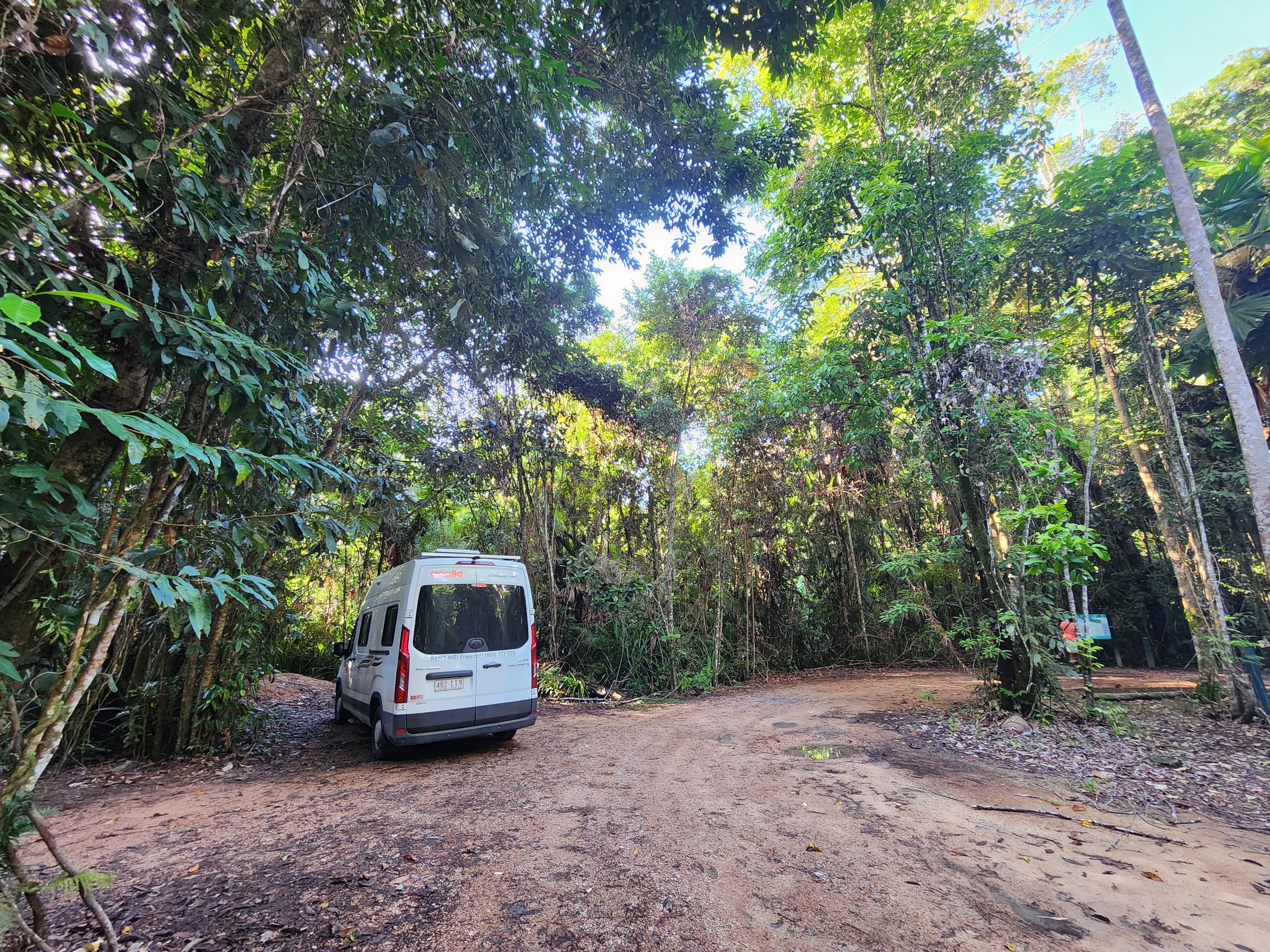
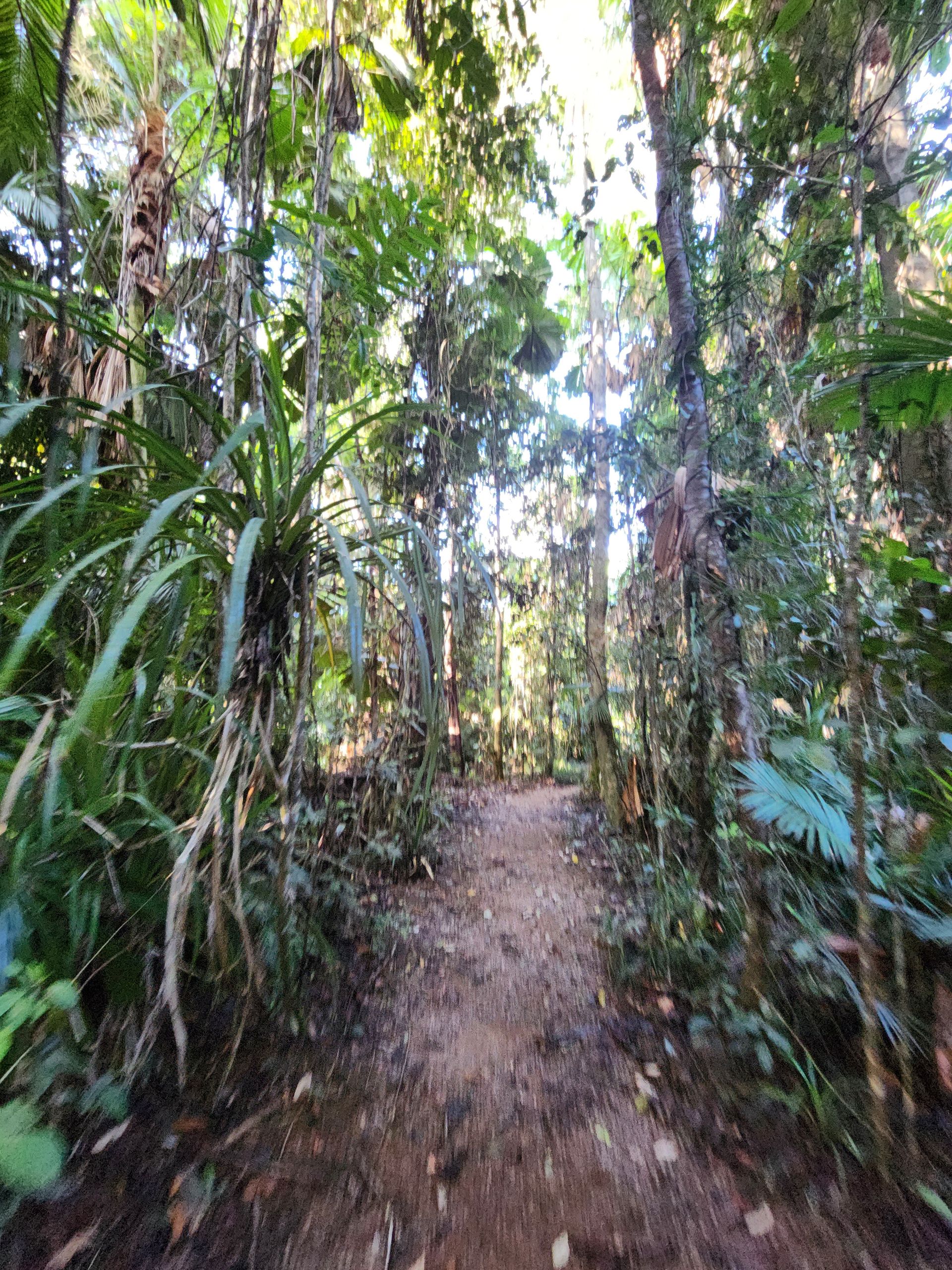
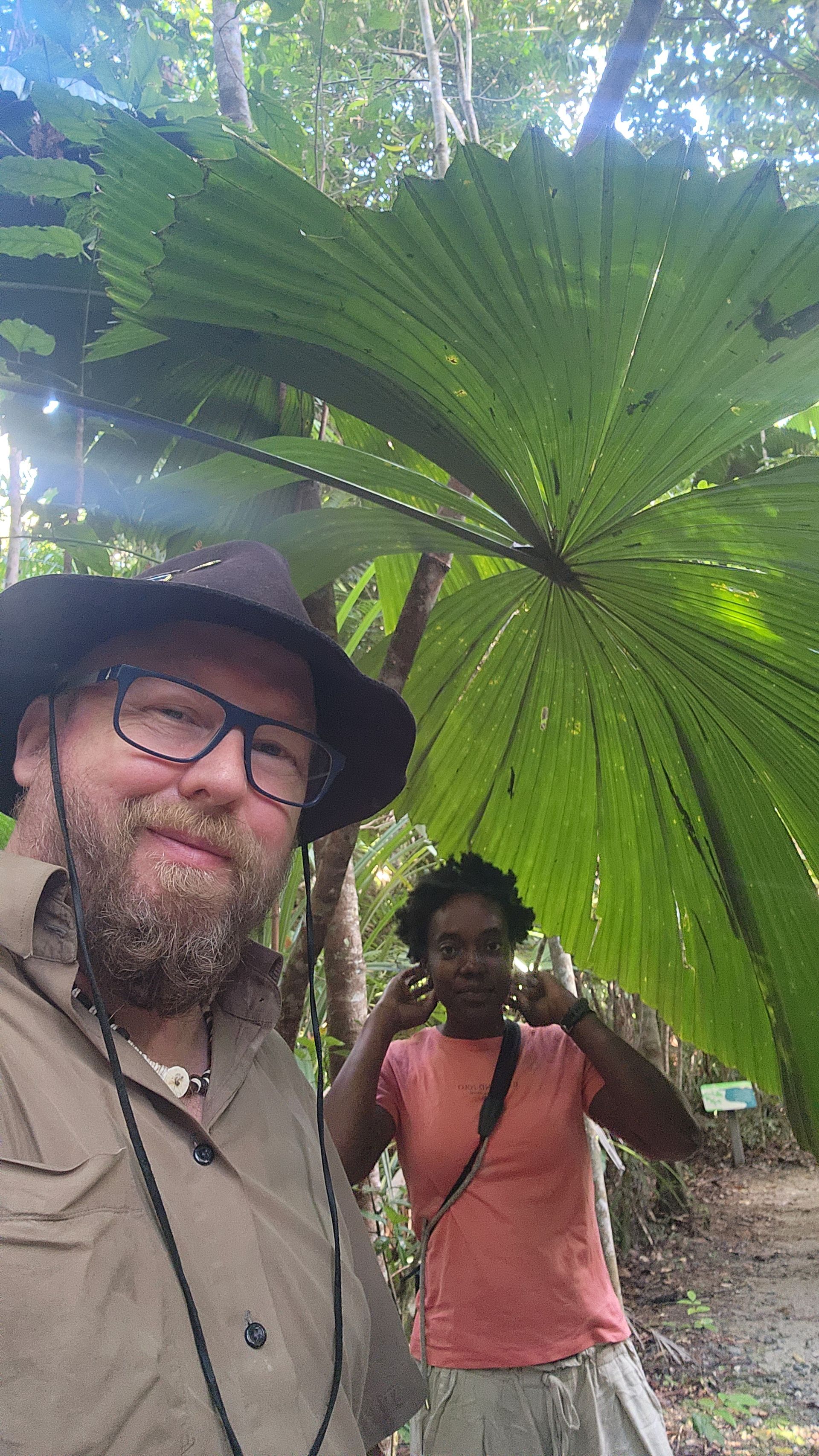
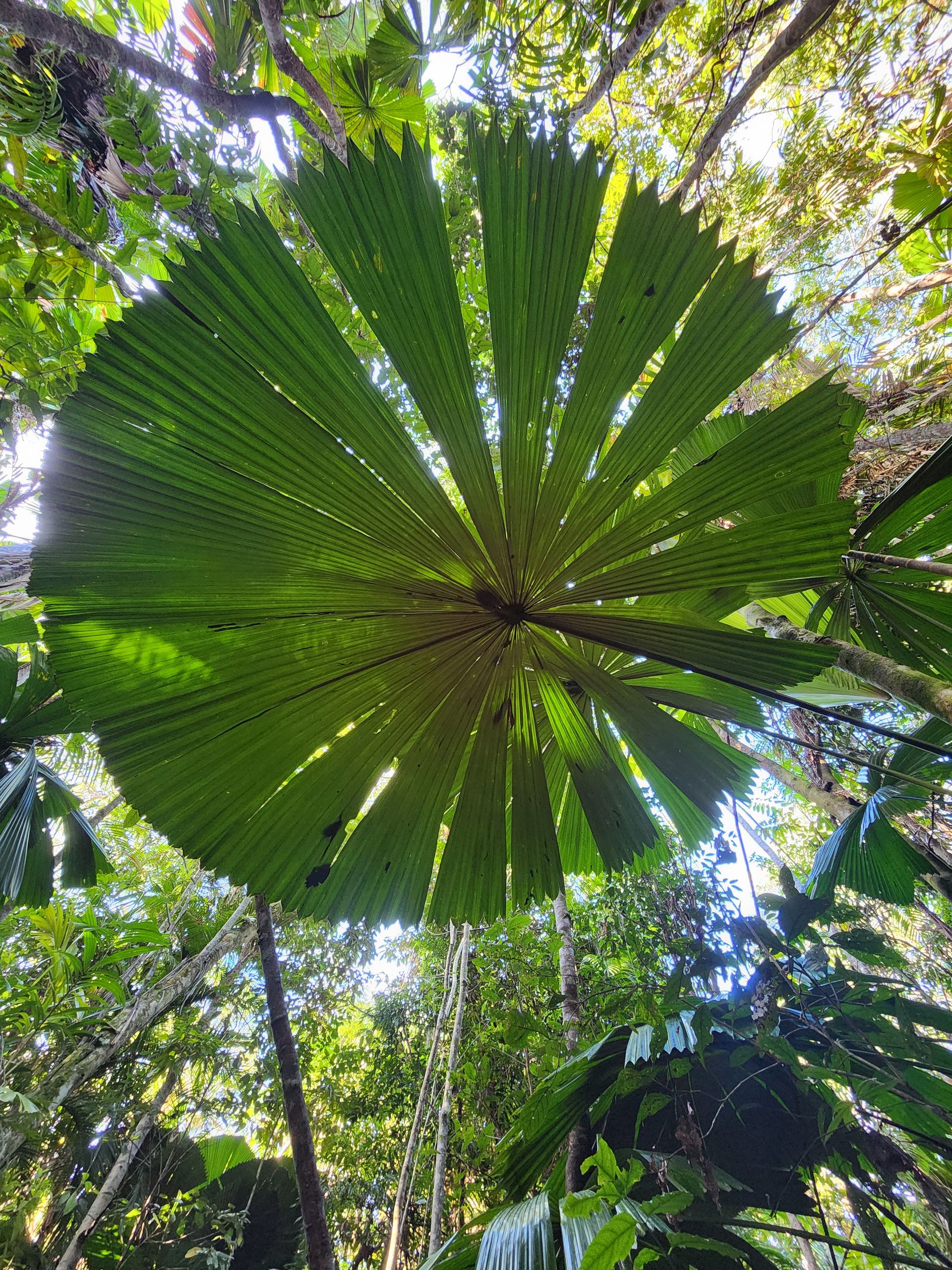
Morning exercise at 5:30, finally possible again, then leaving at 6:20 in the dawn, back to the highway, and then took a right turn about 100km further into the tropical rainforest of Mission Beach, famous for its cassowaries. After almost 2 hours, we arrived at the Licuala Day Use Area of the Djiru National Park. The 1km drive through extremely dense rainforest was impressive. The hike there, a total of 2.5km, was also remarkable, as the forest is so dense with palms, strangler figs, and epiphytes. We saw tracks of the cassowary in the mud, but unfortunately not the animal itself.
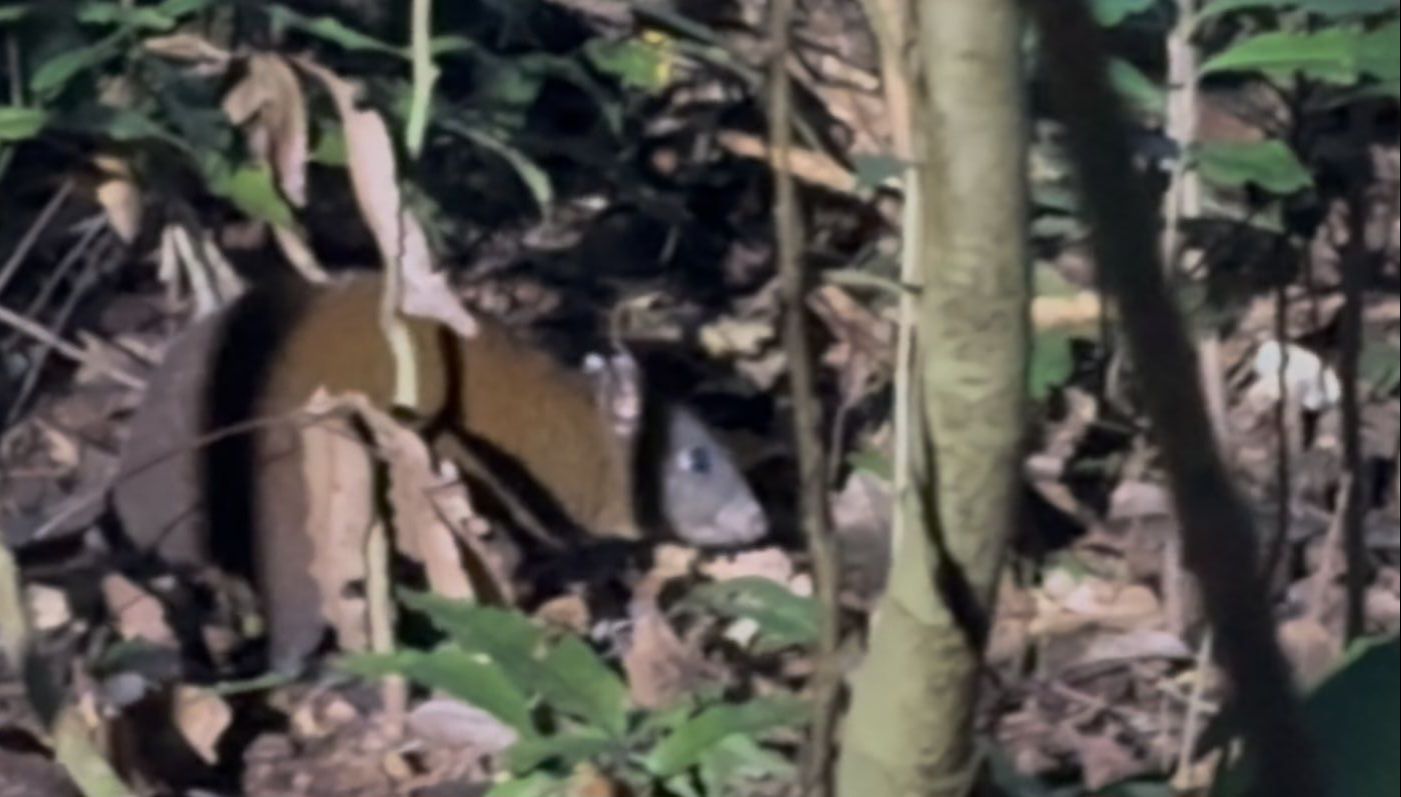
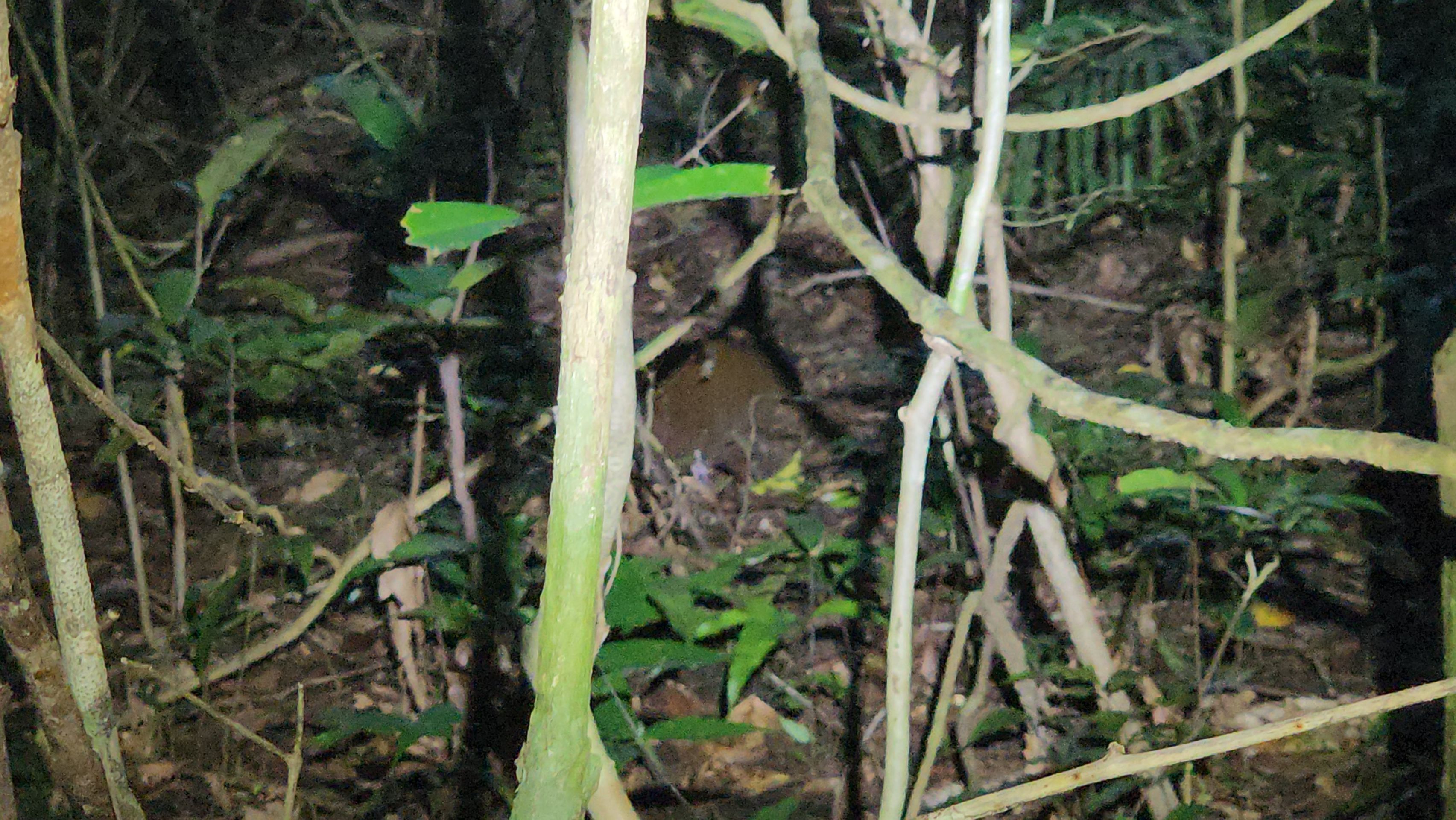
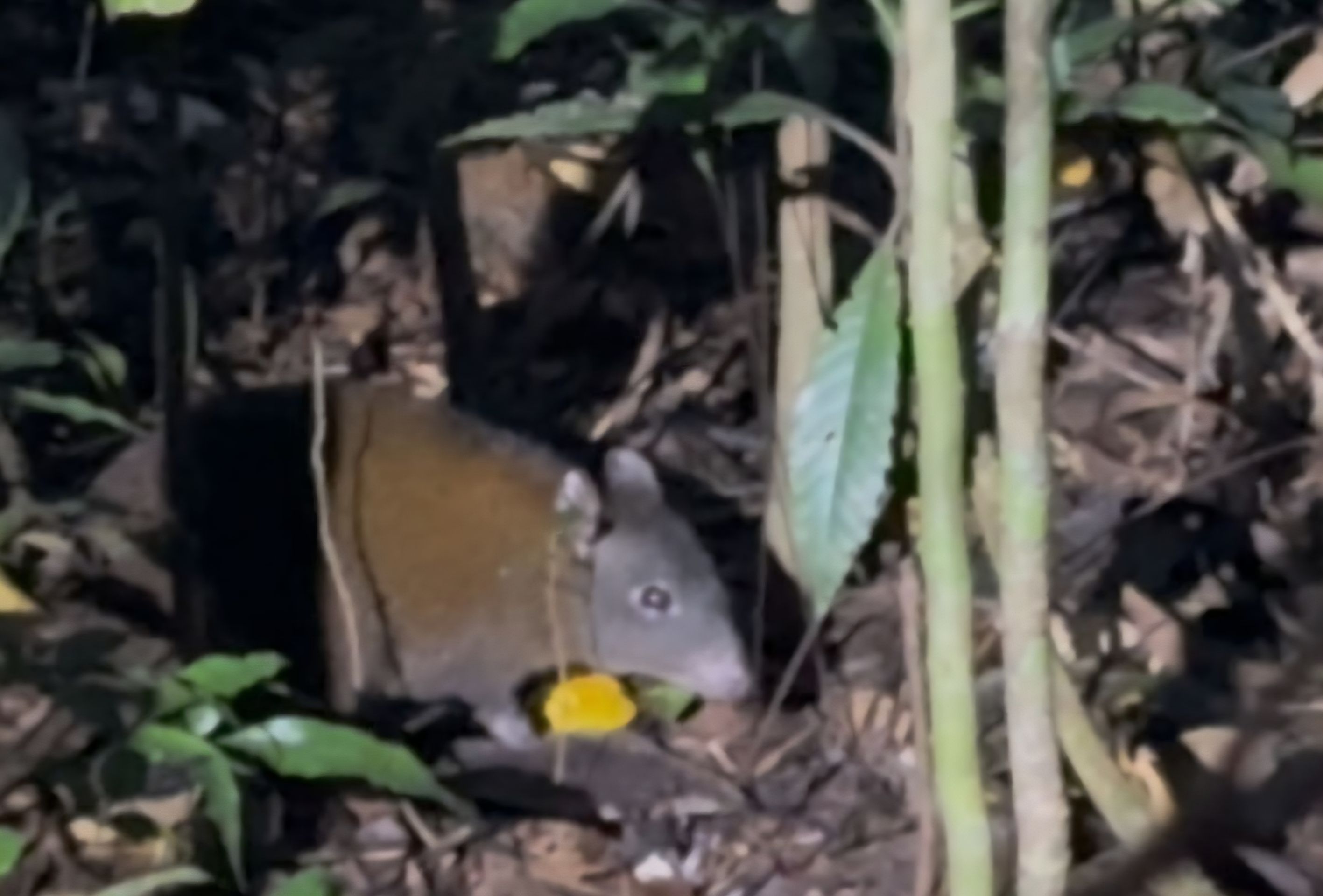
Instead, unexpectedly, we had another highlight: a Musky Rat-kangaroo, the smallest and most primitive of all kangaroos. It is the only one that still has 5 toes, weighs only about 500g, and has beautiful rusty-brown fur that camouflages it perfectly in the underbrush, where it forages during the day, moving not by hopping but on all fours. When I saw it, I immediately thought of a golden moles, the elephant shrews of the forests of Tanzania. And indeed, the Musky Rat-kangaroo is the only kangaroo that is a pure insectivore, like the elephant shrews!
We continued for another 20km to another Day Use Area and walked another 2km, seeing another Musky Rat-kangaroo, but neither there nor on the way through the rainforest did we see a cassowary. So back to the highway, another 70km north, then took a left turn and up into the Atherton Tablelands, a plateau at 500m above sea level with rainforest and pastures, very tourist-friendly. Destination: The rare Lumholtz's Tree Kangaroo, which only occurs here in a very small area.
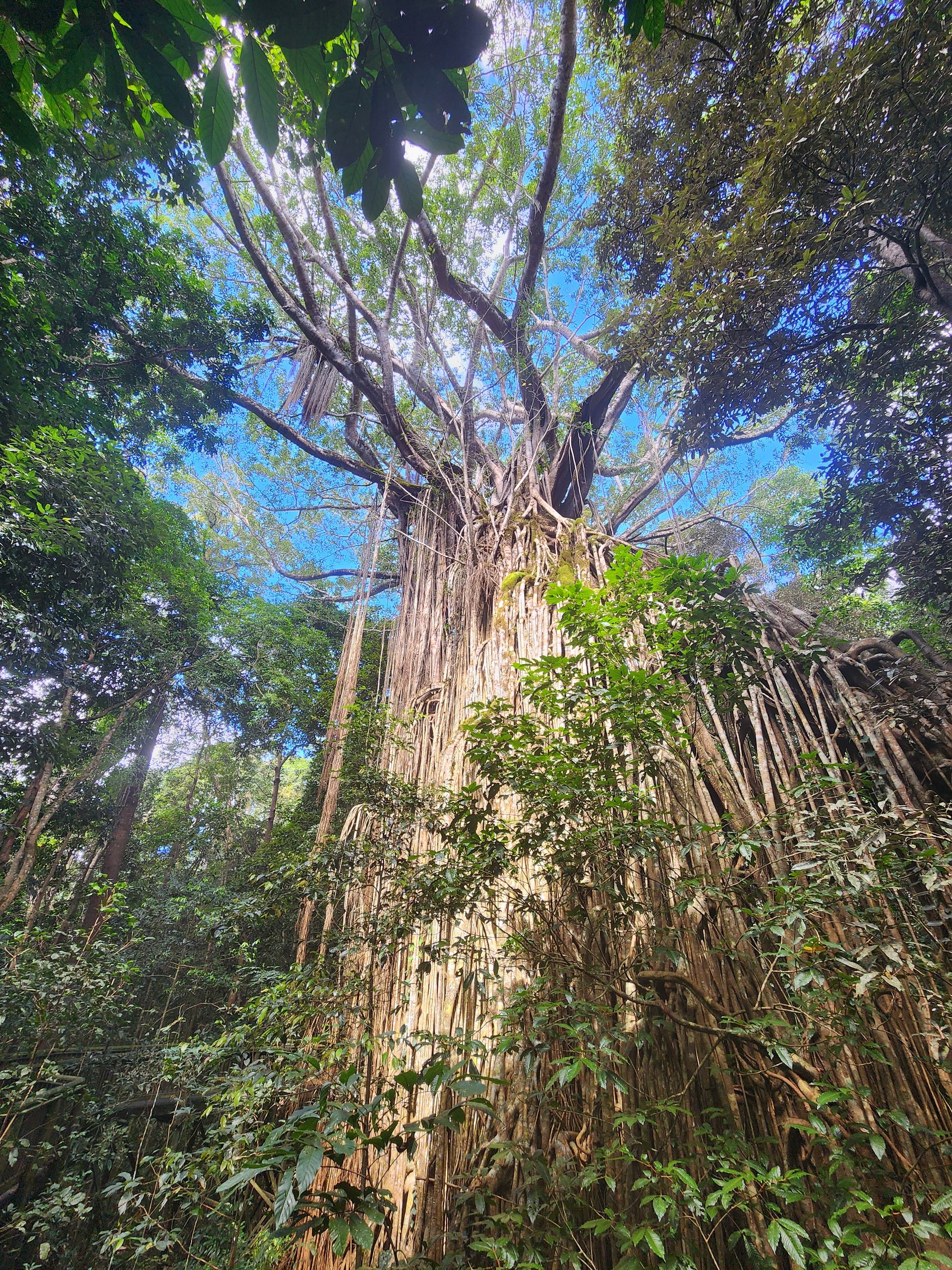
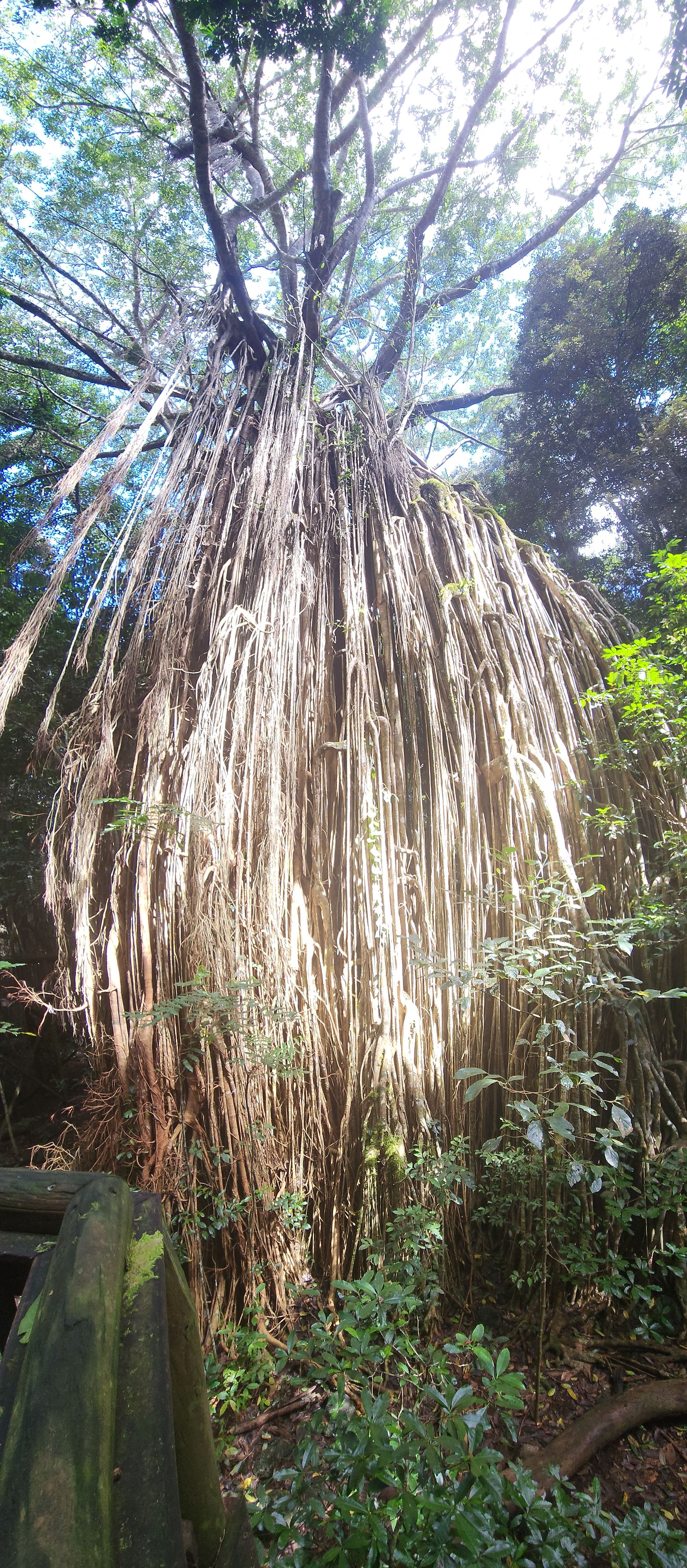
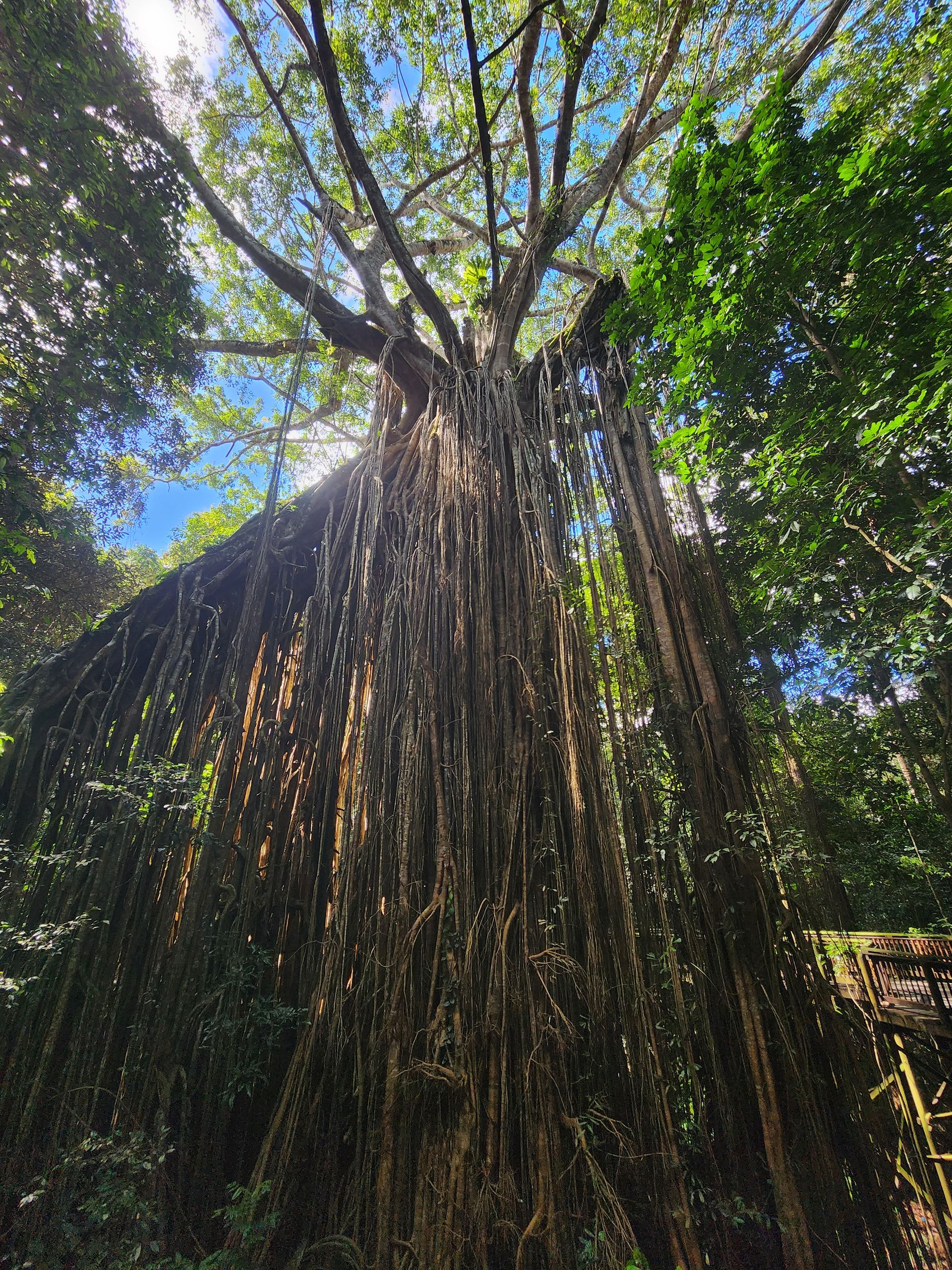
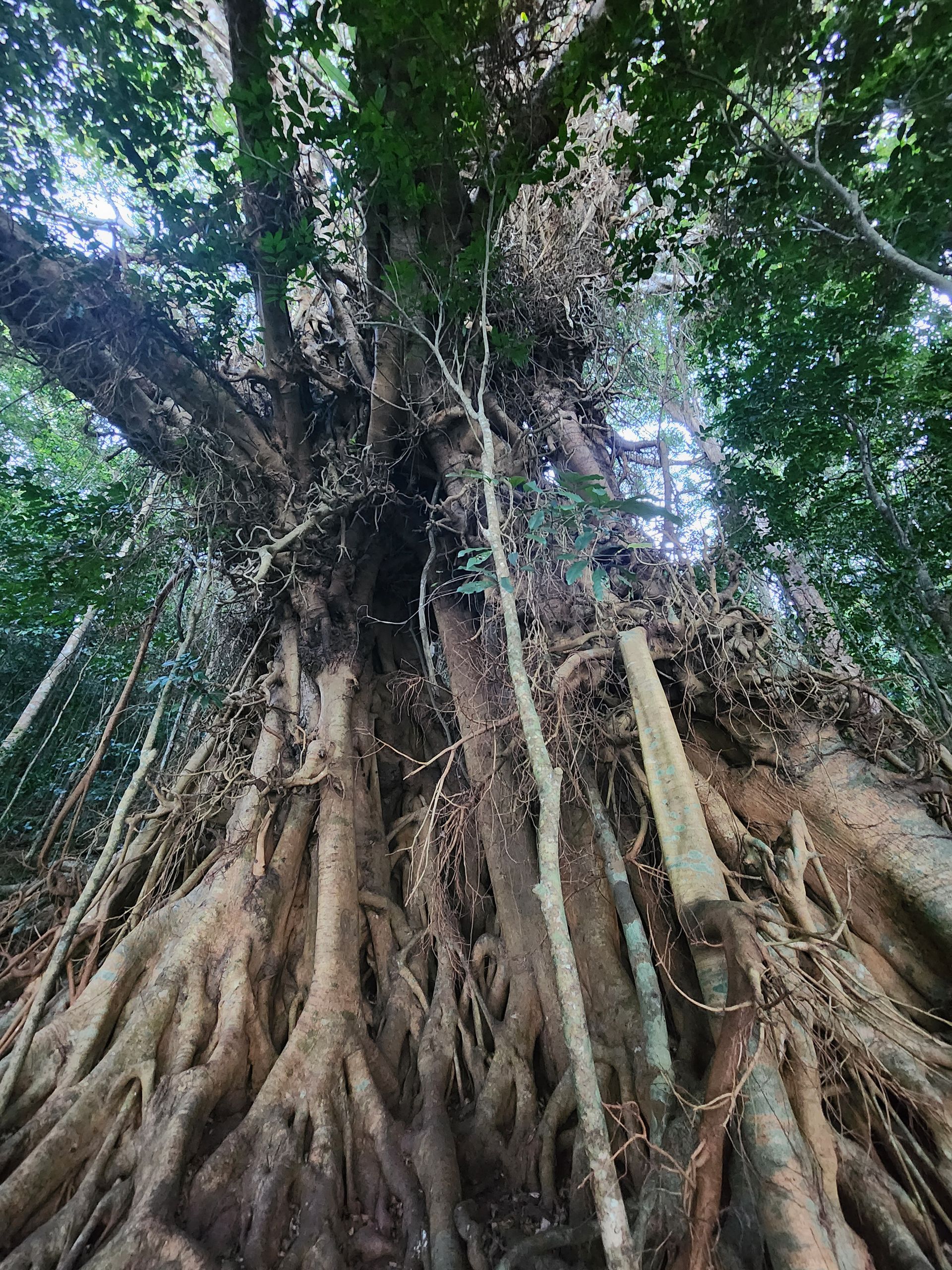
First, we went to the impressive Curtain Fig Tree: an extremely impressive, giant tree with roots of a strangler fig hanging down like a curtain. In fact, there are two trees: The strangler fig had first attacked a giant rainforest tree so that it fell over onto a second giant rainforest tree, forming a kind of triangle along which the strangler fig happily continued to grow, with more and more roots hanging down like a curtain.
Then to the Malanda Falls Conservation Park, only 10 minutes away, famous for its tree kangaroos. The women in the information center were very kind and helpful and gave many tips. They said this was the best place to see tree kangaroos. Just four days ago, someone had spotted one on the small trail across. And no, they are not nocturnal, but also forage during the day.
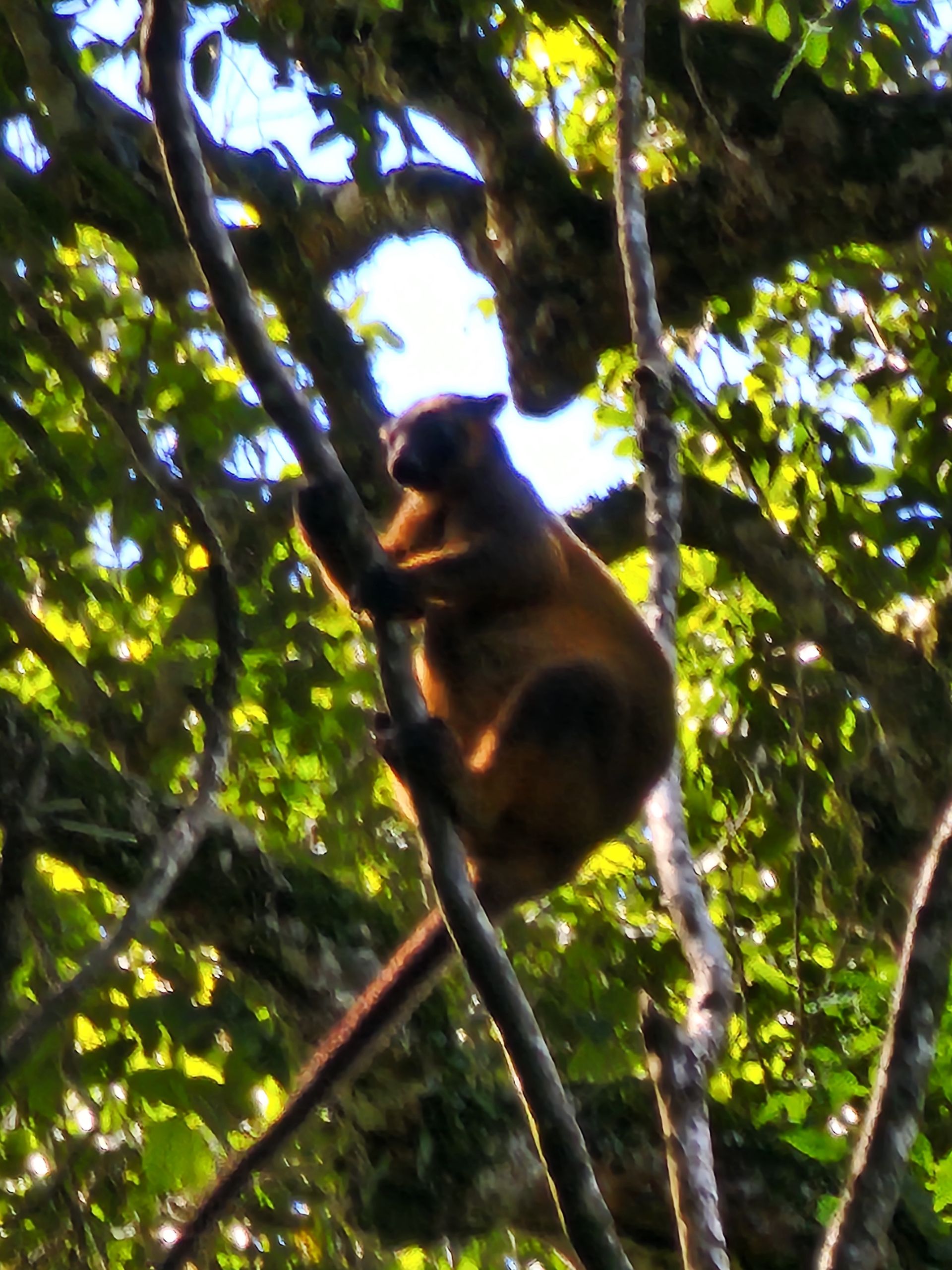
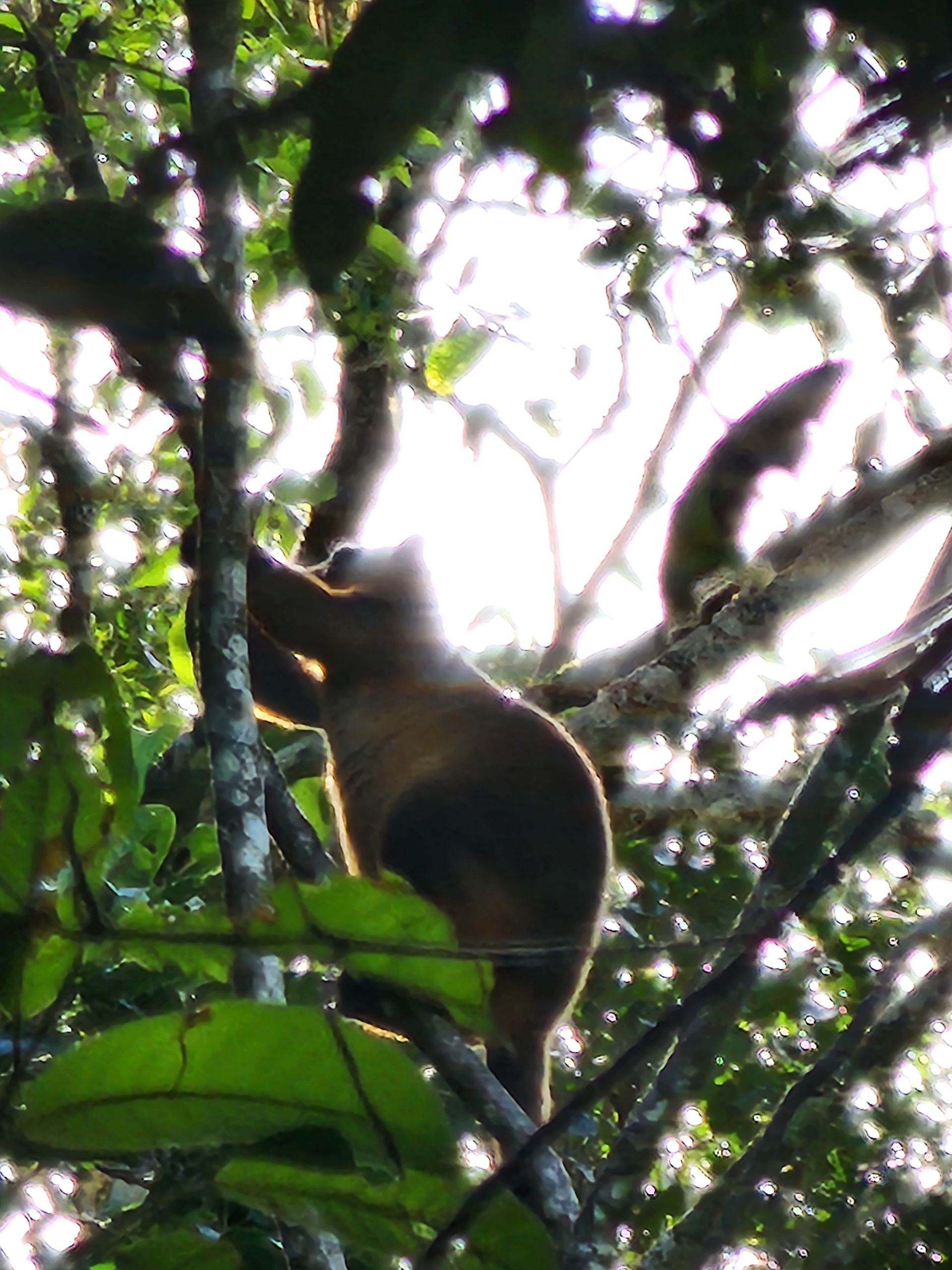
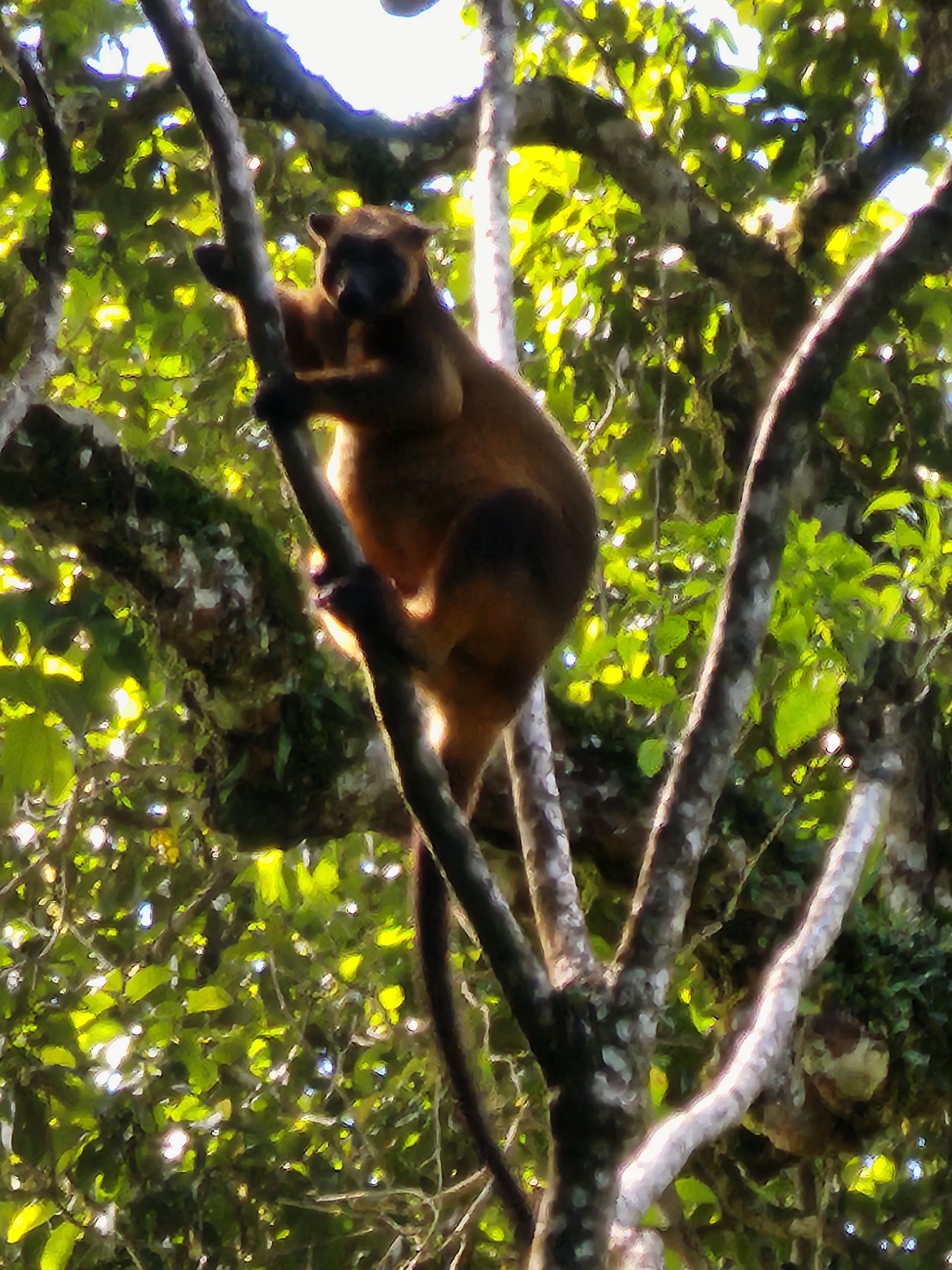
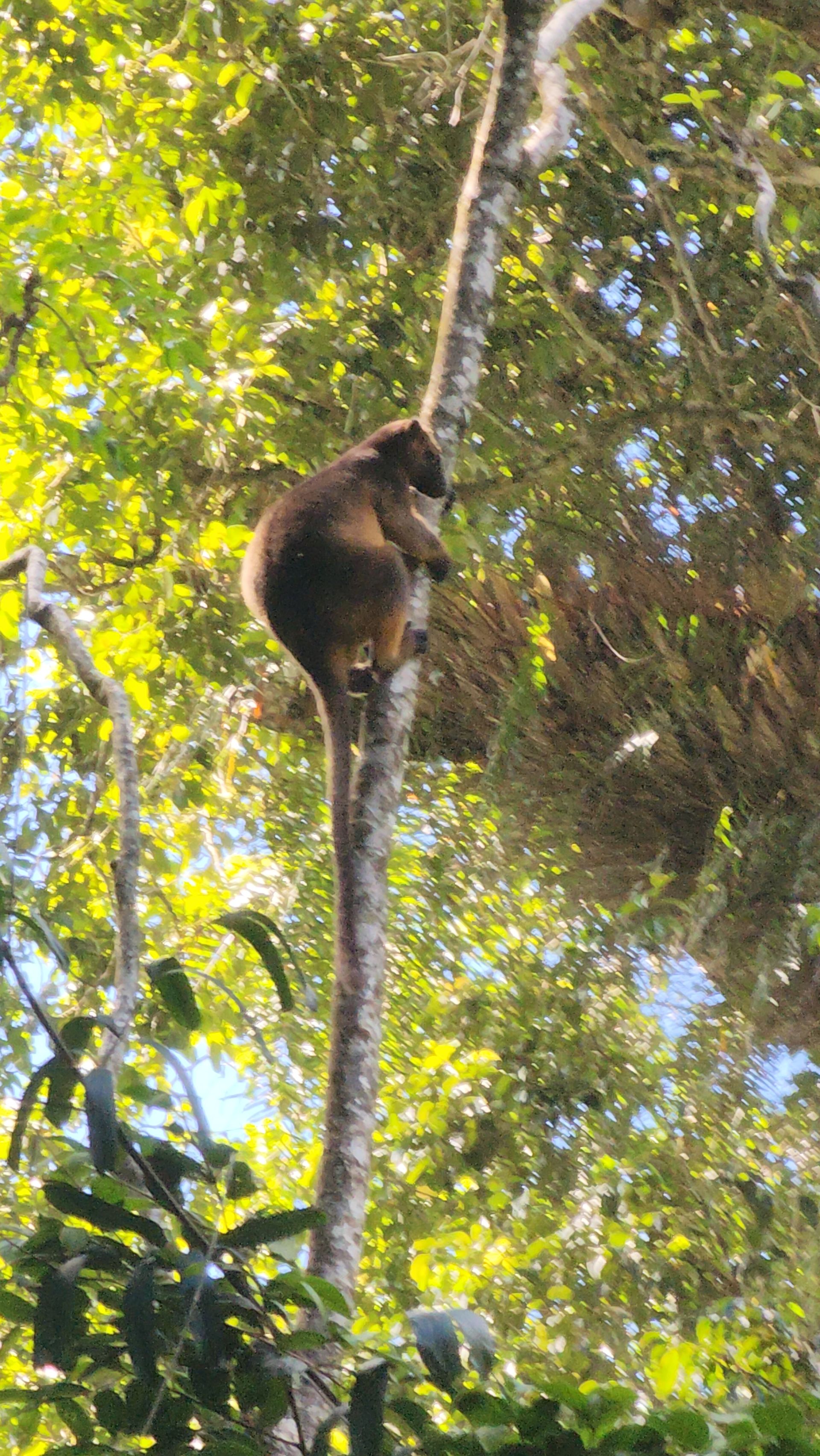
Well, we then went on this 1.1km circular trail at 12:00. We had little hope of spotting a tree kangaroo in this dense jungle somewhere in the treetops. And yet, suddenly I had one in my field of vision, even though I instinctively thought it was a howler monkey. Because the dark brown, 7kg heavy animal with a long grasping tail and climbing hands did indeed remind me of such a primate. And like a howler monkey, it is purely folivorous, busy shoving one leaf after another into its mouth. However, unlike monkeys, tree kangaroos are solitary.
We could observe the animal very well, although unfortunately it was against the sun. Then, after some time, it climbed down the tree quickly and disappeared.
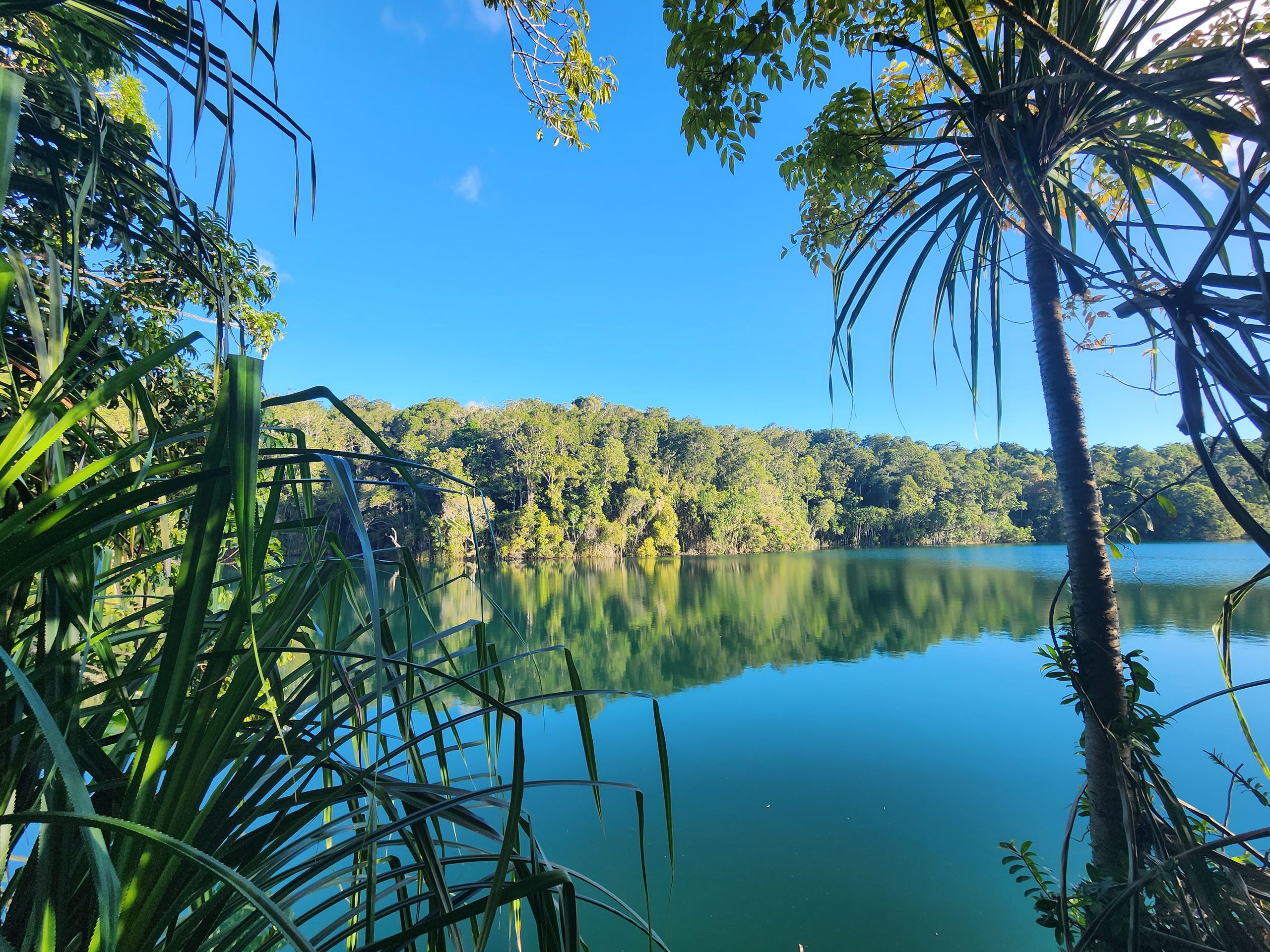
So we went to the nice caravan park right next to the park, had something to eat and rested, and at 15:30 embarked on a second circular walk, but without seeing anything. On the recommendation of the ladies at the information center, we then drove 15 minutes to the beautifully situated Lake Eacham, where there were supposed to be many Musky Rat-kangaroos. Indeed, we saw three of these animals on the 3km circular trail around the lake. The advantage was that I had my headlamp with me and on, which made a big difference in the dark underbrush of the rainforest. The last animal was finally so cooperative that we were able to film it at least with the phone.