
New Delhi dans un vieux pantalon
À notre arrivée en Inde, nous avons dû passer par la procédure habituelle, c'est-à-dire donner nos empreintes digitales, nous faire photographier, remplir une déclaration de...

Publié: 22.04.2025
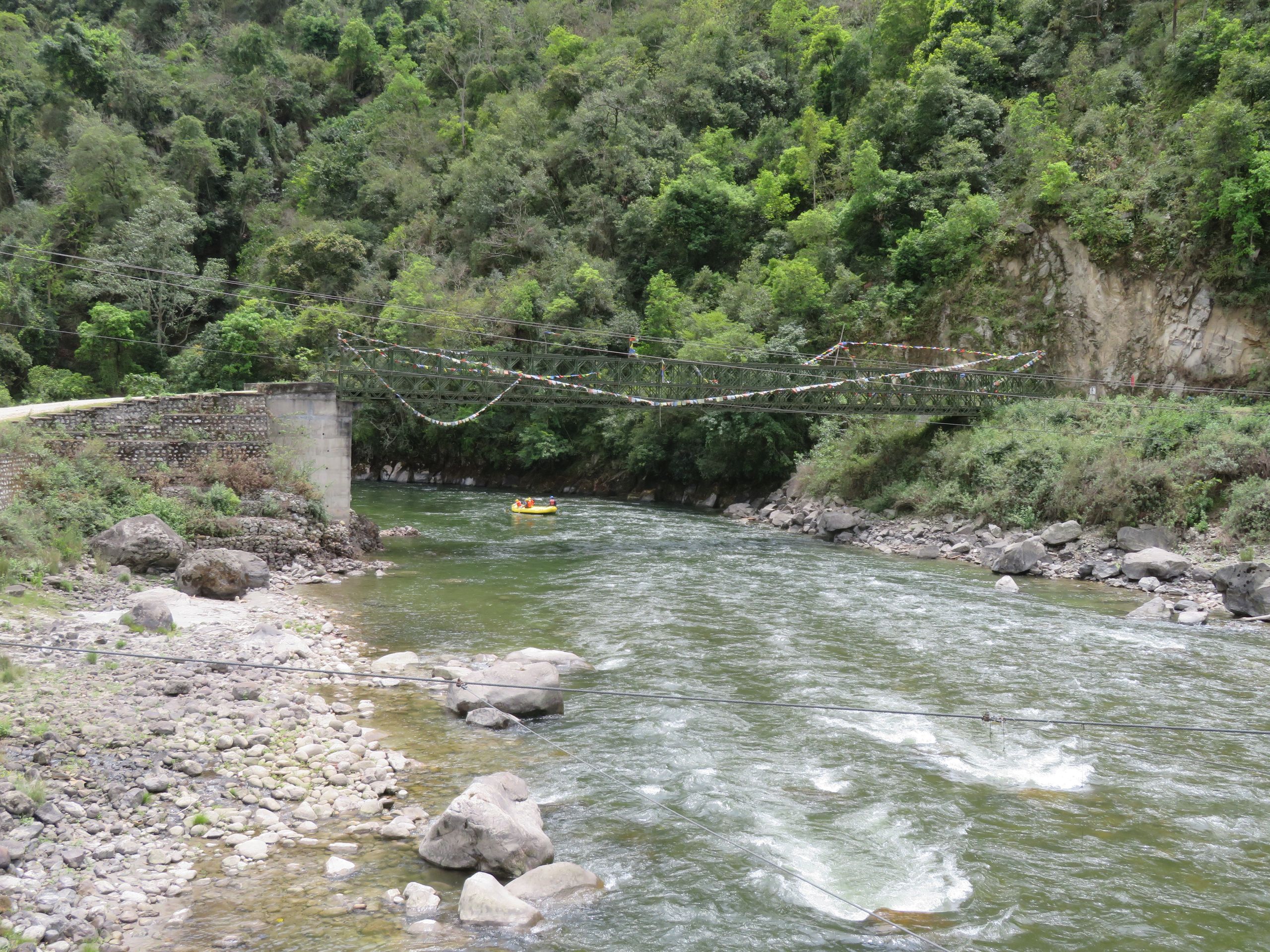
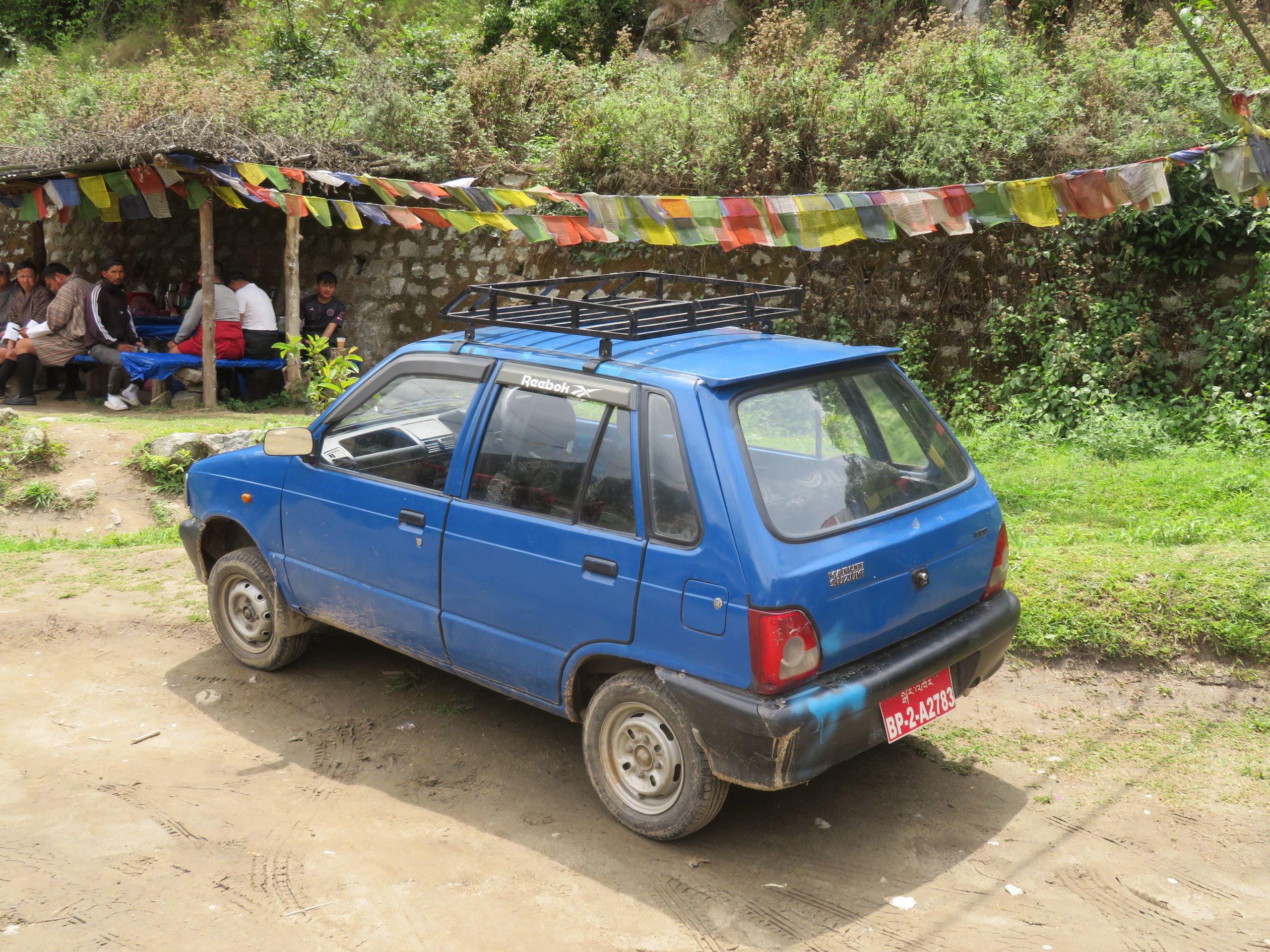
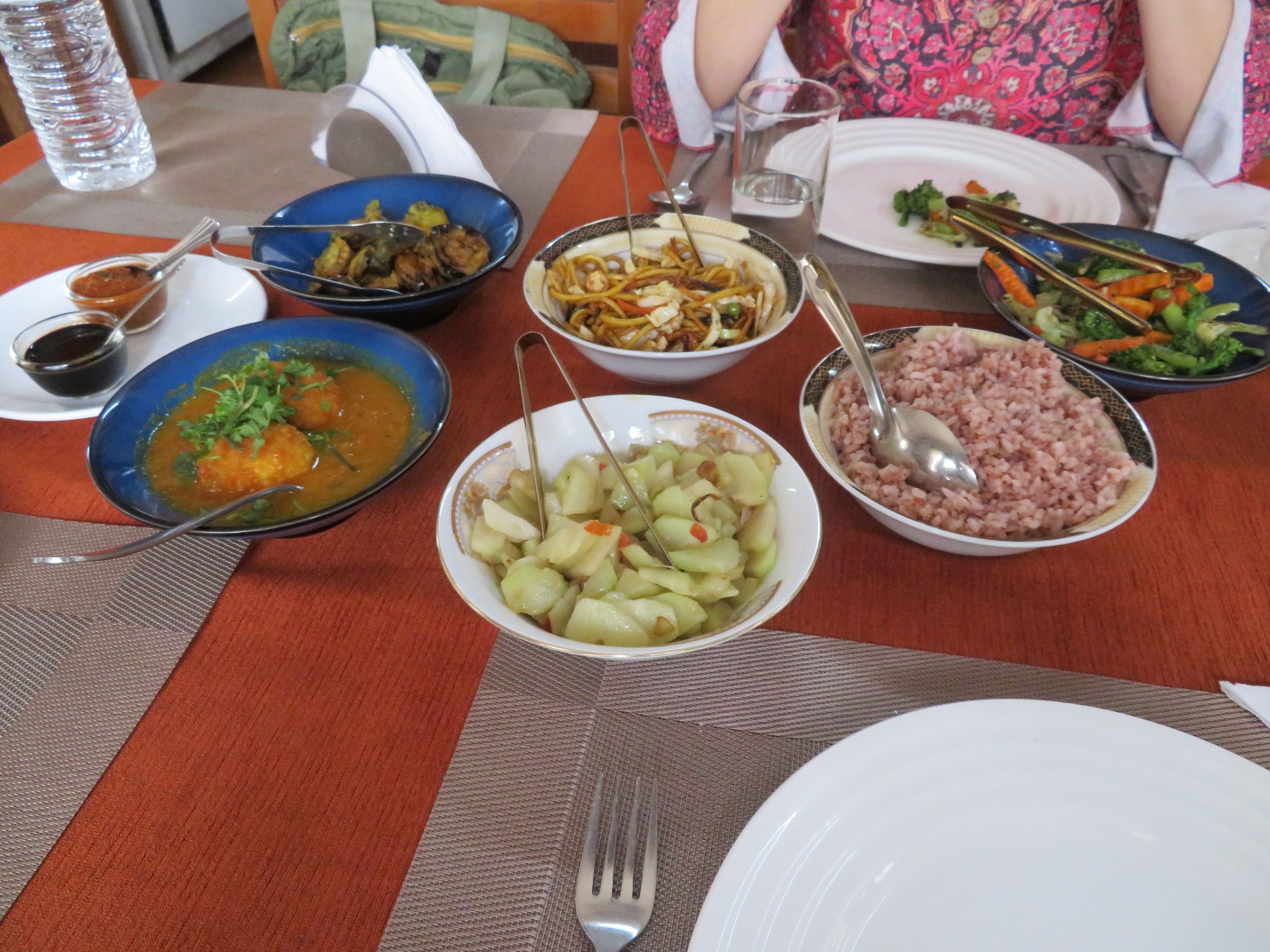
From Paro to Punakha
We had to wait over 5 years, due to Corona measures, for our great travel wish to Bhutan to finally be fulfilled. The wait was absolutely worth it.
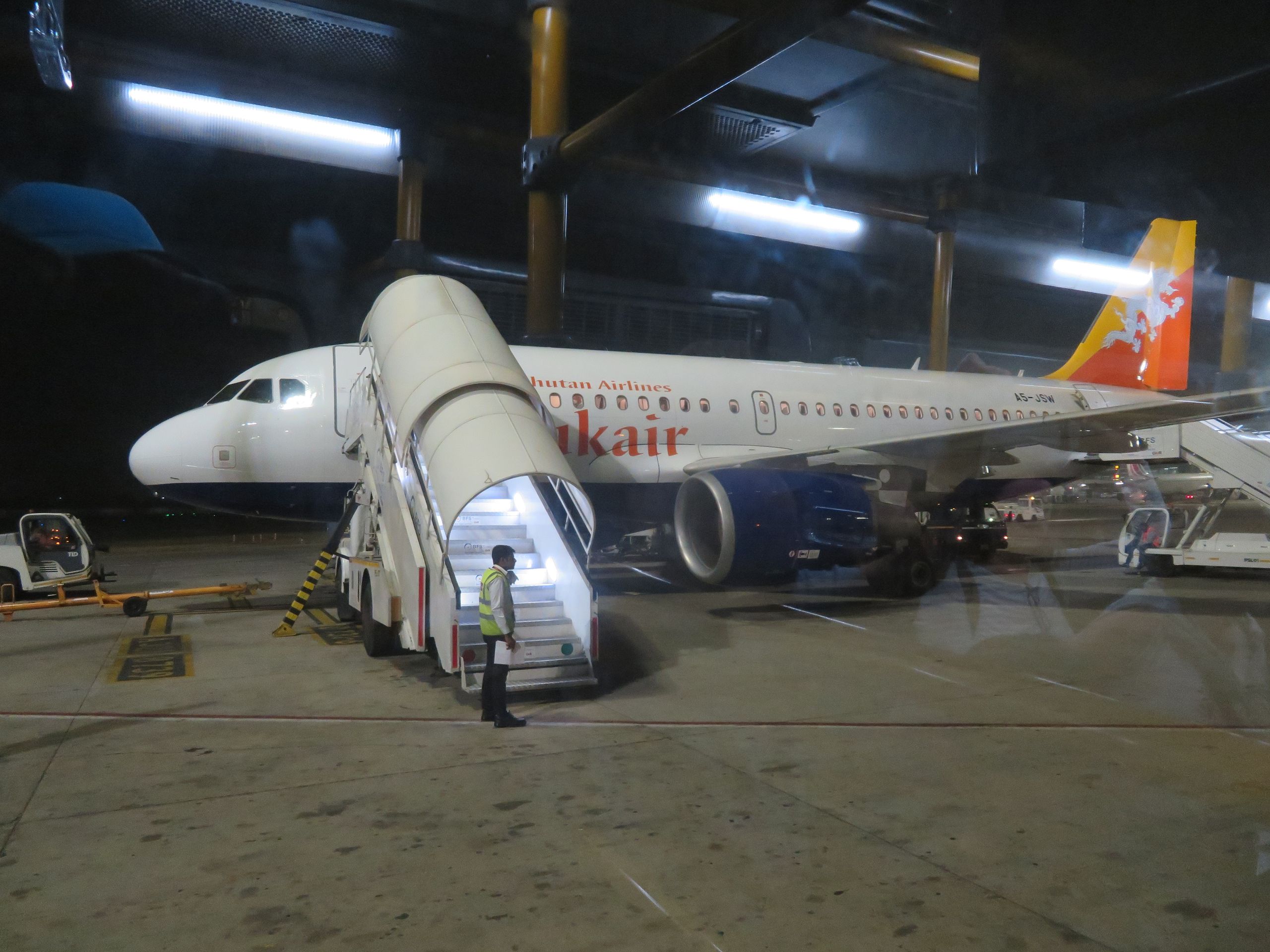
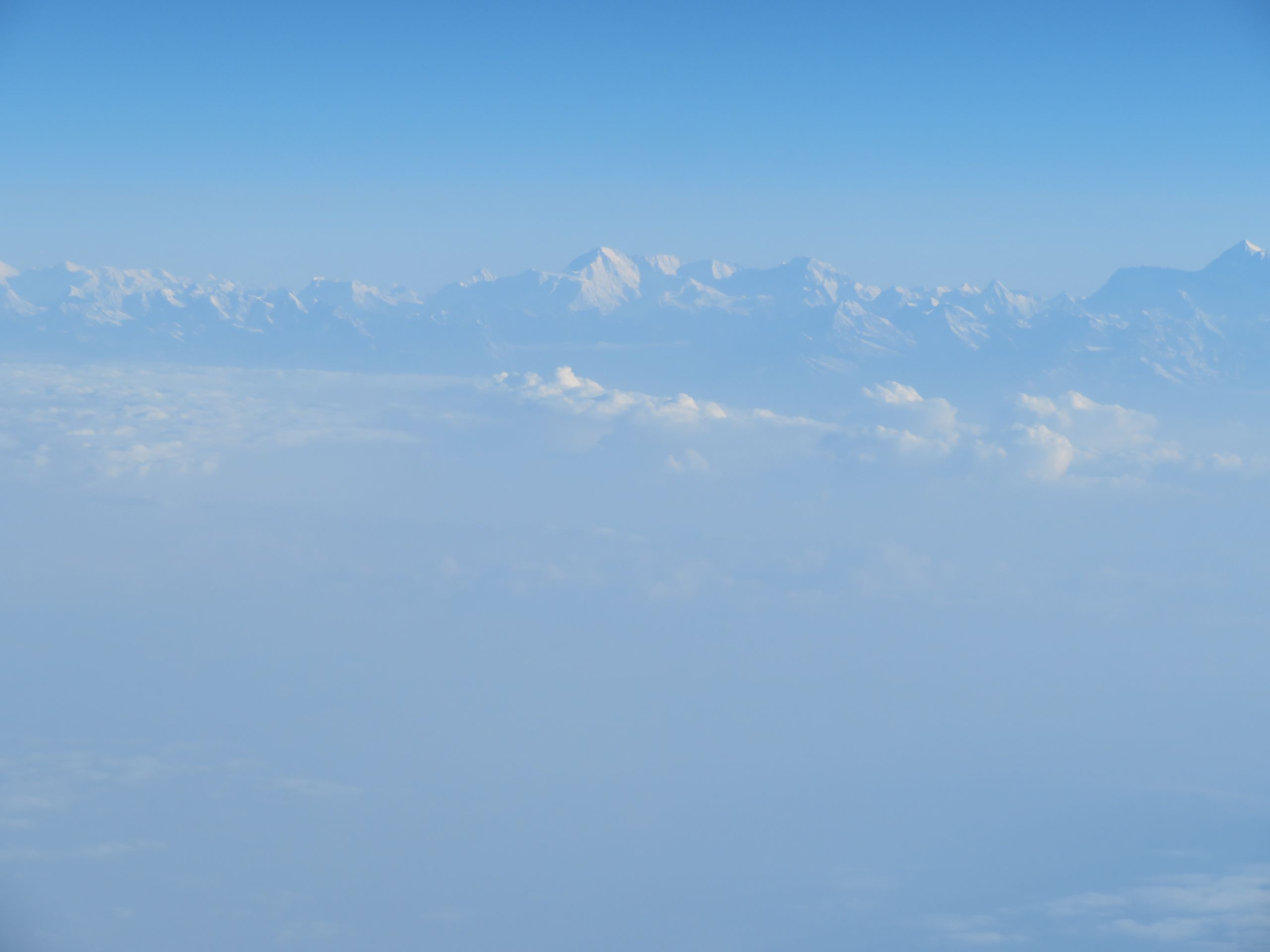
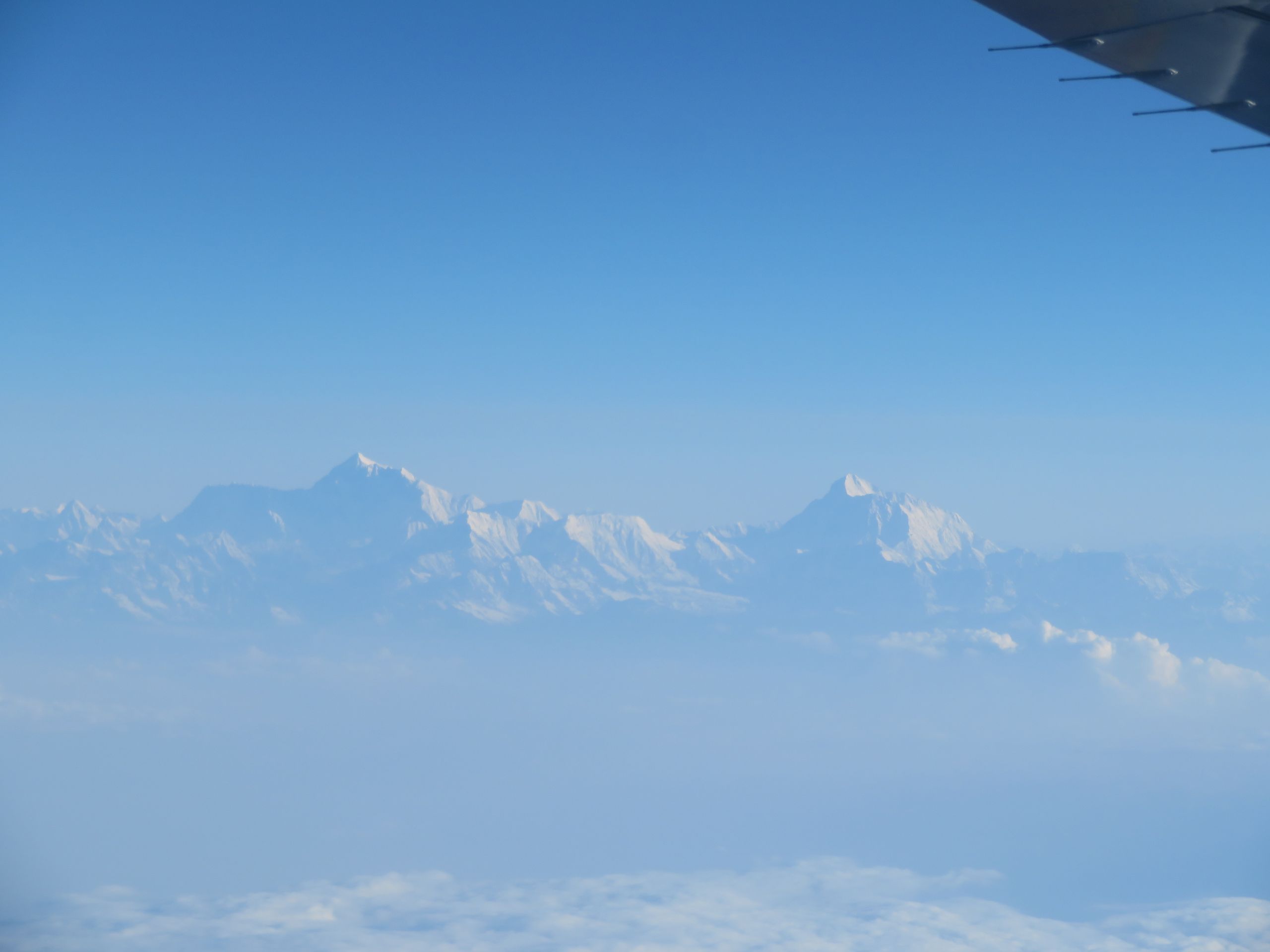
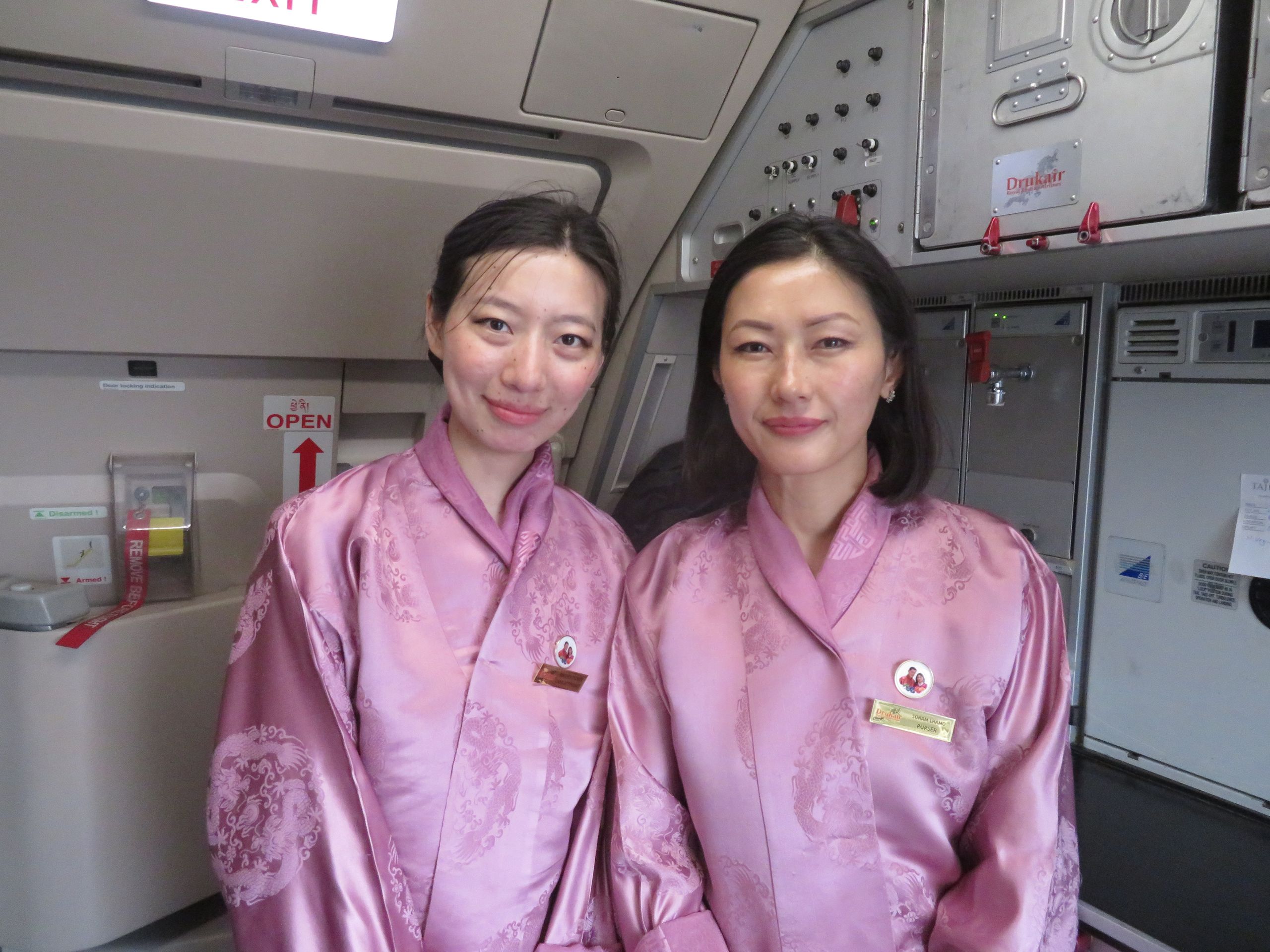
The Bhutan experience began for us already on the plane. The traditionally dressed flight attendants were exceptionally friendly, and above the clouds, we could admire the peaks of the Himalayas in the distance. We cannot confirm or deny the sighting of Mount Everest by a fellow passenger - any helpful hints can be shared after viewing the photos.
During the approach to the airport in the village of Paro, relaxing meditation music played. Some may have needed that, considering the spectacular approach over treetops, whose trees cannot be cut for environmental reasons, and houses where you could almost look into the kitchen window. Due to the airport’s special geography, only pilots specifically trained by the state-owned airline Drukair are allowed to land here.
To make the flight even more special, we were surprised to have Royal Majesty welcomed on board, from whom, when leaving the plane, we only saw the umbrella and the back of the head, as well as the kneeling greeting committee.
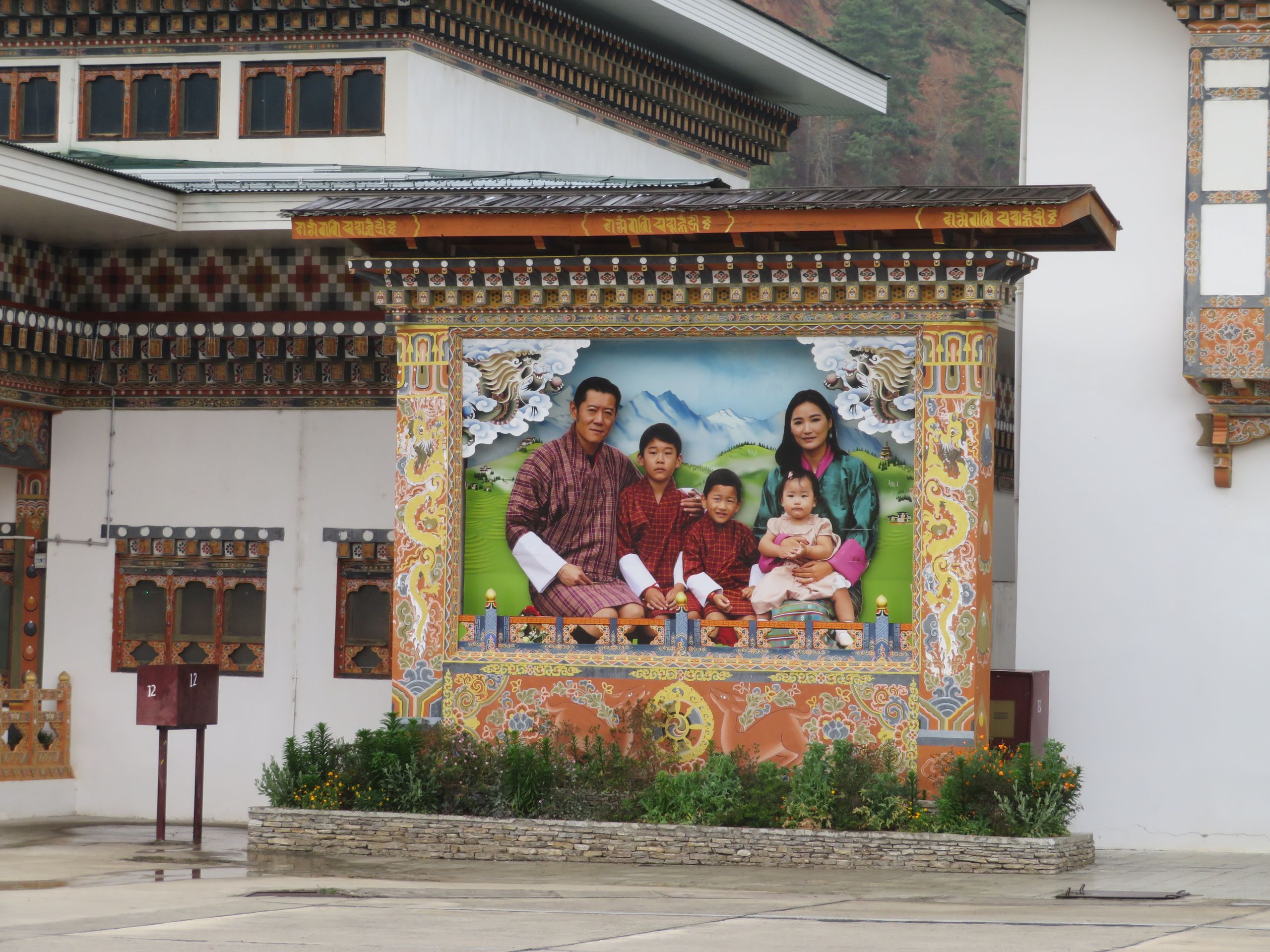
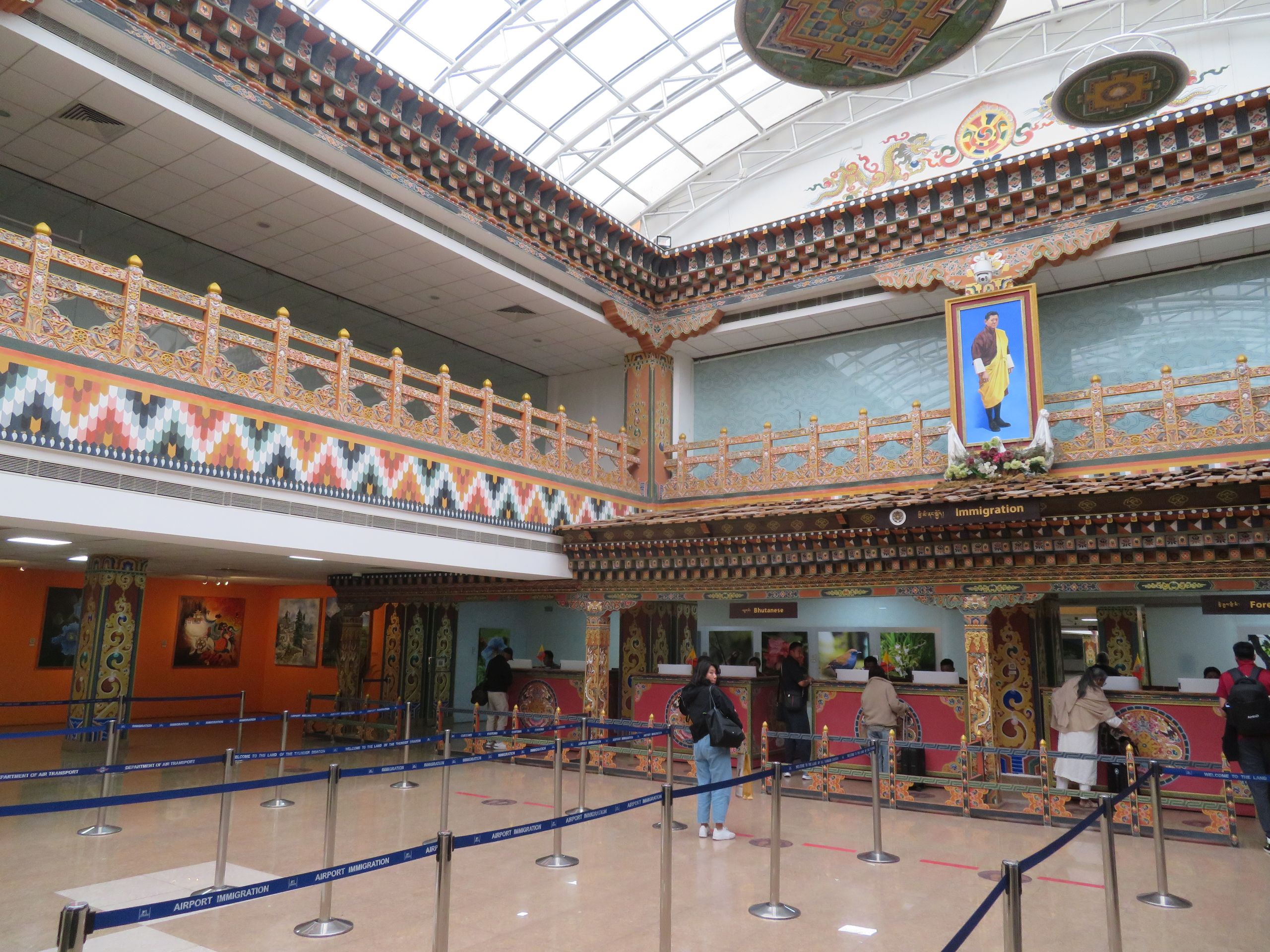
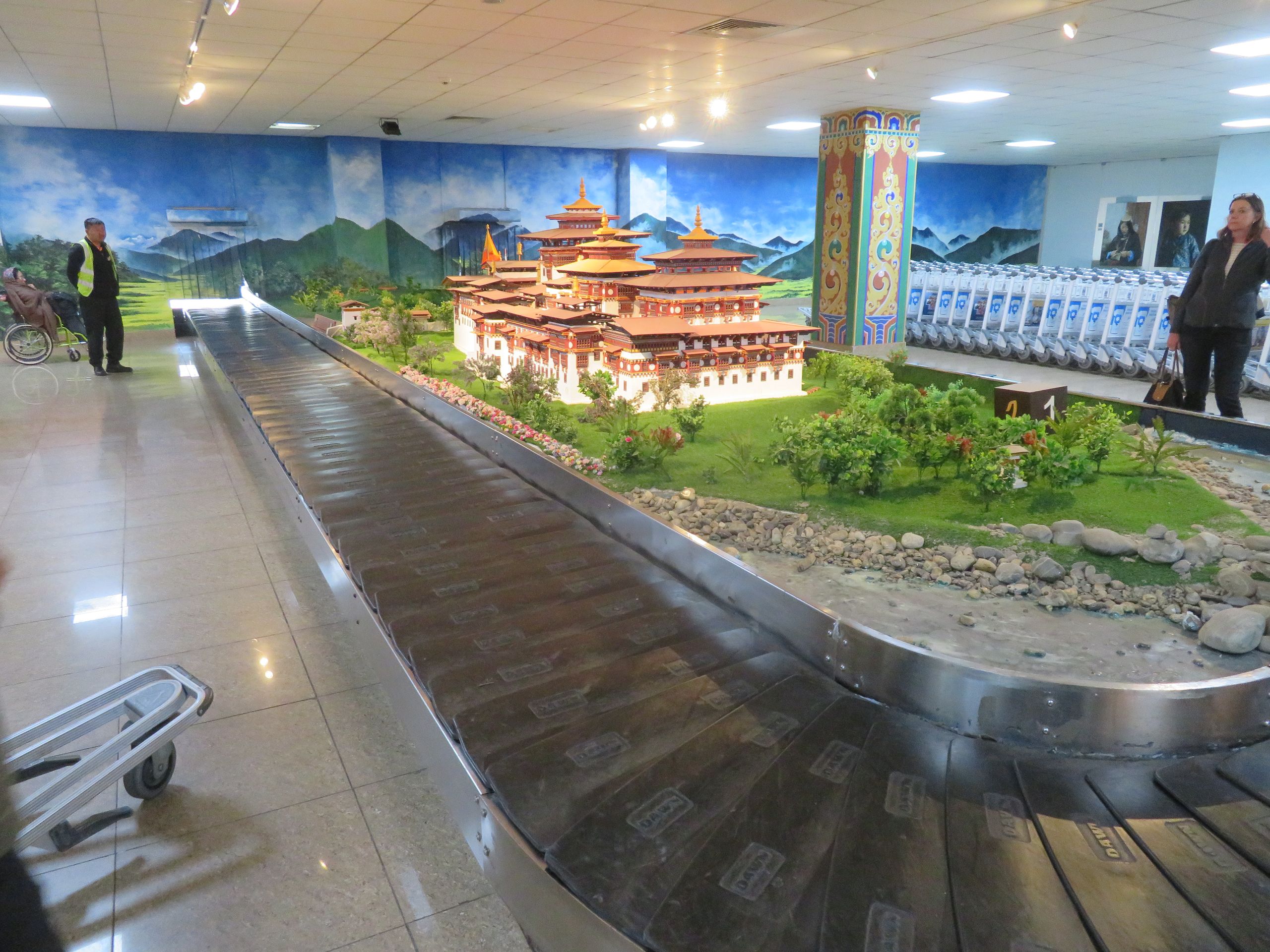
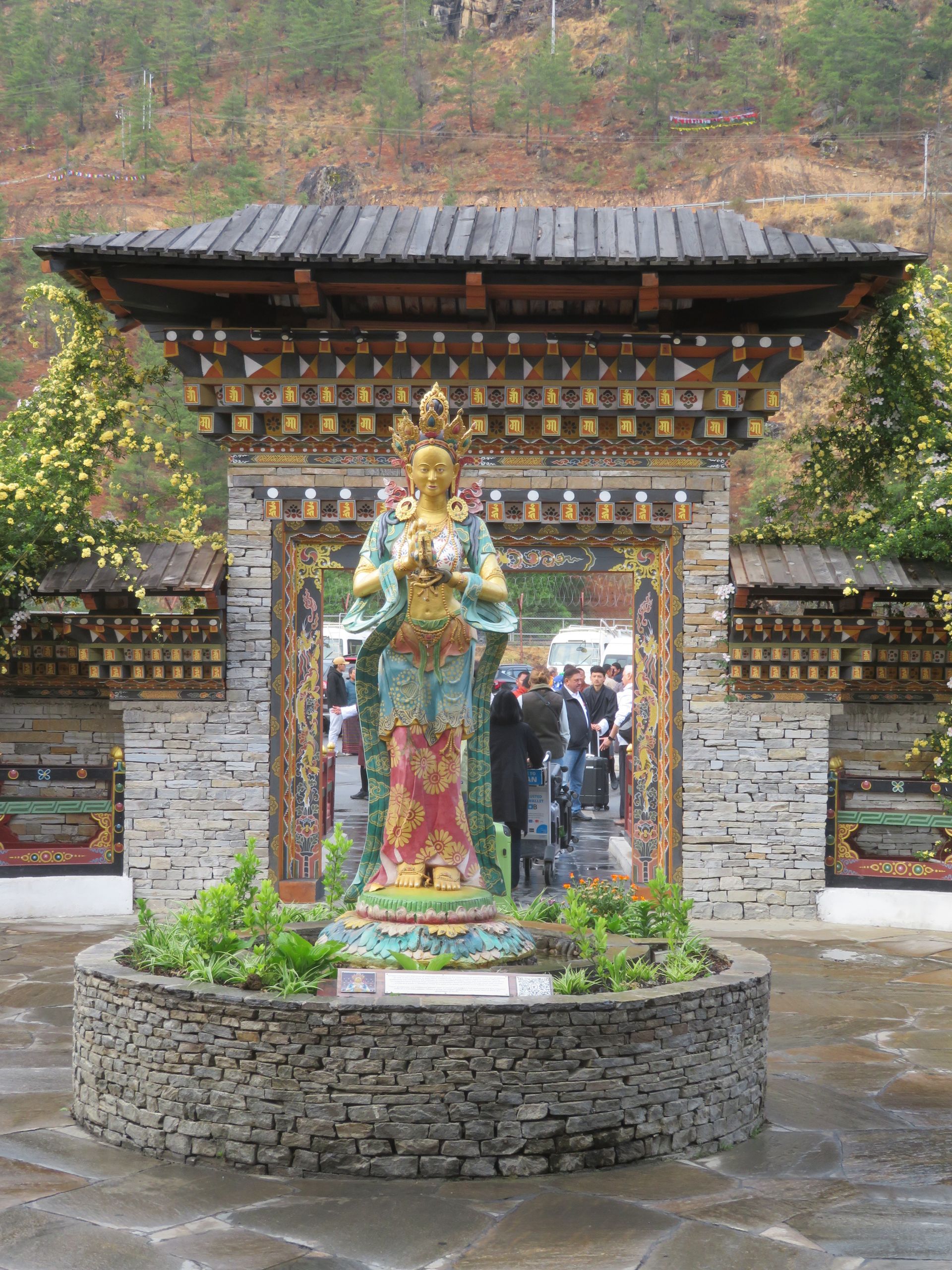
The airport we then entered was the most beautiful airport we had ever been to and - even though one should be cautious with future predictions - will ever be. We let the photos speak for themselves.
After exchanging money (one cannot count on ATMs in Bhutan), we were warmly welcomed by our guide Yin and our driver Yang* (*names changed by the editorial team), who will accompany us on our journey. This is a regulation in Bhutan, so we do not inadvertently (or intentionally, as autocorrect suggests) defile a temple, destroy nature, or behave otherwise poorly. Furthermore, the government ensures that only people come to Bhutan who are genuinely interested in the land and its people, and not just seeking hedonistic pleasures.
As a welcome gift, we each received a white silky scarf as a sign of blessing.
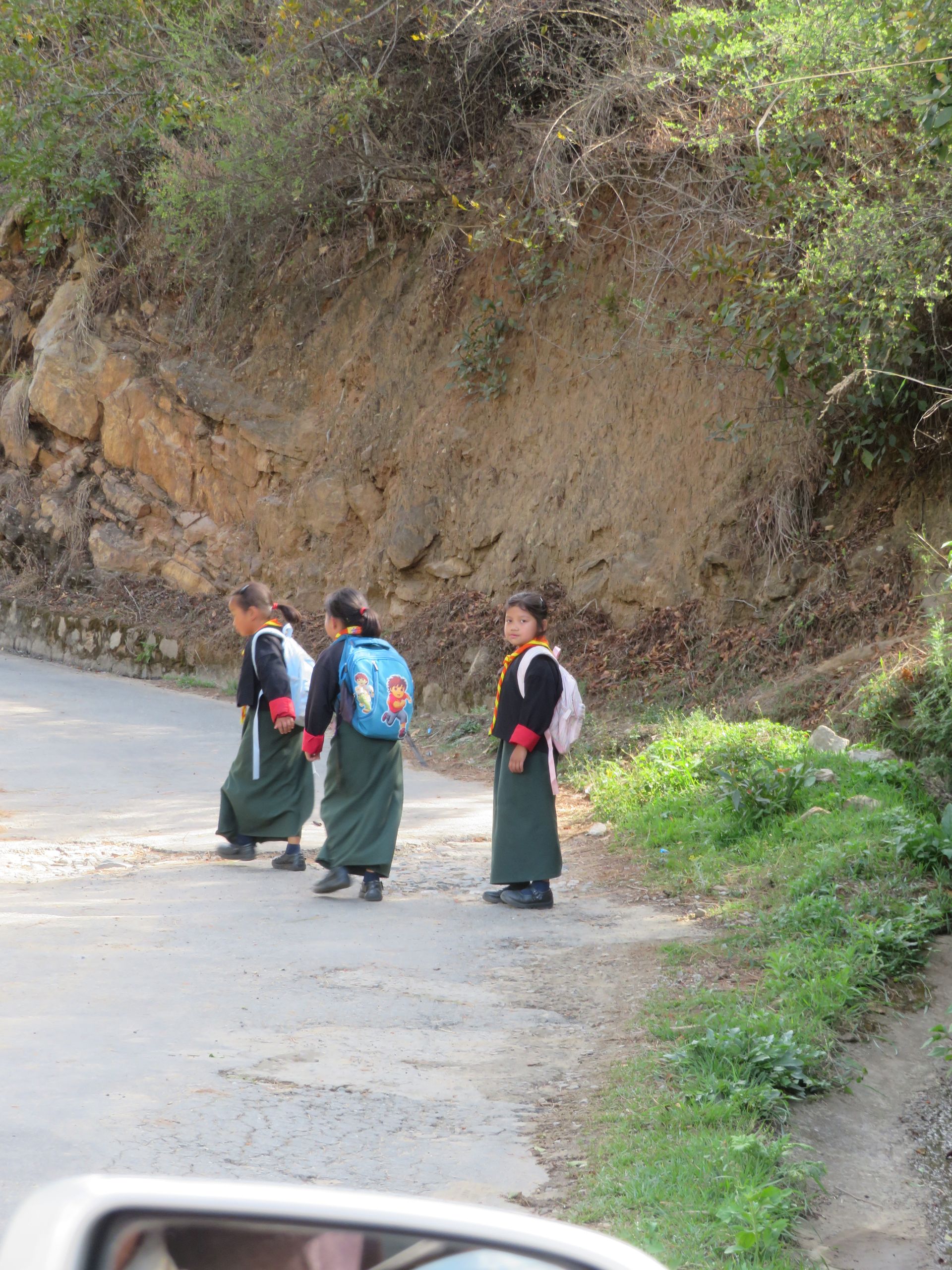
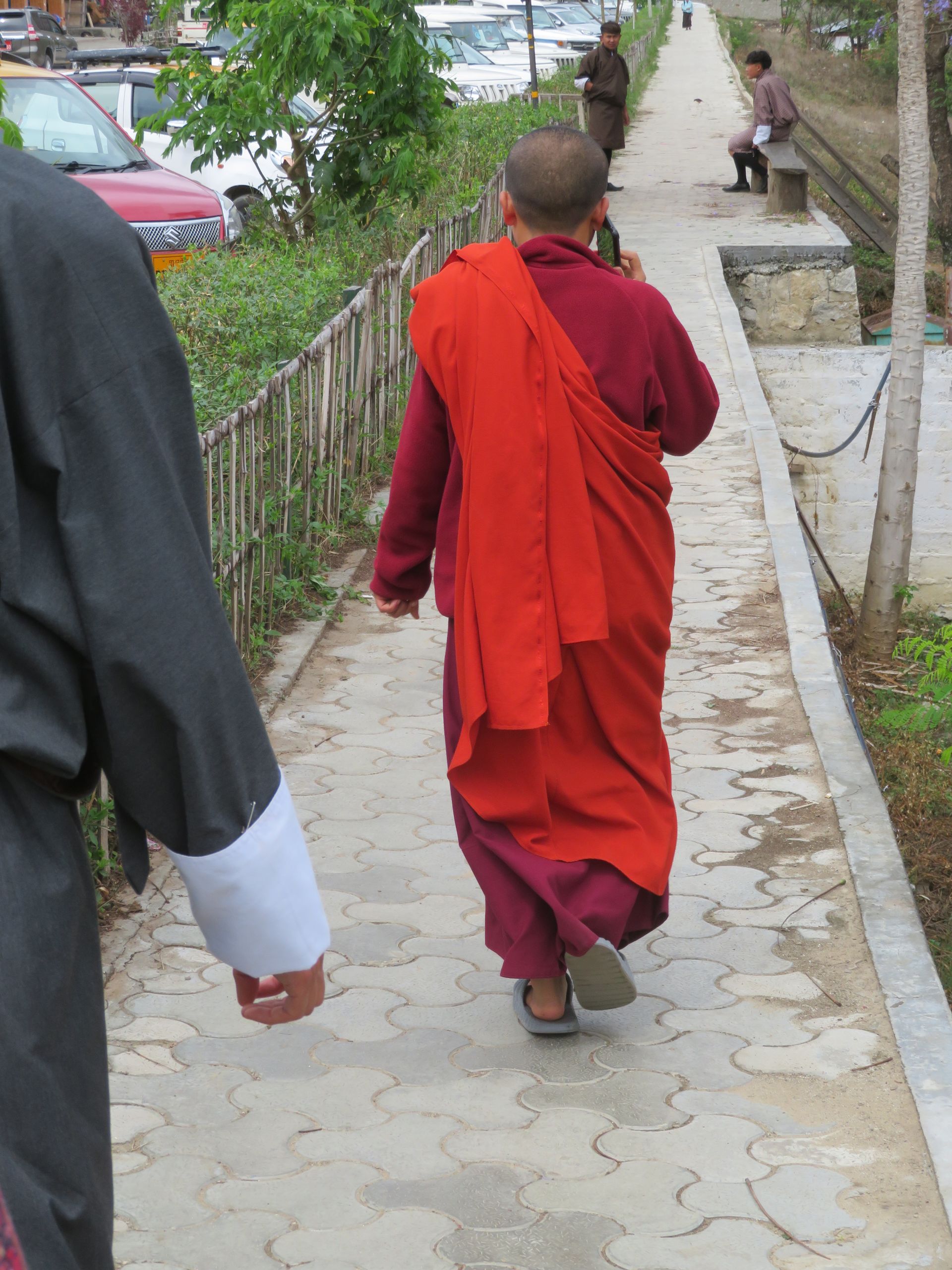
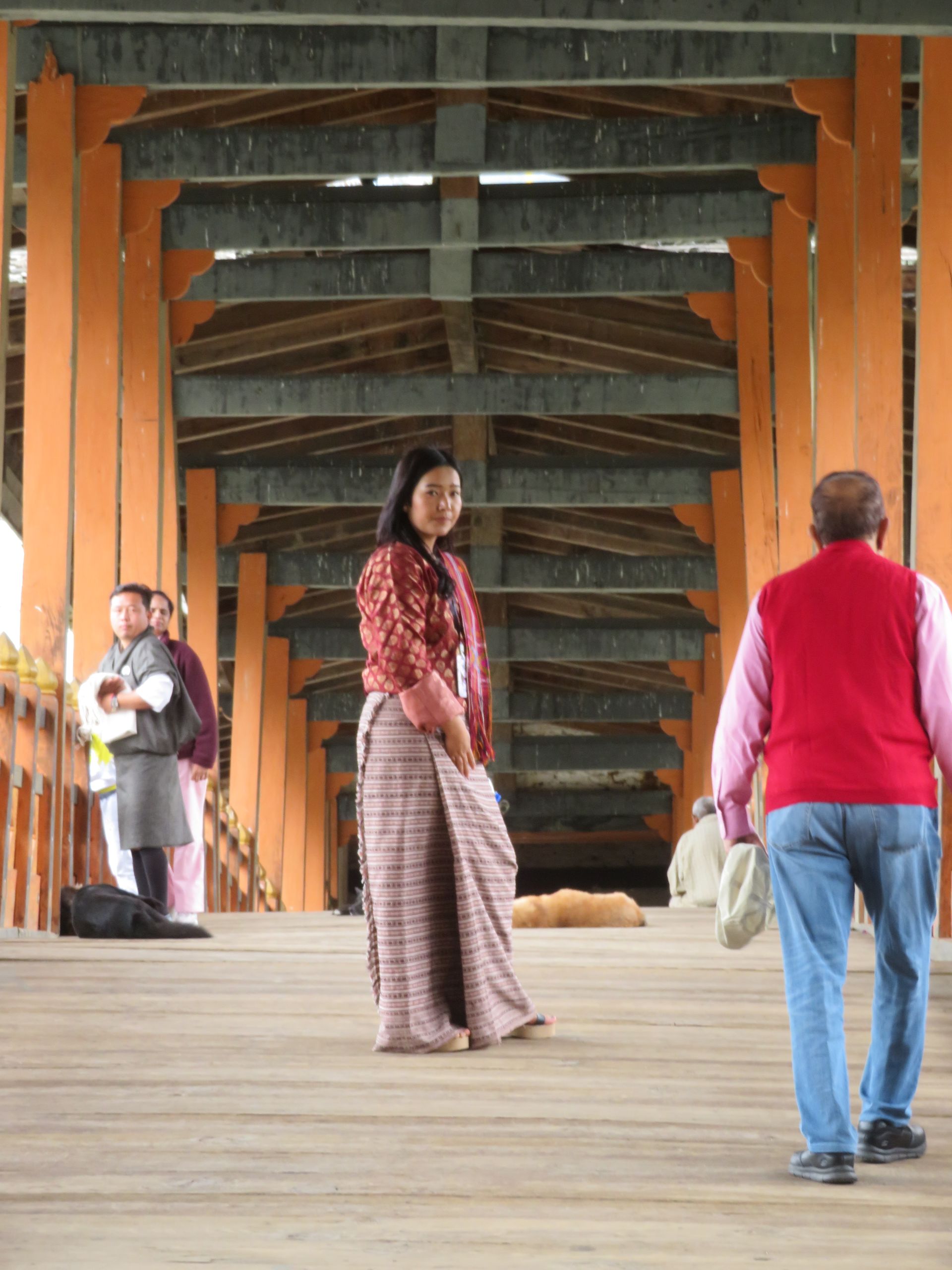
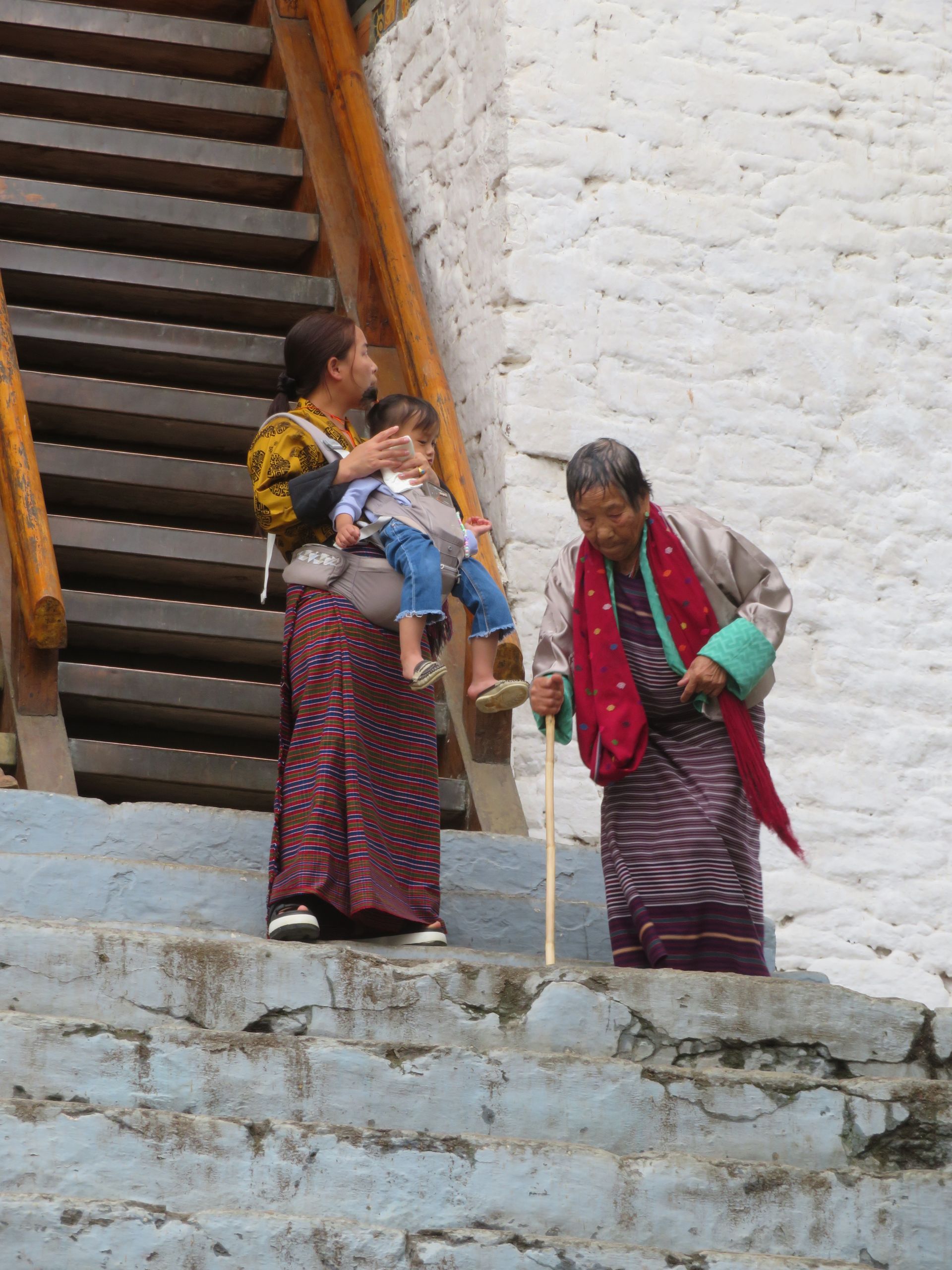
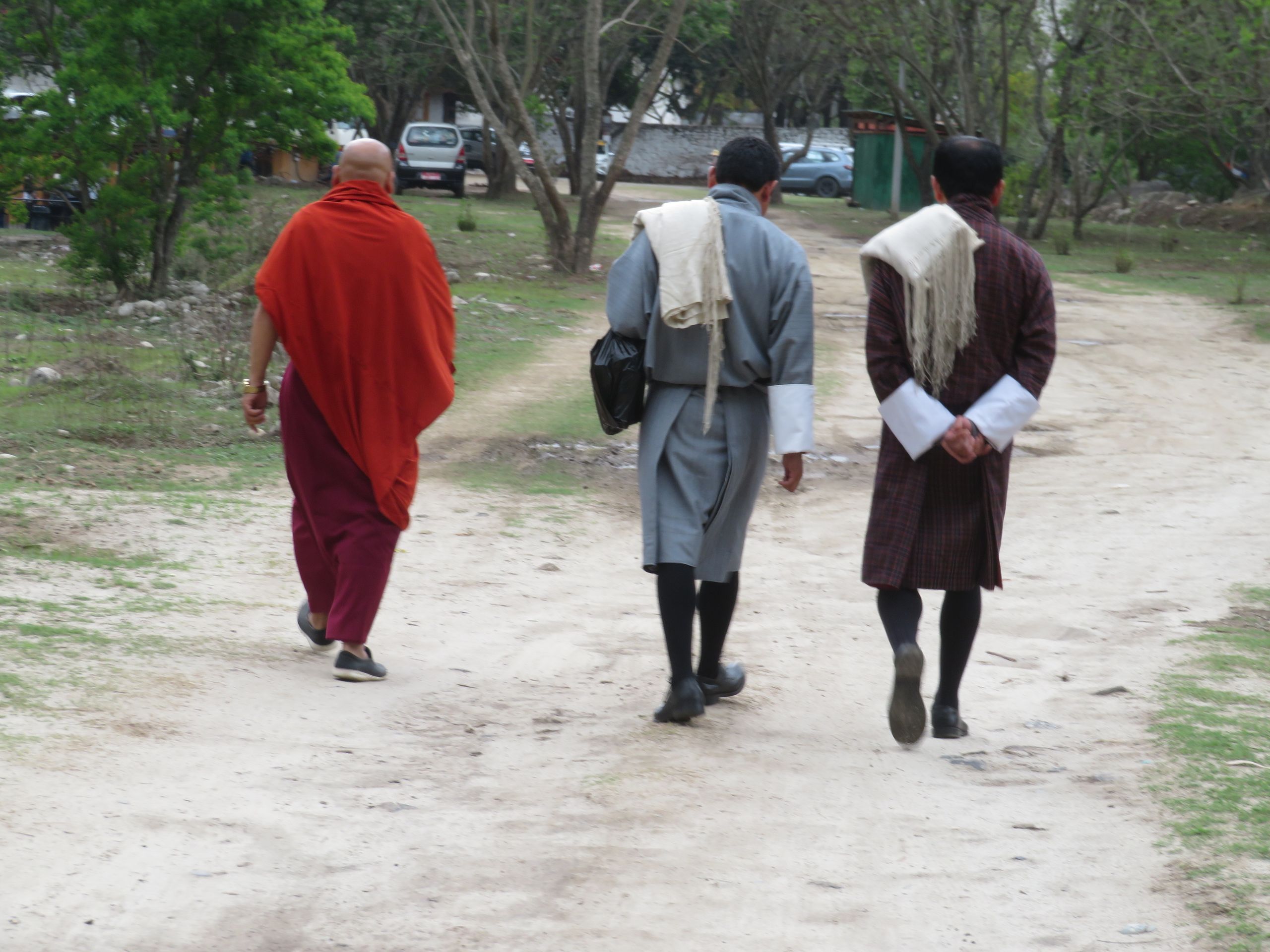
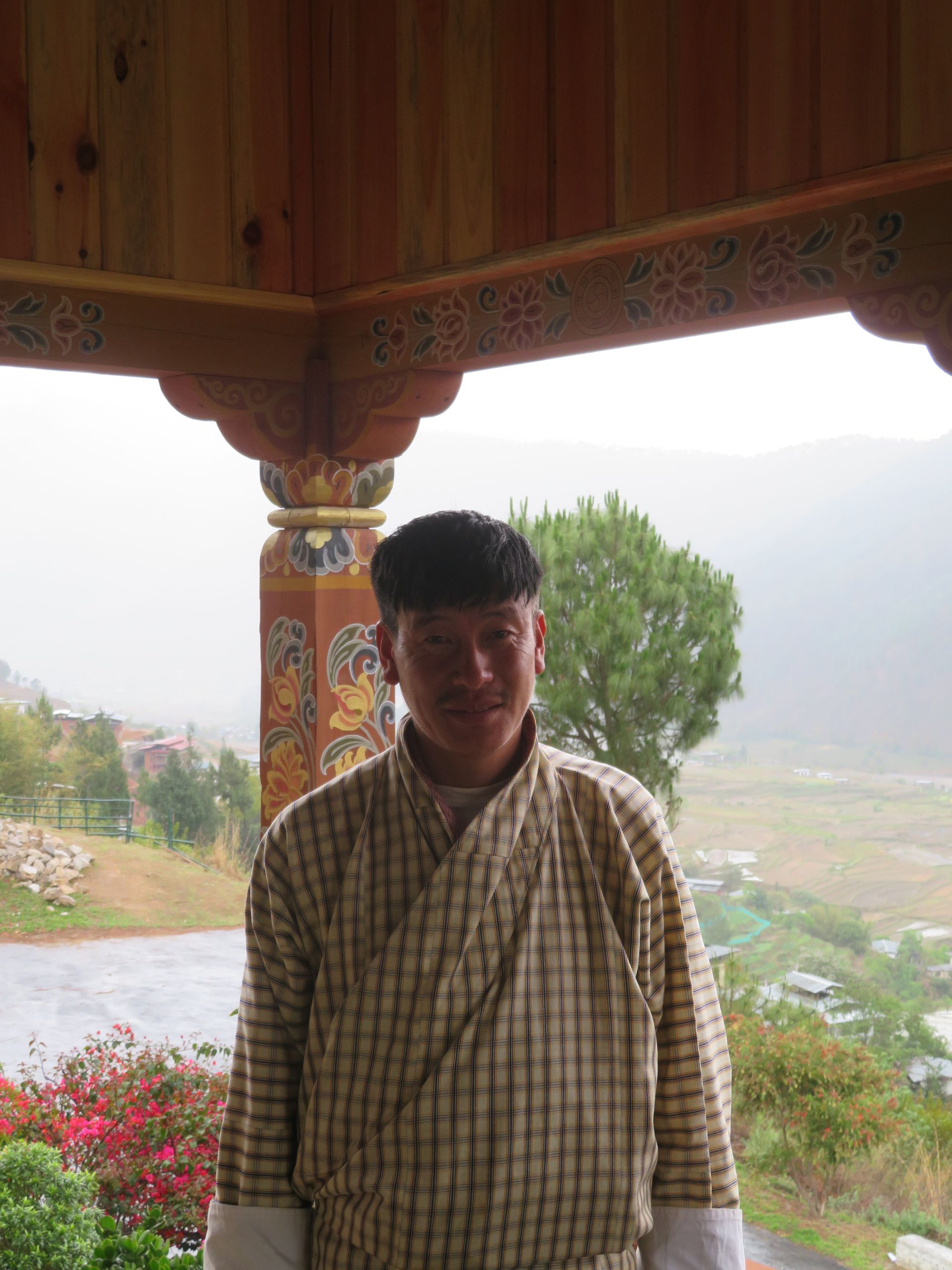
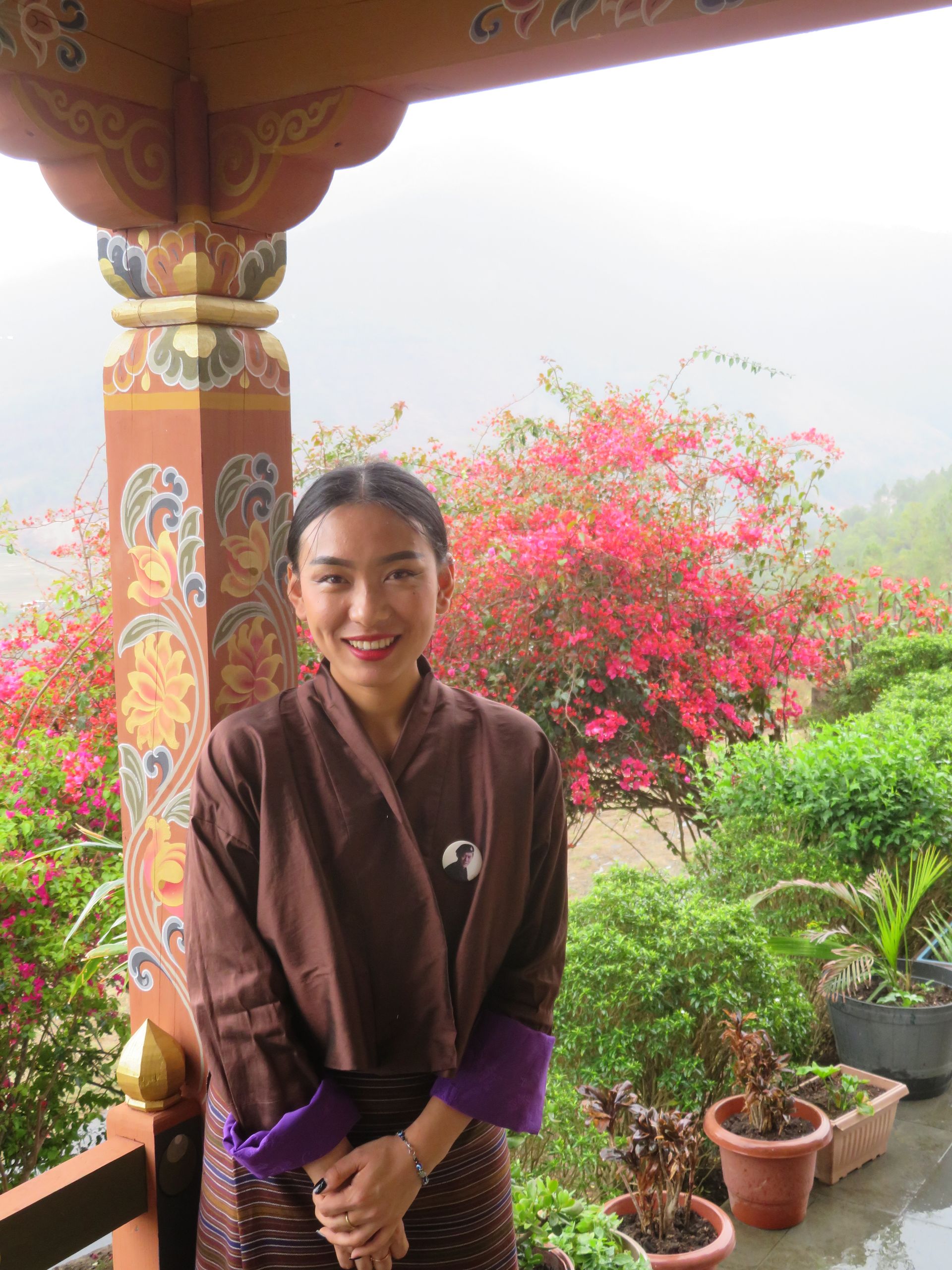
Even though most Bhutanese prefer Western clothing in daily life and wear traditional attire only on special occasions, this does not apply to certain professions. Hotel staff, as well as our guide and driver, must wear Bhutan’s traditional attire.
This specific outfit must also be worn when entering a government office. Violating this rule seems unthinkable.
Another rule is that Bhutanese must also wear traditional clothing when entering temples and dzongs (more on that shortly). Laypeople from Bhutan must wear a white scarf, while monks wear a yellow scarf. People who are not from Bhutan only need to wear appropriate long-sleeved clothing.
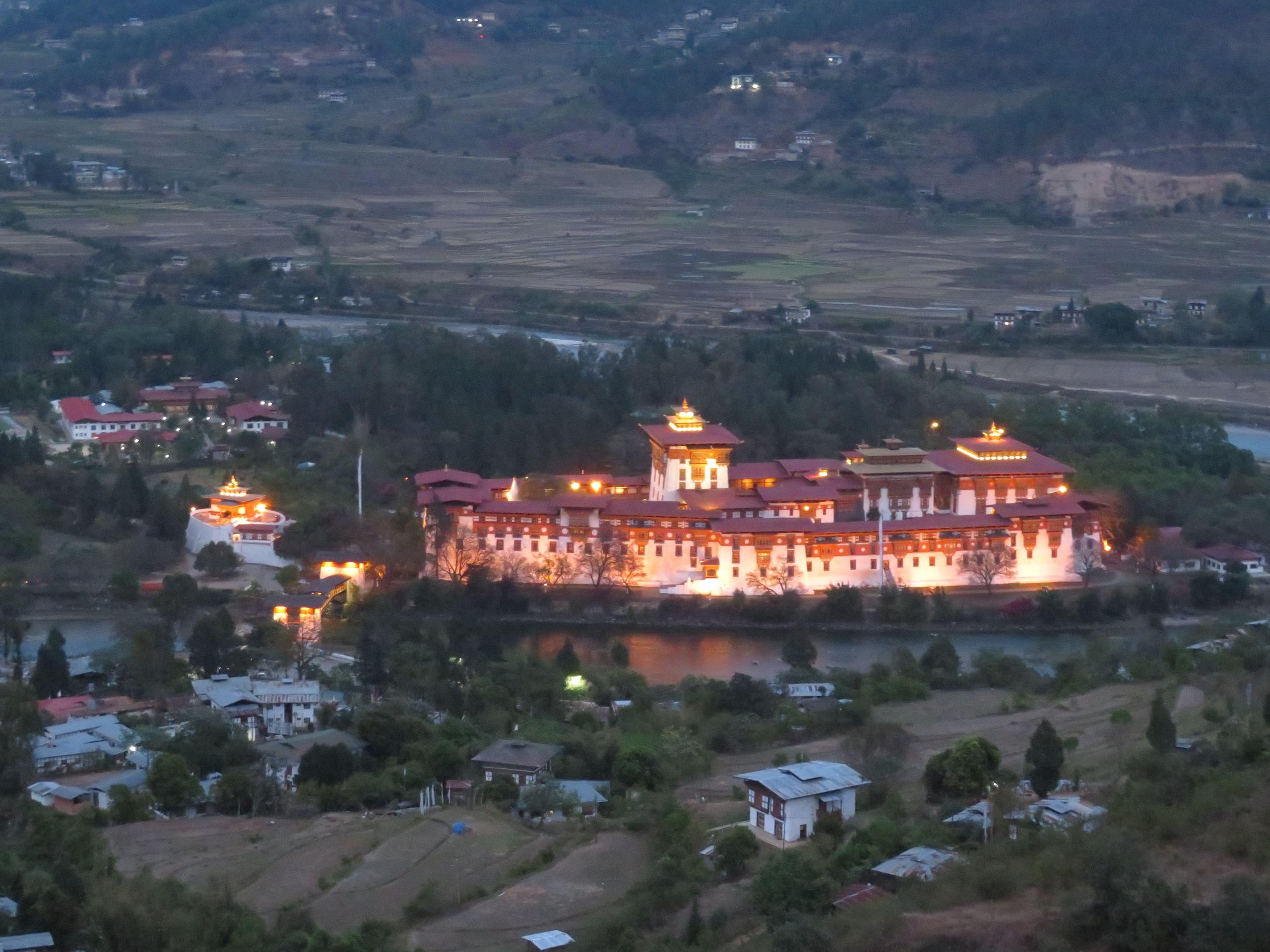
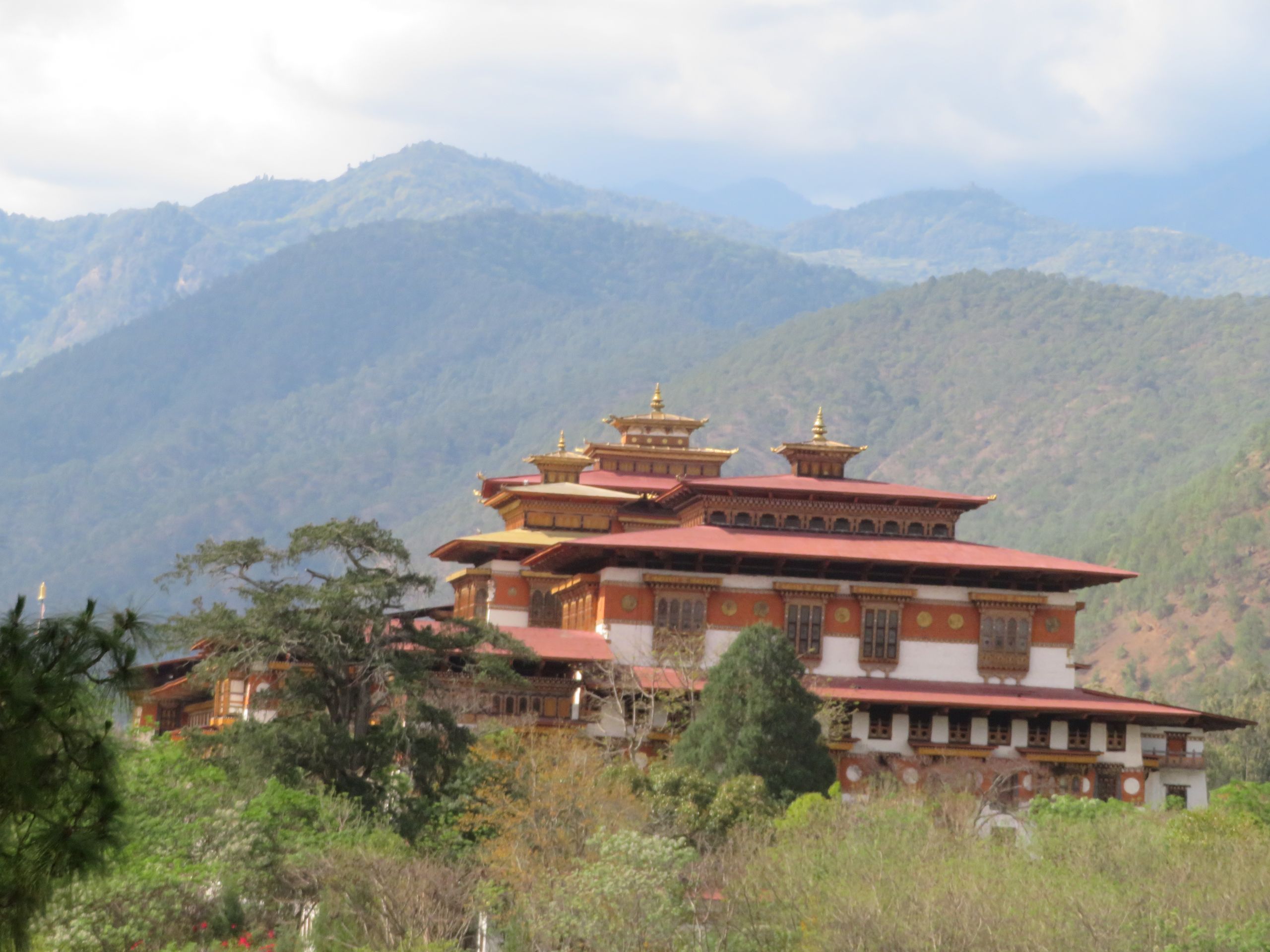
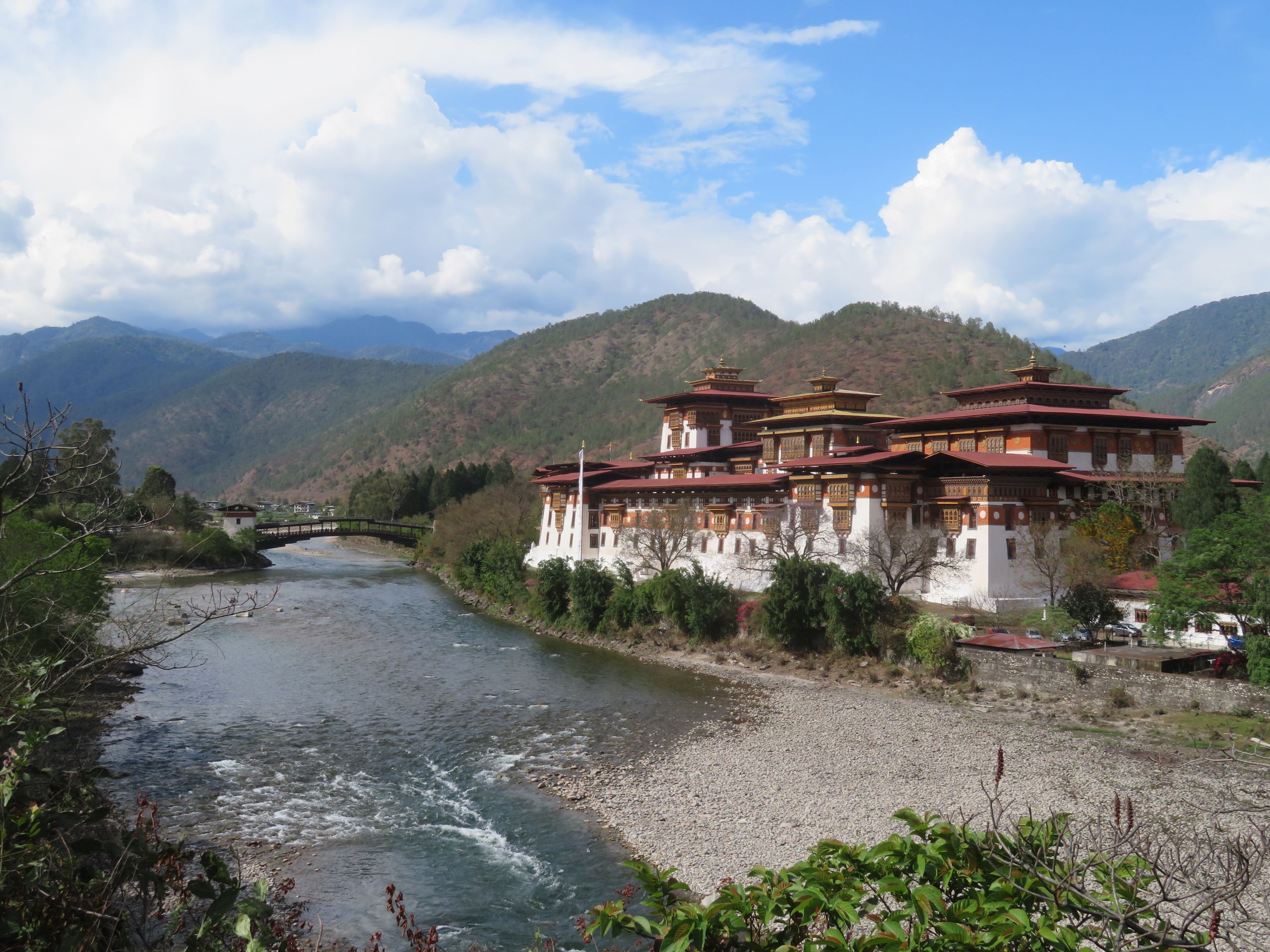
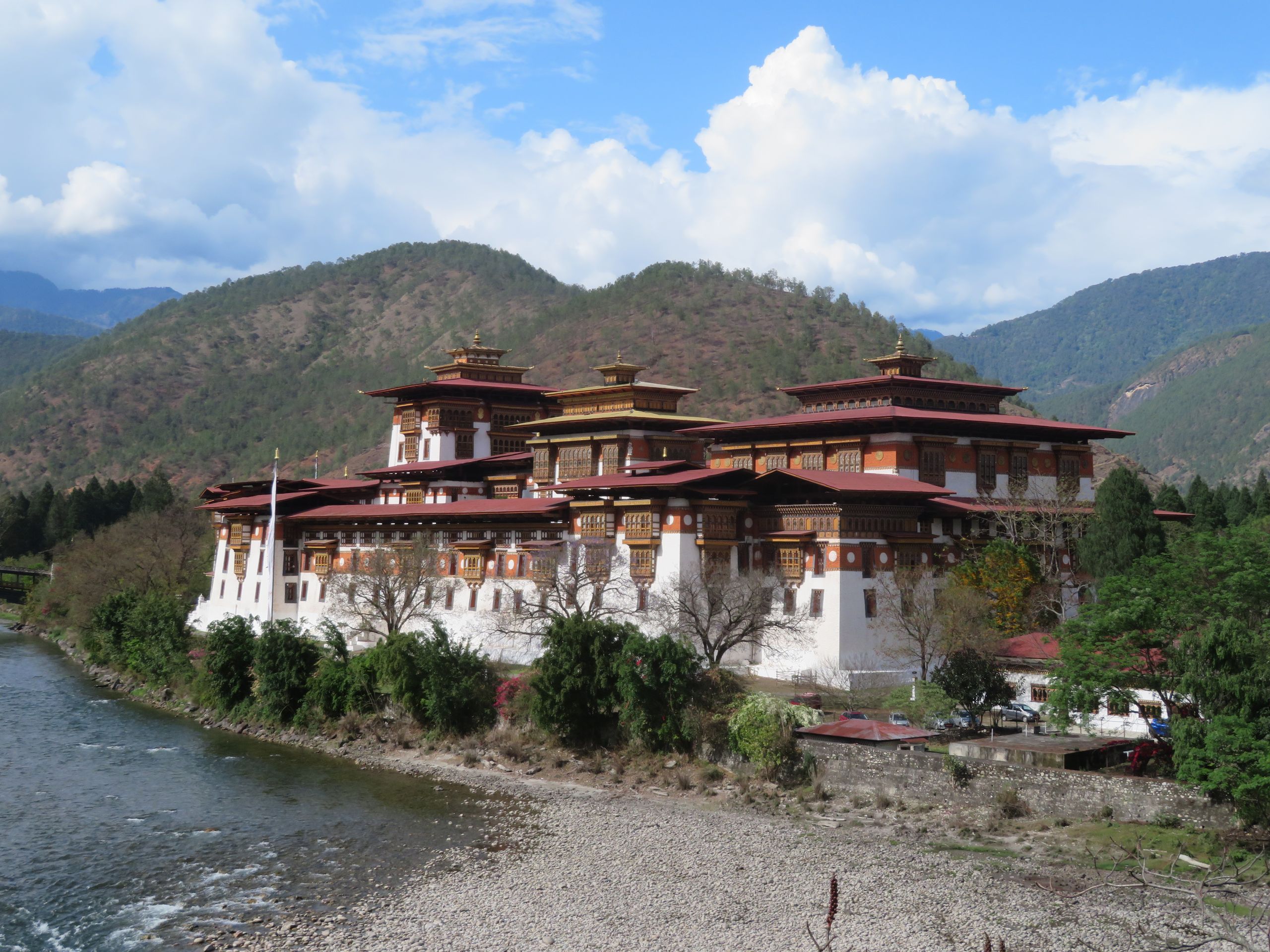
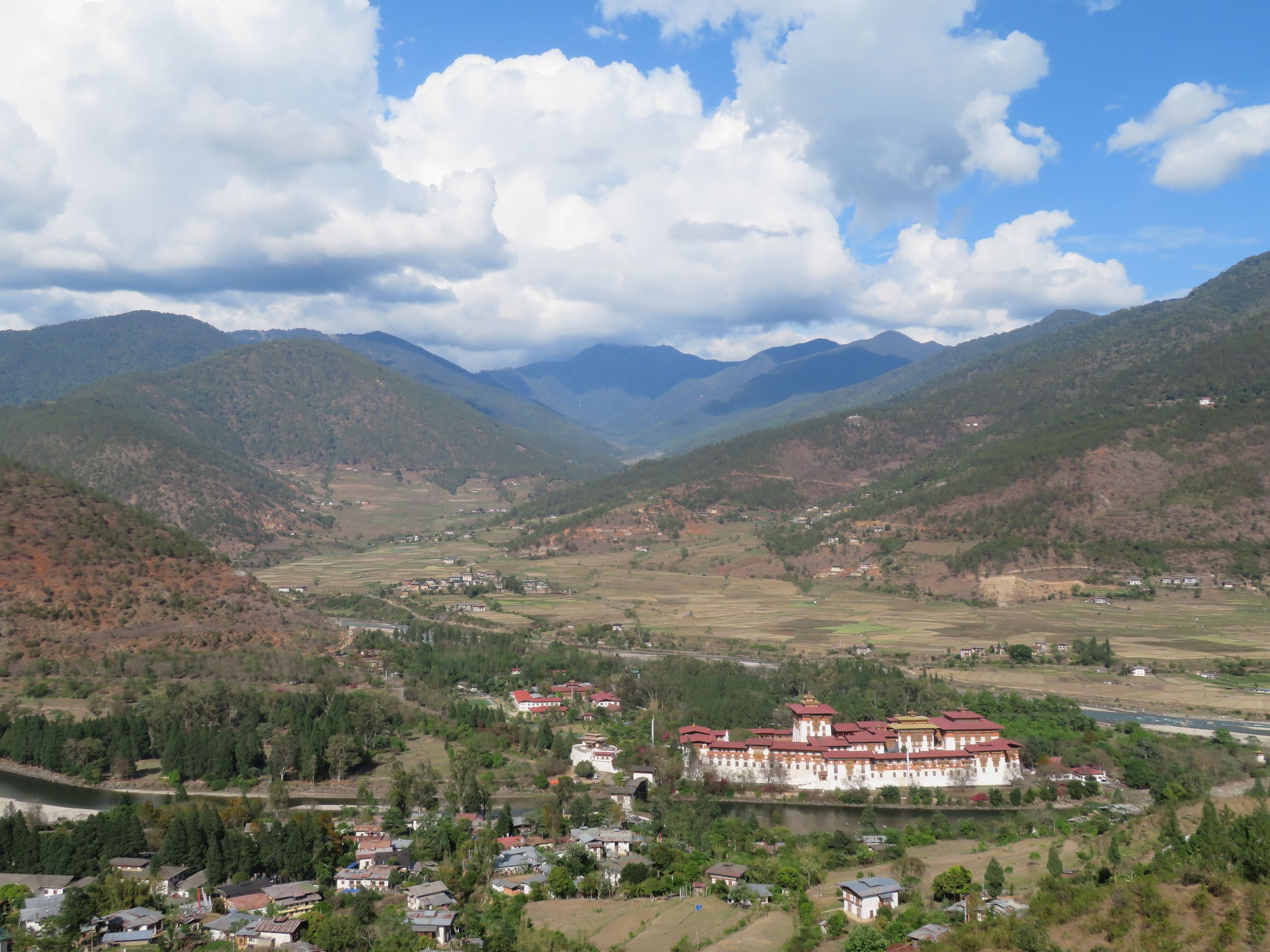
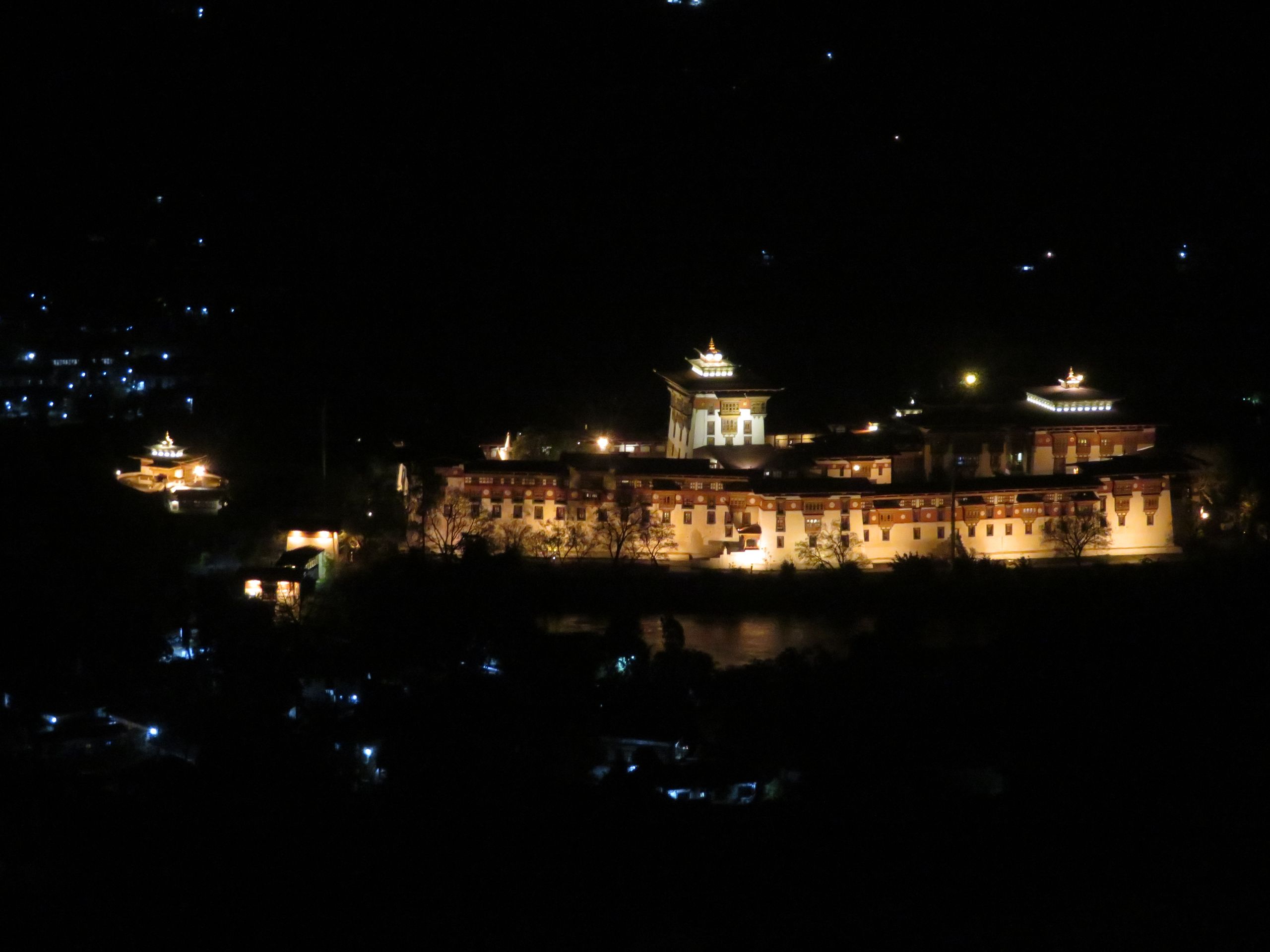
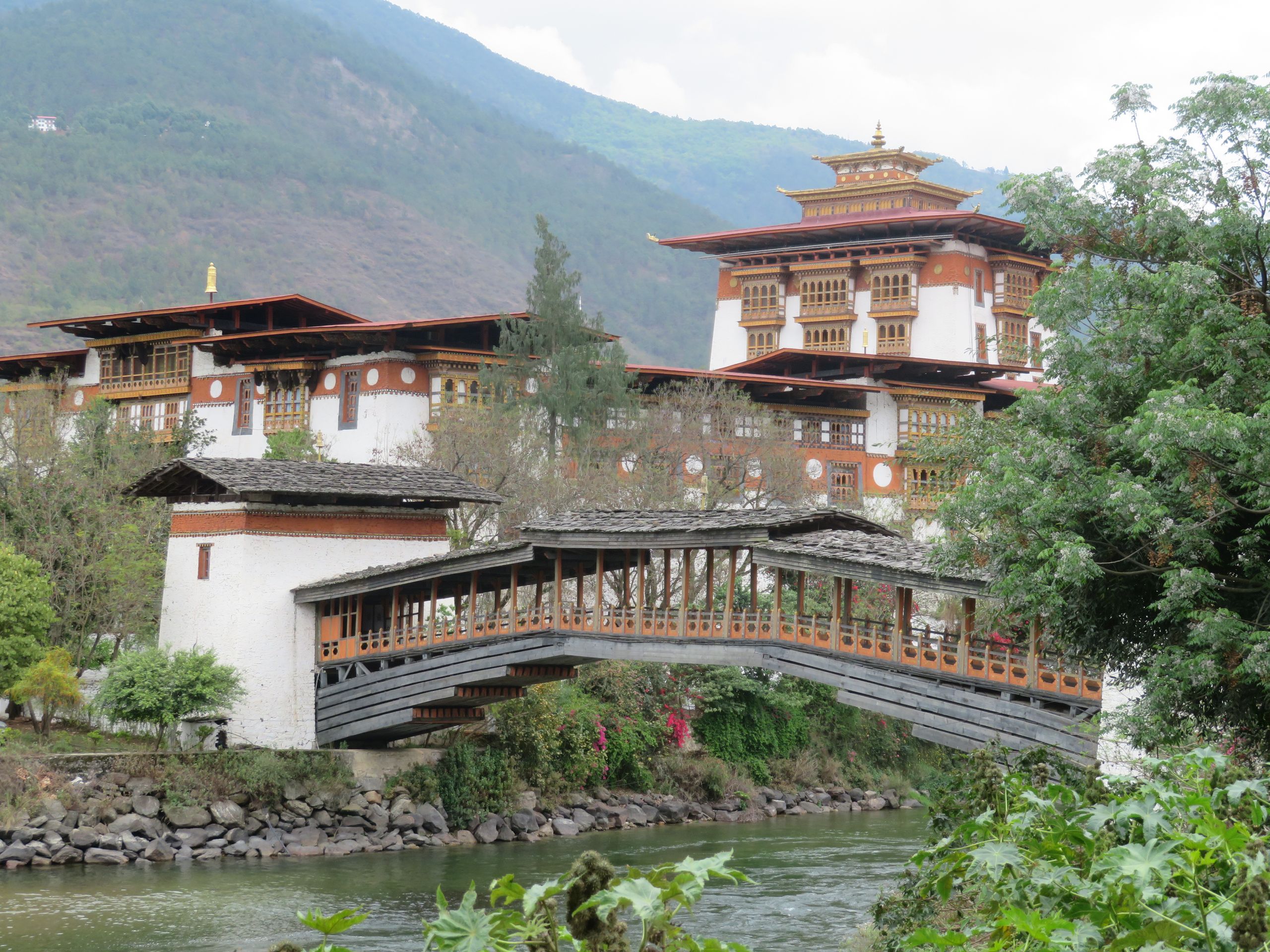
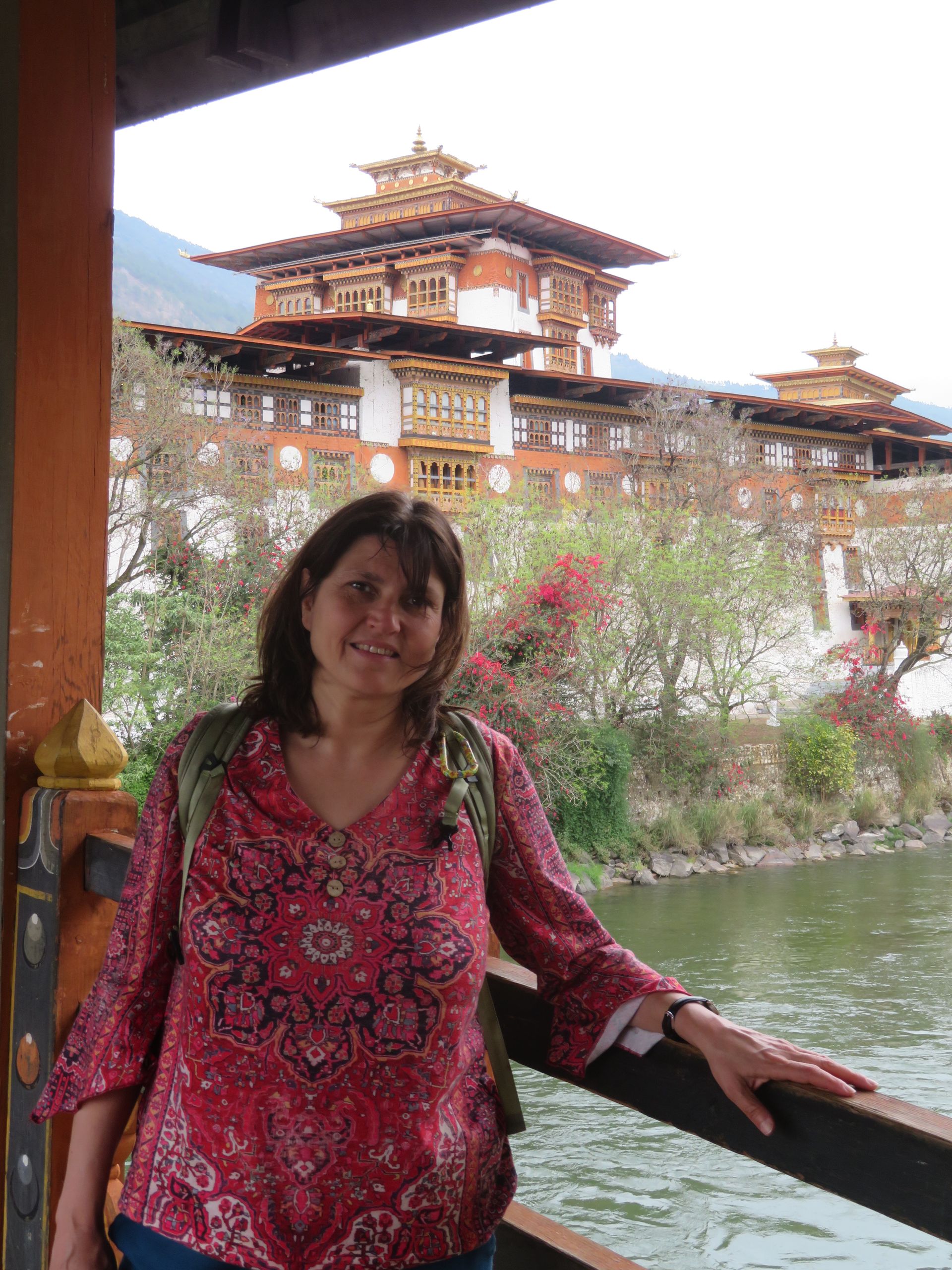
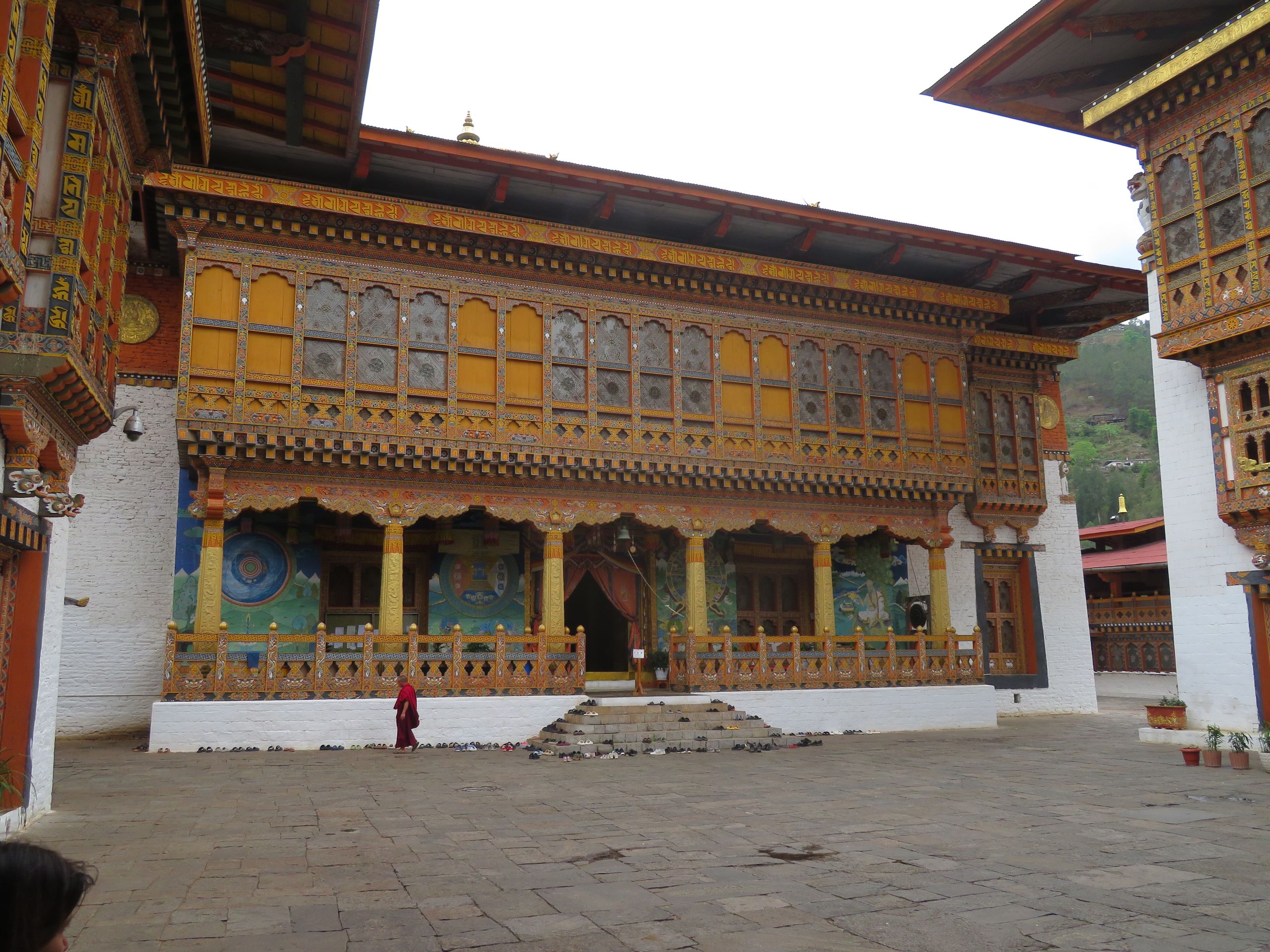
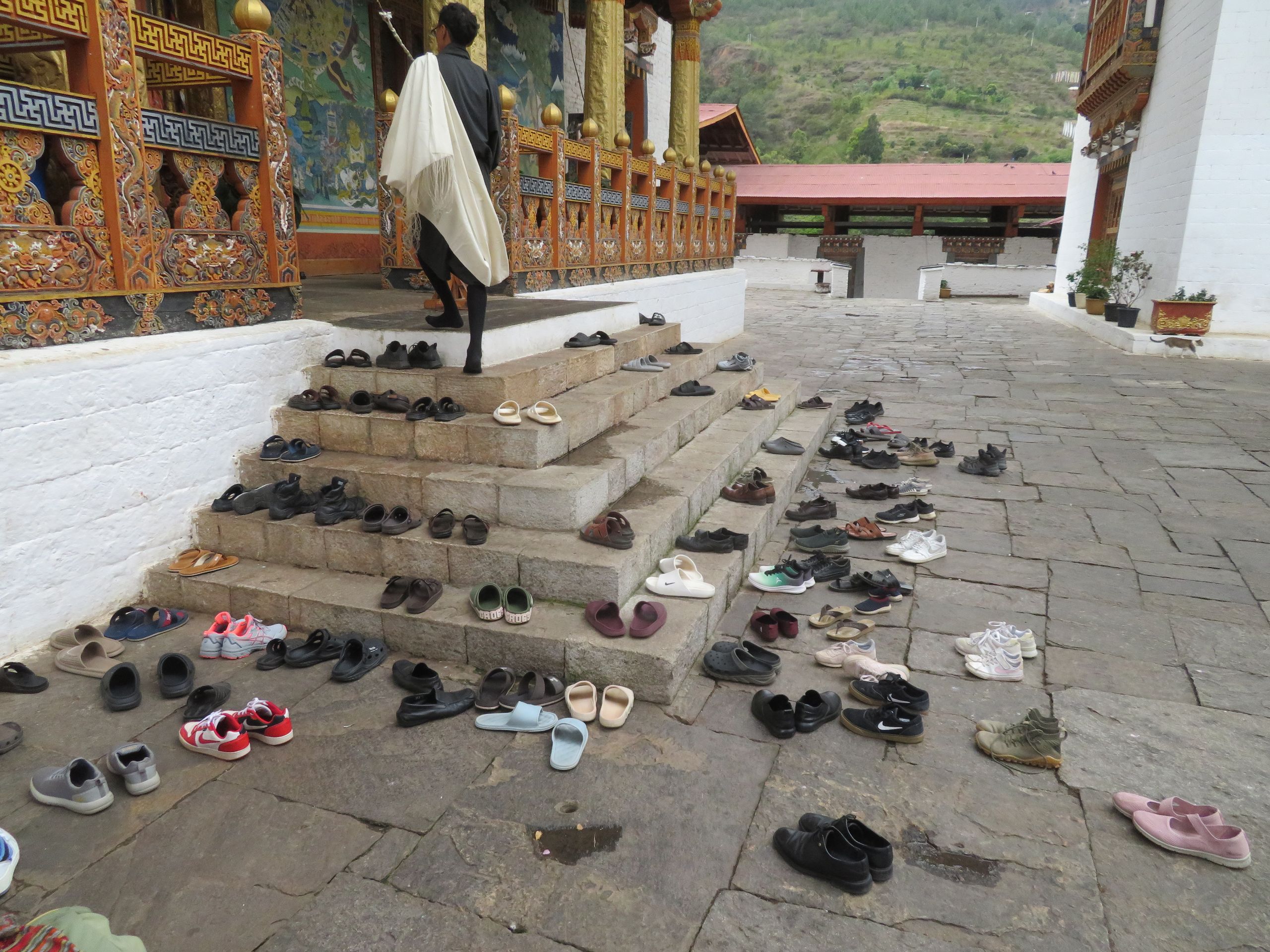
While you may photograph in the dzongs (large complexes comprising a monastery, temple, and secular administration, typical of Bhutan and also depicted on the back of banknotes), photography is prohibited in their respective temple areas and generally in temples. Therefore, there are no photos of the interiors of the temples here, and there will also be no pictures from the interior of the famous Tiger's Nest. Without a camera, however, one has more time and inner peace to engage with what is seen.
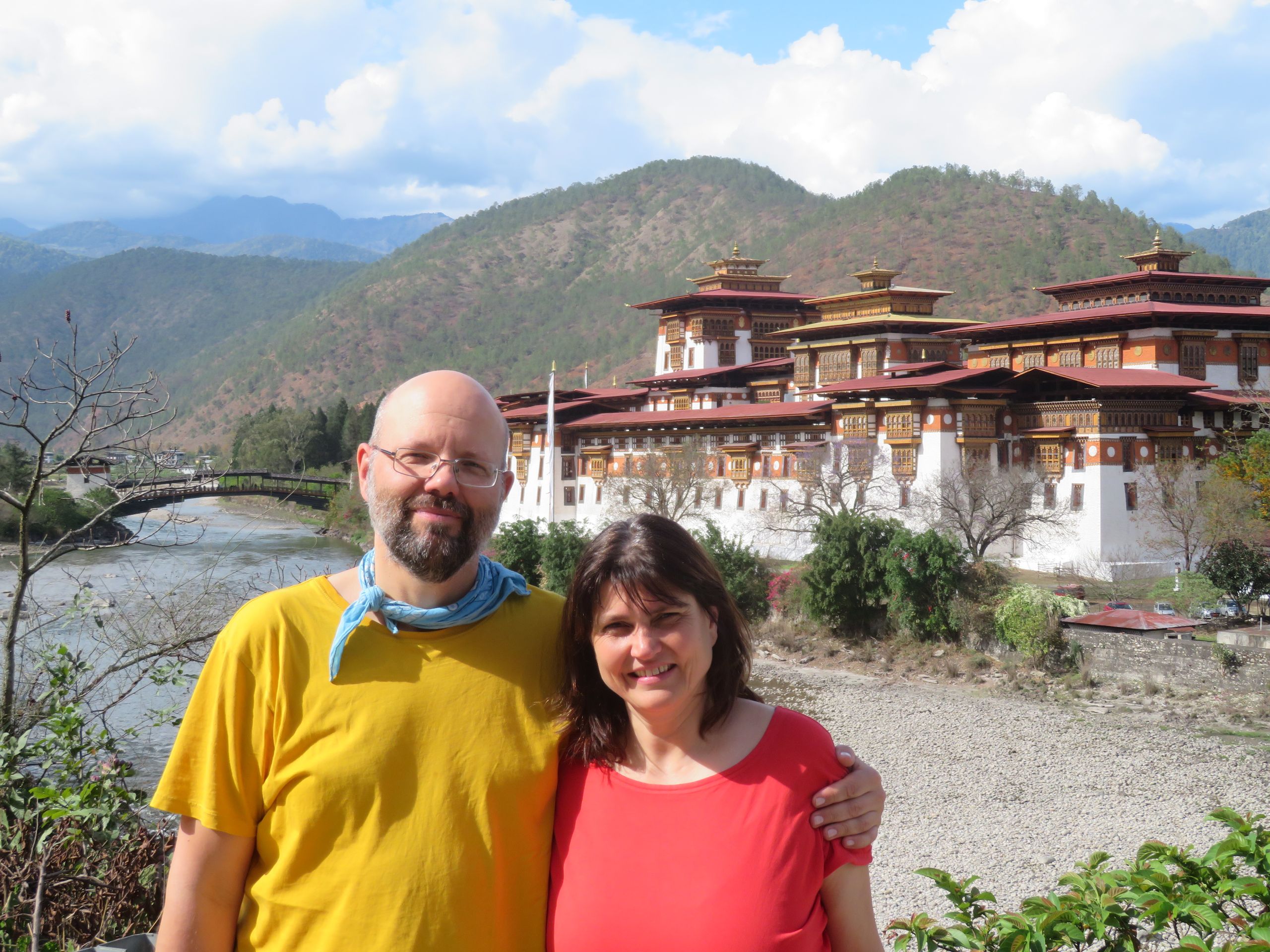
Overall, Bhutan is like the temples, a land full of tranquility and introspection, with a lovely and peaceful atmosphere. It's worth occasionally forgetting the camera here - even though that was hard for Mr. Ärmel, as the abundance of photos shows.
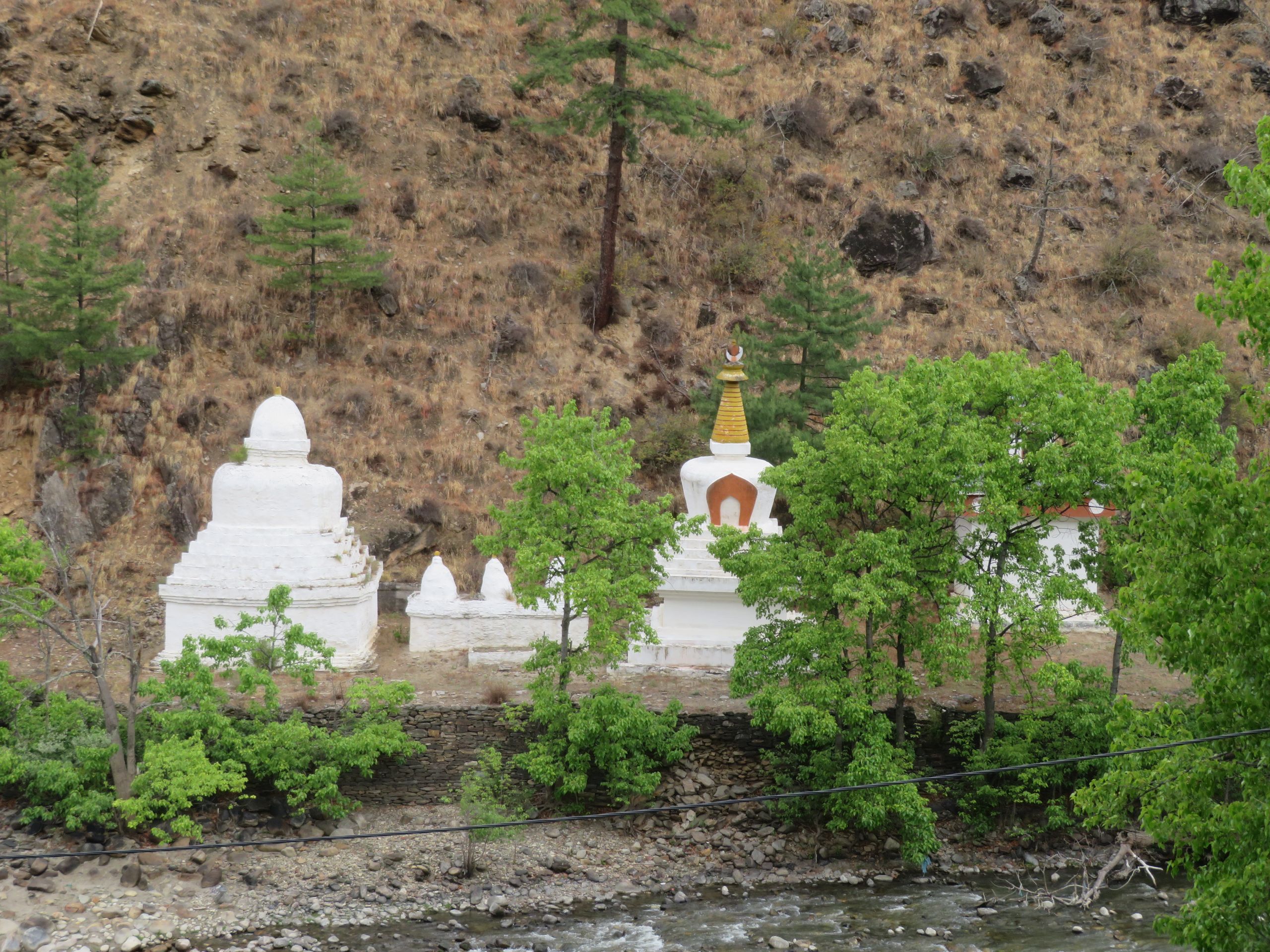
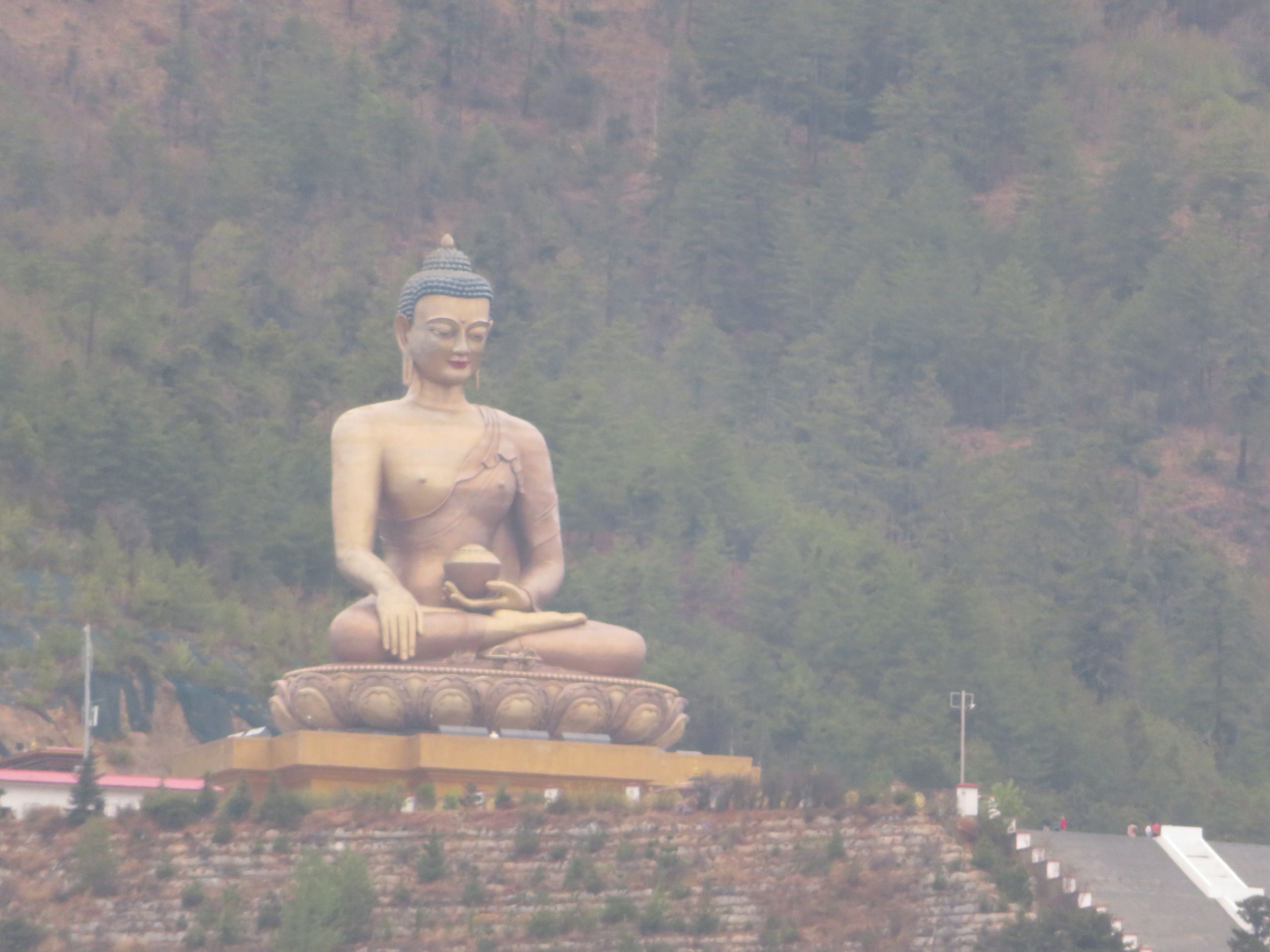
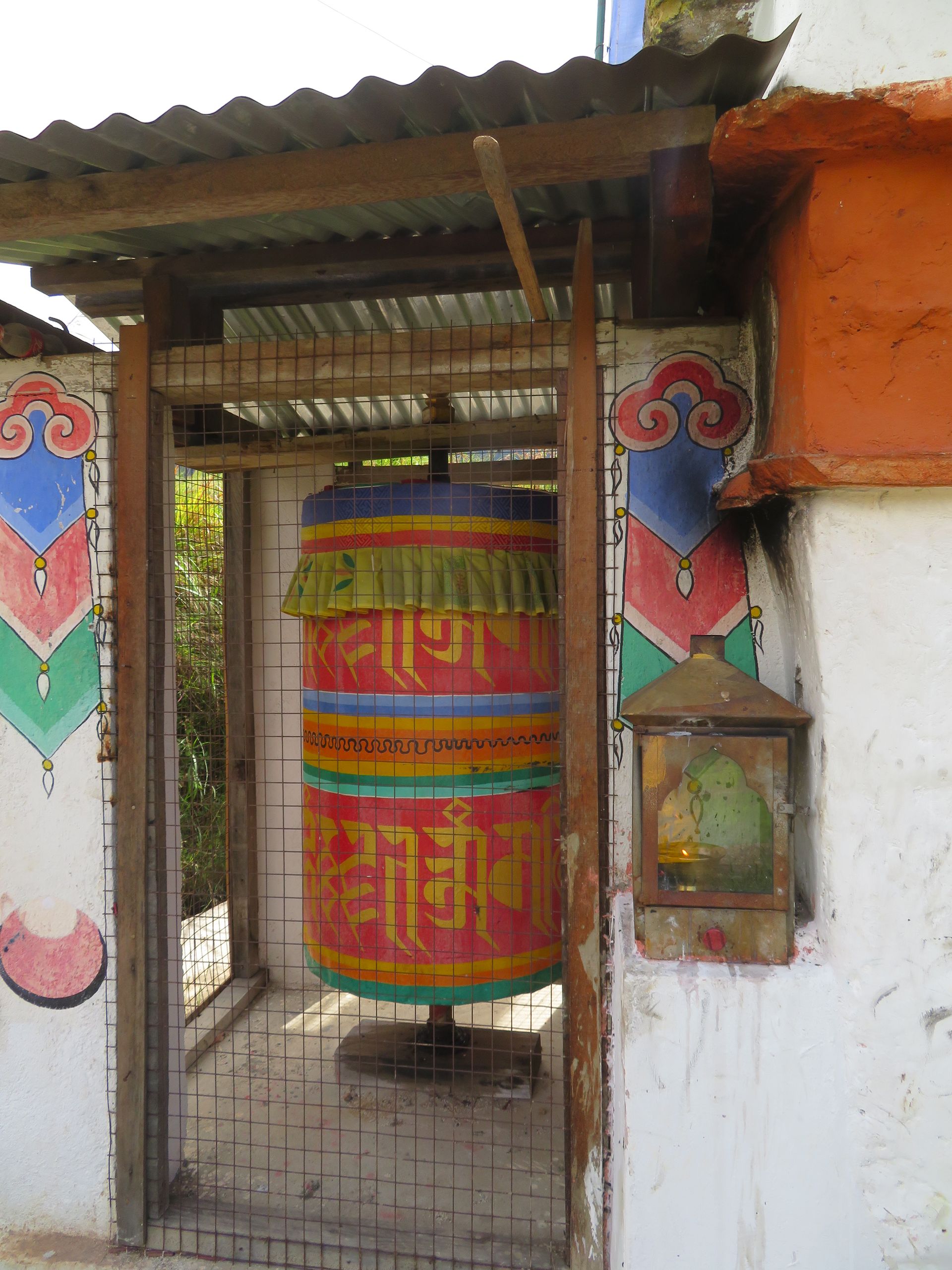
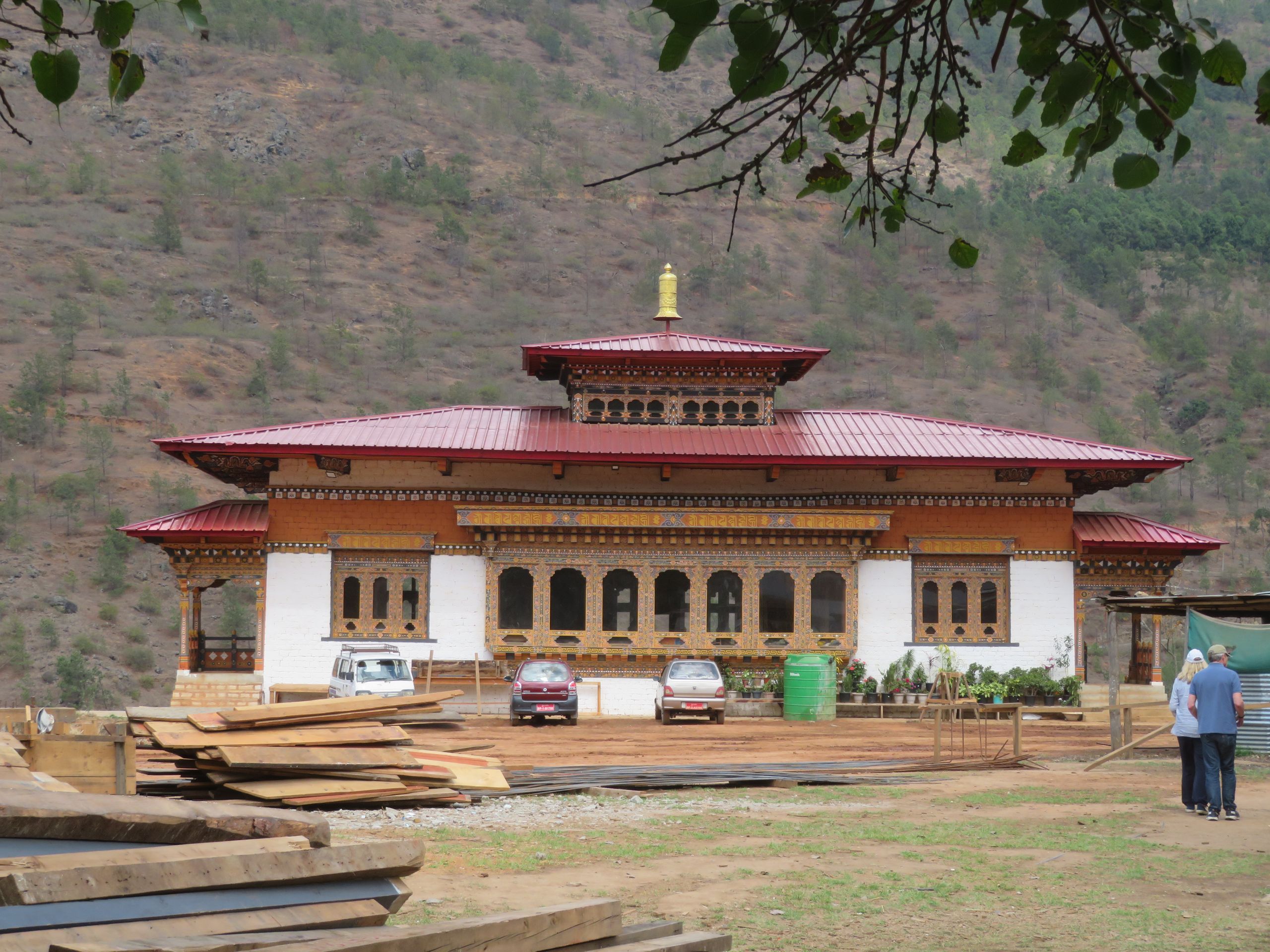
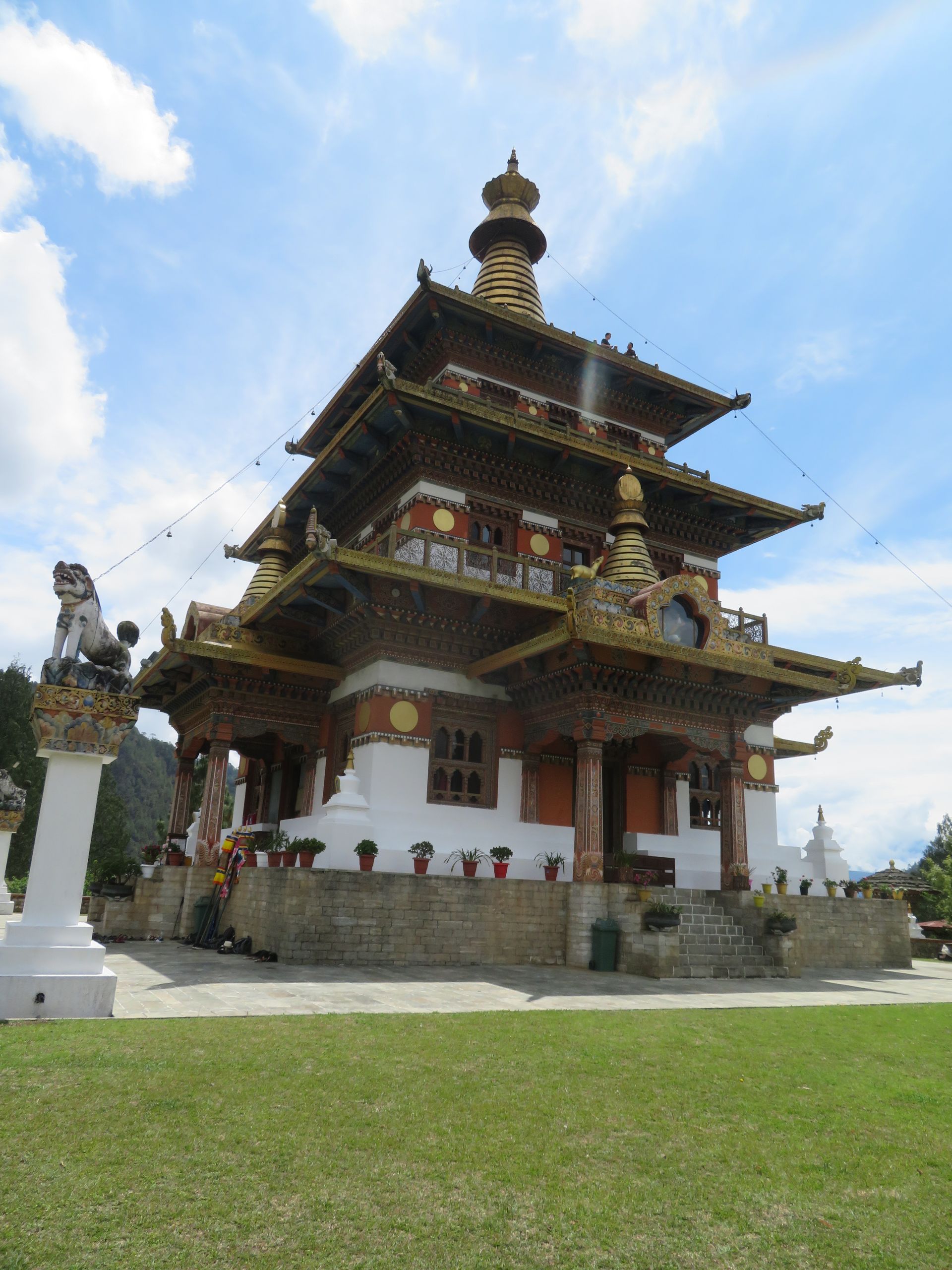
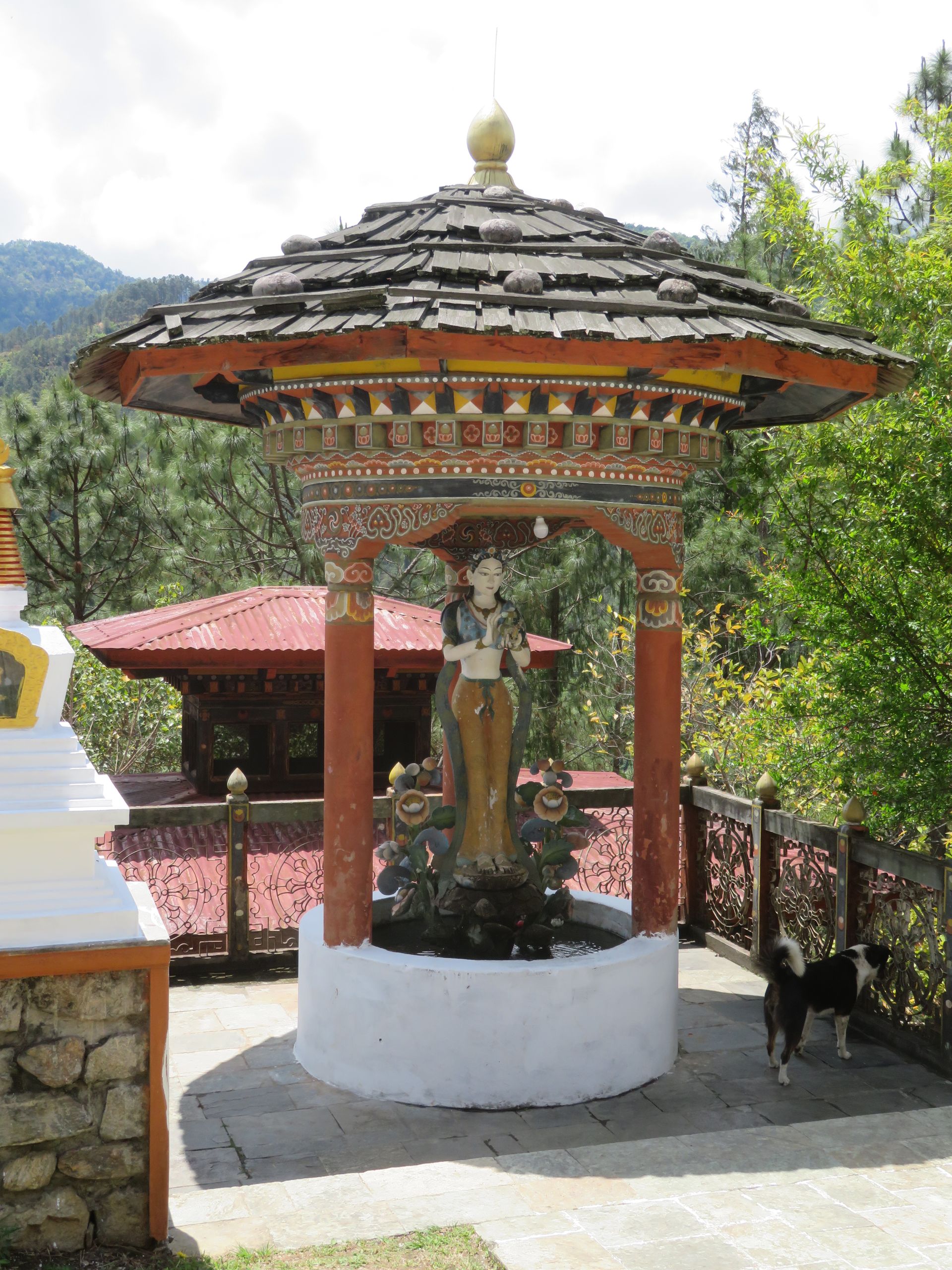
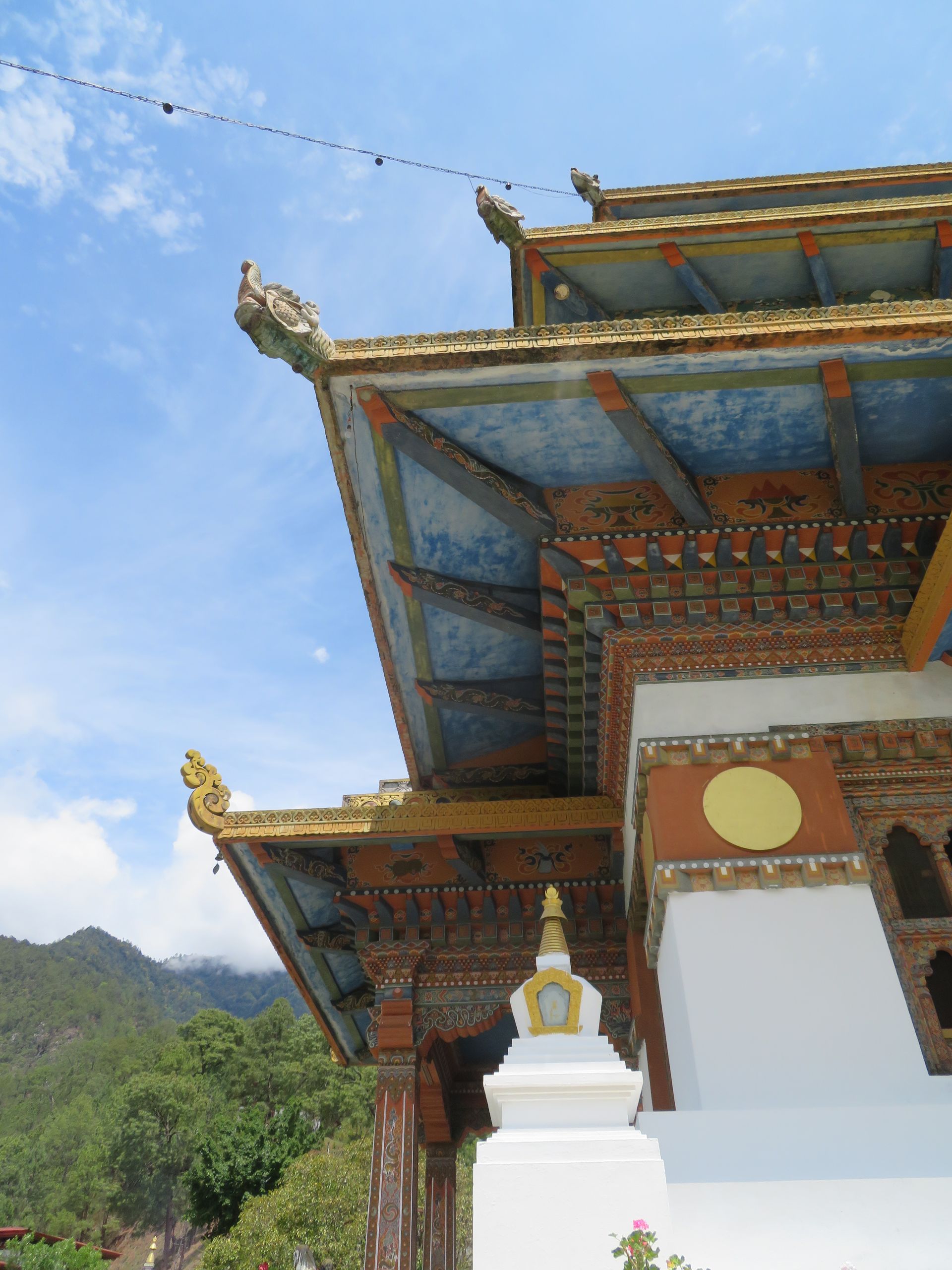
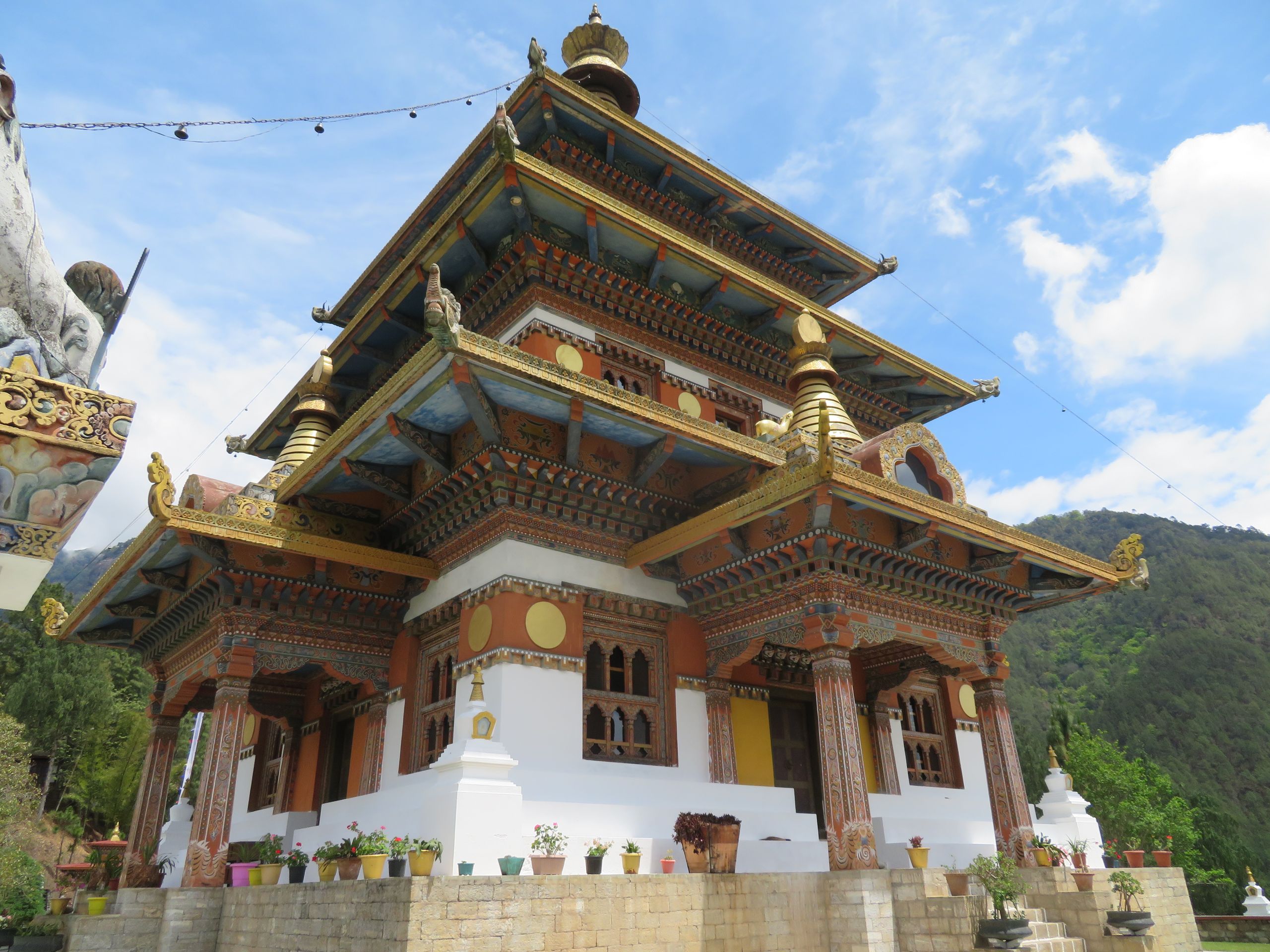
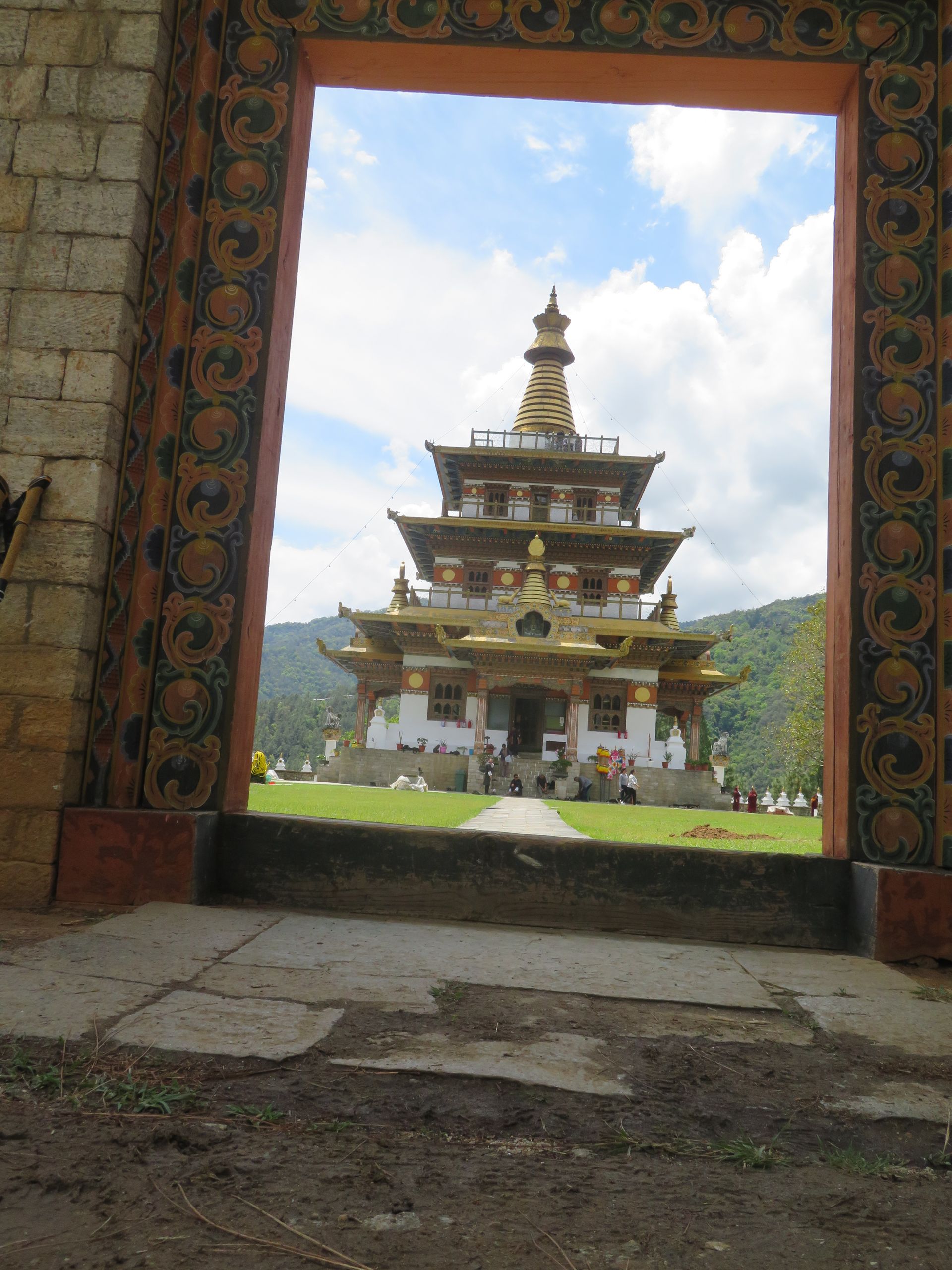
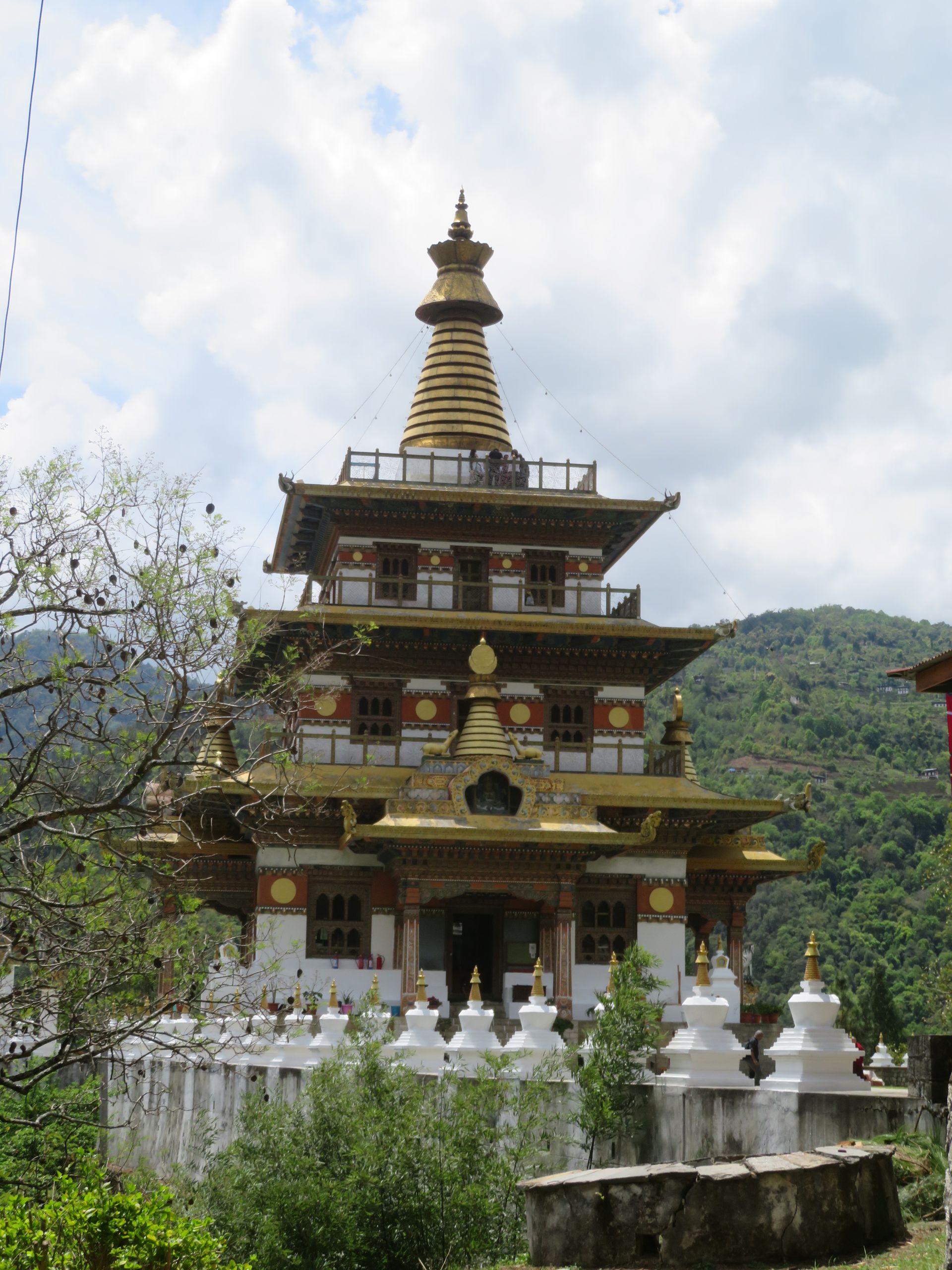
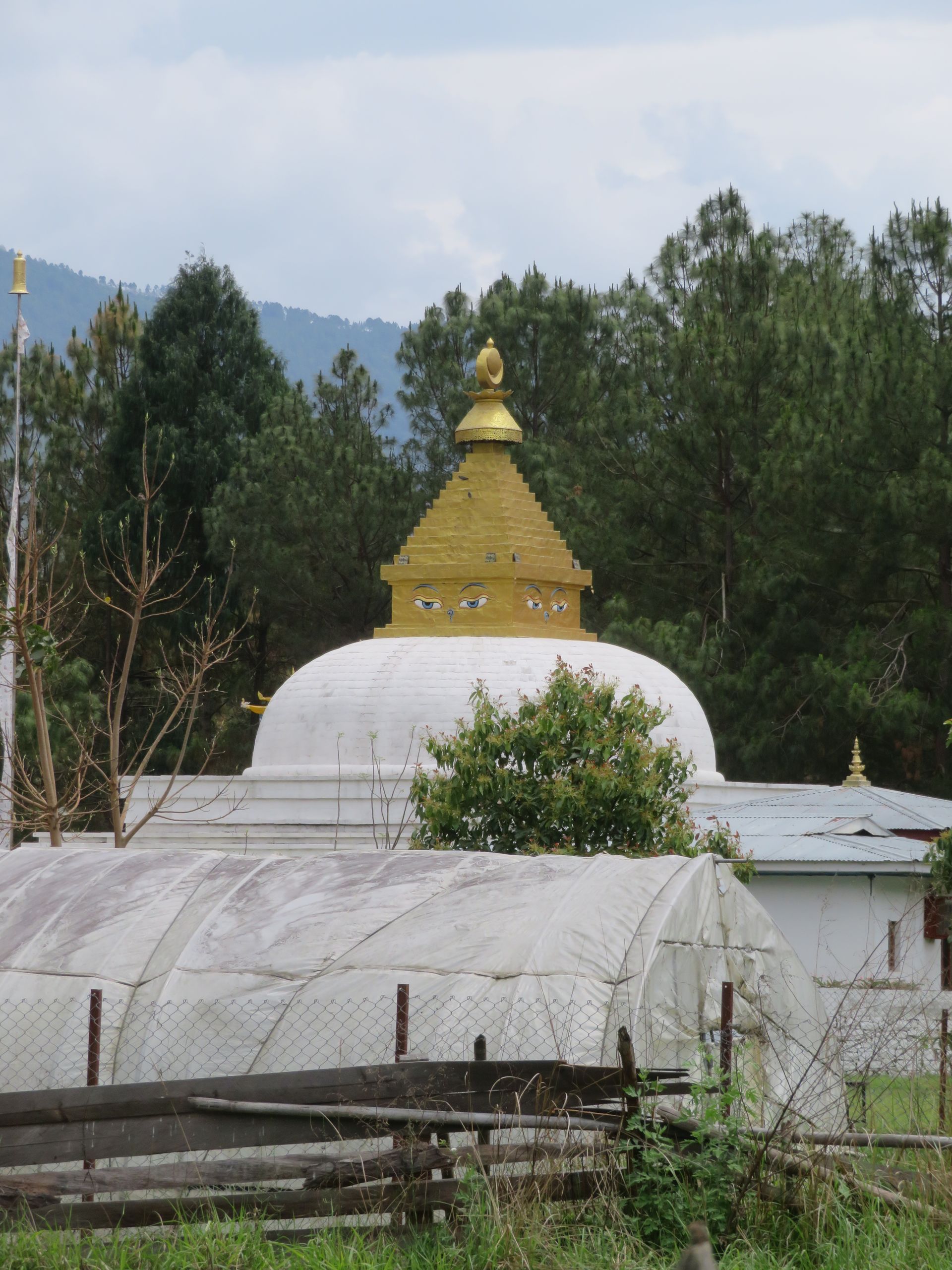
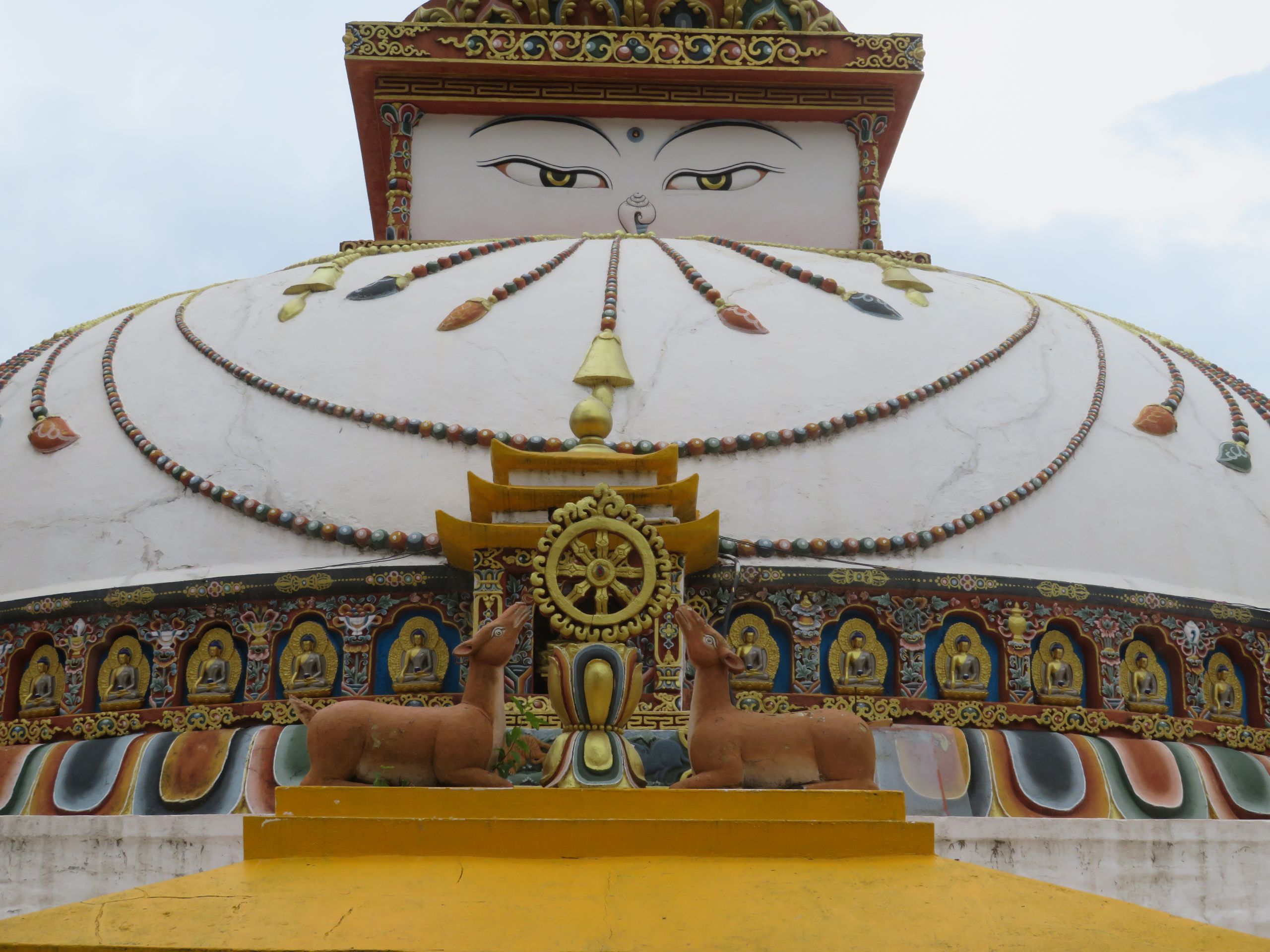
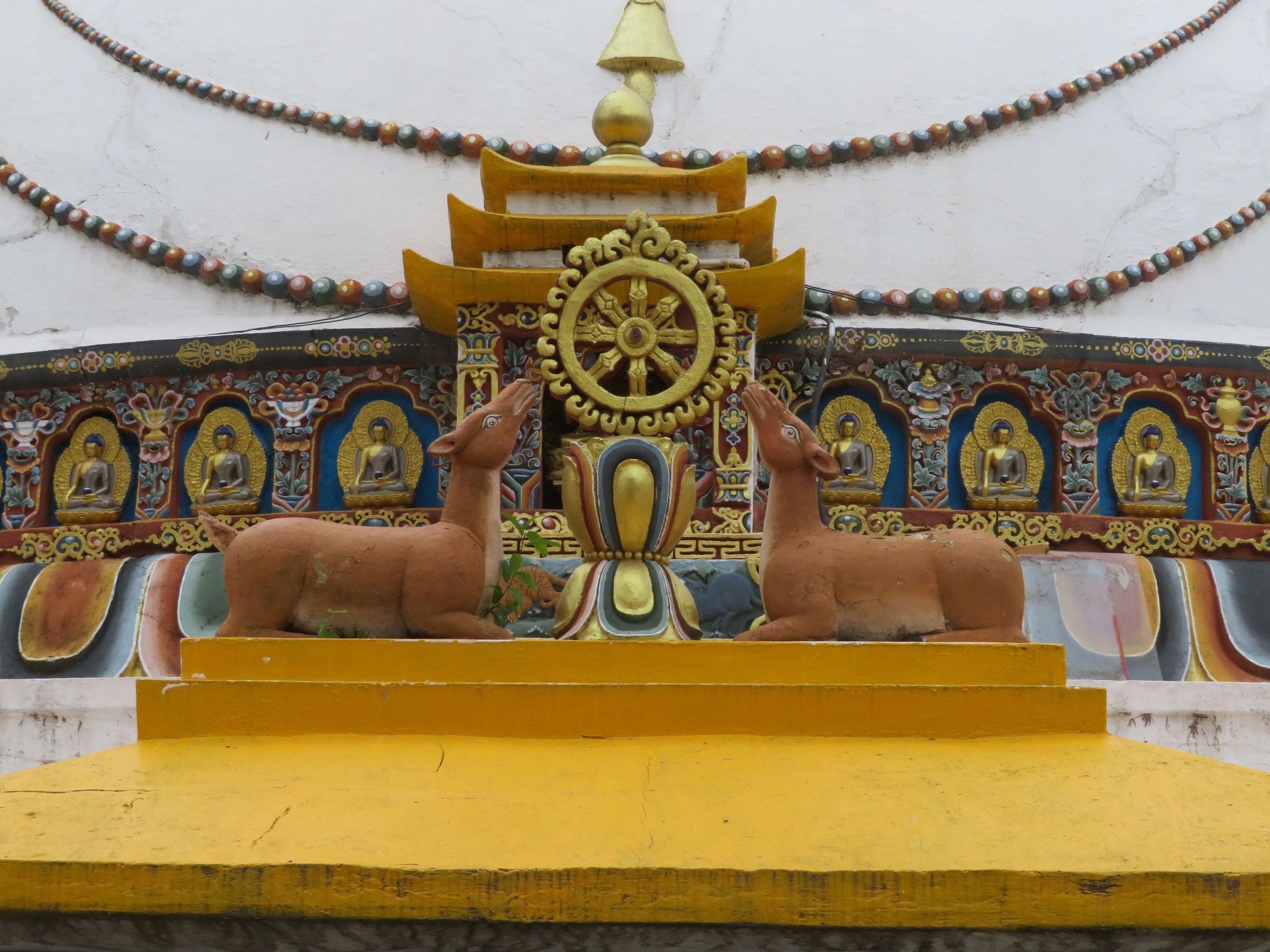
What we primarily visited in the first days were Buddhist temples, stupas, and dzongs. Temples speak for themselves, stupas are representations of the Buddhist faith that one circumambulates in a counter-clockwise direction, known to some by the Tibetan name Choerte or as pagodas. We have already attempted to explain dzongs. However, there is no state religion in Bhutan.
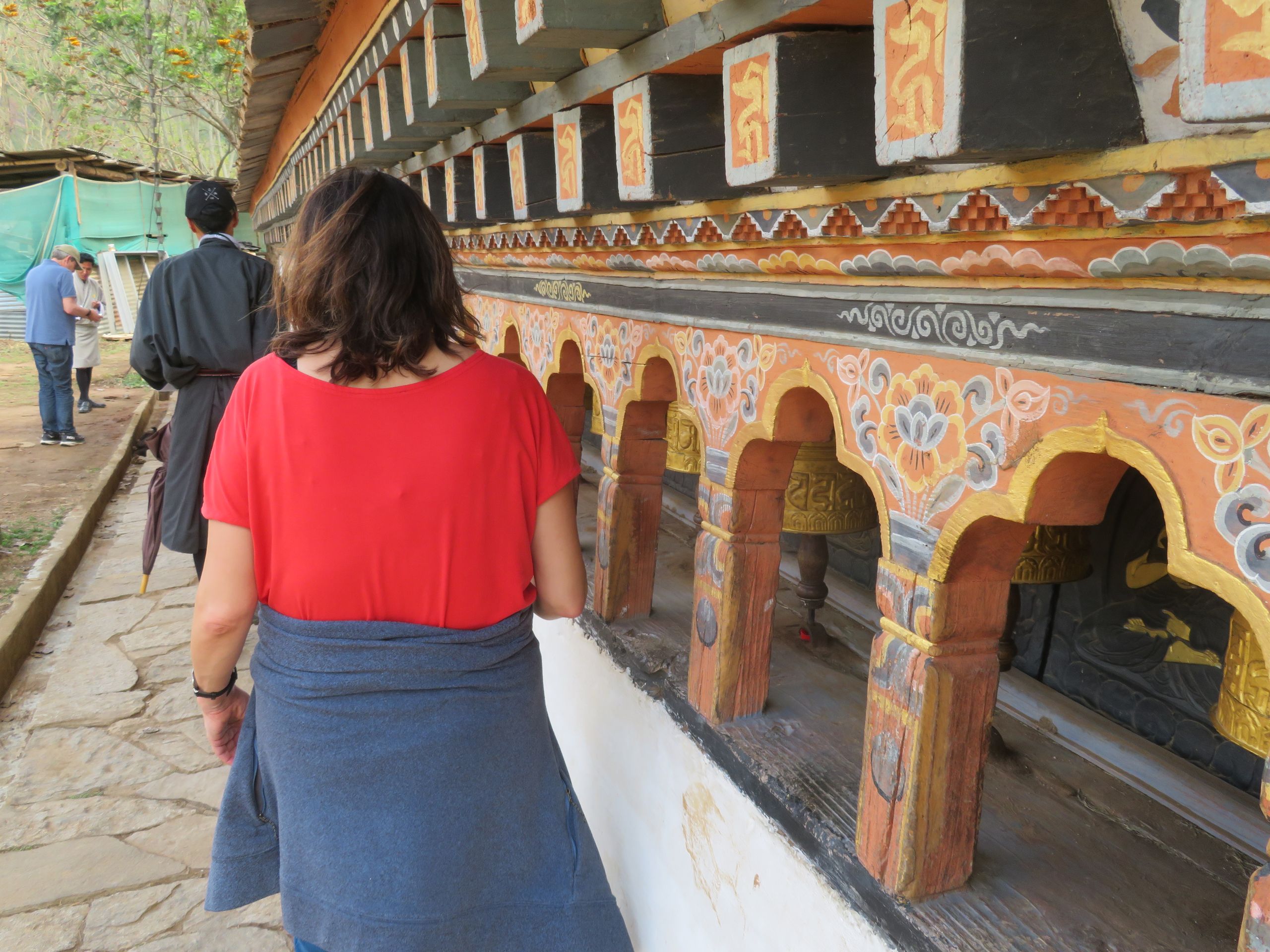
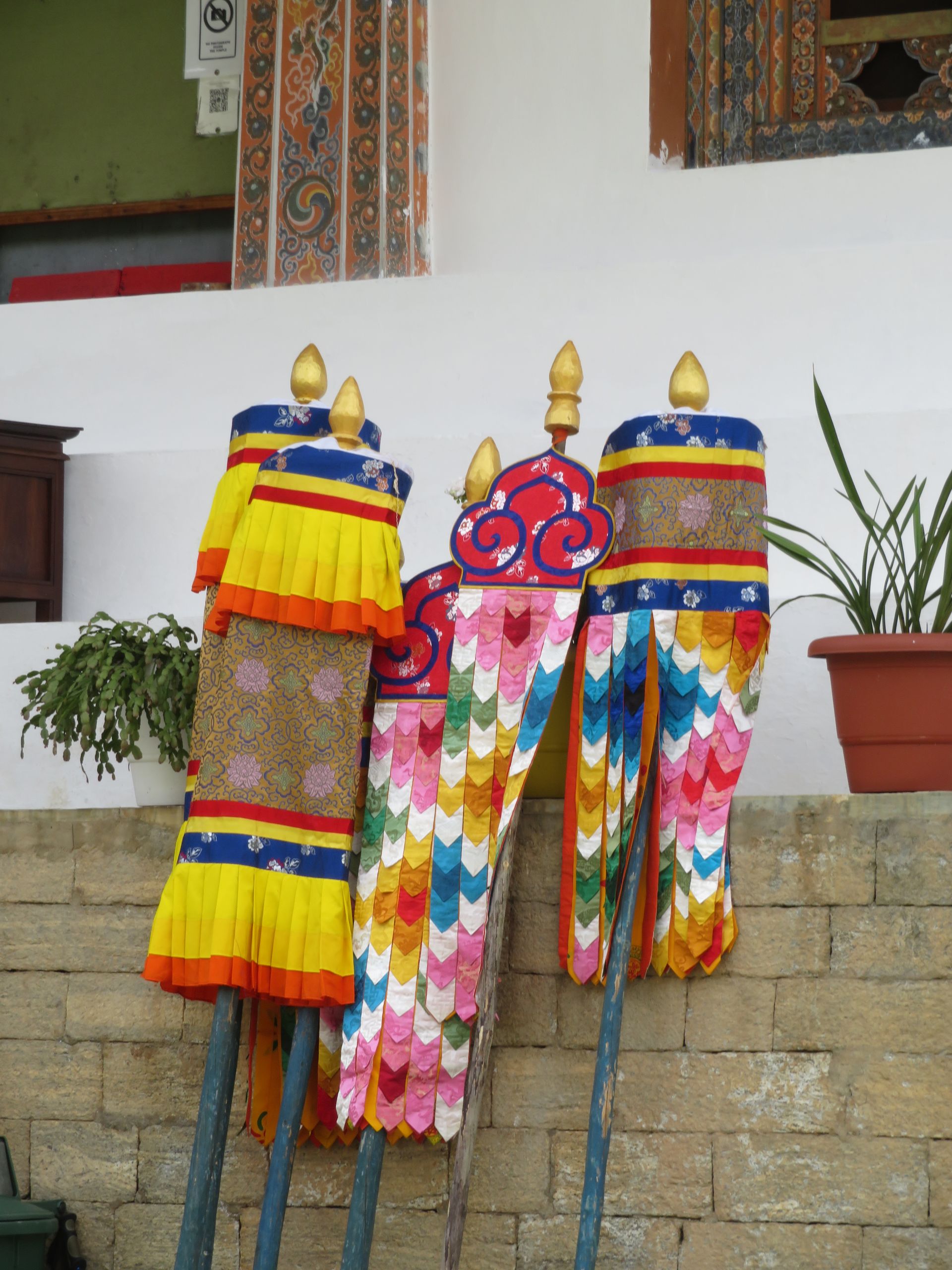
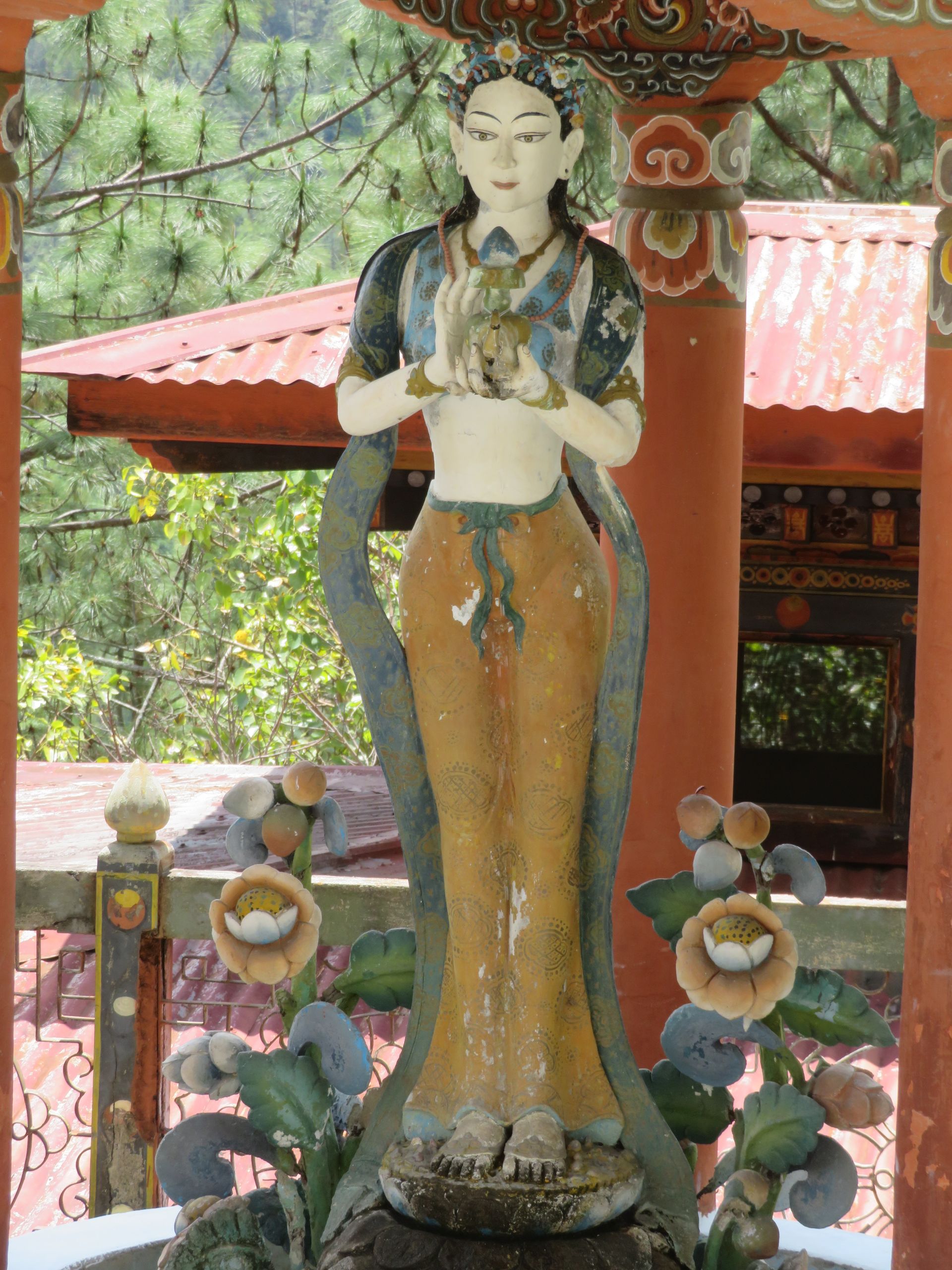
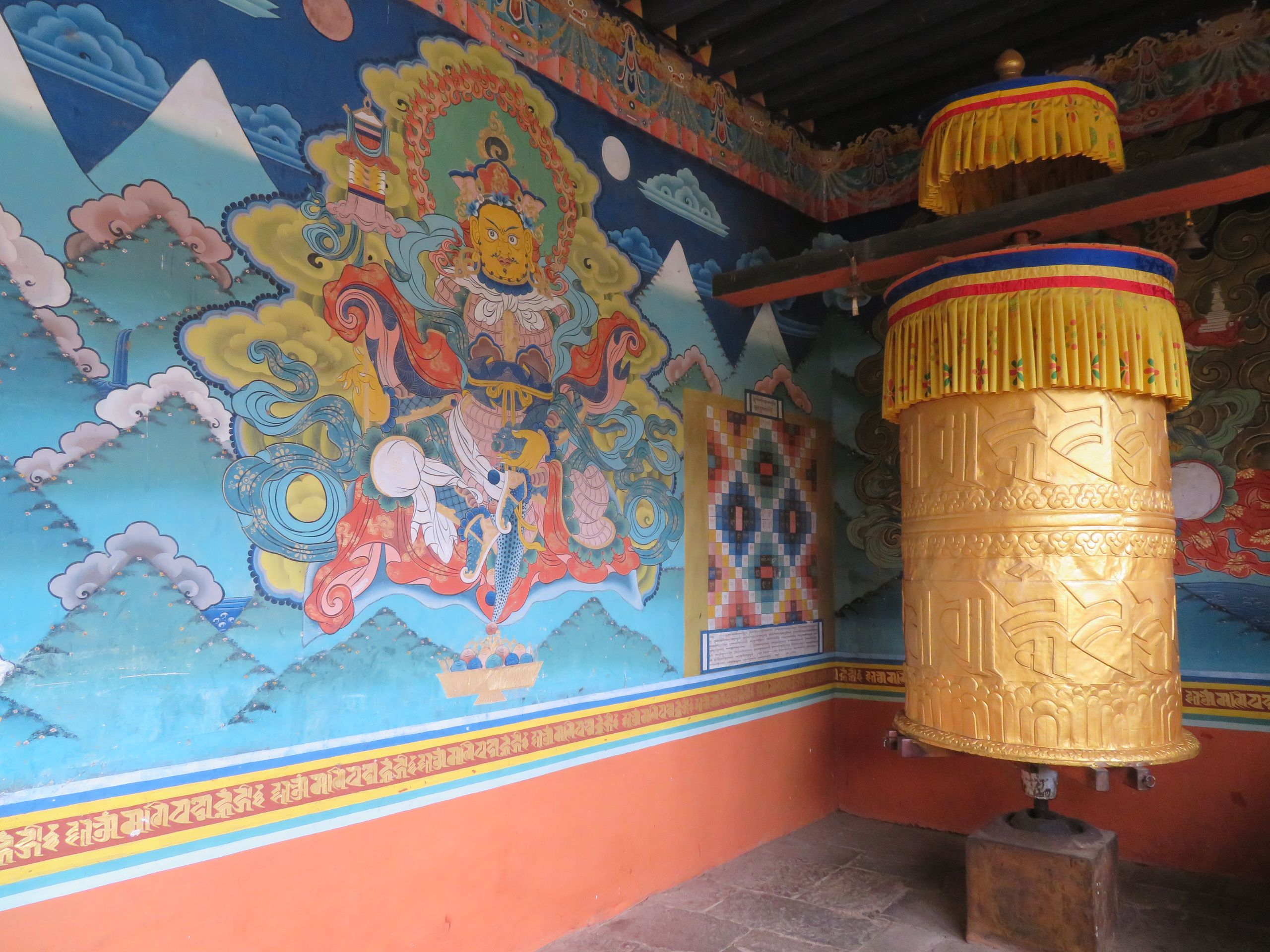
While the dzongs are all beautifully decorated yet organized, the interiors of the temples often appear overly lavish with wall paintings, statues, and an unfamiliar narrative system to us. Gradually, more details began to reveal themselves to us as non-Buddhists, such as the first Buddha and the second Buddha, the past, present, and future Buddhas, the compassion mantra on prayer wheels, the 21 female Buddhas (known as Tara), the sacred number 108, the ears, body, and clothing of Buddha, and much more.
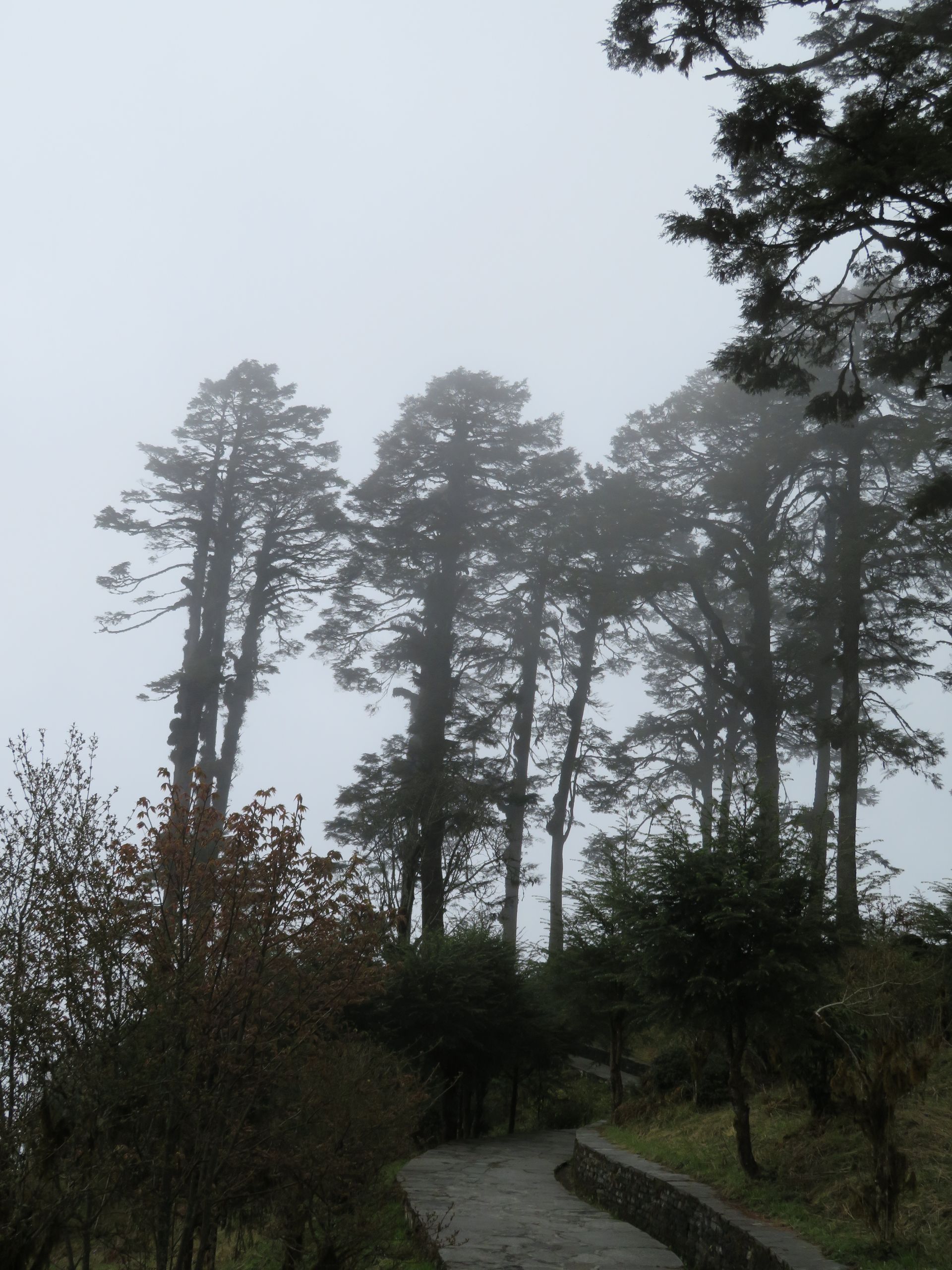
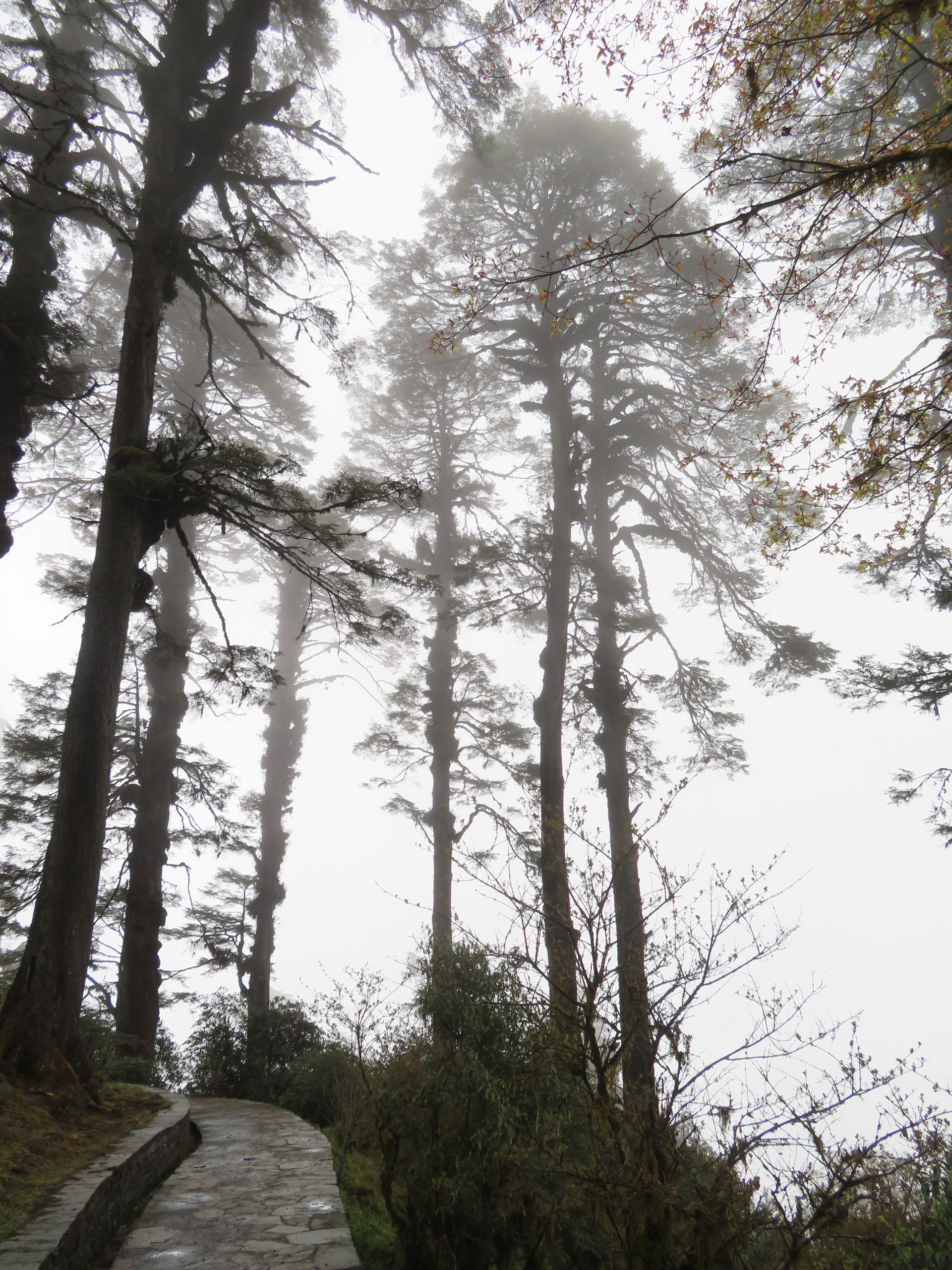
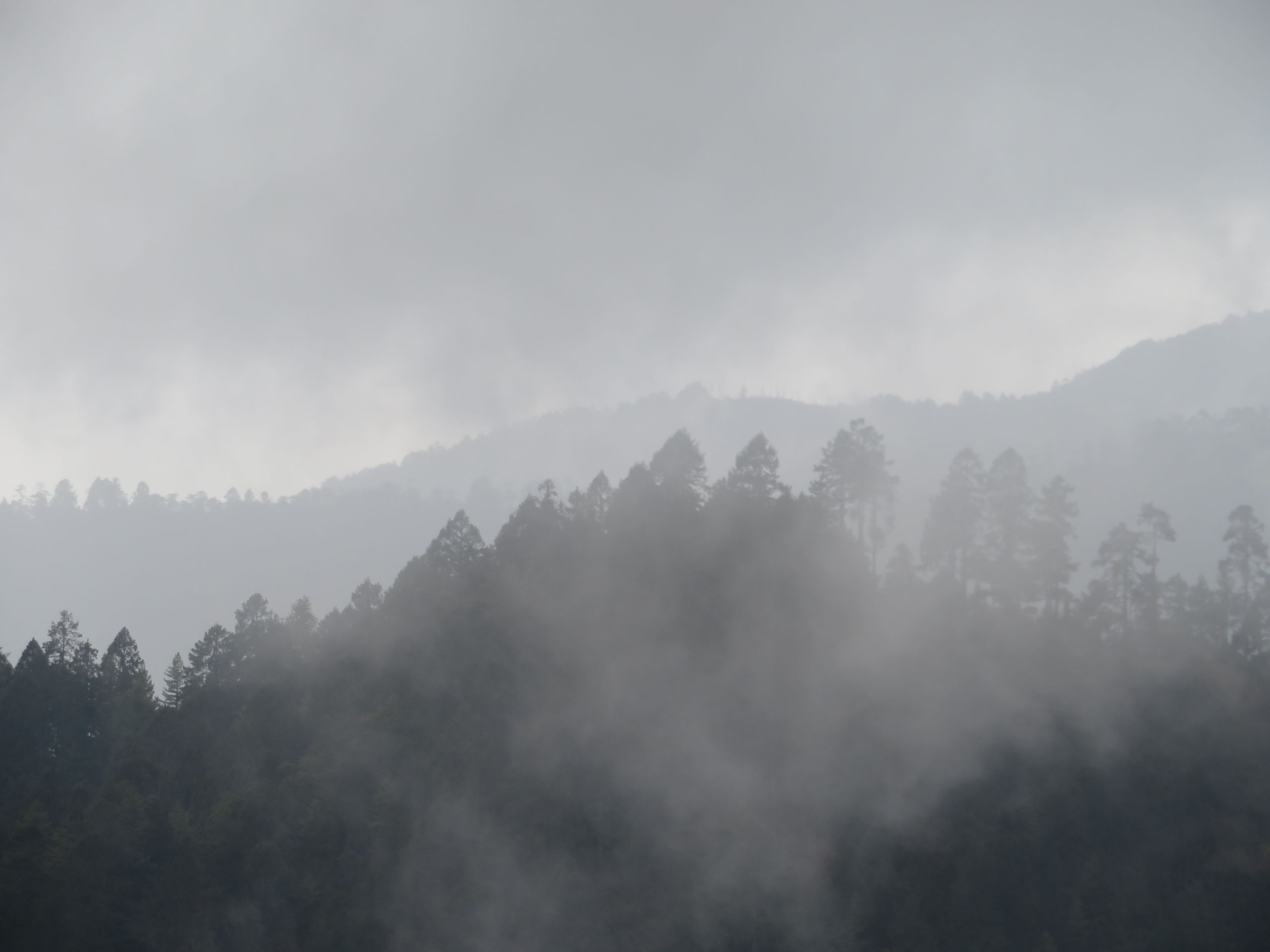
We also visited a stupa at a mountain pass from which we would have had a view of the world's highest unclimbed mountain, over 7000 meters high, if only the clouds had cooperated. However, they did not, and we were left with a hike to a cave, at about 2400 meters high, where for the first time on this journey (but certainly not the last), we experienced how little oxygen the high-altitude air gives us.
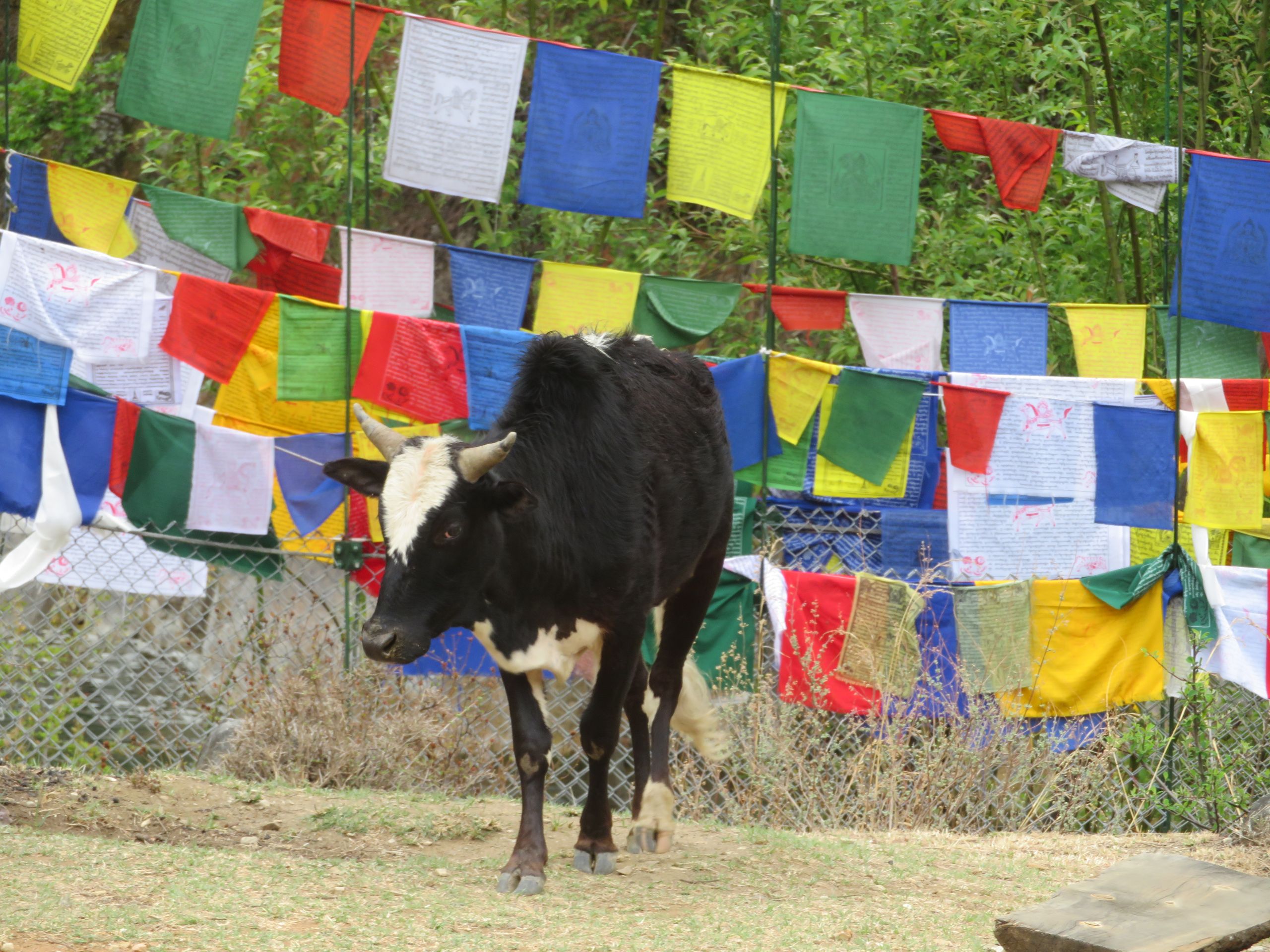
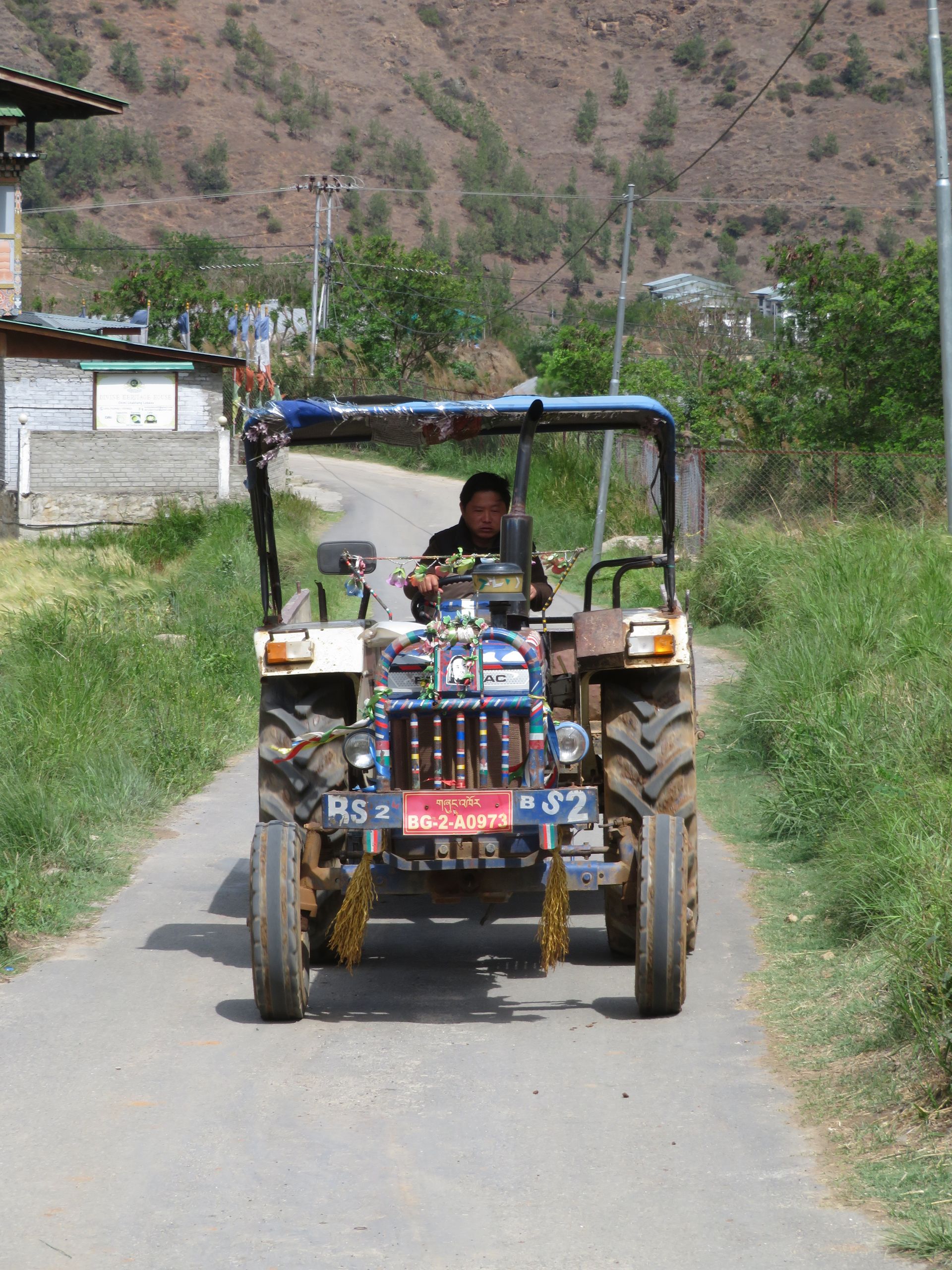
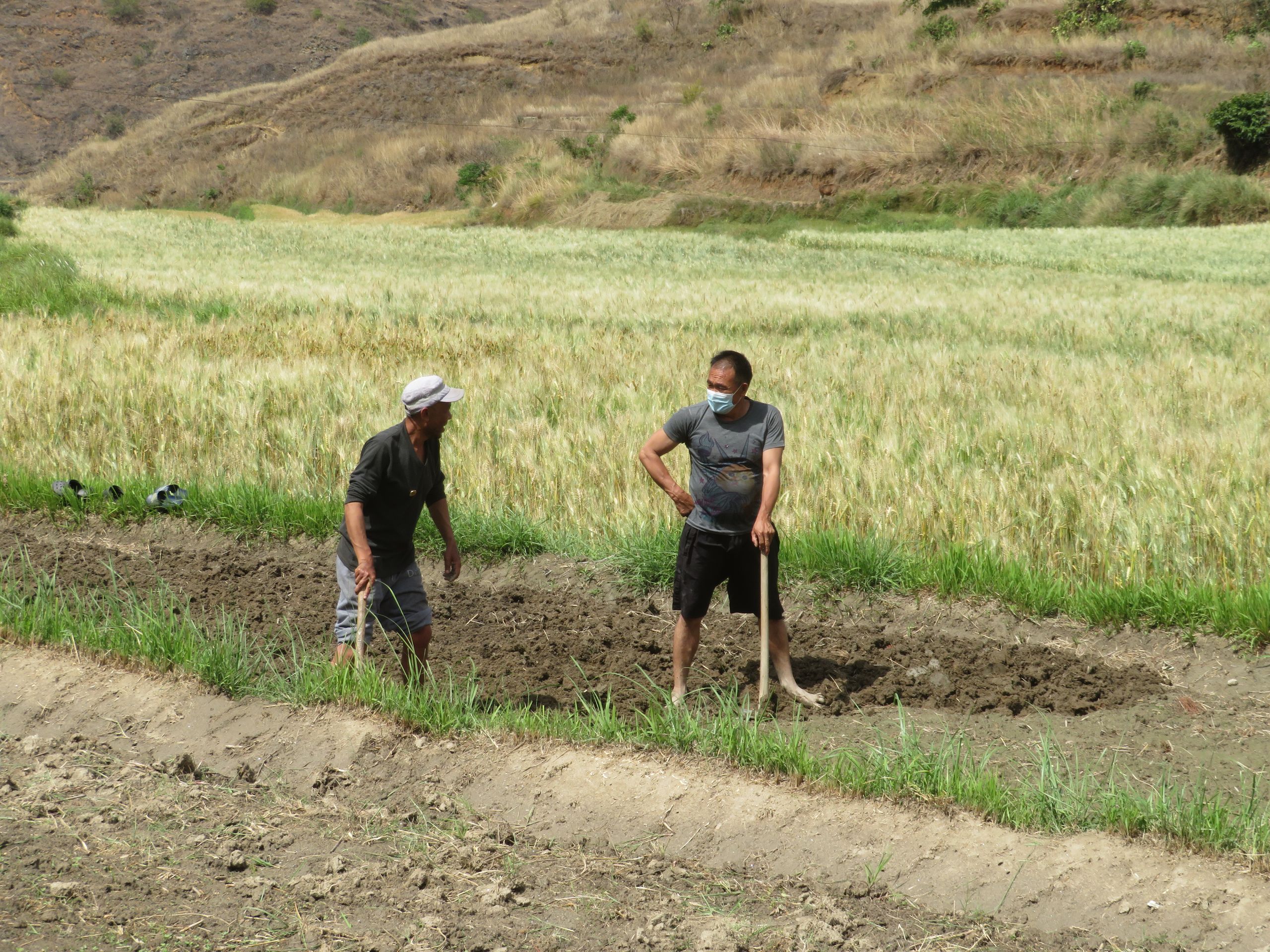
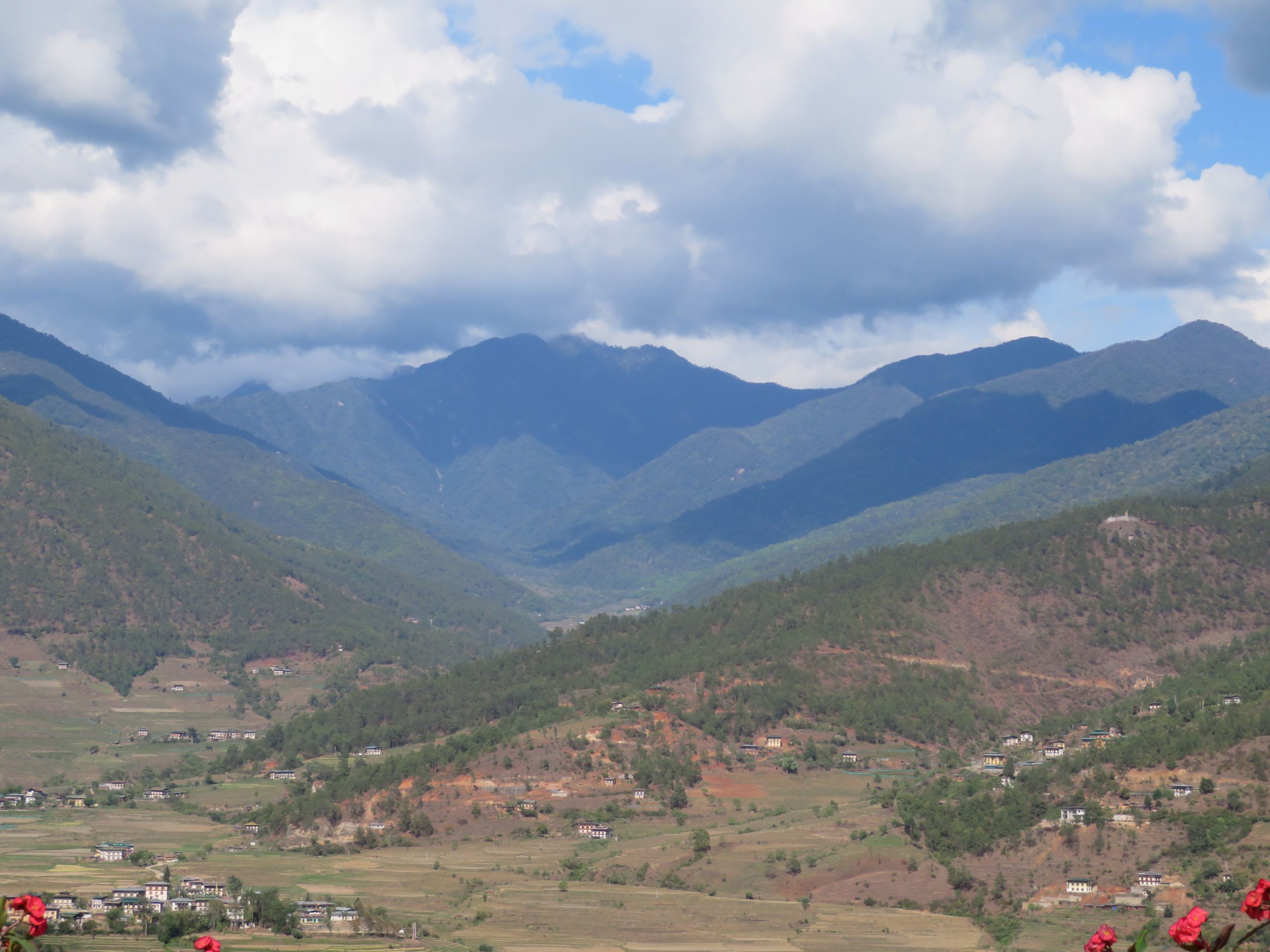
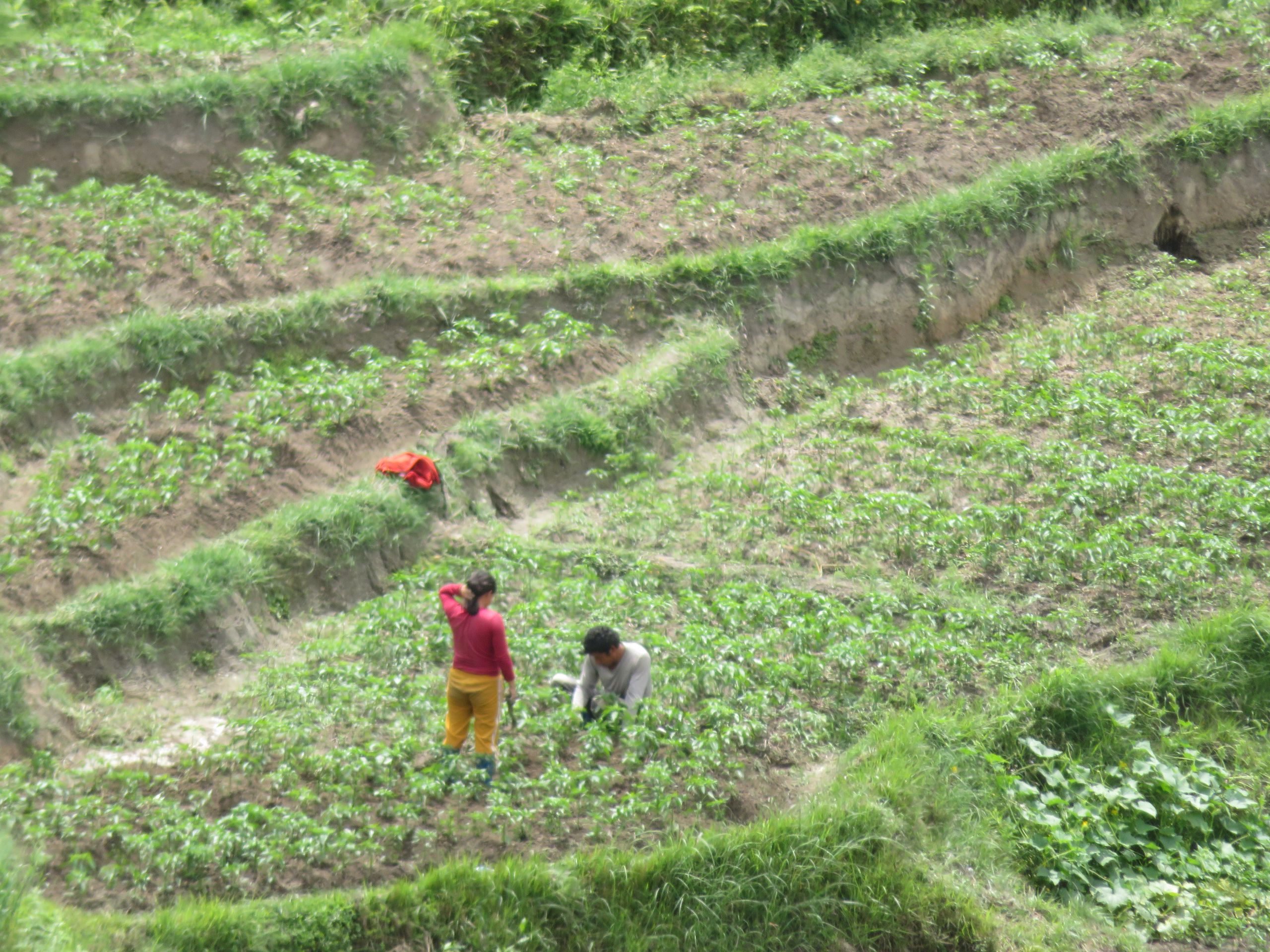
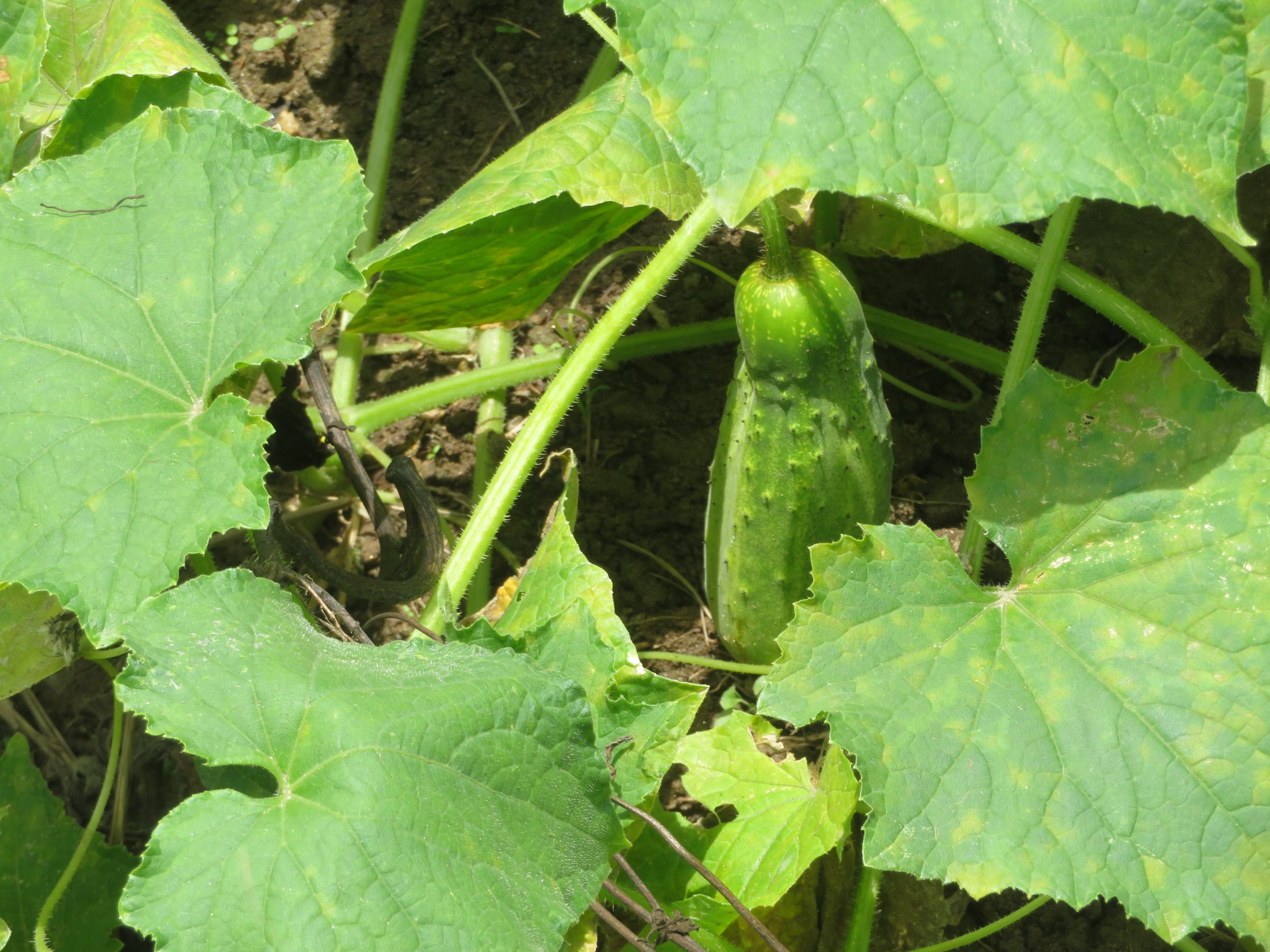
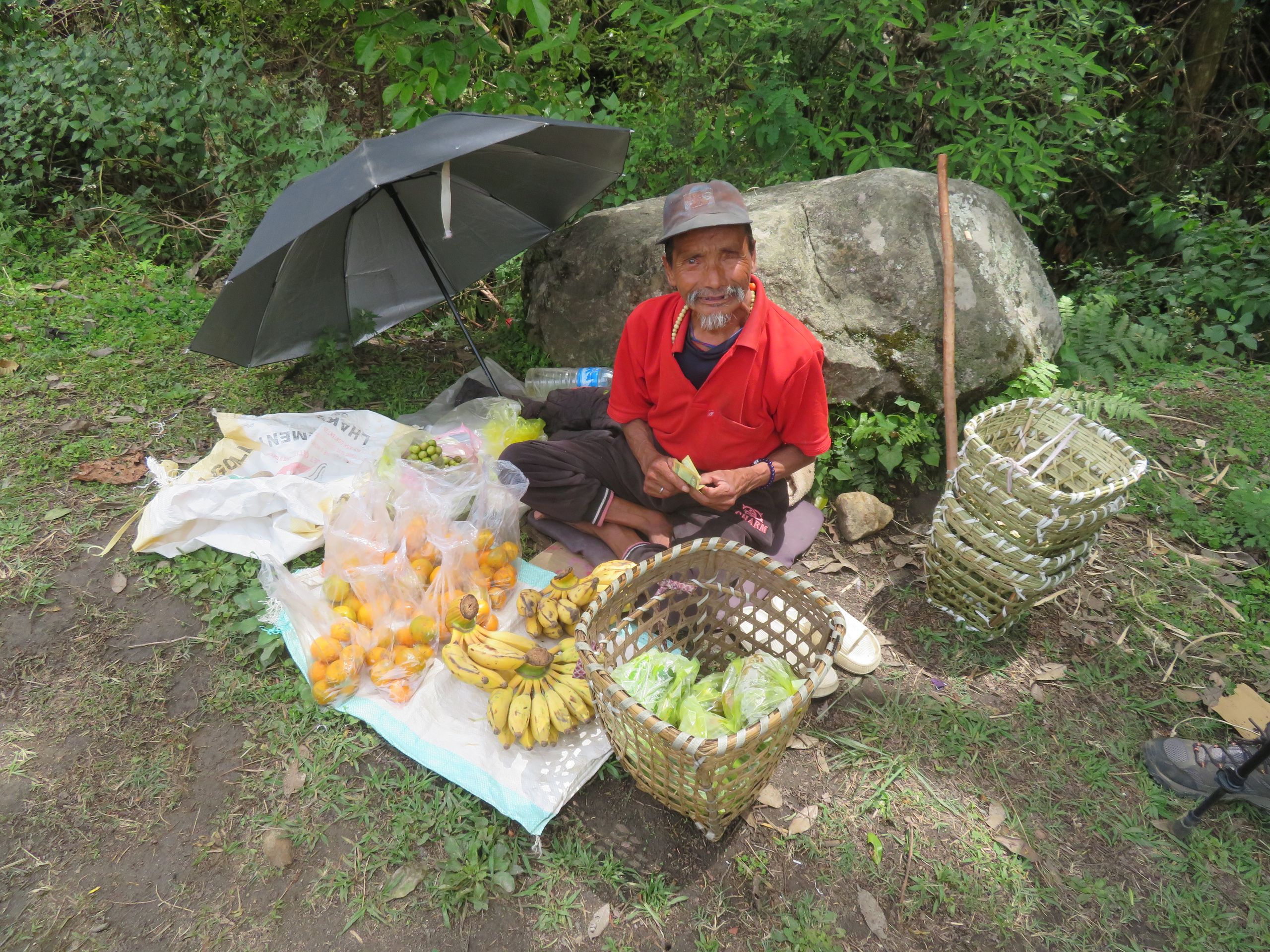
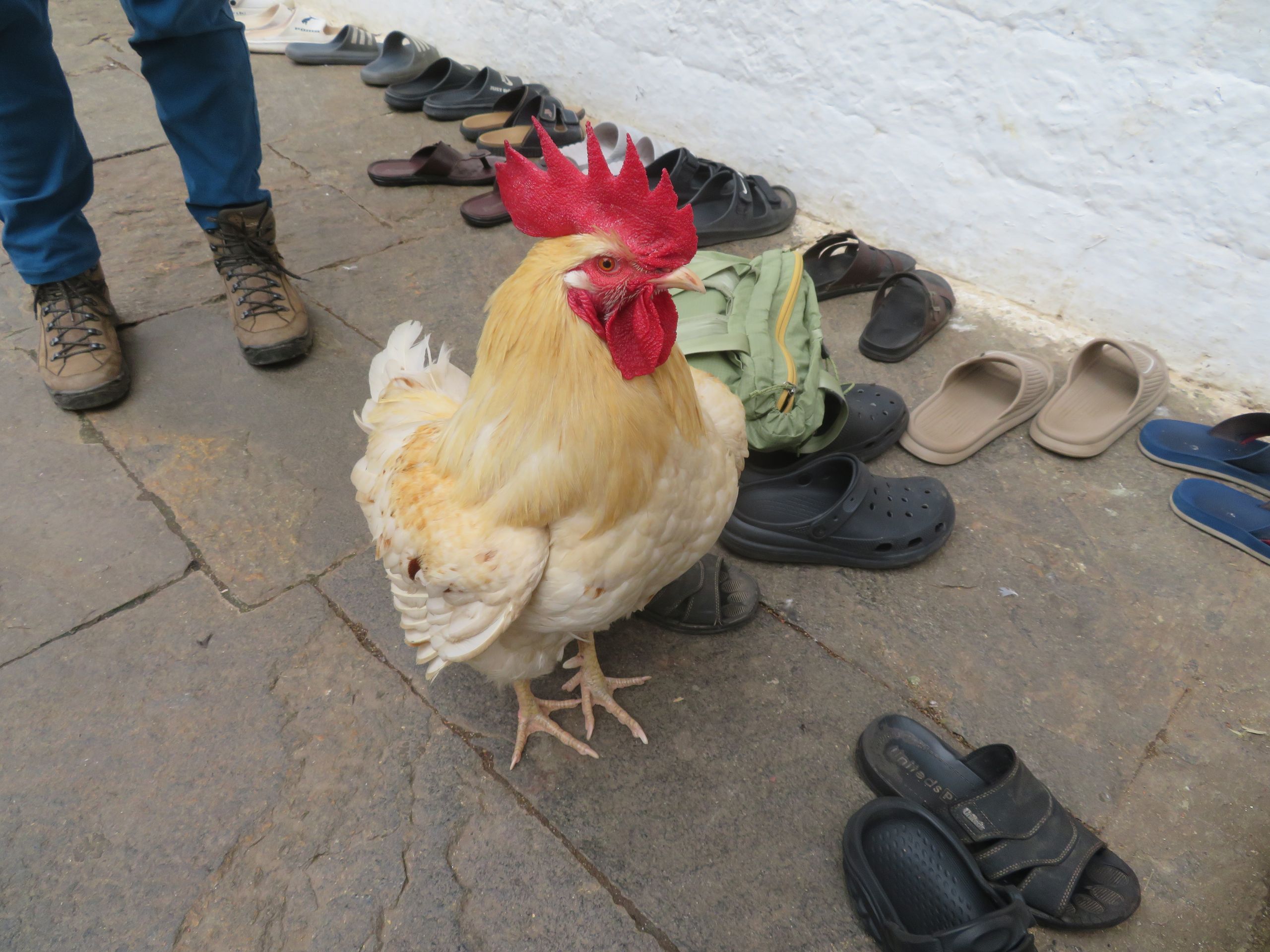
We experienced this again while ascending to various temples. Here, we had time (while catching our breath) to learn a bit about agriculture in Bhutan. Bhutan is the only country on earth with 100% organic farming. Animals are not allowed to be slaughtered and may only be butchered after dying of old age or accident to eat. Thus, many roosters enjoy a relaxed life, and old cows and bulls often look quite emaciated, but they are allowed to roam freely on and along the roads. One may shoo the cattle away by hand, but otherwise, waiting is required.
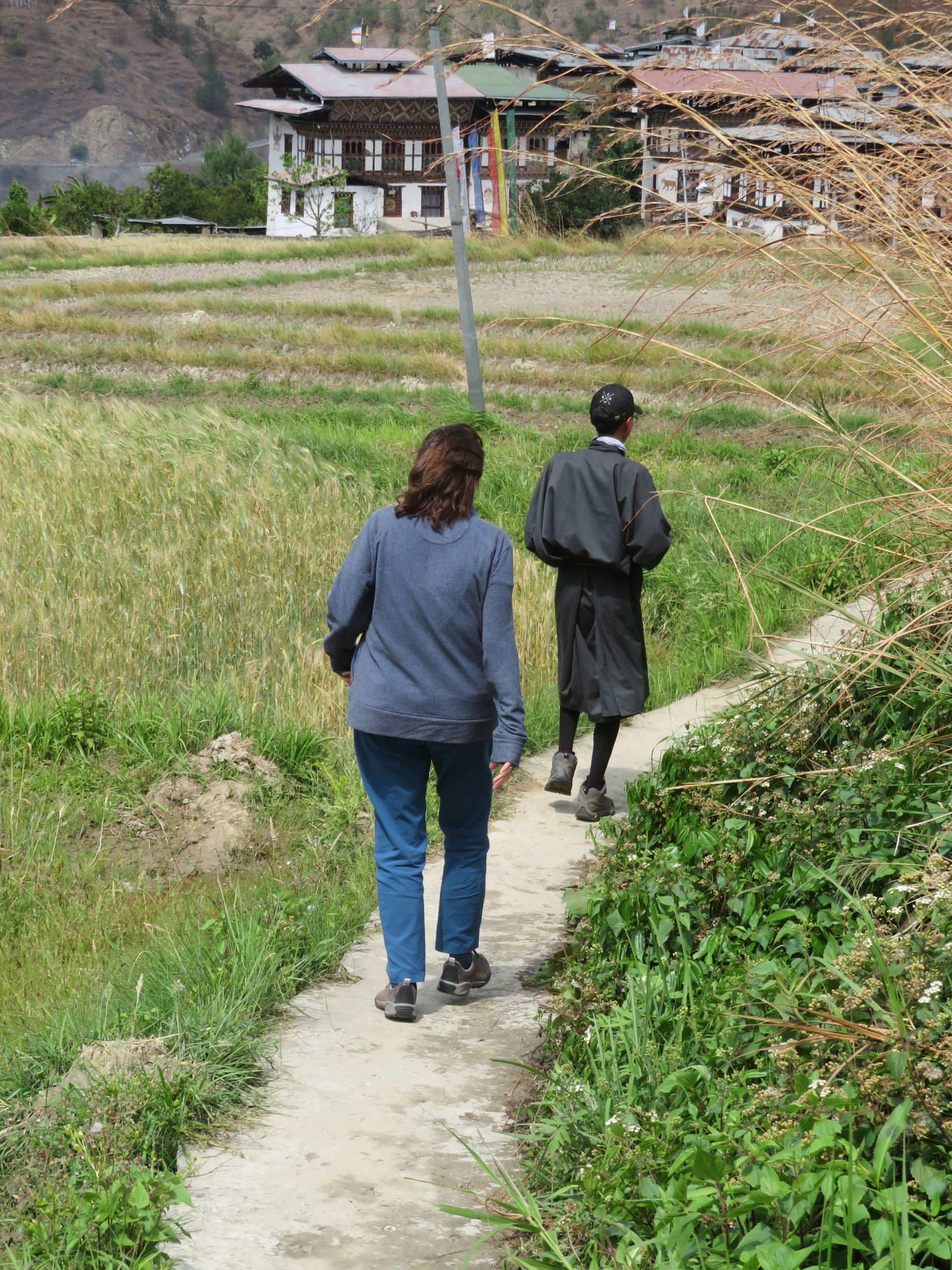
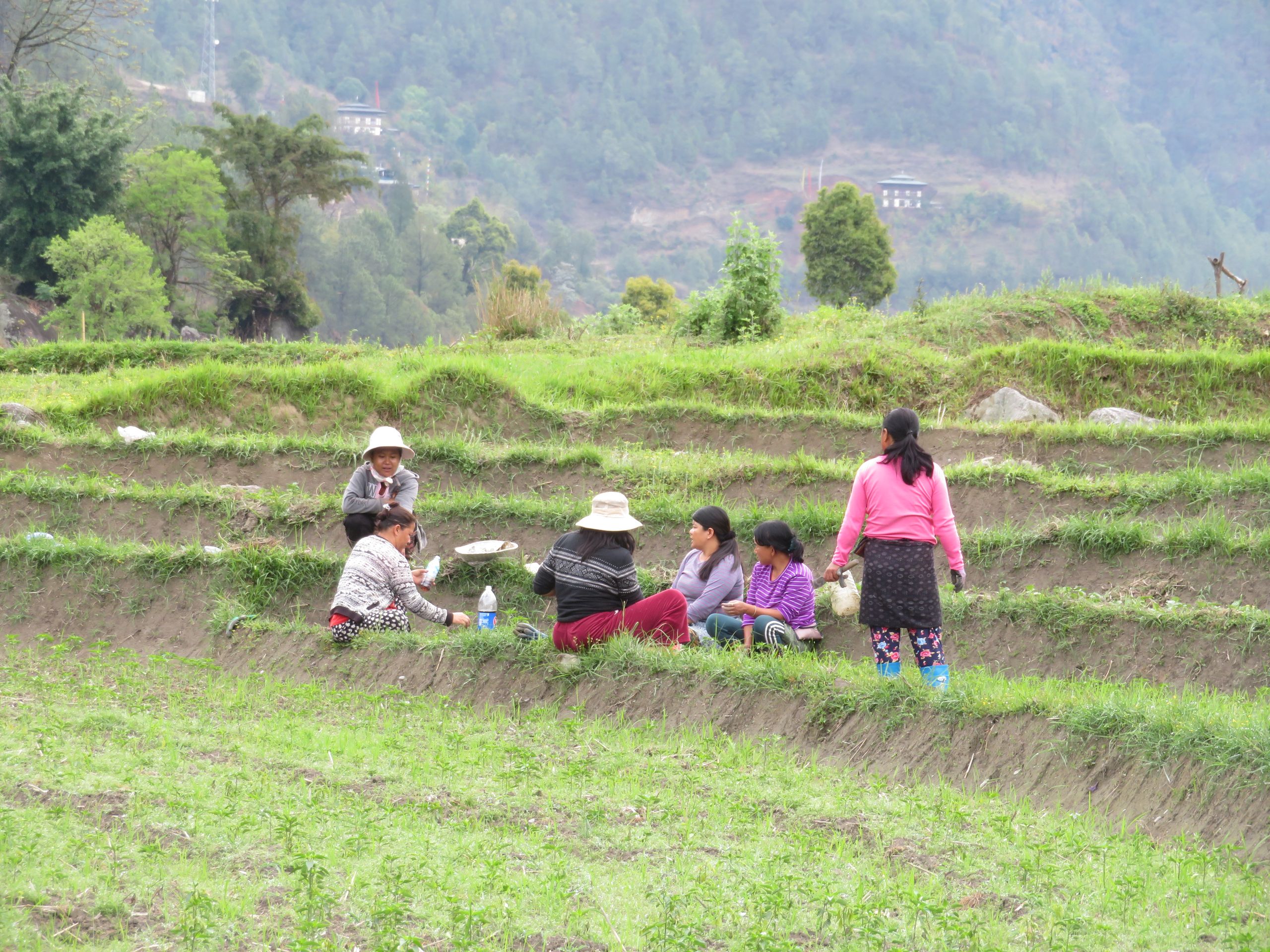
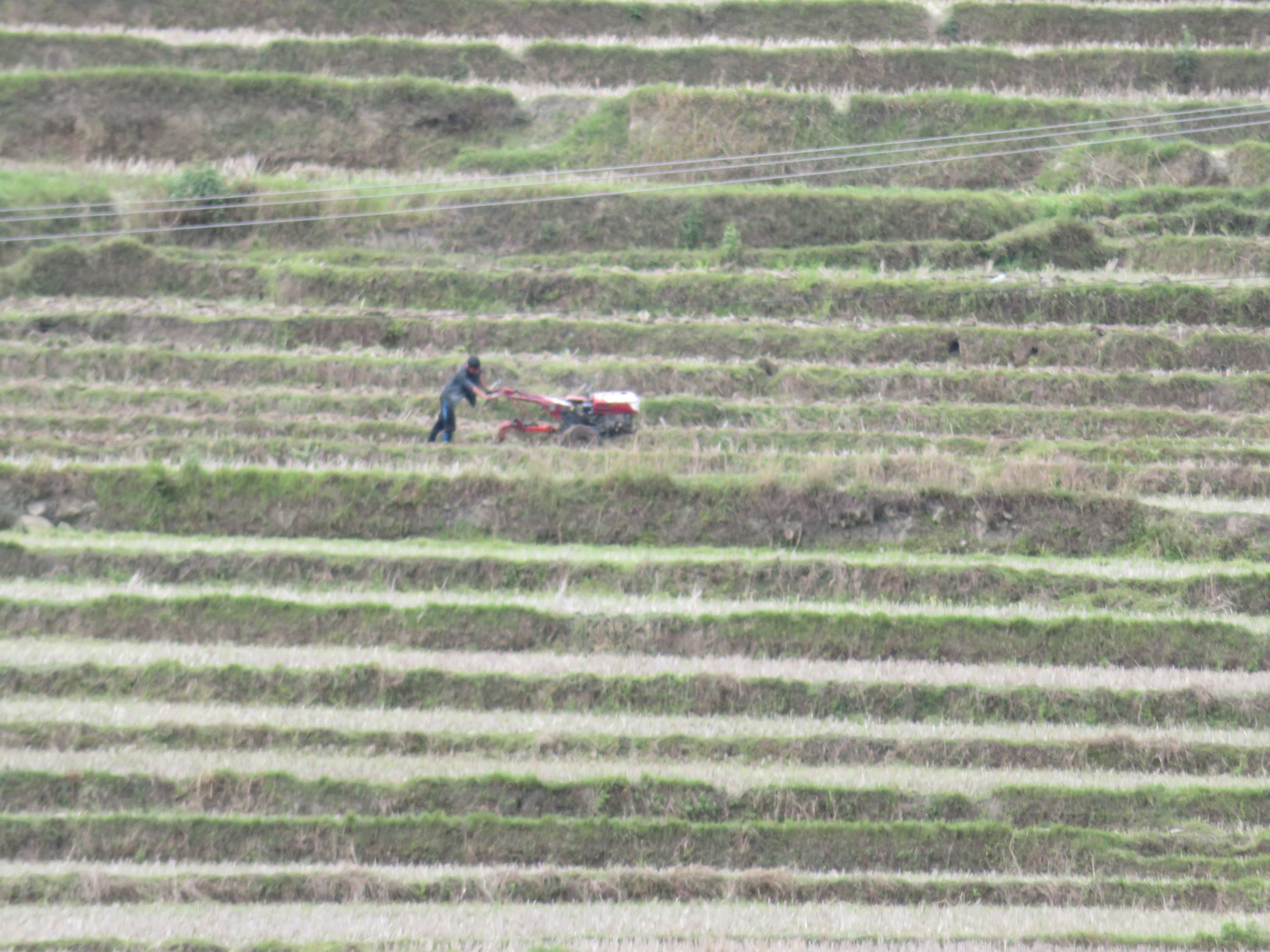
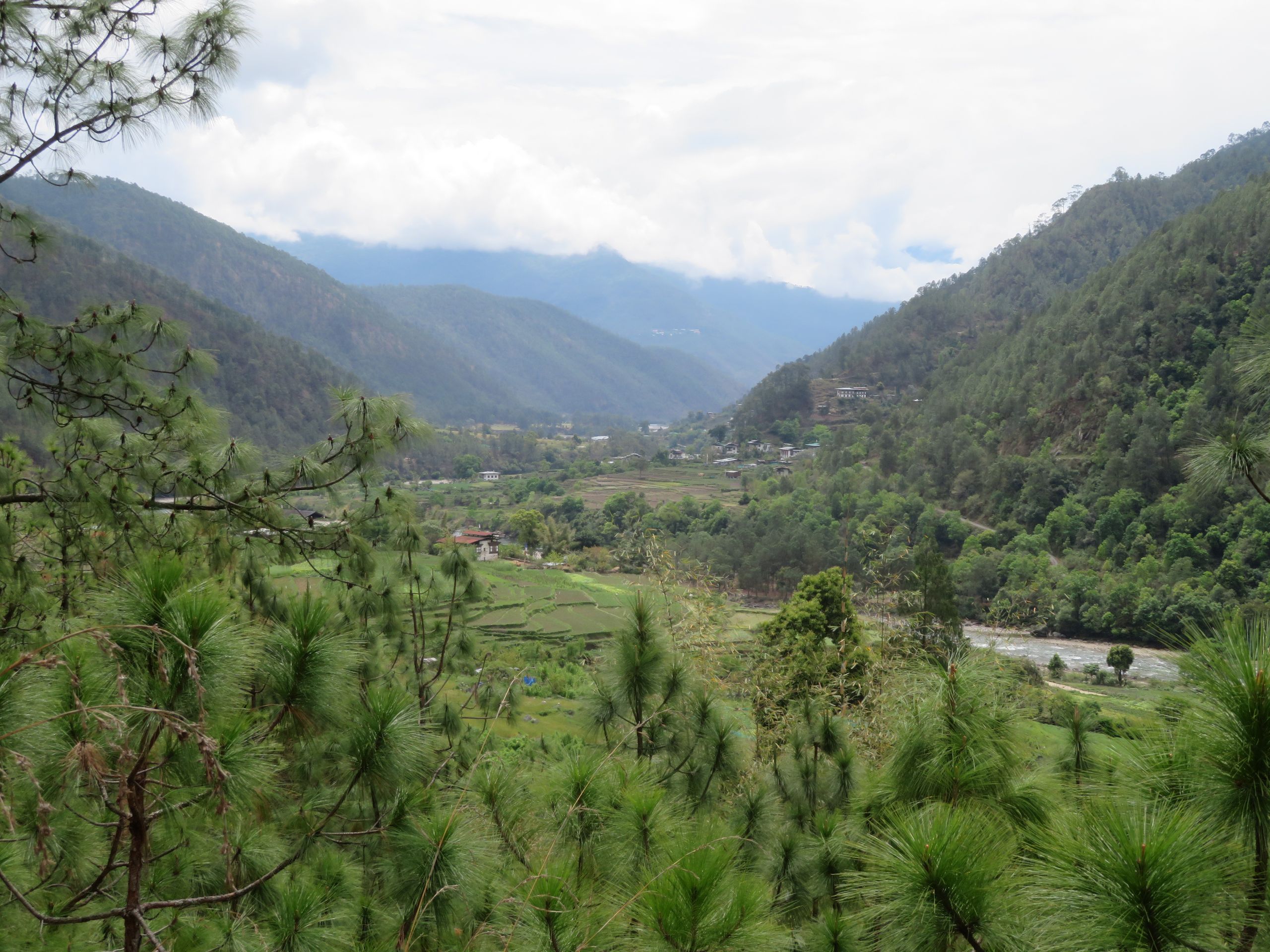
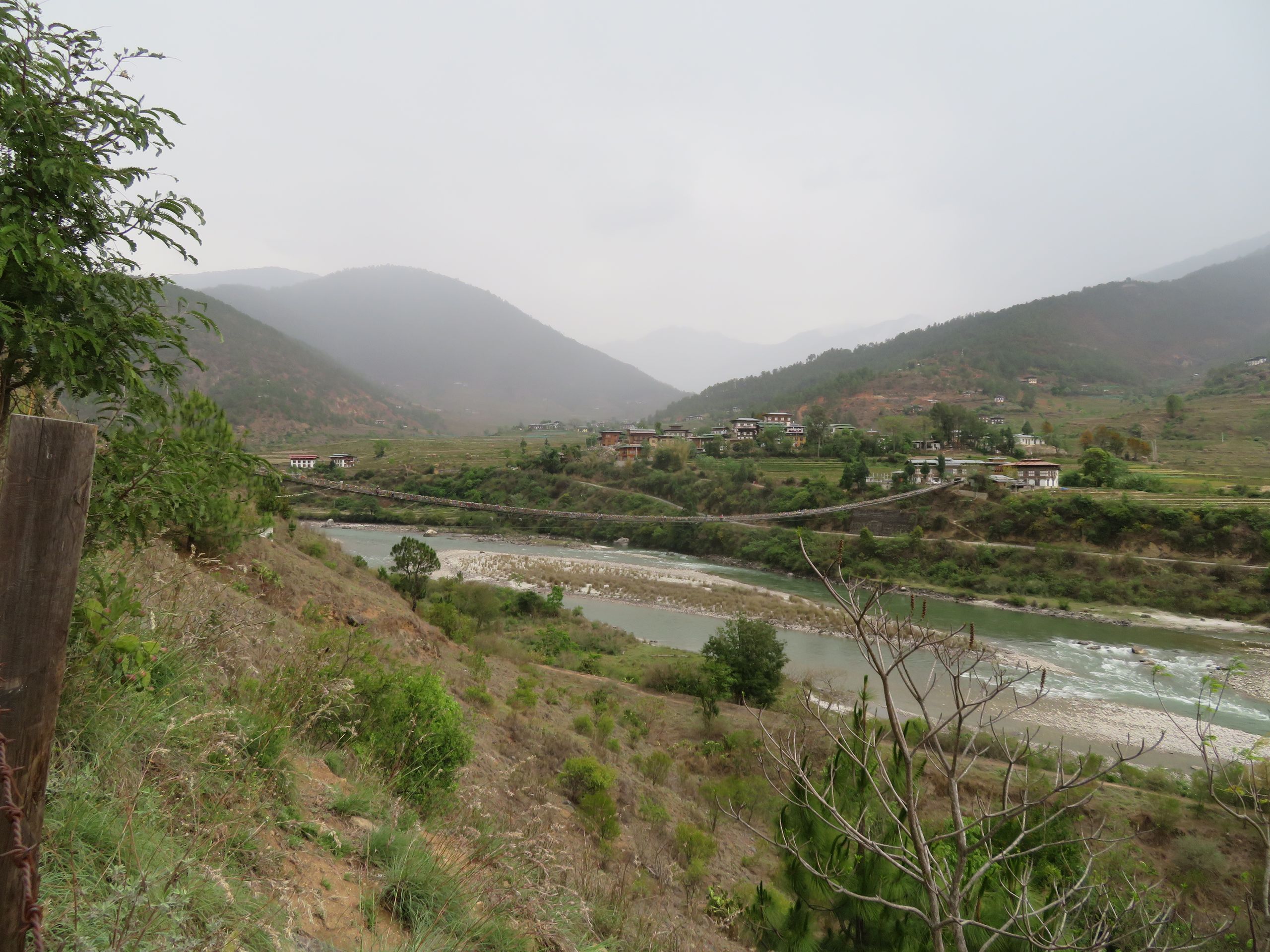
The varied planting of the fields is also beautiful, cultivated in labor-intensive terraced fields. Large monocultures seem unthinkable in Bhutan, and one feels almost like in an anime, half-expecting Totoro to come around the corner to signal that everything is alright.
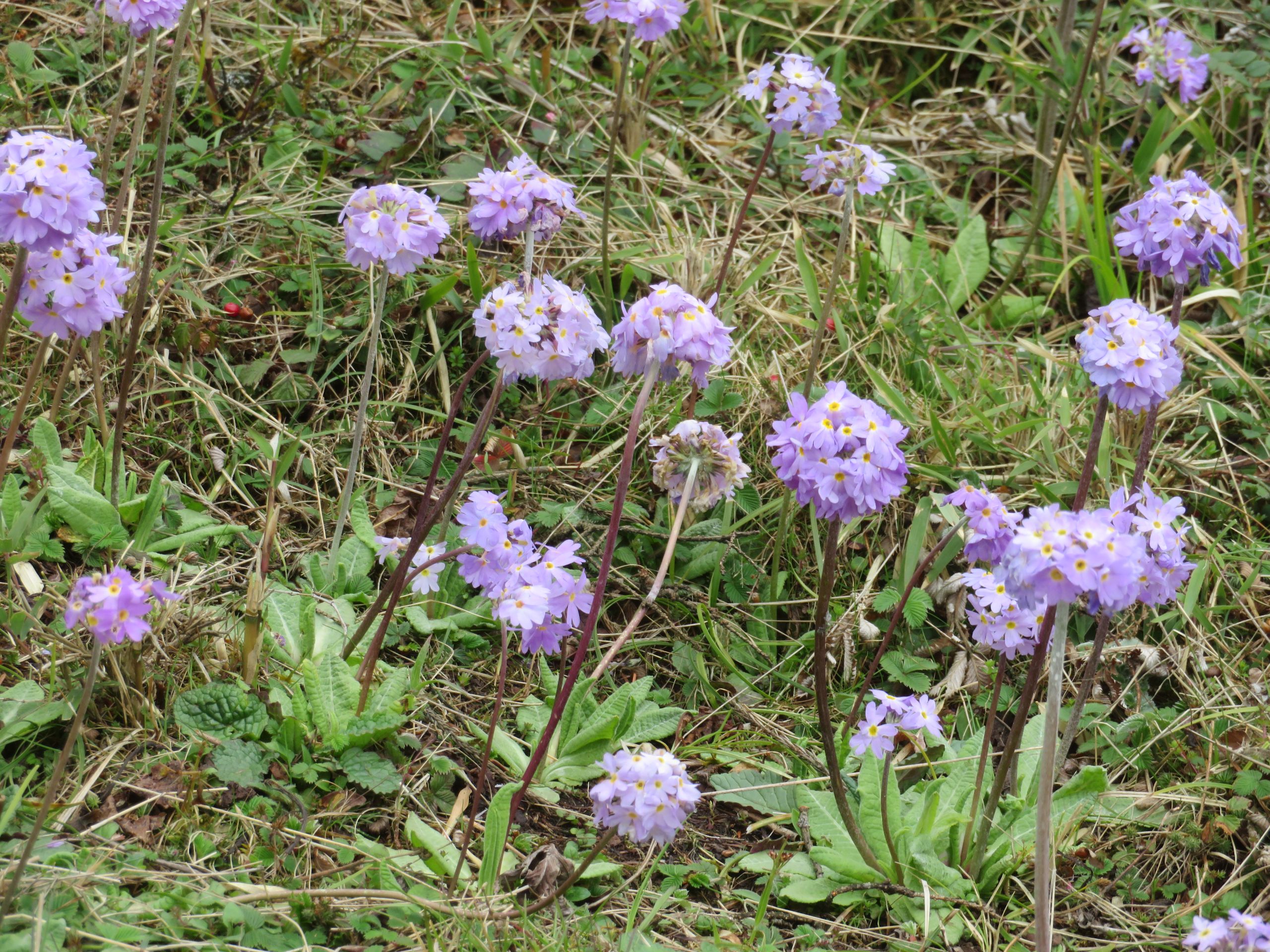
This is, of course, only partially true, because although Bhutan is the only climate-positive country in the world, the rest of the world commits unforgivable devastating mistakes, and climate change is also noticeable in Bhutan, e.g., with a delayed flowering of rhododendrons, so we may write about this in one of the next articles.
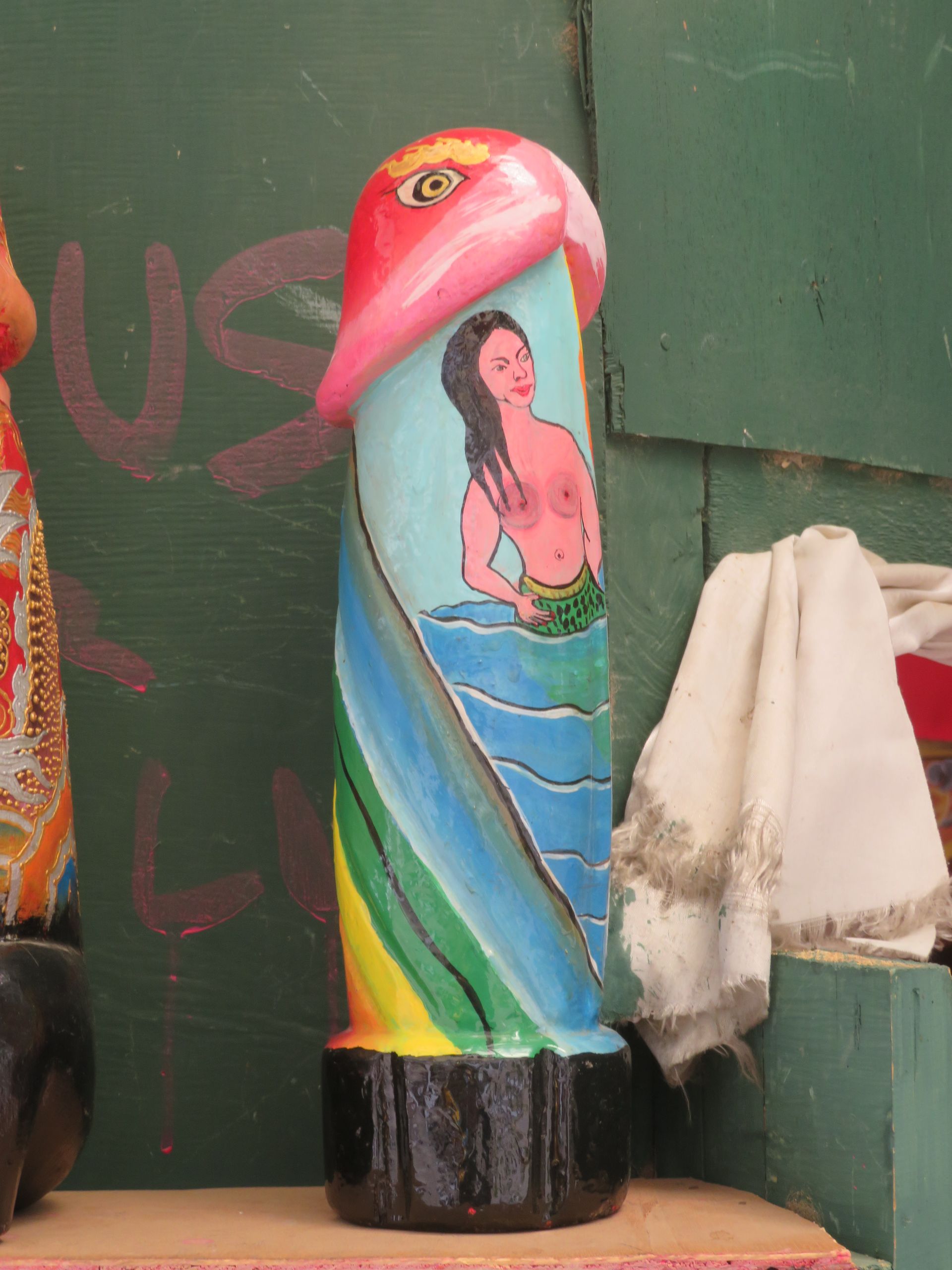
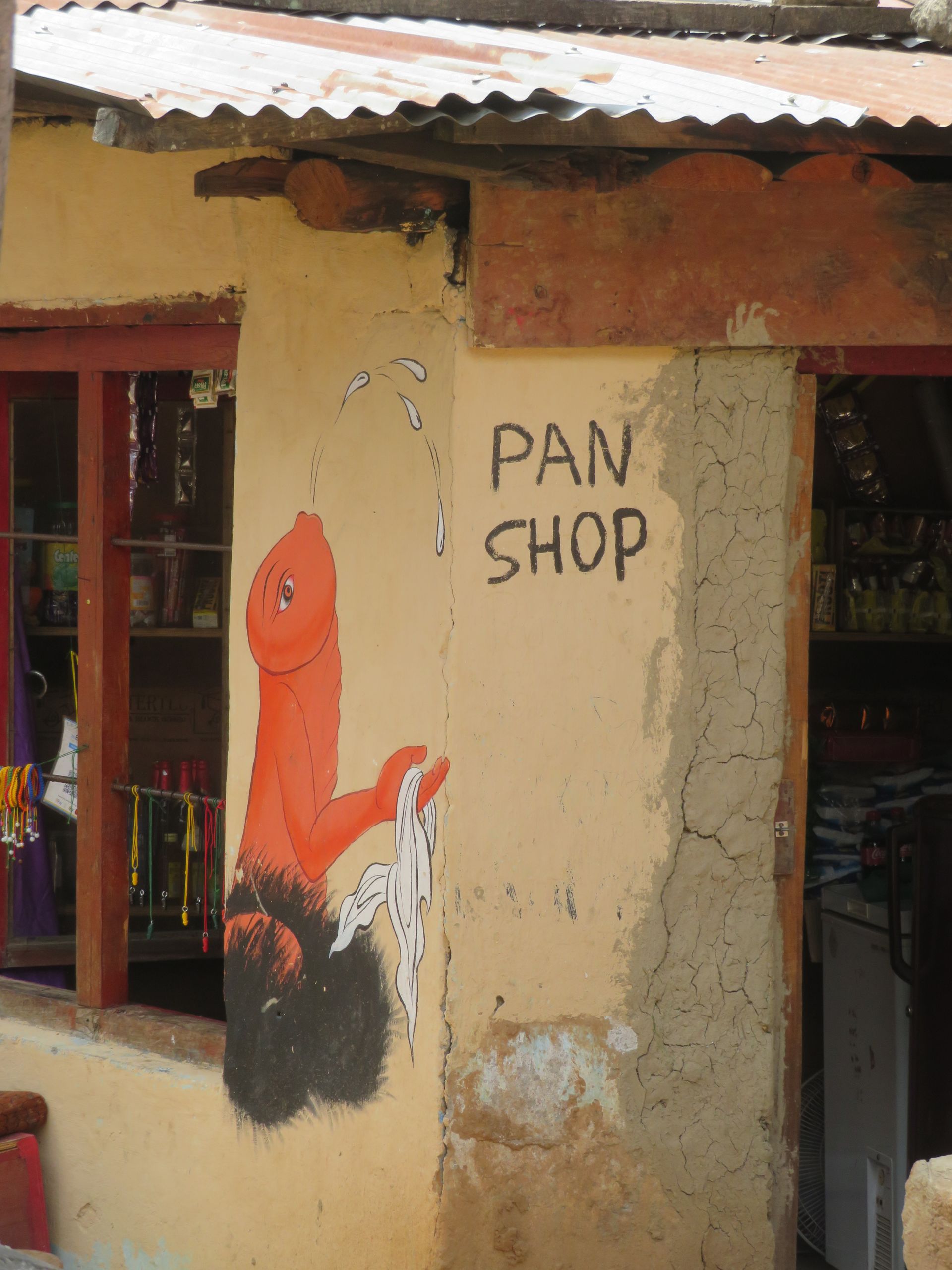
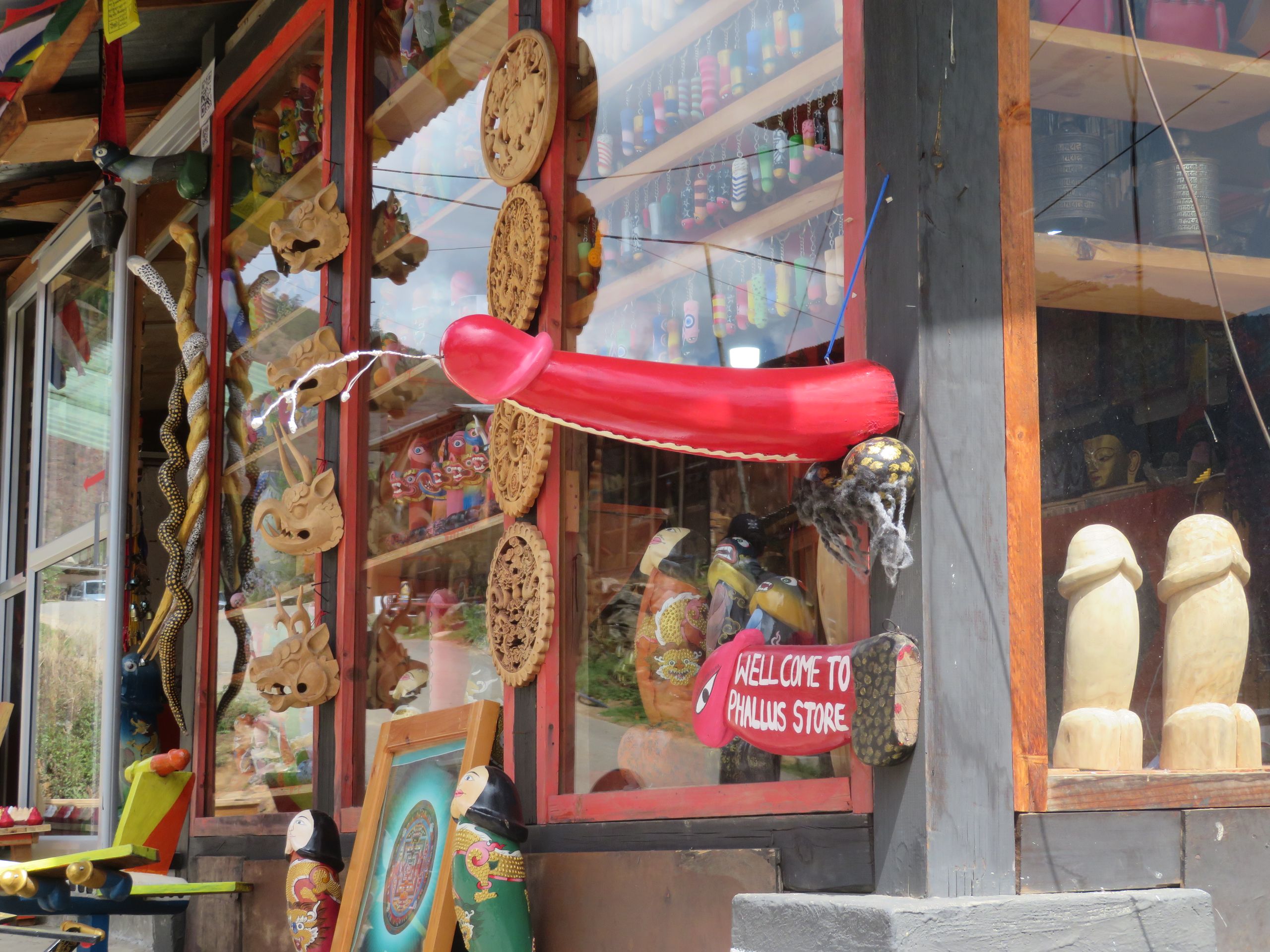
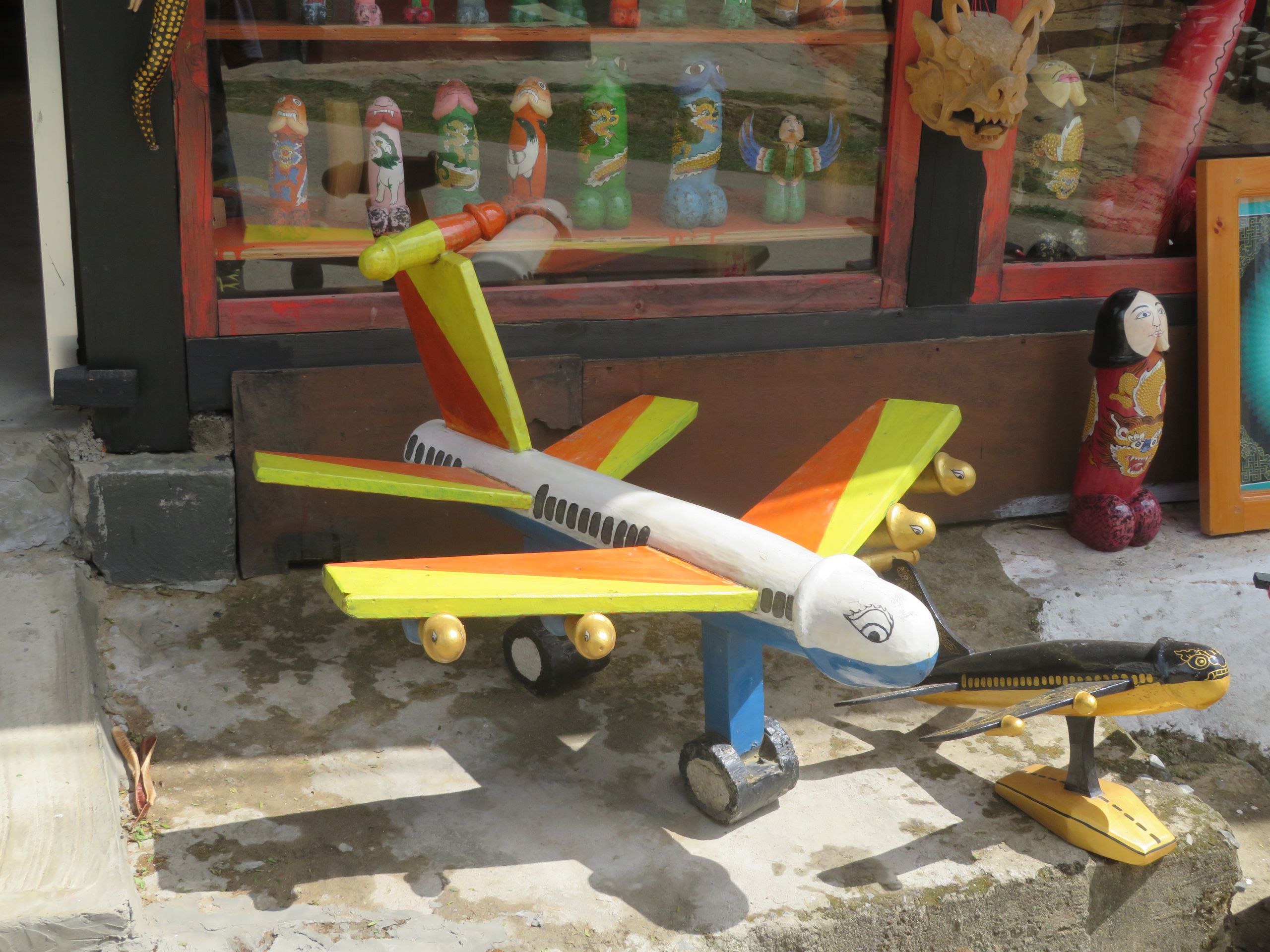
We need to save some content from Punakha for the next article, as this article would otherwise become too long. However, we must briefly address the peculiar penis and dildo images: The phallus is a fertility symbol in Bhutanese Buddhism and indeed “adorns” many house walls. Wooden phalli can also occasionally be found in temples. The often-advertised wooden dildos, however, are produced for tourists and have little to do with the authentic culture of Bhutan. We will elaborate further on this in the next article, for example about school children, archery, healthcare, and gross national happiness product. Until then, we greet you from this blessed land, enjoy an evening on the terrace with a breathtaking view, and are just glad this blessed land exists.