We have once again had an exciting week.
Sunday started off with our first grizzly bears. We saw a mother and her two little cubs by the roadside. The mother didn't care about us at all, which allowed us to observe the family in peace. The two little ones were frolicking around while the mother ate a lot of grass. Preparations for winter seem to be in full swing.
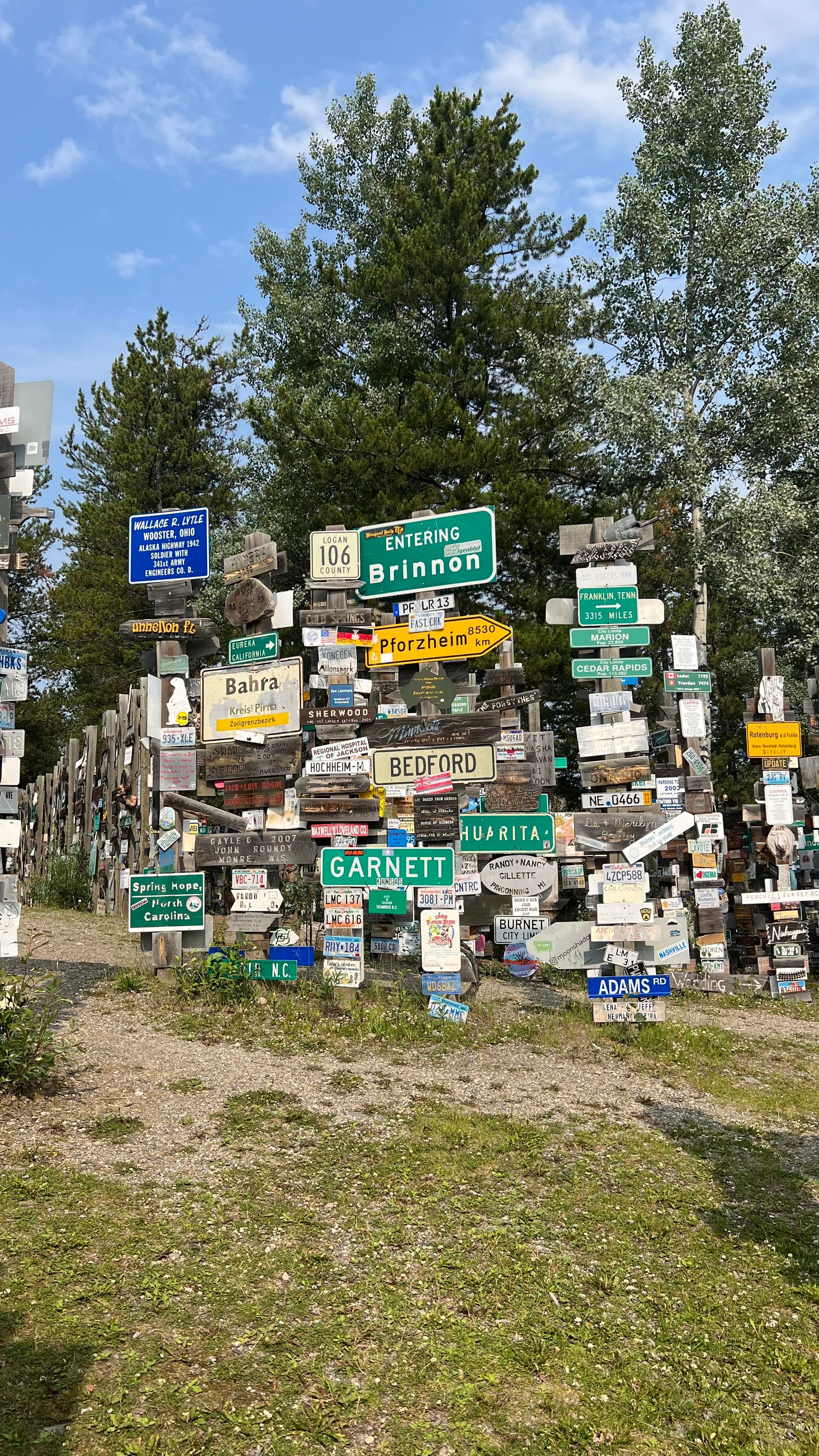
Right after the border into Yukon Territory, we made a stop at the Sign Post Forest in Watson Lake. Signs from all over the world hang here - whether they are license plates, name plates, or location signs.
Germany is, of course, particularly well represented.
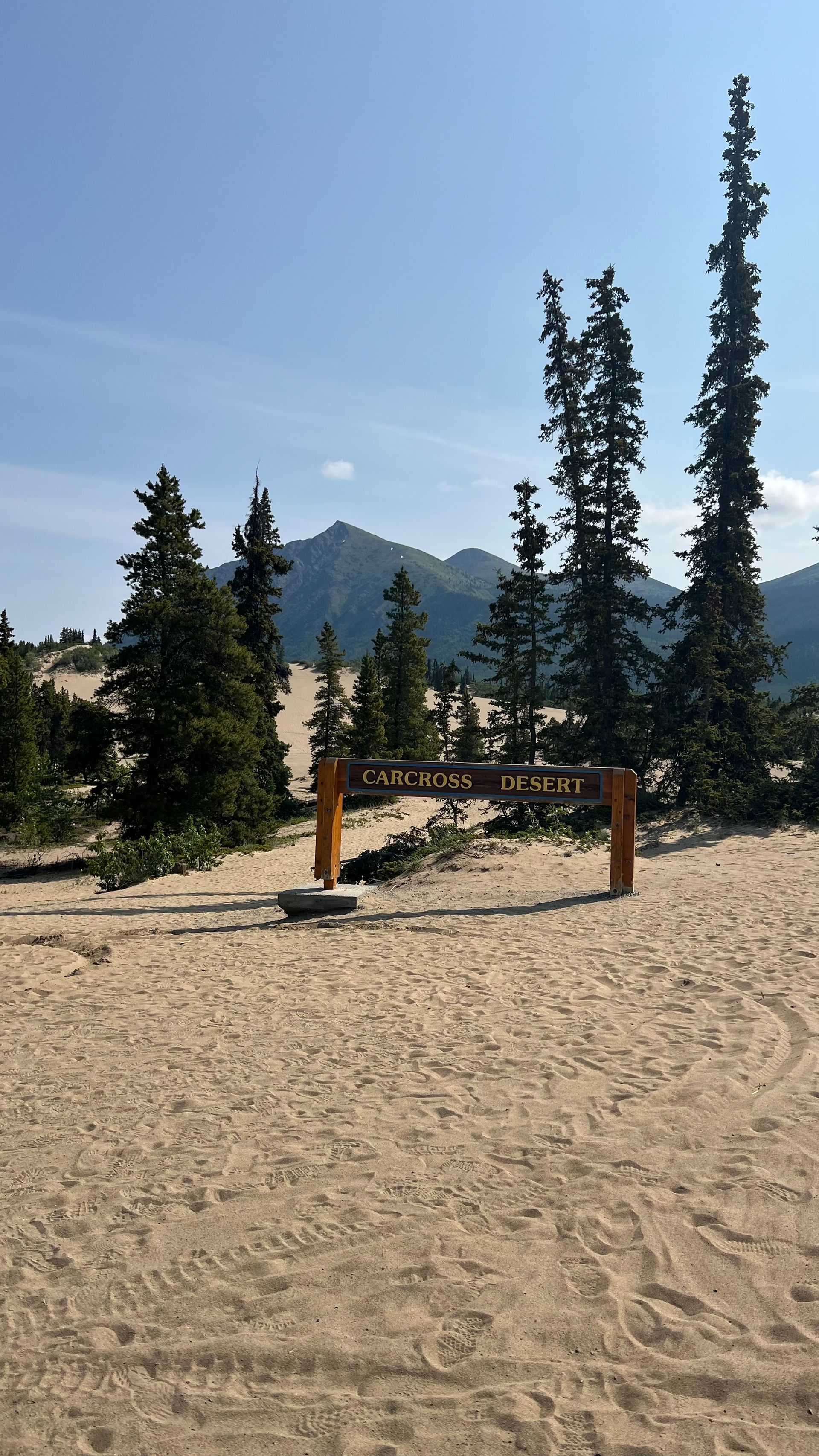
On Monday, we took a detour to the Carcross Desert. The name is misleading, as it is not a desert but a huge sand dune. However, it is exciting that suddenly a sand dune appears in the middle of the land. These actually formed from massive glaciers that melted ages ago, and this is the leftover from the glacial lake.
The next day, we checked out Whitehorse, ran some errands, and in the evening, we had an exciting appointment. It was our second interview at a resort where we had applied.
The personal conversation went well, and we received an immediate acceptance!
The only catch: Julian needs to acquire the Canadian Class 4 driver's license (buses up to 24 people, taxis, ambulances) in order to transport guests. Since he has to take the test beforehand, we took care of that right the next morning, because our road trip is not over yet.
So Julian studied theory in the evening and the morning and took the theoretical exam the next morning and of course, he passed ;-) Now he just has to pass a practical driving test to receive the driver's license.
We hope he can manage that so that nothing stands in the way of our employment in Whitehorse, Yukon. He will take the driving test once we are back from Alaska.
We will be working at a small luxury resort, Julian as a tour guide and Franzi as an all-rounder in housekeeping, kitchen hand, and possibly service. The pay is higher than the minimum wage of 18.50 CAD (which already exceeds our expectations), plus we get 20% guaranteed tips plus possibly additional tips. Moreover, in Yukon, you only pay 6.4% taxes, which is just right for us.
The guests are apparently all well-off Americans and Canadians, and they are always very generous with tips. We'll see how much we end up with.
A luxury resort may not be what we envisioned but rather more like a huge ski resort.
The winter season lasts for 8 months here and starts for us in mid-August. We will probably work 6 days a week and will not have any entitlement to vacation during that time. Quite exhausting, but we hope to manage it together.
Yukon is considered the best place in the world for polar lights and the resort is specifically designed for that, offering campfires every evening. We have never seen polar lights before, so we are particularly looking forward to that!
We are curious about what it will be like to live in one place for 8 months and work a lot, but we also have a little list of activities we want to try in the typical Canadian winter. It includes skiing, cross-country skiing, snowshoeing, snowmobiling...
We are also curious about the temperatures - we only know that it will be very cold.
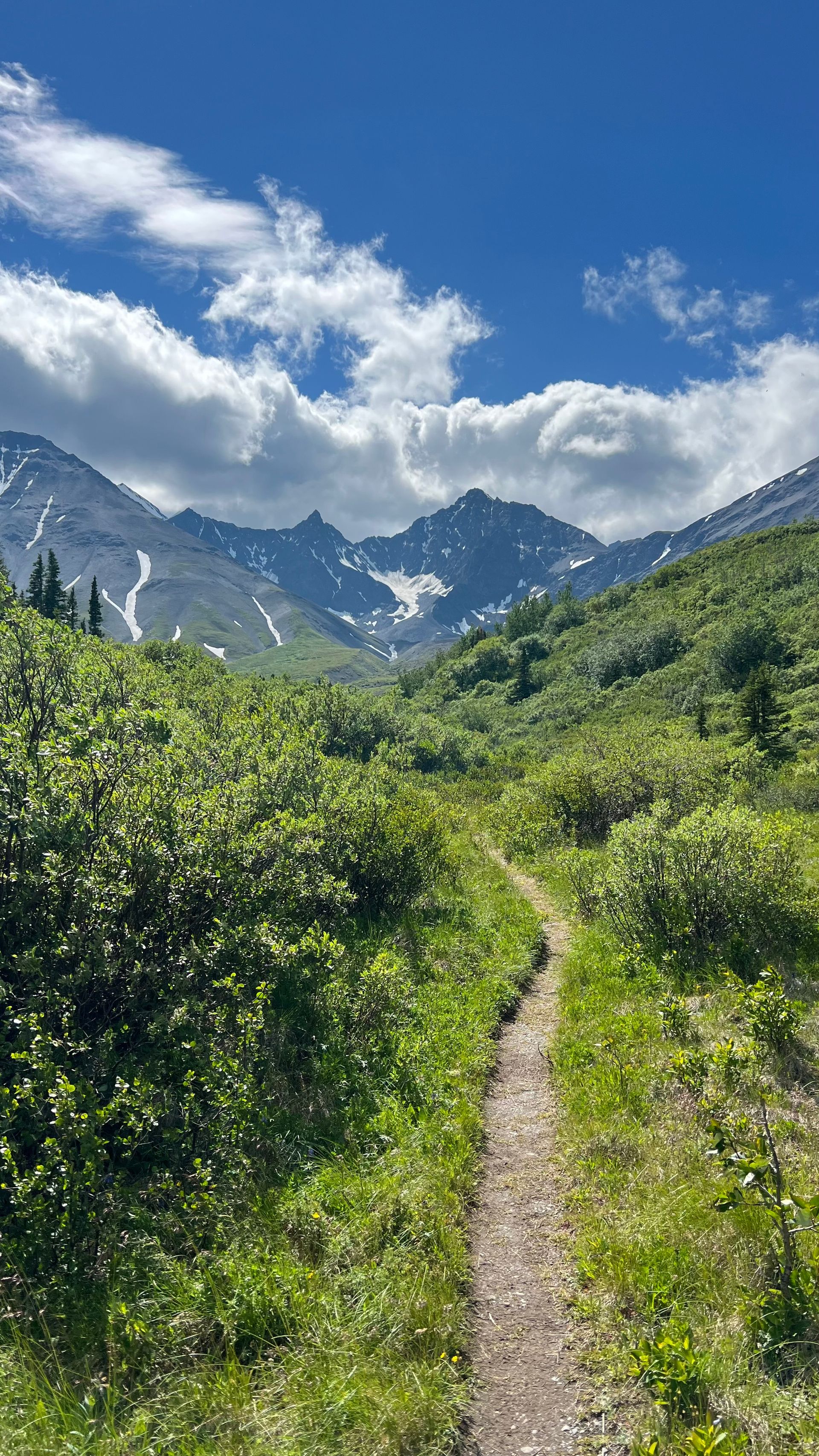
After the theory exam, we went directly to Kluane National Park. In the afternoon, we hiked 15 kilometers on the Auriol Trail, and in the evening we attended a talk about glaciers by a glacier researcher from Canada.
A few exciting points that we took away:
- Kluane National Park, together with 3 other contiguous parks, forms the largest protected area in the world.
- The icefield in Kluane National Park is the largest non-polar icefield in the world.
- The glaciers in Alaska, including Kluane National Park, have lost the most ice worldwide in the last 20 years.
- Glaciers can consist of ice at various temperatures and are categorized as such (warm, cold, and mixed). The temperature is independent of the location. Here, there are examples of each of the categories.
- Glaciers flow - sometimes faster and sometimes slower, and you can read the climate changes of past decades and centuries from them.
- The freezing process of snow into ice generates heat: 1g of snow freezing generates enough heat to raise the temperature of 160g of ice by 1 degree.
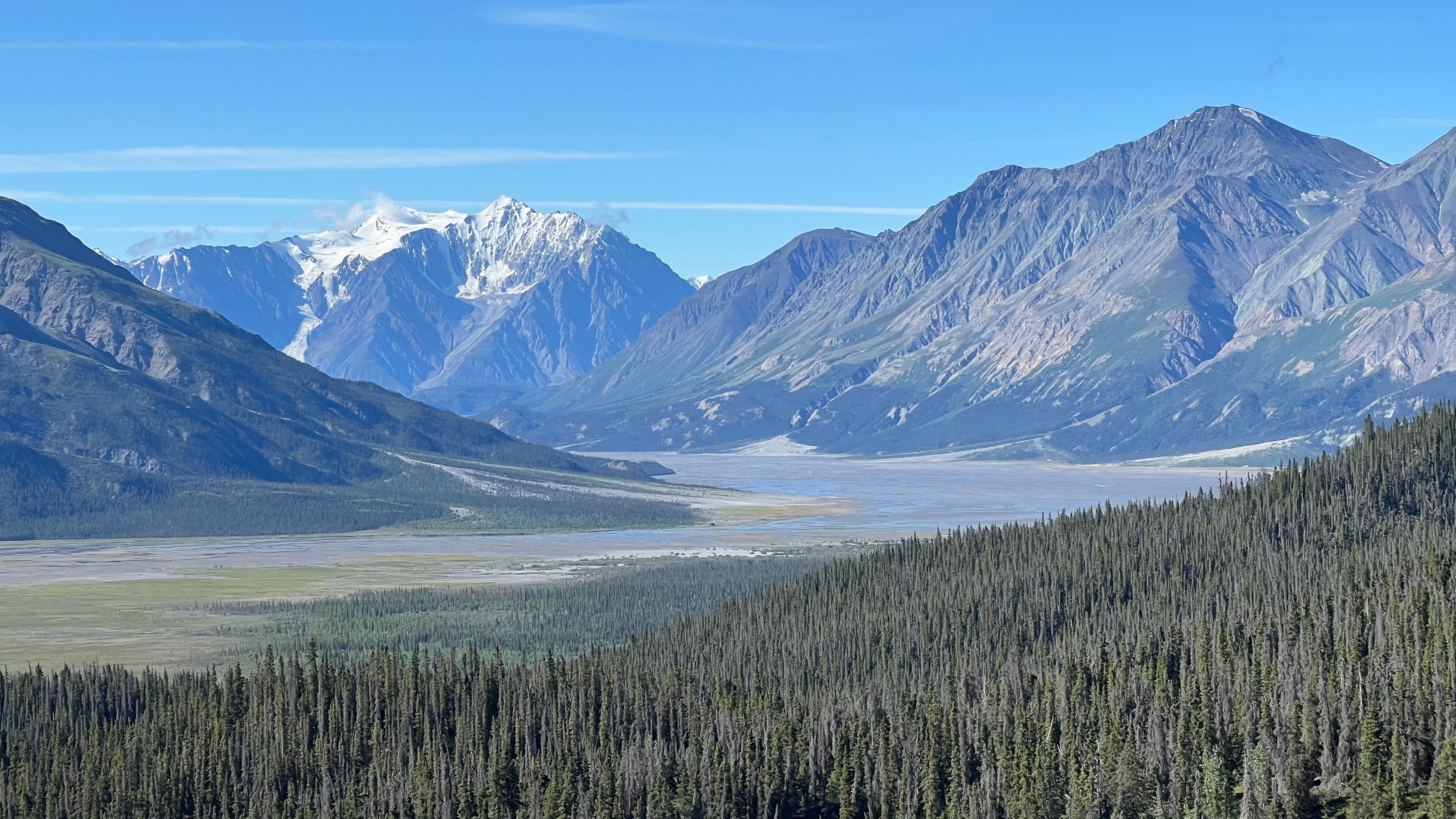
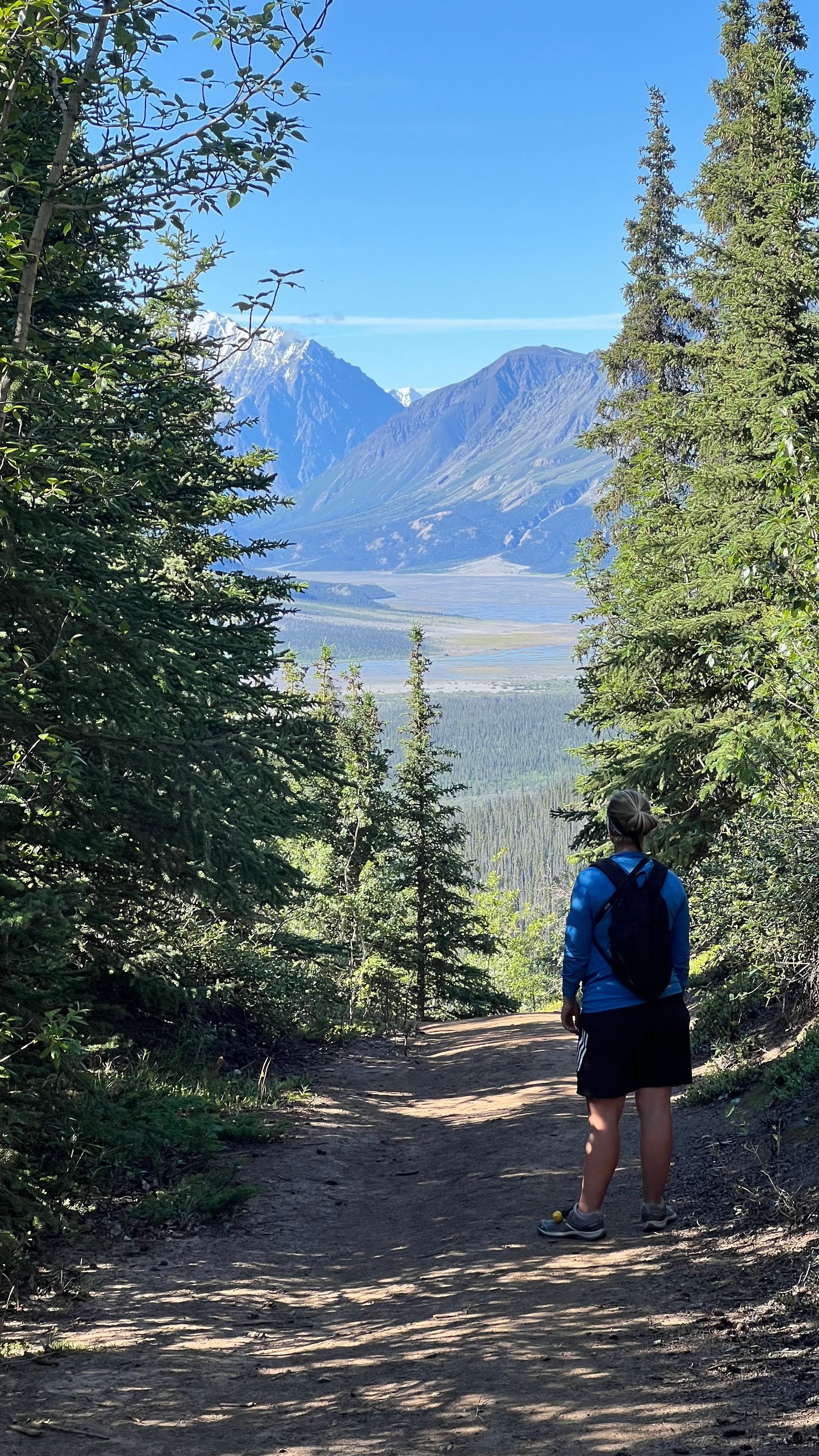
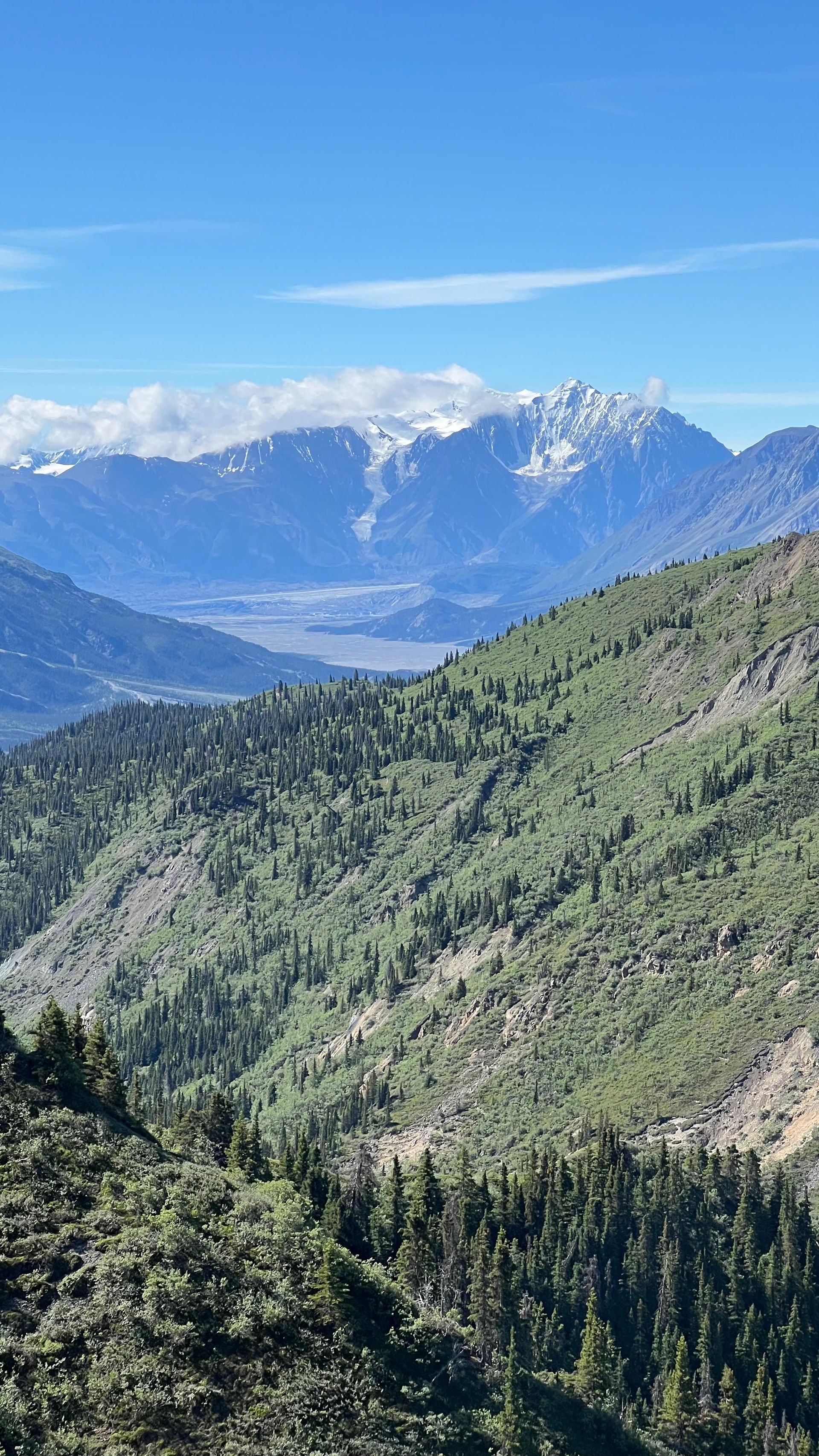
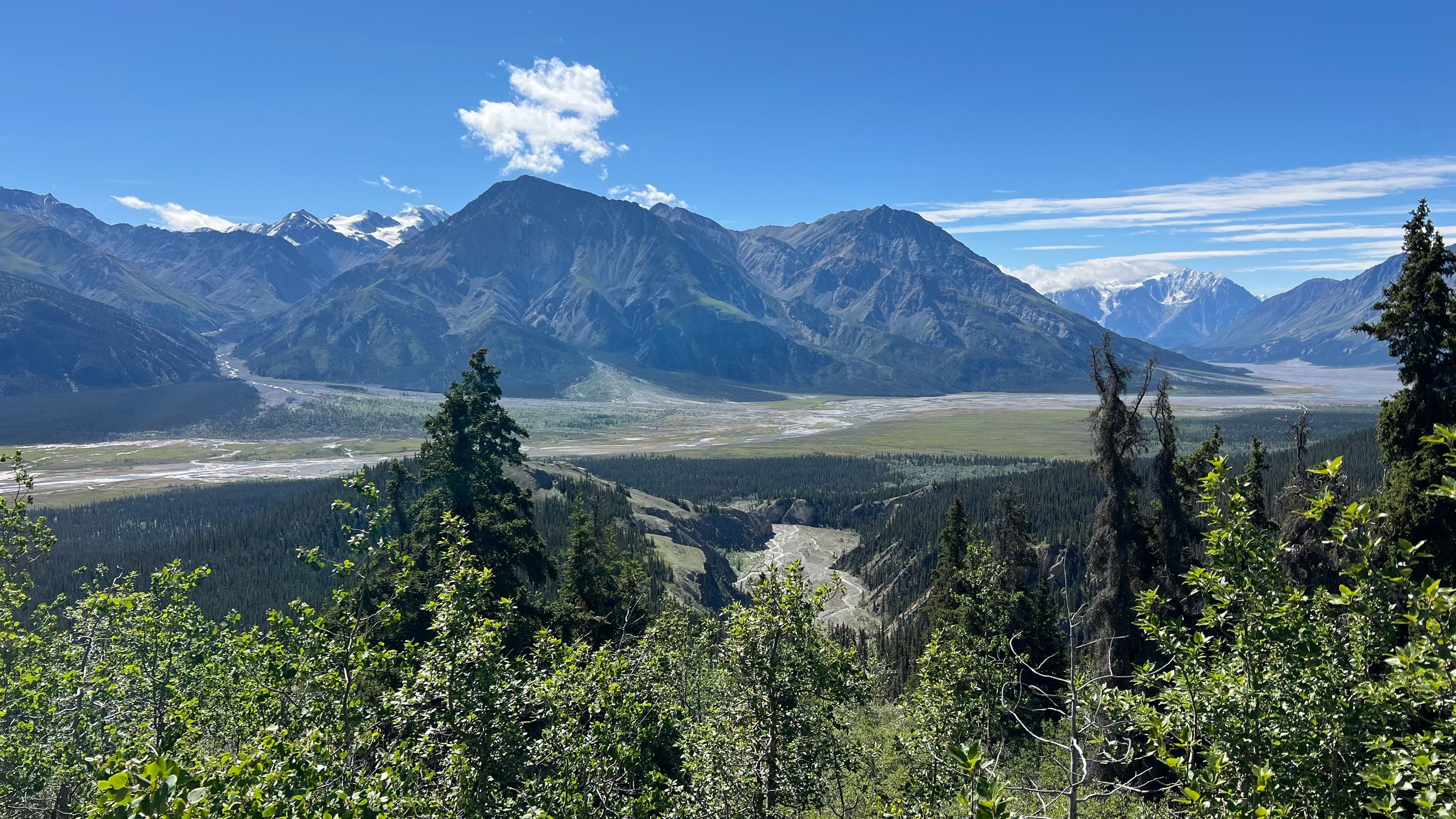
The next morning, we took another hike in Kluane National Park. On the Sheep Creek Trail, you can sometimes see Dall sheep with a bit of luck. We managed to see one from a distance. The view of the Kaskawulsh Glacier was also cool. The remaining glaciers are all behind a mountain range, so you can't see any of them from the highway or a hike.
By the way, Kluane National Park has the highest density of black and grizzly bears in Canada, but we actually didn't see a single one - not even by the road.
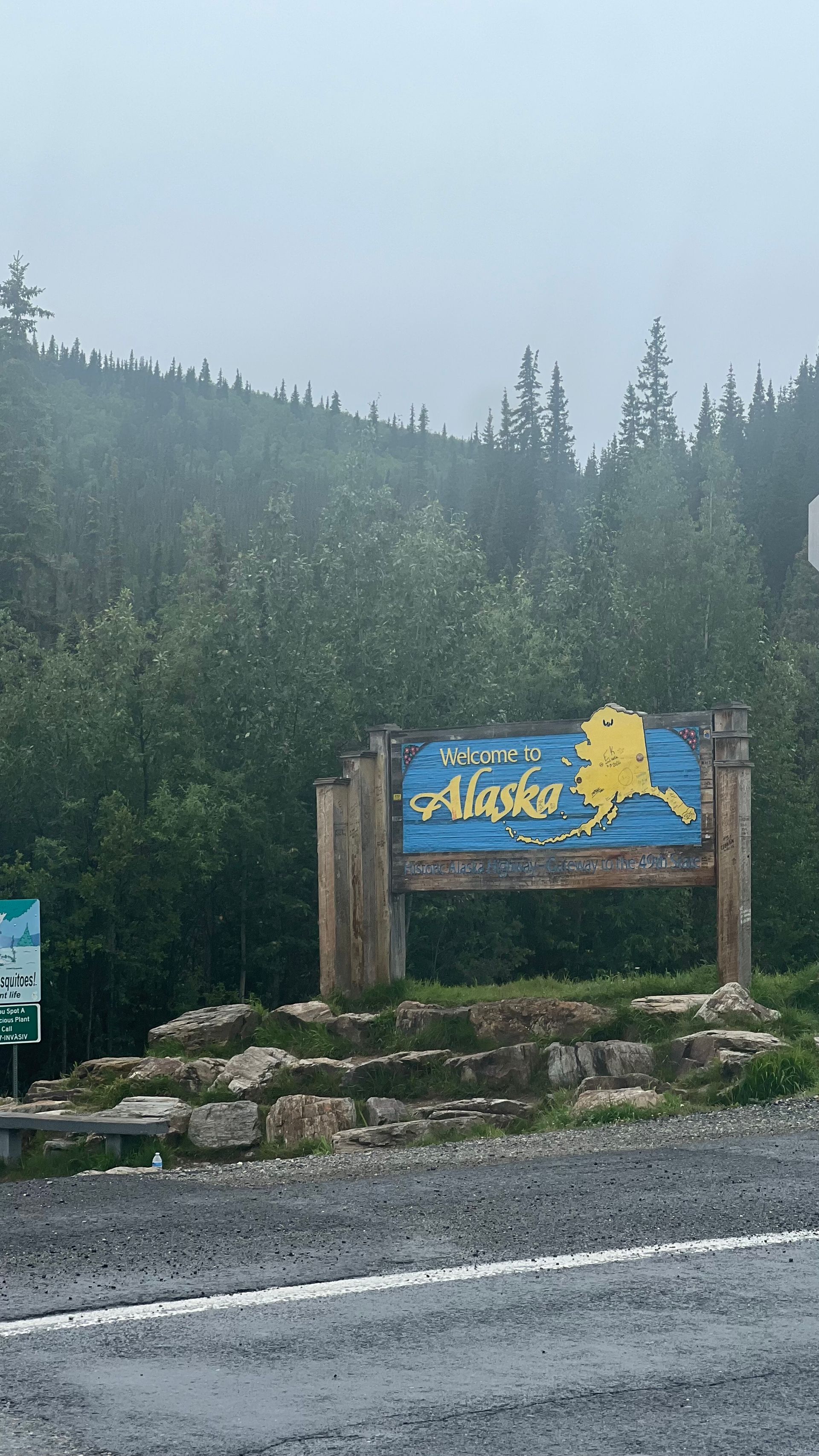
And then it was time: on Friday we crossed the border into Alaska. We had some concerns about how it would go since we have a Canadian car, etc. But the border officer was super nice and other than our fingerprints, he didn't want to know anything else about us. Theoretically, you are not allowed to bring fresh food, but since we obviously had none, he just brushed aside the information about food and didn't care.
After 10 minutes, we were over the border.
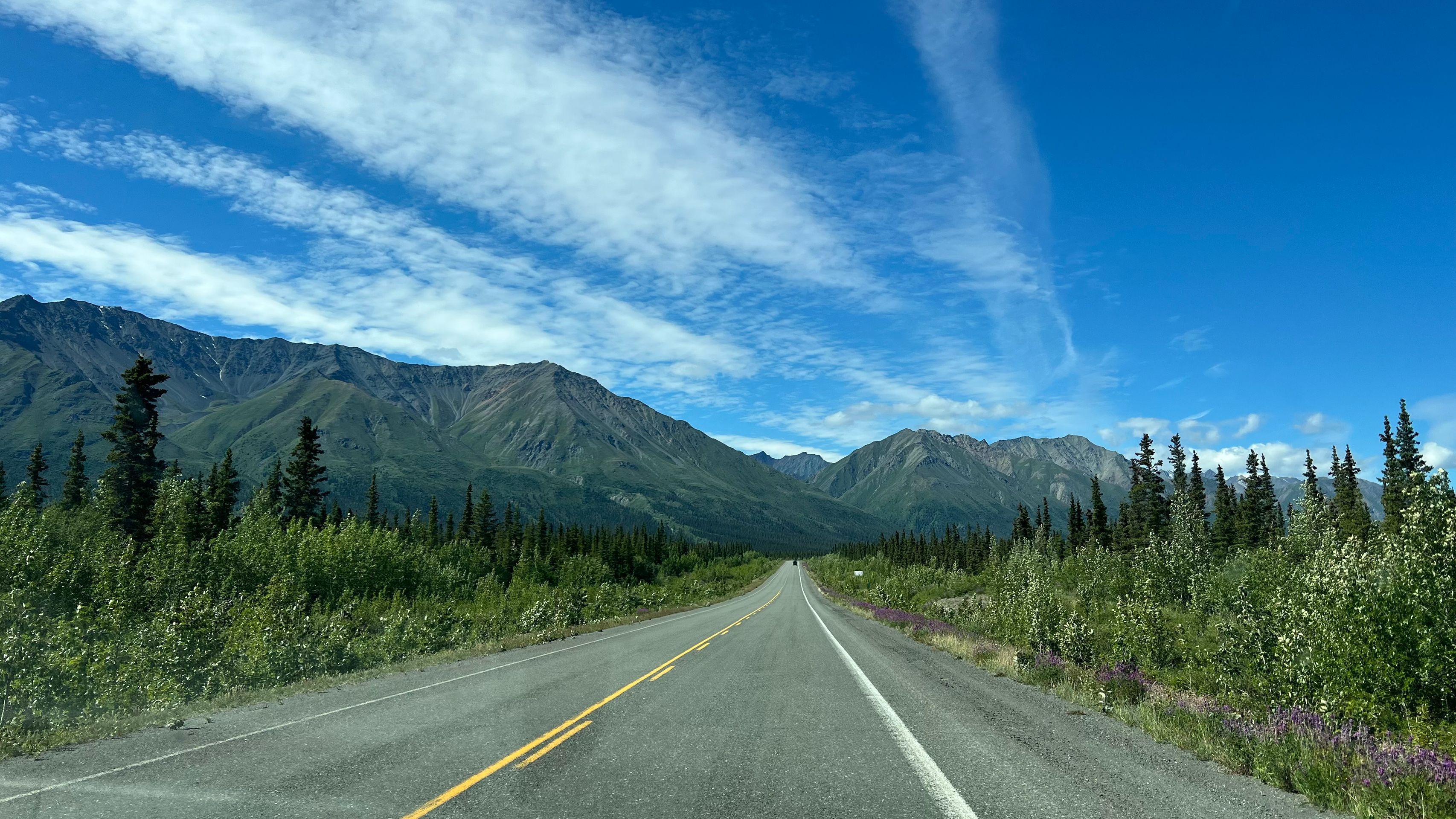
Scenically, not much changed at first. Only the tundra with its low trees was more extensive.
Alaska is the largest U.S. state and is home to over 15,000 glaciers. Hopefully, we will see some of them up close. Even though America was never on our list, we are really excited to explore Alaska. We still haven't gotten used to miles, miles per hour, and gallons for gas after 2 days.
We left the Alaska Highway after 2023 kilometers and truly had the best time. We loved the scenery so much - the endless forests, gigantic rivers, and the wildlife, of course. Animals we usually only know from documentaries and zoos.
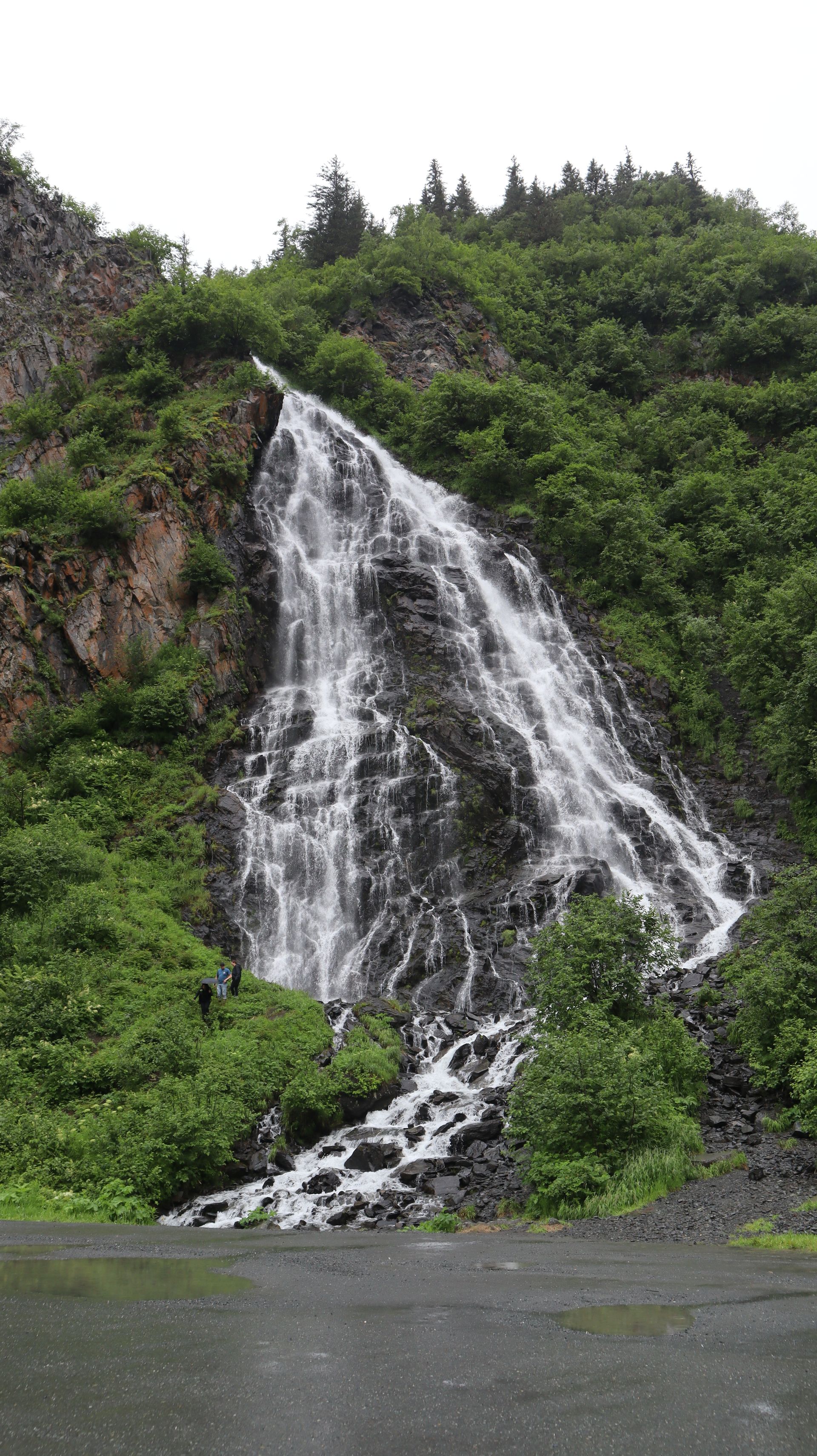
Today we went to Worthington Glacier and Valdez. The salmon spawning season has started, and the special thing is, you can see all the salmon, but also other animals that eat the salmon, and sometimes bears come to the rivers to fish and eat. There are known spots, and one is near Valdez.
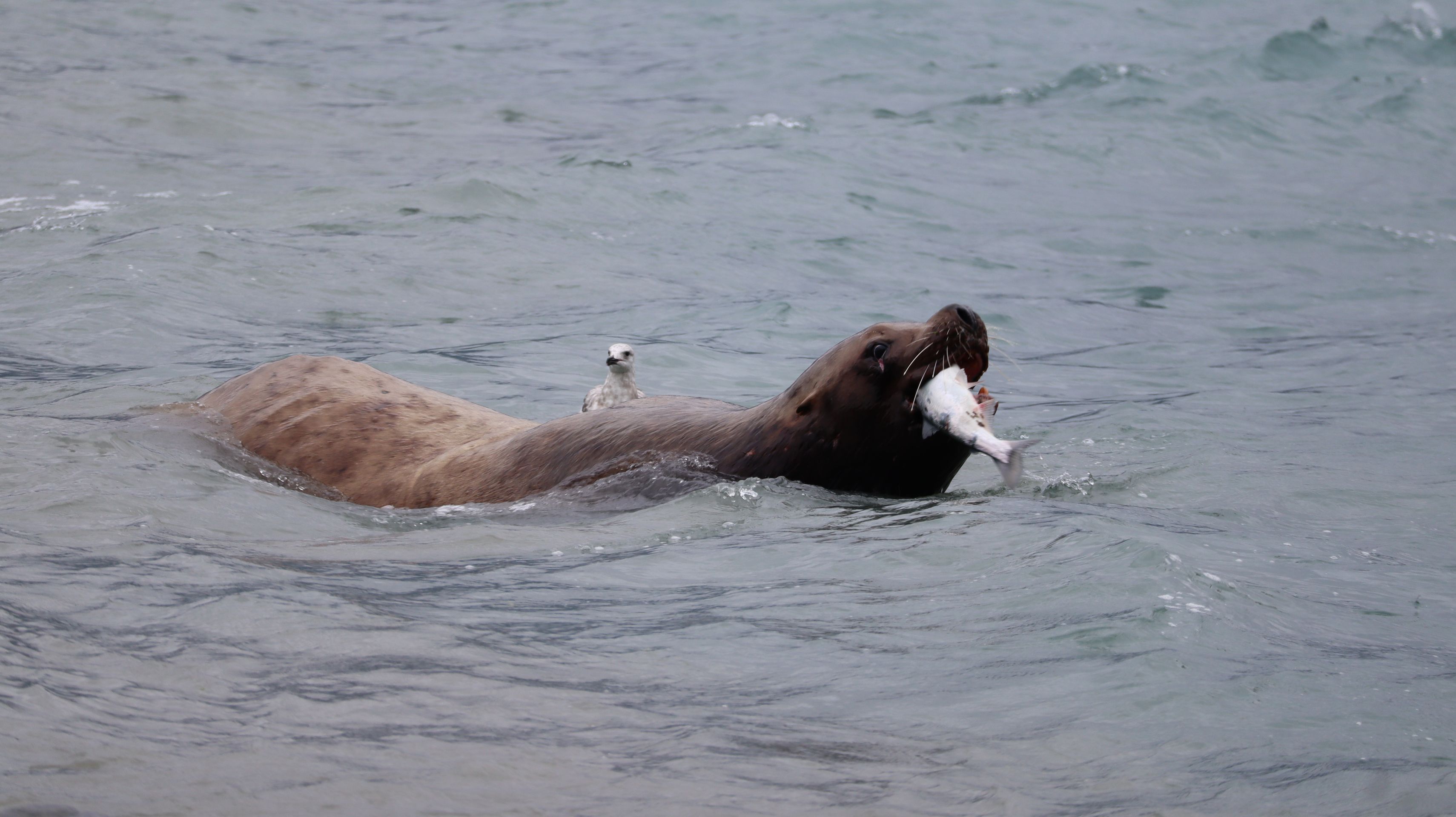
At the Visitor Center, we were immediately told that the salmon are late due to the summer being really cool so far. A few salmon are there, and sea lions are also likely to be around.
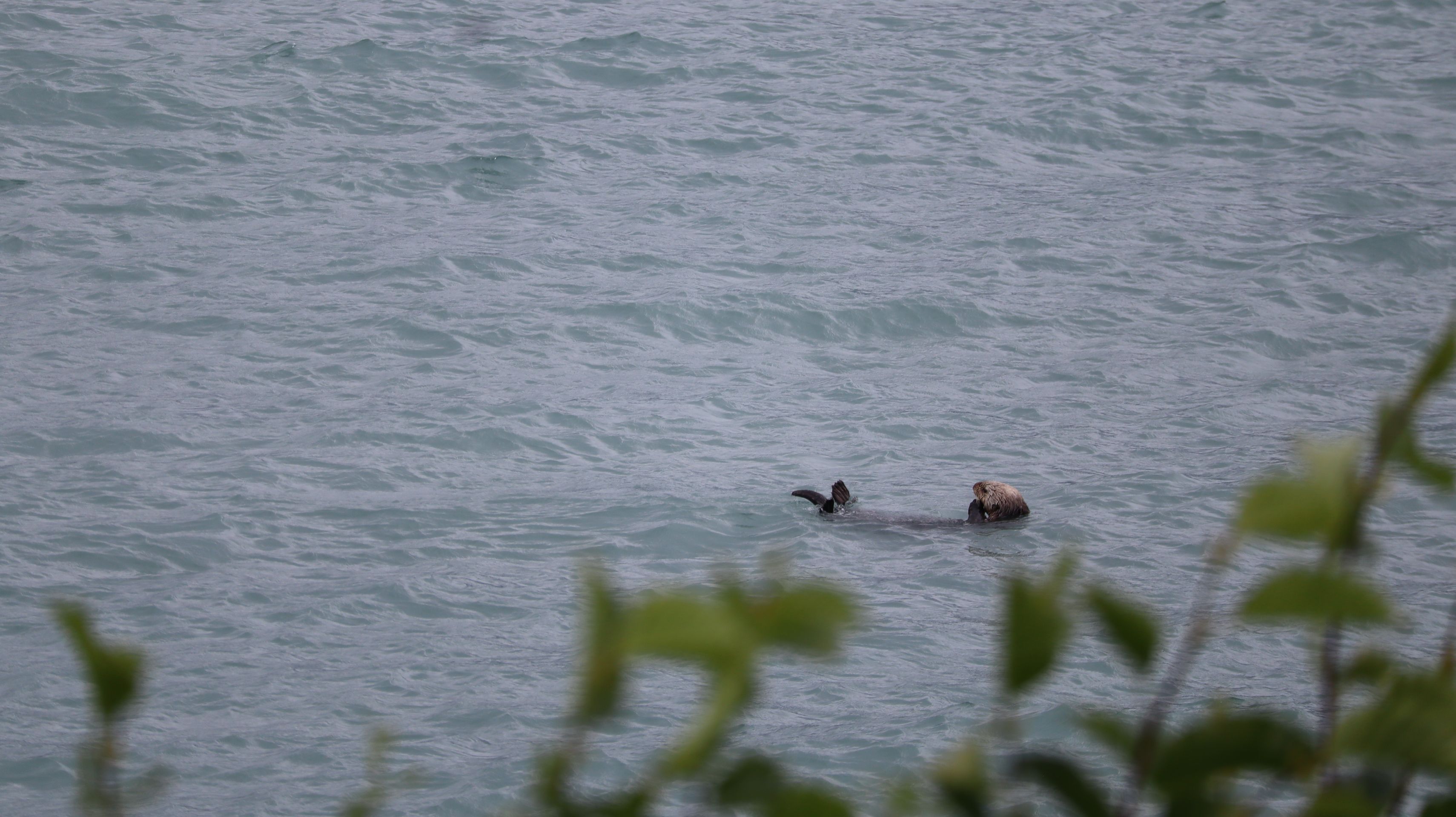
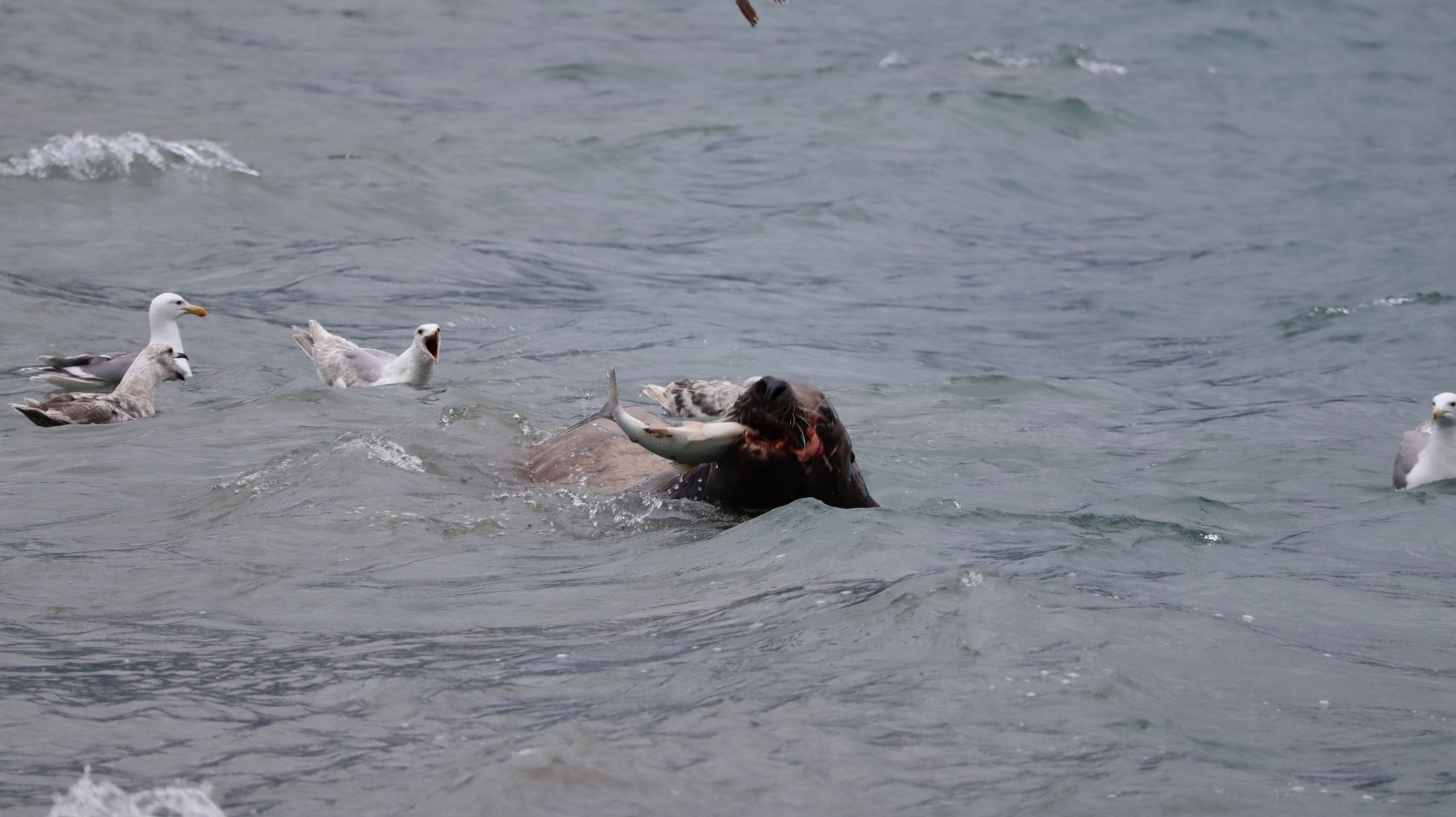
In heavy drizzle, we arrived at the spot, and there were about 10 sea lions, and they were twice the size of those in New Zealand. We also saw a few otters. Tonight we are parked directly at this spot; let's see what other animals come by.