Week 5 - Kiwi, Kaka, Cooking Stove, and Potato Salad
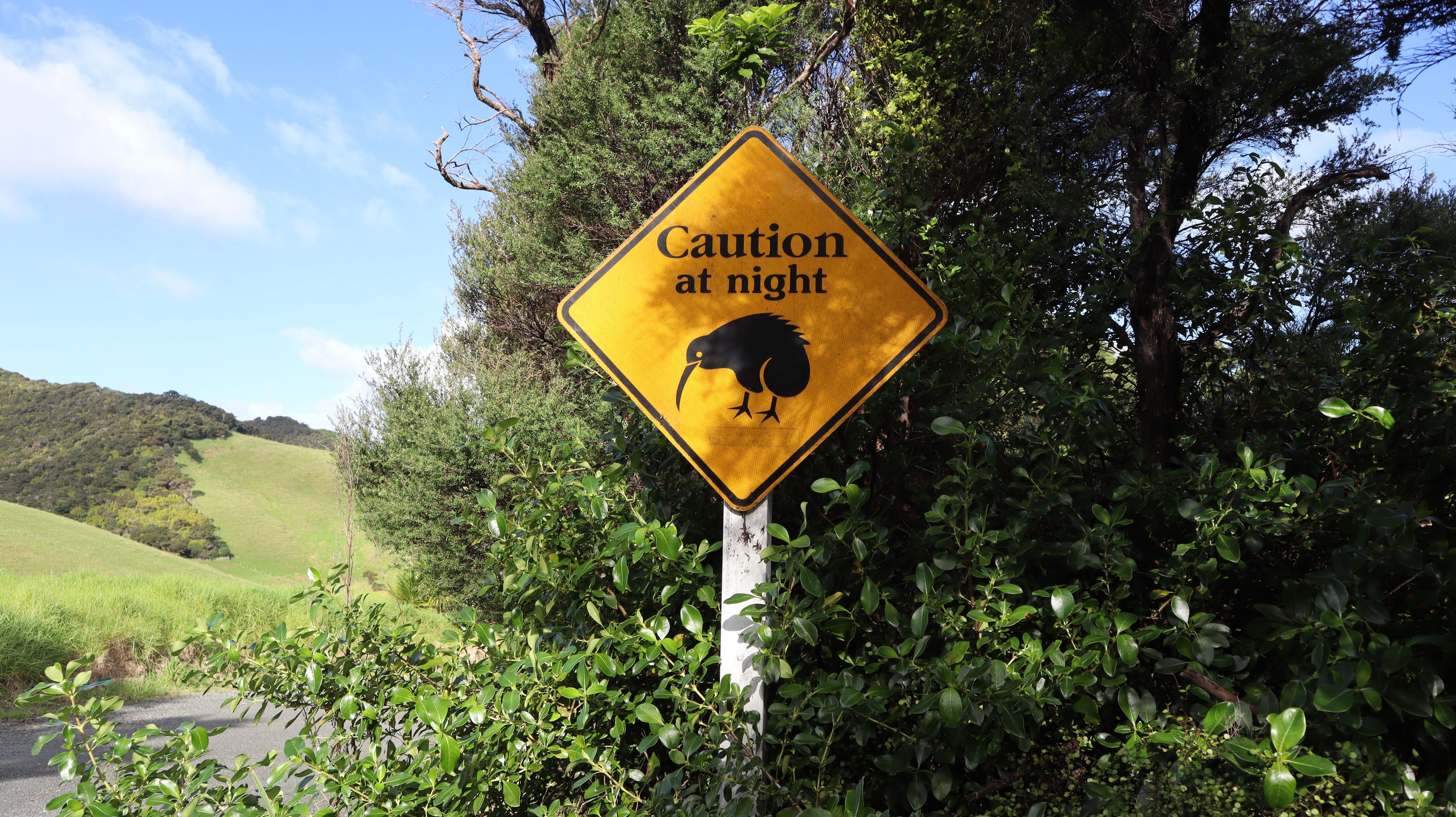
On Monday, we drove to Tawharanui Regional Park to hike the Ecologic Trail. The Regional Park is known for its abundance of bird species, like the Takahe and of course, New...

Published: 15.06.2025






This week featured an experience that Julian has been looking forward to for several months.
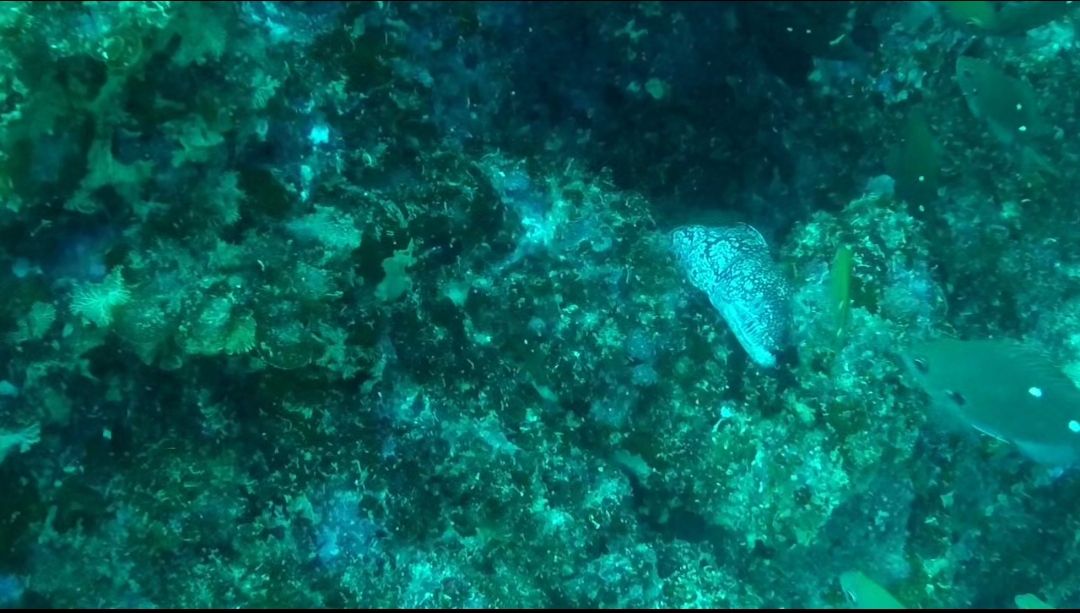
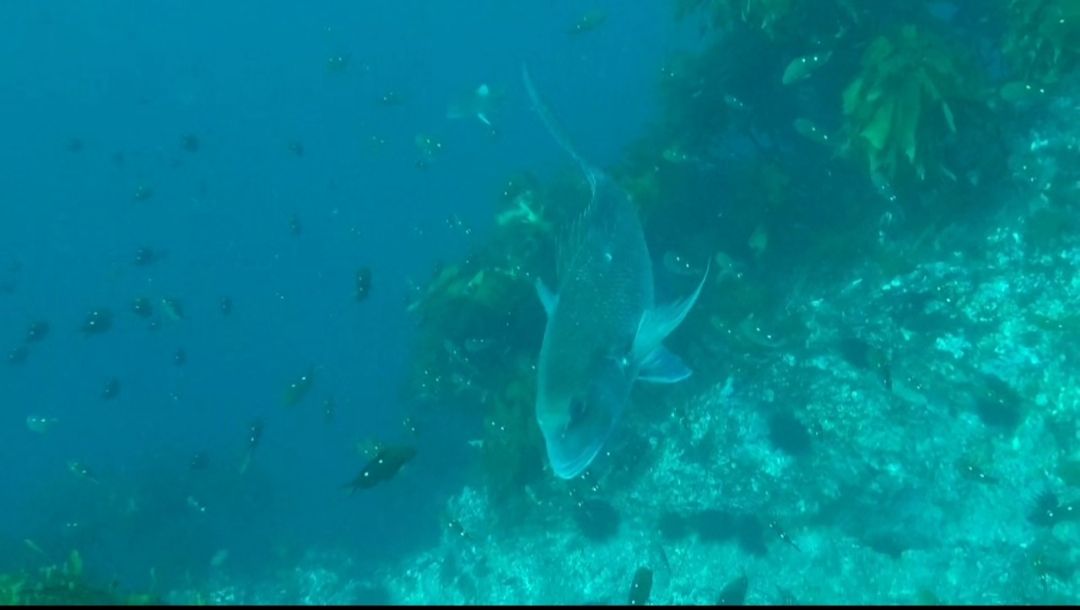
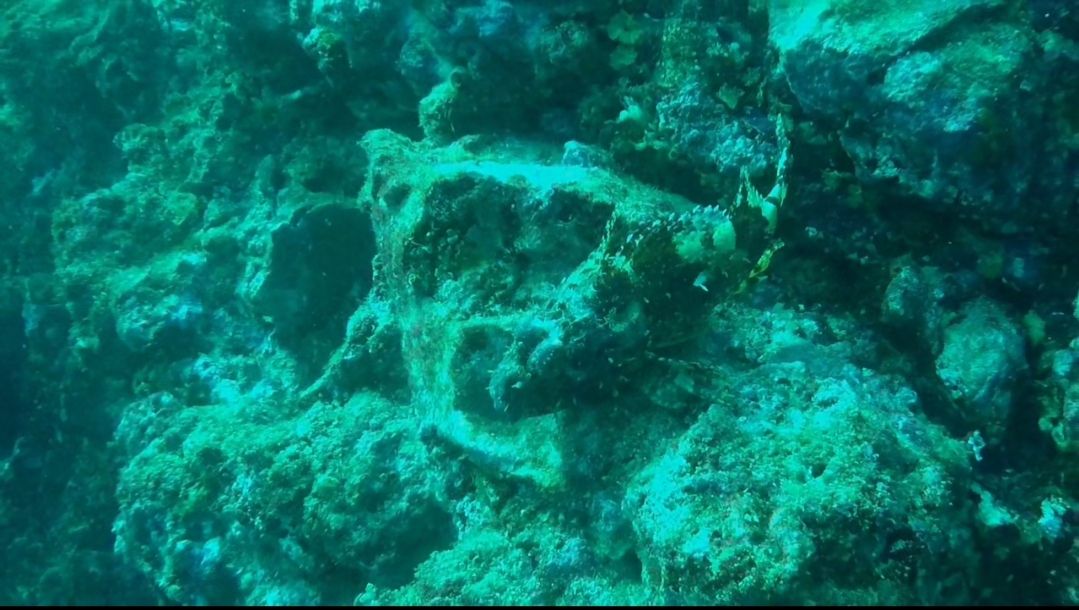
We went on a diving trip to the Poor Knights Islands. We had to be at the meeting point at the Tutukaka harbor by 8 AM. After receiving the appropriate equipment, we were ready to go. The boat ride to Poor Knights Island took about an hour.
After a brief briefing at the first dive site, we were ready to jump into the water. Underwater, we were greeted by large schools of various fish, a few moray eels, and a crayfish.
During the break between dives, we not only enjoyed our lunch but also went on an informative tour around the islands. On one of the large islands, which, like the entire area, is strictly protected up to 800m from all shorelines, lives a group of tuataras. These are lizards that can grow up to 1.5m and are the closest living relatives of dinosaurs. Additionally, there are giant weta, which can grow up to 30cm, a type of grasshopper and the largest insect in the world. Unfortunately, we couldn't see them as it is prohibited to enter the land.
Another highlight was the largest sea cave (combined volume of underwater and above water) in the southern hemisphere.
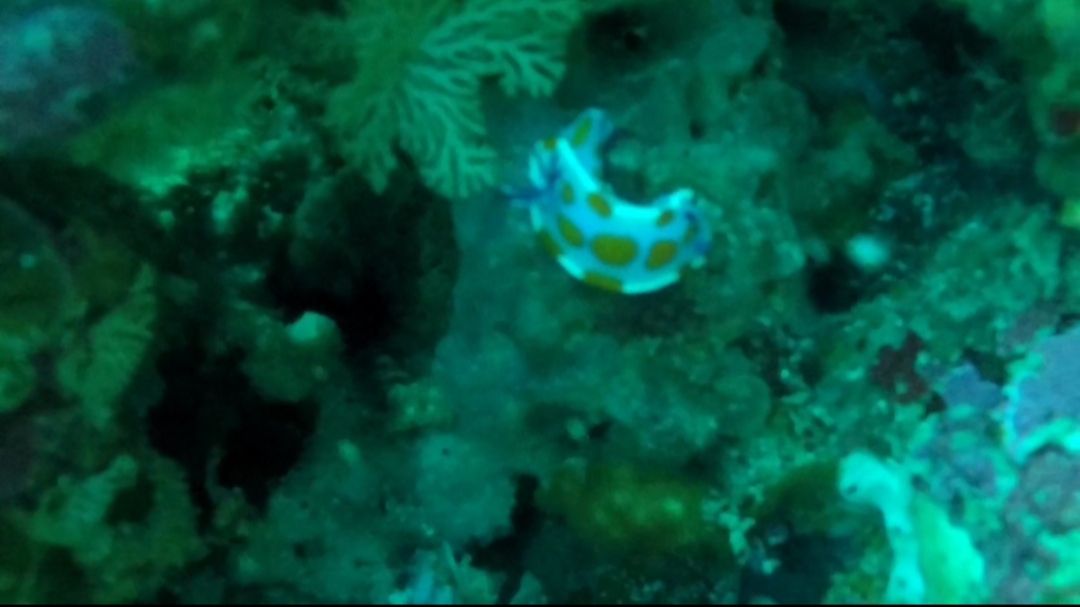
During the second dive, we were able to observe many schooling fish again, swim through a small rock arch, and discover a colorful sea slug.
Back on land, the day was perfectly rounded off with a free hot shower and delicious pizza.
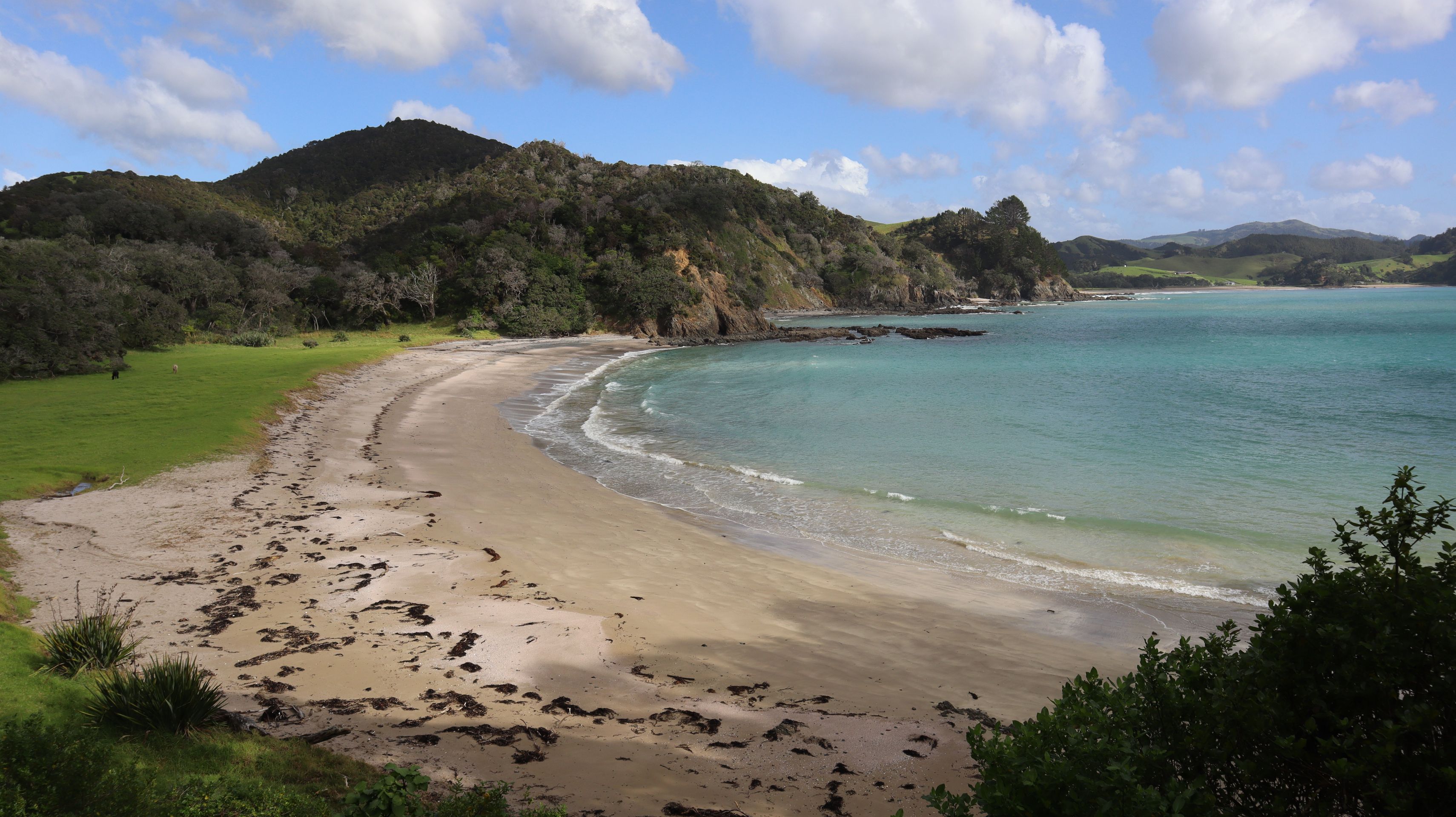
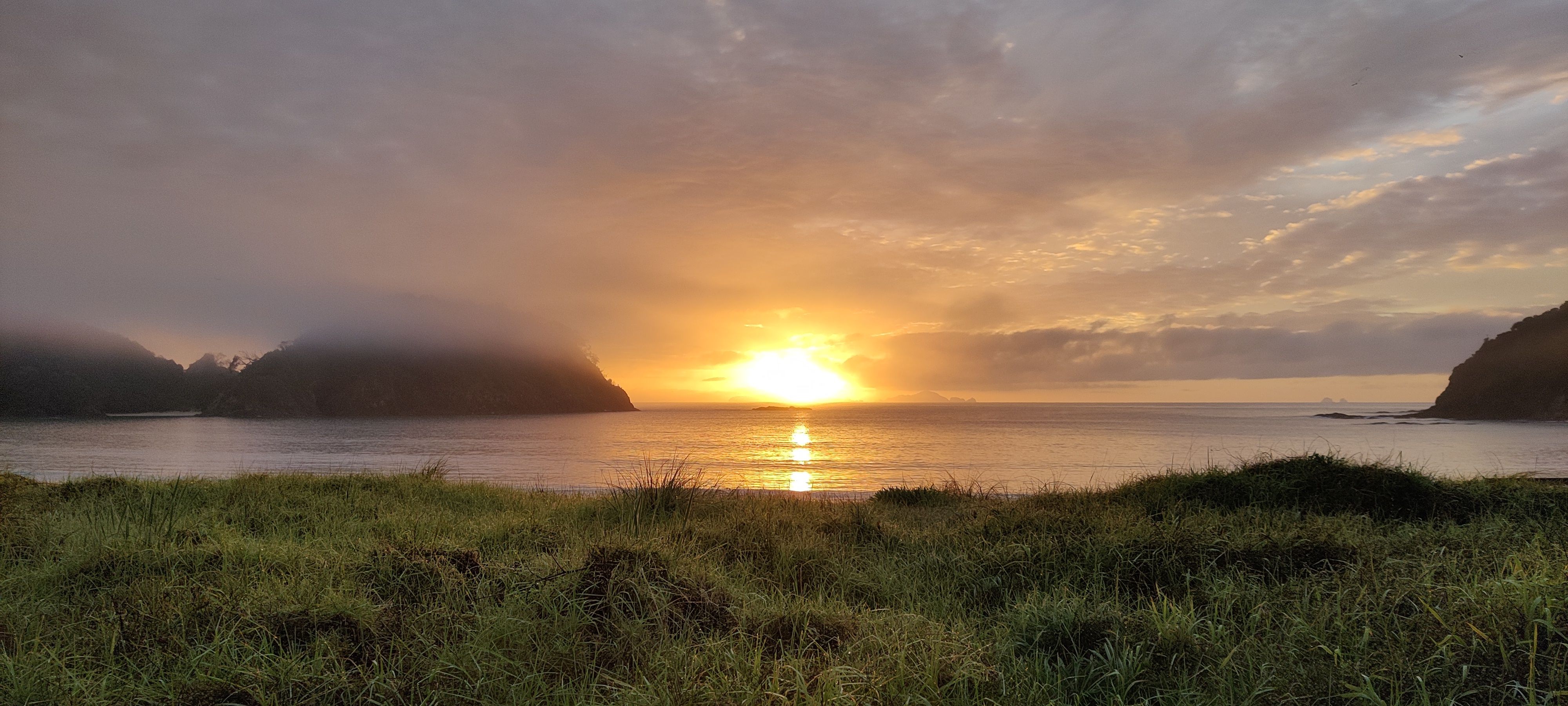
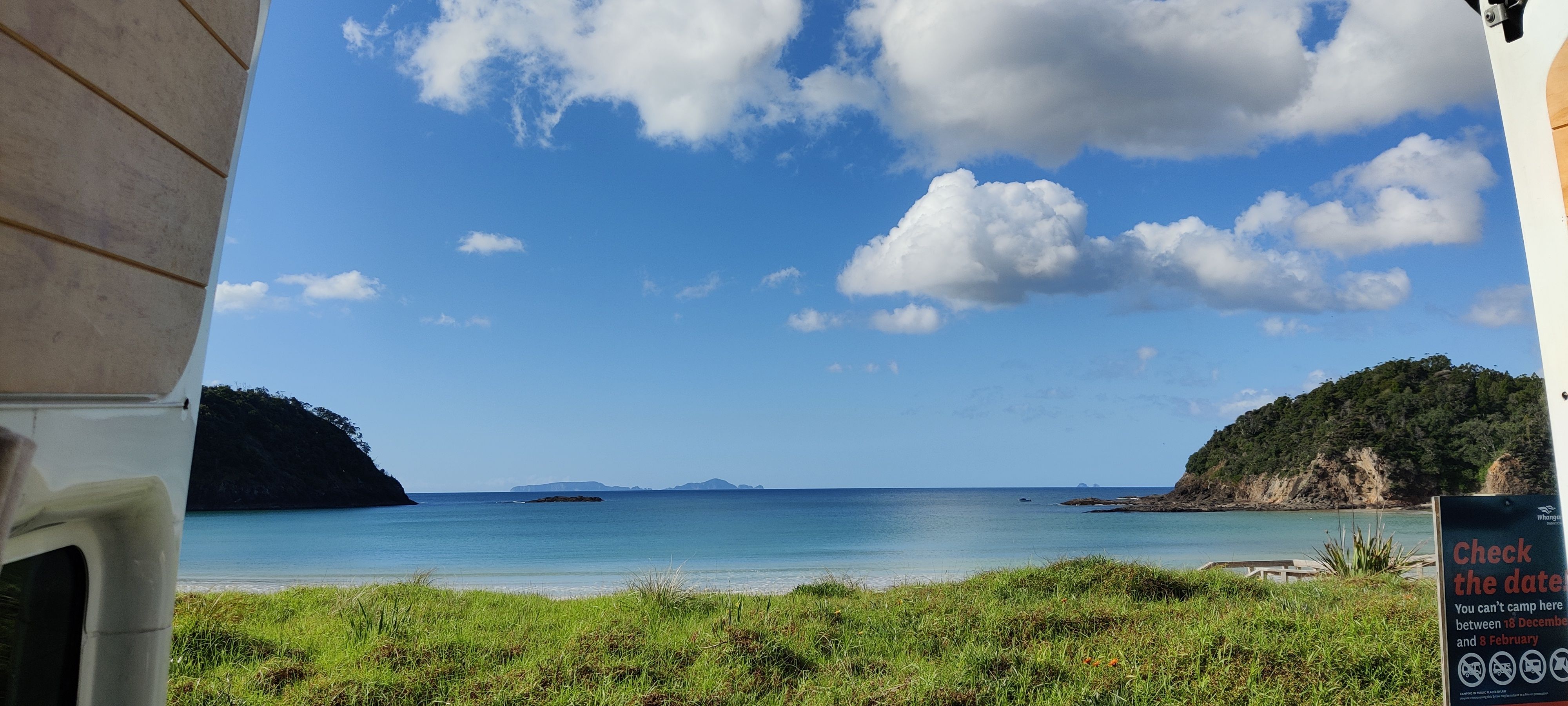
The next day we spent in Matapouri. There, we took a short hike at Whale Bay Beach, enjoyed the warm sunshine, and camped right behind the dunes by the beach. Since that day, we have been bitten by endless mosquitoes and sandflies. Our bodies are covered in bites that sometimes itch terribly.
We had an adventurous hike in the Mimiwhangata Scenic Reserve. Even getting there was thrilling, with a narrow and steep gravel road. We were relieved that no oncoming traffic came our way. Franzi handled the drive perfectly.
The hiking path began over a cow pasture. The herd of cows waiting there turned out to be quite curious and wanted to get to know us up close, approaching us directly (imagine 20 huge black cows). We clapped our hands to keep the cows at bay and quickly left the pasture.
Next was a flooded section where we had to shimmy along the fence. We could really do without wet feet. Unfortunately, this endeavor had its casualties, as Franzi got her rain jacket caught on the barbed wire fence, leaving a hole in her jacket. Given the weather here, it’s not too bad ;)
After a very nice stretch, over hilly pastureland and a nearly untouched sandy beach, we encountered our next animal encounter. First, a small pony greeted us, followed by another horse that sniffed us. As if that wasn’t enough, shortly after, three more horses surrounded us. At that moment, we were quite tense as the horses circled us, showing no fear and nibbling at us. With a few quick steps, we put enough distance between us and quickly closed the gate behind us.
Upon entering the next paddock, through which the main path led, a horse suddenly galloped towards us. So we quickly backed up through the gate and kept our distance. The horse seemed quite restless and stormy. Not daring to cross through the paddock, we decided to walk along the outside of the fence, through tall grass. Fortunately, we could soon climb over the fence and return to the main path. This hike will surely remain in our memory for a long time.
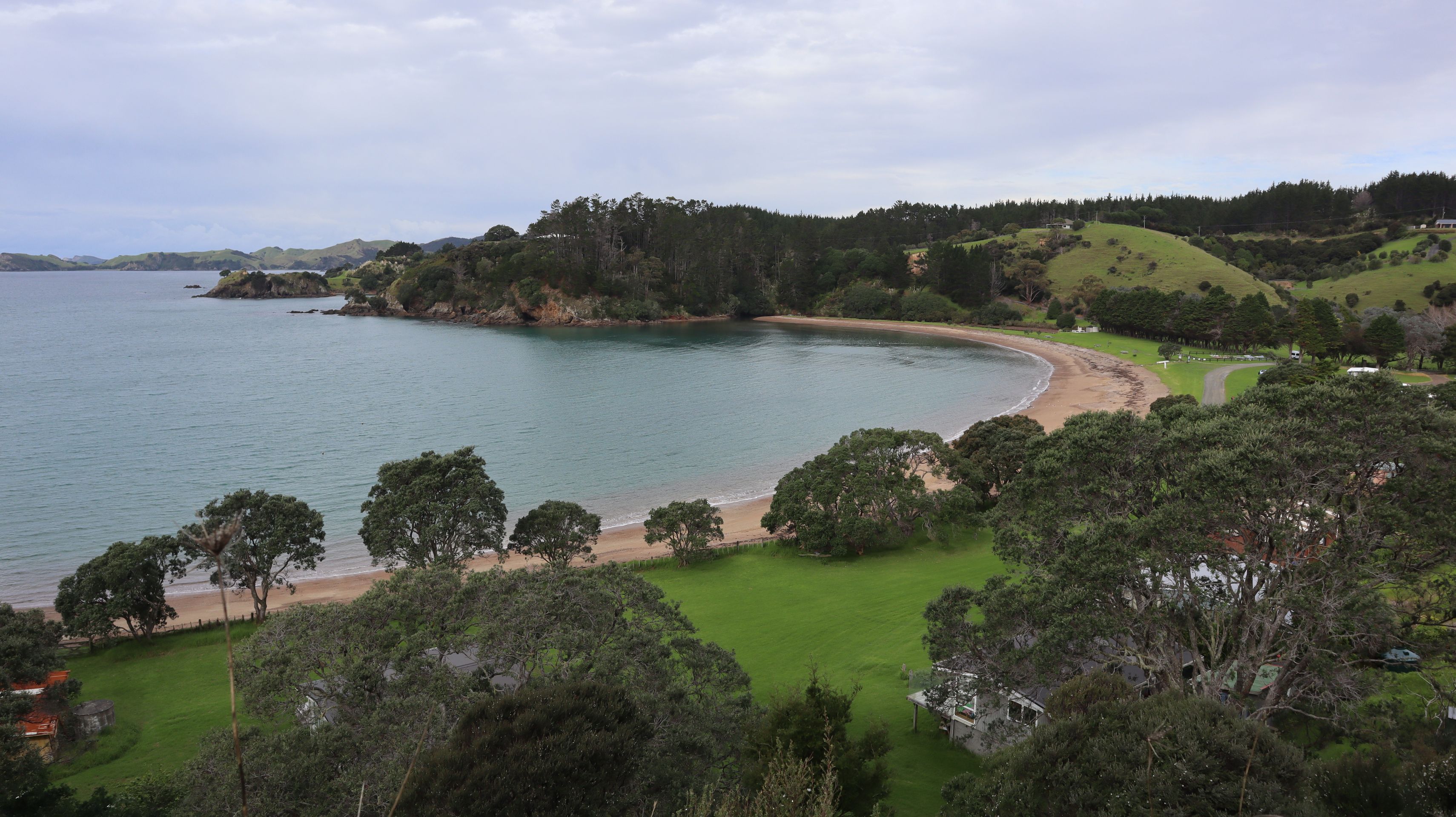
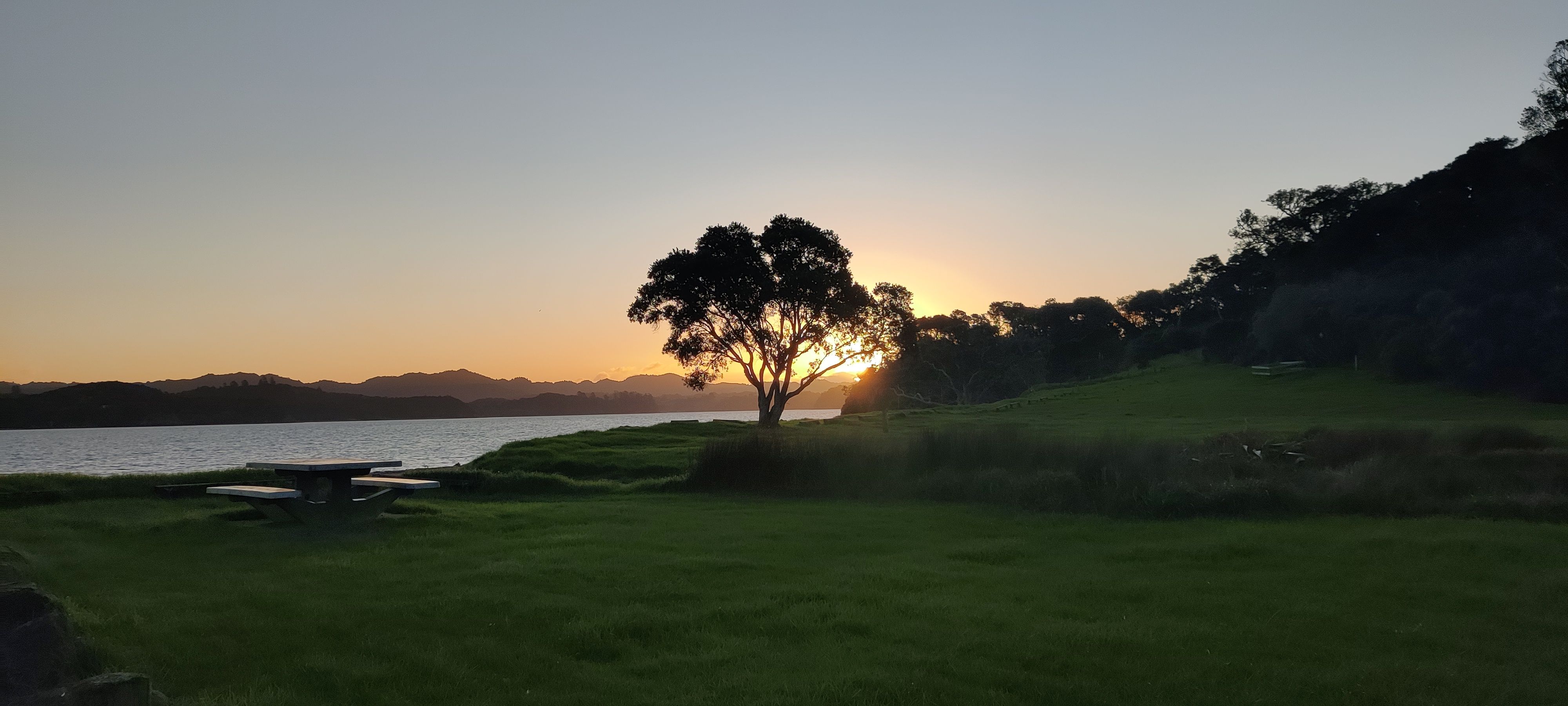
For the next two nights, we chose a campsite at Whangaruru North Head Scenic Reserve. There, we went on a hike over the peninsula. After all the hikes we've done so far, we now have a better sense of how long it will take us to complete the marked routes. At home, we were used to planning with 4 kilometers per hour. Therefore, we were a bit confused by the signs stating, for example, that a 6-kilometer walk would take 2.5 hours. By now, we know that the signs do not lie. Here in New Zealand, the paths are often much worse and muddier than we are used to, with many ups and downs.
In the afternoon, Julian got to practice his fishing skills again. A local fisherman happened to be on the rocks in the bay as well. After a brief exchange about the state of the tides, what fish are here, and how to prepare them best, Julian tried his luck. While the local caught two fish in a matter of time, Julian’s line stayed without a bite. Probably out of pity, the fisherman offered Julian one of his fish. Thus, Julian's first fried fish was not caught by himself, but it was still super delicious.
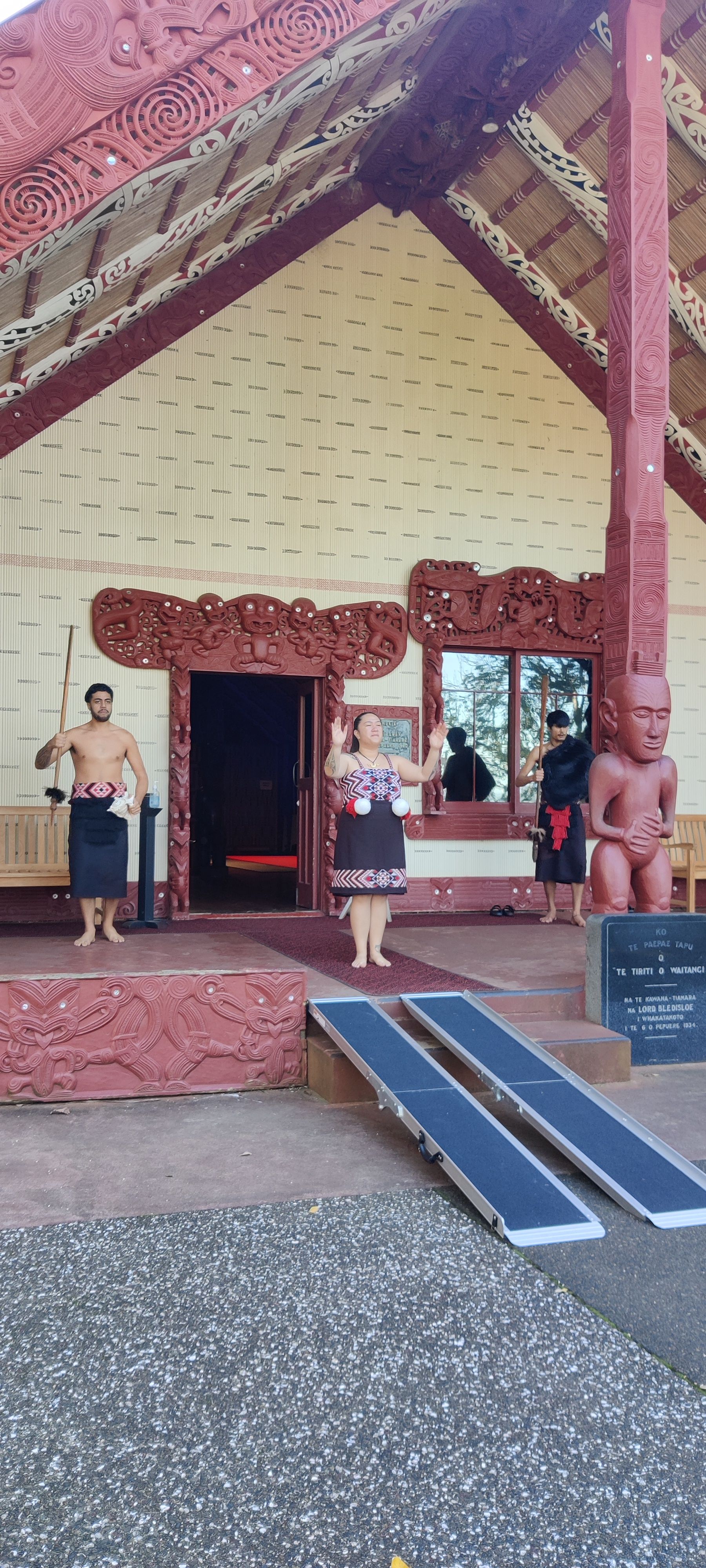
We also visited a particularly historic site this week. We were at the Waitangi Treaty Grounds Museum. Here, in 1840, the Treaty of Waitangi was signed. This guaranteed the Maori the protection of their land and culture while New Zealand was placed under British sovereignty. Thus, New Zealand became a British colony.
Additionally, we were able to attend a traditional Maori ceremony at the museum.
The songs and dances of the Maori are truly unique, and it was exciting to get a glimpse into their culture. We hope to learn more about the Maori in the coming months.
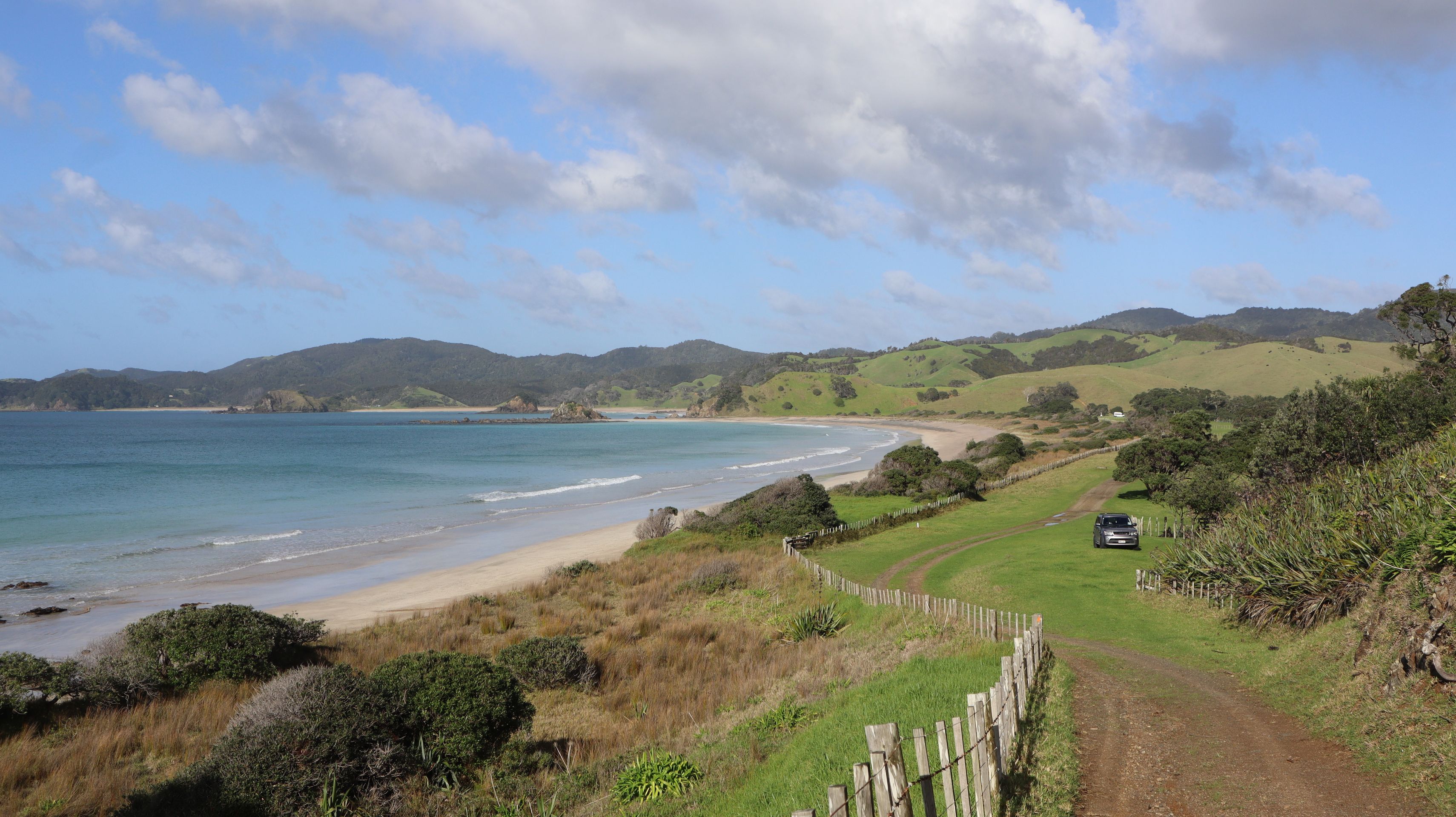
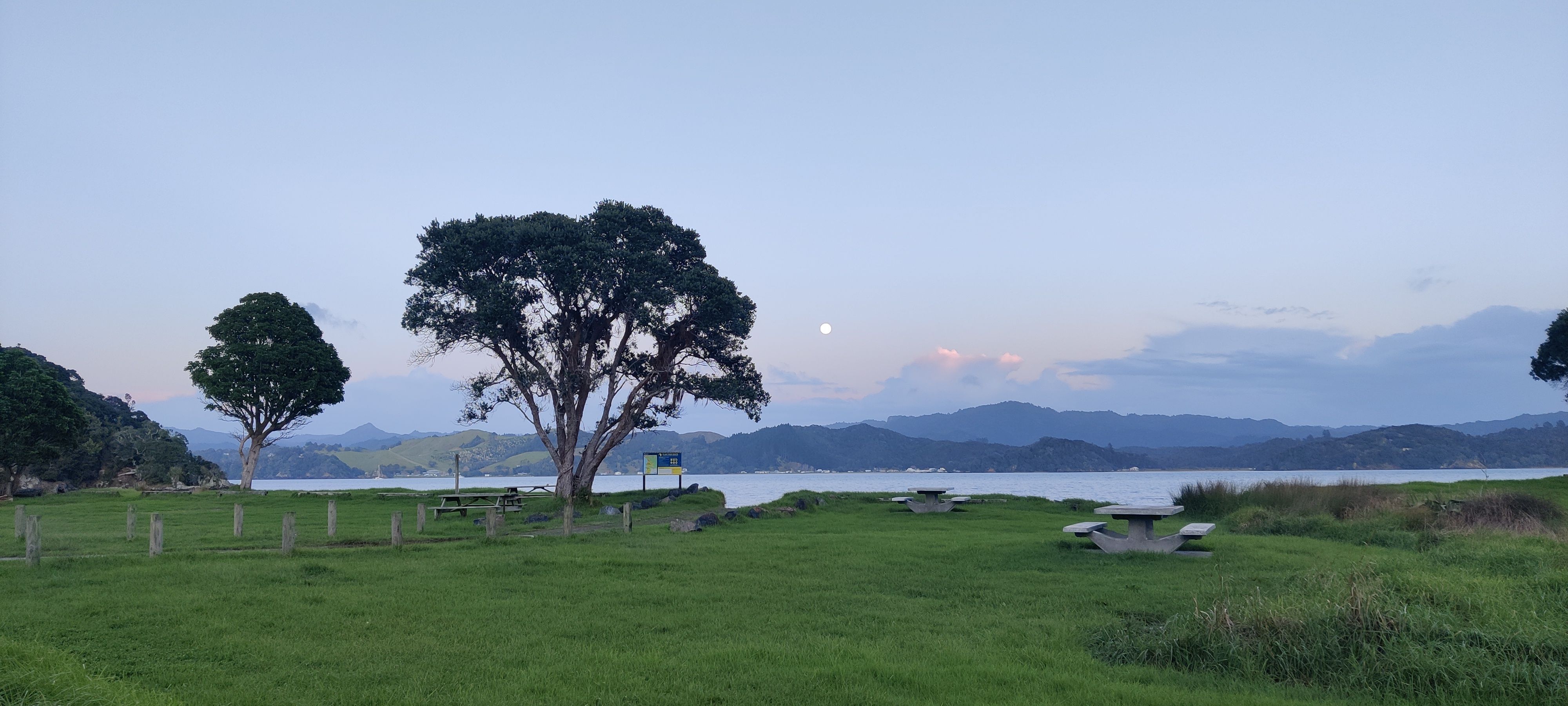
Today we moved on to Mahinepua Bay. Our campsite is, somewhat morbidly, right next to a cemetery. But hey, at least we can see the sea ;) The hike in the Scenic Reserve was quite beautiful and we had a wonderful view of the surrounding bays.
We managed to accomplish some organizational tasks this week as well. We finally found a store where we could buy magnets. These have been on our shopping list for a long time, but we hadn’t found them in either large supermarkets or hardware stores. Just ordering, like at home, doesn’t work when you don’t have a permanent address.
In New Zealand, diesel and petrol are taxed differently. While petrol is taxed directly at the pump, diesel vehicles must pay this tax separately. This is called the “Road User Charge” - or simply RUC. The RUC is always paid in advance for a specified number of kilometers expected to be traveled (in 1,000 km increments) and costs about 74 NZD per 1,000 kilometers. So, one always has to be careful not to exceed the already paid kilometer amount.
Renewing it is quite easy online, or at larger post offices. Since a proof of the current validity of the RUC must be displayed in the windshield, we extended our RUC at a post office as we would have had to print the proof somewhere else otherwise.
We are now definitely ready for the next 5,000 kilometers! :)