

Liangzhu - Chapter two: The Smile of the Old Lady
The archaeological site in Liangzhu, which gives the culture its name, reveals not only the existence of canals and dams but also housing structures, such as palatial buildings,...
Published: 07.12.2024
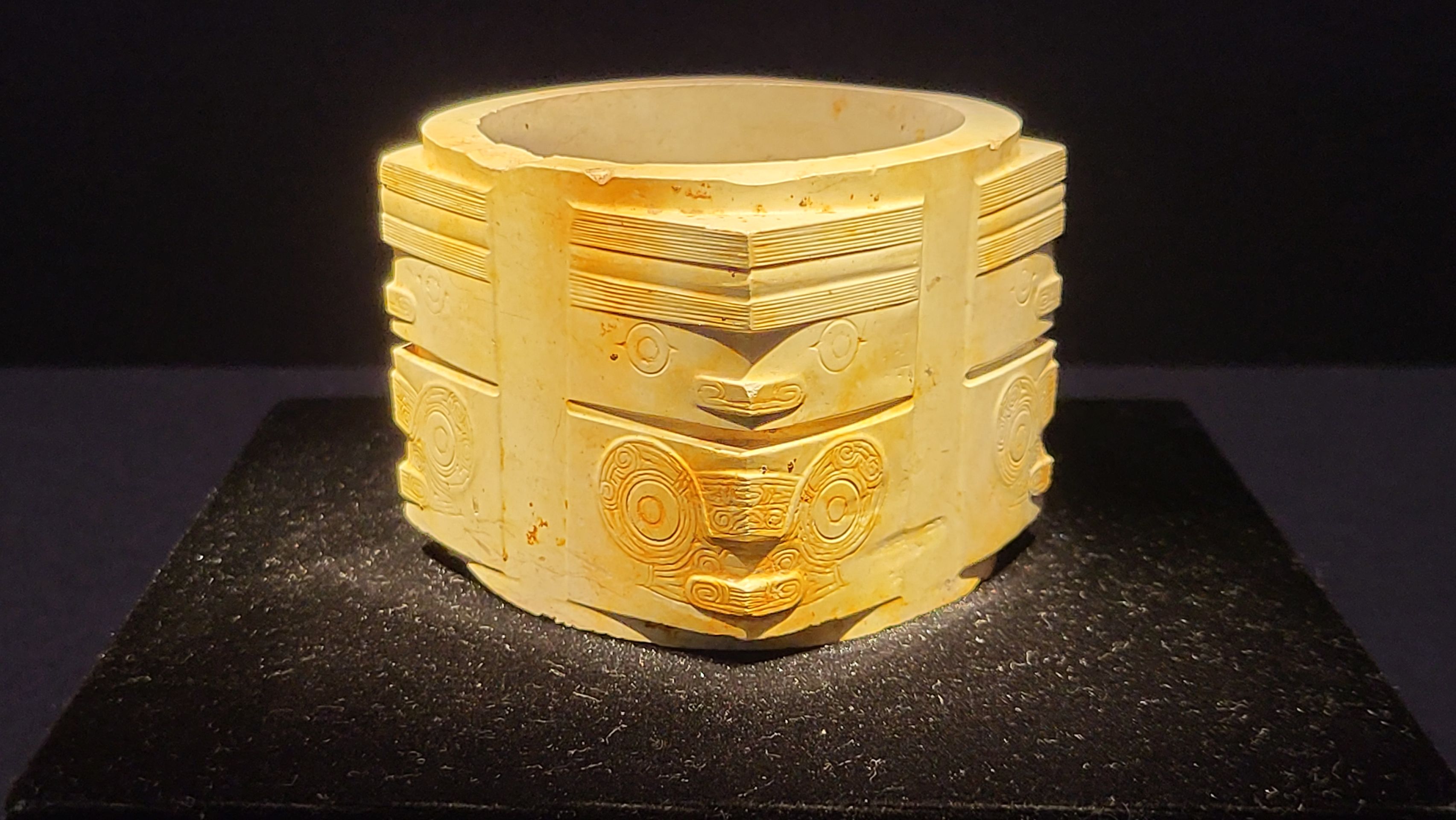
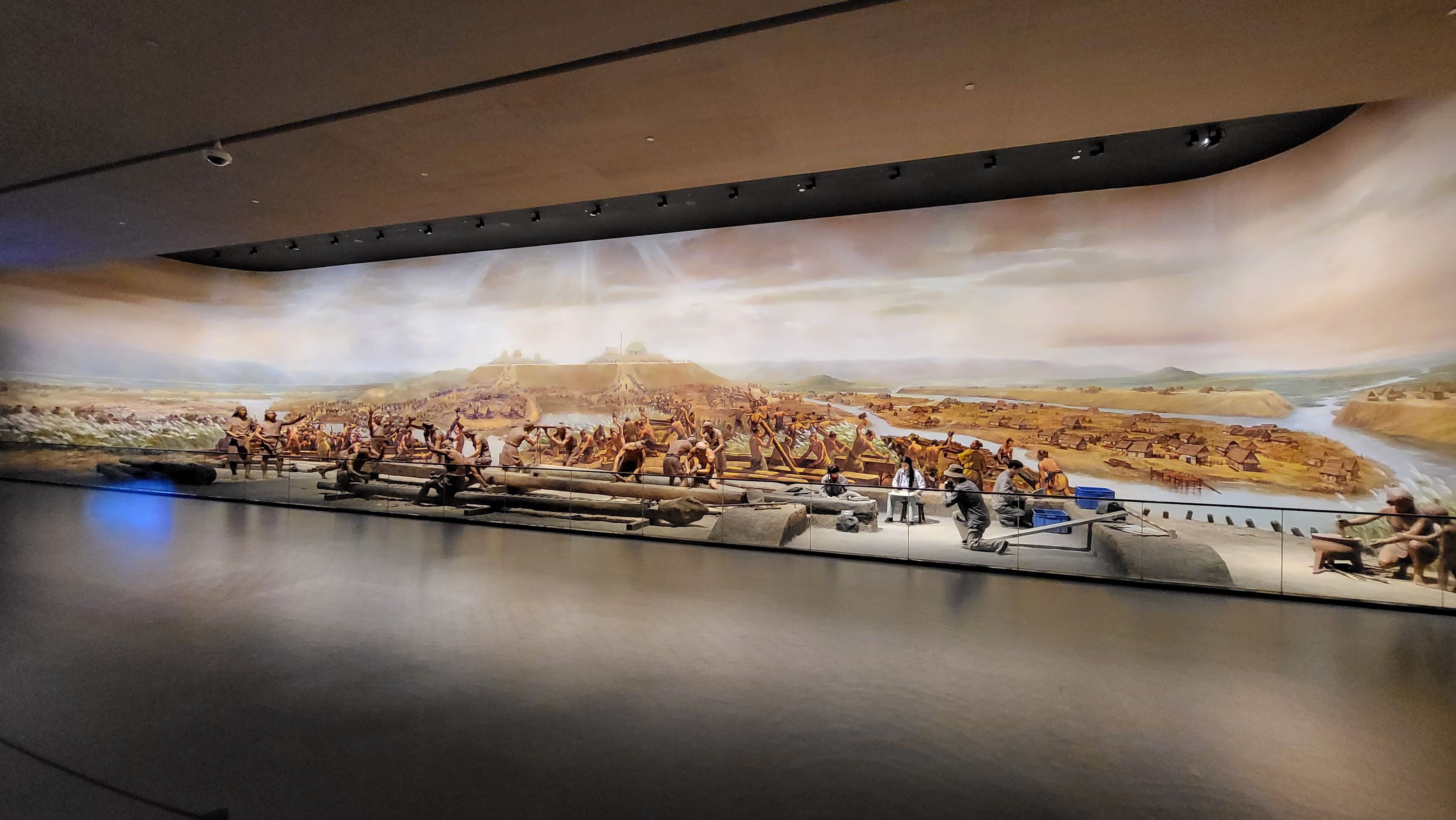
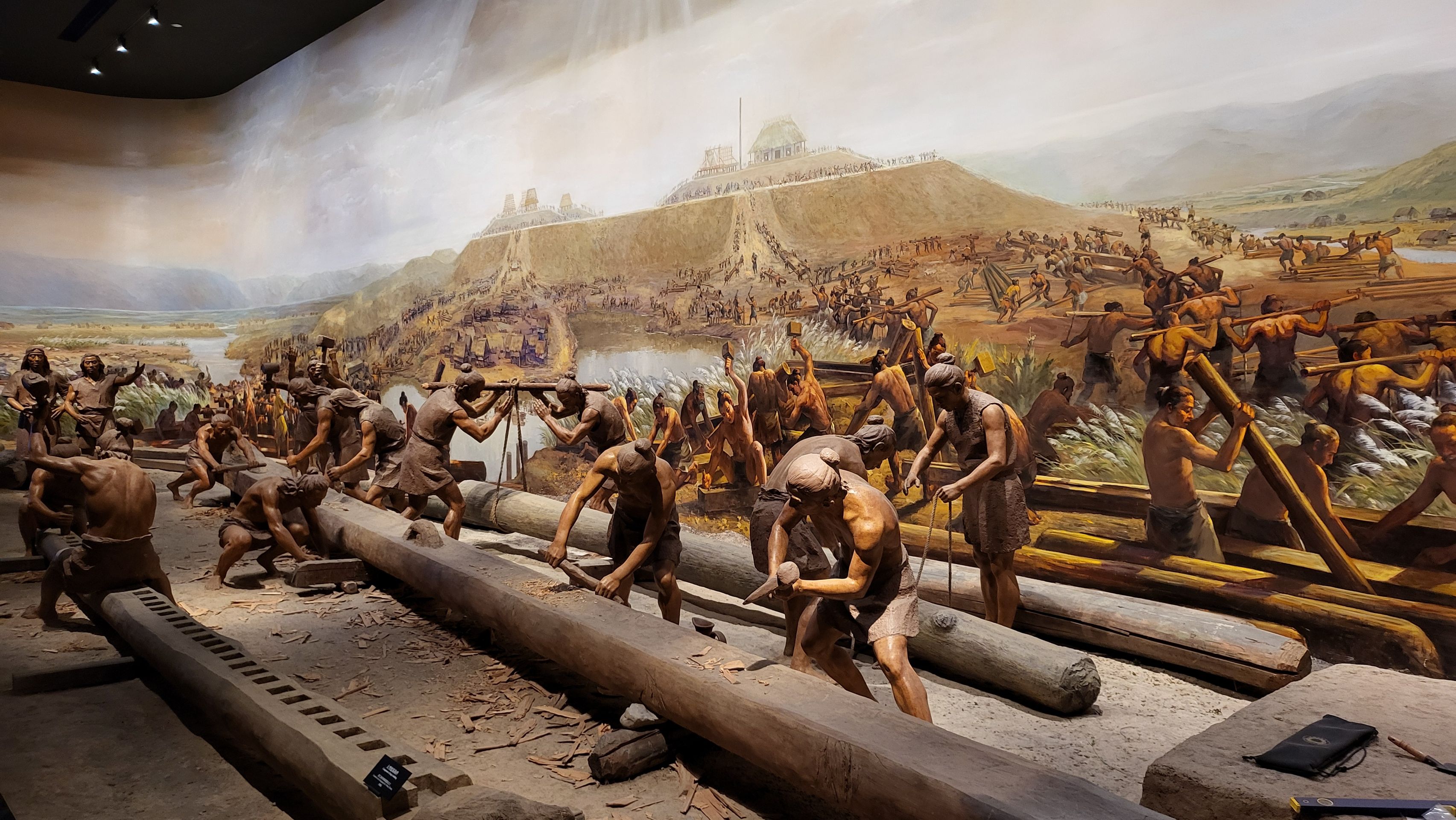
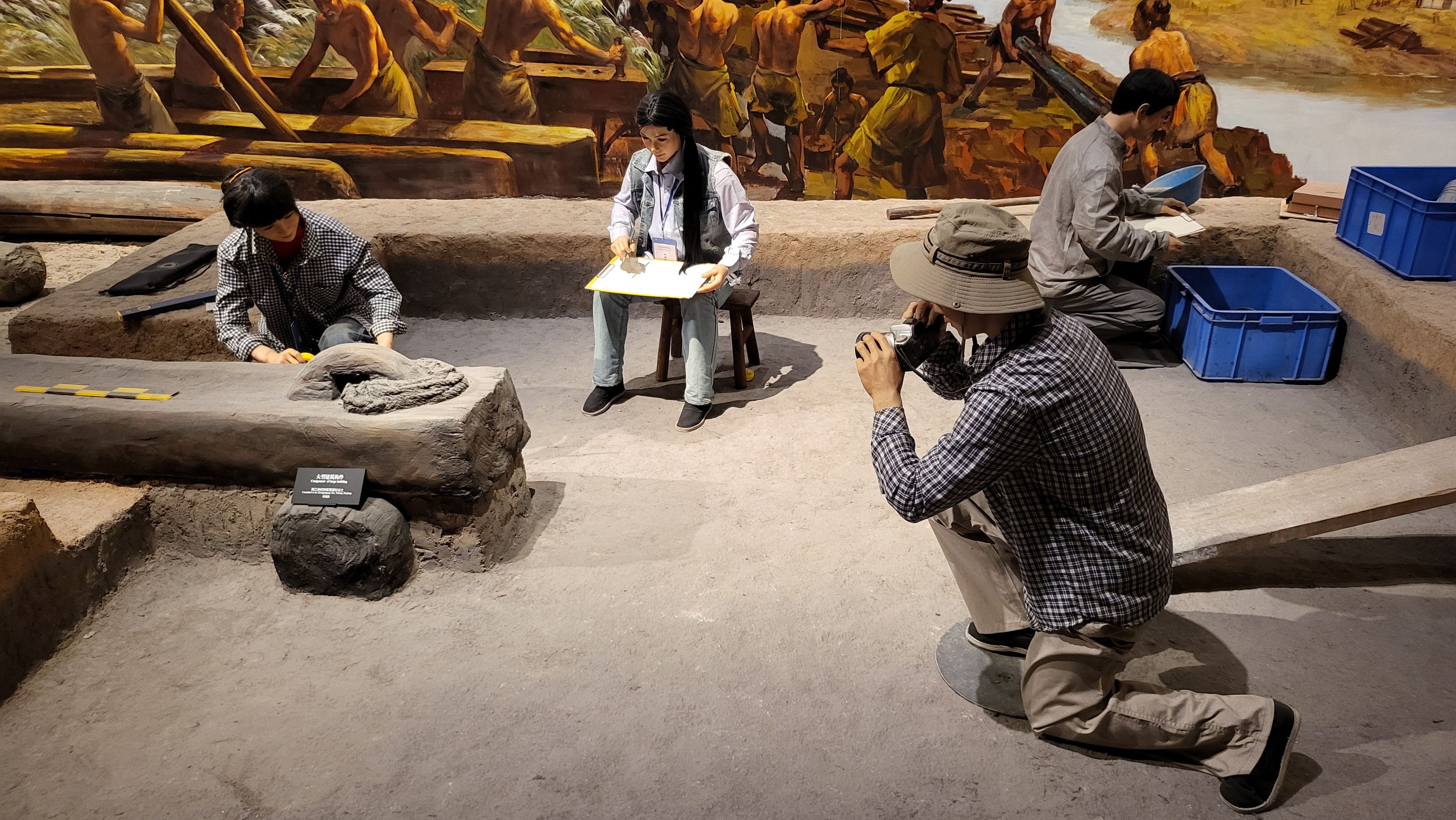
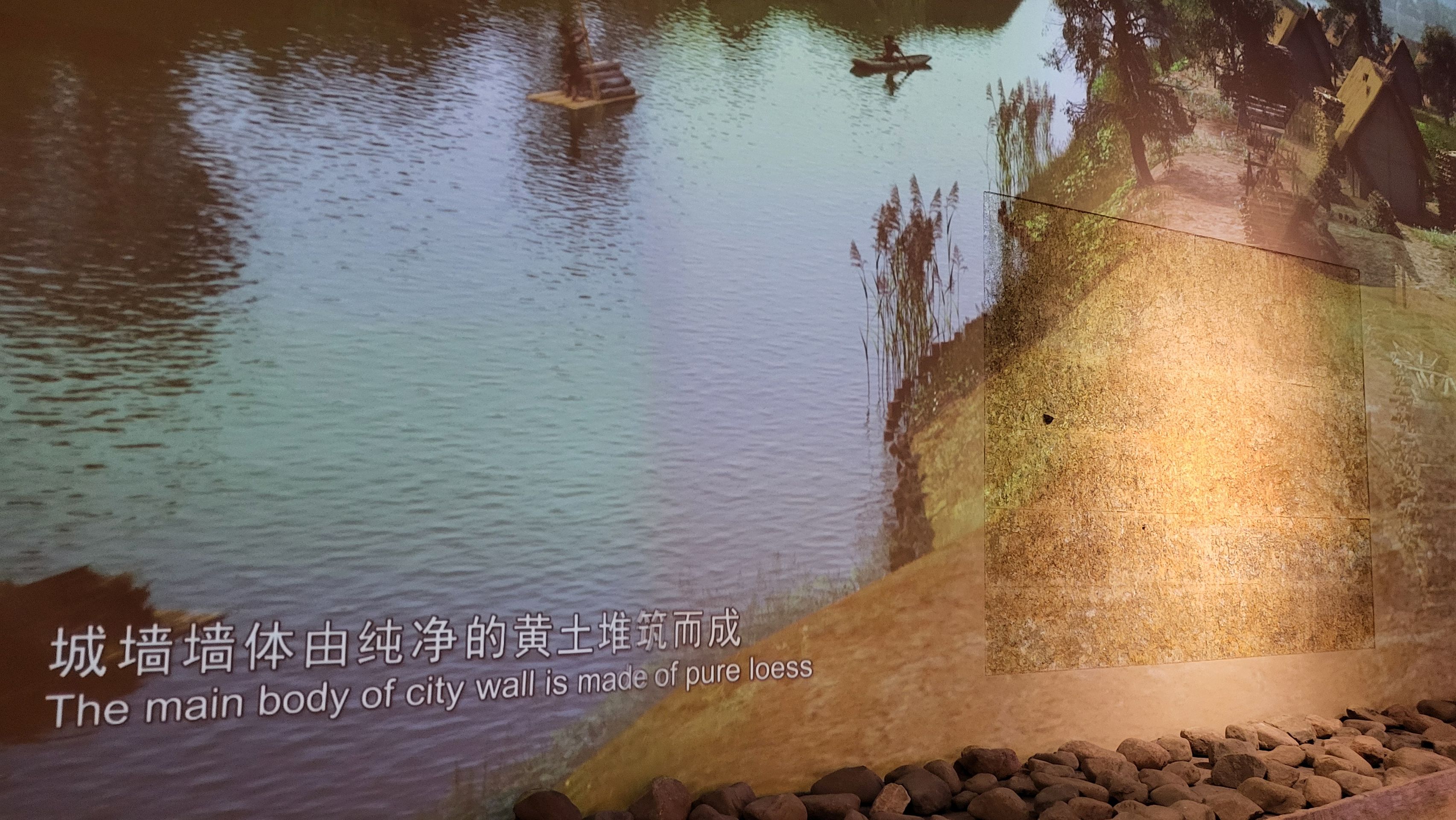
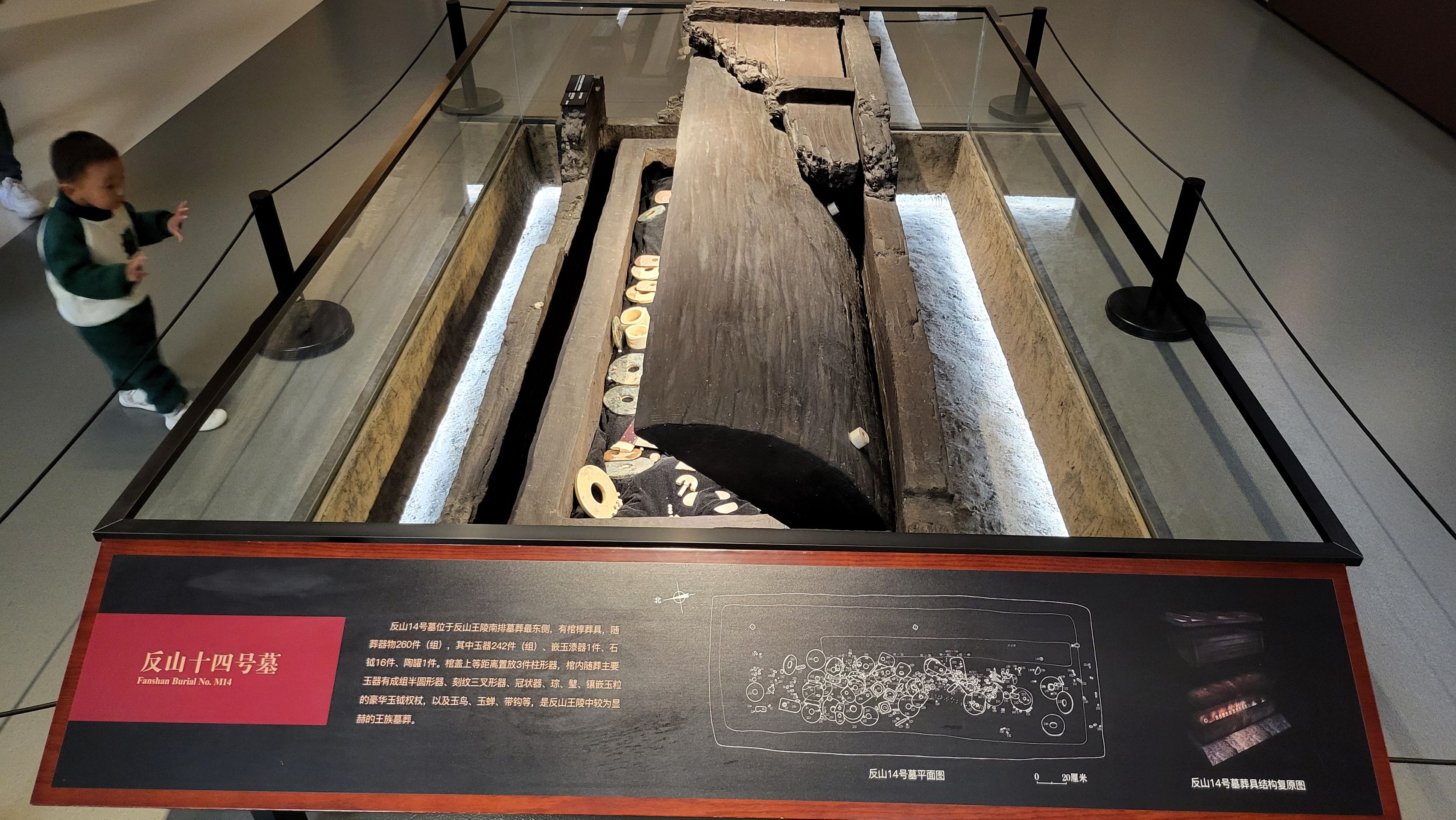
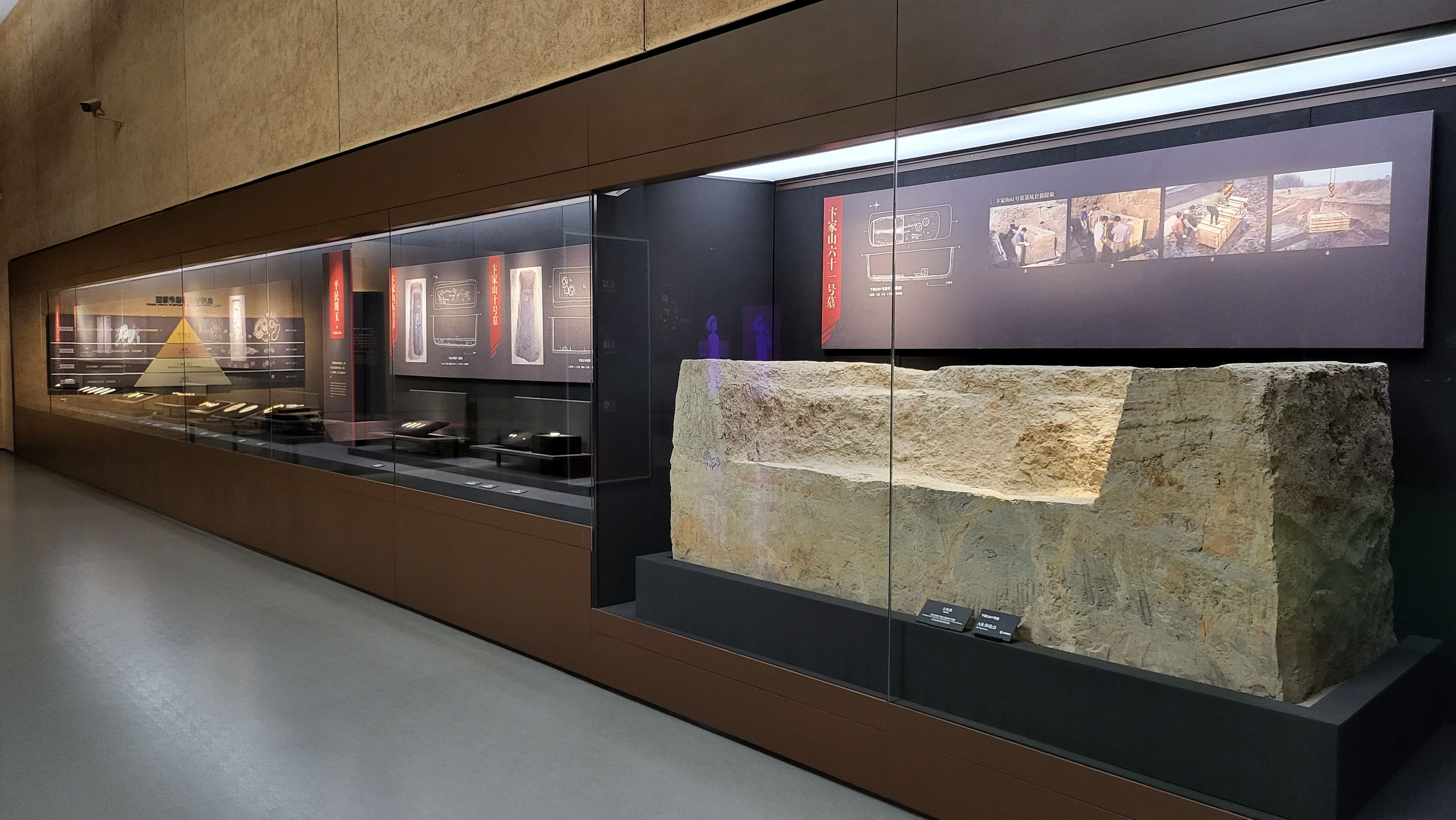
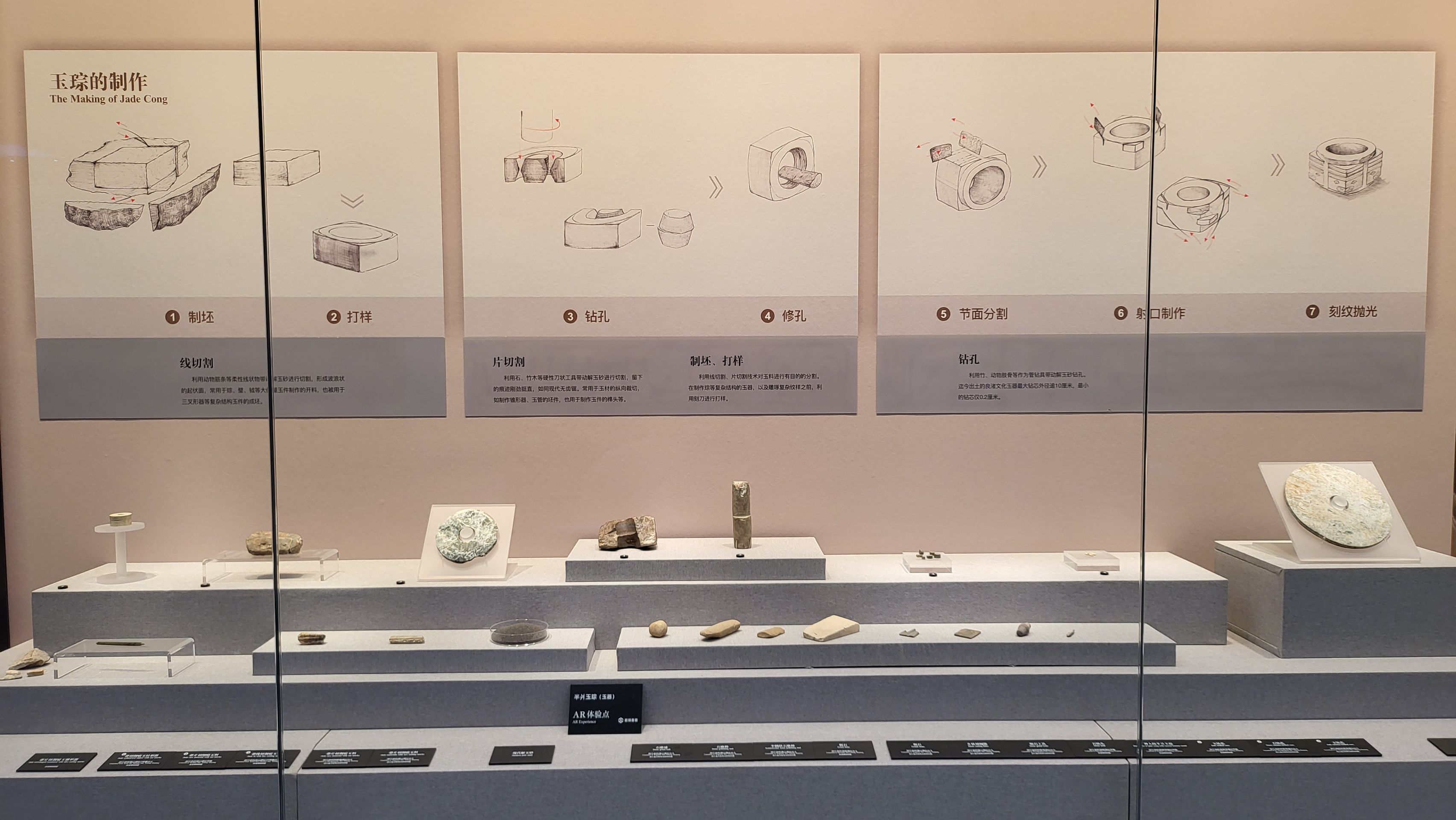
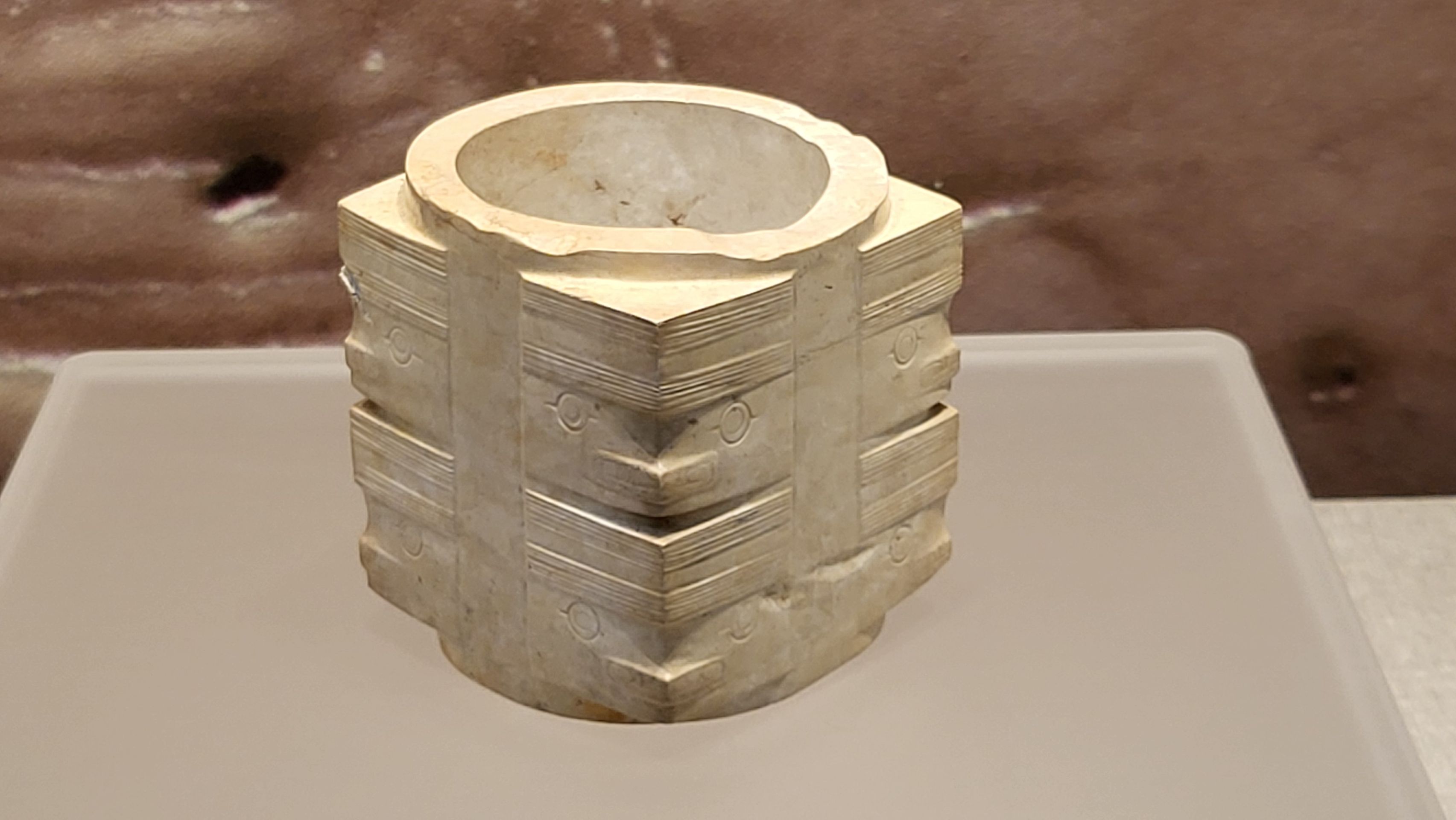
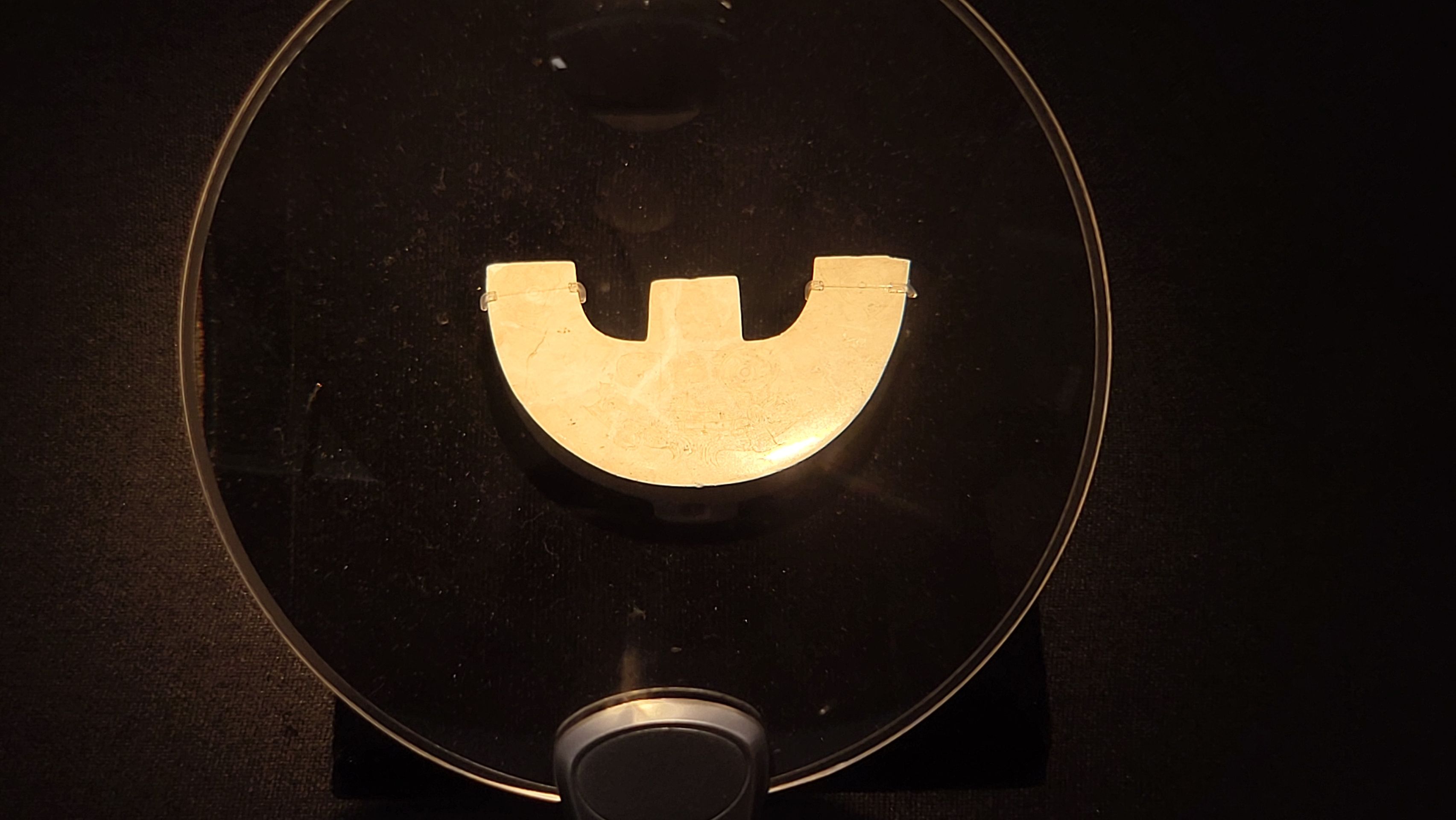
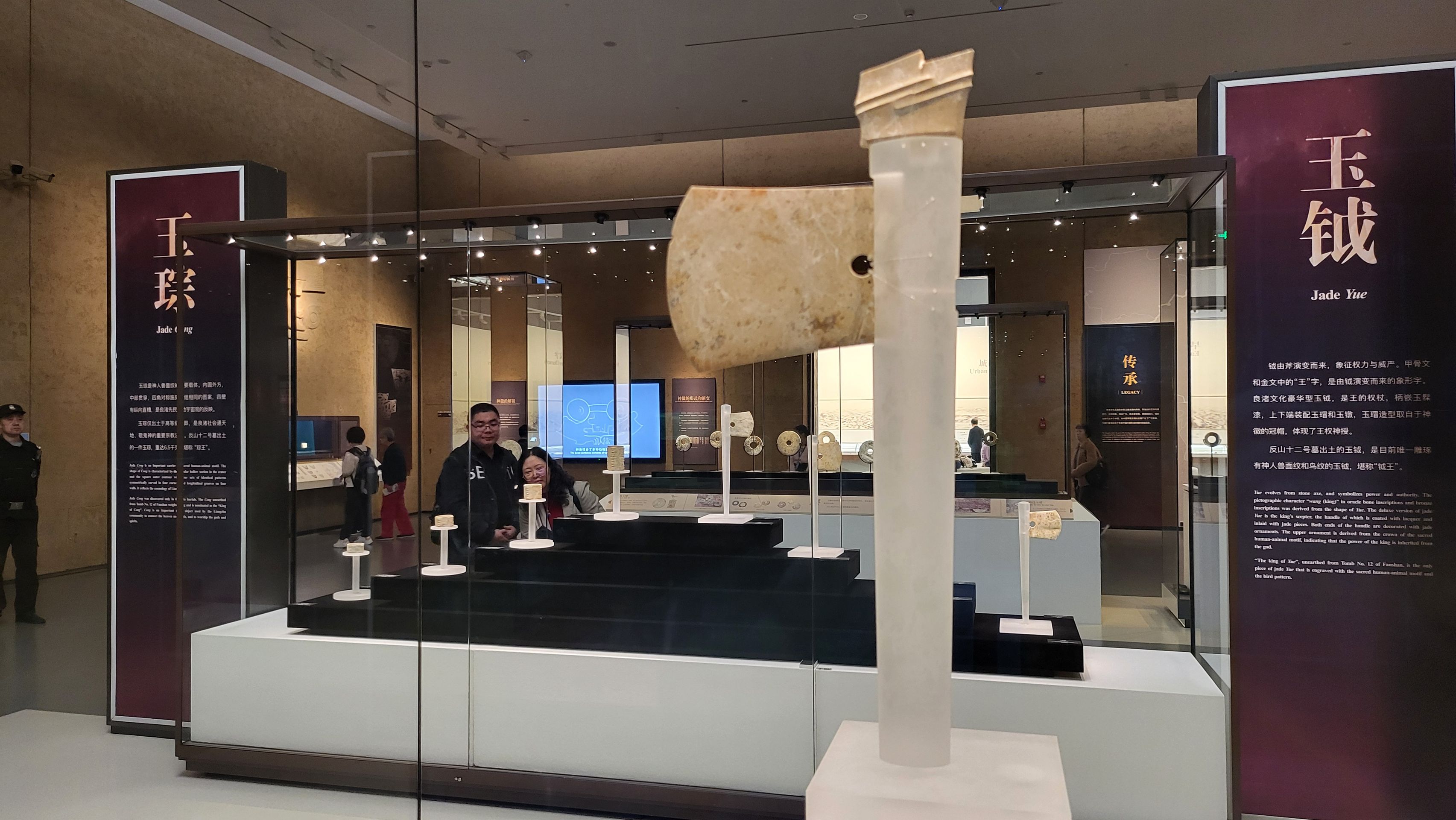
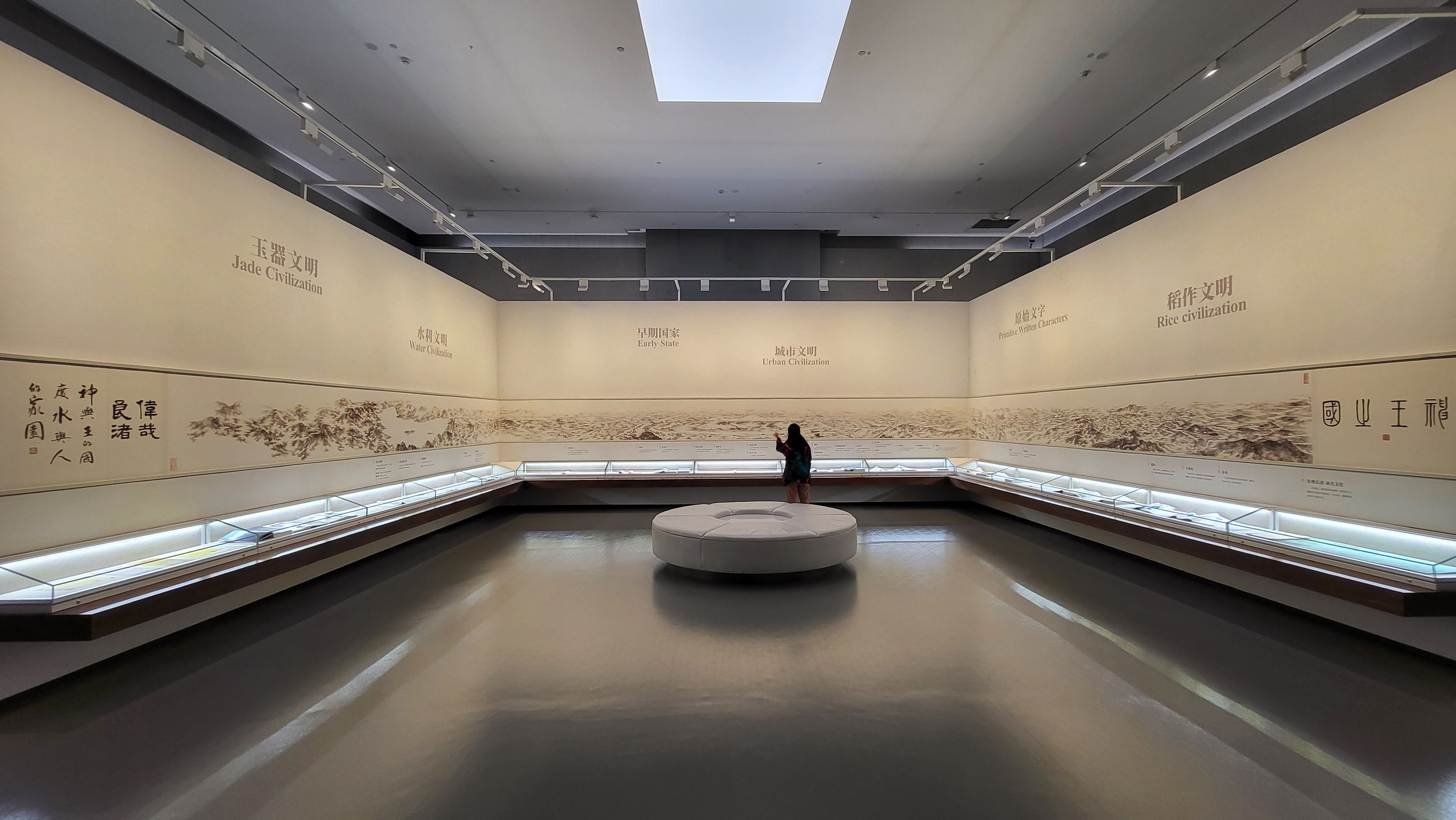
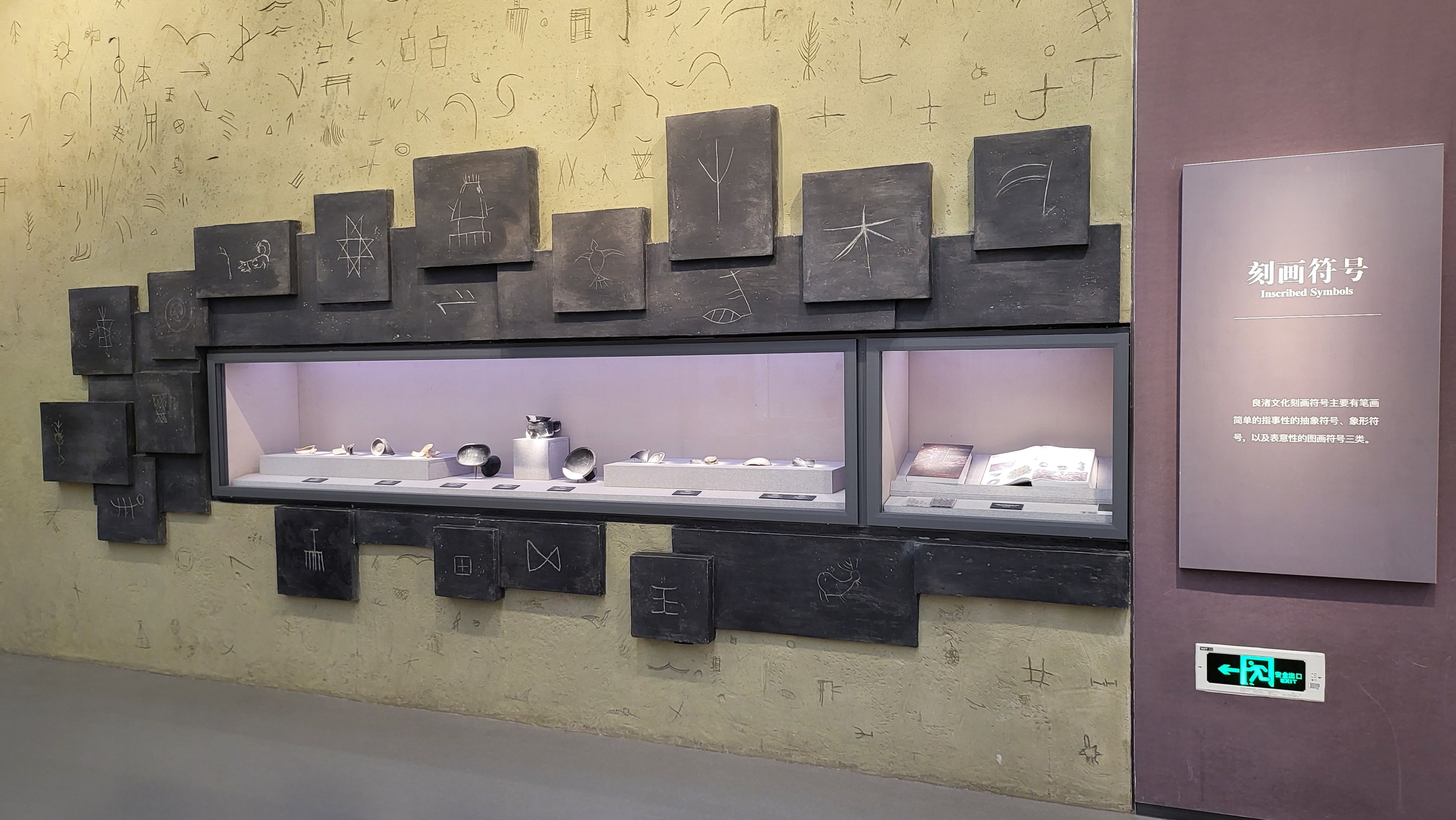
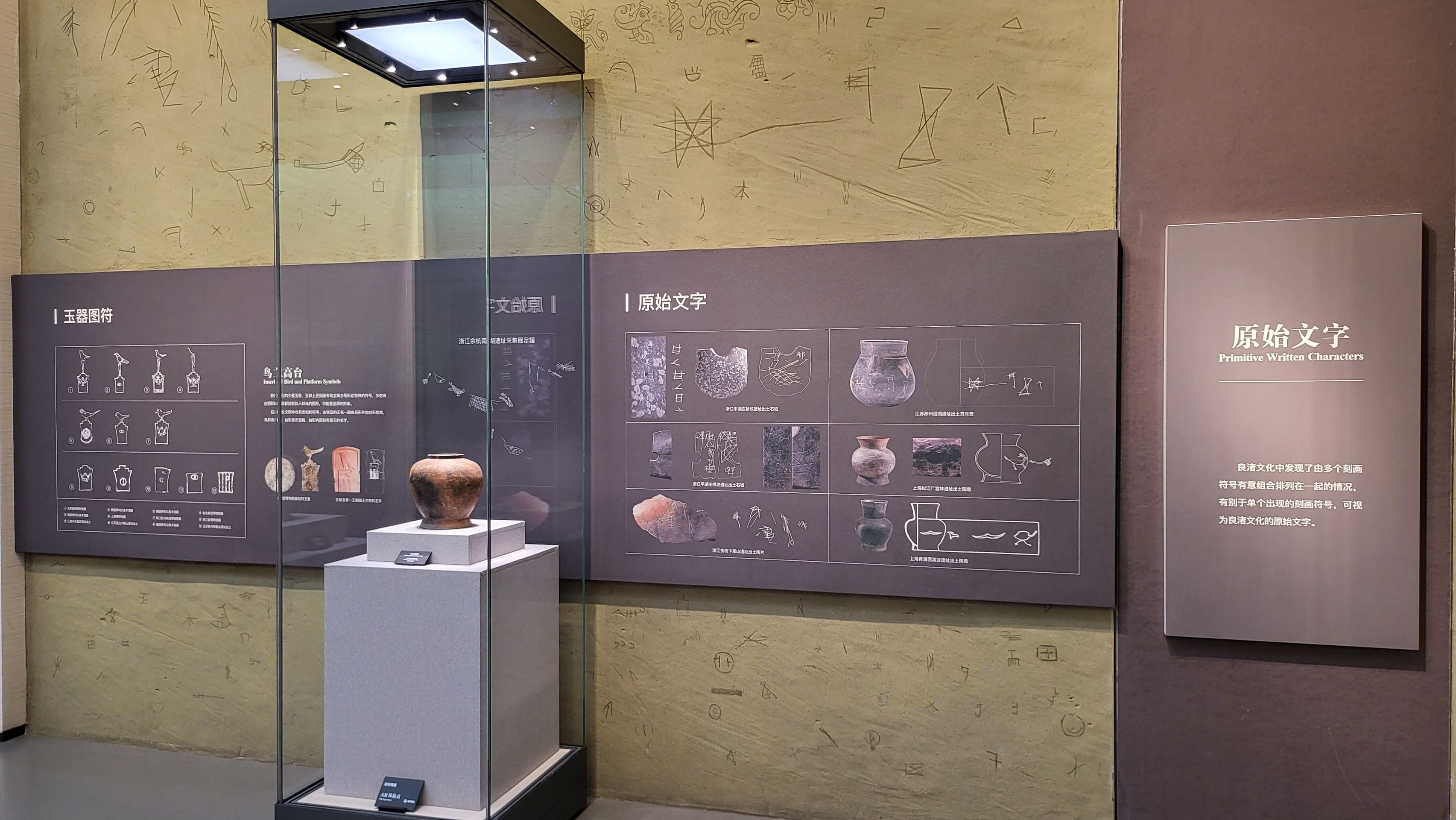
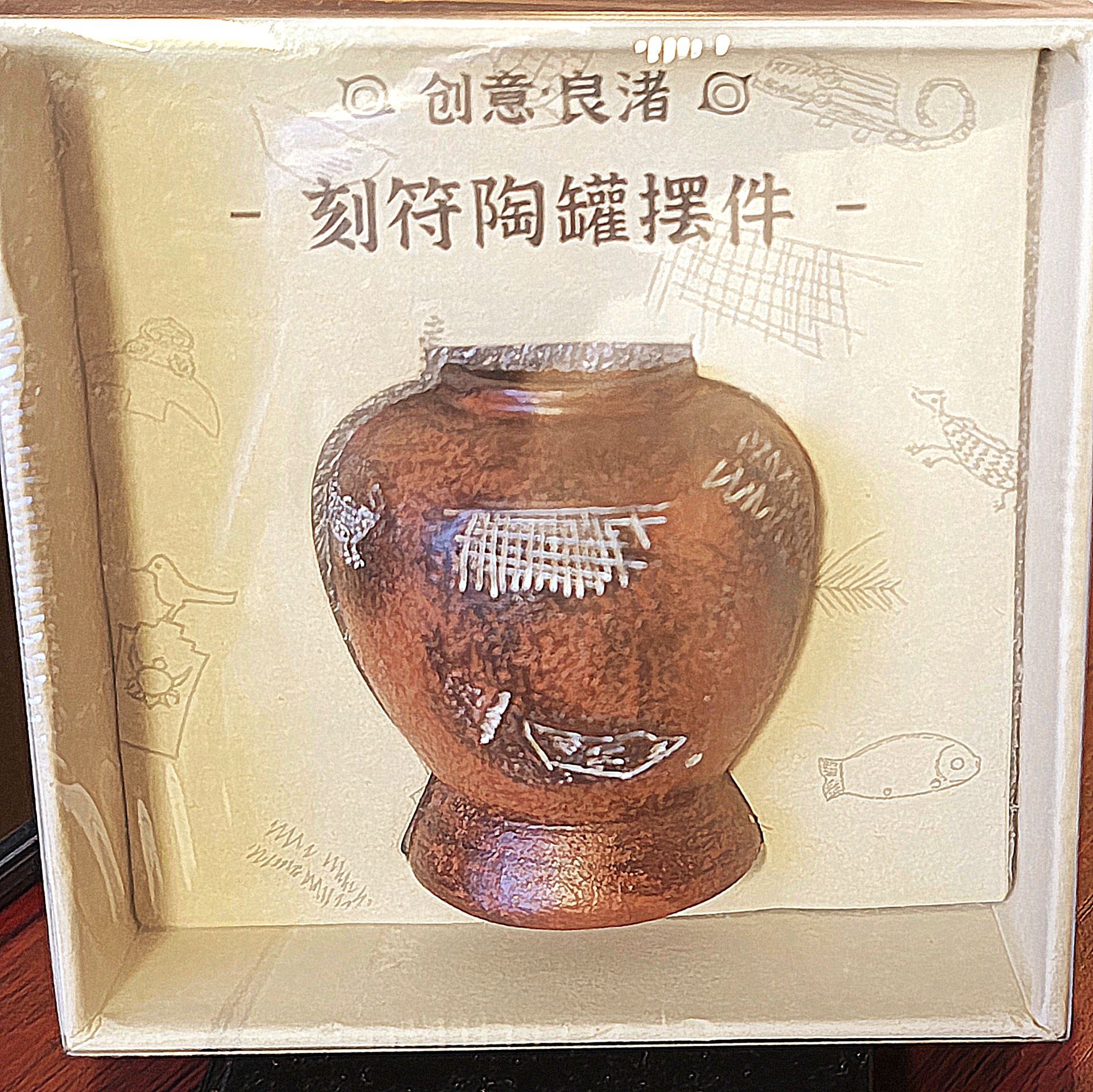
In the Liangzhu Museum in Hangzhou, I now enter an exhibition hall where a scene of working people in Liangzhu 5000 years ago is depicted along the entire length, incorporating a small spot featuring figures from modern archaeological excavations. A connected representation that excites me with its innovative form. On the opposite side, I see an original piece of the ancient city wall, which is artistically integrated into a wall projection of dam constructions. Here, information about this dam, which encircled Liangzhu in a circular form, is projected onto the wall via a video projector, revealing that 1.1 million cubic meters of earth were moved for the city wall. And now I come to the exhibition hall where jade culture is the focus; I had already mentioned that I would return to this. Jade products of craftsmanship were primarily, but not exclusively, found in tombs. The royal tomb No. M14 is displayed in the museum true to the findings, with burial objects placed at the correct excavation site. Of the 260 burial gifts, 242 items are made of jade. Tomb No. M61 is presented in its earth cross-section, while the jade burial goods lie in glass vitrines beside it. I particularly find two jade Cong (玉琮) from Tomb No. M12 noteworthy, as they are especially beautiful with their stone structure and engraved decoration. But this is not surprising, as a jade axe from this tomb, with its numerous embellishments and pictograms, was considered the scepter of a king and symbolizes the authority of the king. This jade axe is the only one found so far with carved patterns of gods, humans, animals, and birds. To manufacture a jade Cong, animal sinews are used as cutting tools and engraving knives, along with other tools made from natural abrasive materials for the fine structures. The jade Cong is a creation that is round inside and square outside, featuring elaborate decorations. Researchers suspect a spiritual, ritual, or royal symbolism, as manufacturing a jade Cong from the hard jade stone was very labor-intensive. However, the true purpose of a jade Cong is still not fully understood. Other jade objects have small, fine engraved representations, and I struggle to photograph these behind the glass of the vitrines. Magnifying glasses are installed in front of some objects to observe the intricate engravings closely. The jade craftsmanship during the Liangzhu culture is recognized as a peak in its development. The exhibition concludes with a literary display on various civilization considerations. Even though I am fascinated by the impressions throughout the museum, I now want to highlight a significant peak for me, located in the first exhibition hall, which now occupies me in the souvenir shop. It is the discovery of script-like symbols on ceramics. For me, script has always been a sign of high culture, and researchers have intensively studied the symbolism. The depicted symbols mainly include line symbols, some of which are abstract, as well as pictographic and ideographic symbols. It has been established that several representation symbols were intentionally combined and arranged, leading to the notion of a Liangzhu script. This primitive script is very important for classifying the Liangzhu culture concerning its stage of development. A very well-made video (explanations only in Chinese) about the symbols, featuring numerous animations, can be seen here: Liangzhu Museum. A displayed ceramic container, where this arrangement of symbols was discovered, now stands with the engraved characters as a small model in my living room. A suitable memento of an impressive museum visit in Hangzhou.