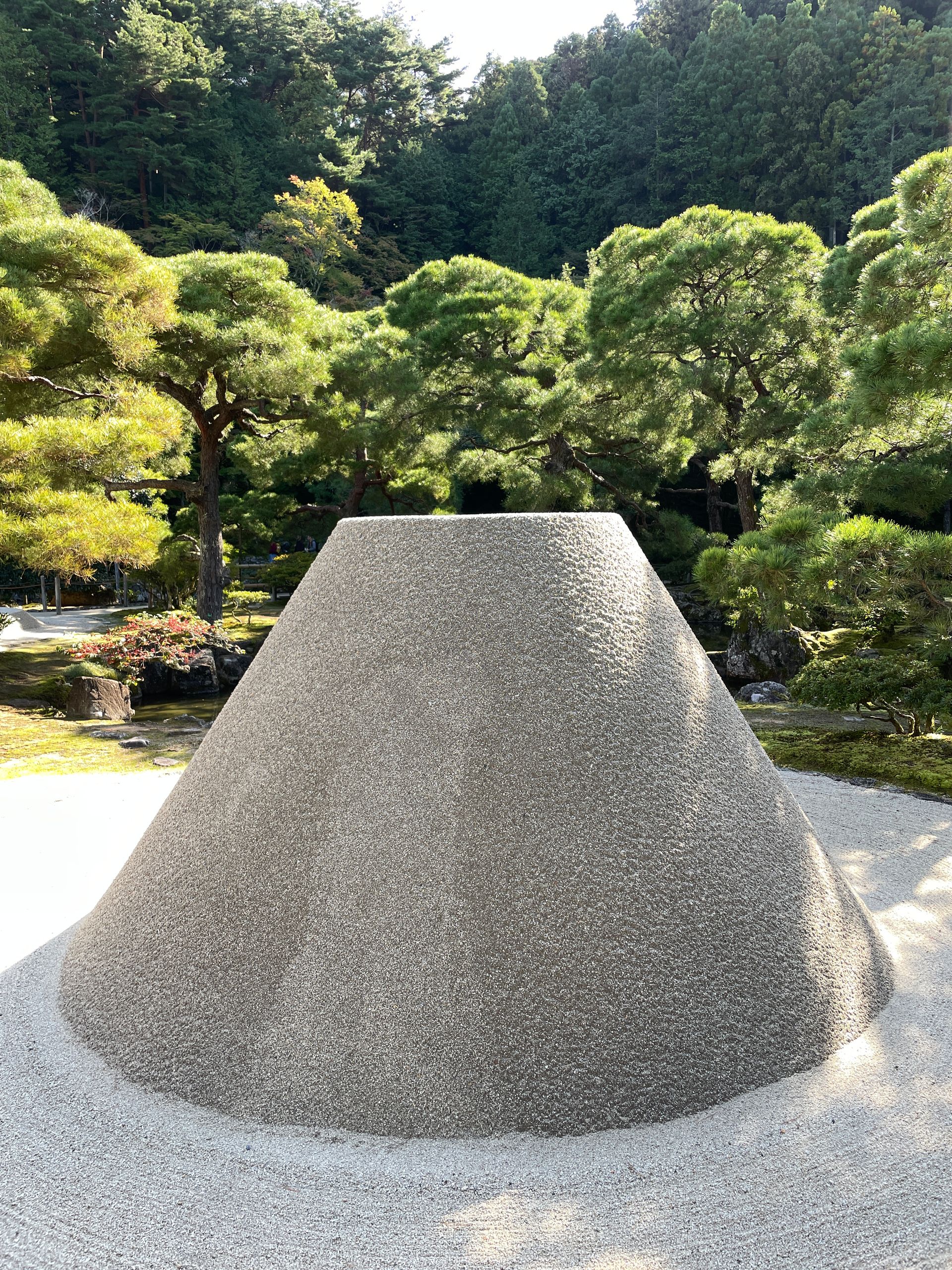
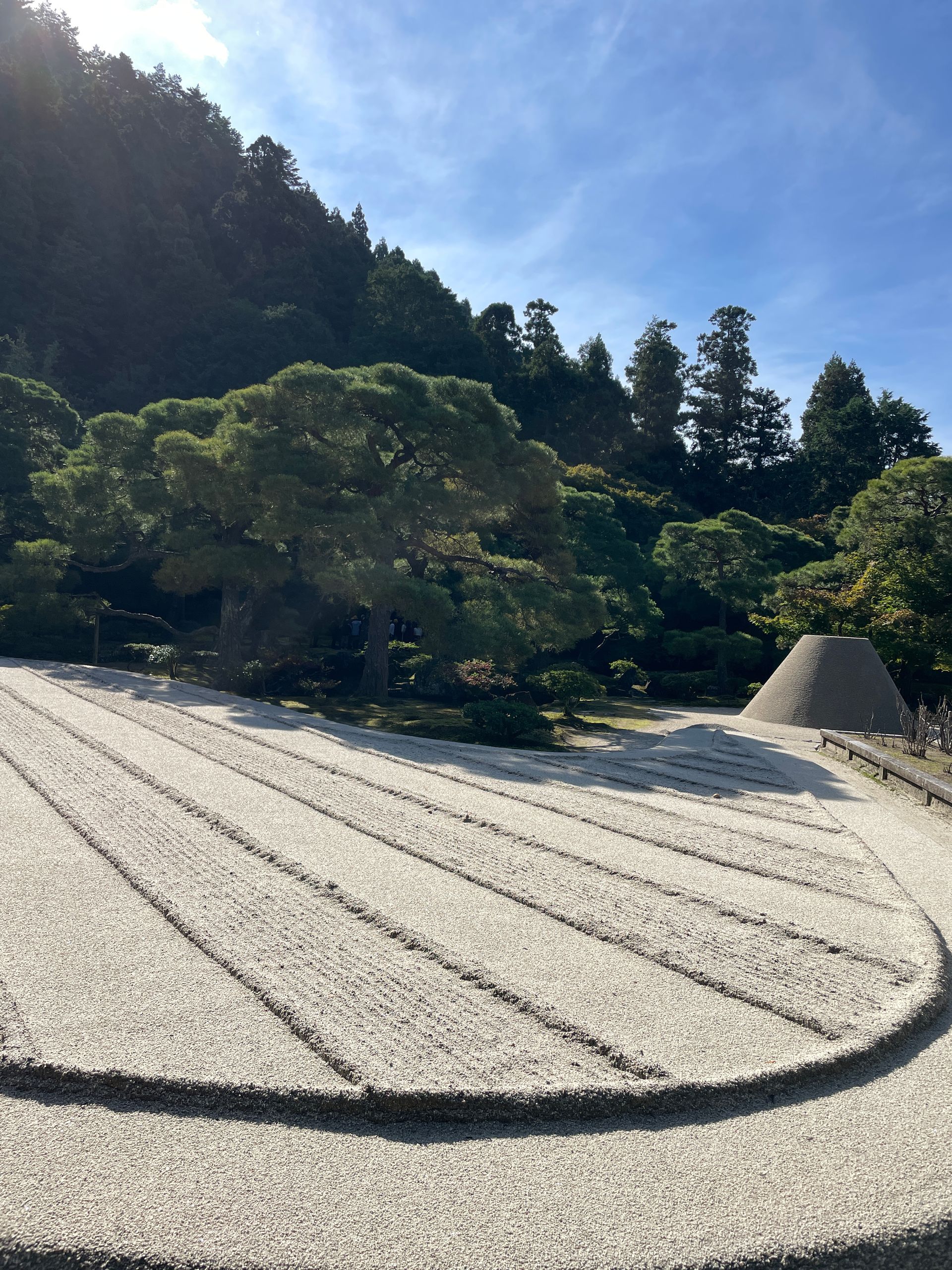
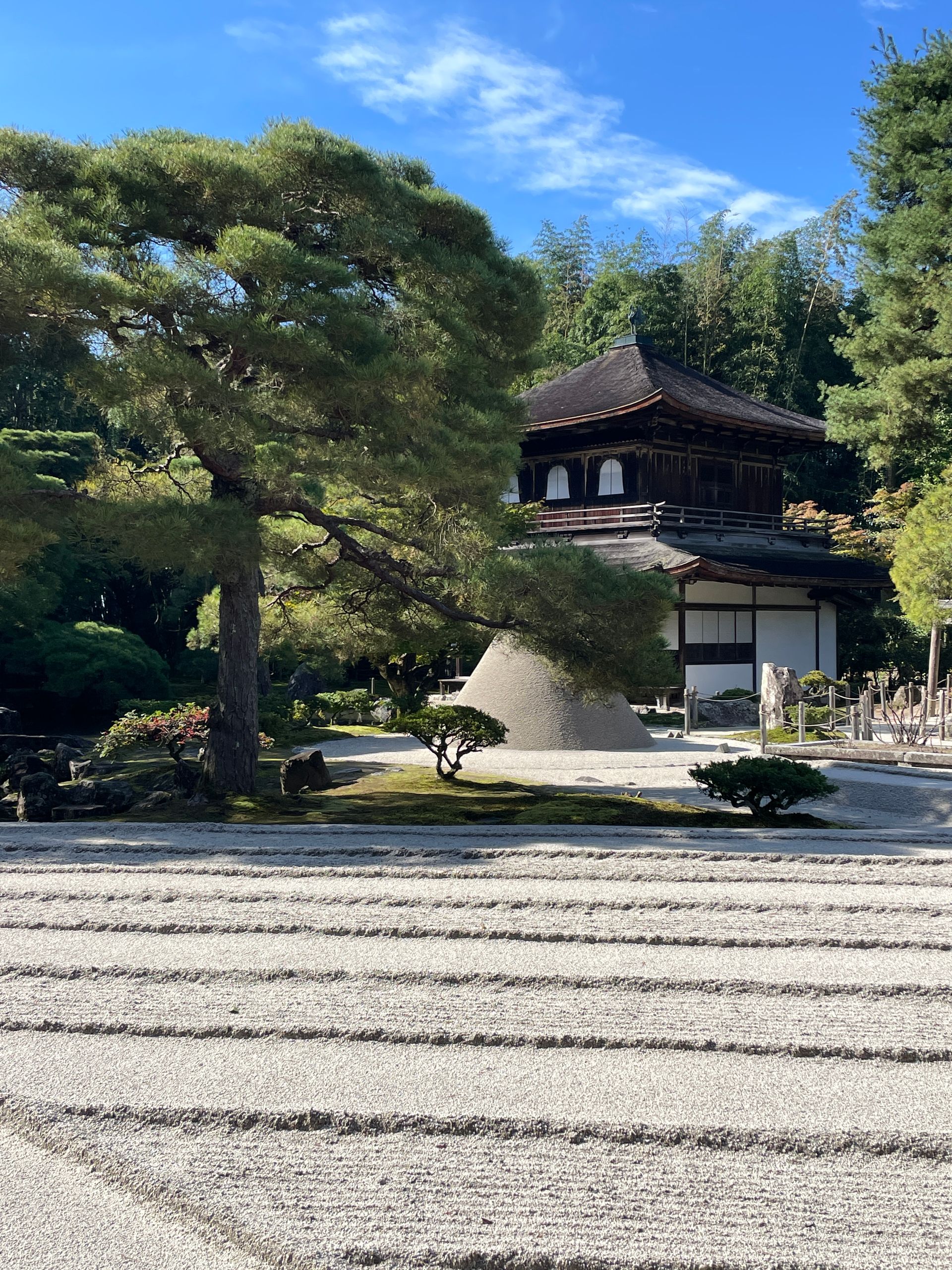
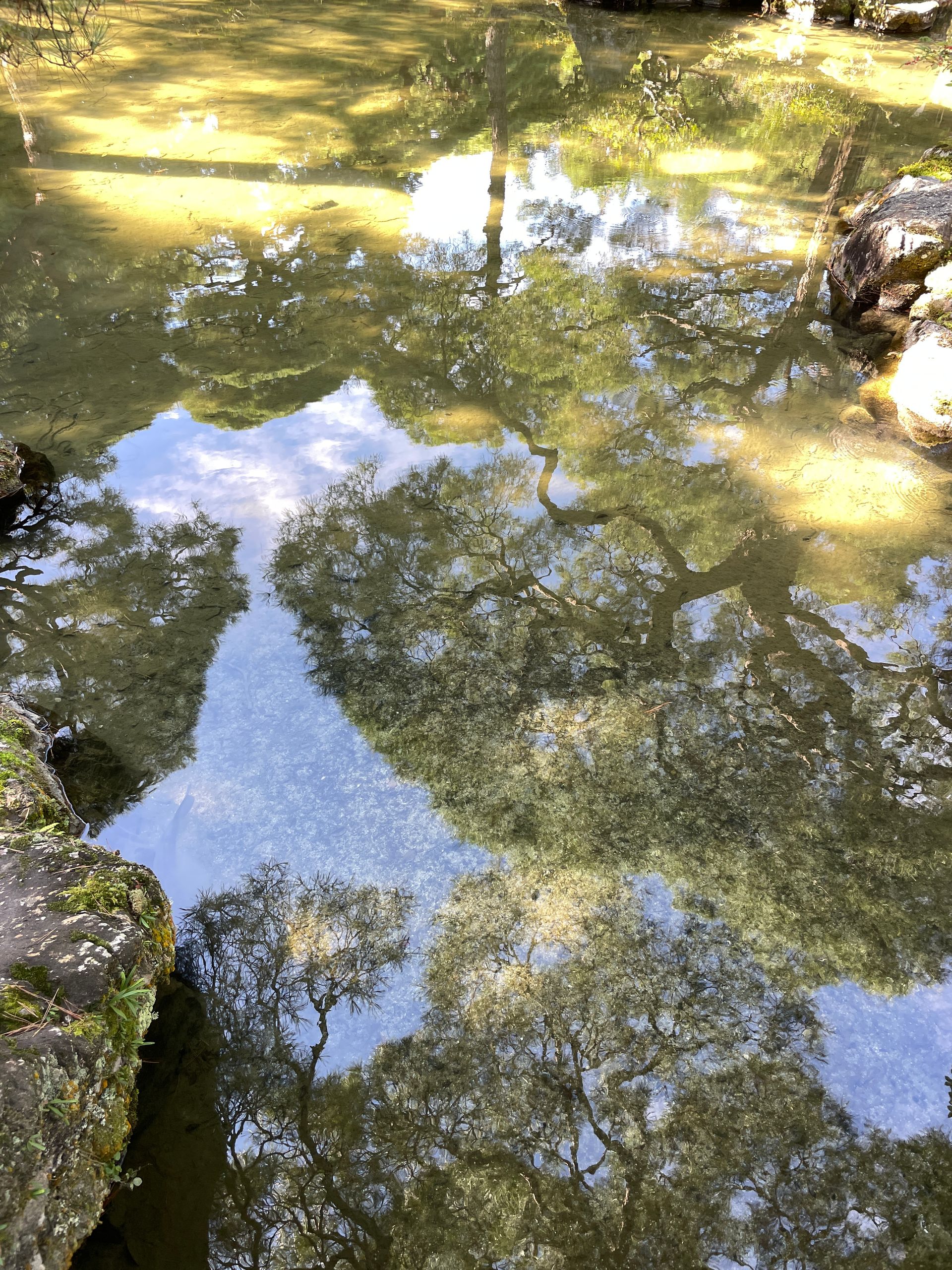
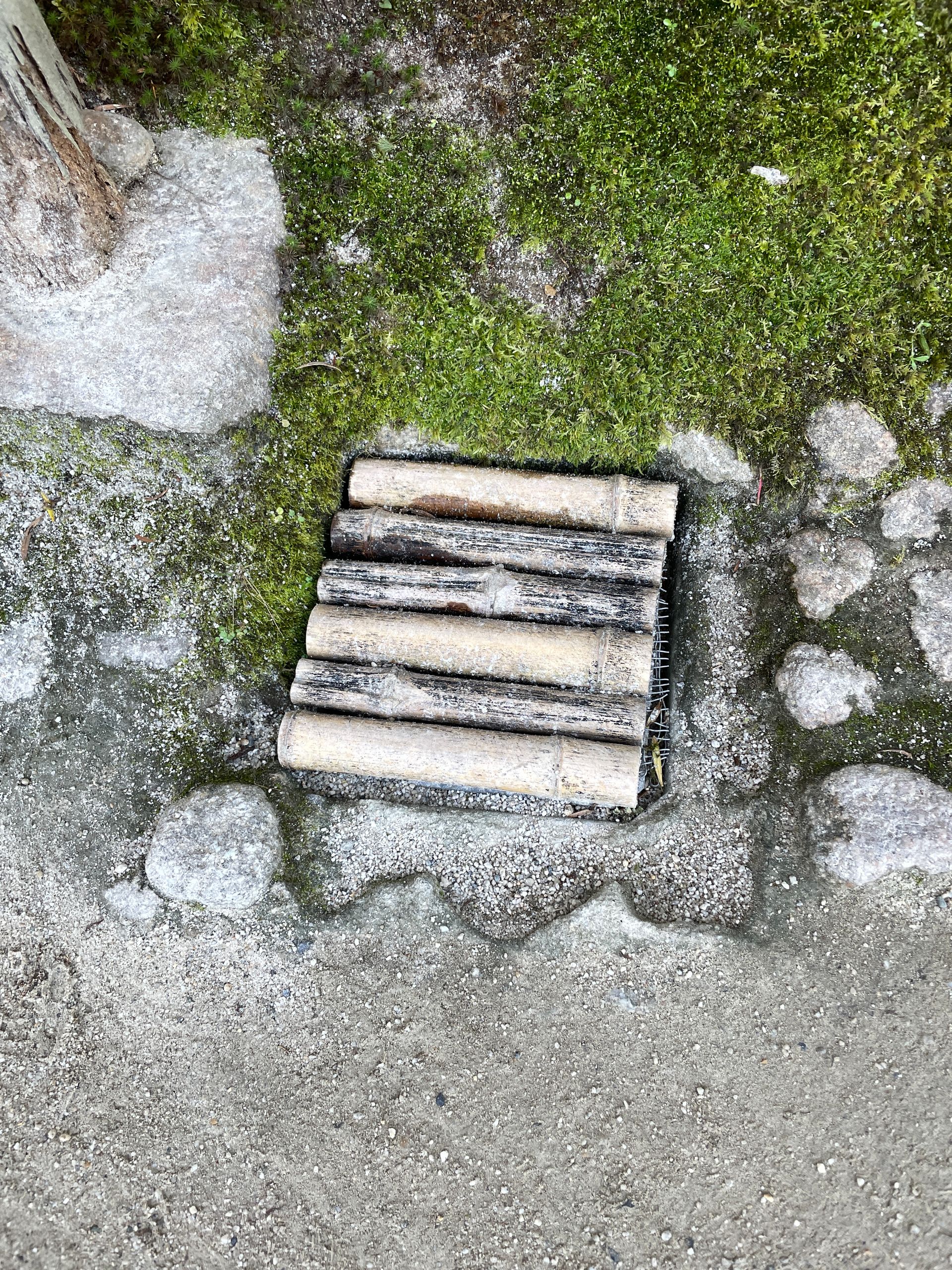
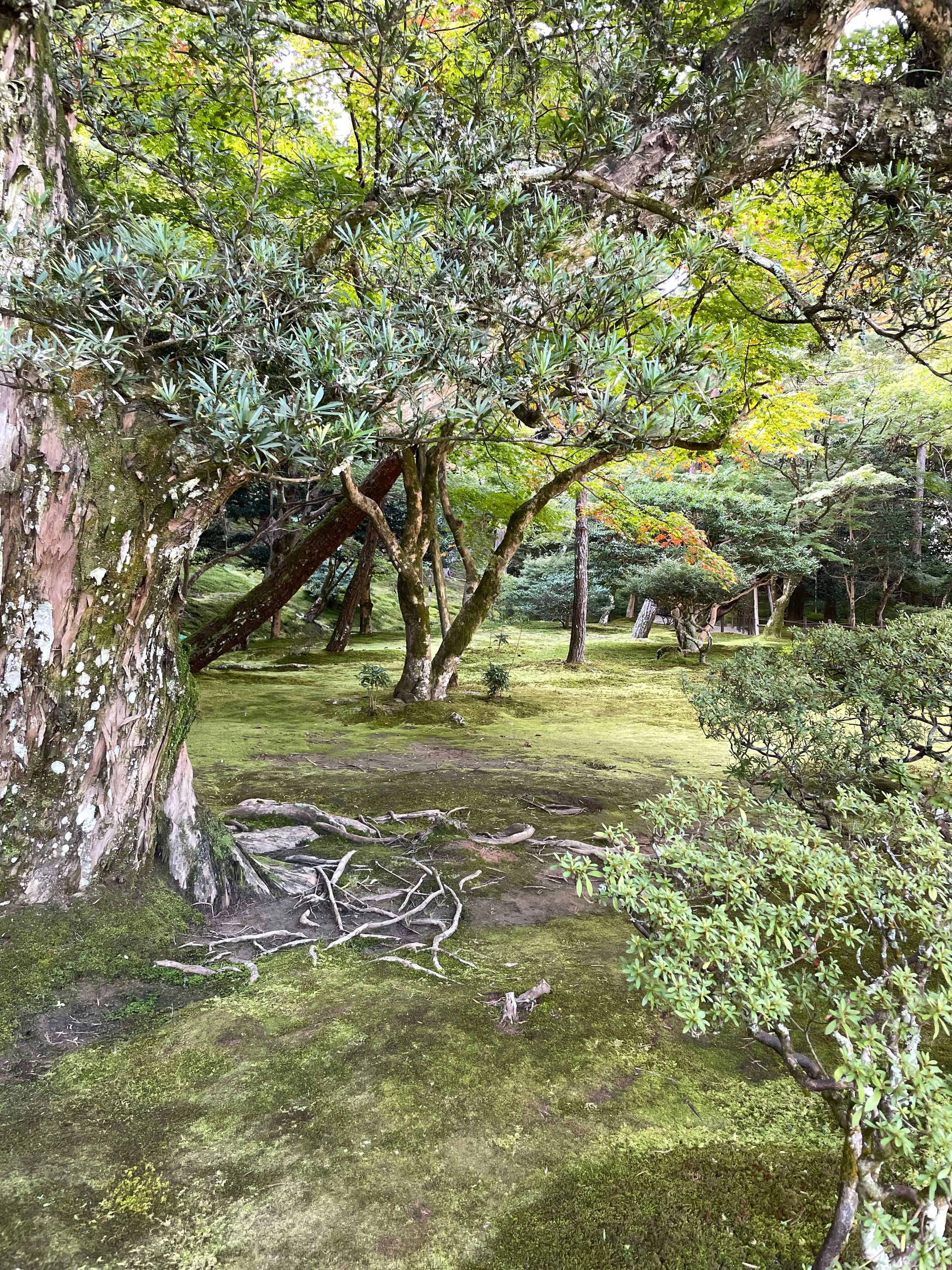
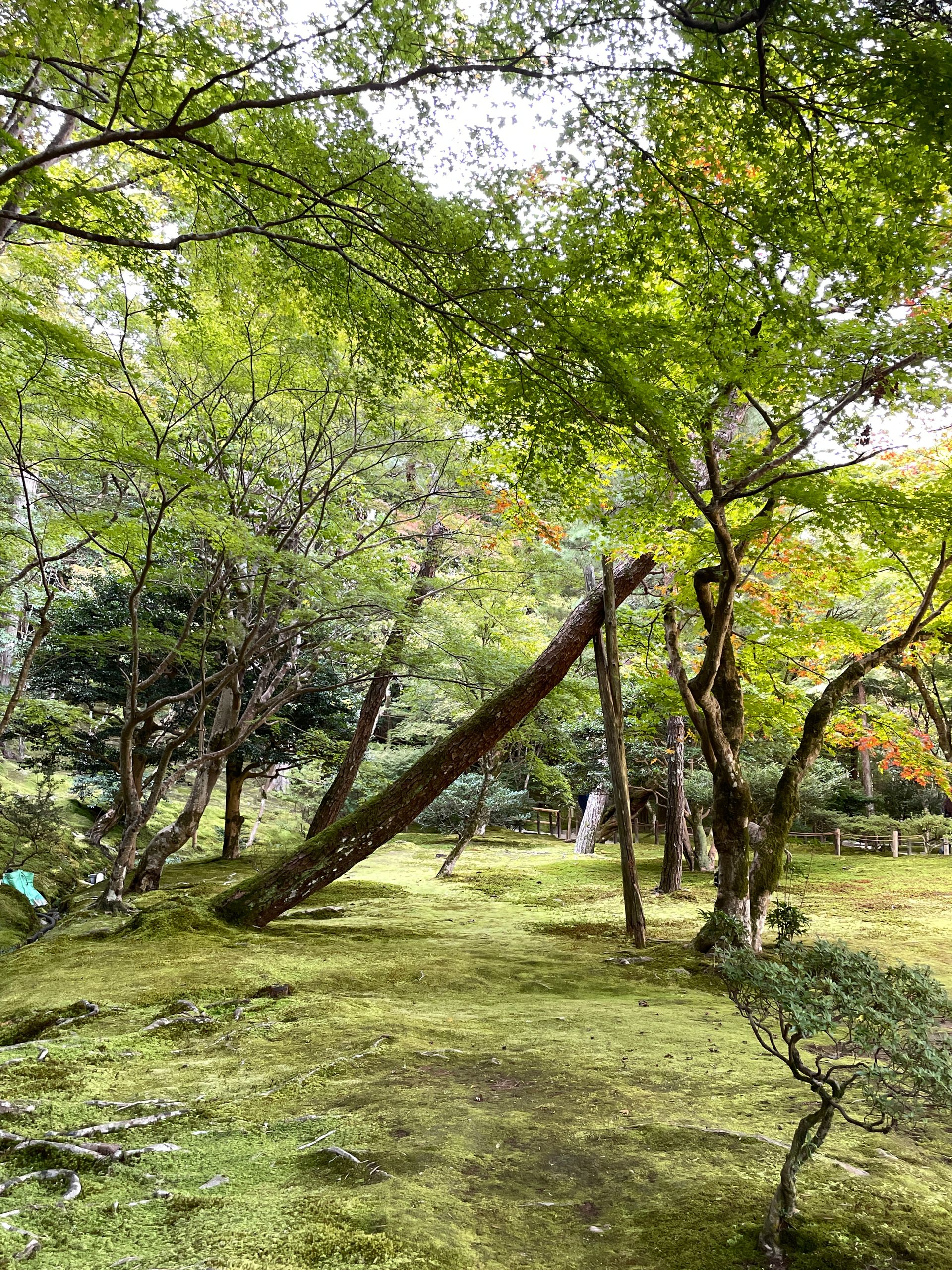
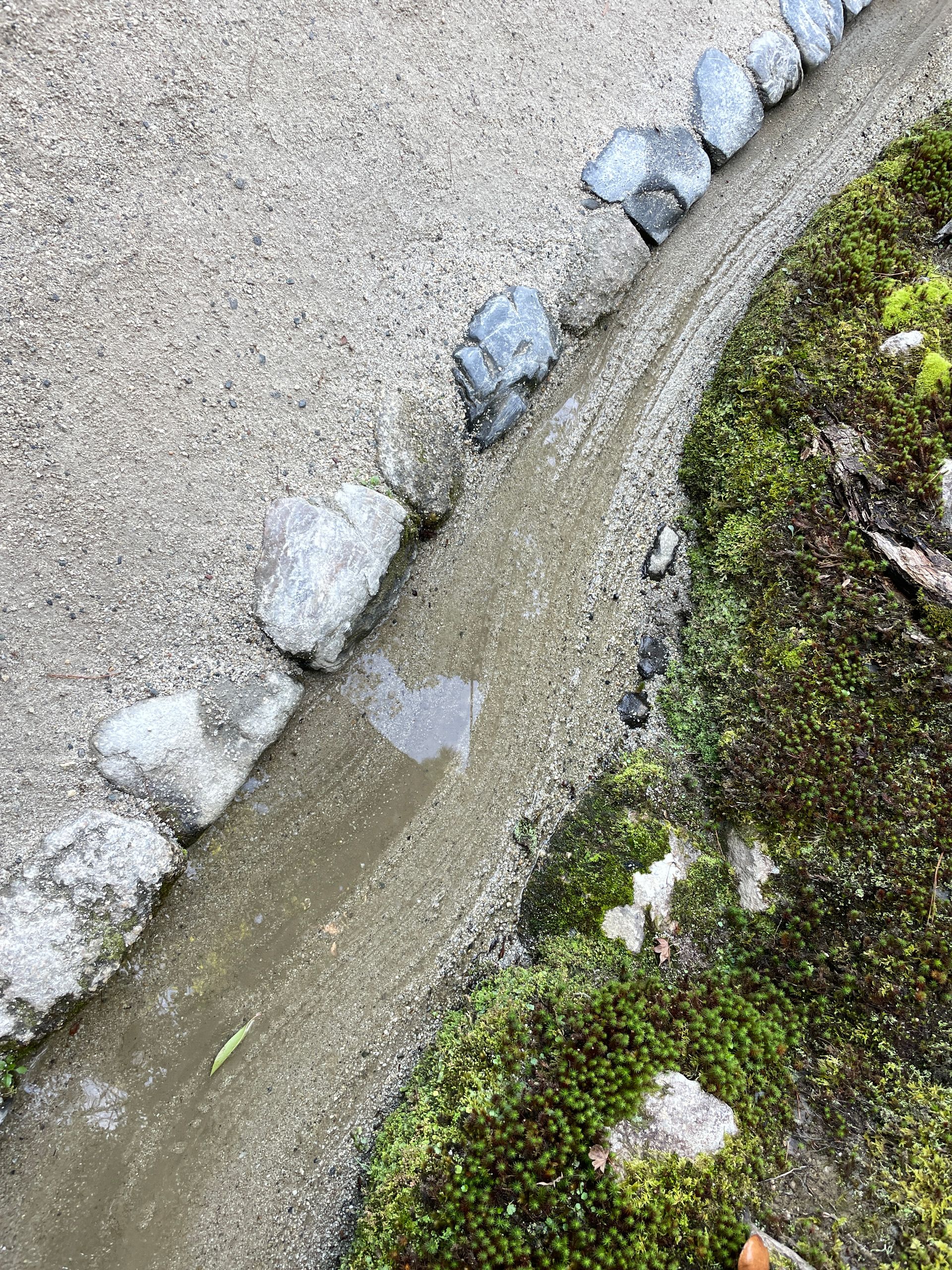
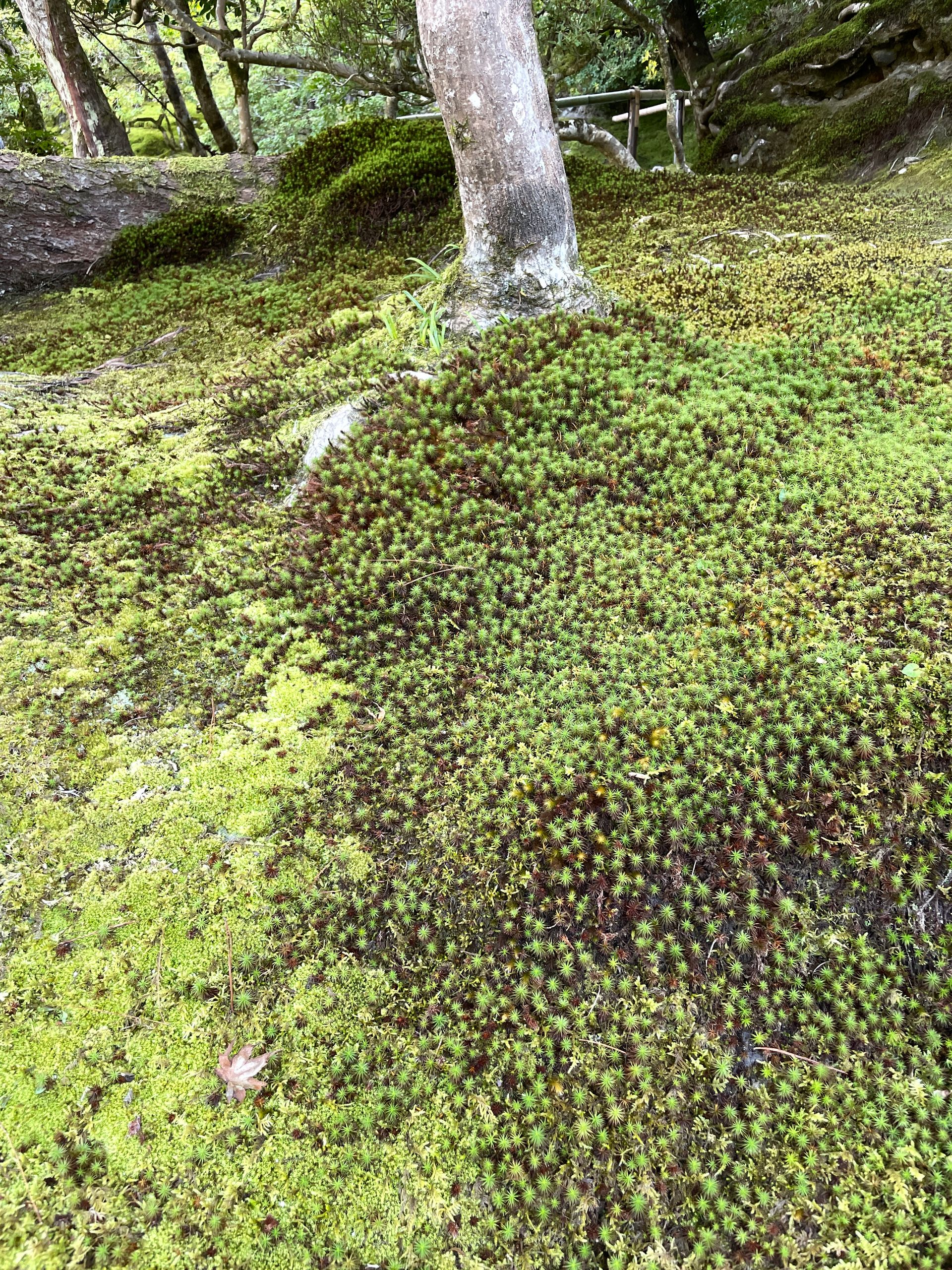
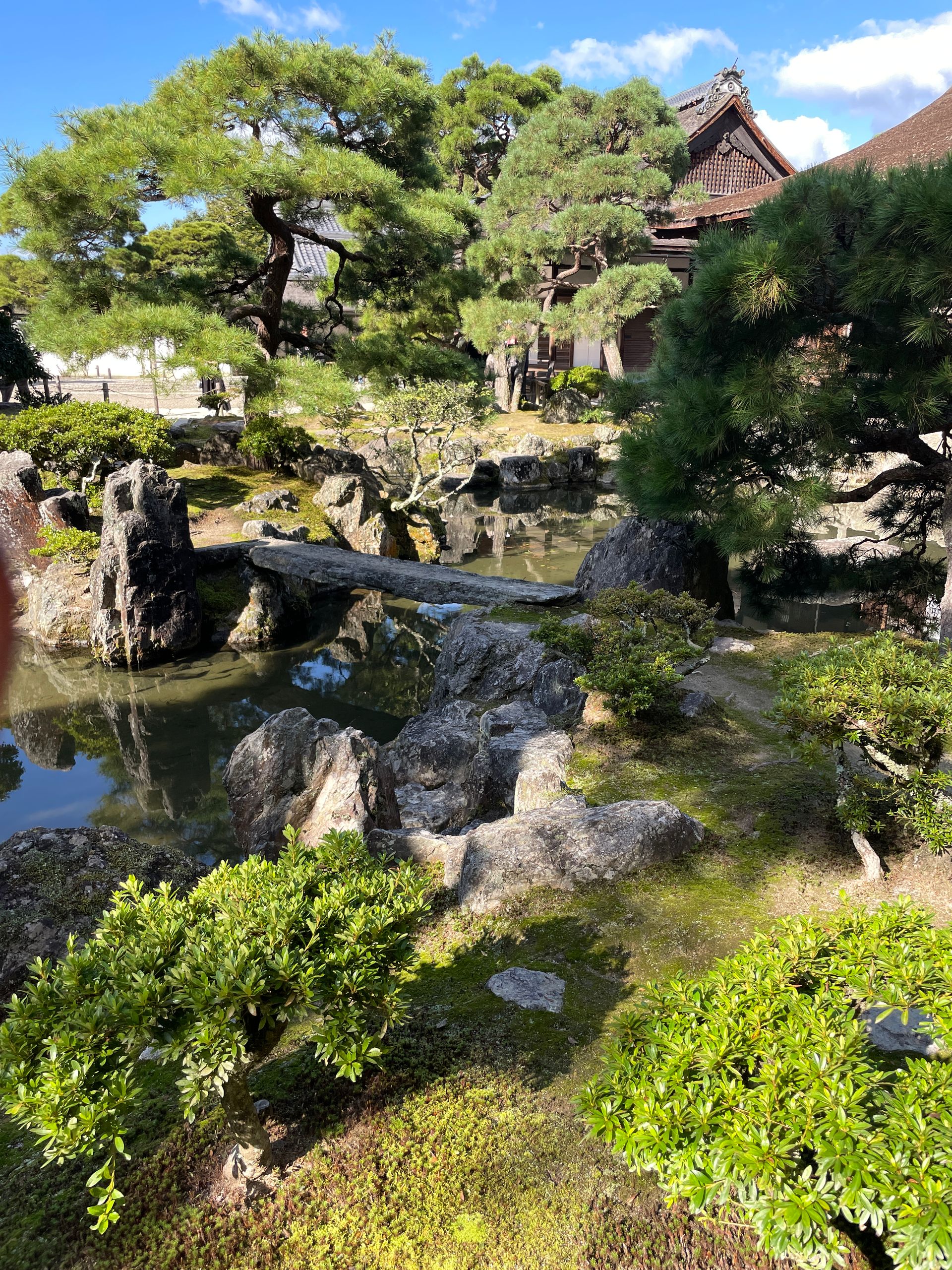
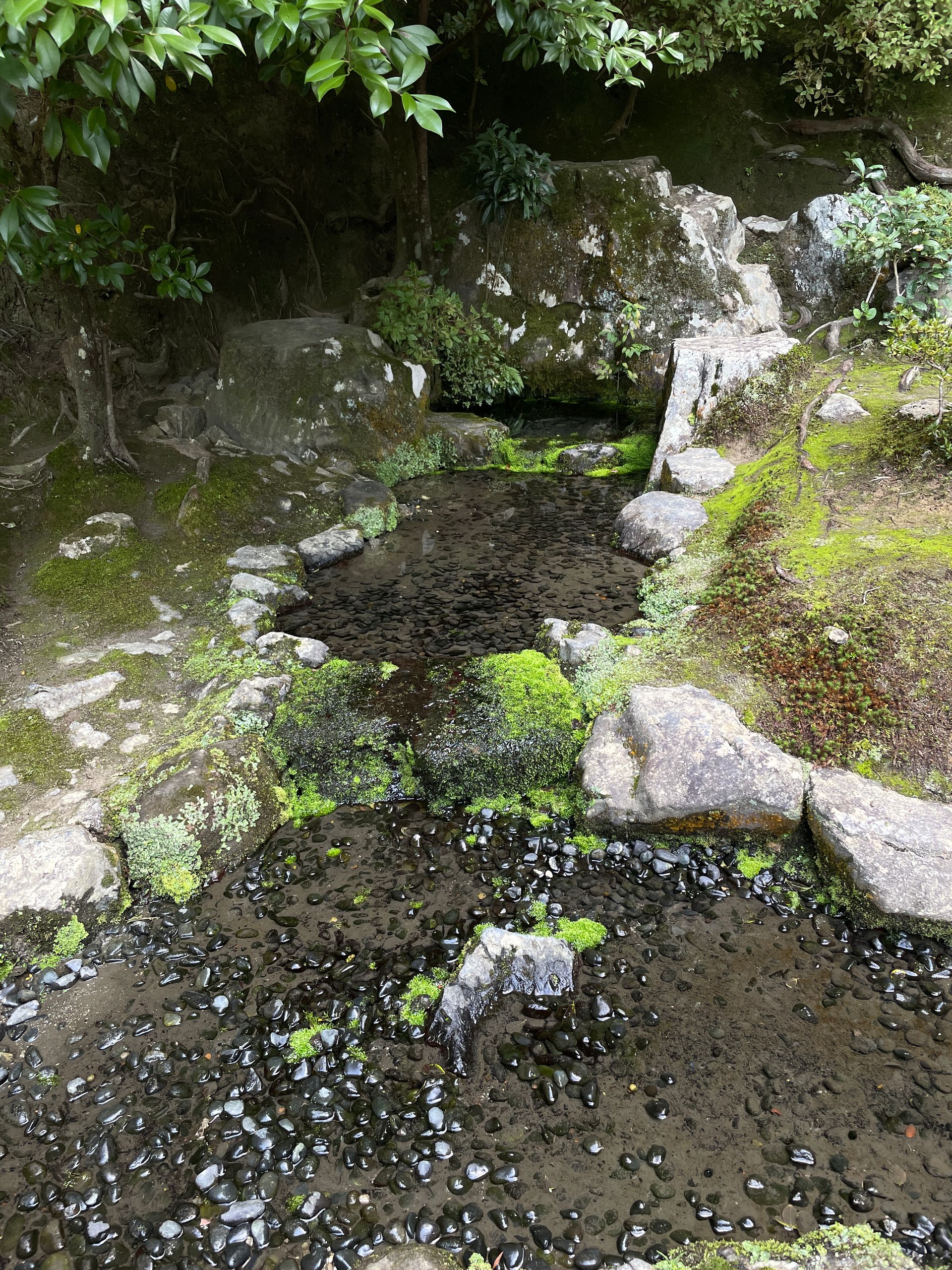
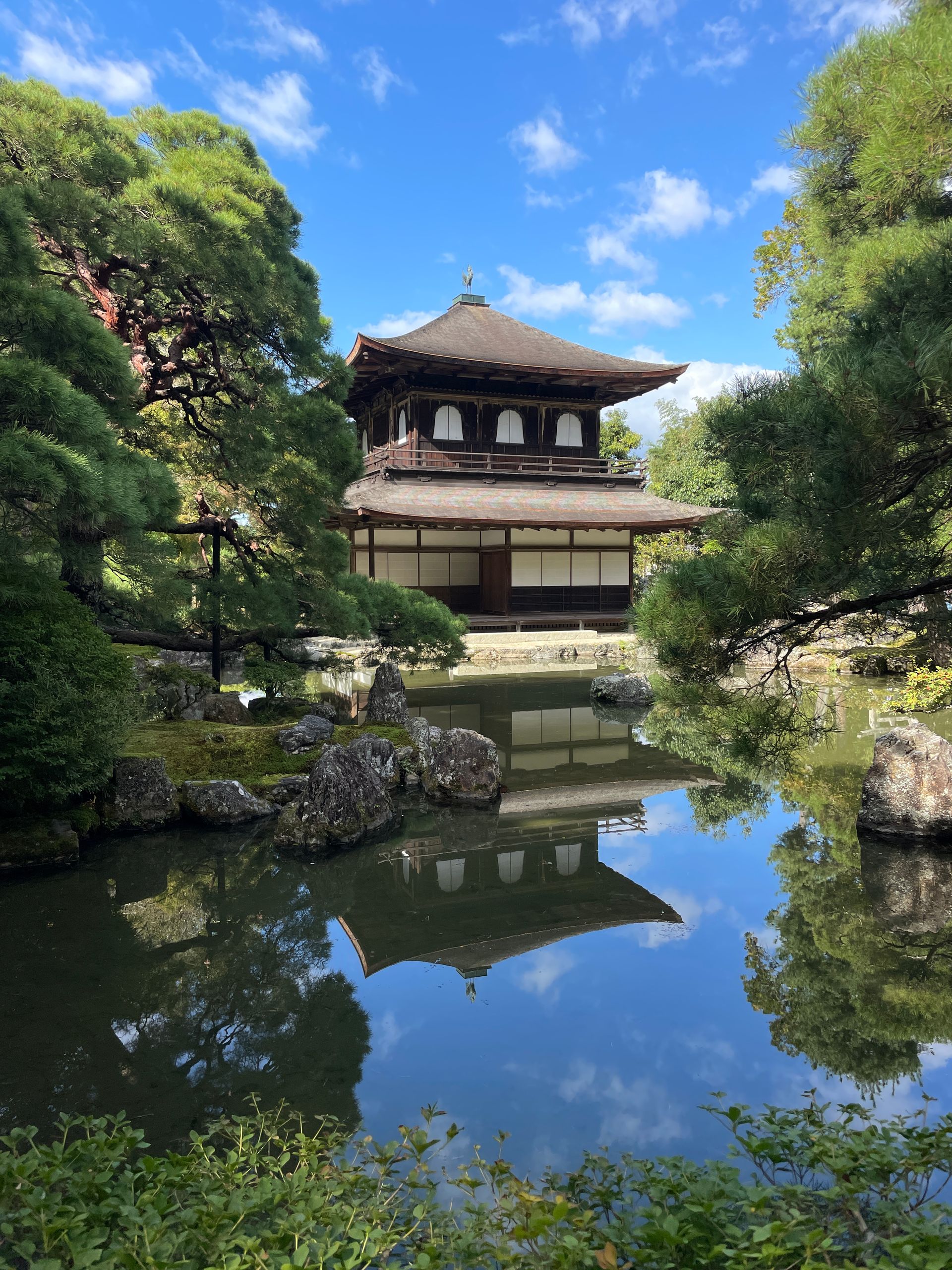
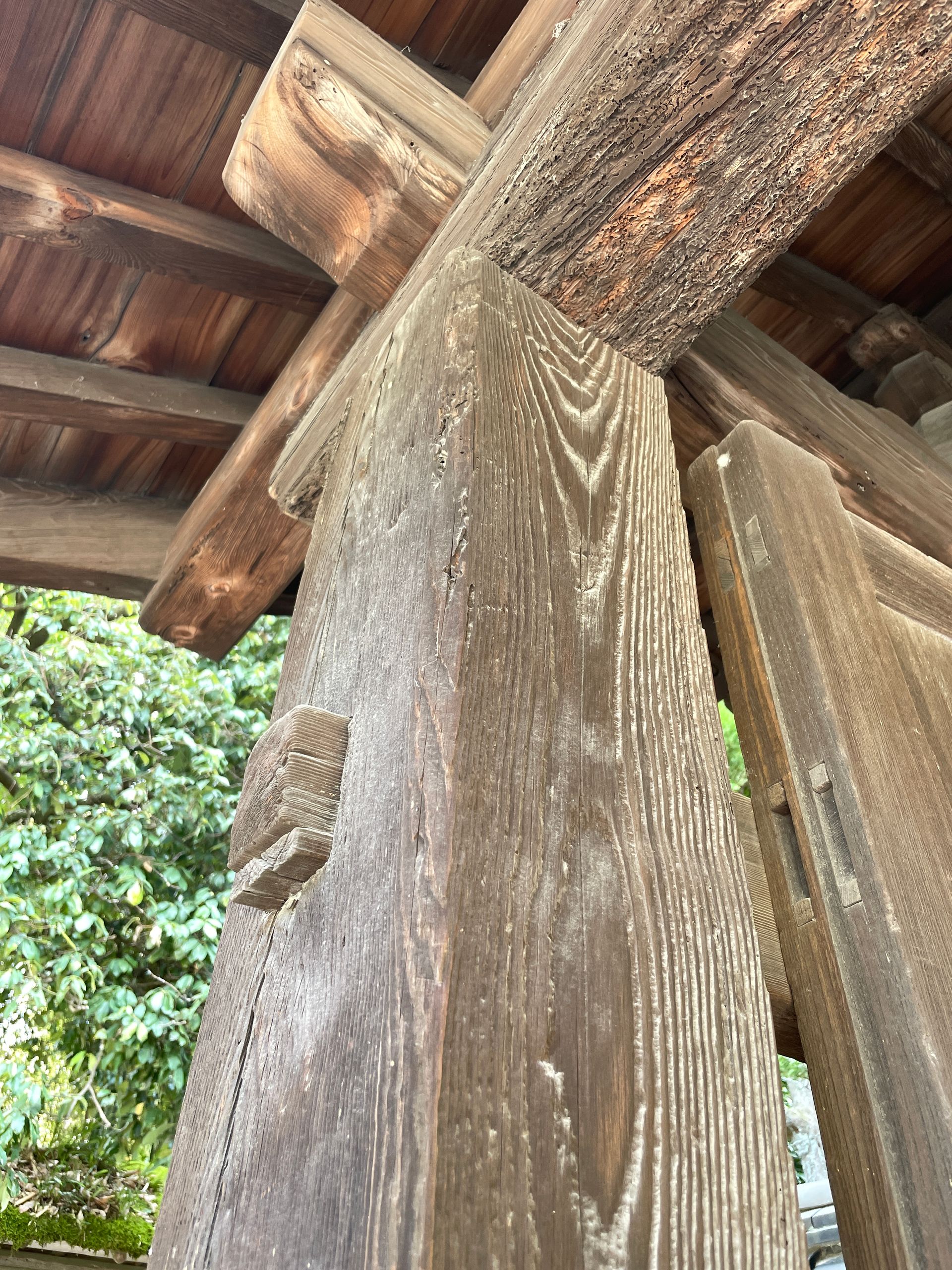
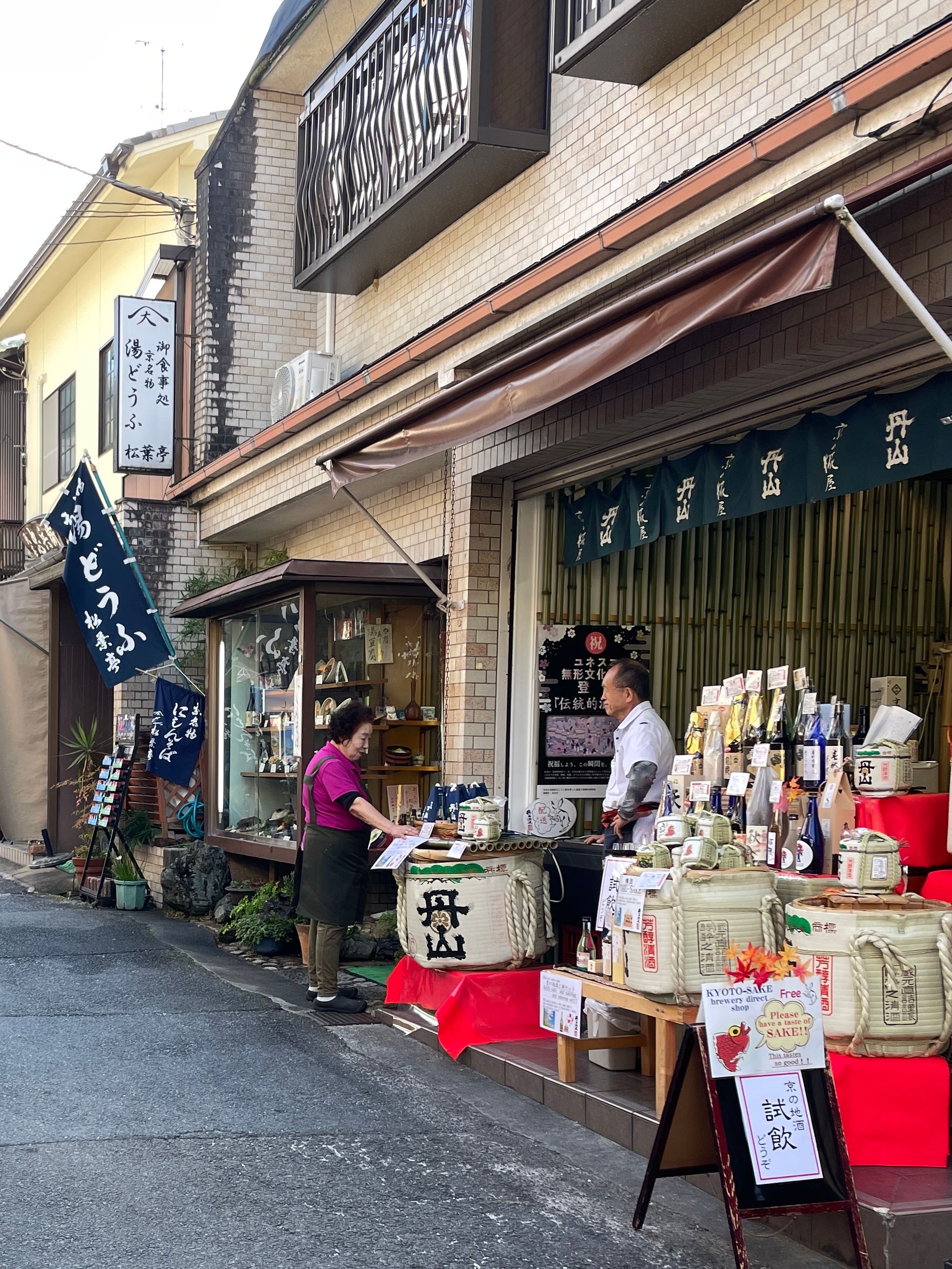
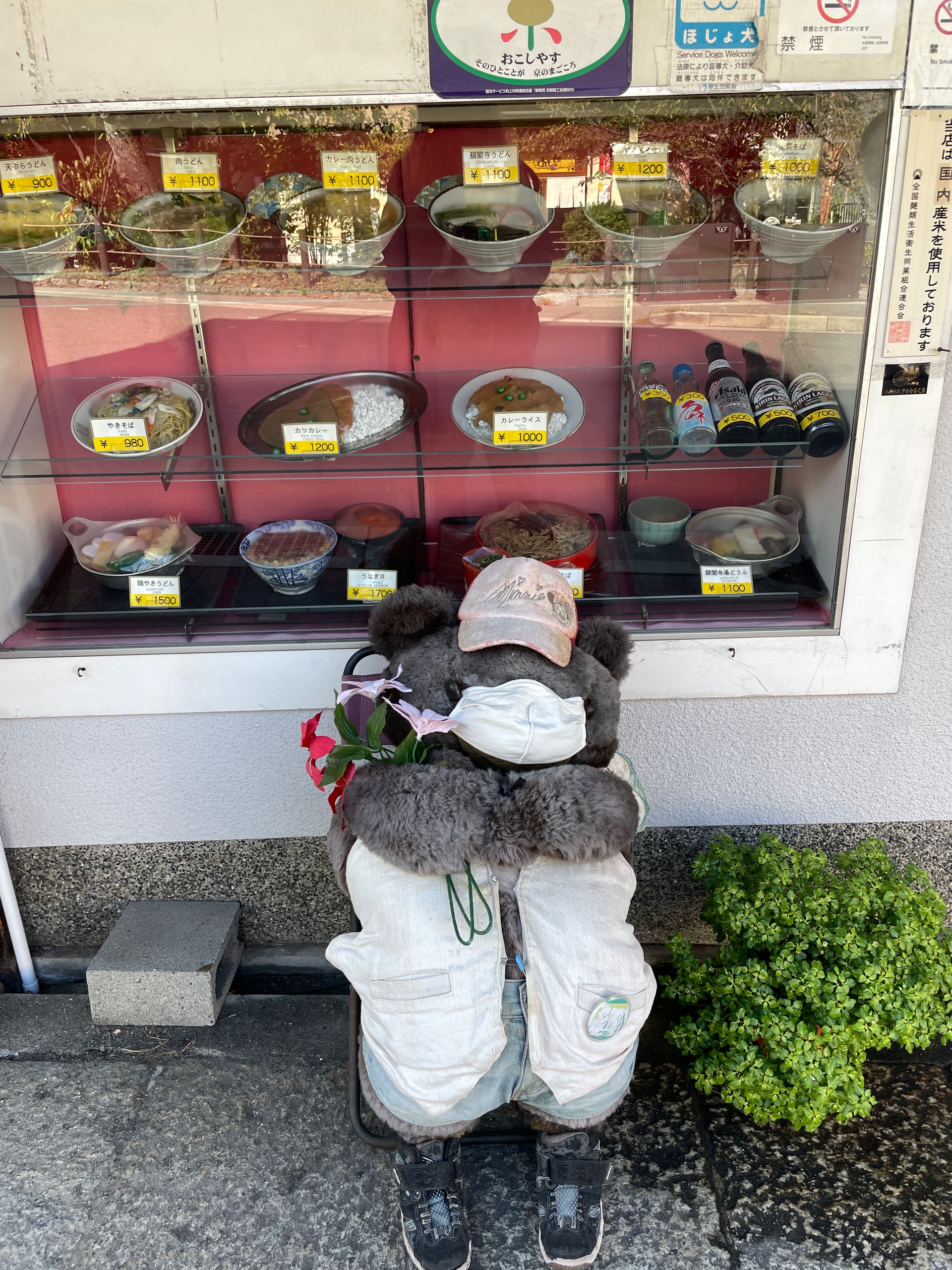
This morning I set my alarm for 7:30 so I could visit my favorite temple just around the corner, Ginkaku-ji with its Silver Pavilion, without the tourist crowds that descend on it from 10:00 onwards. Unlike the more famous Kinkaku or Golden Pavilion, which, while very beautiful, is also very vain and loudly boastful, standing and glittering in its completely overcrowded park, this temple is modest and rather understated. There's no silver to be seen, just old, dark brown wood with a wild rooster on the roof. The surrounding area is full of very impressive sand gardens that constantly need to be maintained and raked, yet always look exactly the same—incredibly vulnerable and fragile, yet also timeless. How these sculptures and patterned fields of white sand survive rain showers, wind, and snow, and yet always return intact, is a mystery to me. In any case, they are enormous, incredibly beautiful, and very impressive. Beyond it, stretching all the way up into the mountains, lies a dreamlike garden with a multitude of mosses, trees, and stones, lanterns, bridges, and sculptures. The only thing that bothered me yesterday on the Philosopher's Path was that everything was still green! Not a trace of autumn colors. I certainly hope that changes during my stay; then I'll probably torture you with the same pictures again in color. I want to go back a few more times anyway. The temples, roofs, and gates are all custom-made, so they hold together without nails or bolts, allowing them to sway and making them earthquake-proof. Old buildings here are renovated from time to time to preserve traditional craftsmanship.
Several school classes crowded the streets after 10 a.m., all in school uniforms and wearing yellow or orange caps, different ones for girls and boys. Not a cell phone in sight! The teachers seemed very stiff and strict; it certainly can't be fun to go to school here. Incidentally, there's no foreign language instruction at all in primary school; English only becomes compulsory in middle and high school, and then it focuses exclusively on grammar and memorization. Spoken language or conversation isn't valued. No wonder that almost no one in Kyoto can or wants to speak English; even the young people and students can't communicate in English, according to Johnny's experience here at the university. I wonder if the computers, games, and movies are also only in Japanese?
That's a real shame, because if you haven't learned Japanese (which is harder than Finnish!), you can't really interact with Japanese people. Communication is limited to friendly nods, polite bows, smiles, or maybe a shared chuckle if a funny situation strikes both of you as amusing. I can say "Good day," "Thank you," and "kawaii" (cute), but my poor brain is unfortunately too limited for anything else. Nevertheless, I'm once again completely captivated and impressed by this country, but that's all through seeing, hearing, swimming, smelling, and tasting.
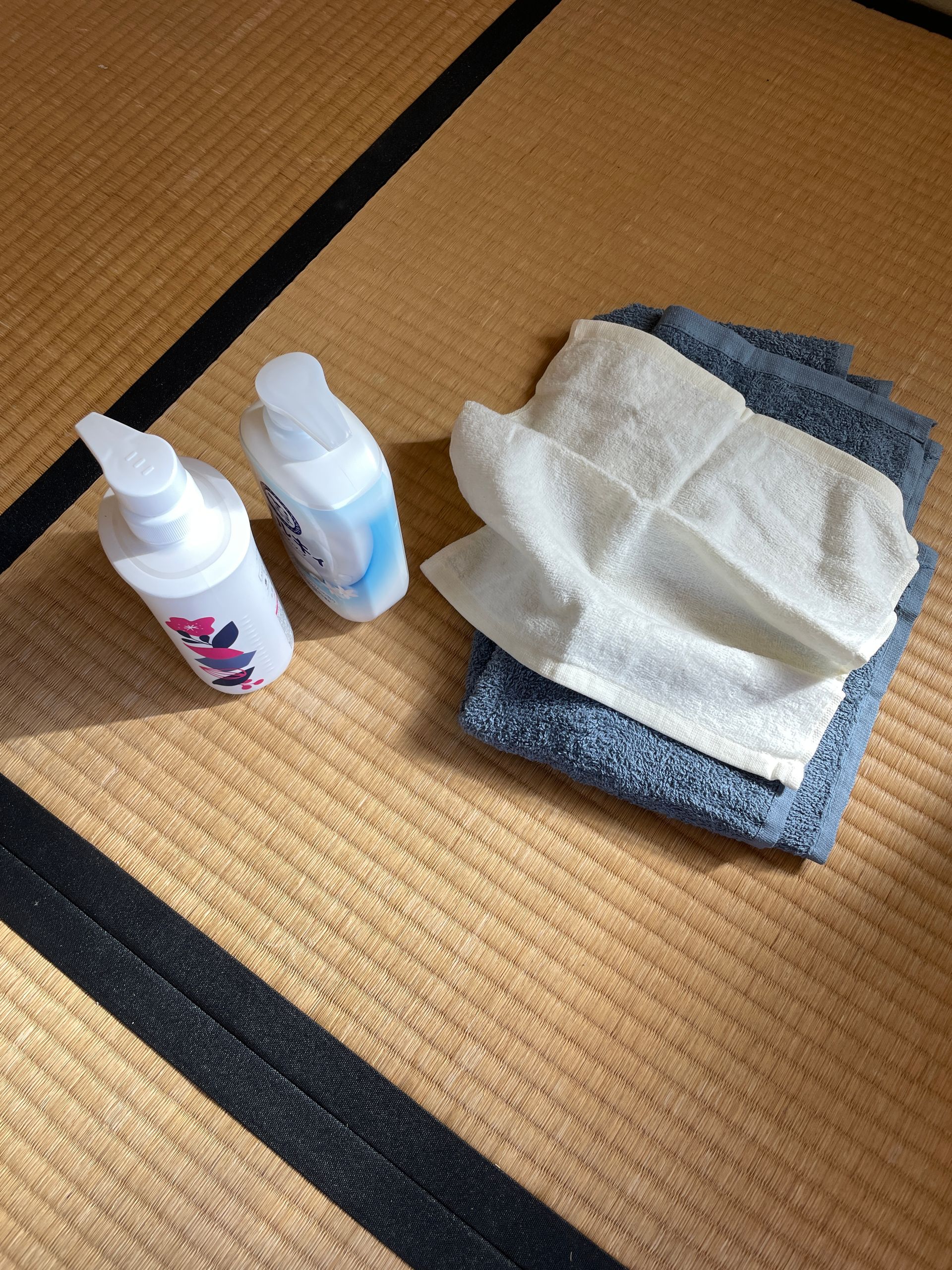
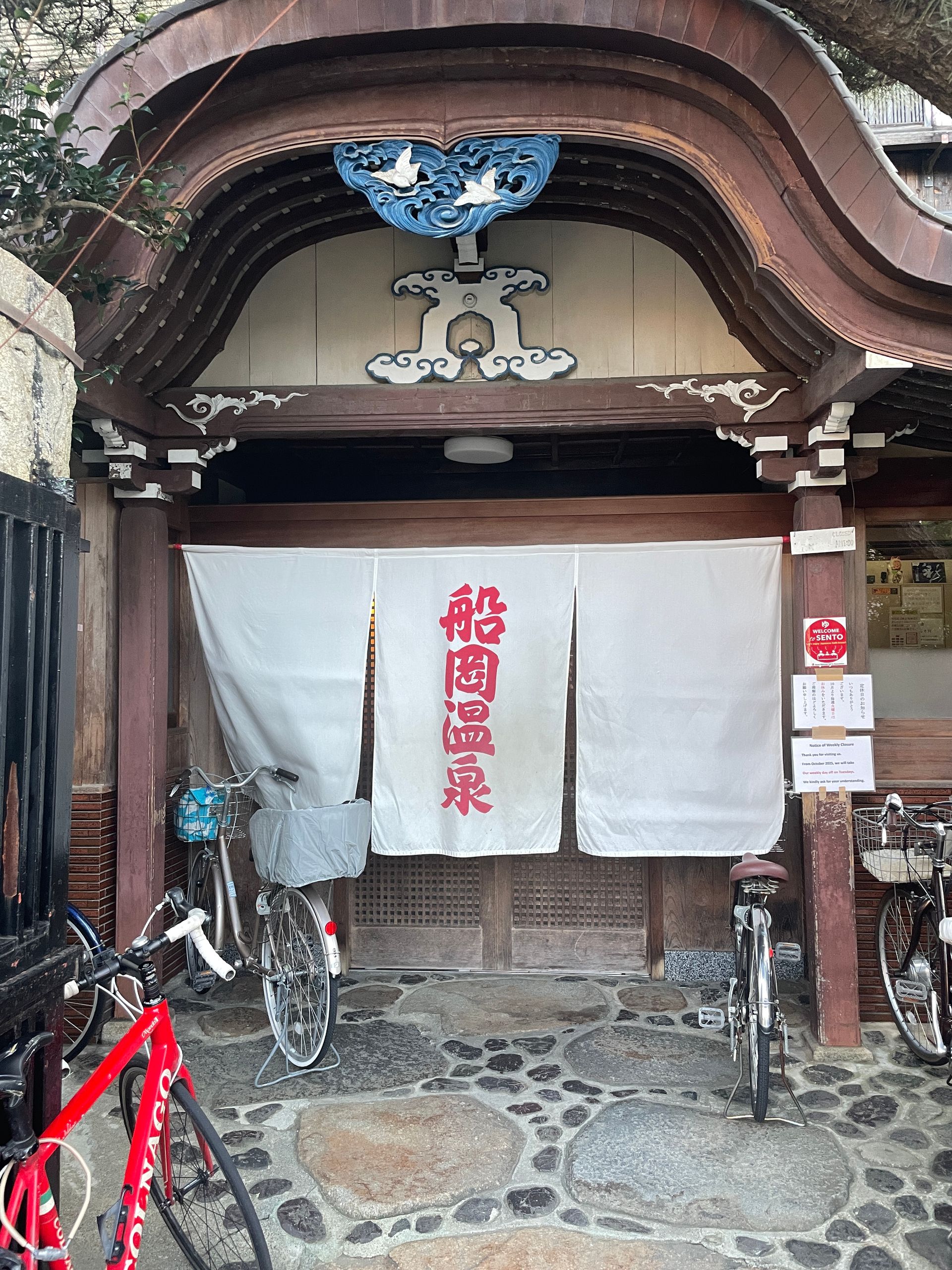
After visiting the temple today, I went in search of a shop that sold shampoo and soap, and I found one. The shampoo was easy to find, but I spent half an hour wandering the shelves with my phone and Google Translate set to camera, discovering everything imaginable for washing, except for regular body soap… Finally, I grabbed a large and a small towel and triumphantly set off for an old onsen on the other side of town. There are ancient wooden reliefs on the walls and ceiling paintings, two outdoor pools carved into a rock face, one where a dragon spits cold water at you and the other where a spring feeds the basin with pleasantly hot water. Inside, there are various whirlpools and a large wooden pool where you can bask in the warmth of about 40°C. And this time, I think I did everything right and lathered myself up so much that the foam was spraying everywhere. But you have to sit on a very small plastic stool while soaping yourself so you don't splash anyone else; you're not allowed to stand. The stool usually sticks to your bottom when you try to stand up again… And you put the small towel on your head so it doesn't touch the bathwater. When you get out, you cover yourself as best you can with it (they're about the size of a washcloth!).
As is usually the case in these bathhouses, there was also a sauna, without any steam infusions and with a small television playing Japanese Netflix without sound, so you wouldn't get bored. An elderly Japanese woman was also in the room, constantly clicking and crackling her dentures, and when she finally took them completely out of her mouth and placed them next to her, I unfortunately had to escape!
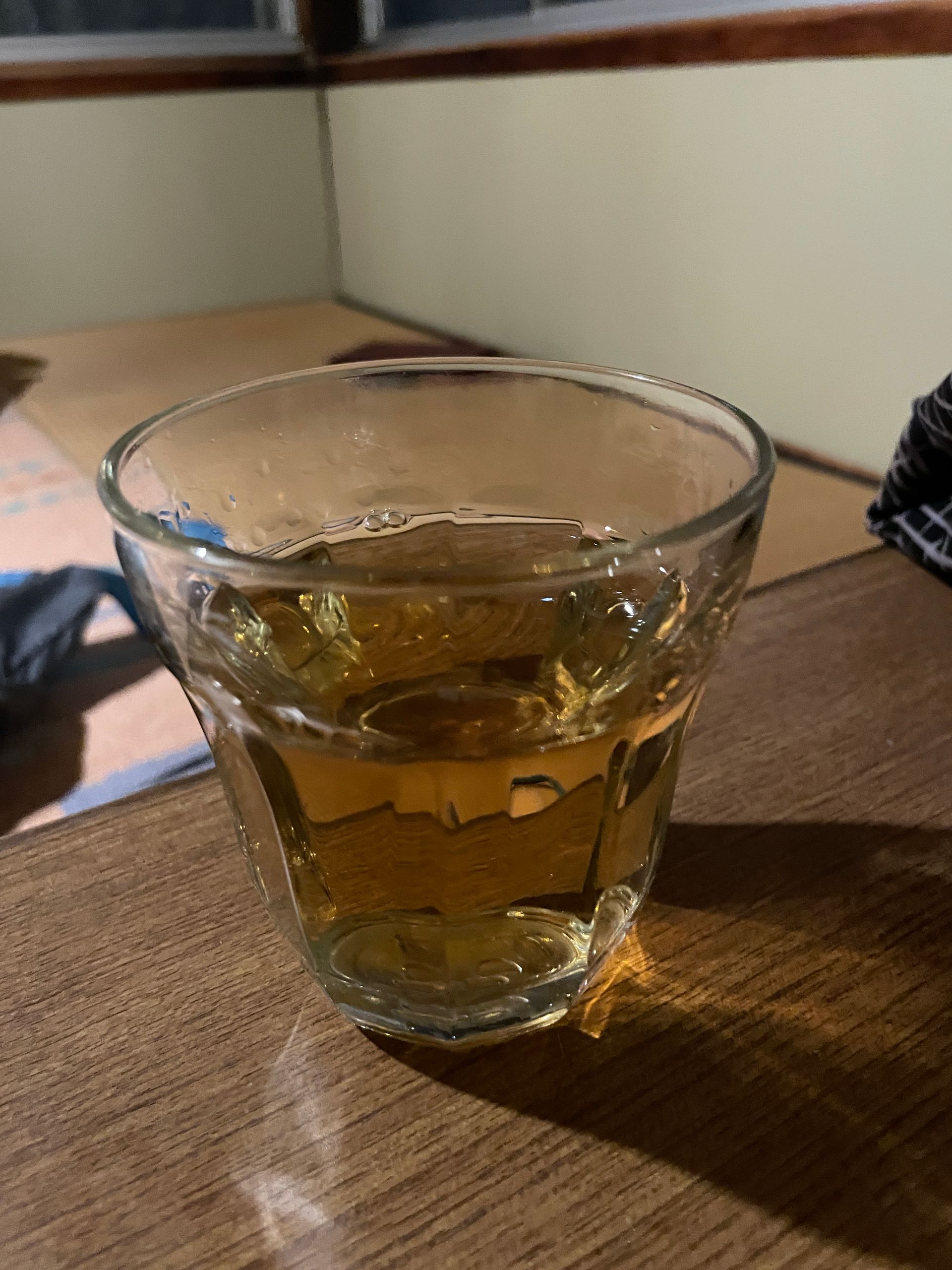
On the way back, I found a very small curry restaurant, more like a counter with five chairs and two young women behind it, offering a selection of five curry dishes (a kind of Japanese national dish eaten with spoons). My seafood curry, medium-spicy, was exceptionally tasty, even though there wasn't actually any seafood in it, and it came with plenty of kimchi. And for dessert, I had umeshu, a yellow Japanese plum wine.
Unfortunately, there was a sign saying no photos were allowed. A shame, the atmosphere was charmingly shabby and very unique – just my kind of place.
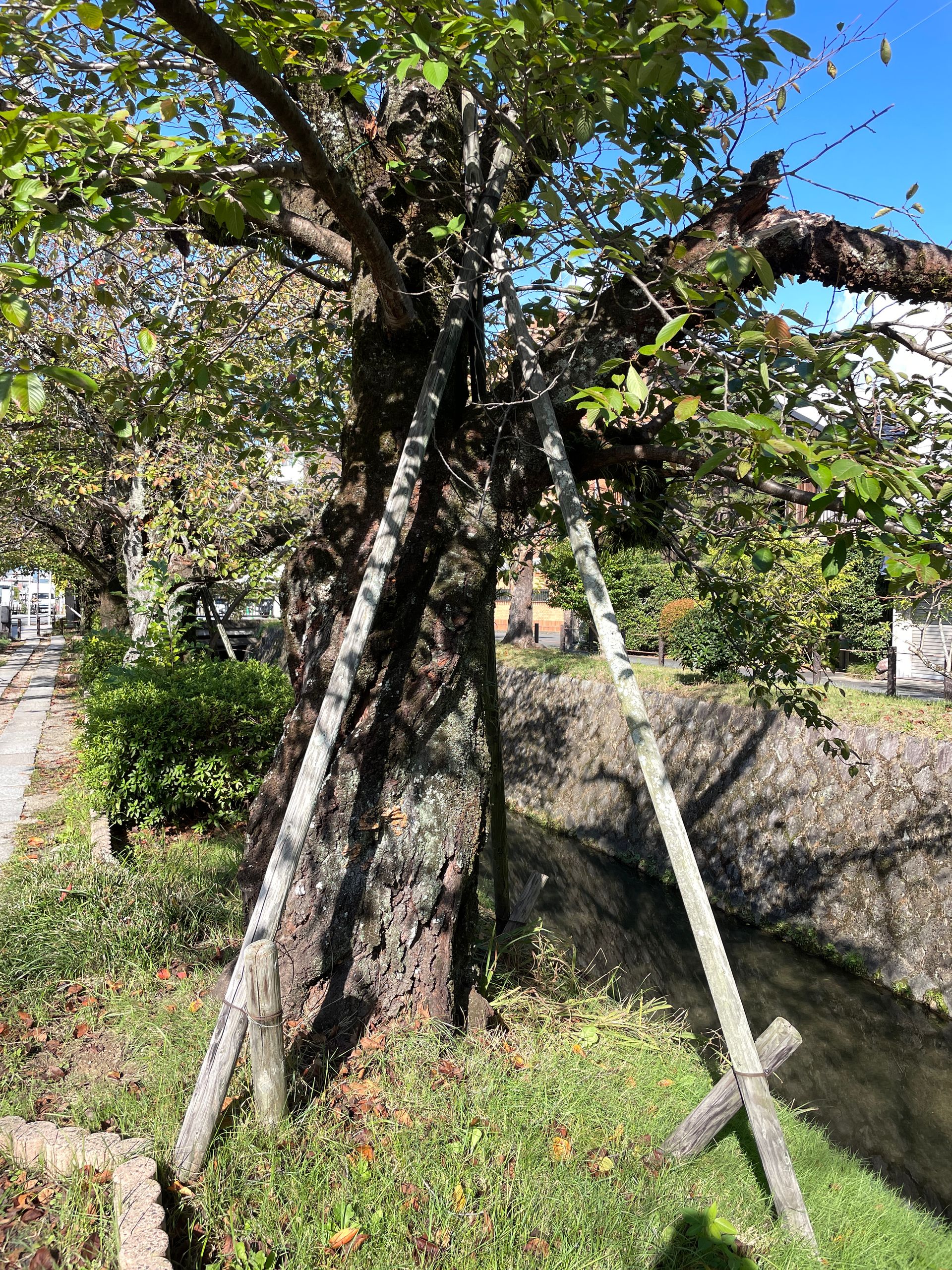
What also delighted me today: The traffic lights start chirping like birds when the pedestrian light is green! And the old trees, which are almost falling over, aren't being cut down, but lovingly supported with wooden poles. That's how it should be!