We hardly get our Bulli back – repaired, road-ready, and ready for new adventures – when the bad weather arrives in Klaipėda. Heavy rain showers follow one after another. We first fill up our fridge and wait for a weather window when Frank can get on his motorcycle without getting soaked.
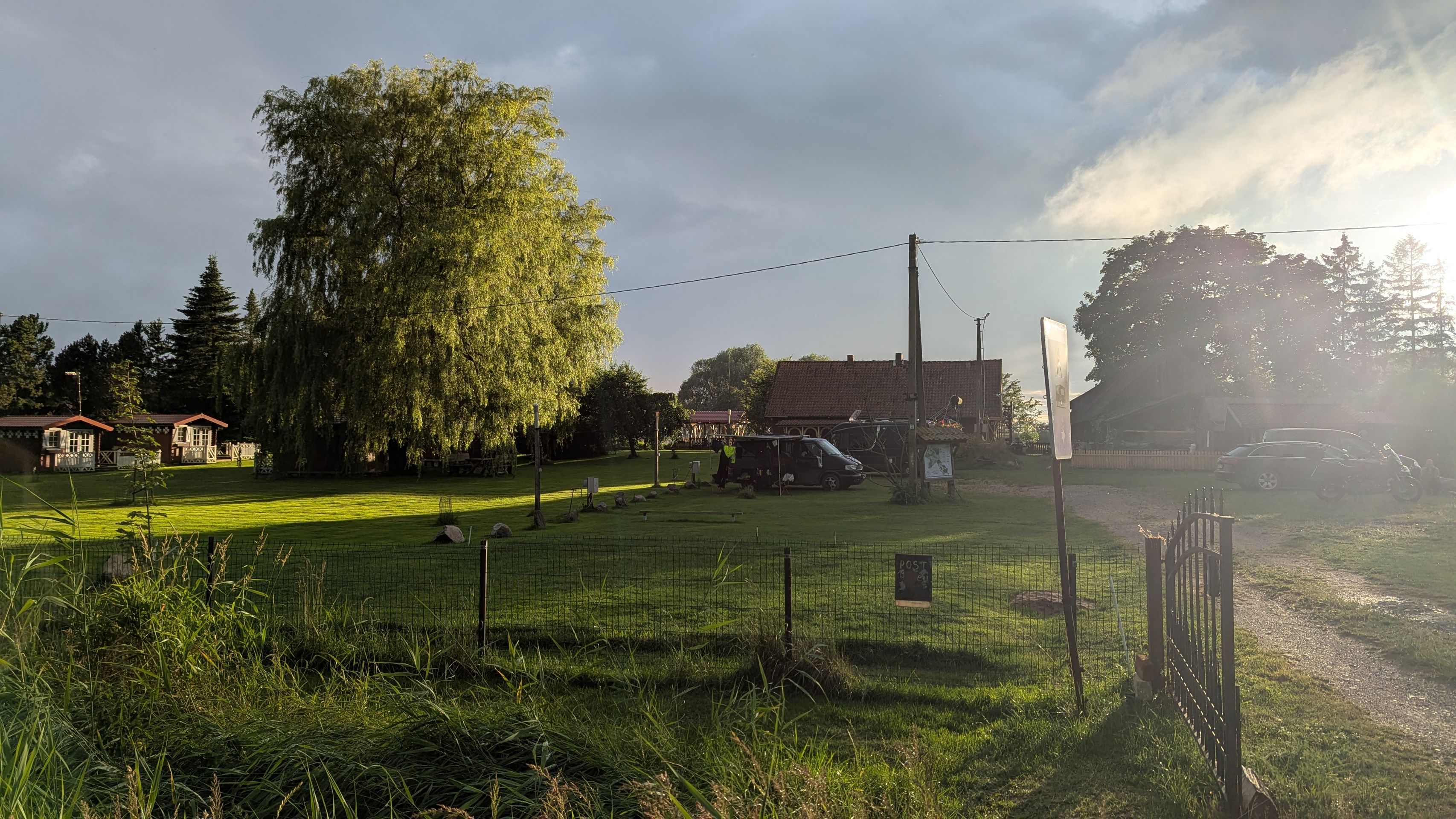
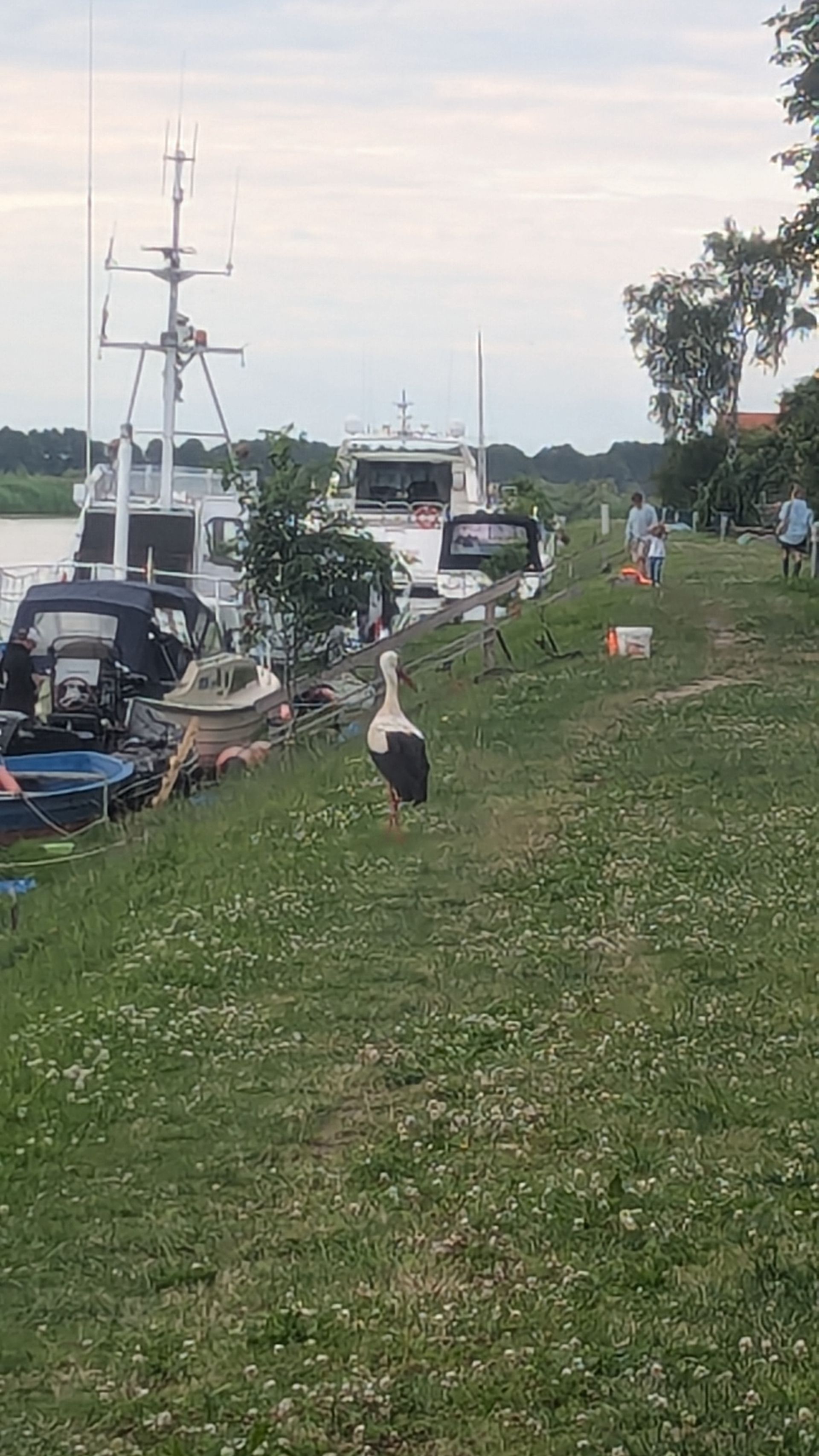
This only works to some extent. As soon as we pass the city limits, the heavy rain really begins. So we grit our teeth and continue. Google Maps sends us over adventurous gravel paths – but also through picturesque little villages, past wide fields where storks strut and herons glide through the air. A final 5-kilometer gravel road leads us to our next overnight stop – Viktoras’ property, where he warmly welcomes us and engages us in a long conversation.
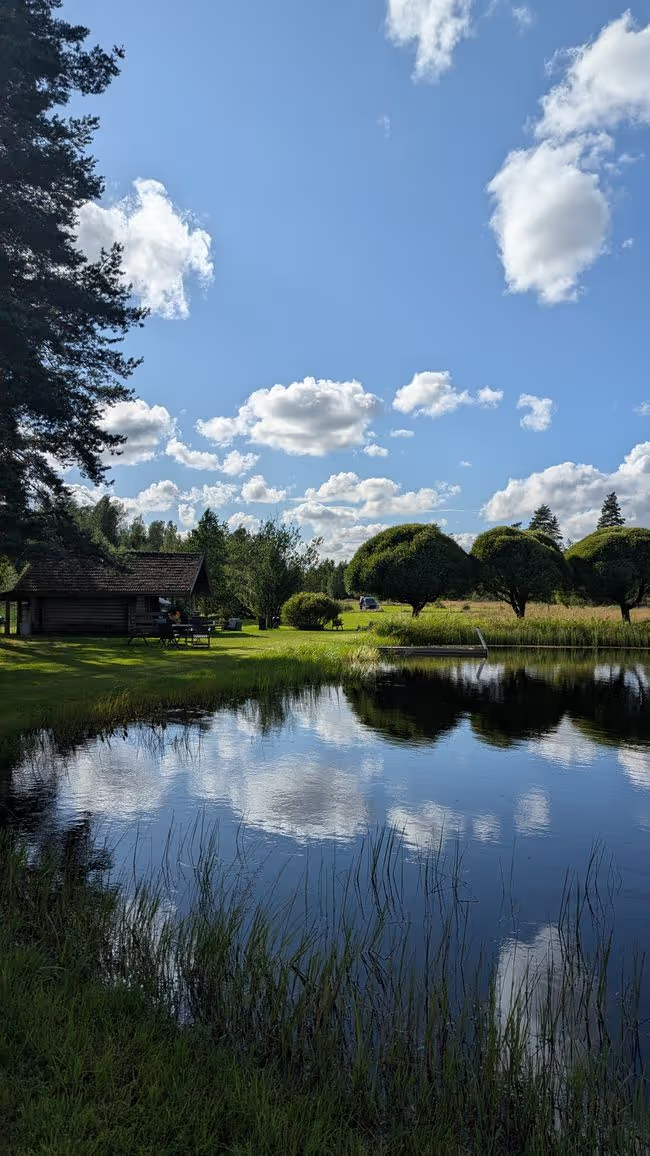
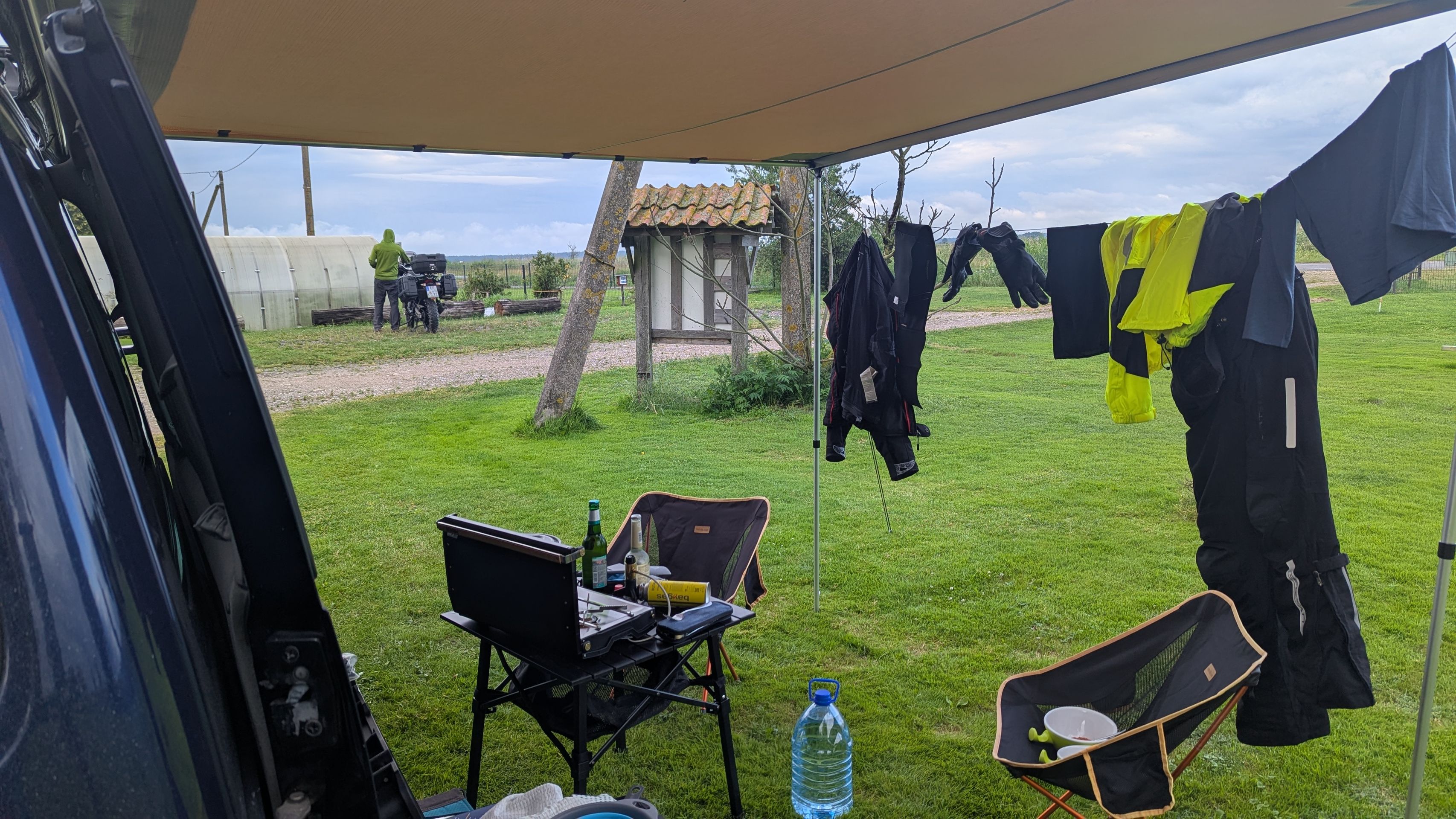
He tells us about his two daughters – one lives in Vilnius, the other in Perth, Australia. Meanwhile, we hang Frank’s soaked motorcycle gear to dry and set up our camp. The small campsite is idyllically located right by the Nemunas River – one of the largest rivers in Eastern Europe, which flows into the Curonian Lagoon near Klaipėda. From here, we plan to take the ferry to the Curonian Spit the next day.
The Curonian Spit is about 100 km long and only a few kilometers wide, consisting of sand dunes, forests, and fishing villages – a UNESCO World Heritage Site since 2000. The region is not only unique in its landscape but also culturally significant, influenced by Lithuanian, German, and Curonian history.
After a quick dinner, we soon retreat to the Bulli – too many mosquitoes outside to spend the evening comfortably in front of the bus.
The next morning we wake up early and head to the nearby ferry station – just 200 meters away on foot.
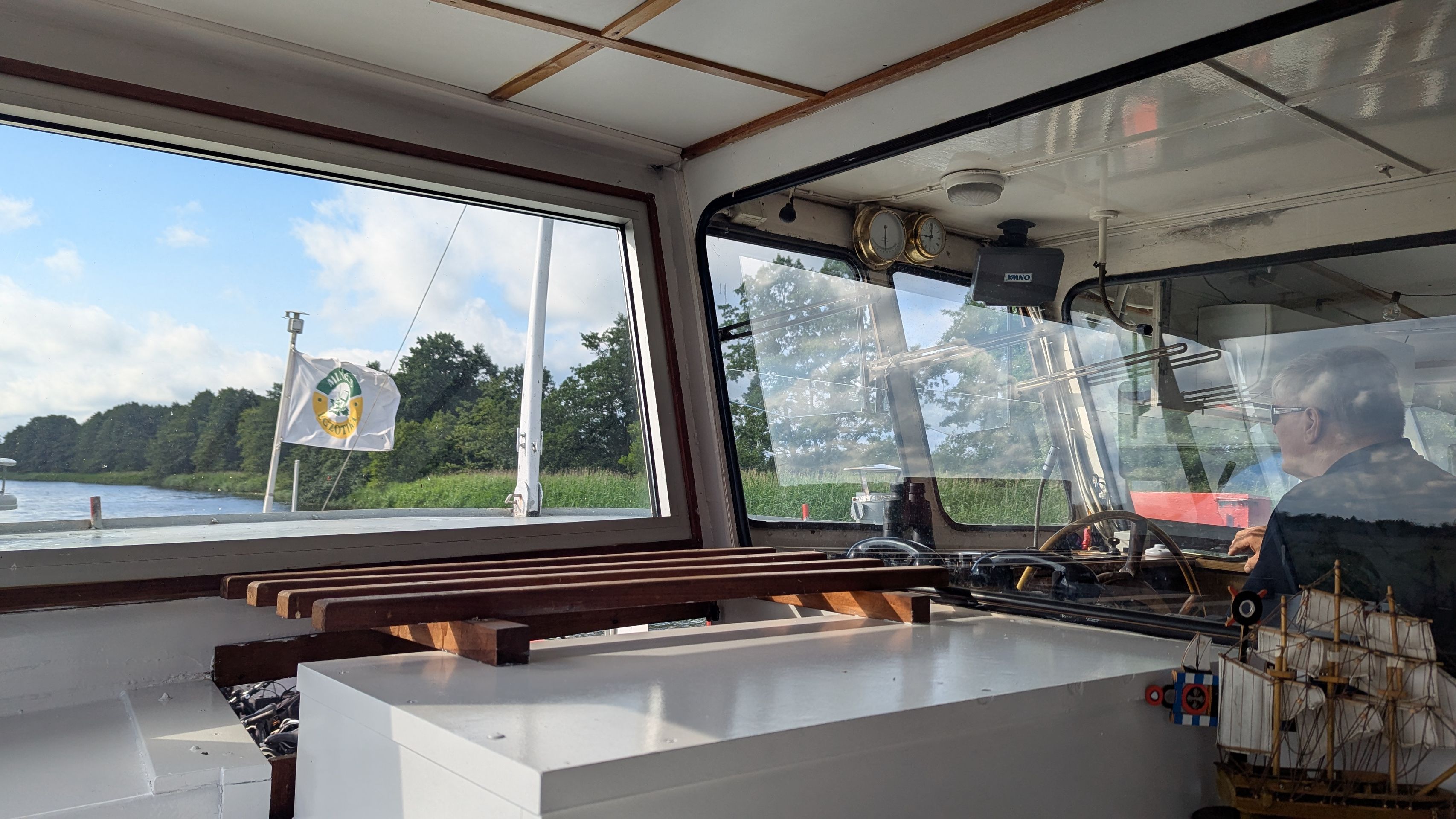
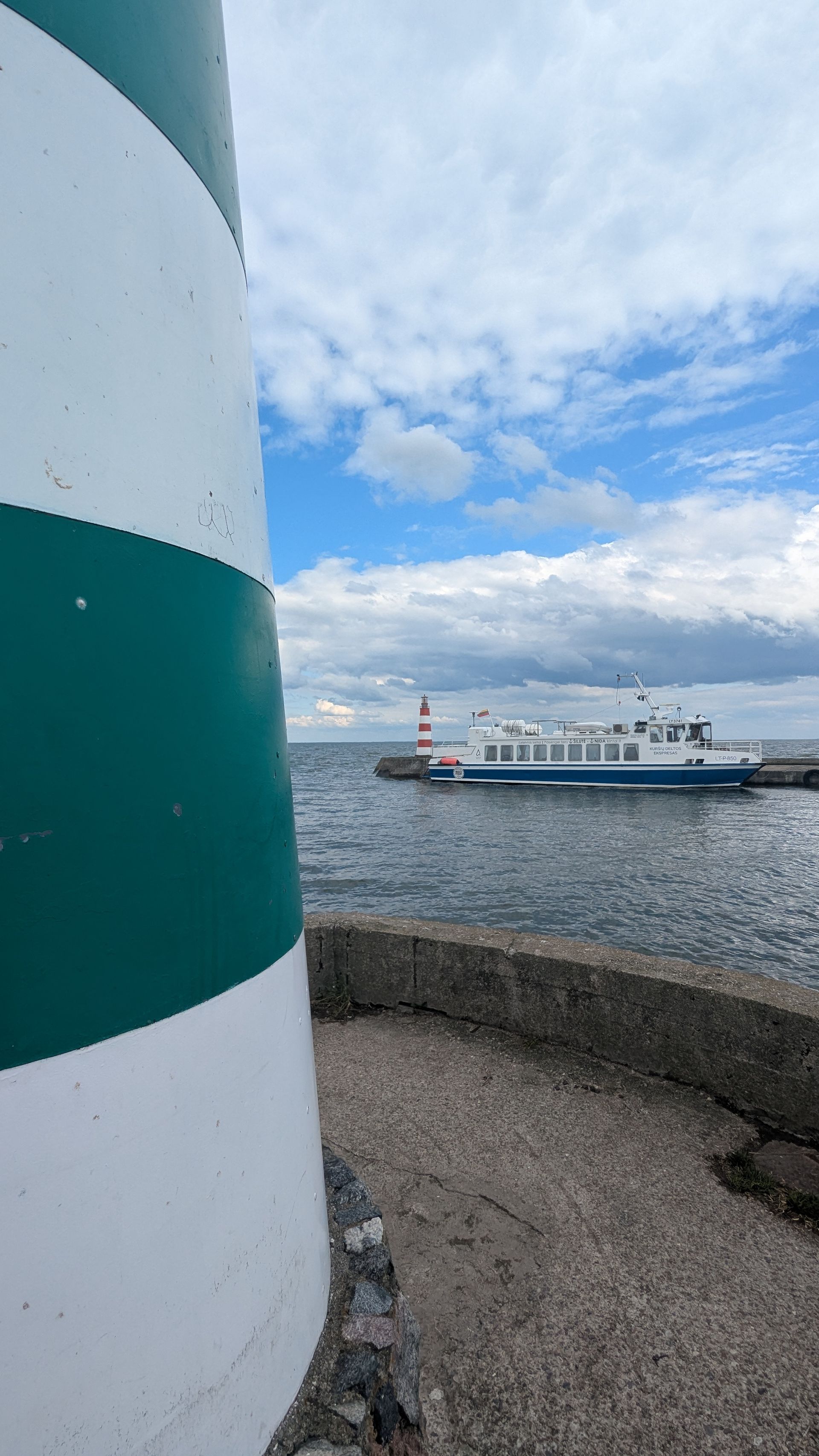
The ferry crossing takes about two hours. First, we go along the Nemunas River. It’s windy, and the second part of the trip over the open lagoon is quite bumpy.
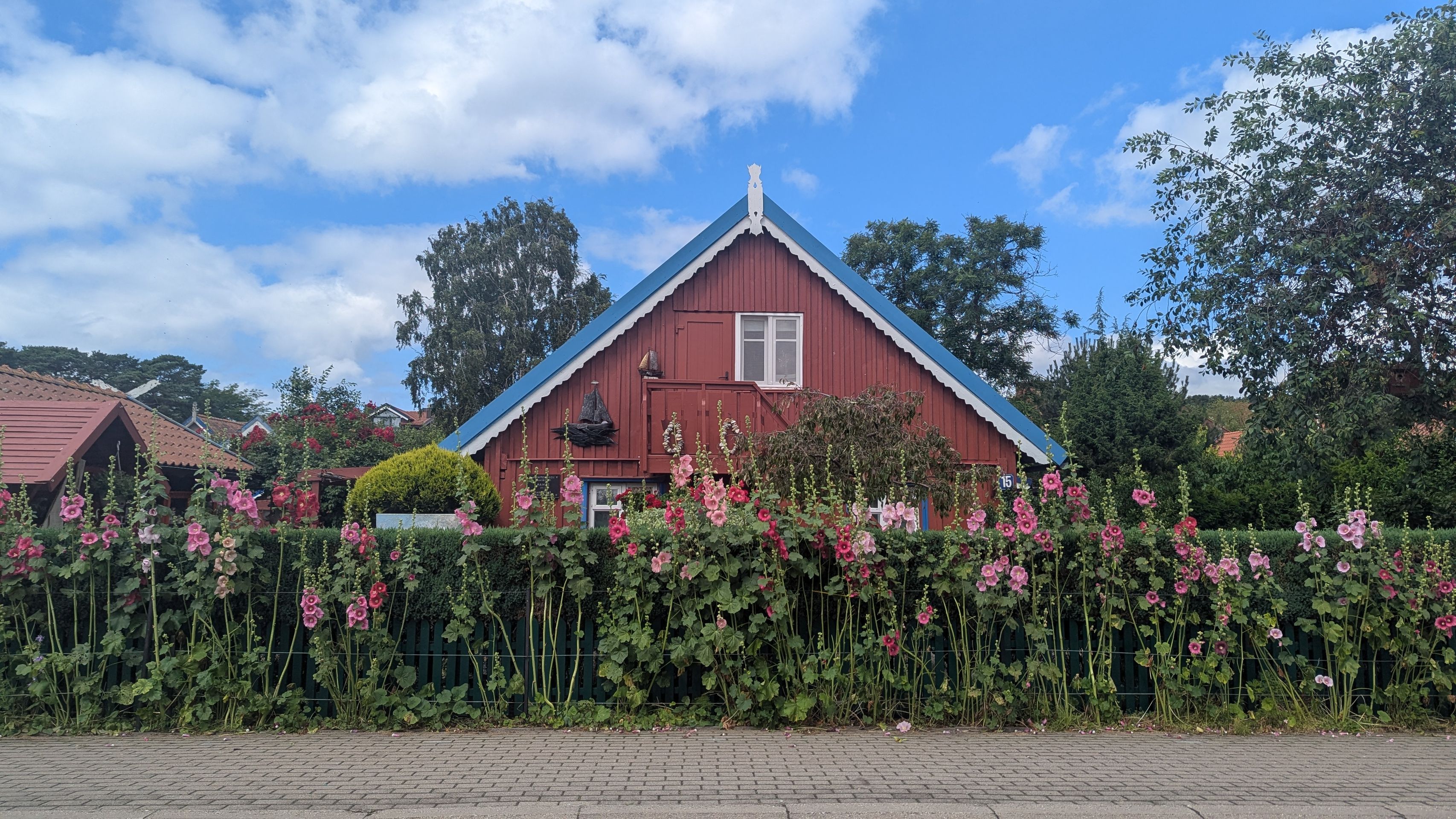
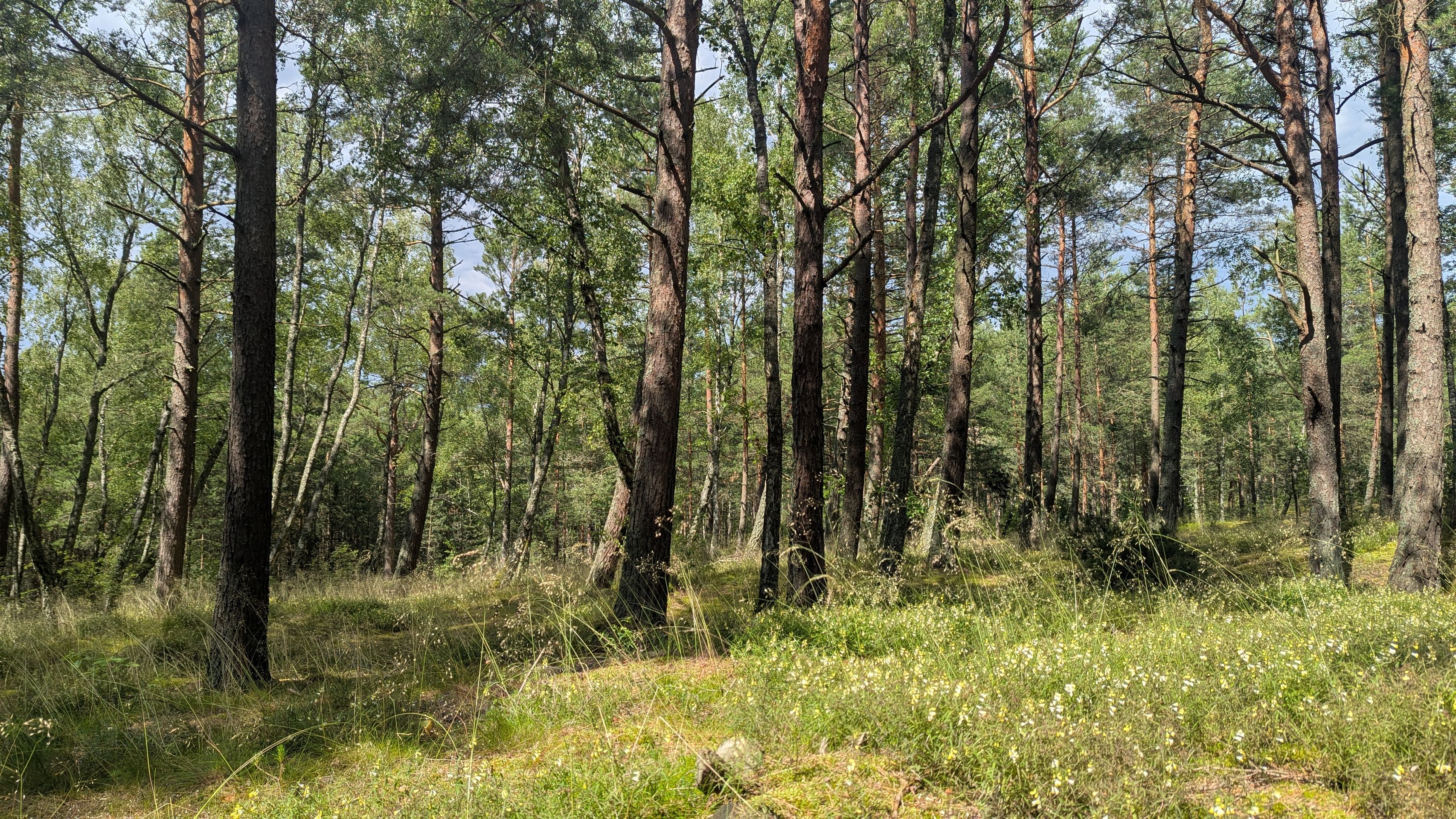
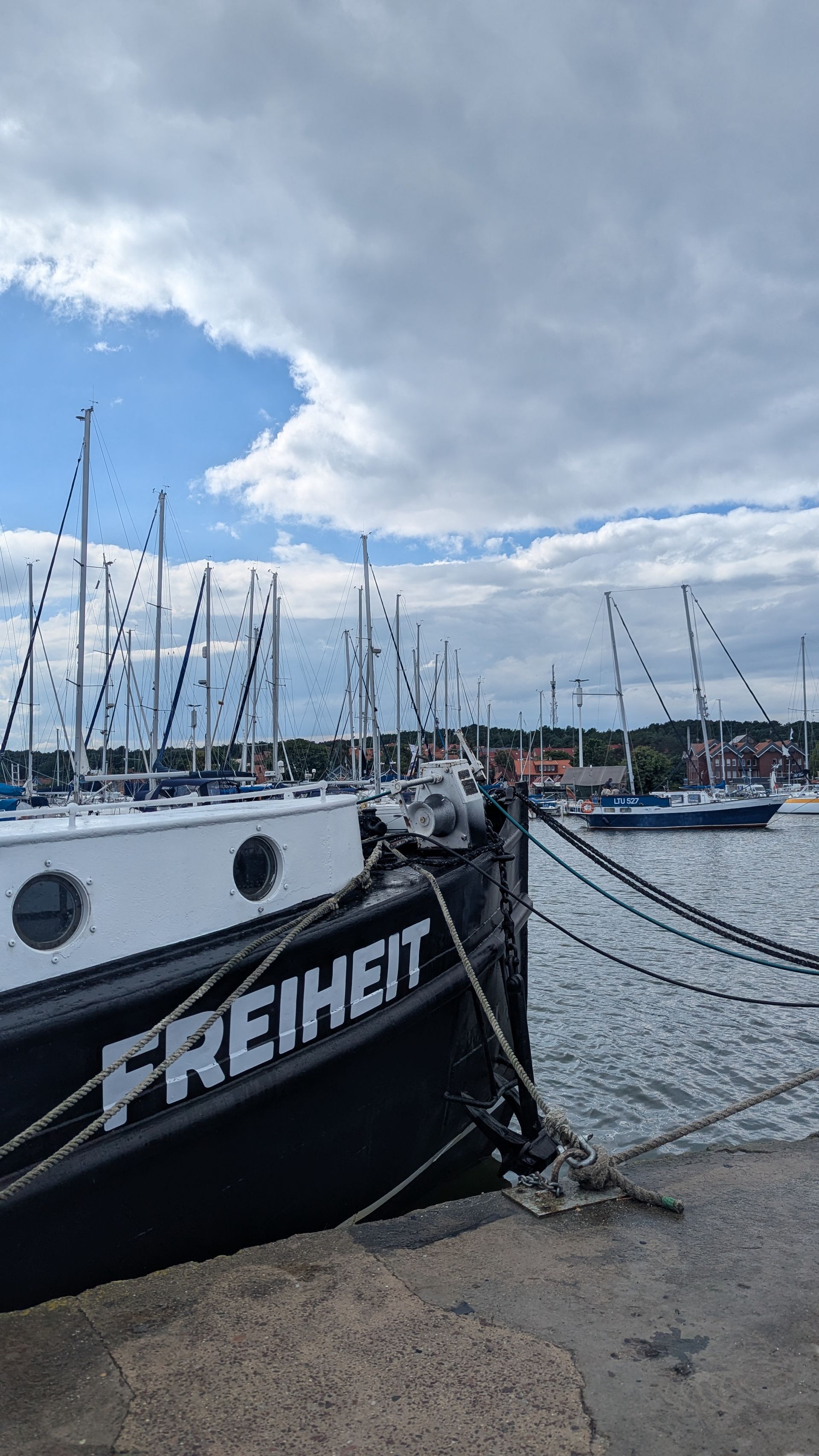
Right at the harbor, we are greeted by the traditional, colorful wooden houses with their intricately carved gables – a typical sight of the Curonian Spit. We pick up a map at the tourist info and briefly consider renting bikes. But the bike paths are quite crowded. We opt for the quieter forest trails – a good choice. The dense mixed forest of pines and birches, along with the soft ground covered with moss and wildflowers, is almost calming compared to the excitement of the last few days.
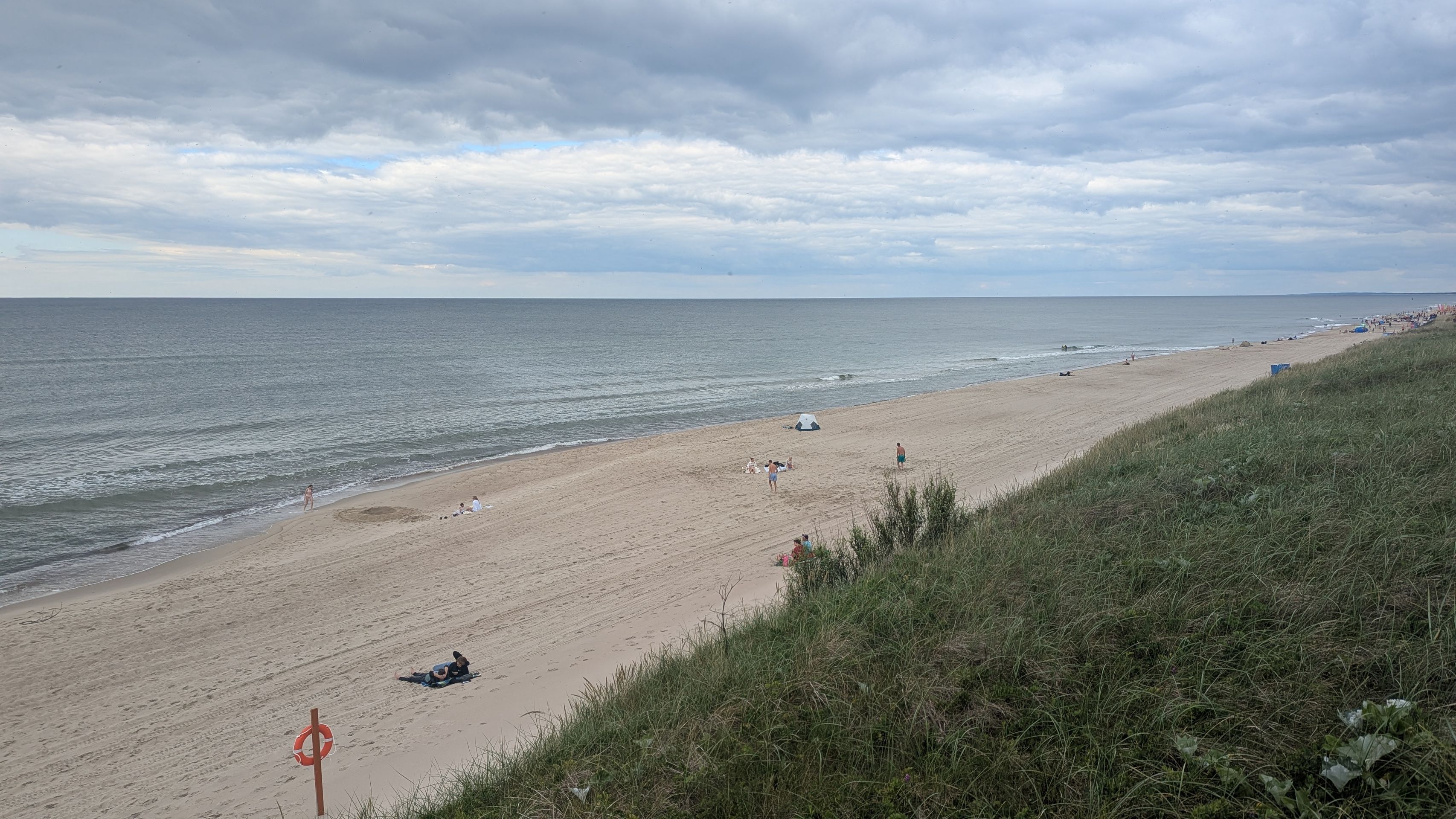
Our first destination: the lighthouse of Nida. The red-and-white tower sits in a small forest clearing. Then we continue towards Parnidis Dune, one of the highest shifting dunes in Europe. The sandy path leads us to the western side of the spit – to the beach with endless views over the Baltic Sea.
The return trip is much calmer – the sun even makes a brief appearance. And when we arrive back at Viktoras’ place, he already has new stories waiting for us.