
Snorkeling tour to Cano Island
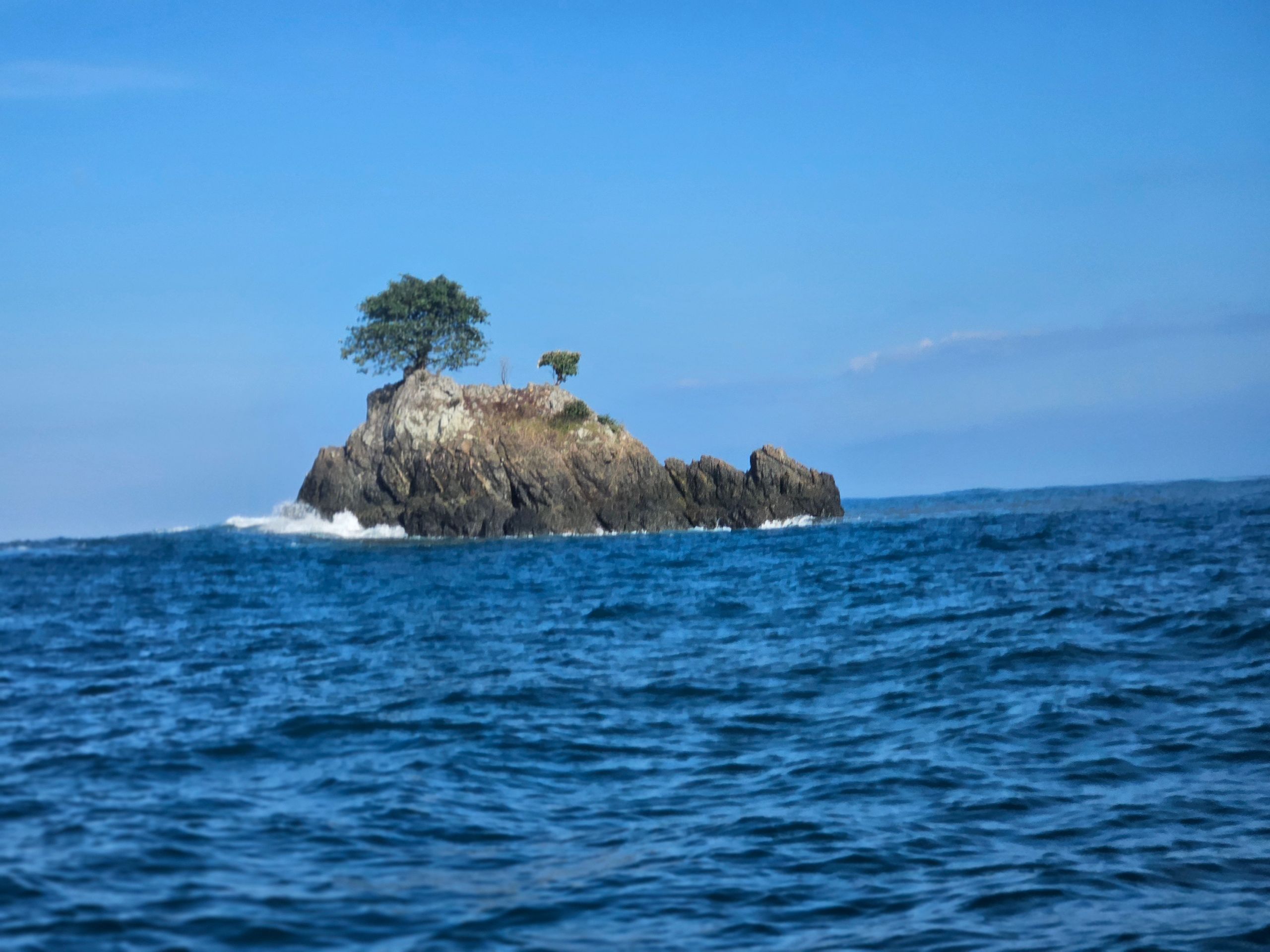
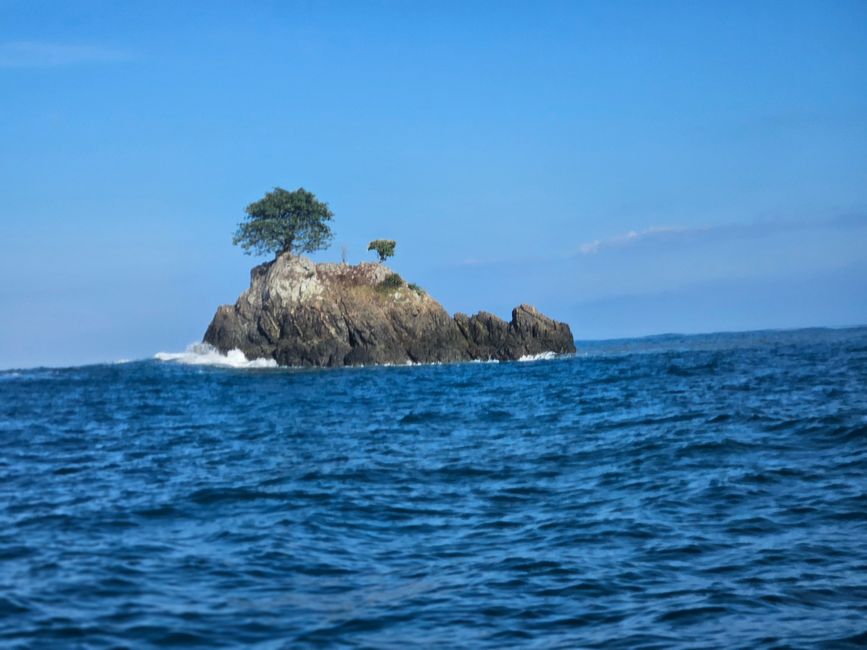
17.11.2026 Snorkeling tour Cano Island Another absolute highlight of our stay in Drake Bay was the boat trip to the offshore Isla del Caño, which is about twenty kilometers and

Published: 20.11.2026
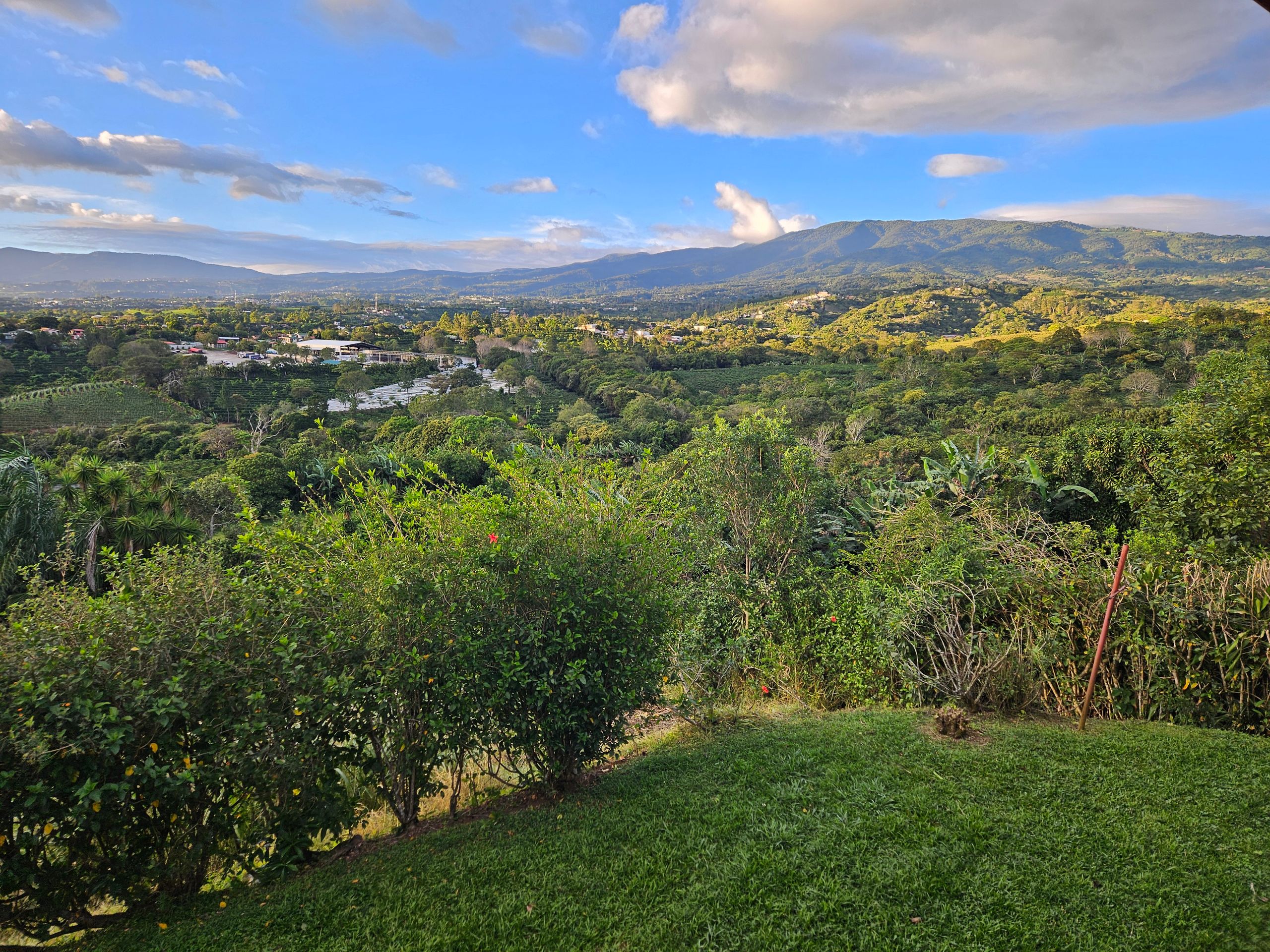
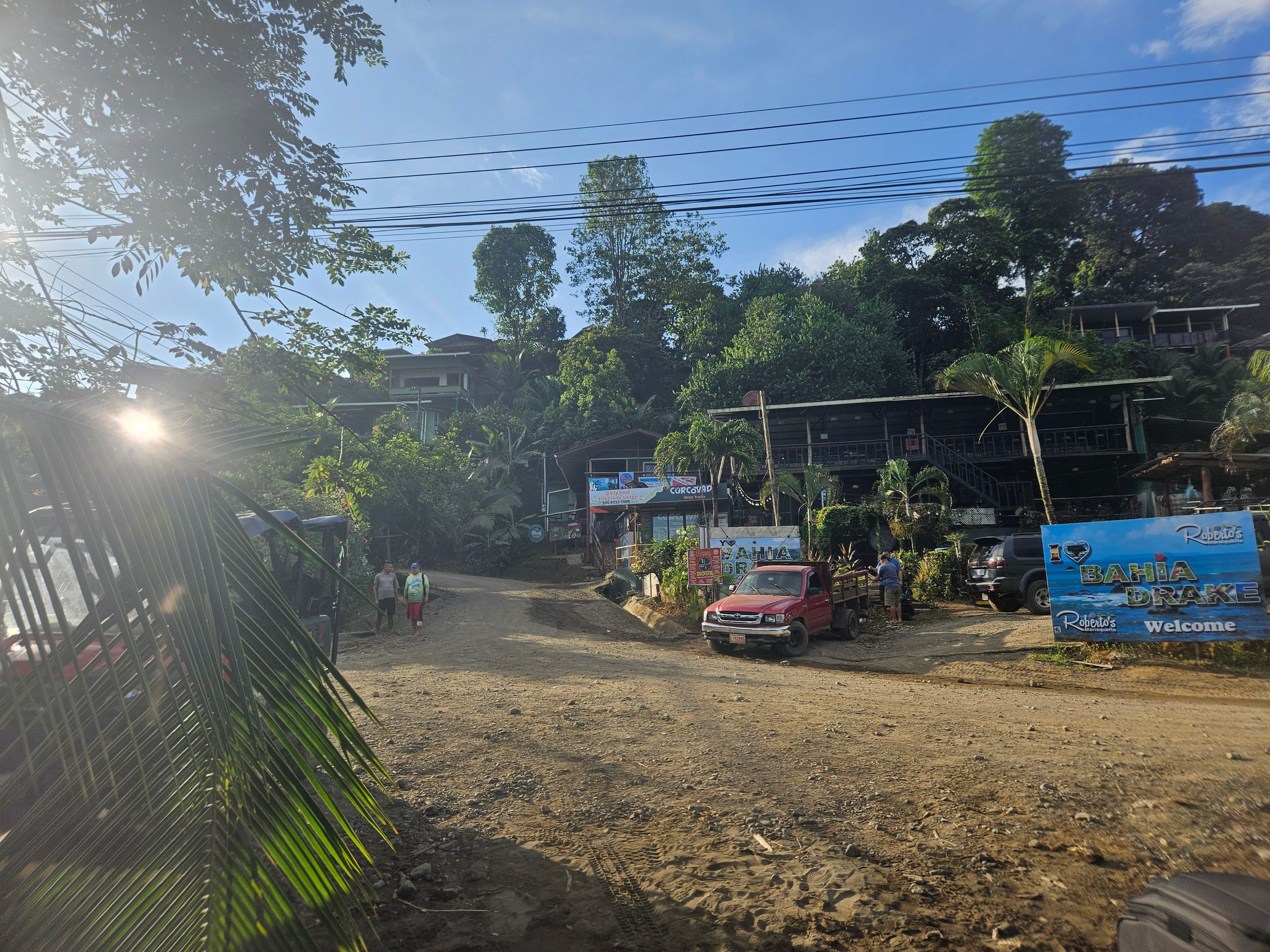
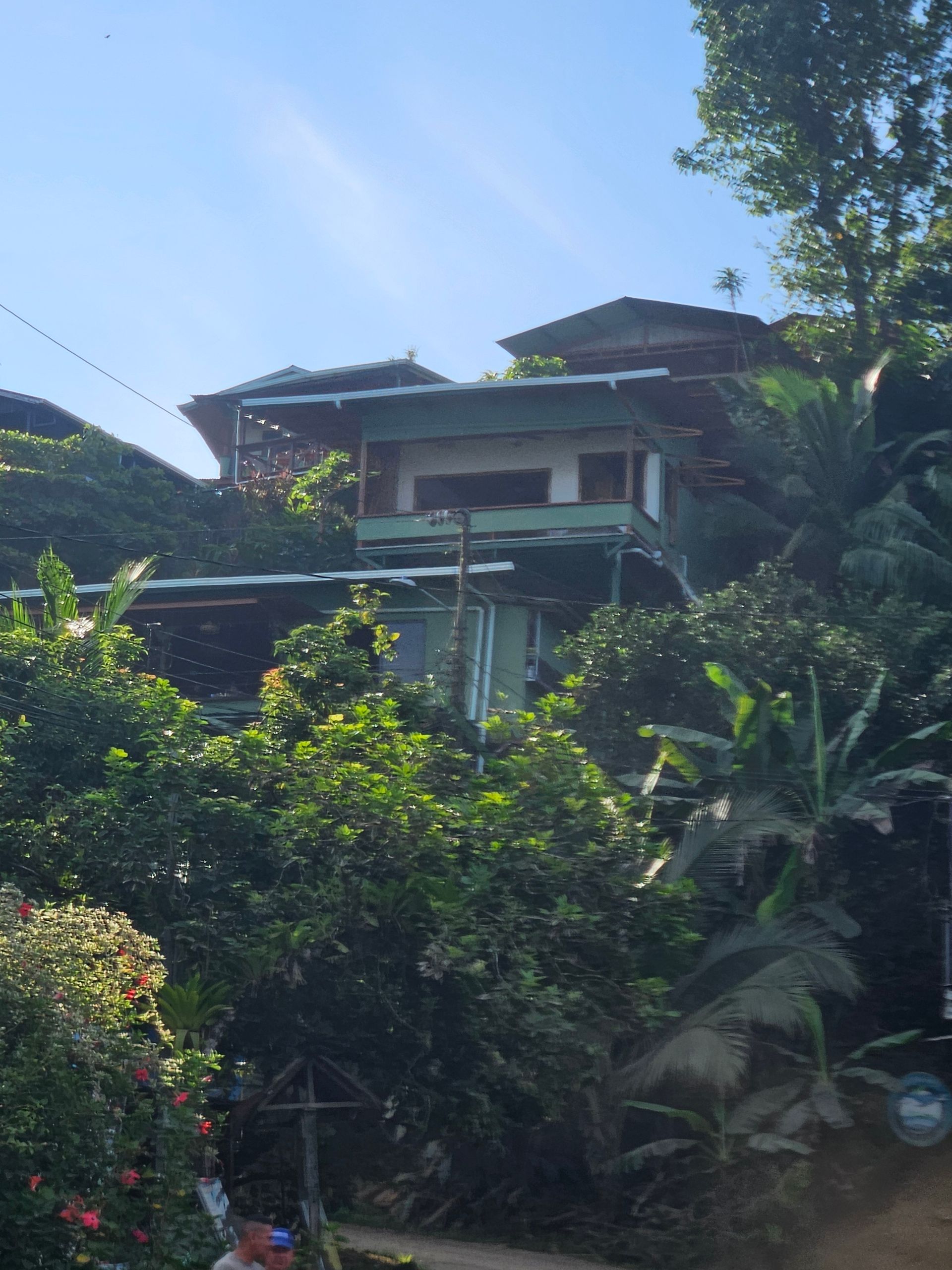
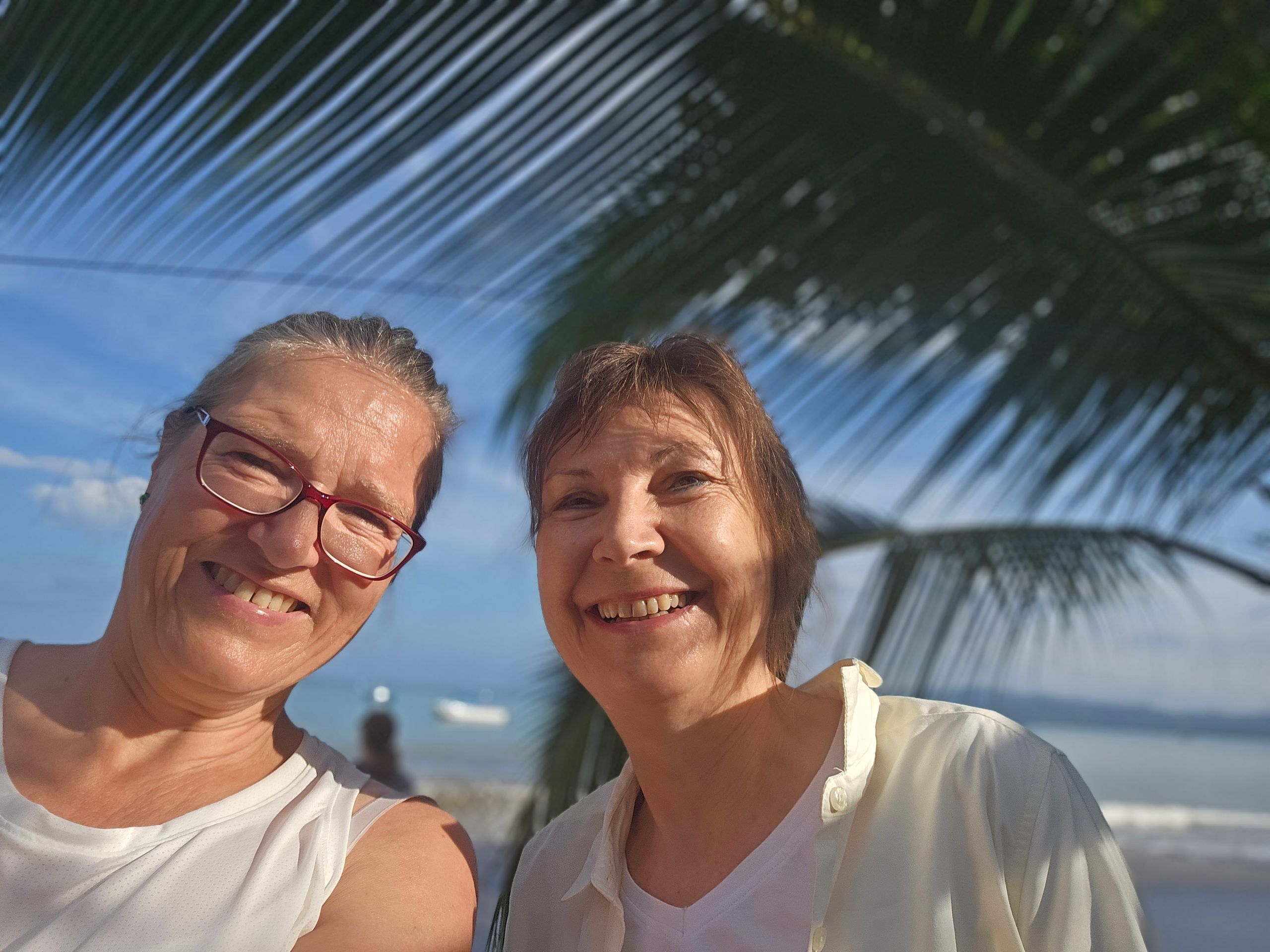
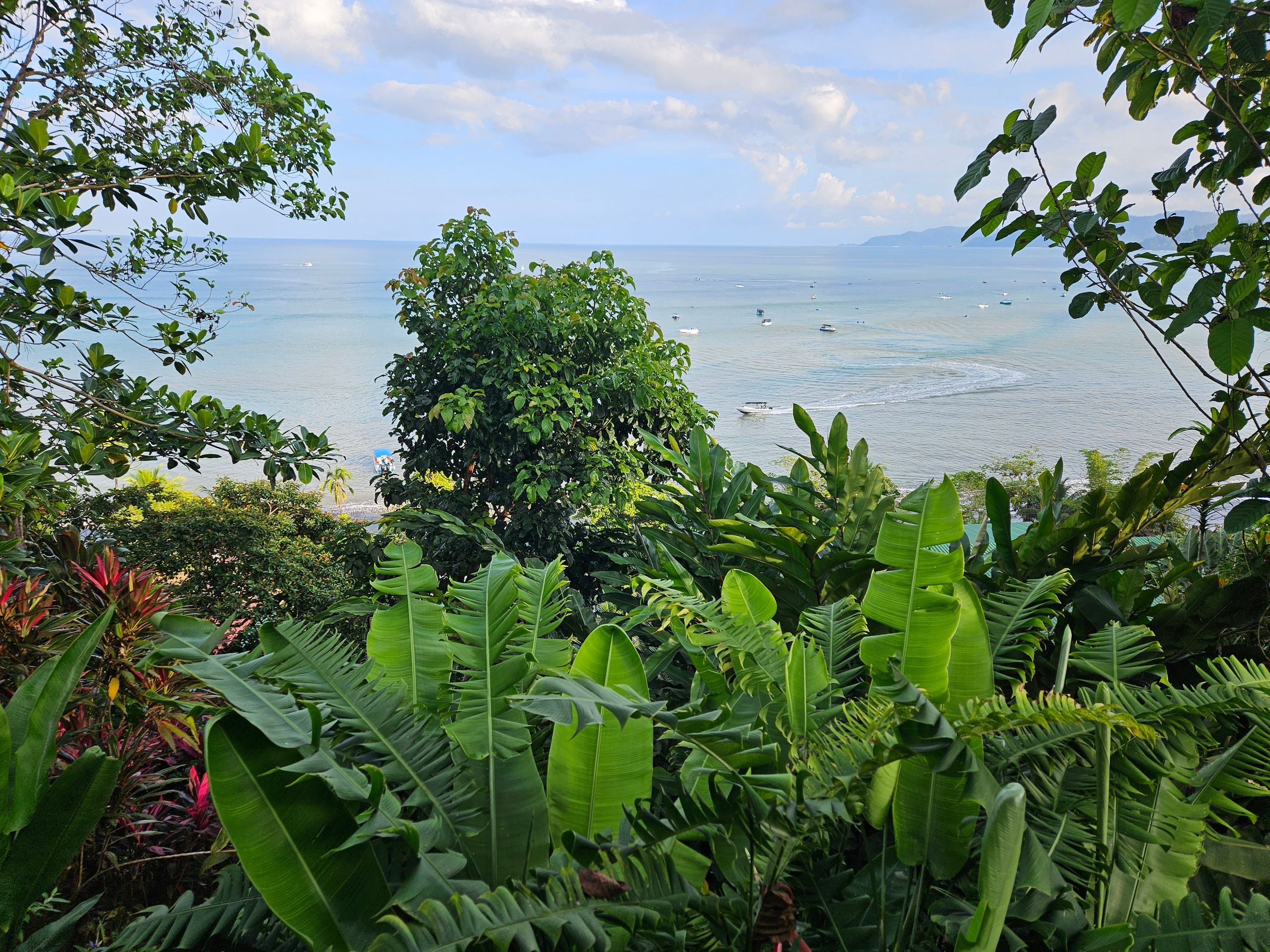
Today, it's time to say goodbye to Drake Bay, and one last time I enjoy the dreamlike view from our terrace at Hotel Las Cotingas Ocean View with a cup of coffee in hand in the morning.
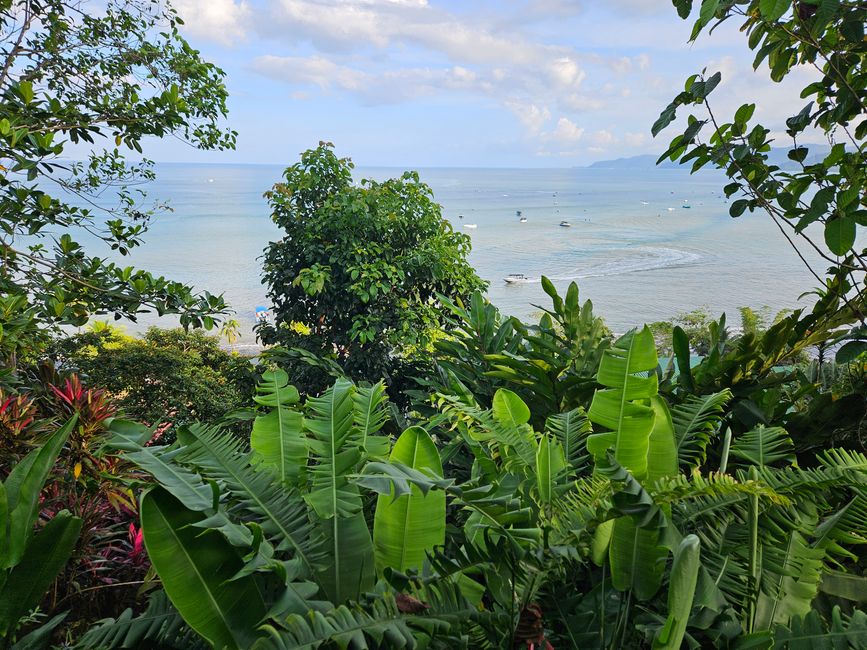
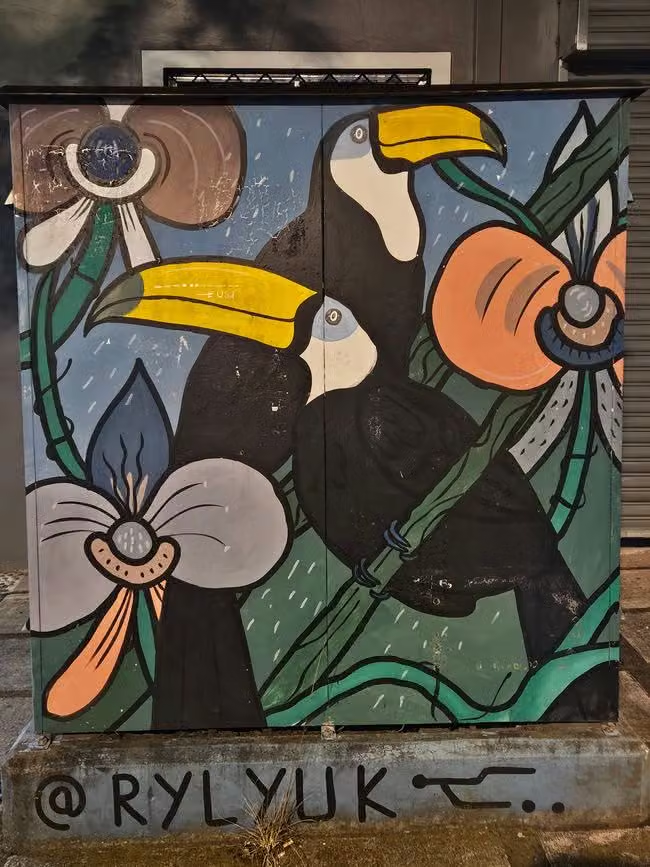
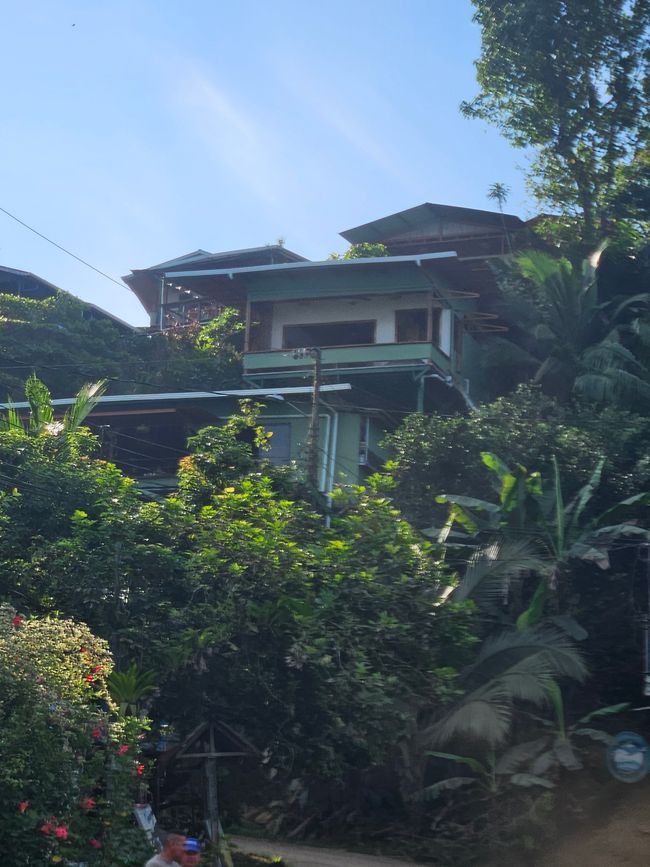
These simple but cozy bungalows up on the hill offer an unbeatable view over the entire bay and the jungle, and it is exactly this incredible closeness to nature that makes saying goodbye so difficult. Because here, it is just part of daily life that colorful macaws fly loudly through the village, toucans and large iguanas sit relaxed in the trees, monkeys balance on power lines, and everywhere countless birds are around, filling the day with life.
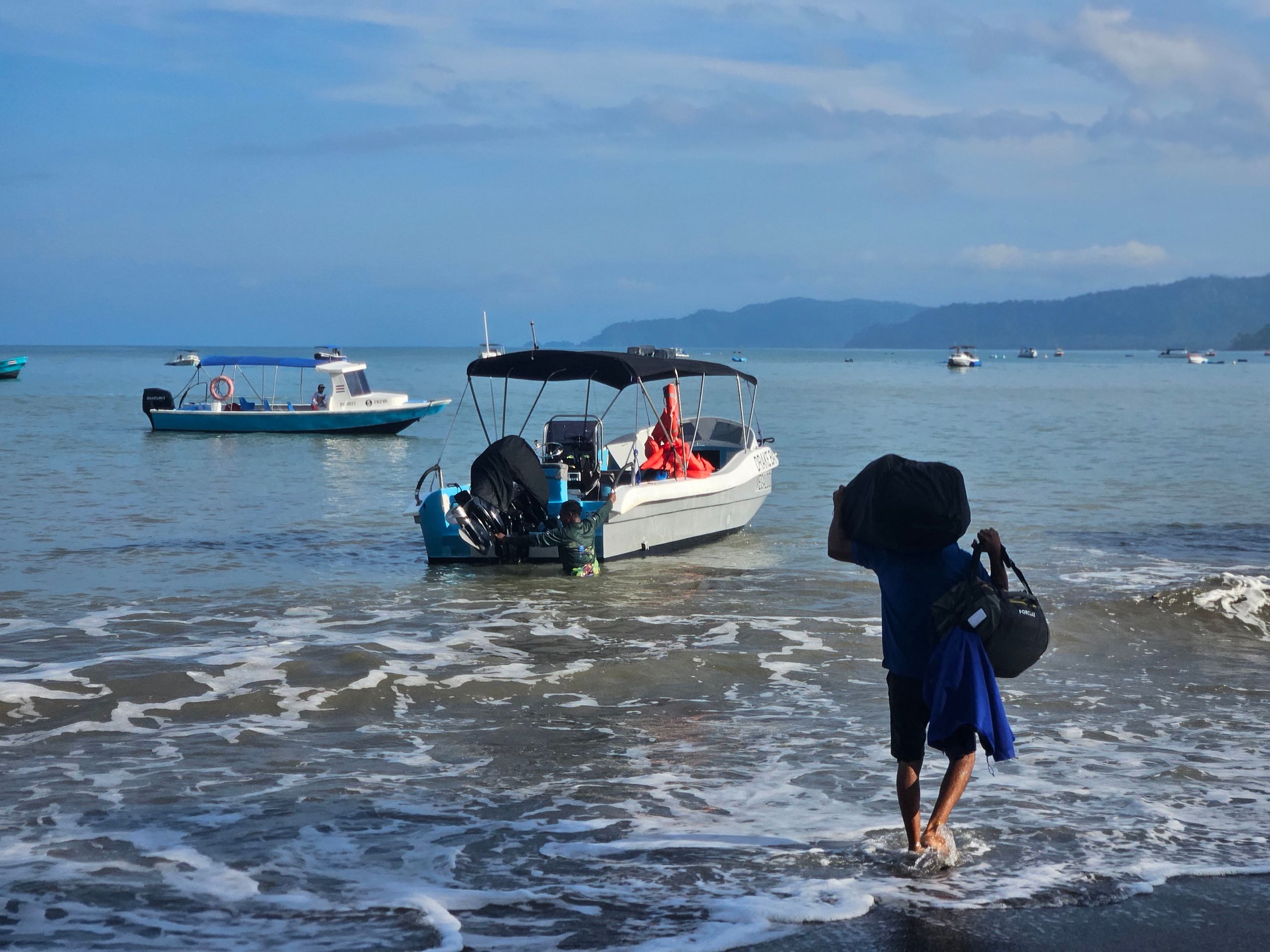
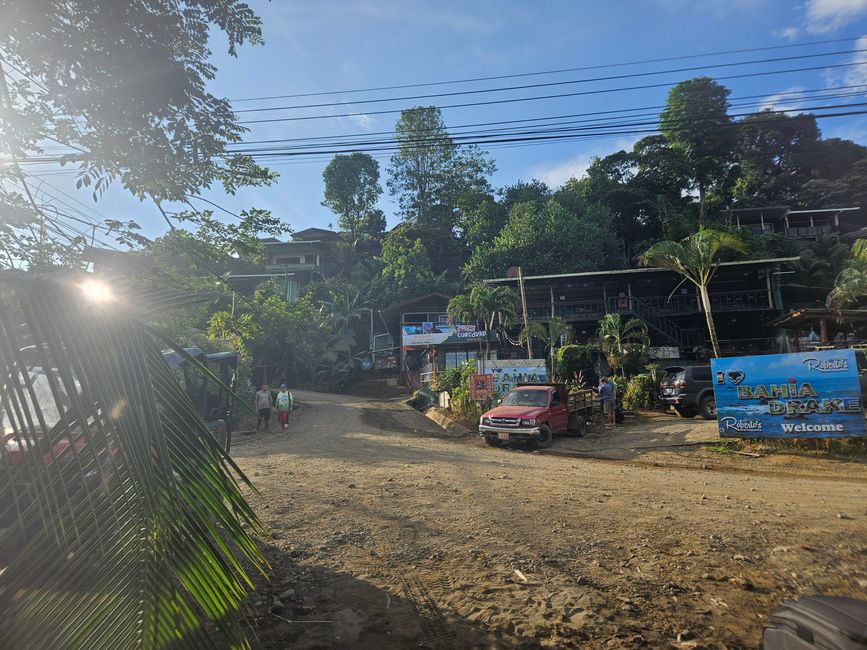
With packed bags or backpacks, we finally head down to the beach, where one last adventure awaits us as we board the boat. Instead of a relaxed stroll on board, we once again have to roll up our pant legs and wade deep into the choppy water, as higher waves come crashing towards us and we have to hoist our backpacks and ourselves over the side while trying to stay mostly dry.
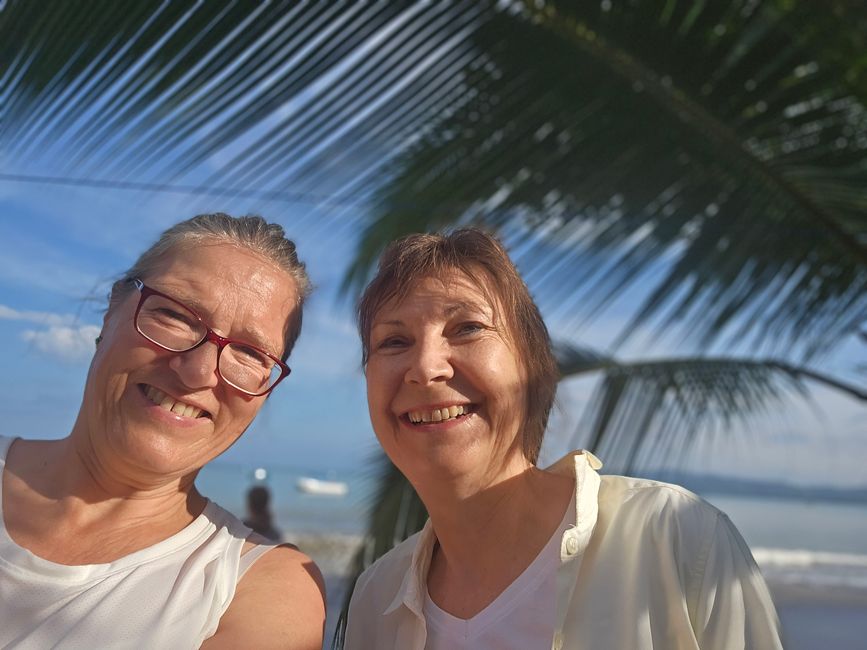
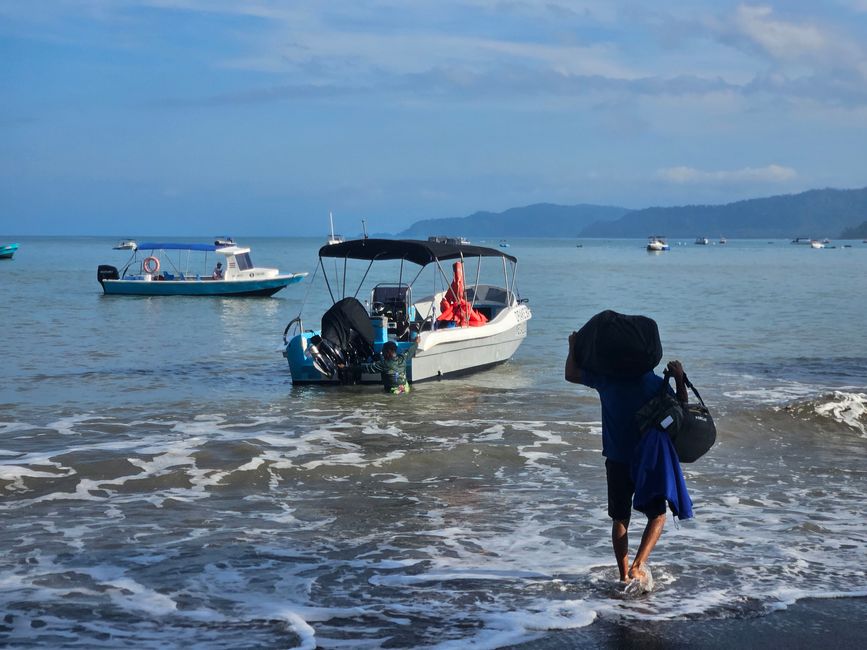
Once we have all safely boarded the boat, the Pacific fortunately shows its gracious side and we dash along the coast in surprisingly calm waters. I have heard stories from other trips where even seasoned travelers were in despair.
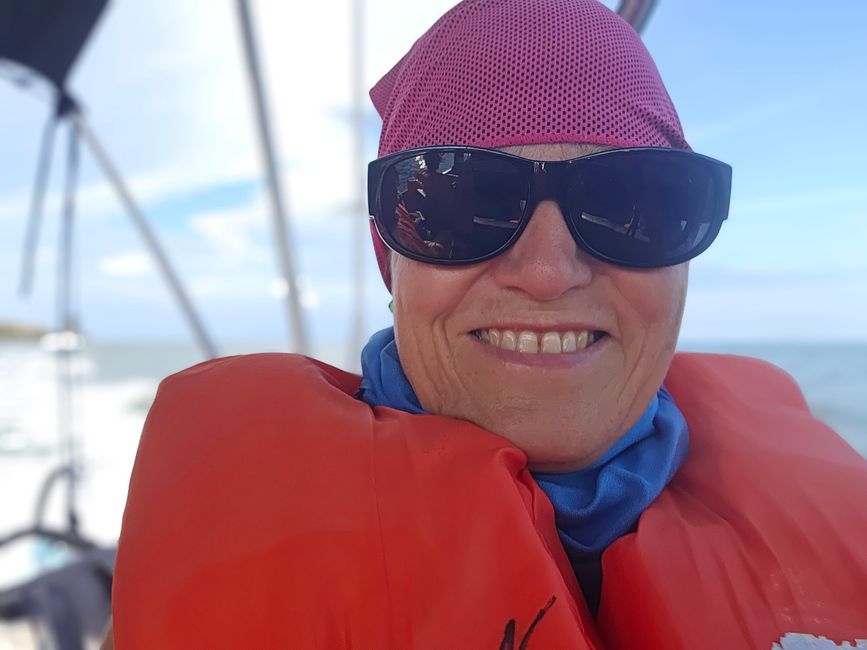
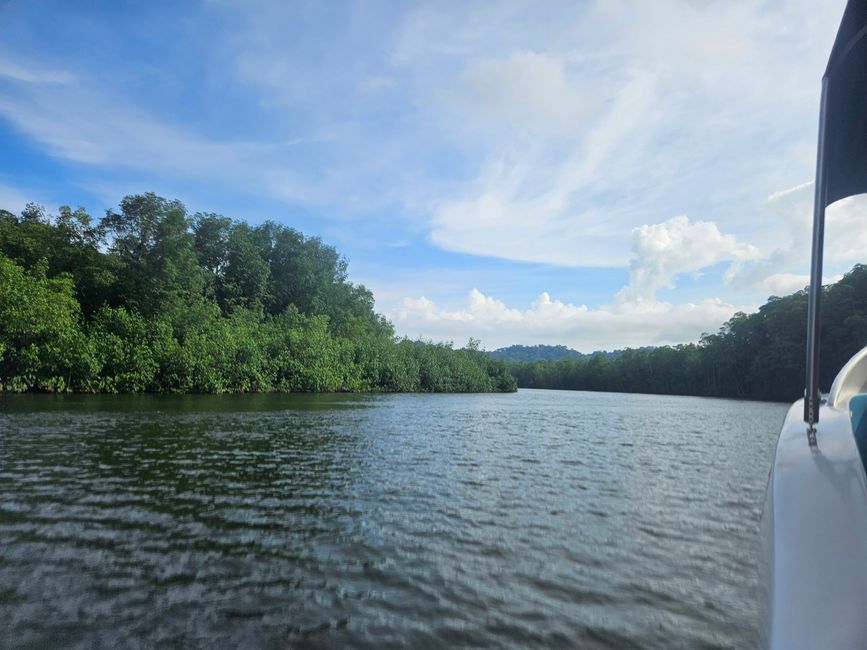
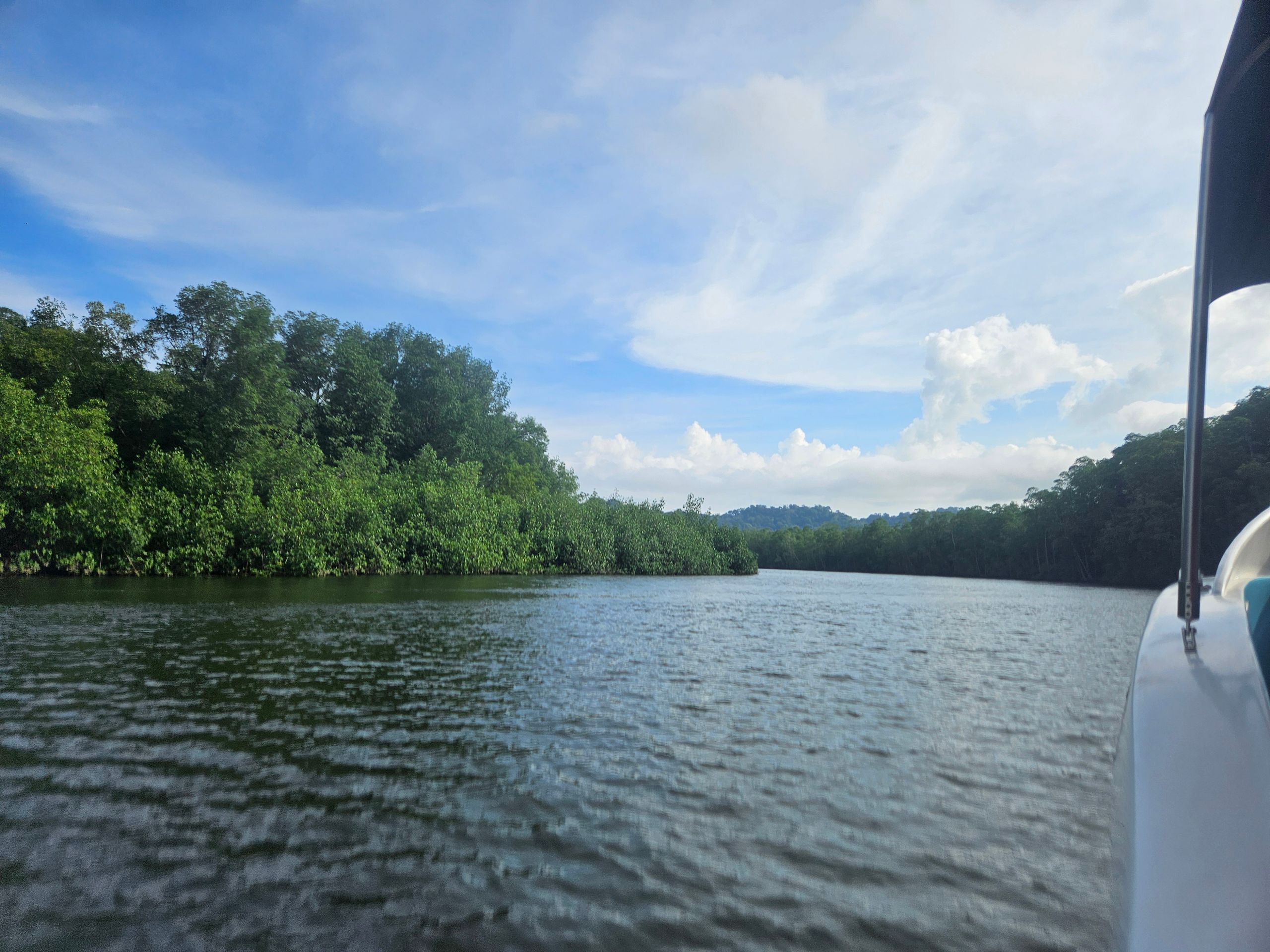
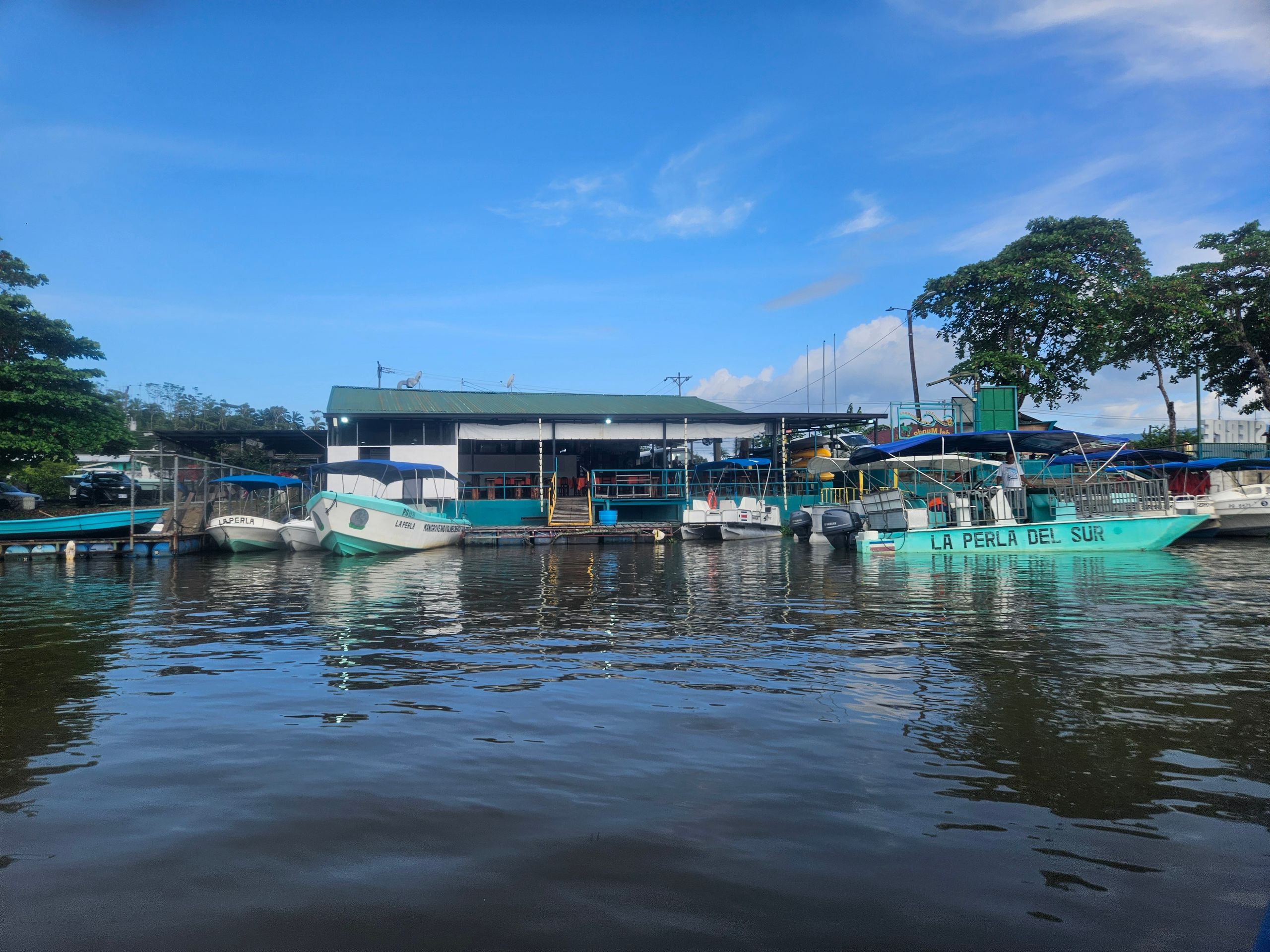
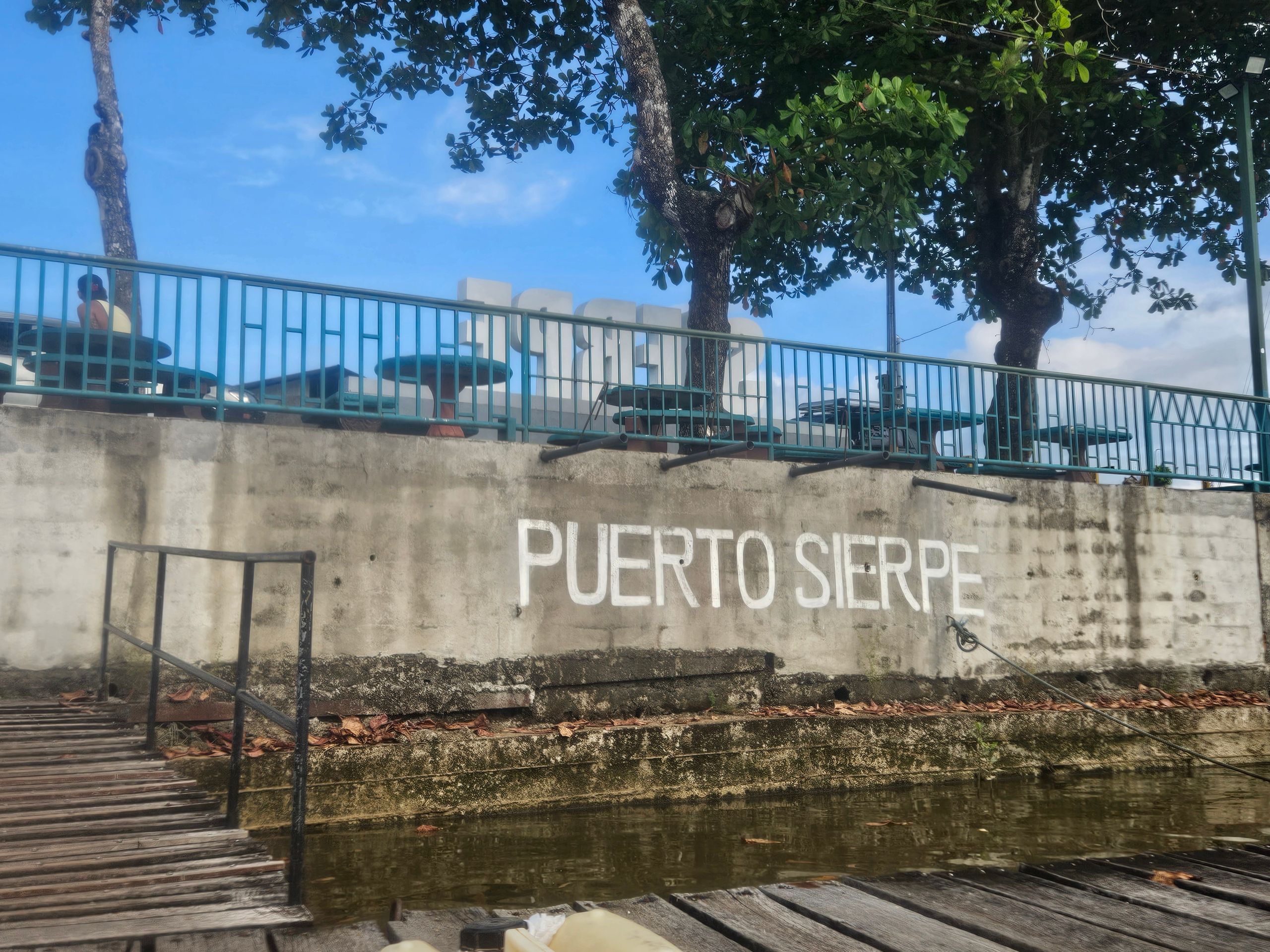
Eventually, we turn back into the wide labyrinth of dense green mangroves. The Térraba-Sierpe wetland is considered the largest contiguous mangrove forest area on the Pacific Coast of Central America. The intricate system of rivers and canals is lined with dense forests of red, white, and black mangroves, standing in brackish water with their characteristic stilt roots. This unique plant world not only protects the coast from erosion, but also forms an important habitat and a protected nursery for numerous fish, crabs, water birds, and reptiles. After about a 75-minute relaxing journey, we arrive at the harbor of Sierpe.
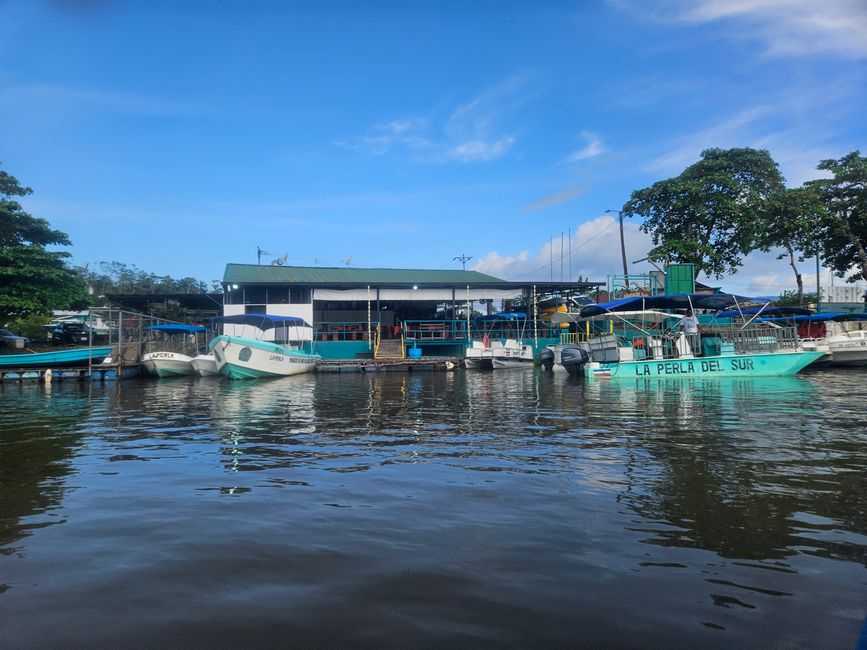
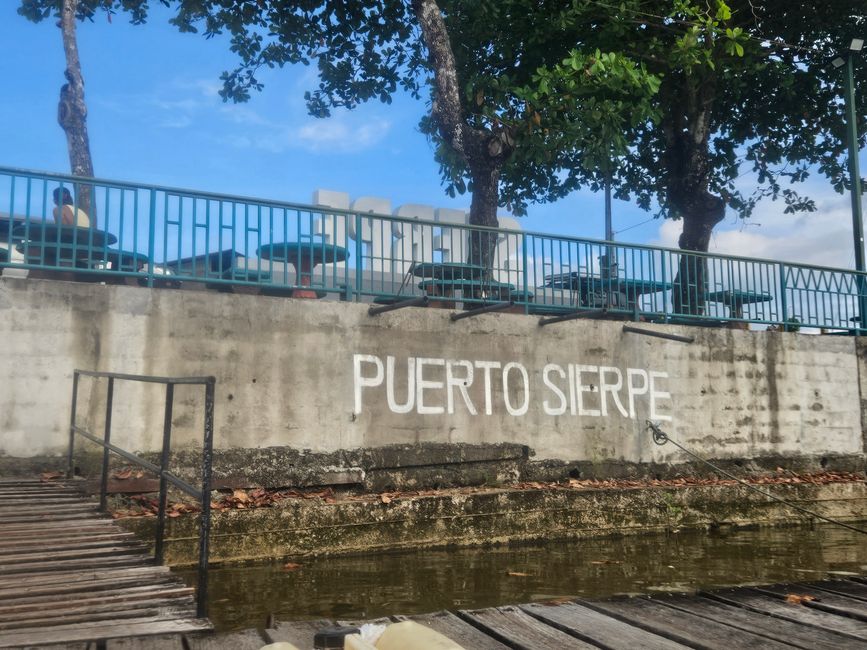
There, our trusty Suzuki Jimny was already waiting unharmed in the booked parking lot, so after a coffee and freshening up, we can continue our journey on four wheels.
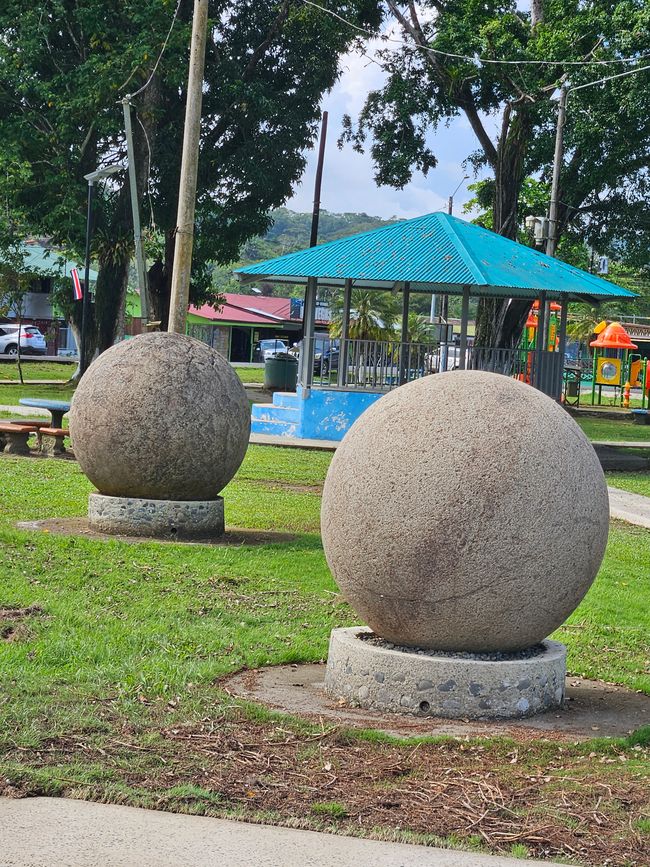
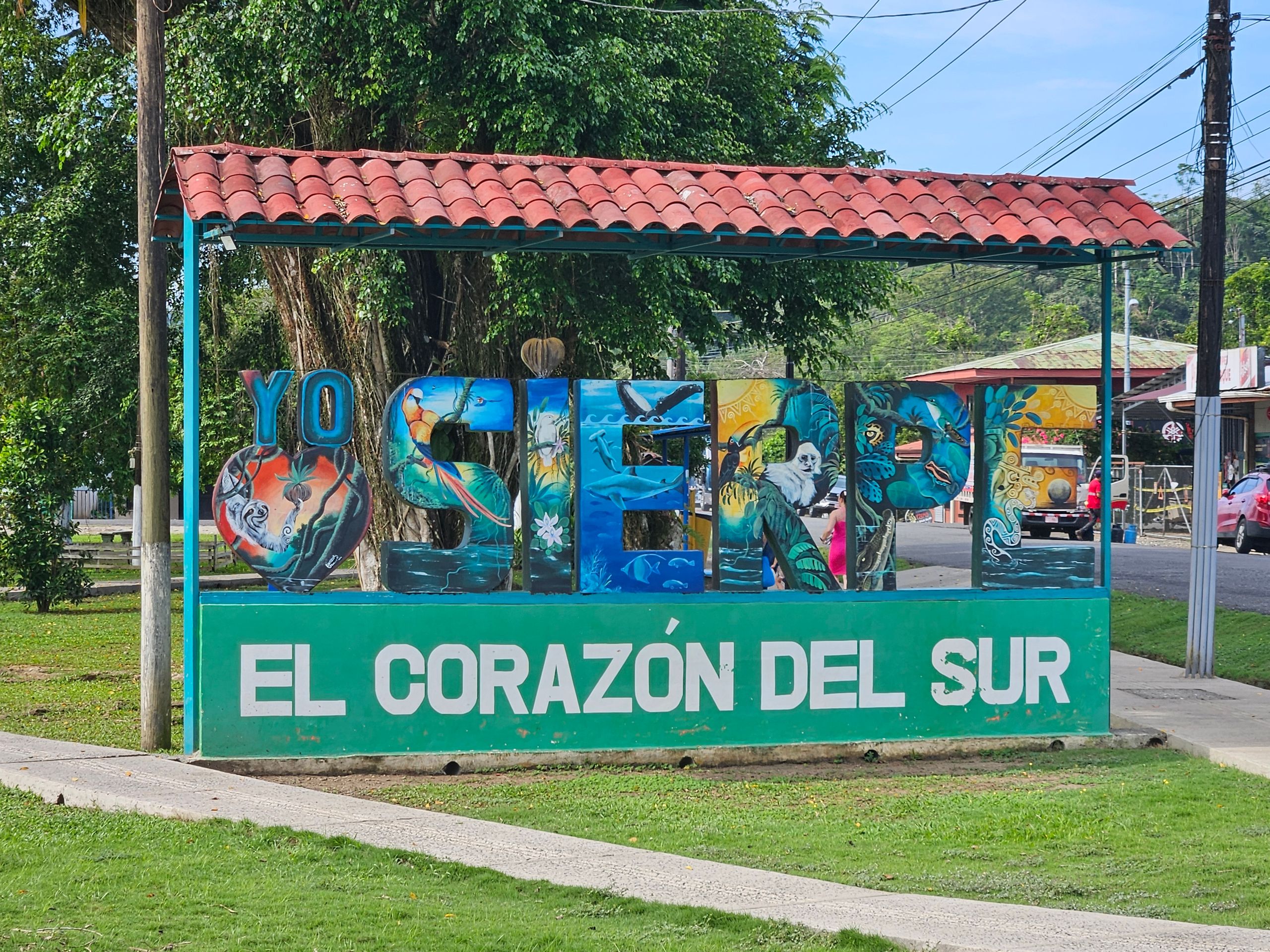
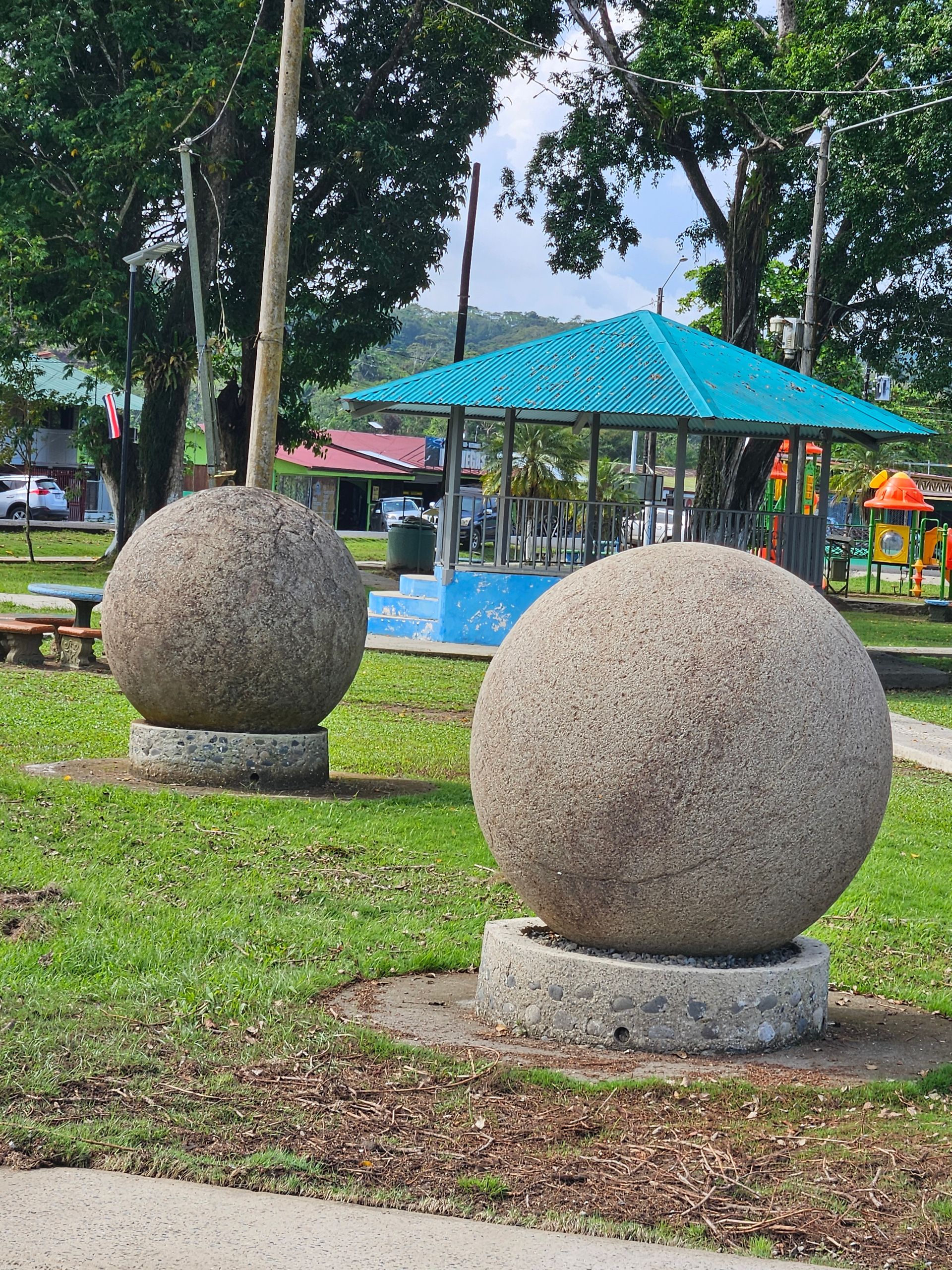
On our way through Sierpe, we also come across one of the most enigmatic attractions in Costa Rica, as two of the famous pre-Columbian stone spheres are indeed located by the roadside. Over three hundred of these nearly perfectly round sculptures were carved and polished over a thousand years ago by the indigenous Diquís culture without any modern tools made from hard volcanic rock. While some specimens are barely larger than a soccer ball, the largest spheres reach over two meters in diameter and weigh up to sixteen tons. Since the culture at the time left no written records, no one knows exactly what they were used for, but they likely served as powerful status symbols in front of the houses of important chiefs or were aligned according to astronomical lines. It is quite a fascinating feeling to unexpectedly stand before these centuries-old, perfectly shaped stone spheres, which have long been a UNESCO World Heritage Site.
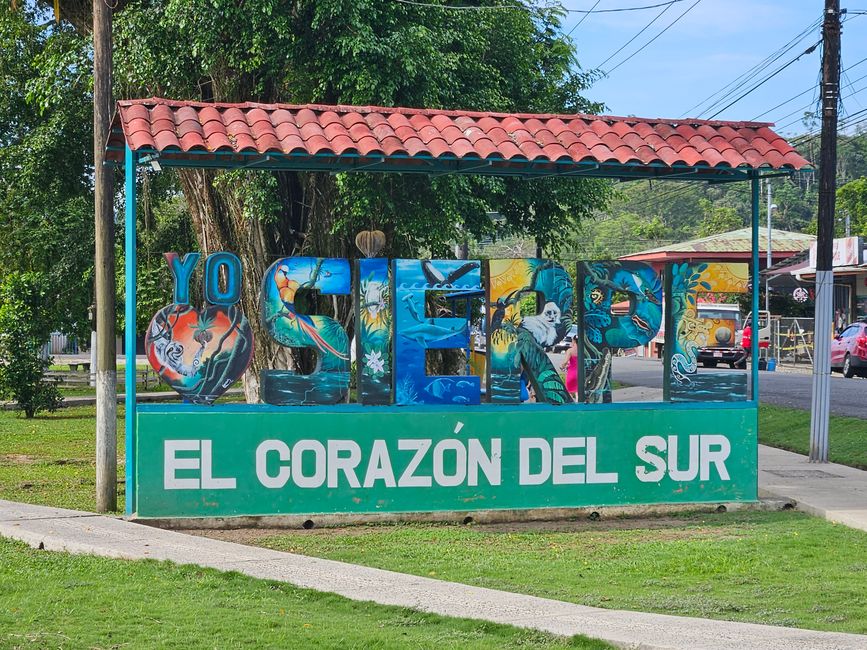
The return journey takes us from Sierpe back up to the Costanera Sur, which this time we will follow northward without detours until we finally turn onto Ruta 27 towards San José at Orotina.
Still at the beginning of our route, just behind Sierpe, the rainforest gives us a very special final farewell, as suddenly two small capuchin monkeys scurry across the road right in front of our car and quickly disappear into the dense green of the trees. It is a beautiful, almost magical last goodbye to the wild animal world.
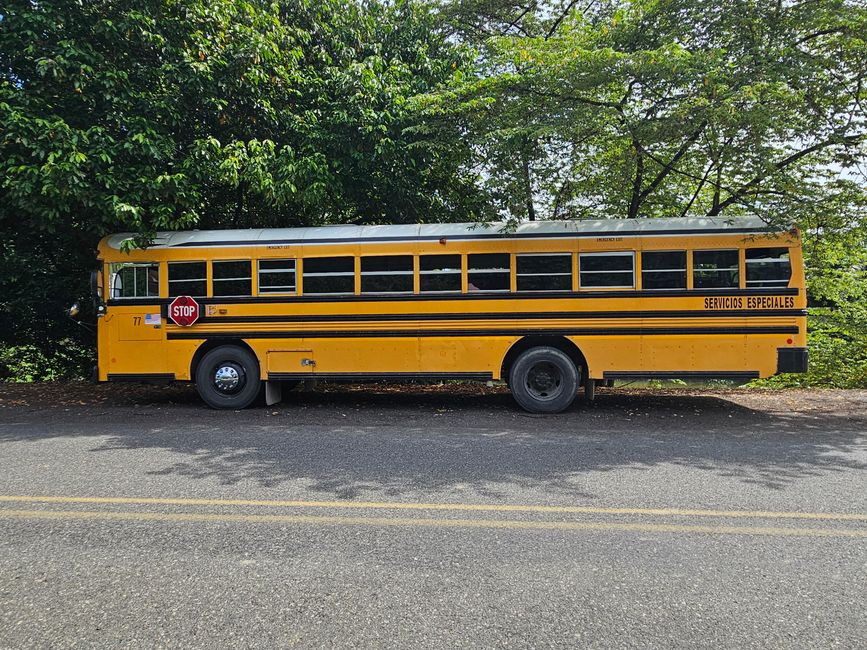
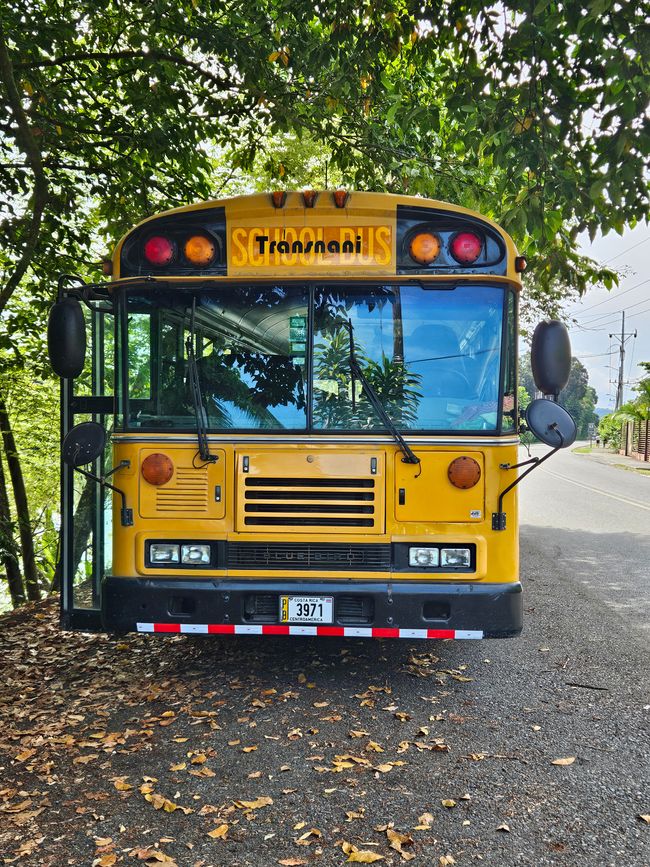
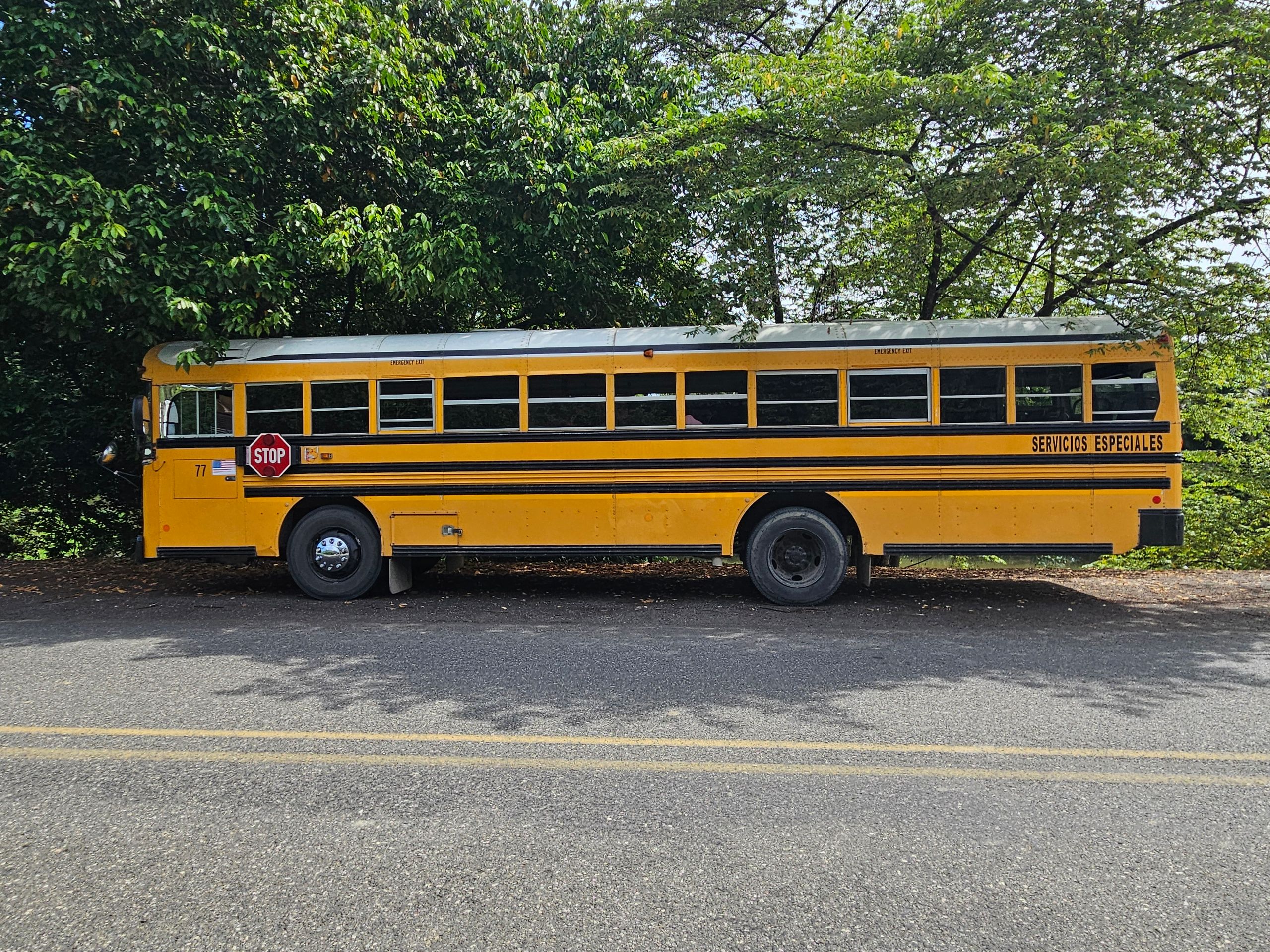
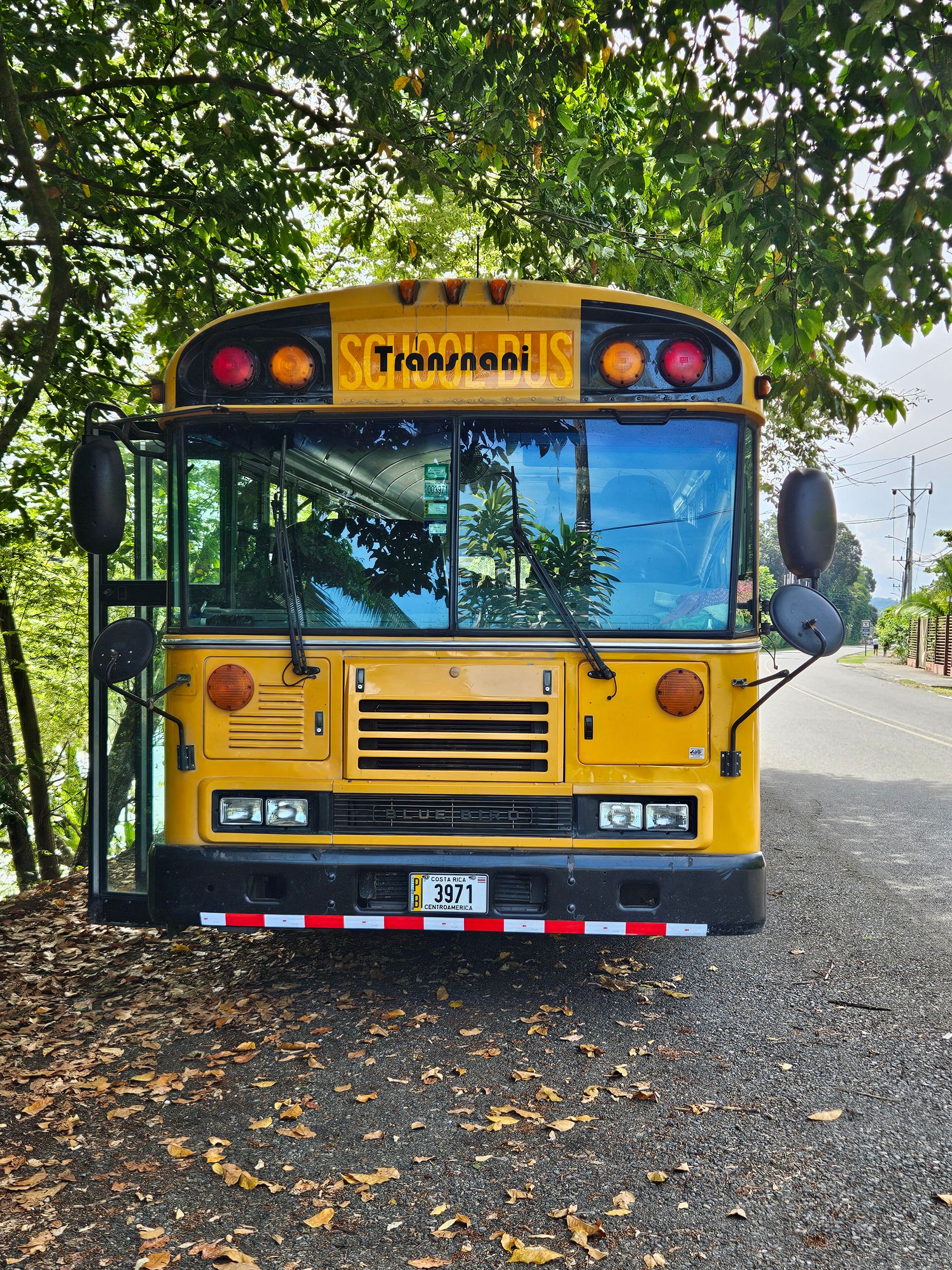
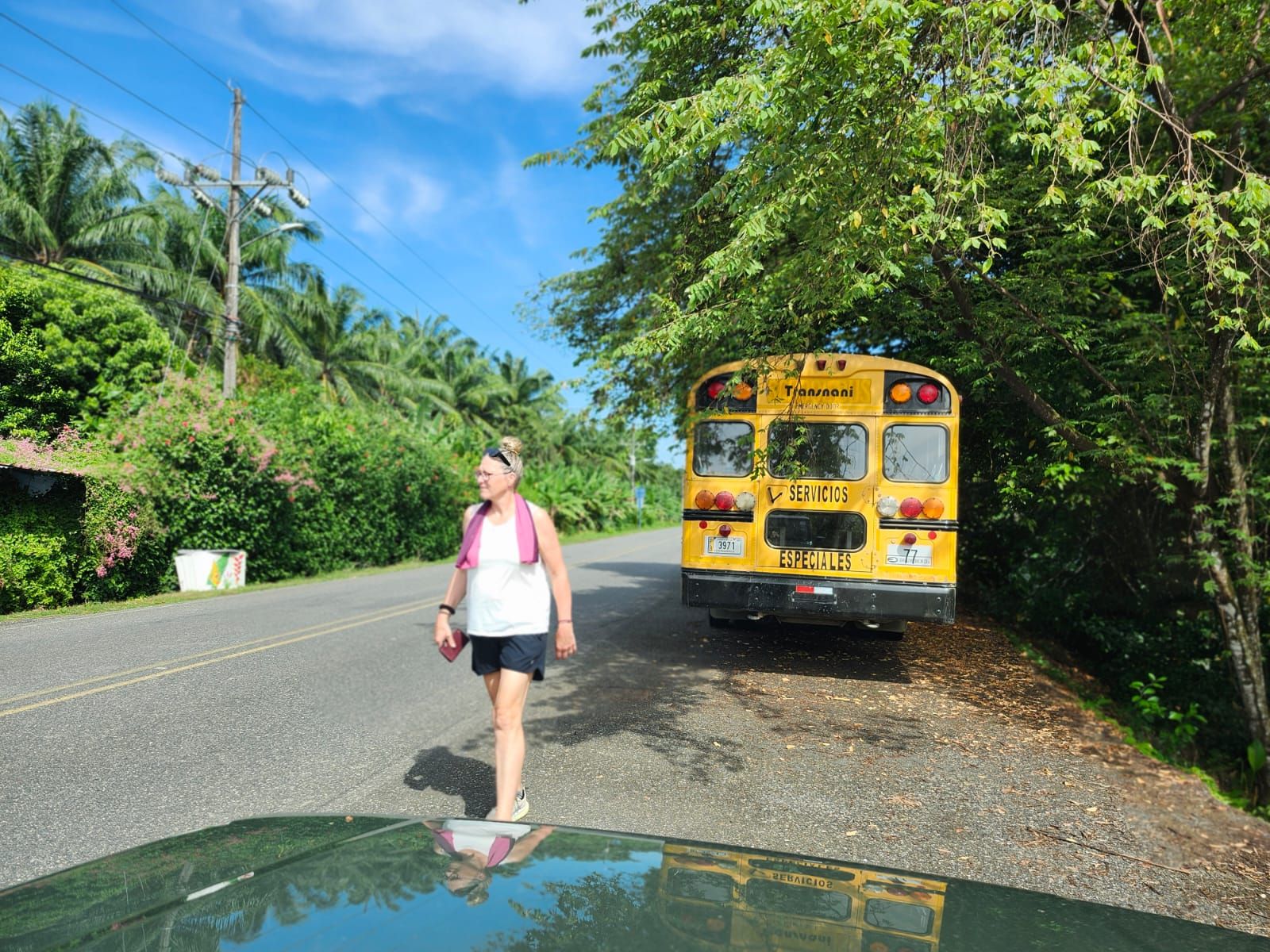
A little later, I discover a true photo opportunity by the roadside that I have been wishing for the whole time, as one of those iconic yellow school buses stands there, which I must immediately capture on camera. These iconic buses are usually retired models from the USA that get a second life as durable line or school buses in Central America. Their bright yellow color officially carries the name National School Bus Glossy Yellow in the USA and was introduced back in 1939, so that children and other road users can recognize the buses especially well at dawn with their black lettering.
The route then takes us through the endless oil palm plantations, which are so typical for this region, before the road later opens directly along the picturesque Pacific coast. As you drive past the palm trees planted in neat rows, you can't help but ponder, as palm oil rightfully has a rather critical reputation due to the massive monocultures and environmental consequences. In Costa Rica, many of these areas were established on former banana fields starting in the 1970s, yet this endless uniformity feels almost unnatural compared to the wild jungle. What's intriguing, however, is how this cycle works: About three years after planting, a young palm bears its first fruits and is then harvested for about twenty to twenty-five years until the trees become too tall and uneconomical. After that, the area is cleared and replanted with new seedlings in a uniform triangular pattern from nurseries.
Of course, we can't miss our beloved obligatory stop on this long stretch north, as we once again stop at our delicious coffee bar The Good Coffee Cafe behind Dominical. With a really good coffee and a freshly baked piece of banana bread, we refuel energy and enjoy the cozy atmosphere once again. Refreshed, we continue for a good stretch along the picturesque Costanera Sur along the Pacific coast to the north, before finally turning onto Ruta 27 at Orotina and tackling the final kilometers up into the Central Valley.
On Ruta 27, a special discipline of Costa Rican traffic awaits us as a crowning finale. After we get to start with an extensive traffic jam right at the beginning, the further stretch up into the mountains turns out to be a wonderfully absurd giant slalom. In reality, the road is single-lane and graciously provides us with a second lane for overtaking on every steeper ascent. In theory, heavily loaded trucks should dutifully keep to the right lane uphill, but in practice, the requirement to stay to the right here is rather interpreted as a non-binding creative suggestion. Thus, every elevation becomes a wild zigzag maneuver, where we twist around the huffing trucks first on the left, then on the right, then again on the left, and one more time on the right, just so that the road at the top of the crest once again becomes single-lane and we all wait together in the next traffic jam for the next ascent. And for all of this, we dutifully pay tolls.
At Atenas, we finally leave the highway and turn into the mountains towards Poás, where our GPS switches back into its own Costa Rican humor mode. For a ridiculous twenty-seven kilometers, the display once again predicts a leisurely travel time of an entire hour, and after just a few meters, we know why. What follows is a genuine roller-coaster ride with extremely steep ascents and descents as well as endless tight curves, where our small Jimny has to bravely fight its way up the mountain in first gear. At least, after the last few weeks, we are perfectly trained for just such paths, and honestly, it would have been almost a bit boring if we just rolled back easily over the Costanera and wide, highway-like roads.
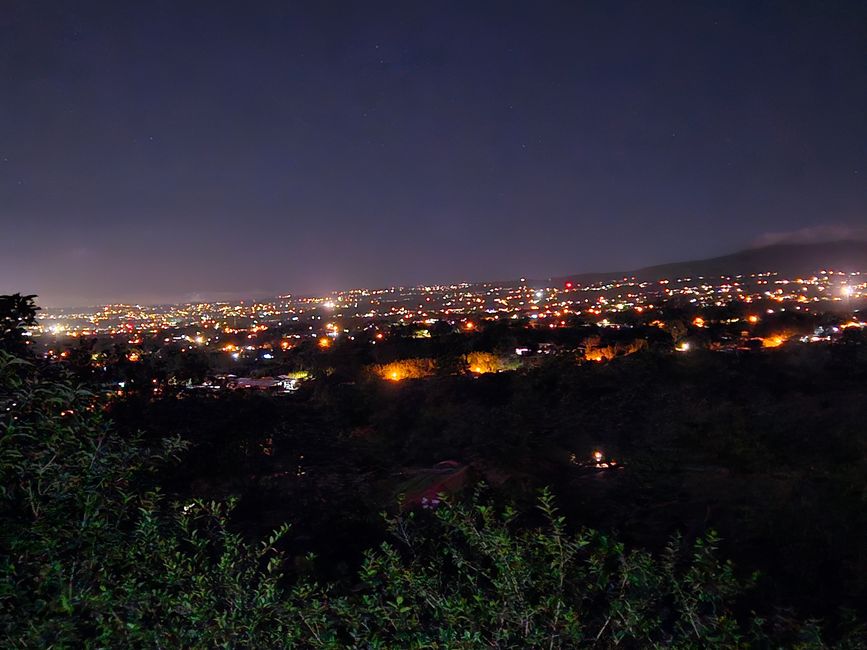
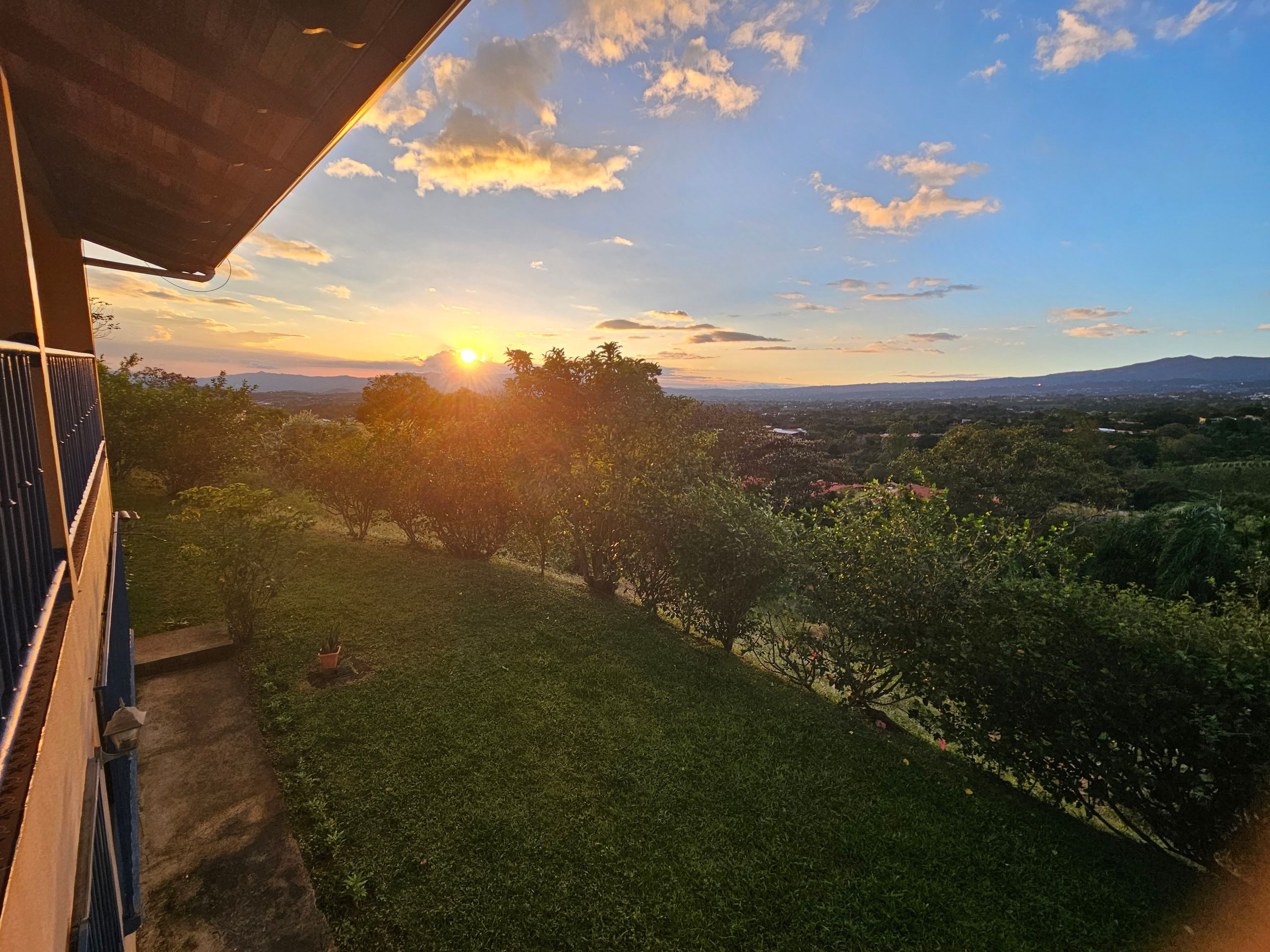
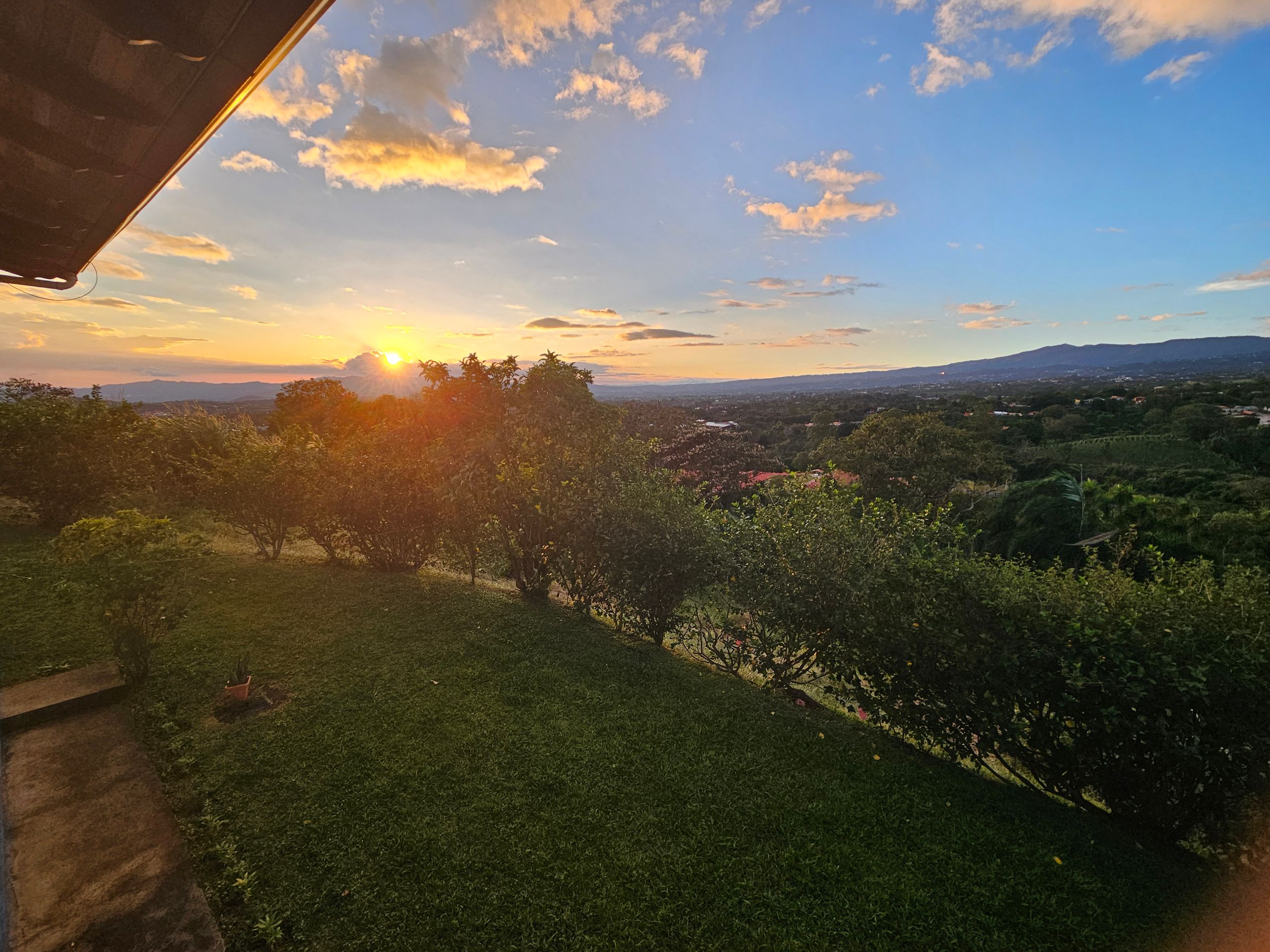
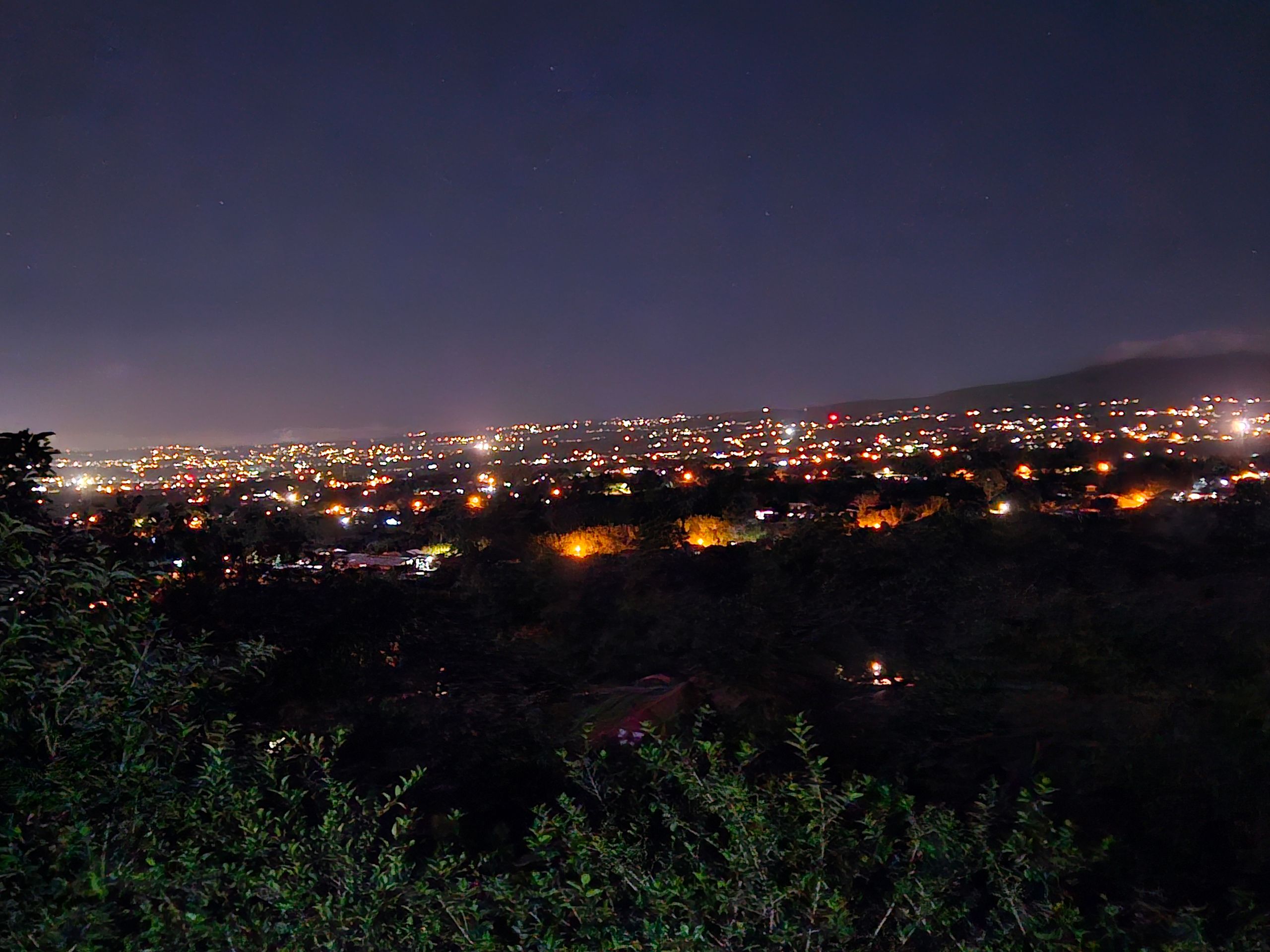
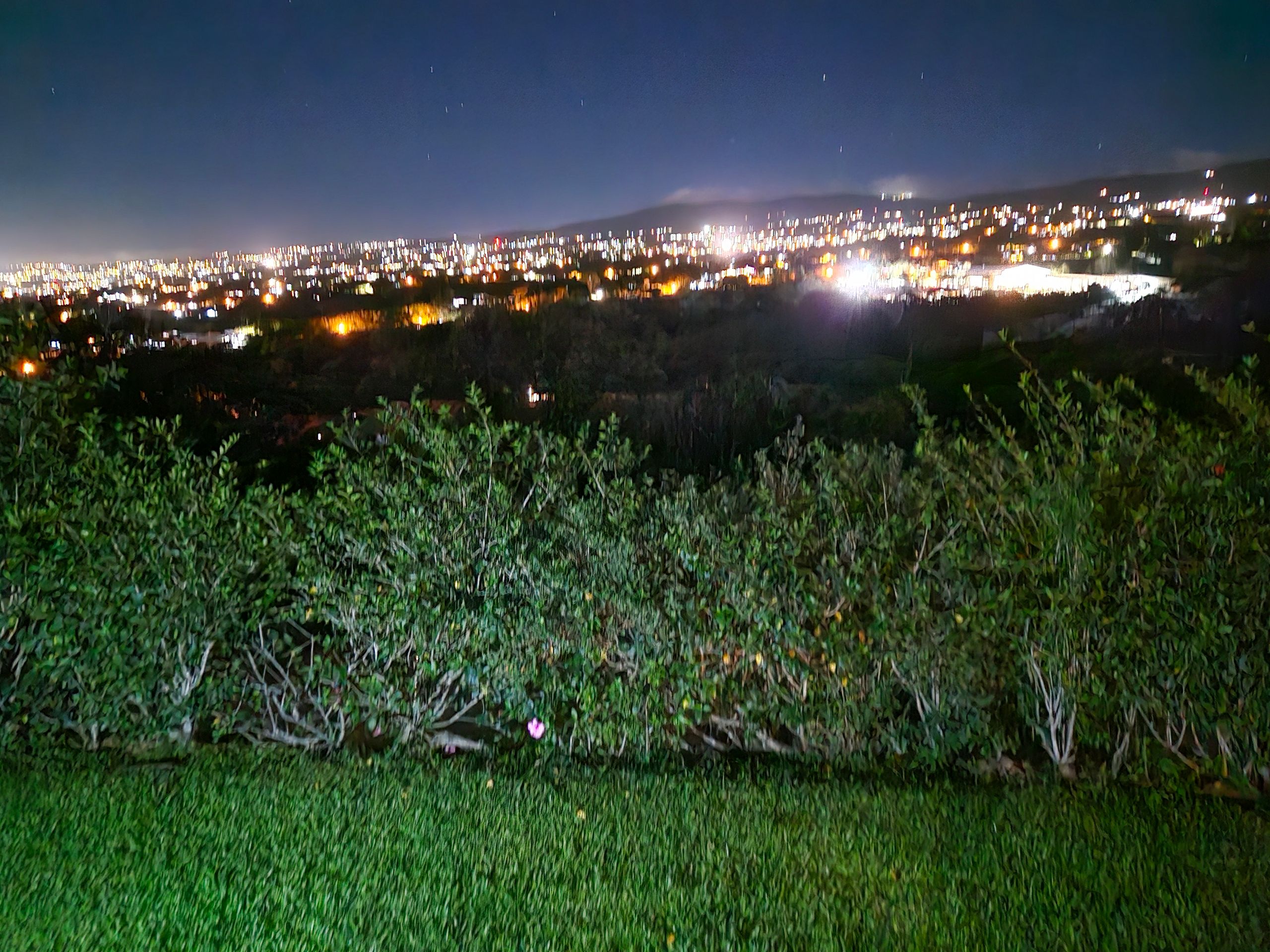
After this winding mountain ride, we finally arrive at the somewhat lonely Cabinas Lindo Horizonte in San Pedro de Poás, a small, quiet accommodation above the town where we will spend our last two nights. The name of the cabins is indeed programmatic here, as from our own balcony, we enjoy an absolutely fantastic panoramic view over the entire Central Valley, Valle Central, and the Poás Volcano. From up here, not only do the green slopes of the surrounding coffee plantations and mountains lie at our feet, but also the huge sea of lights around Alajuela and the capital San José stretching over to the opposite mountain ranges. Especially after many days in the deep, dense lowland rainforest, this wide view over the highlands of Costa Rica feels incredibly liberating.
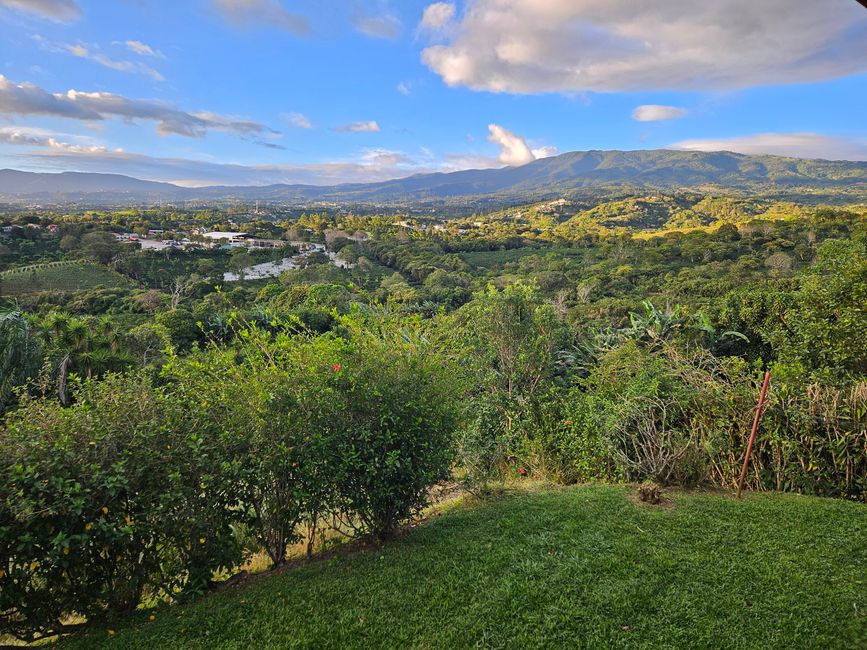
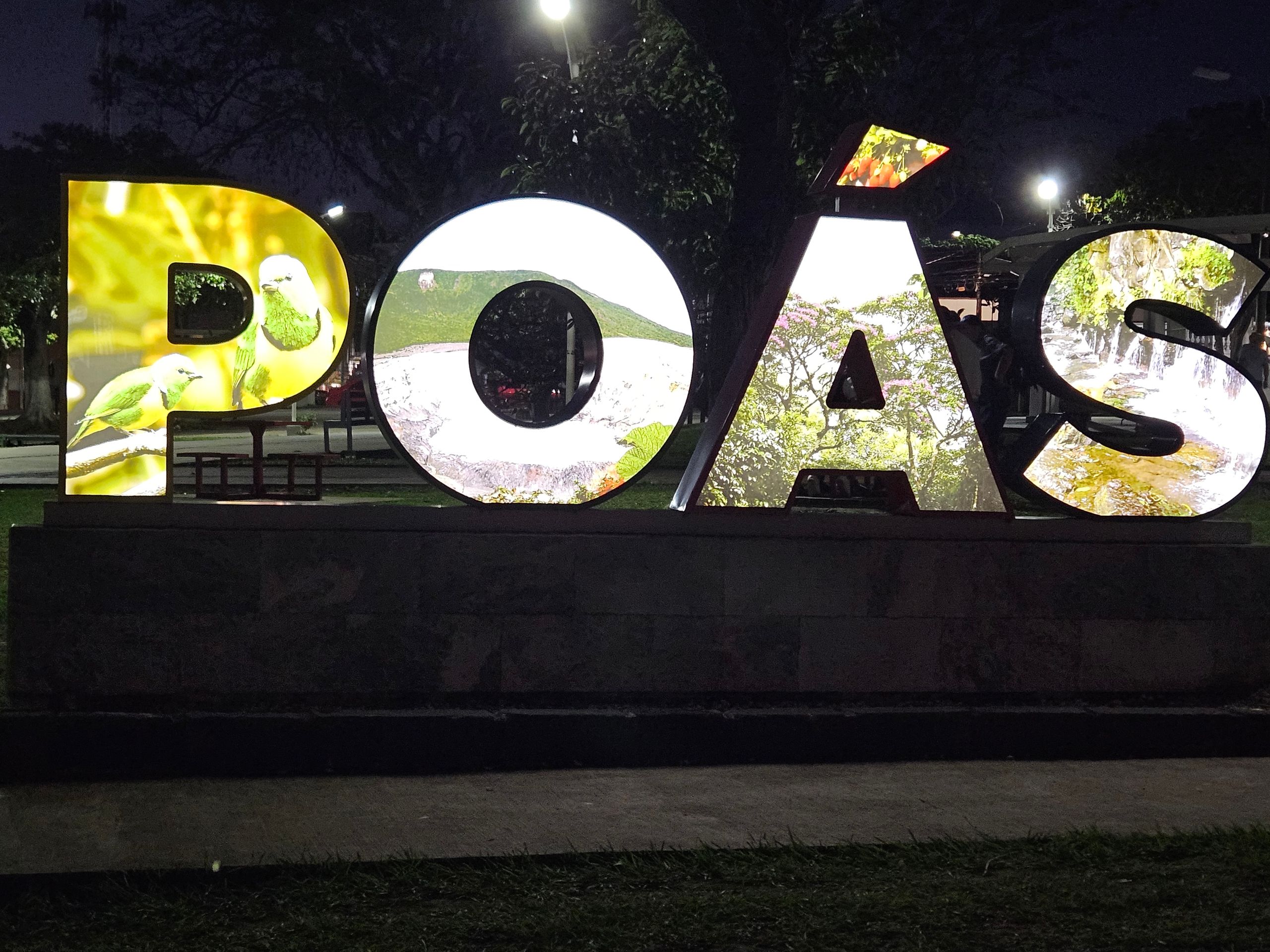
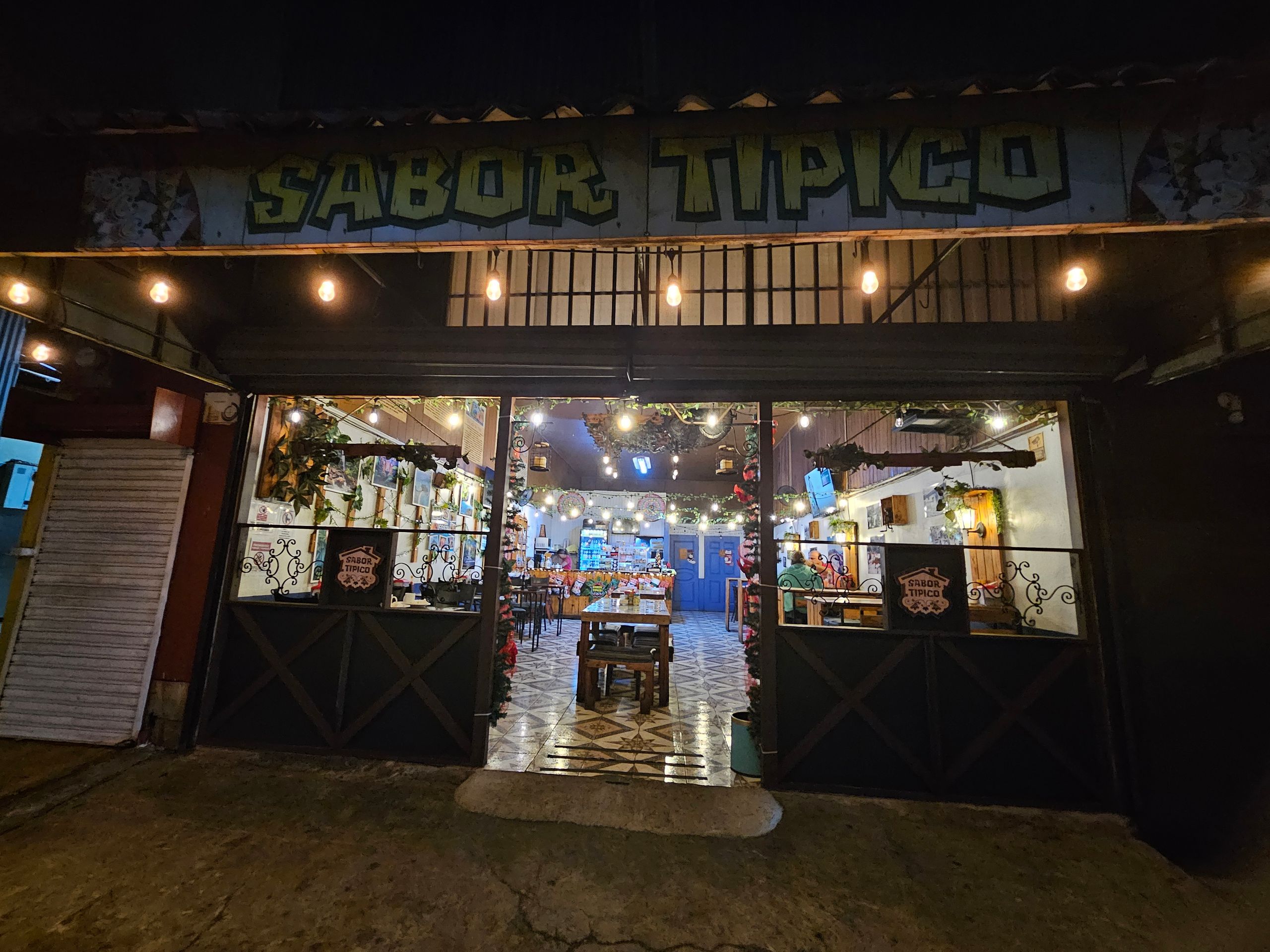
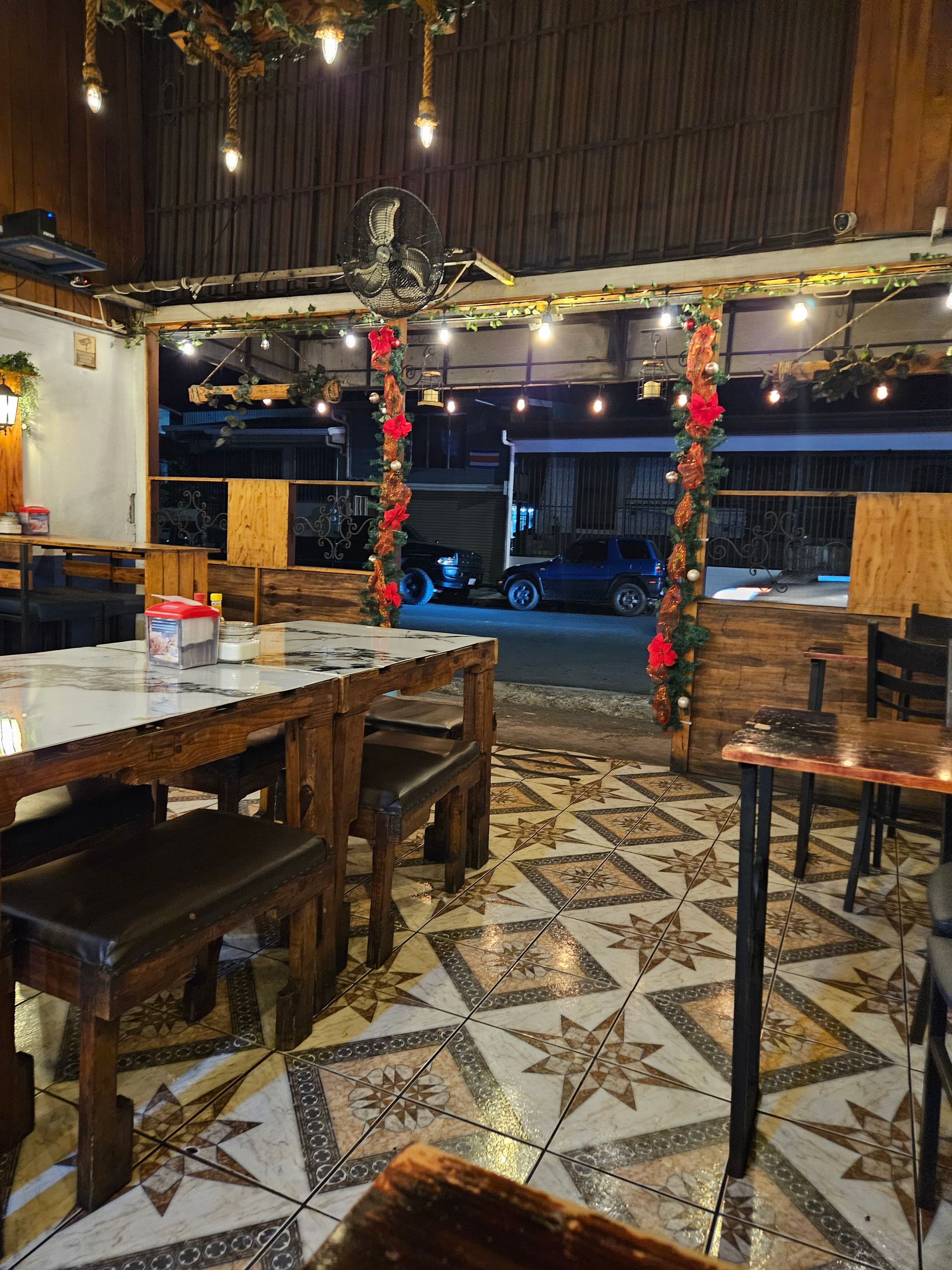
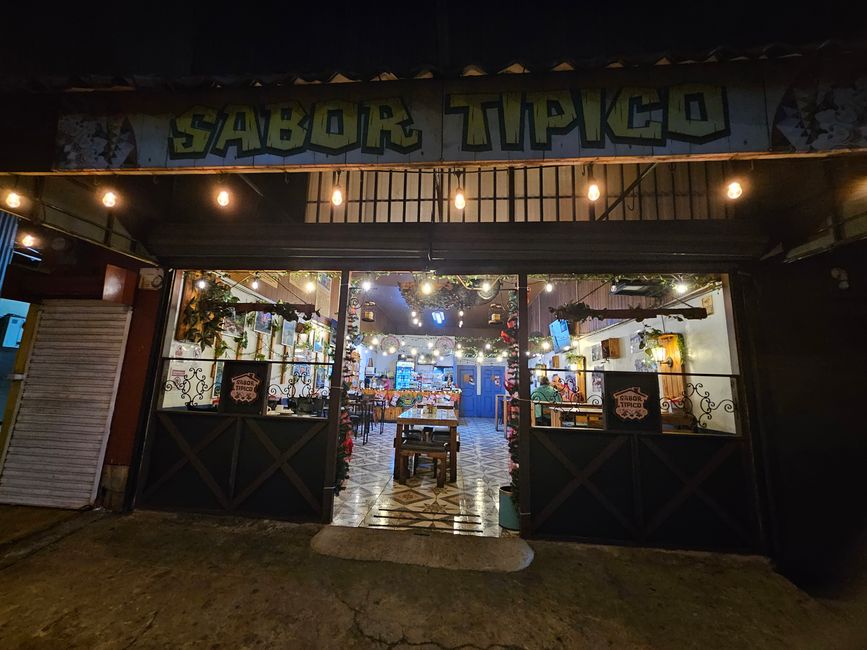
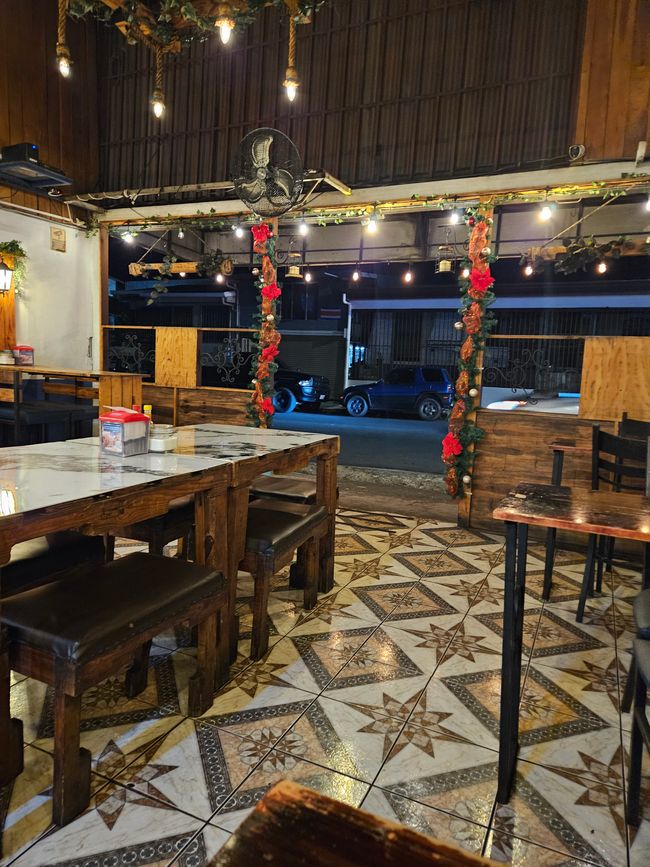
Since there is nowhere around our accommodation where we could get something to eat (the Italian restaurant at the cabins is only open Friday to Sunday), we drive down to the center of Poás again in the evening. However, in the bustling evening traffic chaos, I don't feel very comfortable in the dark and quickly get a bit stressed, especially while searching for a suitable parking space. Yellow markings can be seen everywhere by the roadside, which the car rental agency specifically warned us about at the beginning of the trip, as you definitely cannot park there and are immediately subject to hefty fines or towing. Somehow, we still manage to snag a legal spot and end up in a small local restaurant called Sabor Típico. There, the menu promises exactly what the name suggests and what we honestly can't really see anymore after all these weeks: once again the very typical Costa Rican cuisine with chicken, rice, beans, and fries, so I finally choose chicken with fries and some vegetables.
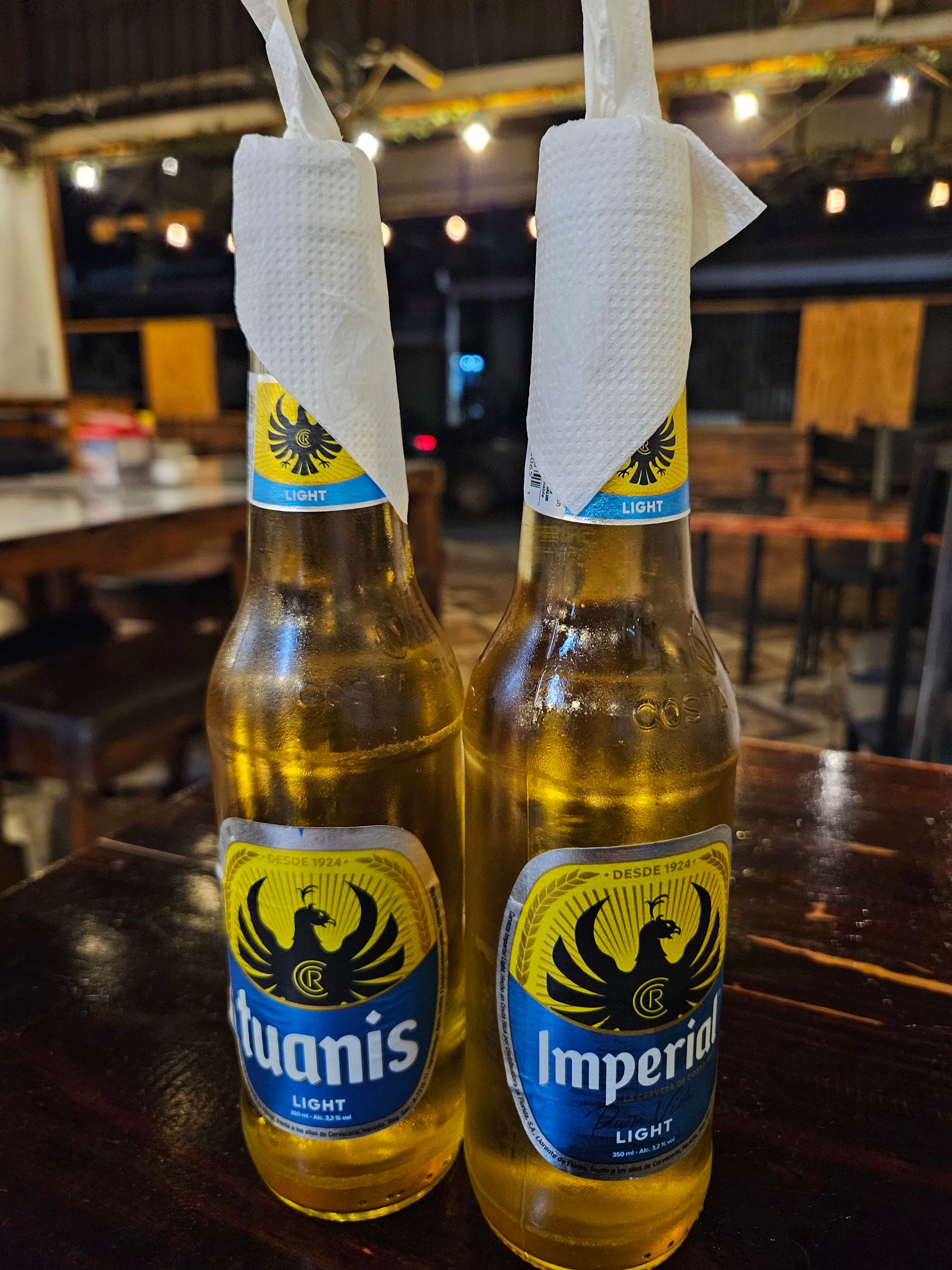
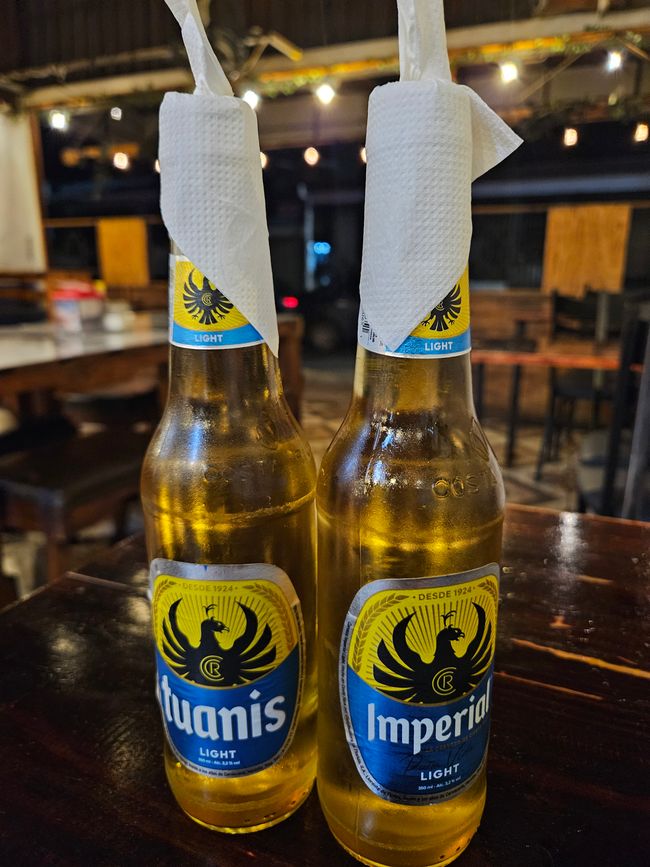
Of course, we order two ice-cold Imperial beers to go with our dinner, which, like everywhere in Costa Rica, are served with a napkin wrapped around the neck of the bottle. After we have been wondering throughout the trip what this is all about, we finally found out what these napkins are for. Since the tradition here is to drink the beer straight from the bottle, the paper protects the opening from dust and flies, serves to quickly wipe the bottle rim, and catches the condensation water so that the drink stays cold longer. A small highlight is also the special edition with the inscription tuanis on the label, which means cool or awesome in Costa Rican slang and fits perfectly with this vacation.
Strengthened, we venture back up the steep ascent to the cabins in the dark, successfully mastering this last climbing section and falling into bed satisfied after a beer with a panoramic view.