

Chapultepec - The First Outing
My First Outing to a New Green Neighborhood
Published: 11.08.2025
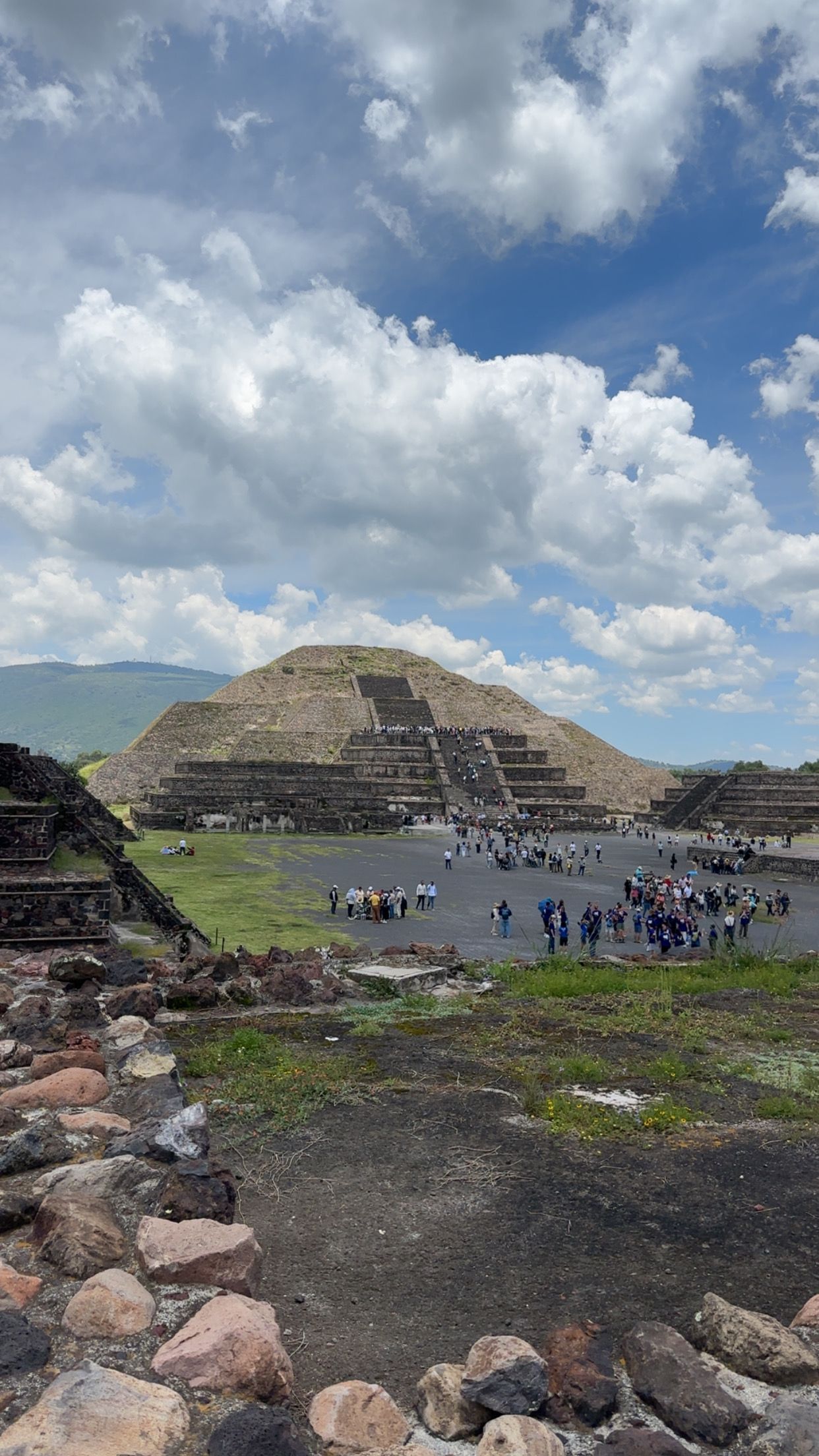
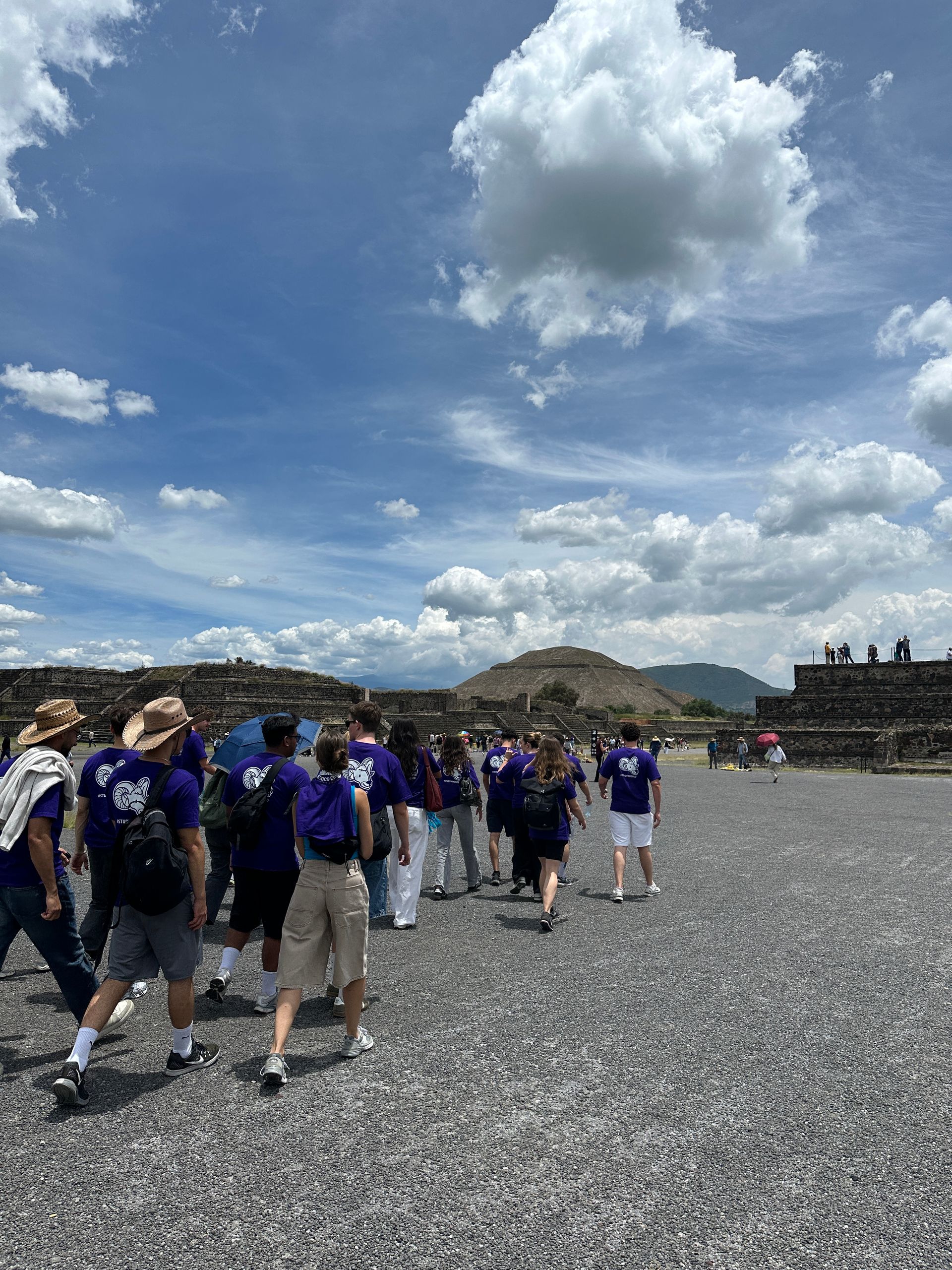
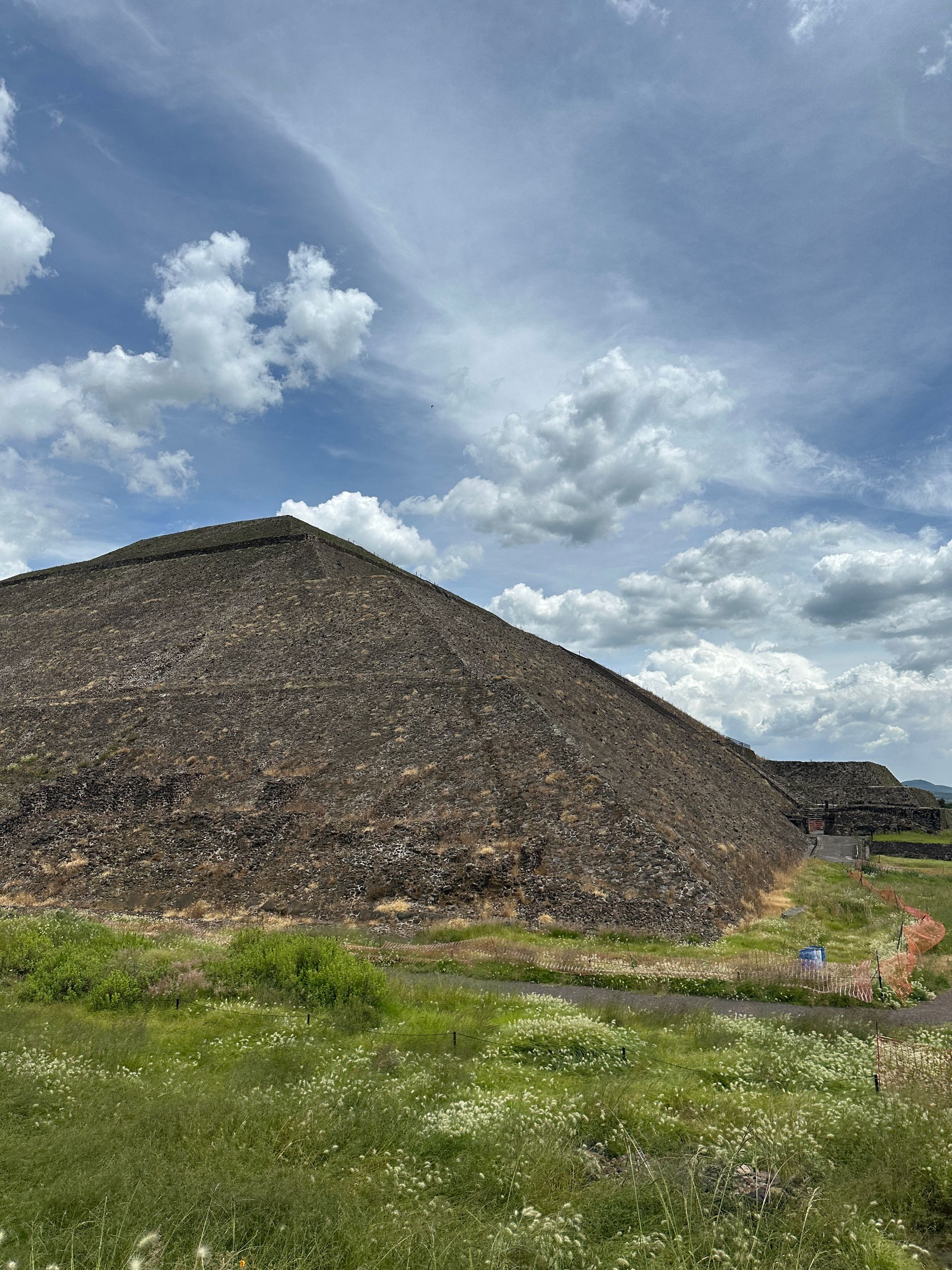
Today, on Friday, we are visiting the center of the Aztecs, Teotihuacán (“Place of the Gods”). Between 100 and 650 AD, the city was the dominant cultural, economic, and military center in Mesoamerica. At its peak, it may have had up to 200,000 inhabitants, making it by far the largest city on the American continent and one of the largest in the world. I’ve only heard about it in Spanish class and I’m really looking forward to it.
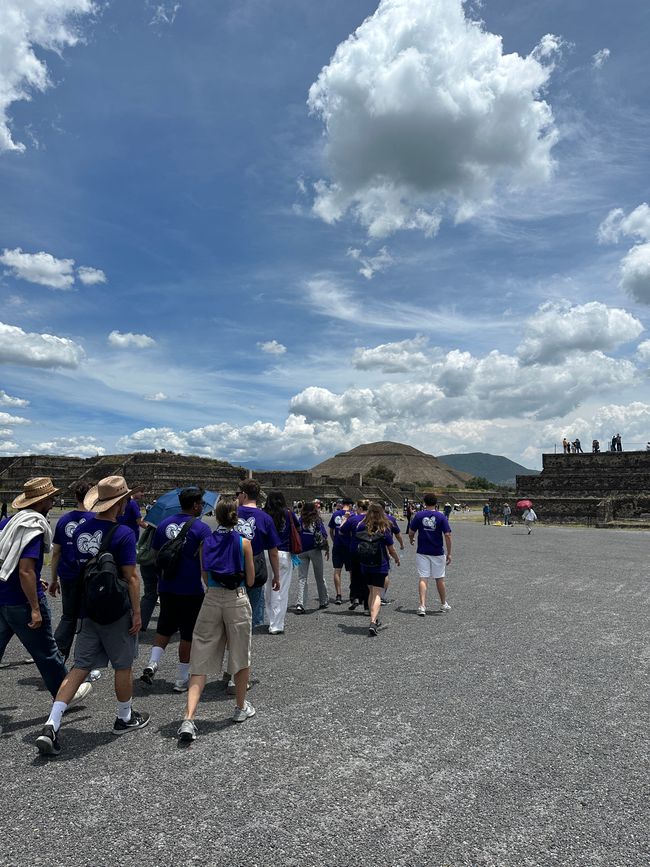
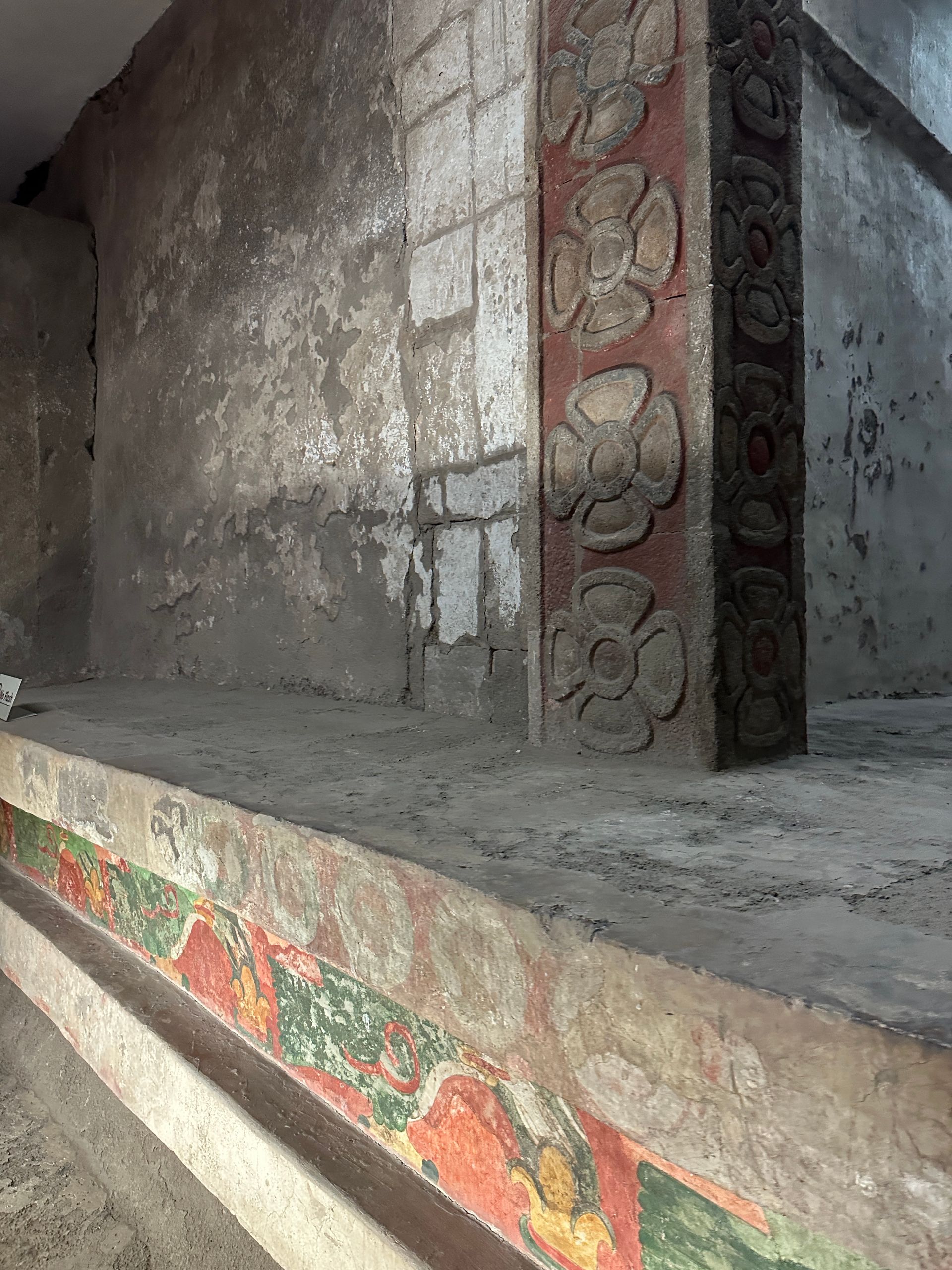
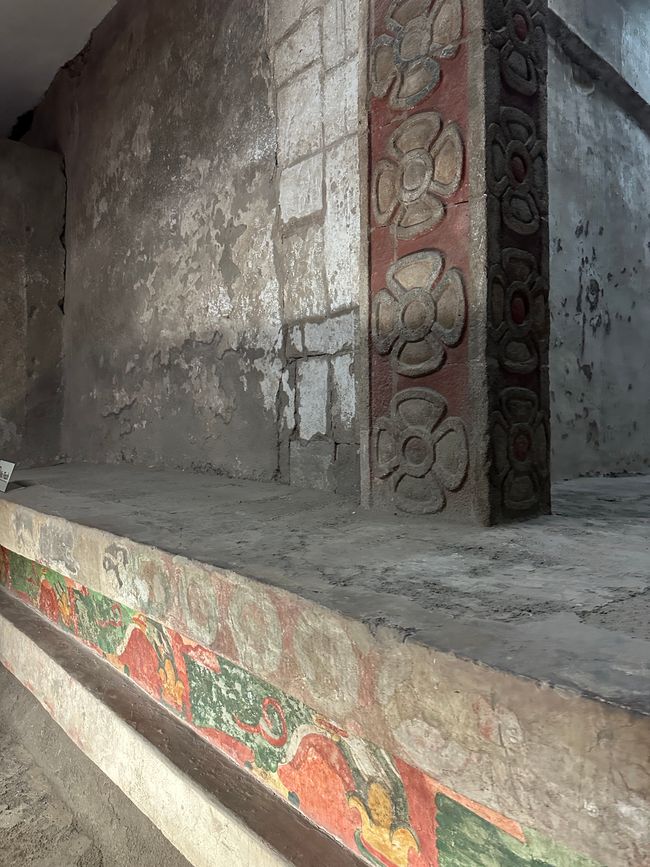
We will be picked up at the university around 08:30 AM. All 200 of us will be dropped off by tour buses after a two-hour drive and will explore the vast grounds in groups. A tour guide will first show us how people lived here. Everything is quite nicely decorated, and what surprises me is that the houses here had no windows. For “reproducing”, there were specific corners one would go to. Interesting.
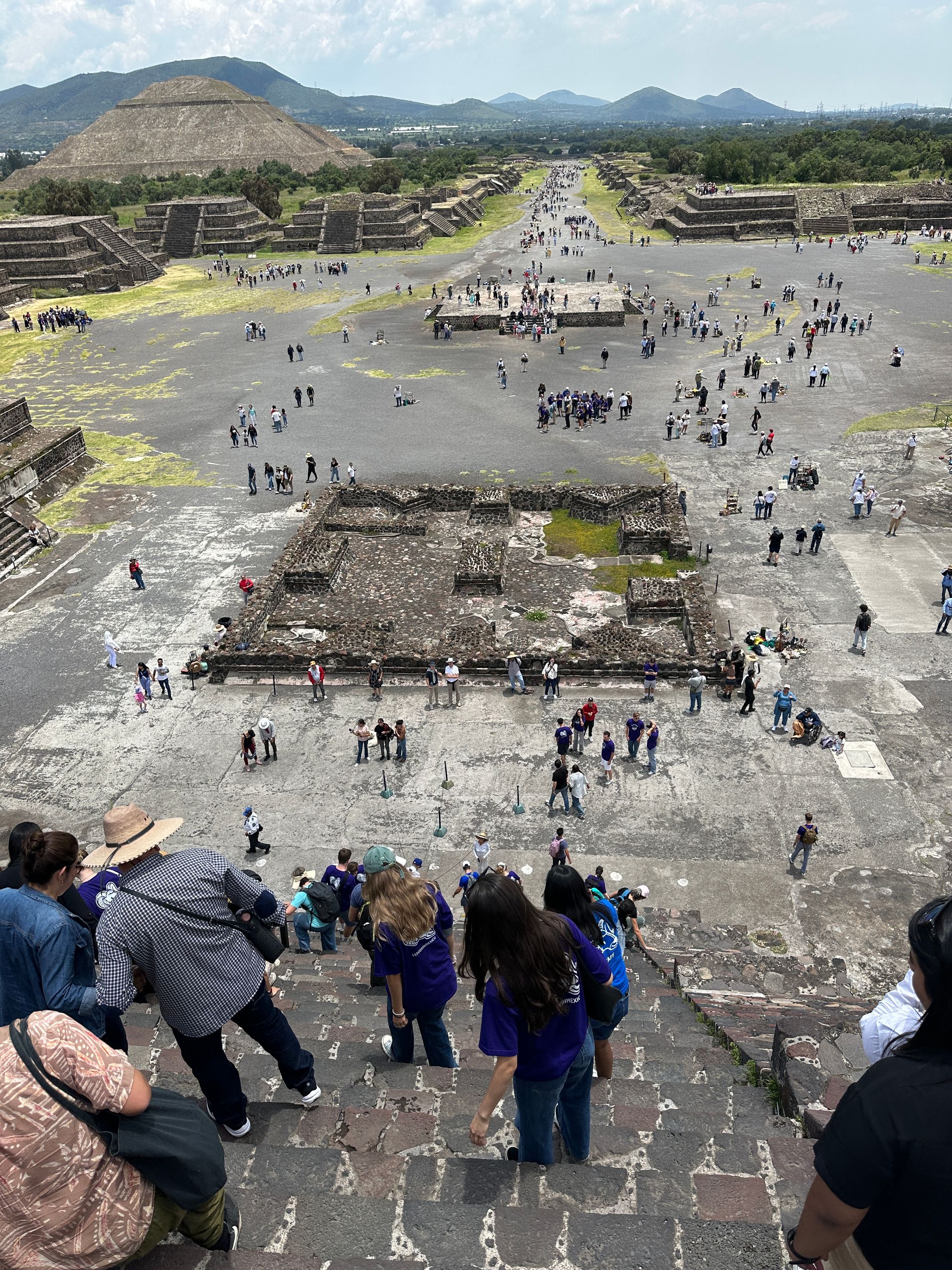
Then we’re off with a delicious fruit ice towards the first large main square. The small pyramids haven’t lost their peaks; rather, they are each dedicated to a god, and at the top, humans would sacrifice themselves. For the god of rain, for instance, one would be burned. Every month, the sun is also somehow perfectly aligned behind one of the sites, after which the Aztecs created their own calendar.
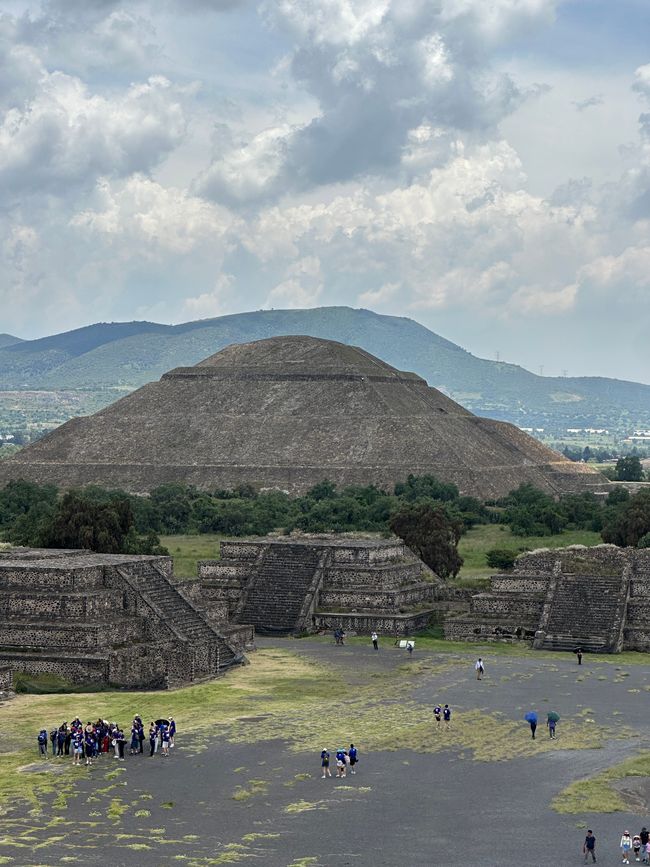
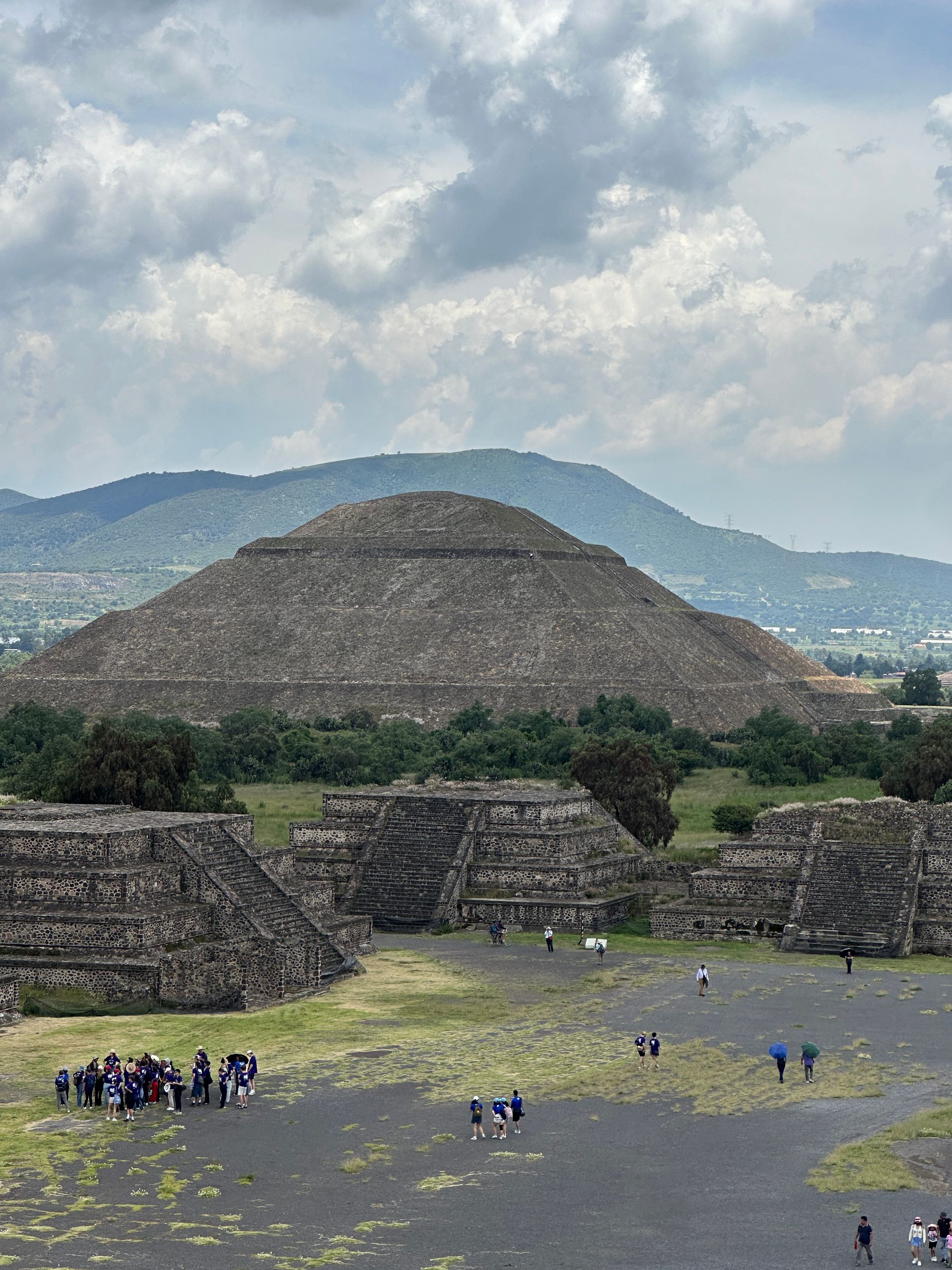
On the main pyramid, only particularly consecrated members of society were allowed. According to legend, humans were created underground and “spat” onto the earth by the surrounding volcanoes. Therefore, the two pyramids, which happen to be among the tallest in the world, are said to mimic the surrounding mountains.
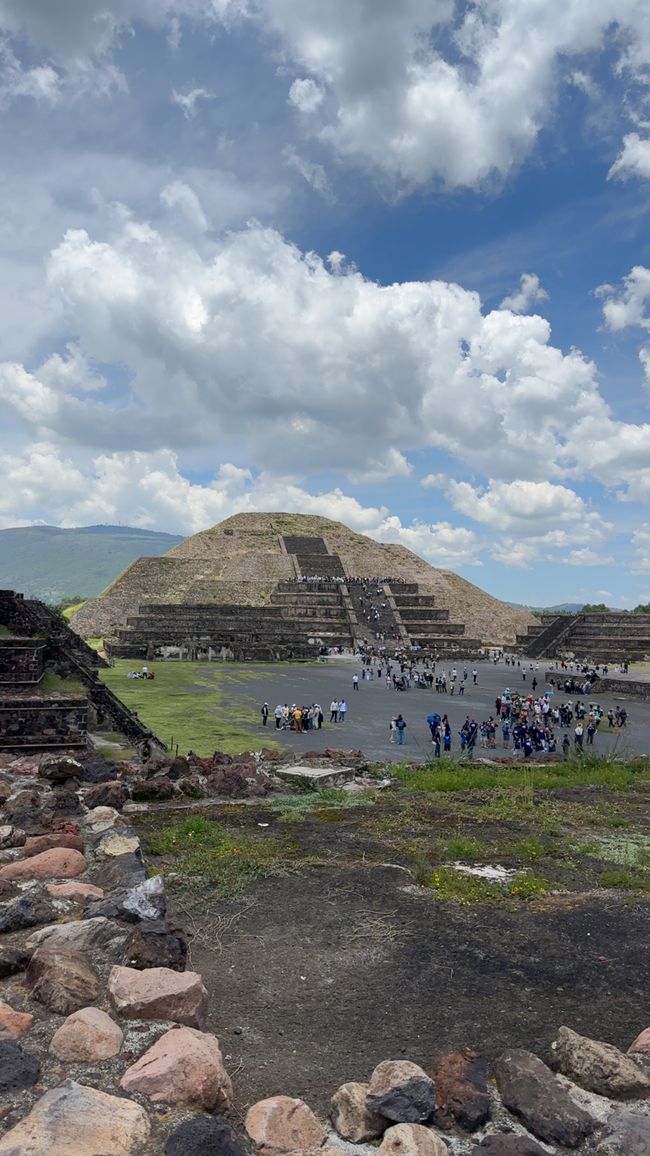
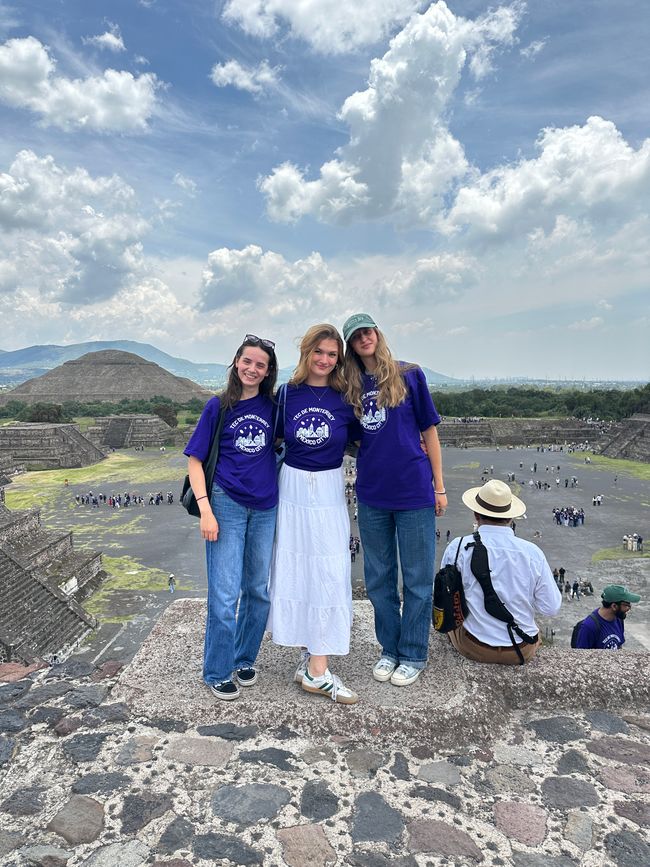
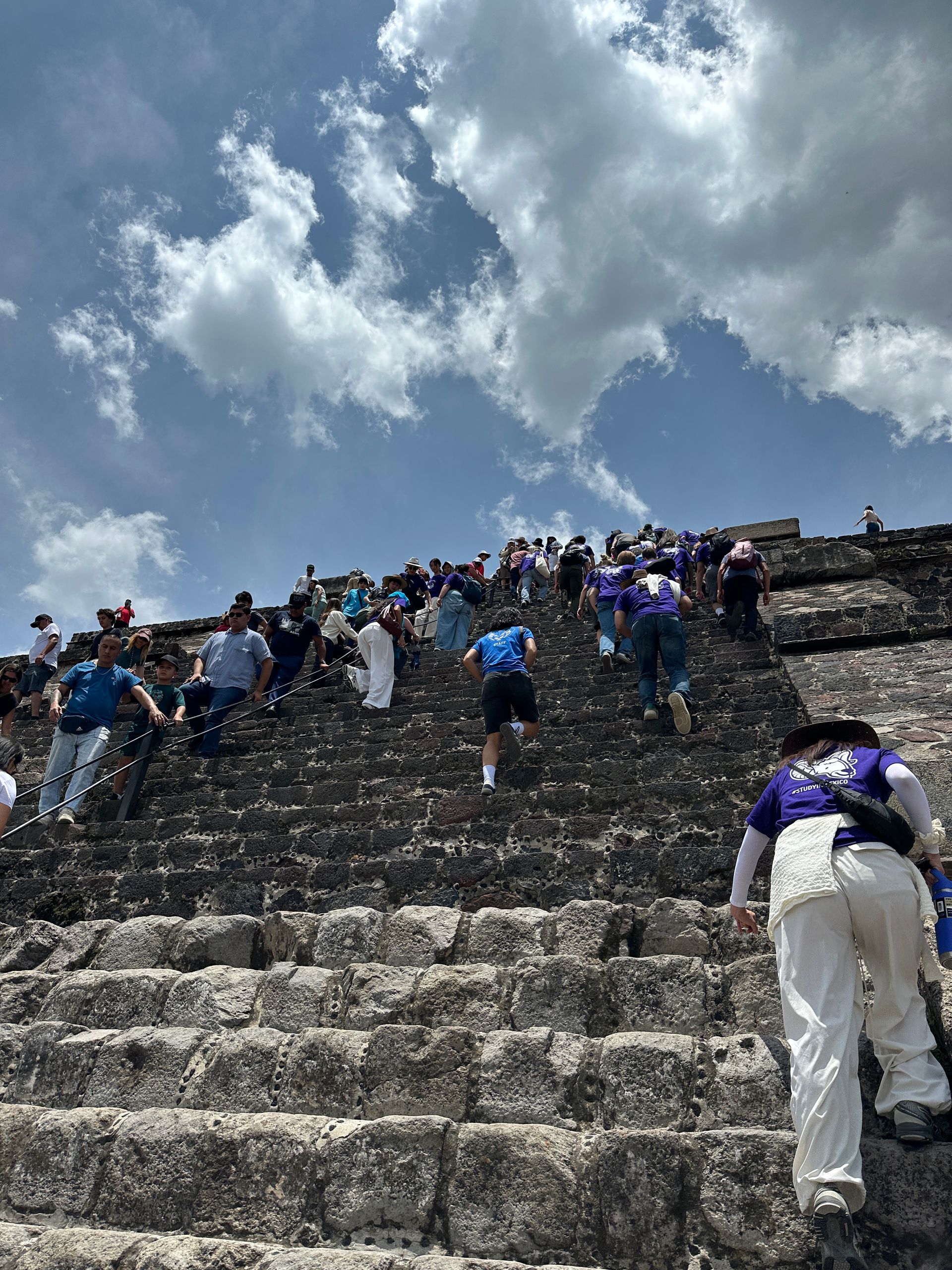
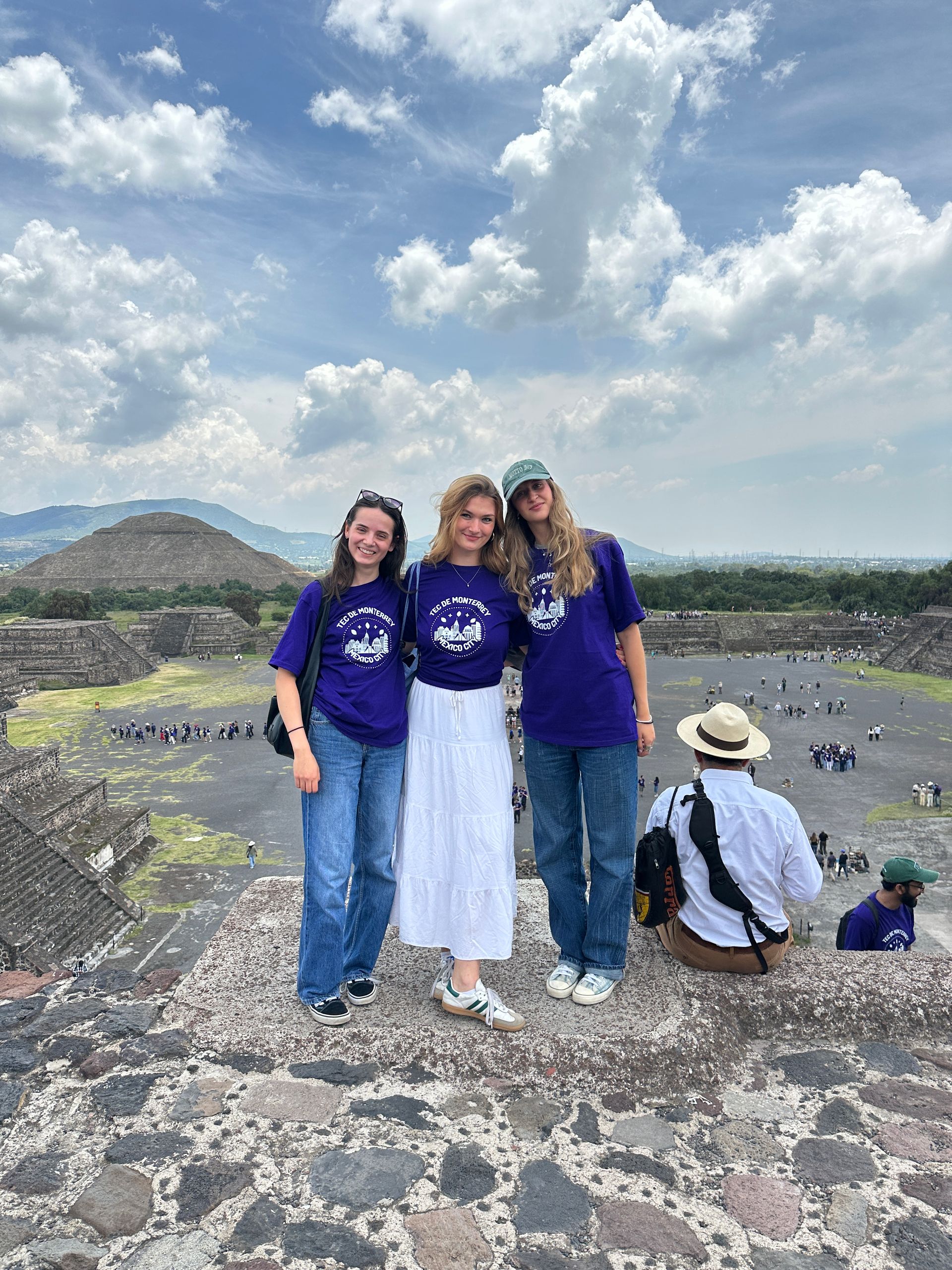
It gets really hot as soon as the sun comes out. We also have to wear T-shirts from Tec, and after climbing the very steep steps and running down a long avenue, I briefly feel like I might faint. Luckily my water is enough.
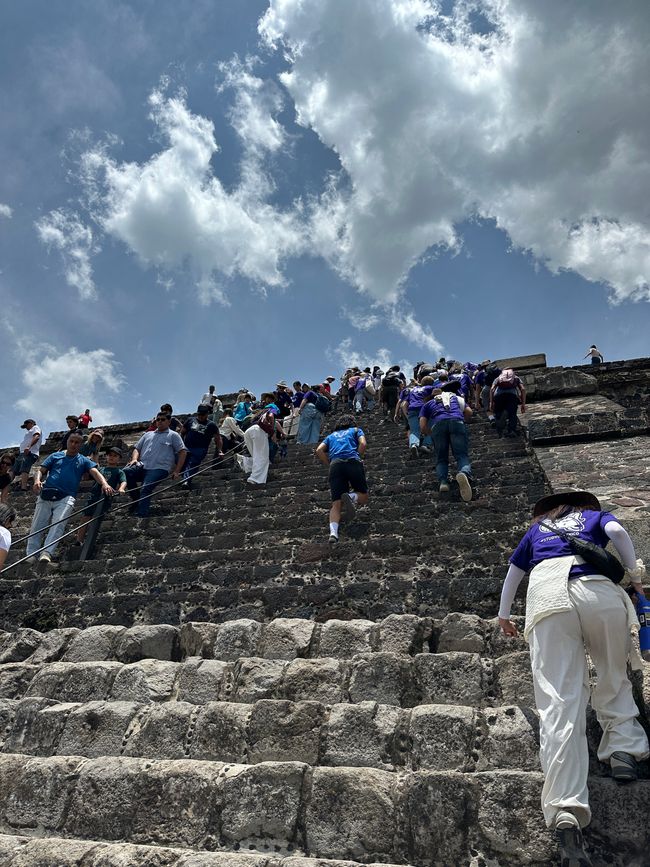
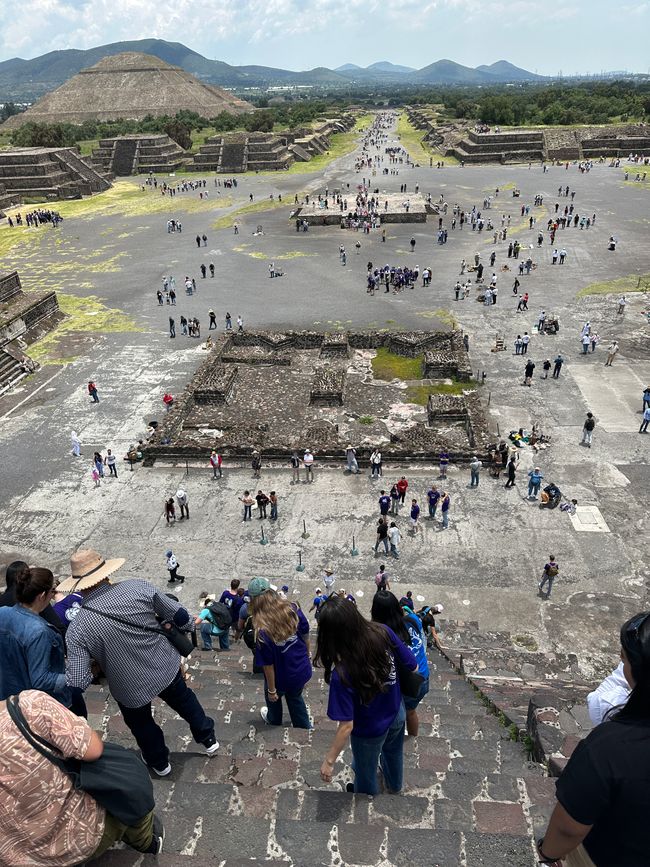
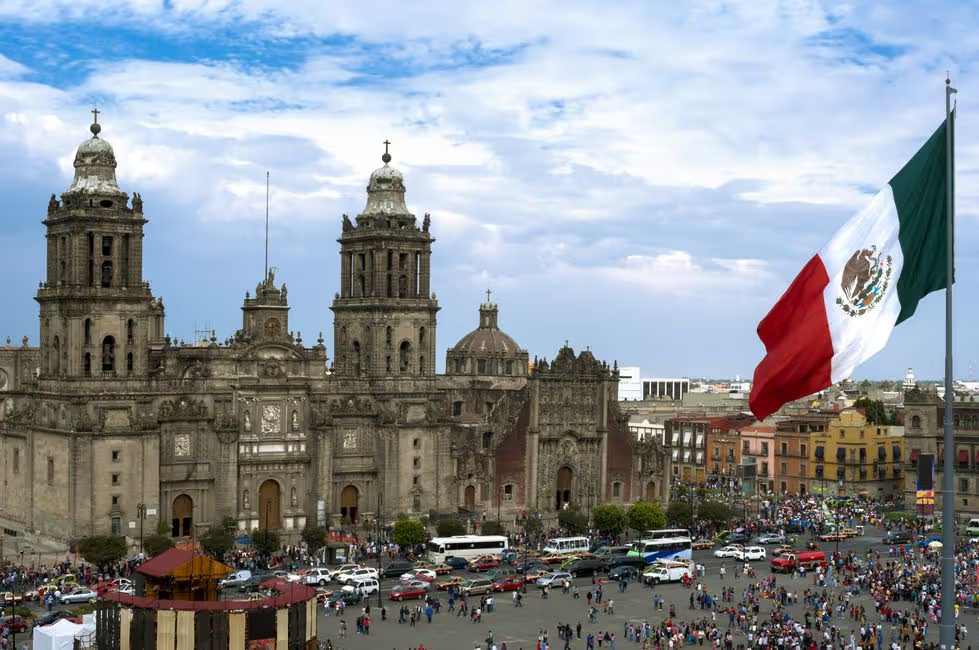
By the way, I find the history of how Mexico got its name very fascinating: According to tradition, the Aztecs were told to establish a city at the spot where they would see an eagle perched on a cactus, holding a snake in its beak. This sign took many centuries to appear, as they had to circumnavigate a large lake to reach a mountain on the other side. During their nightly rest, the moon shone so brightly on the lake that the travelers realized the water was shallow enough to wade through. The next day, they set off and stumbled upon an island in the middle of the lake, where they finally and truly found the long-awaited sign: the eagle, the snake, and the cactus, which can still be seen on the Mexican flag today. And to name the place where the city was to be founded, they came up with the following word: mexcli (or something like that, how he pronounced it) for moon, ixcli for navel, and co for the preposition in. Navel in the moon, then; the island in the lake that reflects the moon. Nice, right?
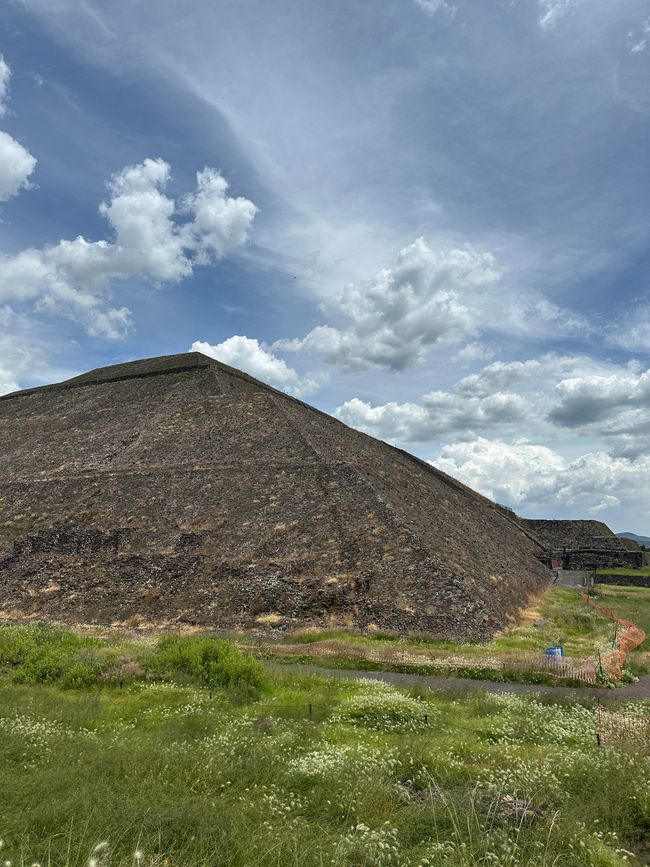
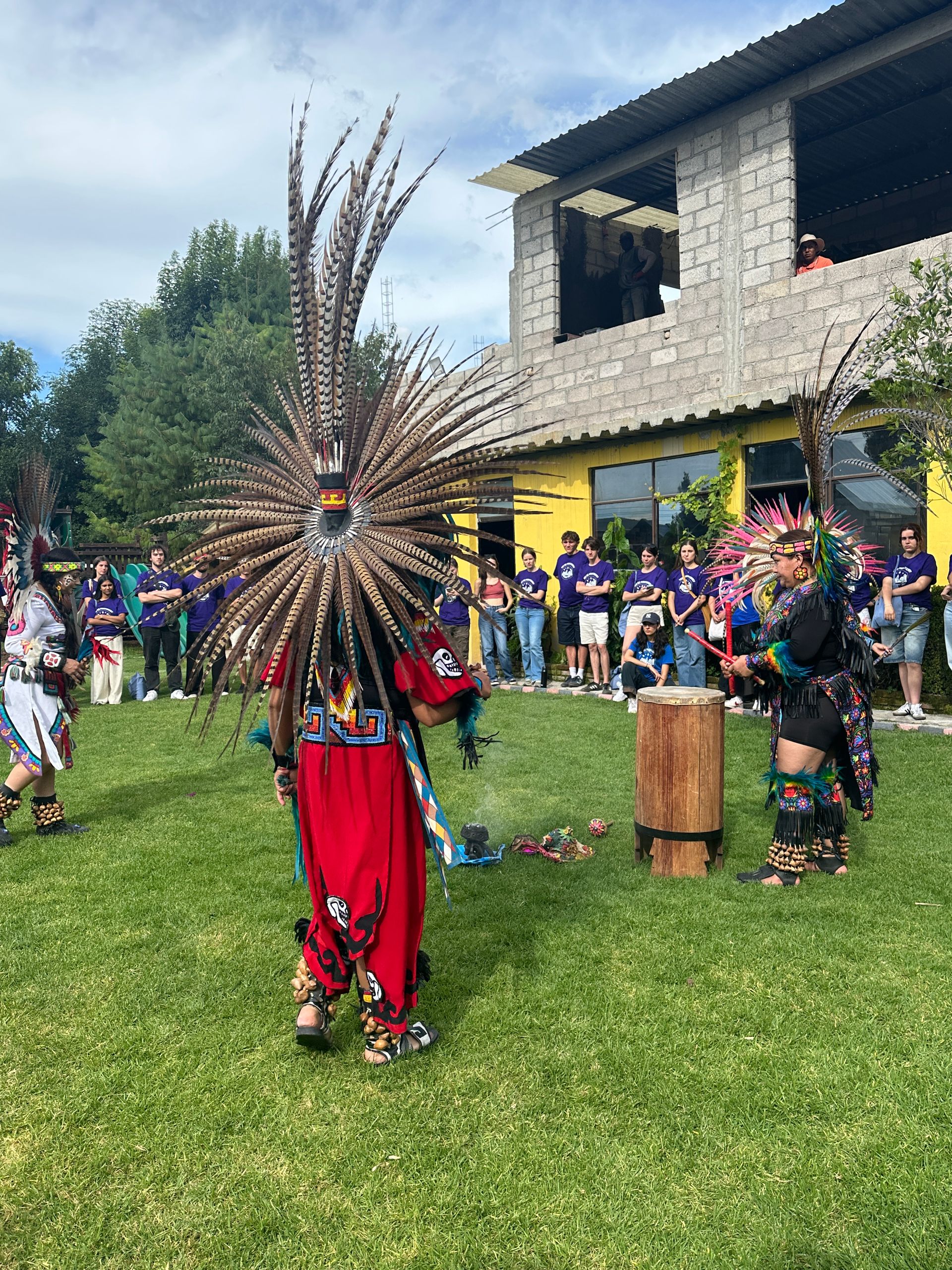
Next, we will further indulge in a lunch buffet with subsequent Aztec dances, followed by a Mezcal/Tequila tasting and a demonstration of the versatility of agave. The entire trip is organized by Tec students, by the way.
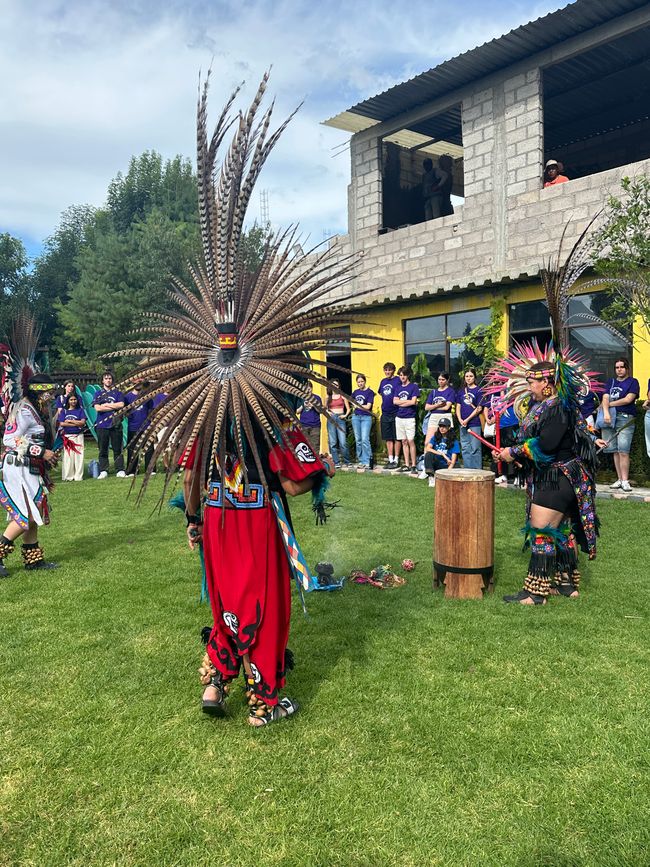
These stops are also cool, but after the rather exhausting tour, maybe it's a bit too much. A bit tipsy, we then drag ourselves back onto the bus around 6 PM, sit in traffic for ages, and finally get back to the university after a very long day around 9:30 PM. It was really interesting and once again a day whose impressions I will surely be processing for a while.