Shogun Palace
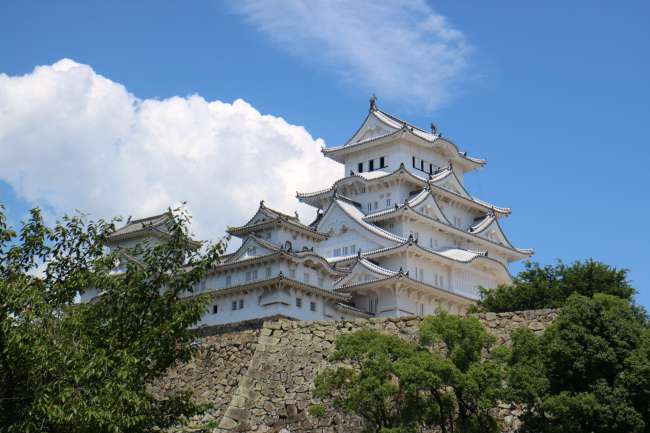
The following day, we had a proper rainy day, but we still picked something wonderful. We visited the Shogun Palace. Unfortunately, taking photos inside was not allowed. We had to...

Published: 29.09.2026

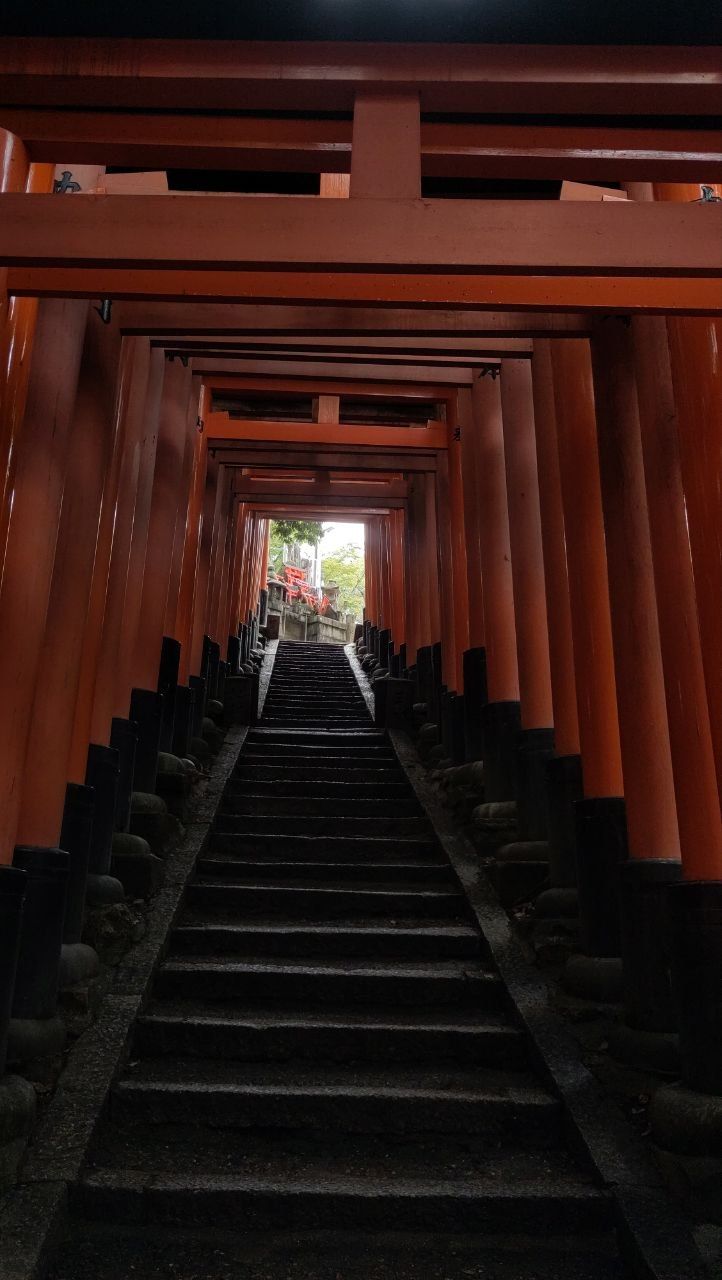
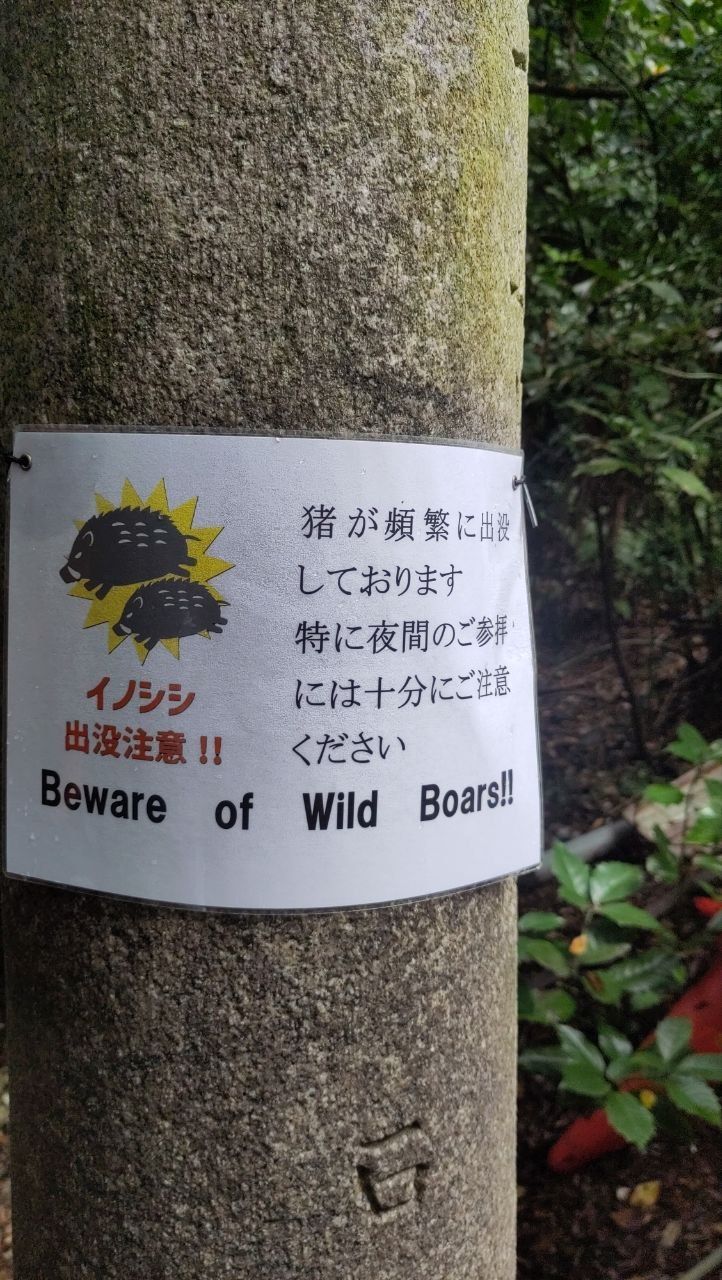
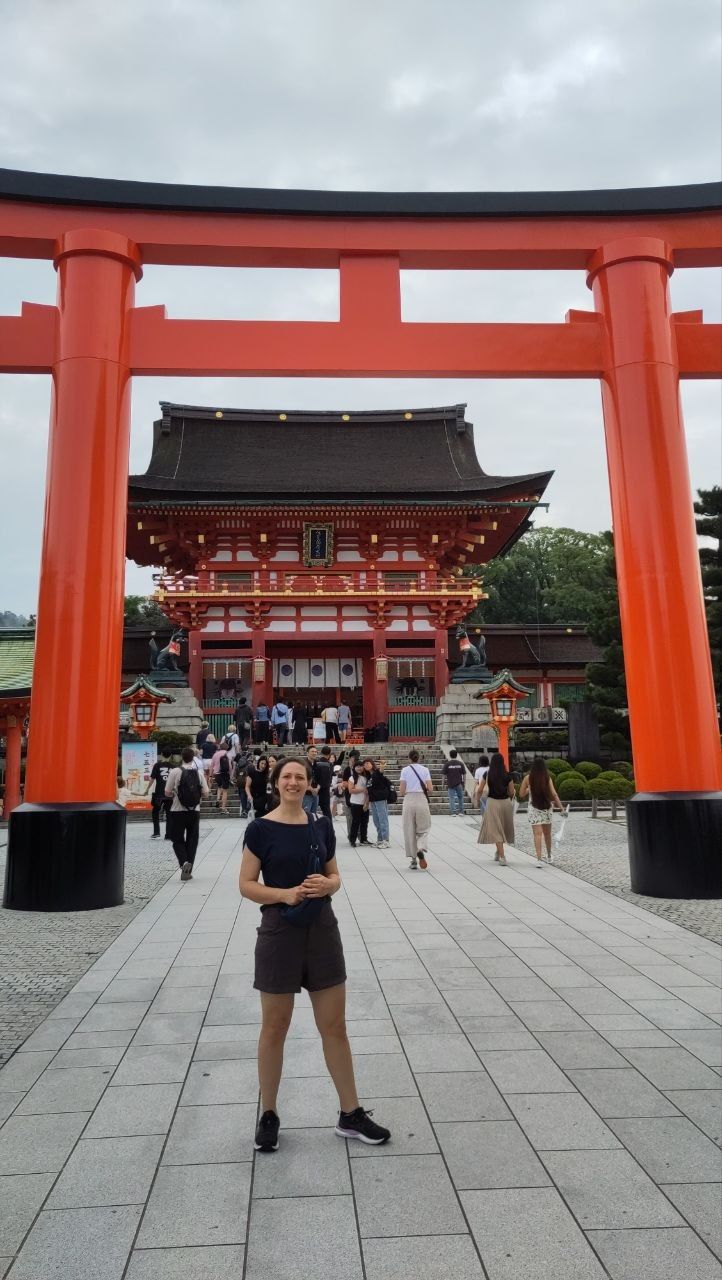
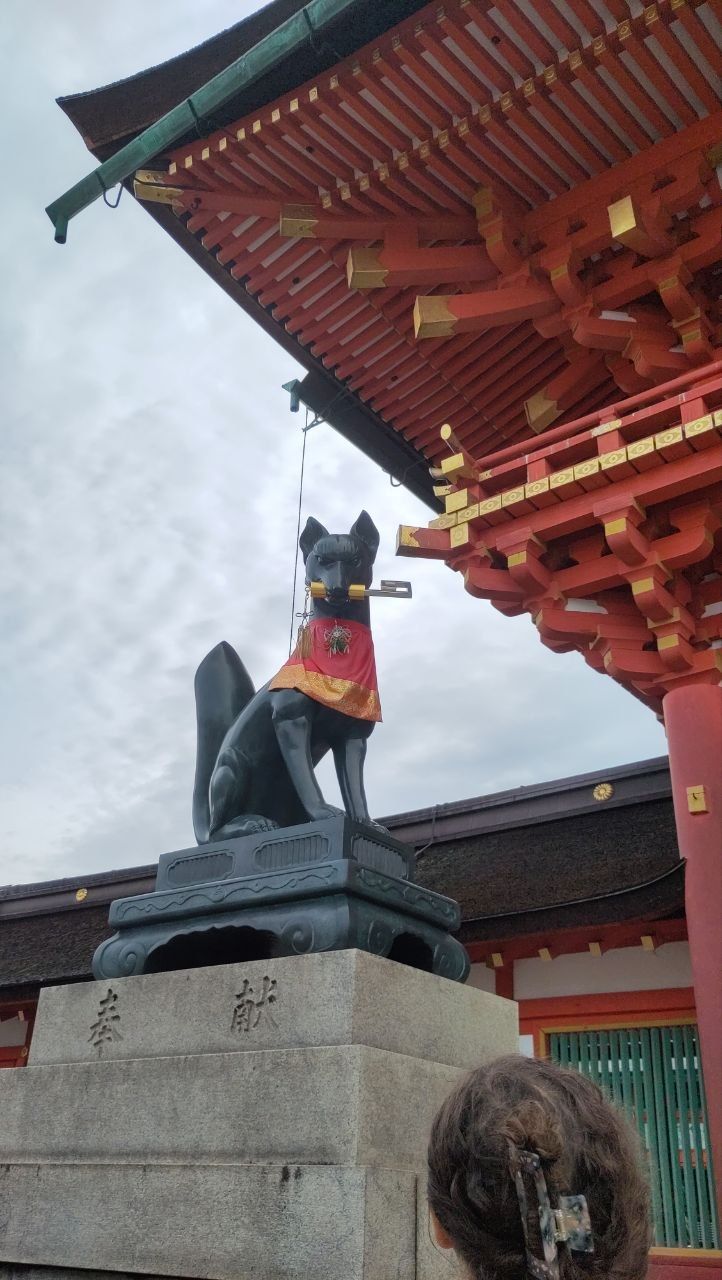
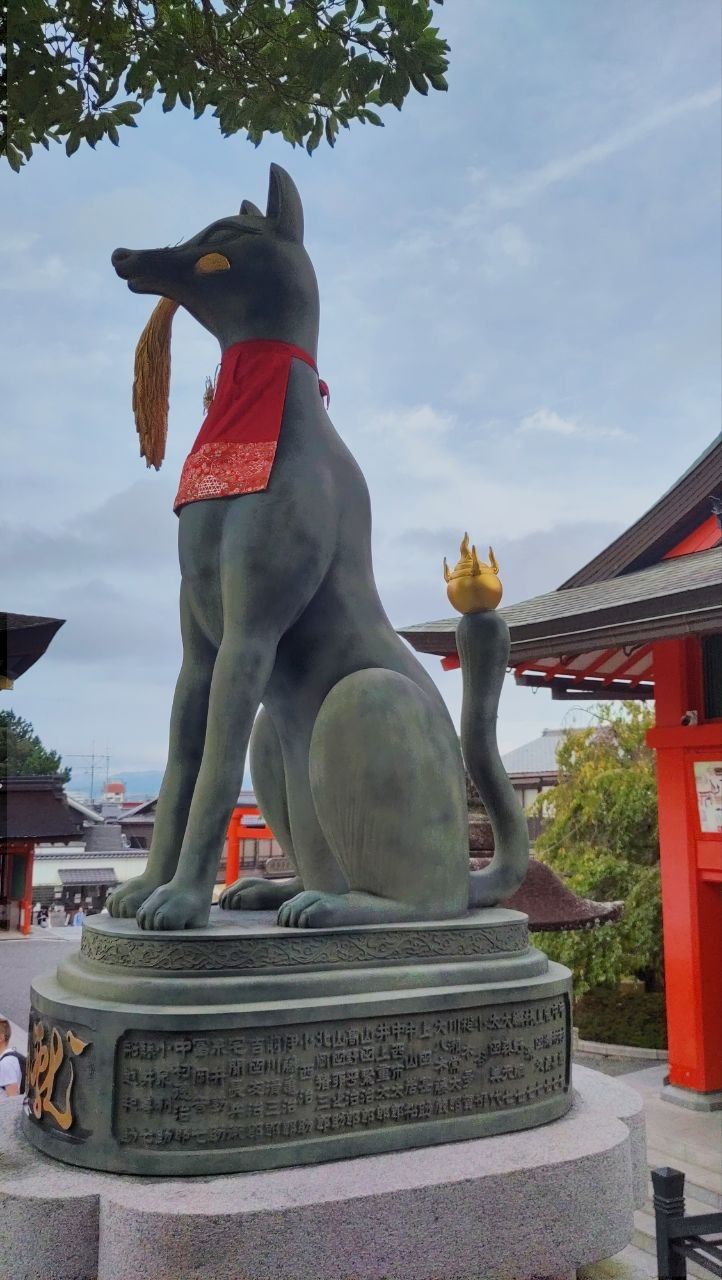
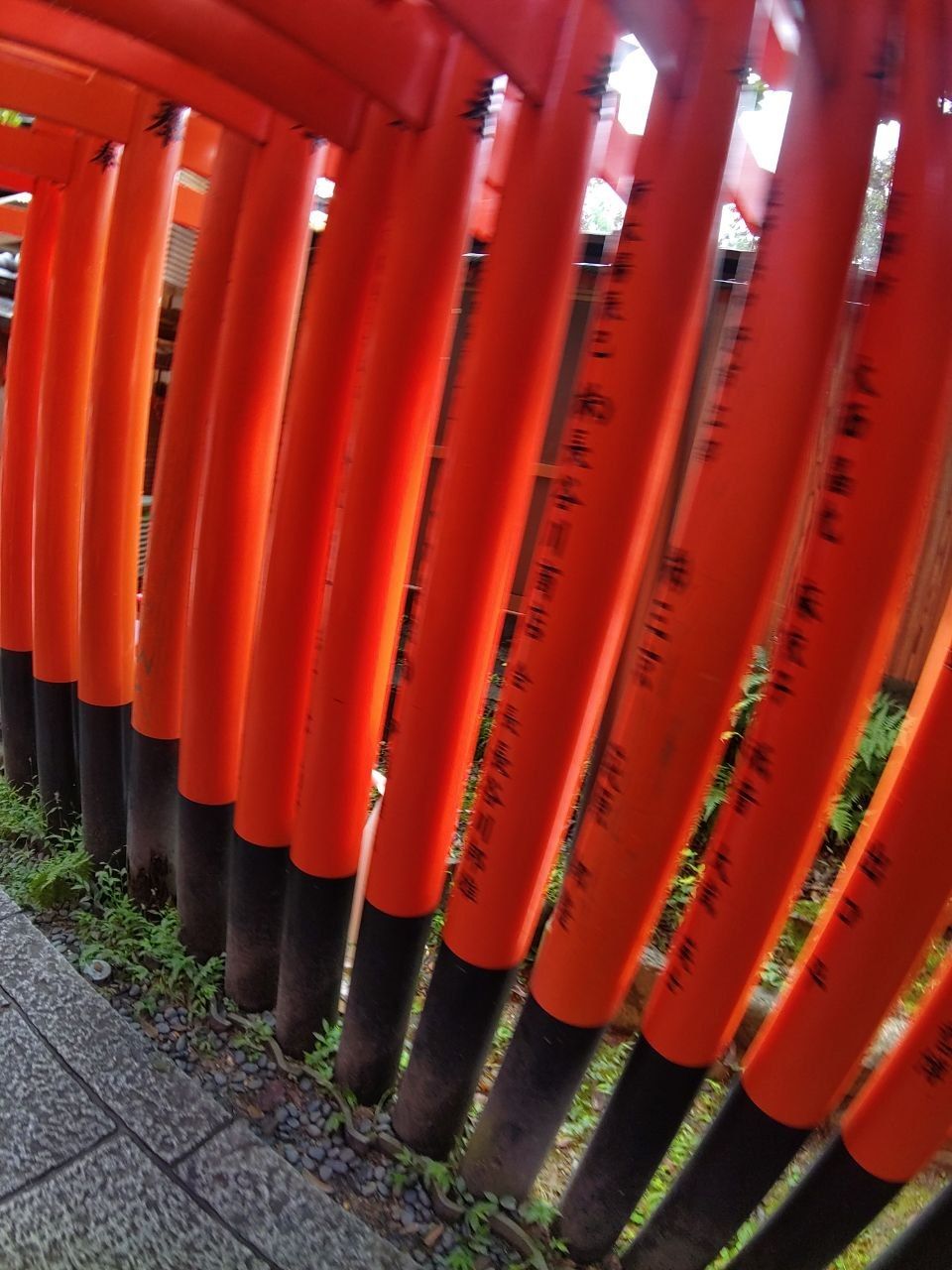
The day before yesterday, we wanted to visit the Inari Shrine on the mountain of the same name due to the good weather. This shrine is famous for its 1,000 red gates along the path to the shrine. Each gate is donated by a company or an individual, and their name is inscribed on the back.
The deity Inari is especially revered in the beginning of autumn and is commonly seen in autumn decorations.
Inari is depicted as a white fox, wearing a red bib, often holding a key or a jewel in its mouth.
Other sources depict Inari as an old man with a sack of rice, accompanied by white foxes, who are his messengers.
Inari is the patron of rice farmers, and since the harvest takes place in autumn, it is important to stay on good terms with him. Foxes are revered because they eat mice, preventing crop losses from hungry rodents. A fox only gets its white fur after reaching 1,000 years of age and becomes the celestial fox.
The shrine in Kyoto is the main shrine of this deity, worshipped throughout Japan, especially when rice is the staple food.
At the shrine, we filled out a prayer stick with a wish for health so that Marei would recover quickly. Once a month, the sticks are burned, and the wishes are wafted up to the gods, the Kami.
After that, we made our way to the mountain peak through the 1,000 red gates.
We had woken up especially early to avoid the crowds, which worked well since our hotel is only 20 minutes from the shrine.
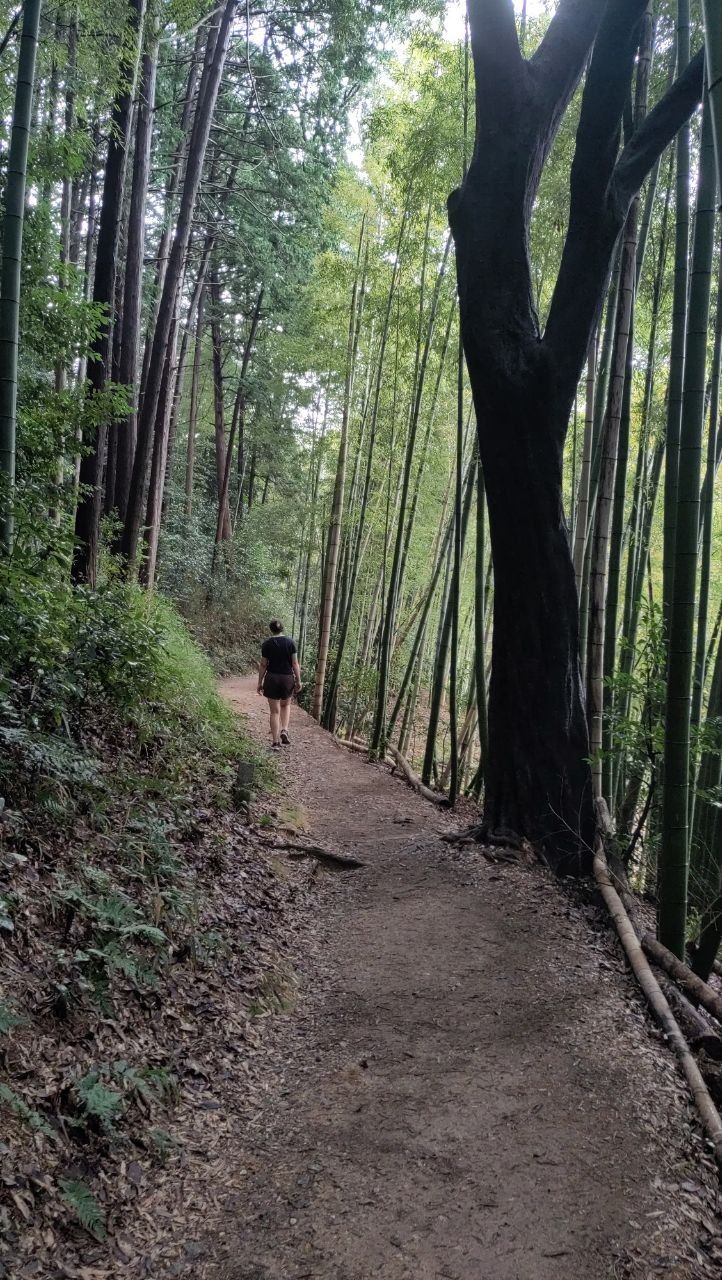
Shortly after starting, we came across a crossroad where the old root of a pine tree was revered, resembling a praying person. Here, one could pray to be spared from knee and back pain. As a runner and a hiker, I naturally had to ask for support there. Again at the crossroad, we were a bit puzzled about the way forward when an older Japanese man in hiking clothes and a backpack (perhaps Inari himself?) suggested taking the right path that led to the bamboo forest. We followed his advice, as we had almost written off the forest, believing it was too far away.
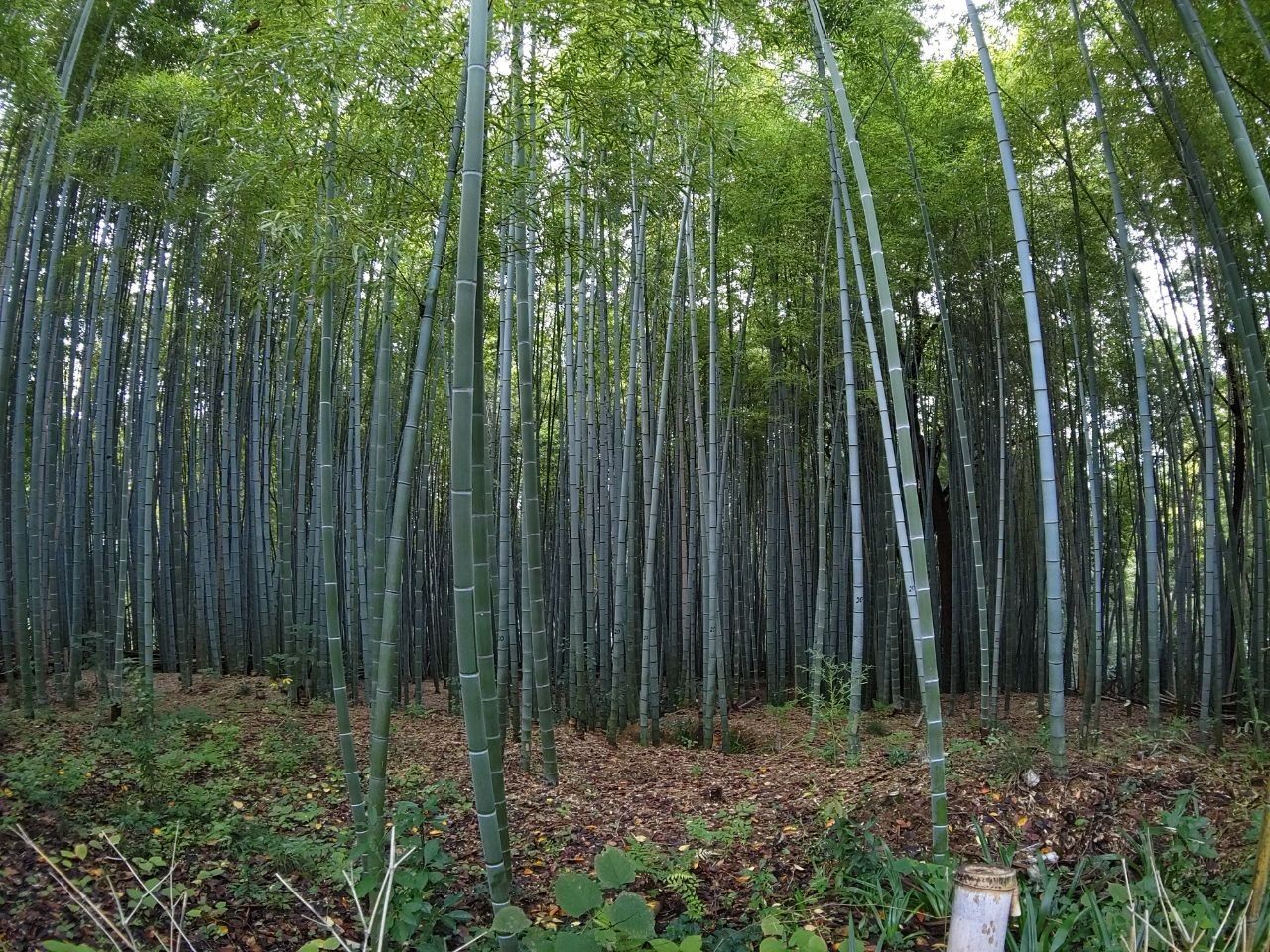
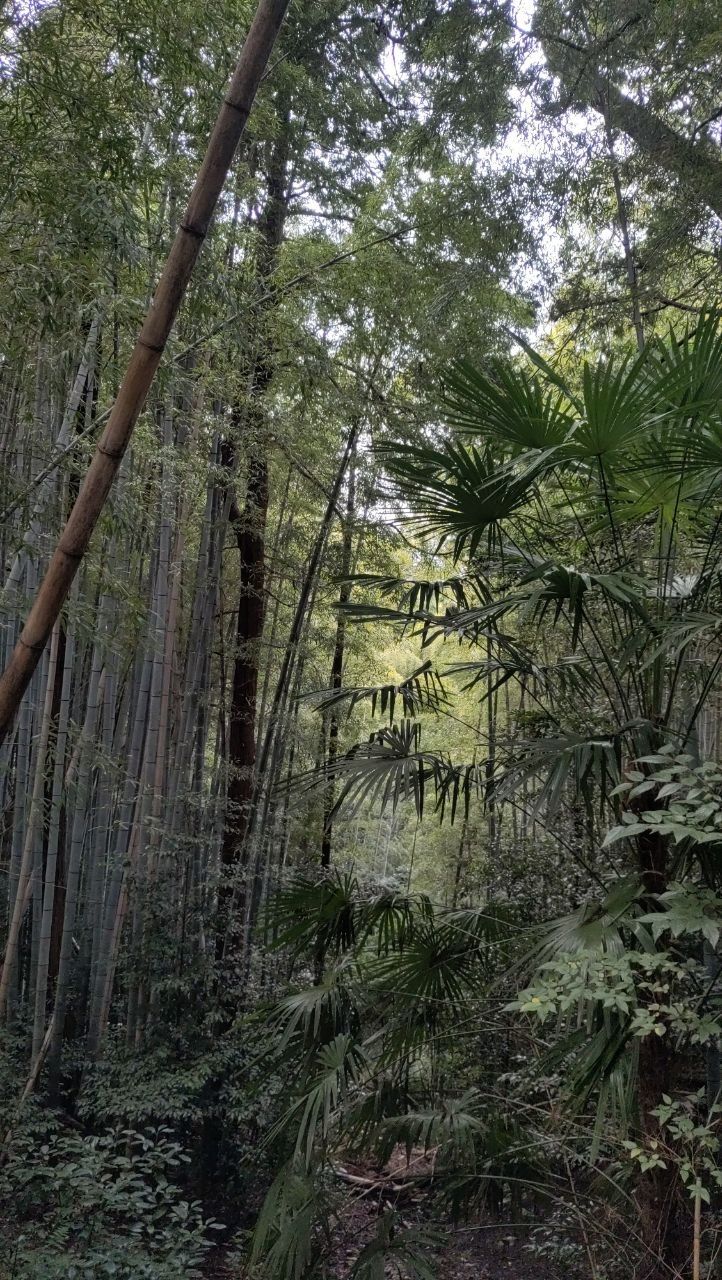
What a stroke of luck, for the forest was beautiful and quite unusual for us because the bamboo grows straight up, blocking the view.
There were hardly any people on the paths, and there were no more red gates, so we suddenly found ourselves on a small hike.
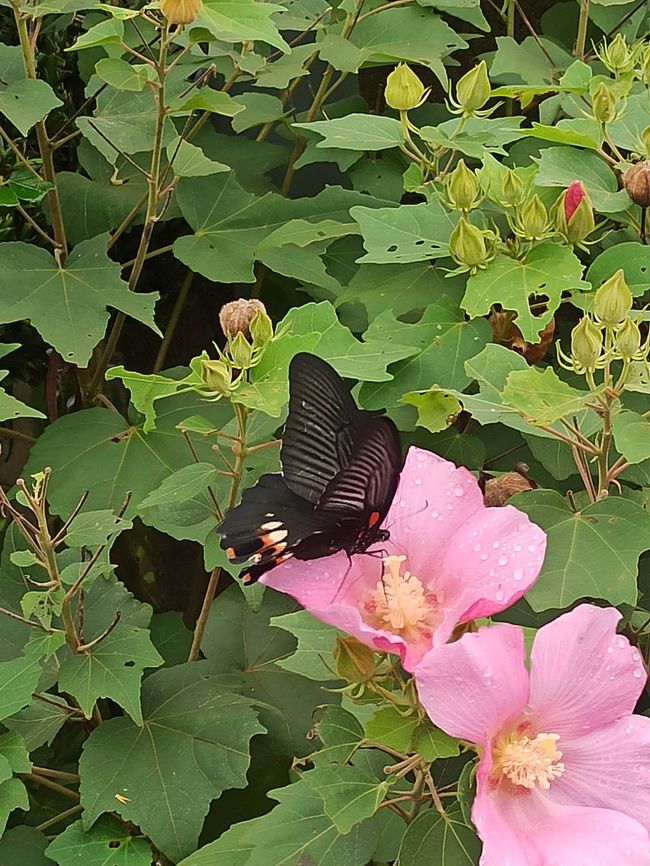
We could see numerous spiders of all sizes and butterflies, while birds sang, which was very refreshing after the hustle and bustle of the city. Along the path, there were small cemeteries with gravestones adorned with fox statues and small red gates.
After a total of 1.5 hours, we reached the mountain peak, where the shrine was quite unremarkable, but the path was all the more beautiful. Now we began our descent again amidst more people and the red gates.
Small shops appeared regularly along the way, where one could buy small snacks, drinks, and souvenirs.
There were also numerous small or larger shrines.
At one shop, a cat was drinking from a bucket just as the owner came out with food, which attracted another meowing cat that emerged from the bamboo. Around the corner of the shop began the next shrine and its accompanying shop, where another cat named Azuki, like the bean, sat on the counter. On the covered shrine, there was also a sleeping cat. All the cats had very short tails, which surprised us and is likely due to the breeding of Japanese cats. In ancient Japan, it was believed that a snake could grow from a cat's tail.
I hardly need to mention that the cats received a lot of attention.
Back at the foot of the mountain, we were glad to have arrived so early since it had now really become crowded with people: tourists, school groups, and locals.
Martin