
Aberdeenshire and Highlands
Haddo Babies

Published: 11.06.2025
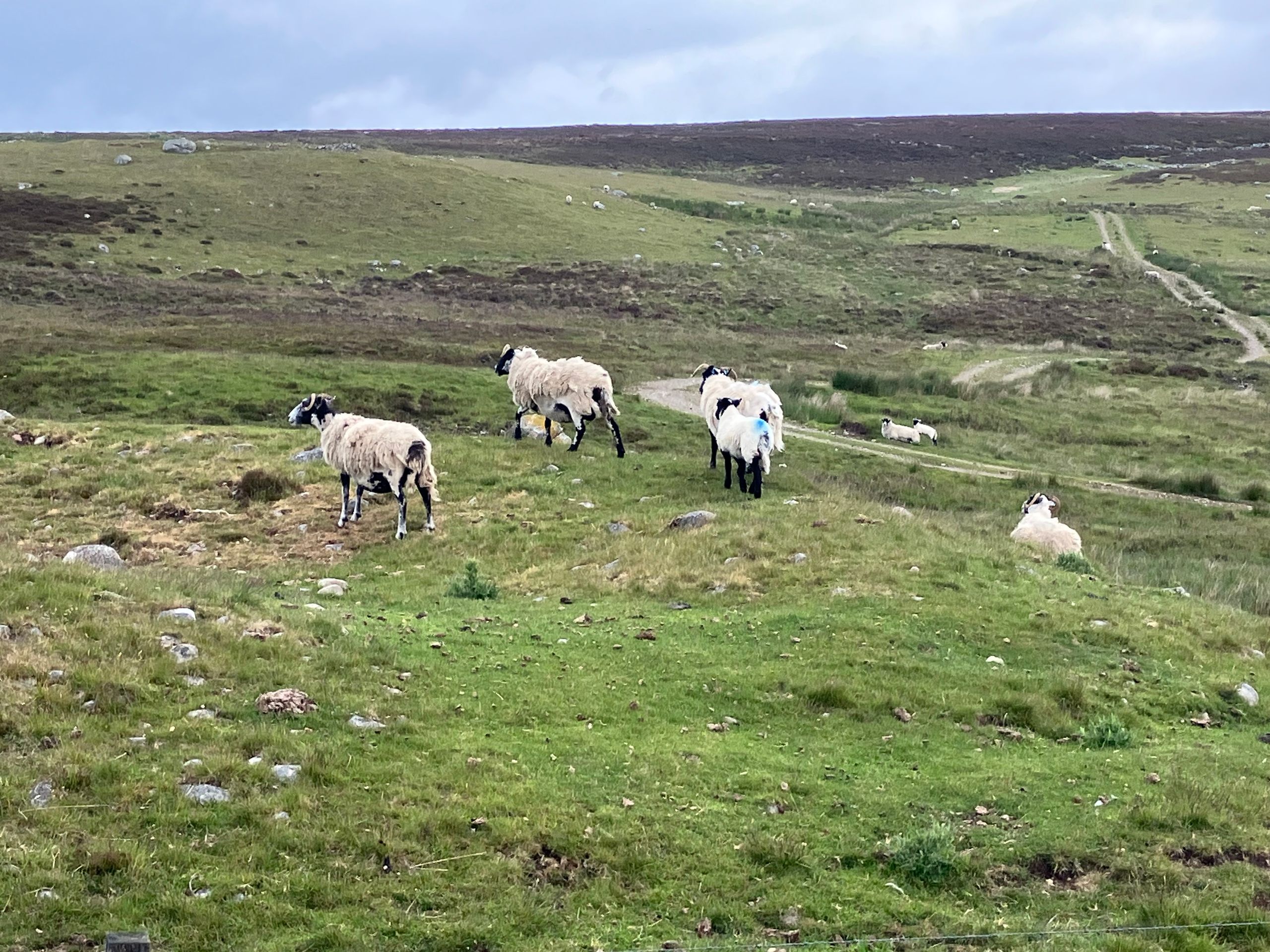
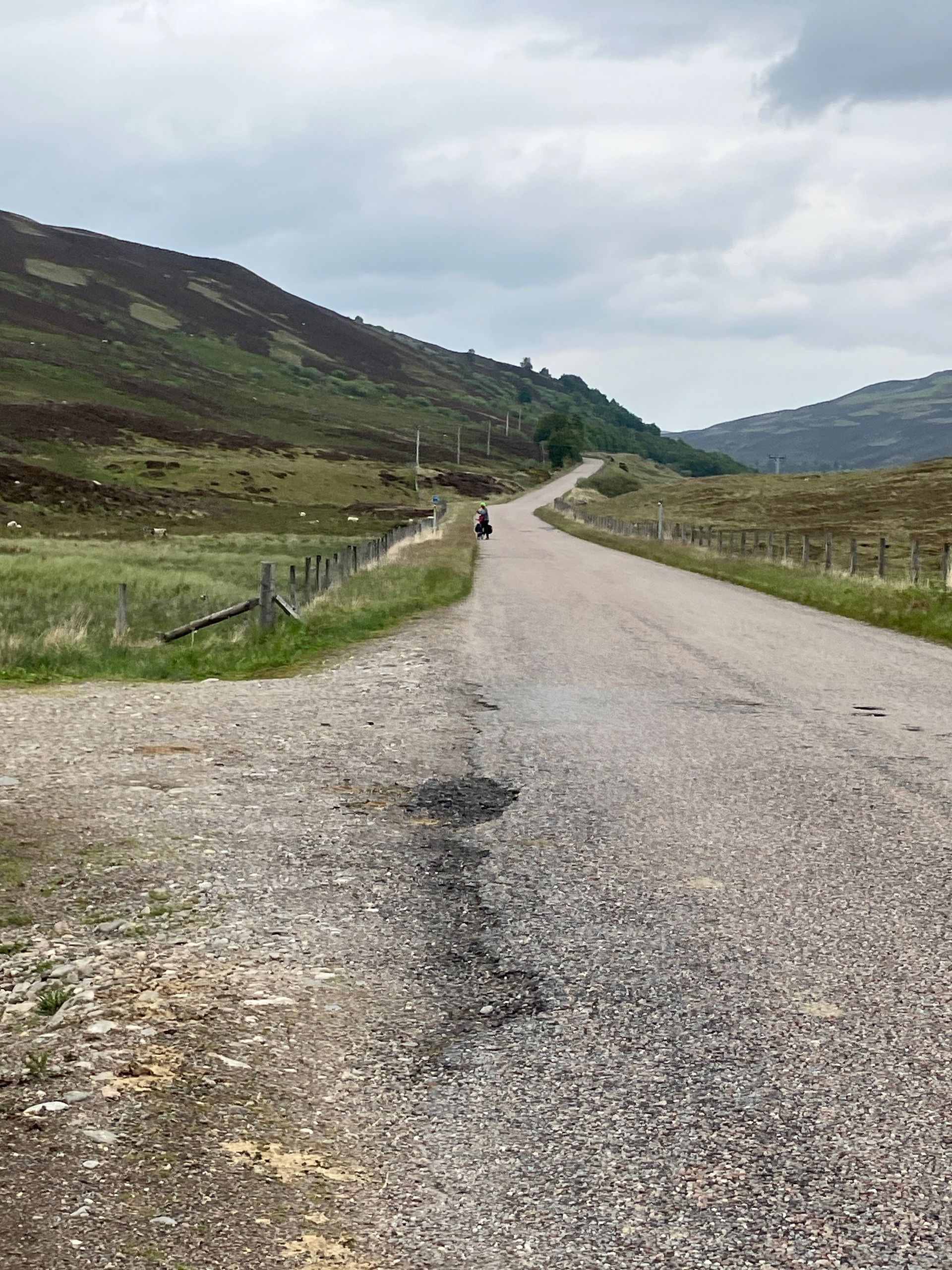
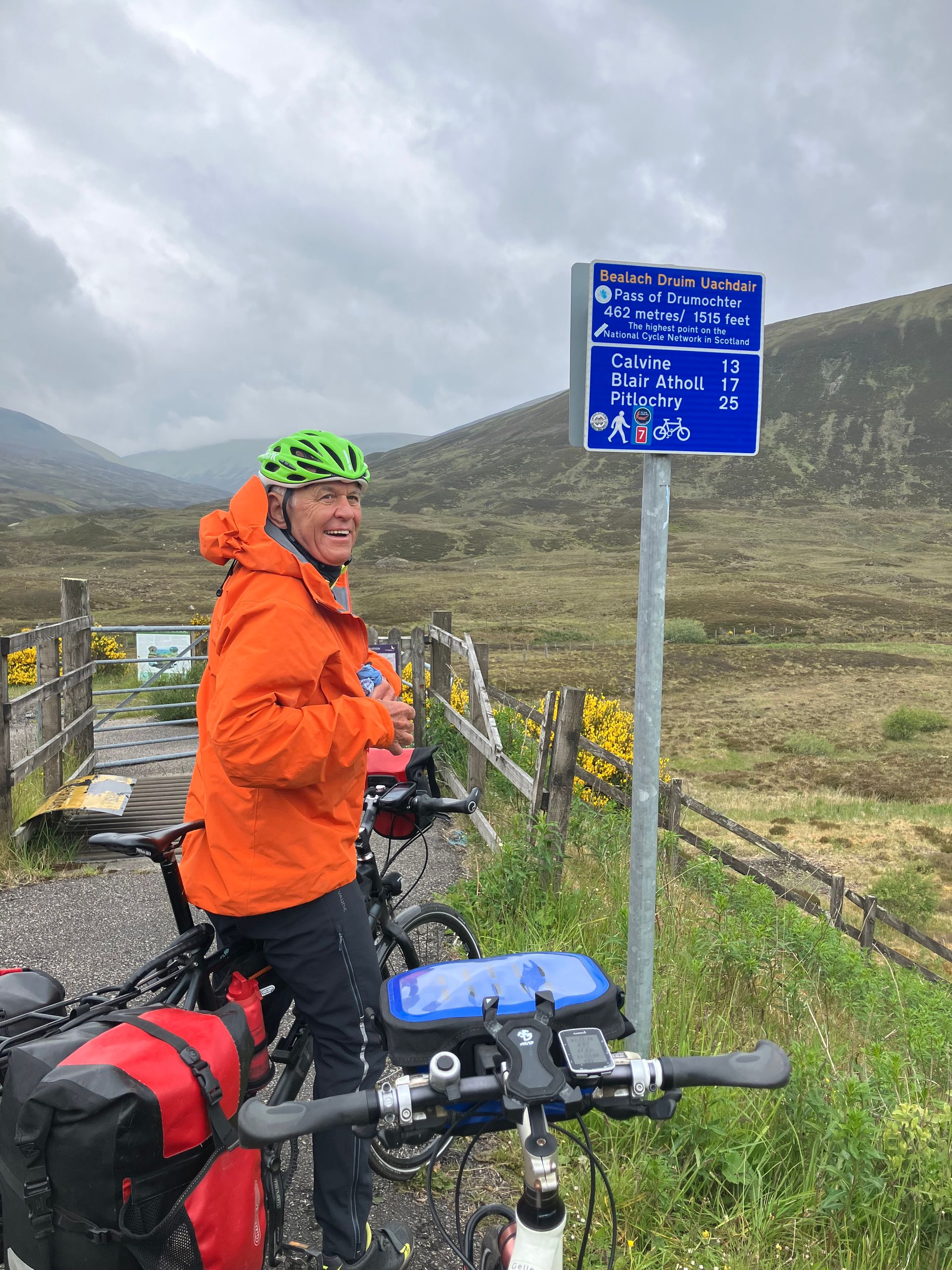
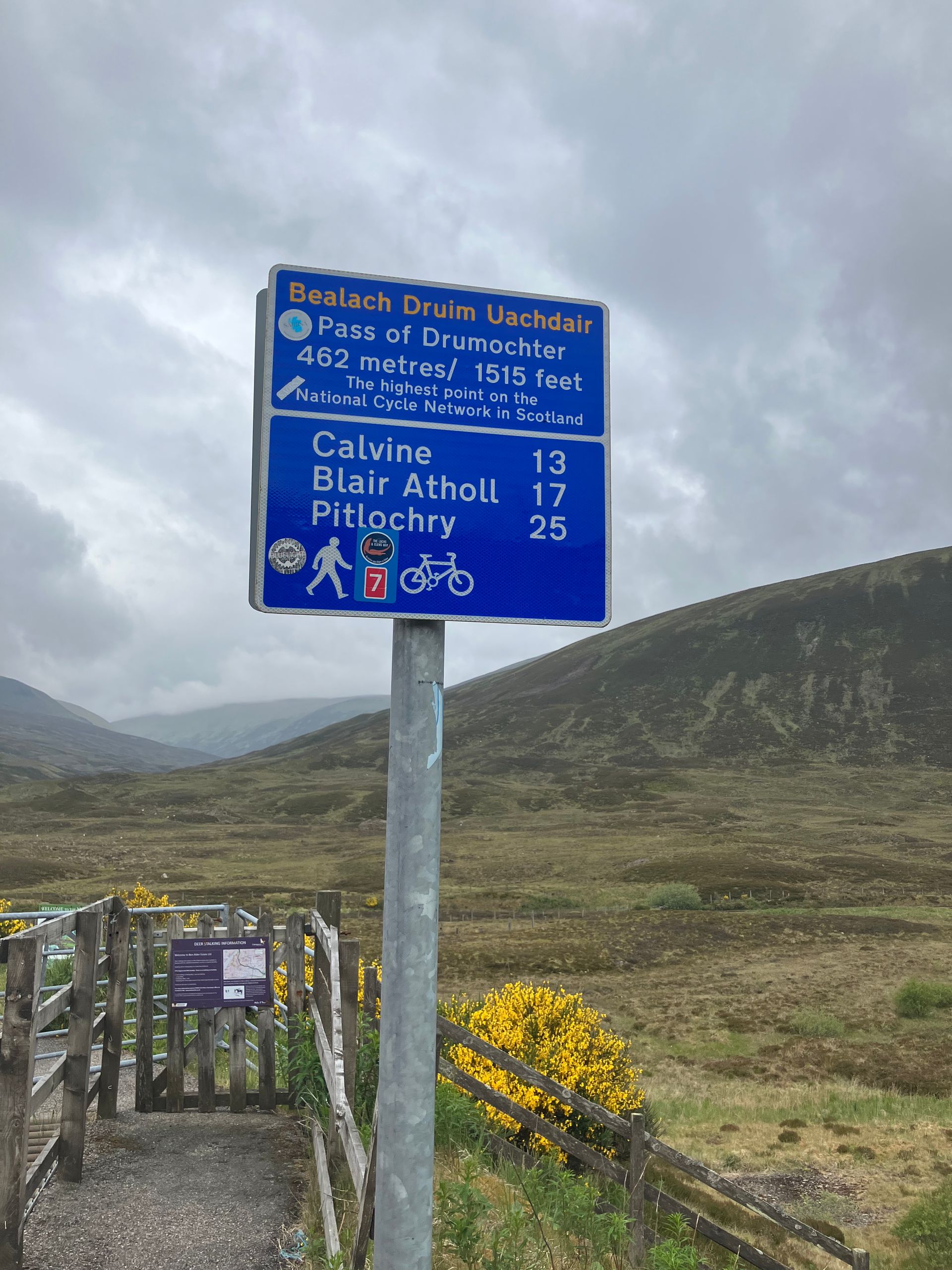
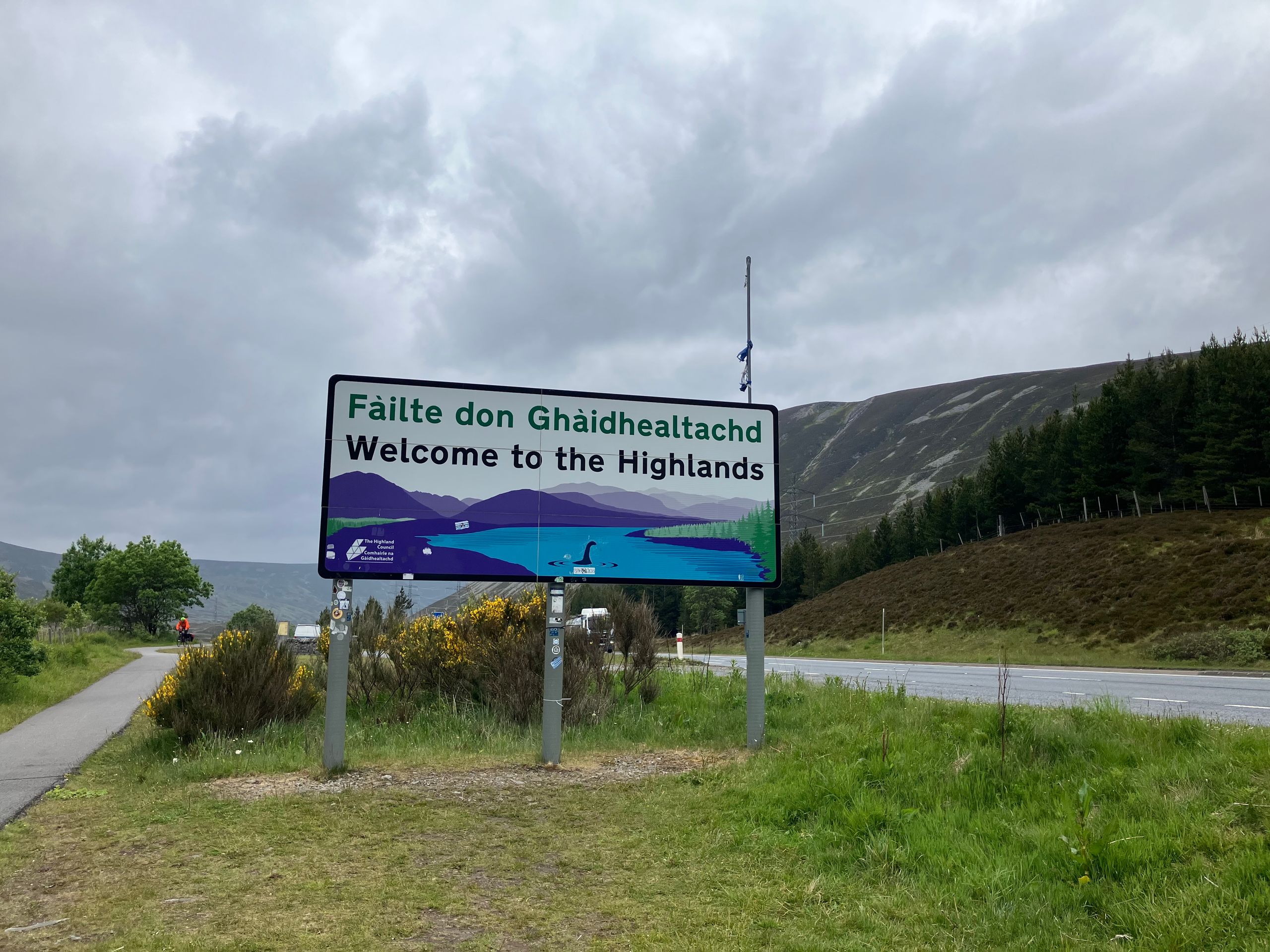
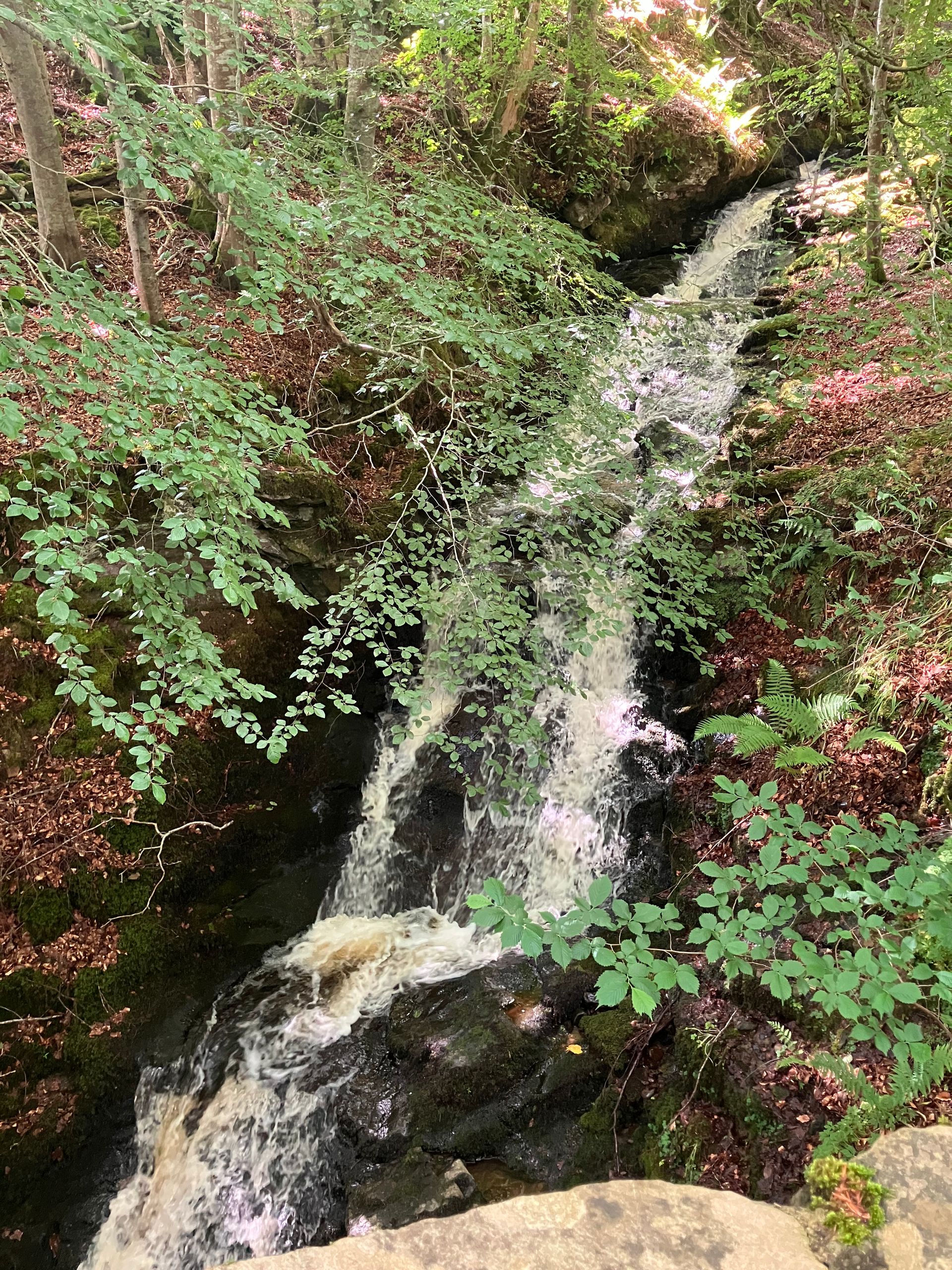
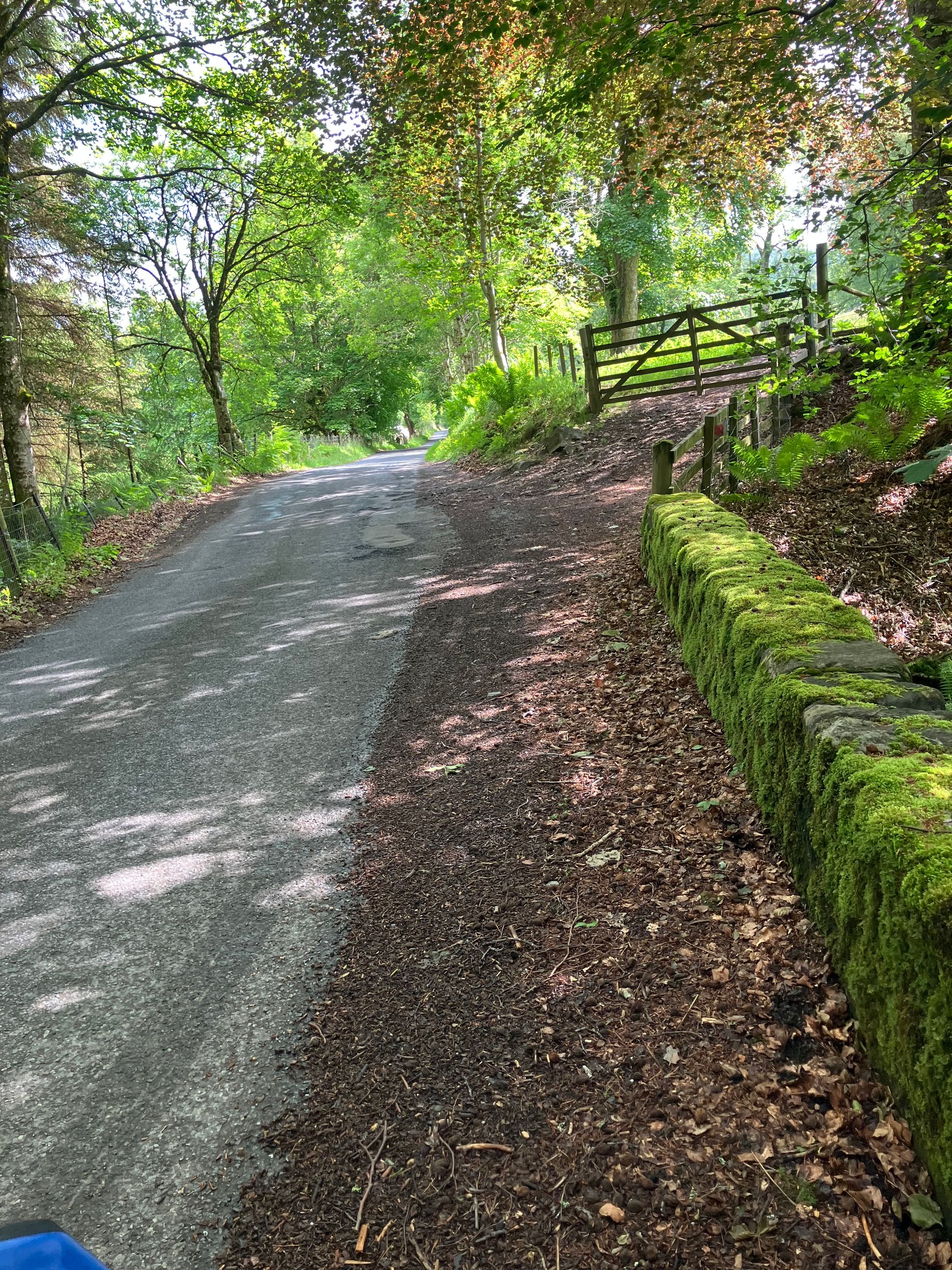
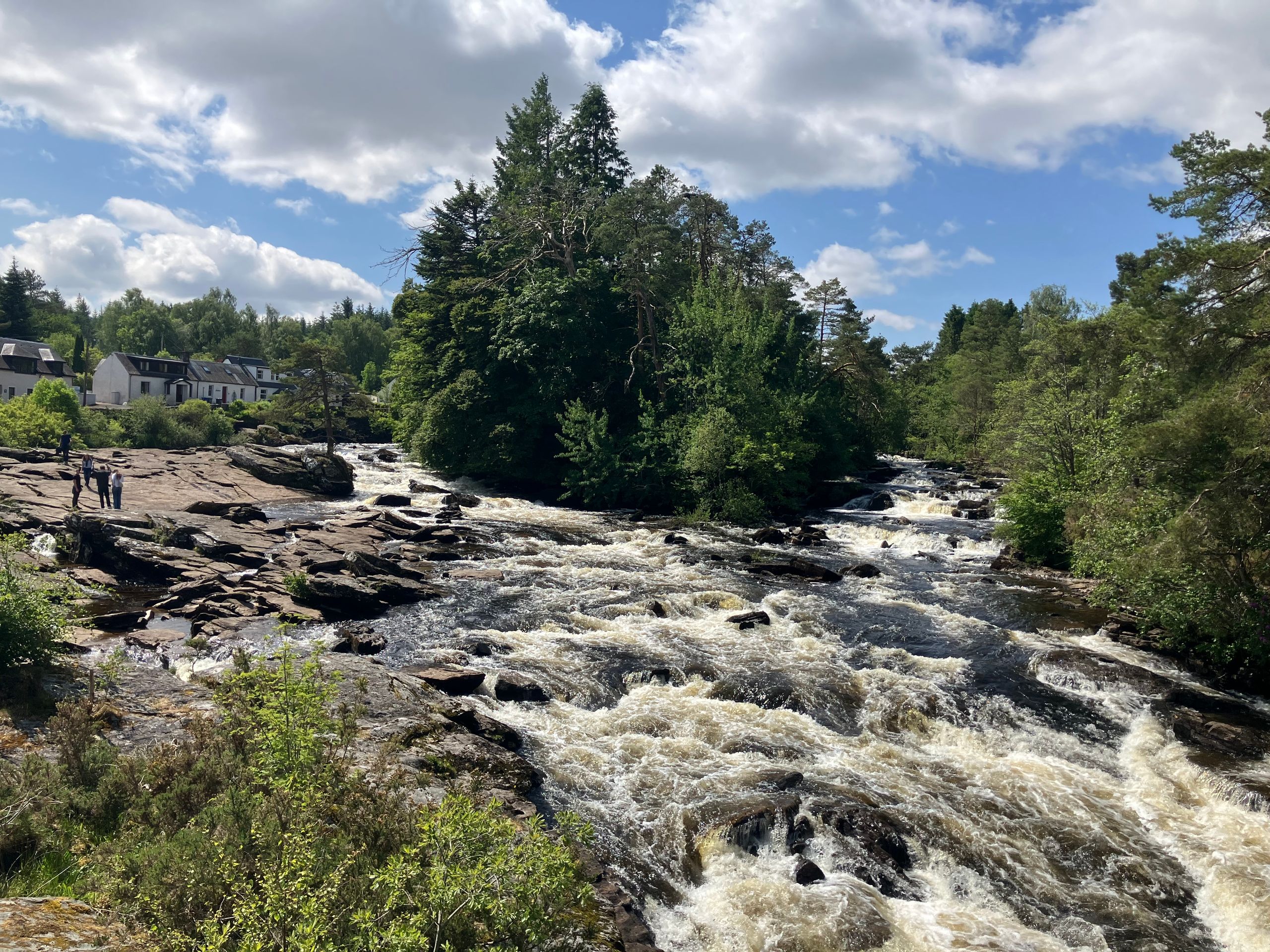
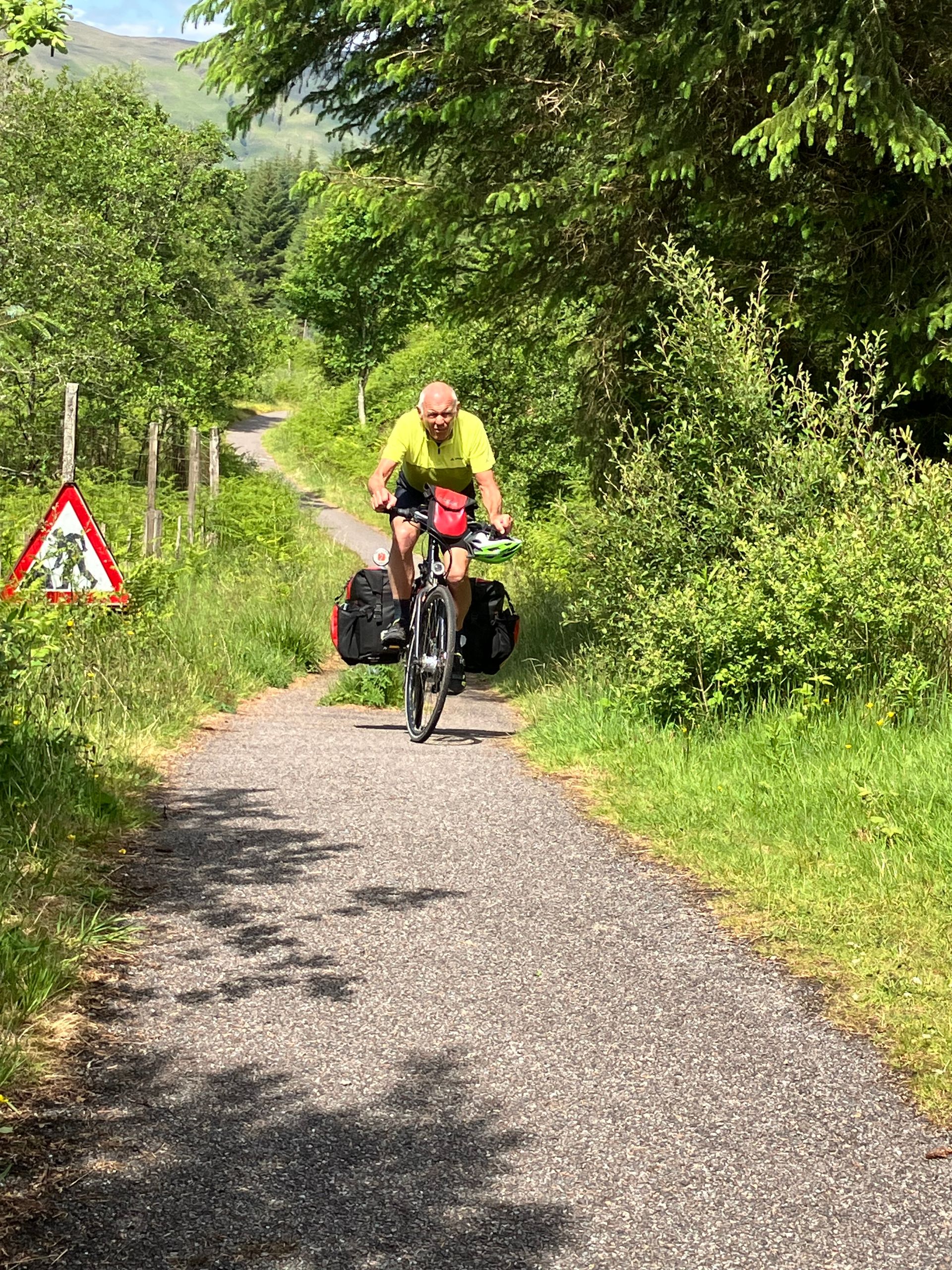
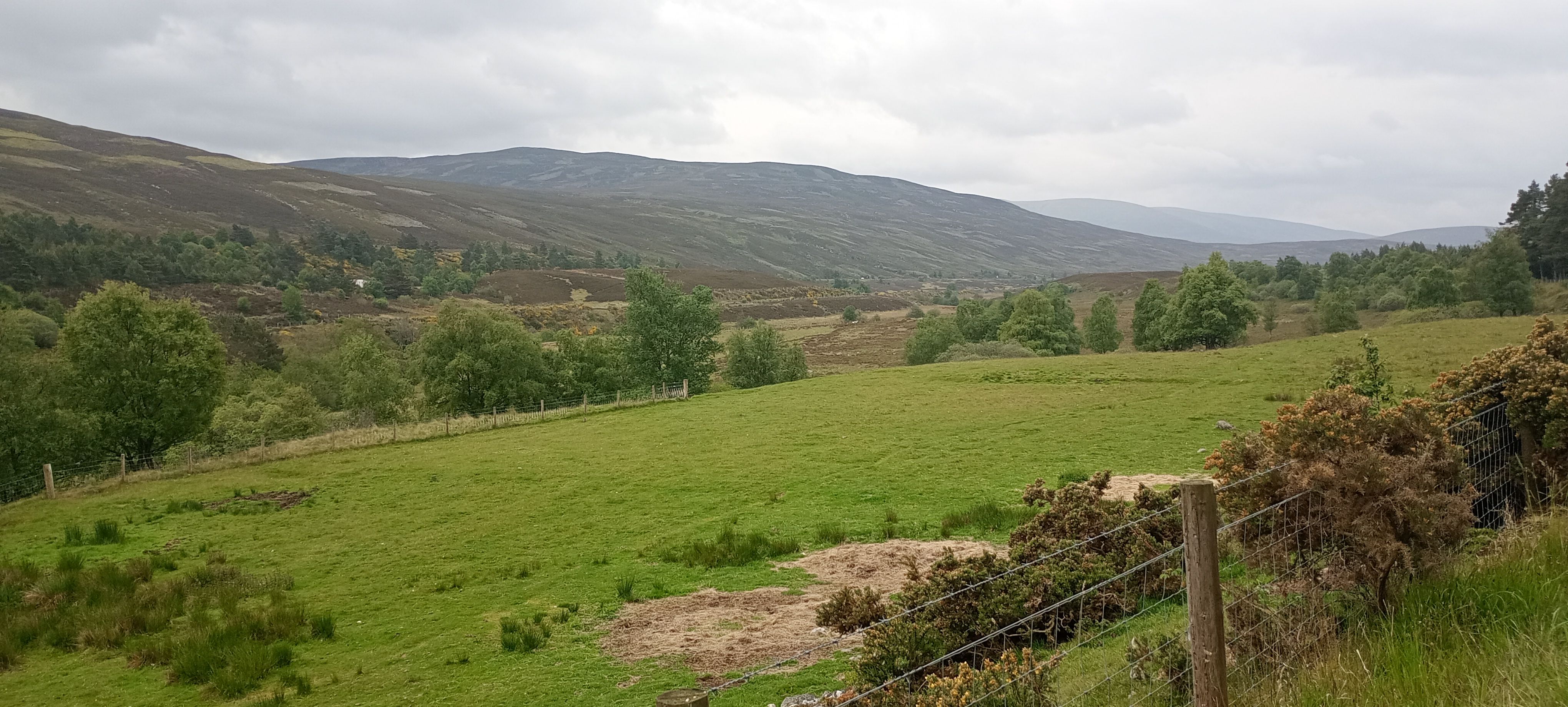
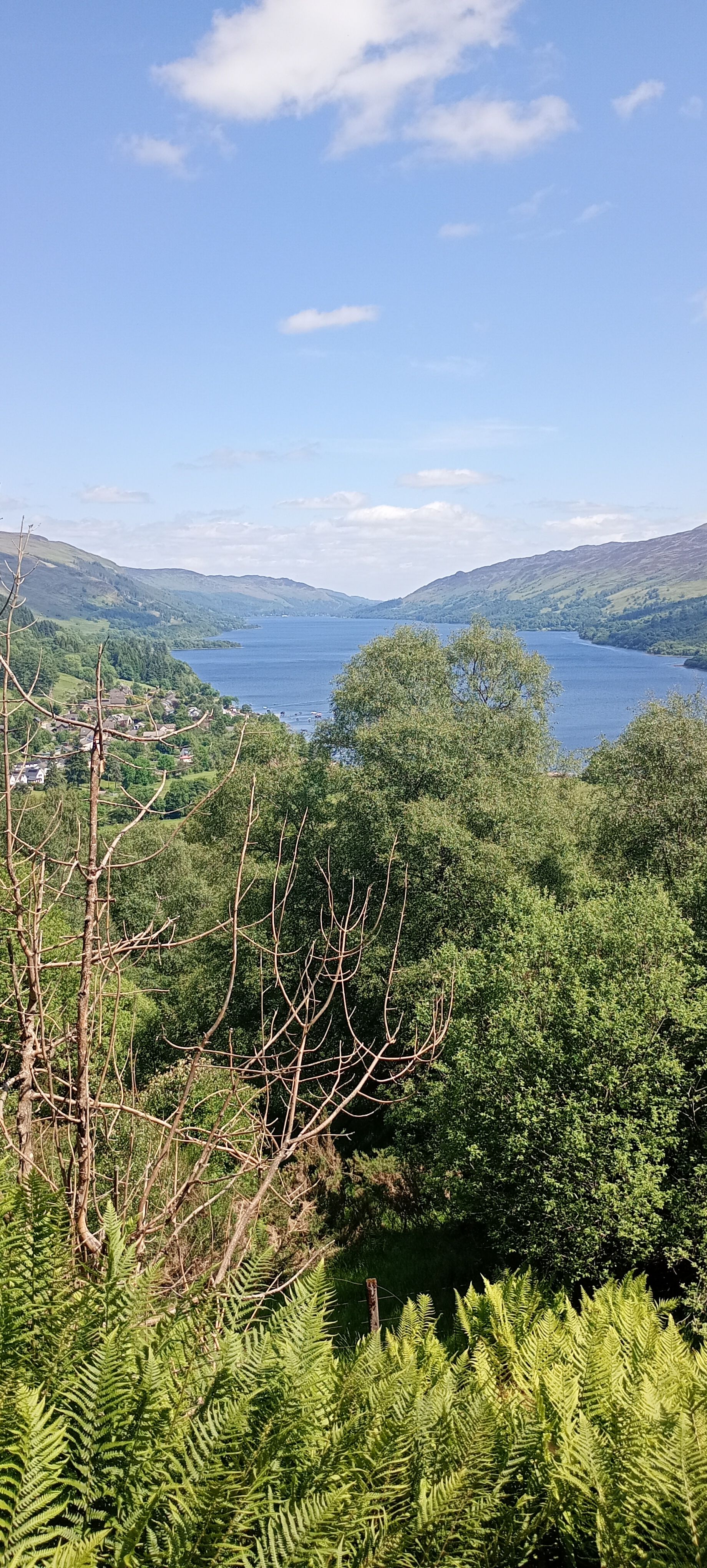
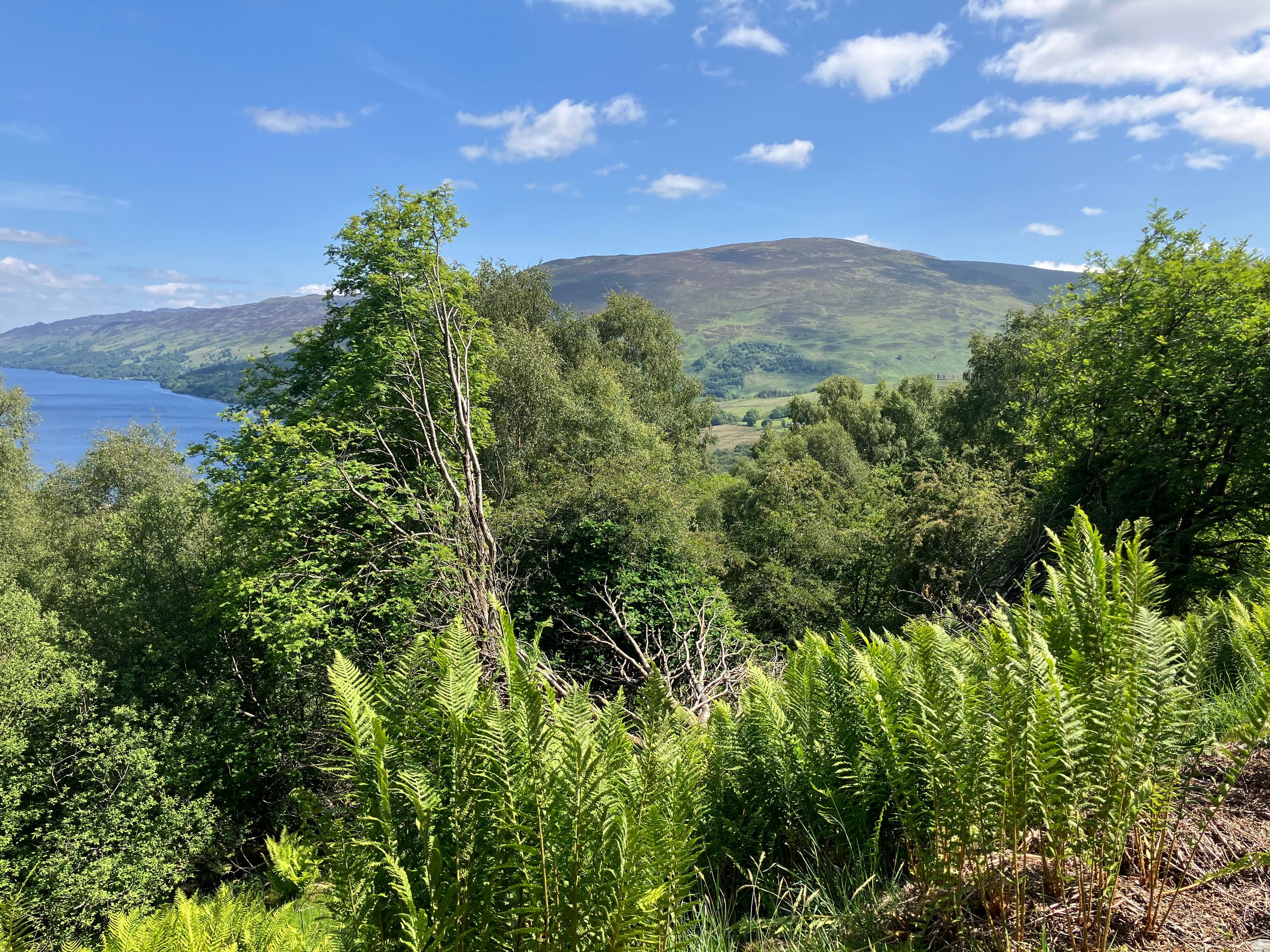
We're right in the midst of the Highlands. We set off early to arrive on time for our booked visit to a whisky distillery. However, we have to pedal hard first to get over the Drumochter Pass. The ascent is steady and not too steep. The landscape becomes wilder and more primal, with few houses, just large sheep pastures, and occasionally cattle. We ride on narrow, lonely paths or roads bordered by gorse, birches, and Caledonian pines with views of the bare mountains. After 20 km, we reach the small village of Dawhinnie, home to Scotland's highest whisky distillery. It's too early for us; we want to visit one down in the valley first. We continue to climb, now parallel to the heavily trafficked A 9. At 462 m, we reach the pass and thus the highest point on Scotland's cycling network. From there, it's a gentle 30 km downhill with some sharp climbs that are simply part of the Highlands. Along the way, we meet the group from euroradler.de from Bischofsheim; we briefly got to know them in our hotel in Edinburgh. The original group of 14 individuals, easily recognized by their Scotland cycling jerseys, has now shrunk to eight. One person collapsed yesterday and is now returning, accompanied by a colleague; two others are taking the train to Inverness, and two have already dropped out in Edinburgh. The entire route is meticulously planned until June 22 and takes us over the Isle of Skye and the Hebrides to the Orkney Islands. Respect!
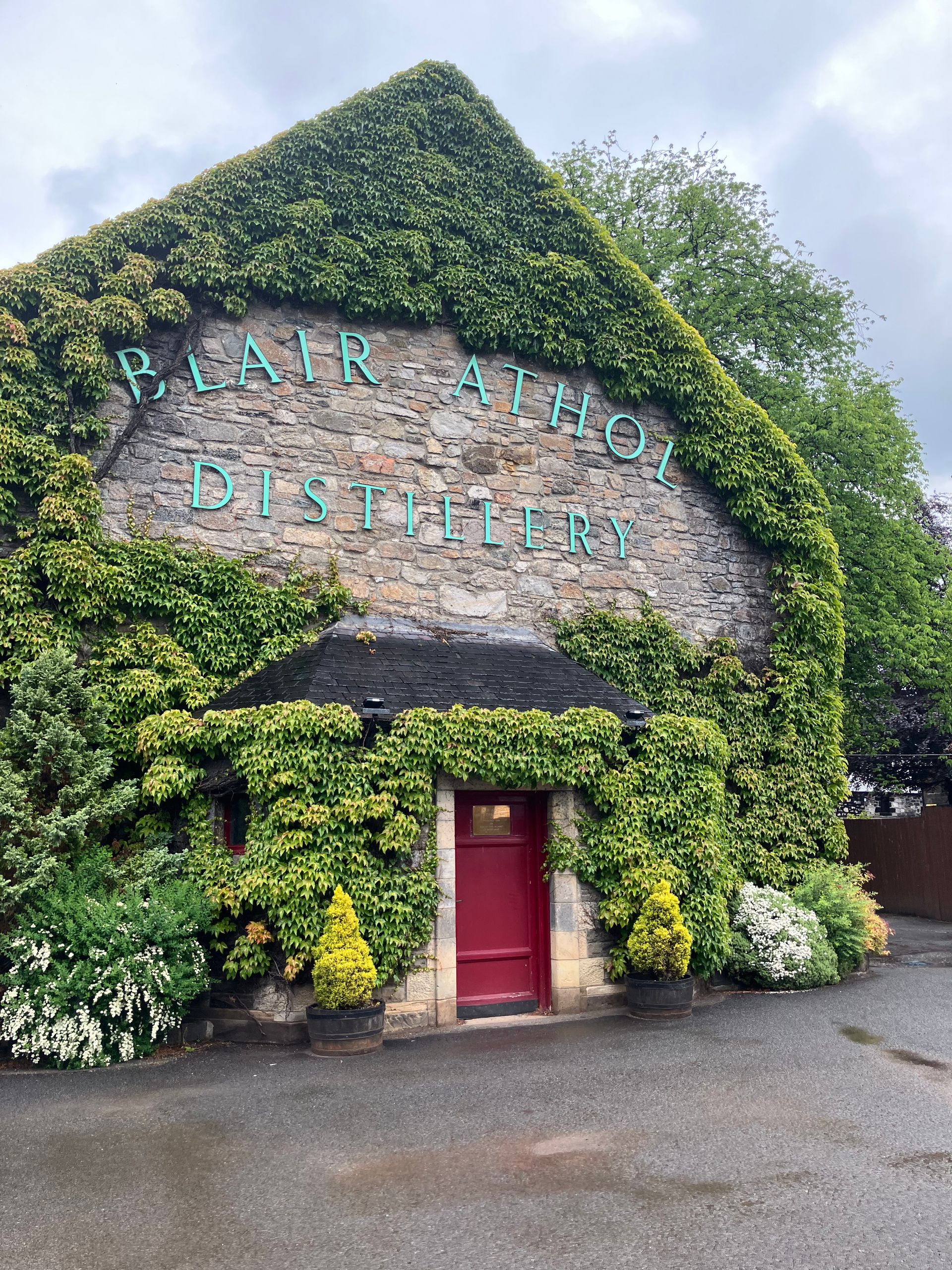
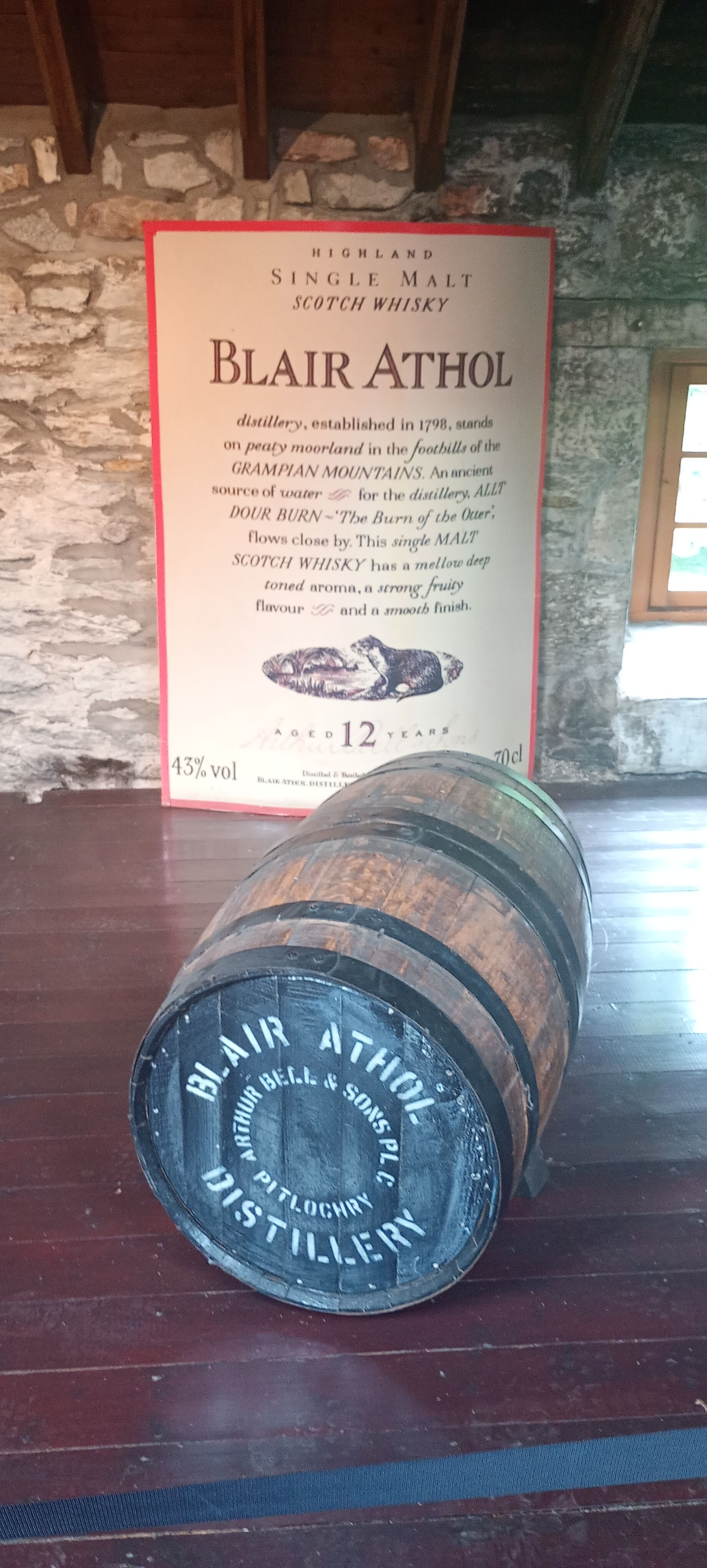
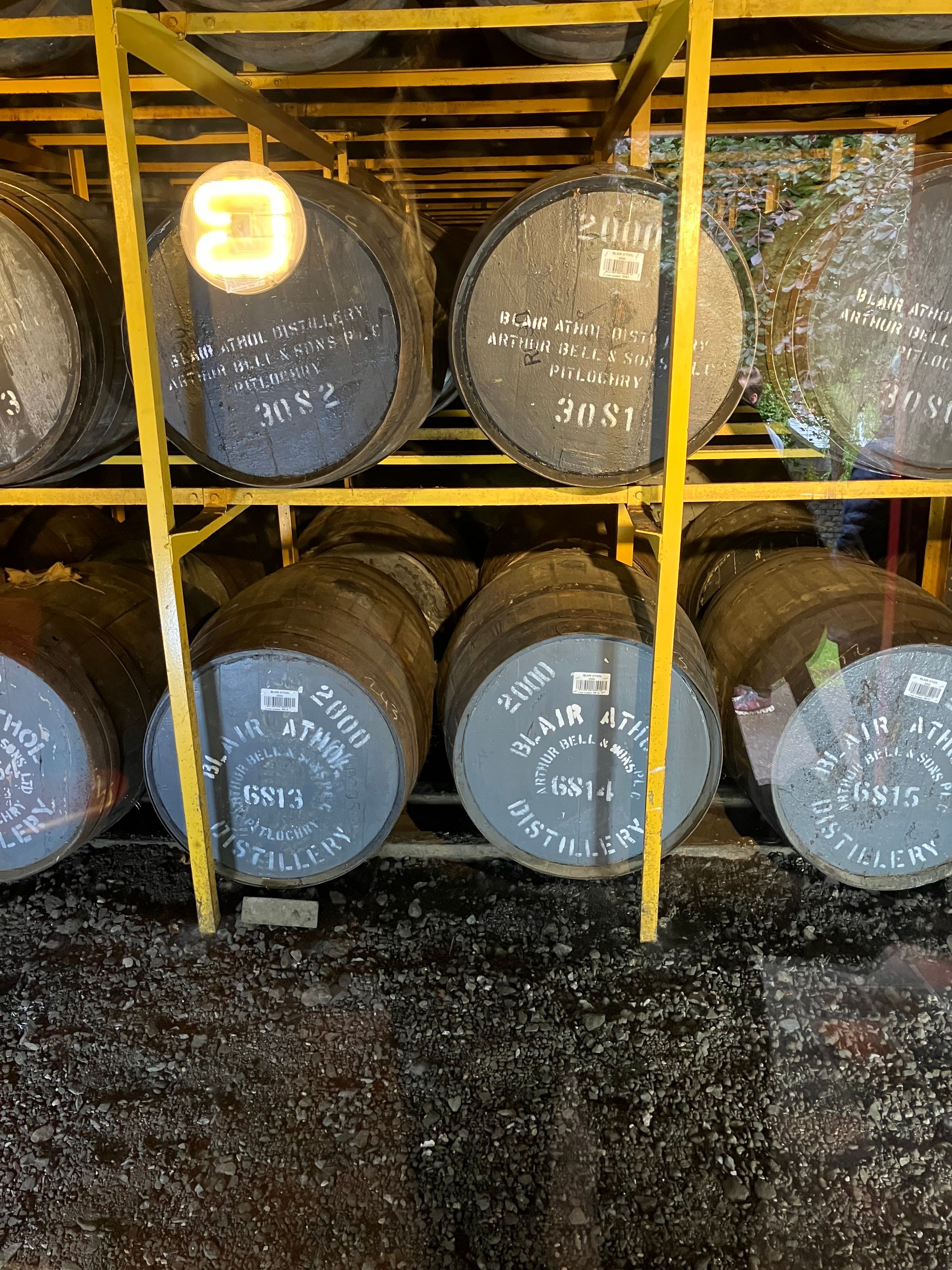
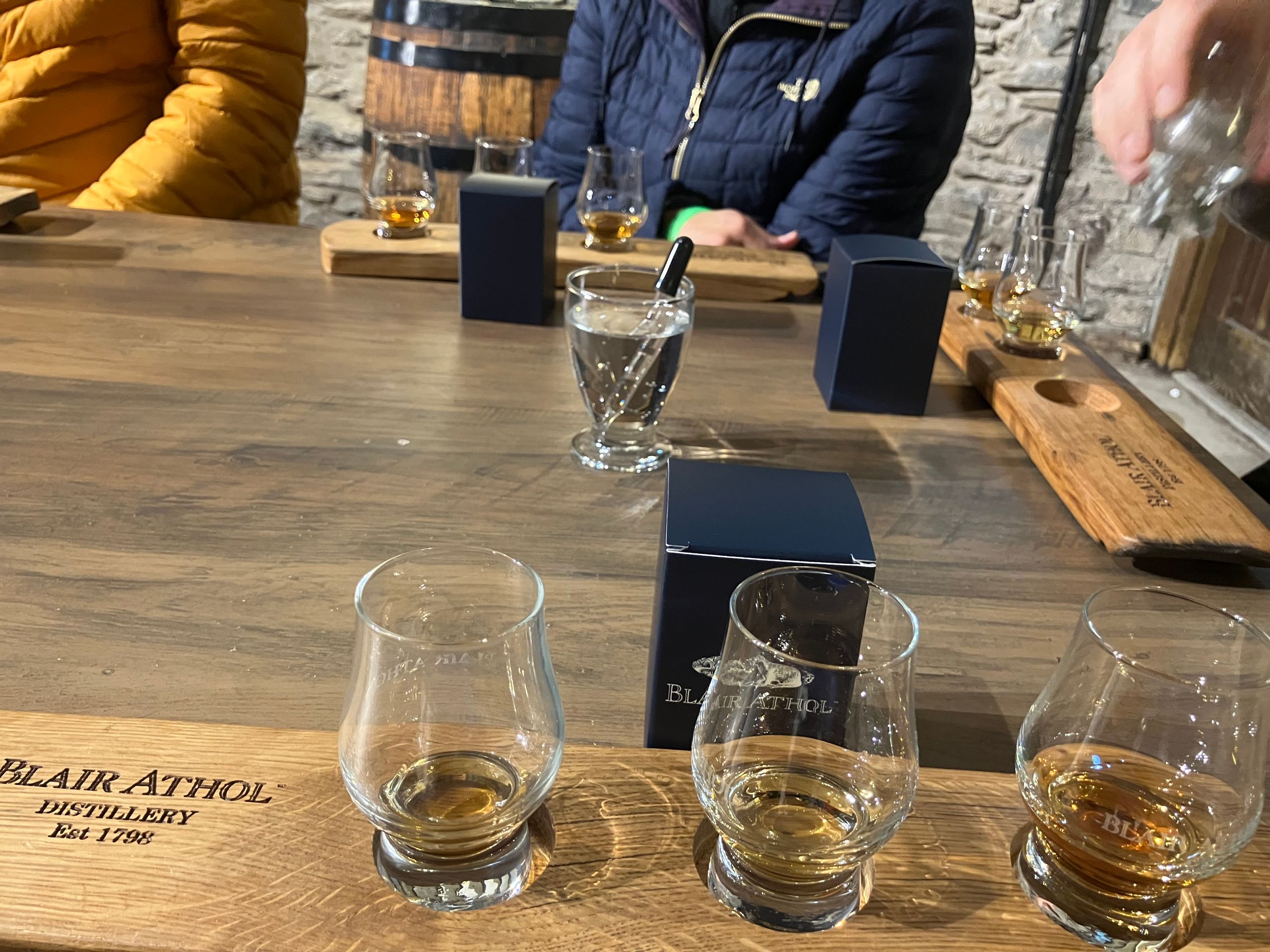
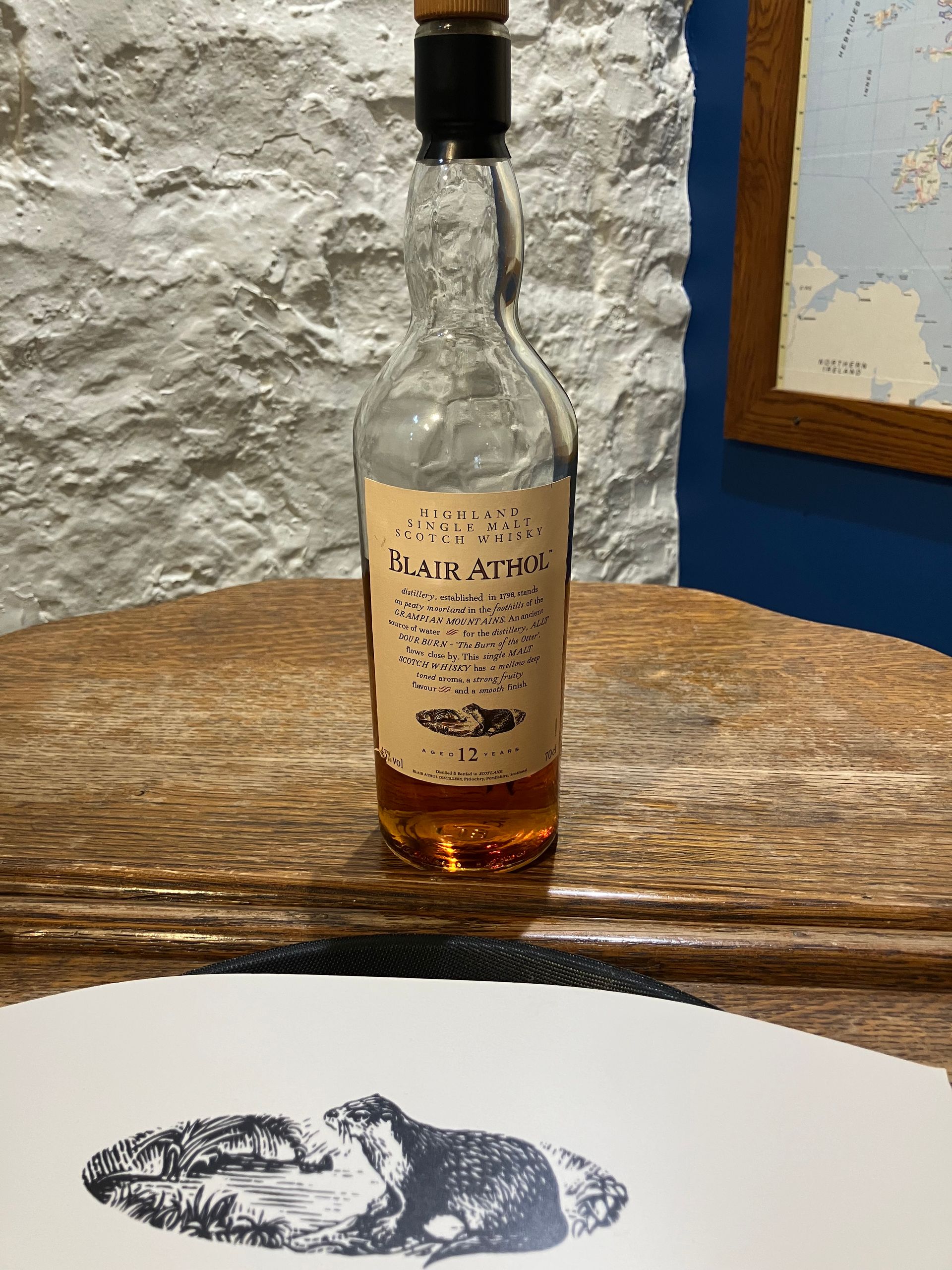
We arrive in Blair Athol at 12:30, just in time for our distillery visit scheduled for 1 PM - or so we think. But we see no distillery and no signs. A look at Maps reveals that the distillery is located in Pitlochry, the next village 11 km away. While we're a bit tired and hungry—some might call it a hunger pang—we cycle there in the rain that's just starting. The guy at reception is, like most Scots, extremely friendly and offers us a tour at 2 PM - perfect! There's still time for a bite to eat and some coffee. We are in one of the oldest legal whisky distilleries, producing whisky since 1798. The guide humorously explains the whisky-making process, from grain, fresh water, and yeast to distillation and aging in oak barrels. Only 1% of the whisky produced in Blair Athol is bottled and sold as single malt. The rest goes to large labels, often for crafting a blend whisky. More than 40 liters of whisky for export are produced in Scotland every second. After the tour, we get to try various single malts.
There are still 25 km to go in now heavier rain, with ups and downs, until we reach our destination of Aberfeldy. At our lovely accommodation, we meet a hunter who hunts professionally from October to April. He tells us about his 37 dogs (do Scots tend to exaggerate?) and that most of the meat from his hunts is exported to Germany.
Given the many 'Aber' in the place names, we looked it up and found that this word part means 'river mouth.' So we cycle from one mouth to the other - but that involves many climbs. Komoot has found a total of eight climbs for today's tour, with the first, fifth, and last being particularly tough. It's not a big deal when the sun is shining the whole day. The first kilometers to Kenmare and the eastern shore of Loch Tay are flat. Now we gear up along the southern shore on a narrow, asphalted road, climbing repeatedly. As a result, we get splendid views of the lake and the Grampian Mountains, but also pain in our thighs. After 24 km to Killin, we've already accumulated 550 hm in our legs. In return, we enjoy a long break with coffee and cake; there’s not much else to see in the town. Just after Killin comes the next ascent, which demands everything right from the start on rough gravel. We are now in Loch Lomond & the Trossachs National Park. At the top and on the further route, we are rewarded with beautiful views of some of the more than 300 'munros.' These are the mountains over 3000 feet, named after Hugh Munro, a British diplomat and mountaineer who compiled a list of these peaks. A particular challenge to this day is Munro-bagging, the climbing of all these mountains. We stay lower in the valley and roll down for a while to Loch Earn, which beautifully spreads out to the east into the valley. Shortly after, we are at the shores of Loch Lugnaig, which we follow for a few kilometers. At the southern end, we take another break, hoping to enjoy the sun. 'It's a little bit midgy.' A cyclist kindly points out the little, pesky midges, and we prefer to retreat indoors. The last 25 km also present a challenge; we need to tackle another 200 hm on gravel before reaching Aberfoyle. As a result, we arrive a bit later than expected in the small tourist town, only to find that the reception at the campsite has already closed and the restaurant in town is about to close as well. We find a hotel with a restaurant that offers us half board at a special price. After dinner, we can observe the many older coach travelers in the bar over a beer.
It's going to be another sunny day. Although Aberfoyle is at the edge of the Highlands, that doesn't mean it's not going to be hilly anymore. In the first nearly 30 km, we gain almost 500 hm, including a steep ascent with 200 hm. You must have a penchant for self-torture to haul up all that luggage, much of which hasn’t been used yet. Every small climb, of which there are many today, becomes a challenge. However, we have managed them all so far! Before Balloch, we get to ride through the beautiful castle park. We are now on the southern shore of Loch Lomond. In one of the most popular songs, this lake is sung about with the personal tragedy of two captured soldiers and thus has become a symbol of nature connection and Scottish culture.
You'll take the high road and I′ll take the low road and I'll be in Scotland afore you. Where me and my true love will never meet again, on the bonnie, bonnie banks of Loch Lomond. Absolutely must listen!
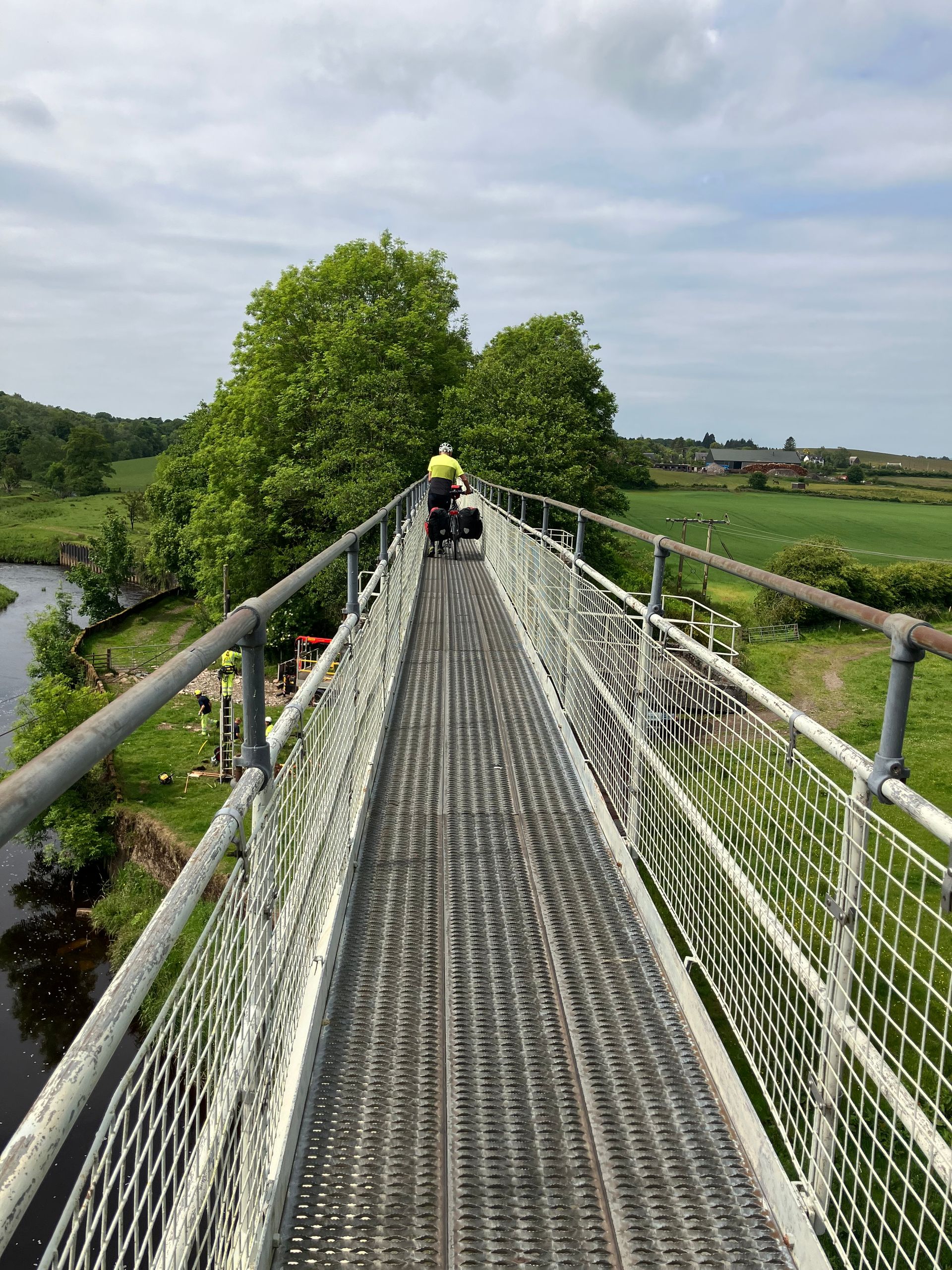
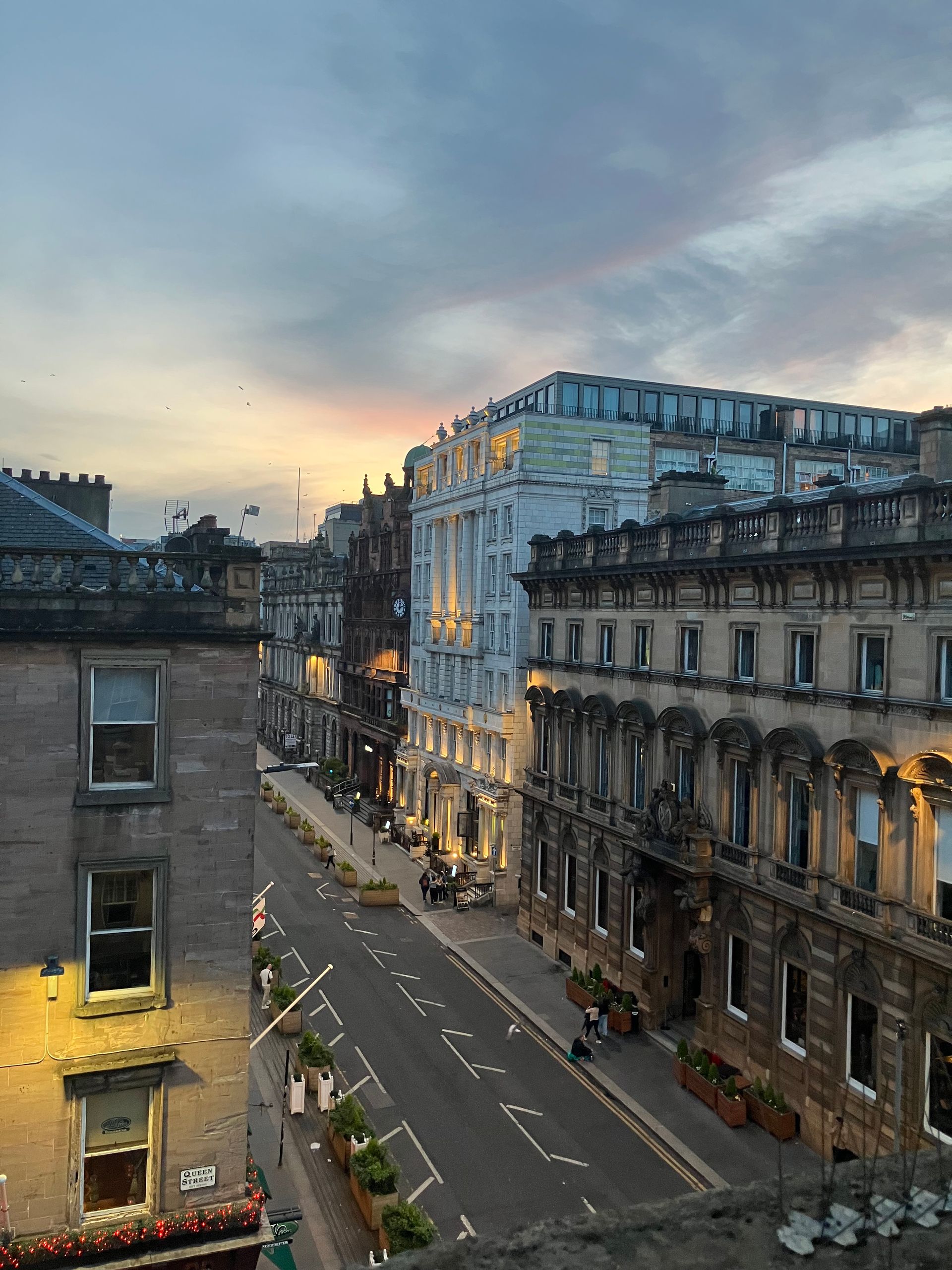
We are now in the Lowlands and still have 35 km to Glasgow, at first along the River Leven, which flows from Loch Lomond to the River Clyde. We follow this river and a canal up to just before the city center of Glasgow. On the other side of the River Clyde, we see impressive new architecture like the Riverside Museum and the Glasgow Science Center. Our accommodation is right at George's Square, the vibrant center of Scotland's largest city, with 600,000 inhabitants. On a stroll, we find that the city doesn’t have many notable sights. Glasgow was once known as the murder capital of Western Europe. But that has changed significantly since the beginning of the new century. From the former “problem child,” Glasgow has now become Scotland's most likeable city - not always beautiful and smooth, but honest and rough. This description from the tourism board fits it quite well.