
Brittany - North Finistère
Beautiful beaches

Published: 08.07.2025
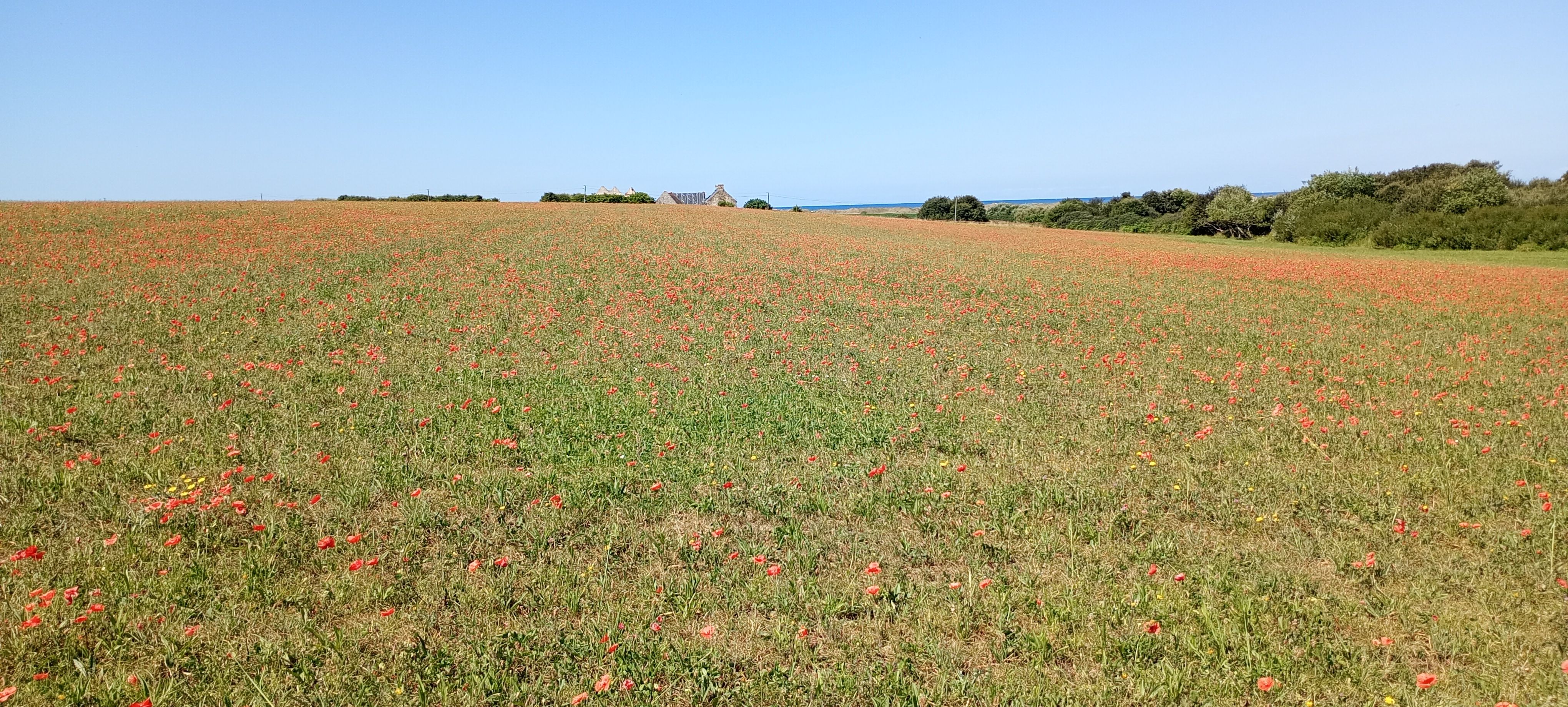
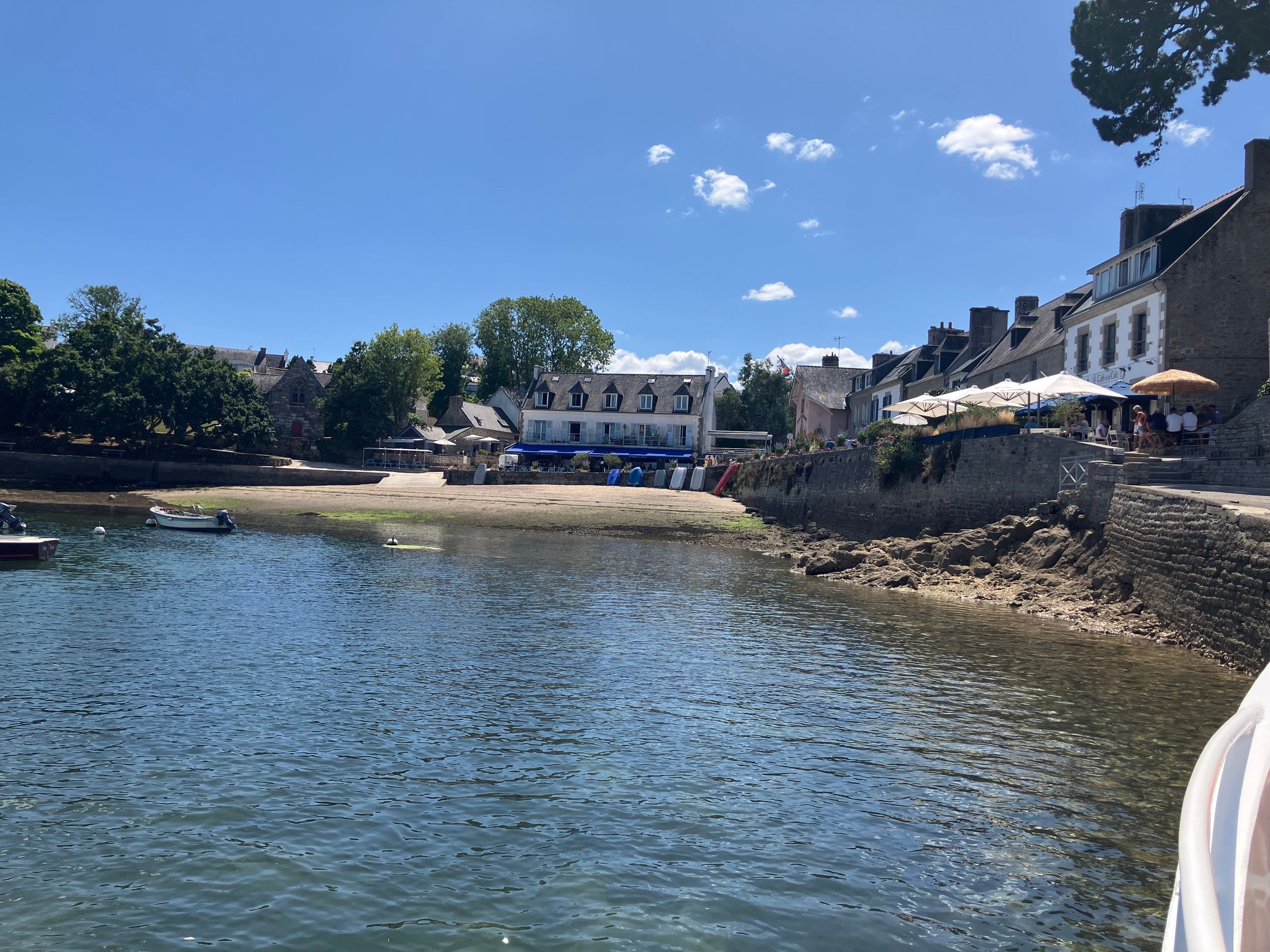
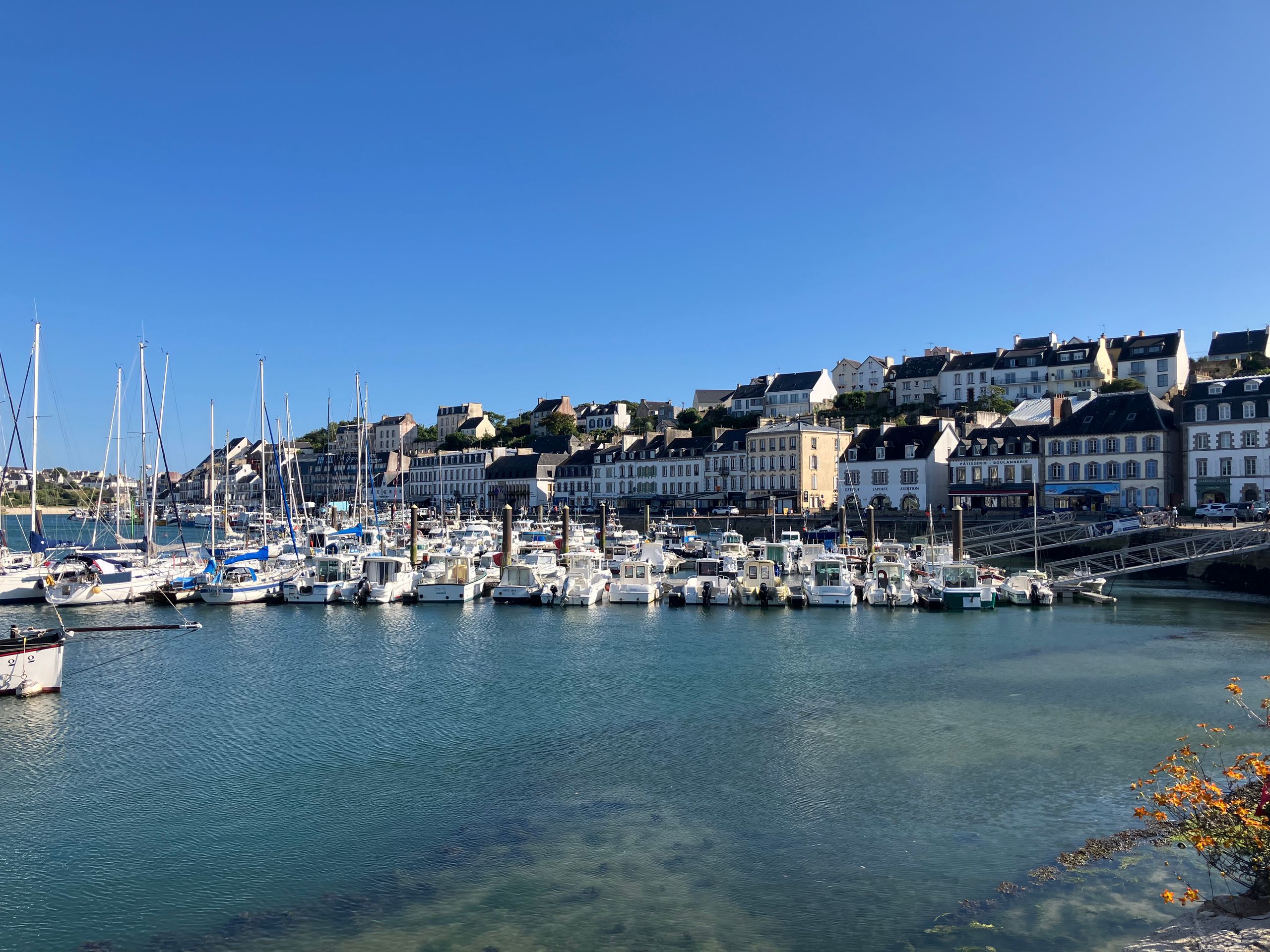
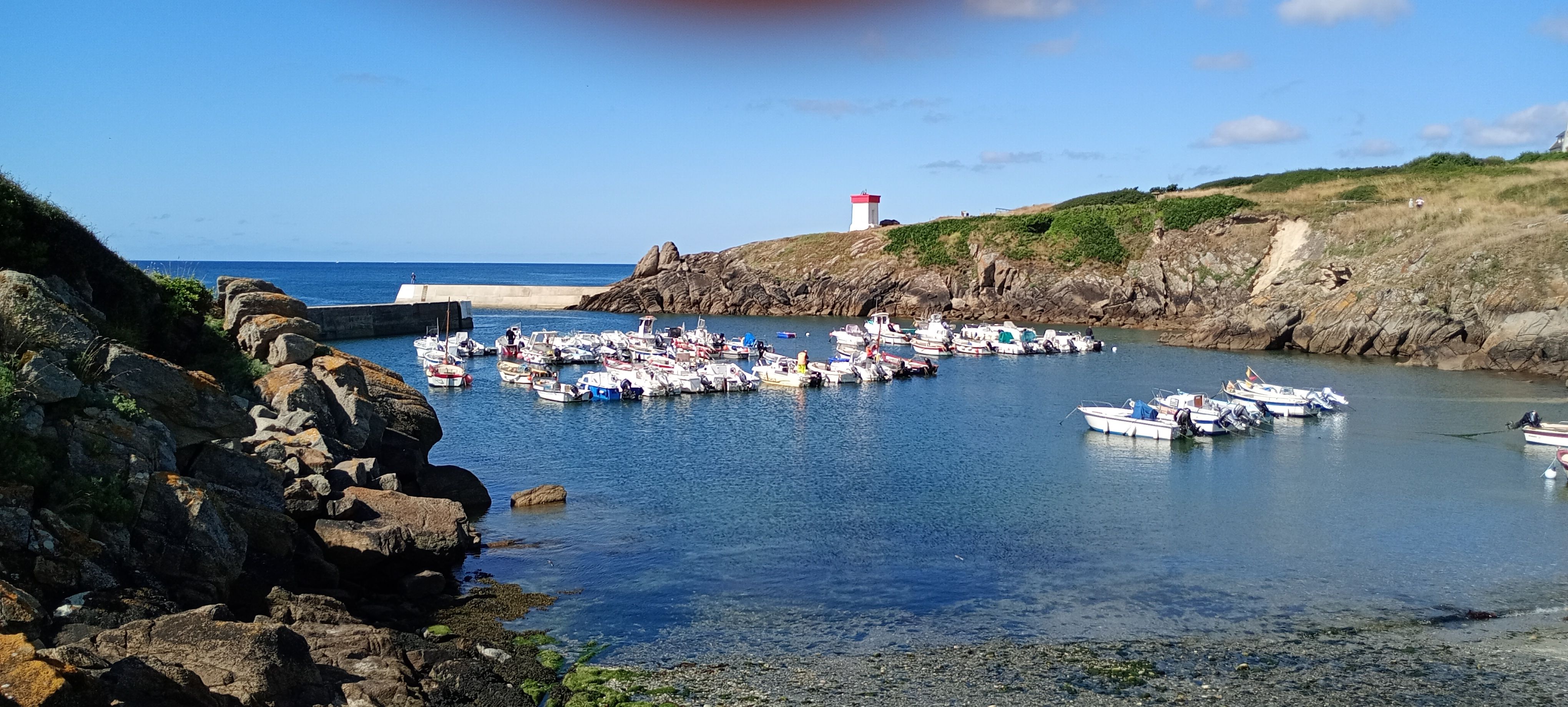
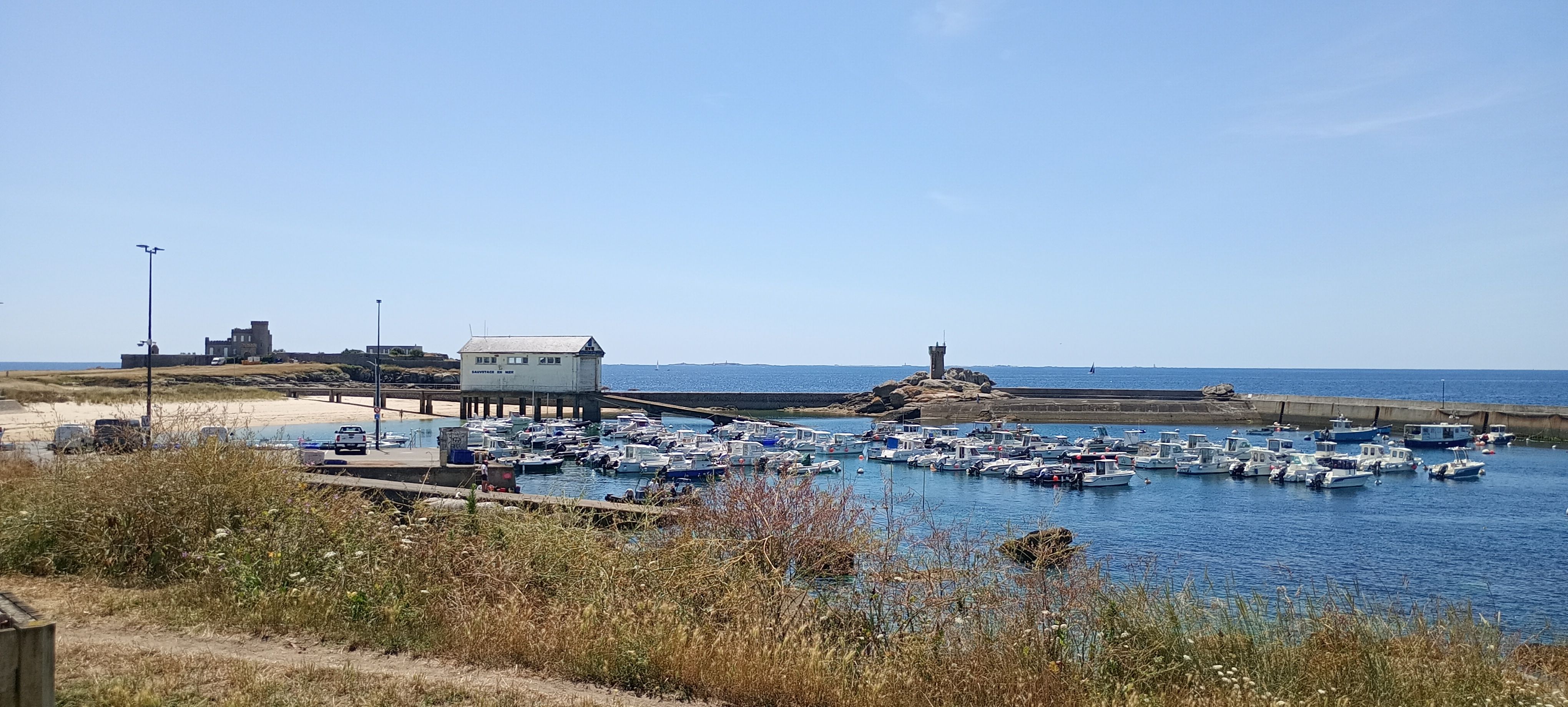
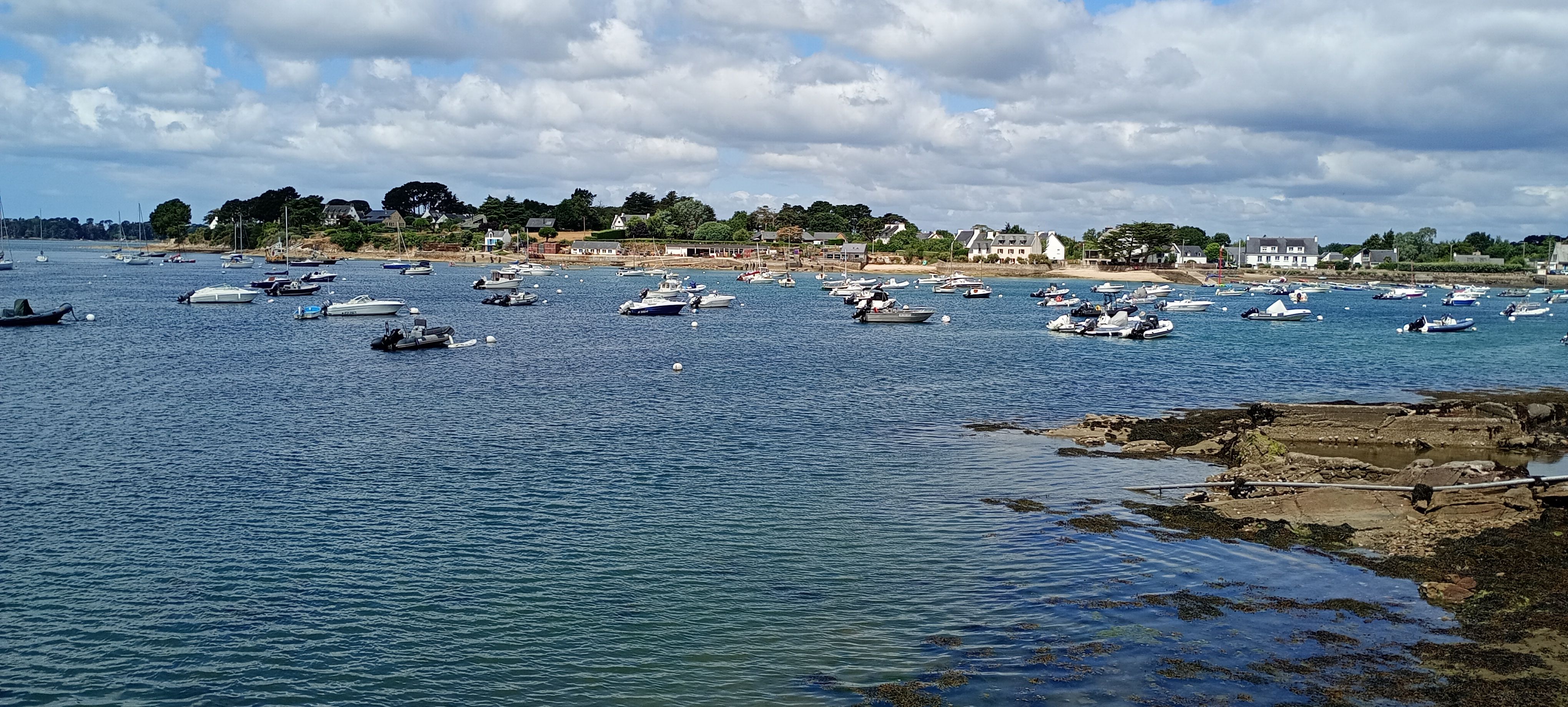
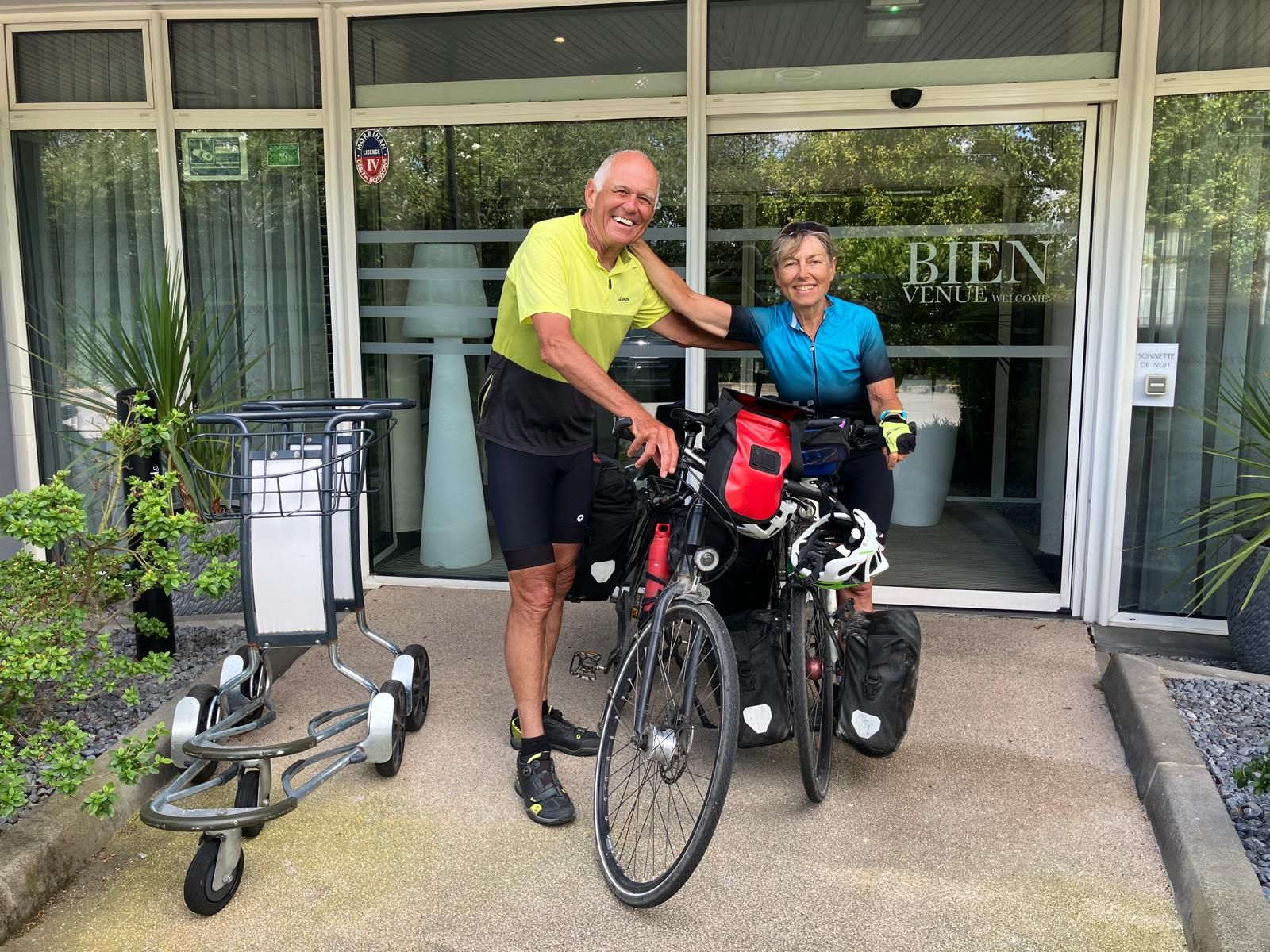
In the morning, we ride on good roads mostly close to the coast. Dominique complains that this is supposed to be a flat stage, yet it still goes up and down constantly. For the first 30 km, she is indeed right. After that, it becomes significantly flatter and more pleasant. For the first part, we ride past many beautiful holiday houses built in typical Breton style, with side chimneys, sash windows, bright colors for façades, and bold colors for shutters and fences. Currently, the shops in most places are still closed, but this will change when the big holidays begin in France on Saturday. We take a break only after 40 km in Saint-Guénole, where there is delicious flan available at the bakery. Now we go flat along the coast towards the east on a bike path until Le Guilvenec. On the seaward side of the dunes, we reach a well-traveled sandy path just before Loctudy. In summer, there is ferry service to the nearby Ile de Tudy, saving us a longer detour around the bay. The same applies to the connection from Sainte Marine to Bénodet. Soon we arrive at the campsite and can wash up again. One last time; this should last us until we get home.
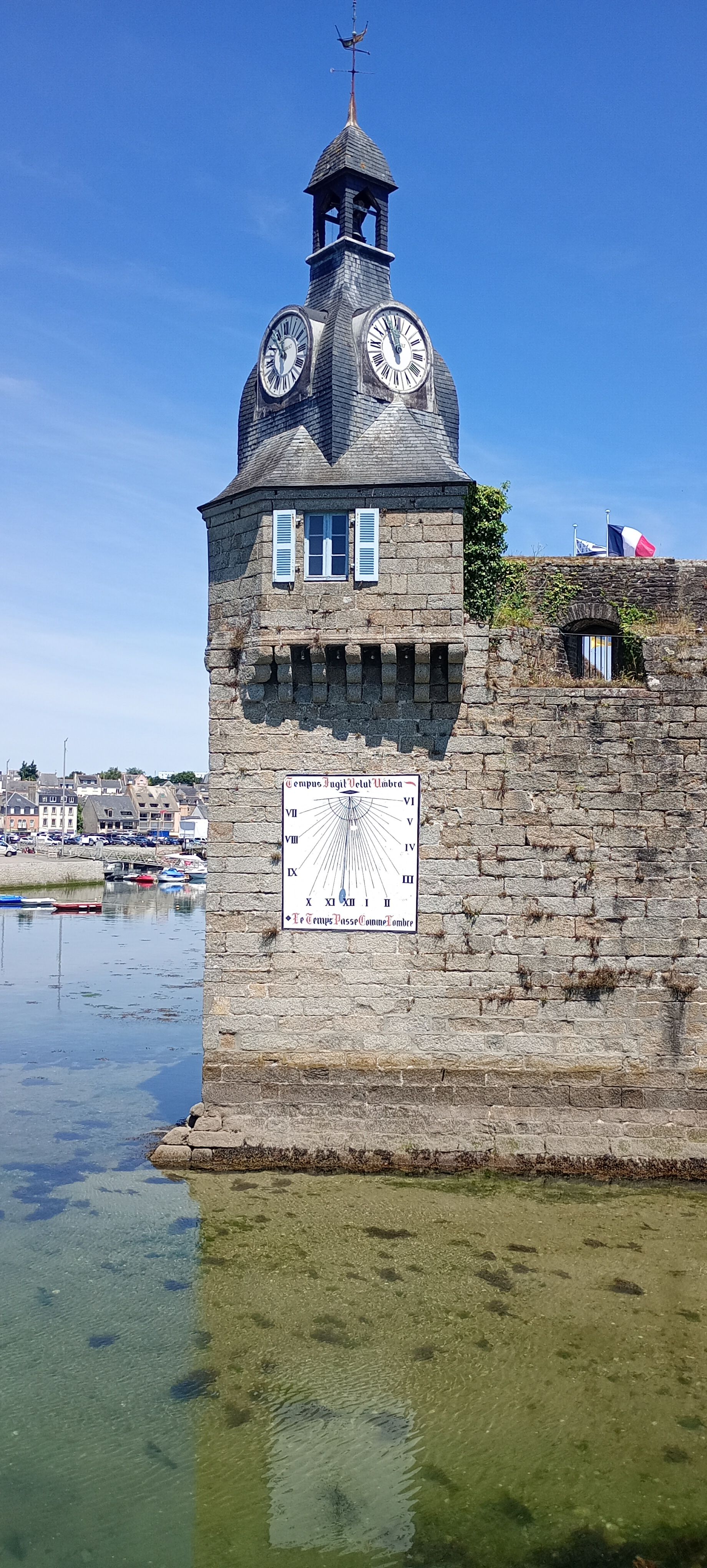
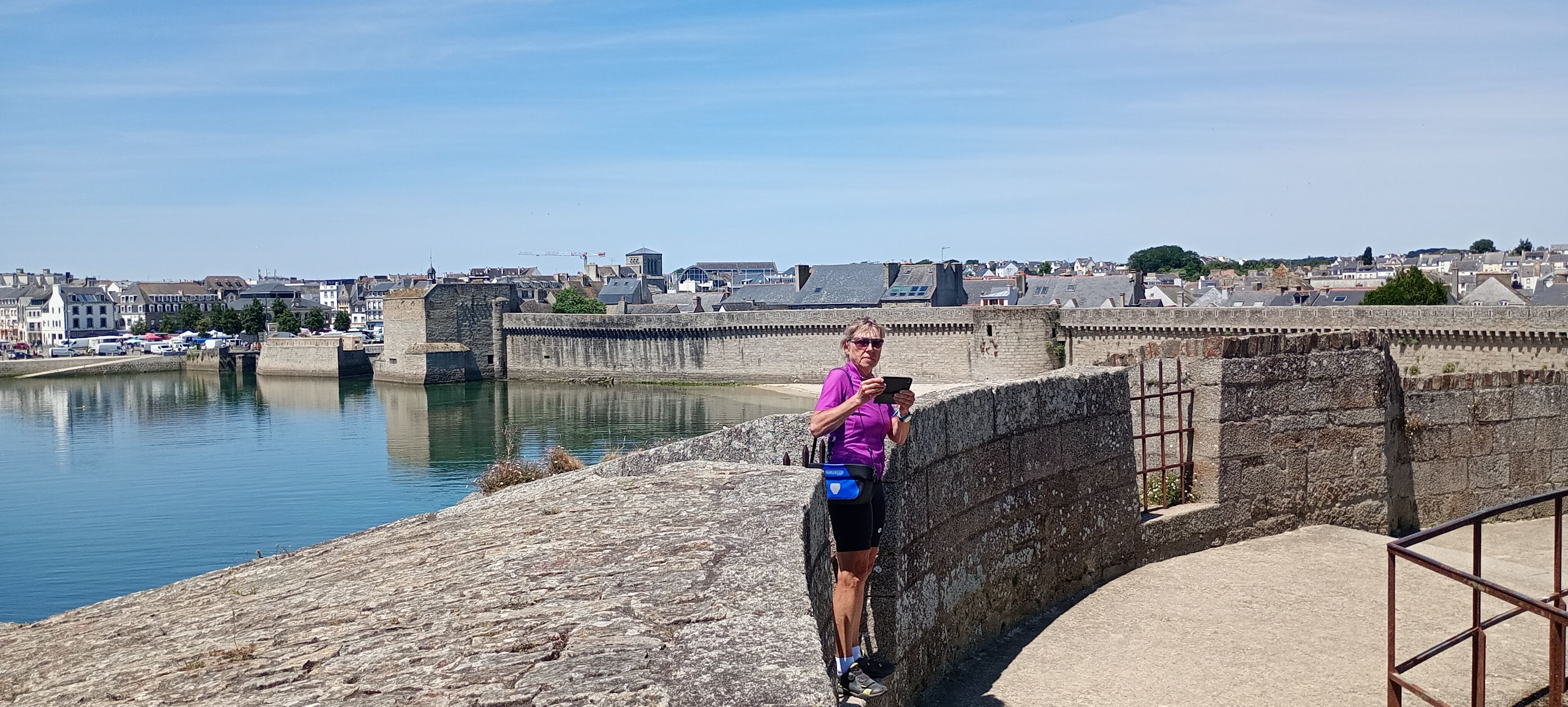
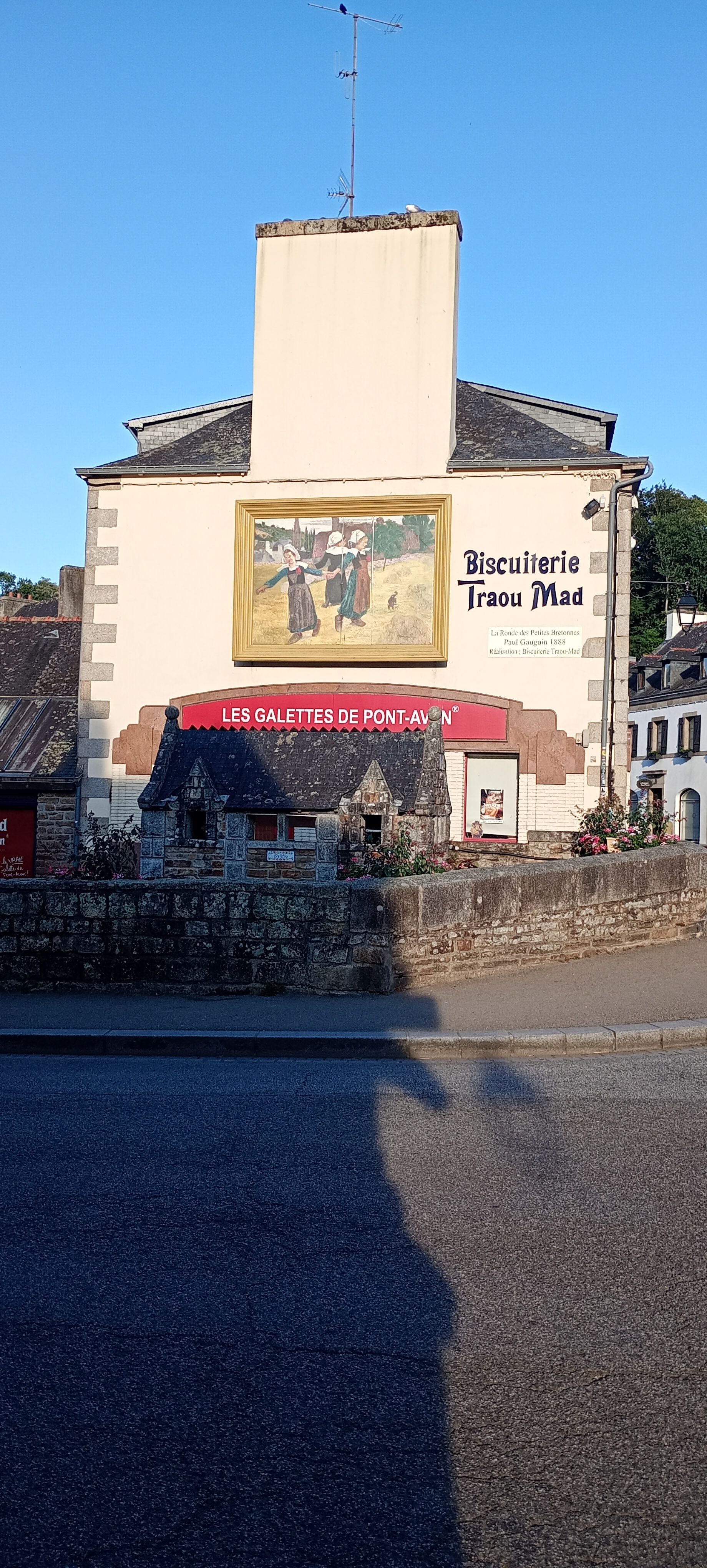
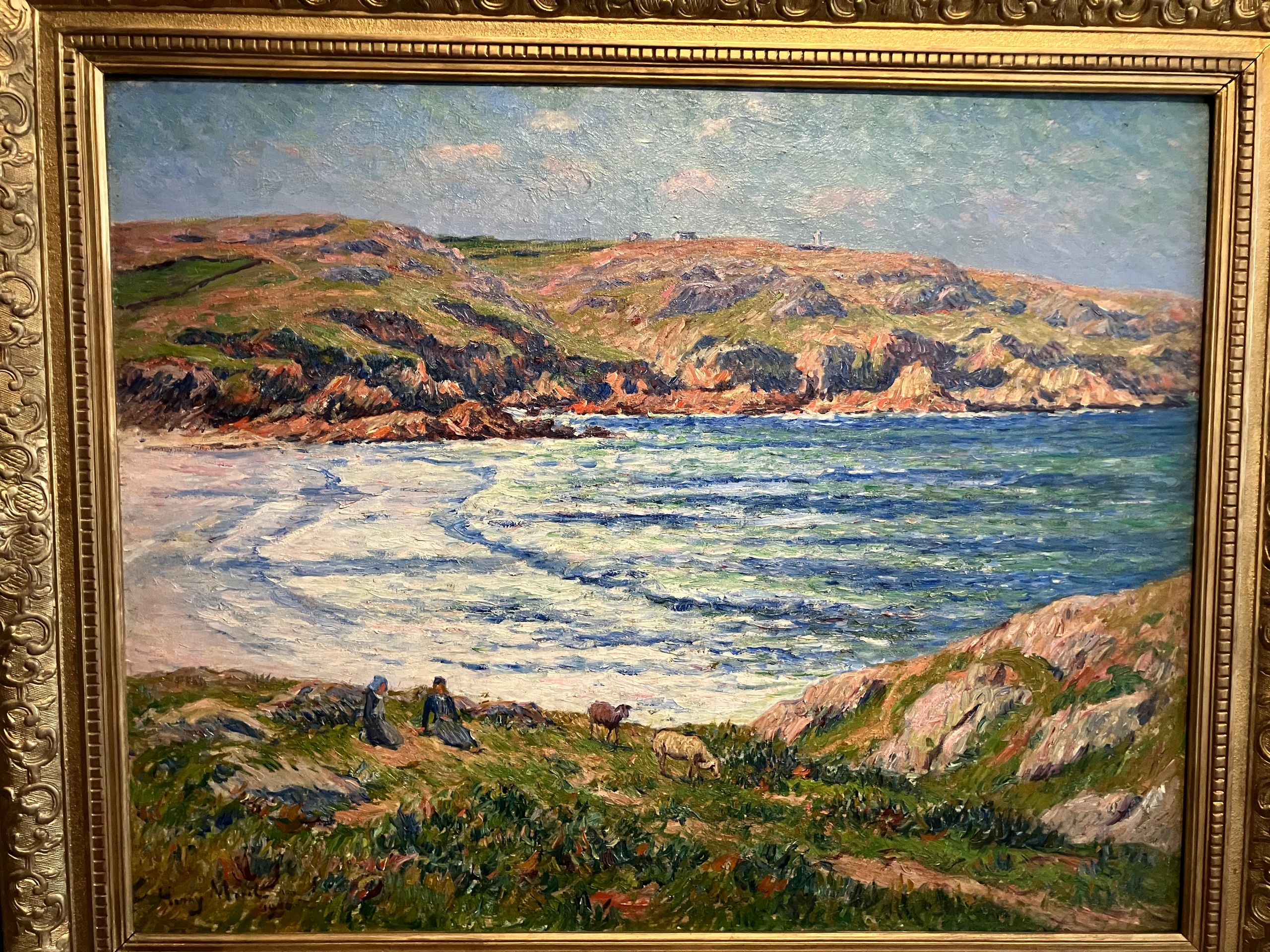
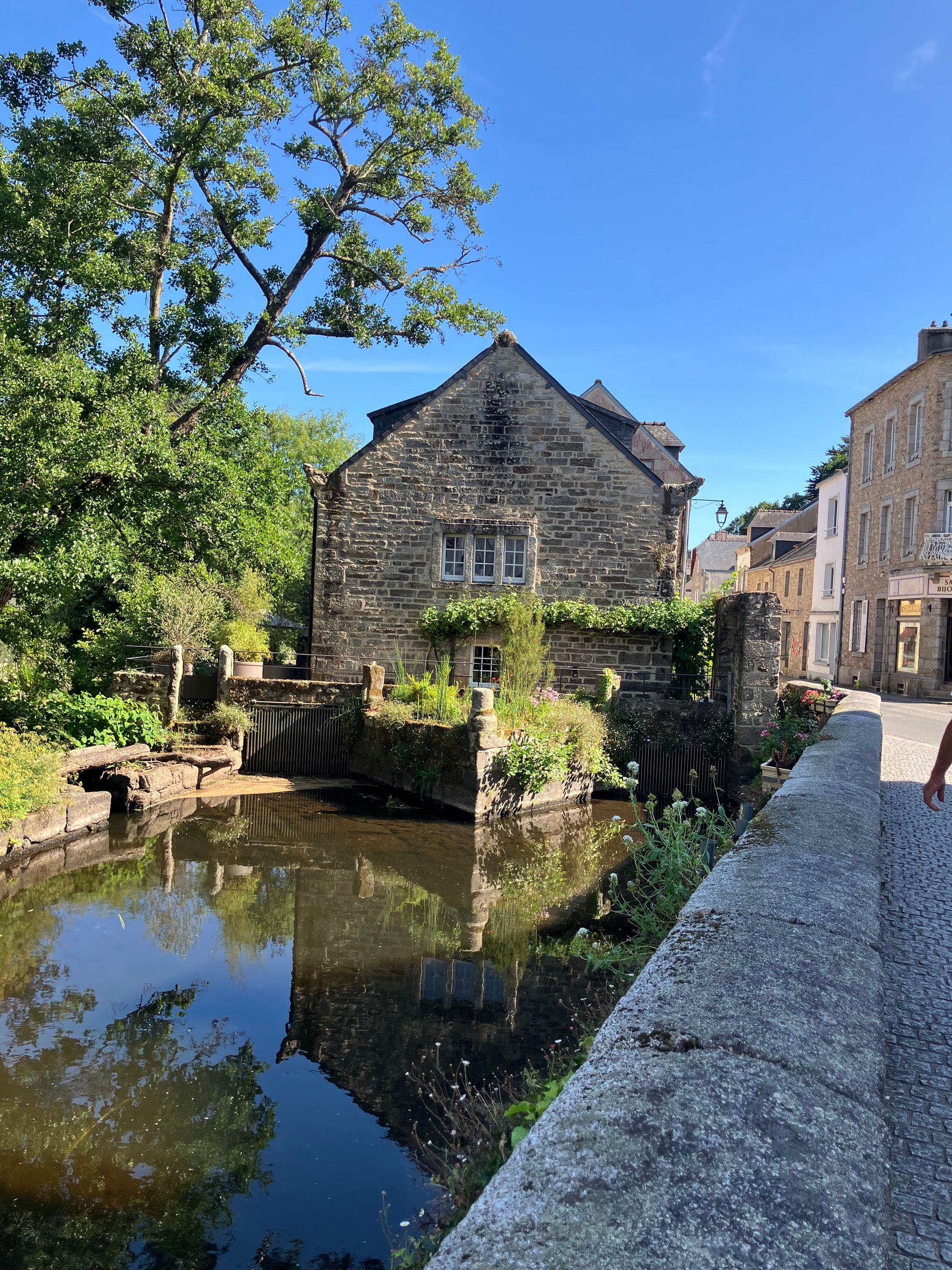
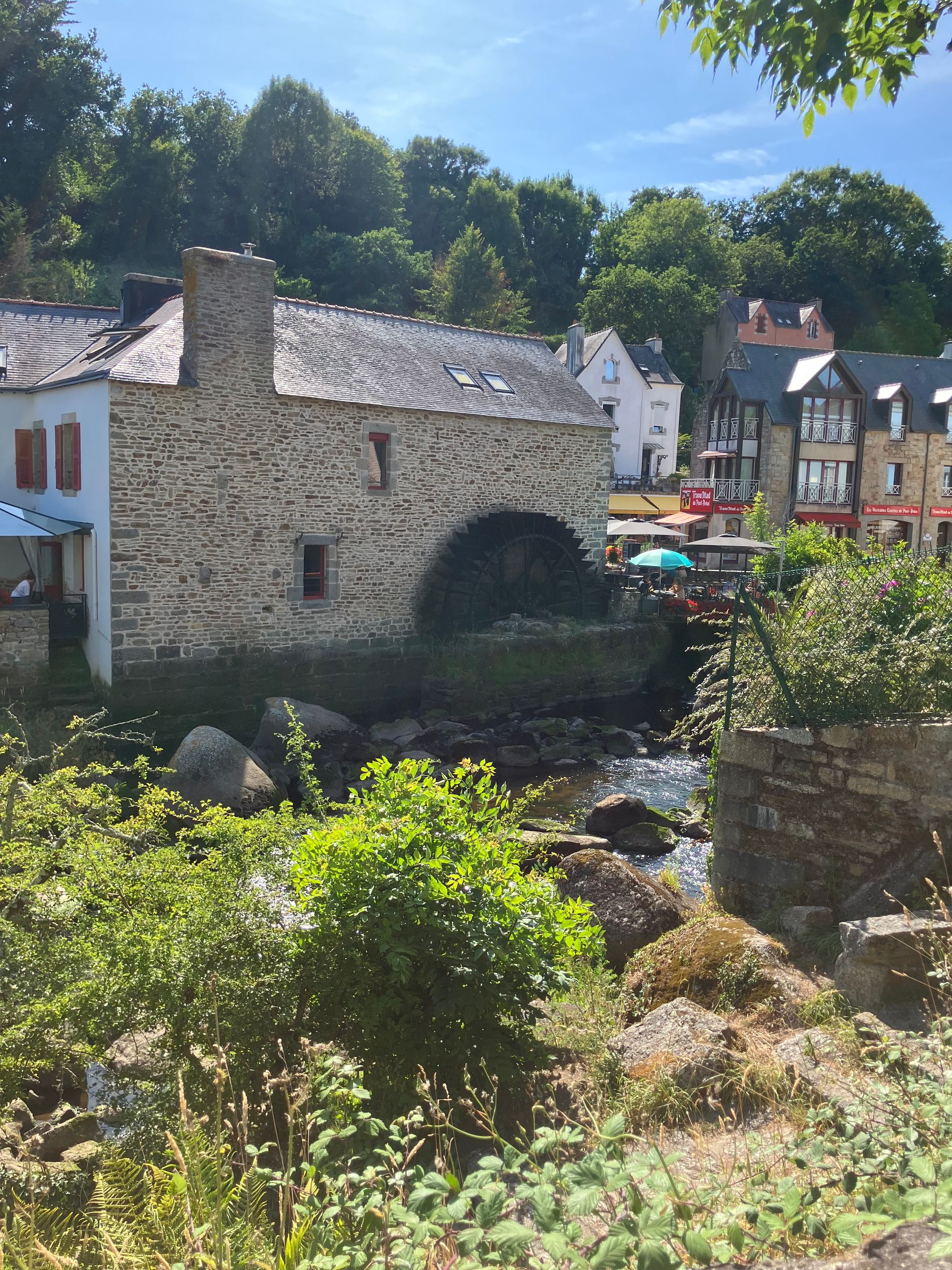
Now begins 'the last time' - Dominique packs the tent one last time. We have booked hotels for the next four nights in Brittany. The first stretch to Concarneau is not very attractive, as we have many directional changes and see little of the coast. It gets beautiful when we reach the coast, after Porte Mousterlin or Raguenez, where there are a harbor and white sandy beaches. After 30 km, we arrive in Concarneau, the administrative seat of the famous Breton commissioner Dupin (recommended read). We take our time visiting the Ville Close, an island fortress in a sheltered harbor basin, settled by monks in the 10th century and later converted into a military fortification in the Middle Ages. The city wall made of granite, measuring between 2.50 m and 3 m thick, surrounds the old town for a total length of about 980 m and is one of the sights and attractions of Concarneau. Accordingly, there is considerable tourist interest. We can reach the old town with our bicycles via the only bridge, through the bustling Rue Vauban to the other end, and take a small ferry out of the hustle and bustle again. How beautiful and quiet it is only 10 bike kilometers further at Porte de Trevignan. A beautiful harbor, lonely sandy beaches, and a wonderful view of the Glénan archipelago, perfect for enjoying with an ice cream. We don't have far to go to the artist village of Pont-Aven, known for the regular visits of Paul Gauguin in the 1880s and the resulting development of Synthetism here. Gauguin came to this area due to financial difficulties; it was simply much cheaper than in Paris. And he met like-minded individuals. Moreover, Pont-Aven was easily accessible by train from the Quimperle station. Today, many galleries try to profit from this reputation. We visit the Musée de Pont Avon, located in the former Hotel Julia, where many artists stayed. Many paintings from the golden age of Pont-Aven are exhibited there, and the historical processes are presented clearly. Among others, we see a painting of the Pointe du Raz, which we passed a few days ago, experiencing it 'in person'. There are only a few paintings by Gauguin and the other two important painters of this group, Emile Bernard and Paul Sérusier; they hang in the large museums.
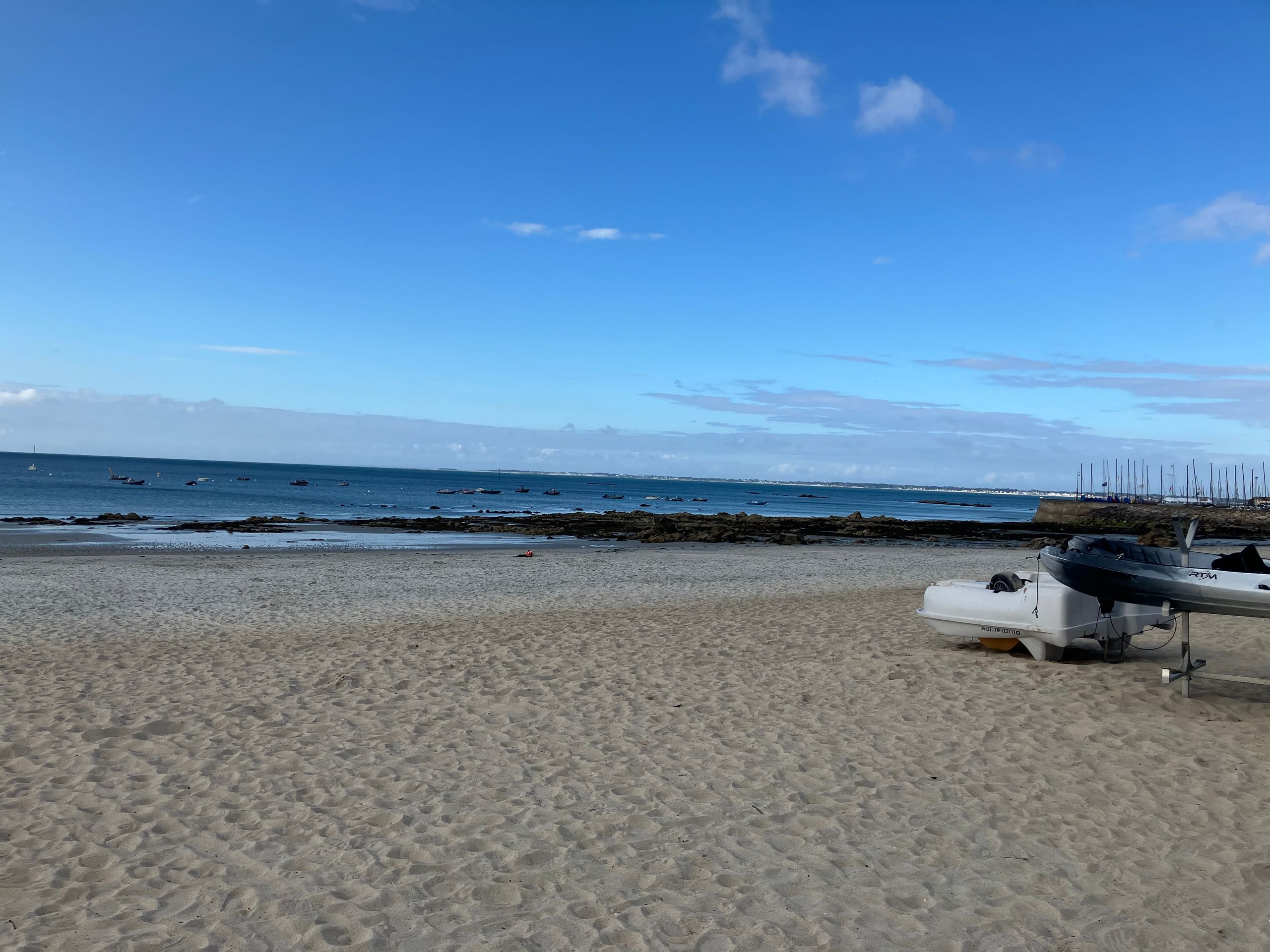
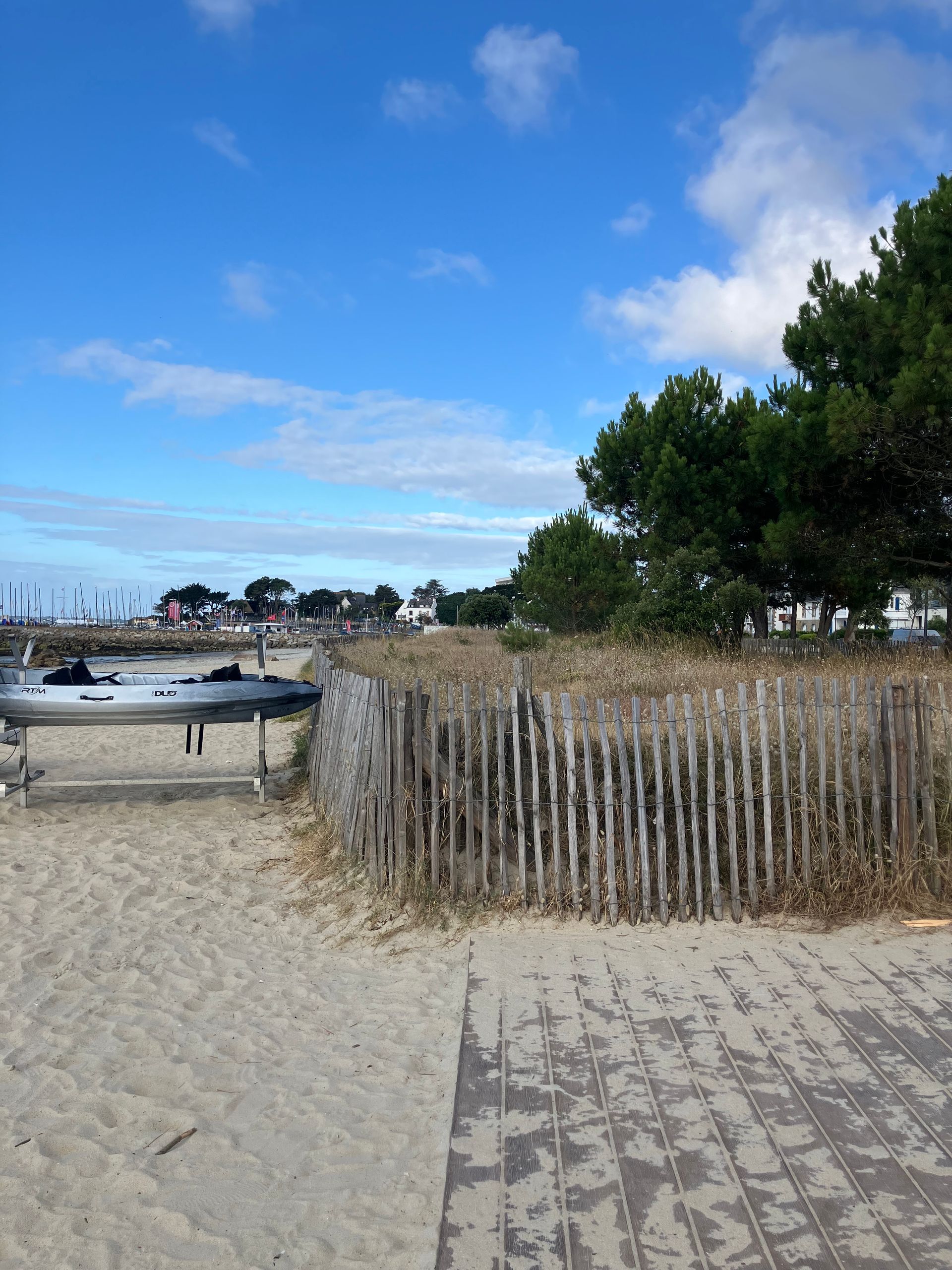
The day starts sunny again, not as warm as the previous days but ideal for a bike tour. Dominique speeds ahead and enjoys the gentle and steady incline in the morning. I only see her from afar. We're making good progress through the hinterland until we reach the coast in Le Pouldu. There, with the start of the holidays, it's quite busy, but after two turns and a short climb, we arrive in Port Pouldu, where the ferry to Guidel-Plages is on standby. On the other side of the bay, we ride along the coast with many sandy beaches. This doesn't change much over the next 20 km until we reach Lorient and find the ferry to Port-Luis. The bays in this area are narrow and long, making ferry service worthwhile for pedestrians and cyclists at least during the summer months. We save some kilometers and elevation gain. Just 10 km later, the next ferry takes us across the bay of Magouer to Étel. Only 20 km remain along dunes and fine sandy beaches to Carnac-Plage. It’s bustling there; Carnac has been a popular vacation destination for the French since the 1920s due to the good climate, beautiful beaches, and prehistoric sites in the vicinity. Since we have a hotel right on the beach, I seize the opportunity for my first swim during our EV1 tour - it just had to happen!
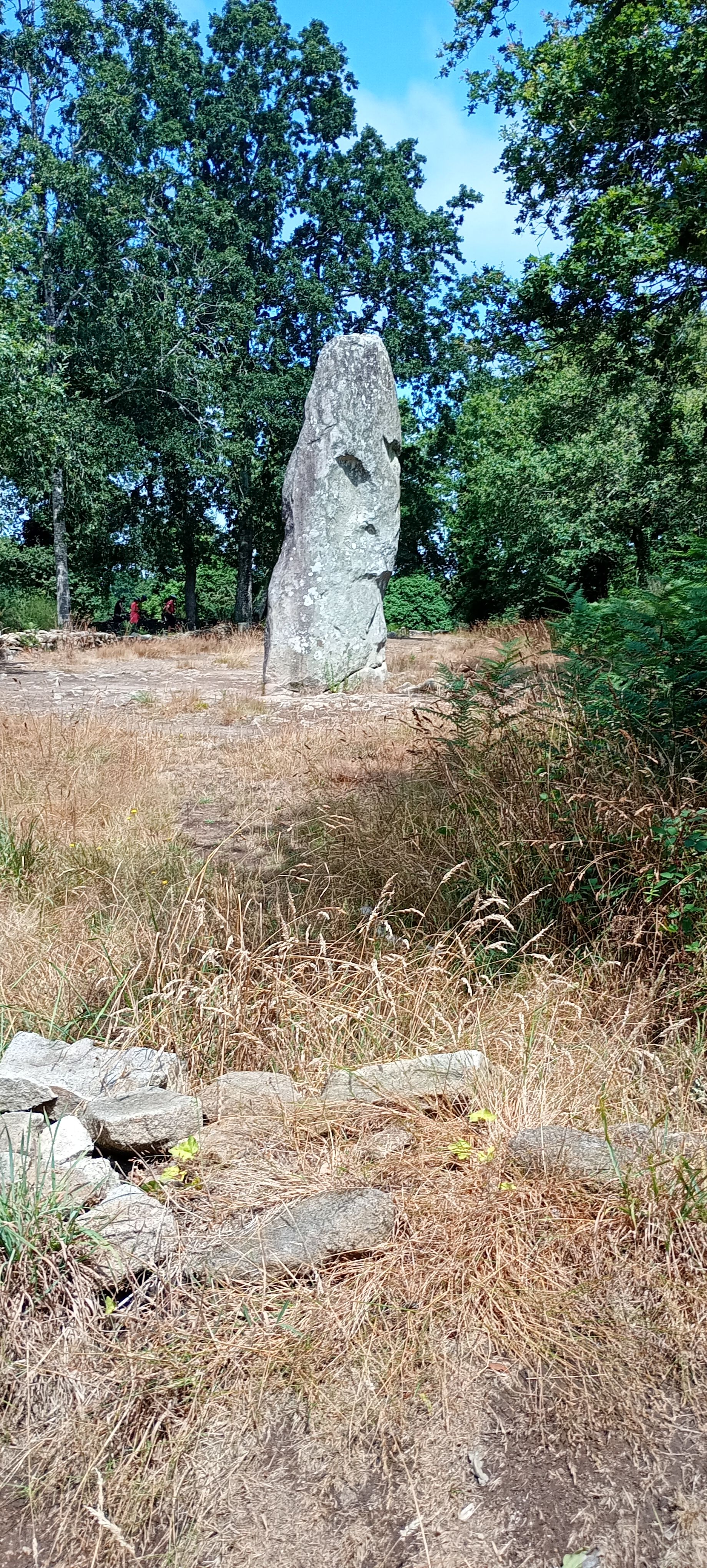
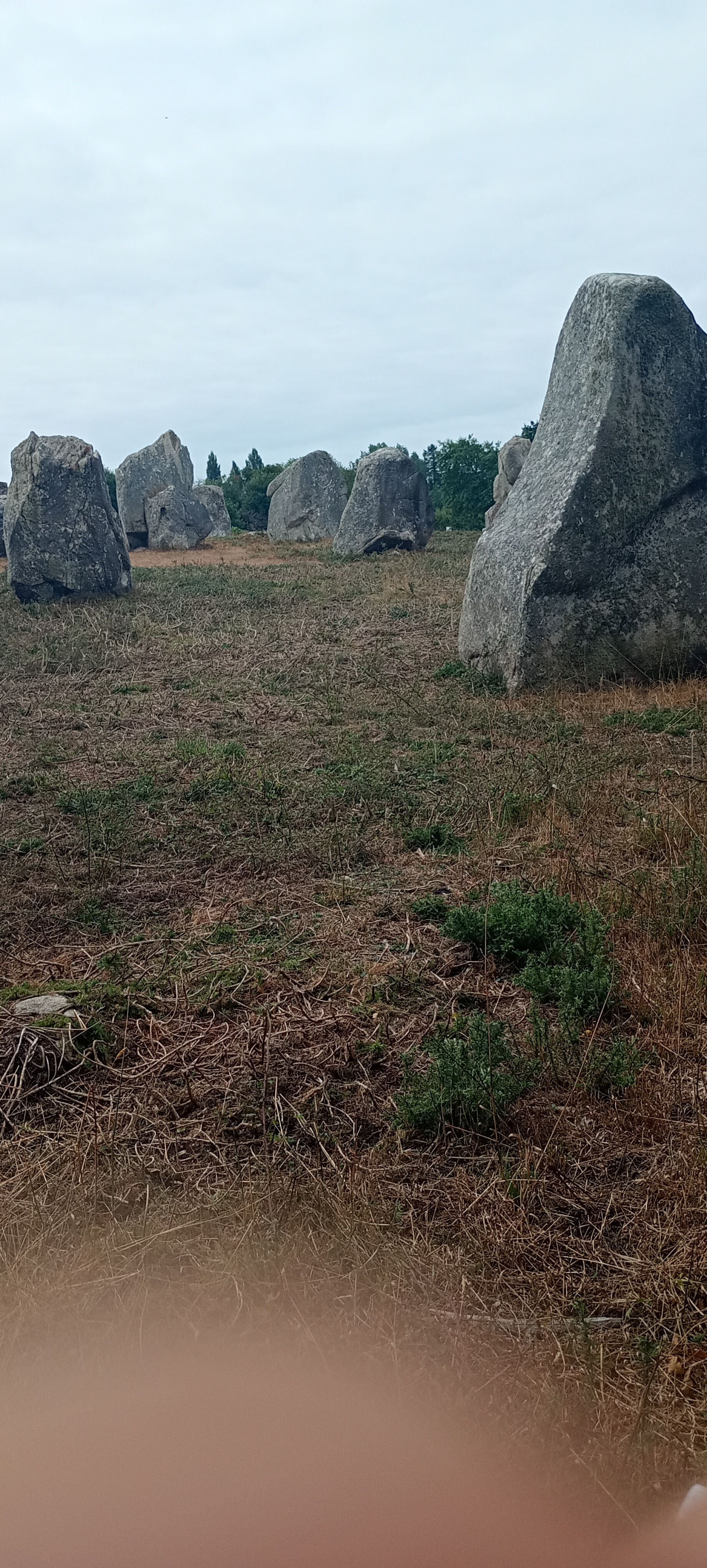
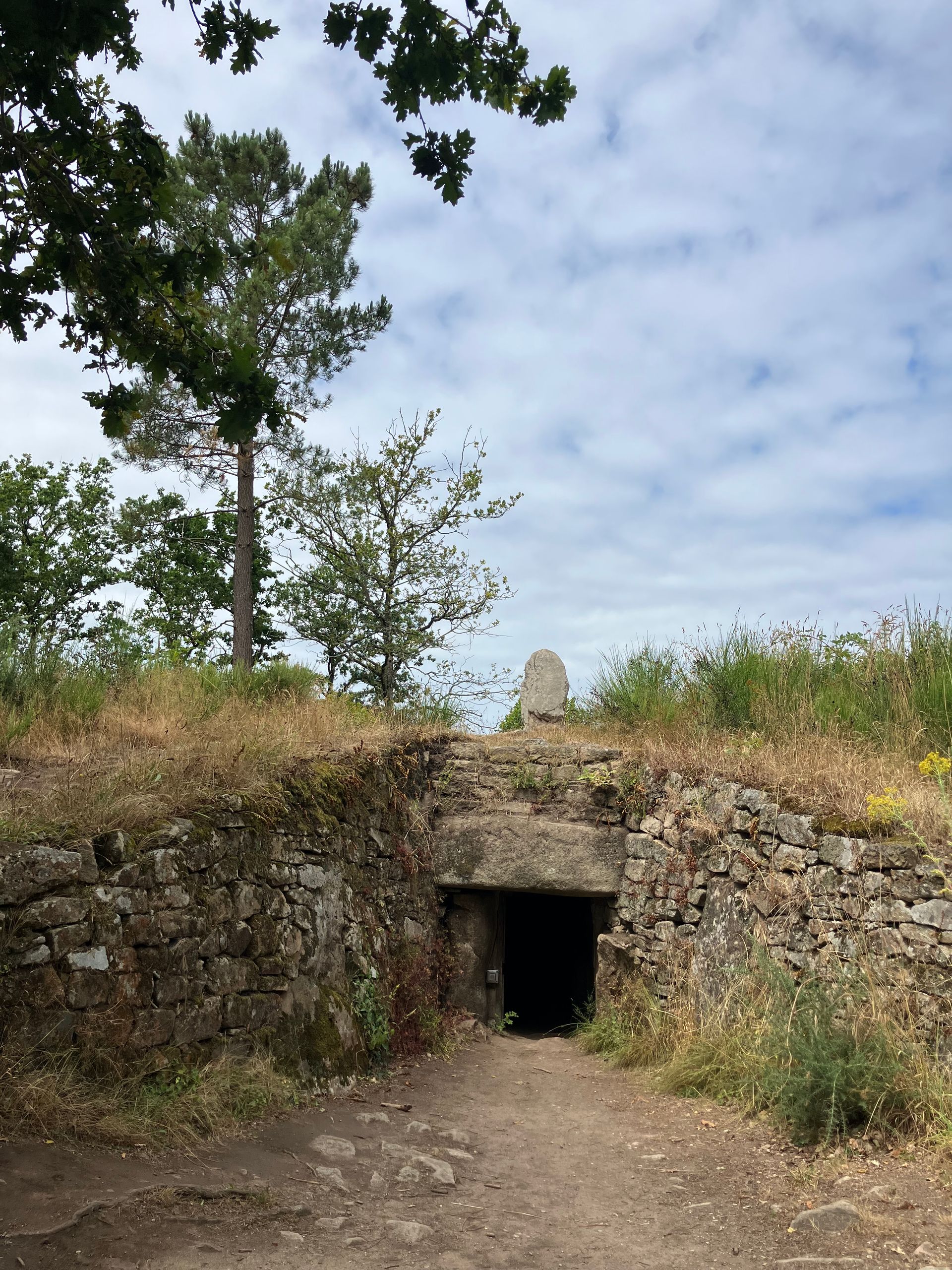
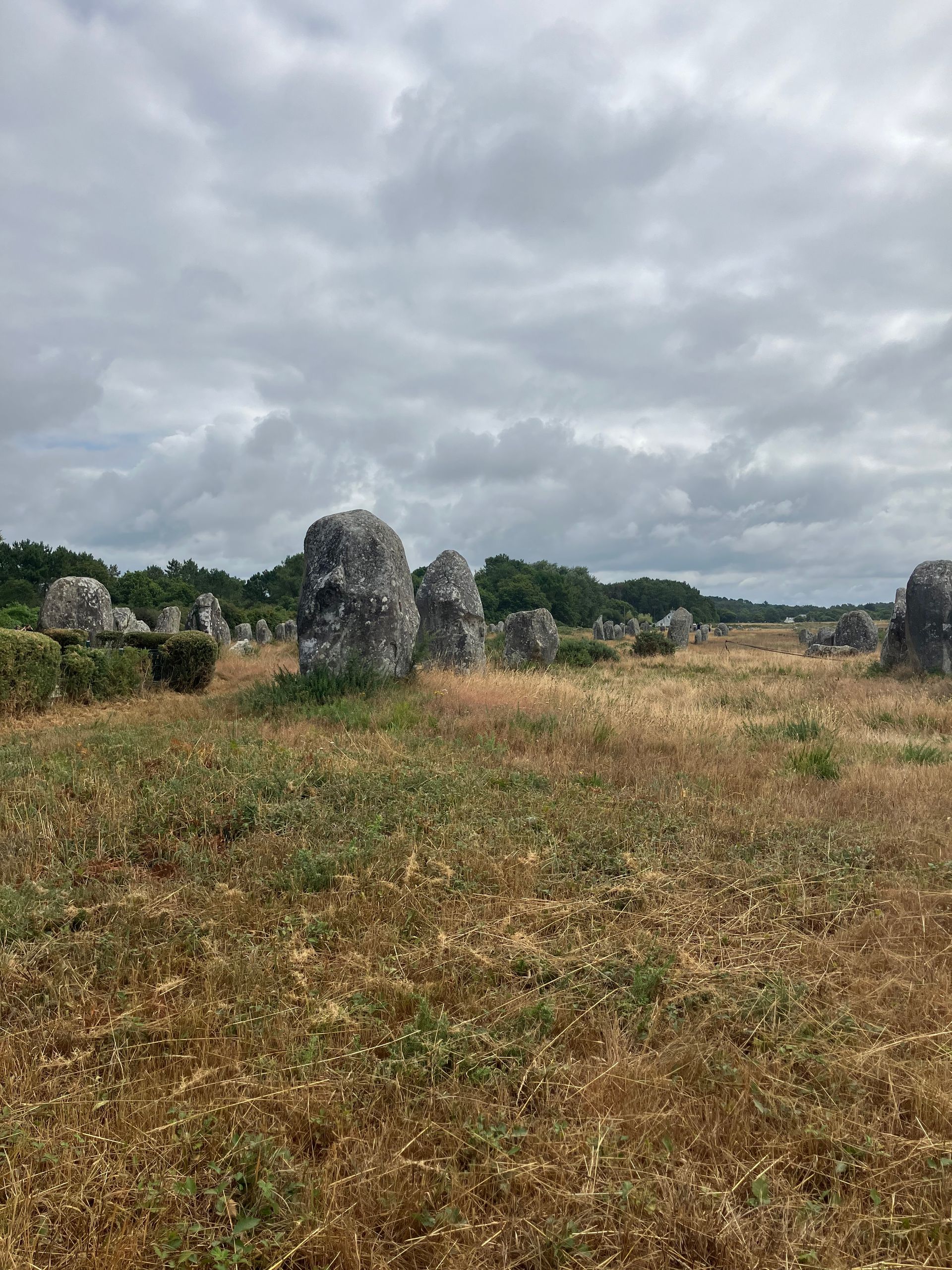
At the end of the tour, we treat ourselves to a rest day, whatever that means for us (!!) This day serves as a buffer for planning the return journey, as it was somewhat challenging to adjust the tour to continue in Brittany. This was not planned and therefore not prepared. We then had to quickly align the stages, the trip to Paris, and then to Basel. So a buffer day seemed helpful, which we can now use to visit the Alignements, the stone rows of Carnac, and make a trip to the Quiberon peninsula. It will still end up being 65 km, not bad for a rest day. The Alignements, consisting of stone rows, dolmens, cairns, tumuli, and individual menhirs, which I fondly remember as the megalithic structures from French class, are part of a megalithic landscape dating between the 5th and 3rd millennium BC, built by settled communities engaged in agriculture and livestock farming. The countless stone blocks extend over several kilometers and form parallel lines of stones placed at relatively regular intervals. The most famous of the menhir fields stretches over a kilometer in length. By bike, we can get a good overview and are very impressed. An enormous effort was made to erect the many stones, and their significance has not yet been deciphered.
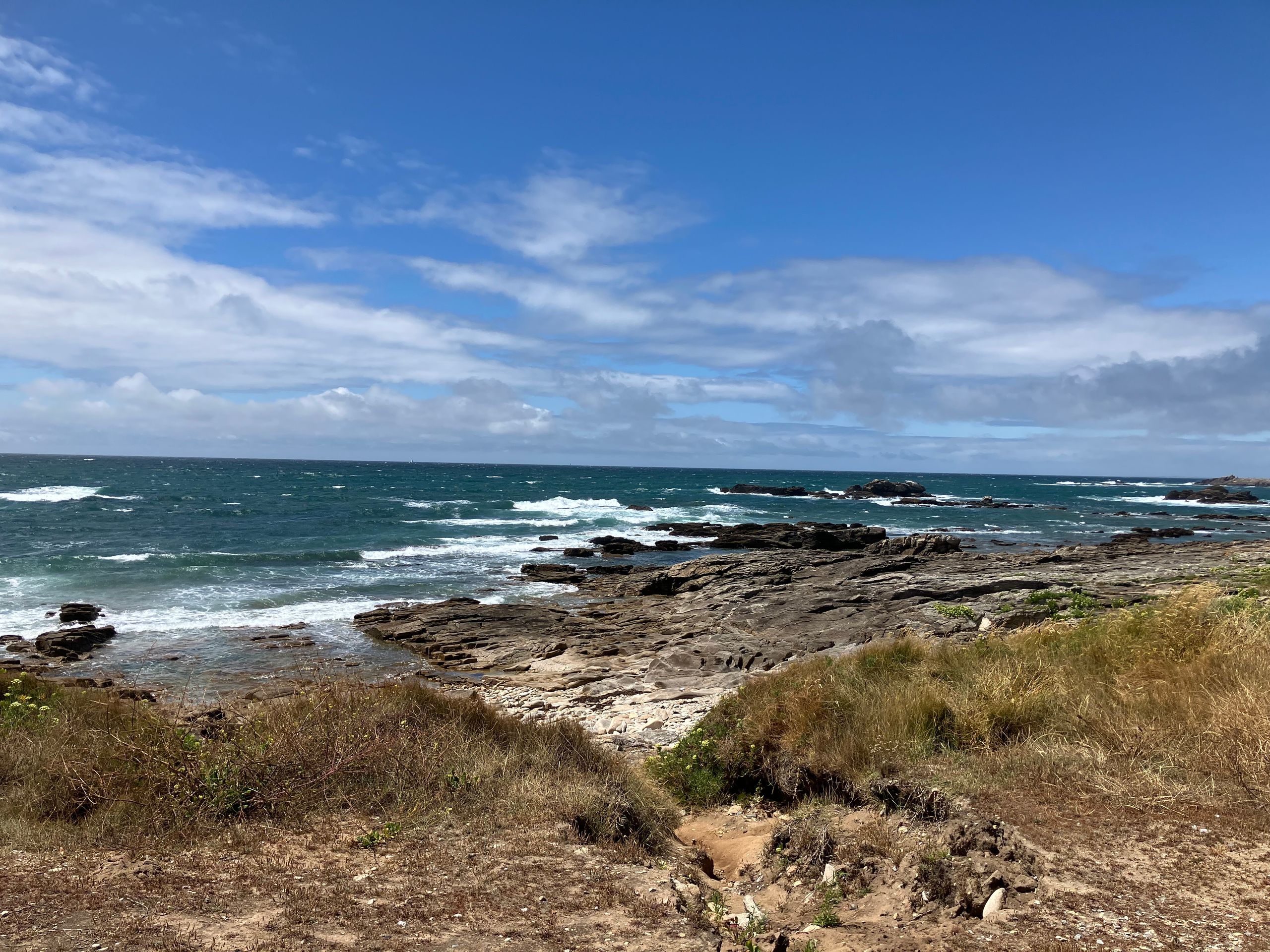
After this interesting visit, we pedal to the southern tip of the Quiberon peninsula. On the western side, facing the open sea, a spectacularly wild coast presents itself to us with high waves. From there, one can also see Belle-Île, which can be reached by ferry from Quiberon. On the eastern side, sheltered from the wind, there are beautiful sandy beaches. And everywhere, we can ride easily by bicycle.
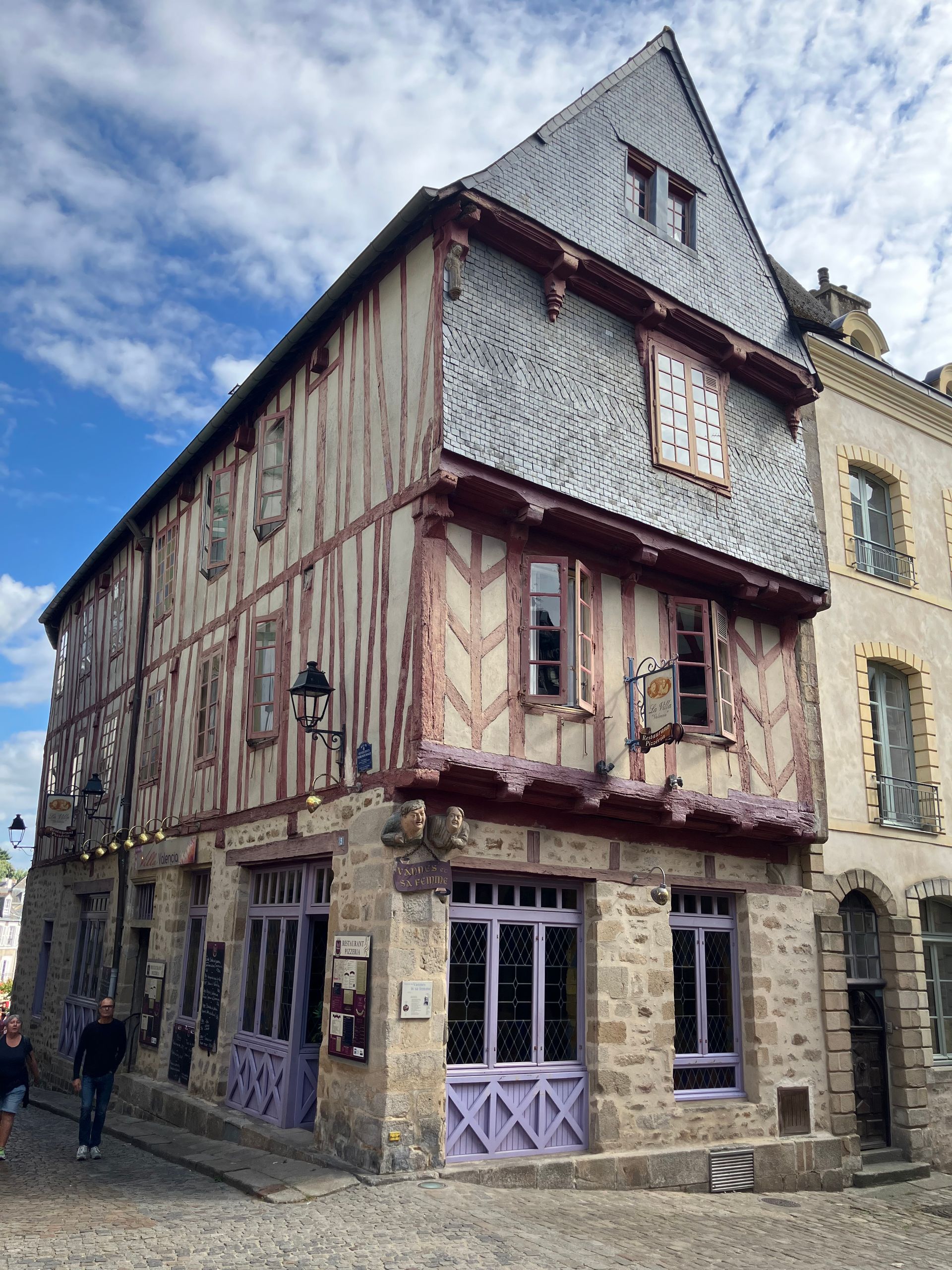
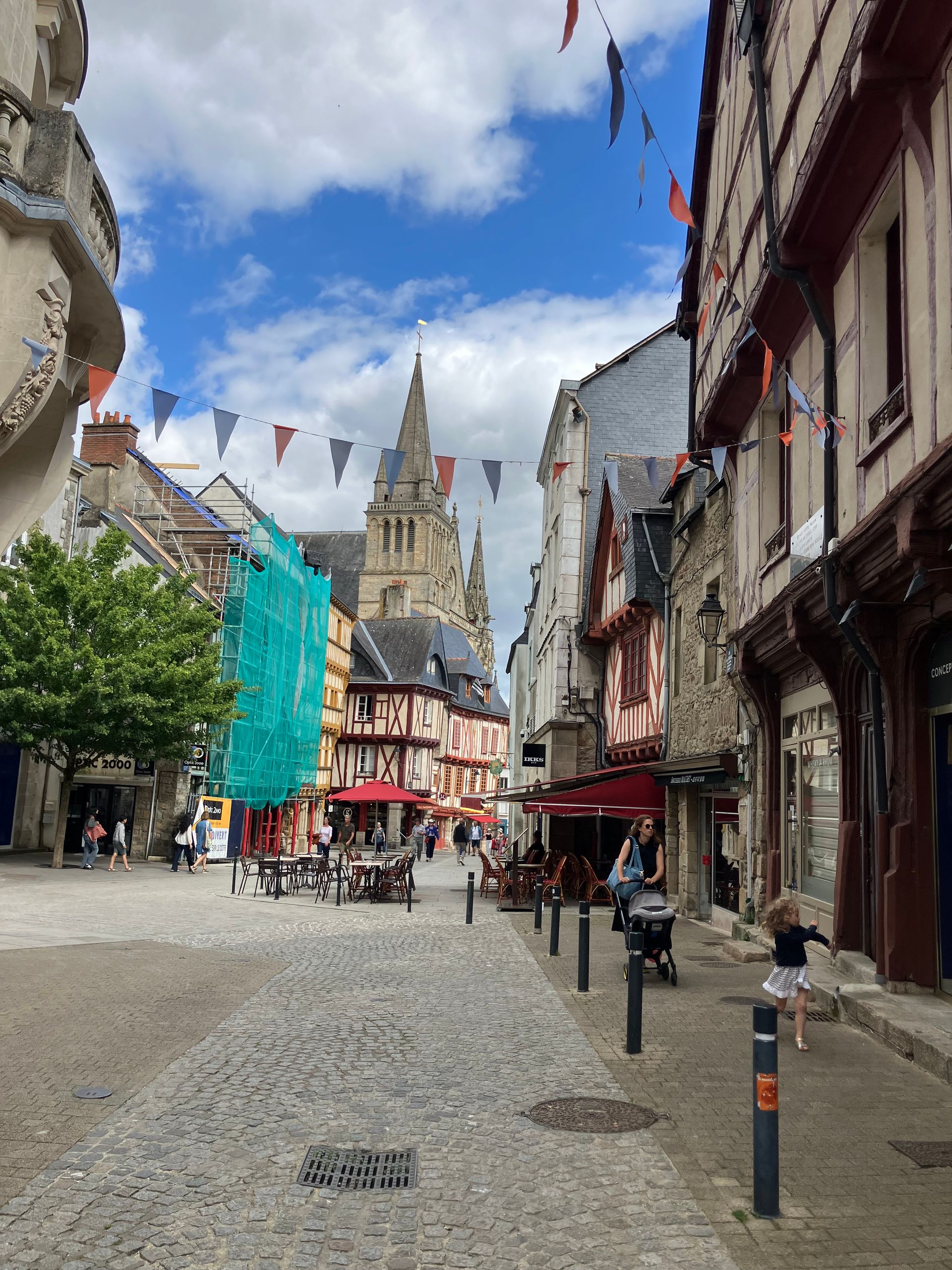
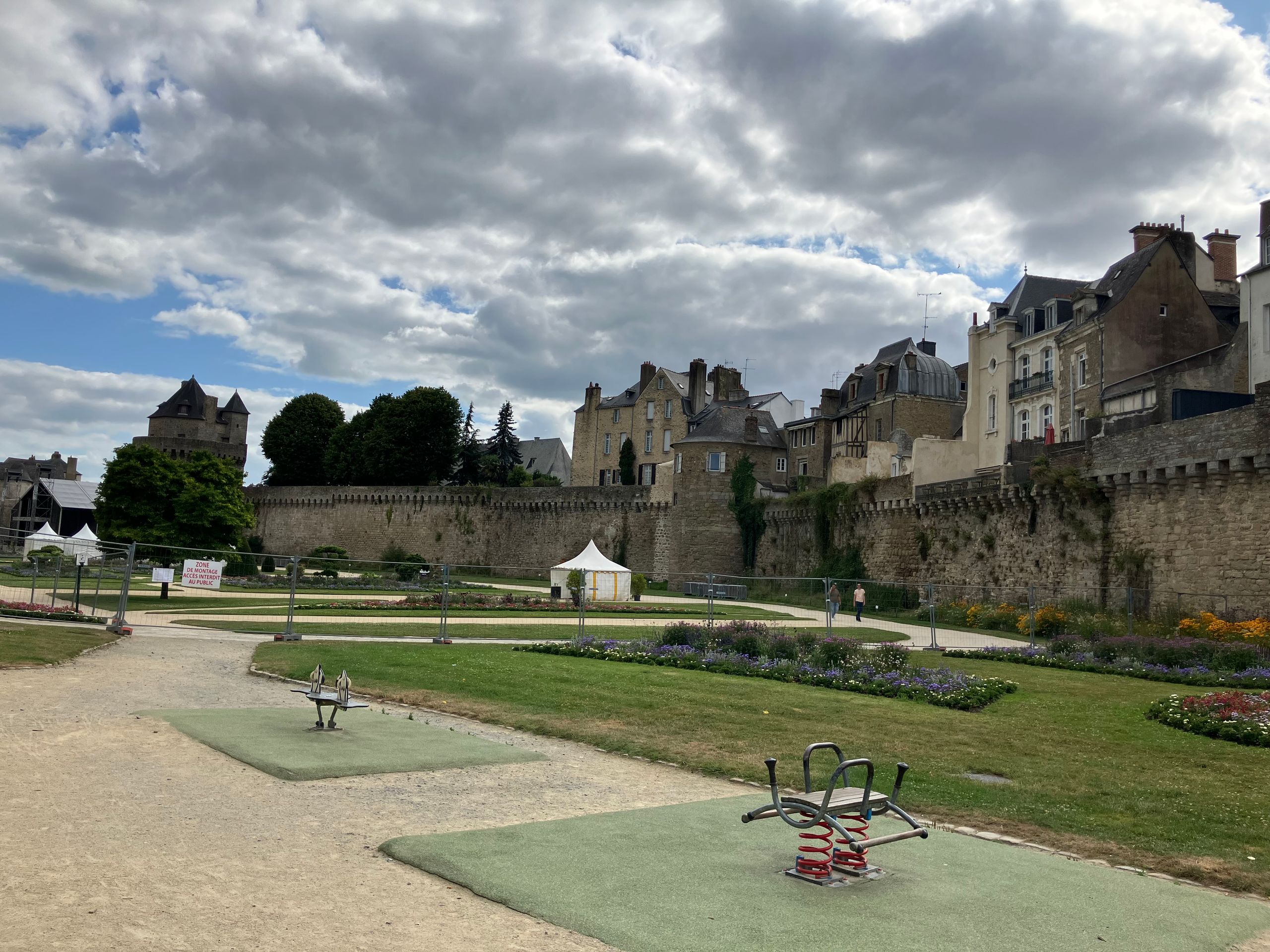
In the morning, we cheer each other on: Ois goht noh! The motto of Passenhalden applies to us today - the last stage. As with every major tour, 'cooling down' applies here too - it is thus the shortest stage. Nonetheless, it has one last time almost everything our journey has been about: light drizzle (barely worth mentioning), headwinds, some short, sharp climbs, one last incline qualified by Garmin, coastal paths with beautiful views, and considerate drivers. So that was it for our tour by bike, 2500 km uphill and downhill. In Vannes, a beautiful medieval old town awaits us with lovely houses and well-preserved city walls. And in the evening, more Moules marinières and Café Gourmand, the perfect dessert - I can only highly recommend it to everyone.
Yes, ois goht imma noh! 70 km to St Nazaire, and the bond of both tours from Porto and Aberdeen would be closed. But as they say - courage for the gap!