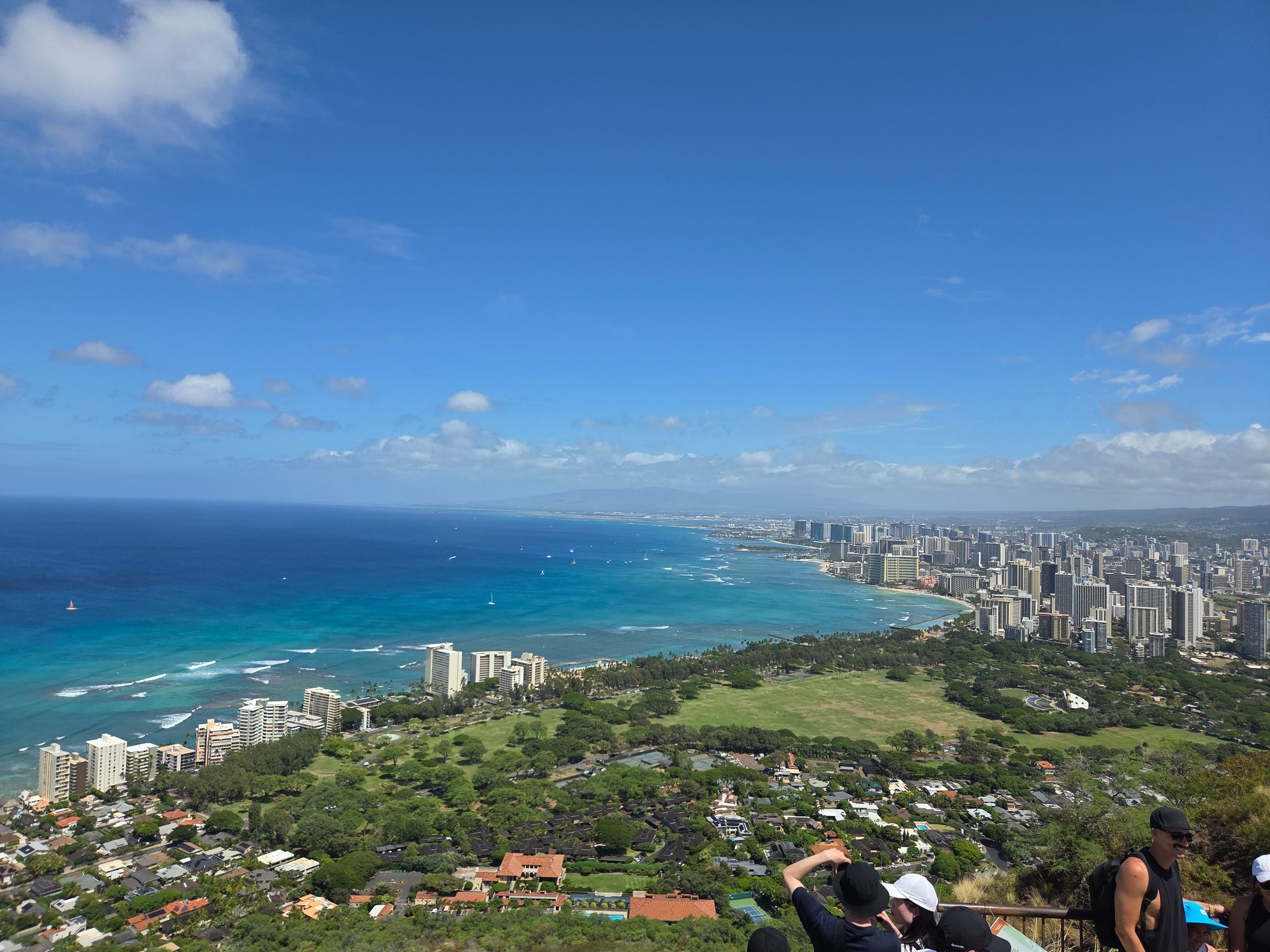
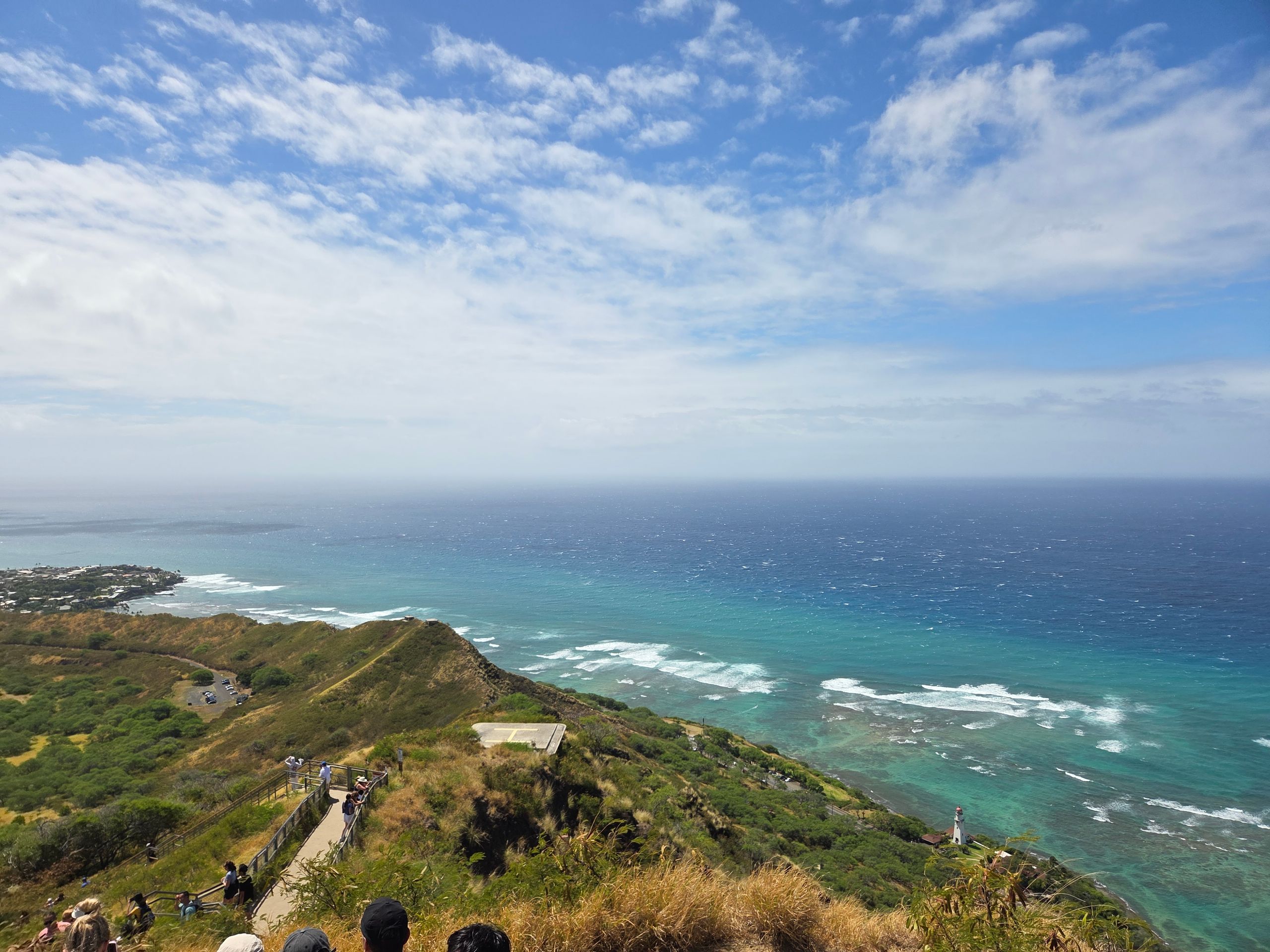
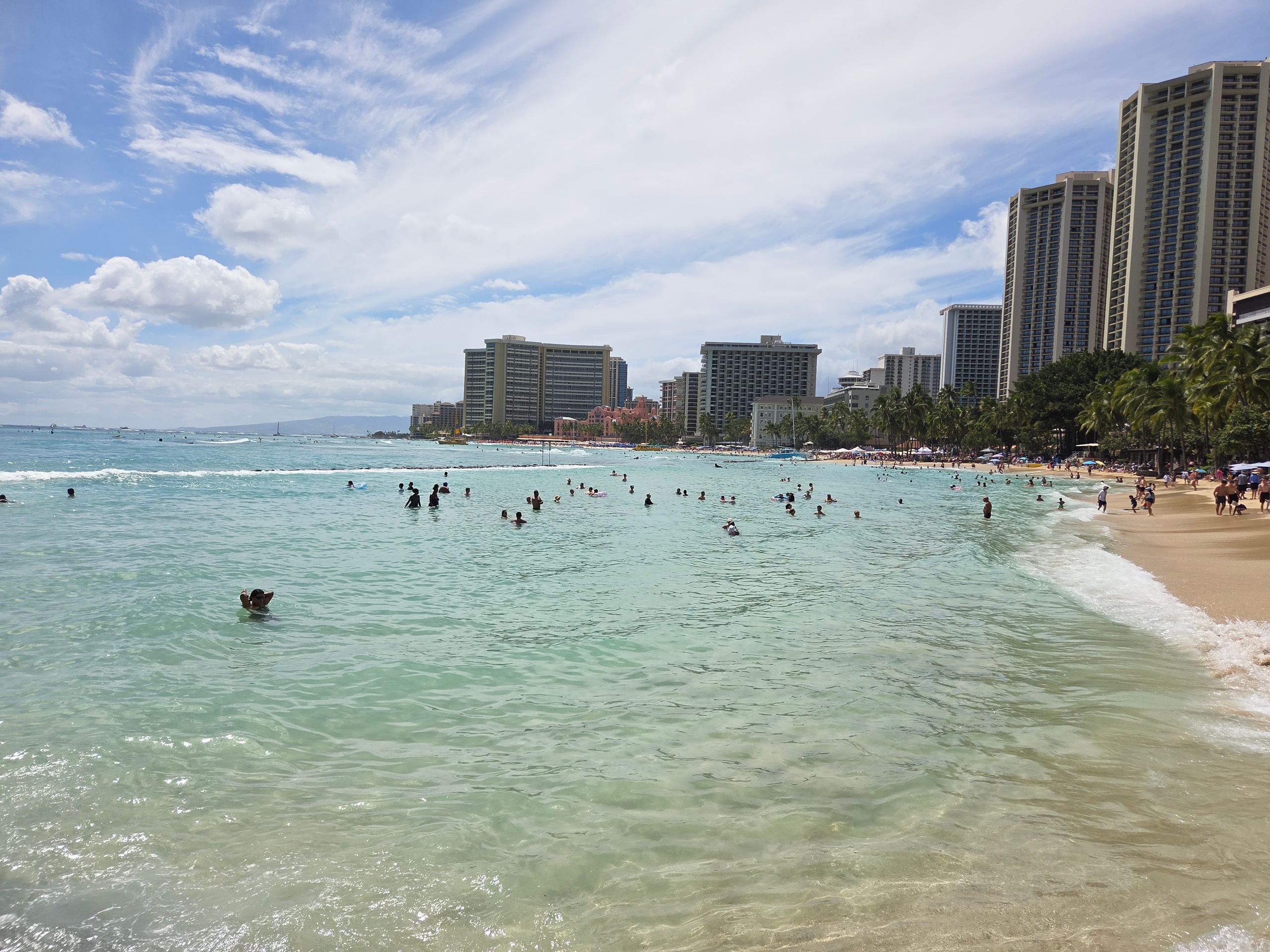
Those who go to bed early wake up early too. So we enjoy breakfast at a leisurely pace and then walk again to Waikiki for a few photos and videos. We then use the car for the 15-minute drive to Diamond Head. This is a huge, extinct volcanic crater. In geology, this formation is called a tuff ring.
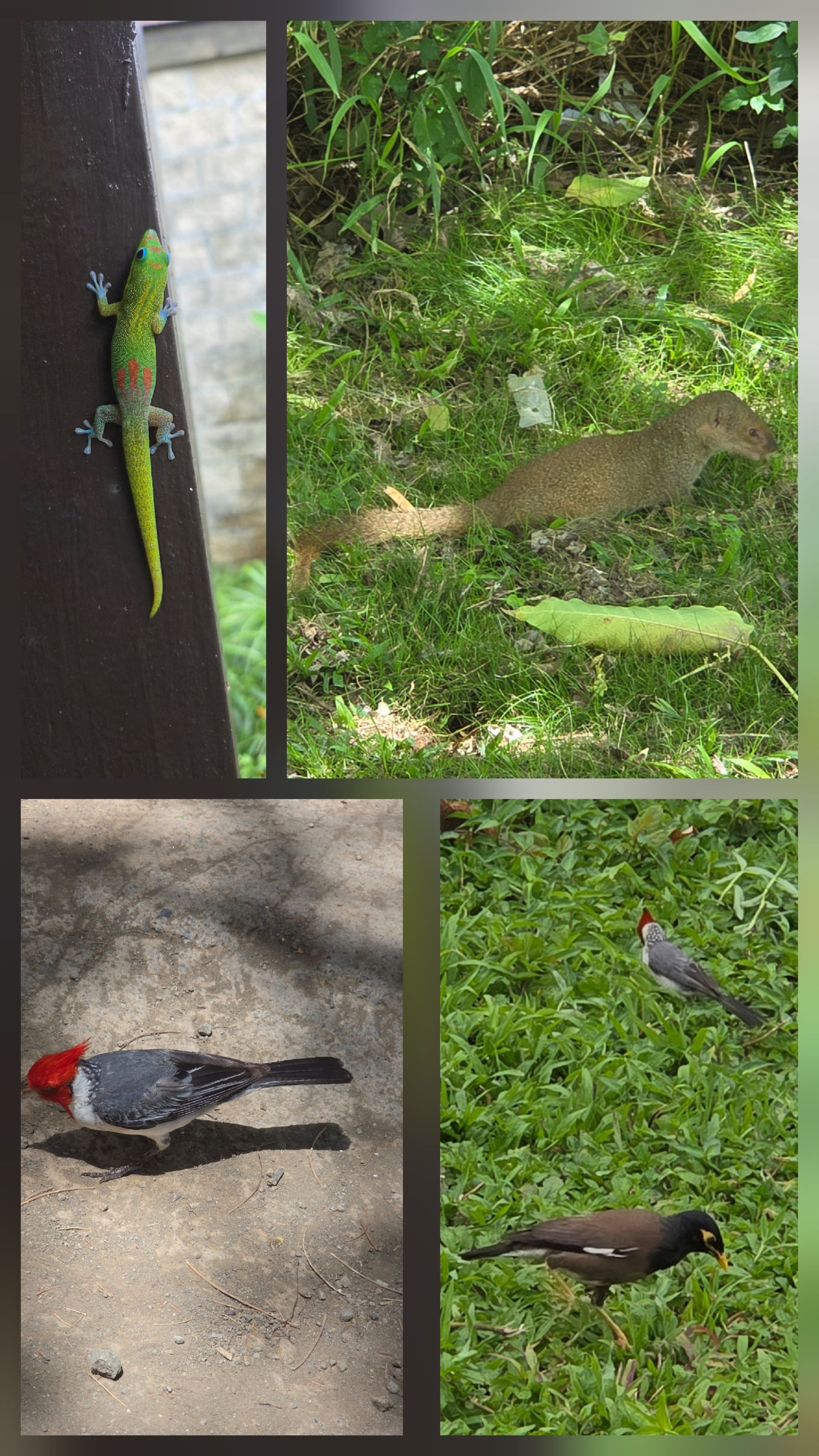
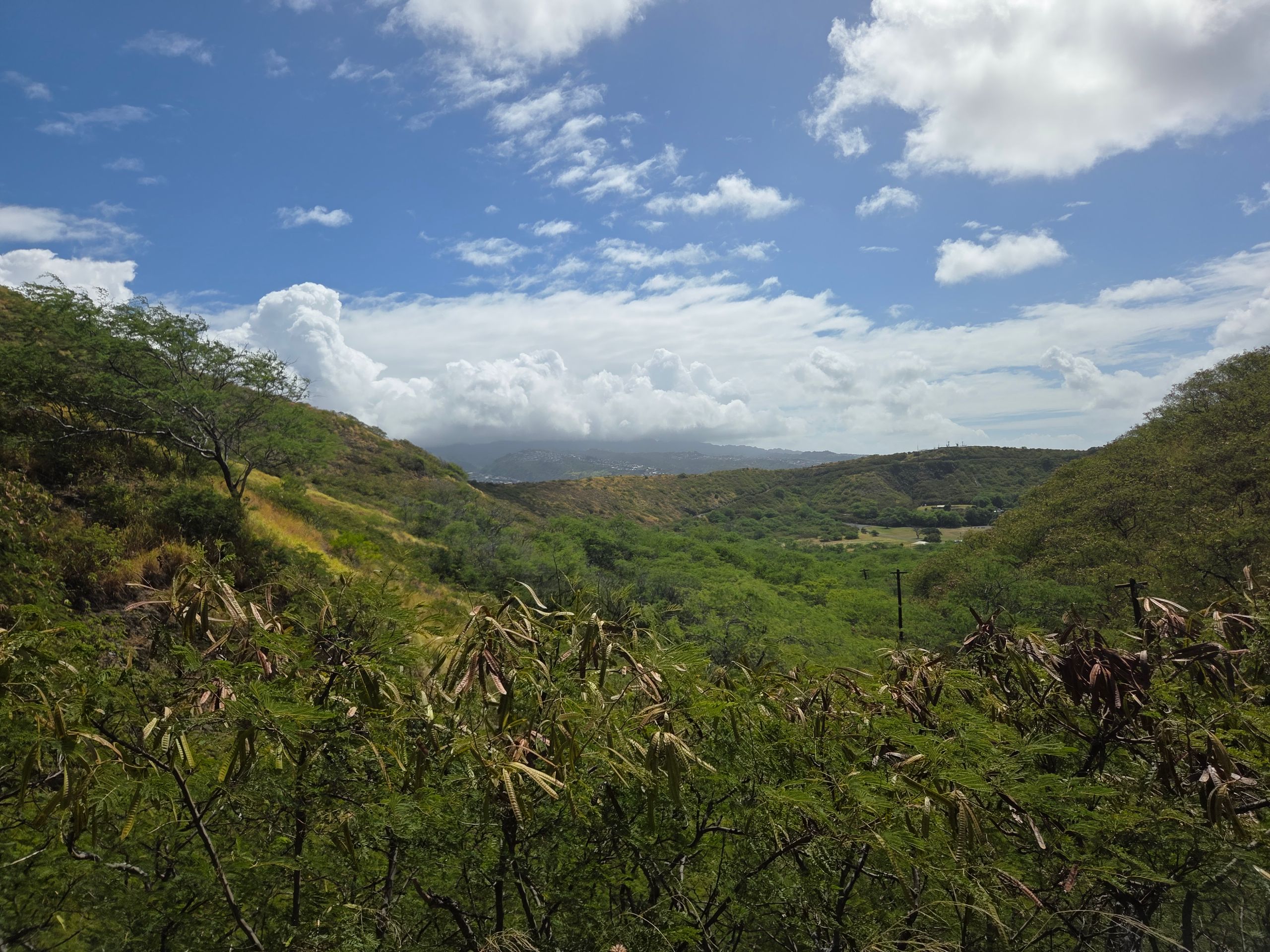
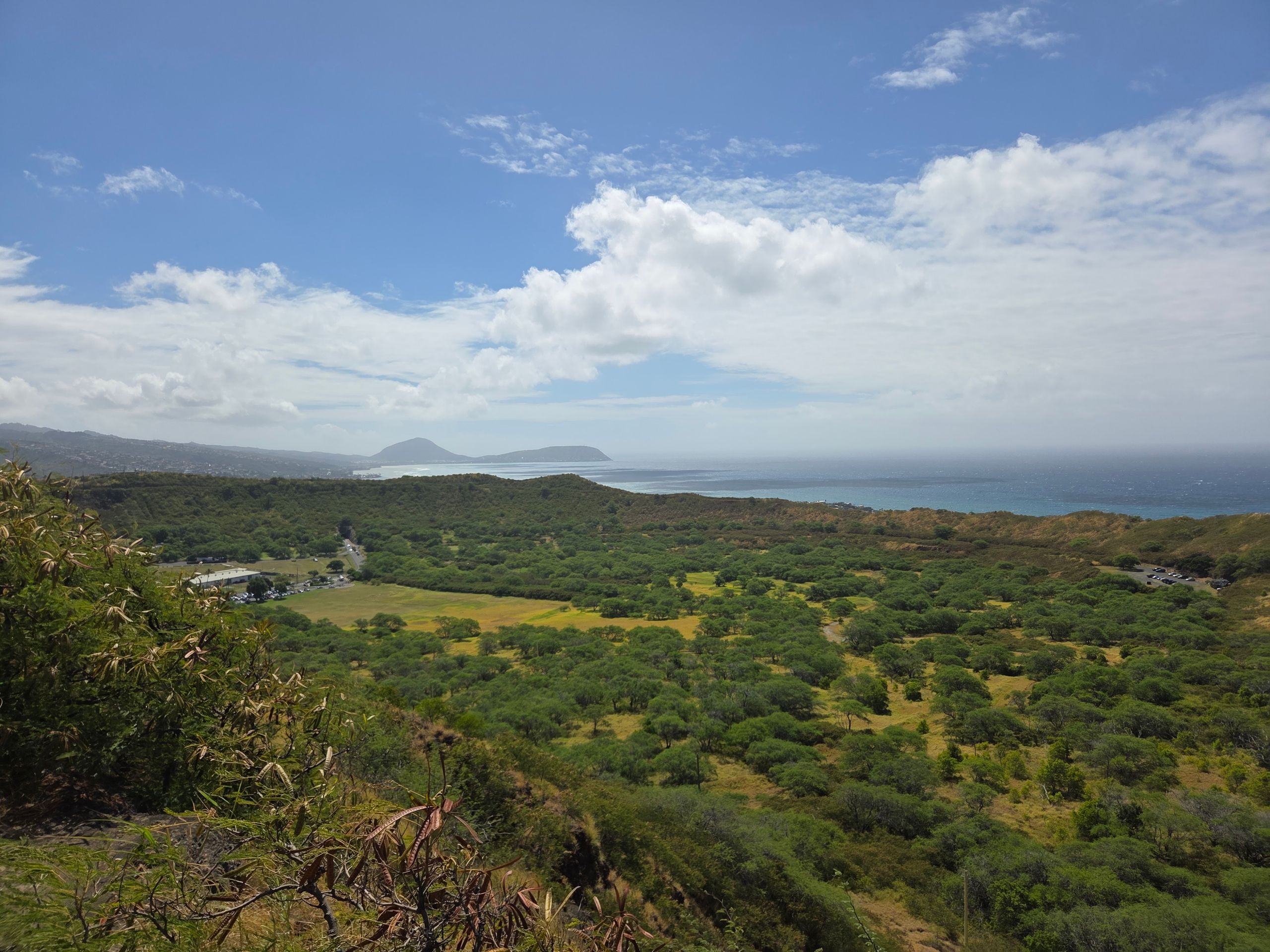
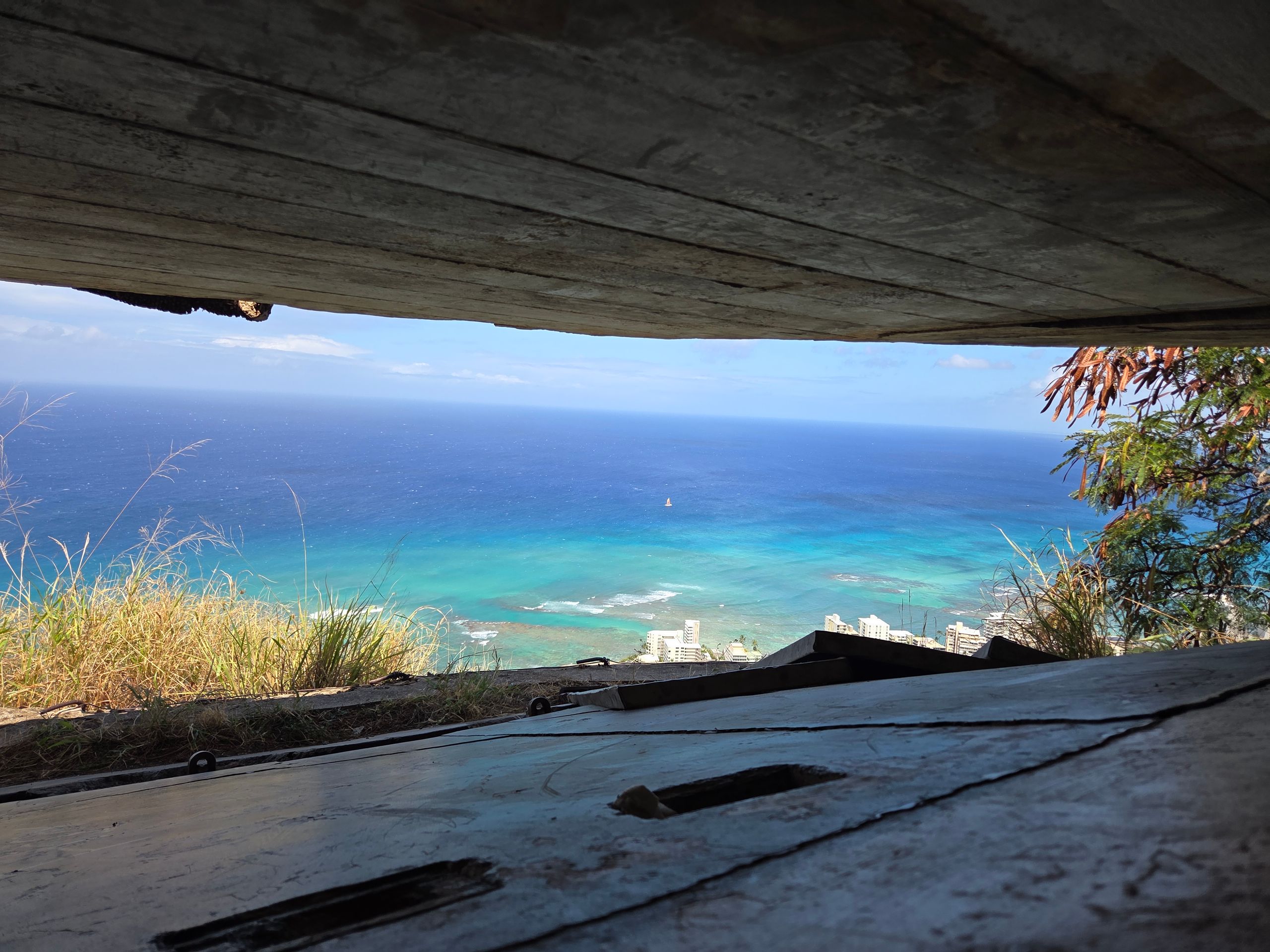
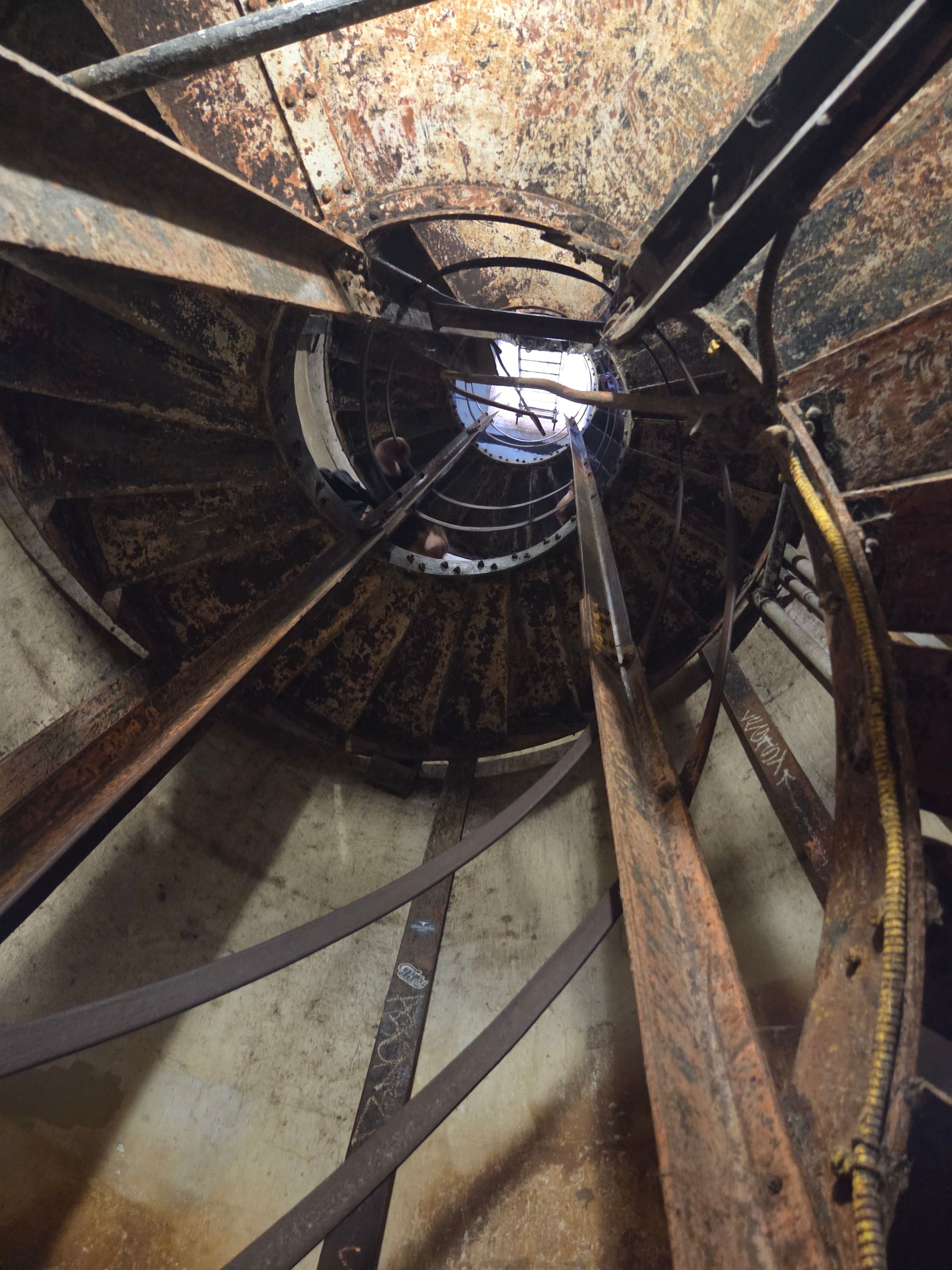
The crater was formed about 300,000 years ago during a single, brief, but extremely violent volcanic eruption. When the hot magma hit the seawater, it caused explosions that shot ash and fine particles into the air. These particles settled, hardened, and formed the current shell shape of the crater. A reservation is required here as well. We are allowed to park for 2 hours. The hike is steep. At 2.5 km and an elevation gain of 140 meters, it is strenuous but doable. The path is well-maintained and has many steps leading to the upper part, as well as tunnel structures that were used by the military in the past. Upon reaching the top, our reward is a fantastic view of the coast and Waikiki. After taking many photos, we begin our return journey. There are many people around, despite the limit. It is one of the most popular hikes in Oahu. At the parking lot, we enjoy our lunch, which consists of pasta salad. Thanks to our cooler, it has stayed cold, making it an economical lunch for 4 people. We also discover a couple of mongooses there. We read the following about them:
In 1883, Hawaii's sugarcane farmers made a disastrous miscalculation: they imported the small Indian mongoose to curb a rat infestation in the fields. What they ignored was that rats are nocturnal, while mongooses are diurnal. The two species almost never encountered each other in the wild.
Instead of hunting rats, the agile predators pounced on the defenseless native wildlife, which had lived without land mammals until then. The consequences are catastrophic to this day. Mongooses systematically raid the nests of rare ground-nesting birds like the Hawaiian goose and dig up the nests of endangered sea turtles on the beaches. It's shocking how one decision can have such significant impacts.
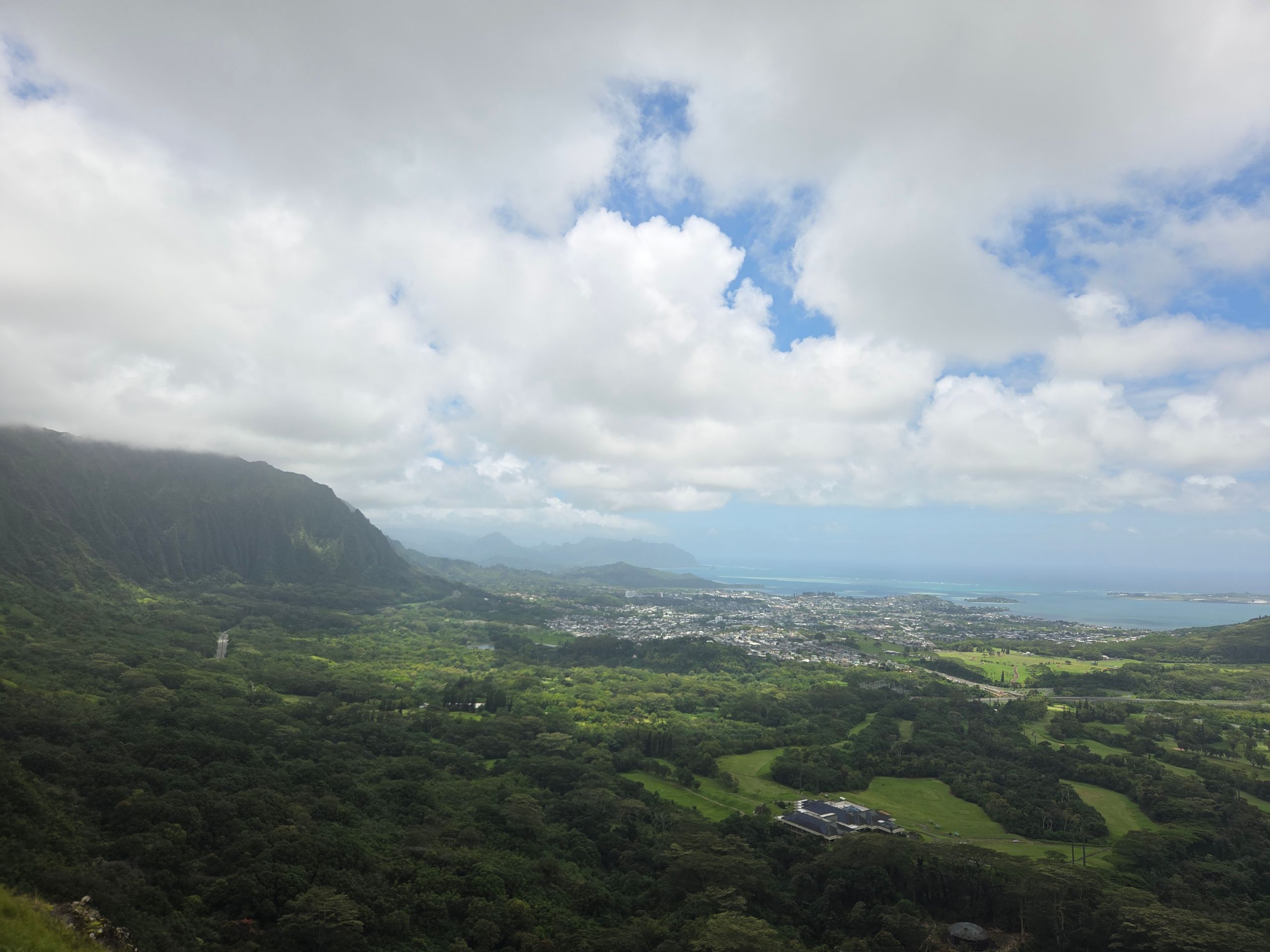
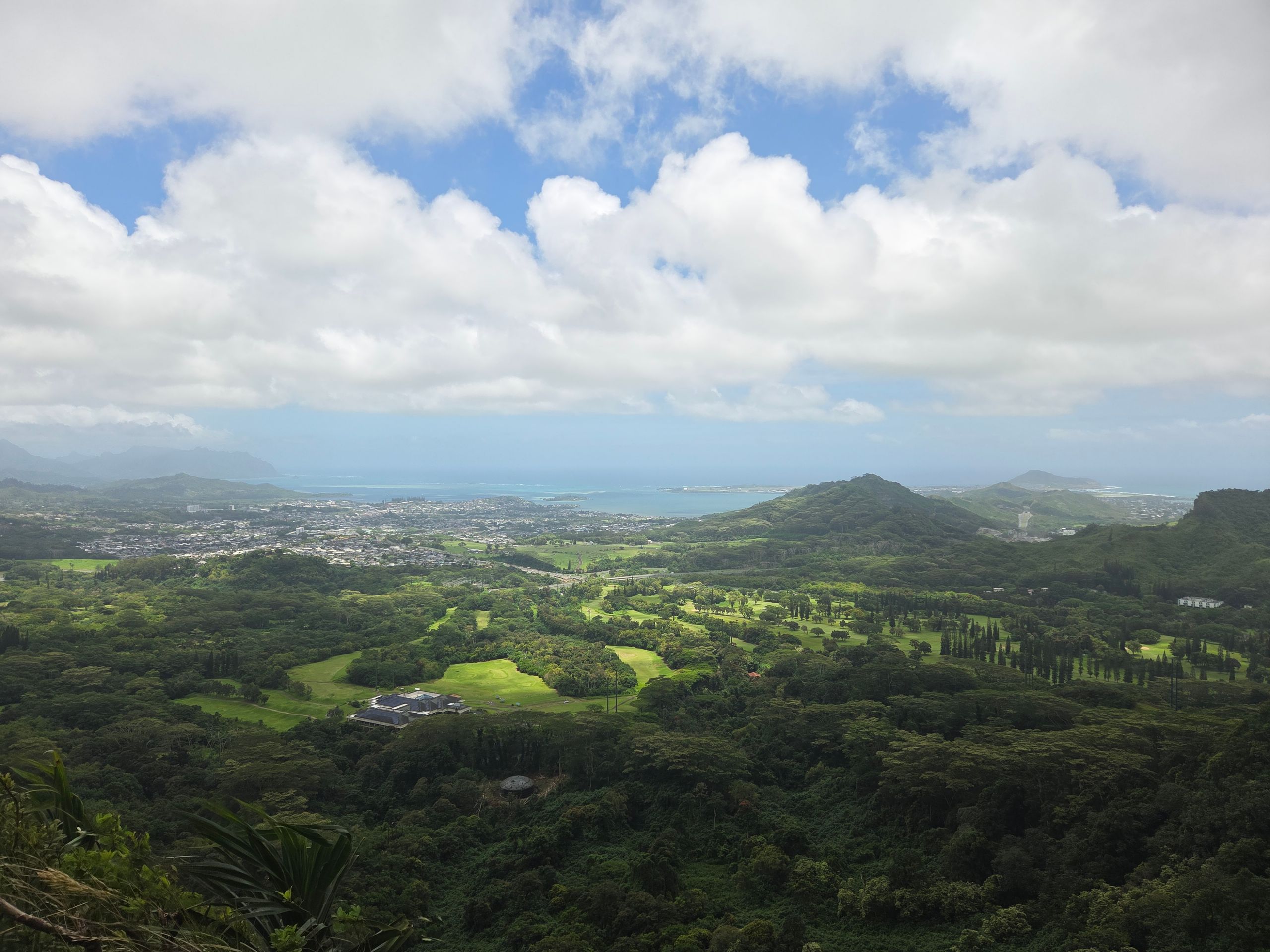
Now we are driving to the Nuʻuanu Pali Lookout, which is one of the most spectacular viewpoints in Oʻahu. It offers breathtaking panoramic views from over 300 meters above the steep Koʻolau cliffs and the lush Windward Coast. The parking is paid; for our 10-minute stay, we pay 7 dollars. Besides the wide view, the place is especially known for its extremely strong trade winds, which sweep through the mountain range like a natural wind tunnel. We certainly feel it. It is much cooler, and the wind is strong.
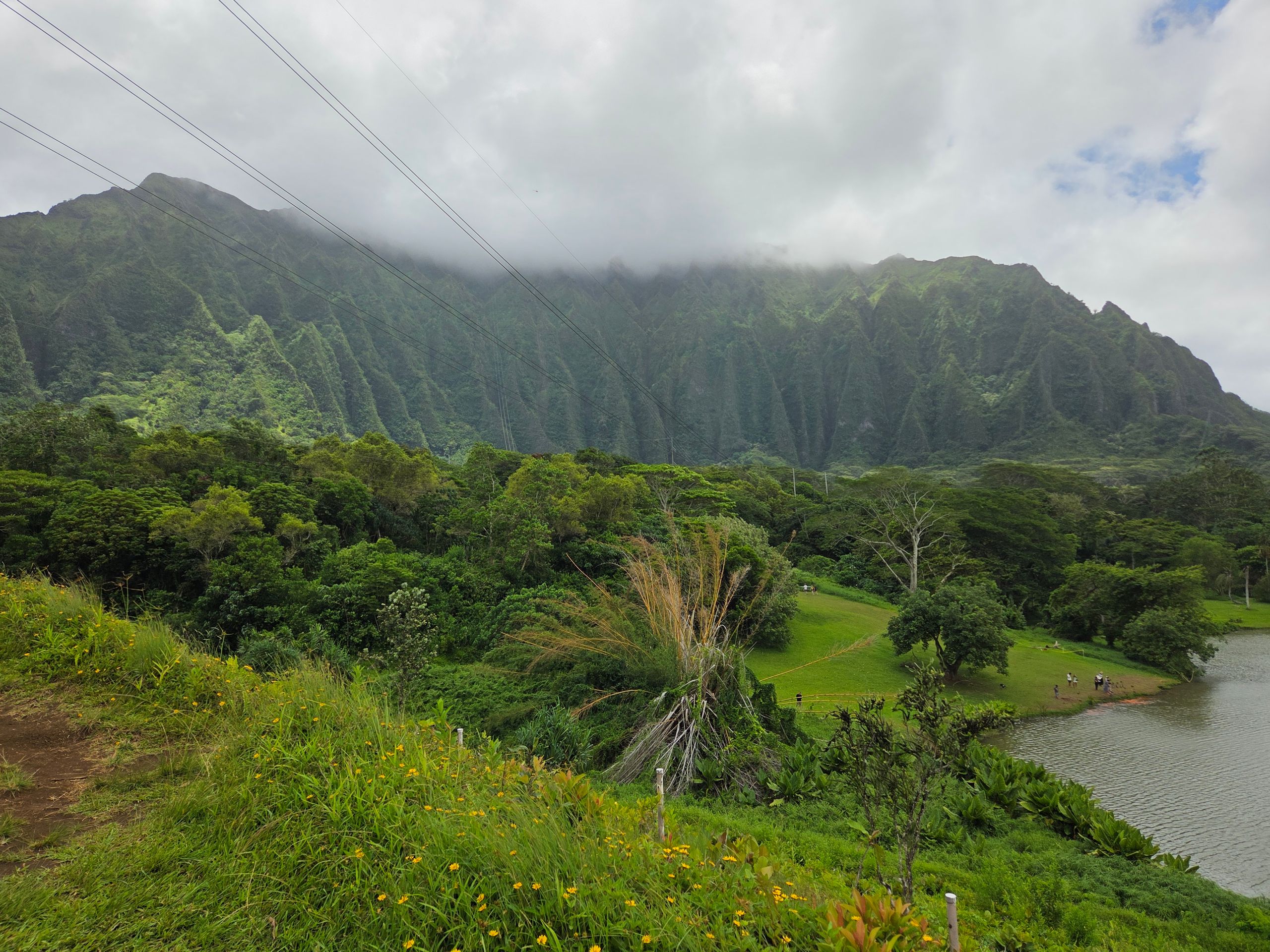
Just a few minutes away is the Hoʻomaluhia Botanical Garden. It is a 162-acre tropical natural paradise right at the foot of the majestic Koʻolau Mountains.
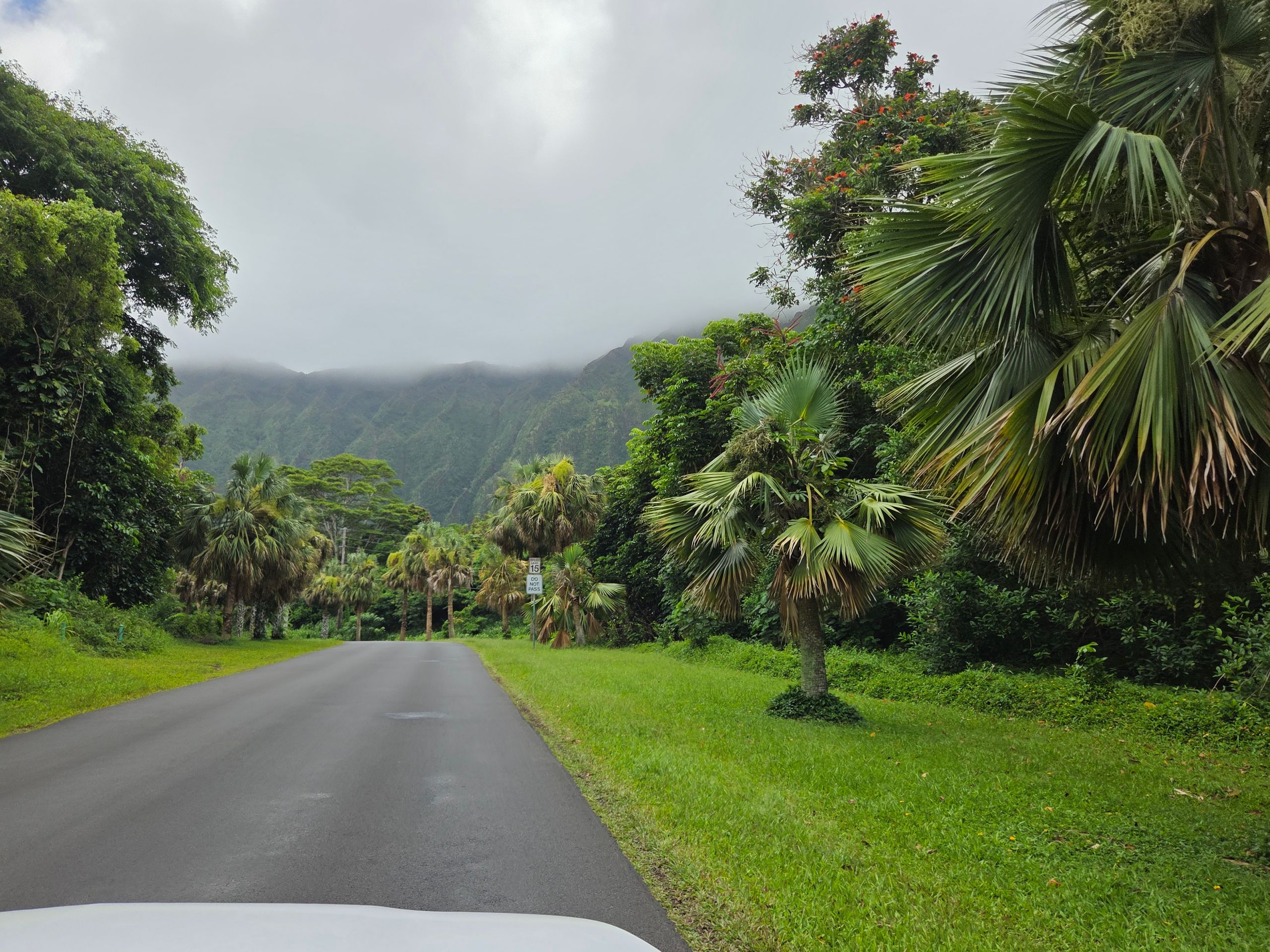
First, we drive along a scenic road. The view is great. Palm trees line the left and right sides, with the mountains in the background. It is very green, filled with various plants.
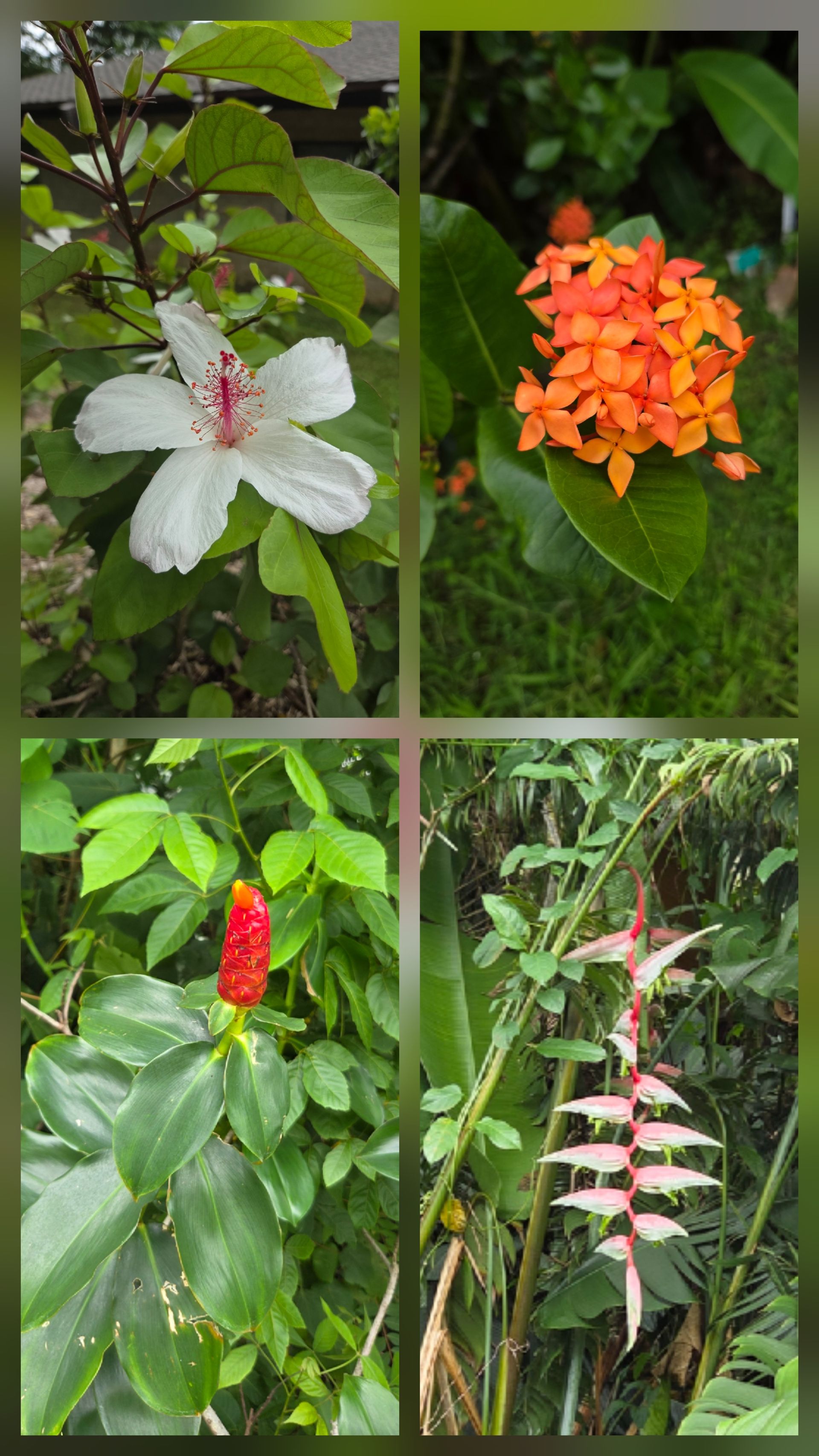
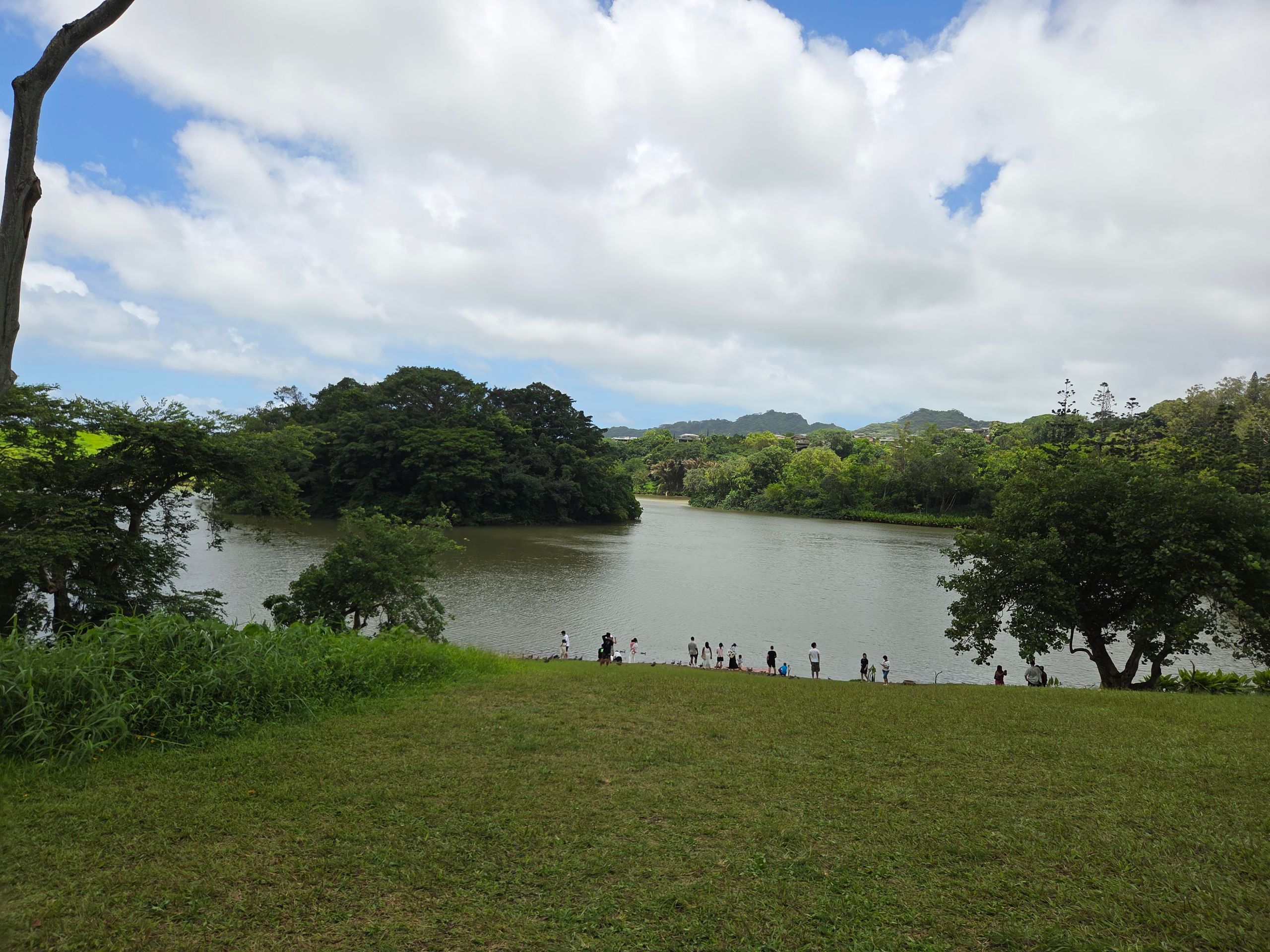
Once we reach the center, we park and walk through the garden towards the lake. The lake was formed as part of a flood control program. A dam was created to catch the water from flash floods. We see many native plants and animals. It’s a lovely and very relaxing walk.
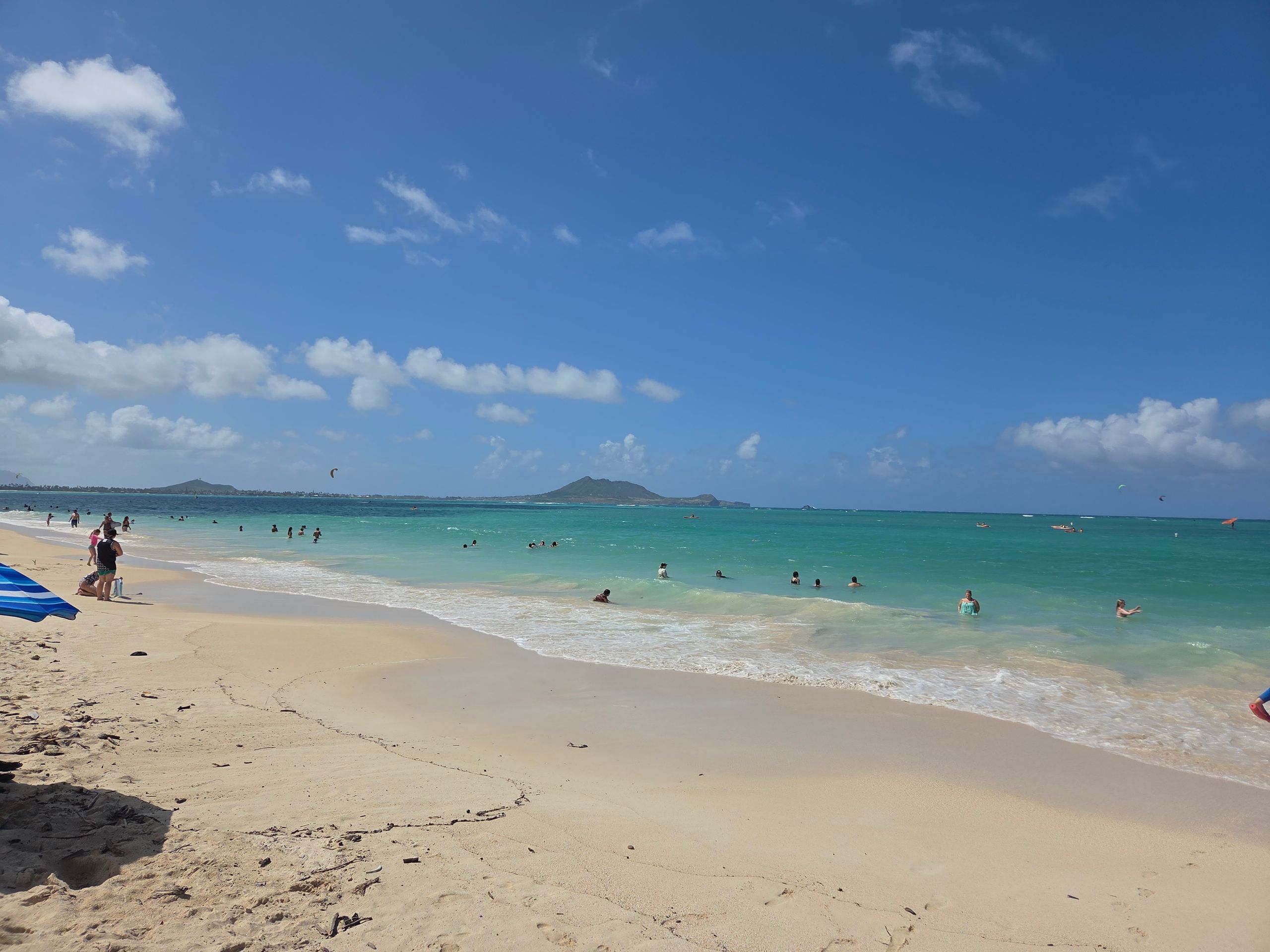
We actually want to do another hike, but we can’t find a parking space. Moreover, the kids are not enthusiastic. So we decide to move the last point up and go swimming at Kailua Beach. The waves are high again, reaching 2 meters. We stay close to the shore, and the kids are having fun. Unfortunately, sand gets everywhere. I don’t like that when swimming, having sand all over.
After an hour, we slowly make our way back. In the apartment, we cook dinner. The jet lag is still not gone; we are tired.
At a glance
Automatically extracted from the post
Length of time
1 Day
Budget
$7 Per day
Weather
Summer
Accompaniment
With family (4)
Mood
AdventurousRelaxingFamily-friendly
Highlights
Diamond Head Wanderung
Blick auf Waikiki und die Küste
Nuʻuanu Pali Lookout
Hoʻomaluhia Botanical Garden
Kailua Beach
Equipment
AutoKühlbox
Topics
NatureBeachAdventureEat
Cost
Parken am Nuʻuanu Pali Lookout$7
die_labis_on_tourLike a newsletter: every new post arrives via email.
Sind die Tiere auf dem Foto echt?
Dass man aber auch soviel im voraus buchen muss, schade, da kommt man spontan gar nicht so weit. Aber du bist ja bestens organisiert.
LG Susi
4 months ago
Toll, was Du berichtest zu den Mangusten, ich gebe zu, noch nie von diesen Tieren gehört zu haben. Es ist immer wieder interessant zu lesen, welche Auswirkungen der Eingriff in die Natur haben kann. Berichte weiter so , ich will was lernen.
Tuffkrater hatten wir auch gerade auf Island. Dort verwiesen sie auf Hawaii, was die Einzigartigkeit angeht.
Liebe herzliche Grüße senden OMaRe und Frank
Anna-KatharinaBy die_labis_on_tour4 months ago
Guten Morgen, ja die Tiere sind echt. Es sind sehr viele Vögel hier zu sehen und die Manguste (Mangoose) sind da auch rumgelaufen.
Die Erfahrungen mit dem Vorreservieren haben ich in vielen Ländern beobachtet. Klar, kann man viele Sachen ohne Reservierung machen, aber die Besonderheiten meistens nicht. Du hättest von unten zum Diamond Head laufen können. Das wären noch ein paar Kilometer mehr gewesen mit noch mehr Höhenmetern. Ich finde es manchmal besser, dass es begrenzt wird, sonst wäre es ein absolutes Choas, da zu viele Menschen sich was ansehen wollen. Das sind die Nachteile vom Massentourismus.
Die Tier- und Pflanzenwelt ist sehr einzigartig und bunt. Es macht lich glücklich, die verschiedenen Arten zu sehen und auch zu erkennen.
Lg Anna