

Pickup of our Celtic Ramblers - 700 km up towards Bremen
We didn't take long to decide and purchase. Fittings and installations coordinated. 2 months later, it was installed and TÜV (German vehicle inspection) done - off to Bremen to...


Published: 06.03.2021
After giving up our conventional existence and living in our mobile home for two years, it's time for a first assessment:
The positives
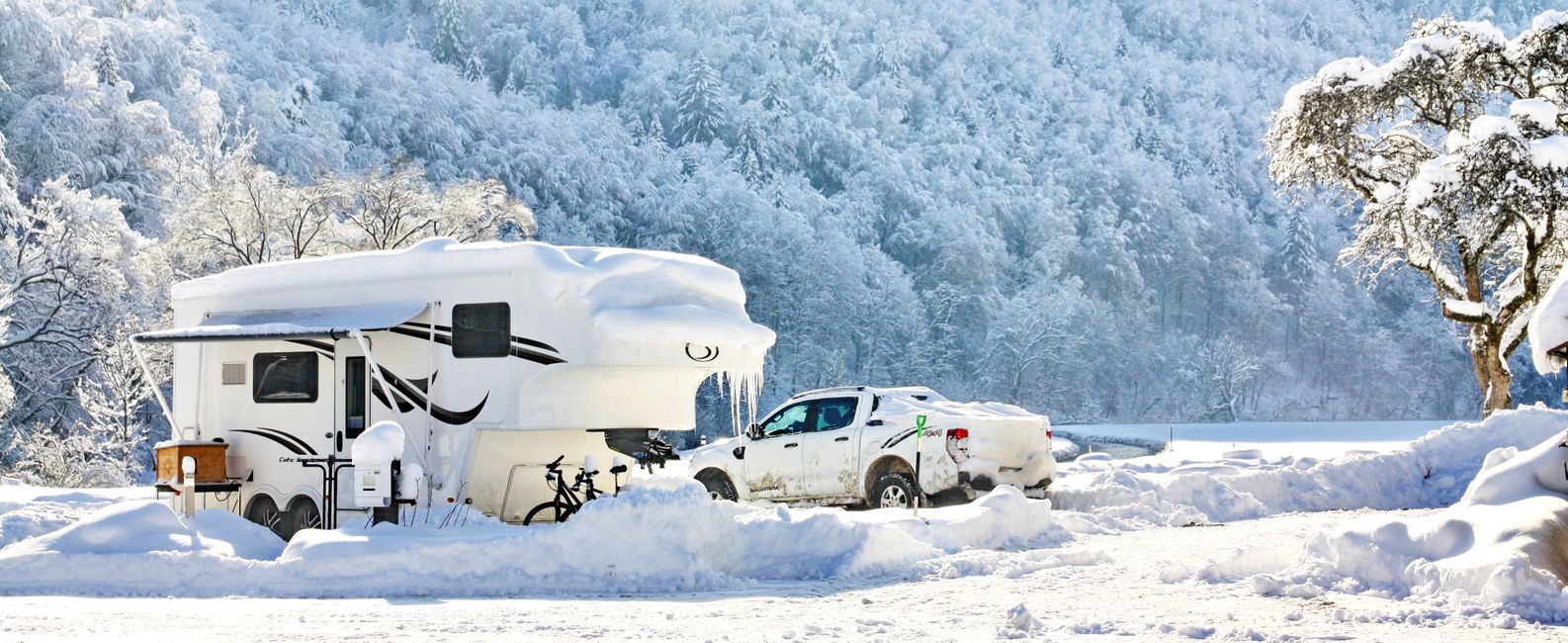
We are still enthusiastic about the vehicle. The driving behavior is great and once you get used to it, reverse parking works fine. Wherever we show up with our UFO, we receive astonished - and when we unhook to go to the nearest restaurant - jealous looks. In our months-long lockdown, the enormous space was a huge plus and the underfloor heating was an absolute lifesaver during freezing temperatures. We wouldn't want to miss that anymore.
Of course, there are also downsides:
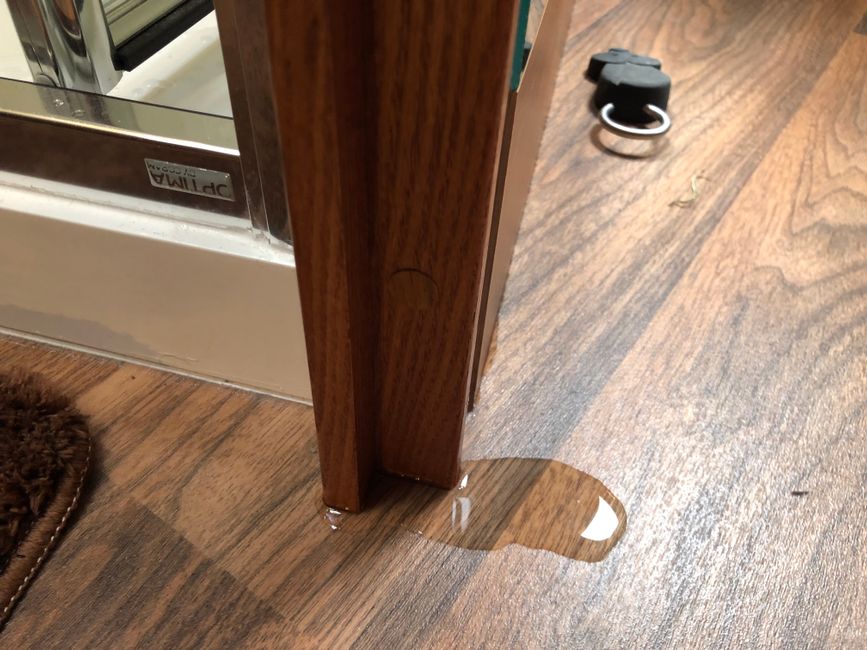
The vehicle was completely unfinished in the kitchen and floor area. Not acceptable. Before the first trip, we had to organize someone to fix this faux pas at short notice. By the way, the shower was also not properly finished and water leaked onto the floor.
The mattress is not ventilated in the upper third. After 1 year, it started to mold. We had to order a new one, and the company Froli got some additional sales.
The battery compartment is located in the entry step and is slightly open. Dirt always falls through this gap - that's called a design flaw.
The locks of the cabinet doors in the bedroom are completely inadequate. They can't hold the weight of the sliding doors and bang open and shut during the journey. The different locks also had to be replaced again and again, as they didn't survive everyday use. Furthermore, the cabinets in the front of the vehicle are not ventilated, let alone heated. The advantage of this is that in the winter, you can make ice cubes not only in the fridge.
The furniture construction is not very precise. The drawers in the kitchen should be replaced with heavy-duty ones. Ours broke and was remounted, but now the extension is broken and needs to be replaced.
For a year, we were annoyed by a strange pumping noise. Even replacing the pump (which was done easily by Büsching) didn't solve the problem. Eventually, we discovered the leaking spot in the water supply and the problem was solved.
During the transition to autumn, we experienced a strange phenomenon. Water was dripping from the roof and leaking through the ceiling light in the living area. Electricity! Water!!! This made us so insecure that we traveled 1,500 km to the dealer we trust - Büsching company, to fix this leak. But it wasn't even a leak. Condensation water had accumulated in the cable duct and was dripping from the ceiling.
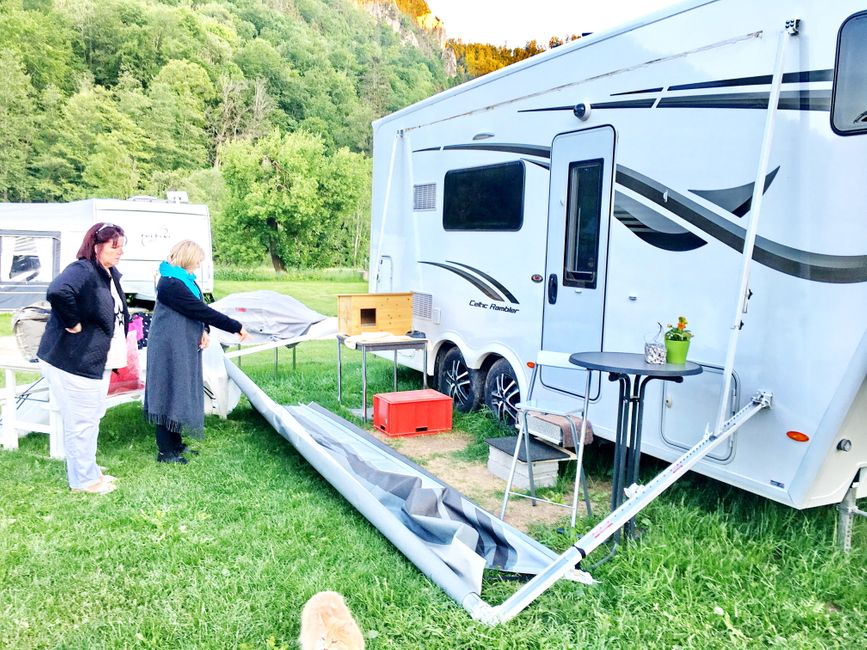
The awning is a separate issue and has suicidal tendencies. Unfortunately, we have an American model that was not properly attached from the beginning. One day, it simply fell to the ground. The reason: the fixing screws were only screwed into the outer wall's PU foam. This didn't hold. As if that wasn't enough, one month later, the awning was on the ground again. This time, the adhesion of the awning rail to the outer wall had come loose. Unbelievable.
We sometimes struggle with failures in the heating system. The coolant leaks from the system (we still don't know exactly where) and spreads in the rear area. This results in a color refreshment in the storage space. We have refilled about 10 liters of pink coolant. During drives, the heating often fails, and the vehicle completely cools down. So you stay fresh and crisp. By the way, the Alde exhaust chimney is positioned in a way that the dripping water falls exactly on the rear bumper, leaving marks that can only be removed with special agents. So investing in a drip nose is definitely a worthwhile consideration.
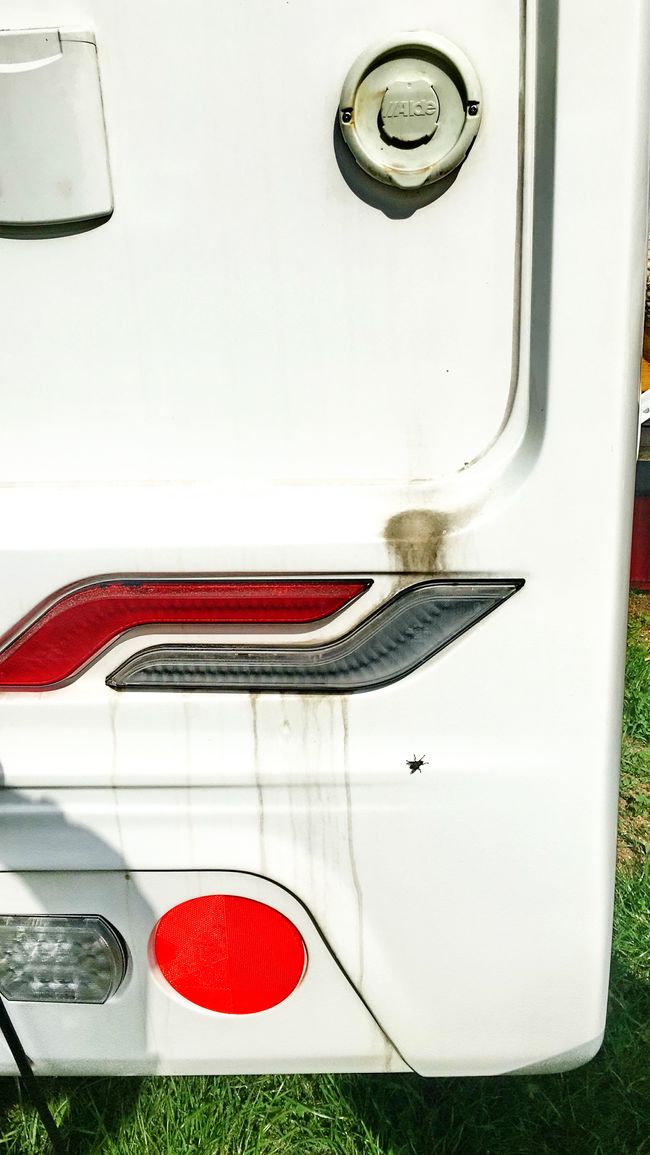
Since we are at the back . . . if you decide to get a bicycle rack, consider getting a lowering version. The rear is damn high, and lifting the bikes onto the rack is exhausting, especially hoisting e-bikes for an average athlete.
Speaking of fresh and crisp. After our gray water tank froze at minus 12 degrees, I started to wonder because this shouldn't happen. When I investigated the issue, I discovered that the manufacturer had cut a hole in the rear wall and replaced it with an uninsulated plastic part. ????!!! Hello? Can it get any worse? Was this the same person who attached the awning?! Now we have to figure out how to fix this design flaw ourselves. It's just great to always have something to tinker with.
The insulation value of the windows is also not the best. When it gets cold, you can feel it.

The freshwater tank - about 200 liters are sufficient
The gray water tank - only about 130 liters, but there is always a solution
Gas - we have three bottles on board. It's enough even at -10°C, but then they are empty
Toilet - with an additional spare tank, it's okay
Electricity - the basic equipment with a 90 Ah battery is a joke. We have two additional AMG batteries, so a total of 270 Ah on board, and a 180-watt solar panel. We thought it was enough. It's not. Even in summer, it becomes critical. When the sun shines brightly, it works okay. Charging the e-bikes consumes a lot of power, the TV and sound system consume a lot, and the 1700-watt inverter also takes a good sip from the bottle and works with power loss. In winter, the electricity easily lasts for a day. The second day is already critical. During this time of year, you simply spend more time in the vehicle, and the heating also draws power. Our recommendation for free camping: 3 solar panels and lithium-ion batteries - with the same size, they have twice the usable power as a deep discharge is possible.

Now to our towing vehicle
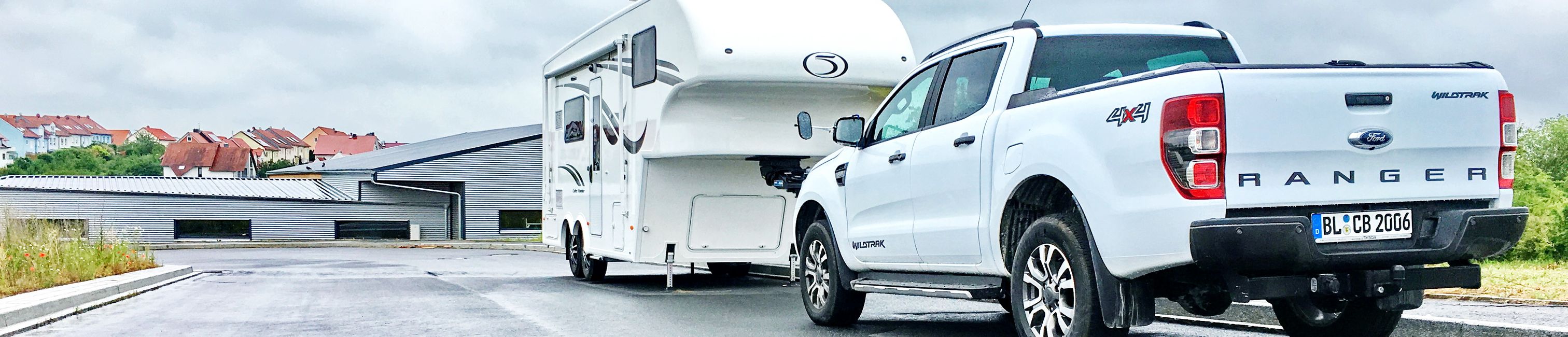
The Ford Ranger is a great vehicle for this combination with nearly 500 Nm of pulling power, and it still has a size that allows you to park easily in front of the next destination or pub. However, when towing, keep an eye on the fuel gauge and don't be surprised if the AdBlue indicator lights up more frequently. Almost 7 tons need to be moved, after all.
On its own, it's unbeatable. Up to the knees in muddy terrain, it plows through with all-wheel drive and differential lock. When going down an extremely steep hill, you can set the speed. The Ranger maintains it, and you can prepare for the descent in peace. This is brilliant in winter in the mountains when towing because you can descend the steepest mountain at, for example, 20 km/h completely controlled, as the Ranger also automatically brakes the Rambler.
Axle load
According to the dealer's information, we assumed that the tow ball weight of our Ford Ranger could be borne by the rear axle without modification. It cannot. It's worth driving onto a weighbridge here. Instead of the expected 850 kg on the rear axle, it's 1000 kg. But the axle can only handle 850. Anything above that costs extra. Especially in Switzerland and Austria. So, we had to increase the rear axle load capacity. Treat yourself - and the vehicle will run significantly smoother even on bumpy roads.
Summarizing
Great combination - and the only choice for us
Great living feeling - thanks to the slide-out and the facing sofas, we have room to dance - not comparable to a conventional motorhome
Interior - a design to feel comfortable in - and made by the British - incredible
High flexibility - unhooking is quick and easy (with some practice), and then you are mobile with a car
Problems - to a certain extent, they are part of the experience.
Equipment and workmanship - could be better - the final touch is missing
Dealer - has always taken care of every problem so far - just a bit far away
Now let's see what the future holds . . . we are looking forward to every new trip . . . and to better times

A few tips - what you could pay attention to in case . . . :
Always check the manual parking brake. We had to completely replace the brake (inexpensively) on one side because it was worn out, and we failed the TÜV test with a one-year-old vehicle.
Speaking of TÜV. The trailer's brake has a motion sensor. It doesn't honk when the vehicle is standing still. Pull the emergency stop plug, and it will bite hard, making the TÜV inspector happy. Nobody tells you this beforehand. Why would they.
When you have hooked up, check if the hitch is really closed. If it's not, the trailer will crash onto the towing vehicle with a ton of weight, and this will cost you a new rear hatch. We can tell you pretty exactly how much that costs :-)
If you stop while being hooked up, unplug the battery connector on the flatbed. If you don't, the trailer will drain the starter battery within two days. According to Büsching company, this cannot or should not be changed.
And one more tip - if you want to get a living saddle, discuss the insurance issue beforehand, so that you are not as shocked as we were . . .
. . . but you can also get something smaller . . .

There is now a sequel: Experiences after 4/2 years