
Day 4, April 28, Kakadu National Park
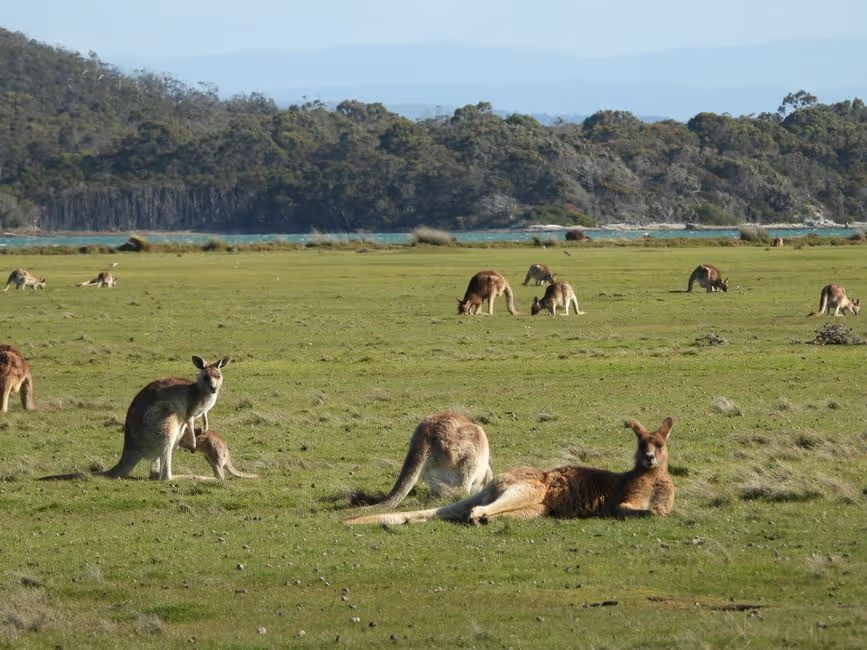
In the morning, the agile wallabies were beautifully spread out across the campsite meadow at sunrise; there were certainly more than 50 of them. I was already awake before...

Published: 01.05.2026
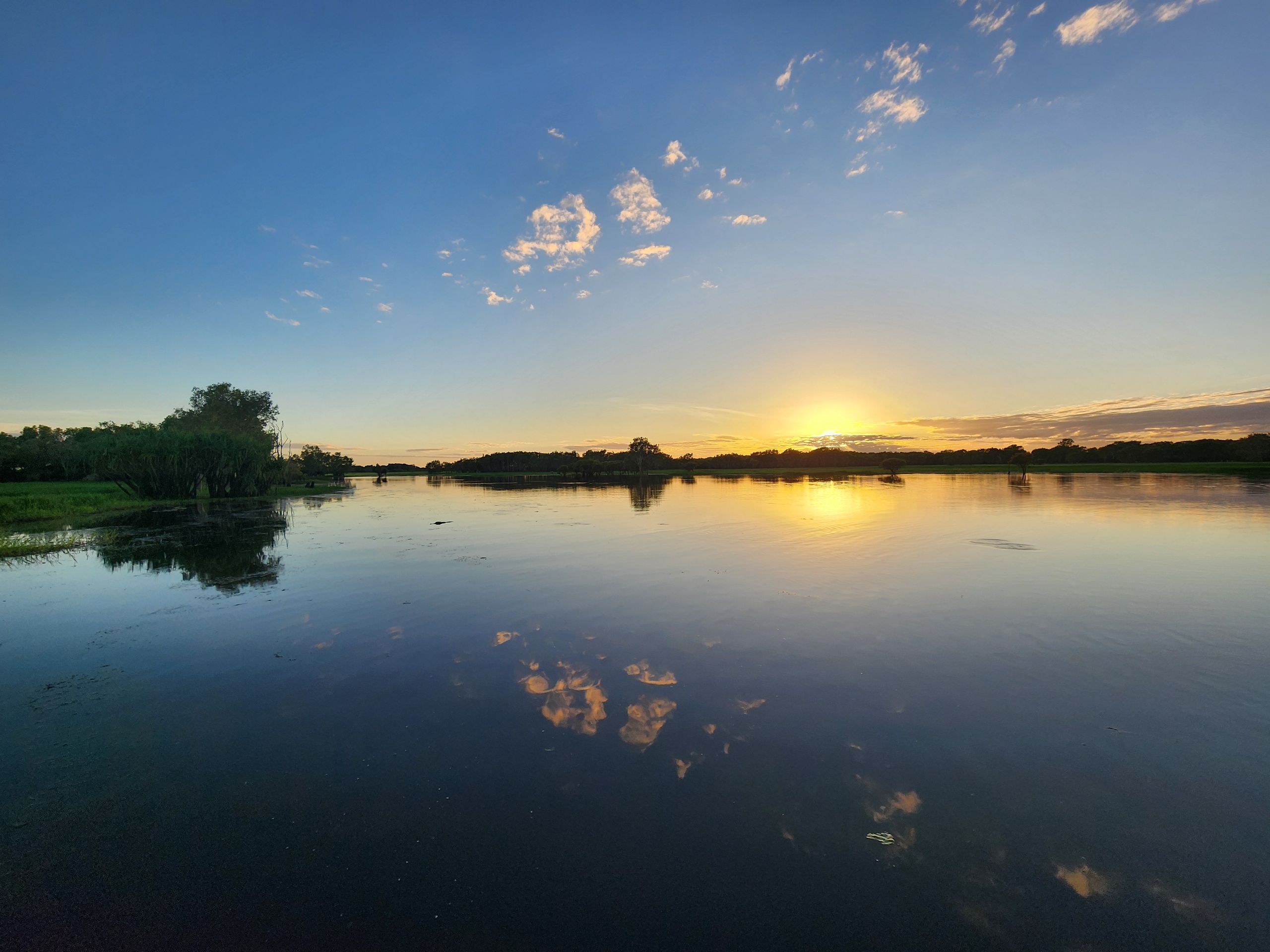
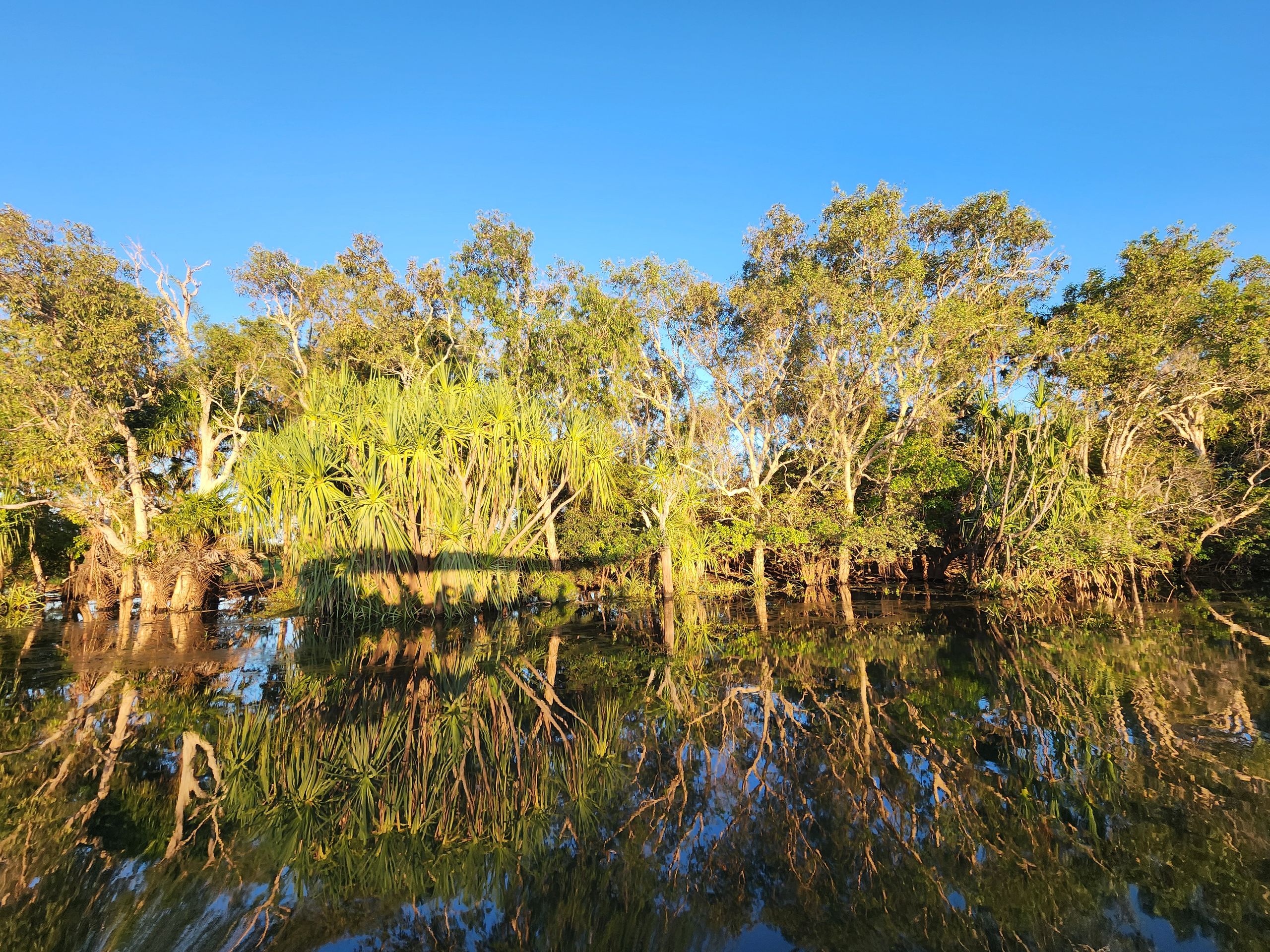
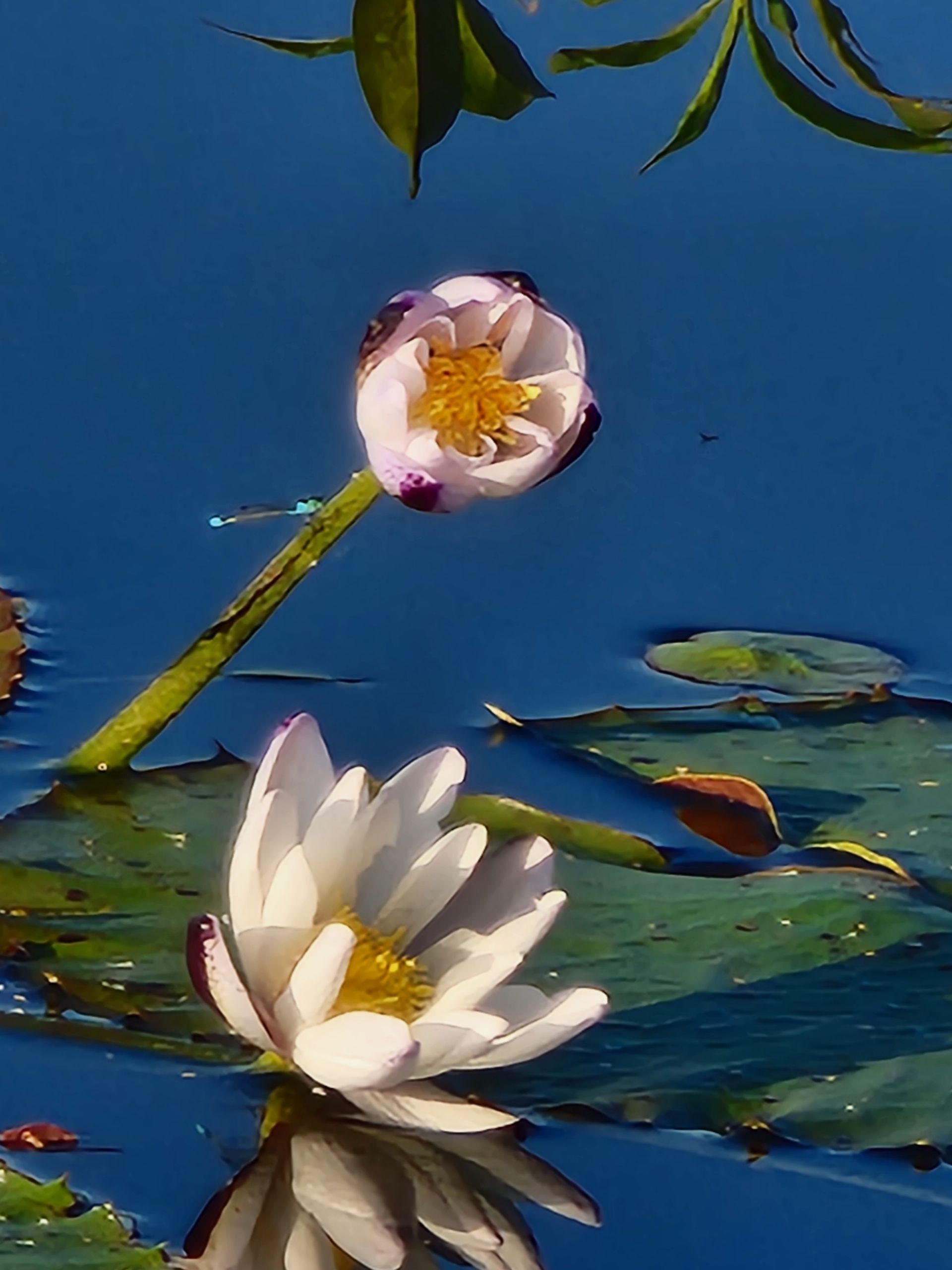
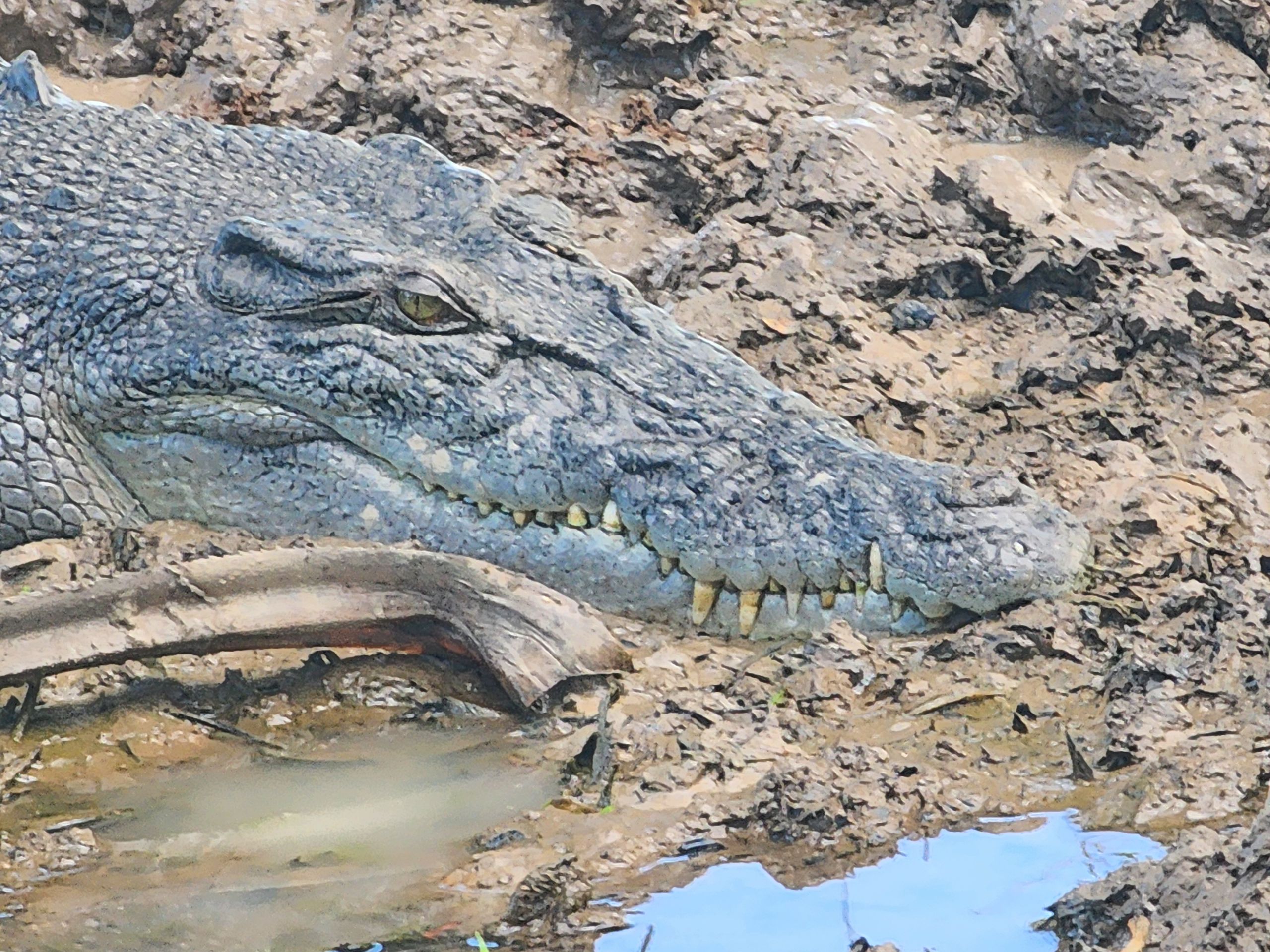
Woke up at 5:30, no time for morning exercise, but for coffee. By 6:20 we were at the gas station, for the transfer to the boats on the Yellow Waters, the local wetlands. We wanted to explore them at sunrise on a 2-hour boat tour.
The morning light was good, the guide Dennis, a heavy, good-natured and cozy Aboriginal with fair skin, likely due to some white ancestors, was very pleasant. On the open but shaded boat there was plenty of space to photograph everywhere. Next to us were about 15 other tourists, I believe they were all Australians, and the boat could have accommodated twice as many people.
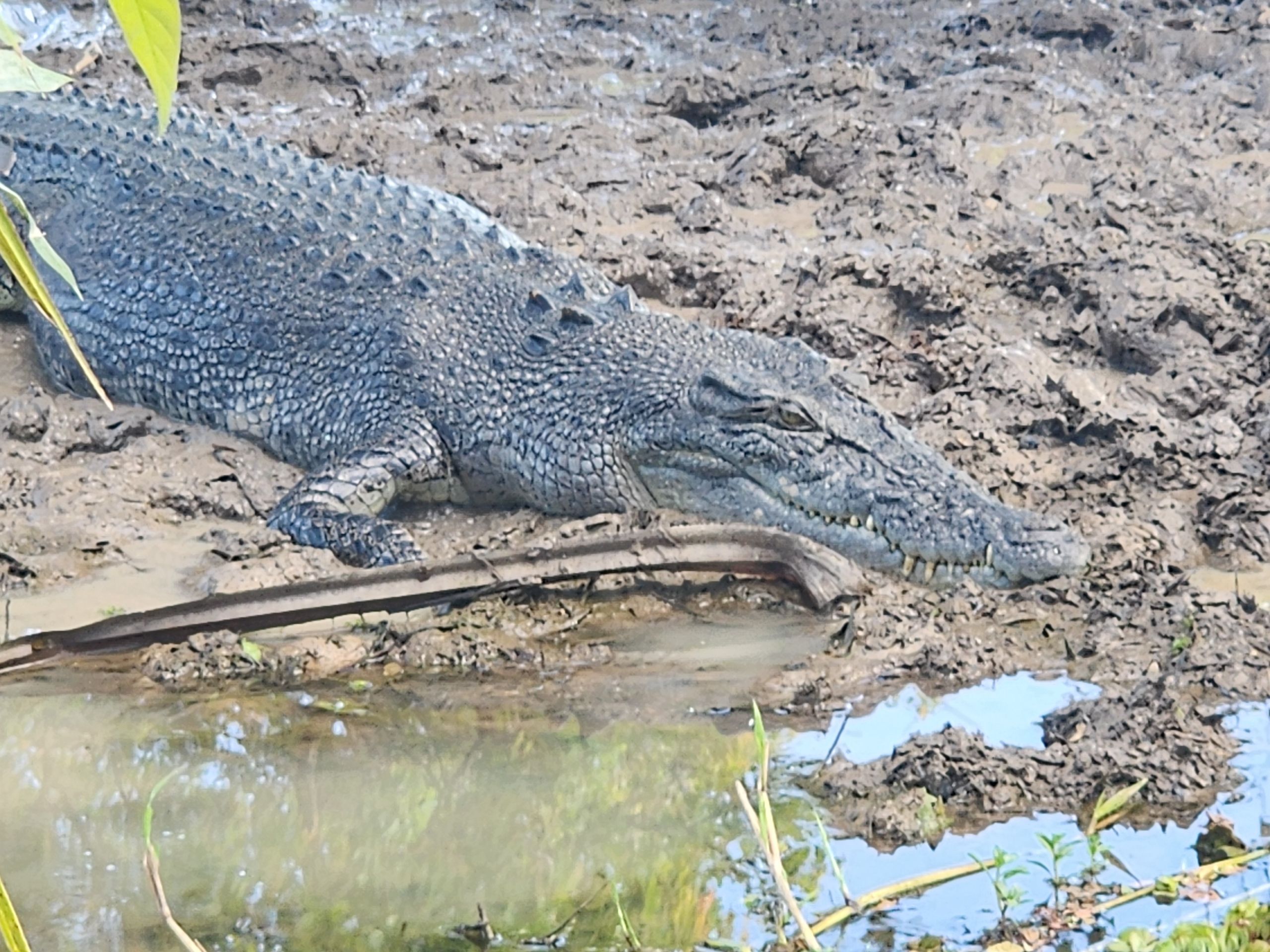
What was there to see? Of course, saltwater crocodiles. In total, 3 or 4 of them, each about 3 meters long, one conveniently on land.
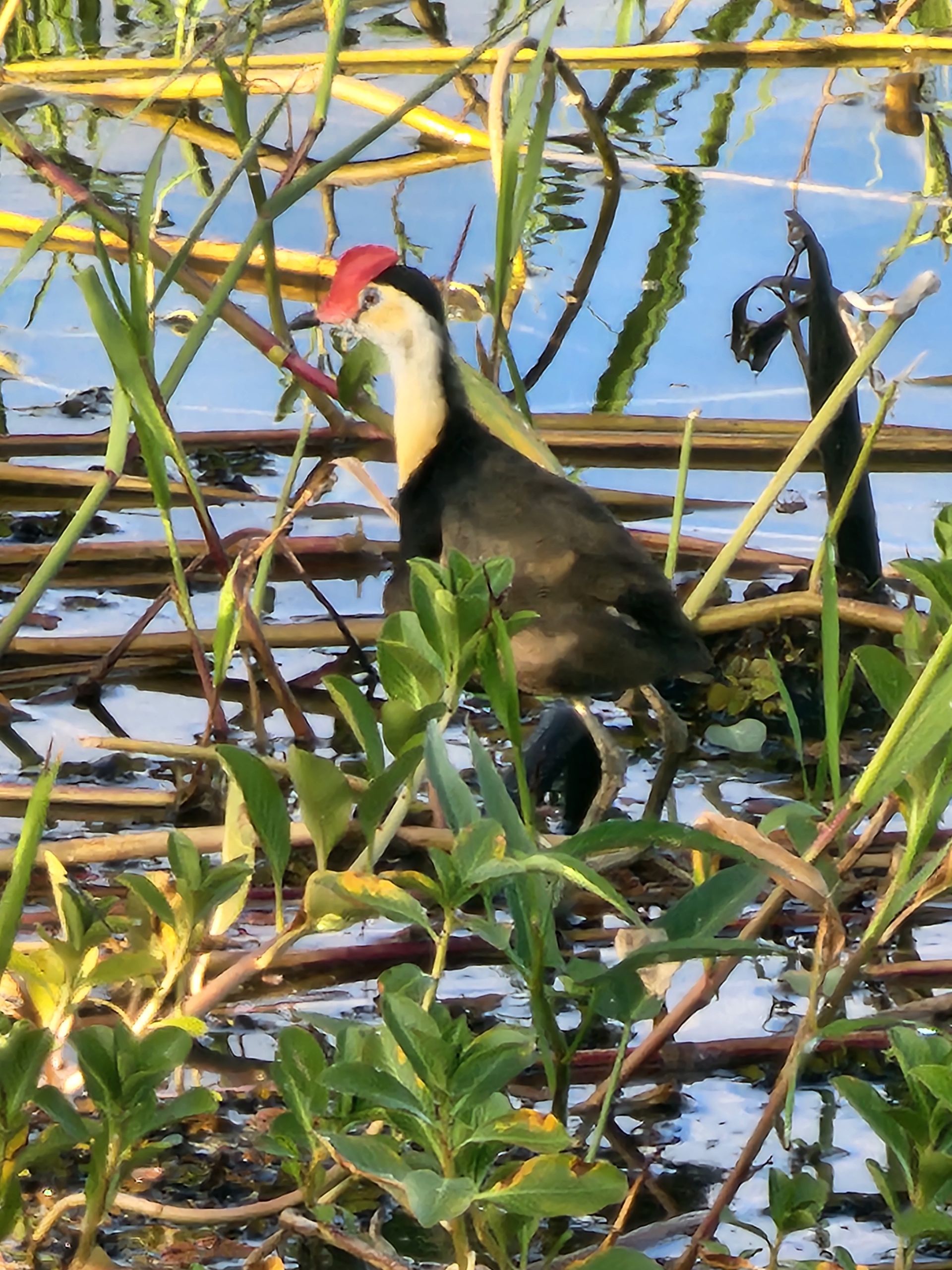
And quite a few water birds, hundreds of ducks, Jacanas, herons, a Woodland Kingfisher. But far less than what we saw in November at Chobe or in Caprivi in Africa. The scenery was beautiful. All in all, a very nice boat tour, but not spectacular.
Back at the camp we had a quiet breakfast. After all, there was still a little kingfisher to see.
At 10:00 we set off. First, we visited the Cultural Centre next to the camp, with a nice but unspectacular exhibition. At least we found two interesting books about early Australian explorers in the shop; I already have good books about Aboriginals at home.
Now we wanted to go to the nearby wild Mardikal Campground because there should be good chances of seeing wildlife at night. However, half of the campground was still closed, and in the other half, there was no water at the sanitation facilities. That wasn't for us, especially since it was still early. So we went almost 50 km further south to Camp Gungurul. That was even worse, no grass, no shade, just a parking lot.
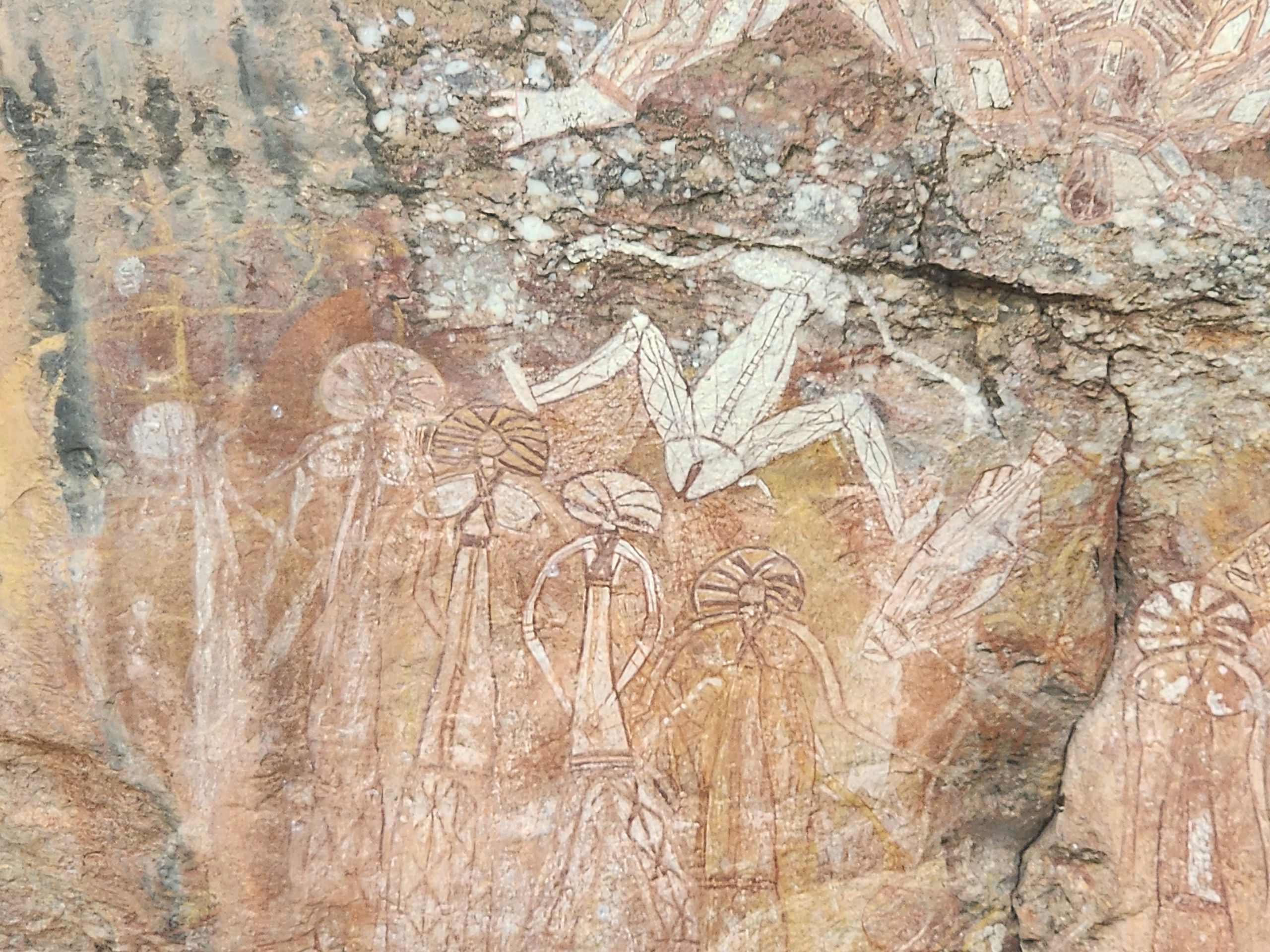
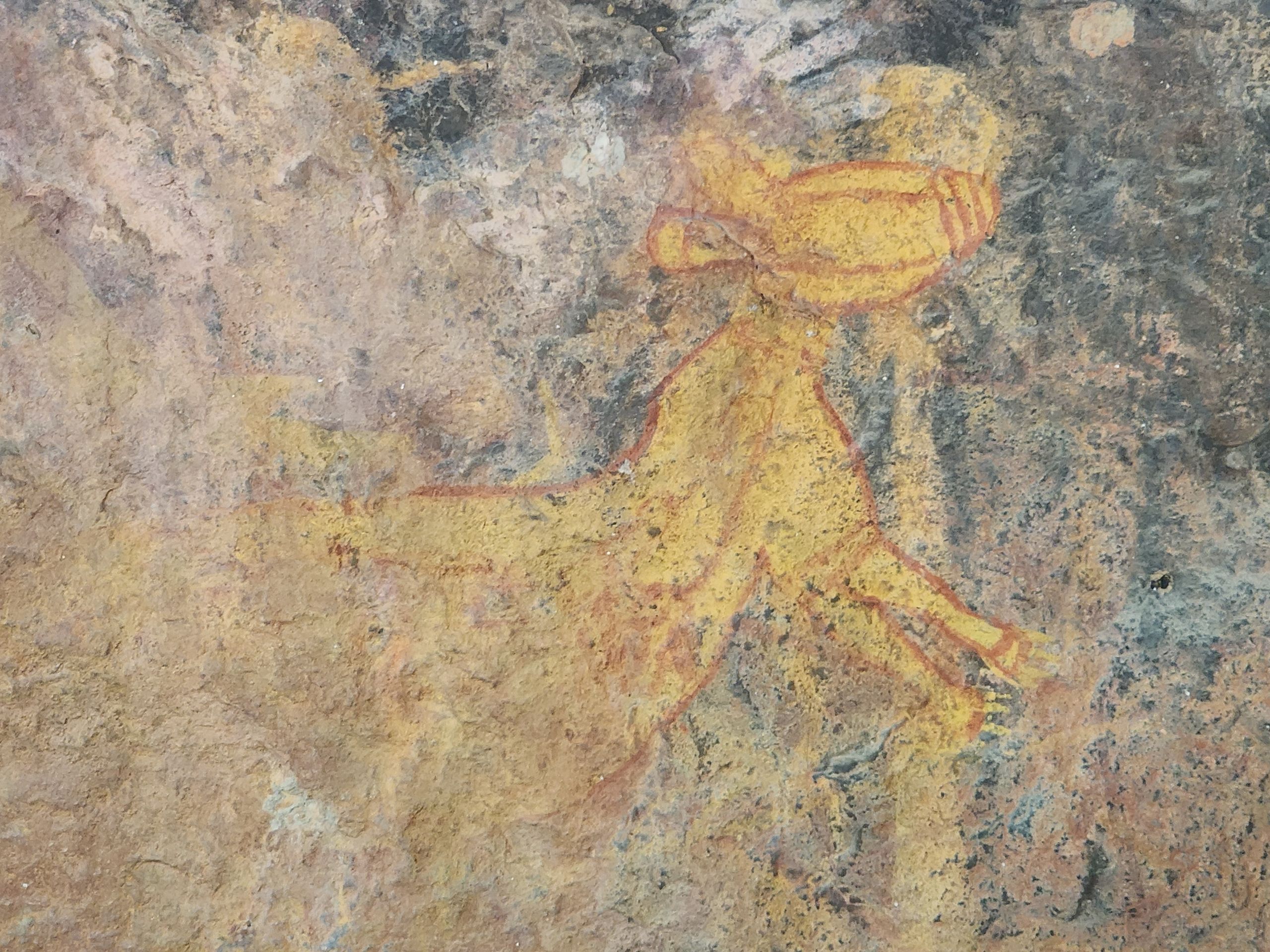
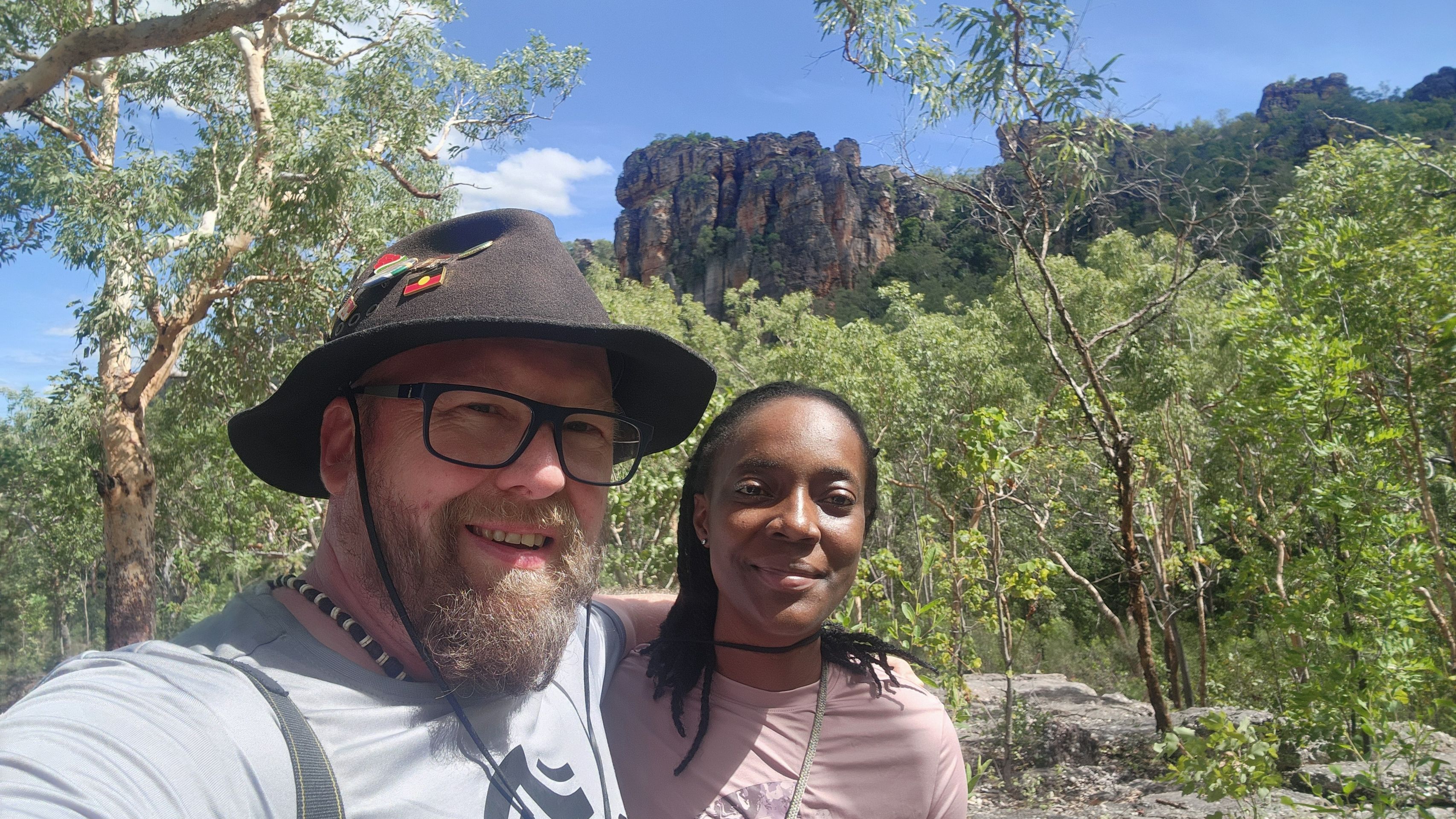
So we went back north. By 13:00 we were back at Nourlangie. In fact, the rock paintings looked significantly better now, in much more daylight. Even the good 2 km bushwalk here was pleasant, and we saw yellow-crested cockatoos and, on the way out, again the raven cockatoos just a few kilometers later. It was definitely worth coming here a second time.
Then we drove further north back to the town of Jabiru and parked at the nice campsite of the nearby lodge. At 17:15 we then went into town for a quick shop; the store closed at 17:30. Then we headed to the school.
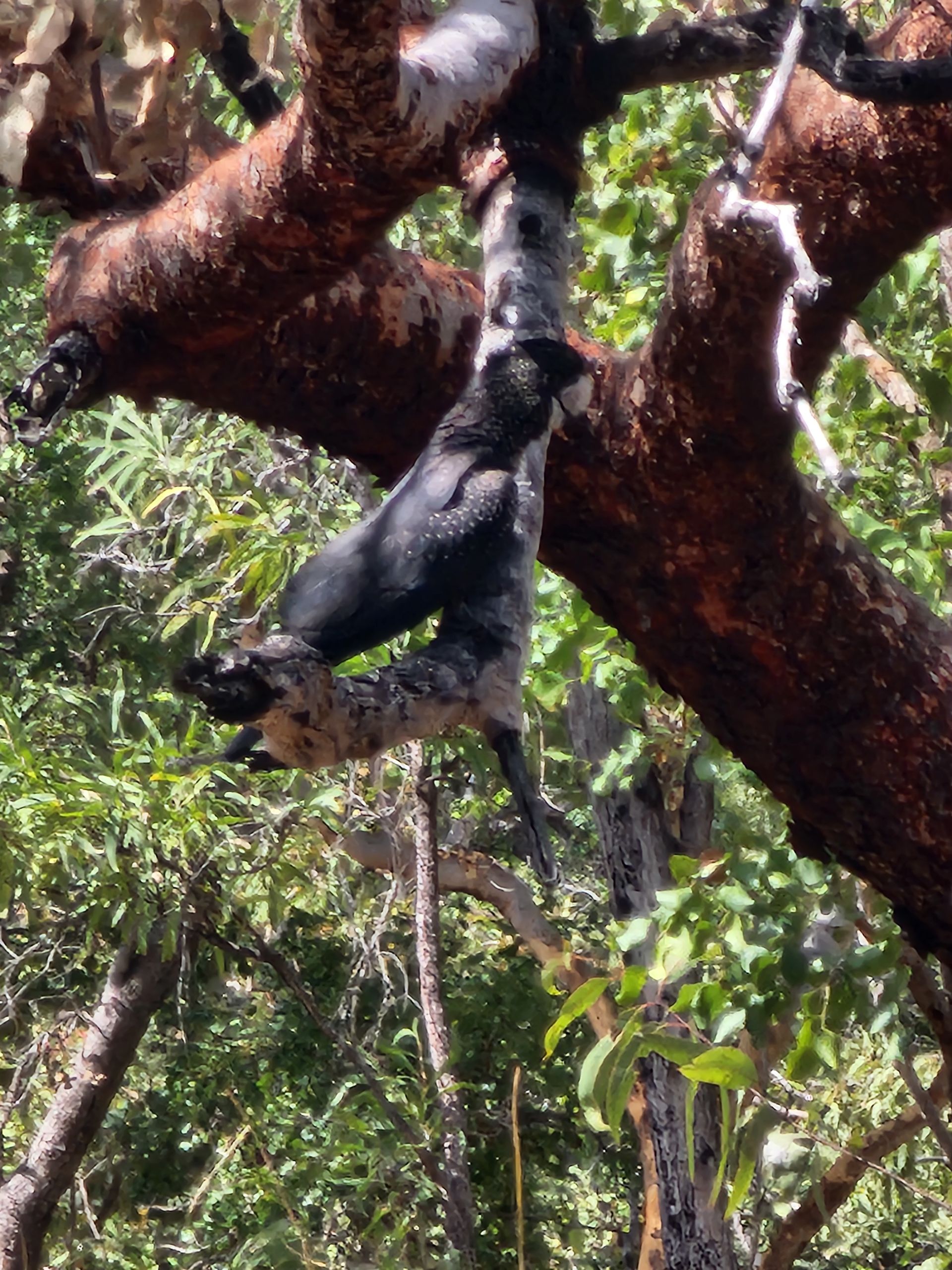
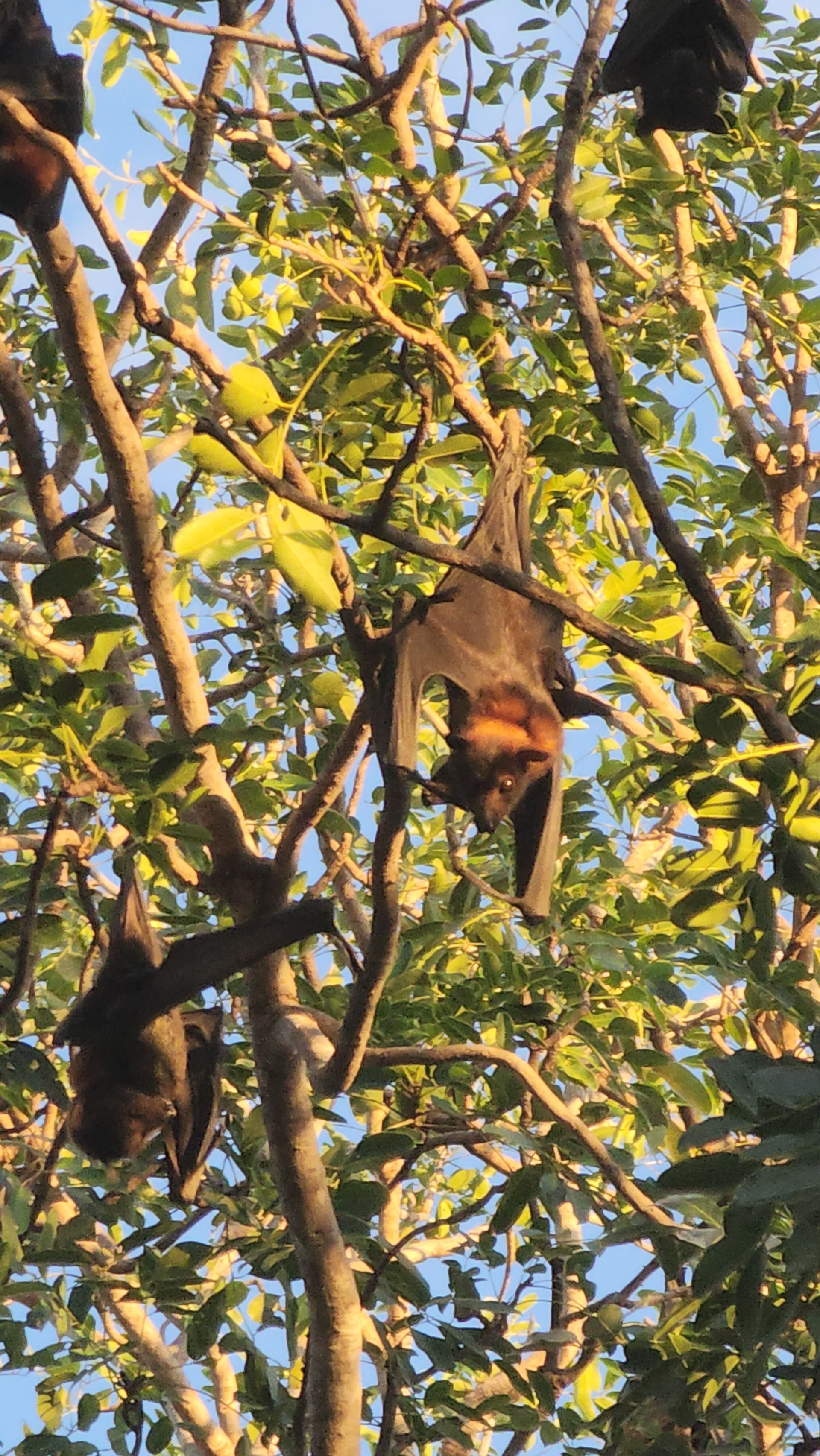
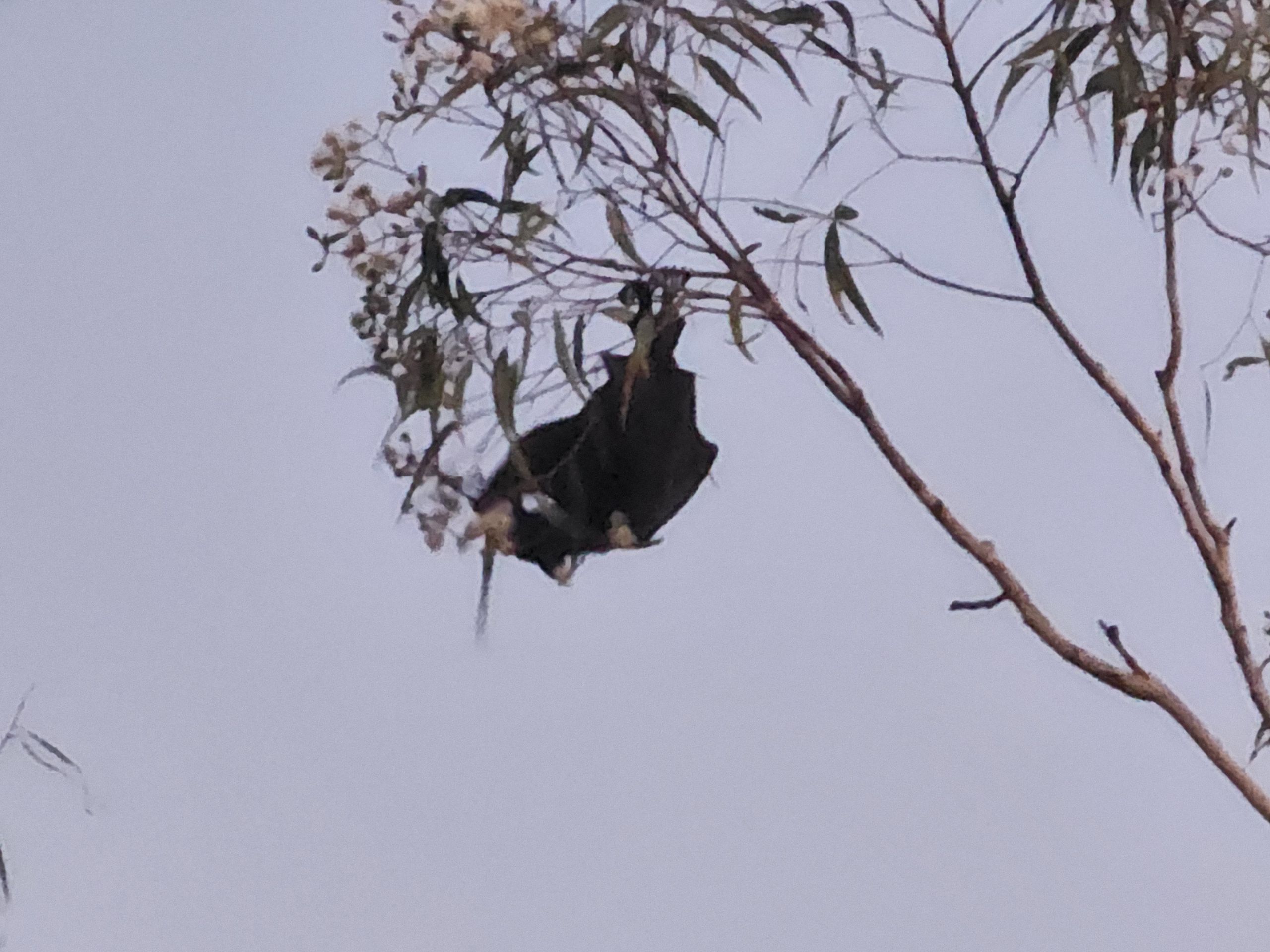
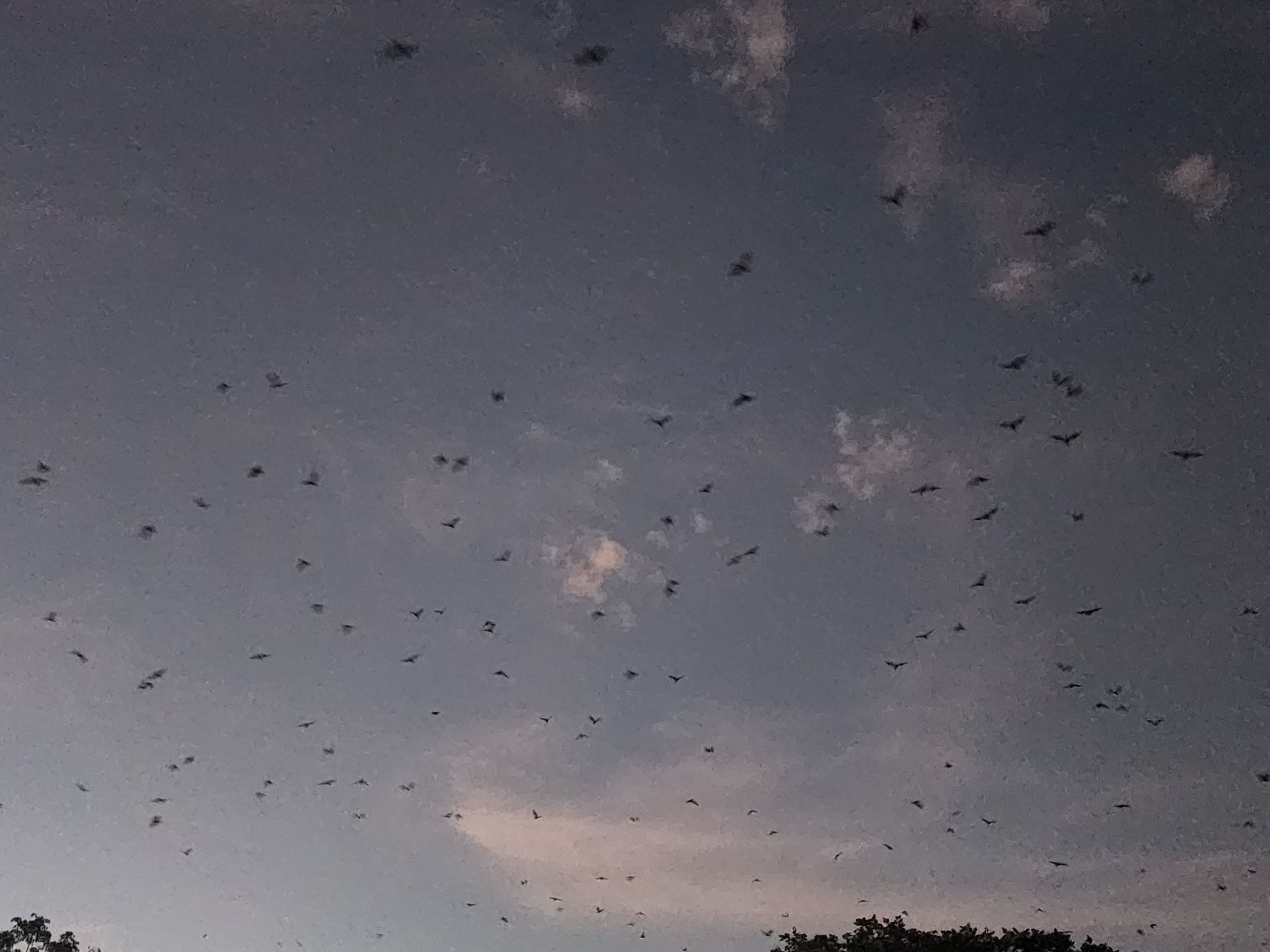
We waited a long time. Then, at 18:45, the flying foxes finally became active and began to swarm out. Most came from just behind the school, where there were more trees on the campus. For 10 minutes the sky was black with the large bodies of this largest flying fox species in Australia! Thousands of them flew directly over our heads. A spectacle!
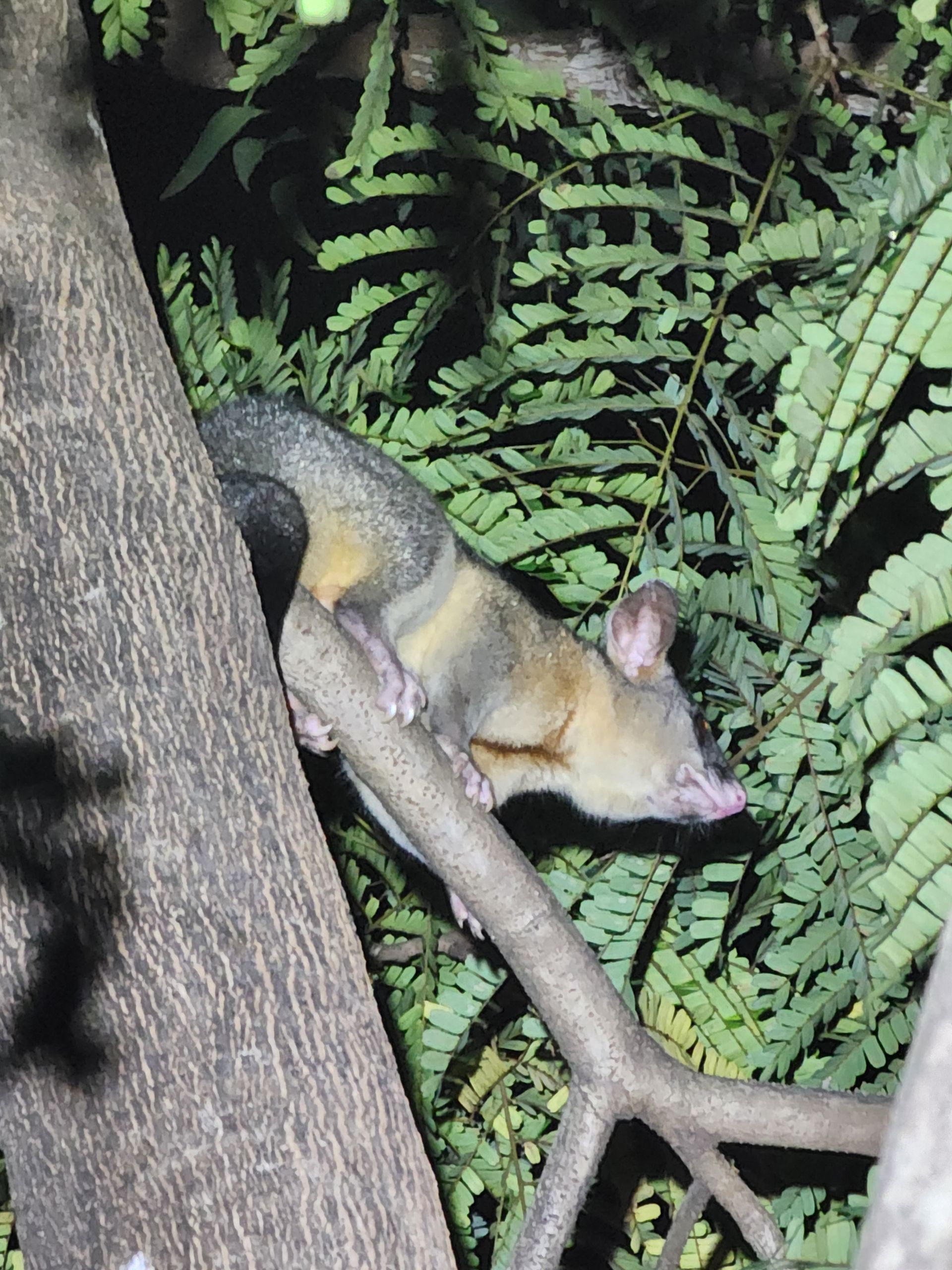
At 19:00 it was completely dark. Back at the camp, we made pasta. During a subsequent walk with a spotlight and infrared sighting device, I finally saw my first possum, the brush-tailed possum, of this trip.