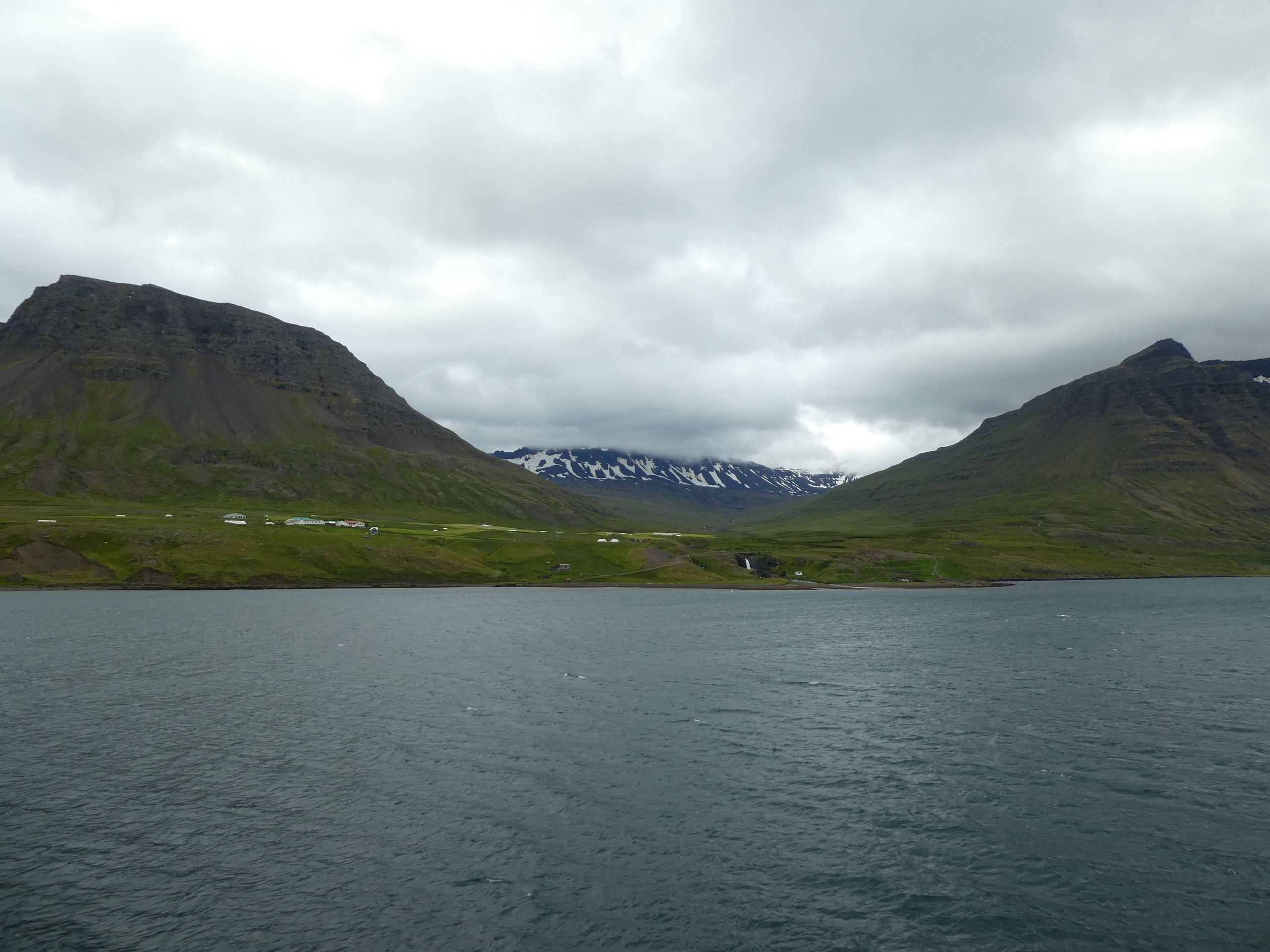
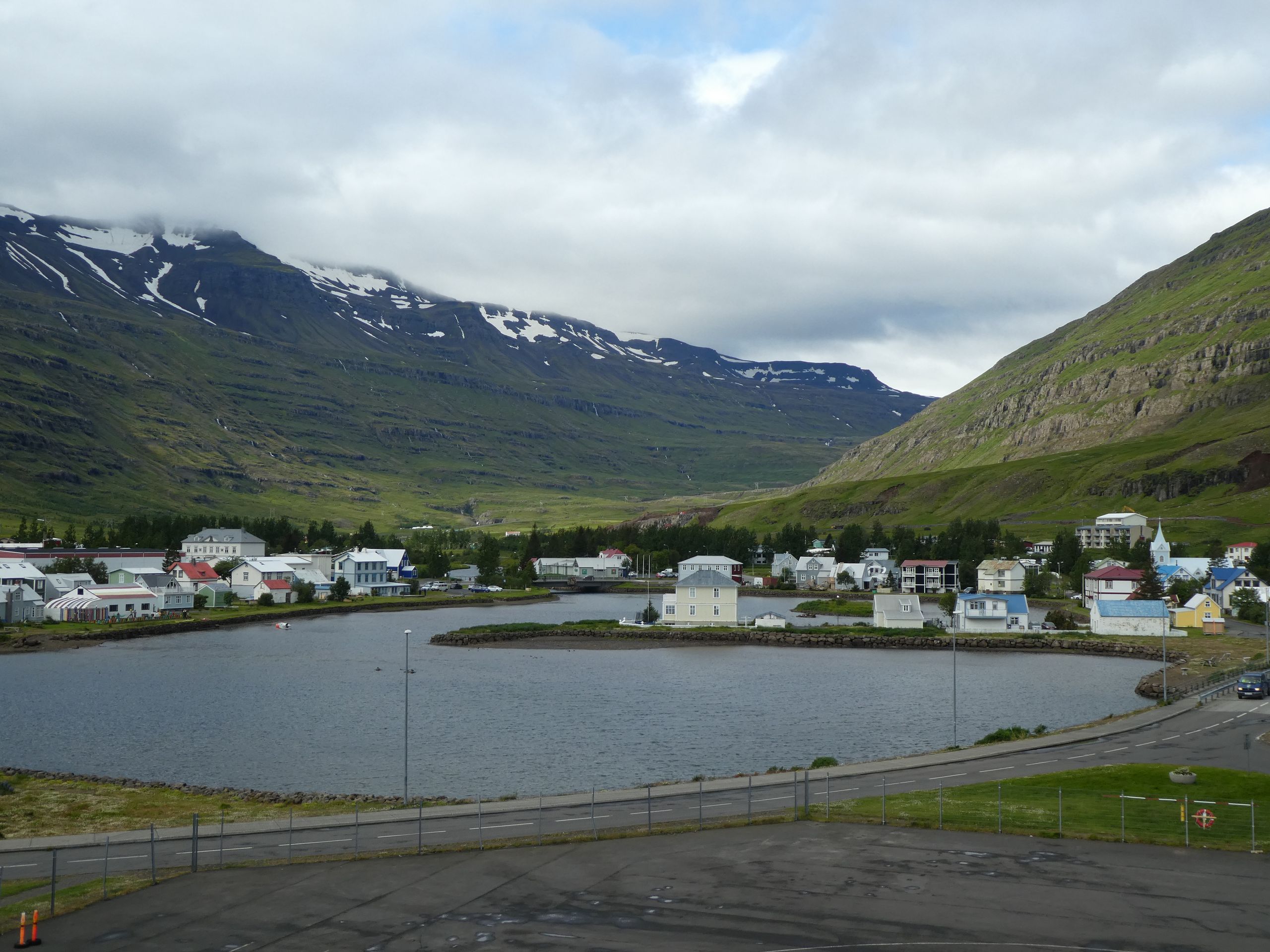
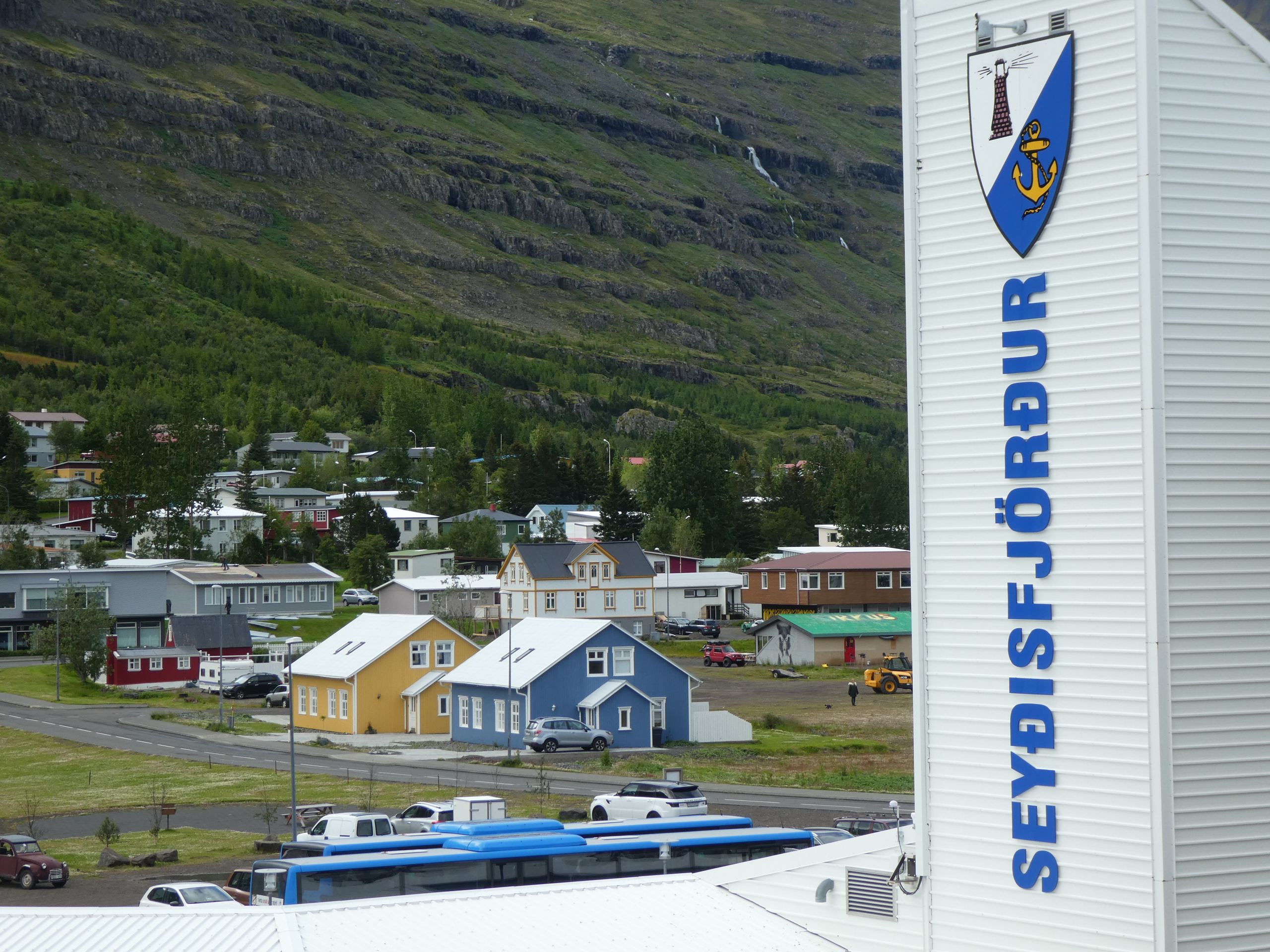
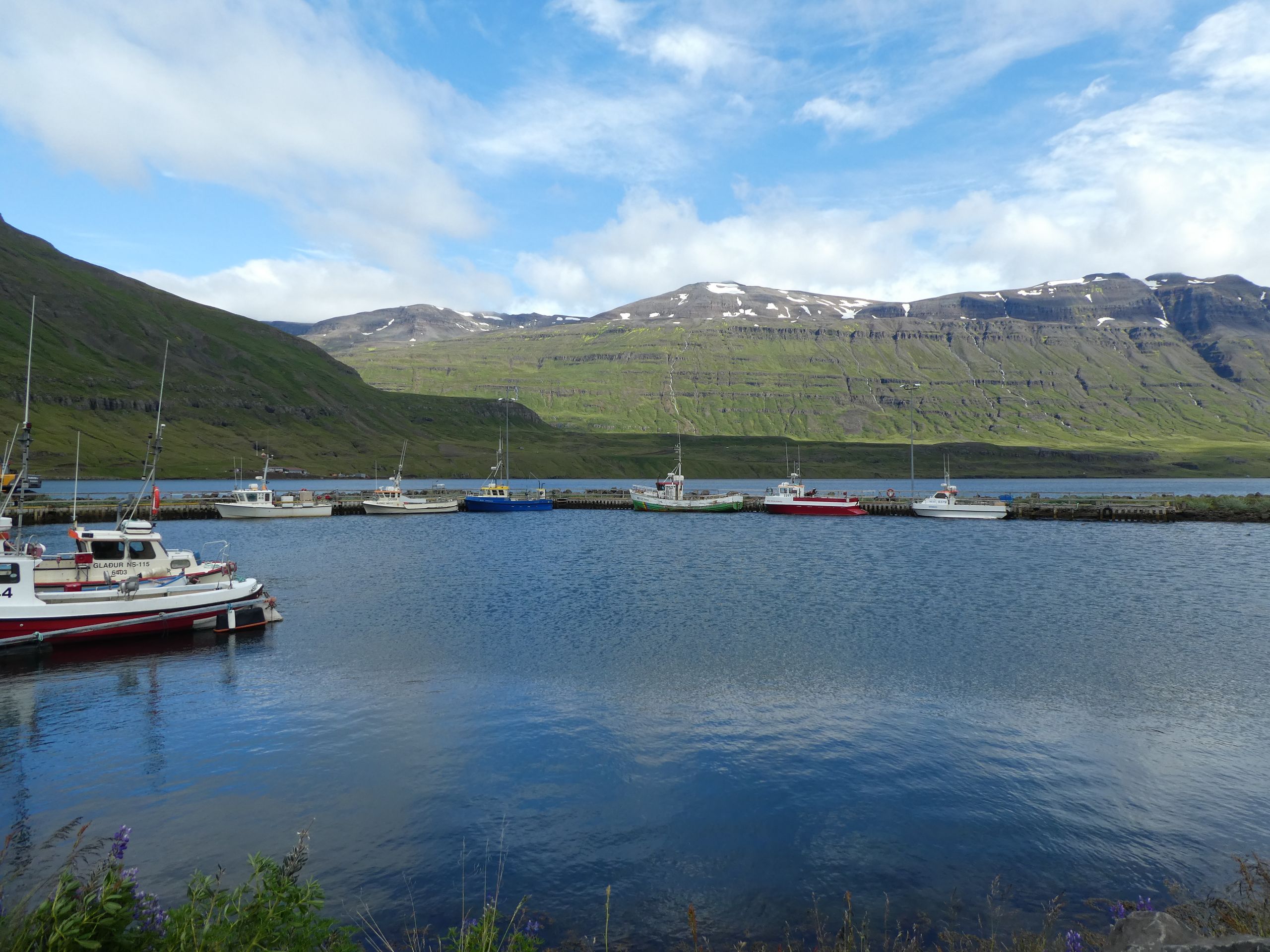
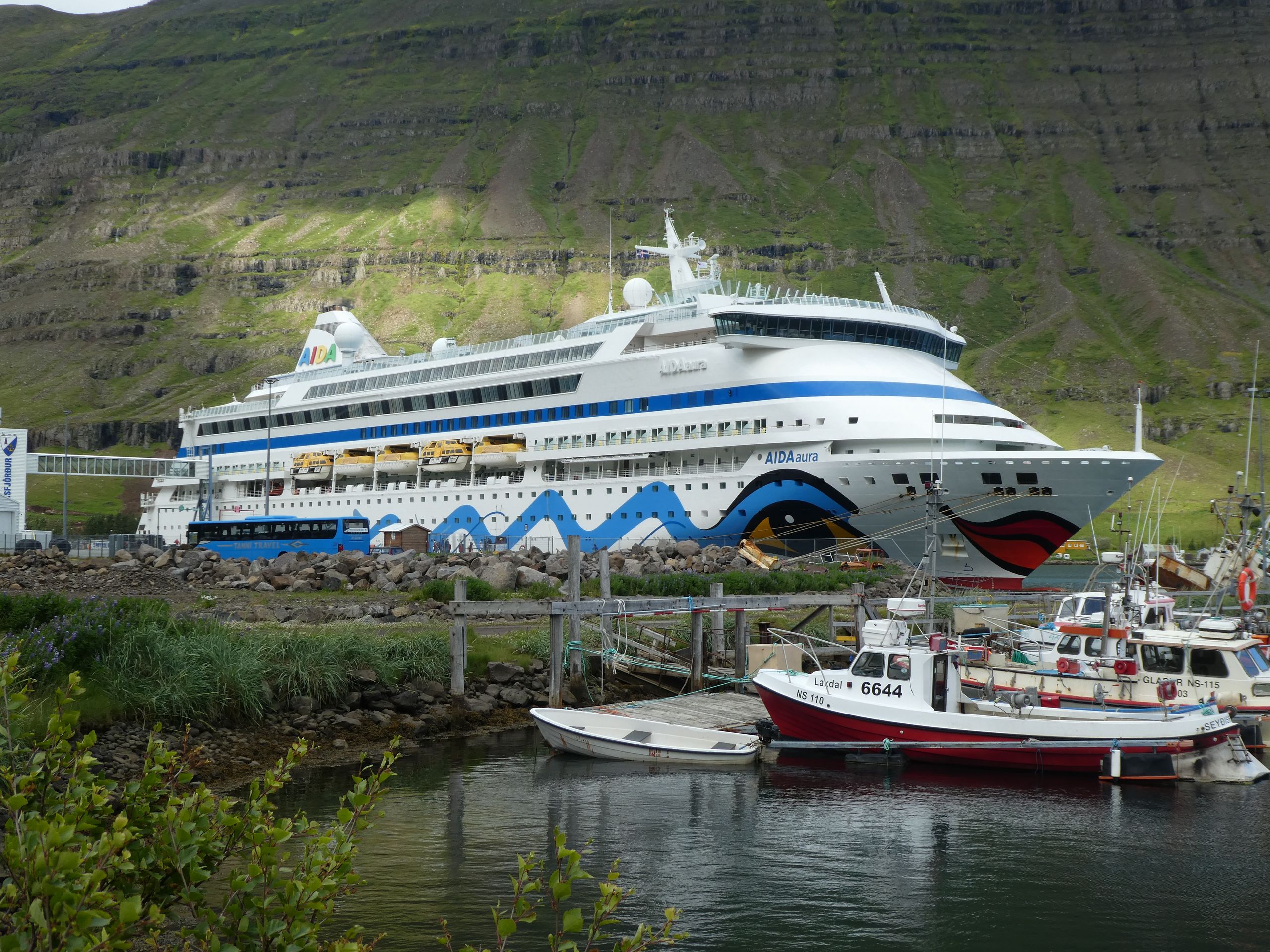
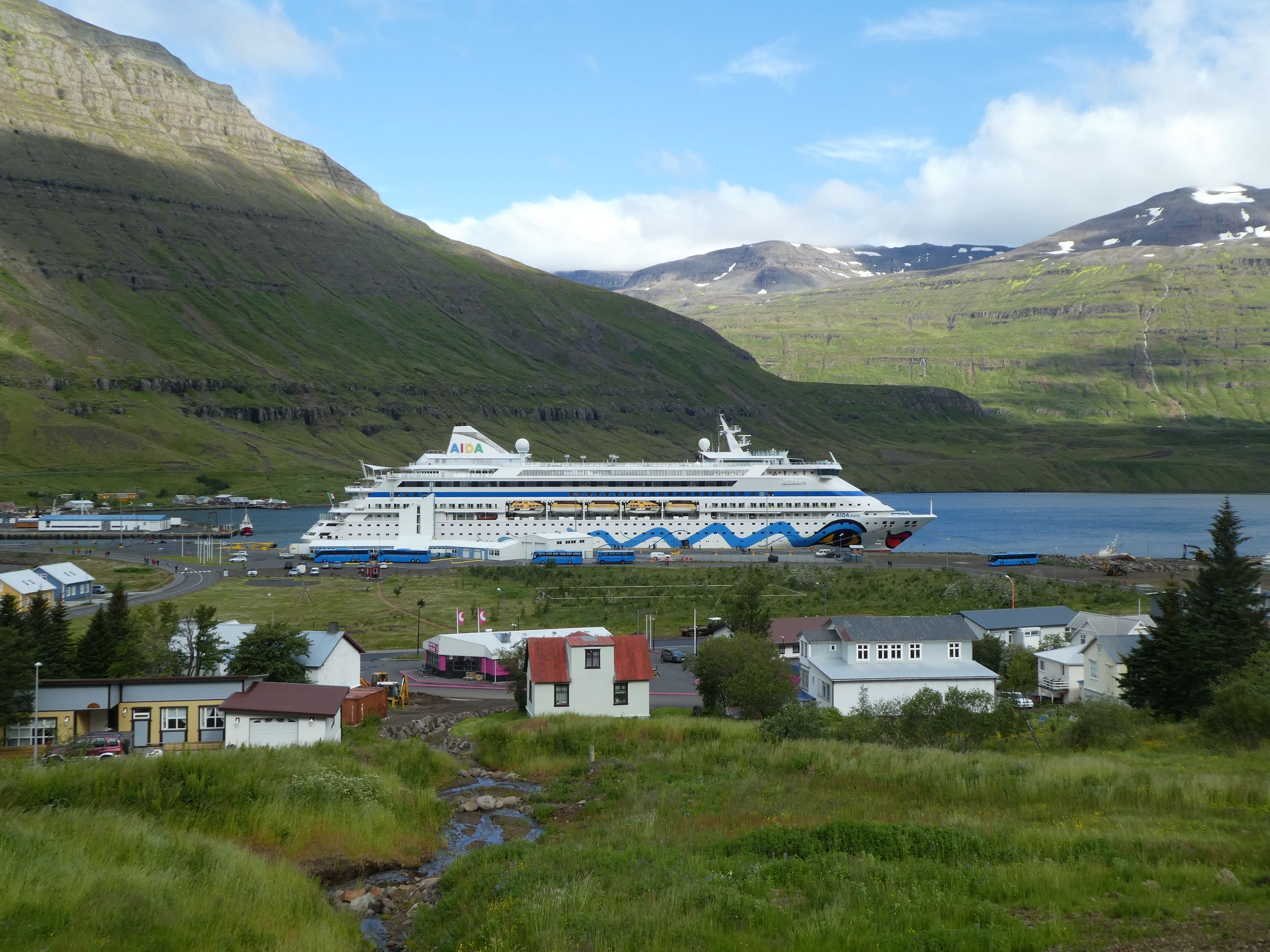
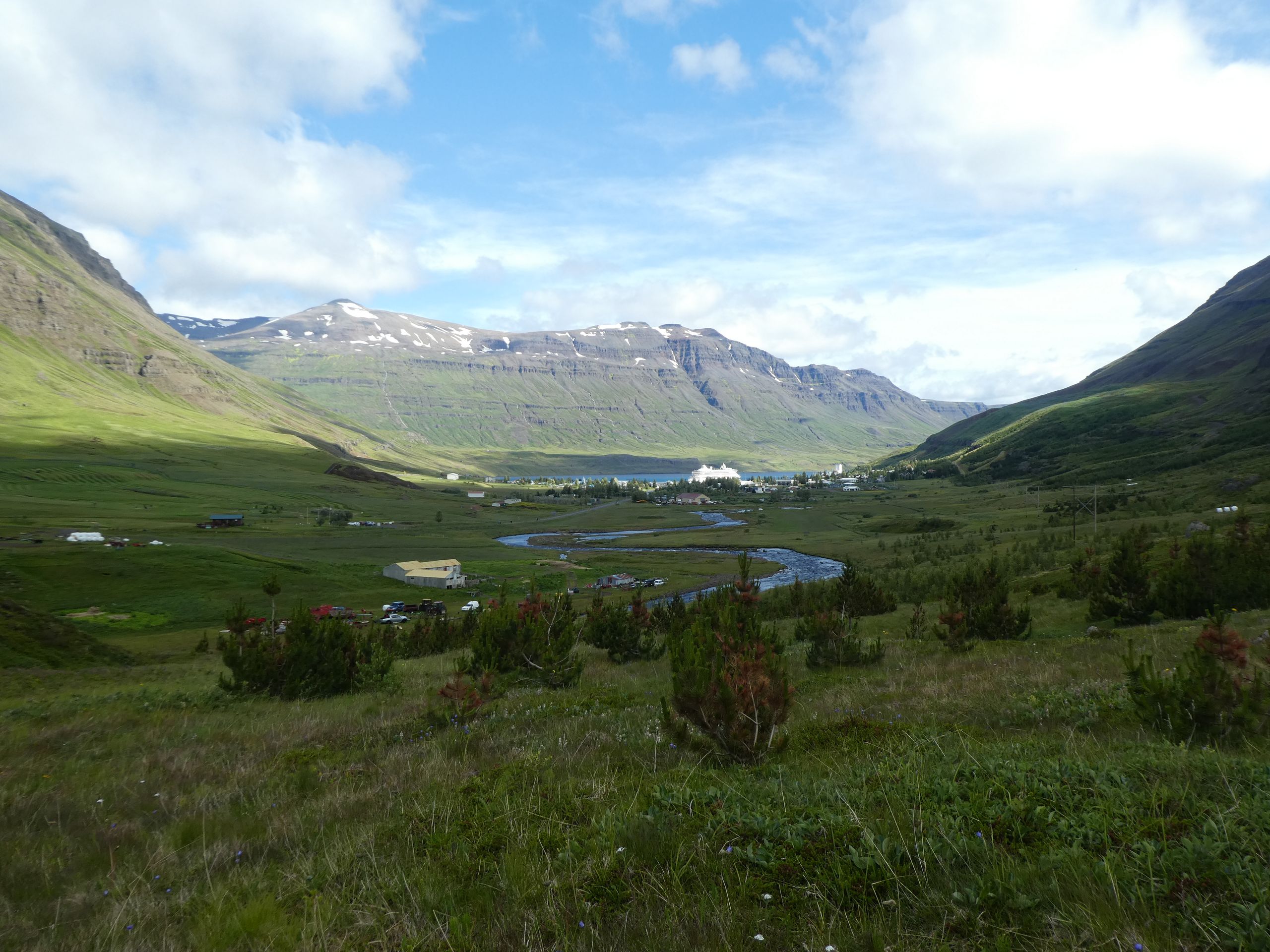
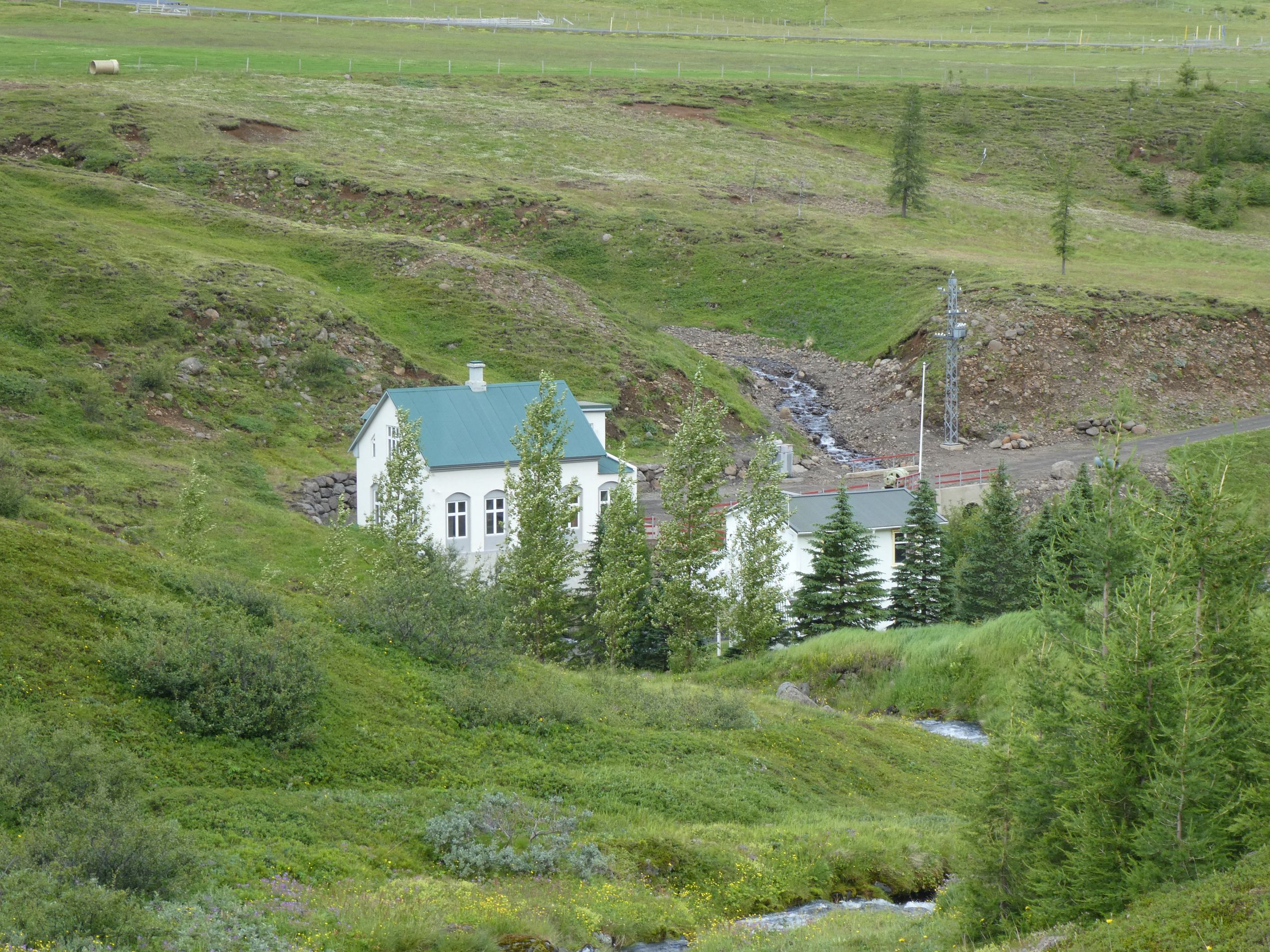
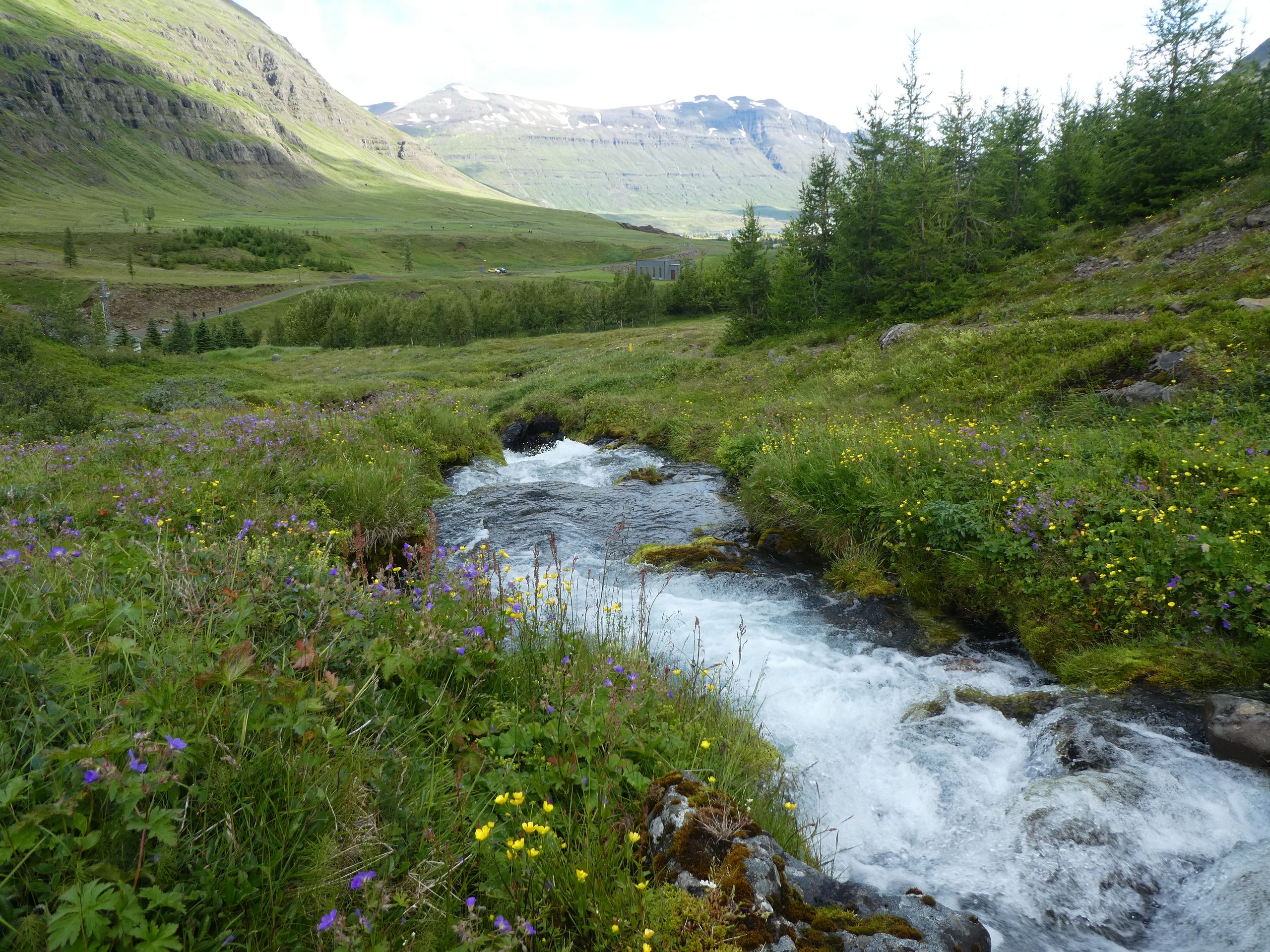
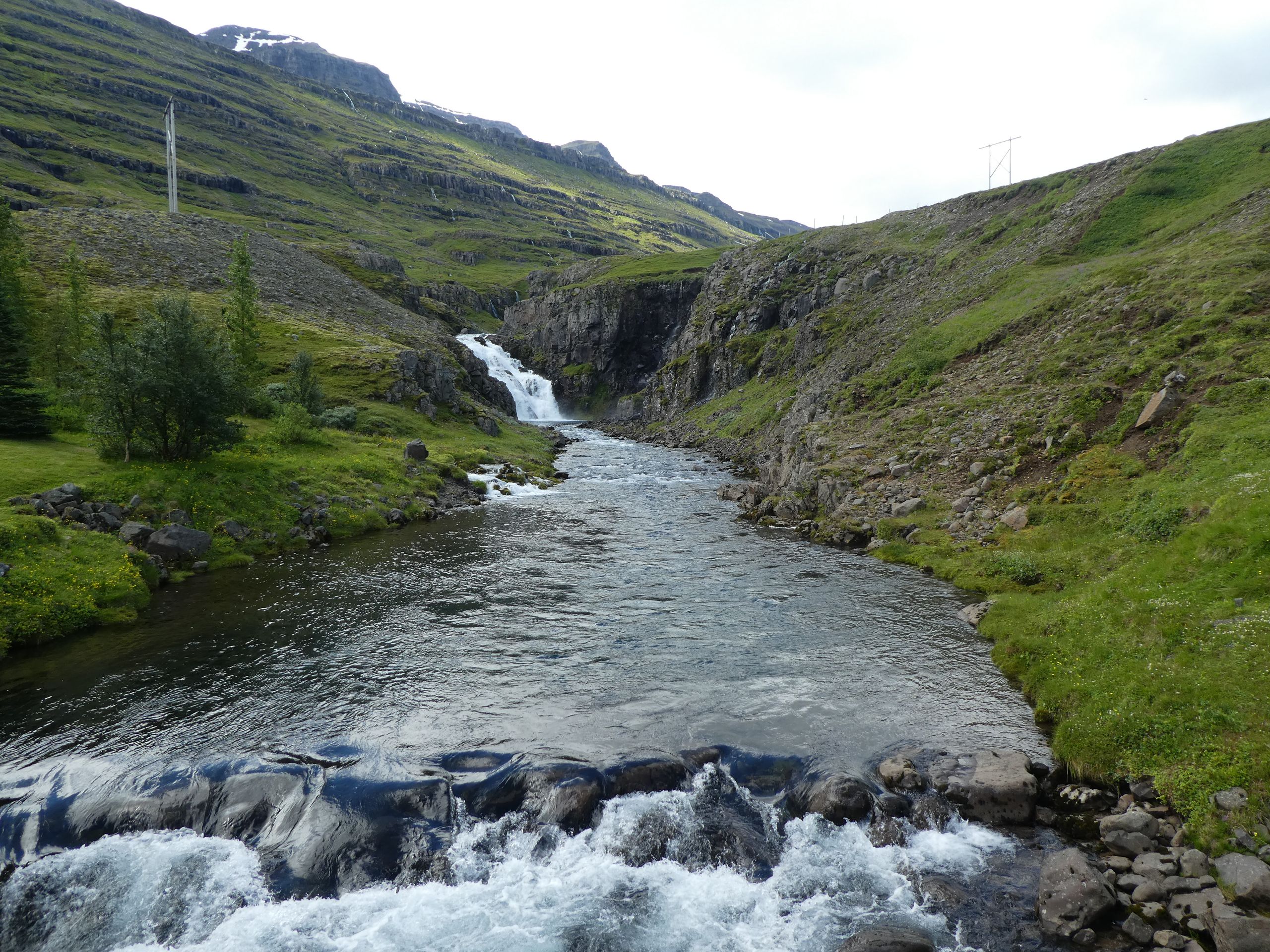
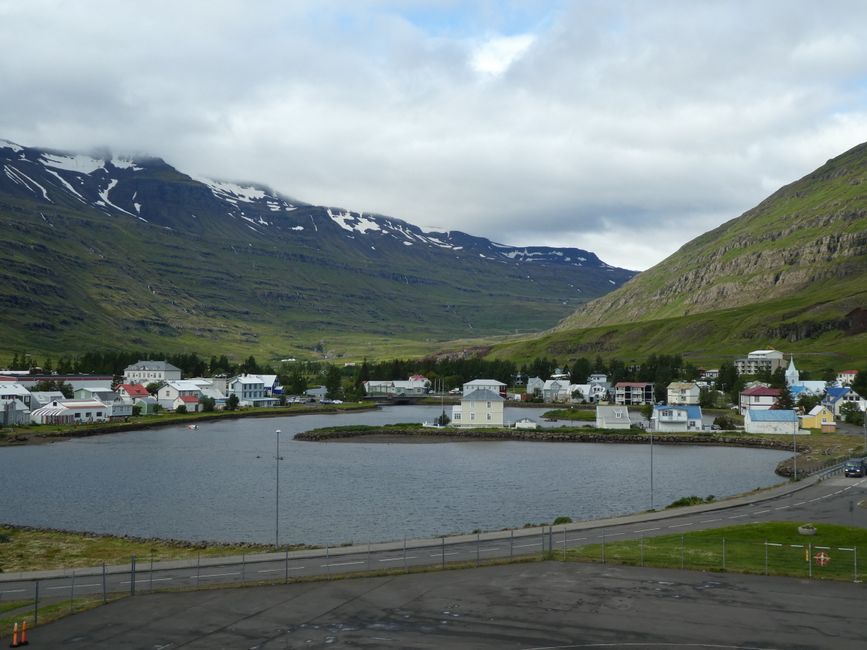
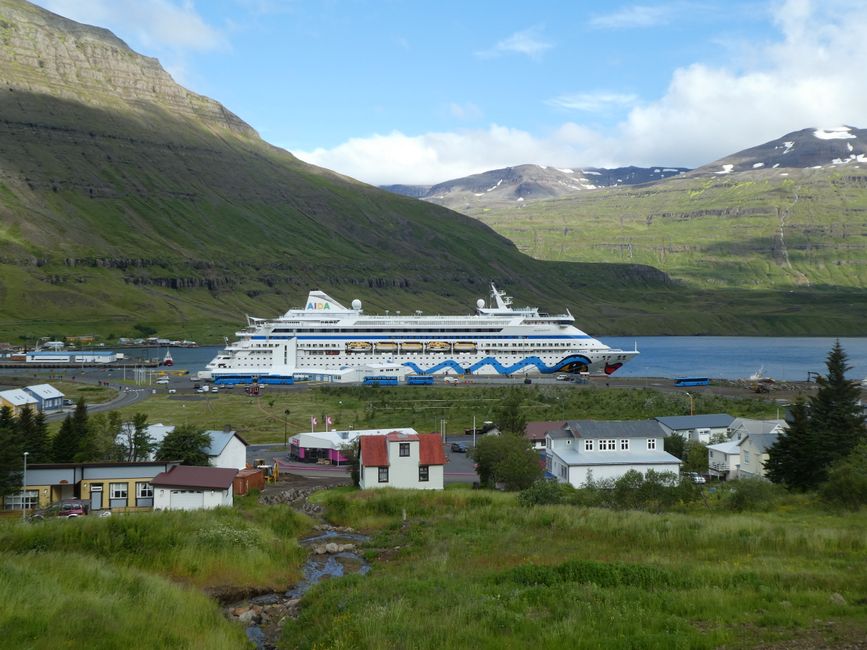
The first city we visited in Iceland was Seydisfjördur, located on the eastern side of the island (German: Fjord of the Fireplace). The ferry from Hirtshals also arrives here.
Seydisfjördur
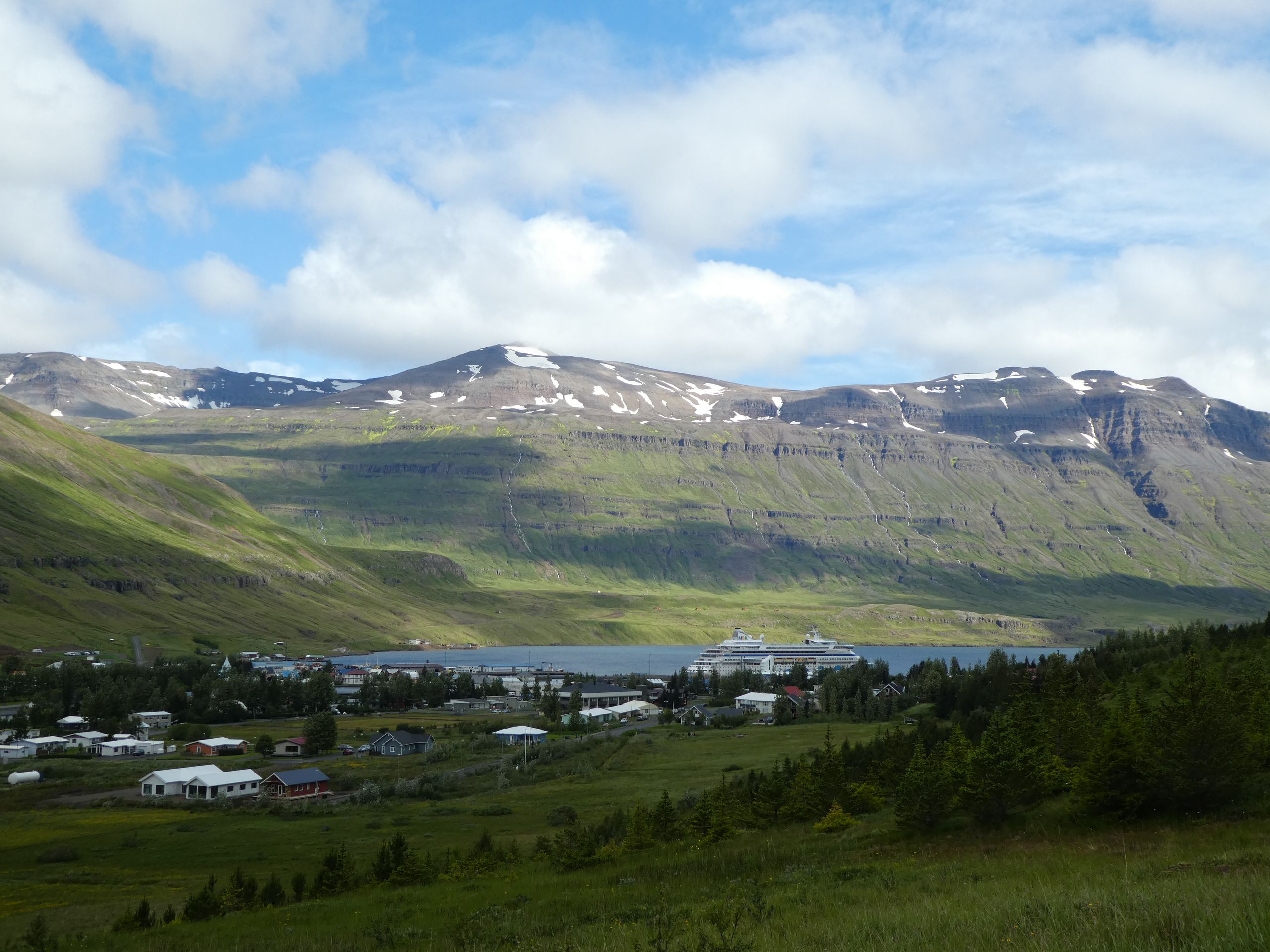
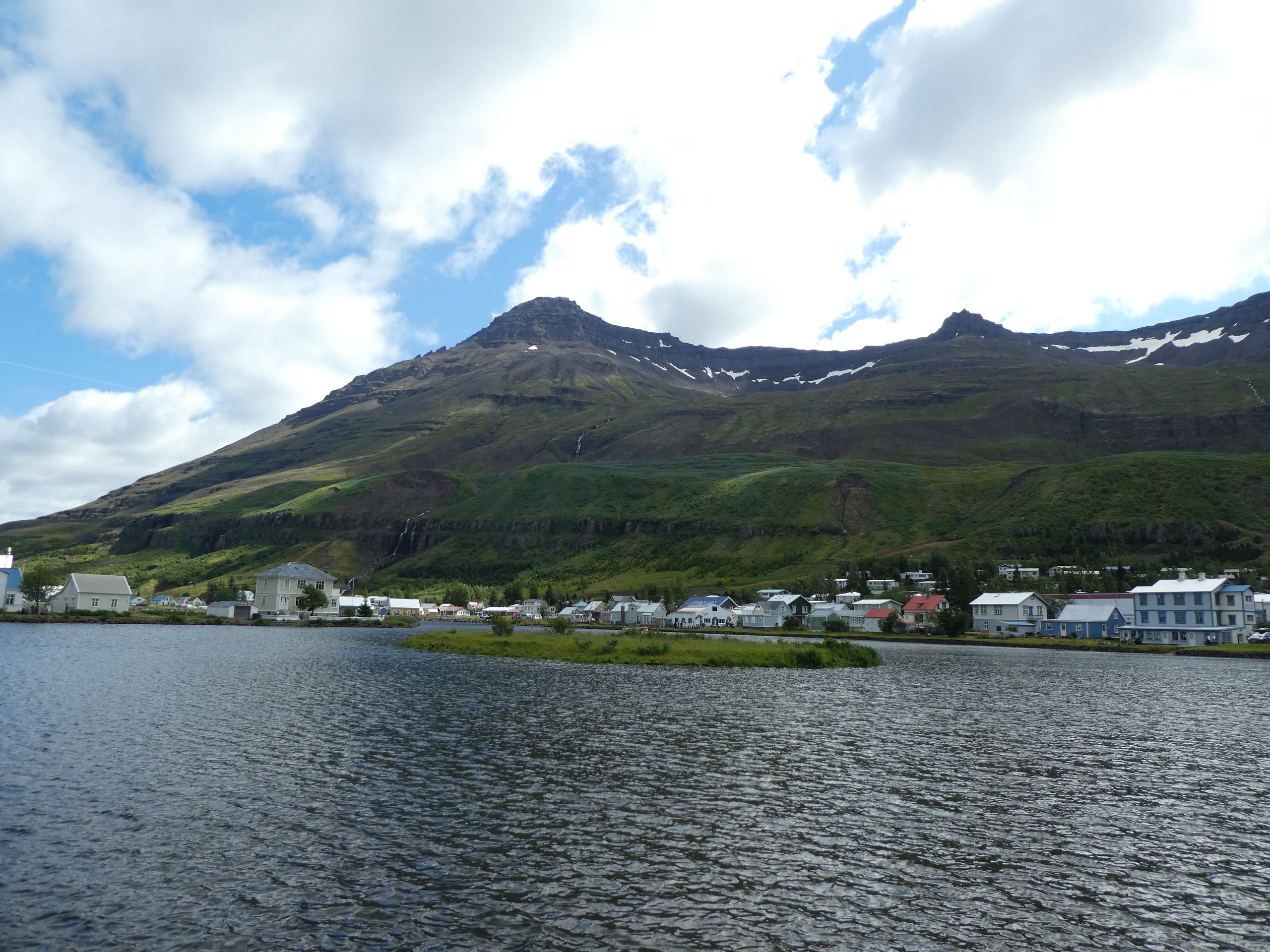
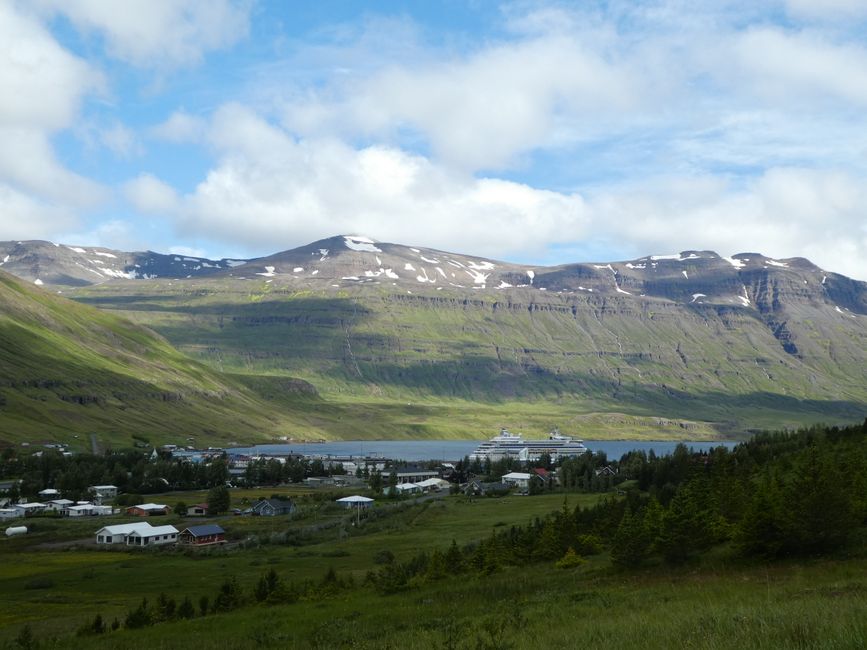
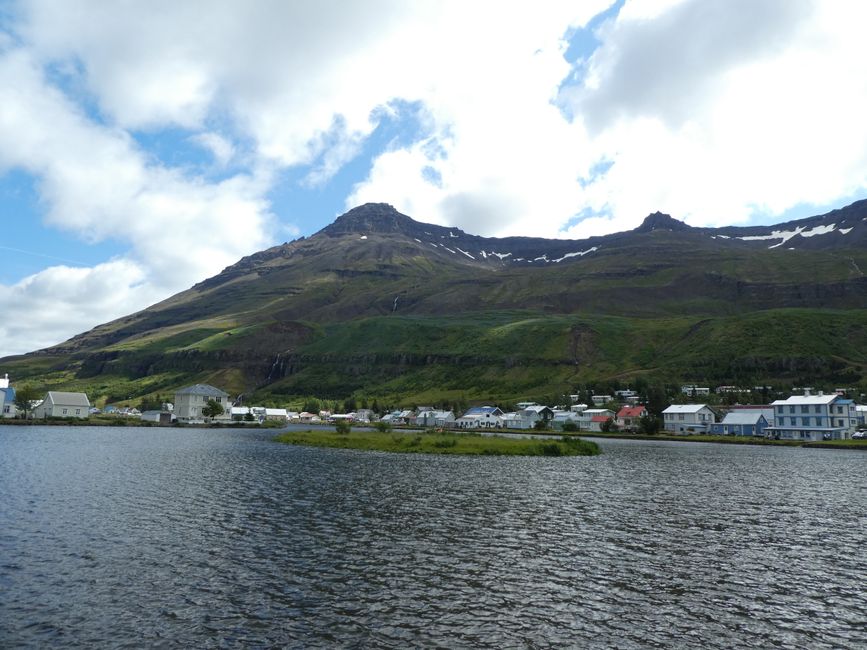
Seydisfjördur is a small town with about 700 inhabitants, located at the end of a 17 km long fjord.
Seydisfjördur
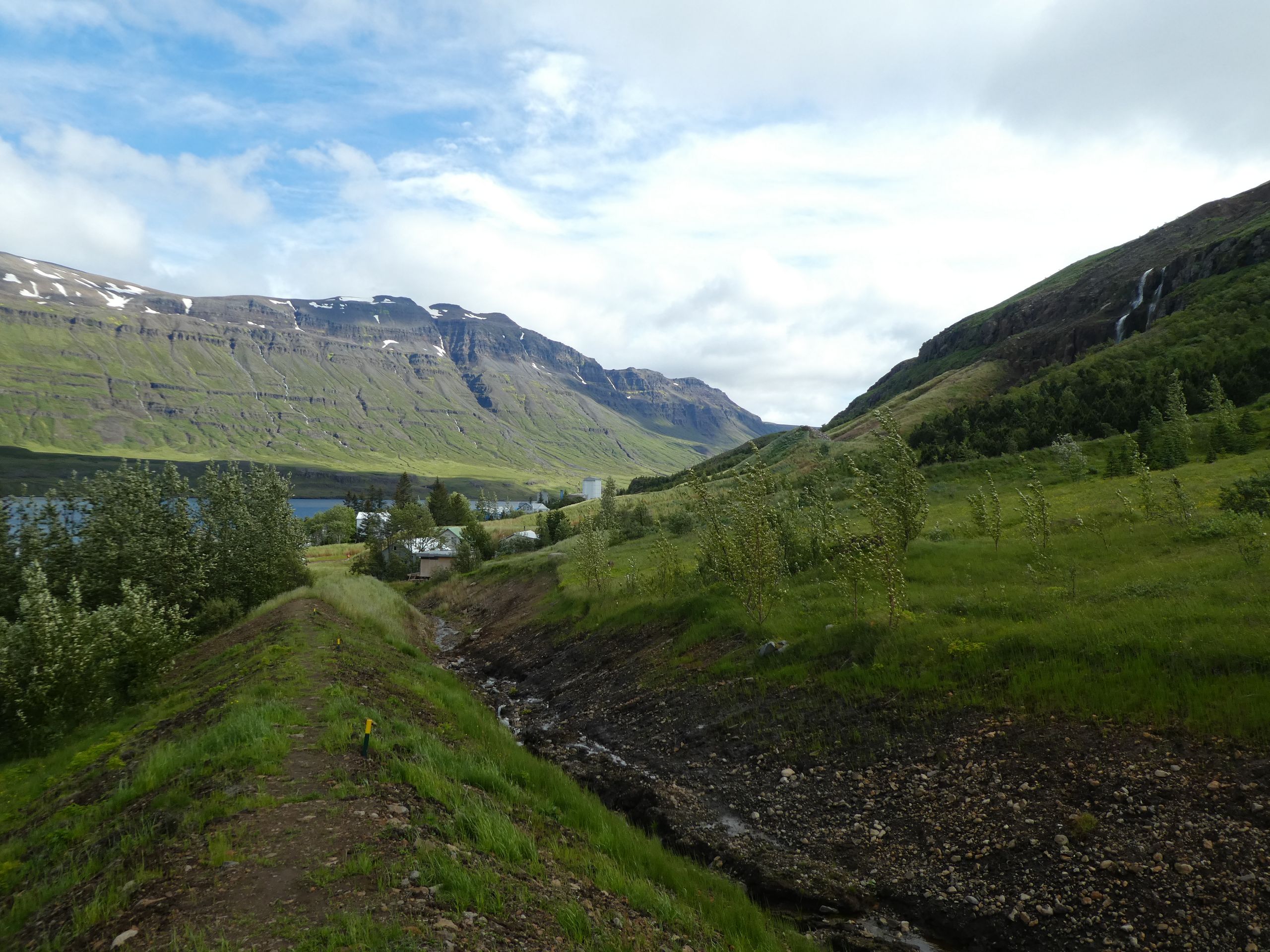
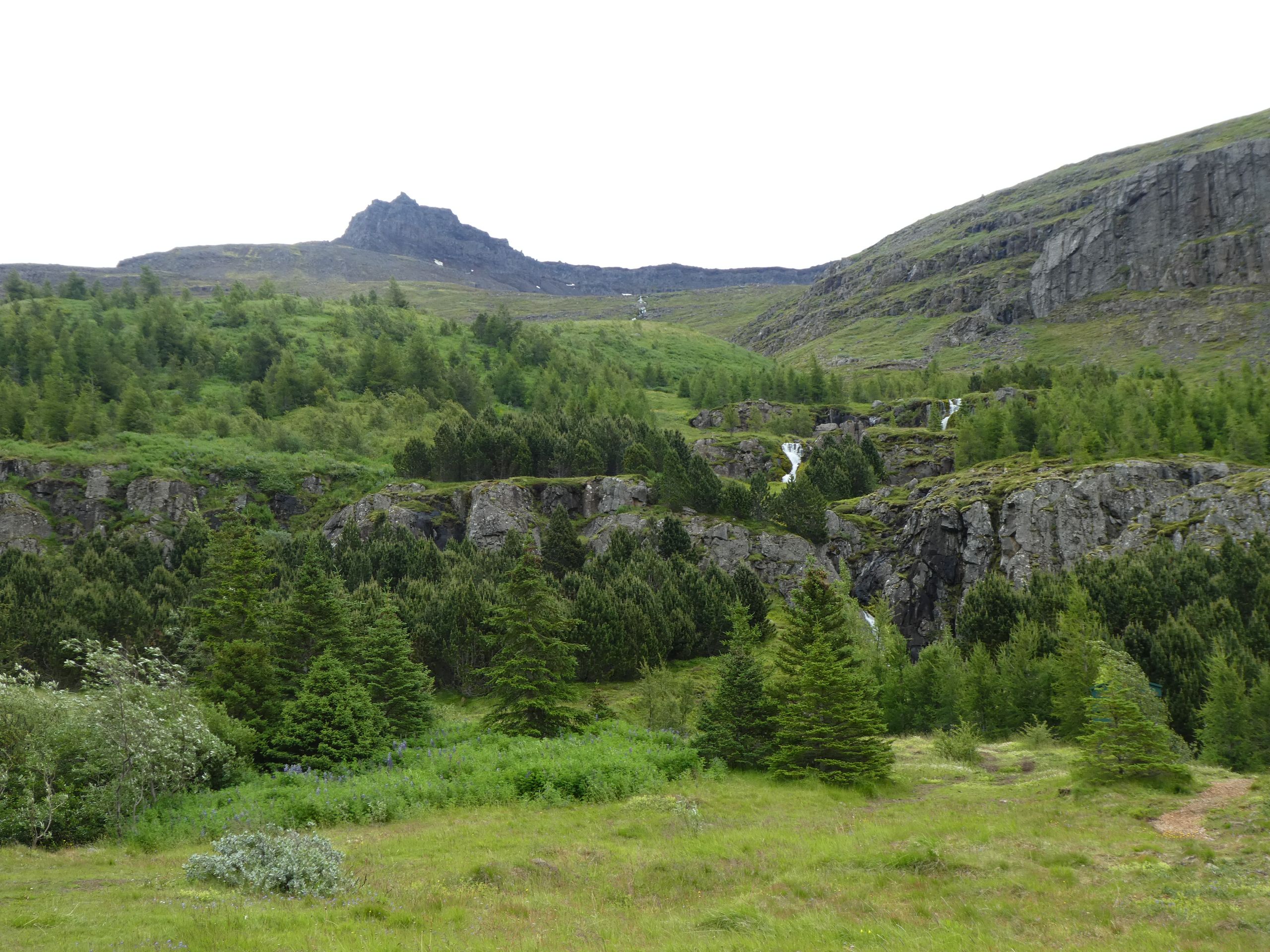
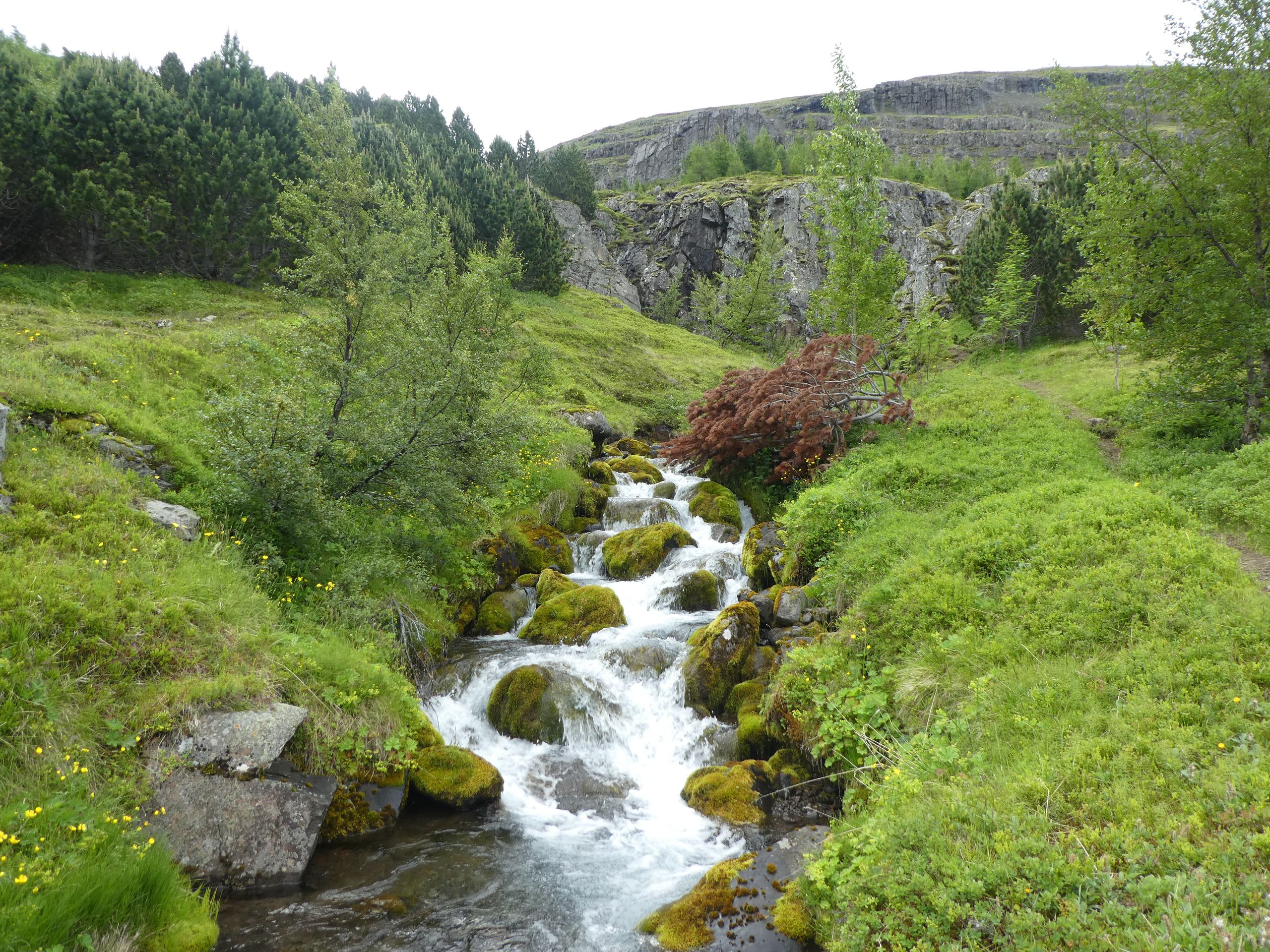
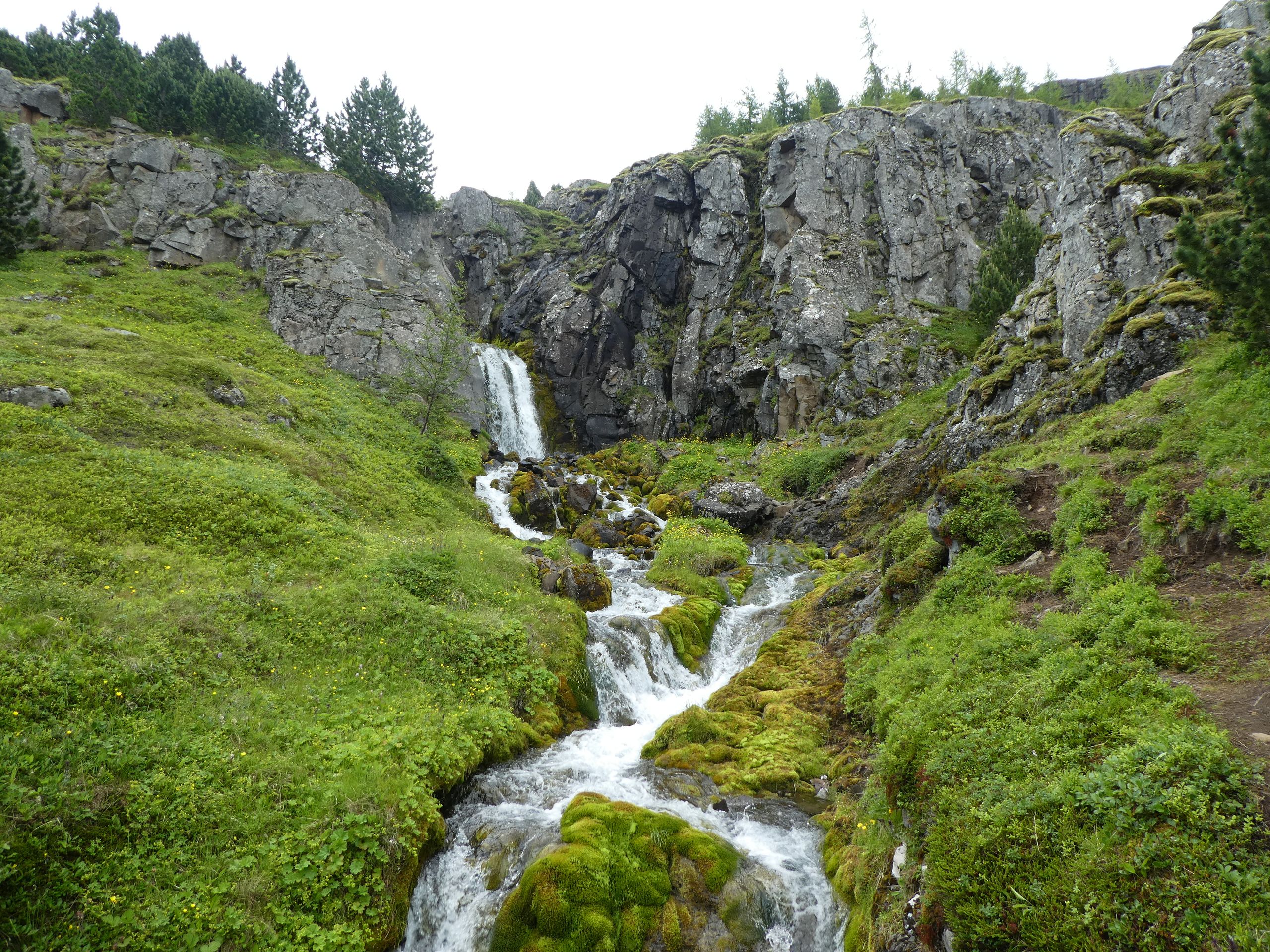
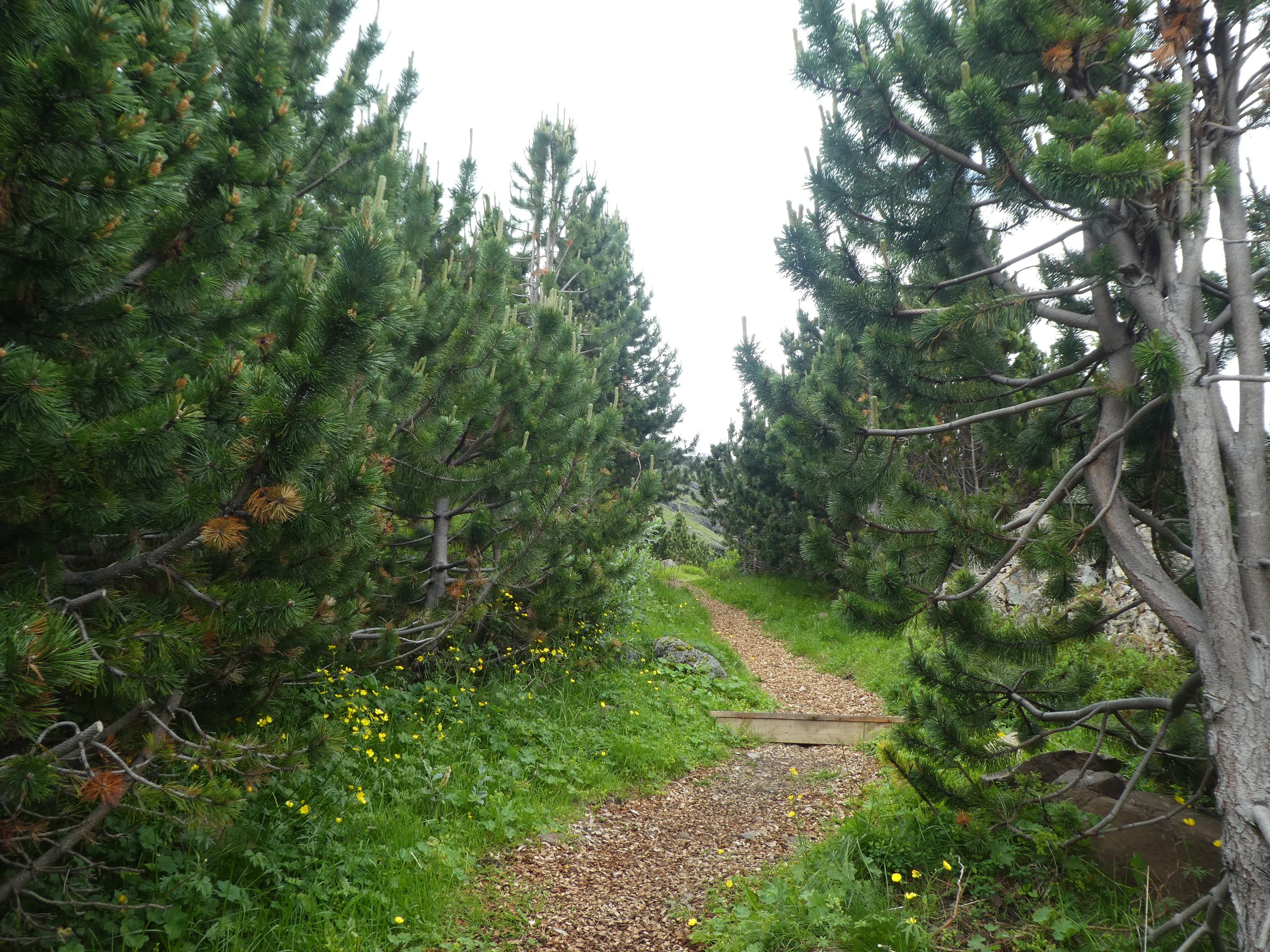
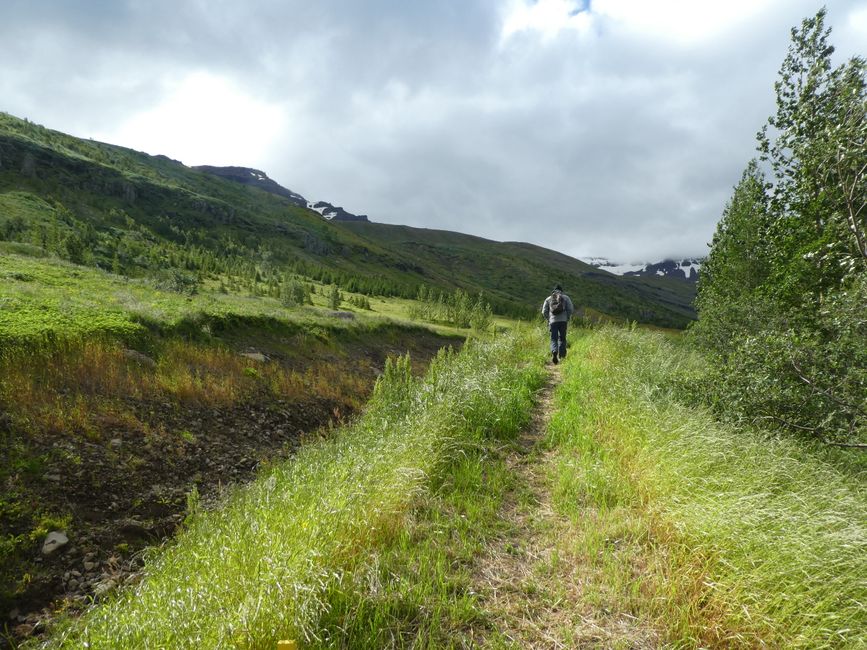
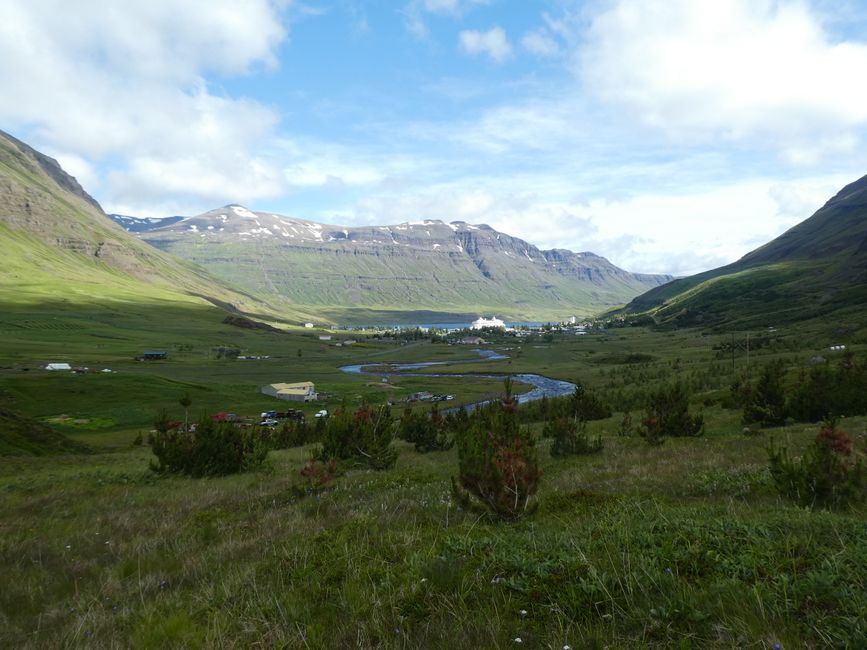
In the morning, we started our exploration of the town with a little hike.
Surroundings of Seydisfjördur
This hike also took us along the mountains surrounding the town.
Surroundings of Seydisfjördur
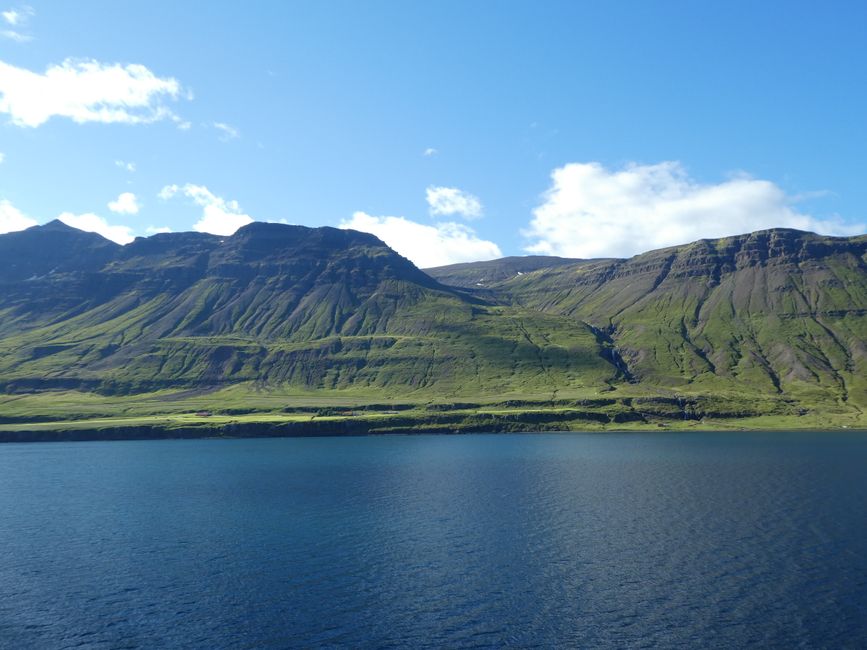
The landscape shimmered in various shades of green, especially when the sun was shining.
Surroundings of Seydisfjördur
We were really lucky with the weather that day: It was a bit chilly with a maximum of 15°C, but besides some clouds, we saw a lot of blue sky and it stayed dry.
Seydisfjördur
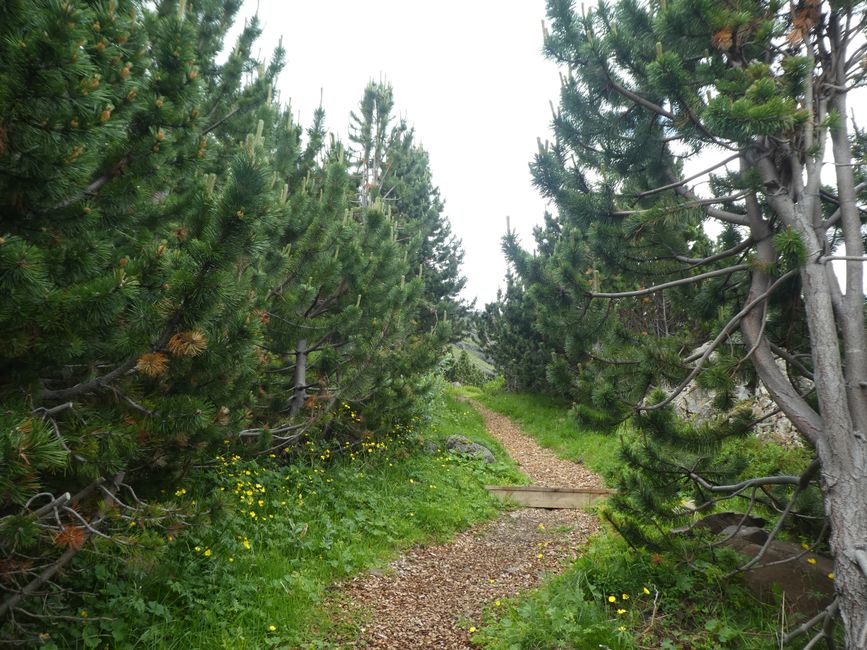
The hiking trail was well marked and partly newly constructed.
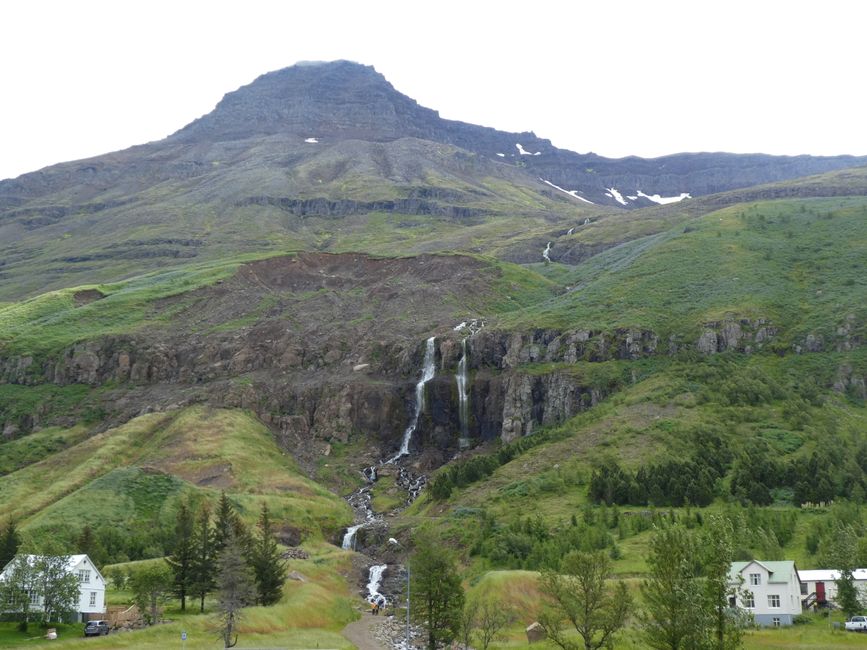
Surroundings of Seydisfjördur
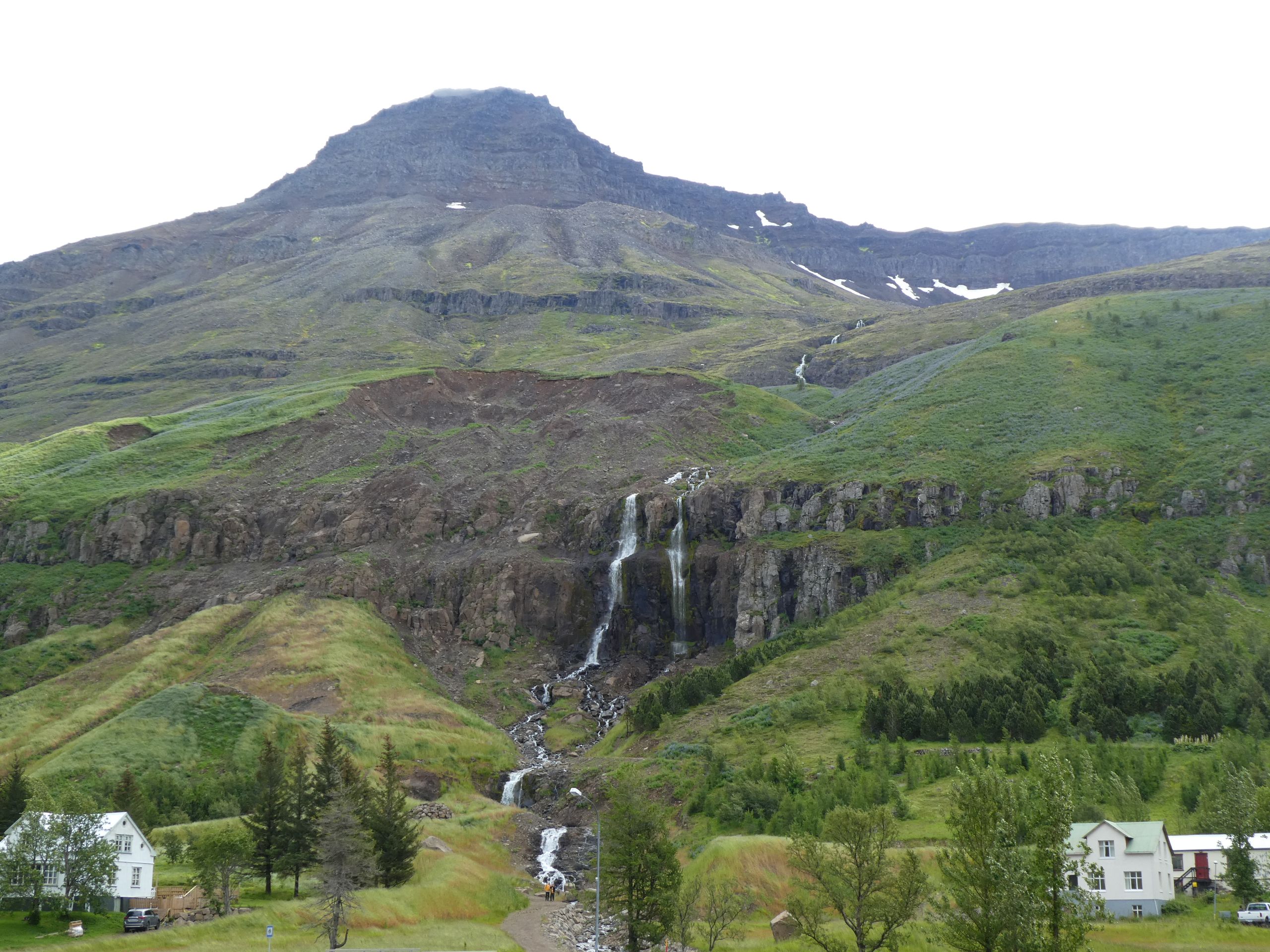
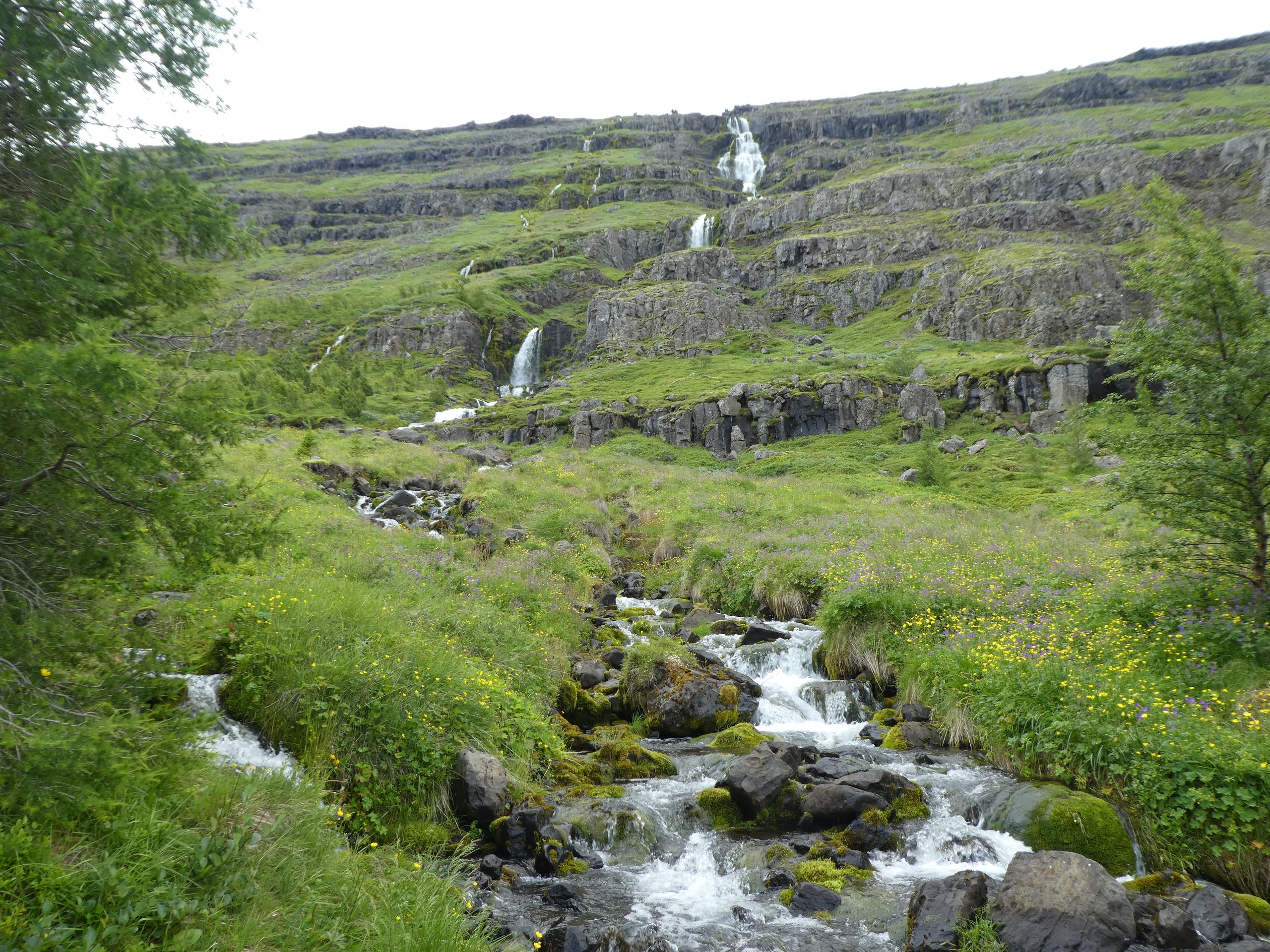
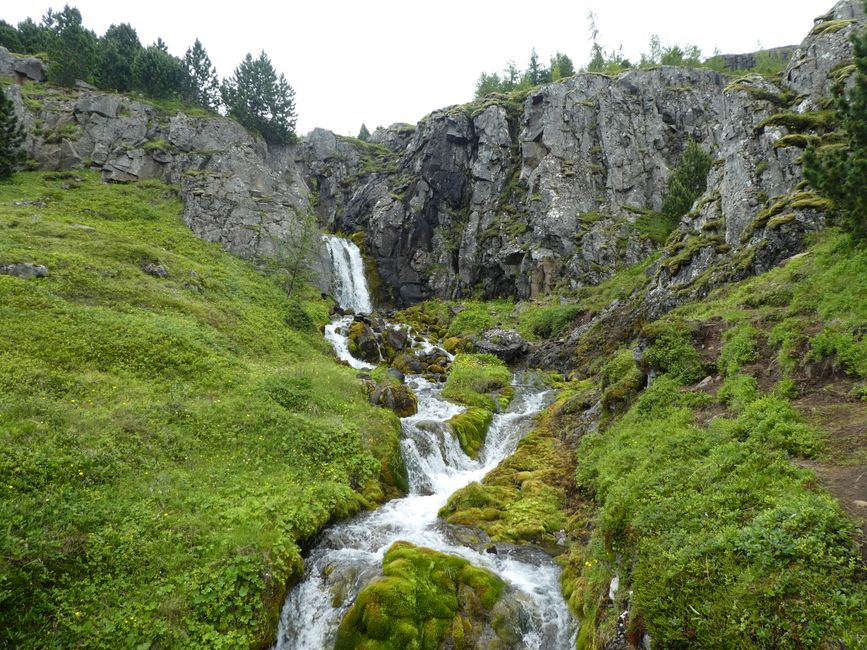
We passed several waterfalls flowing through the stony and green landscape.
Surroundings of Seydisfjördur
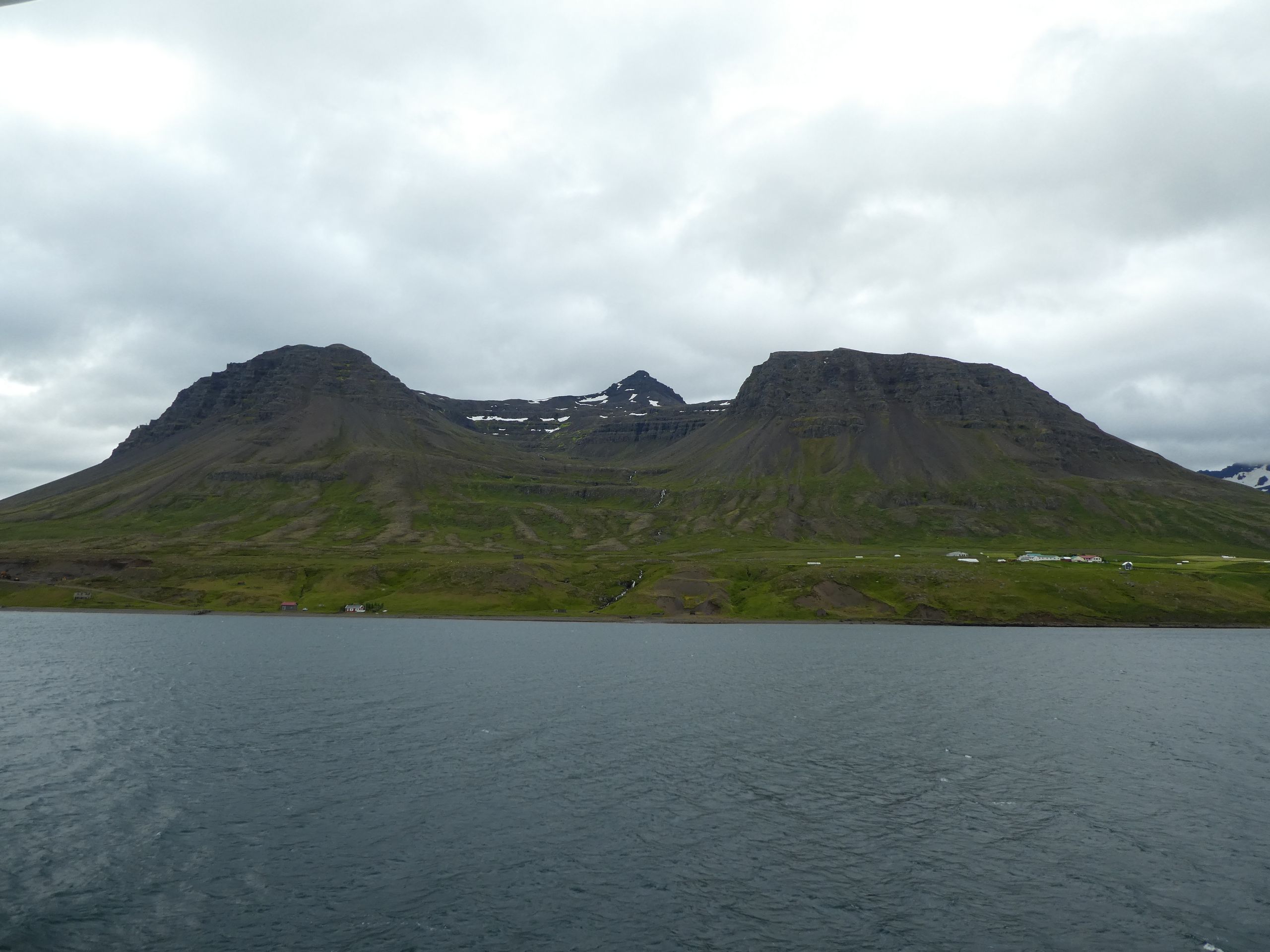
At the same time, we enjoyed a beautiful view towards the fjord.
Surroundings of Seydisfjördur
On the way back, we also walked through the town itself.
Seydisfjördur
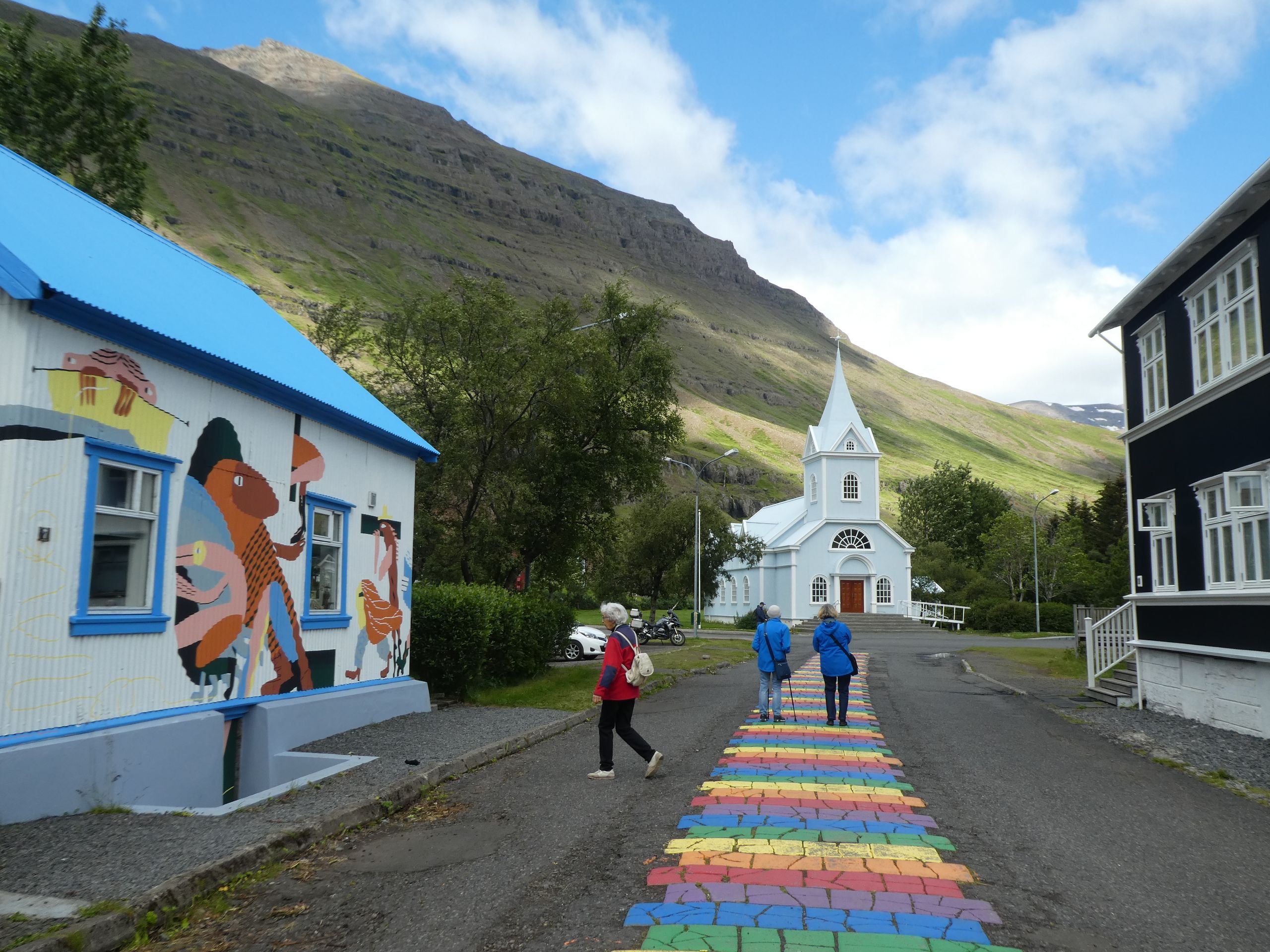
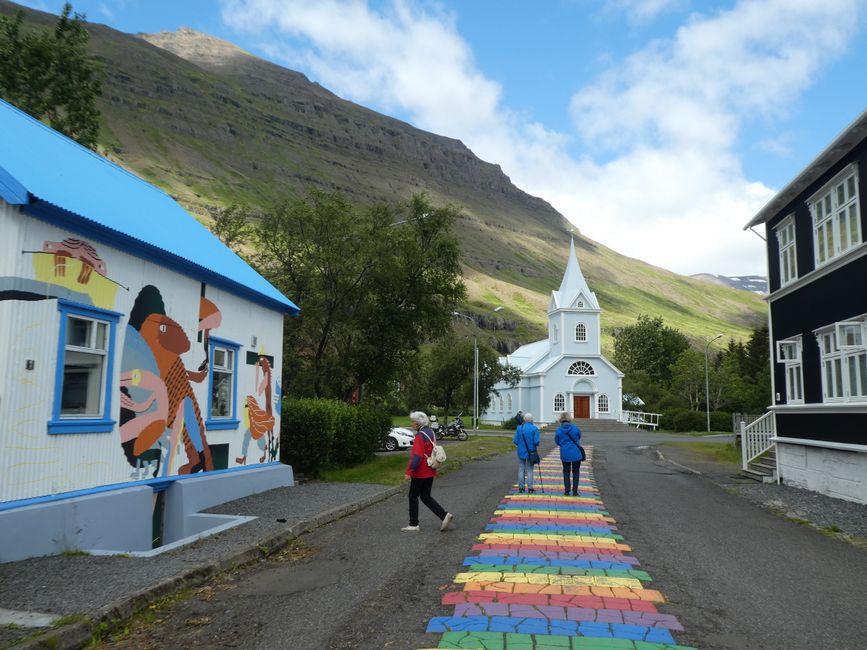
Especially worth seeing is the 'blue church', which was built in 1922 after a previous building burned down.
Blue church in Seydisfjördur
The path to the church, Nordurgata, is known for its colorful houses, making it the rainbow road.
Surroundings of Seydisfjördur
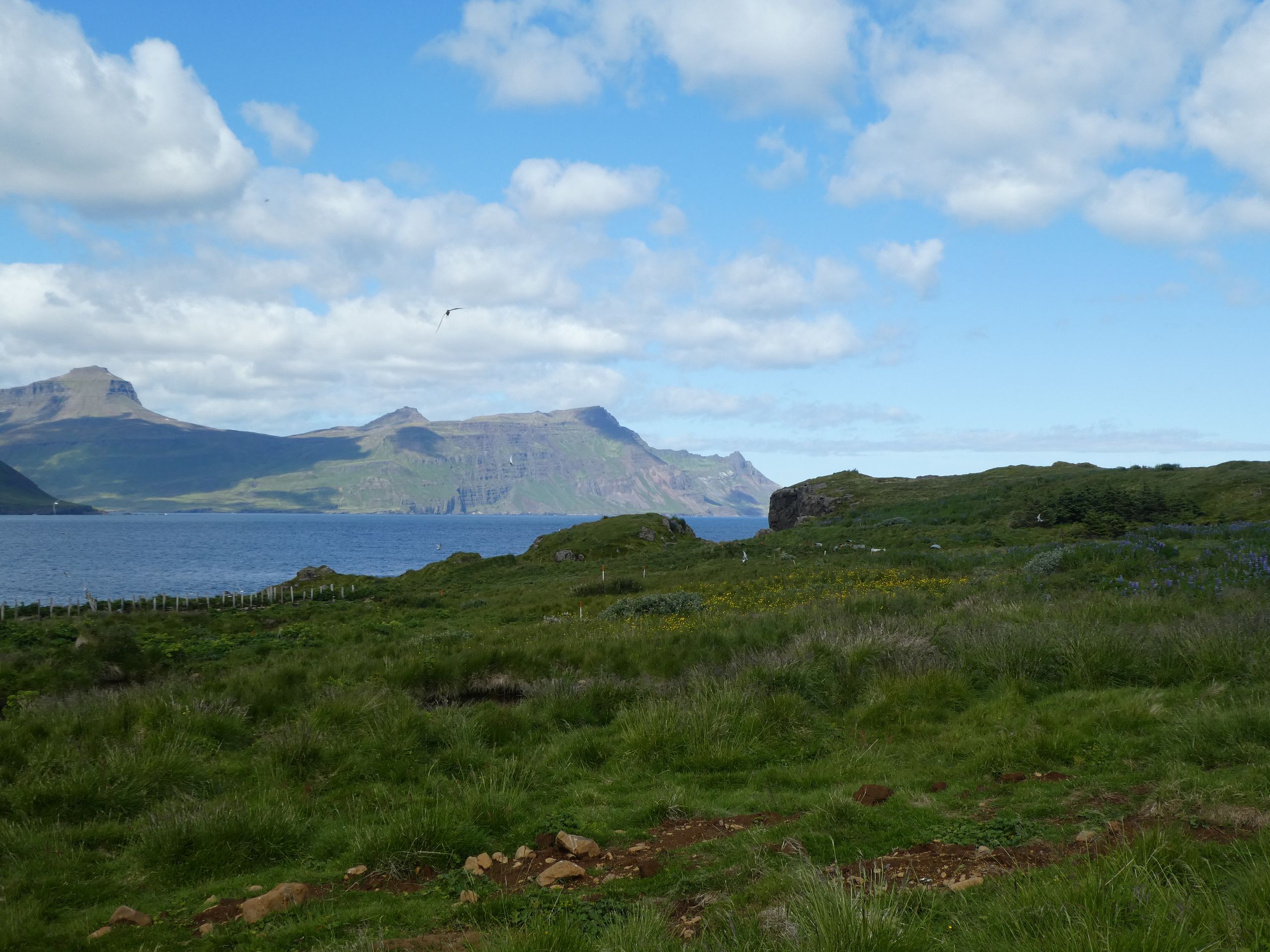
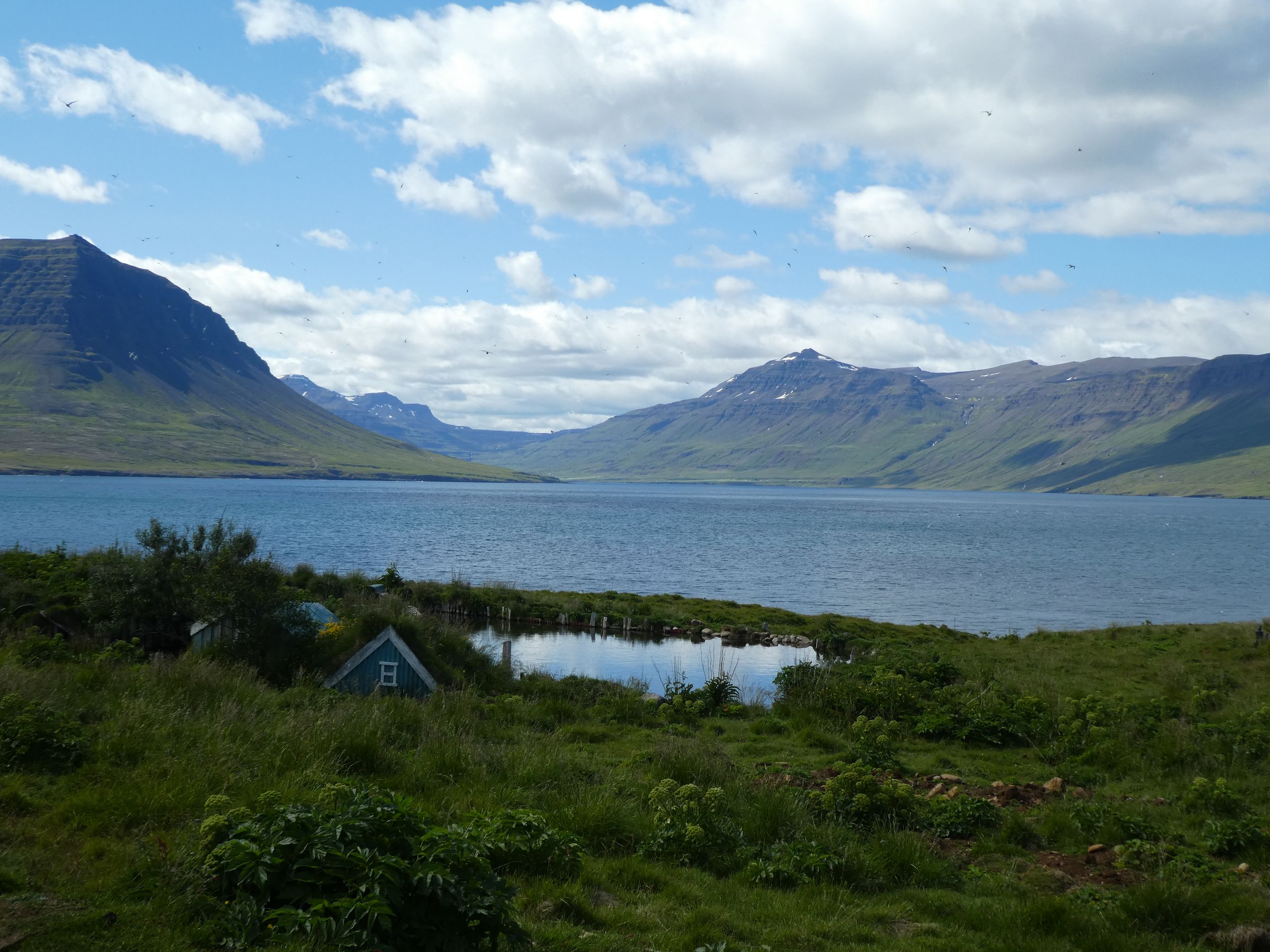
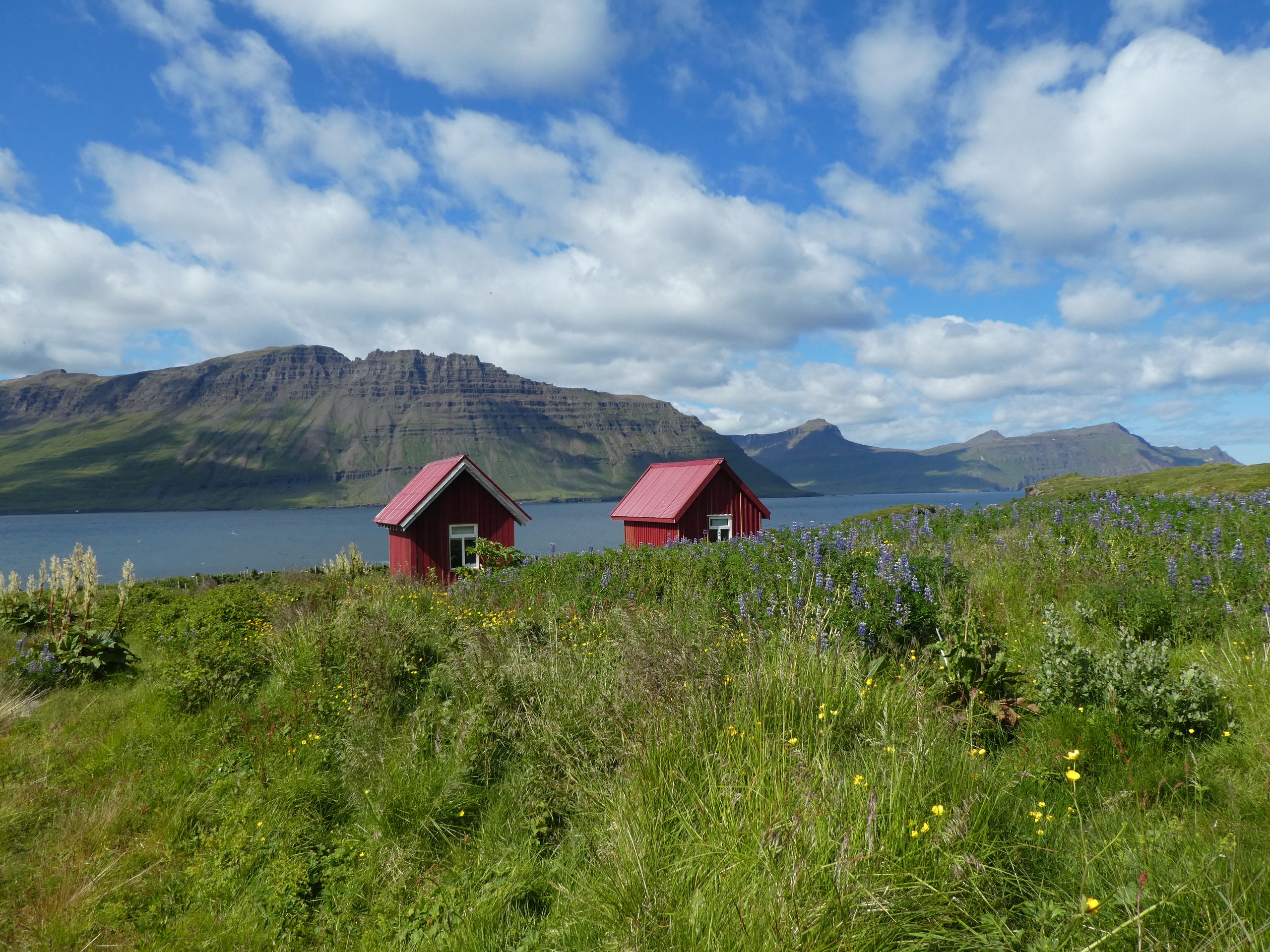
In the afternoon, we had booked a trip to the Skalanes Nature Reserve.
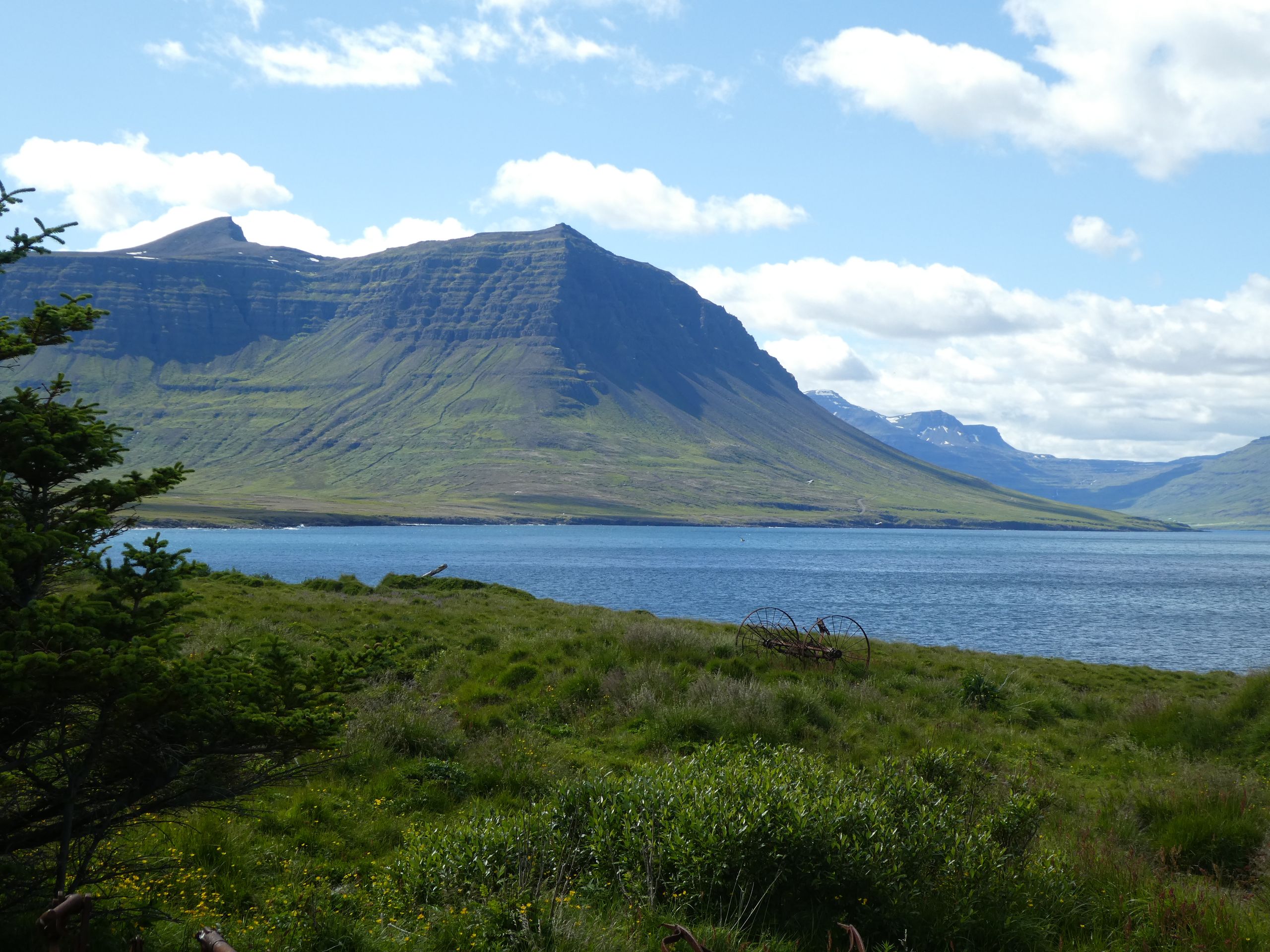
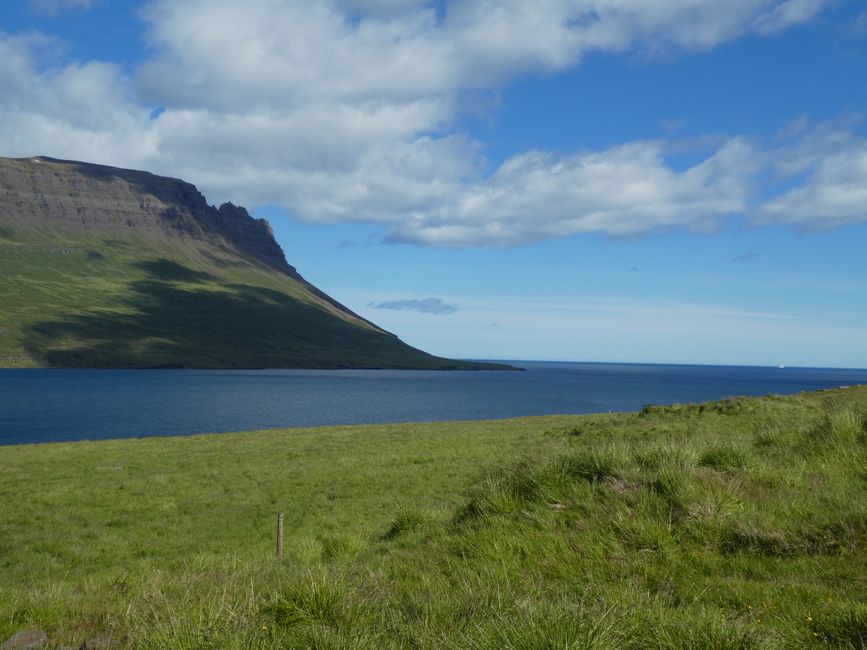
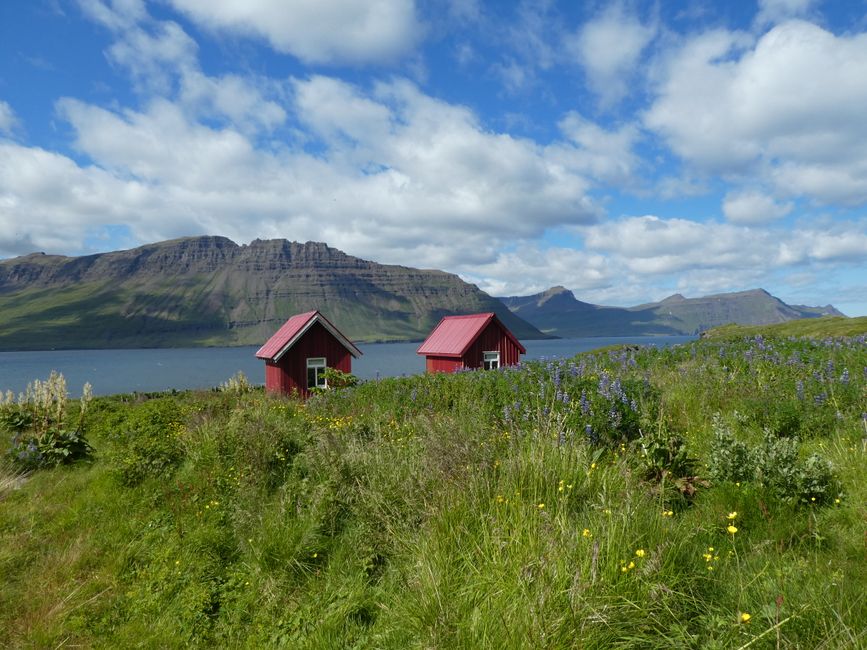
View at Thorarinsstadhir
For the journey, we boarded a four-wheel-drive bus, which took us safely over the gravel roads and through three rivers we had to cross.
View at Thorarinsstadhir
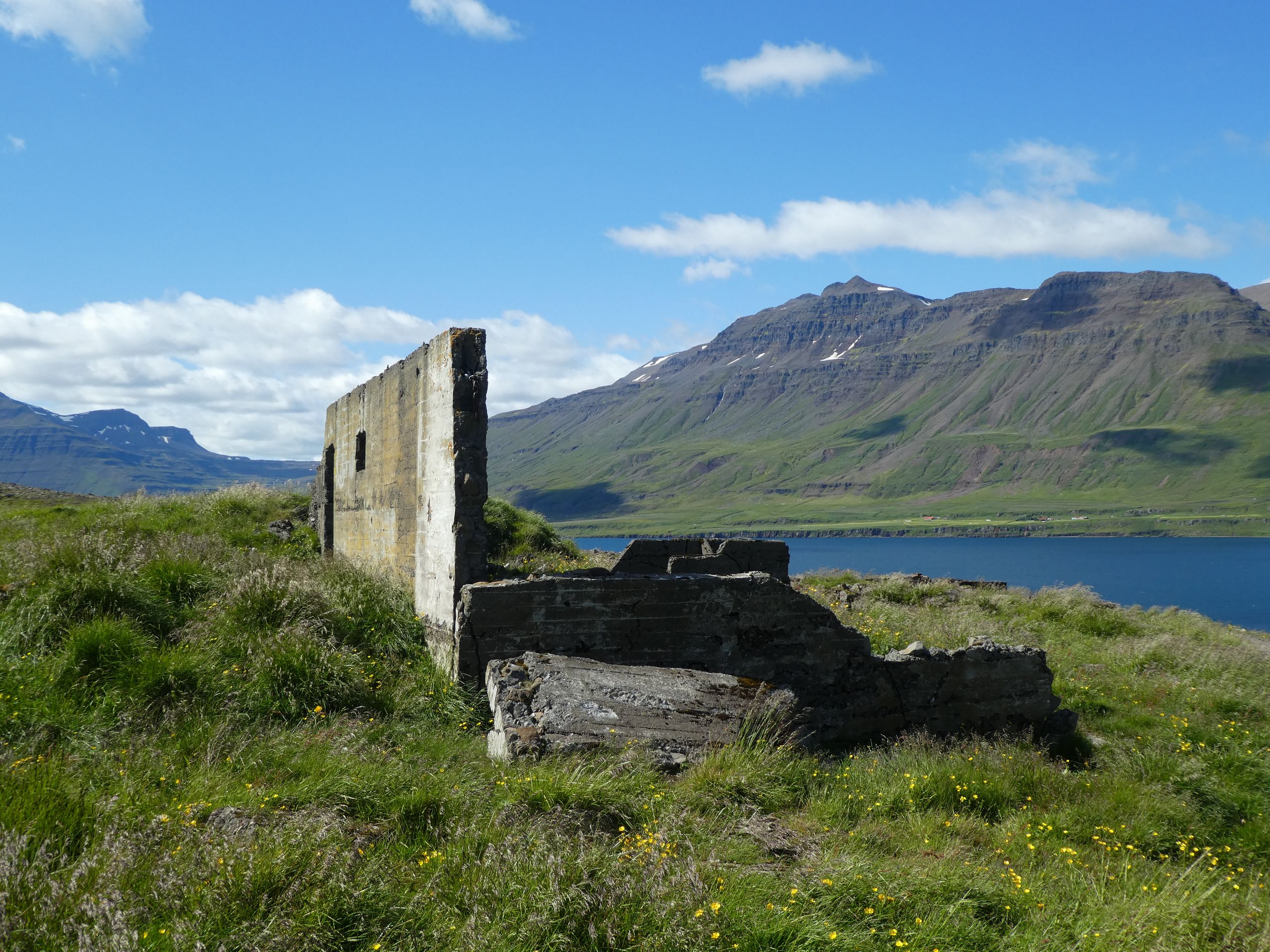
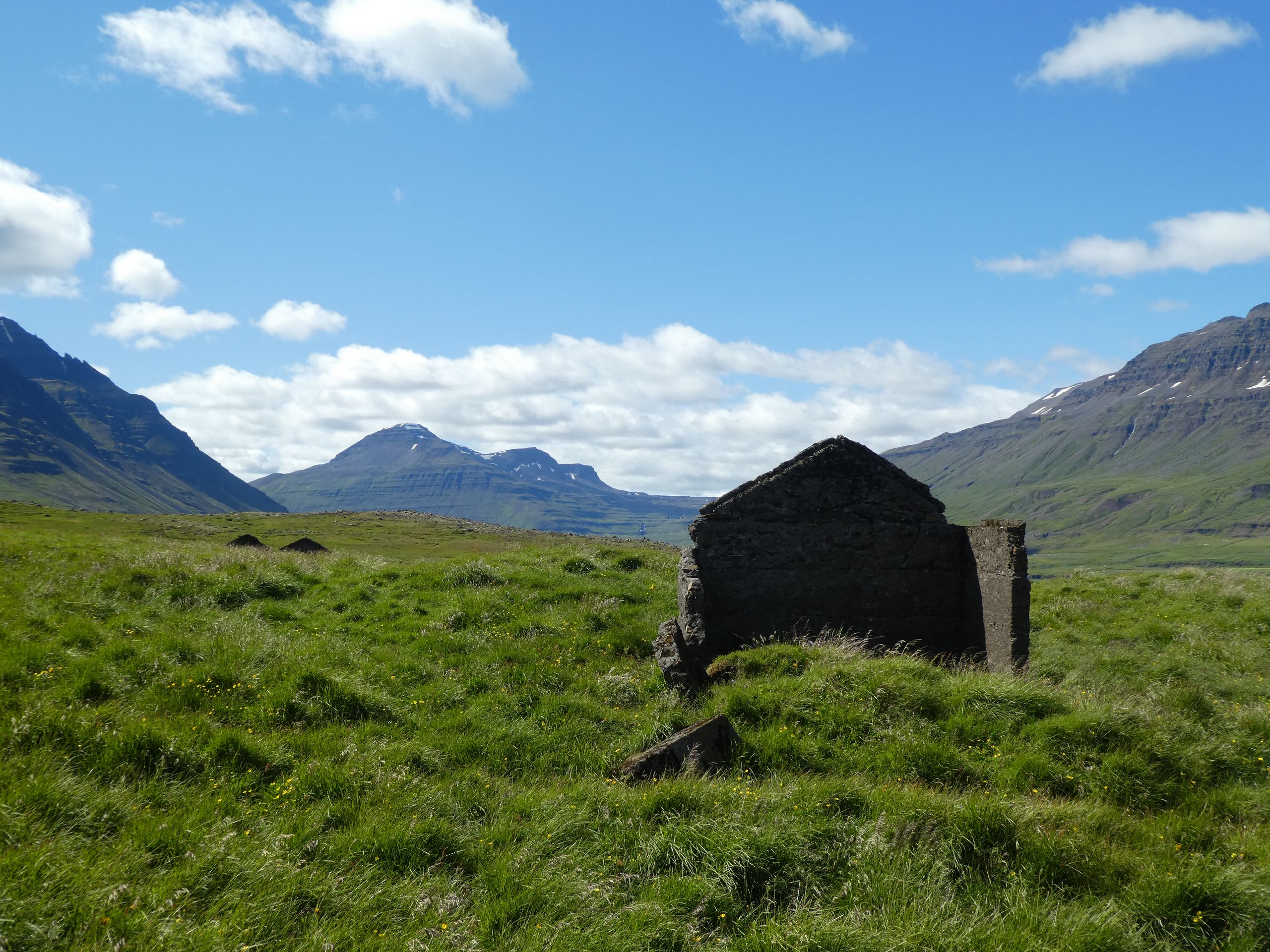
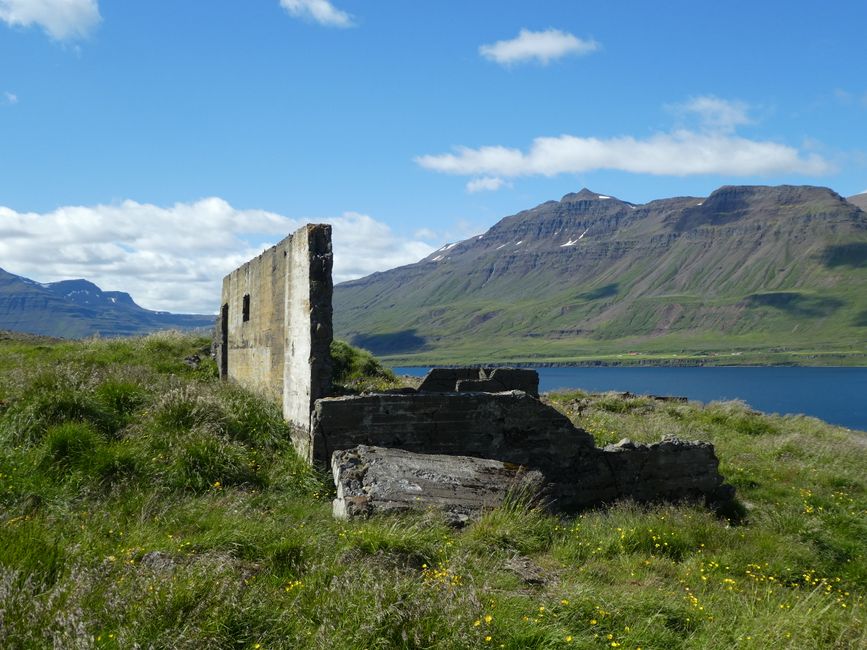
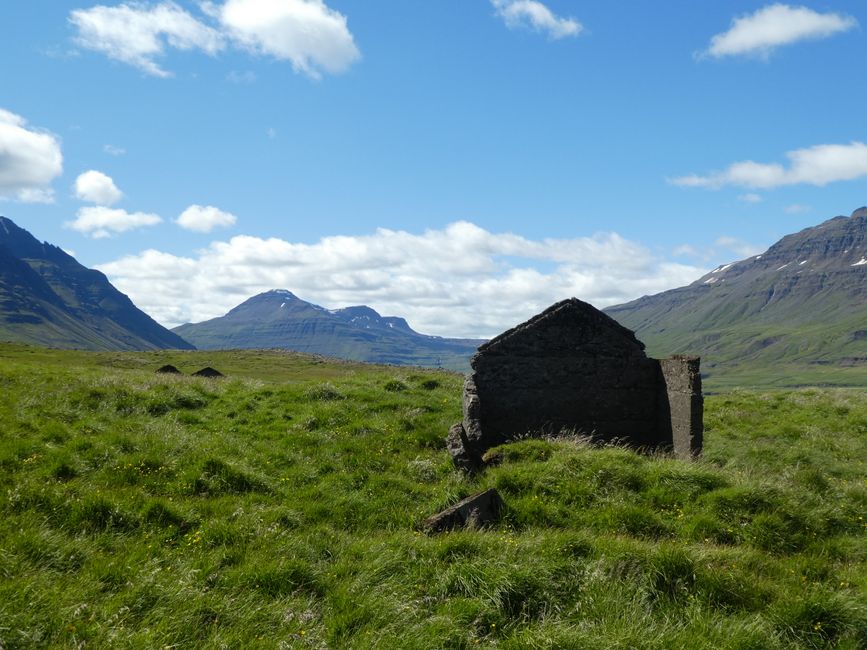
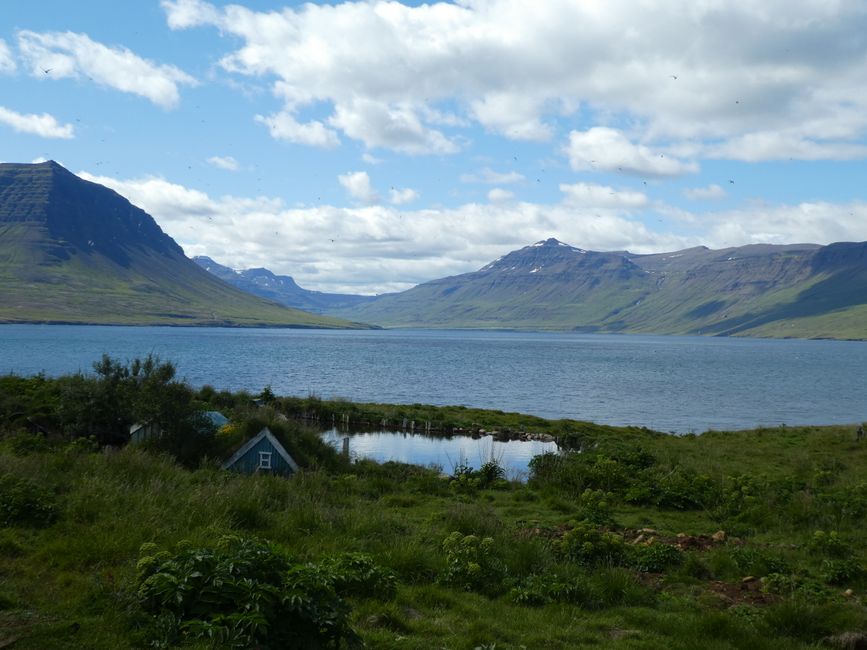
First, we stopped at the old farm Thorarinsstadhir, which is now abandoned.
View at Thorarinsstadhir
Here, you can still see the foundations of an old church that the inhabitants had built out of the rare material of wood on Iceland.
Skalanes Nature Reserve
When the people settled in another location, they simply took their church with them and transported it over the water to present-day Seydisfjördur. However, the building burned down, and later the blue church was constructed there.
Skalanes Nature Reserve
In the Skalanes Nature Reserve, there is a house where research is conducted and students from all over the world come for their studies.
Skalanes Nature Reserve
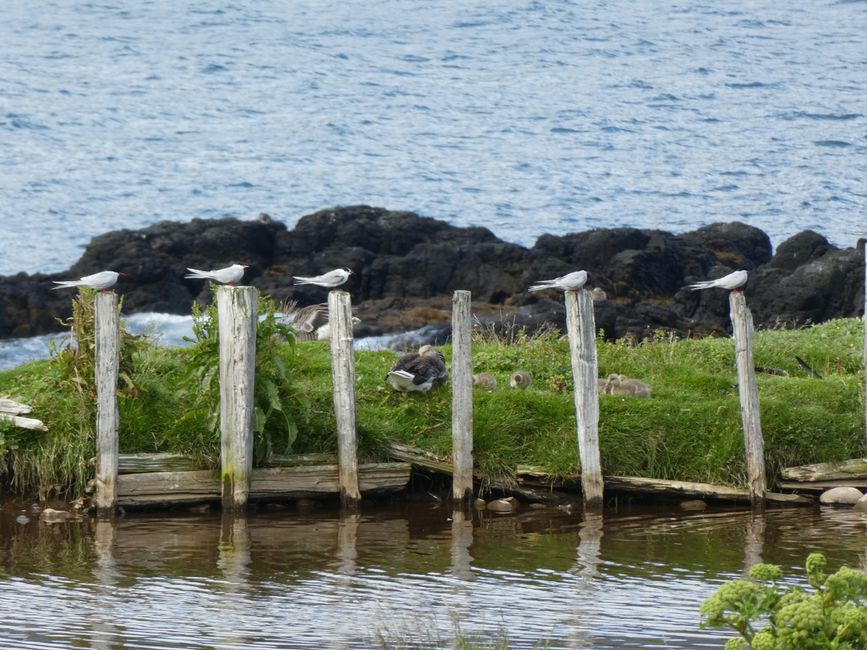
There is also an eider duck colony, from whose nests the very valuable down feathers of this species are harvested according to ancient tradition.
Skalanes Nature Reserve
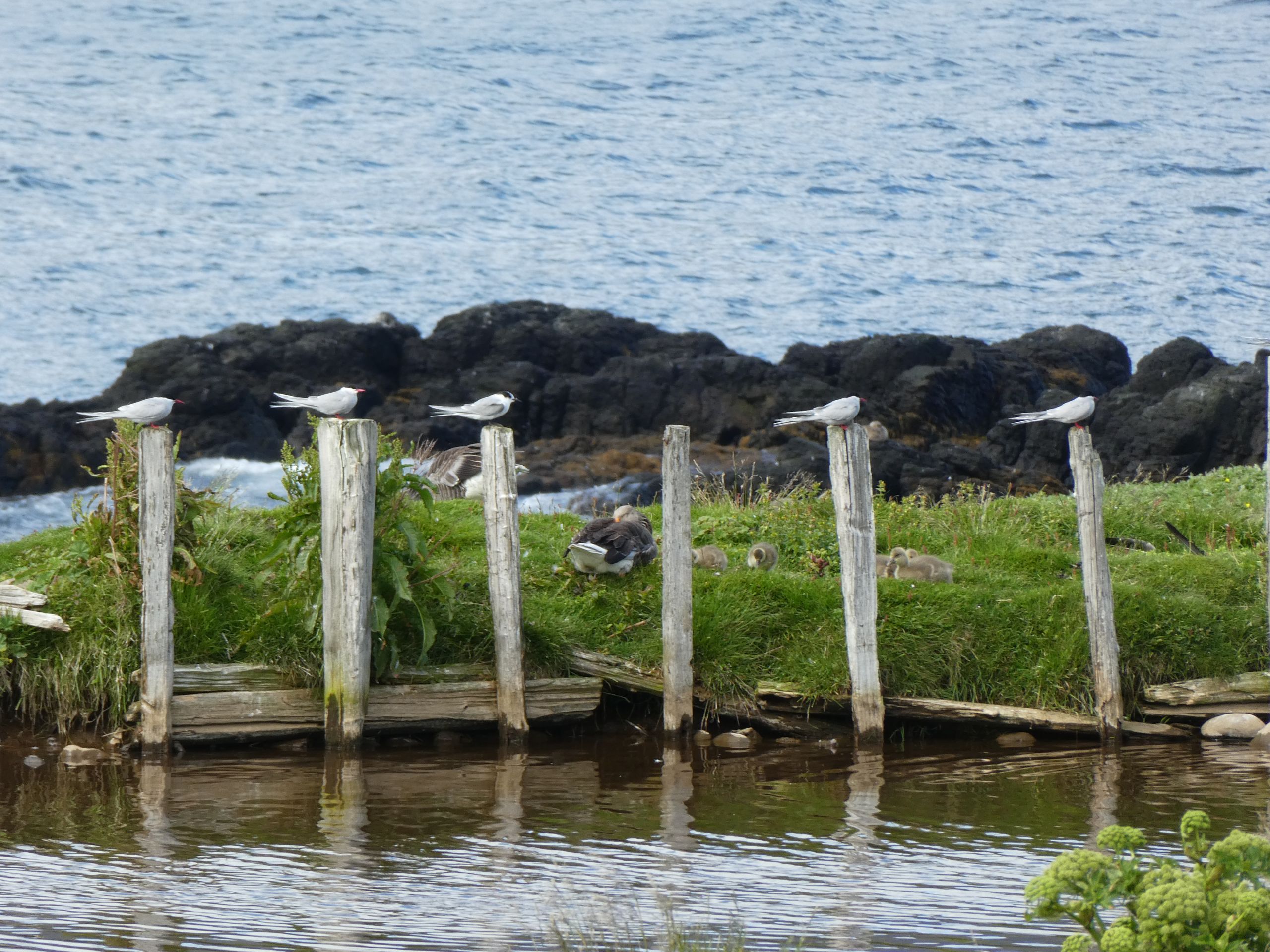
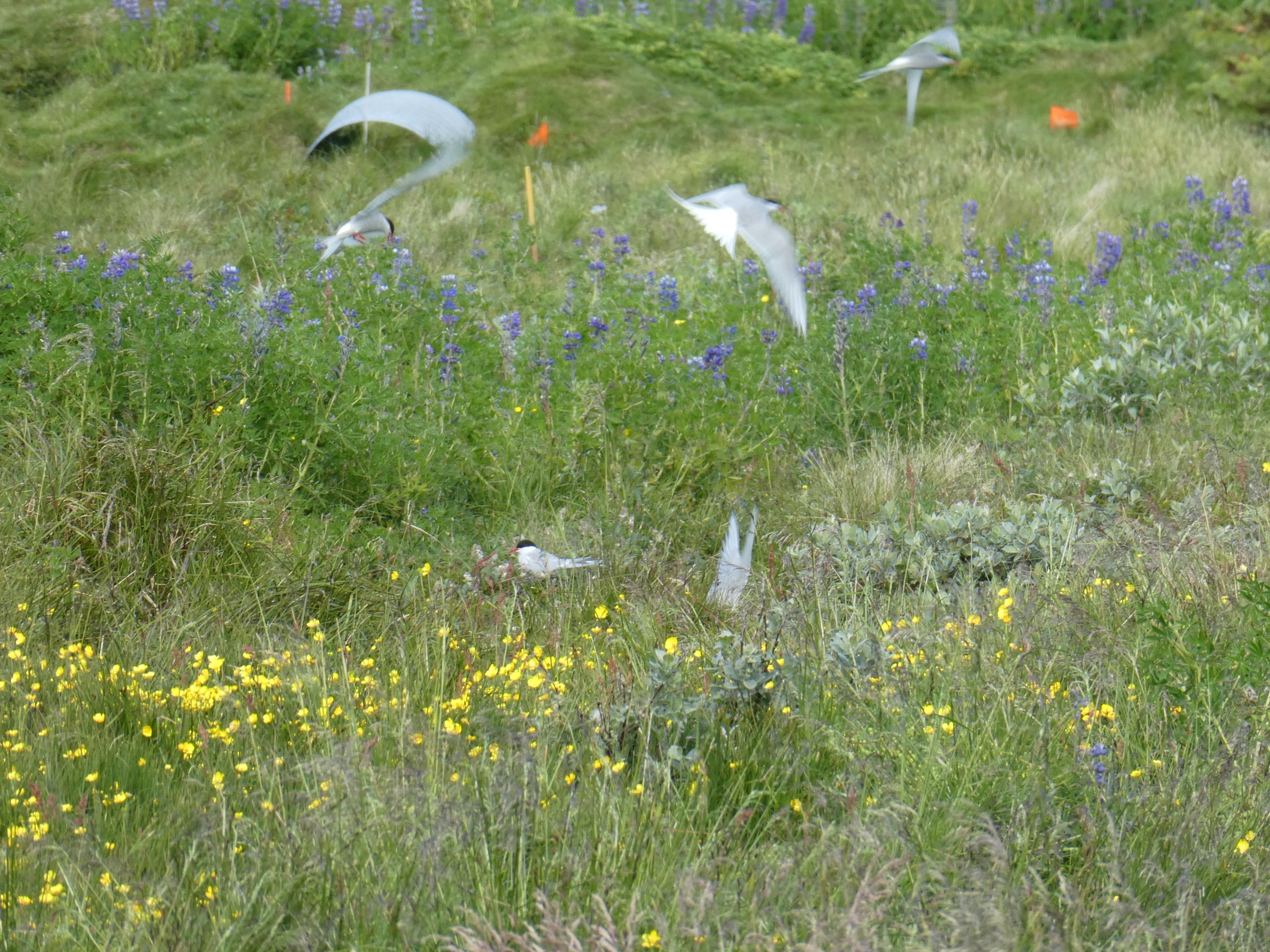
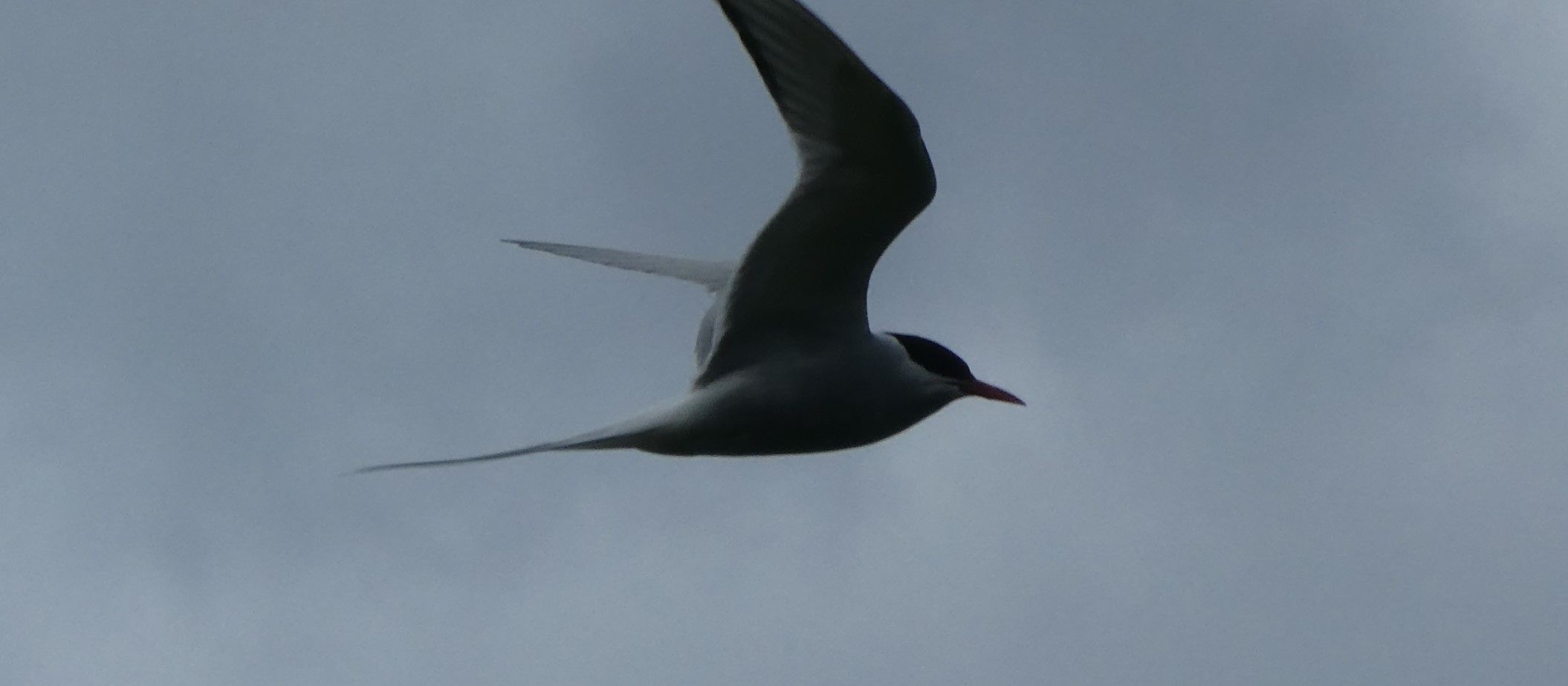
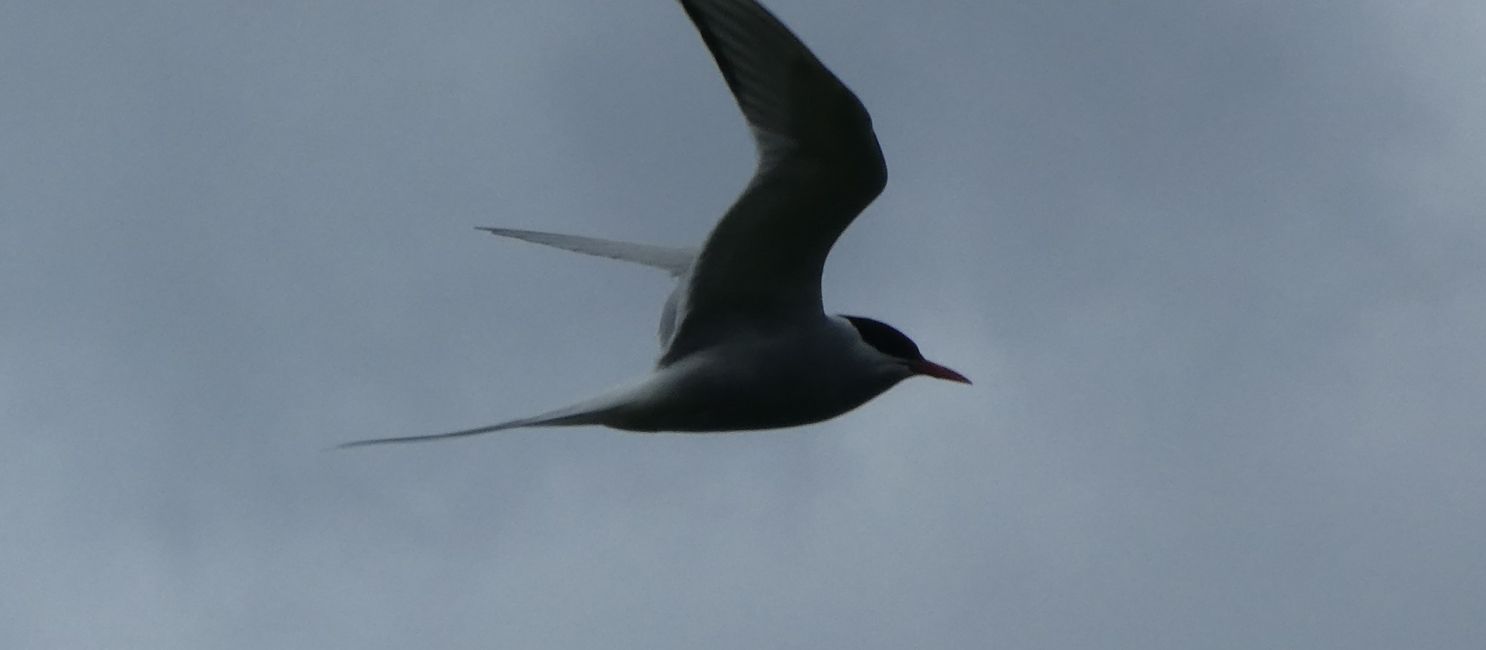
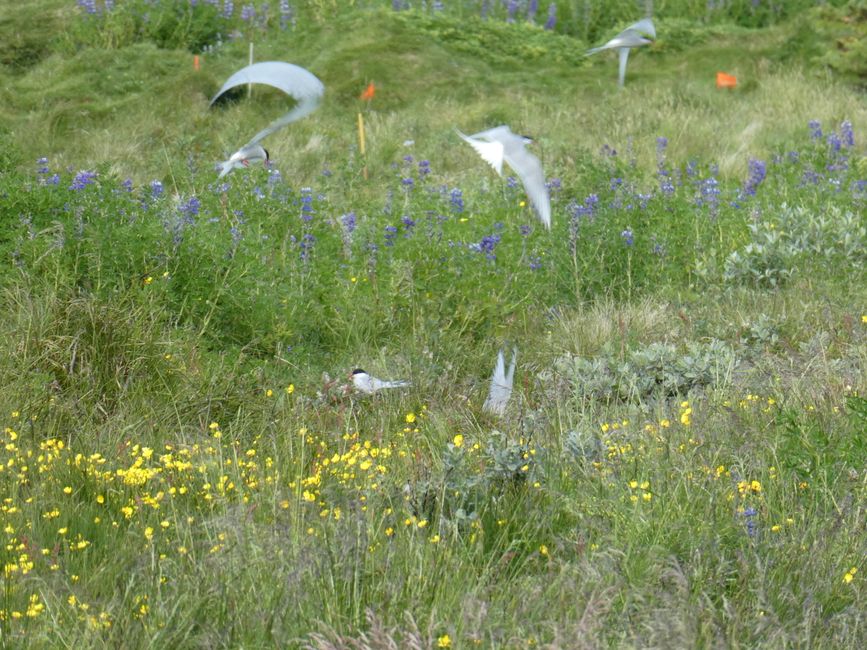
We were also greeted by numerous Arctic terns, which can be quite aggressive.
Arctic tern in Skalanes Nature Reserve
They always attack the highest point of a person, which is why we saw some visitors holding lupines over their heads to protect themselves.
Skalanes Nature Reserve
Alternatively, you can also make sure to walk next to someone who is taller than you.
Skalanes Nature Reserve
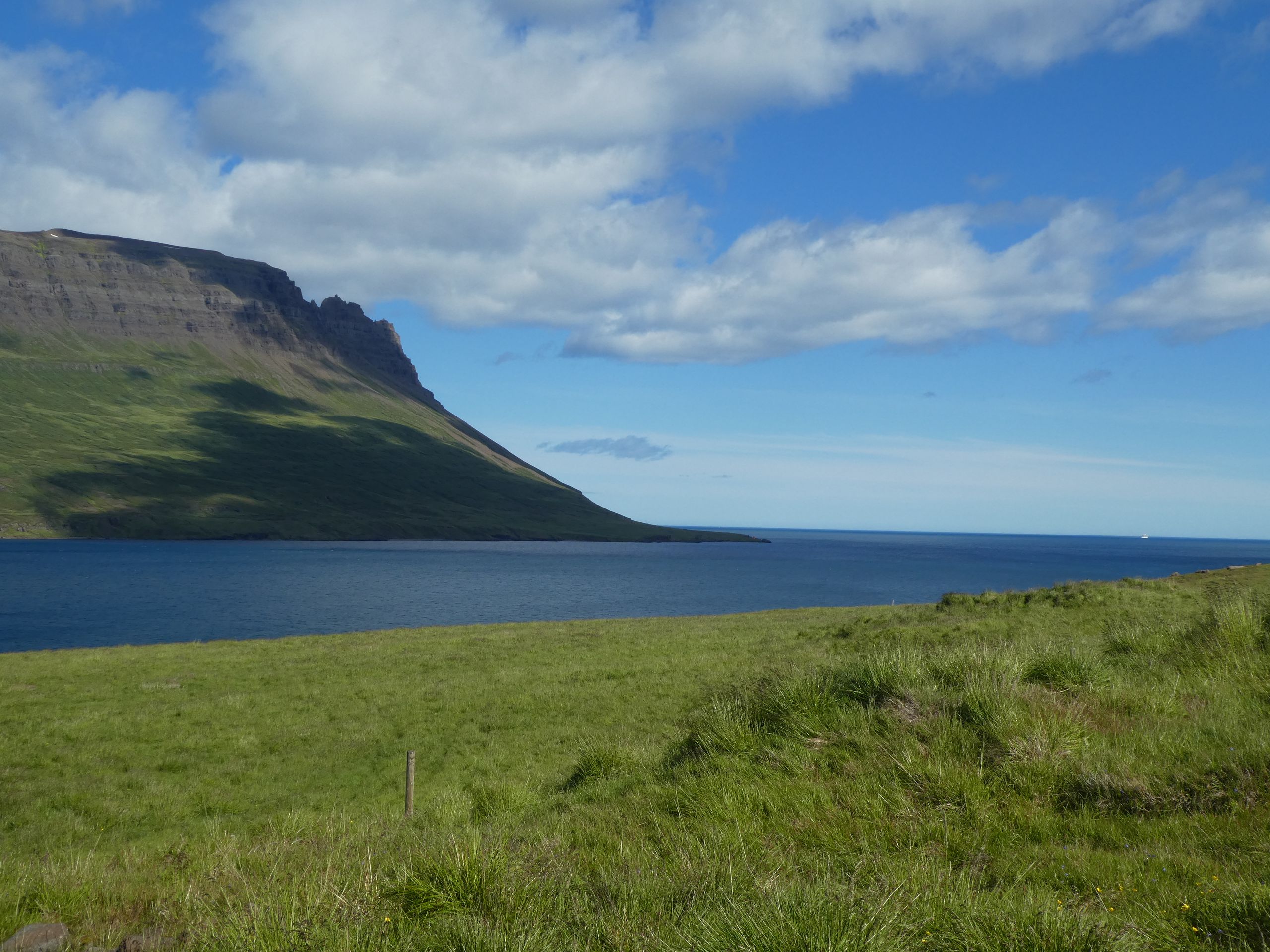
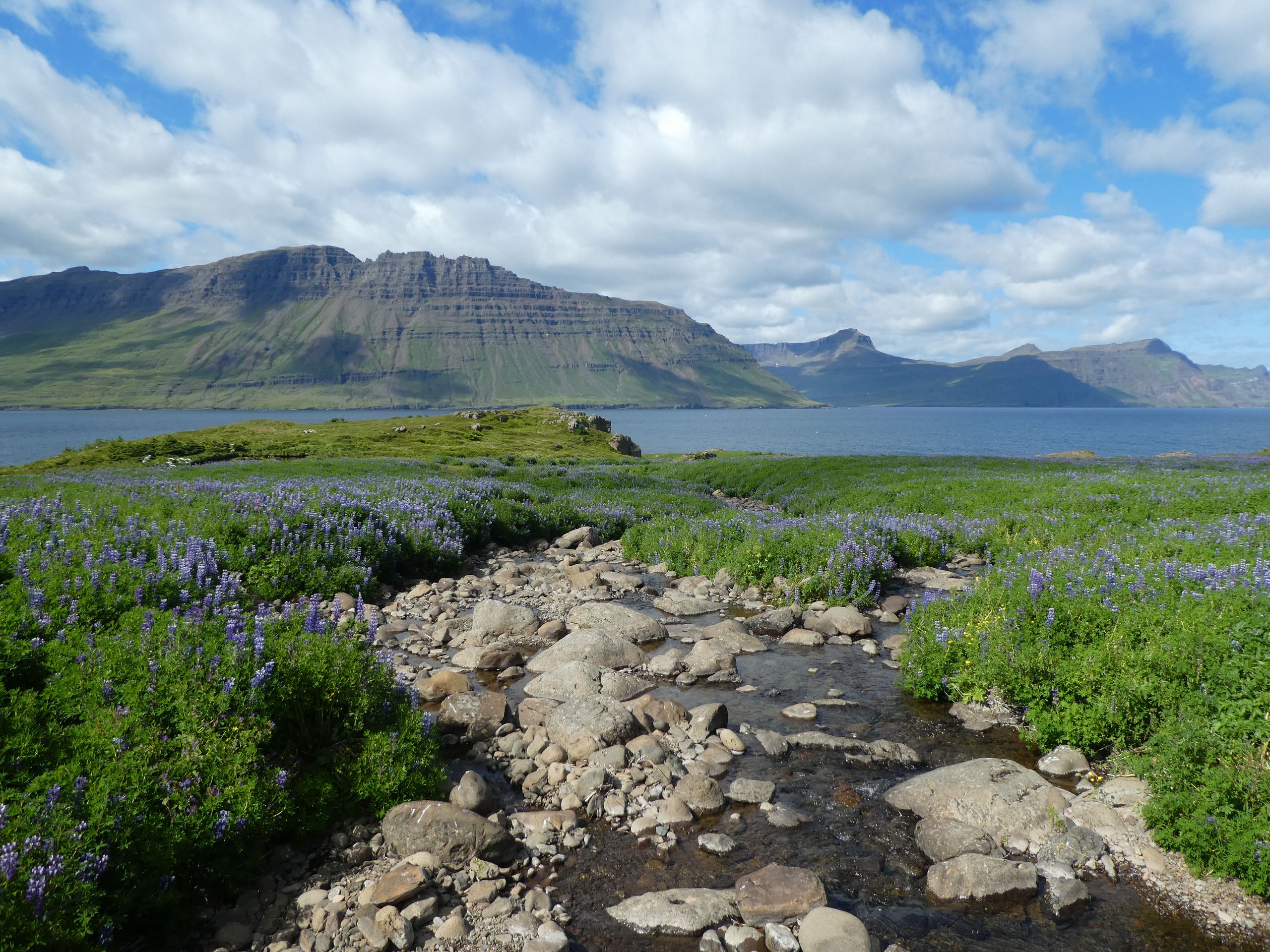
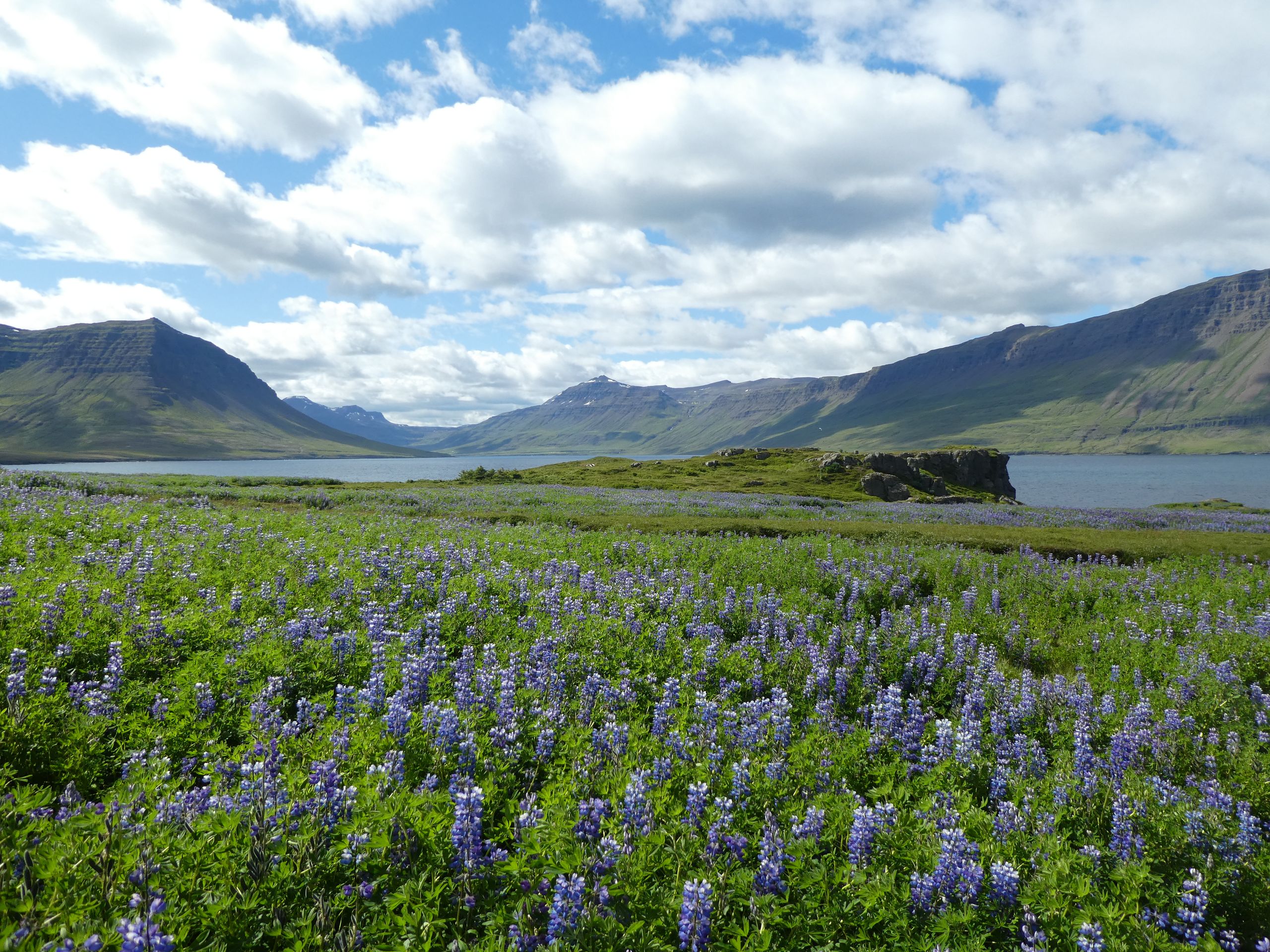
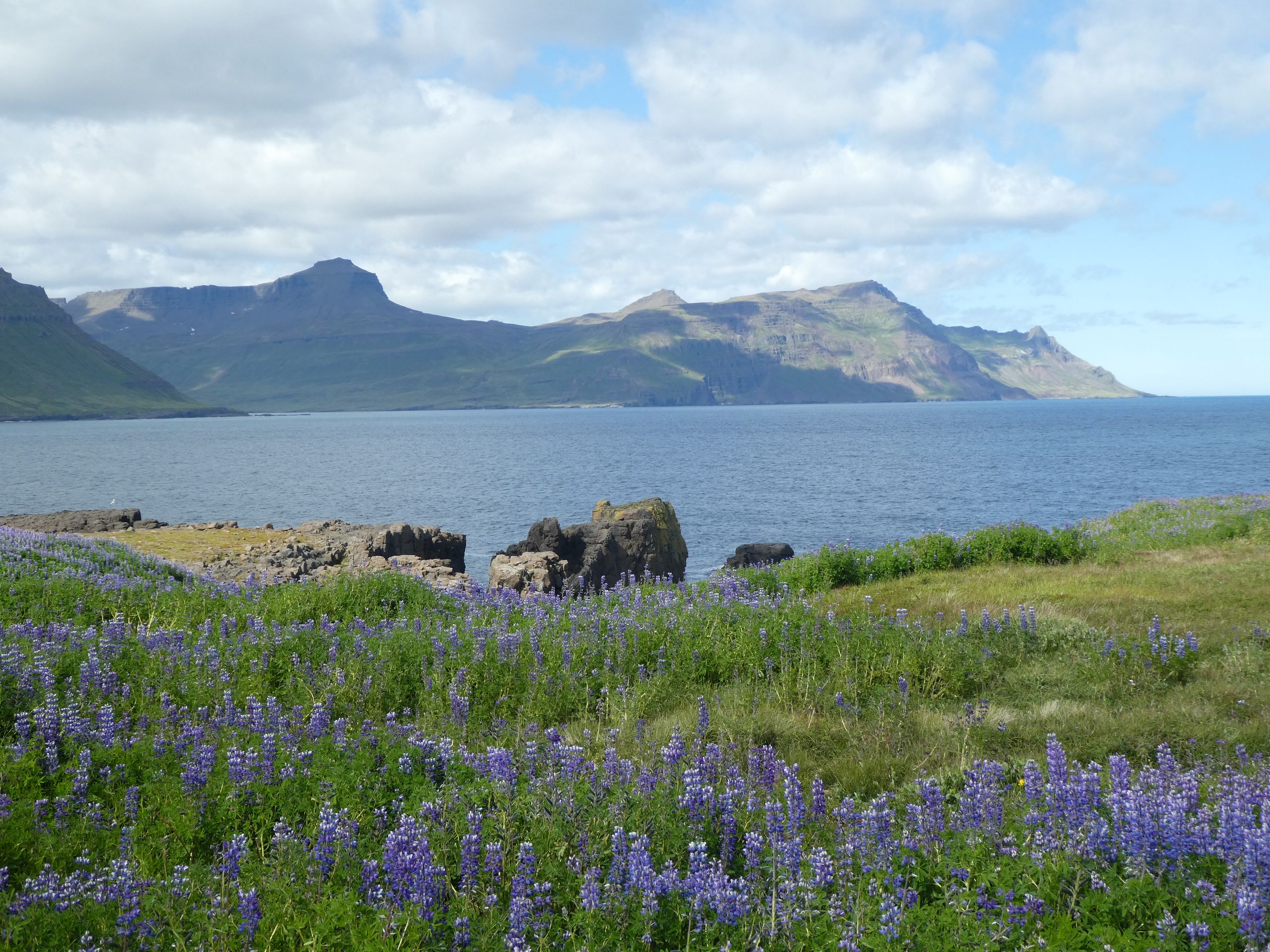
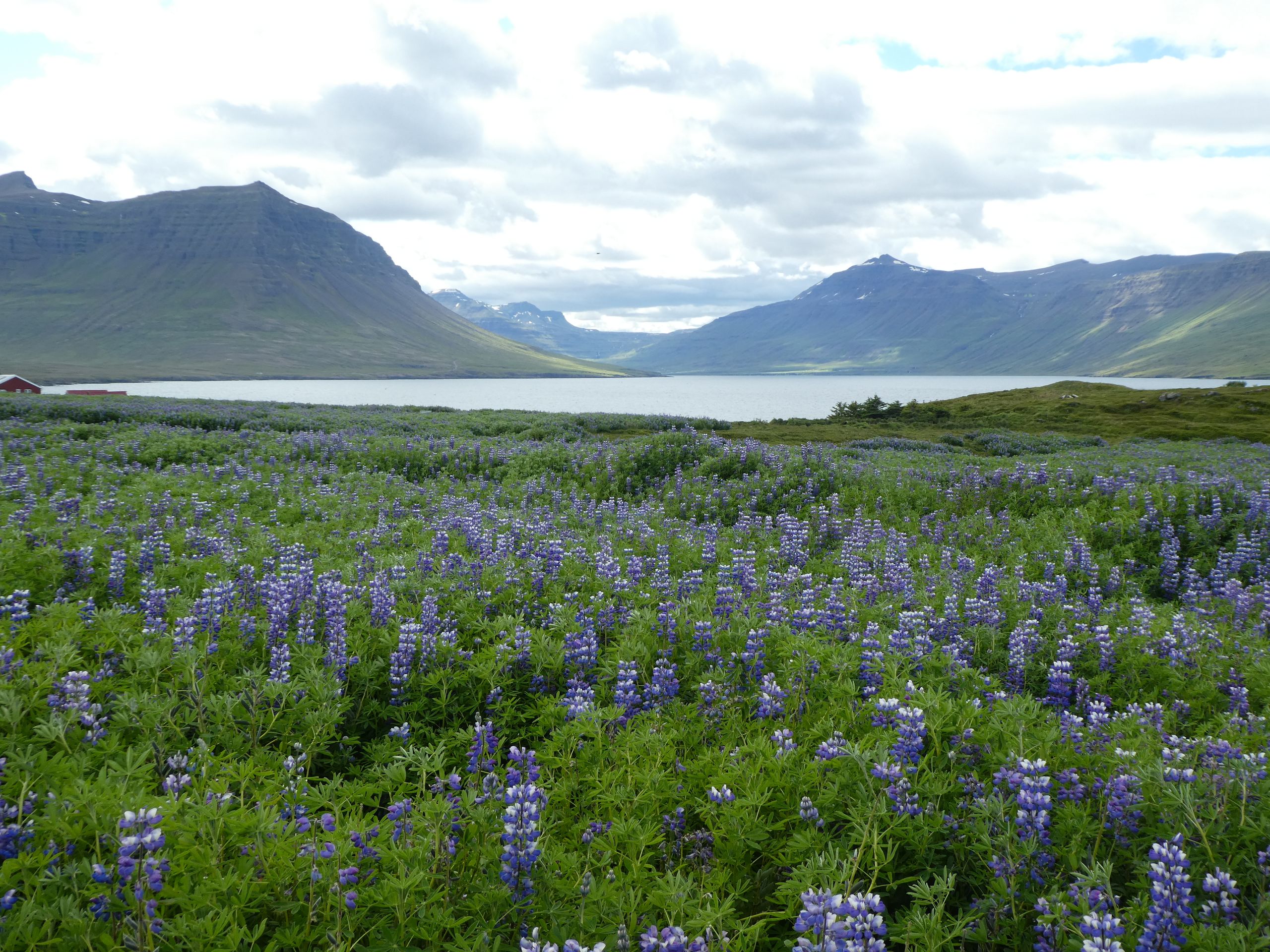
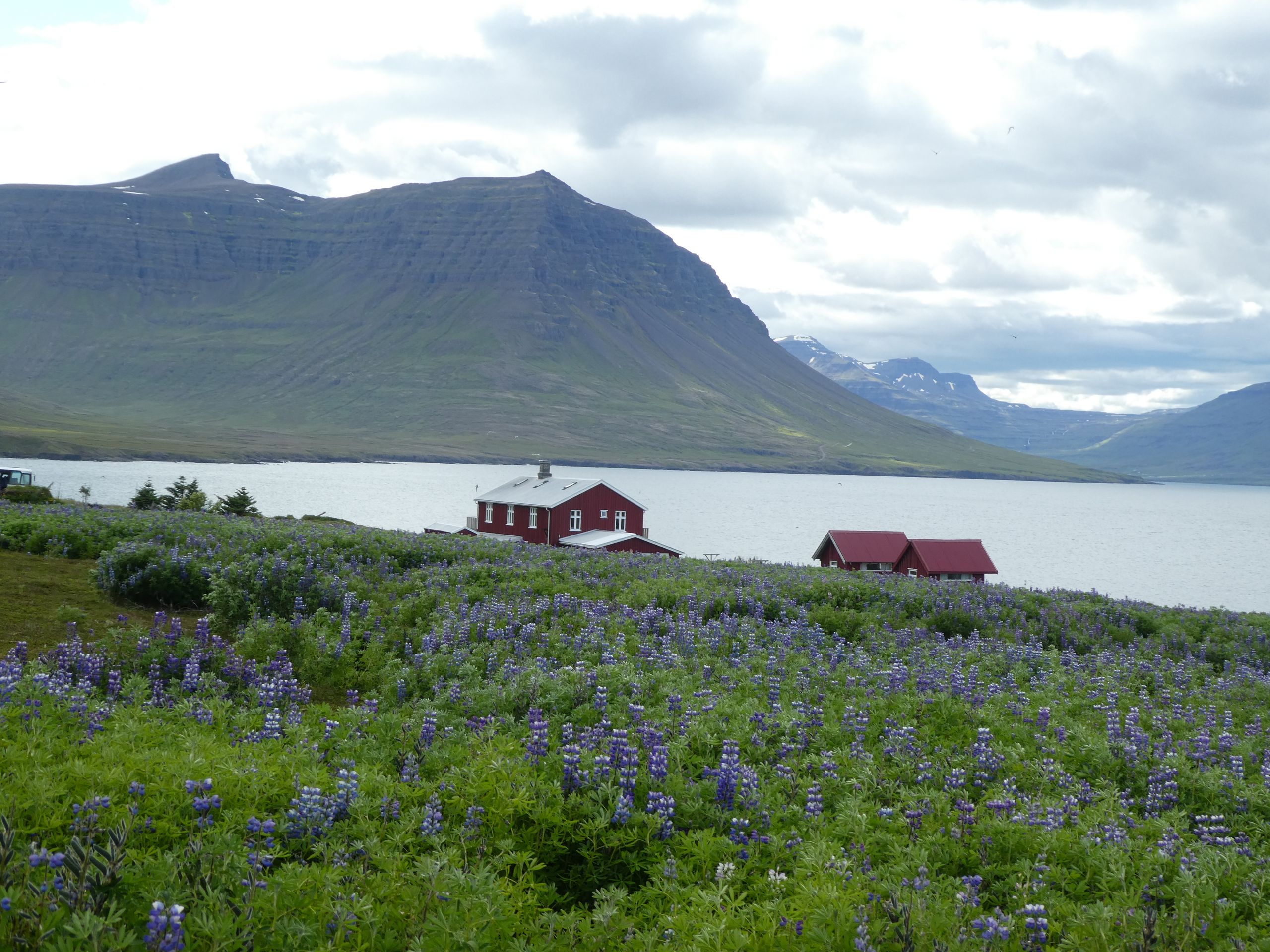
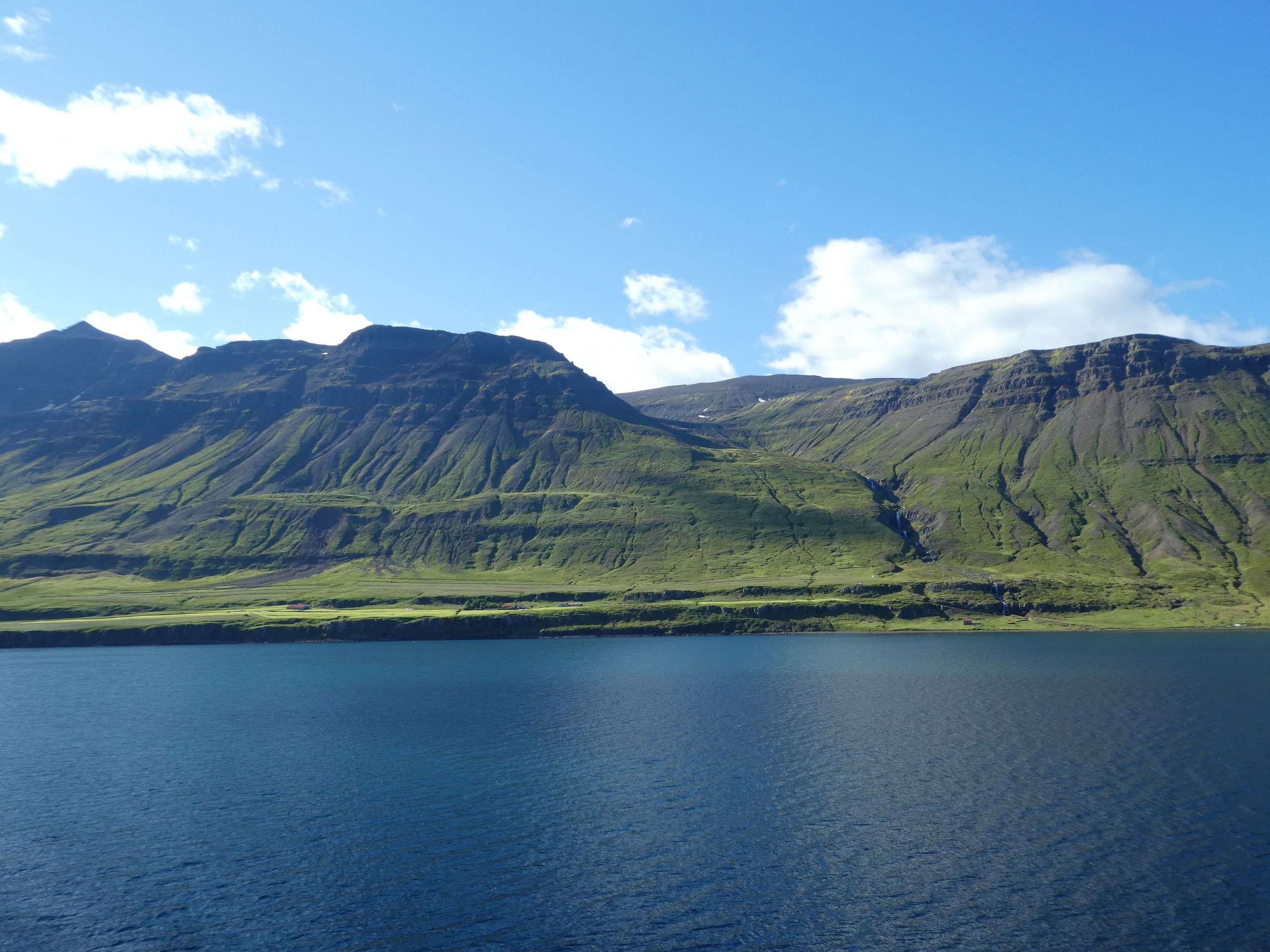
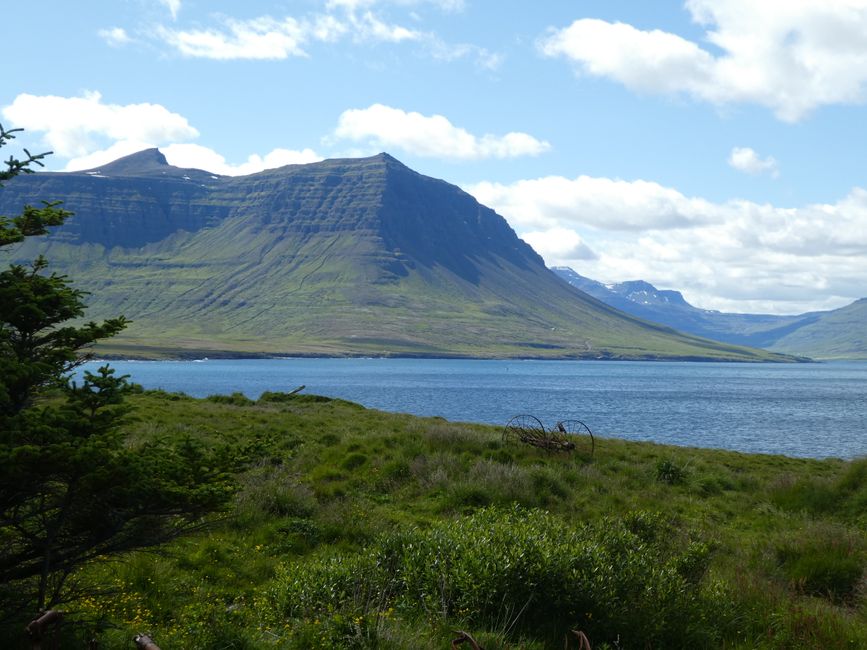
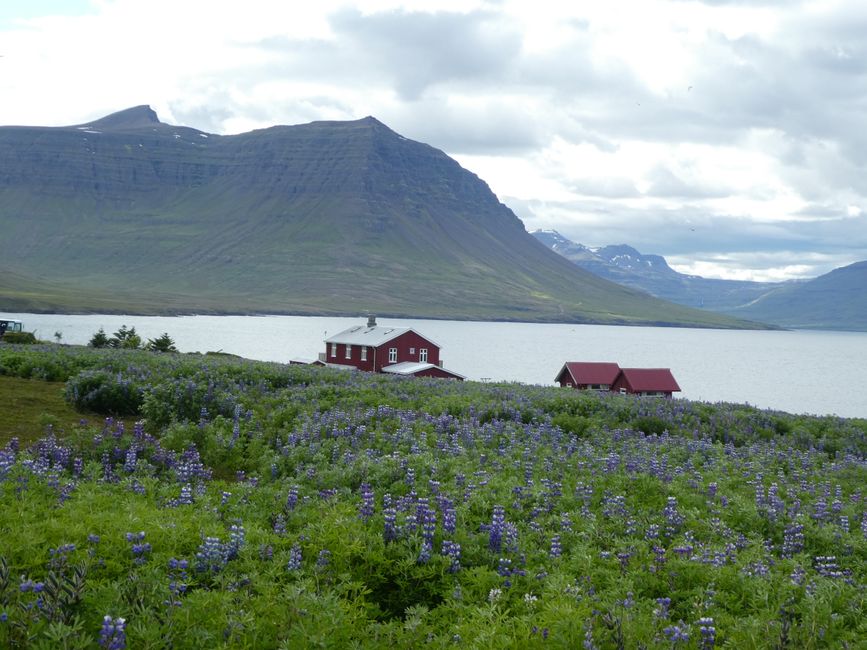
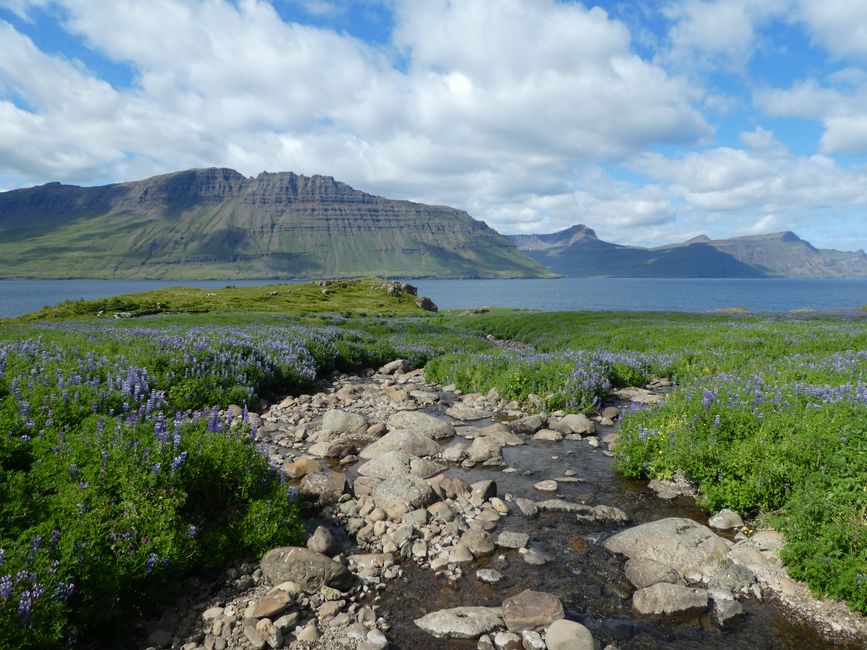
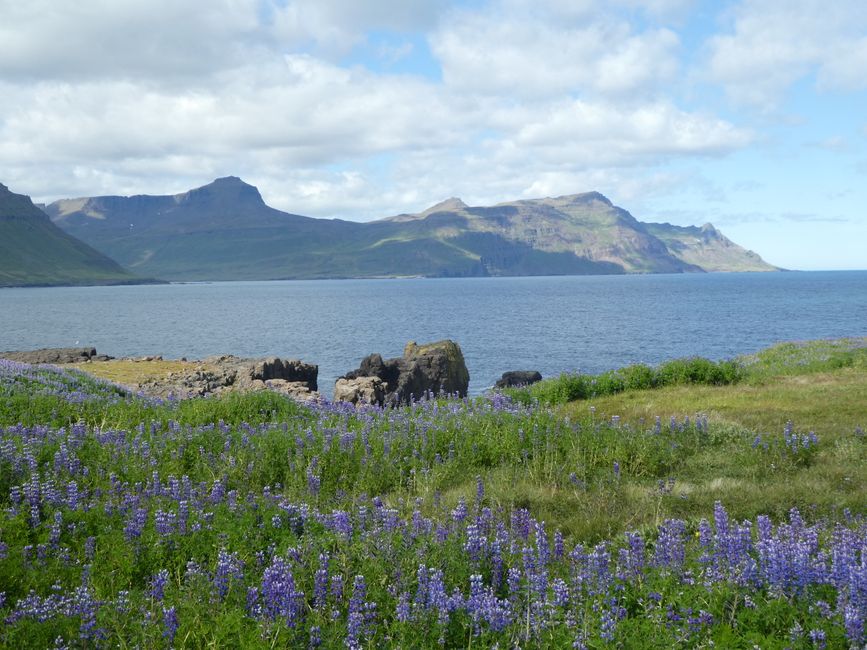
Our path led through a picturesque landscape with the fjord on one side and mountains on the other.
Skalanes Nature Reserve
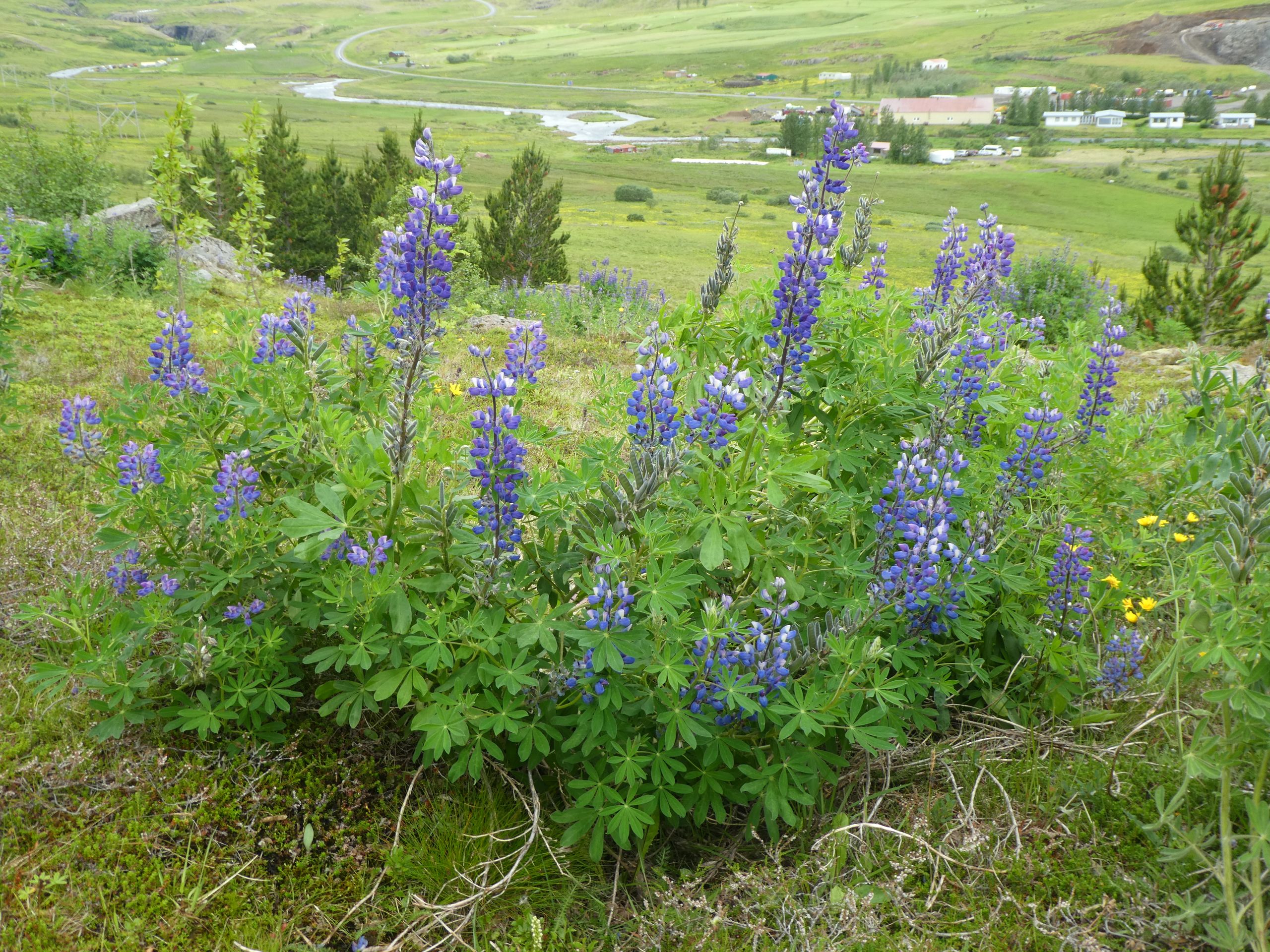
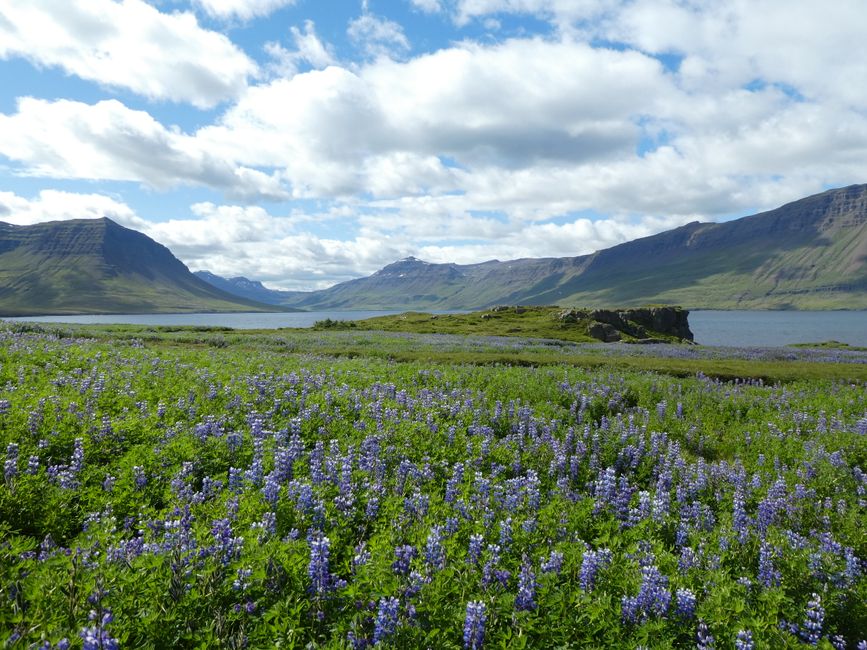
The lupines were especially beautiful to look at, as they grow everywhere here. They were introduced to Iceland in the 1970s to prevent erosion, which causes a loss of landmass every year.
Skalanes Nature Reserve
The lupines originate from Alaska and also grow on very nutrient-poor soil.
Skalanes Nature Reserve
They feel very comfortable in Iceland, maybe even a bit too much: They have spread everywhere and are displacing native species.
Skalanes Nature Reserve
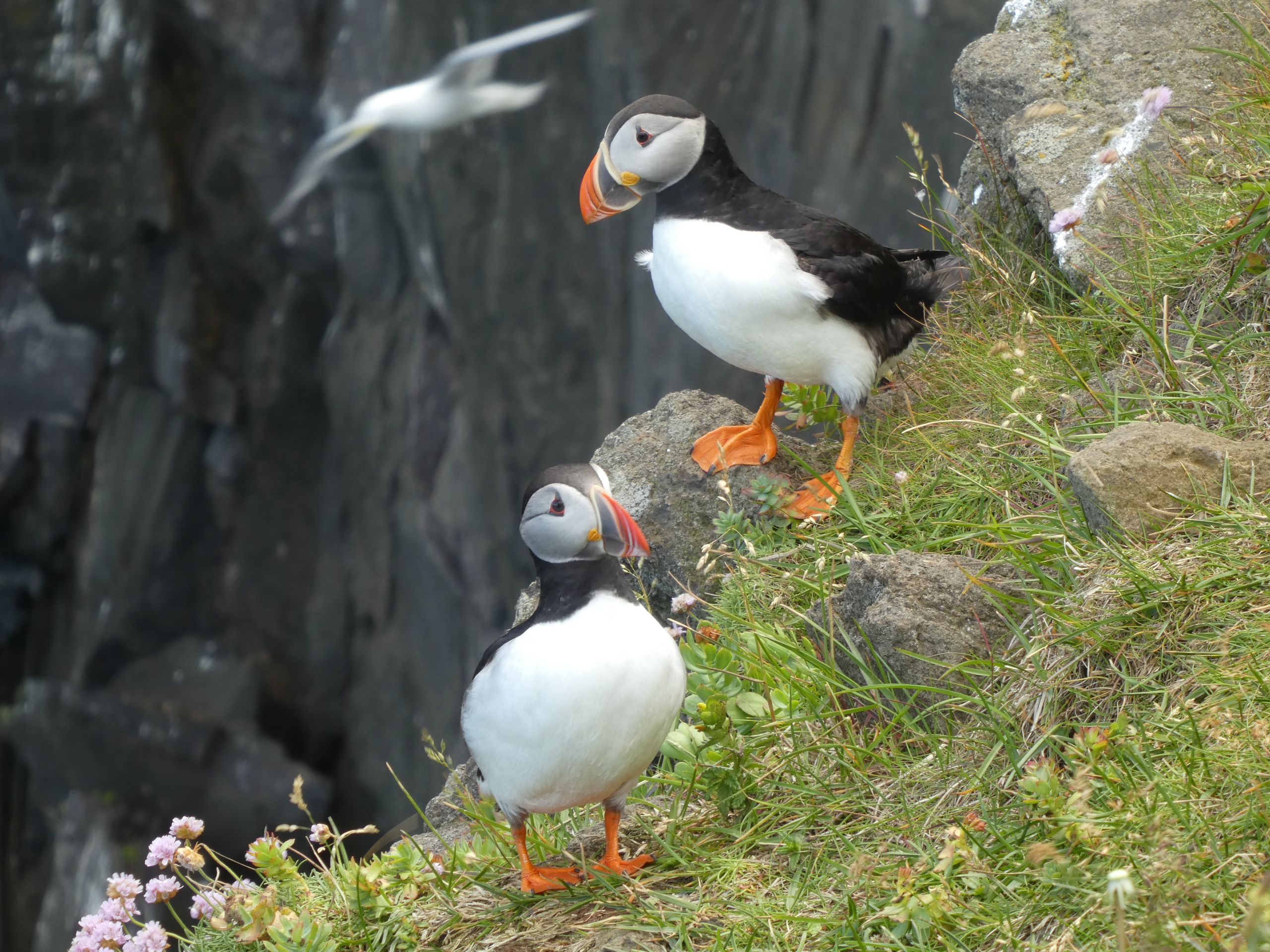
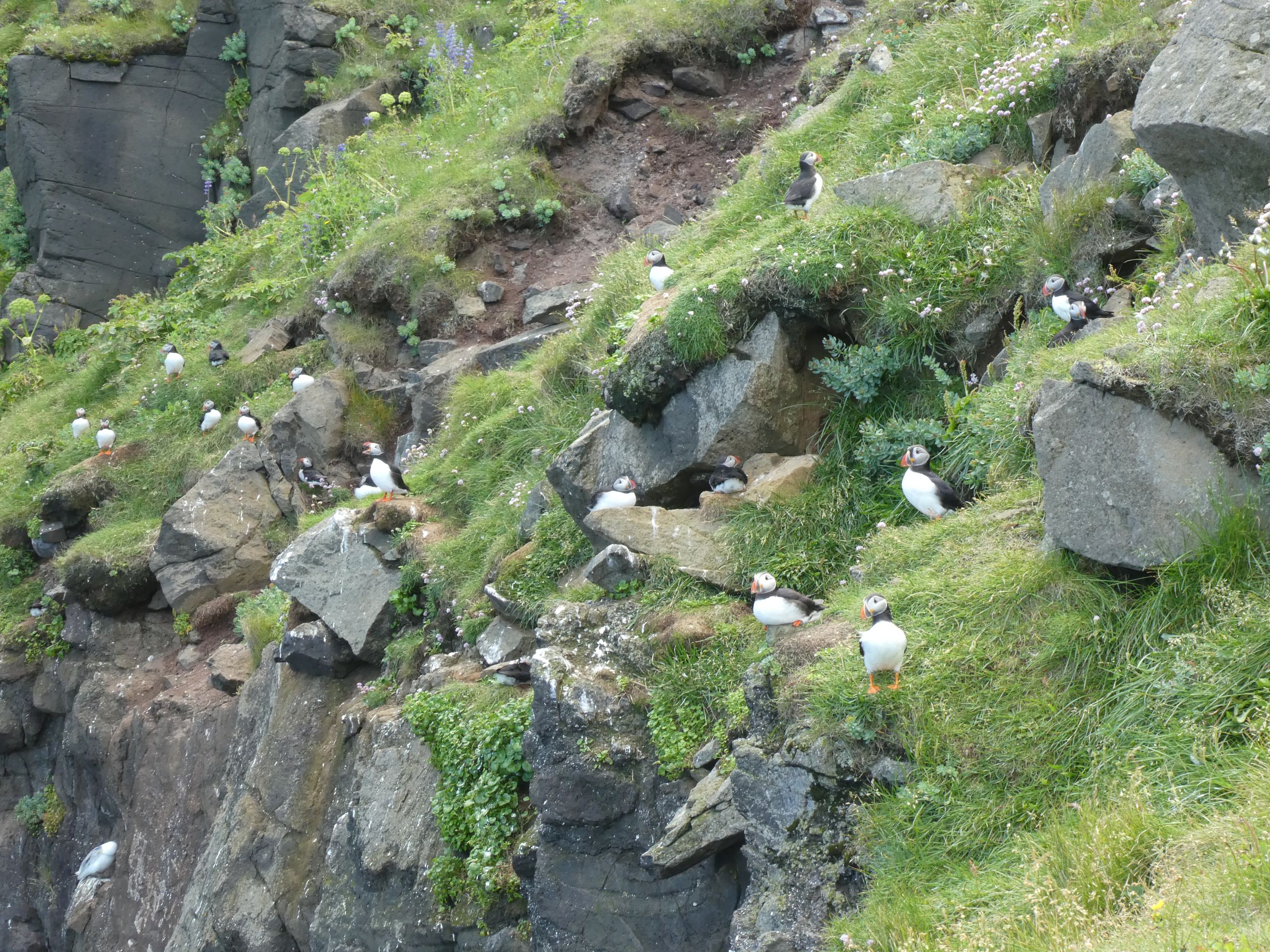
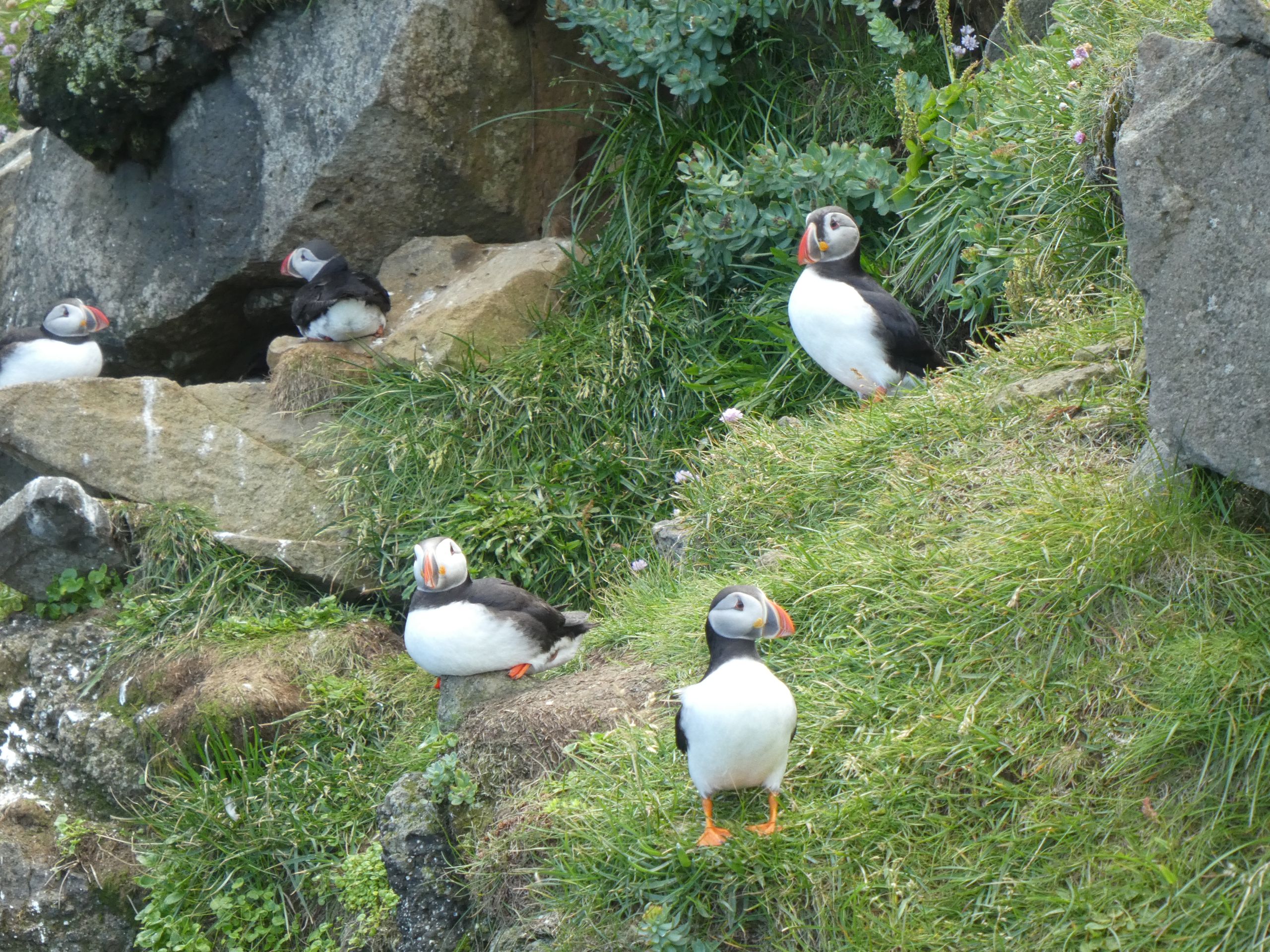
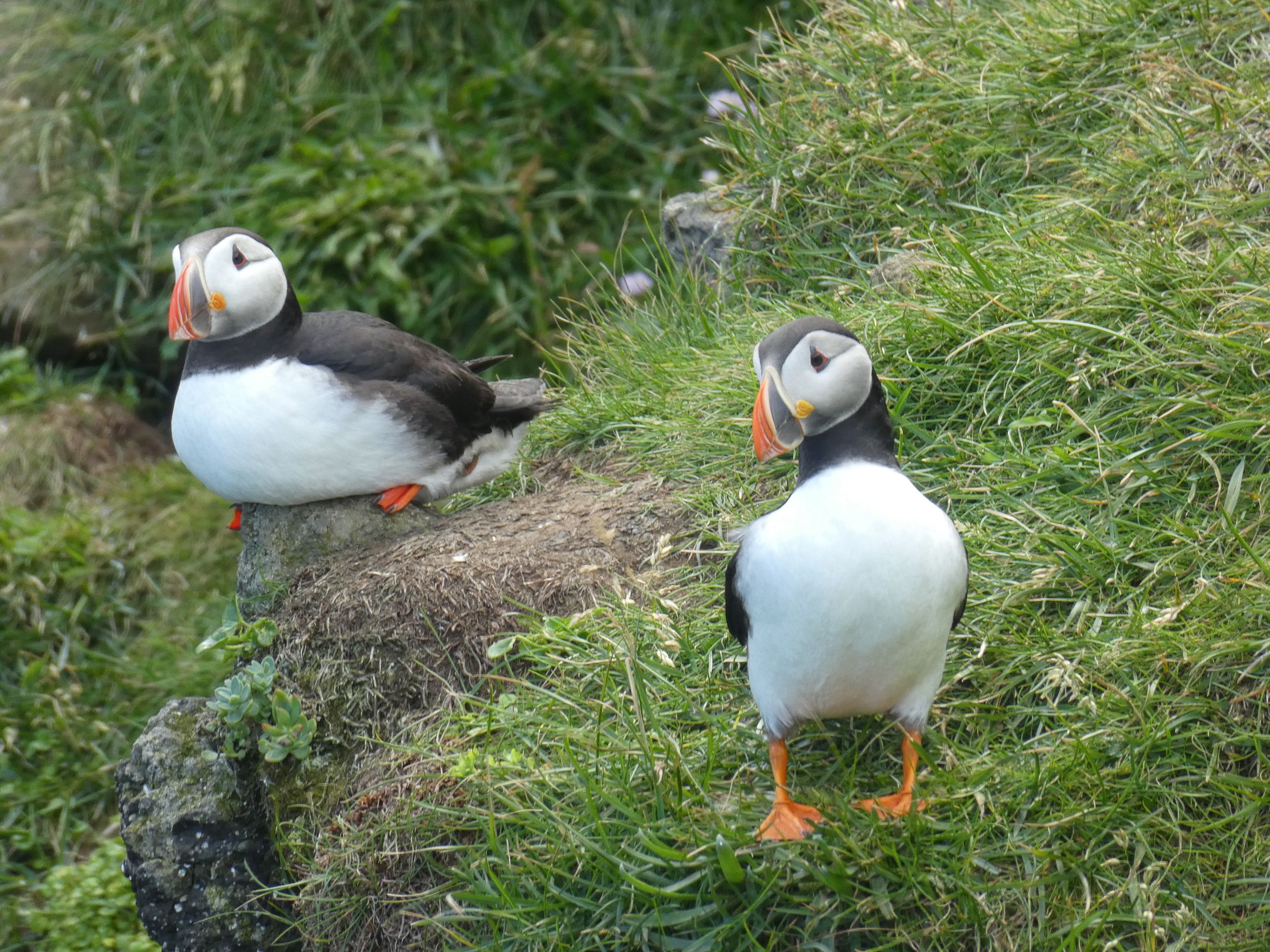
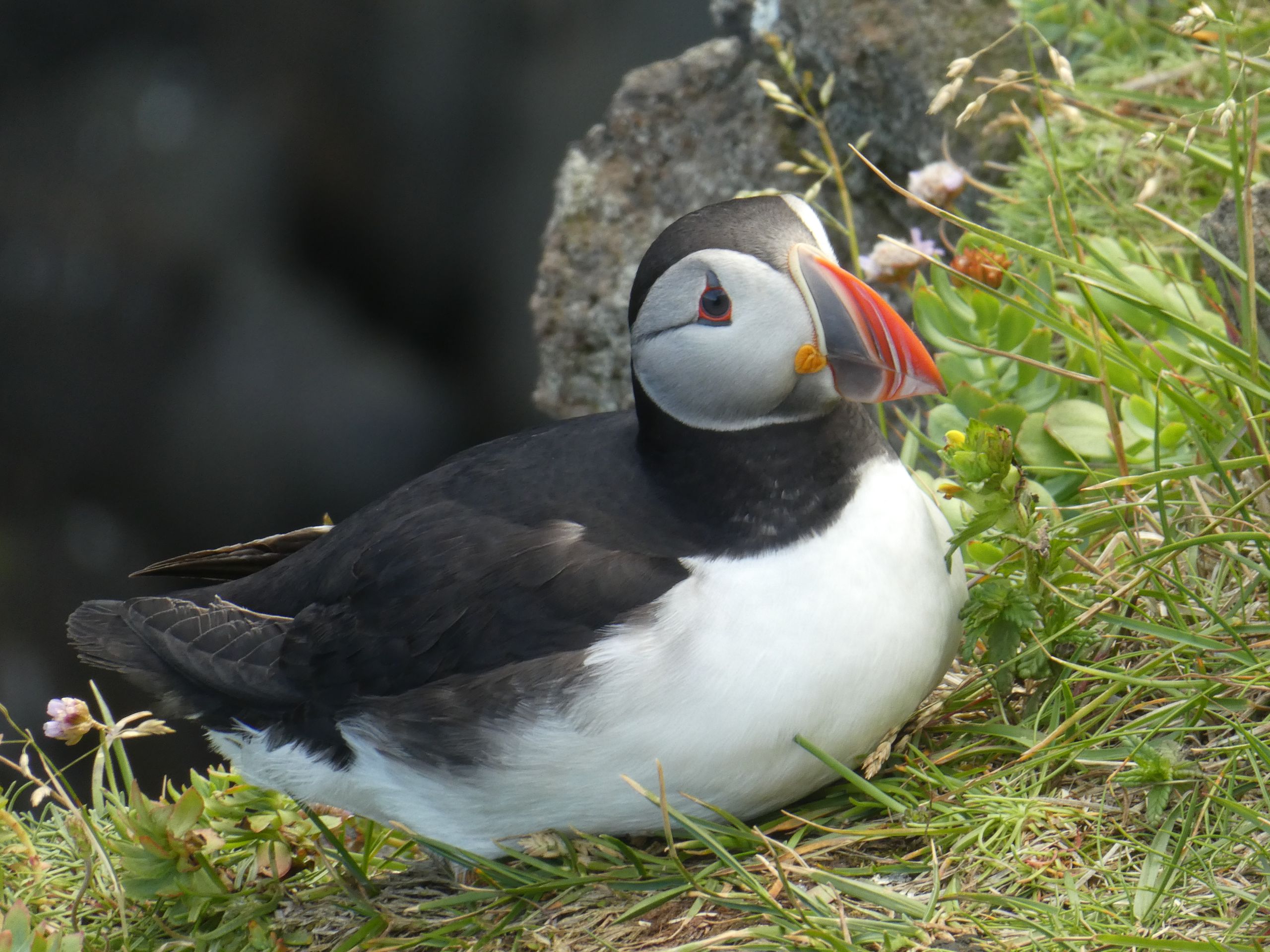
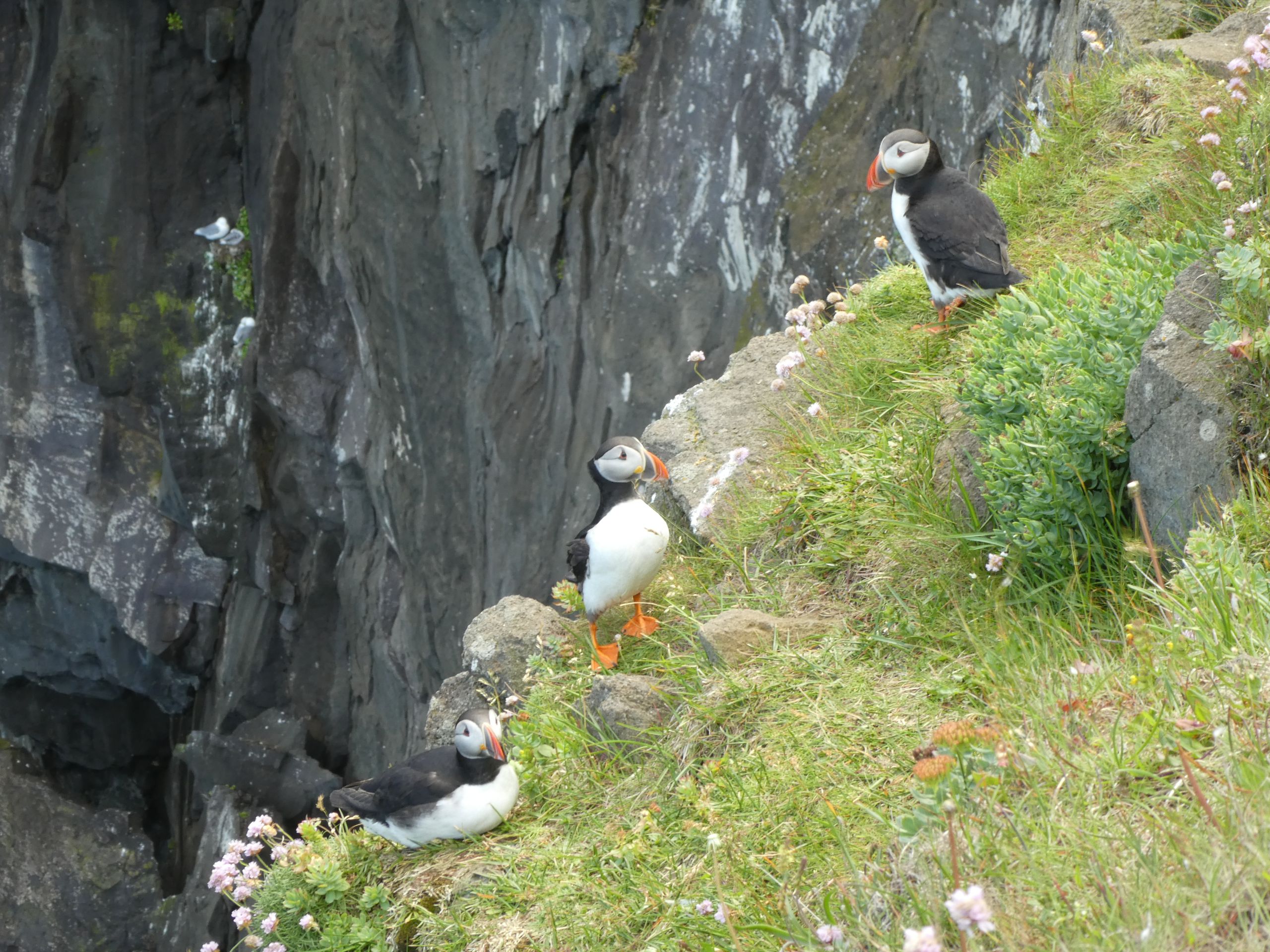
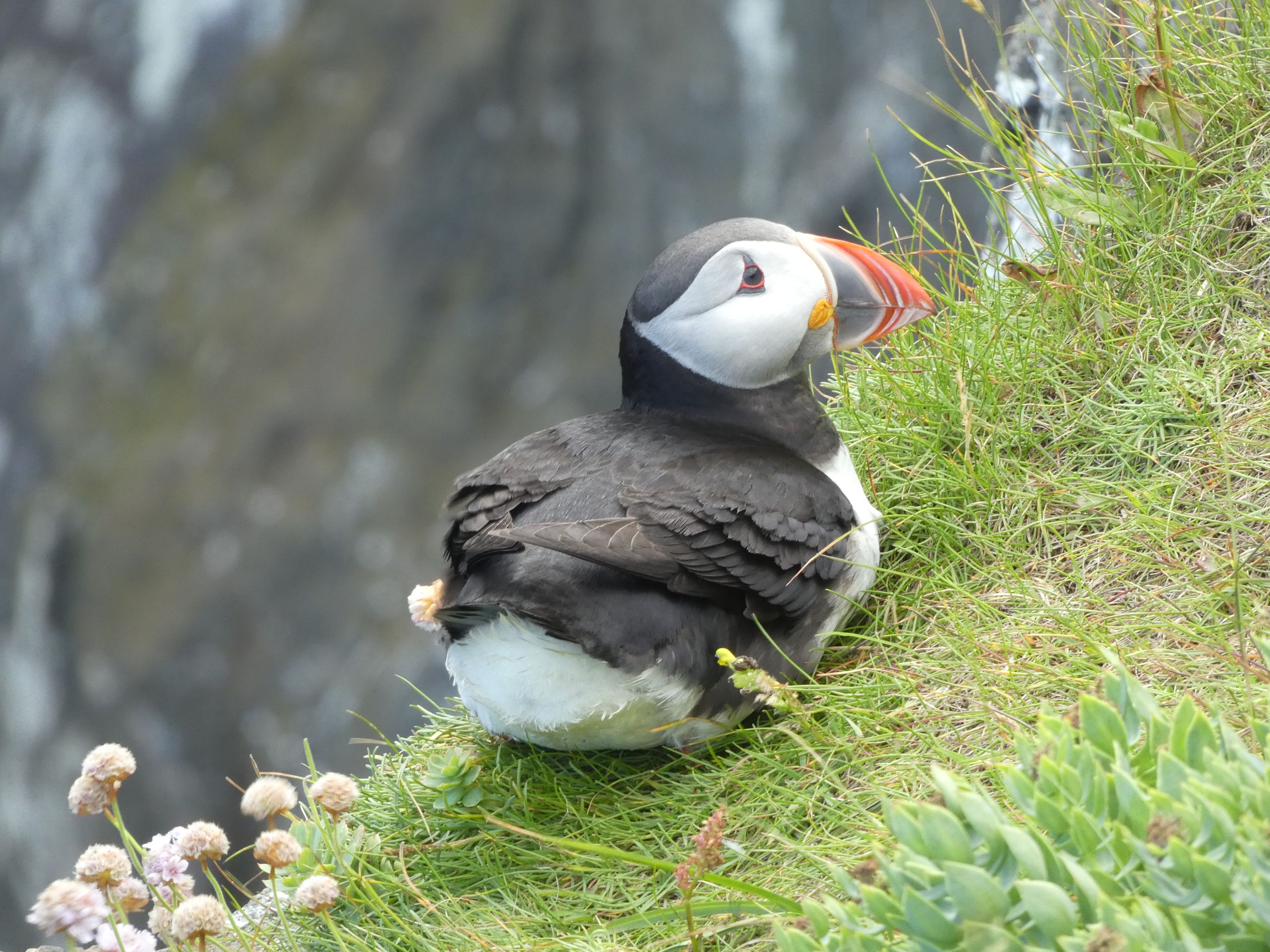
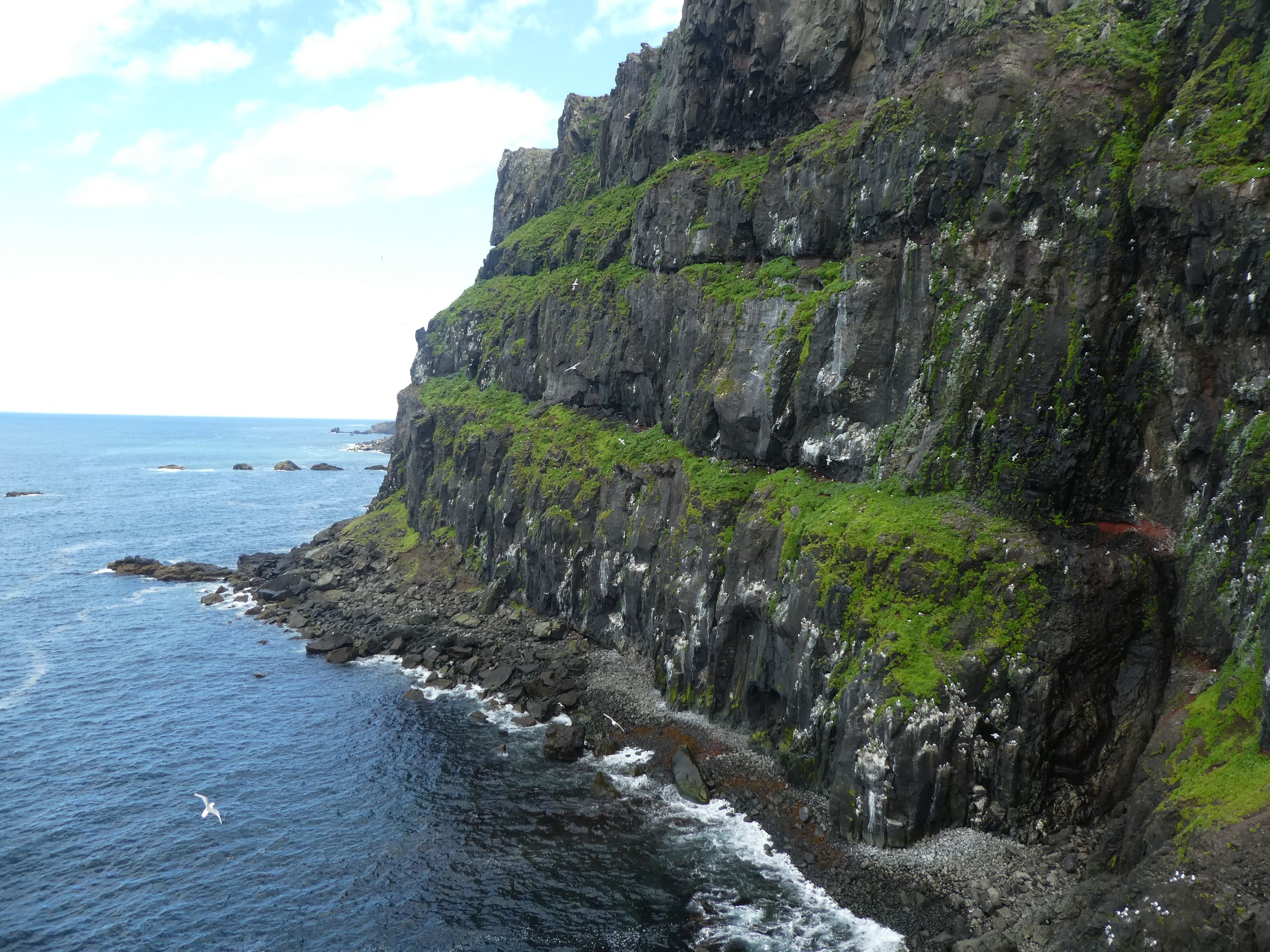
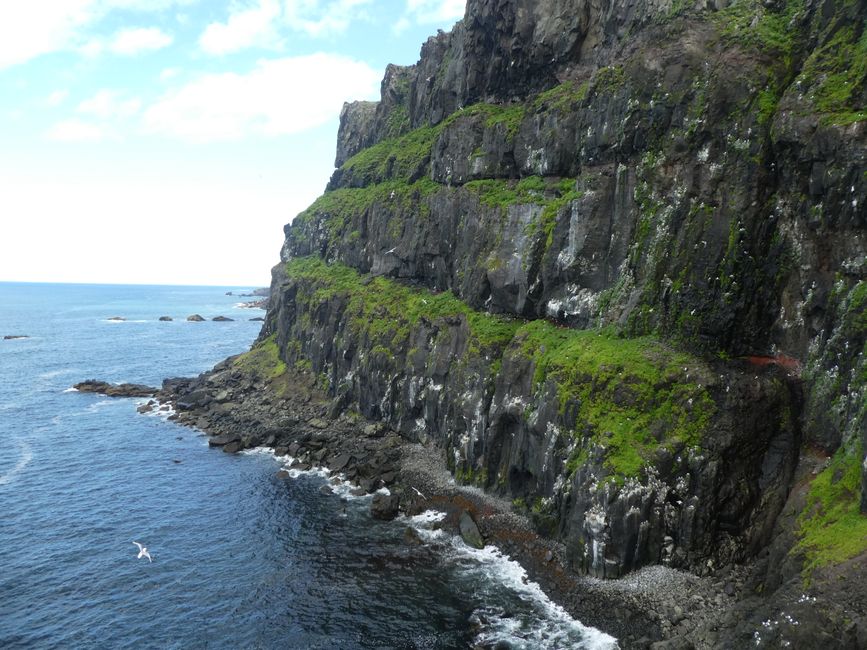
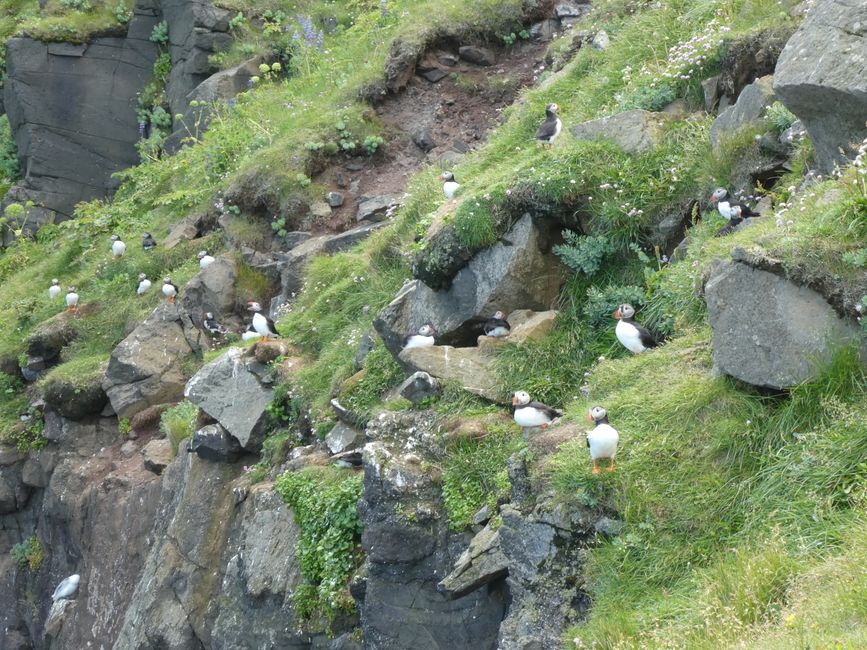
At the end of the trail, we reached a cliff that many birds use as a breeding ground.
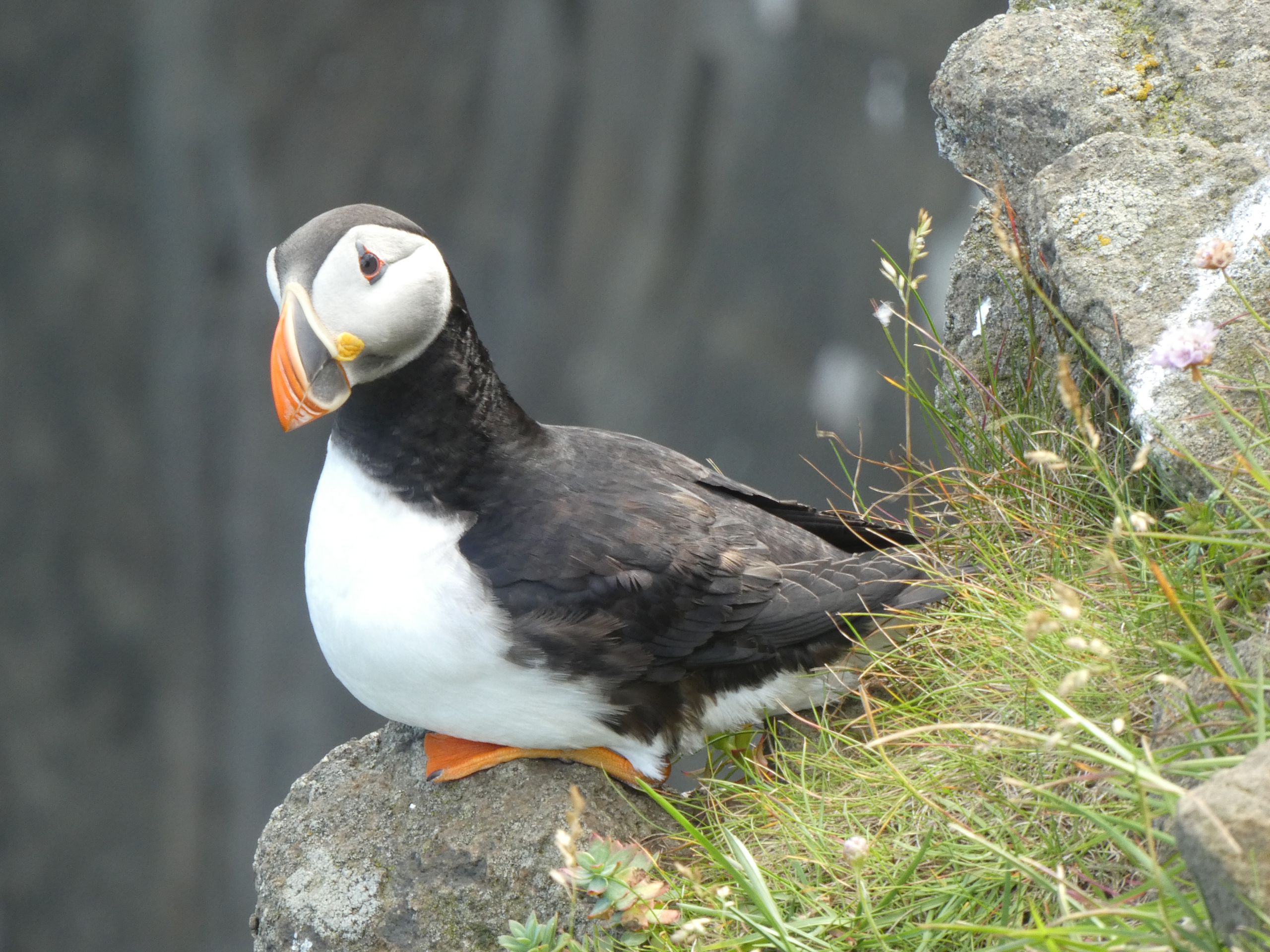
Puffin in Skalanes Nature Reserve
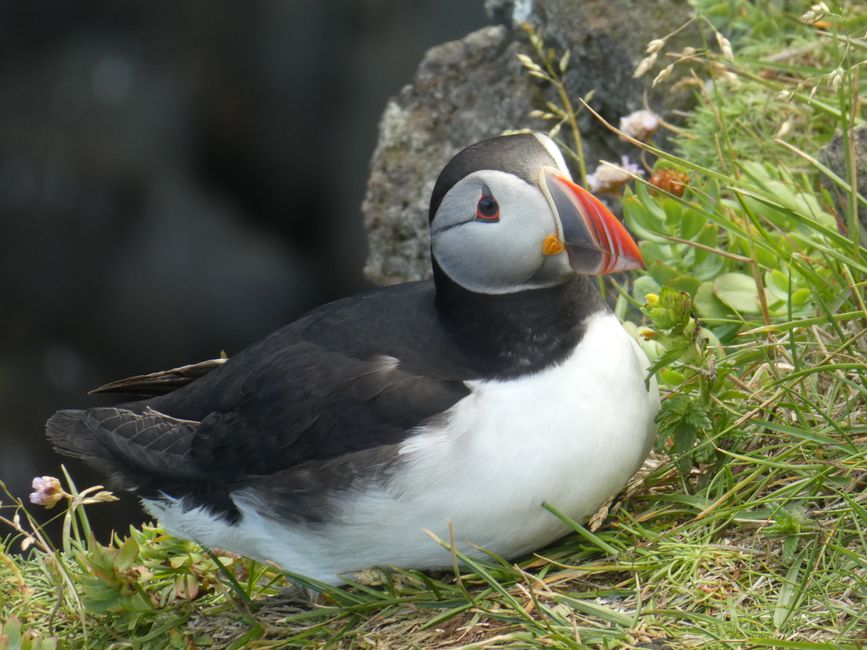
We were particularly thrilled by the puffins sitting right next to the viewing platform at the edge of the cliff.
Puffin in Skalanes Nature Reserve
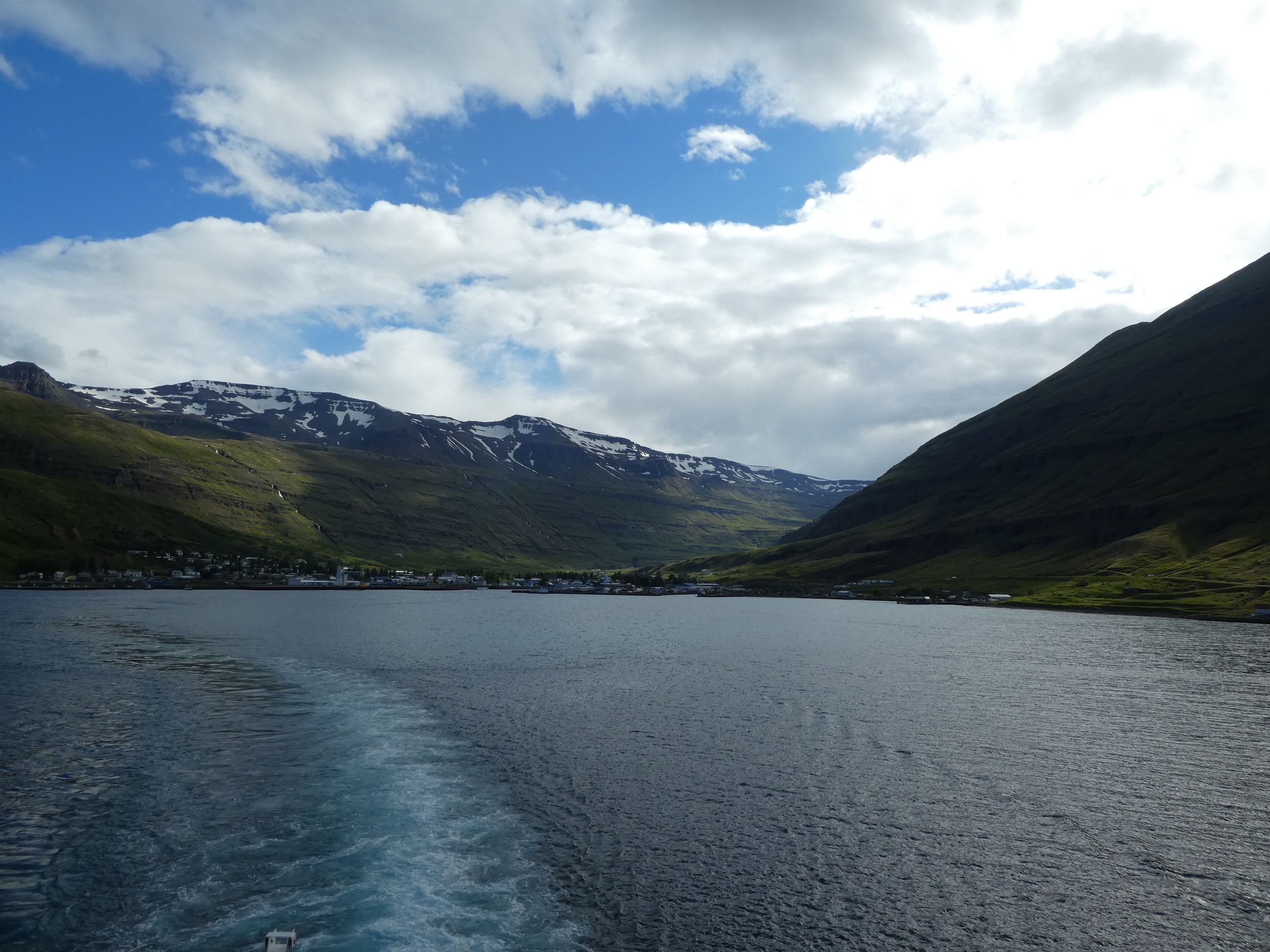
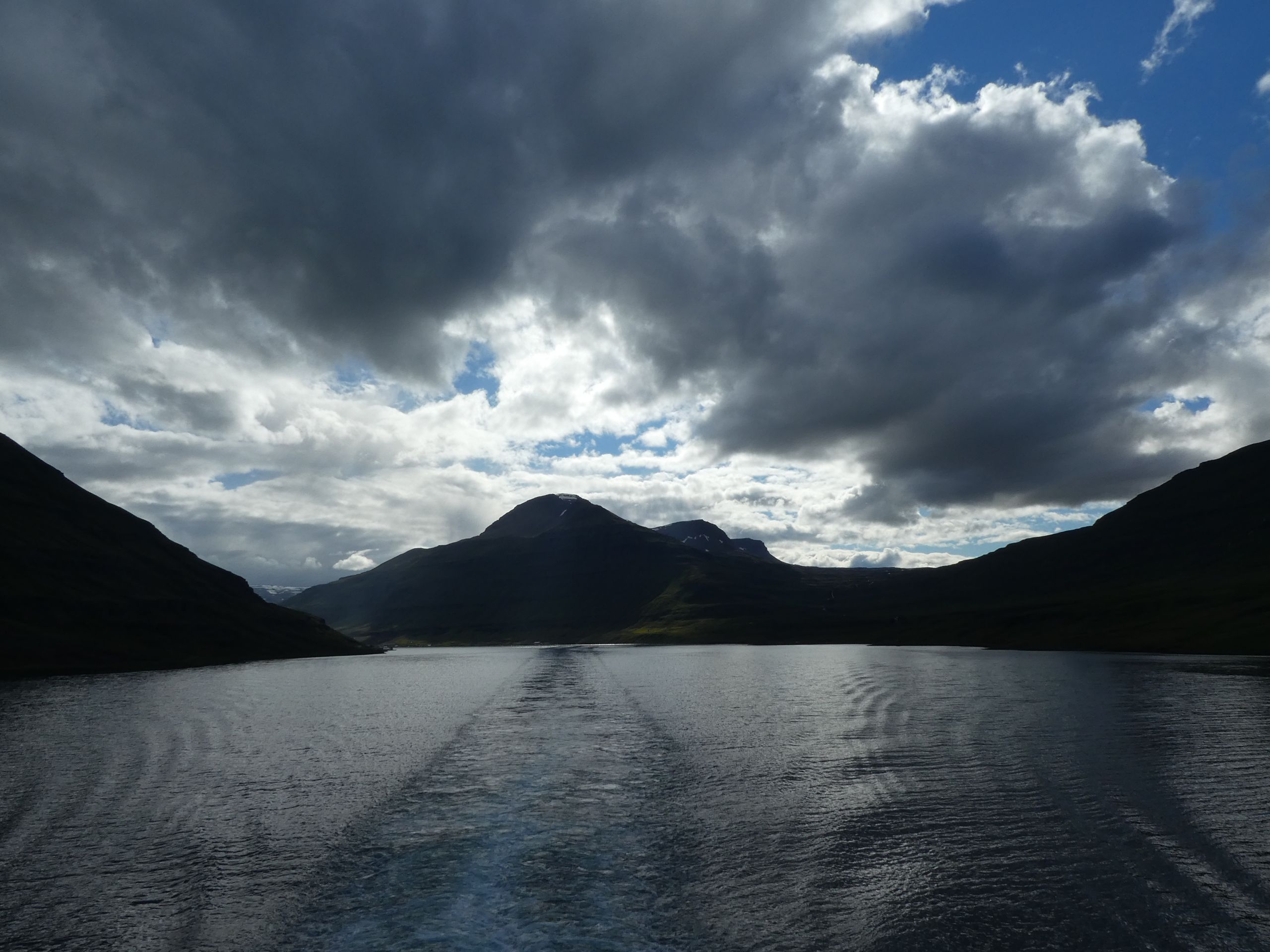
After we returned to the ship, we soon set sail again.
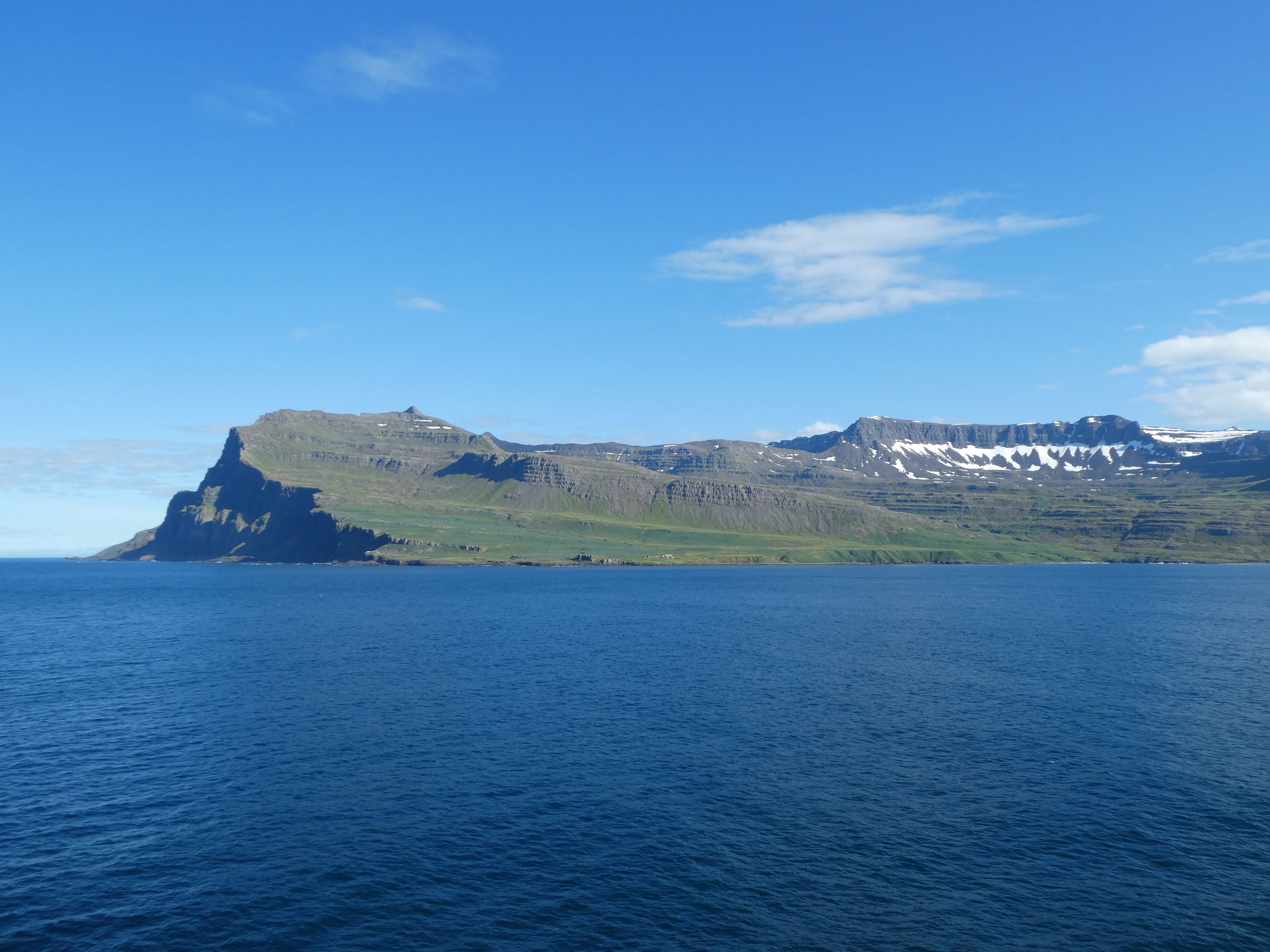
Departure from Seydisfjördur
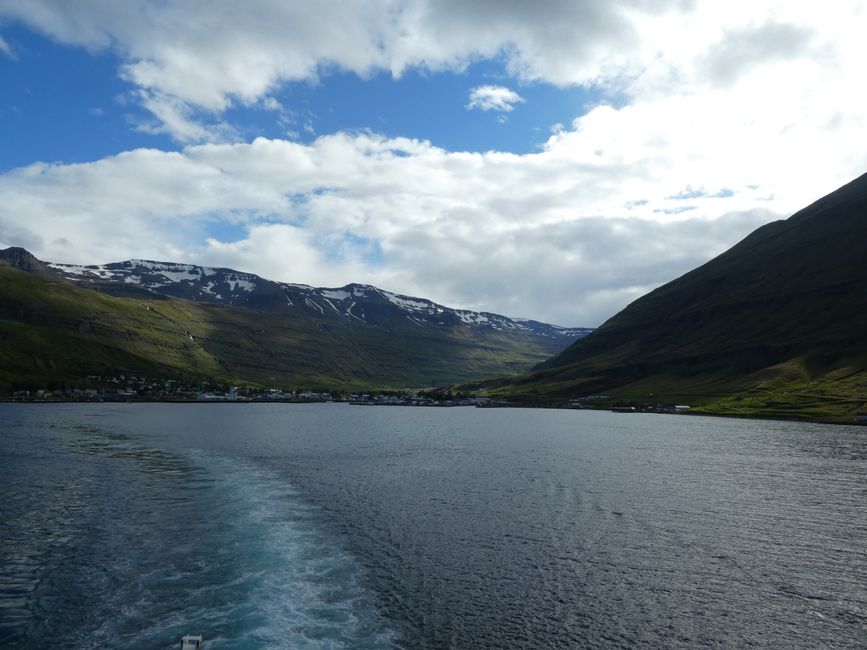
On deck, we enjoyed the sun and the beautiful view in the fjord.
Departure from Seydisfjördur
peters-on-tourCome una newsletter: ogni nuovo articolo arriva via email.