Vino rosso rosso
La nostra ultima settimana di viaggio si avvicina inesorabilmente, mentre la fortuna del tempo sembra espandersi evidentemente in altri luoghi. Sabato mattina, con grande...

Pubblicato: 14.12.2024



Recently, chance led us to Linum.
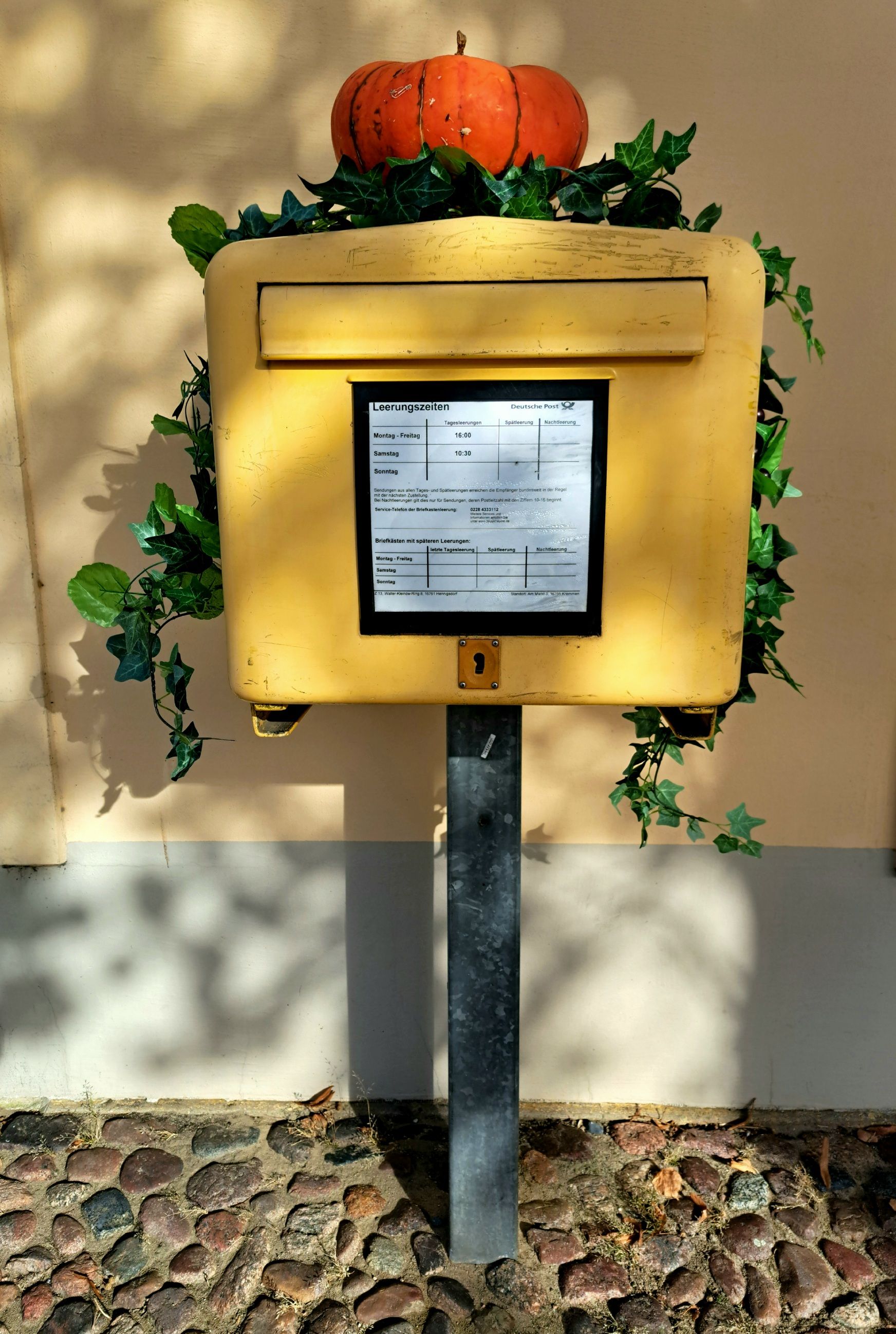
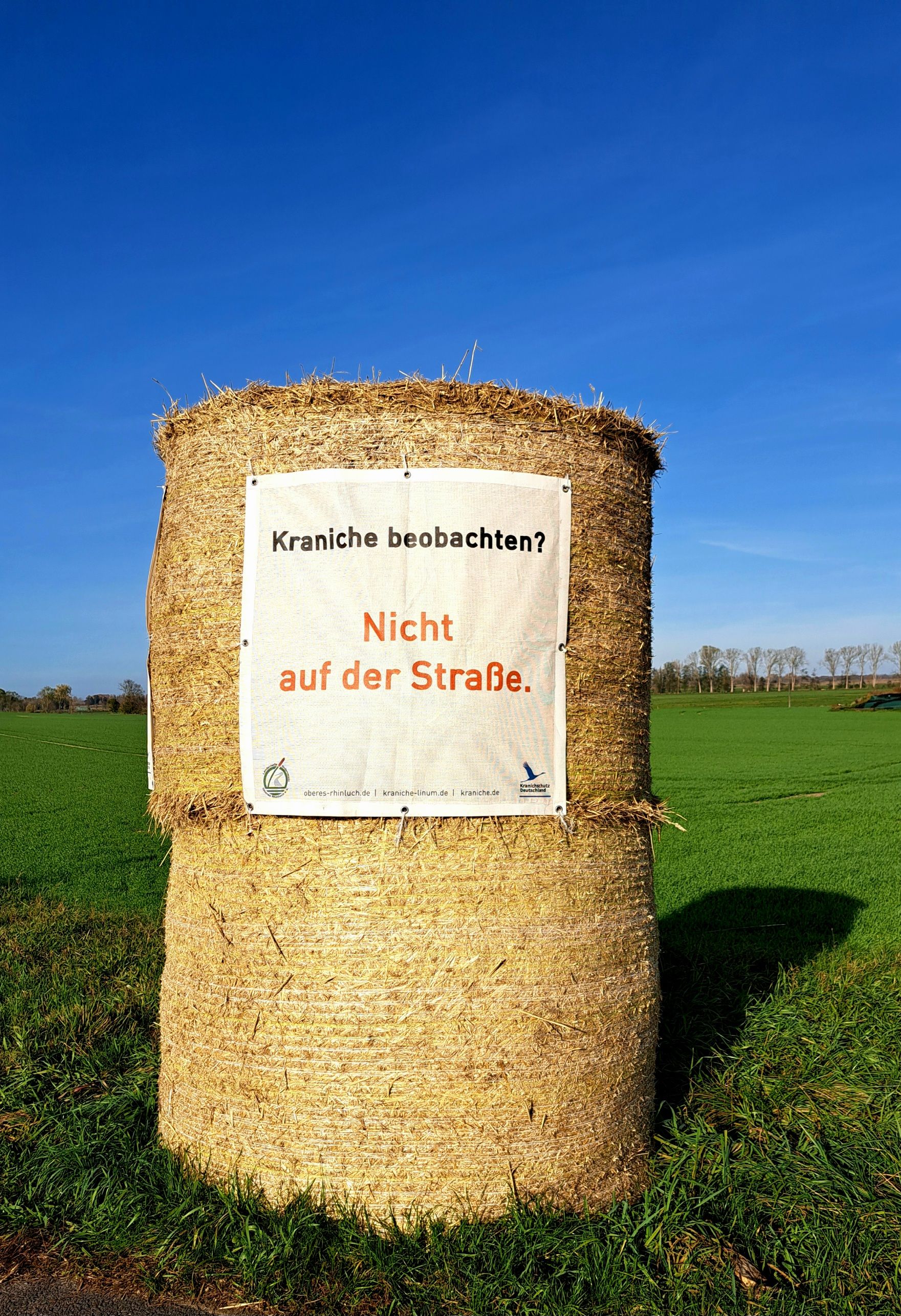
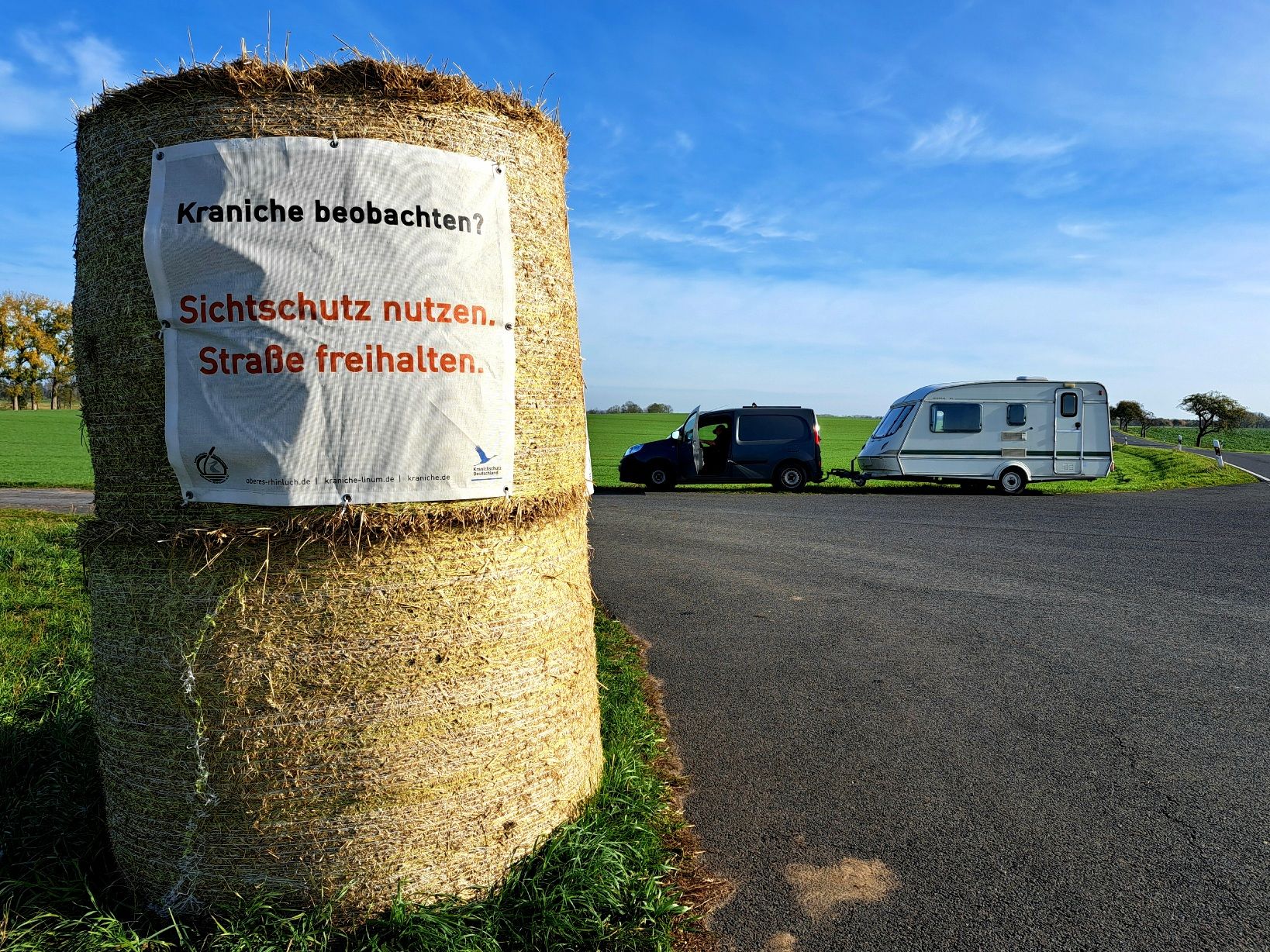
As we drive through the Brandenburg village in Rhinluch north of Berlin, we are amazed by the many parking spots and even more no-parking signs that line the roadside, giving the town a colorful appearance.
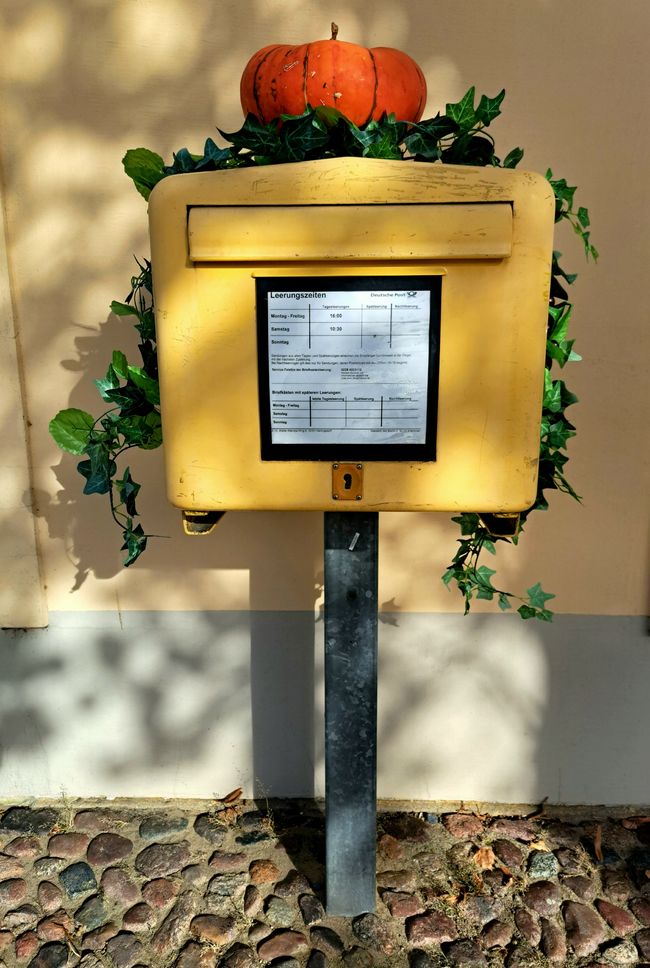
What is going on here? A mega pumpkin party lasting more than three months?
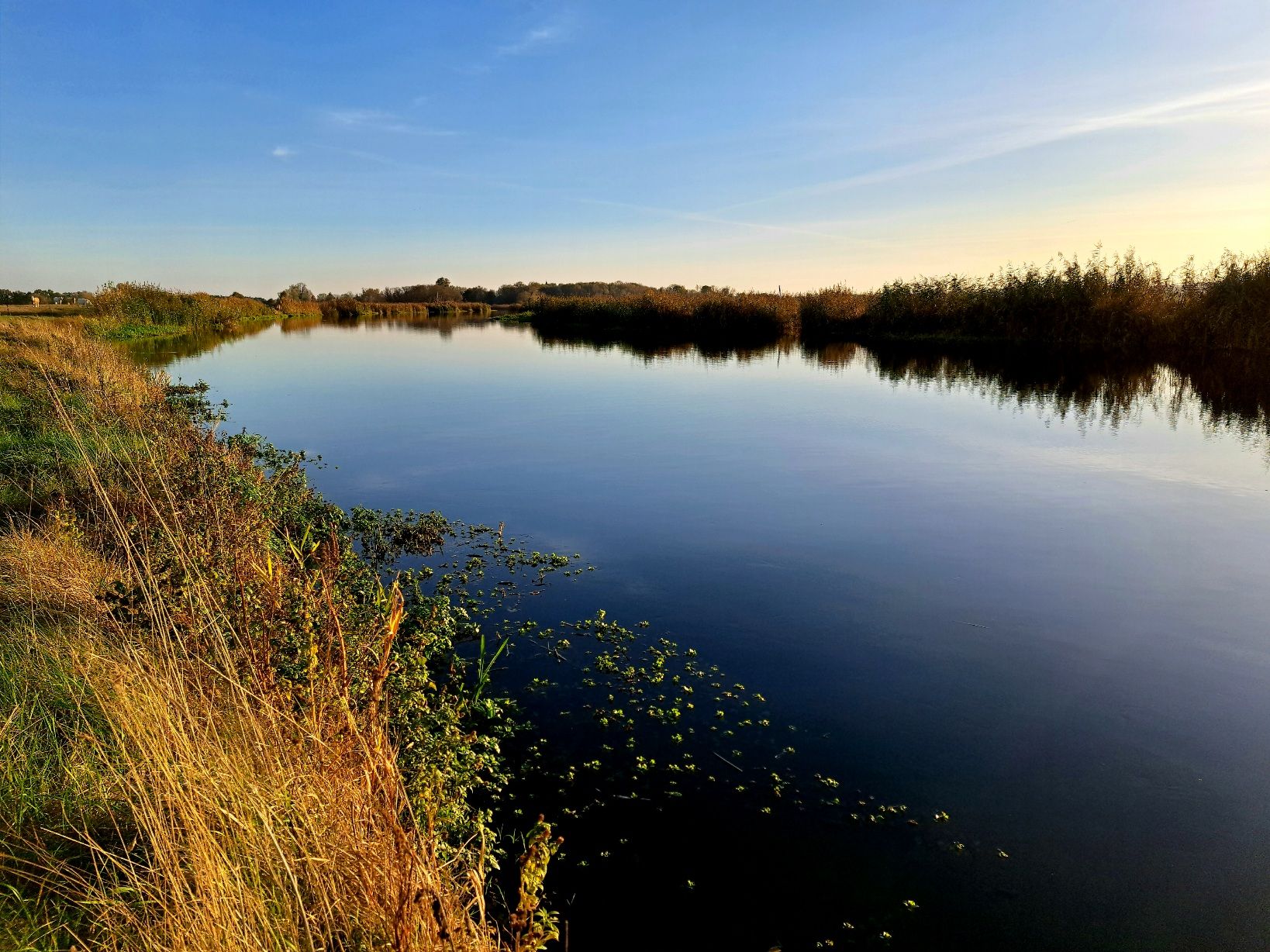
The worldwide web informs us that the nearby ponds are one of the largest resting places for cranes in Europe on their way to their winter quarters in France and Spain. Up to 100,000 birds have been counted here daily, and the evening return of the flocks from the surrounding fields to the old fish ponds is particularly impressive.
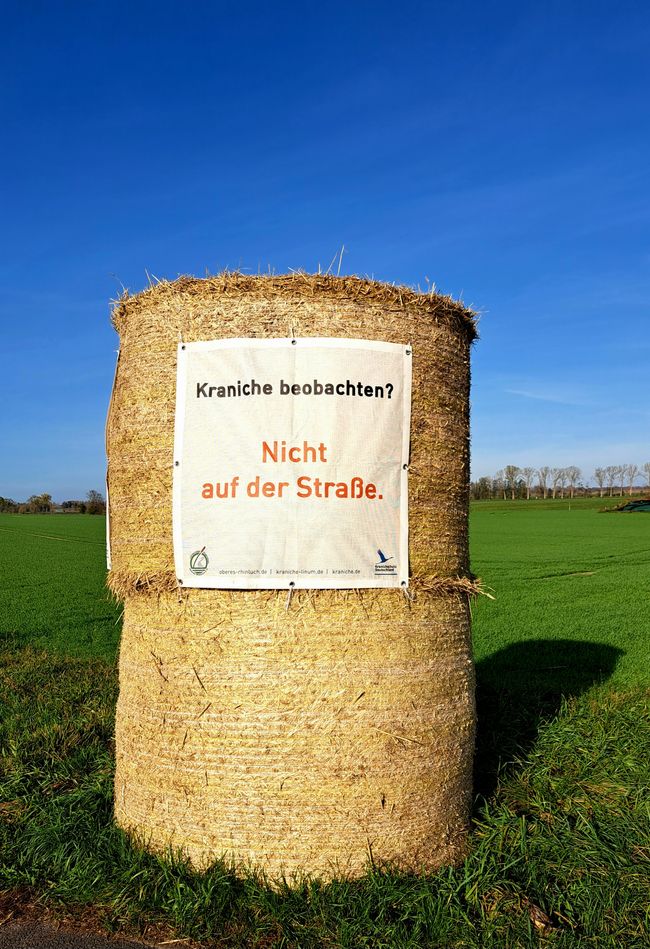
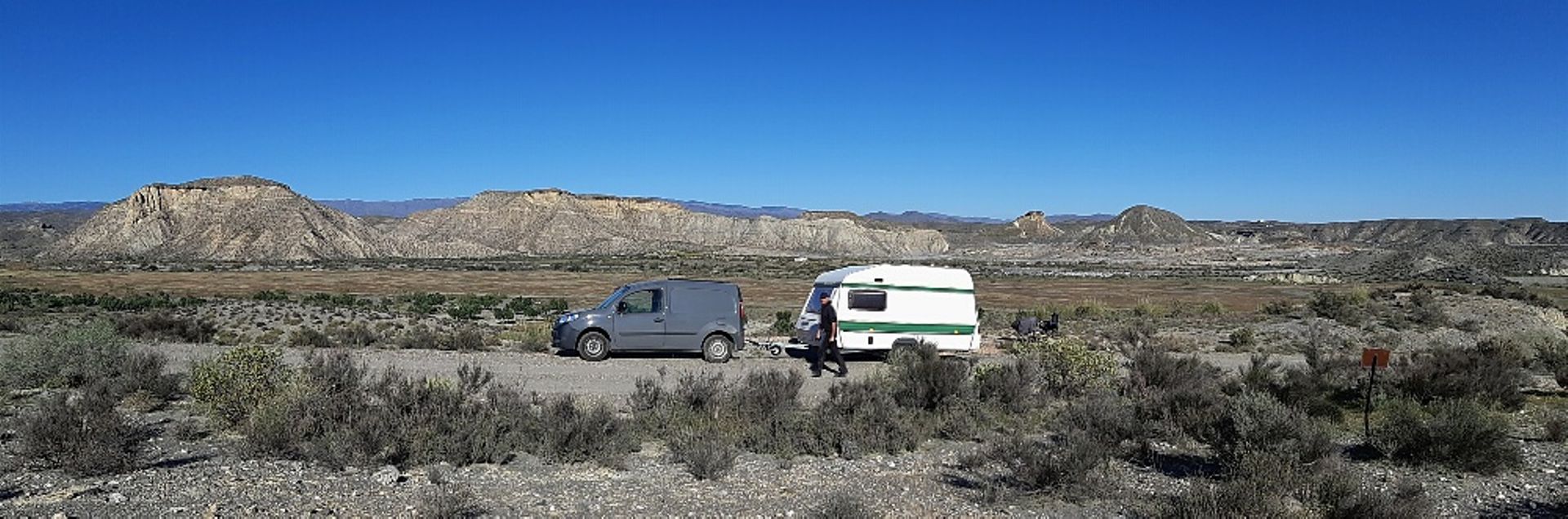
We don’t want to miss this, and finding a spot for Mistral is quickly done in one of the numerous meadows converted into free parking lots. After an extensive siesta in the autumn sunshine, we hike to the waters at the edge of town in the late afternoon on the recommendation of NABU.
The loud calls and trumpeting, which serve the communication within the flight formation, are clearly audible, but we are denied the view of the proud birds. Many beautiful deciduous trees have grown sky-high over the years, and even from the established and well-visited observation towers, not a single crane feather can be spotted.
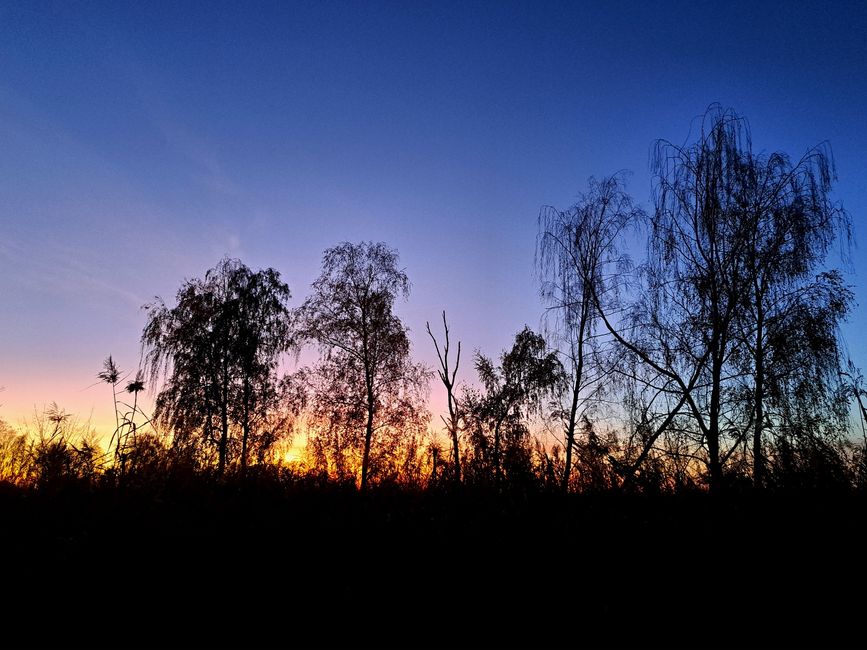
Of course, when half of Berlin and now also we are tramping through the fields, peace and quiet for the shy animals quickly come to an end. That's why all paths are closed during migration time, and we have to be satisfied with admiring the equally numerous, loud-quacking wild geese.
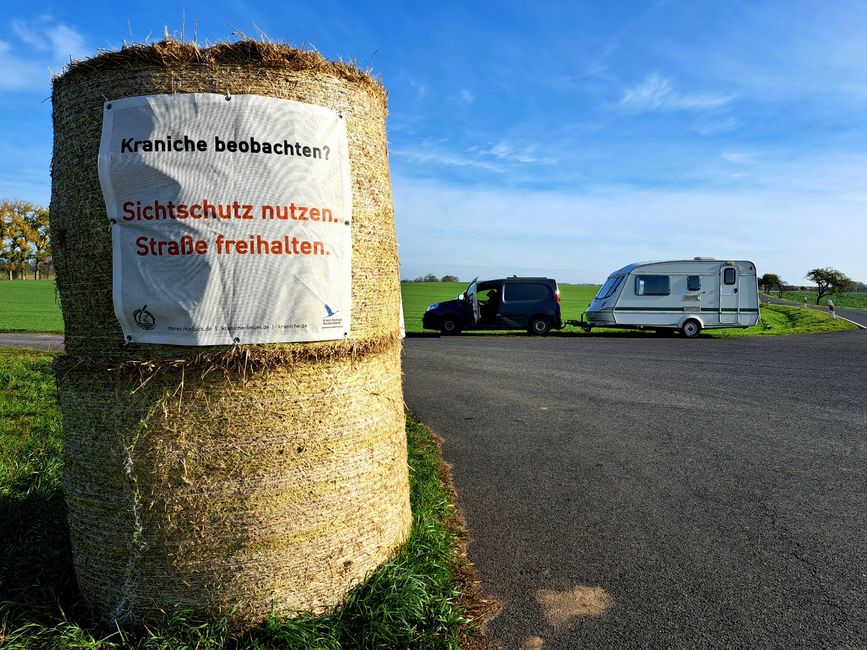
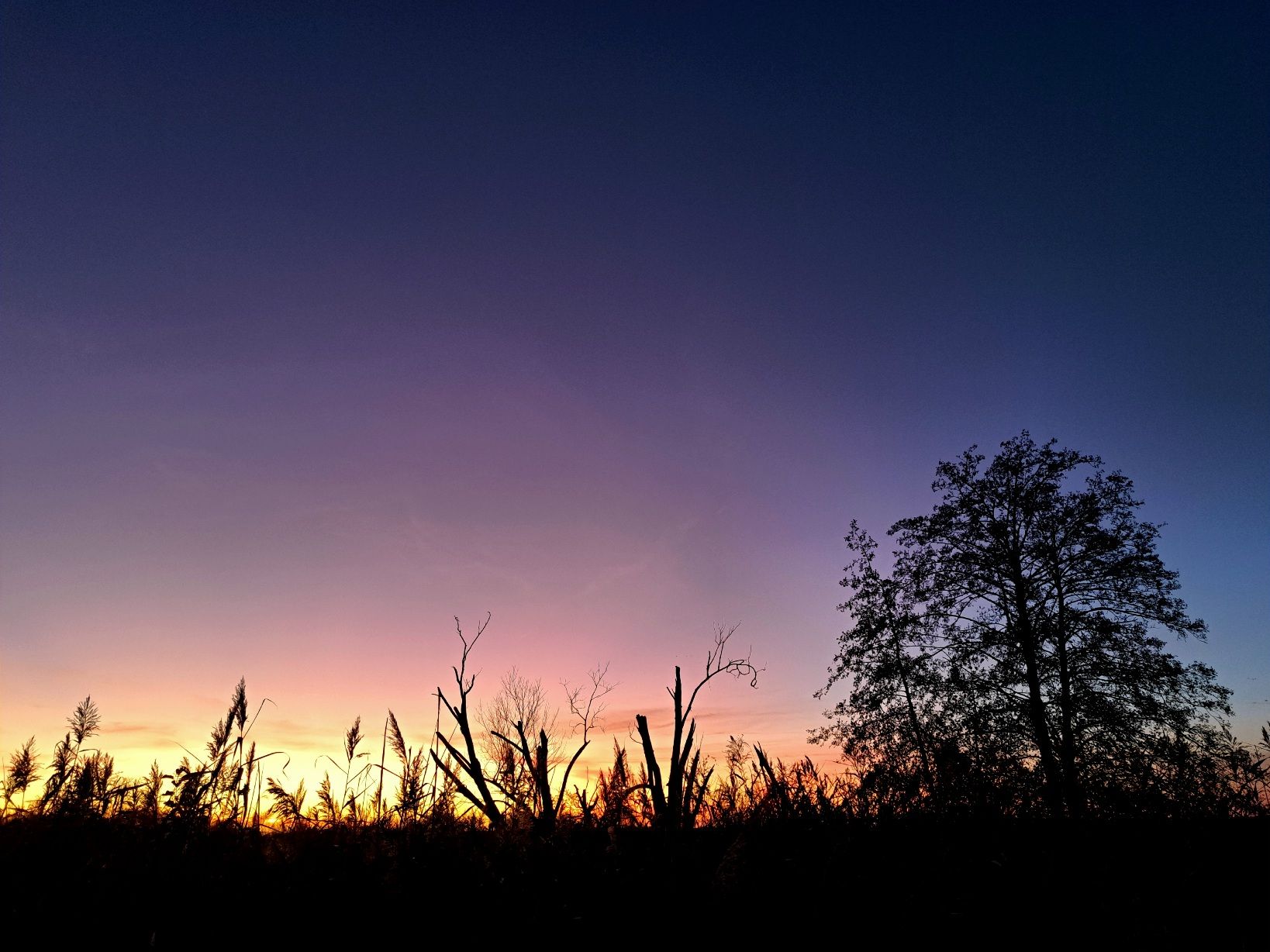
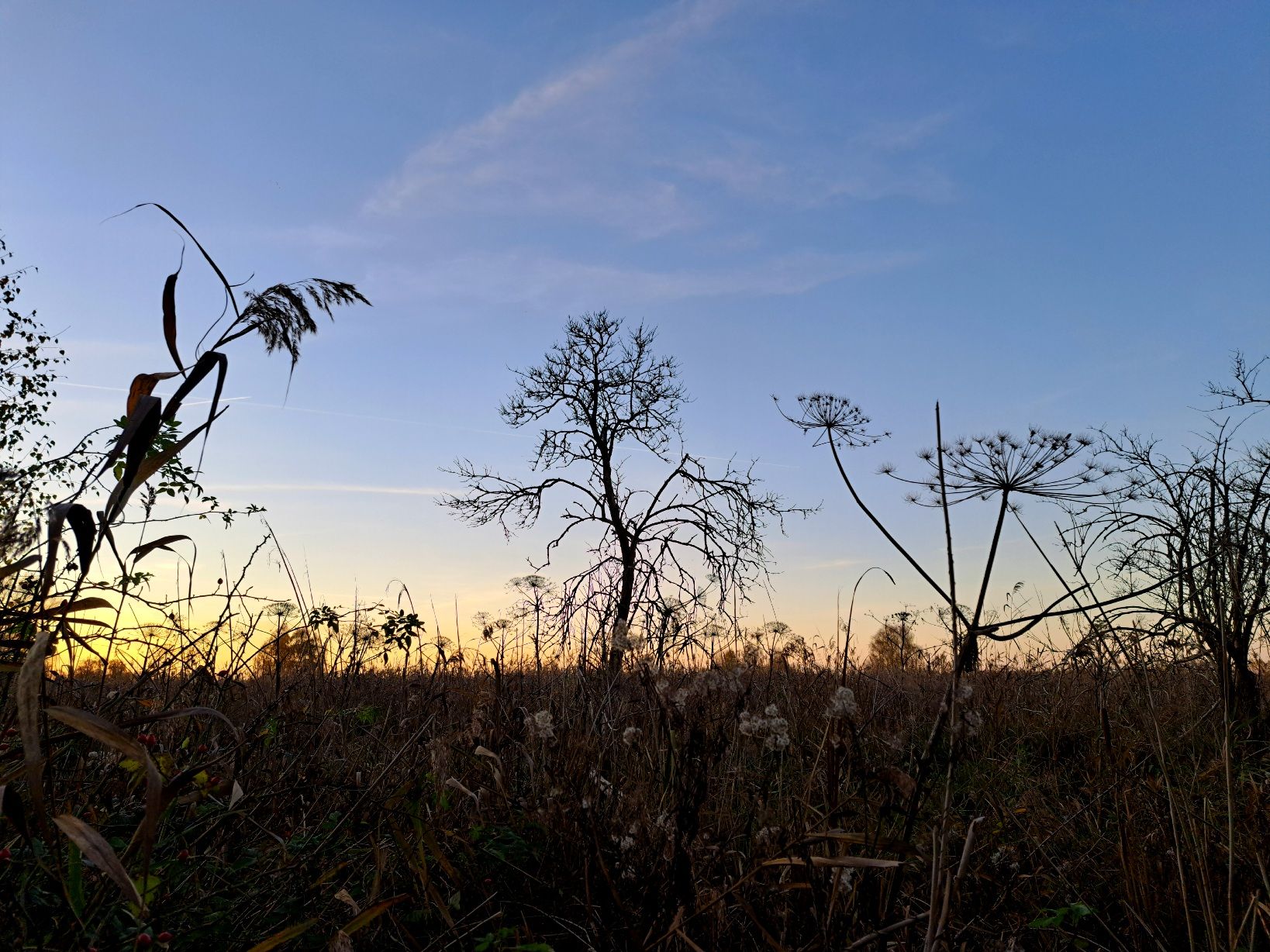
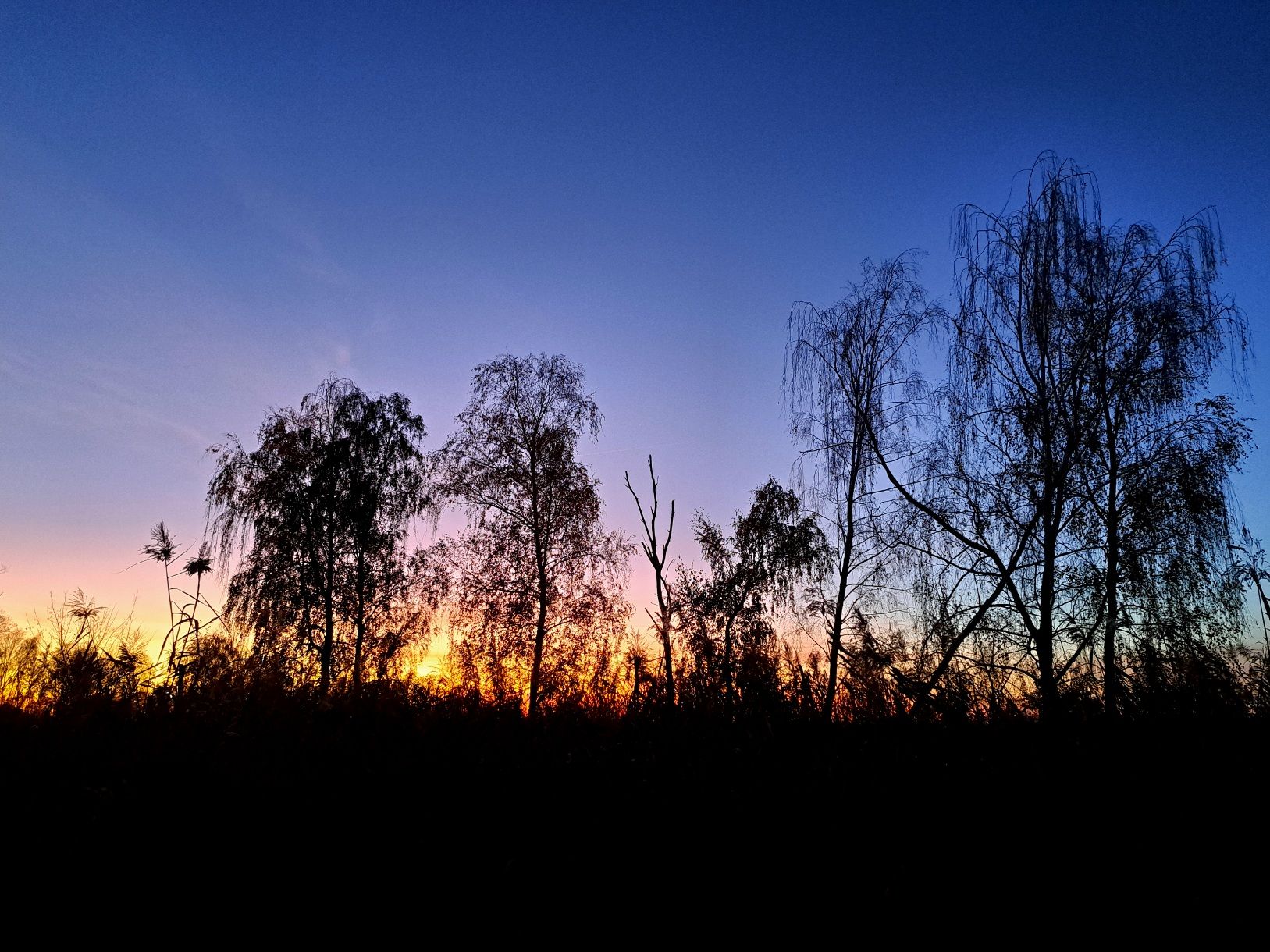
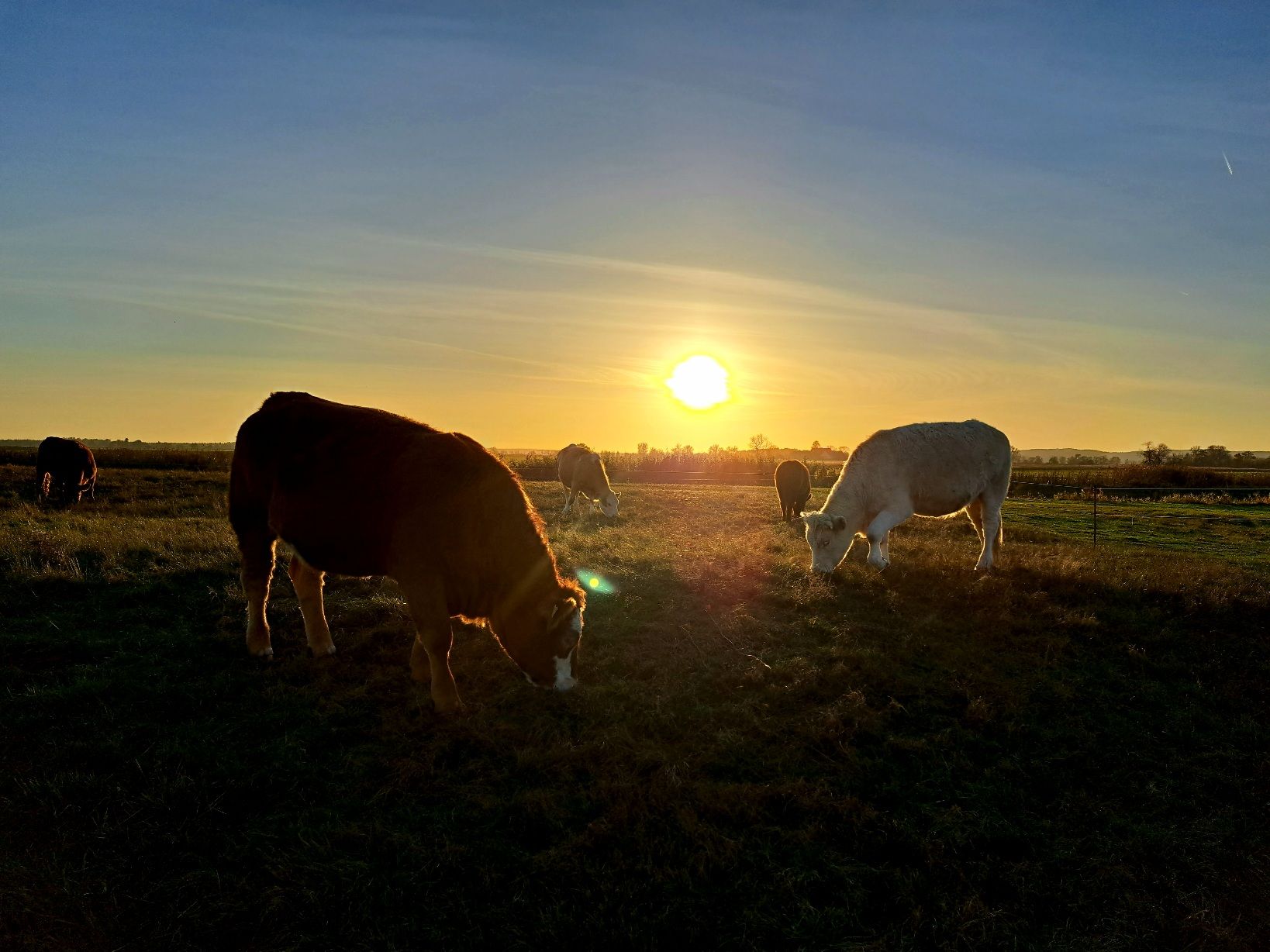
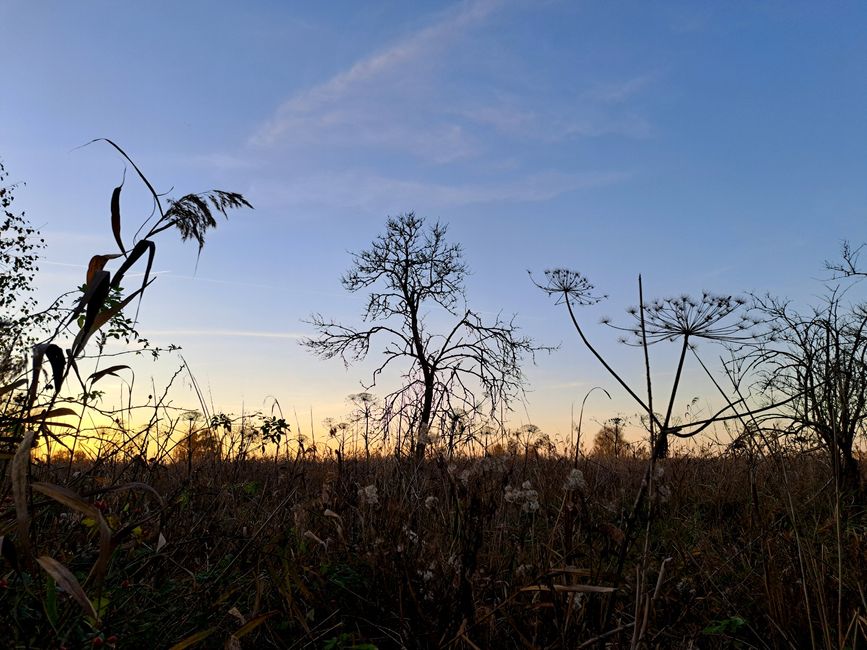
A spectacular sunset in astonishing colors and a quiet night on the lawn looking at the lights of the A24 compensate us for the disappointed promises.
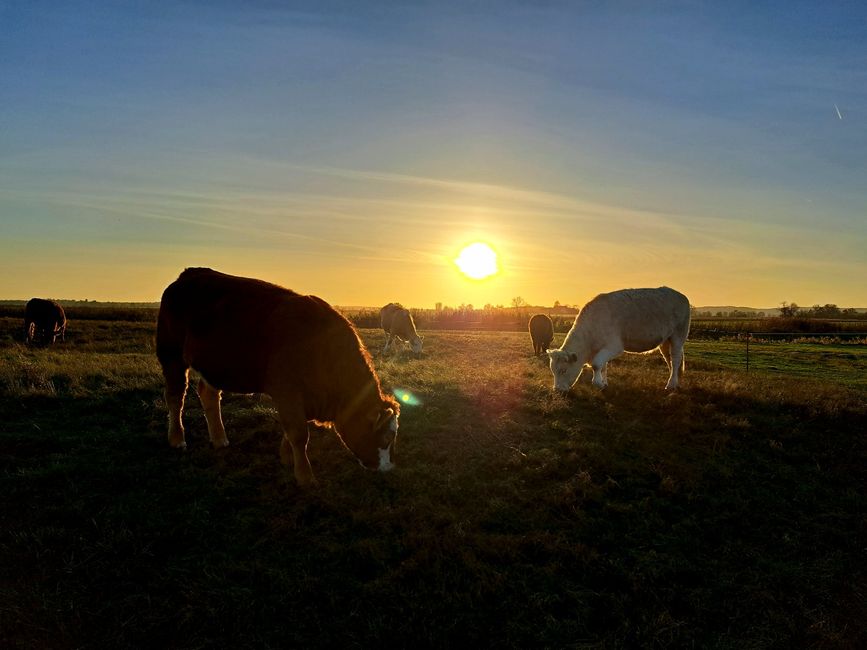
Now I read that the reservoir in Kelbra is also one of the popular resting places for the lucky birds. I manage to persuade the hero to hitch up the caravan on Saturday, and we make our way over the Harz to near Nordhausen.
Already on the way there, the calls of the geese can be heard, which also settle down on the water in indescribable numbers to rest.
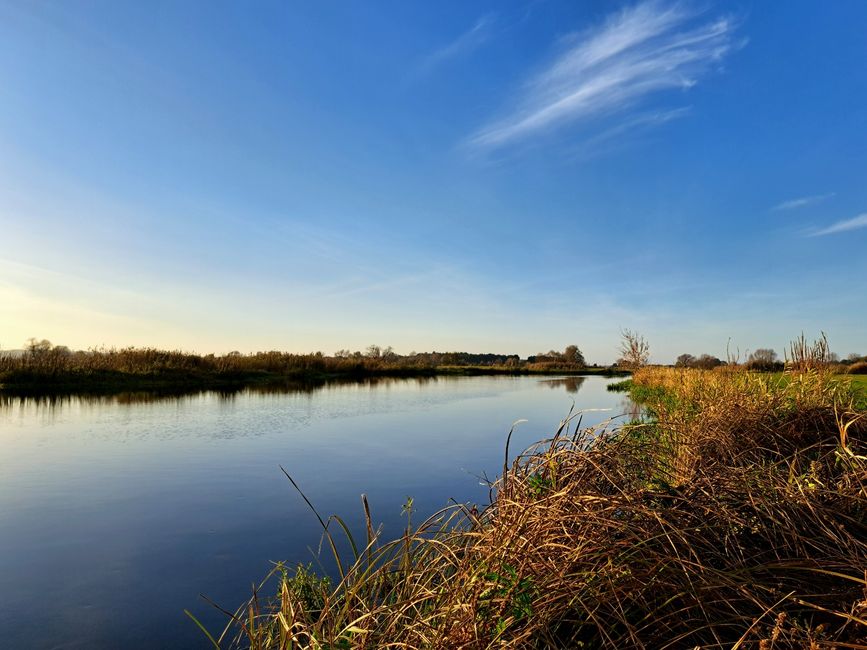
Berlin is far away and the bird spotters are not too numerous but equipped with big cameras, professional tripods, and opulent lenses.
Here too, the northern paths around the lake are closed to curious visitors to ensure the birds have their peace. But from the dam and on the southern circular path, there is an excellent view of the water.
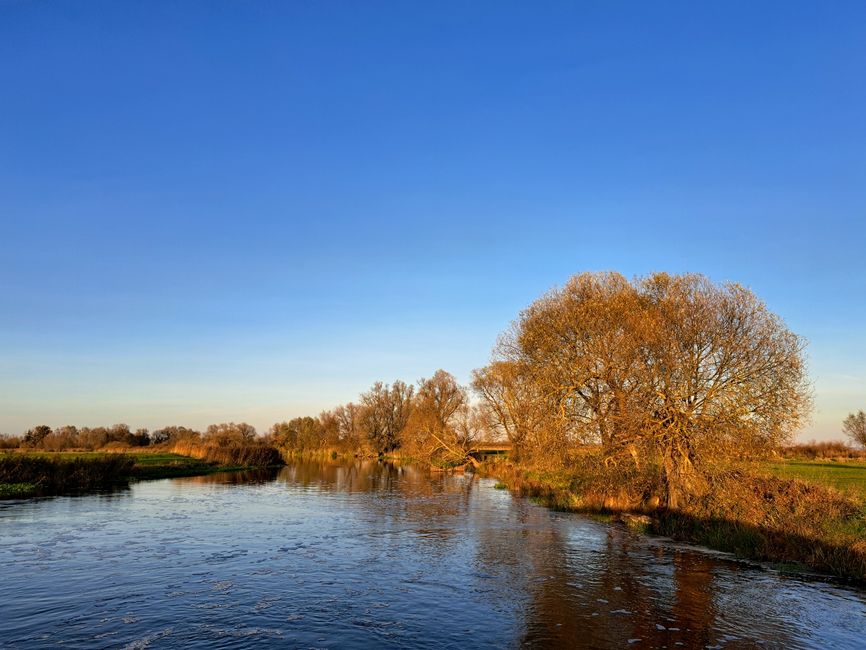
By mid-November, autumn has already progressed significantly, and many birds have long since arrived in their winter quarters in the south, but the now mild temperatures mean that many are spending the cold season in our latitudes. Thus, we enjoy a wonderful spectacle in the gray evening light with cold easterly gusts: thousands of cranes fly in typical formations from the not-so-distant fields towards the lake, accompanied by loud calls, the typical trumpeting, unmistakable signals. More and more flocks fly over our heads toward the water. It is truly impressive, extraordinary, beautiful, and hardly describable.
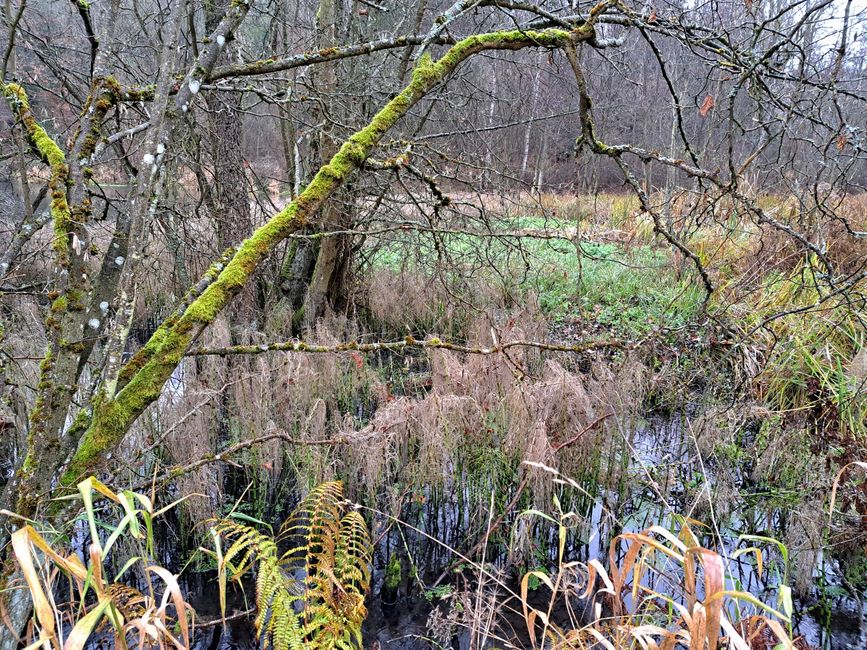
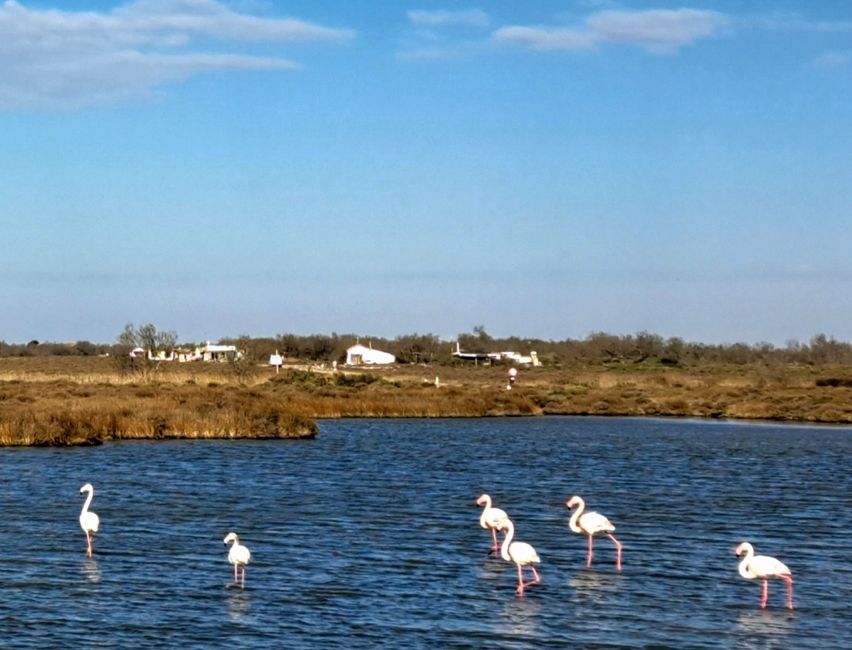
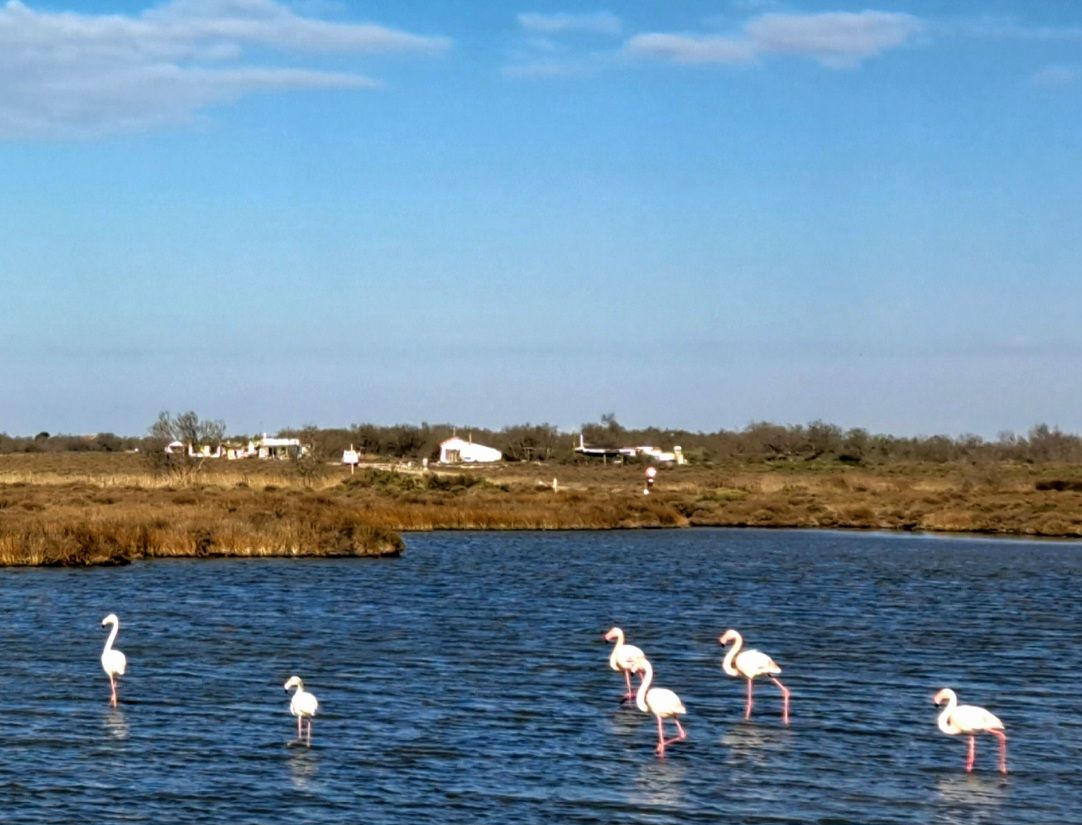
We have a great view of the dam and can observe the birds gathering on the opposite lakeshore for the night – of course only with binoculars, as they are far away and as shy as the pink flamingos of the Camargue. They sleep standing in shallow water, which offers them protection in the darkness. We suspect that the reservoir in Kelbra is currently so dry and has been drained to make it an attractive resting place for the birds.
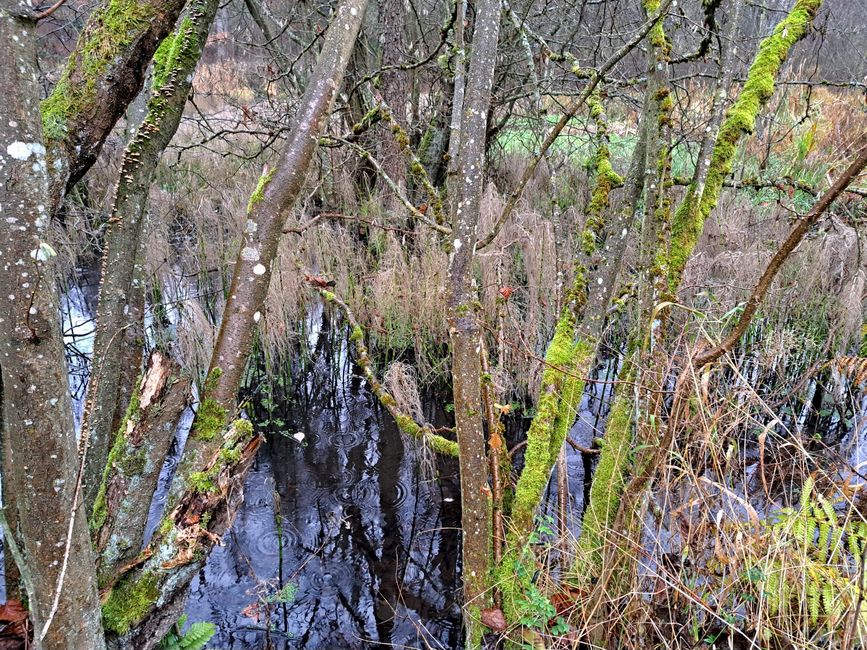
As a grand finale, a gigantic, quacking, honking wild goose V flies over our heads toward the lake, providing serious competition for the cranes and bringing a hint of Siberian winter air.
The parking spots here are unfortunately not generously free, so when night falls completely, we turn our backs to the spectacle.
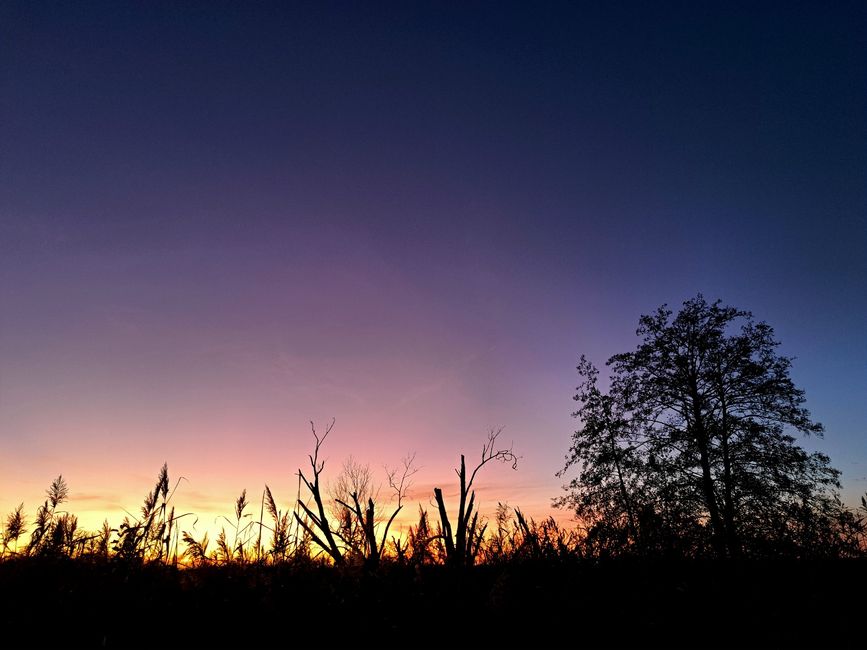
After a quiet night at the goulash cannon, we are awakened on Sunday morning by Siegfried, who fires up the oven for the first early regulars. The chimney is smoking, the Nordhausen double grain tastes good, and even we take it slow during the drizzly weather of the morning.
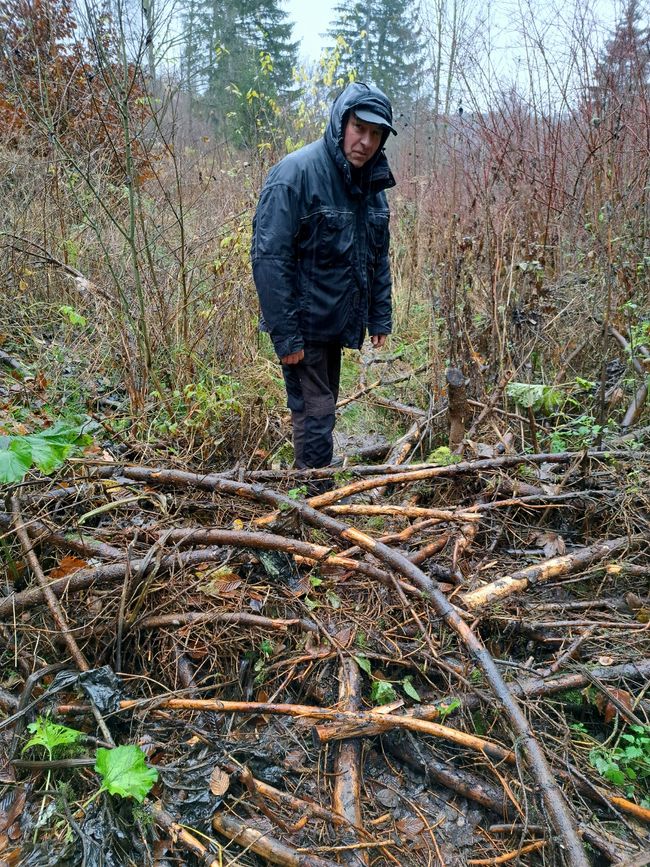
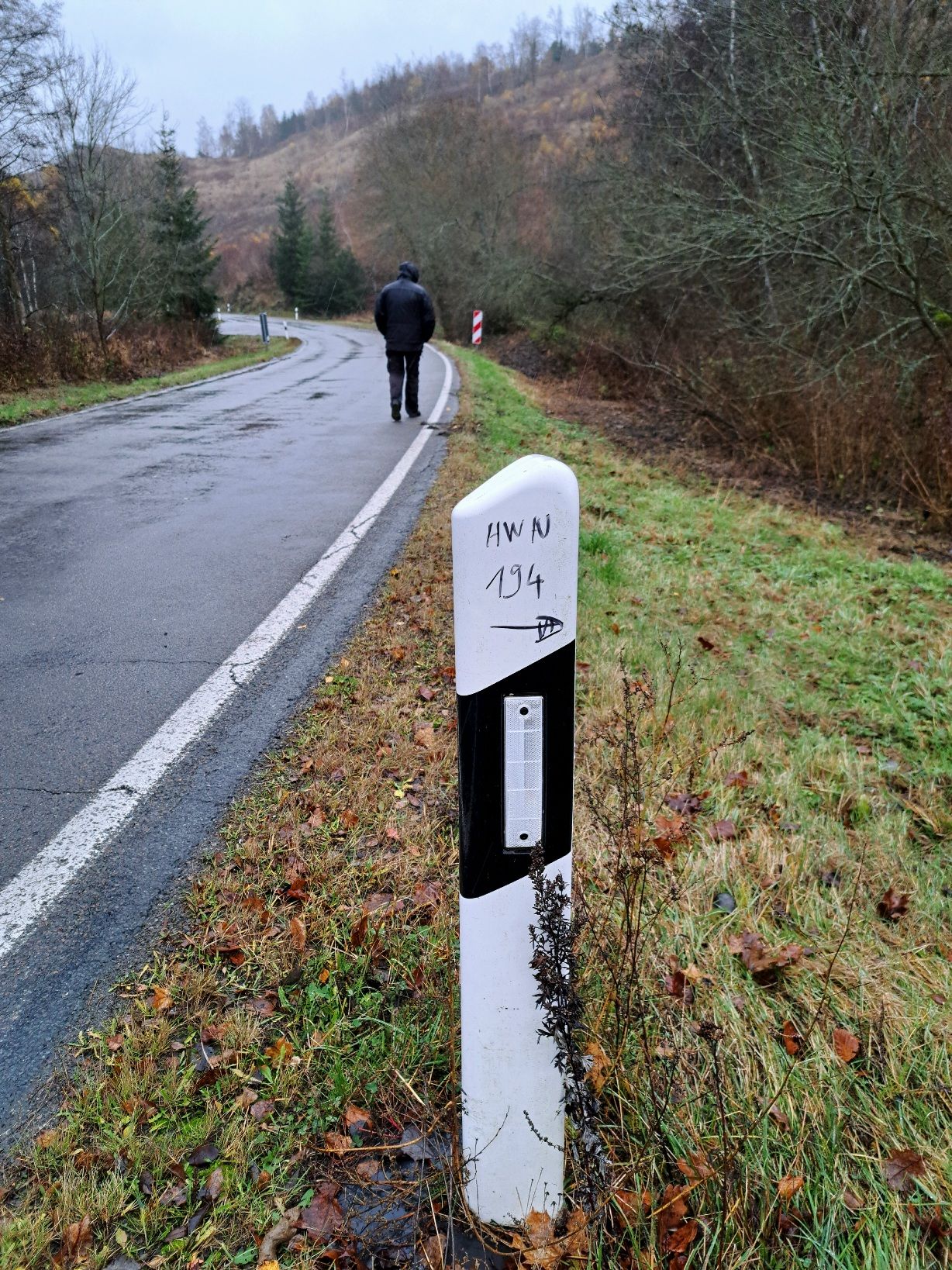
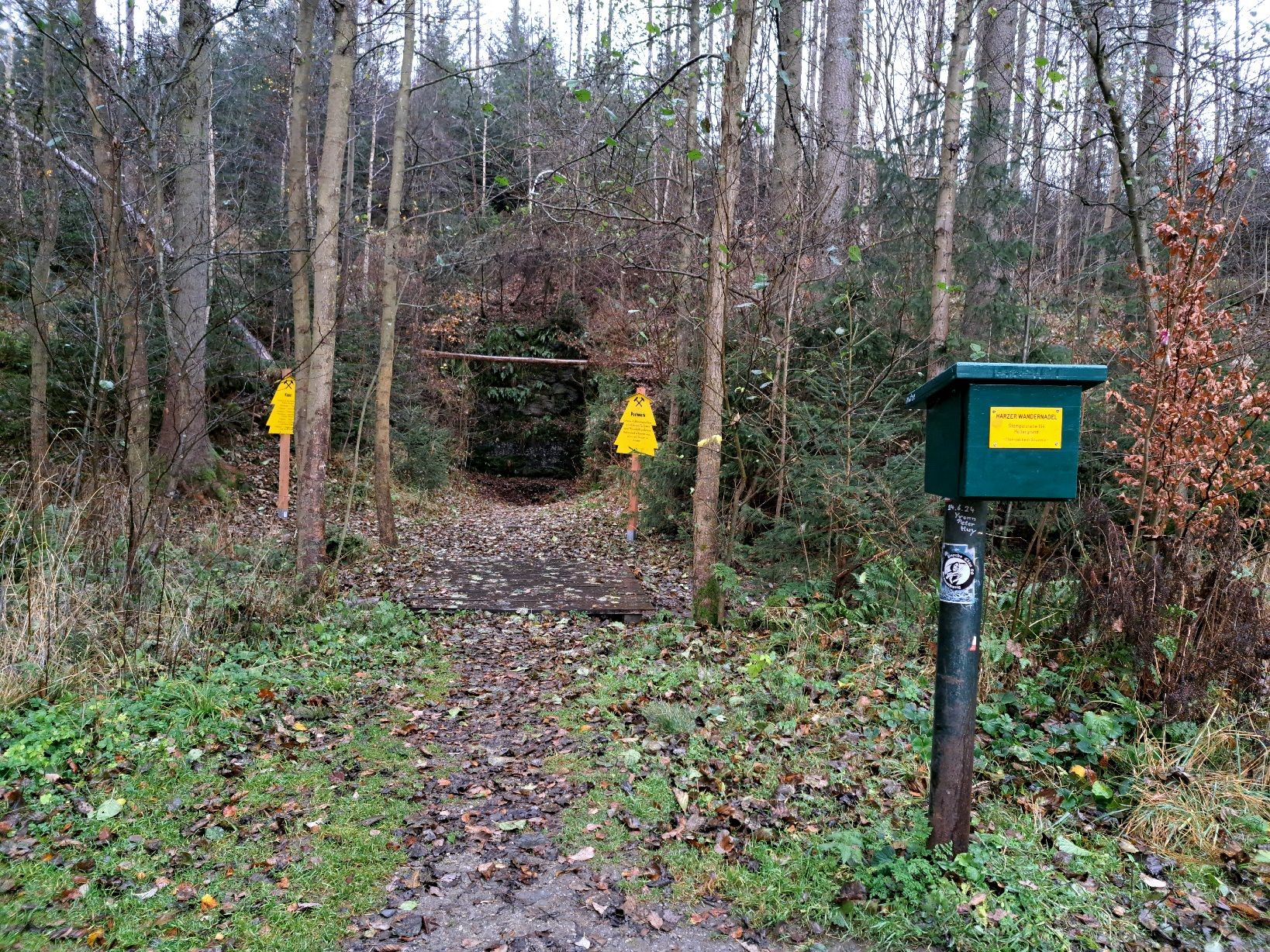
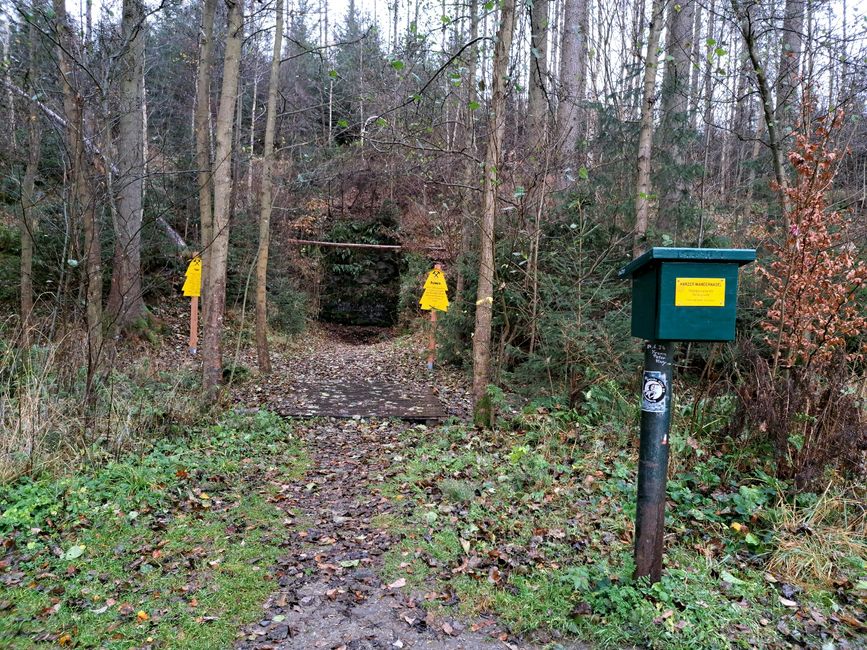
But I have discovered two stamps of the popular Harzer Wandernadel nearby and will not accept any excuses, after all, the weather frogs forecast sunshine starting at noon.
Well wrapped against the drizzle, we set off for Silberhütte.
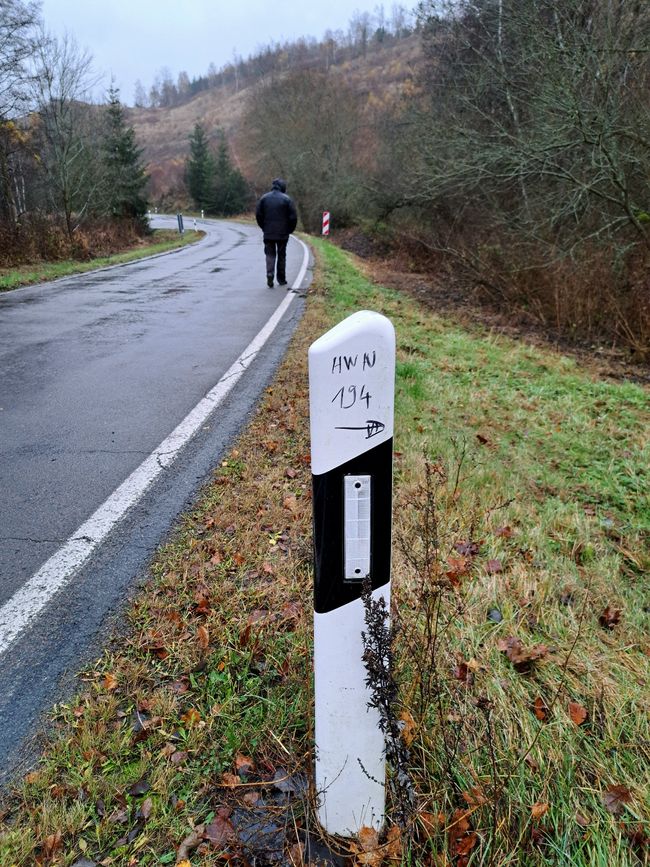
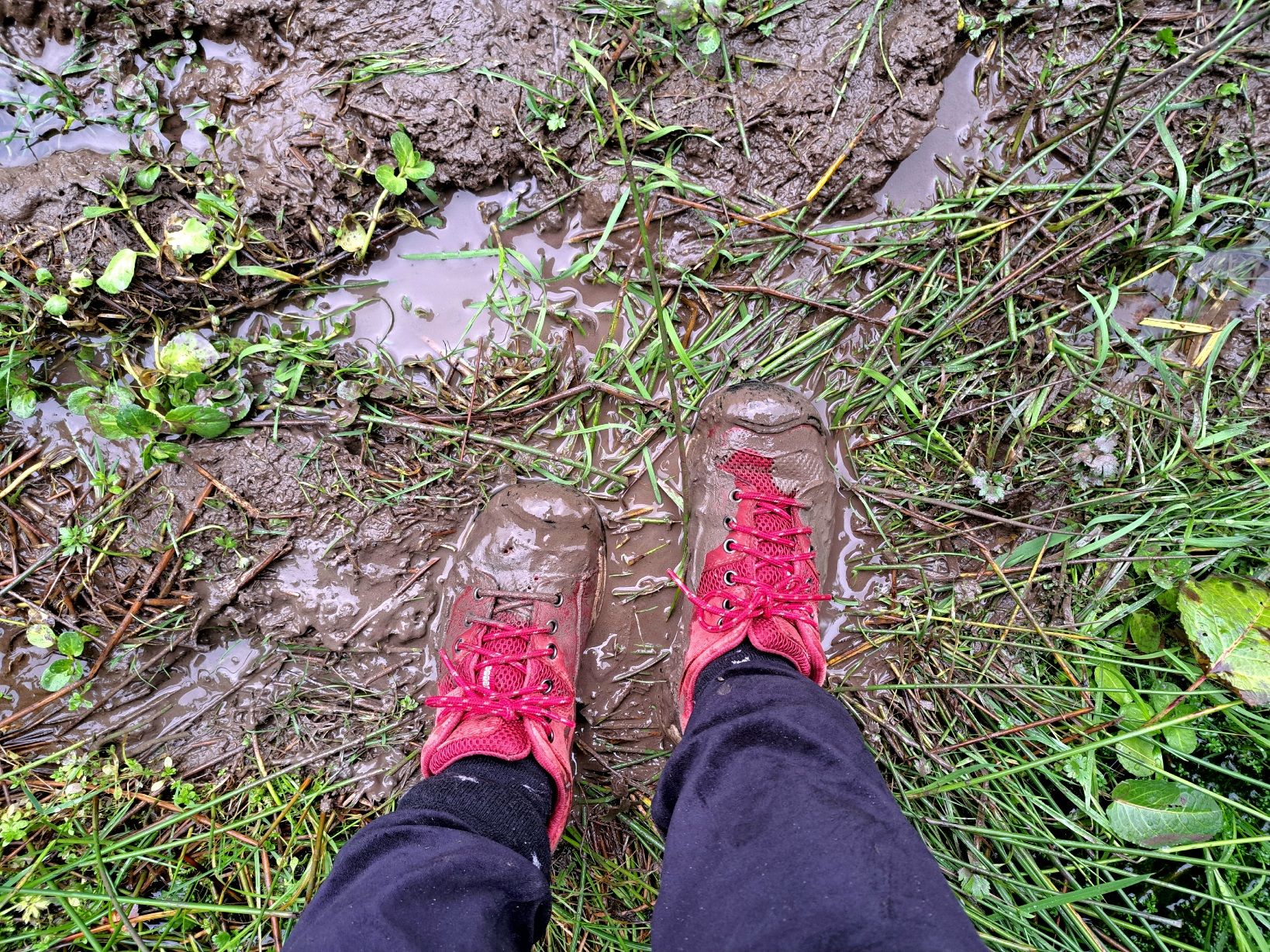
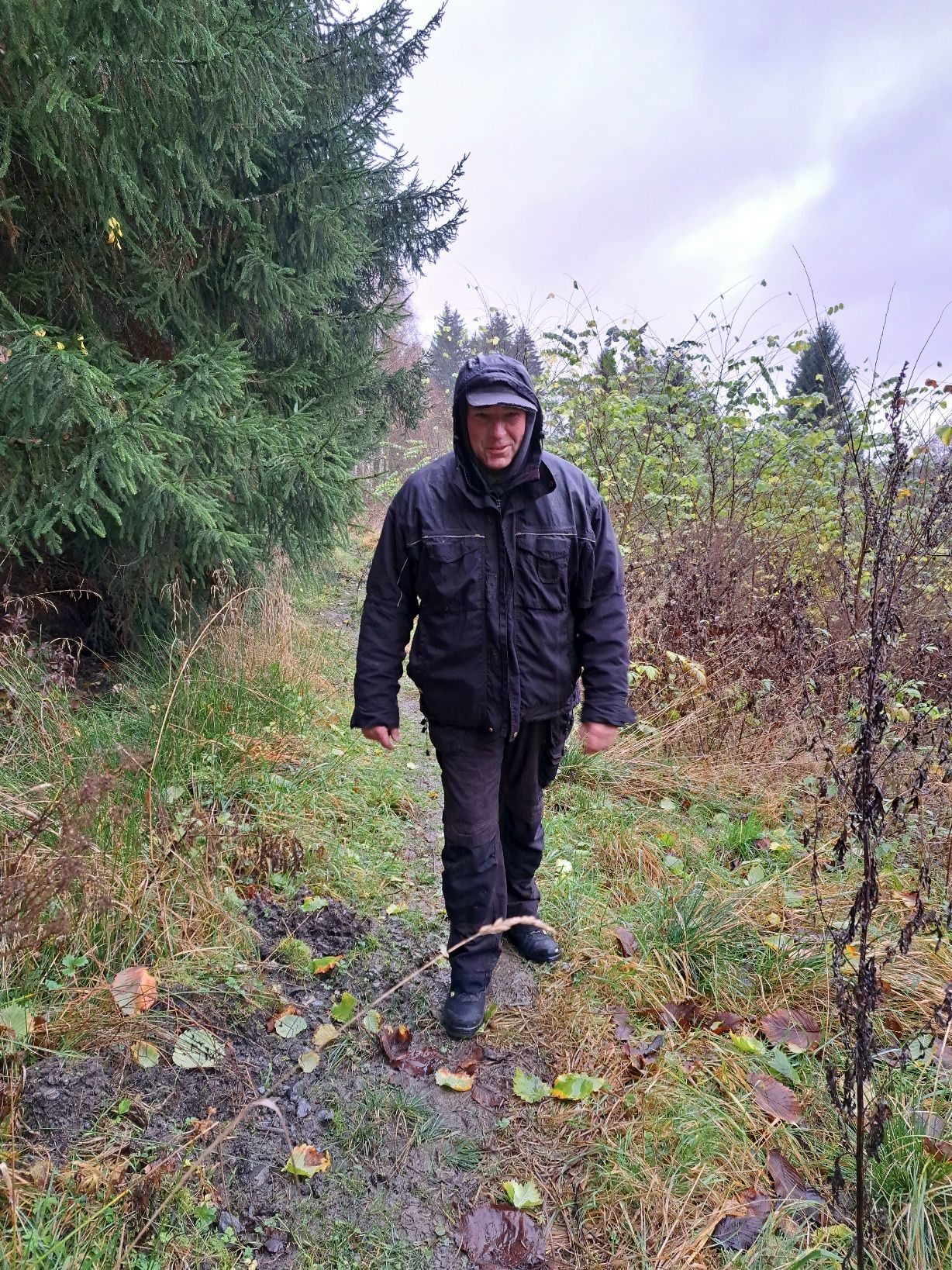
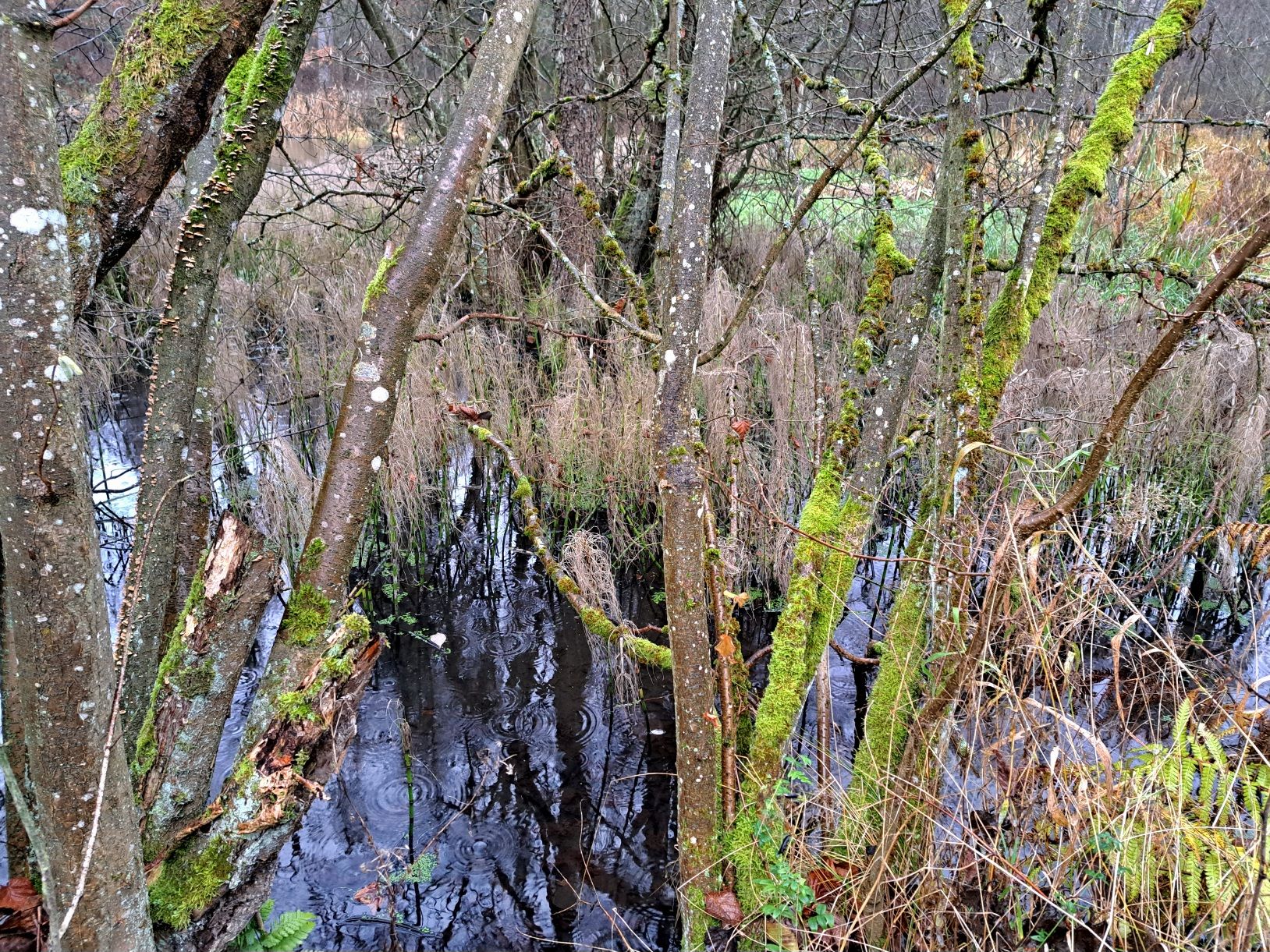
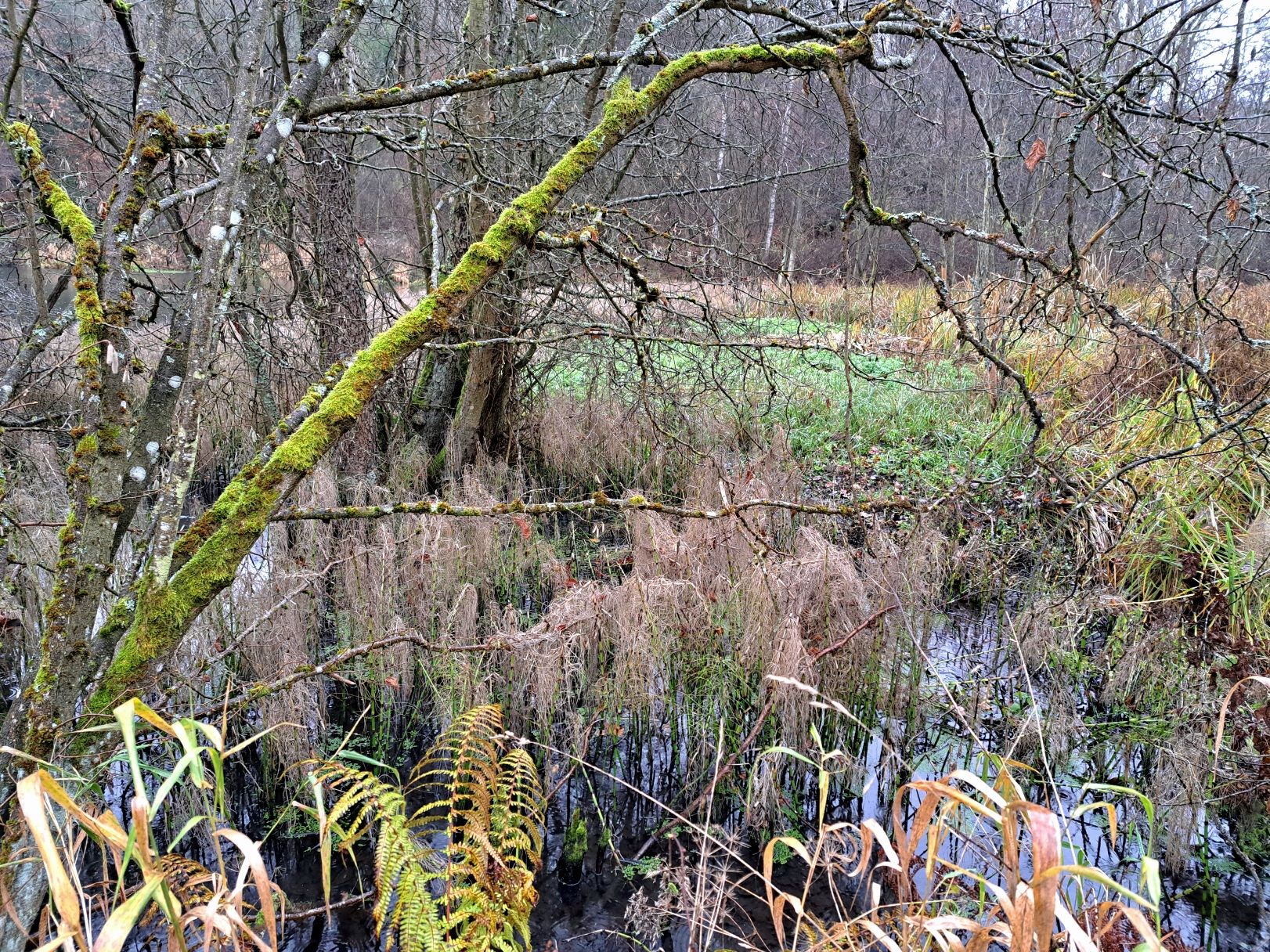
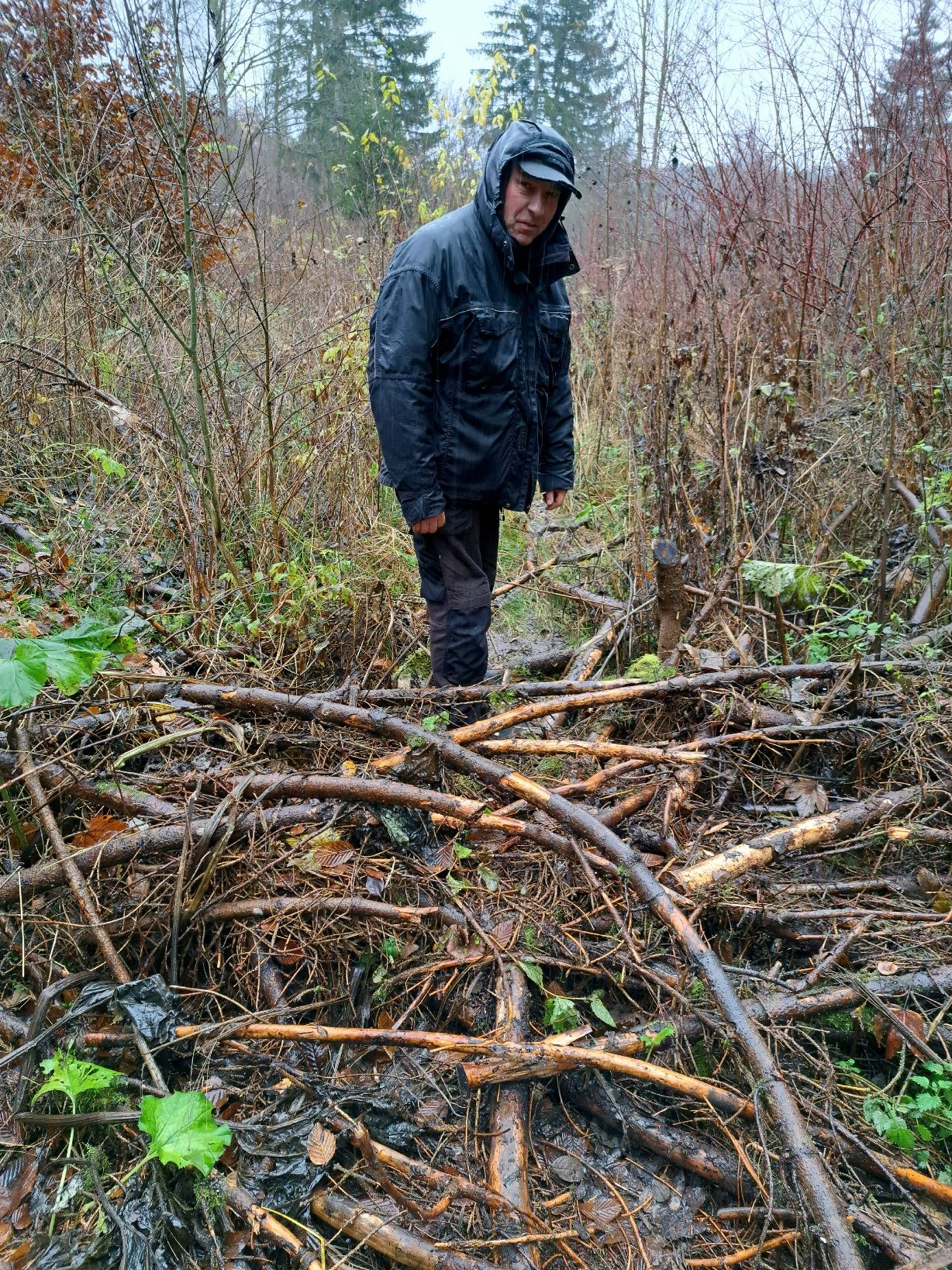
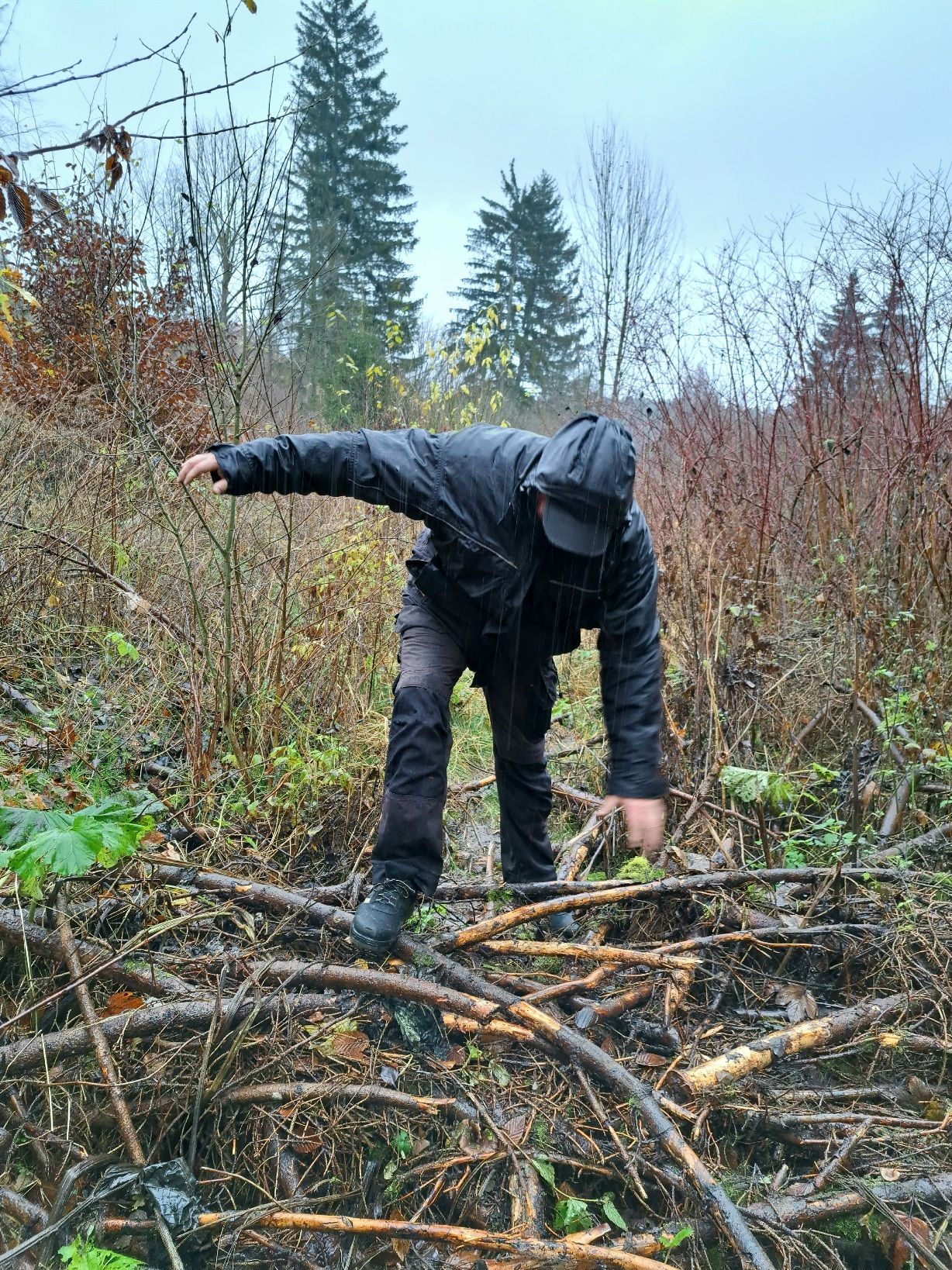
The hint for the footpath is cleverly placed, and soon we are sliding on difficult routes through mud, muck, and sludge. The wild boars have thoroughly churned up the ground, searching for roots, mushrooms, herbs, and careless mollusks. Anyone who does not pay careful attention risks breaking neck, leg, and other important body parts.
I cast a reckless glance into the increasingly heavy rain, and it's already happened! With both feet, I am stuck in the mud. Unmoved, inescapable, unavoidable!
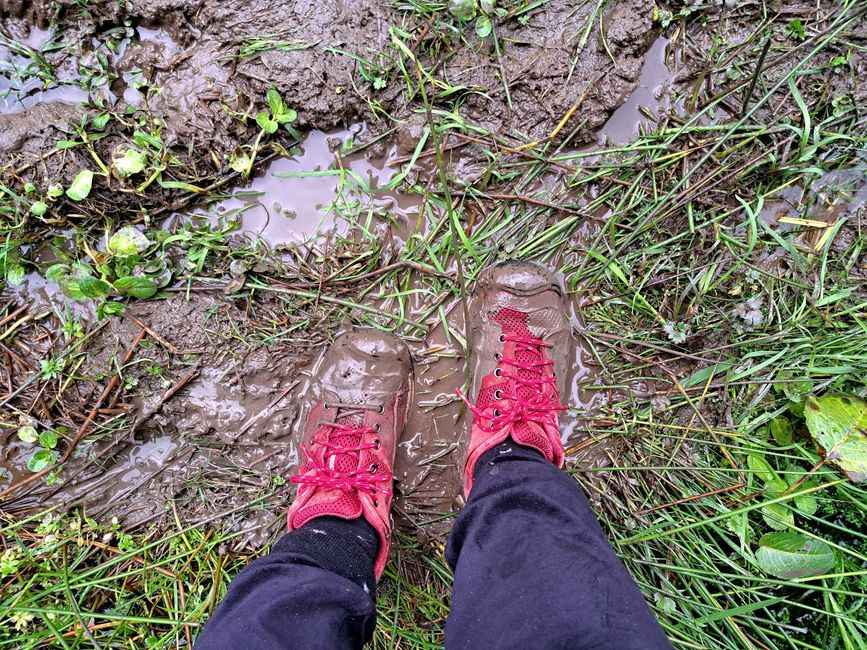
Oh no, oh no, oh no – I whimper! My shoes are stuck in the muck like they are set in concrete; I must now wait here until spring, being rolled in the mud by wild boars, laughed at by fox and hare and must miserably freeze in the inhospitable icy cold of the Unterharz! Oh no, oh no, oh no!
After the experiences in Lac d’Orient, I thoroughly researched how Münchhausen pulled himself and his horse out of the swamp by the hair. But that’s just a hideous lie, I might as well fly to the moon on a cannonball!
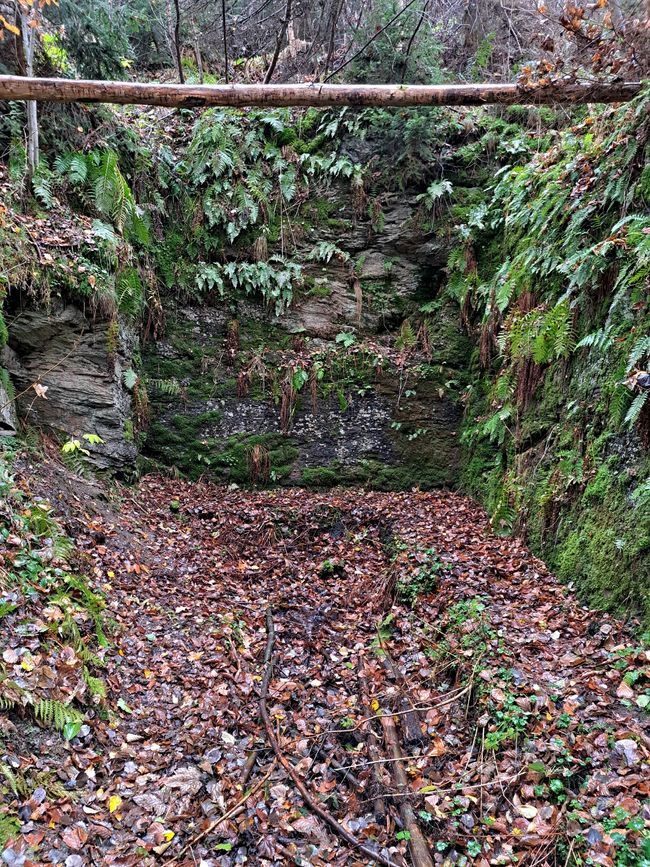
I look around and stretch out my arm as far as it will go. Now I can reach the branch of the next little tree to hold on to so as not to sink any deeper. The rain gets heavier; thick drops increase the puddle around me, the ground gurgles, and the mud gets muddier, mushier, stickier.
I turn and twist my left leg, back and forth, right and left, crossways, and after much back and forth, I can free it with a loud schmoooootz from the muck. A little blade of grass peeks out of the muck, where the freed foot comes to a standstill.
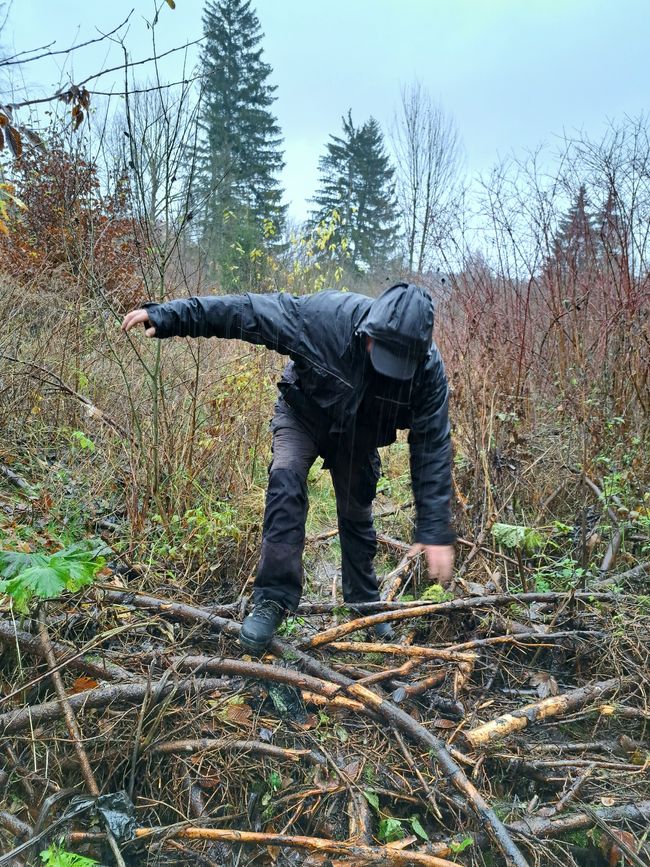
I have tied my right shoe sloppily and not properly, and I fear that the good piece will slip off my foot during a similar attempt and remain forever in the muck. That can’t be! I can't possibly limp over stock and stone, through wild boar muck and slippery marsh with a wet sock and without protective shoes! Oh no, oh no, oh no!
With the last of my willpower, I summon all my courage, the remaining energy, and the slightest bit of self-control and pull my foot out of the swamp with a powerful tug! A thick splash of mud and muck flies behind it; now I not only have the stuff on my socks but also decoratively all over my outfit.
Regardless, I am free and do not have to freeze miserably.
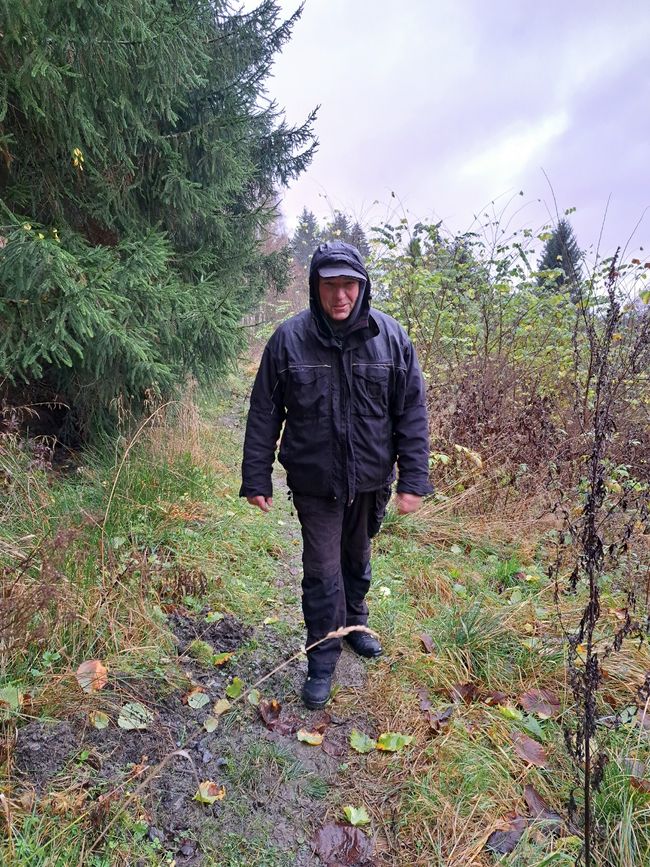
Looking back, I see the hero grinning widely on dry feet. He claims that the clever hiker takes the path around the swamp landscape, then the sock stays clean. Yes, yes, who has the damage…

After two hours, we are drenched and covered in mud back at the Mistral. Now quickly out of the dripping clothes and into dry socks. With hot coffee, sweet cookies, and a roaring gas heater, we look at the landscape of the Unterharz, where for a little moment the sun peeks through the thick clouds.
Man, always these exciting micro-adventures at the doorstep!
But next time I prefer to watch the pink flamingos in the Camargue.