

susanne-reist
vakantio.de/susanne-reist
Zuletzt in Venedig
9. Chapter: High in the Mountains, a Fire Festival, an Onsen with Forest Therapy, and a Totally Crazy Café
Published: 07.11.2025

Tour
Ohitaki-Feuerfestival
Festival
Worth seeing
Kifune
Kyoto, Japan
Worth seeing
Kurama
Kyoto, Japan
Worth seeing
Kurama Onsen
Kyoto, Japan
Eat
das Café in der Nähe
$$ · Snack
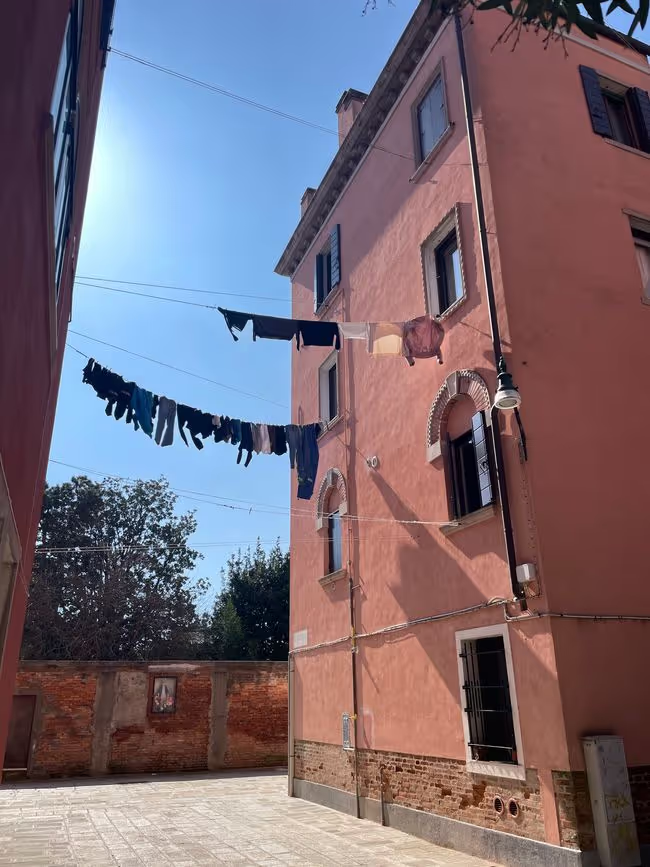
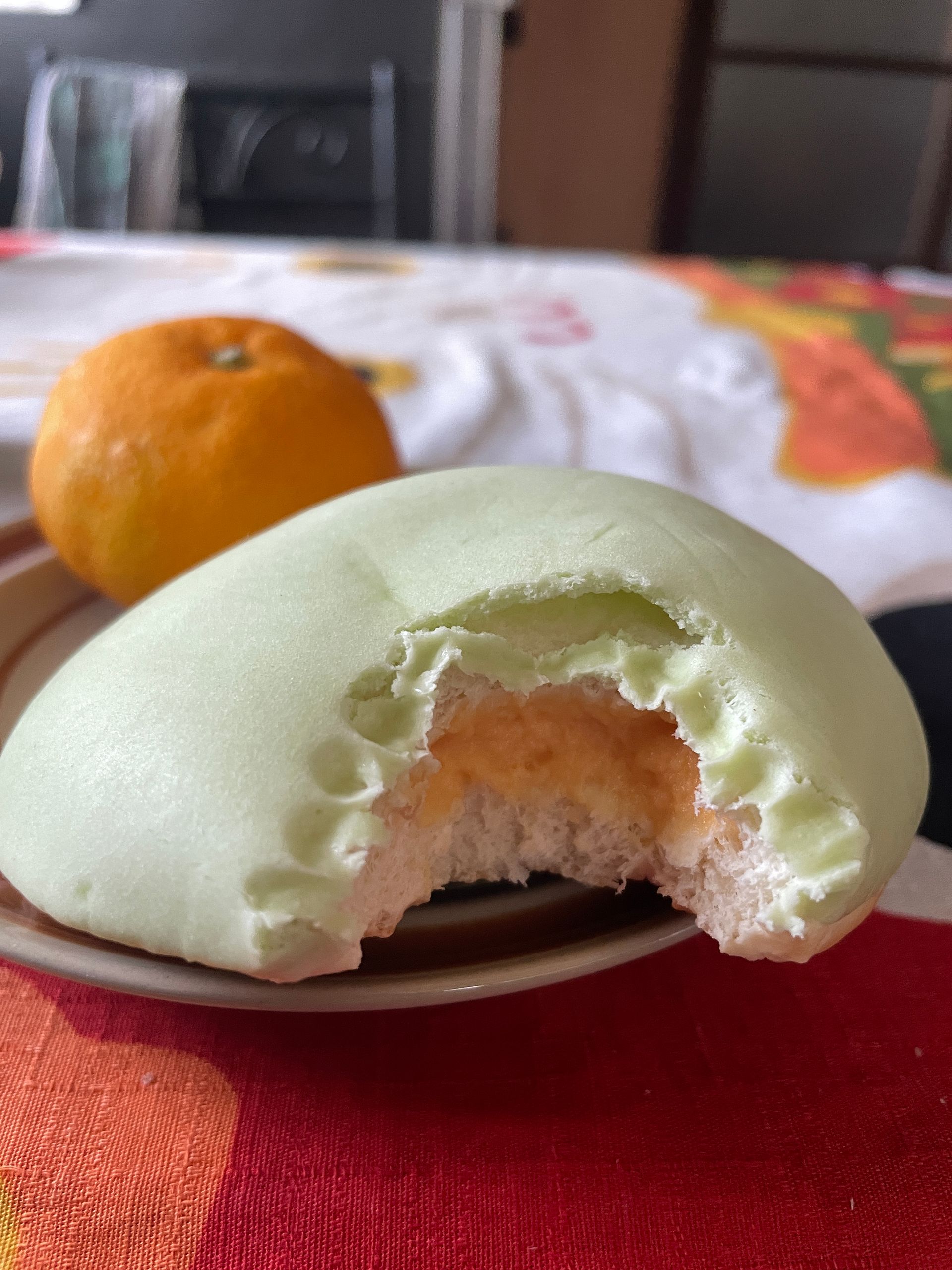
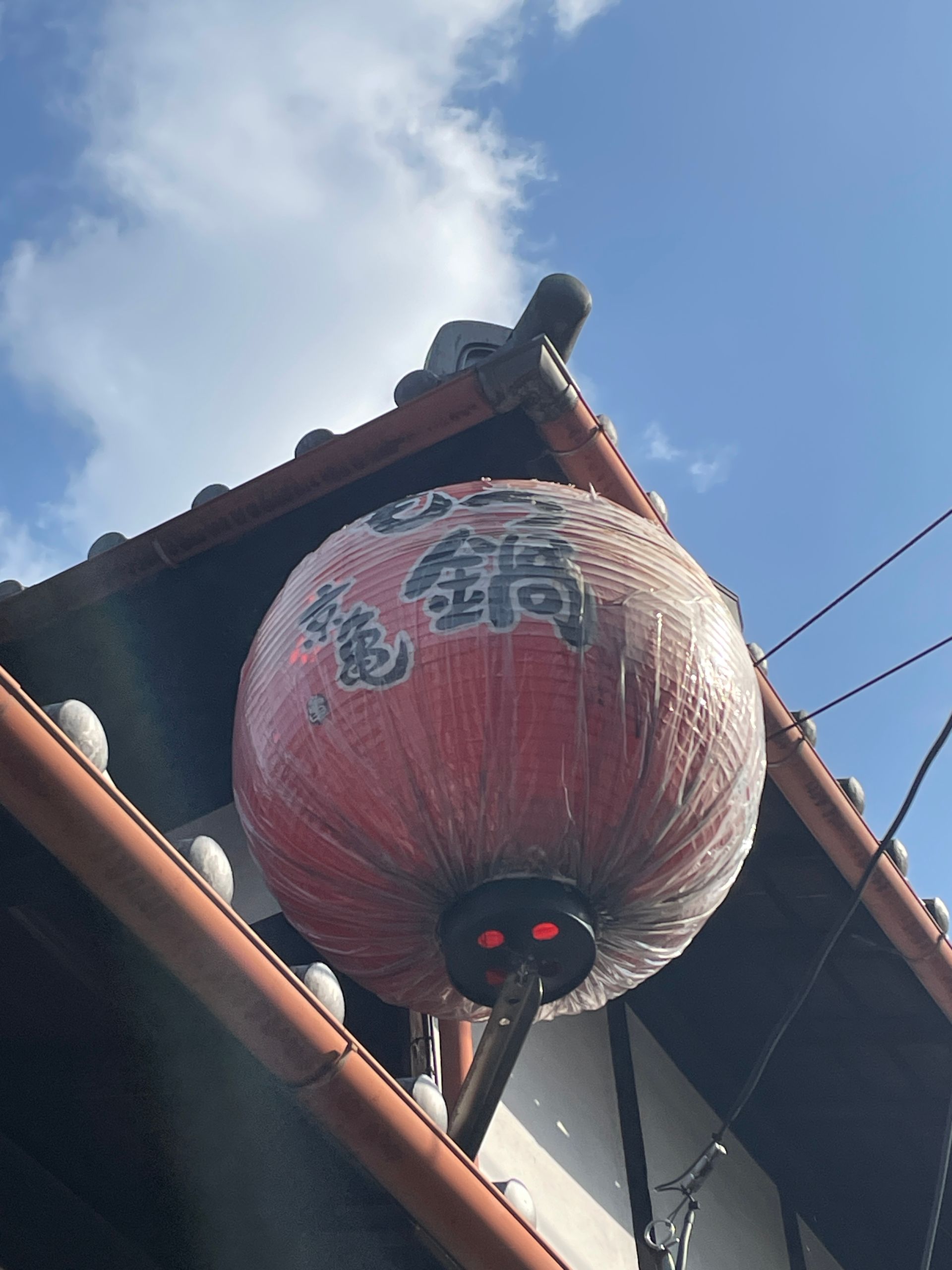
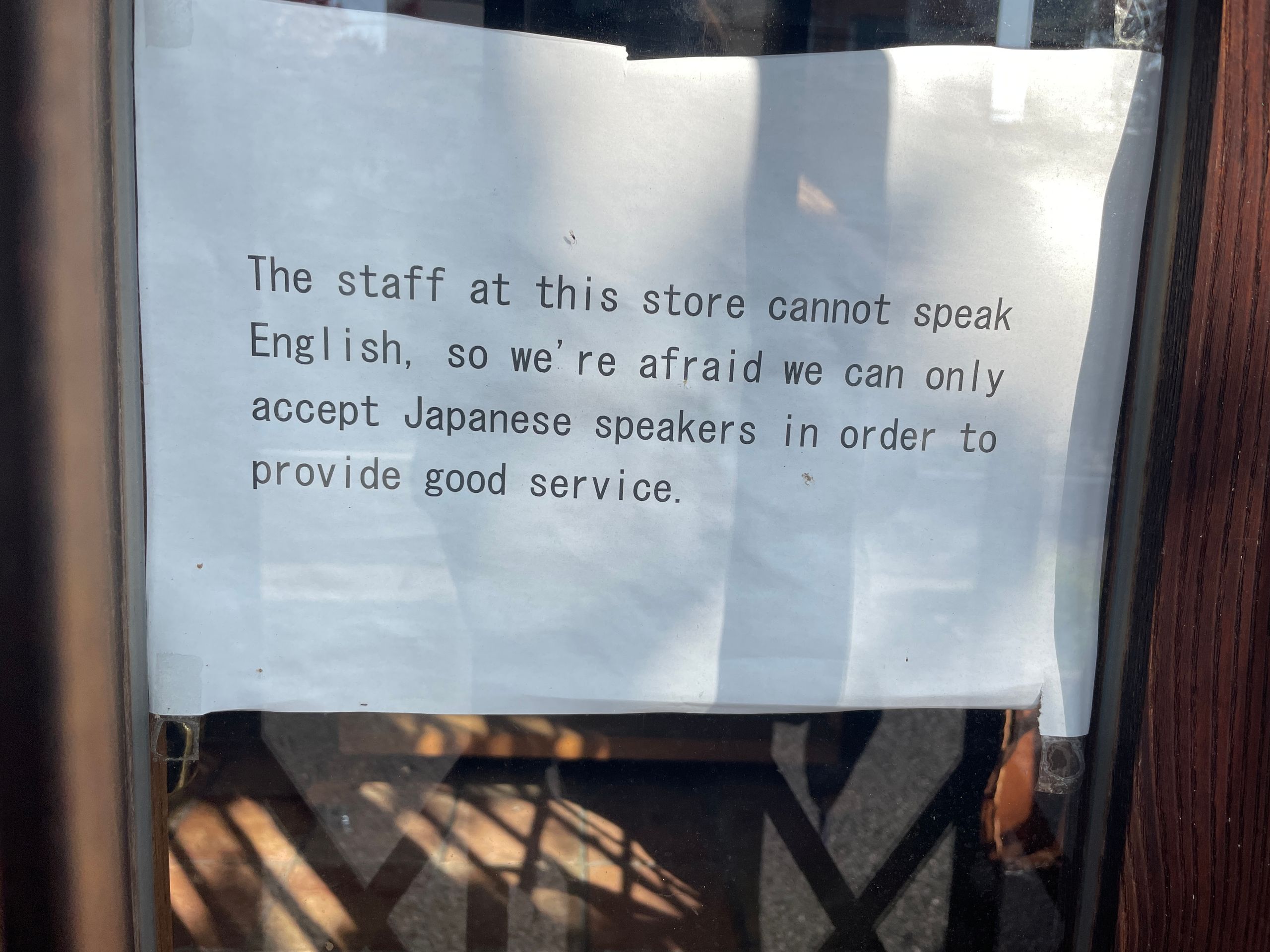
After a rather colorful breakfast with melon pan, a type of thick fluffy roll with green glaze filled with melon puree, I set off to the small regional train station nearby, from which rickety trains head into the mountains located north of Kyoto. On the way, I encountered some curiosities: The Japanese have a completely insane relationship with plastic! Every single rice cracker, every piece of gum in the package, absolutely everything is individually wrapped in plastic—no sign of environmental awareness! Even the beautiful antique lantern balloons made of thick handmade paper, hanging in front of almost every restaurant, red or white with black characters, are partially wrapped in thick plastic to ensure they don't get wet or dirty!
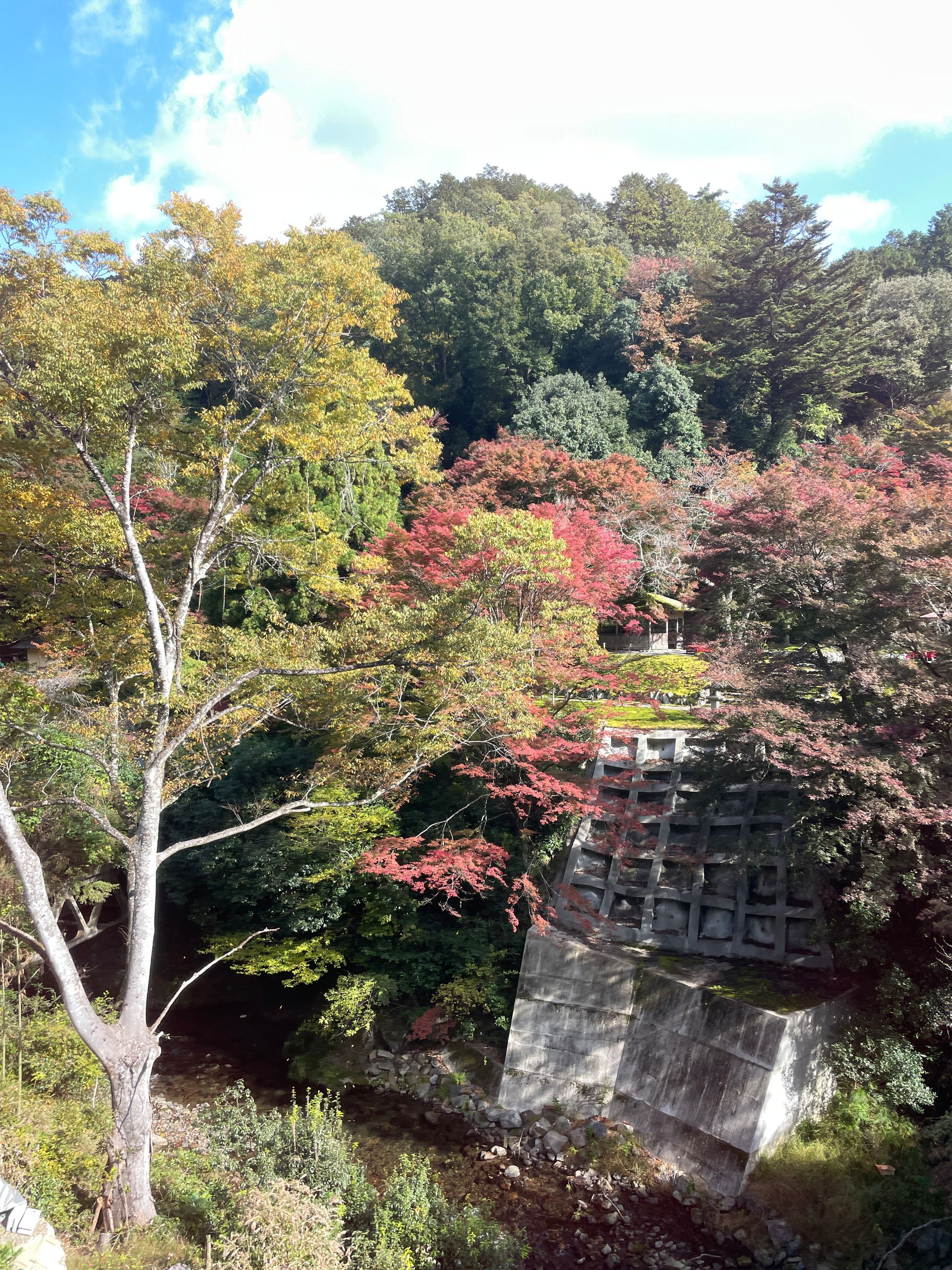
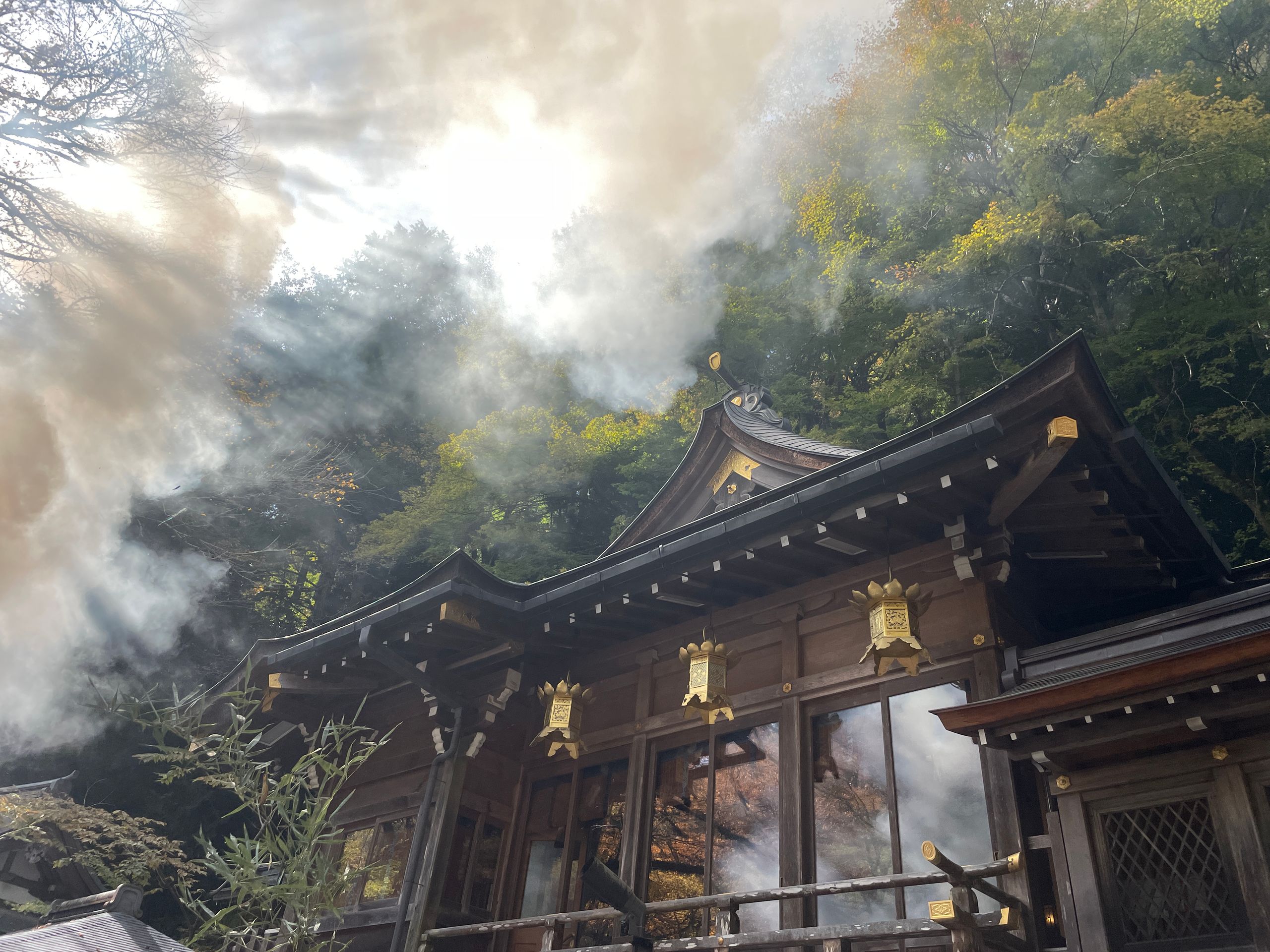
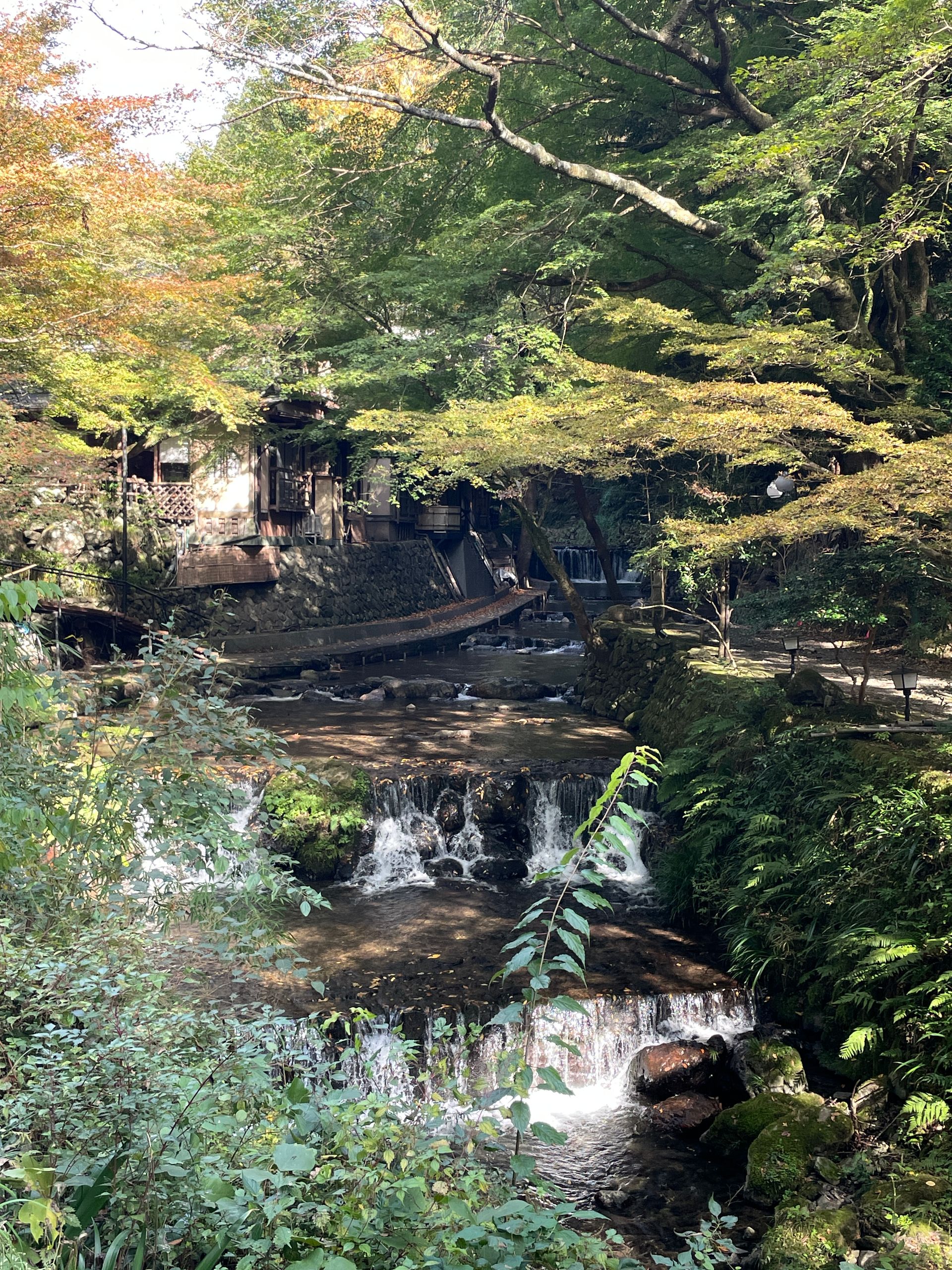
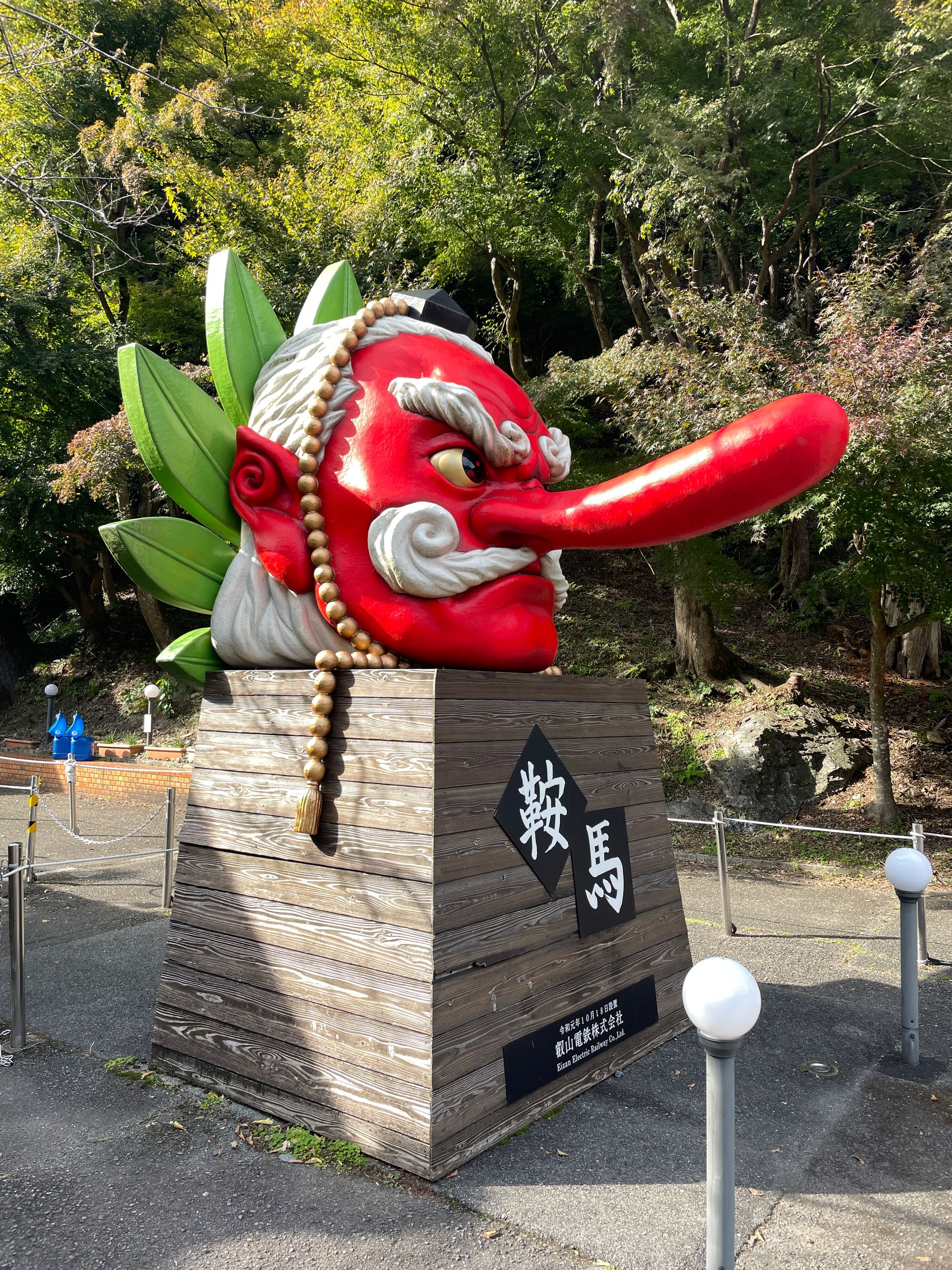
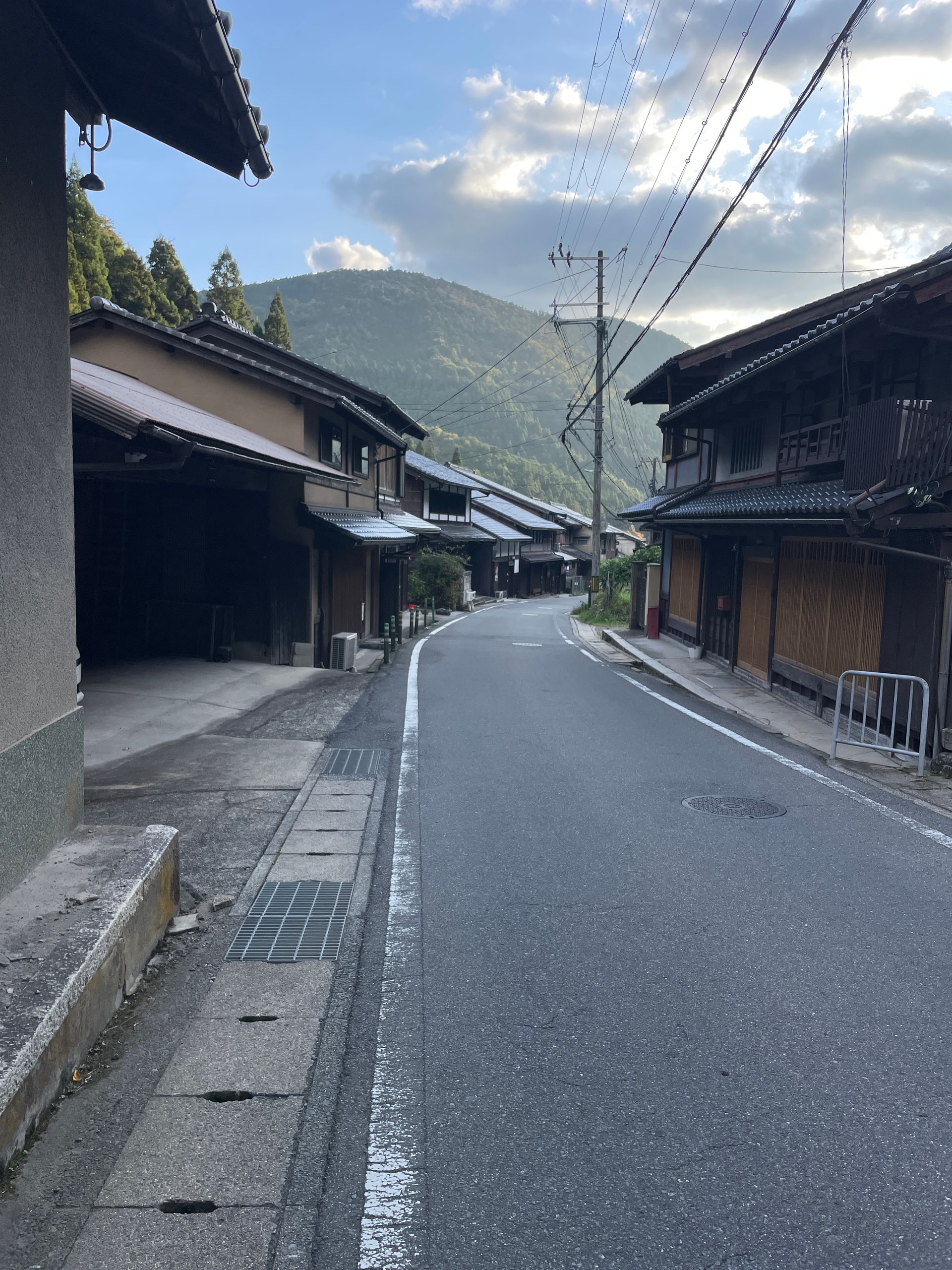
The two mountain villages north of the city are called Kifune and Kurama, both of which stretch along the winding road, and a rushing clear brook tumbles down the slope beside them. In Kifune, there is a lovely small Shinto shrine where the god or goddess of water and rain is worshipped.
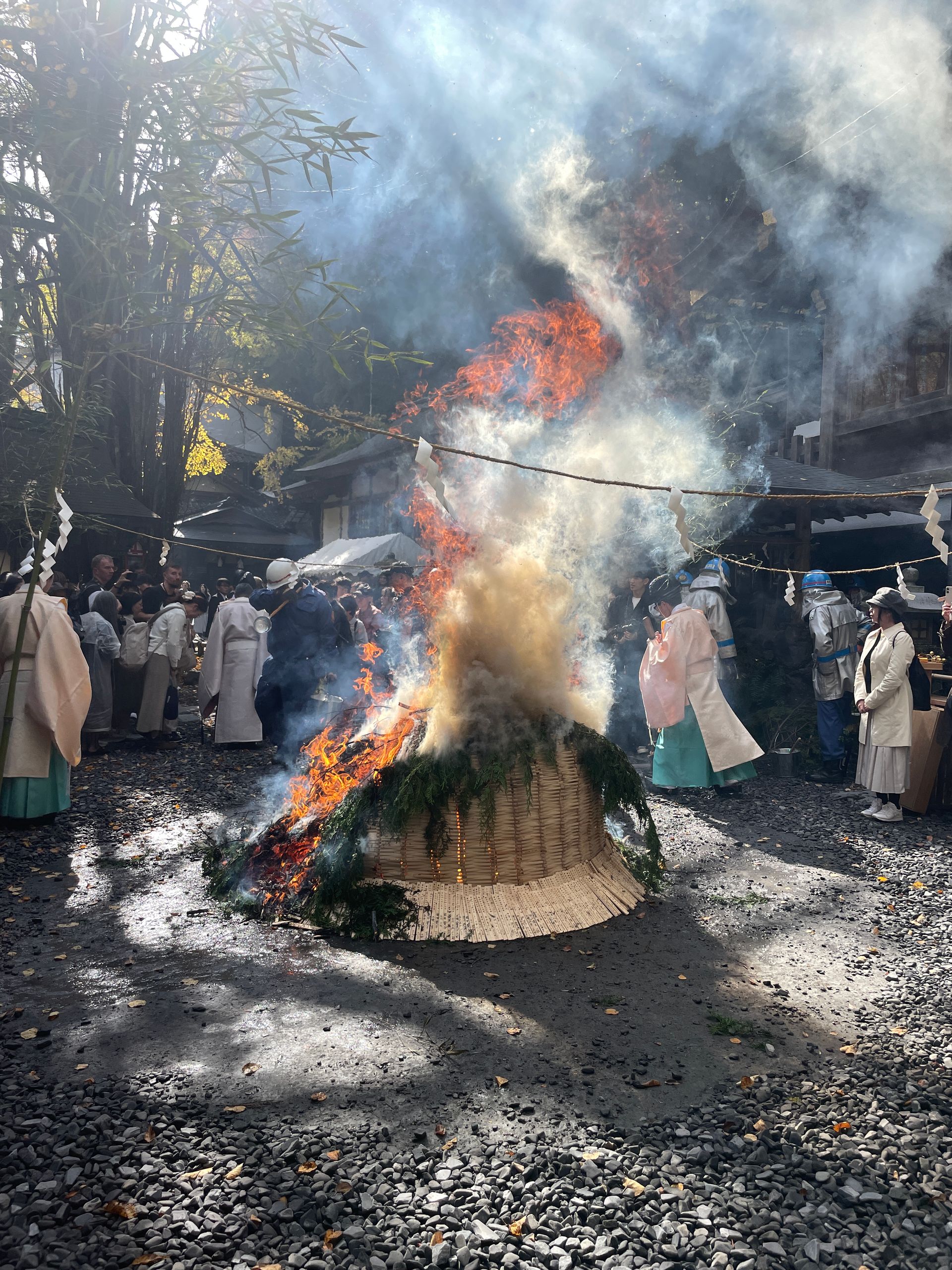
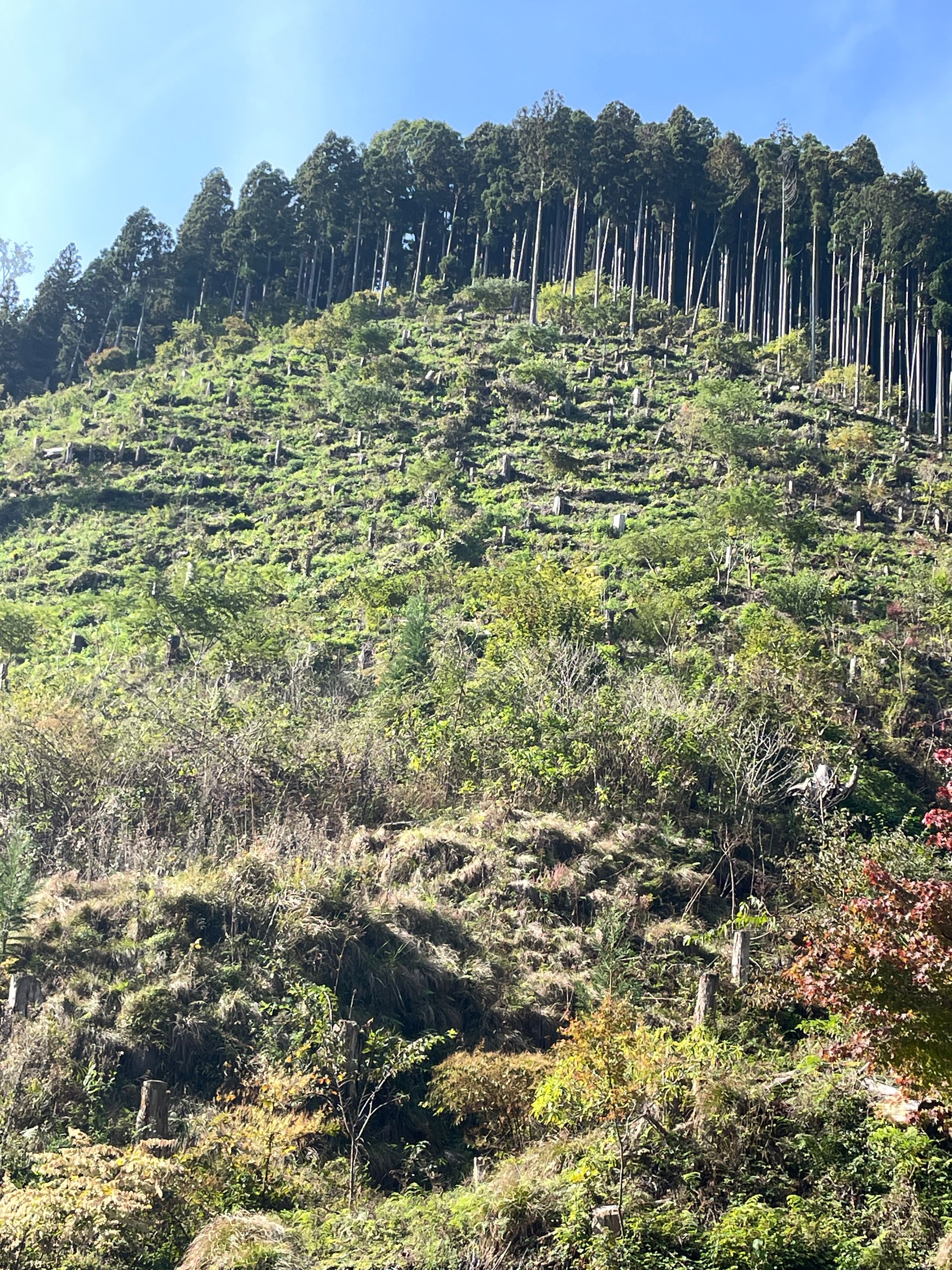
The Ohitaki Fire Festival takes place here every year at the beginning of November. The last time I was here in the fall, several devastating typhoons had just swept through Japan, the mountains were littered with broken giant trees, now only the stumps remained on the slopes—the hiking paths were closed, and the fire festival was canceled. But today at 11, it finally happened:
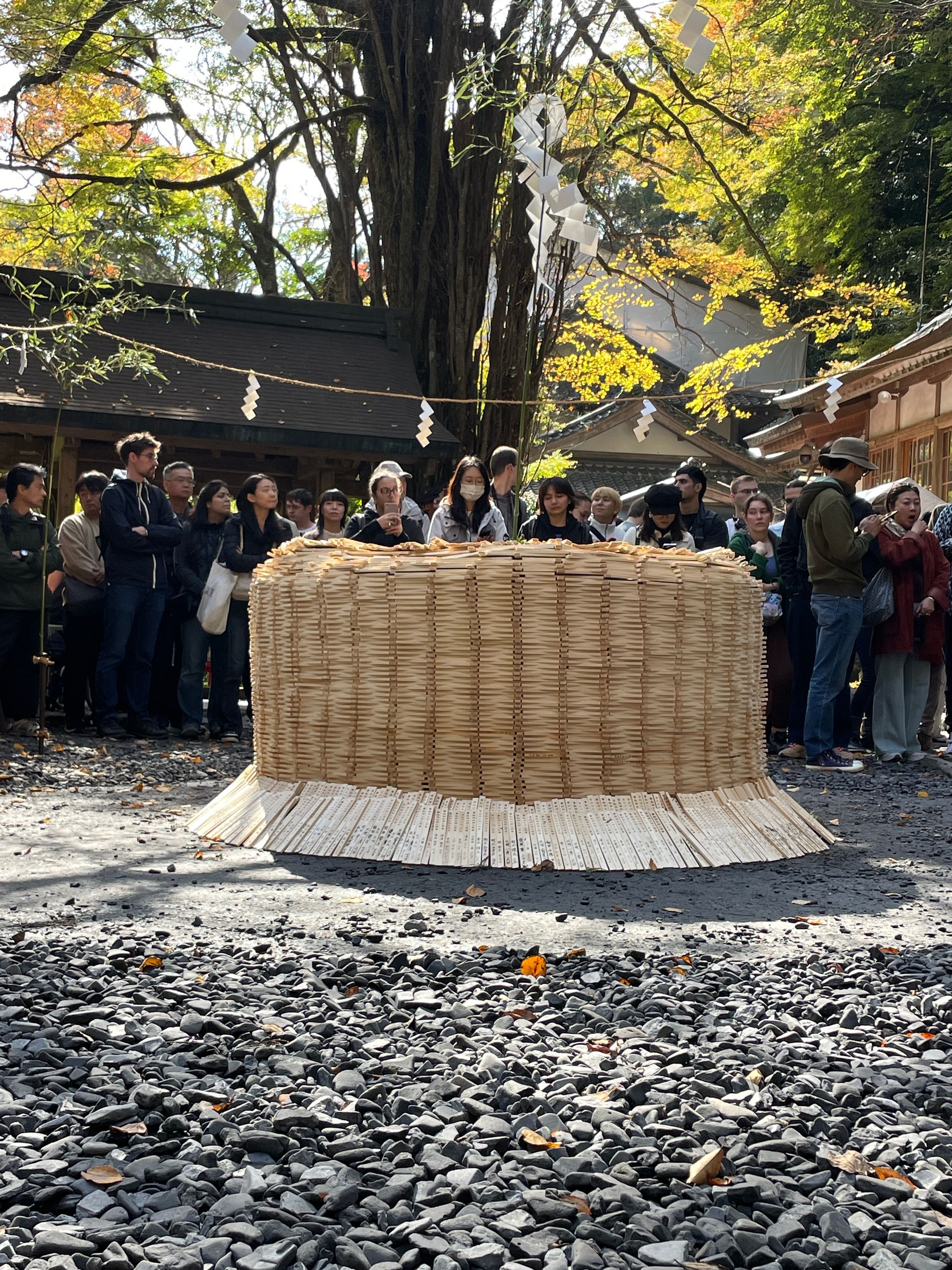
In the shrine itself, a ceremony was held in front of invited guests, featuring strange chants, gongs, and drums that echoed outdoors, but in the small courtyard, a large pyre of narrow wooden planks, perhaps 20x2cm, was already erected, onto which people had written their wishes, worries, hopes, and prayers.
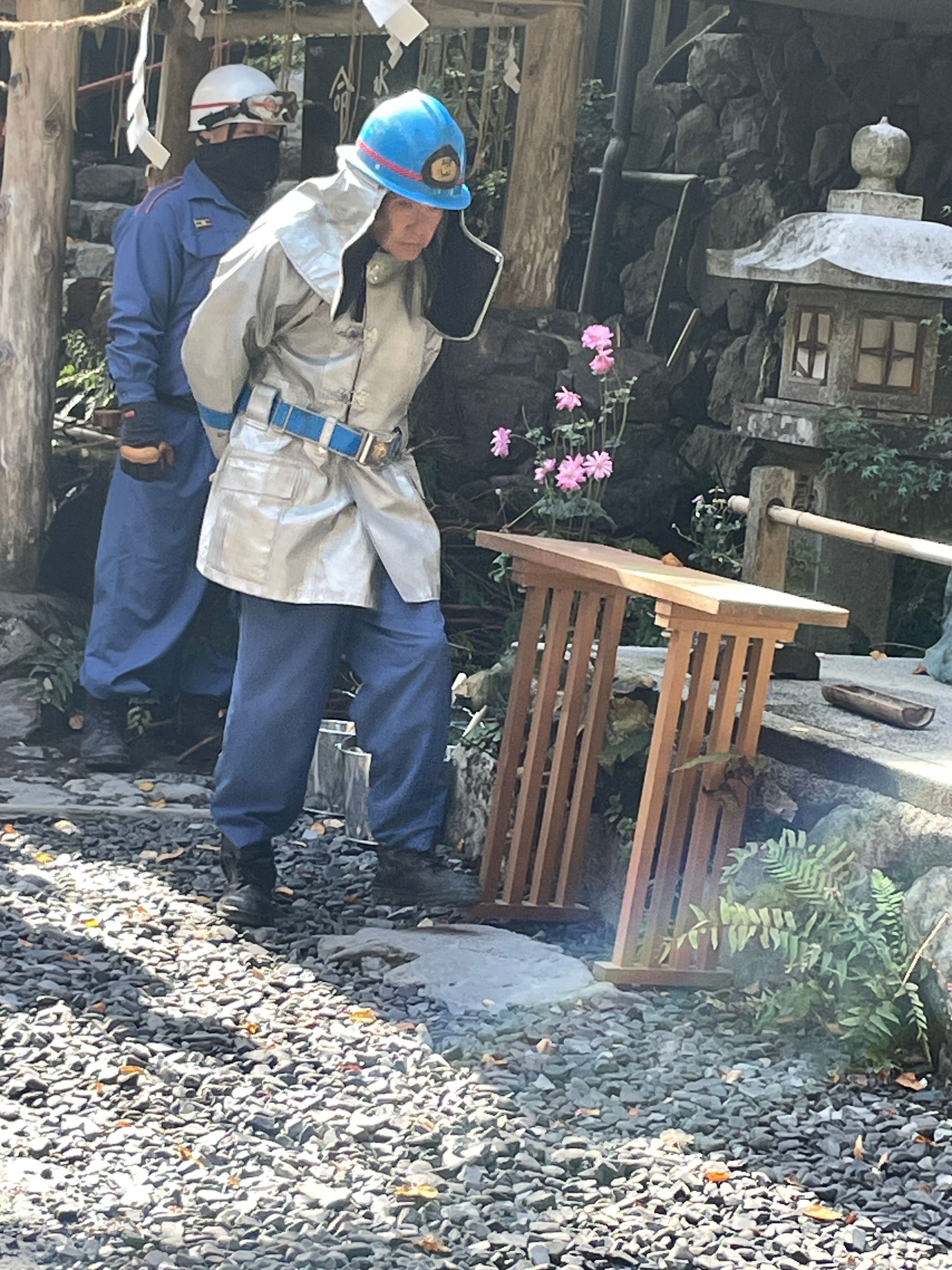
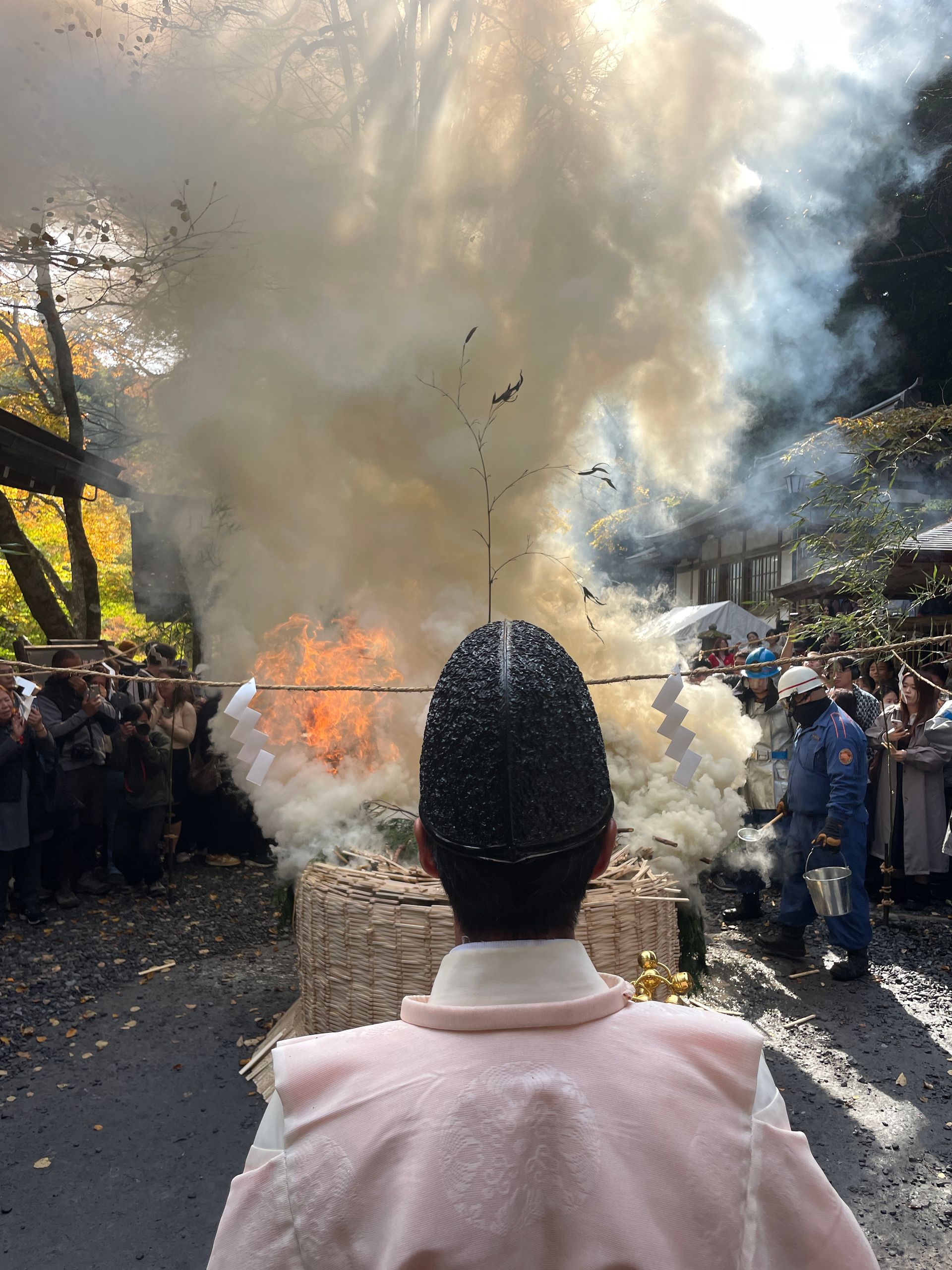
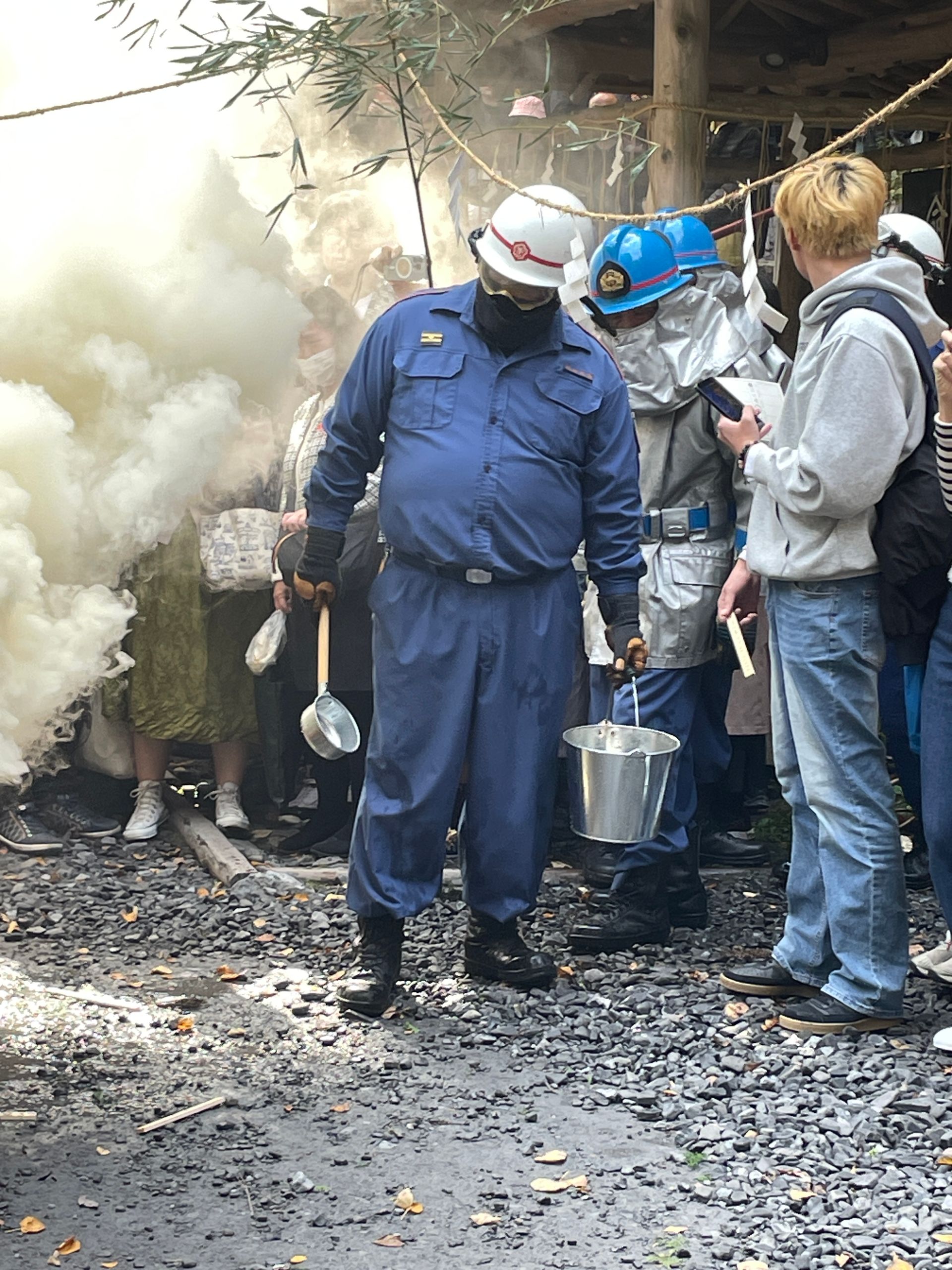
Nearby, there were large pine branches, and it wasn't long before about ten volunteer firefighters appeared, putting on jackets and large headgear made of some kind of aluminum or Teflon, and filling maybe five metal buckets with water, placing large ladles beside them.
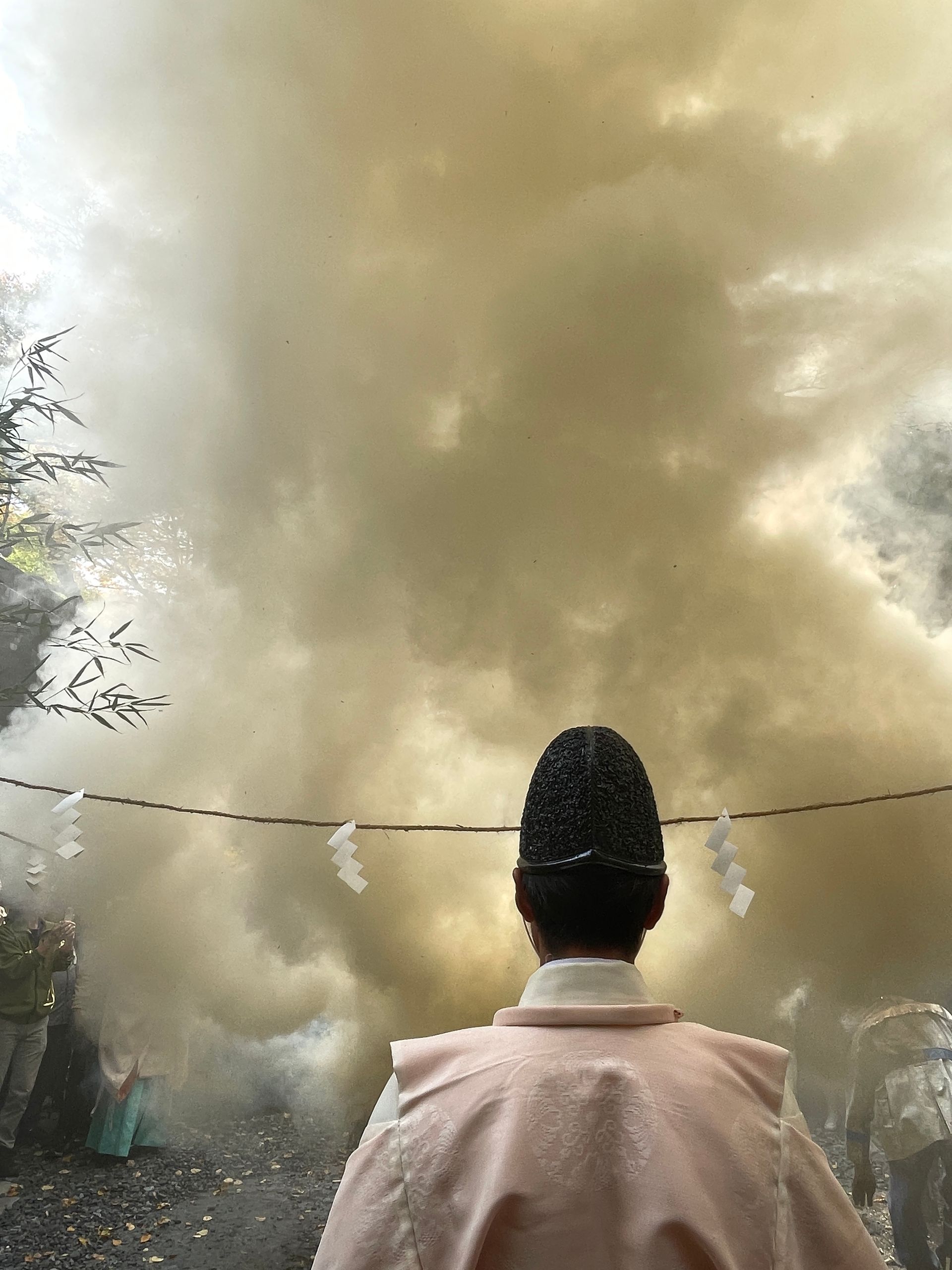
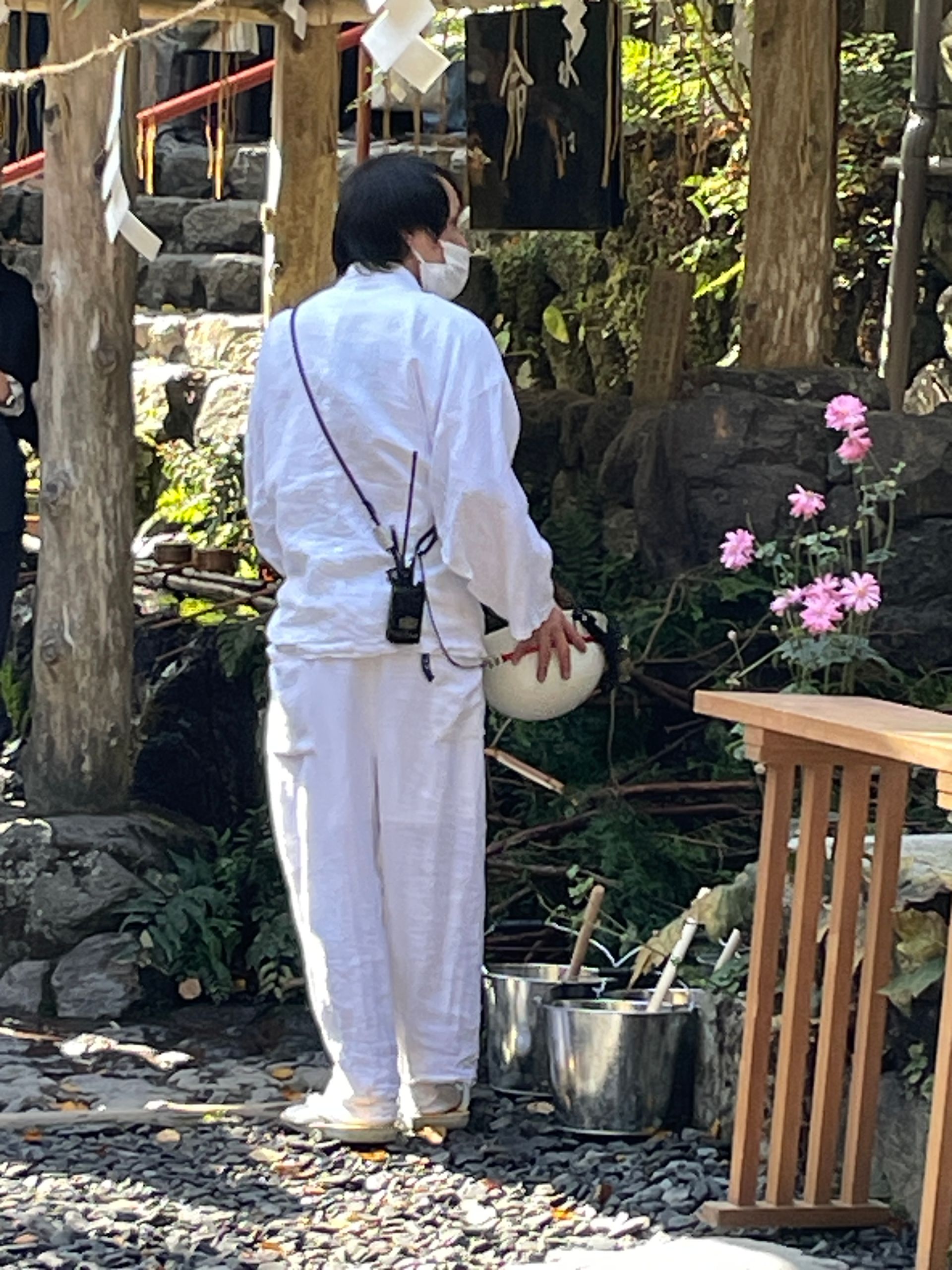
Then, four Shinto priests descended the steps from the shrine, singing, shaking golden bells, and the chief priest lit the woodpile on fire. Thick yellowish-white clouds of smoke rose up and the firefighters began to lay down the water-sprinkled pine branches wherever the fire was particularly fierce, which intensified the smoke. Considering that one is usually not even allowed to light a cigarette near a wooden building, this seemed quite reckless, but I had never seen such a well-controlled bonfire, even if the firefighters with their small buckets and ladles appeared almost a bit ridiculous.
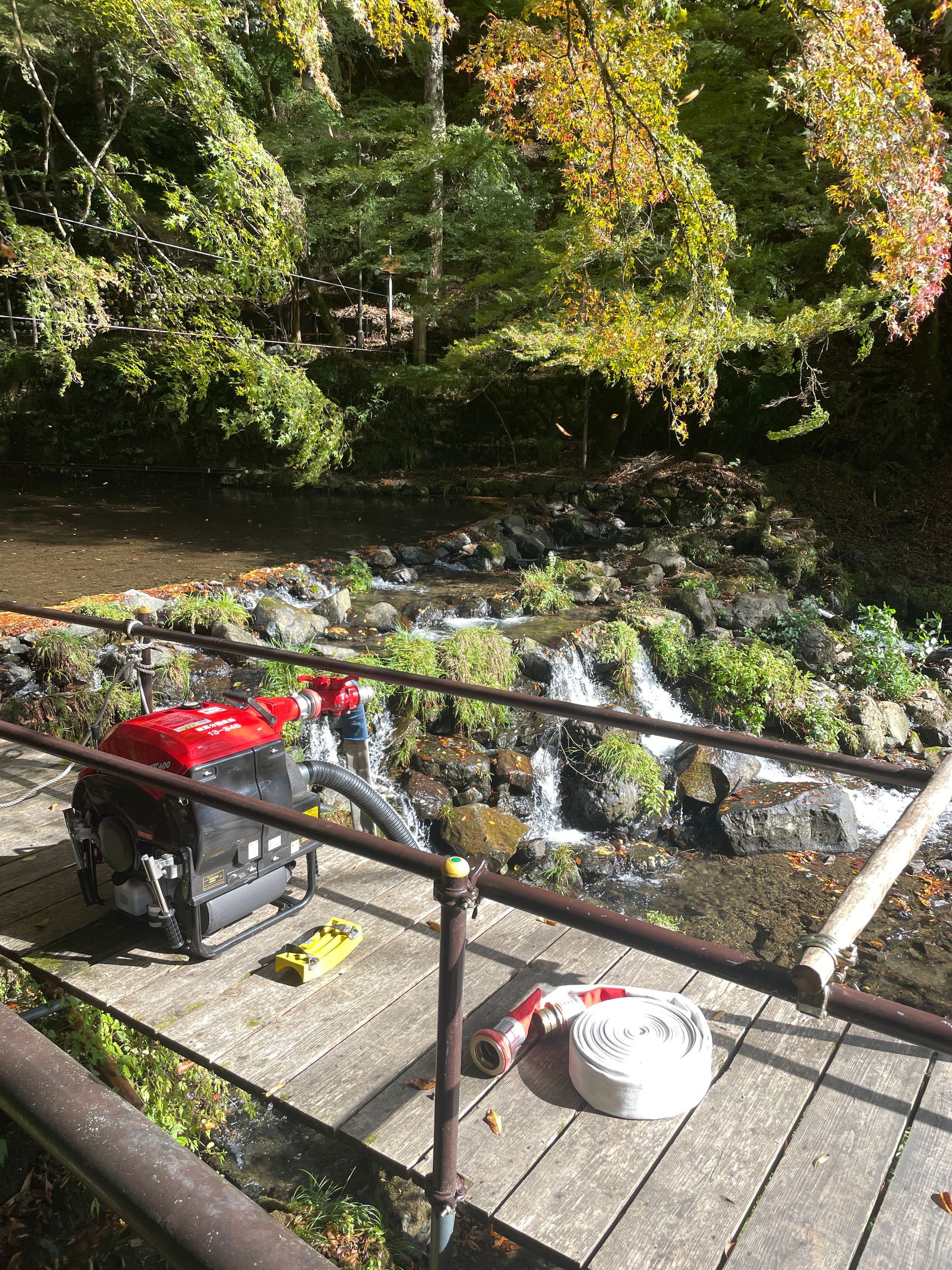
Later, I saw that down by the road, just in case, a pump with a thick hose was installed in the brook.
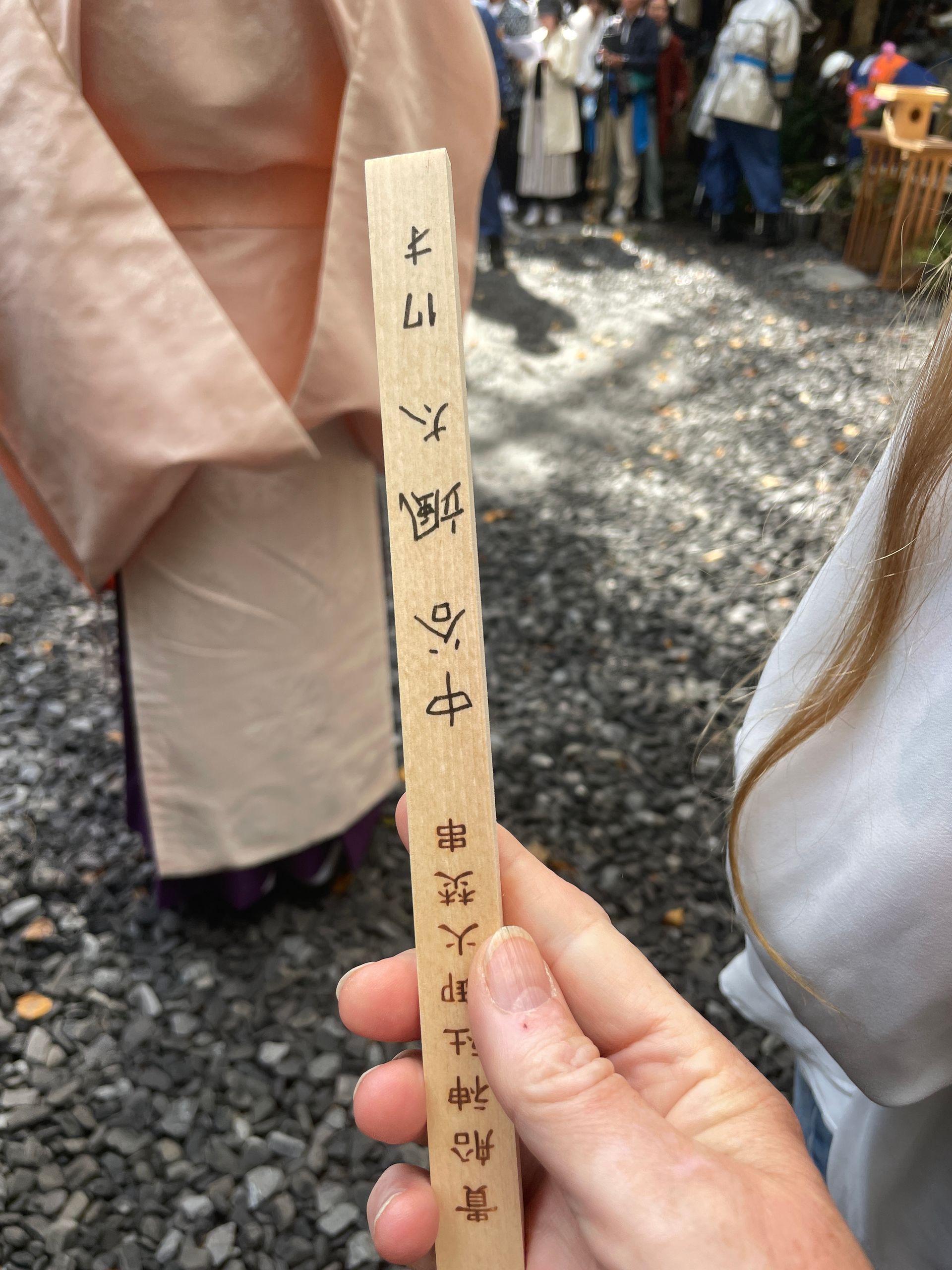
We spectators were also handed a wooden stick to throw into the fire ourselves. I have no idea what was written on mine, but I hope it works!
Right next to me sat a terminally ill woman, barely alive, leaning against her husband. It was very touching to see how much hope and faith is placed in these ceremonies, even if they seem like hocus-pocus and sheer superstition to us.
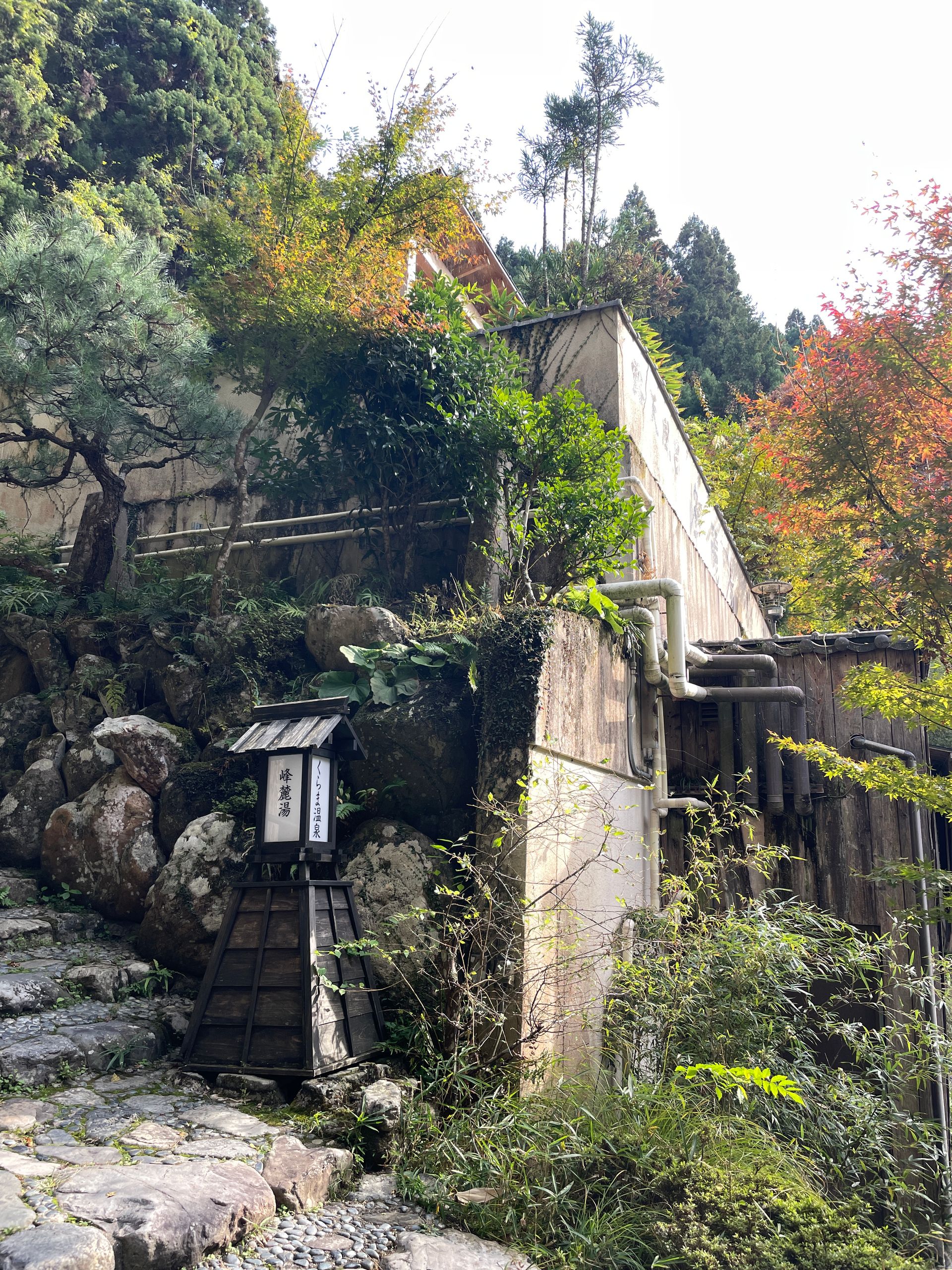
As the fire almost burned down completely, the priests stopped singing and ringing their bells, withdrew, the crowd dispersed, and I moved on to the next village, Kurama, where there is a lovely onsen, which consists only of a warm thermal pool outside in the mountains with a view of the forest, and spent the afternoon there.
What I notice about both villages, and I've been there several times now, is that they are completely devoid of people and lifeless: The old wooden houses seem completely boarded up, no flowers or plants in front, no shops, cafés, no marketplace or any place where the residents could gather together—the only sign that these places are inhabited is the cars in front of the houses, which I found somewhat unsettling. And when I think about how glad the young and older people in Kyoto are to gather outside, make music, play ball, walk their dogs, picnic, and chat, I understand this village stagnation even less. Just this morning, I observed again how a group of elderly people practiced some sort of Tai Chi together to gentle music in the small square near us.
In my guesthouse, apart from me, there is currently also a Brazilian journalist and two friendly young French women. One is diligently learning Japanese, the other is an artist (what she does, I don't know yet, but she drums with Japanese in a band) and seems to constantly be moving back and forth between Mexico City, Geneva, Seoul, and Japan, completely
susanne-reistLike a newsletter: every new post arrives via email.
Answer