

susanne-reist
vakantio.de/susanne-reist
Zuletzt in Venedig
16.Chapter: More Buddhism, Fried Oysters, and Many People on Sunday
Published: 16.11.2025
Attraction
Yakushi-ji
Nara, Japan
Tour
buddhistische Zeremonie im Yakushi-ji
Show · 1h
Eat
Creperie nebenan
$$ · Dinner
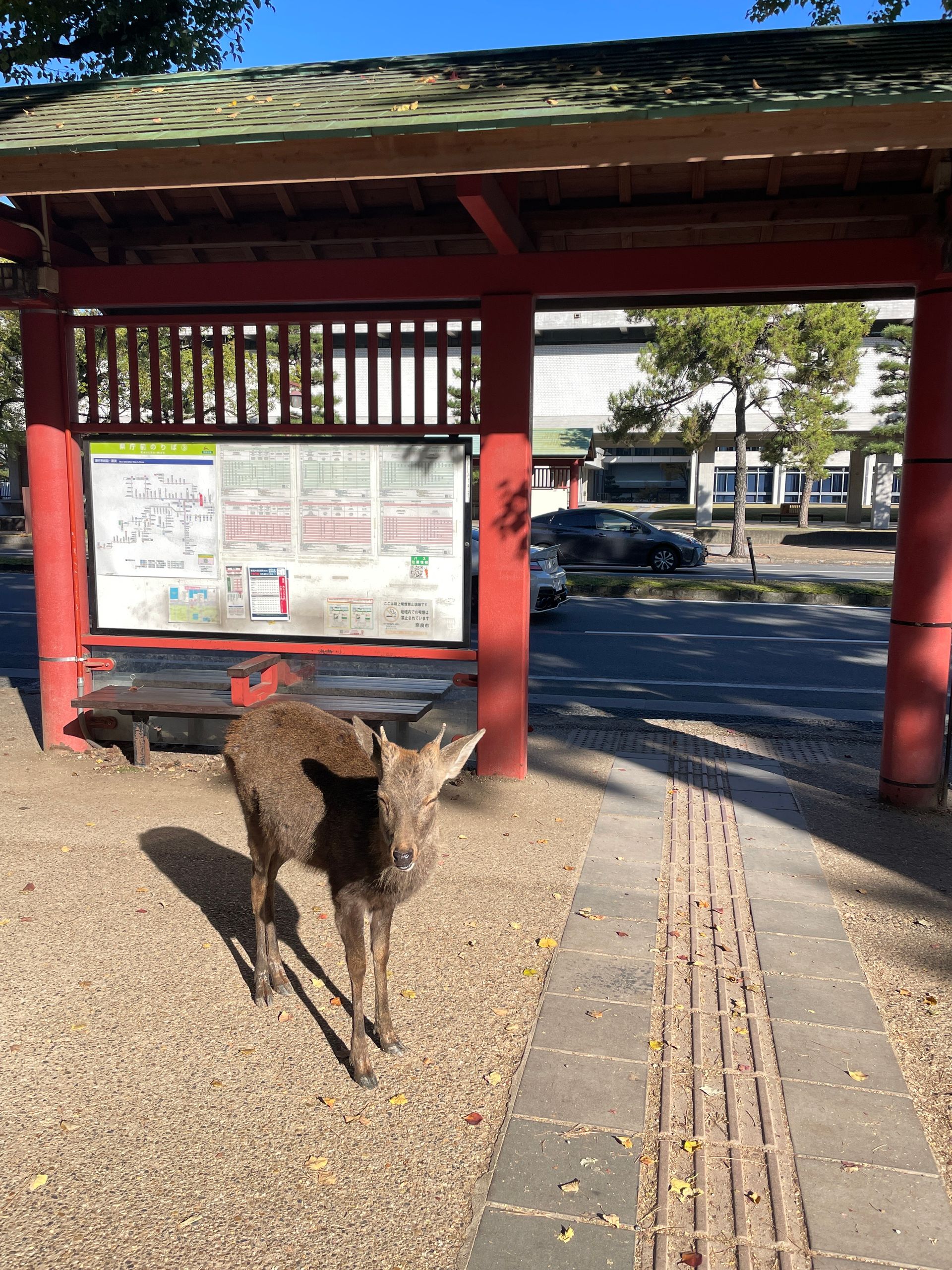
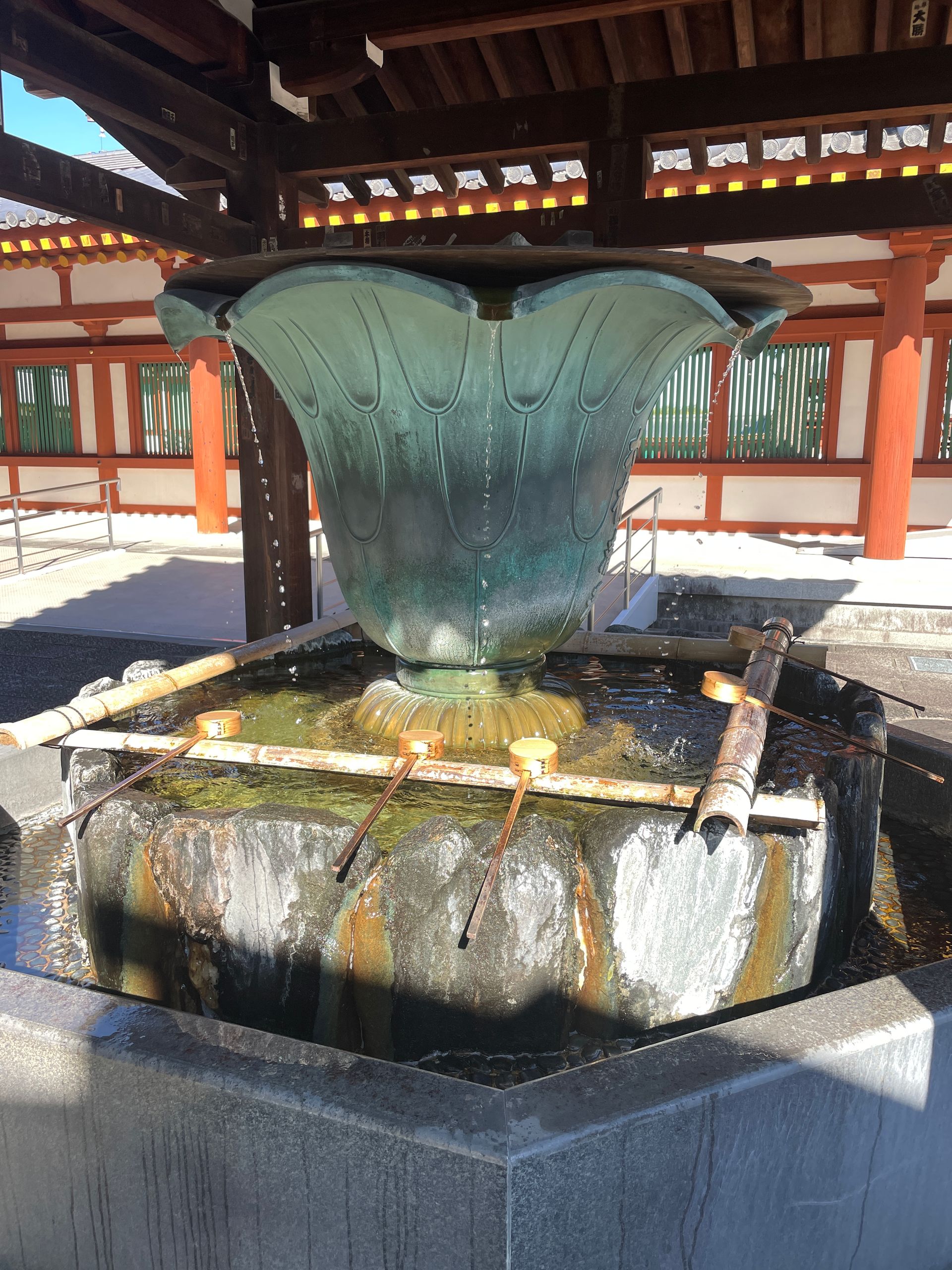
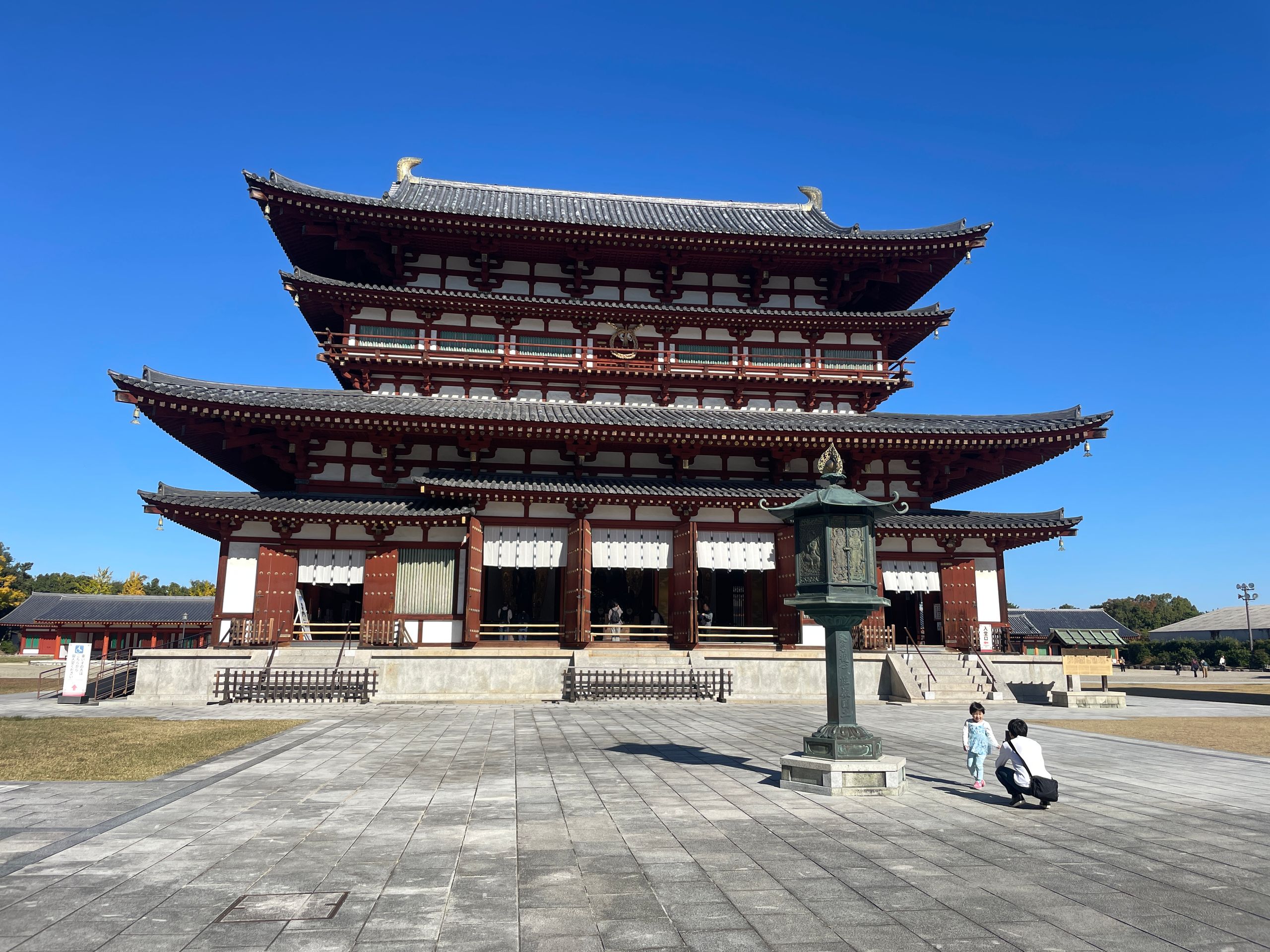
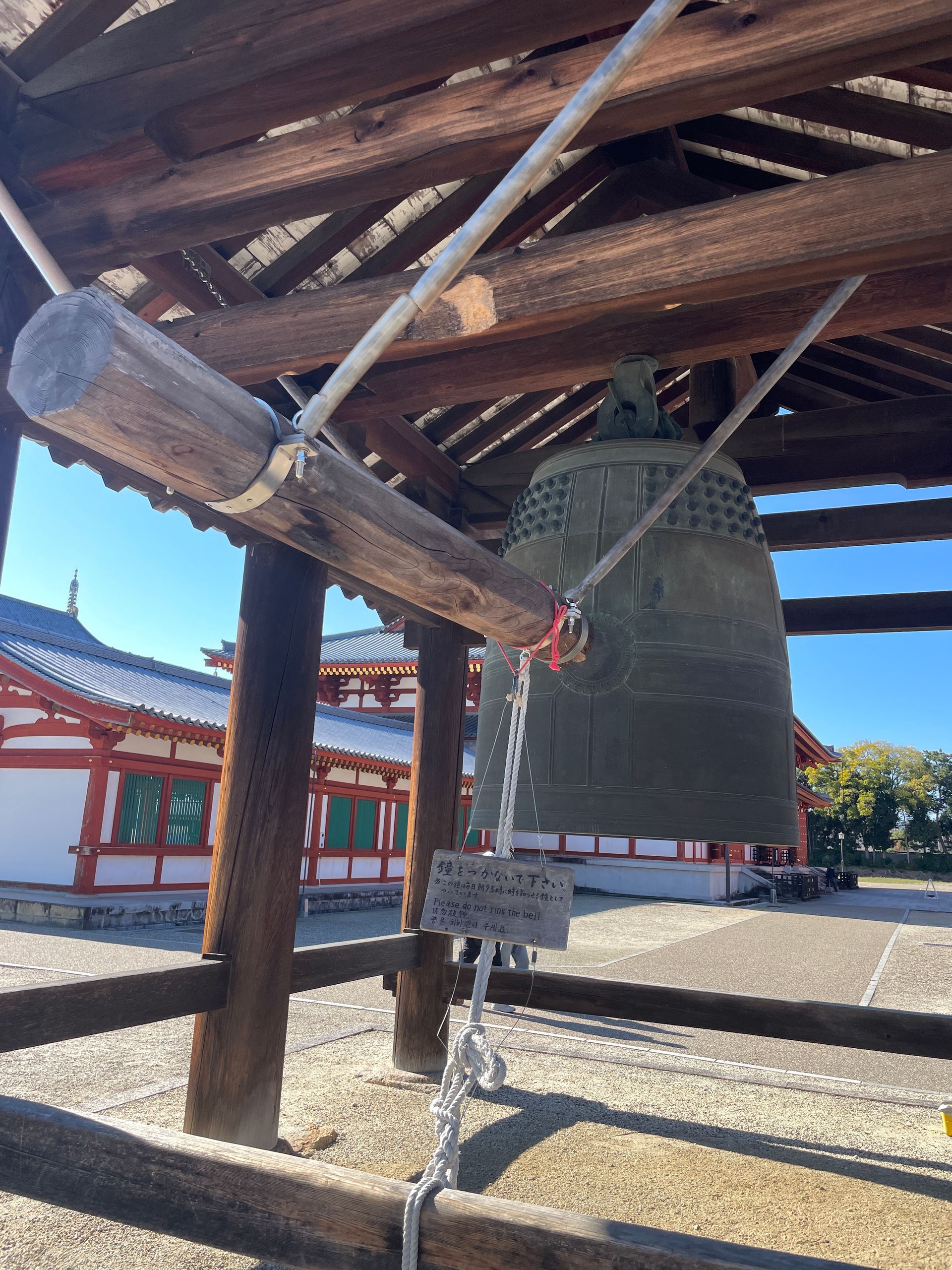
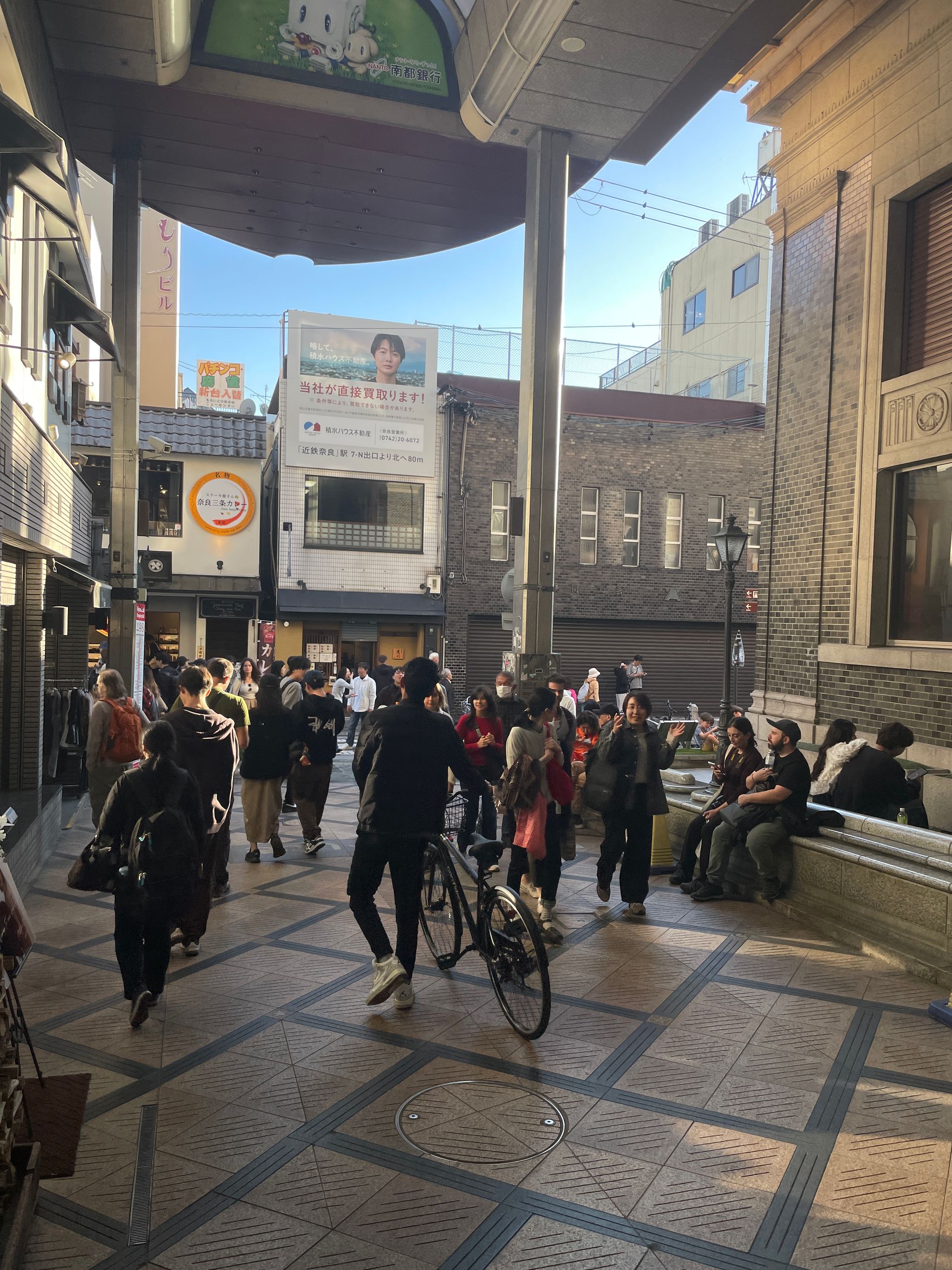
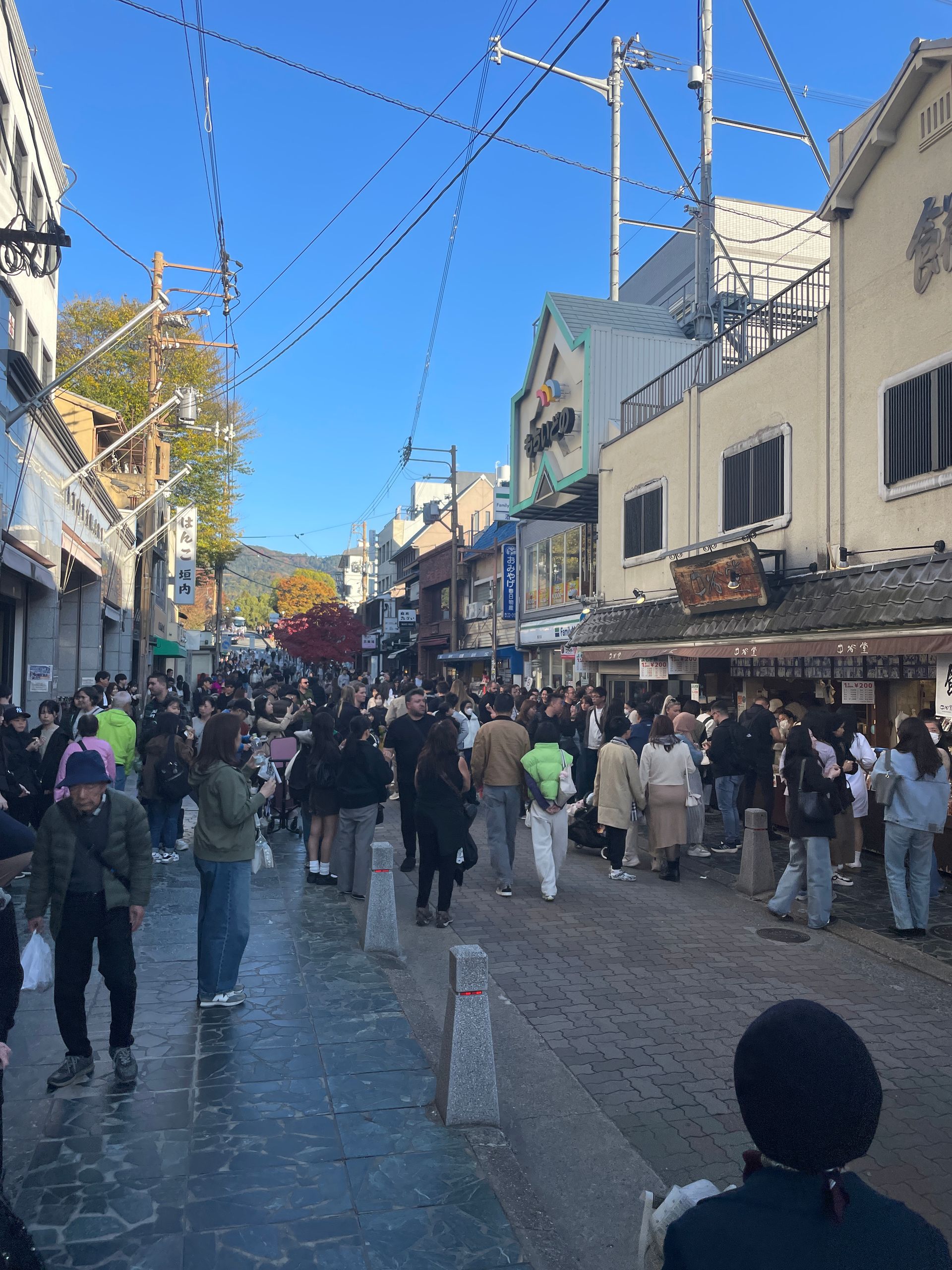
Today is Sunday, which means even more people will flock here than usual, so I escape to the outskirts for another Buddhist temple, Yakushi-ji, after a starbuckian latte Vento (the same stuff everywhere, but the coffee is good and one has a view of the deer).
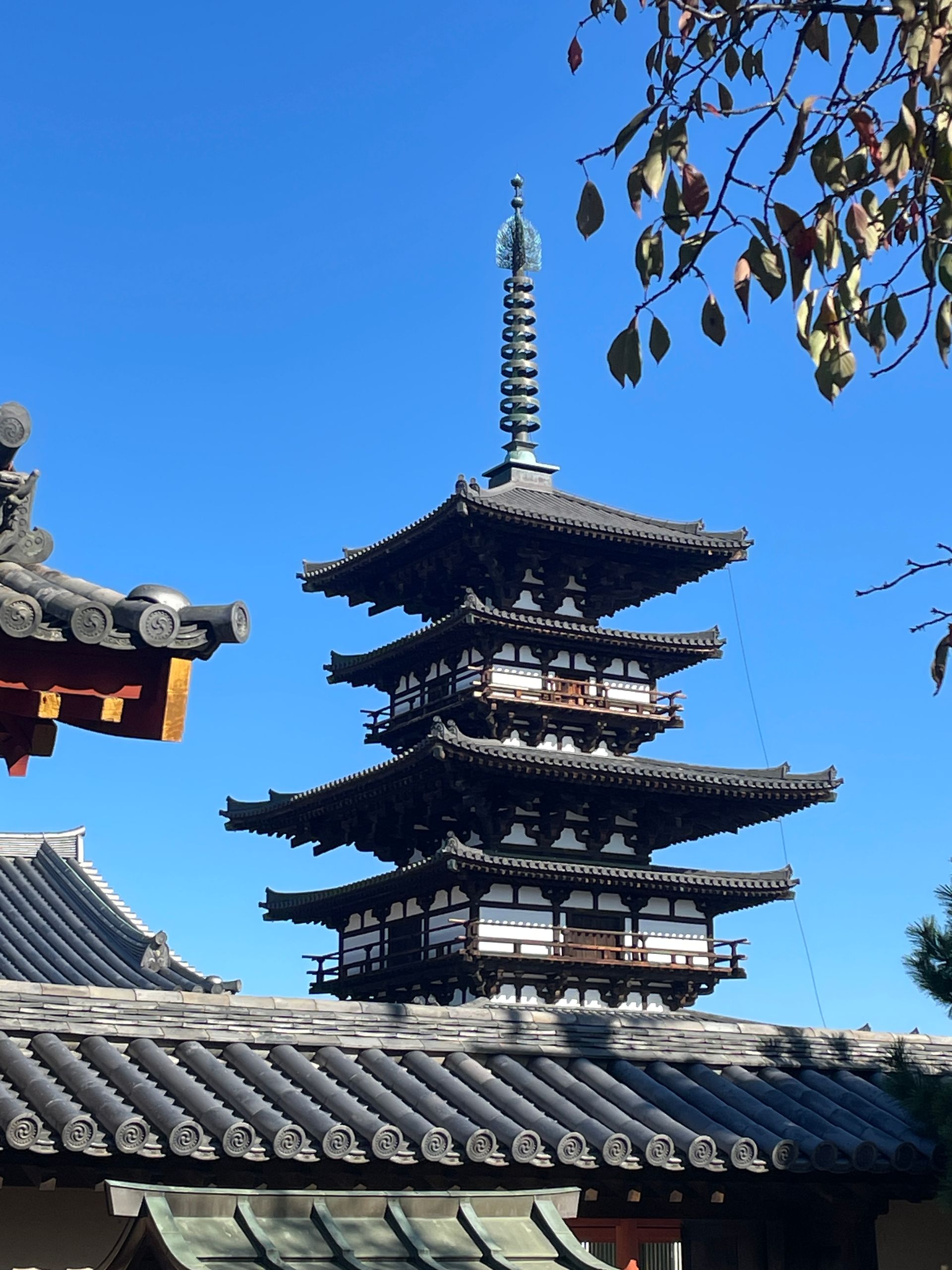
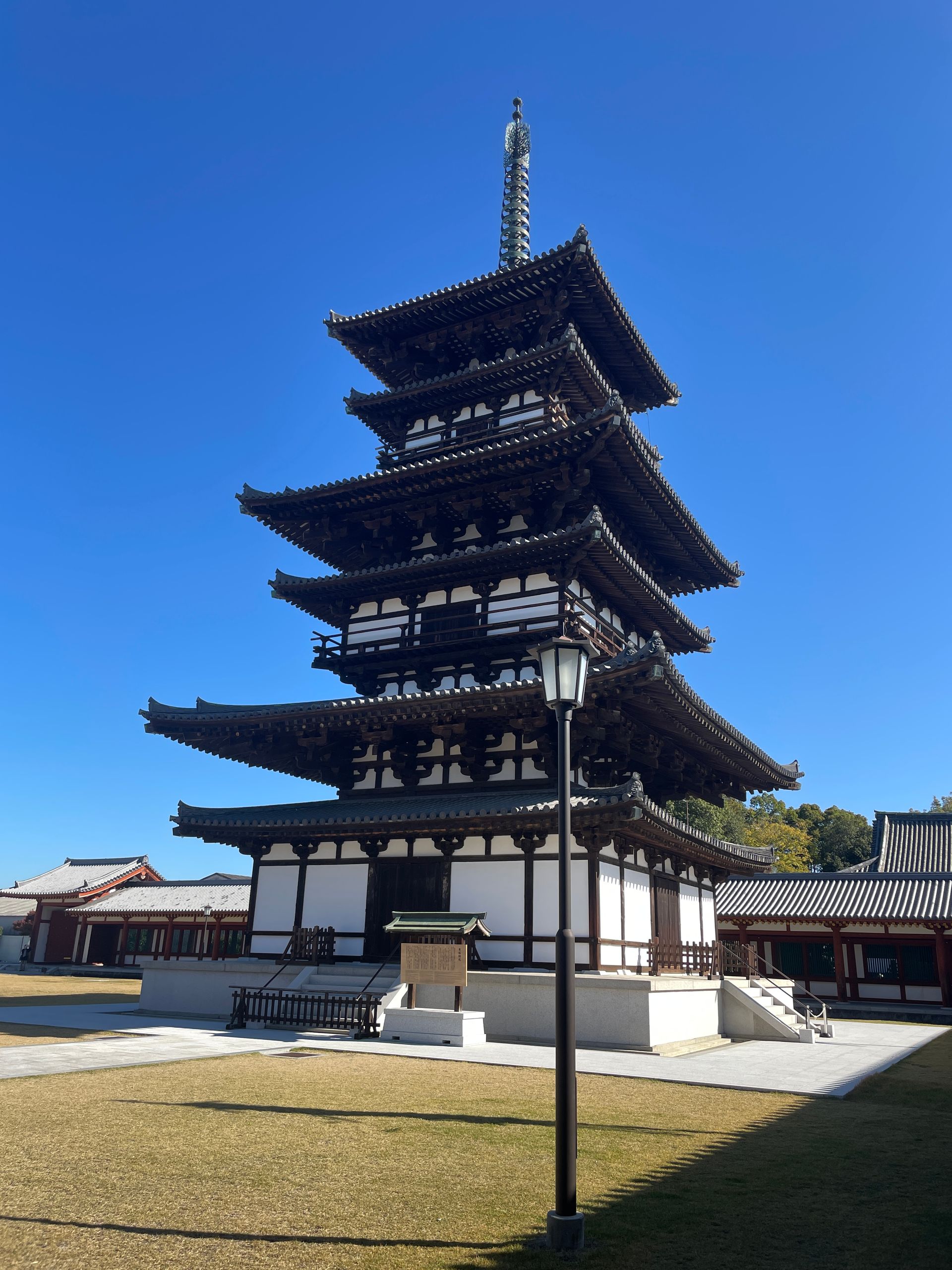
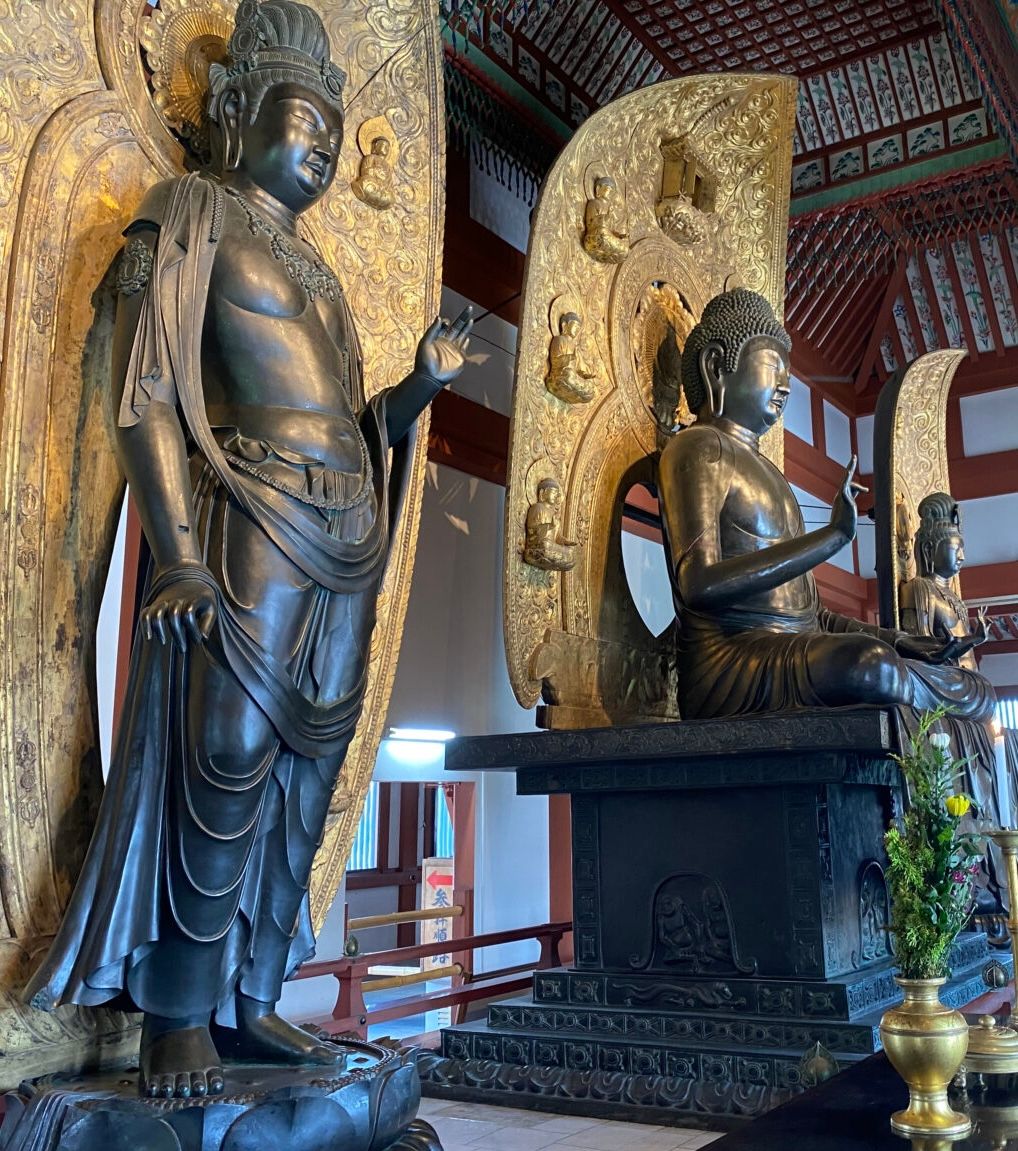
Founded and built 1300 years ago, it burned down completely except for one pagoda in the 16th century. Miraculously, the three Buddha statues, which are among the most beautiful in the world, were saved, albeit a bit blackened.
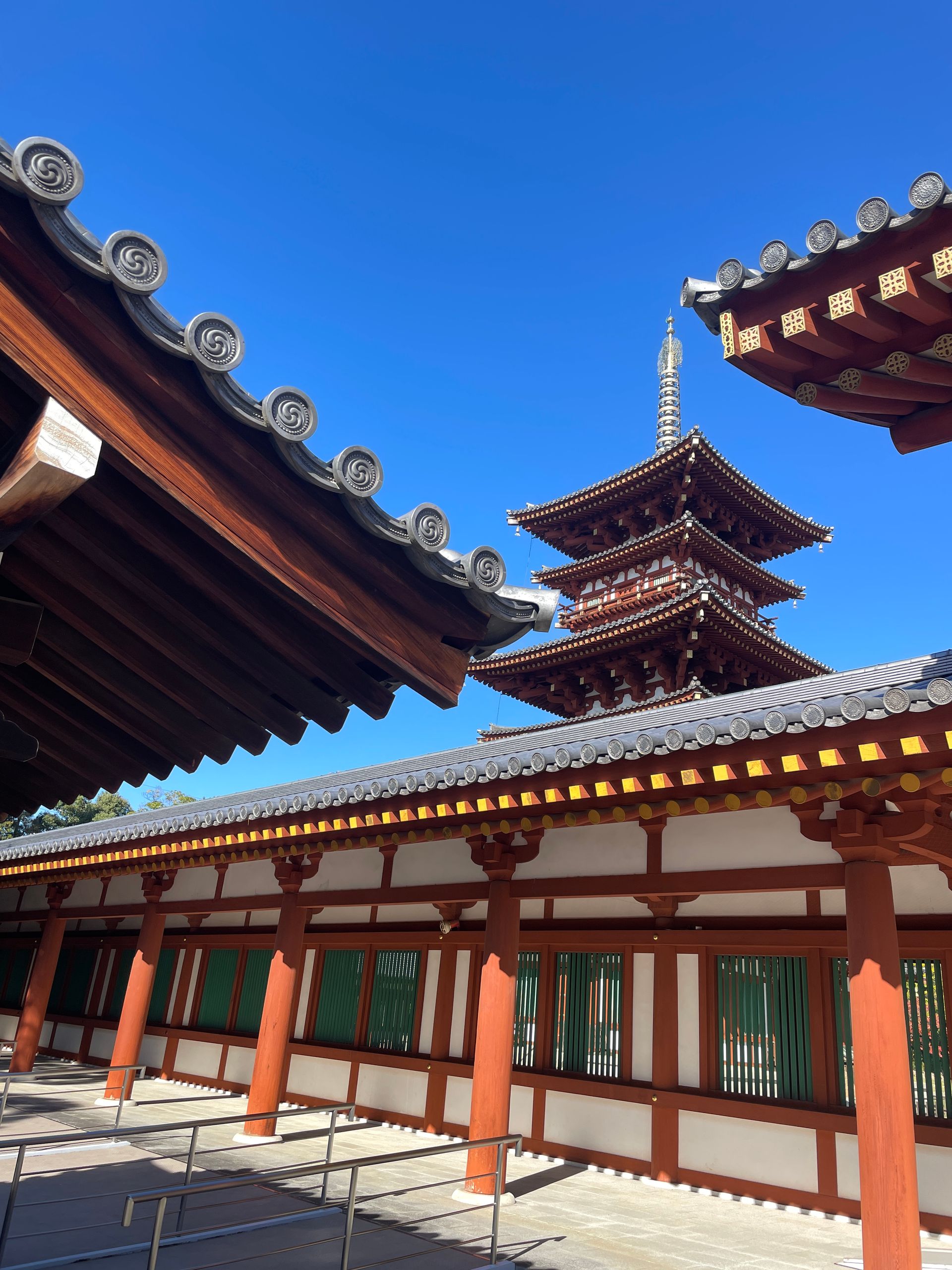
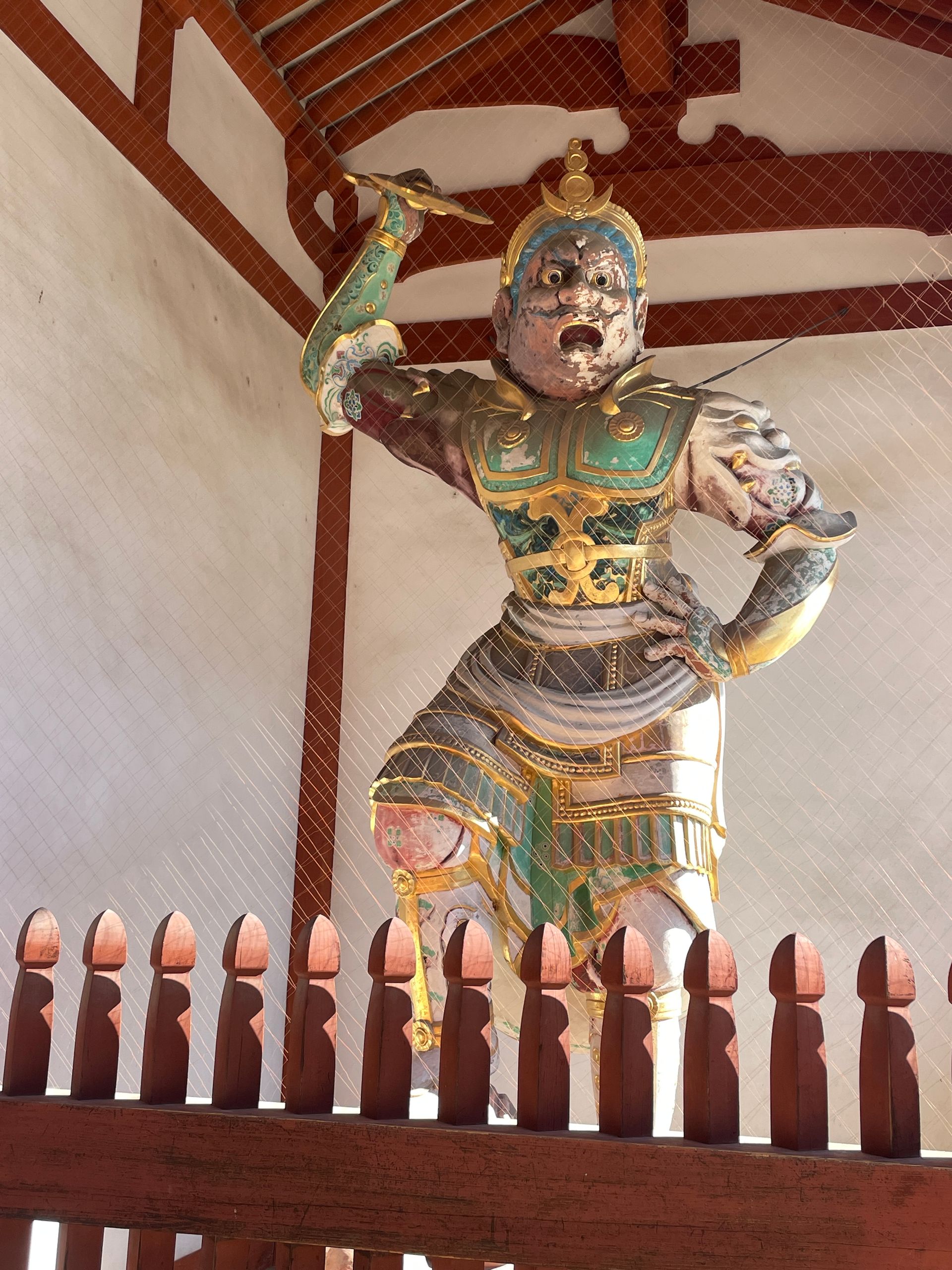
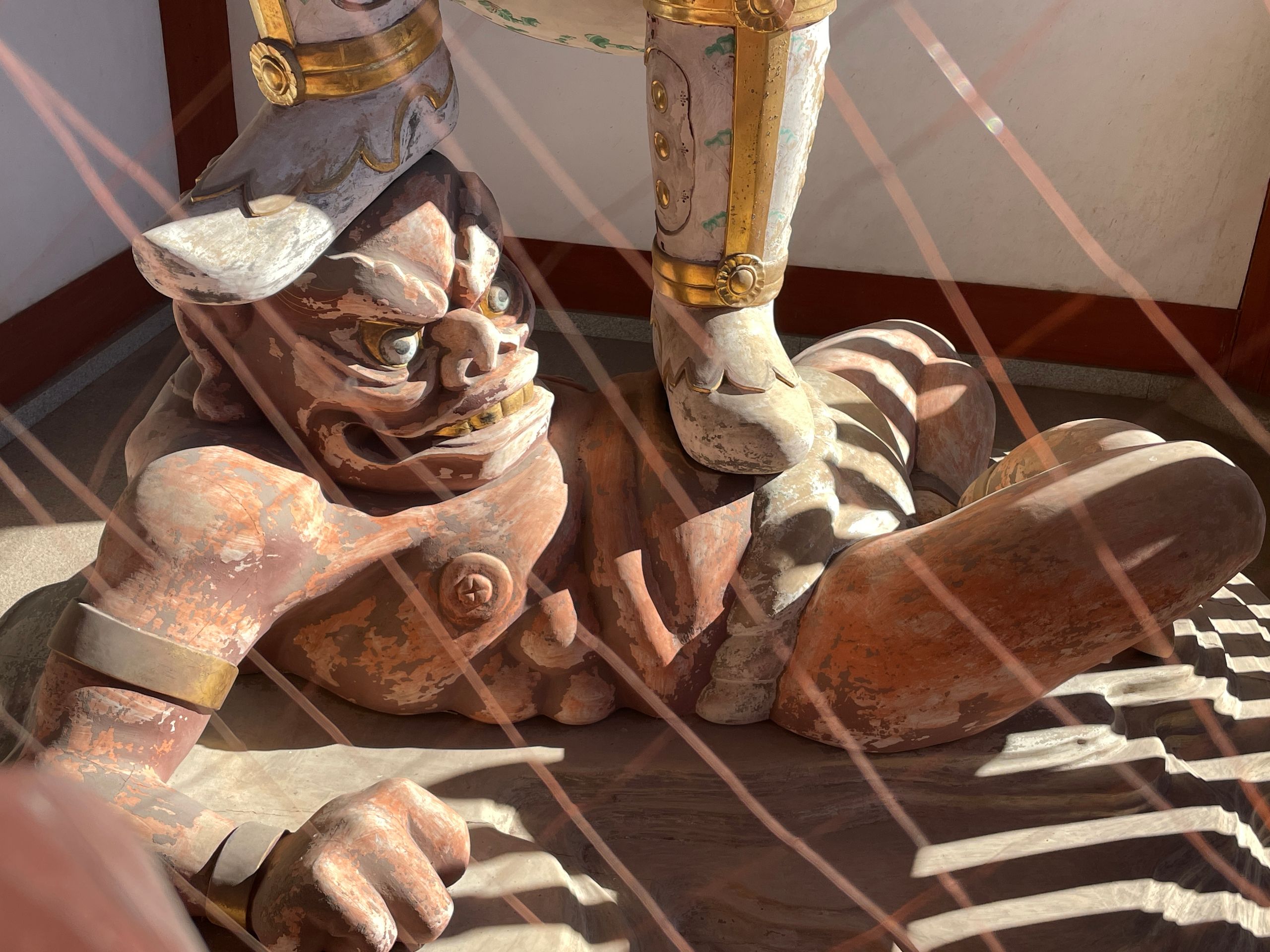
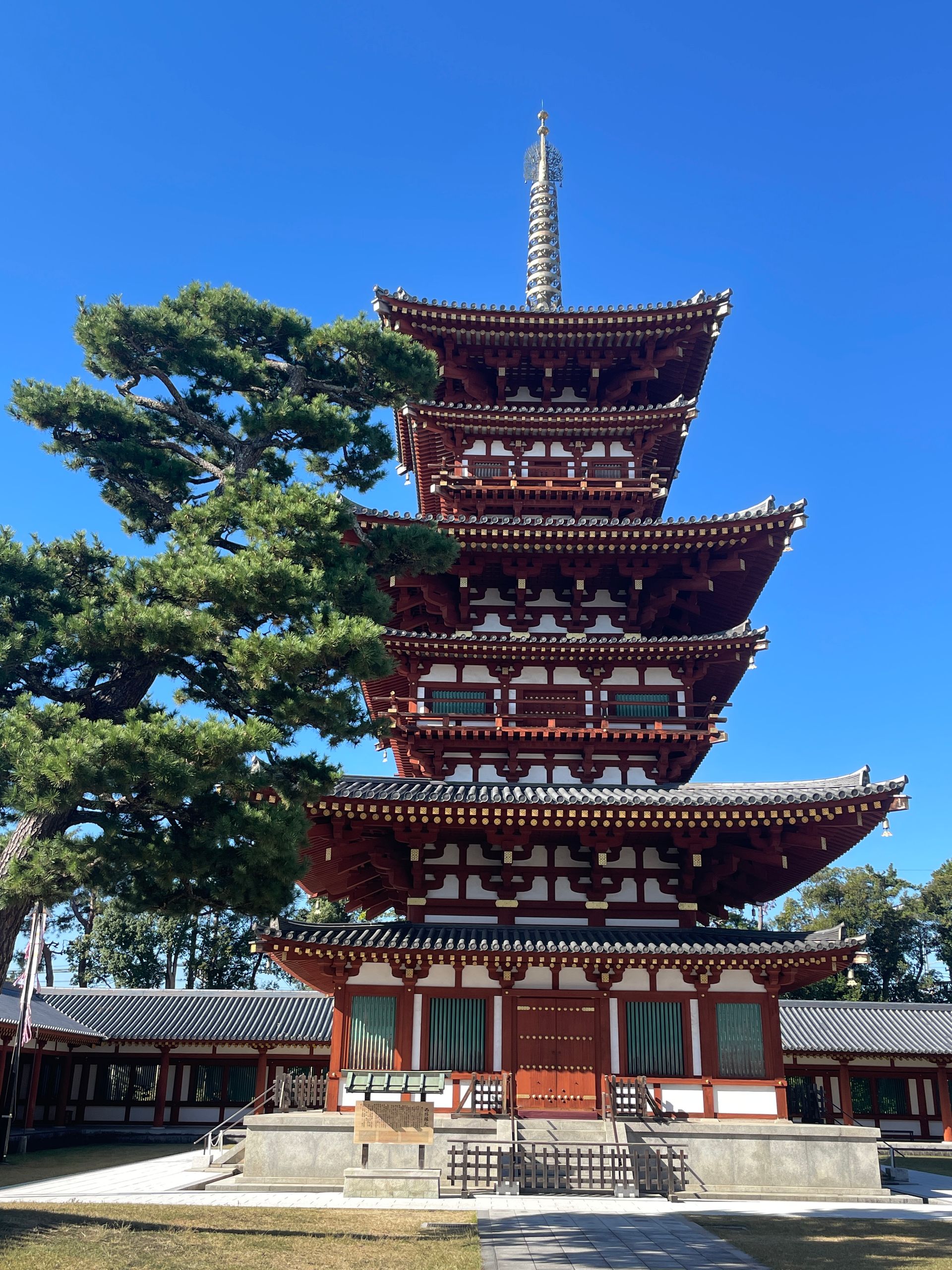
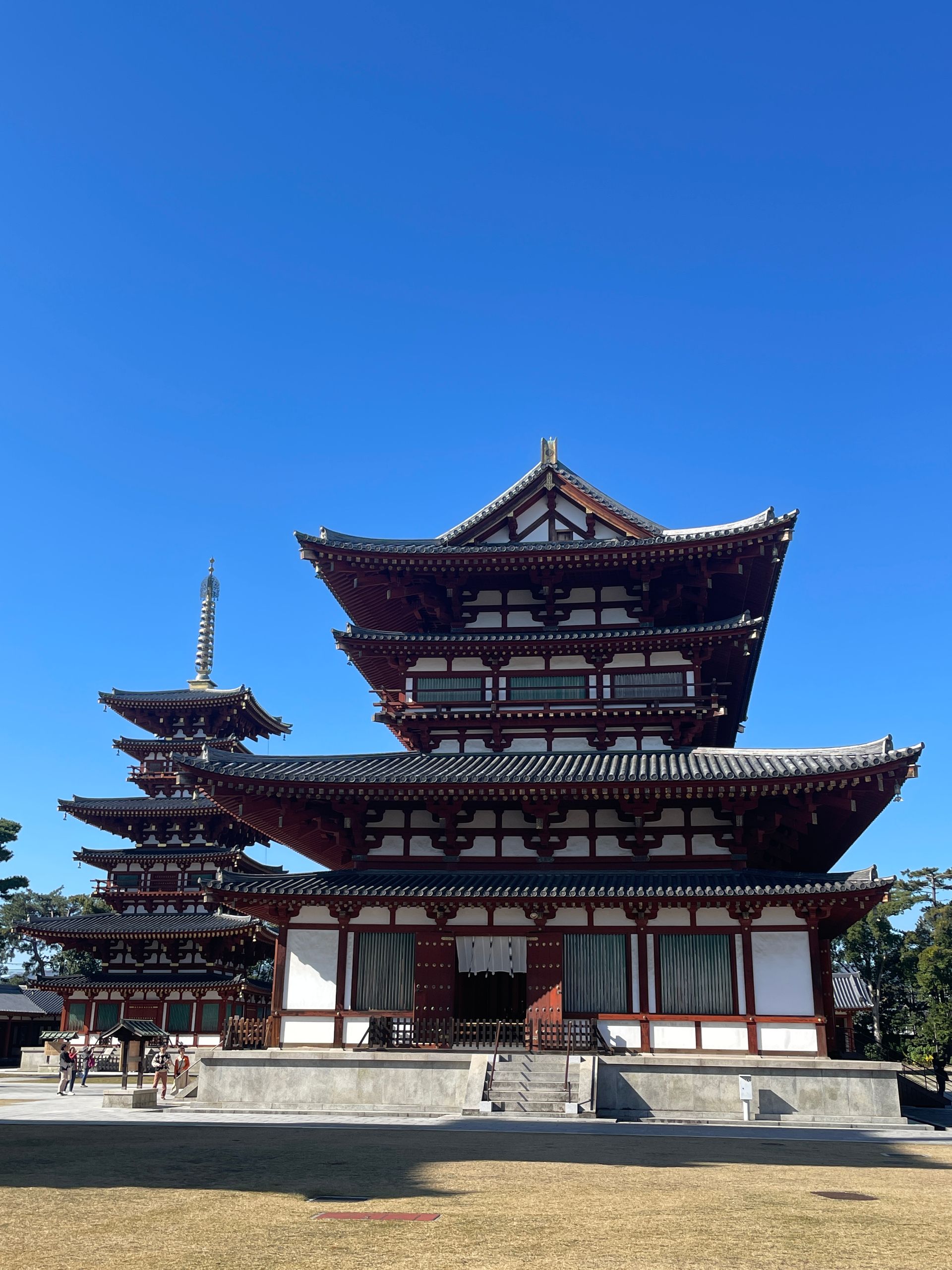
And here comes the interesting part: Since only the one old pagoda remained, it was decided to completely rebuild all other parts of the temple, including the twin pagoda, the main hall, and the three gates in the east, west, and the central gate, based on old documents and the knowledge of many temple construction specialists from 1976 to 1995.
The old pagoda was also completely taken apart and reassembled twice, once from 1898-1900 and lastly, when corrosion was found on the central pillar around which the individual roofs and floors are built, from 2012-2018.
Today I learned that “pagoda” in Japanese is “tõ,” and the old pagoda is called “tõ-tõ.” (Coincidentally, I also found out today that these fantastic Japanese toilets are also called “to-to.” However, I am unclear on the connection there.) What I also learned is that ash or some kind of relics from Buddha are kept in pagodas, here in the balls on top of the pillar, which presumably makes them pagodas.
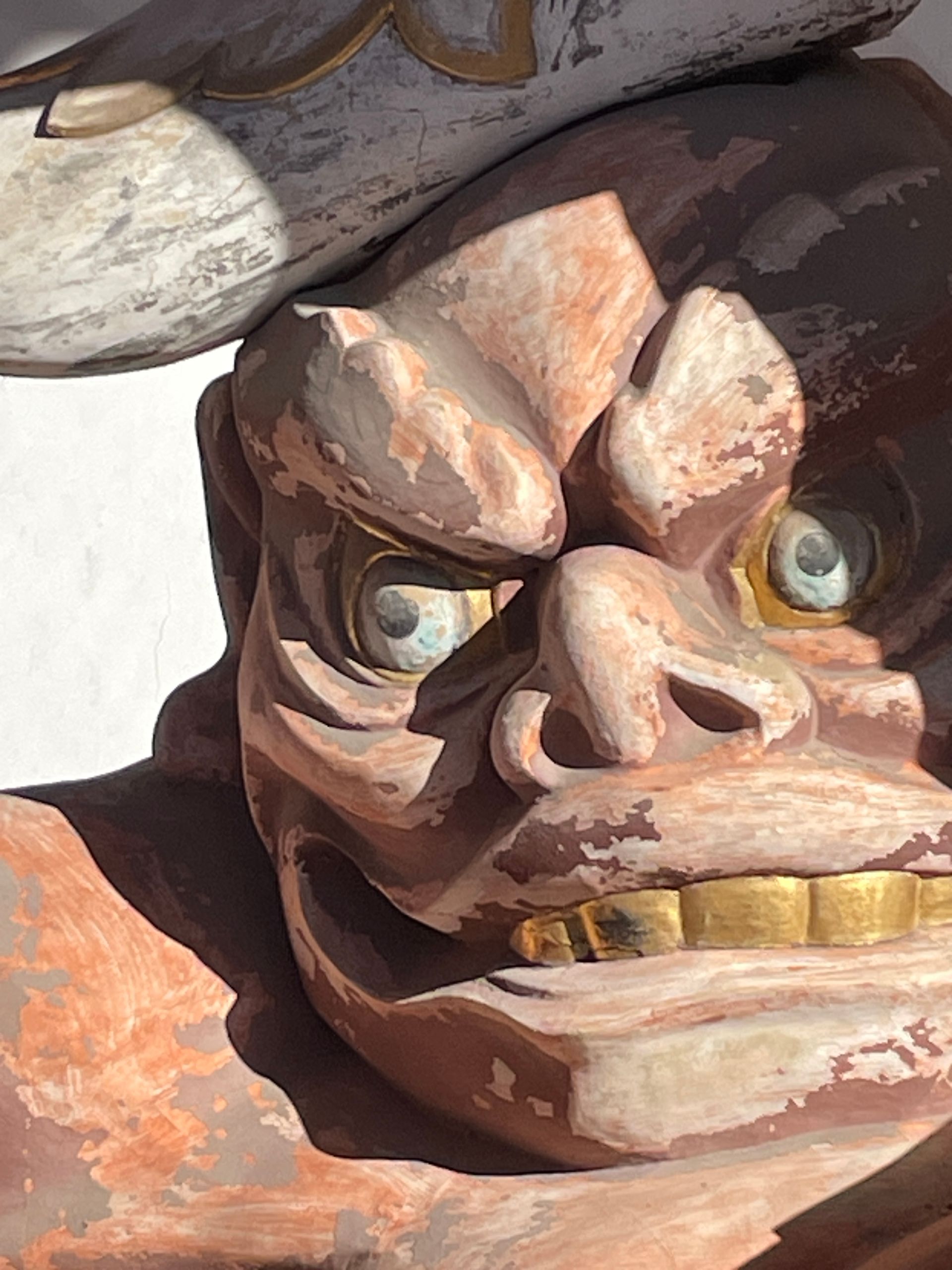
The three beautiful Buddha statues in the main temple, especially the two on either side of the main Buddha, I found surprisingly androgynous. Again, I know far too little about whether this is a stylistic device, aesthetic of the time, or intentionally designed that way.
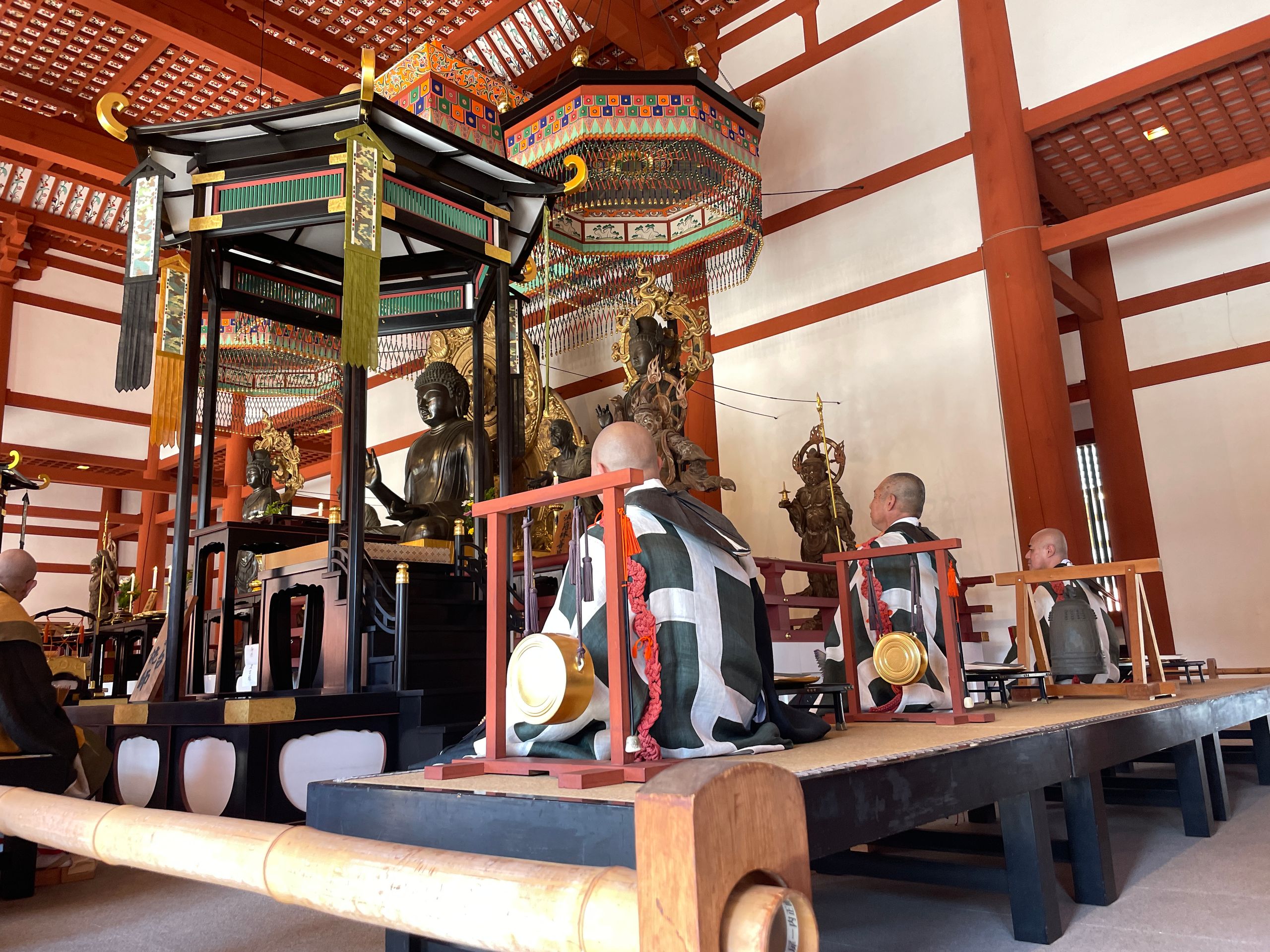
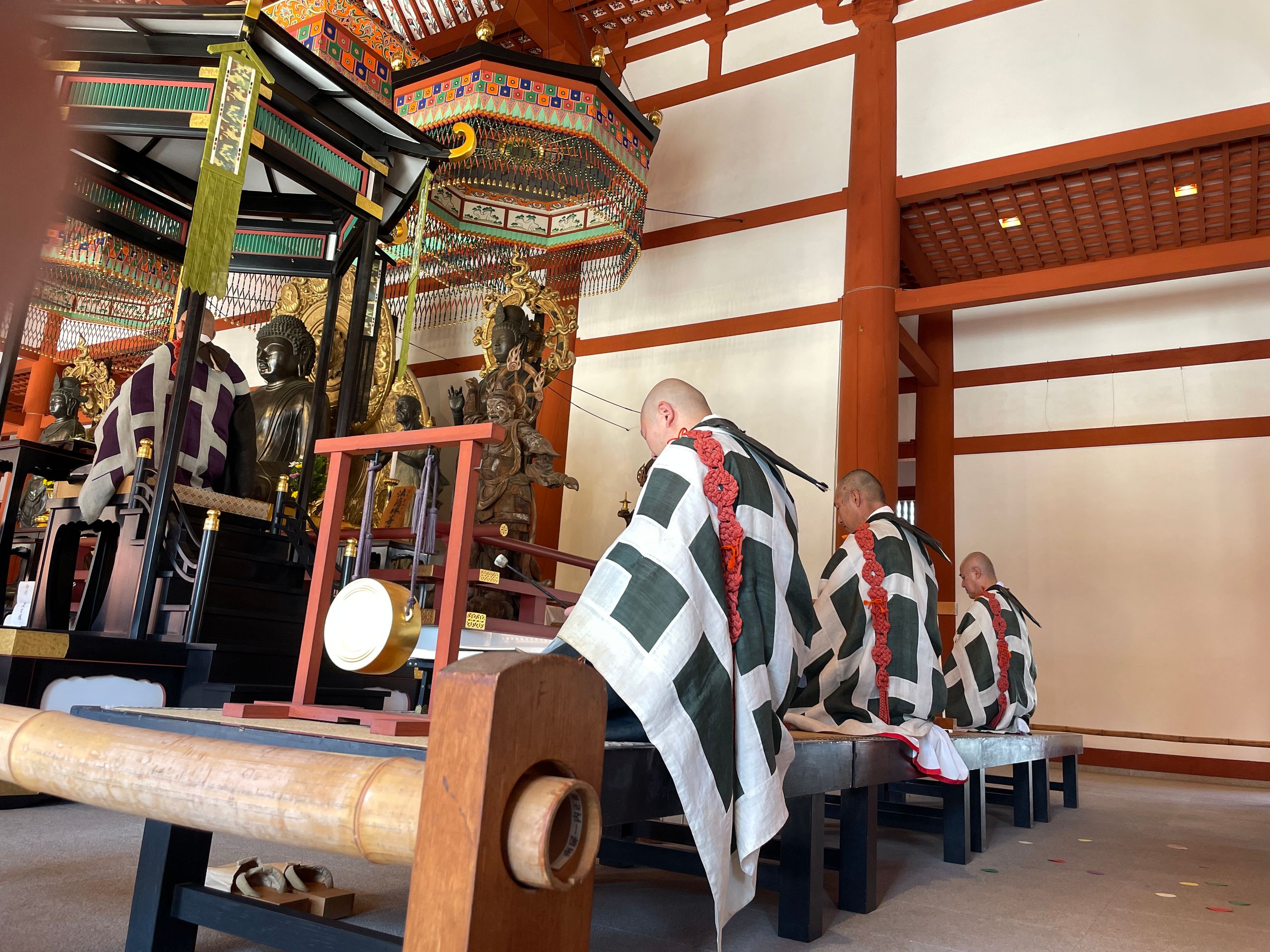
While I was wandering around, some mighty bell strikes echoed, and I had the great fortune to participate in a whole ceremony or mass or devotion, or whatever it might be called in Buddhist terms.
15 shaved monks came clattering in on very high wooden sandals and settled around the altar (?), a head monk with a powerful voice started a monotonous chant, into which the upper monks first and then the simple monks gradually joined, there is a very clear hierarchy, gongs and singing bowls were struck, a kind of wooden prayer chain like a rosary was rubbed between their hands, and wooden and metal drums were hammered. At times the attendees joined in the chant, sometimes they stood up, then sat back down. The monks alternated between sitting cross-legged and in a kneeling position. At one point, they threw large colorful confetti over their shoulders, most of which unfortunately landed within the barriers and were later collected again. But some believers quickly bent down and grabbed one as a good luck charm. The whole thing lasted more than an hour and I got a bit of a headache from all the incense sticks, but it was again such a special experience that one knows only happens once in a lifetime. In the end, they put their wooden sandals back on and clattered away.
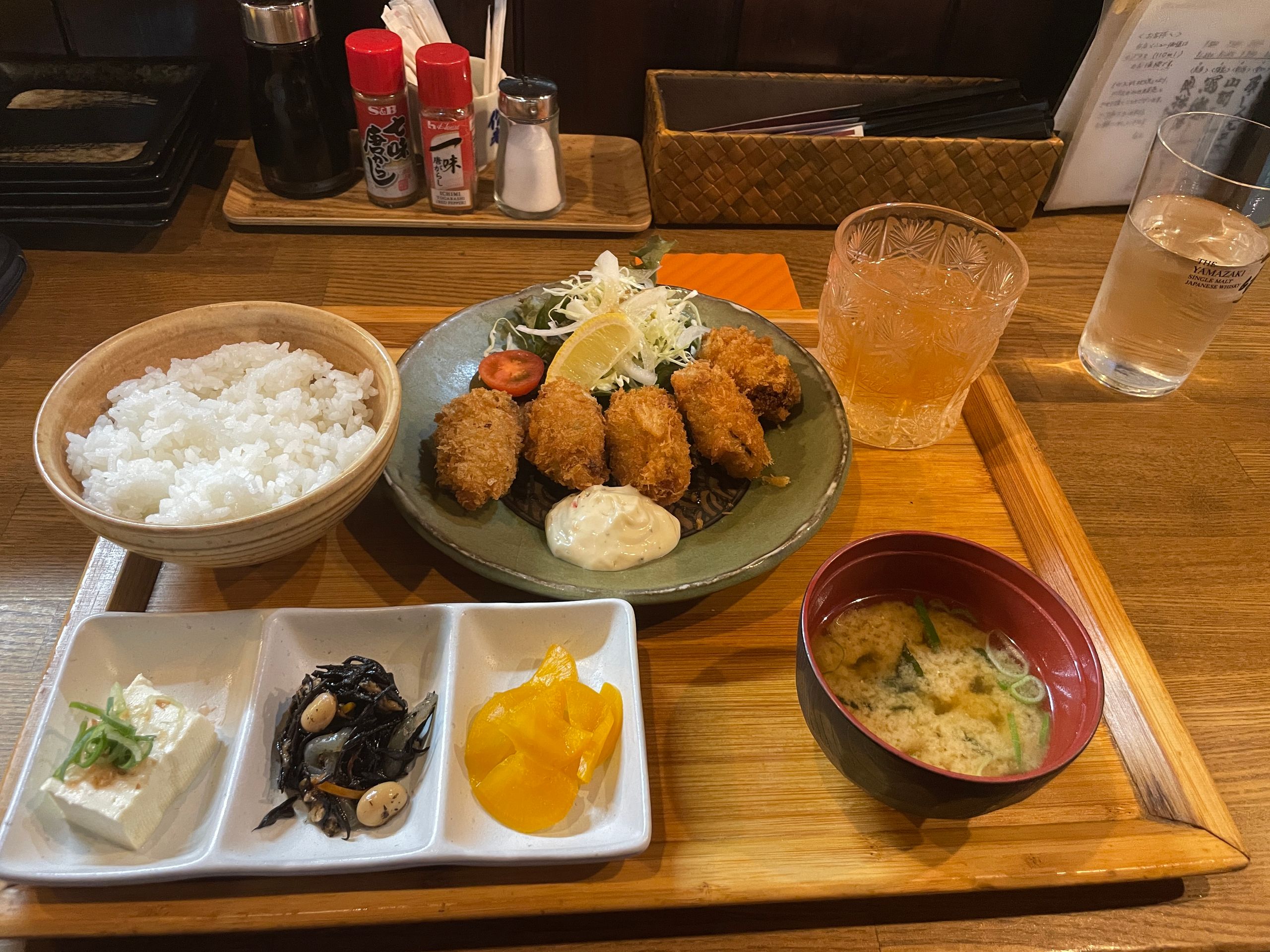
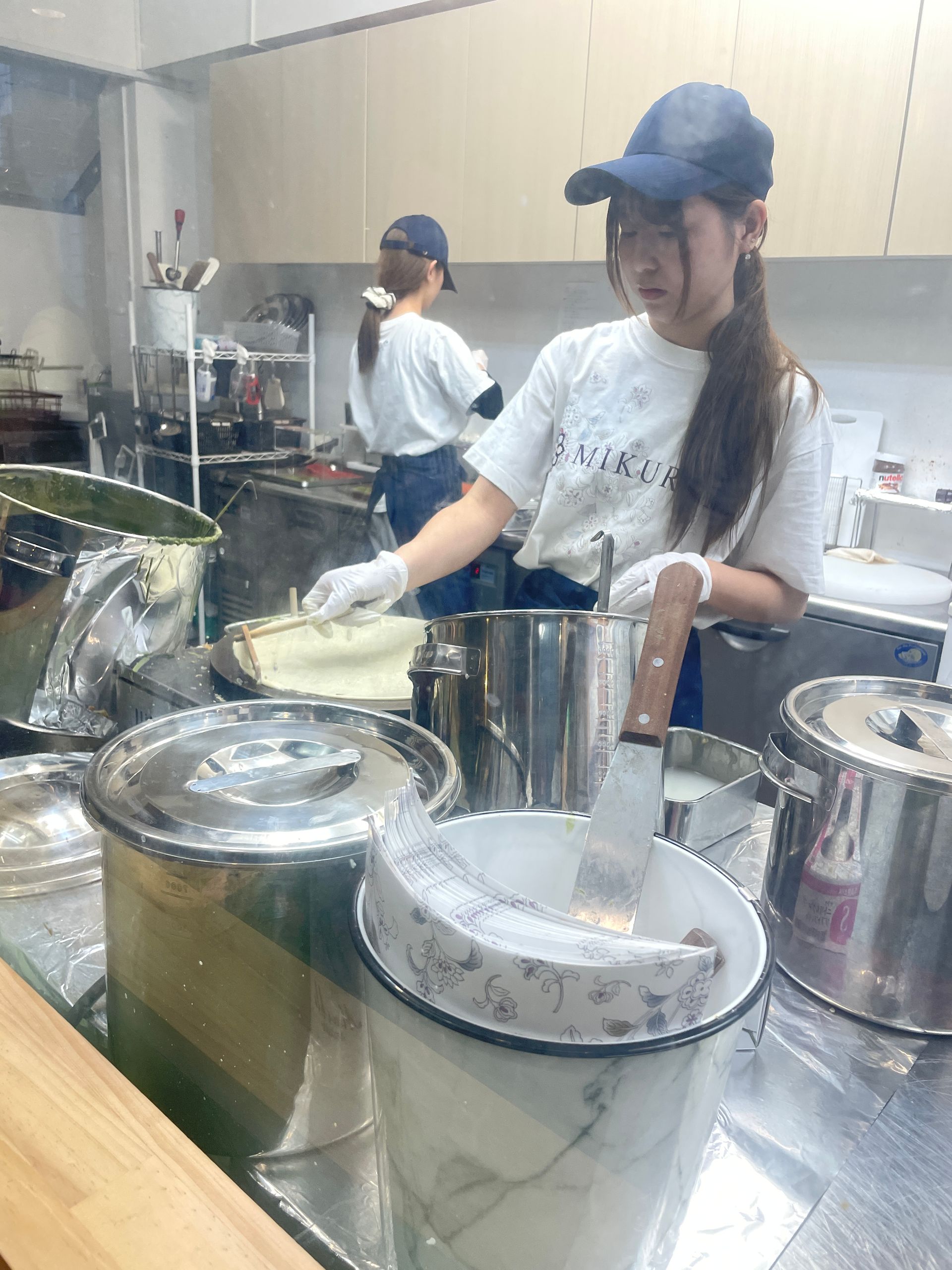
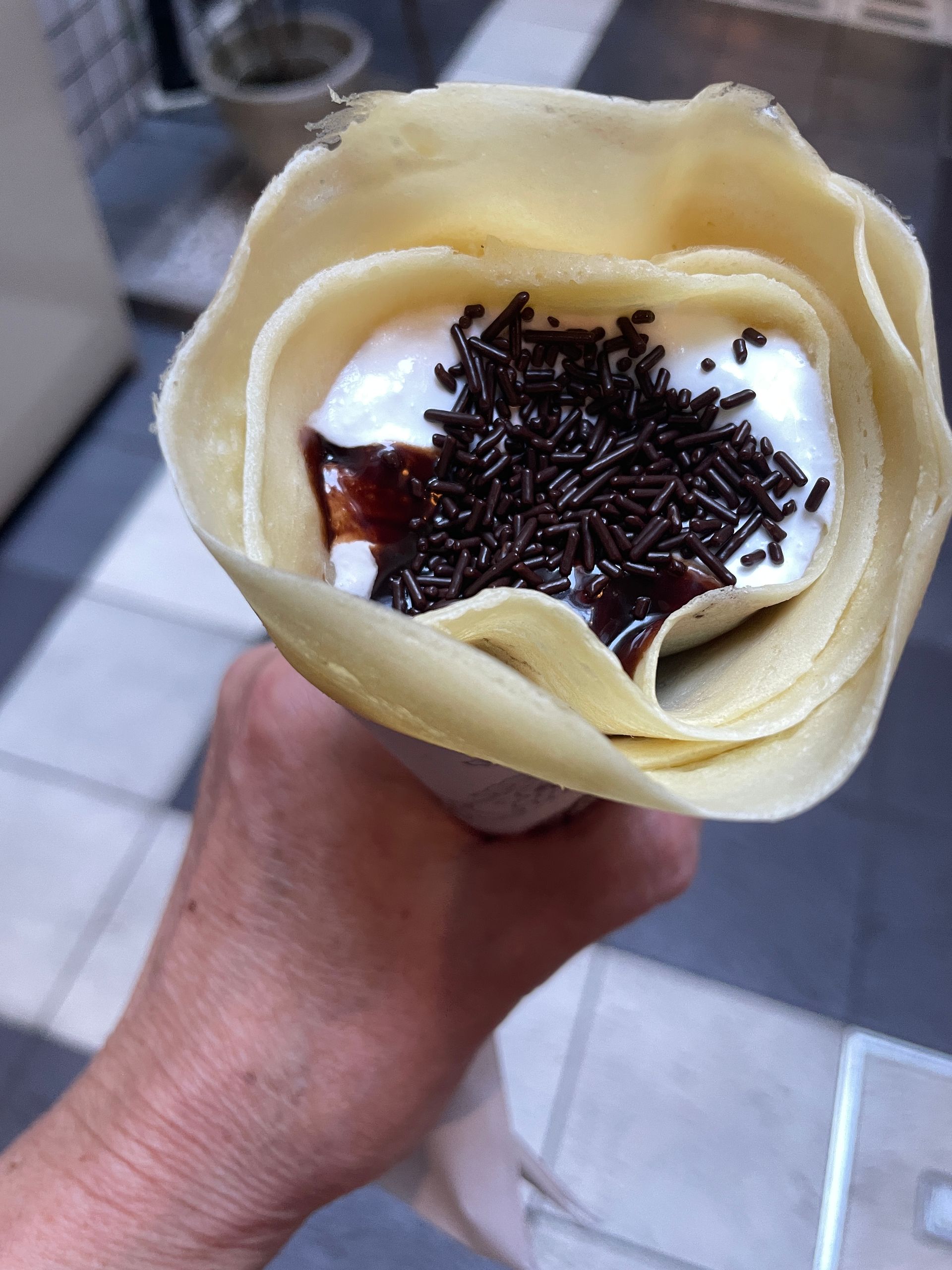
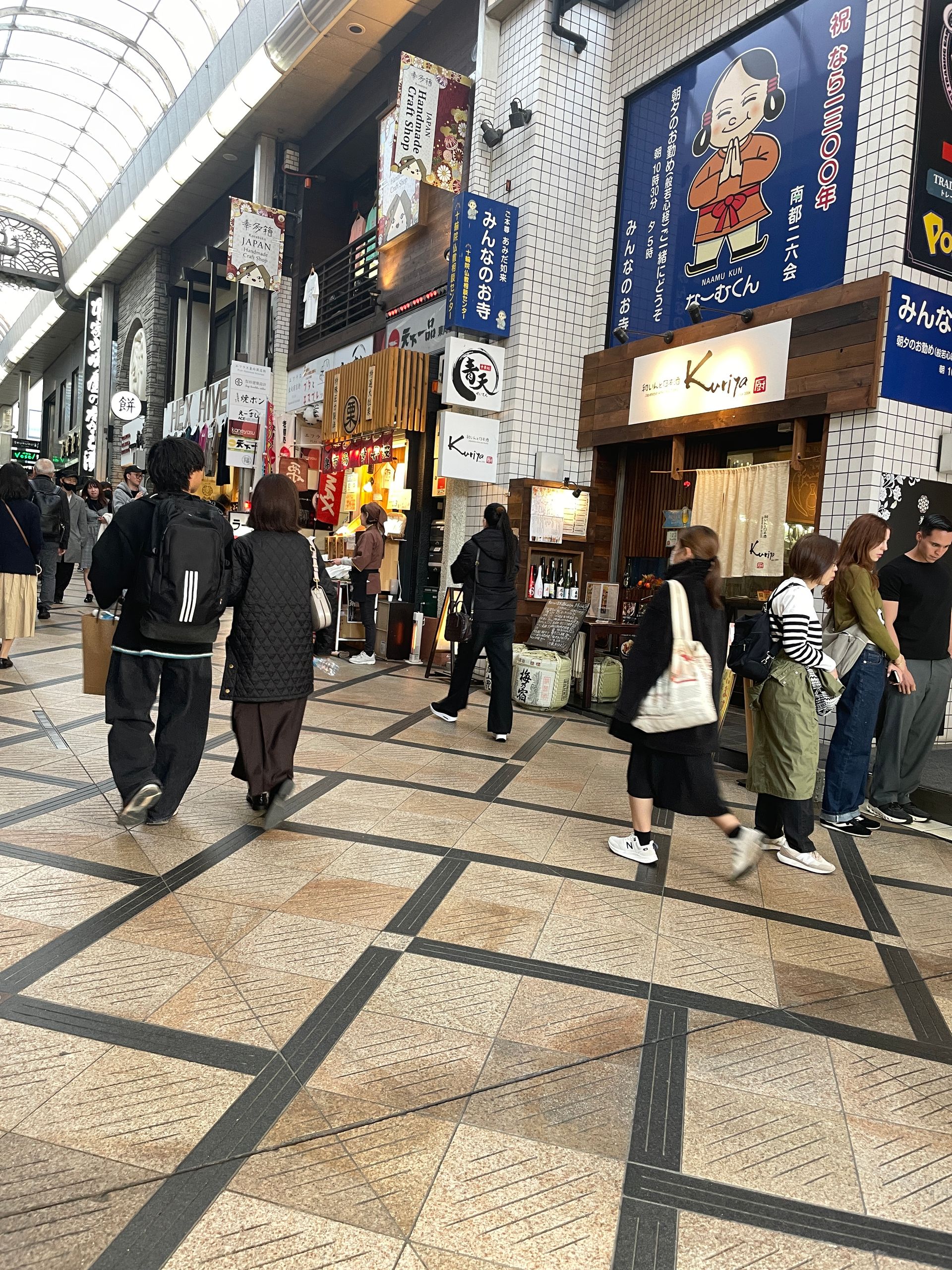
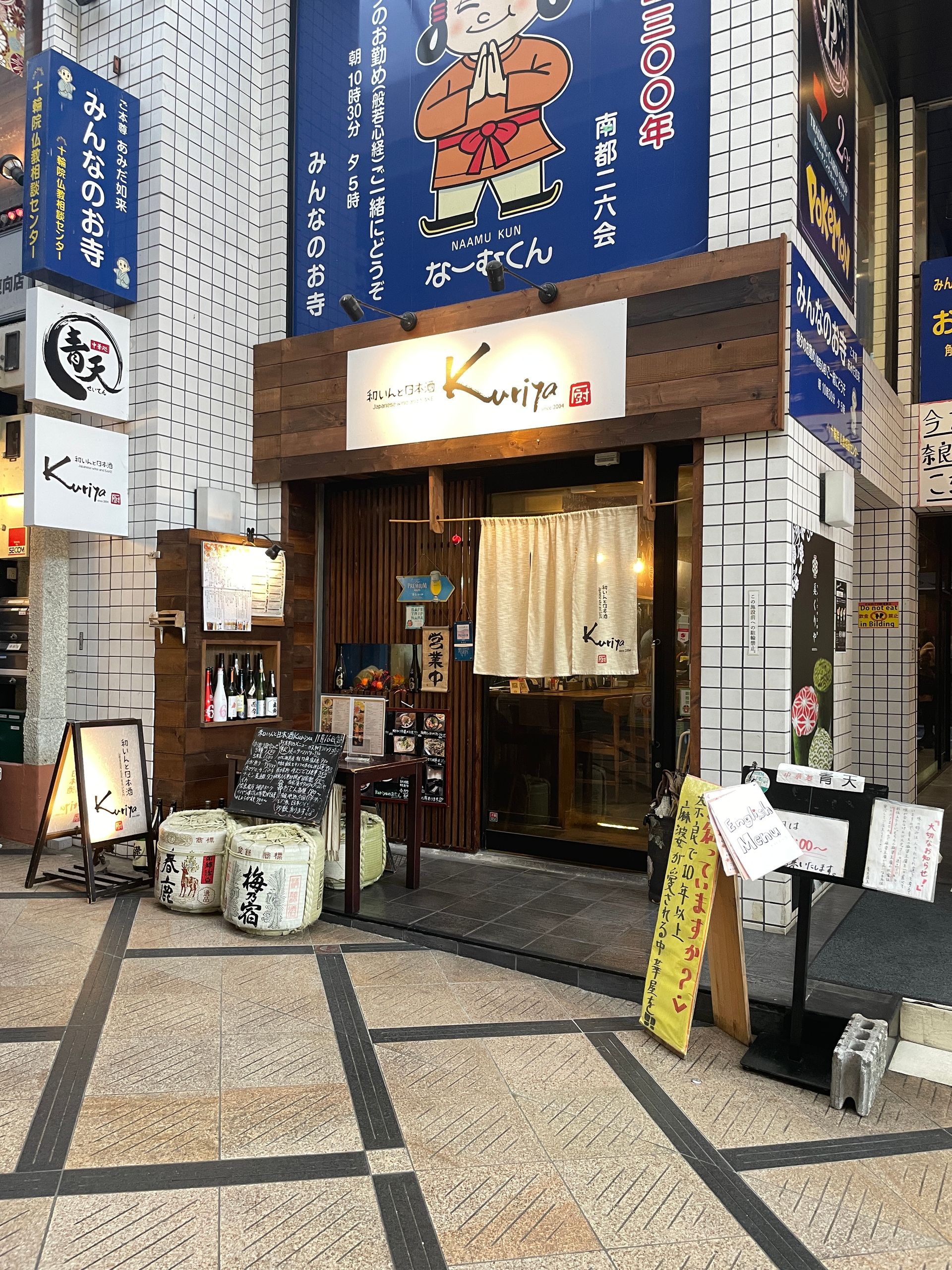
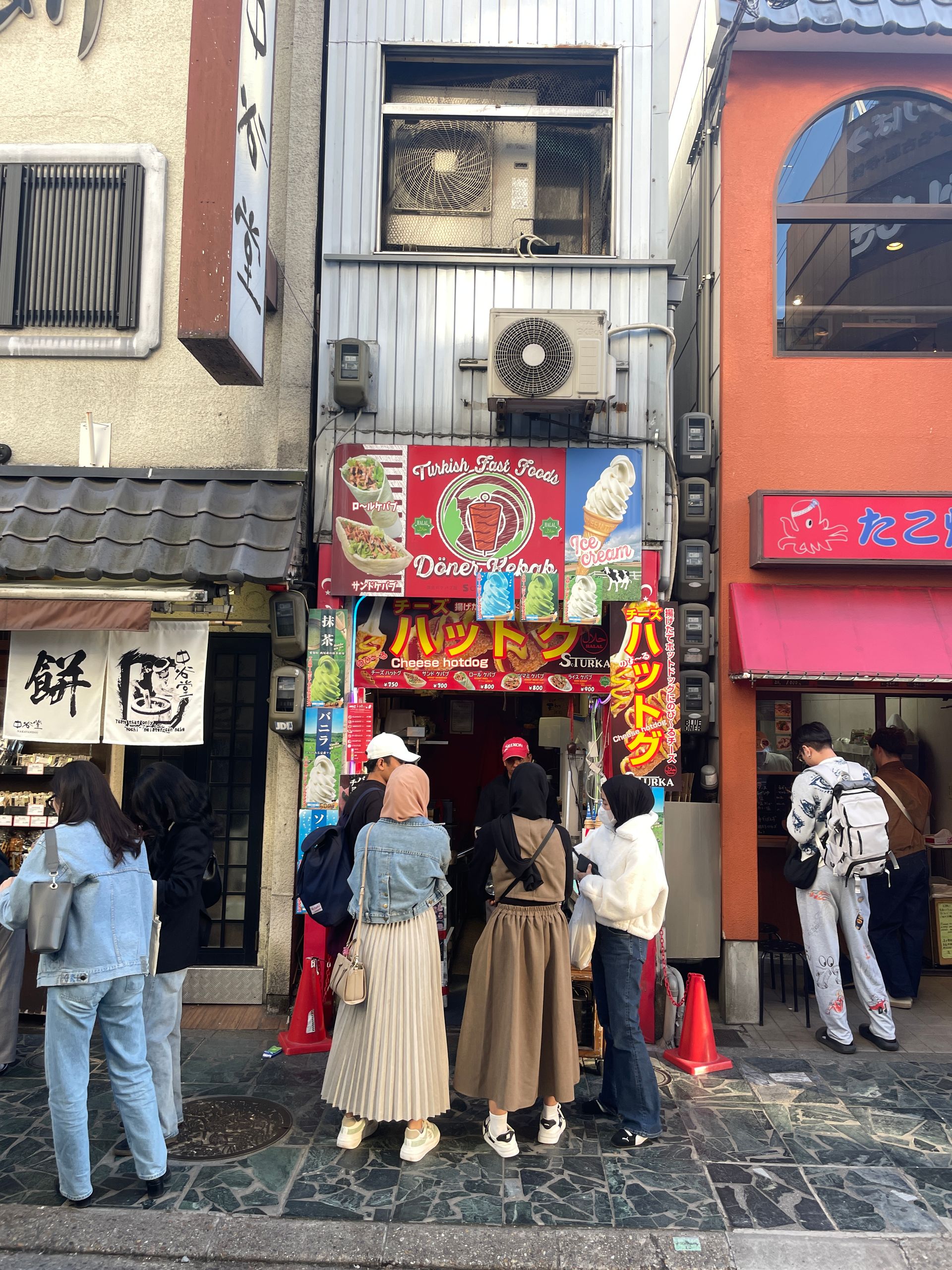
After so much spirituality, I threw myself into the Sunday crowd and went out for a fine meal. The breaded fried oysters with various pickles, rice, miso, salad, and my beloved plum wine Umeshu were a poem, and I couldn't resist the creperie next door, had a thick-filled pancake with whipped cream and chocolate sprinkles for dessert, only to realize: Life tastes good!
susanne-reistLike a newsletter: every new post arrives via email.

Answer