
Welcome to the Sunshine State
20 years ago, a colleague once asked me: "You travel so much, don't you want to go to the USA sometime?" At that time, like a shot from a pistol, a clear no came. Nothing about...

Published: 22.11.2023
Today is my birthday. Yeah, happy birthday to me.
Like every year, I spend this day with the people who are most important to me. Every year my family and I go on a nice trip.
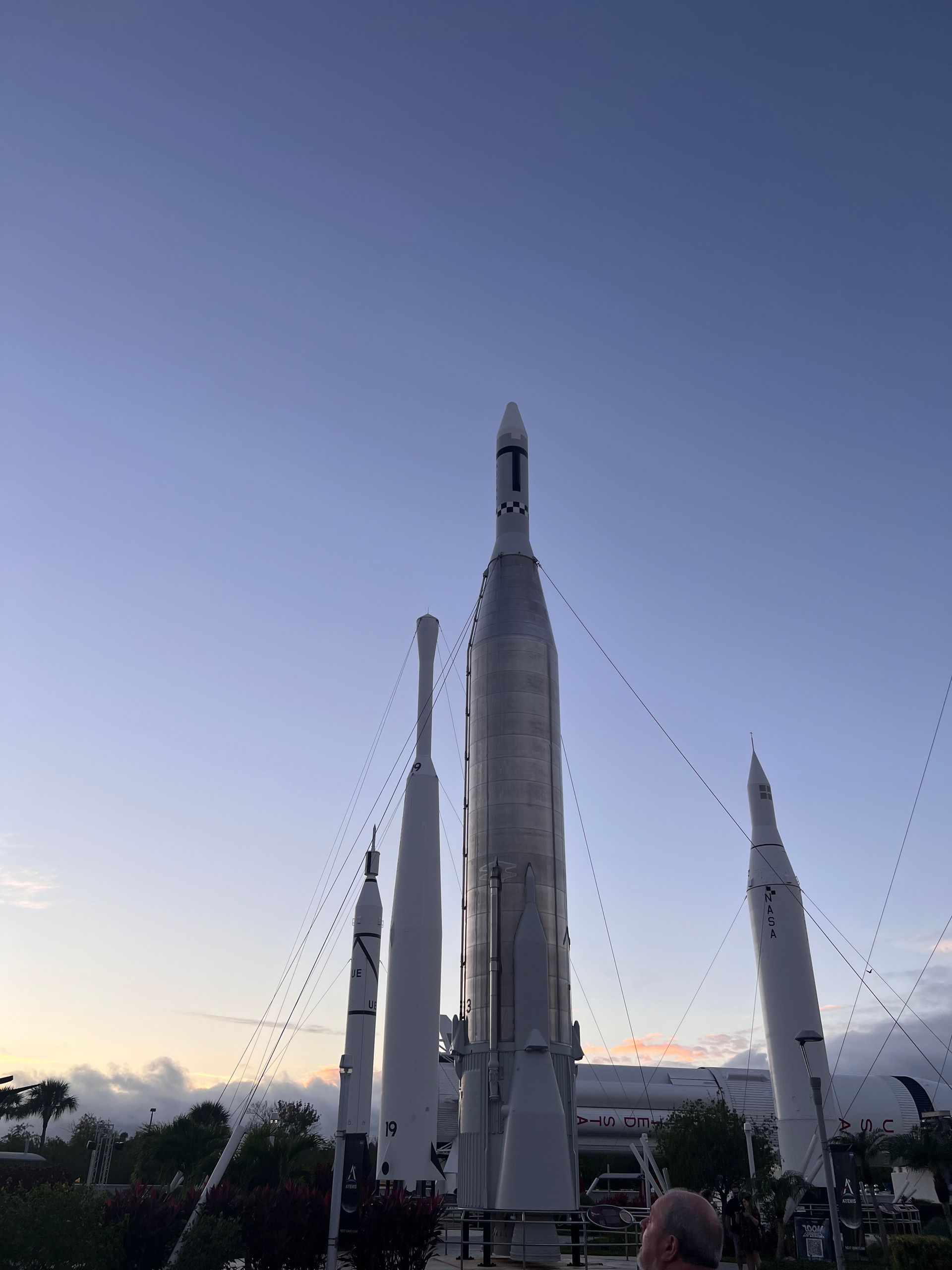
This year, I chose a destination that has been on my list of places I want to see for years. We drive to Cape Canaveral, probably the most famous spaceport in the world.
From our house you can reach the Kennedy Space Center in about 2 hours. The navigation device and Google Maps say this in agreement. That's the theory. In practice, however, things look completely different. Every morning around Orlando, a veritable avalanche of metal forms that rolls across the highway and pulverizes any kind of timetable. It seems to me that it is a patriotic duty of every American to sit in traffic in an SUV for at least 3 hours every day.
After a seemingly never-ending journey, we see the first NASA building. We made it. KSC (Kennedy Space Center) here we are. Since the complex is huge and we want to see as much as possible, I booked an explorer tour in advance, which also takes us to places that cannot be reached on foot.
In the 1950s, Americans were pretty stupid when it came to space. Despite the much-vaunted superiority of the United States, it was the Soviets who put the first Sputnik and later the first man into space. All attempts by the Americans to catch up failed miserably. Now you could say, take it in a sporty way, you can't always win. But of course the space missions were not about an Olympic competition. The Cold War was in full swing and there were fears that enemy attacks could come from space. It was therefore essential to at least achieve a status quo.
In 1961, the young American President John F Kennedy asked the Senate for significant funding for a project that had never been seen before. He wanted to send a man to the moon. The Senate approved the funds, probably out of concern that the Russians could further expand their lead in space travel.
With his legendary speech, which went something like this: "We will fly to the moon within this decade. Not because it is easy, but because it is hard.", he also had the citizens of his country in his pocket.
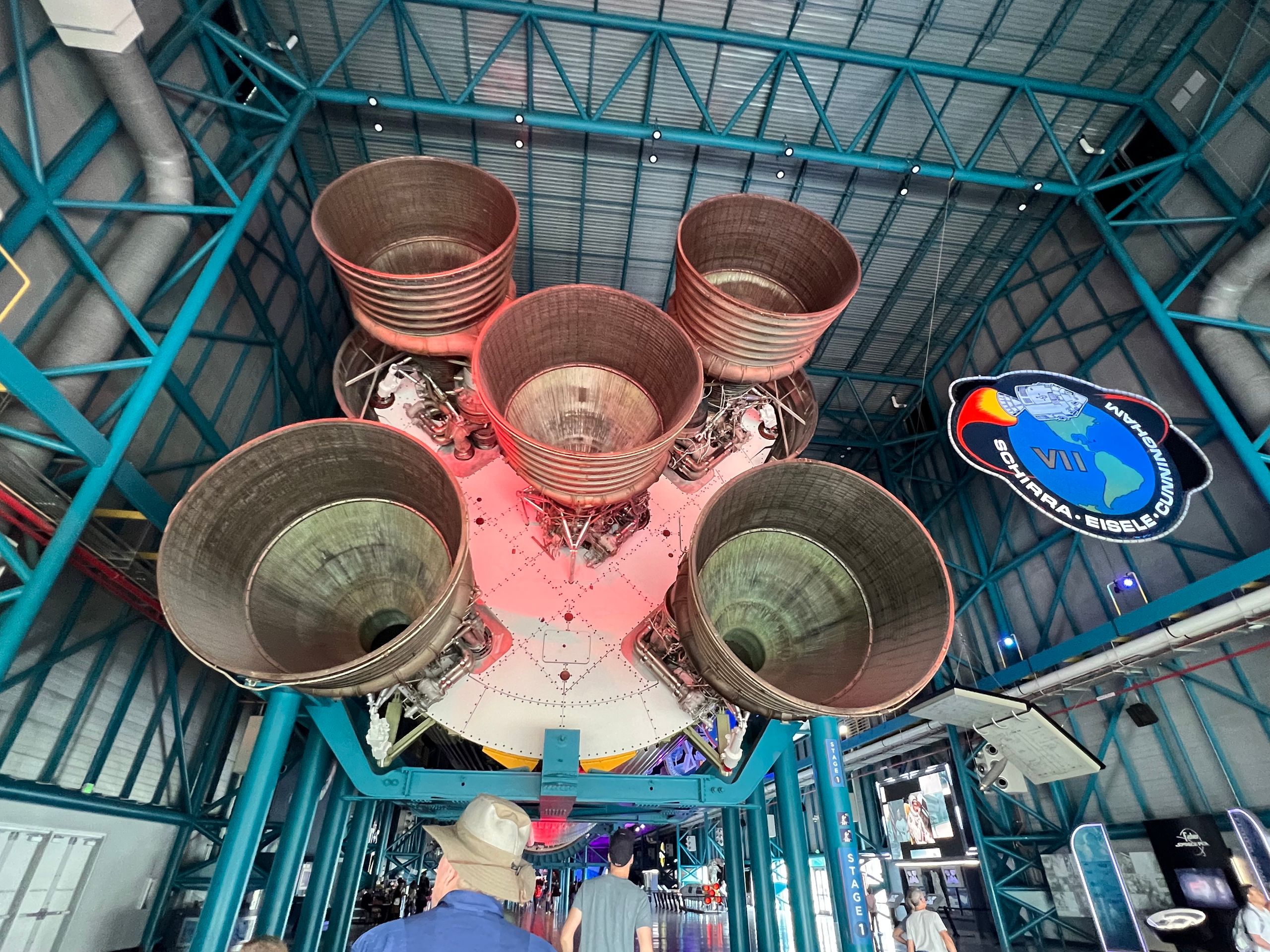
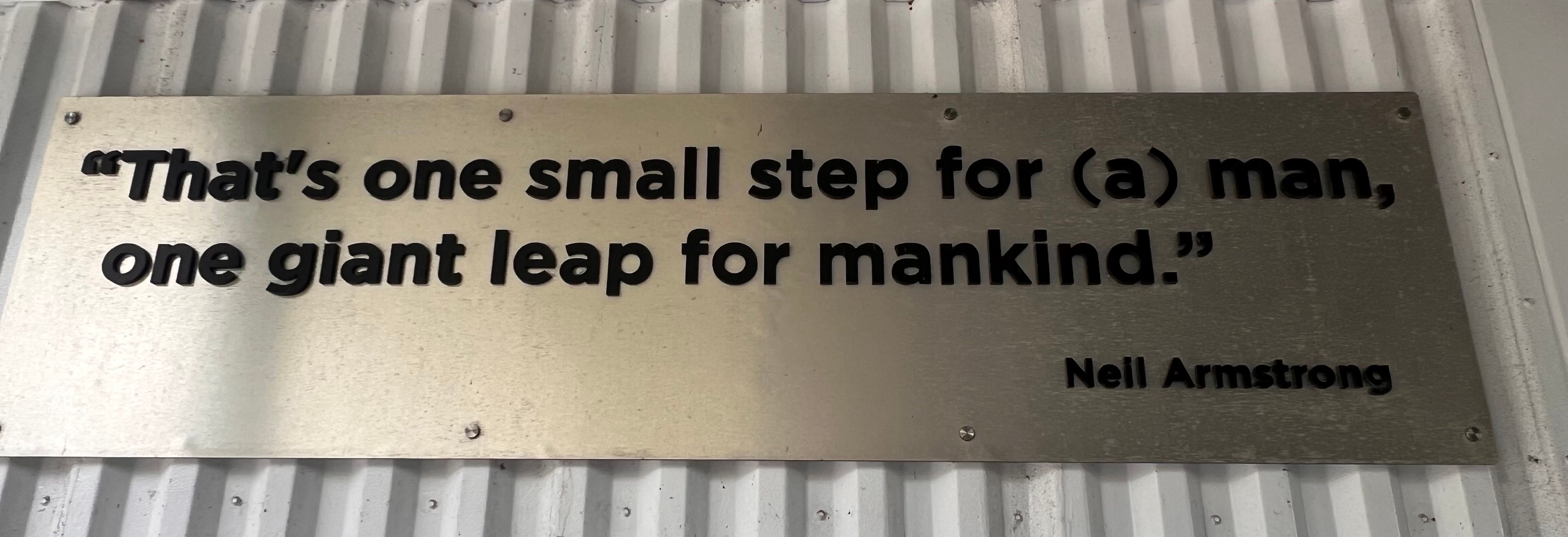
The first stop on our tour is the place where Neil Armstrong, Buzz Aldrin and Michael Collins met on July 16th. Boarded the Apollo 11 spacecraft in 1969 and made the impossible possible. They landed on the moon. Back then, millions of people sat in front of the radios and black-and-white televisions and heard the famous words: "It's a small step for one person, but a big step for humanity." I got a little goosebumps when I saw the launch pad. World history was written here. All Mercury and Apollo flights departed from here.
Our journey continues, past the halls of Space X, the space project of Elon Musk, the Tesla man. We learn that a launch of one of its new rockets is planned today. The first start was not successful, but now the billionaire's team is hoping for a better outcome.
We also learn that Cape Canaveral has Mission Control that is only responsible for the launches. Houston then has control of the actual space mission. The guide goes on to say that rockets are placed into an equatorial orbit from Cape Canaveral. There is another orbit around the poles, launched from South America.
We drive past huge tracks on which the rockets are transported to the launch pad. It's all gigantic in proportions. We soon reach the launch pad where one of the greatest tragedies in space travel took place.
January 28, 1986 was a frosty morning in Florida. For a long time it was unclear whether the space shuttle Challenger would be able to take off due to the adverse conditions, but the engineers gave the go-ahead for the shuttle's 25th flight. An amateur astronaut was on board for the first time. An elementary school teacher who wanted to teach her class from space. Just a few seconds after takeoff, the spacecraft burst and fell into the Atlantic Ocean, killing all seven astronauts. The frost had caused a sealing ring to become porous. This caused a flash of flame to erupt, causing the main tank to explode. I sat in front of the television in shock and couldn't understand what had just happened.
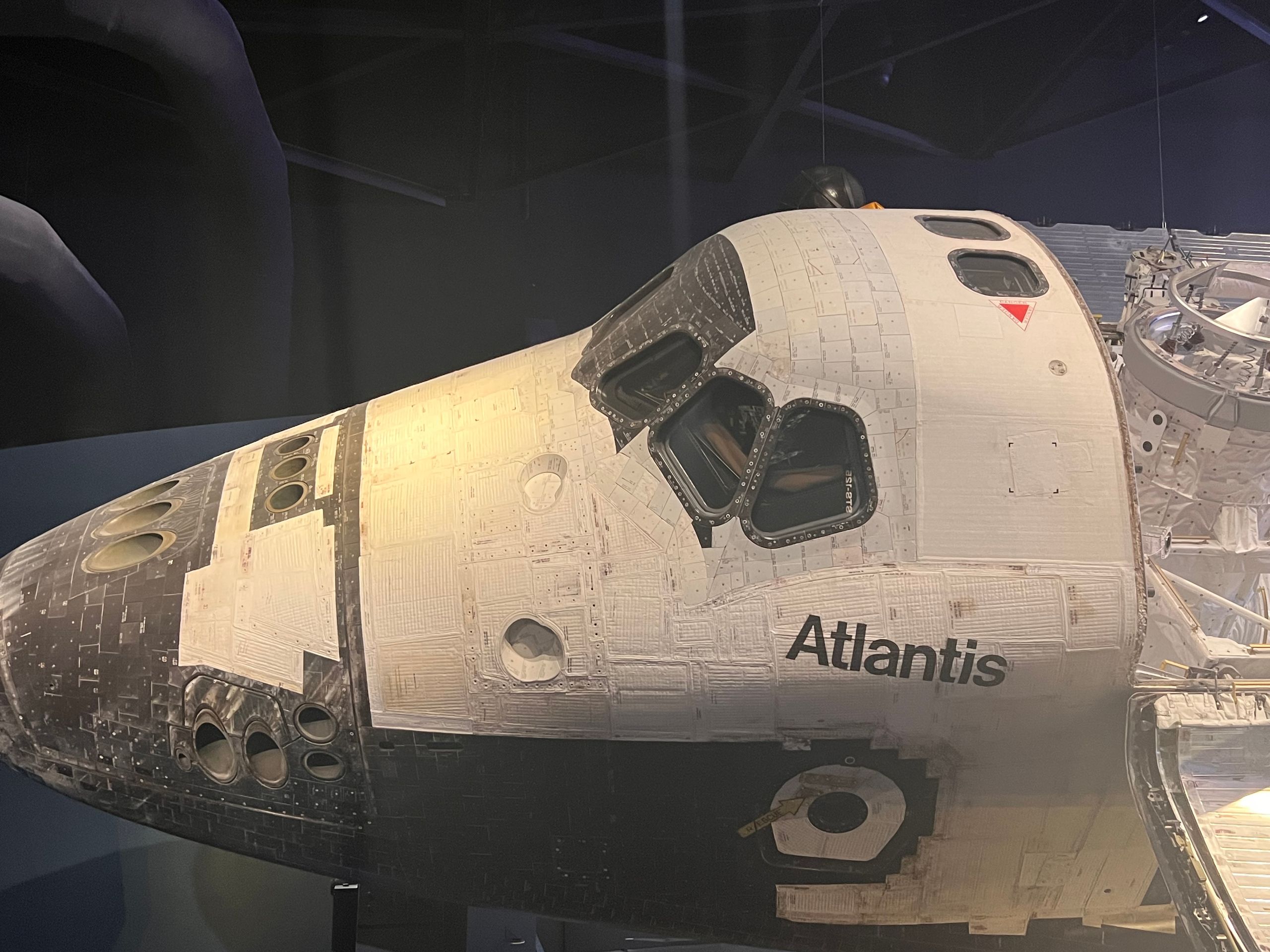
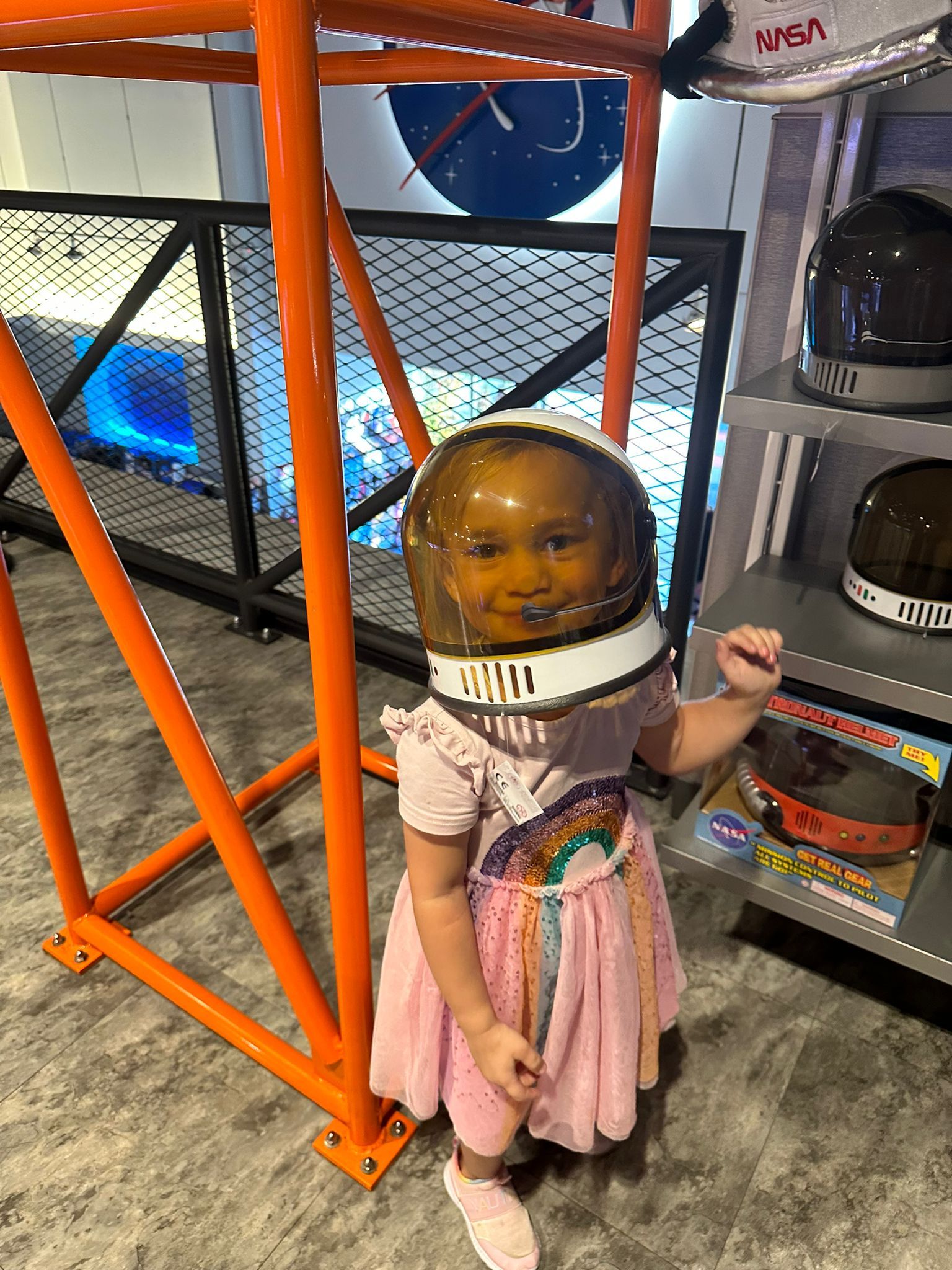
An entire hall is dedicated to the legendary space shuttle. After a Hollywood film about the development of the shuttle, the doors open to this masterpiece of technology. Another goosebumps moment. A real space shuttle, right before our eyes. Incredible. Our granddaughter is allowed to sit in the cockpit of the shuttle, go to a space toilet and see how an astronaut sleeps and her decision is made: I will be an astronaut too, she says. Why not. Nothing is impossible.
Maybe it will then launch from one of the launch pads here at Cape Canaveral to Mars, because that is NASA's next big project.
Before that, however, the moon project will be resumed, in about 5 years, people will be permanently brought to the moon.
Time flies at the Kennedy Space Center. It is already getting dark when we make our way home, happy, content and with lots of new information about space travel.
Tomorrow our granddaughter has her day.
Mickey and Minnie have loaded.
PS The second launch of Elon Musk's rocket also failed. The rocket exploded shortly after takeoff (thank God it was unmanned)