
Welcome to the jungle
Today we are going to one of the most remote places in Costa Rica. The Osa Peninsula is located at the southernmost tip of the country and is considered one of the most...

Published: 15.11.2023
There are some places on this earth that I want to see in my life.
One of them is the Corcovado National Park. According to National Geographic, this park is considered the most biodiverse place on earth.
5 percent of the global species population can be found on 164 square kilometers. The Corcovado is home to tapirs, pumas, ocelots, 4 different species of monkeys, reptiles, frogs, birds, fish and insects.
On our last trip to Costa Rica we were not fortunate enough to experience this animal lover's paradise. But this year the time has finally come.
At 4 a.m. William, our guide, picks us up from the house. William is considered an absolute expert on this region and even the University of San Jose often asks the nature guide for advice. Why is William wearing rubber boots, I think. We want to go on a hike and not go fishing. I should receive the answer very soon.
William is glad that I speak some Spanish because he never had the chance to learn English because he couldn't go to a school where English was taught.
Quite tired, we get into our car and William shows us the way. It goes through the night on a bumpy road. Out of the corner of our eye we see something scurrying across the street. William motions for my husband to stop. Armed with the flashlight, I venture out into the night. A Caiman crossed our path. It is significantly smaller than its relatives, the crocodiles. First time I see a caiman in the wild. Everyone is excited but William quickly makes us understand that we have to move on.
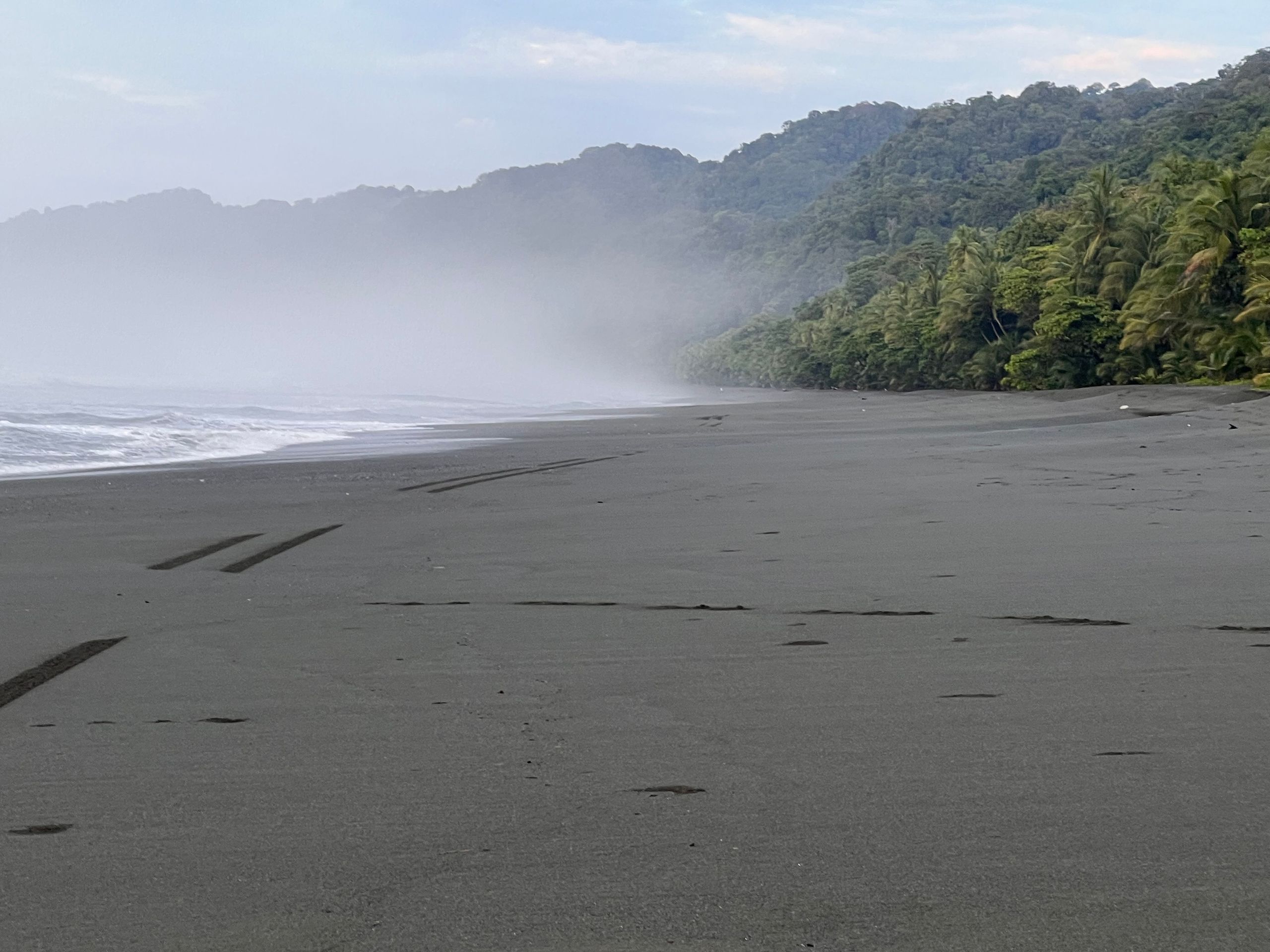
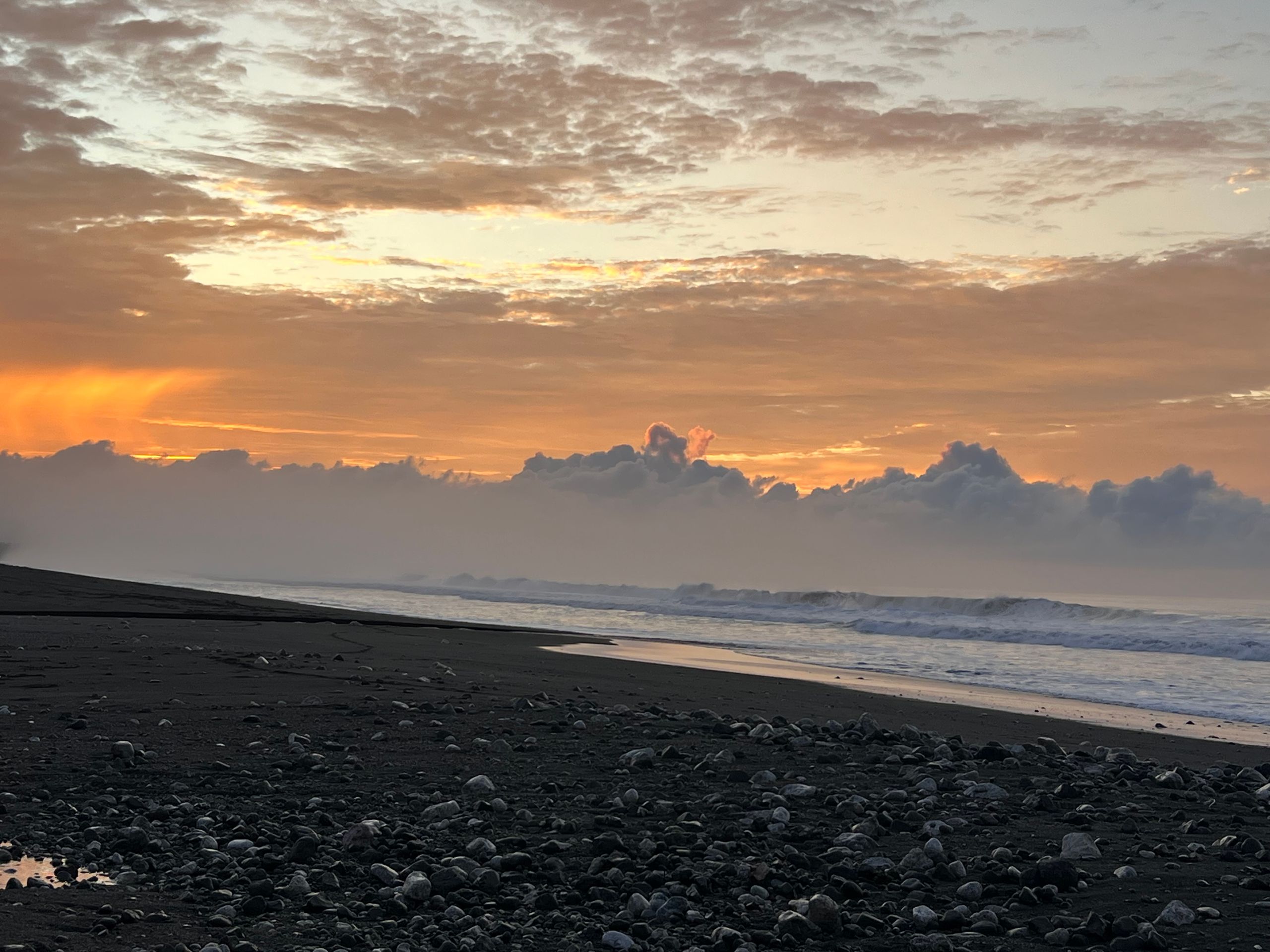
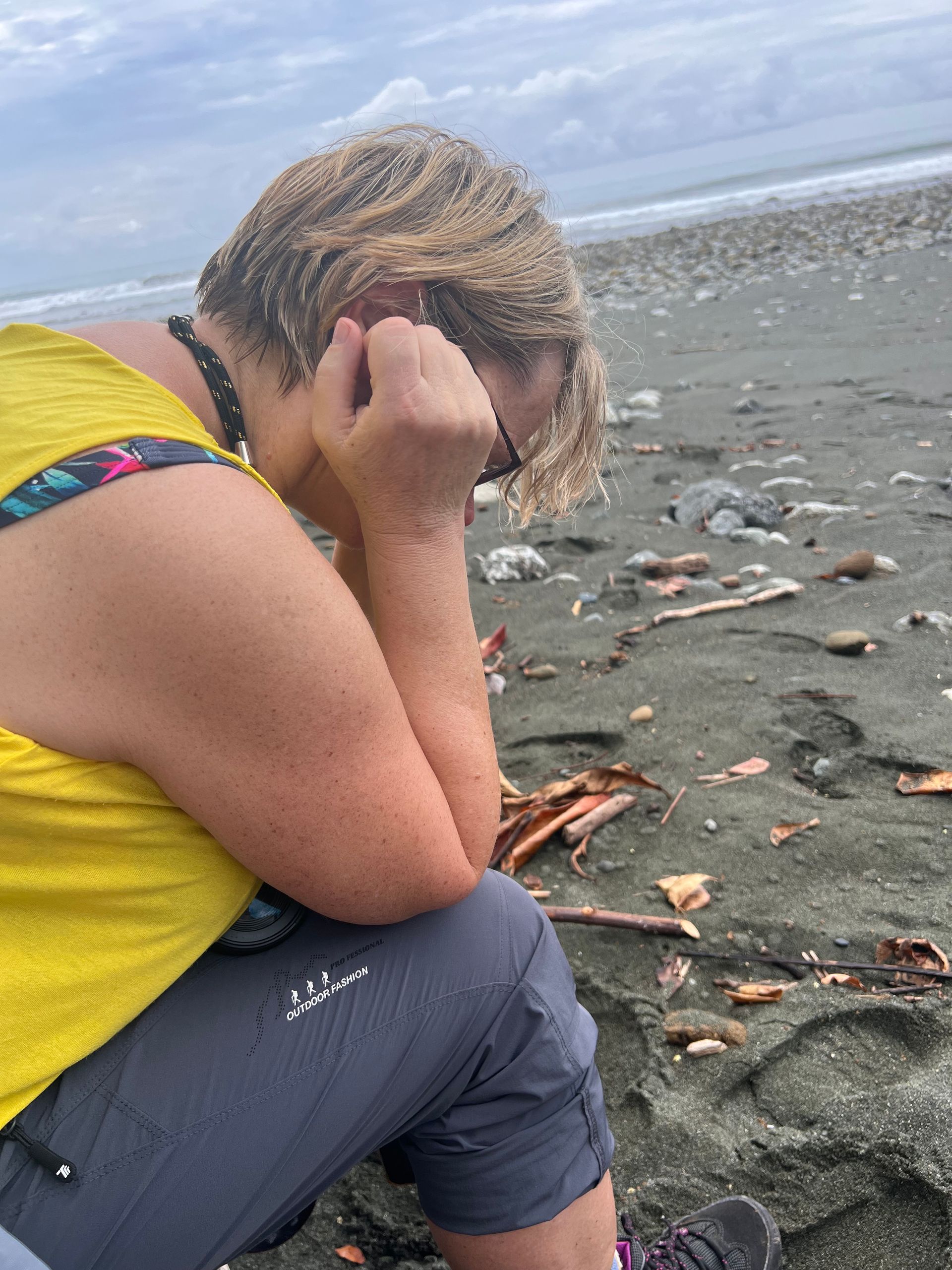
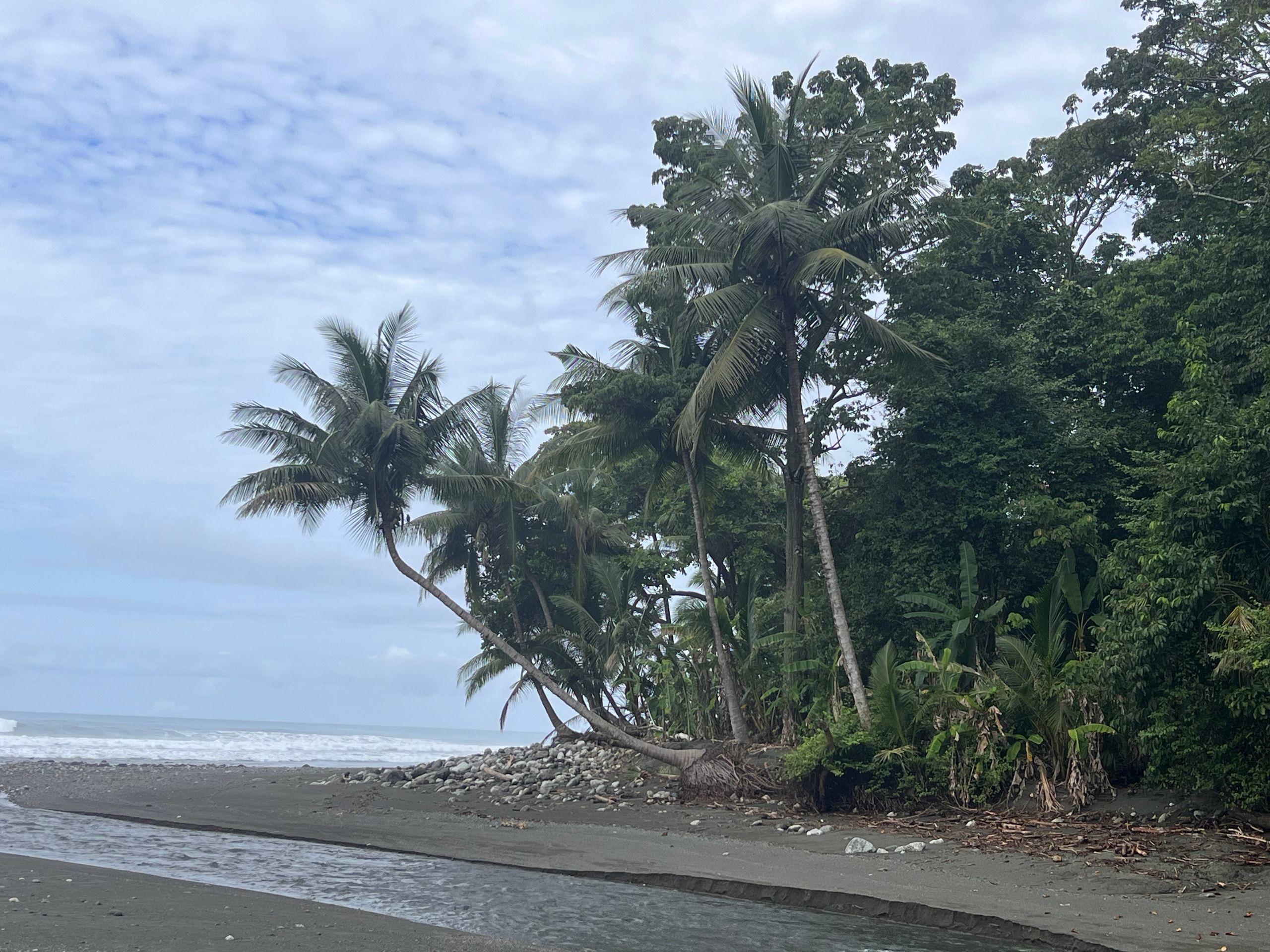
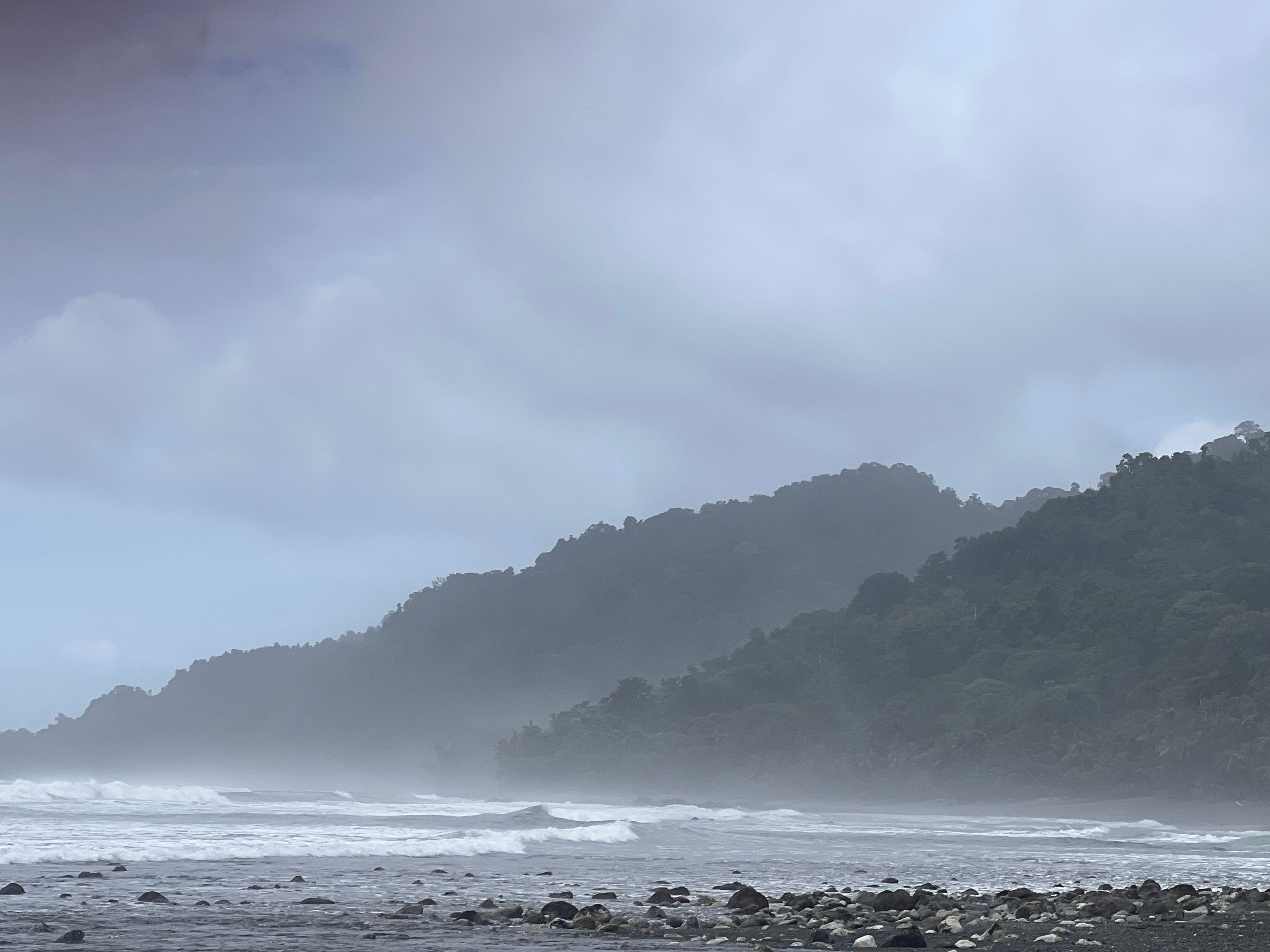
Since our guide has excellent contacts with those responsible at Corcovado, we are allowed to enter the area three hours before the national park opens and so we reach the beach at around 5 a.m., which is simply indescribable. The jungle extends to the raging sea. The waves are piling up. The rising sun bathes everything in a magical light. Yes, this place is unique and we have it all to ourselves. We walk along the beach and see countless macaws sitting in the trees, coatis looking for turtle eggs in the sand and finding them very quickly, and again and again we marvel at the unbridled power of the waves as they break thunderously.
We are hiking on the beach, in front of us there are small streams that have to be crossed and that present us with the decision, wet feet in the wet trekking shoes or wet feet with sand in the dry trekking shoes. We now know why rubber boots should have been our footwear of choice today. It's not just our shoes that are wet, the high humidity makes us like a soaked sponge.
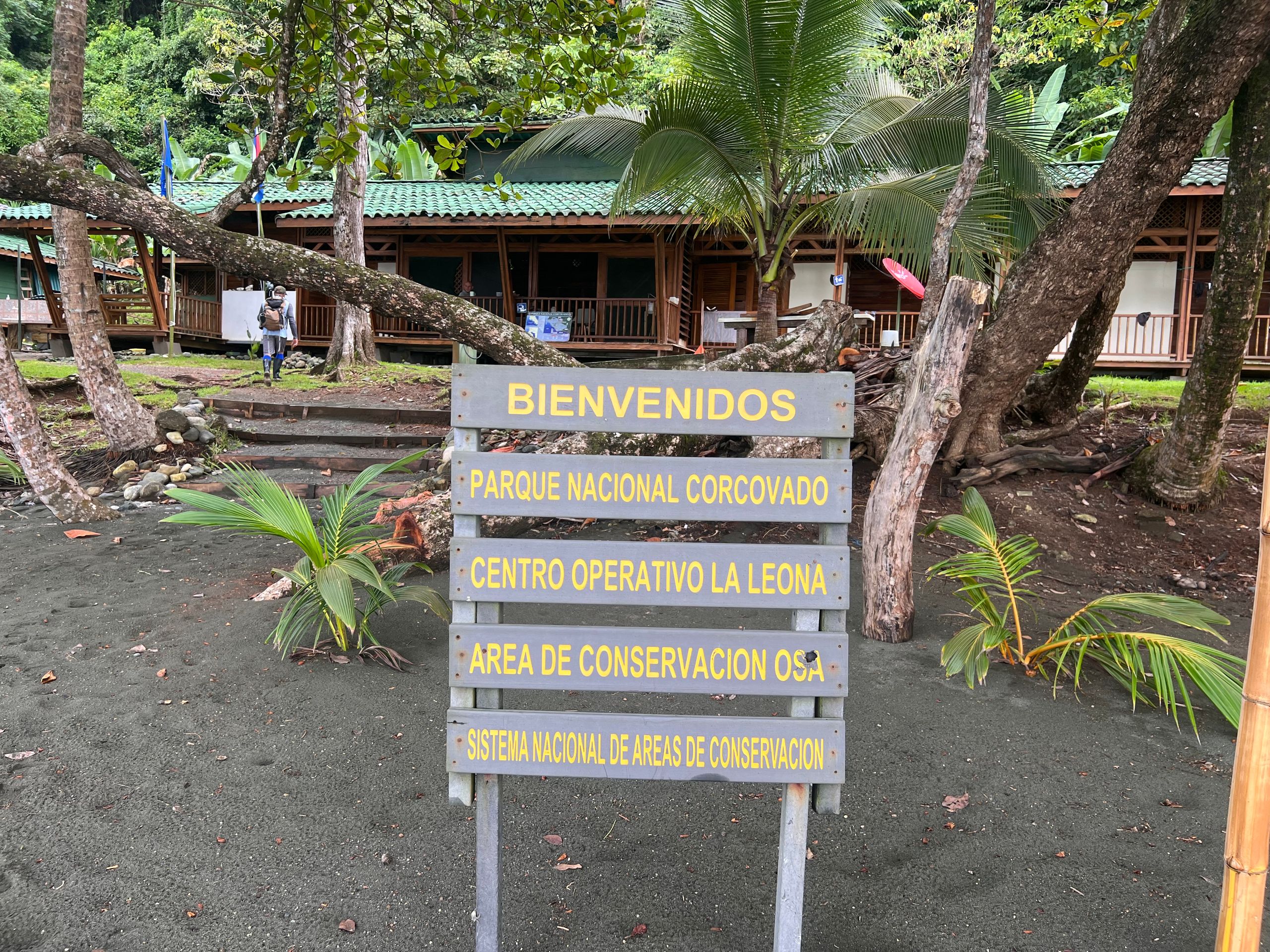
After 45 minutes we reach the La Leona ranger station and thus one of the three entrances to the national park. Finally a break to eat something and wipe the sweat from your body.
Let's go, tapirs, pumas and ocelots here we come.
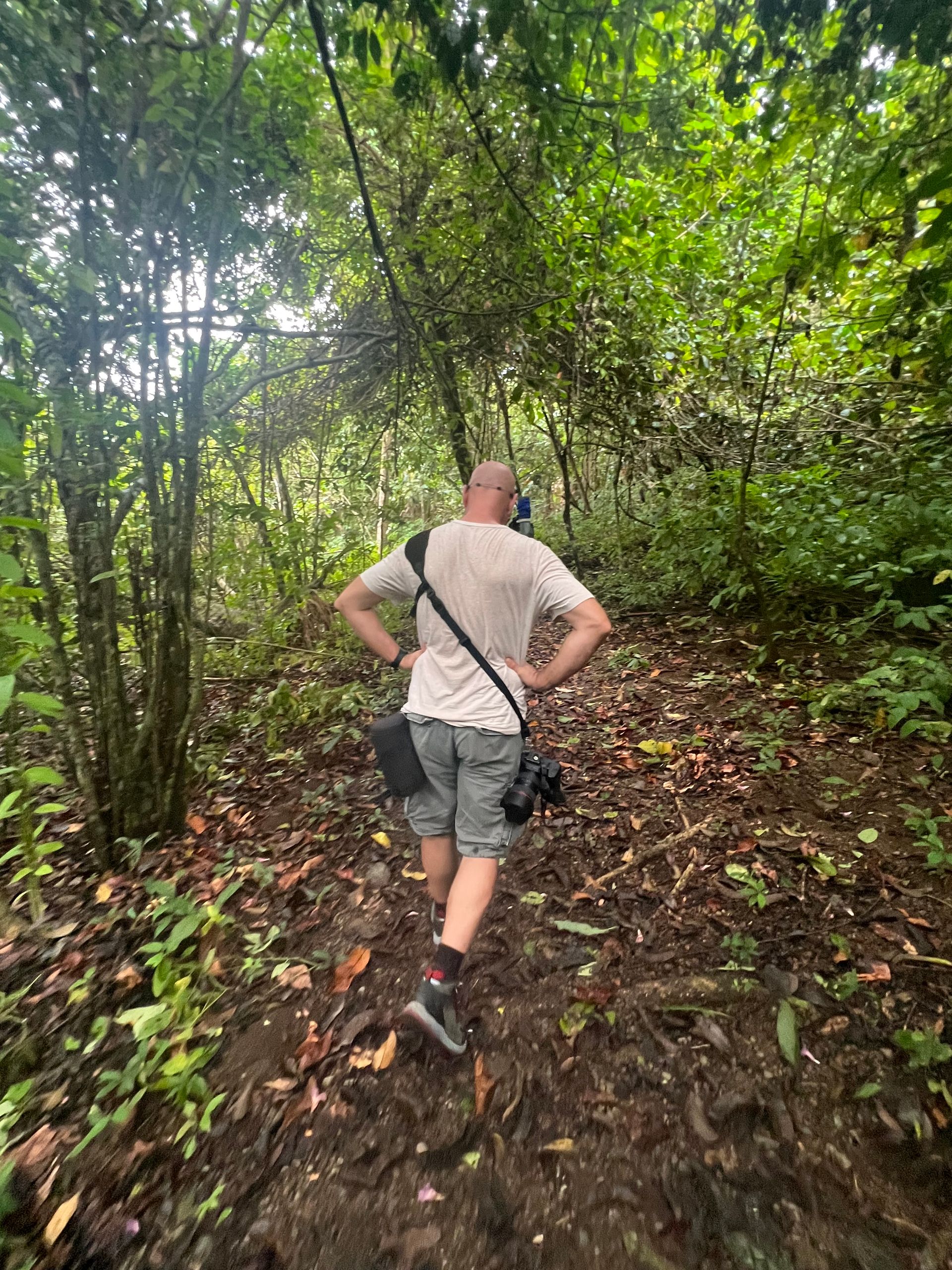
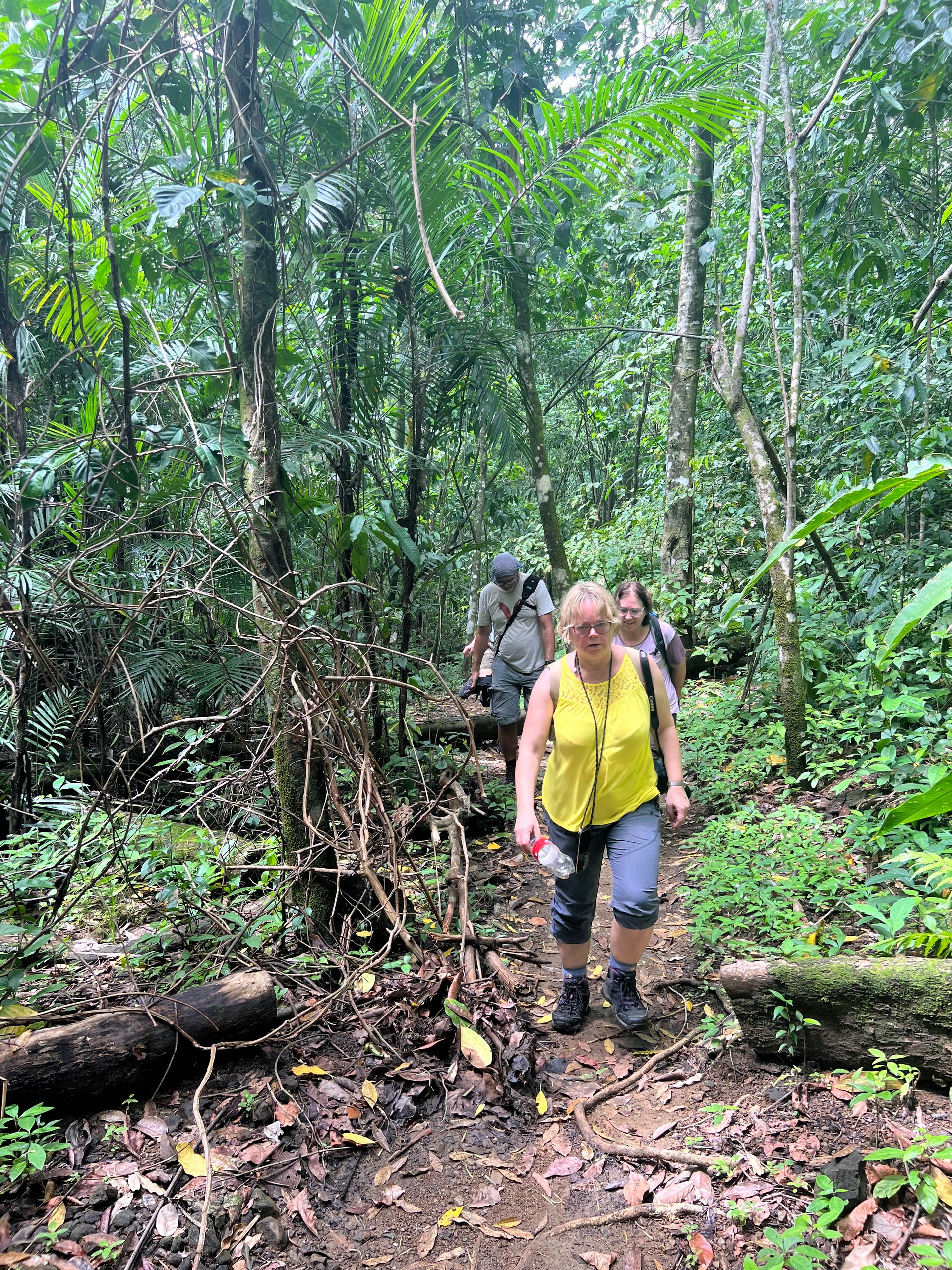
The Corcovado jungle swallows us. The climate in here is like that of a sauna. The humidity is close to 100 percent. Sweat runs down me in torrents. It's indescribable. We hike through the deepest jungle and initially find nothing. Not an animal crosses our path. The tapir track that our guide finds is also cold. I think William is also quite distressed when we leave the jungle and take a short break on the beach. So far it seems as if the animals are conspiring against us. Part two of the walk is coming up, we will hike into the next part of the jungle, William decides and is already wading in the knee-deep water that separates us from this part. We run around like frightened chickens, looking for a shallow place to cross the river. No chance, either we all get our feet and shoes wet or we surrender, like one of our comrades-in-arms has already done. She is not up to the rigors of the hike and decides to turn back and wait for us at the car.
What do we do. We confer while William waits patiently on the other bank. Since crossing the river without shoes seems too dangerous due to the large stones in the water, we wave the white flag. Corcovado we surrender.
Our guide understands our concerns and we hike back on the same trail we came from. Pitiful creatures, sweating, stumbling over hill and dale, crossing streams and becoming increasingly exhausted. In fact, our luck doesn't seem to have completely deserted us that day, because we see Spidermonkeys, Capuchin monkeys, Squirrler Monkeys and a large family of coatis. And last but not least, an anteater climbs a tree in front of us in search of termites.
On this day we will run 10 km under tropical conditions and will reach our physical limits for the first time during this trip. Very soon we understand that such a hike in such a demanding environment requires more than the physical fitness of a couch potato.
With aching, completely soaked feet and a "crooked" back, we get into our car and are happy despite everything.
We experienced one of the last great natural paradises on earth. Who cares about the coming muscle soreness?
I still have a small reward for the brave naturalists. I have booked a table for dinner in the most beautiful lodge on the Osa Peninsula, Lapa Rios. We reflect on the day over our three-course menu in beautiful surroundings. The Corcovado has not revealed all of the jewels it houses, but what we saw was indescribably beautiful.
Corcovado a magical place.