
03/02/2018 - Wallaby Farm and Little Penguin Colony
After an unplanned, extended stay in Timaru, we continued our journey south of the South Island yesterday. In New Zealand, cars must be regularly re-registered in addition to...


Published: 04.03.2018





The morning greeted us with blue skies and sunshine. Even in the night, temperatures dropped below 10 degrees. But after a warm shower, we already felt much better. We continued our journey to the small coastal town of Hampden. From there, we are planning to visit the famous Moeraki Boulders.
Before leaving our old campground in Oamaru, we visited the farmer's market, which takes place every Sunday at the harbor. In addition to tasty fruit, we bought fresh beans and bacon for our dinner tonight.
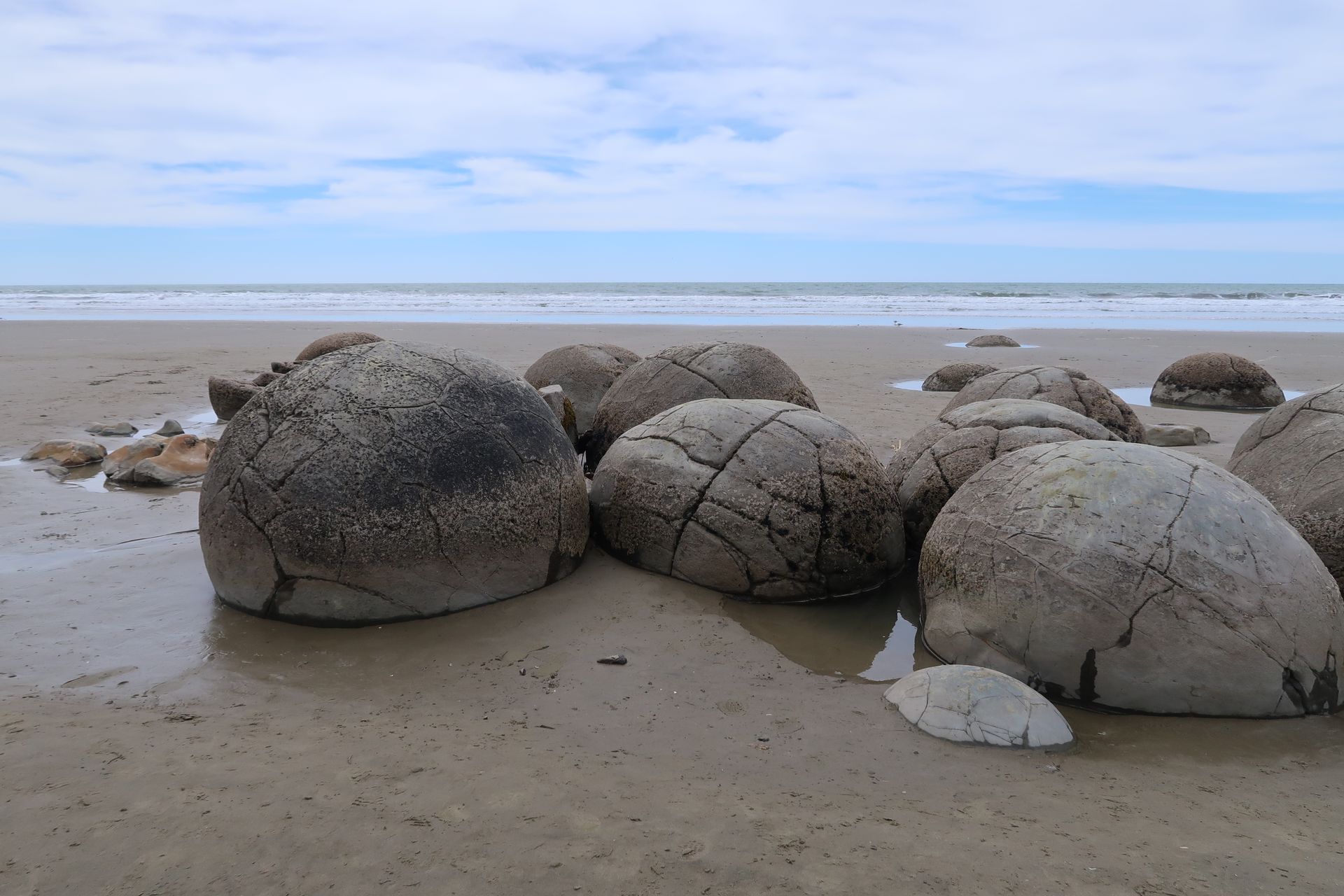
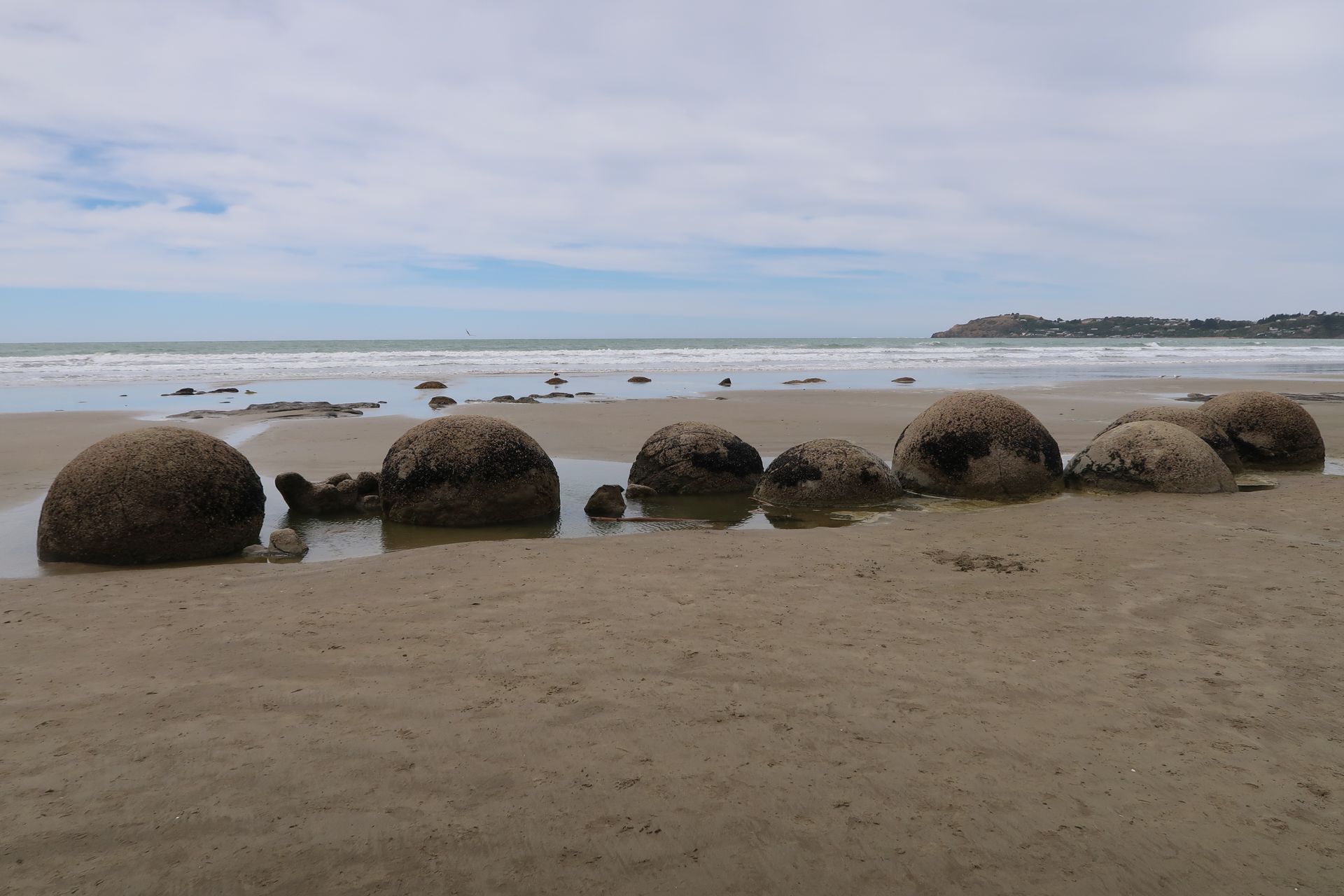
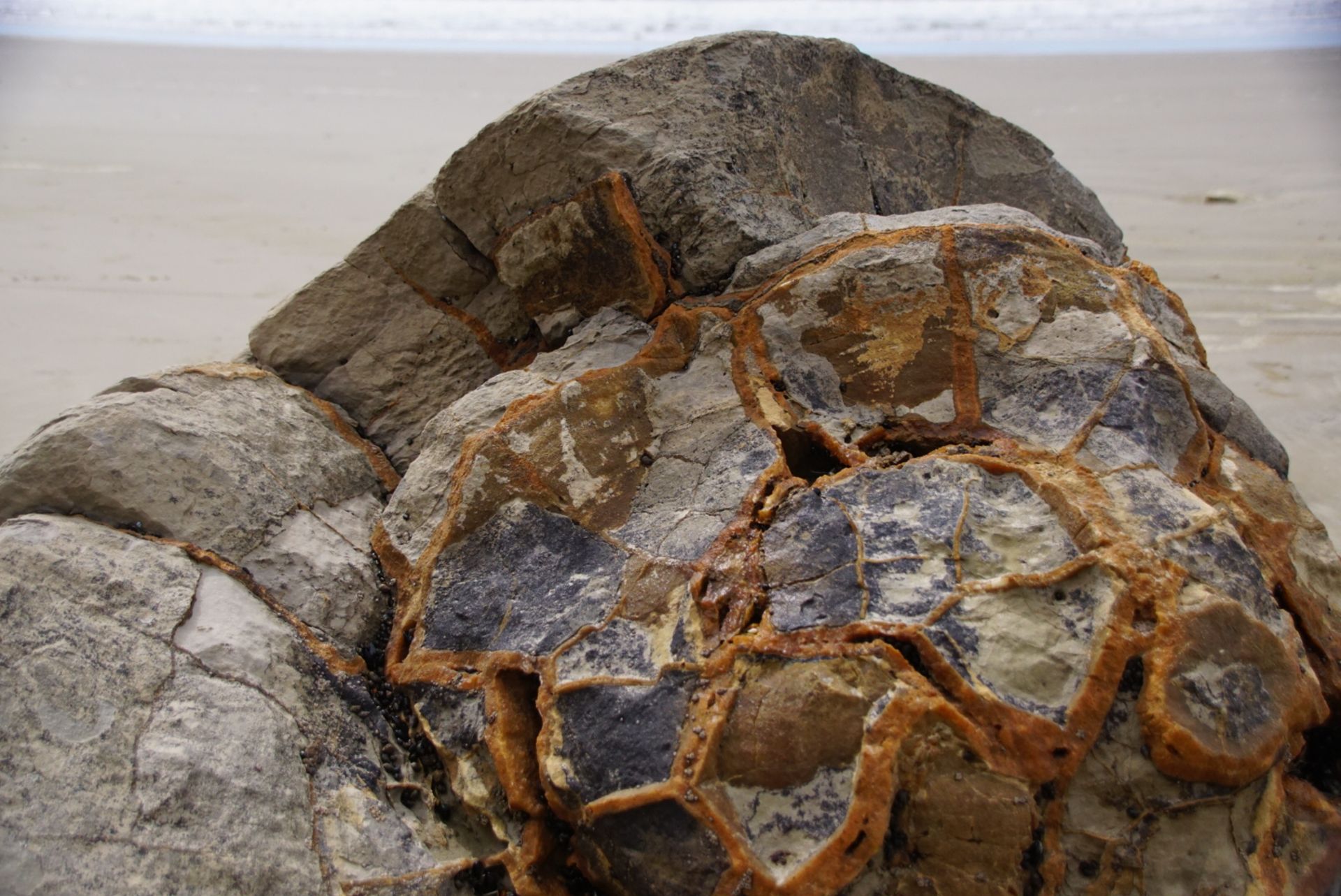
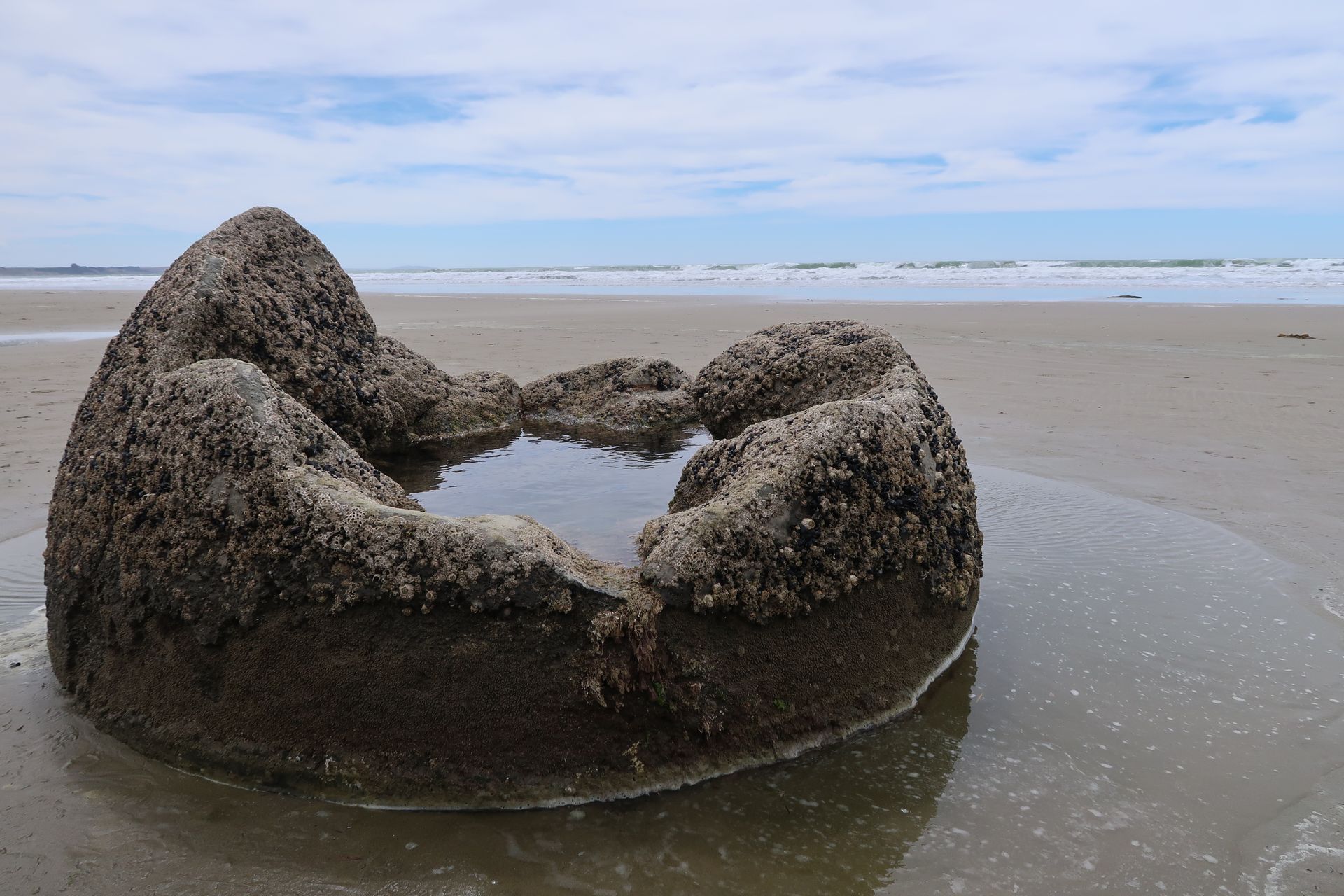
We reached Hampden after 40 minutes and we were afraid of arriving too early for the check-in. But we were warmly welcomed by the nice campground owner. After taking our contact details, the owner suddenly spoke German. It turned out that she comes from Switzerland. She explained where we can find everything and then showed us the current tide times. She advised us to visit the Boulders as soon as possible, as they can only be reached at low tide. The special thing about the campground, apart from its beautiful beach location, is its proximity to this tourist attraction. So we parked our car overlooking the sea, quickly cooled our food and off we went. On the way to the spherical rocks, we saw smaller, quirky rock formations that resembled the Boulders. After a 30-minute beach walk, we reached the destination. From afar, we could already see that it was crowded.
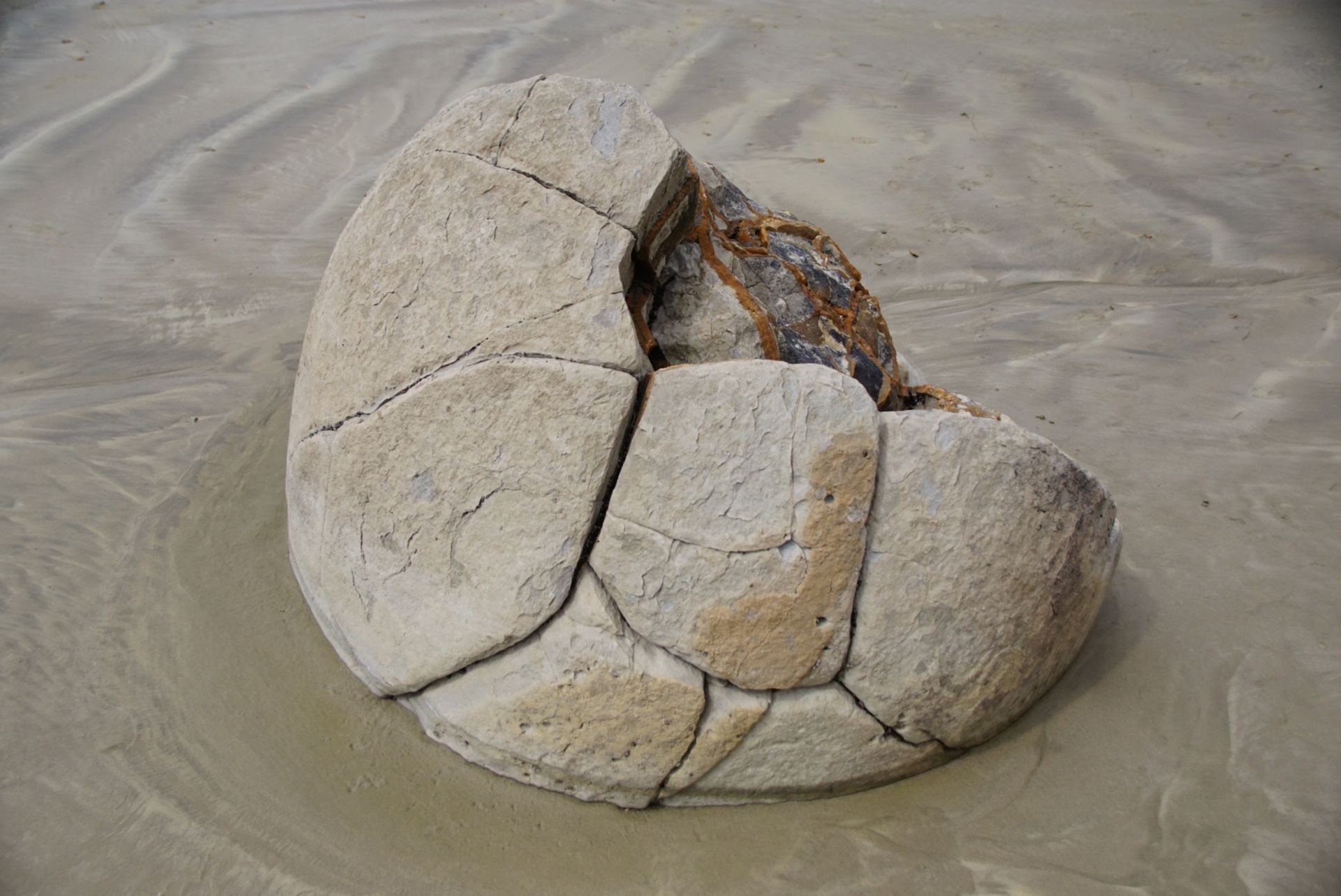
The Moeraki Boulders are rock formations that have an unnatural shape. They are round and can have a diameter of up to 3 meters. The rock balls are scattered on a small section of beach and are wonderful as photo motives. But we don't know exactly how the composition of the rock came about. We tried to research it, but it exceeds our knowledge of geology. :)
The fact is: The Boulders are not made of stone, but consist of various elements. Their age is estimated at about 4-5 million years.