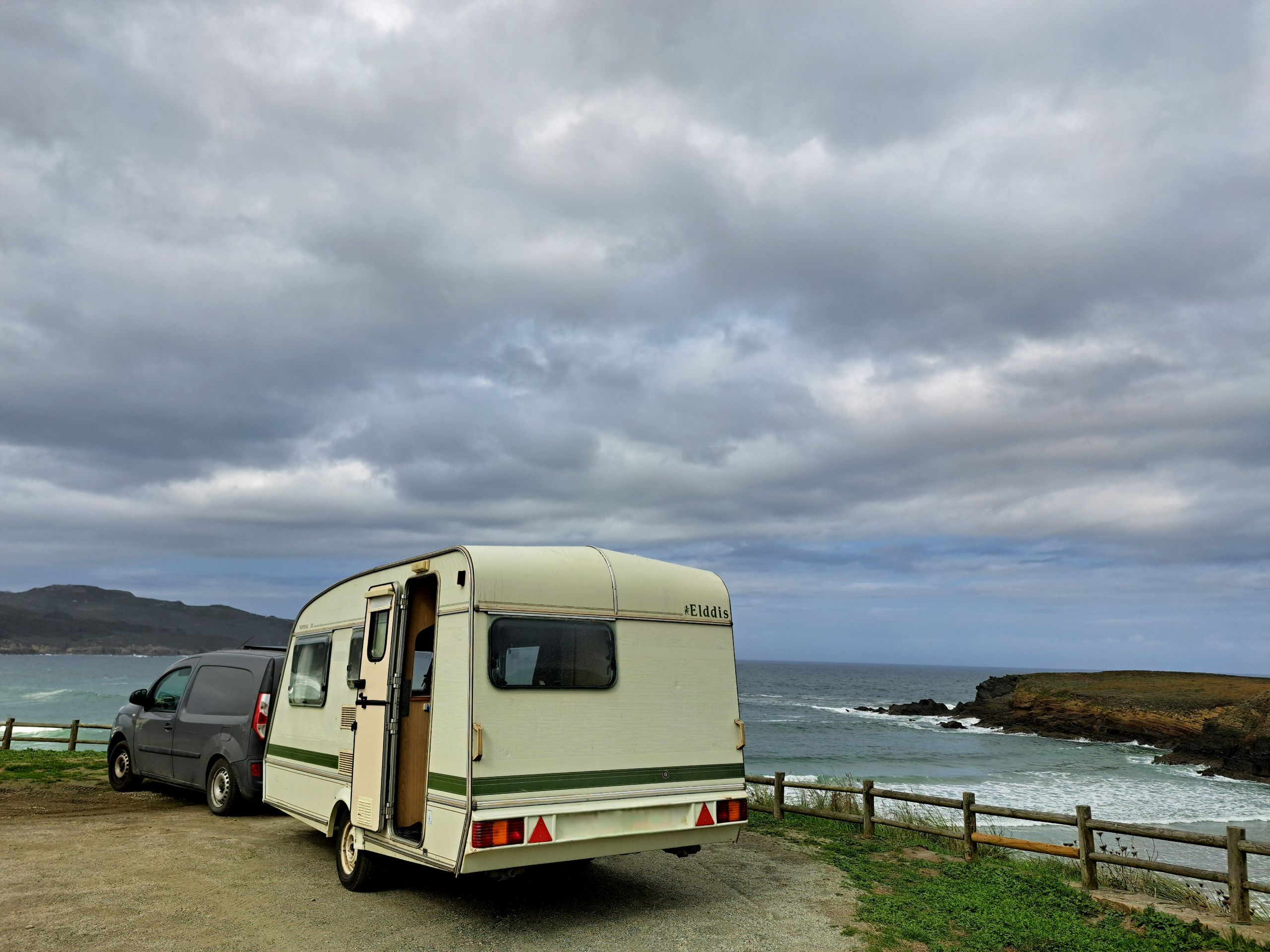
After I don't-know-how-many deeply relaxed days at the Galician Atlantic, I consult the calendar with a concentrated look to be surprised to find that we only have just over two weeks of travel time left.Place by the sea
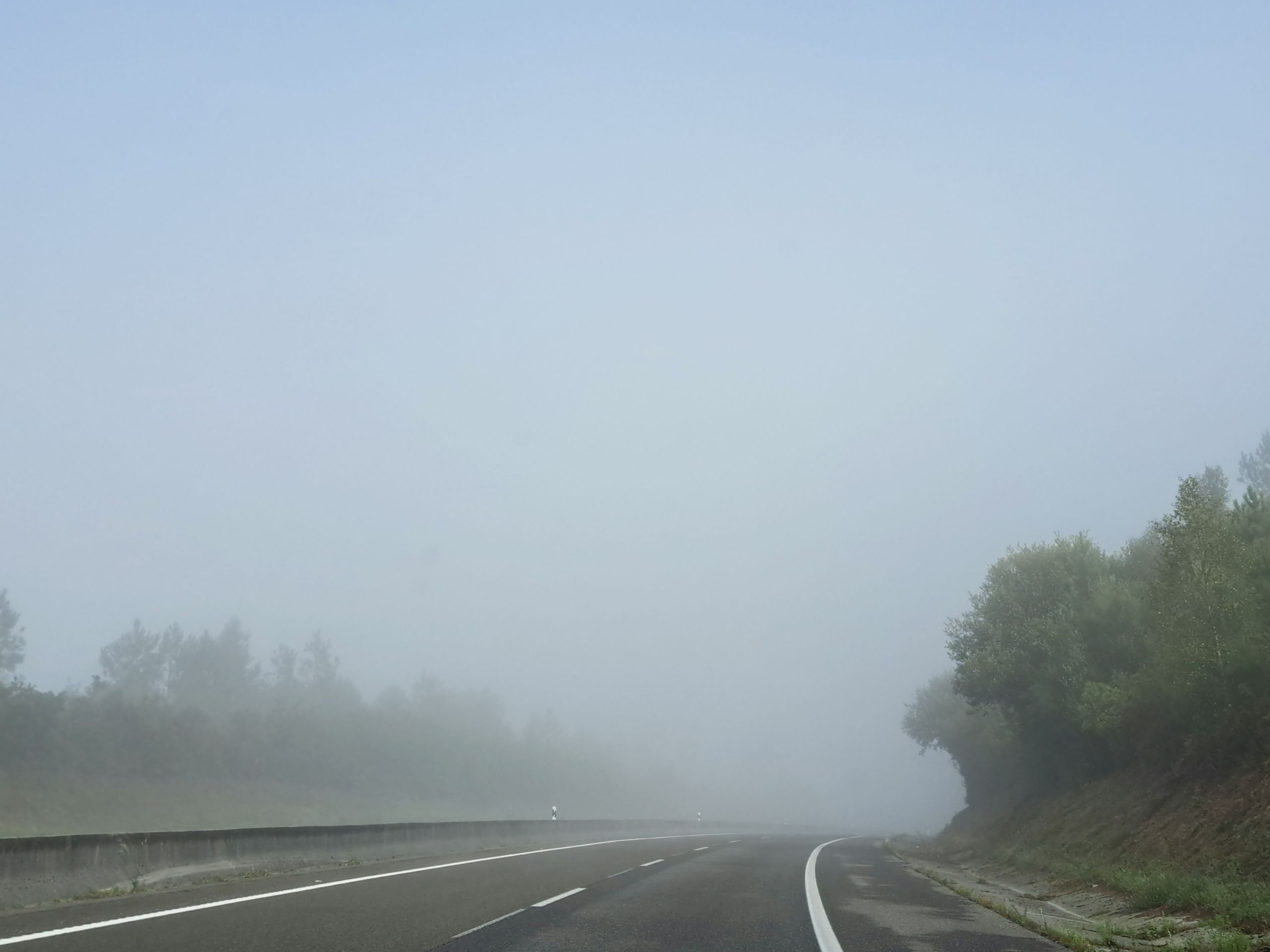
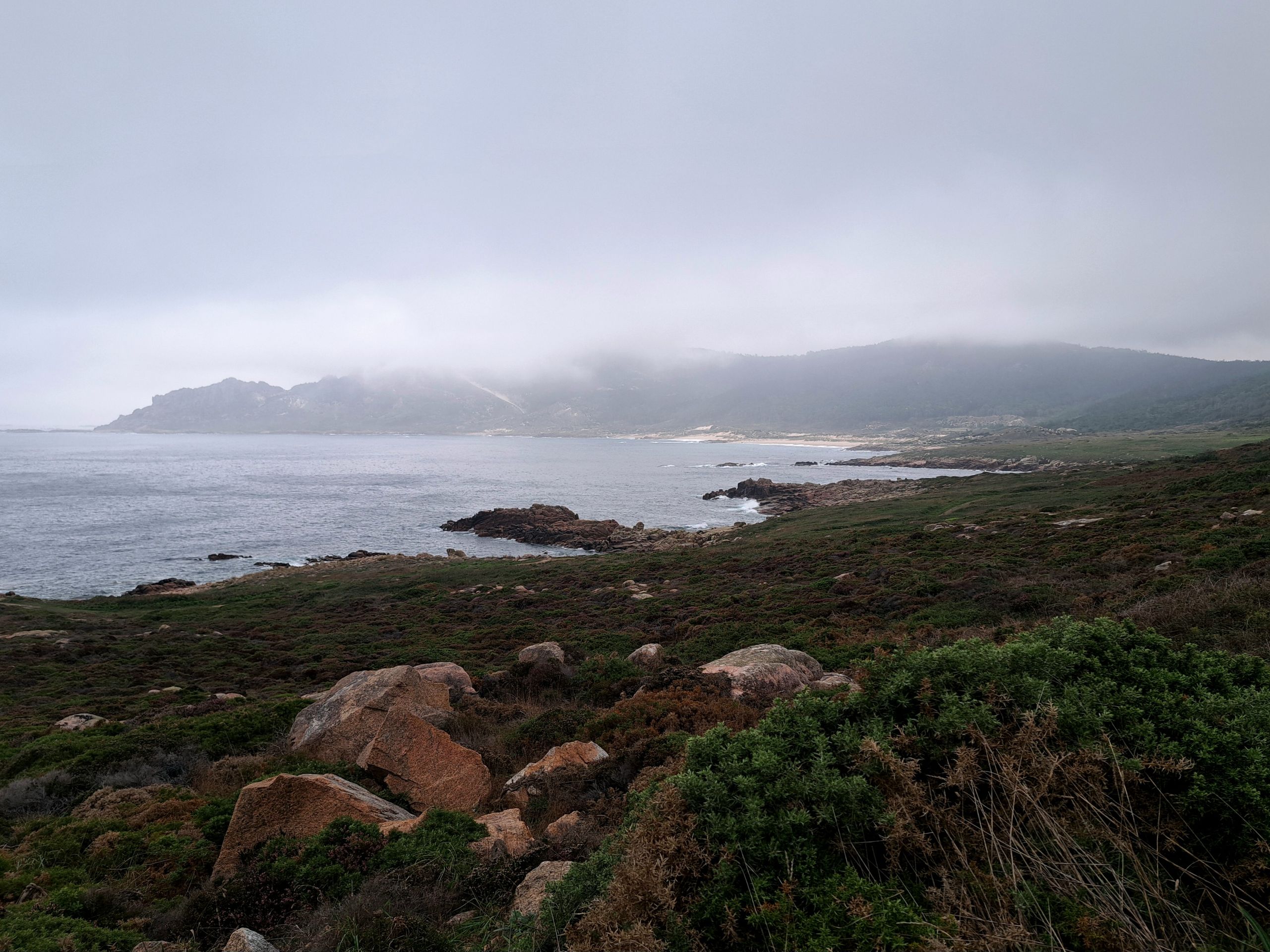
Galicia is a green and fertile region of Spain with steep rocky coasts and long sandy beaches. The mountainous interior allows the moist Atlantic air to rise, which condenses when cooled on the slopes and can create dense fog banks even in summer.
Fog on the Galician coast
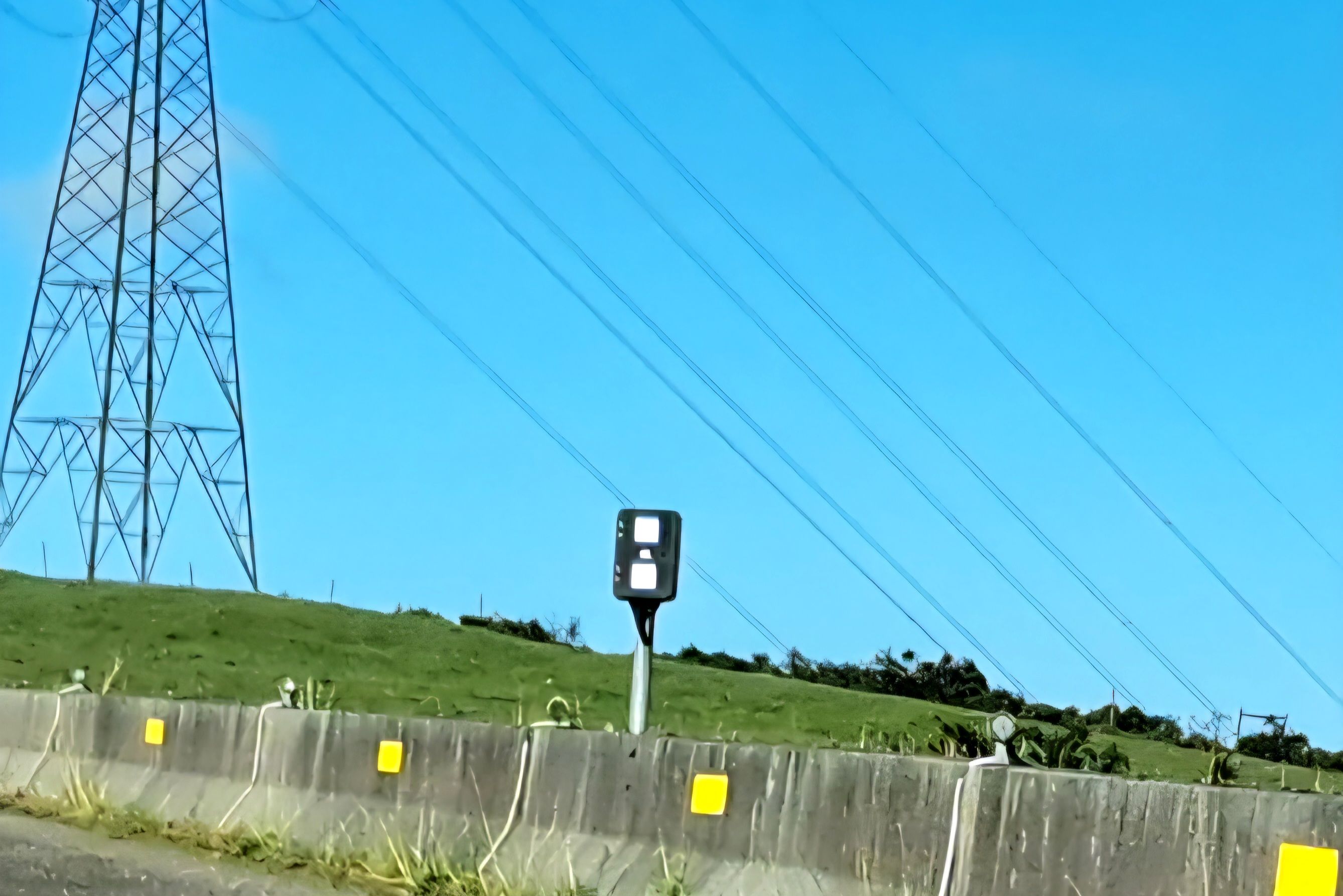
On the highway in the mountains, intelligent beacons have been installed in some places. These sensors register the frequently occurring dense trade wind fog, which has often led to complete closures of the road. The self-luminous LED posts installed every fifty meters penetrate even the thickest mists and transform the road into a spacey runway.
Intelligent beacons
Galicia is the Spanish region with the highest number of settlements. A single house can even serve as a village with its own nameplate, like Pescadore, which we passed through recently. Unfortunately, these small hamlets are often not very picturesque and can sometimes lack the quaint, photogenic charm.
Costa da Morte
During a beach walk, we were nearly stepped on by a giant otter on its way to the sea. We watch the immensely large creature in astonishment, too perplexed to pull out the camera for a proof photo.
Costa da Morte
The internet tells us that these typically freshwater inhabitants are a specialty of this region. They have adapted strongly, living in the deep marine arms, the Rias, and hunting crabs and fish in the Atlantic.
Saltwater forms crystals in their fur, which weighs it down and would destroy the water-repellent air layer. Therefore, the otters specifically seek out small streams or river mouths on the beaches or cliffs after hunting.
Costa da Morte
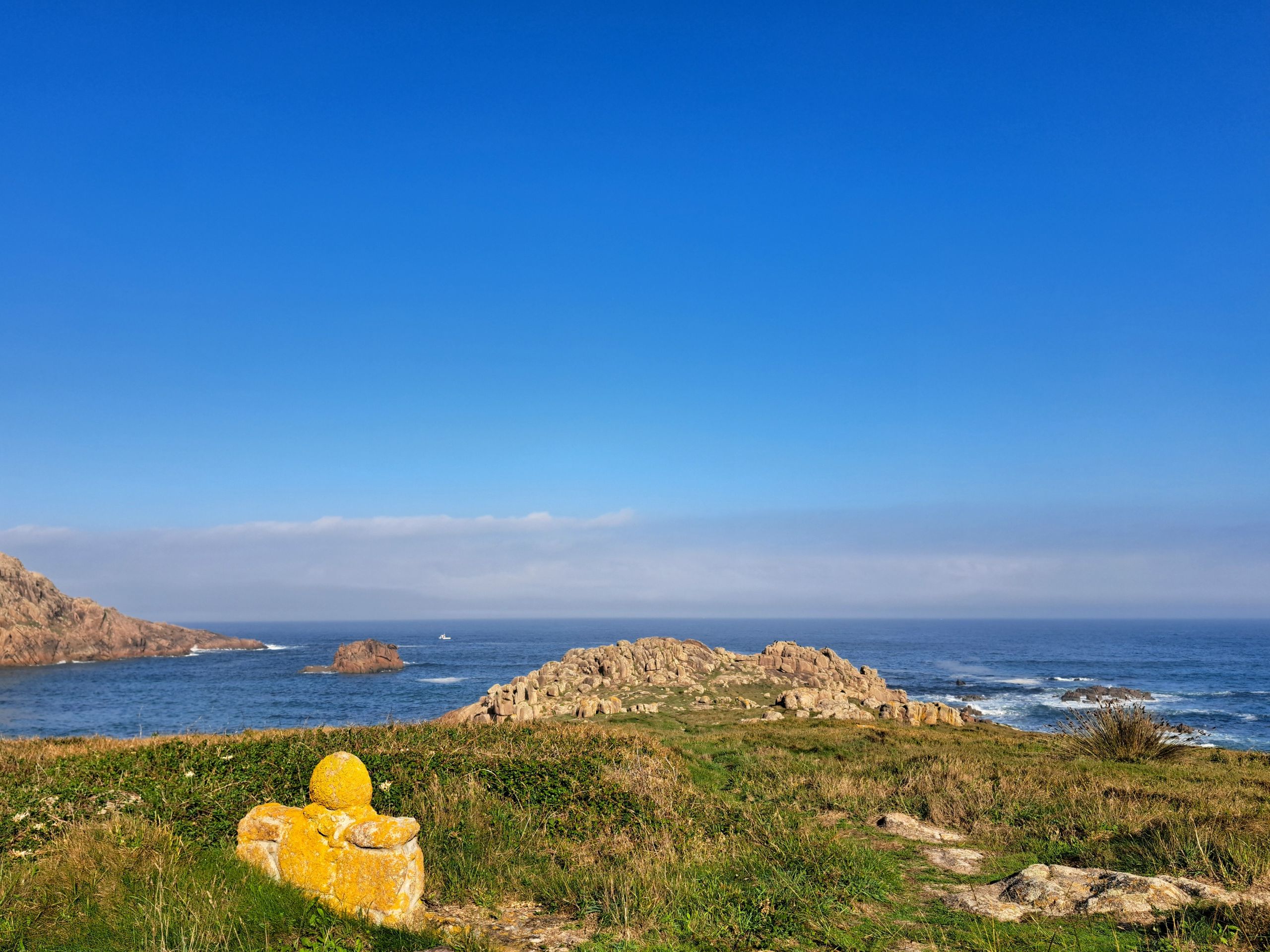
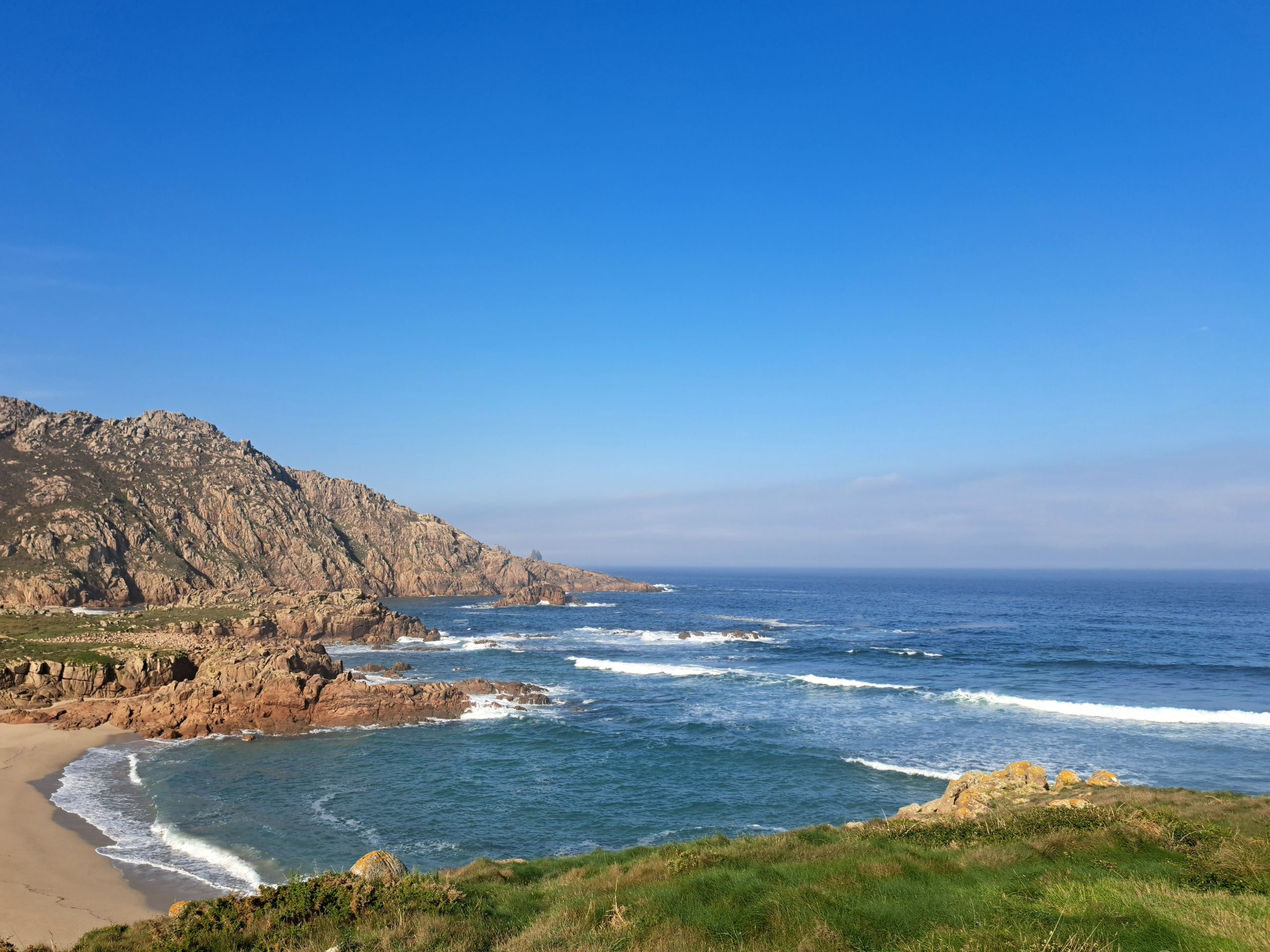
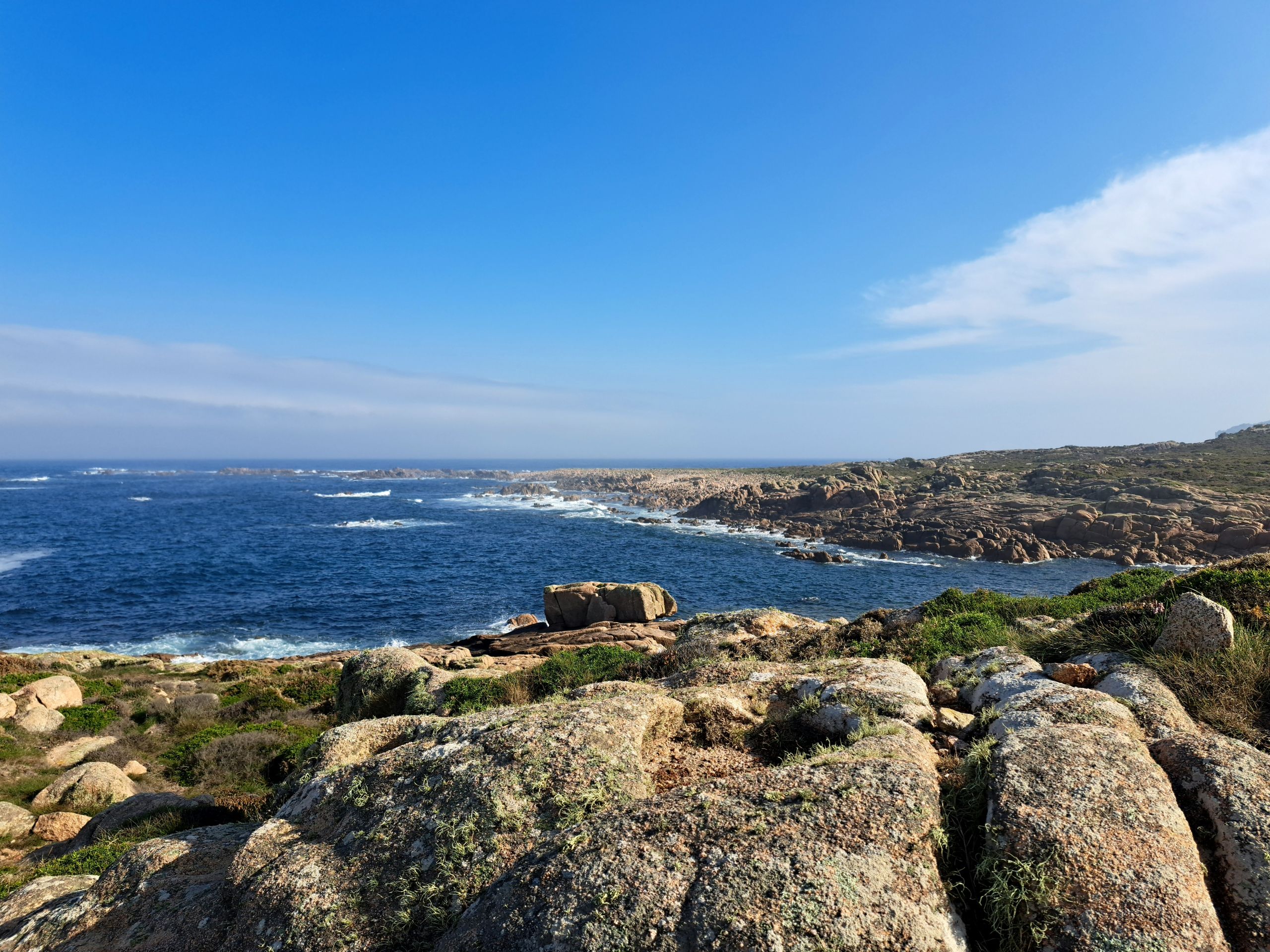
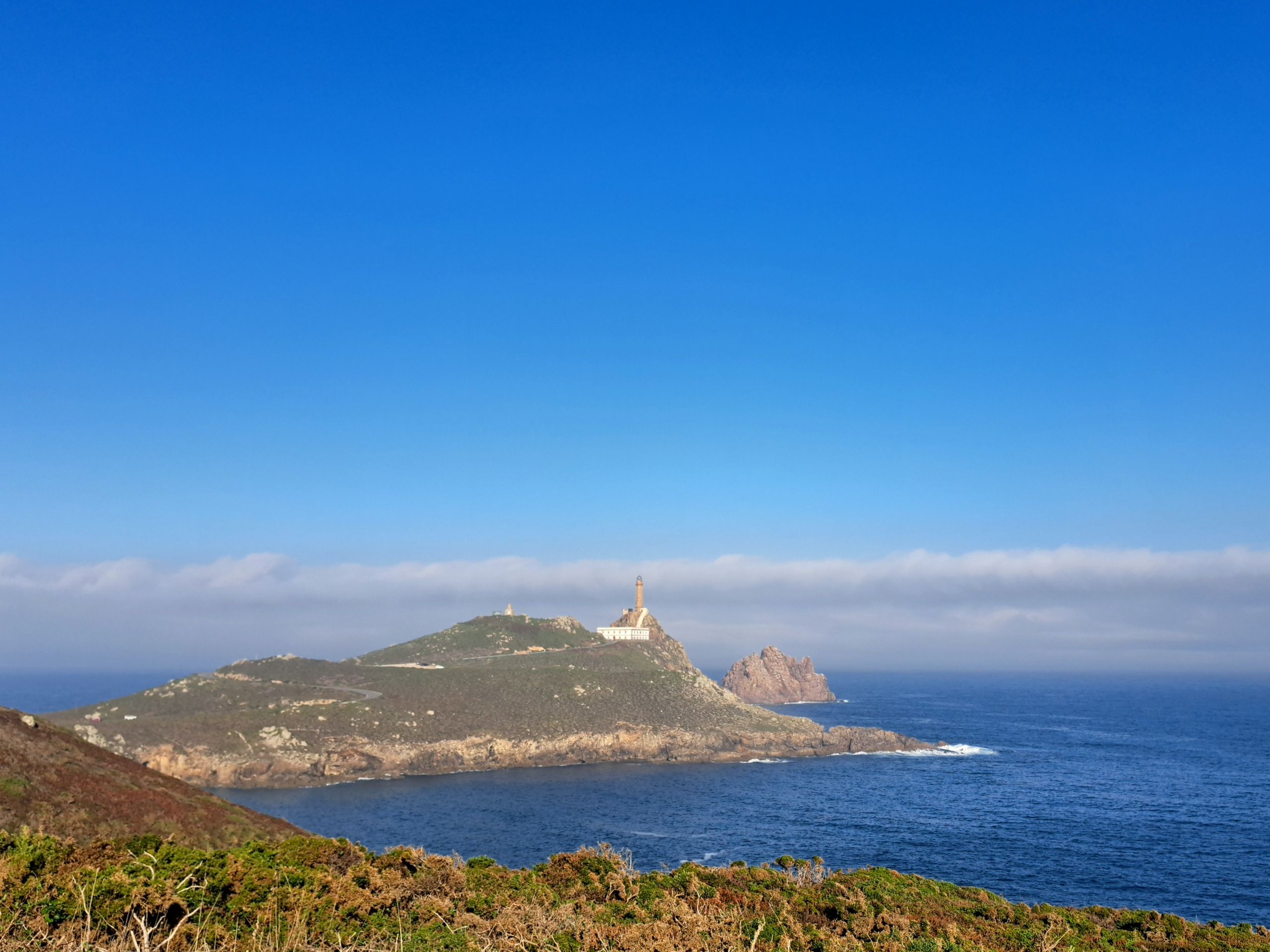
We particularly remember the Costa da Morte from our last tour here.
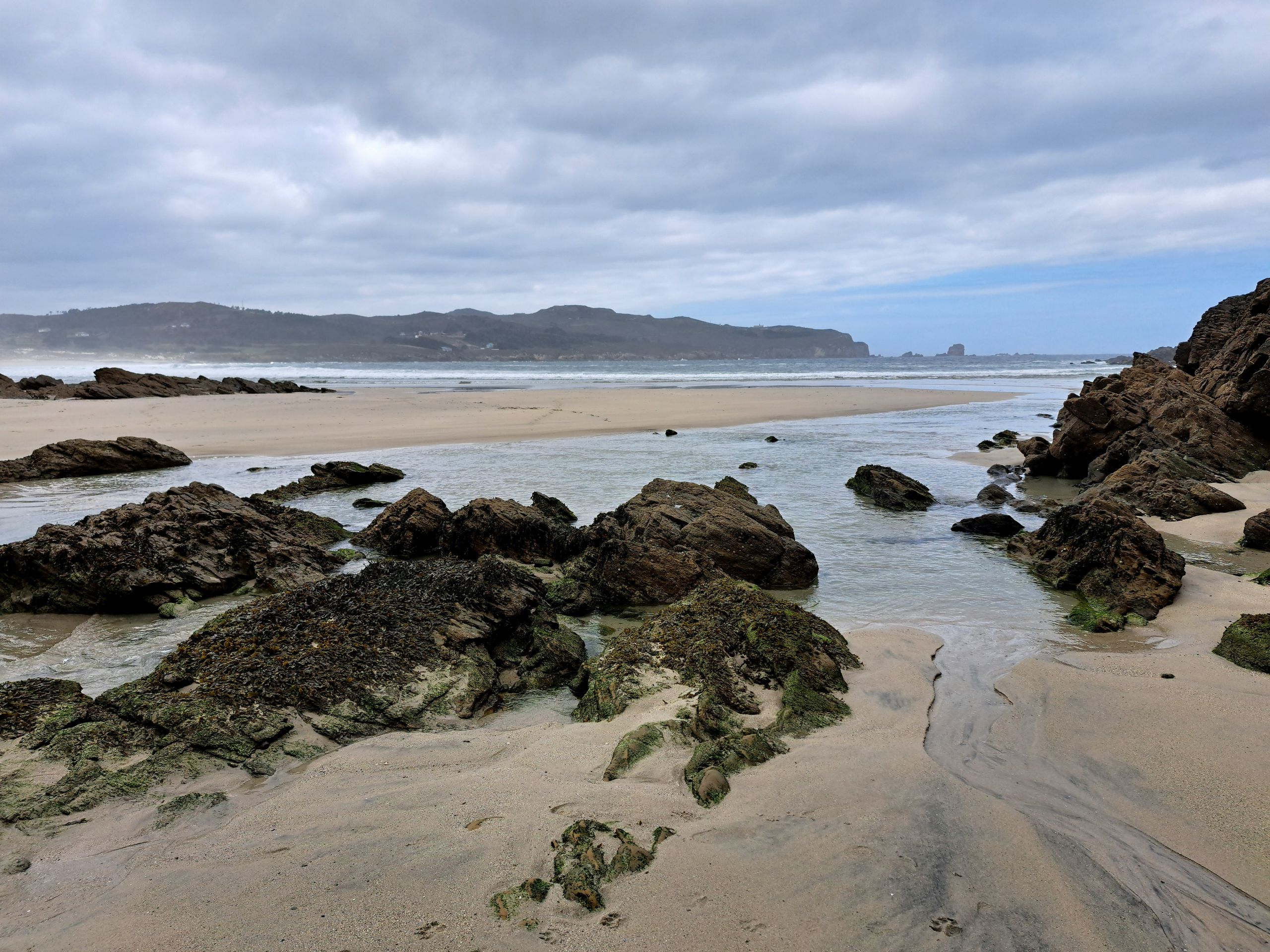
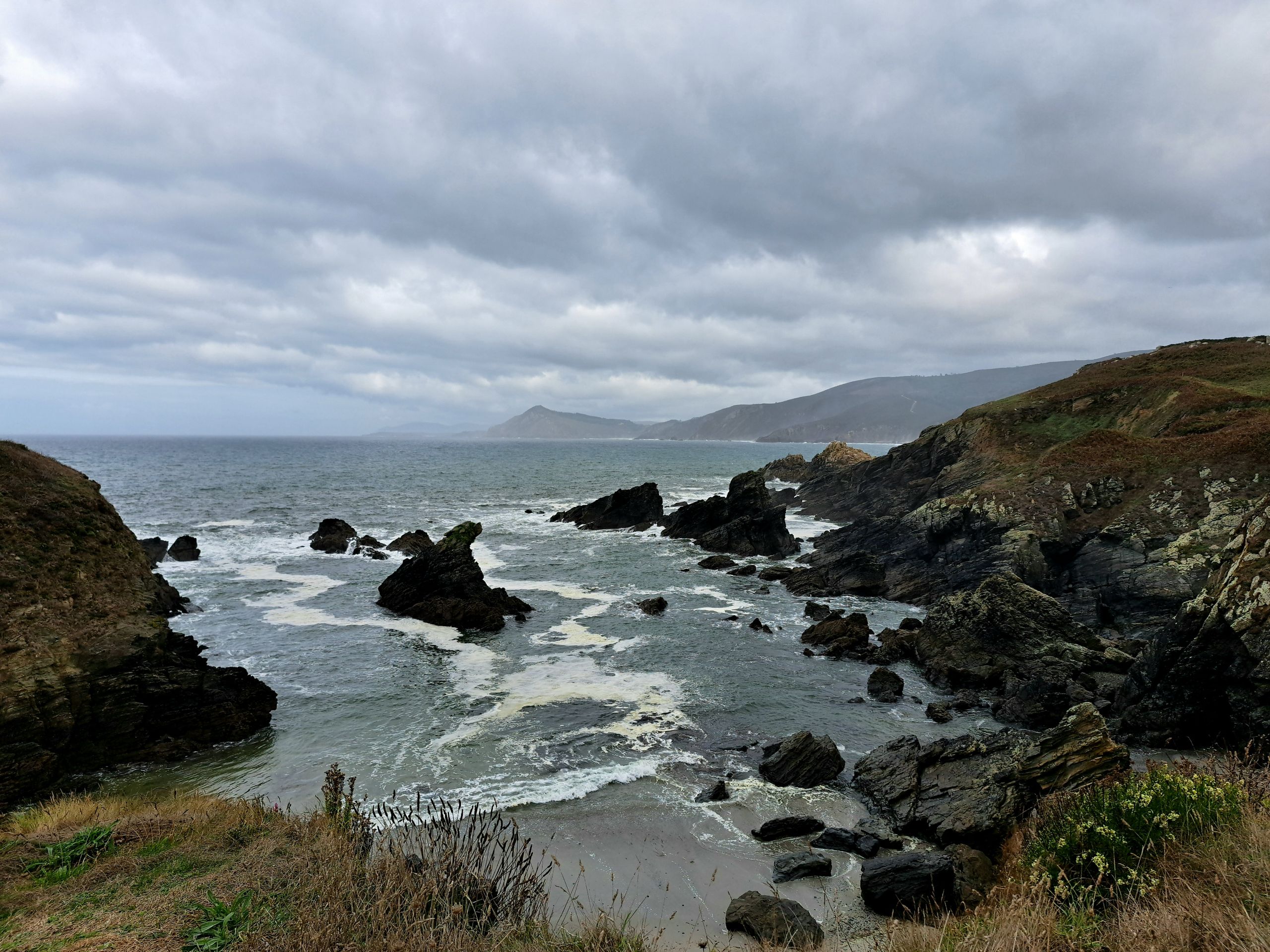
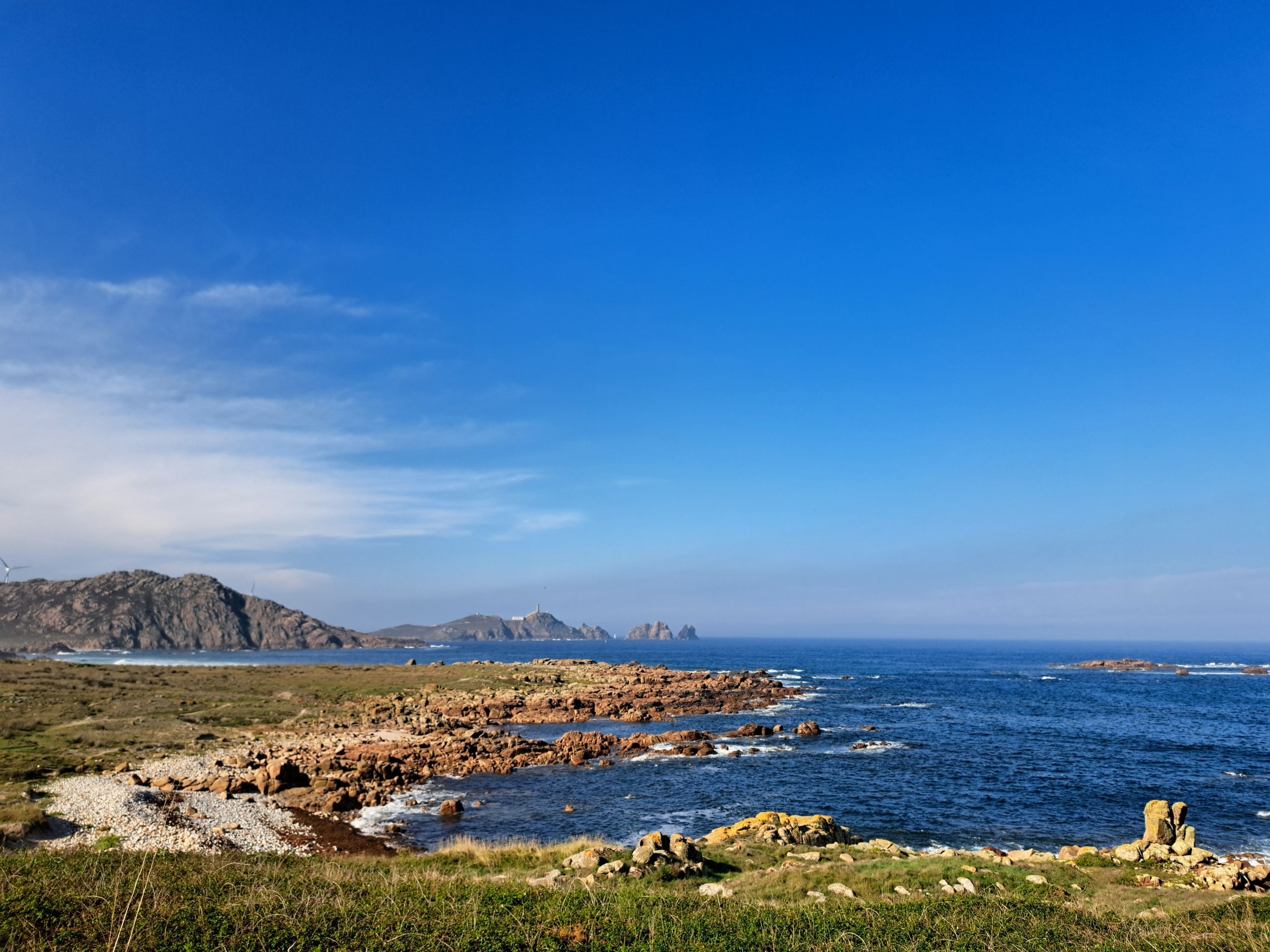
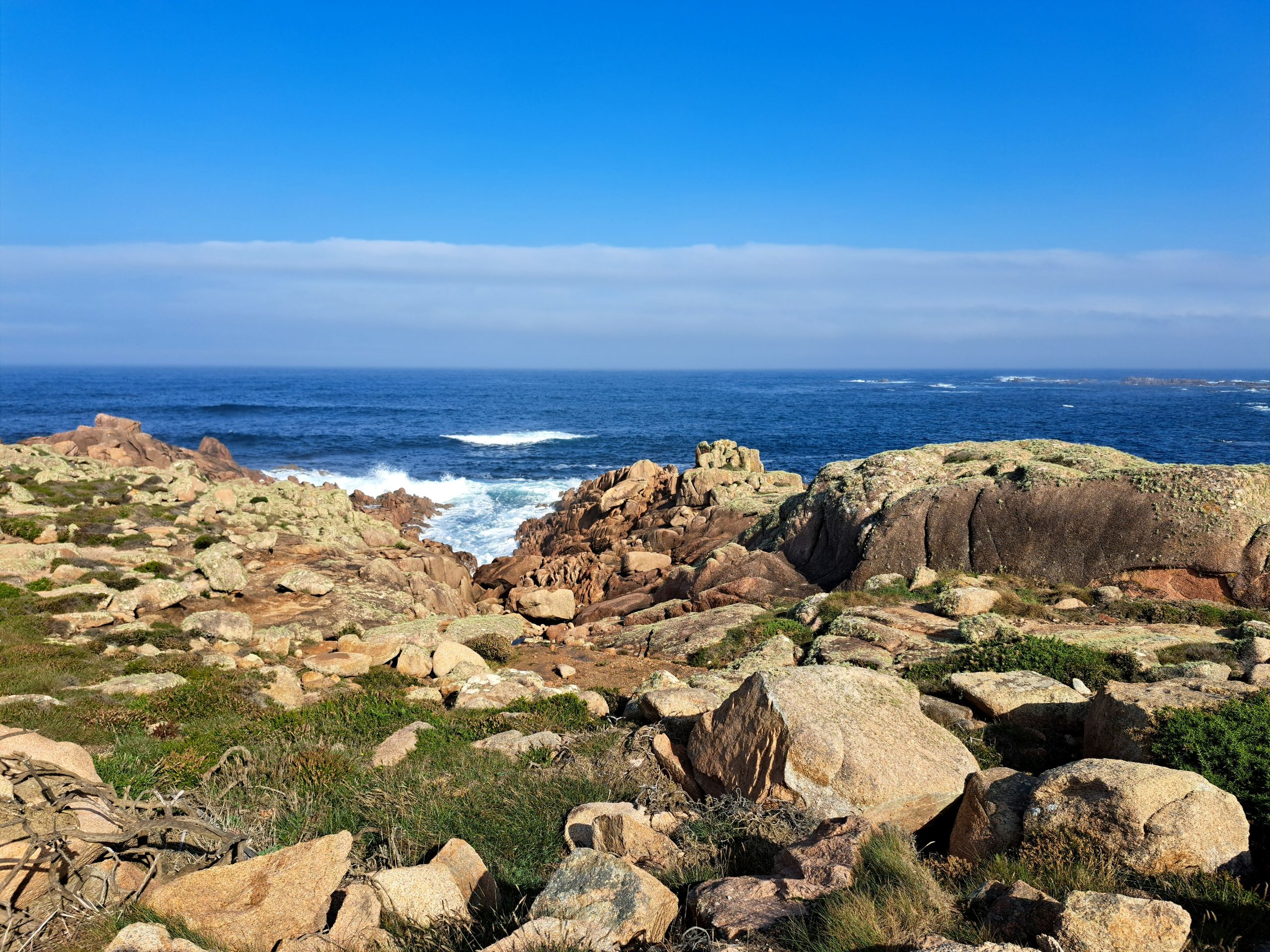
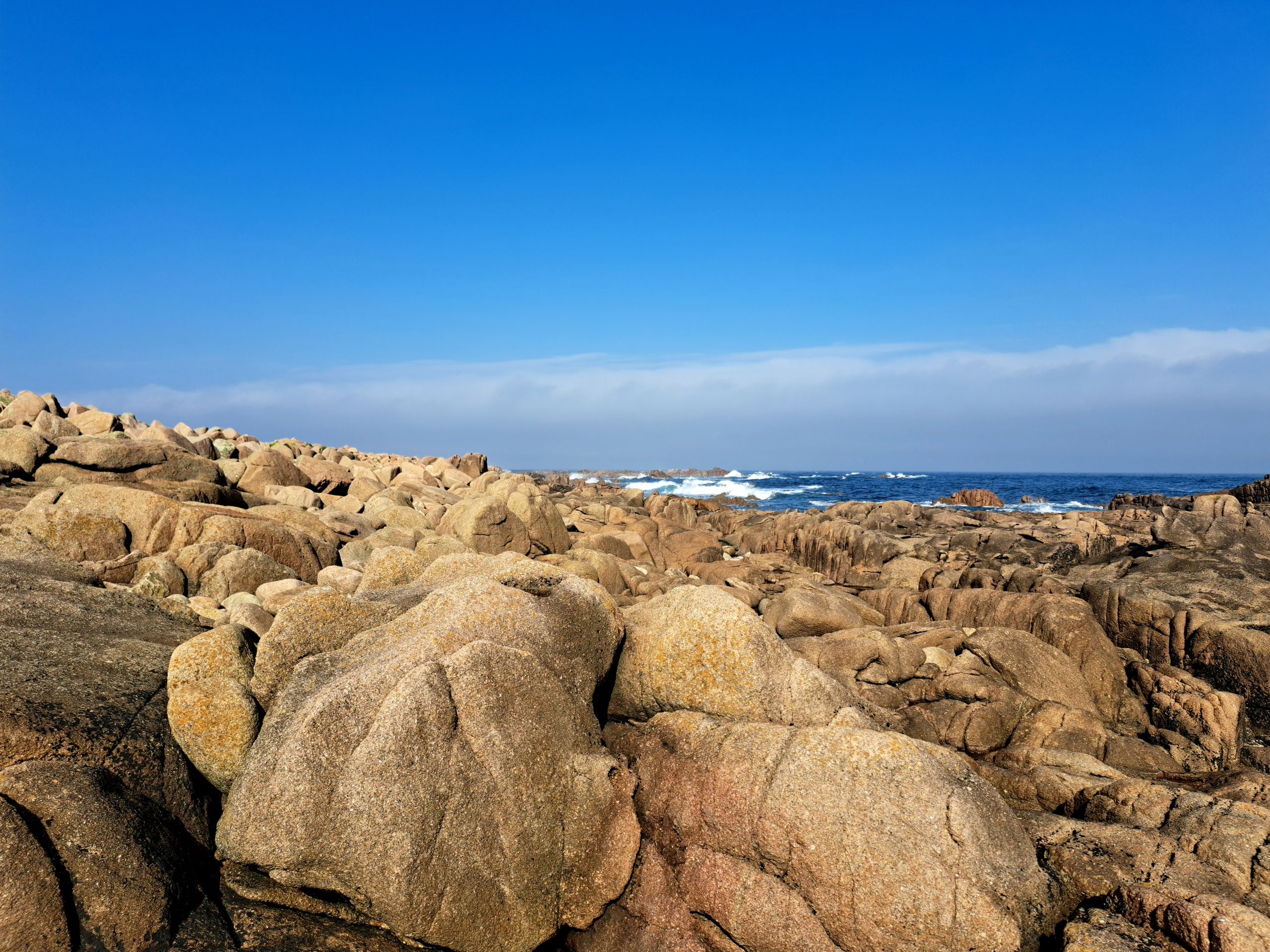
The rocky coastal strip between Malpica and Fisterra is the westernmost Atlantic section of the Spanish mainland, named for the difficult conditions for navigation and the resulting frequent shipwrecks.
Costa da Morte
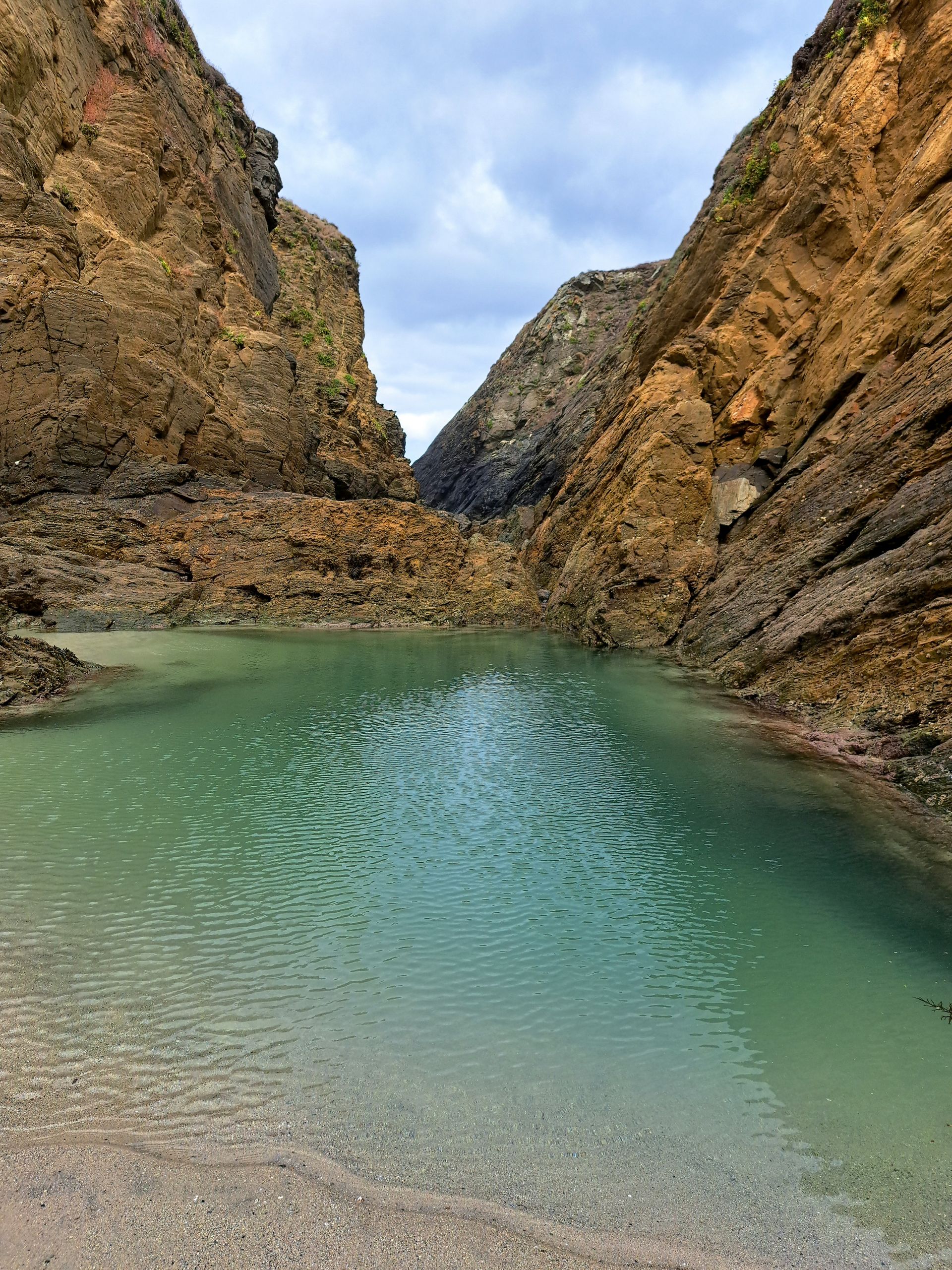
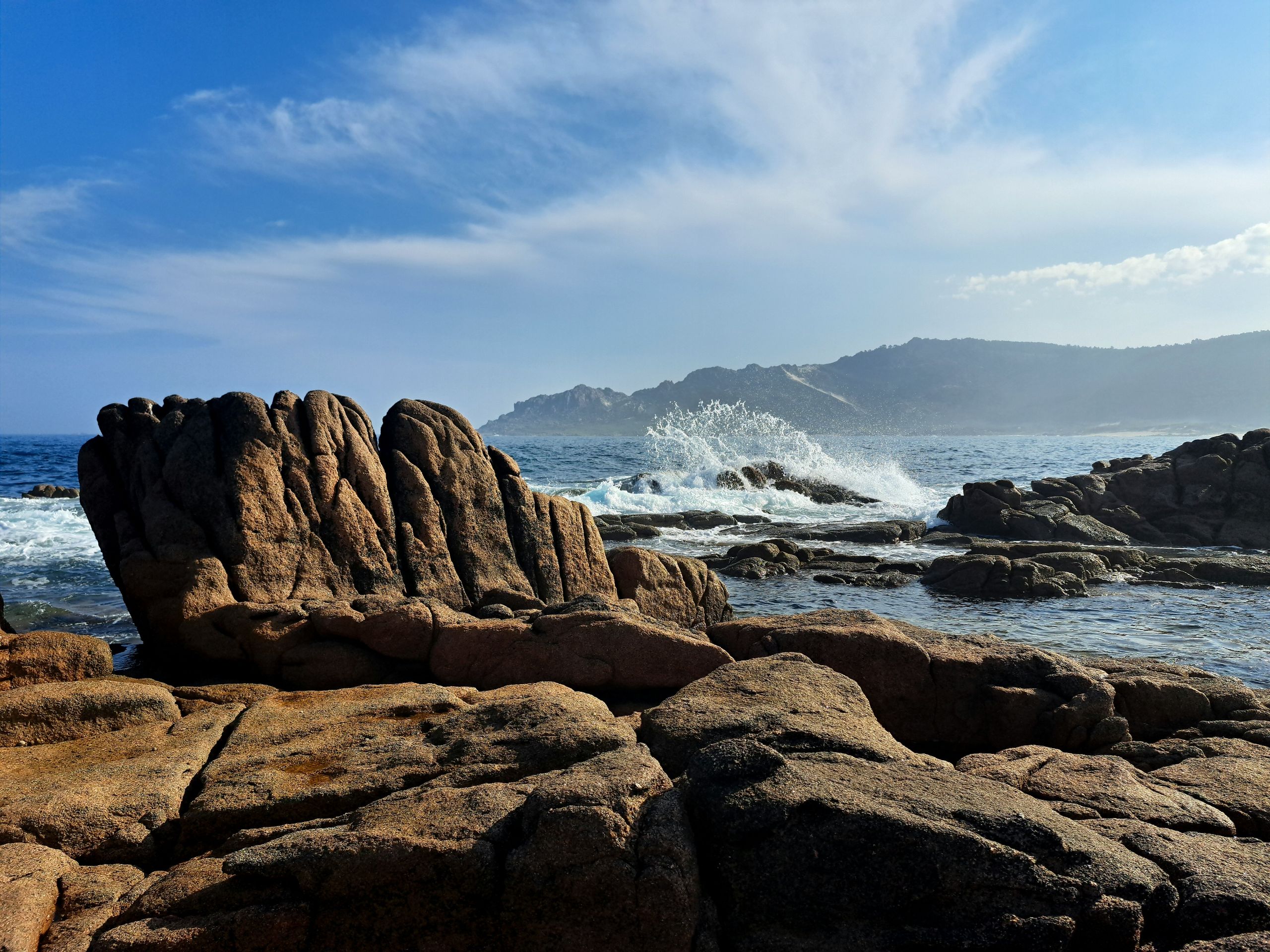
Countless sharp granite cliffs, treacherous cliffs, and hidden reefs are submerged at high tide. Rough seas and heavy storms often hit the perilous coast unimpeded. Poor visibility, frequent fog, low-hanging clouds, unpredictable currents—all test the skill of sailors. No wonder this area, with numerous shipwrecks, is one of the largest marine graveyards in Europe.
Costa da Morte
On a bumpy track, a few kilometers of this stretch can be hiked, cycled, or driven.
Here’s our tip: don’t rely on the GPS and start the tour at the lighthouse. Otherwise, you'll end up, like us, at the Cimiterio dos Ingleses, staring at the one-way signs.
Costa da Morte
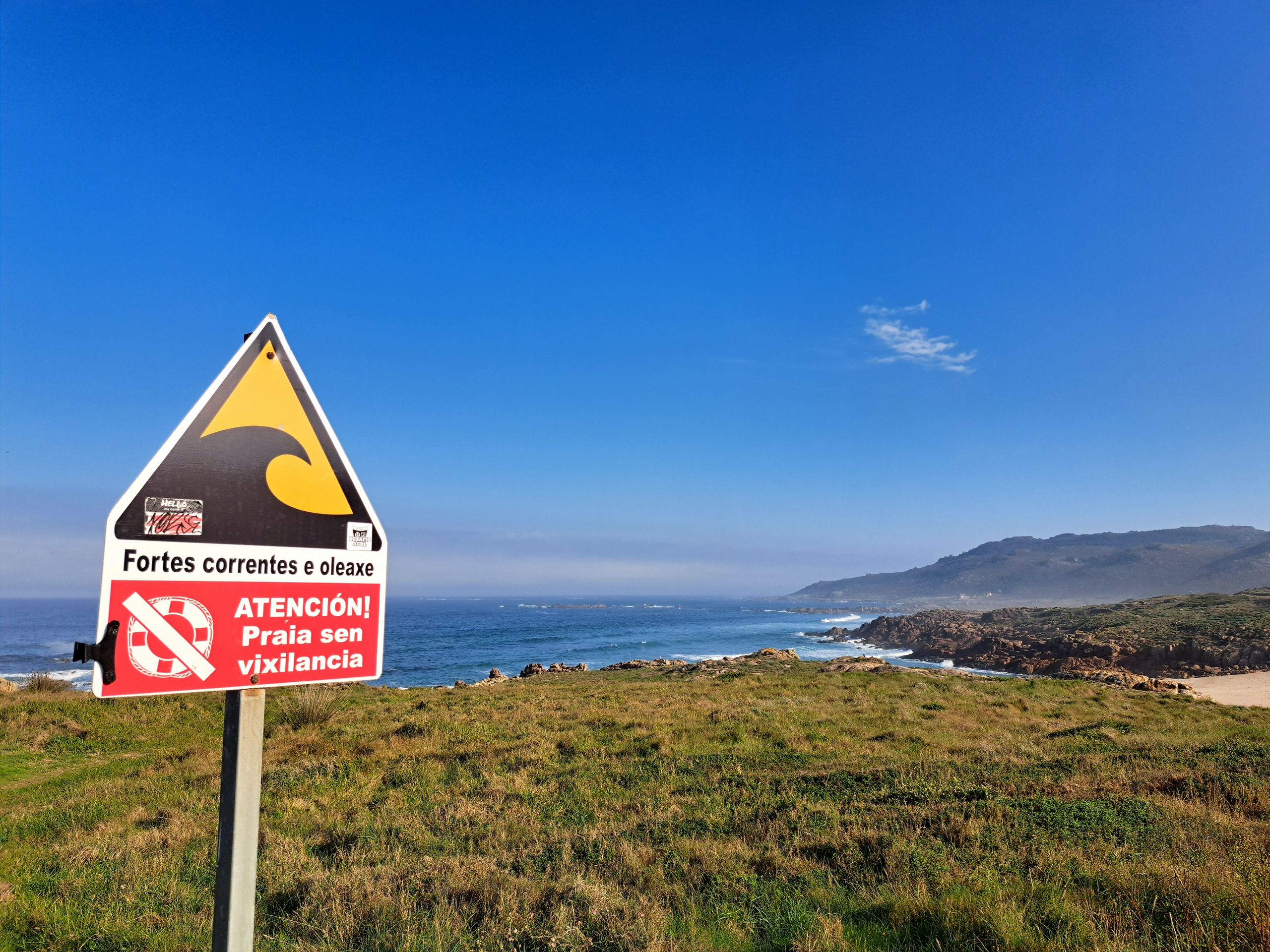
Unlike eight years ago, the road is now only passable in one direction. Of course, one can follow the example of the Spanish fishermen and ignore the no-entry signs.
However, we have had bad experiences with such behaviors adapted to local conditions. Instead of doing the thirty kilometers and spending hours on a detour in the Spanish national park right before dinner, the hero took a shortcut via the hundred-meter-long two-lane one-way street towards the designated parking lot the wrong way a few years ago.
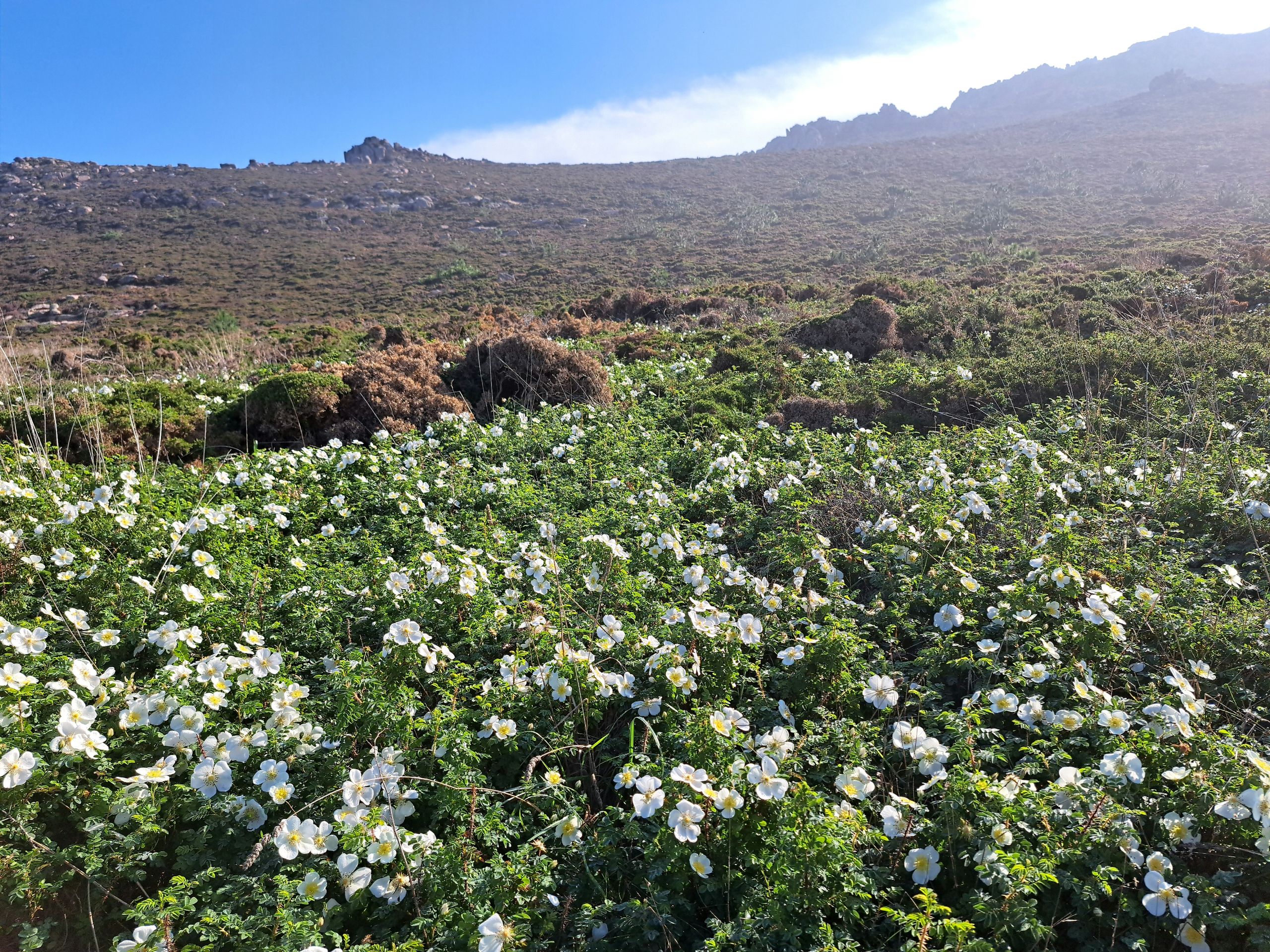
Bibernell-Rose
And drew the indescribable ire of the rigorous rangers in red shirts, who firmly, clearly, and unambiguously showed us the way out with grim looks and stomping feet. The ladies supervised us with strict schoolmarm faces, regardless of their already started well-deserved evenings, to ensure we left the area in the exact direction.
A very memorable experience. Sometimes I still dream of the outraged and indignant faces!
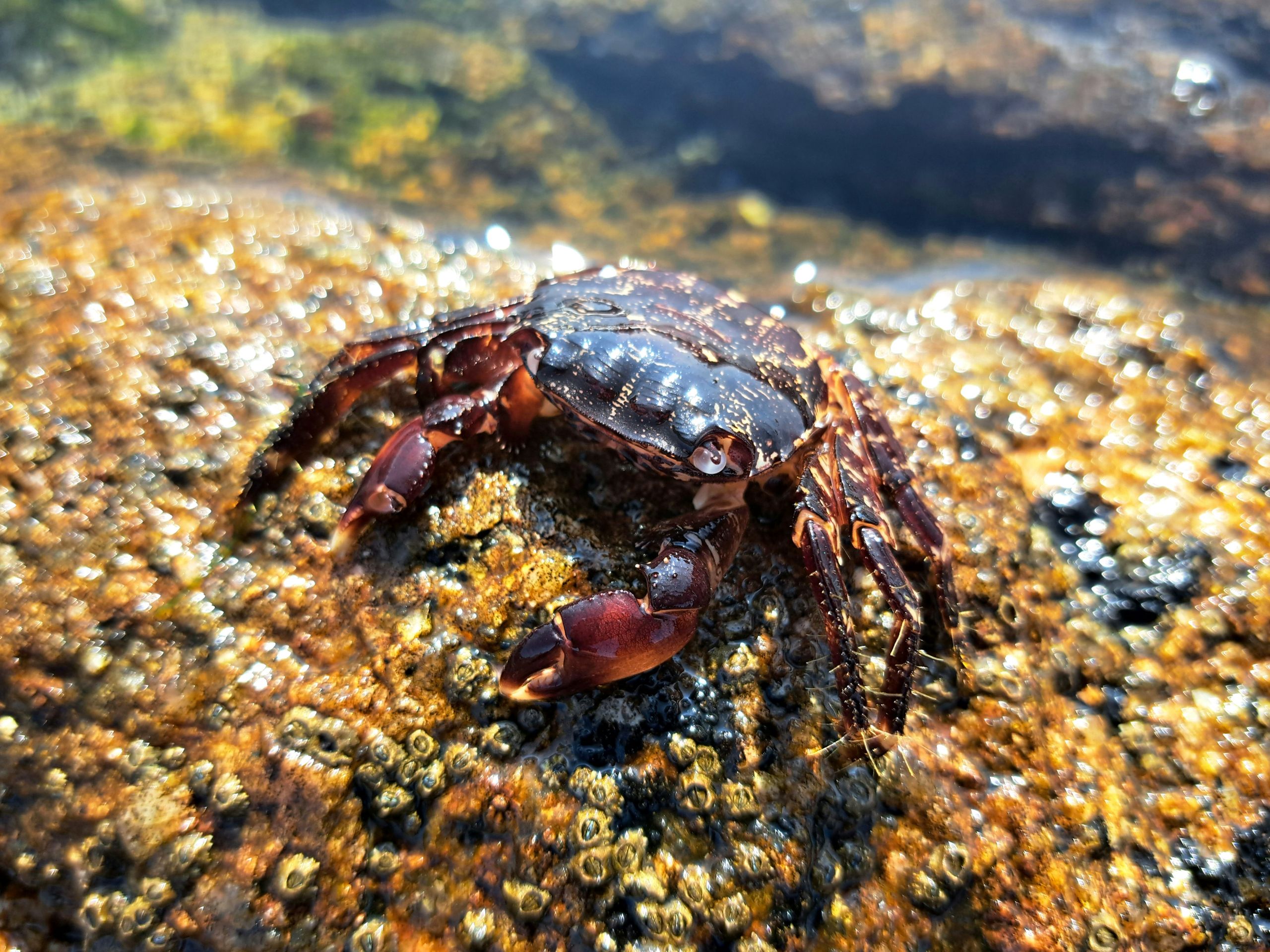
Rock Crab
Today, we take a break before the one-way signs, stare at the sky, count waves, and wait for dolphins, to master the ten kilometers on the not yet fully finished forest track over the hill to Faro Vilán tomorrow.
Costa da Morte
Suddenly, the hero becomes restless and I also think I see a movement on the water! I frantically search for my glasses, which I only need for driving in poor visibility conditions. After all, I have eagle eyes; I miss nothing.
When I finally find them deep in the glove compartment, Zappa has long since brought the binoculars up to his face, taking the wind out of my sails. No, again no marine mammal. Although the big black rocks peeking out from the foam crests of the waves look convincingly like whale backs. I nearly think I see a fountain spray up. And finally, last time at this spot, two dolphins greeted us joyfully with their leaps out of the water against the setting sun.
Costa da Morte
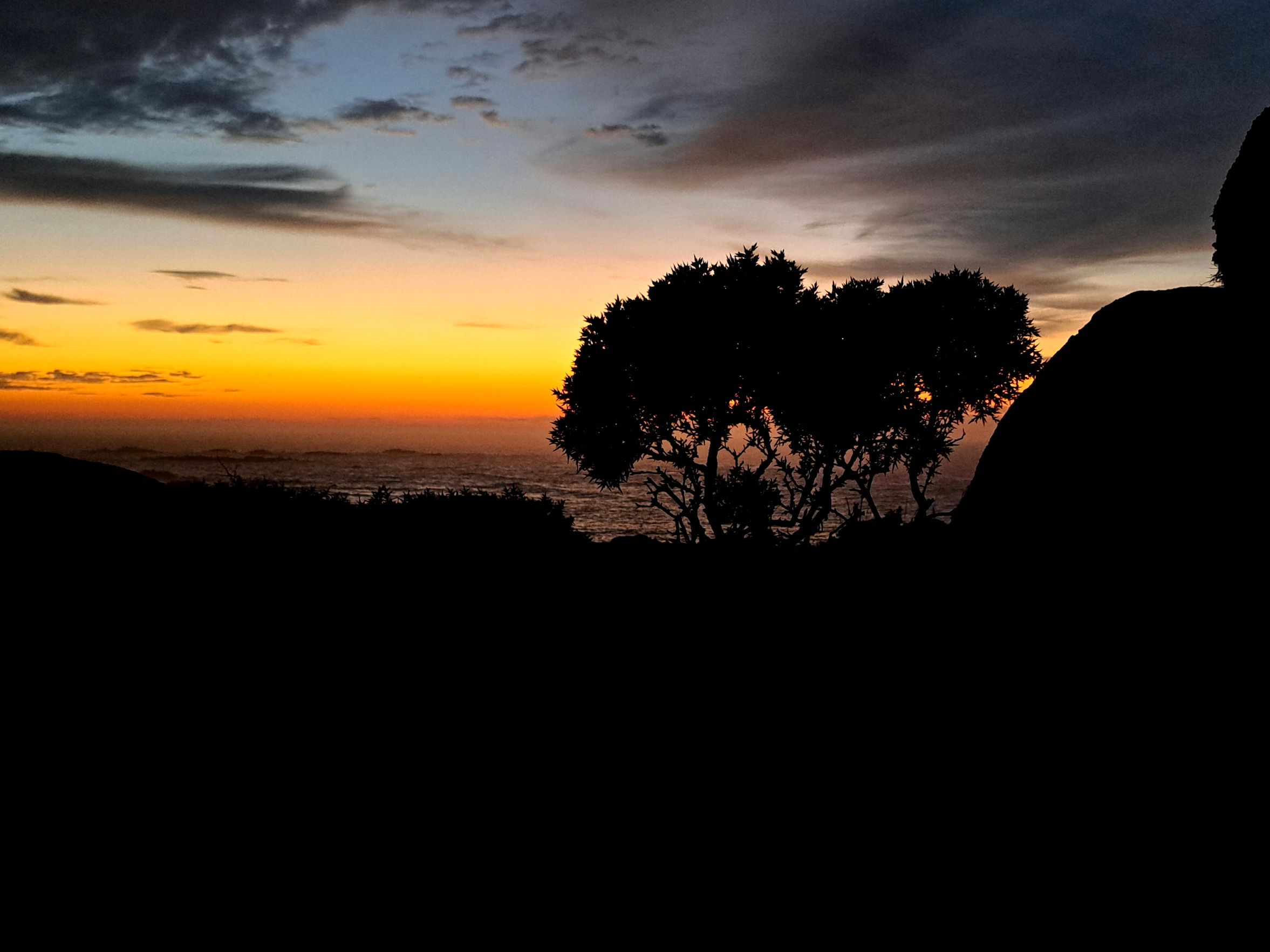
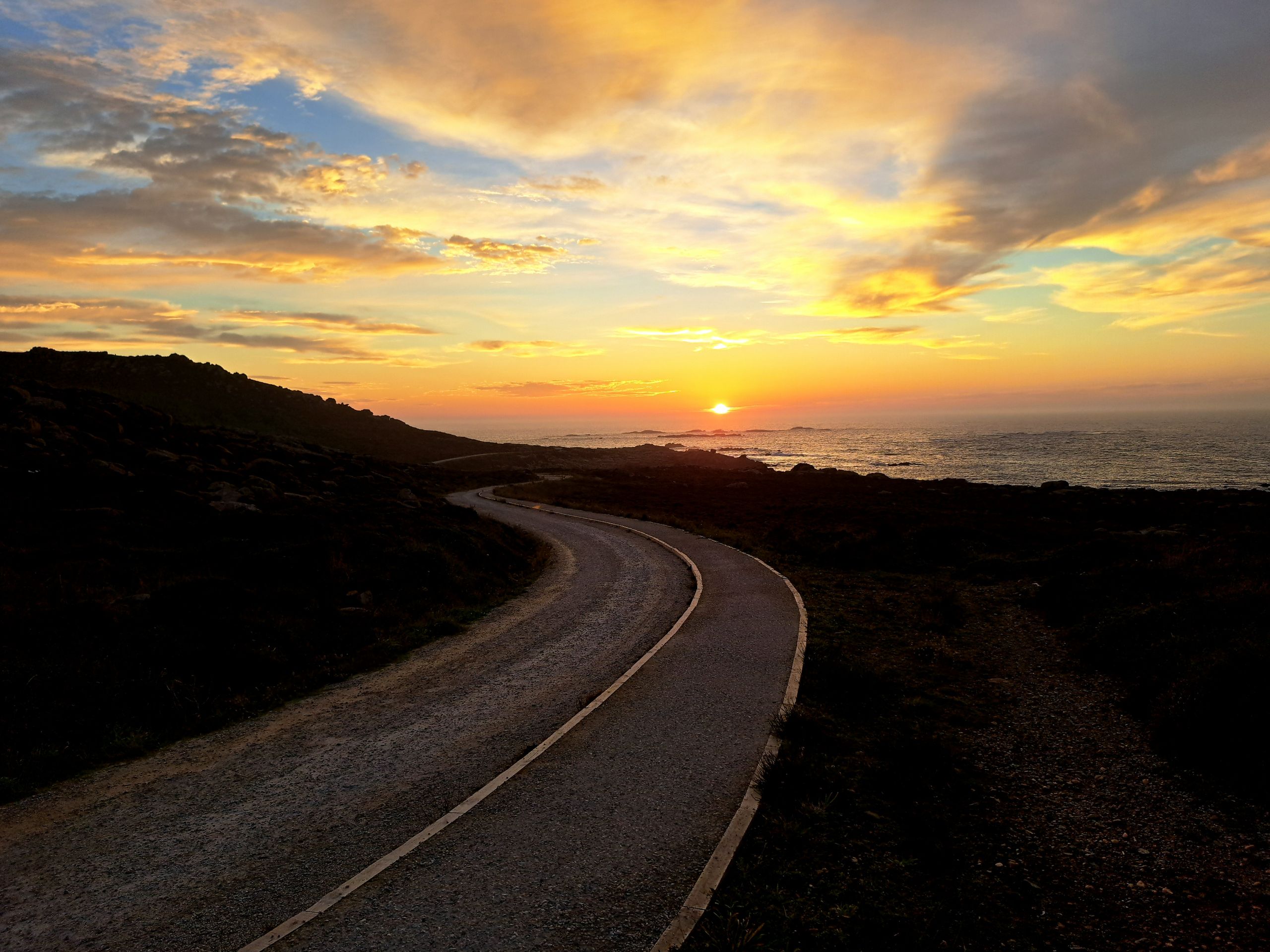
Now it is time to sadly turn our backs on the Atlantic, saying adios to the late colorful sunrises and sunsets, the spectacular front-row seats with views of phenomenal waves, deserted beaches, and lonely coves.
¡Buenas noches!
Or rather ¡Hasta luego! It's certainly going to be time for a trip to the end of the world again soon.
châteaugeschichtenLike a newsletter: every new post arrives via email.