Day 1, April 25, Arrival in Darwin
The flight with Singapore Airlines from Frankfurt was pleasant. Departure at 12:15, after 12.5 hours in Singapore, with a 1.5-hour layover there, and then on to Darwin, a flight...

Published: 29.04.2026
Woke up on my own at 6:30. Morning workout in the hotel room using the app. Packed everything and went down to the reception at 8:15. While we were waiting for the Uber, we saw a yellow-crested cockatoo playing on a balcony of the high-rise building across the street and large black flying foxes disappearing into the trees. A great start to the day!
It’s only a 10-minute Uber ride to the camper pickup location. We arrived a bit early, but they opened just before 9:00. Aside from trying to upsell me an additional insurance despite having already booked one, everything went smoothly and quickly. Before 10:00, we had the camper, an Apollo Hightop with a small kitchen and sleeping space for two. We were even upgraded and got a shower and toilet, although I had booked without them.
The car is quite large and has plenty of storage space where we can fit all our groceries and clothes in the afternoon. It has a new tire, which is important, and is quite scratched up all around, which I don’t mind.
We then did some big shopping in Darwin at Woolworth Casuarina. Parking with the camper is a disaster there, but the supermarket is huge and has everything, even kangaroo meat. Shortly after 11:00, we left Darwin.
The Litchfield National Park is not far, less than 200km away. But you drive slowly here, especially with a large camper, only around 100-110 km/h. There’s no gate at the entrance of the national park, just a sign that says you are now there. The entire drive goes through open, very green tropical savannah with eucalyptus trees about 5 meters high, spaced quite far apart.
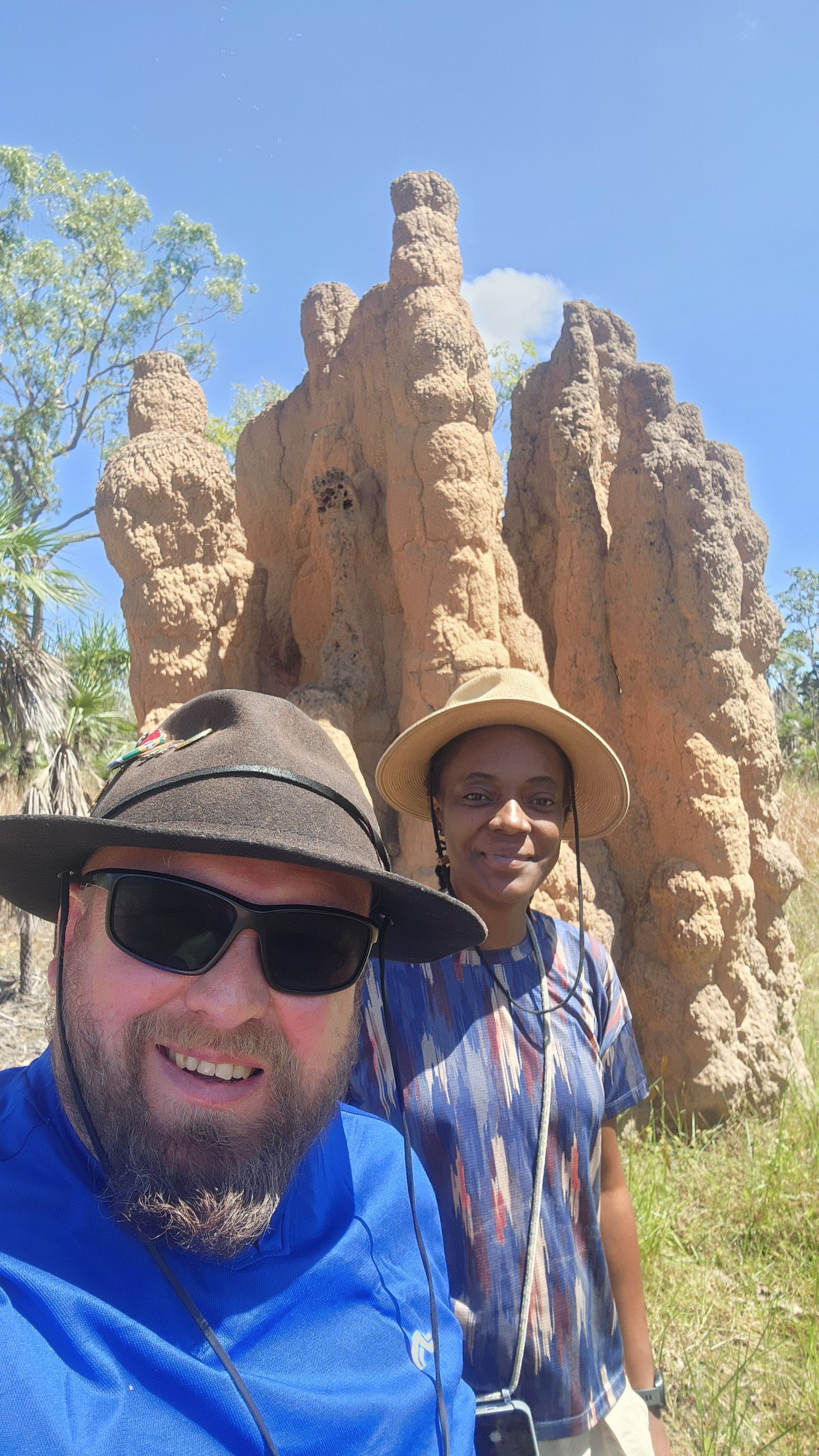
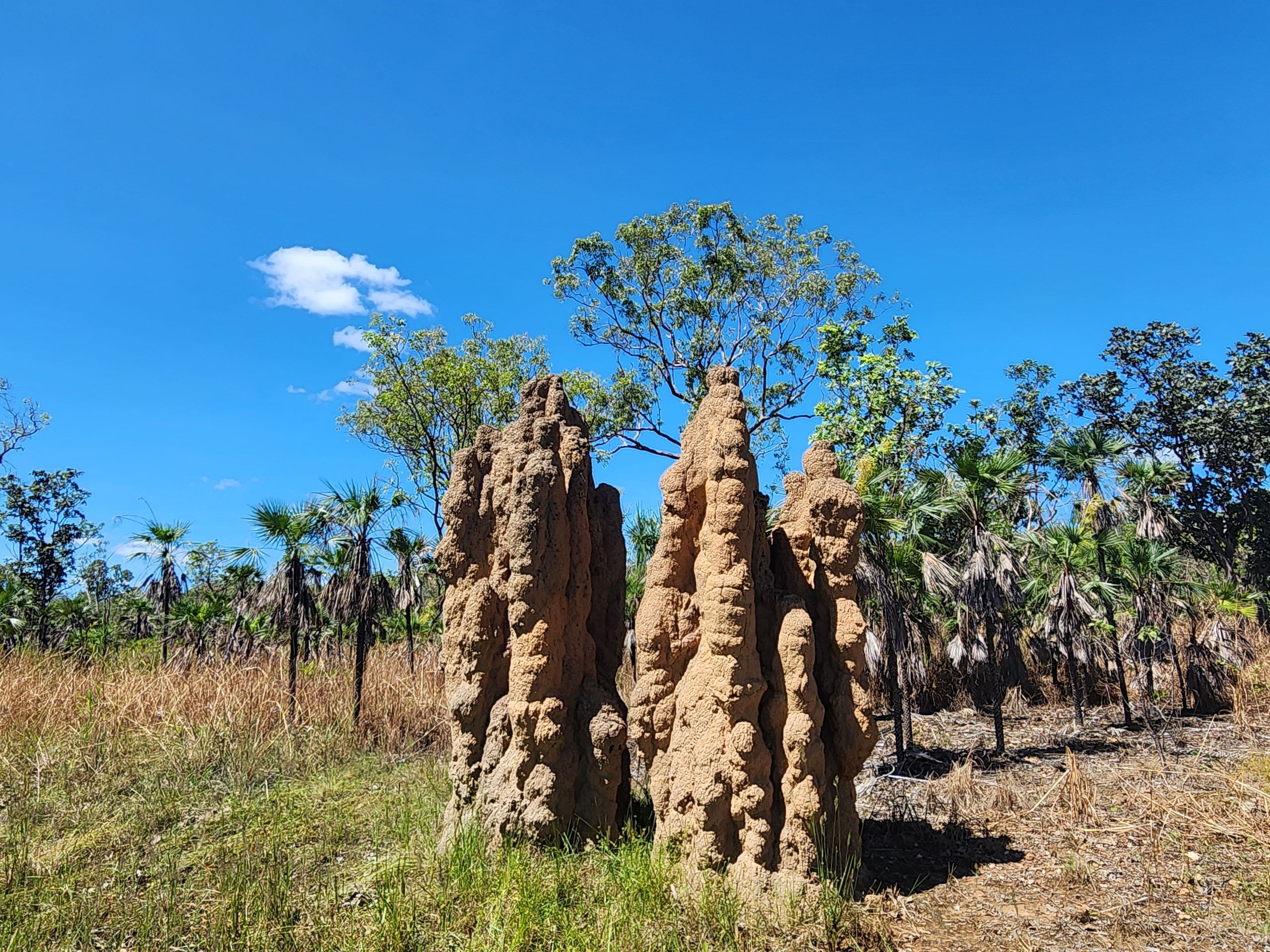
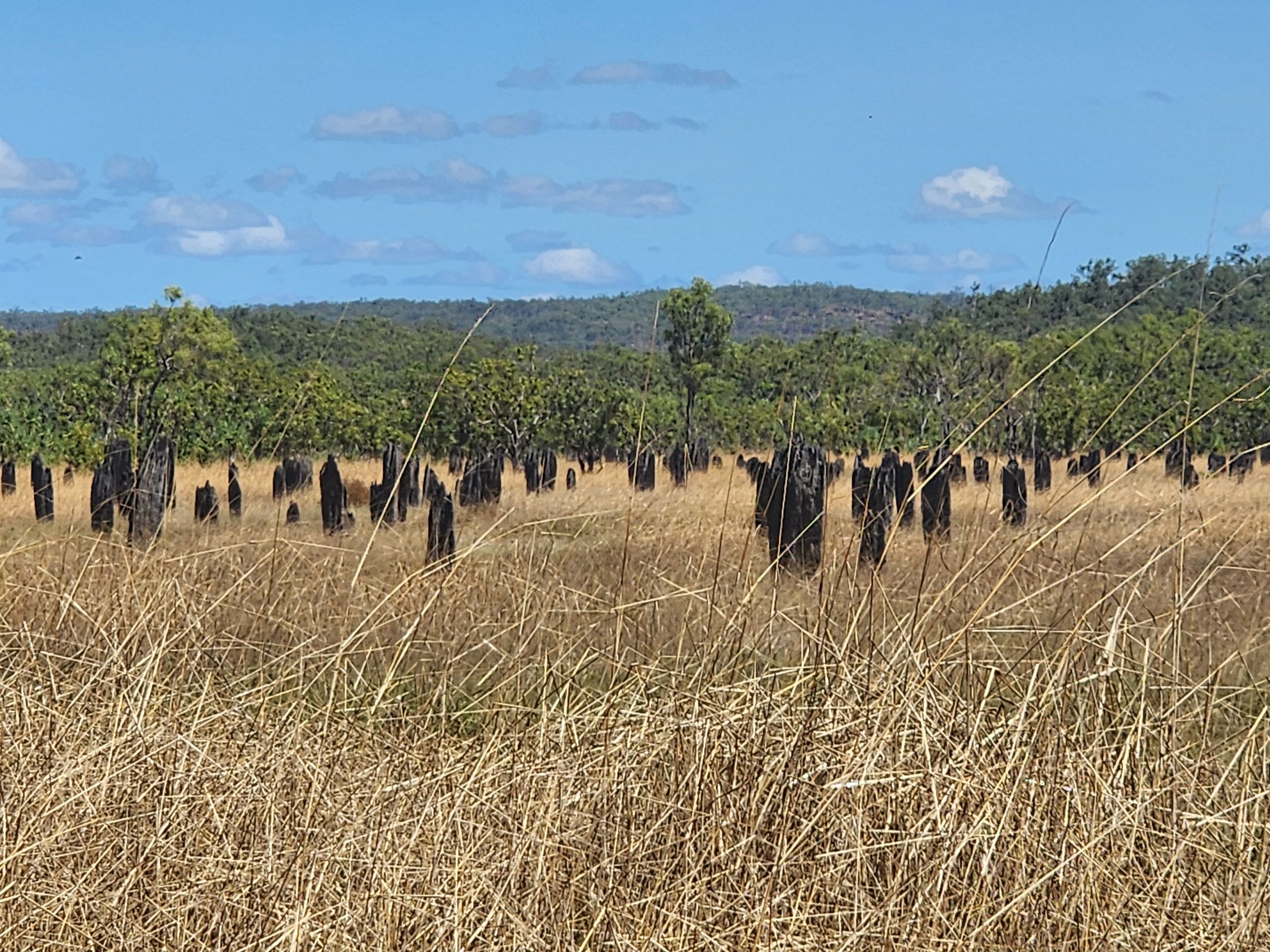
When entering the national park, nothing changes at first. It’s still tropical savannah. After a few kilometers, you start to see the first large termite mounds. Red columns of spinifex termites, almost 3 meters high. In the flooded plains, the mounds of compass termites, which are also over 2 meters high, oriented from north to south. These are gray and reminiscent of fields of obelisks in southern Europe. I do not know why they are particularly found in lower grasslands that are currently still flooded. However, the reasoning behind their orientation is likely that the mounds warm up quickly in the morning but receive little sunlight during the midday heat.
The Litchfield National Park is popular among Australians for its many cool waterholes that offer relief from the hot tropical sun. During the rainy season, a stone mountain about 300m high, similar to Arnhem Land, collects water that then flows year-round over waterfalls into cool streams in the lowlands below. Along these creek beds is a type of tropical gallery forest, known as monsoon rainforest, yet this transforms into savannah after just a few hundred meters.
We first stopped at Buley Rockhole, a popular swimming spot, but there was so much going on, almost the entire parking lot was full, that we preferred to continue on. It was Sunday, and many visitors from Darwin were here for a fun swim. After just a few kilometers, we reached the Florence Falls, and here we camped. The campsite is very nice, with spaces not too close together in coves between the trees, the sanitary facilities very basic but sufficient. There was a grill for wood, but in Tasmania, we were used to seeing only gas grills everywhere and open fires being prohibited. Fortunately, there was some wood next to the grill, and I collected more later in the forest.
It was around 14:00. We unloaded our camper for the first time, familiarized ourselves with everything, and rested a bit. At 15:45, we headed to the nearby Florence Falls, where there’s a rock pool for swimming. The hope was that it wouldn’t be so crowded and that most weekend visitors would already be on their way home.
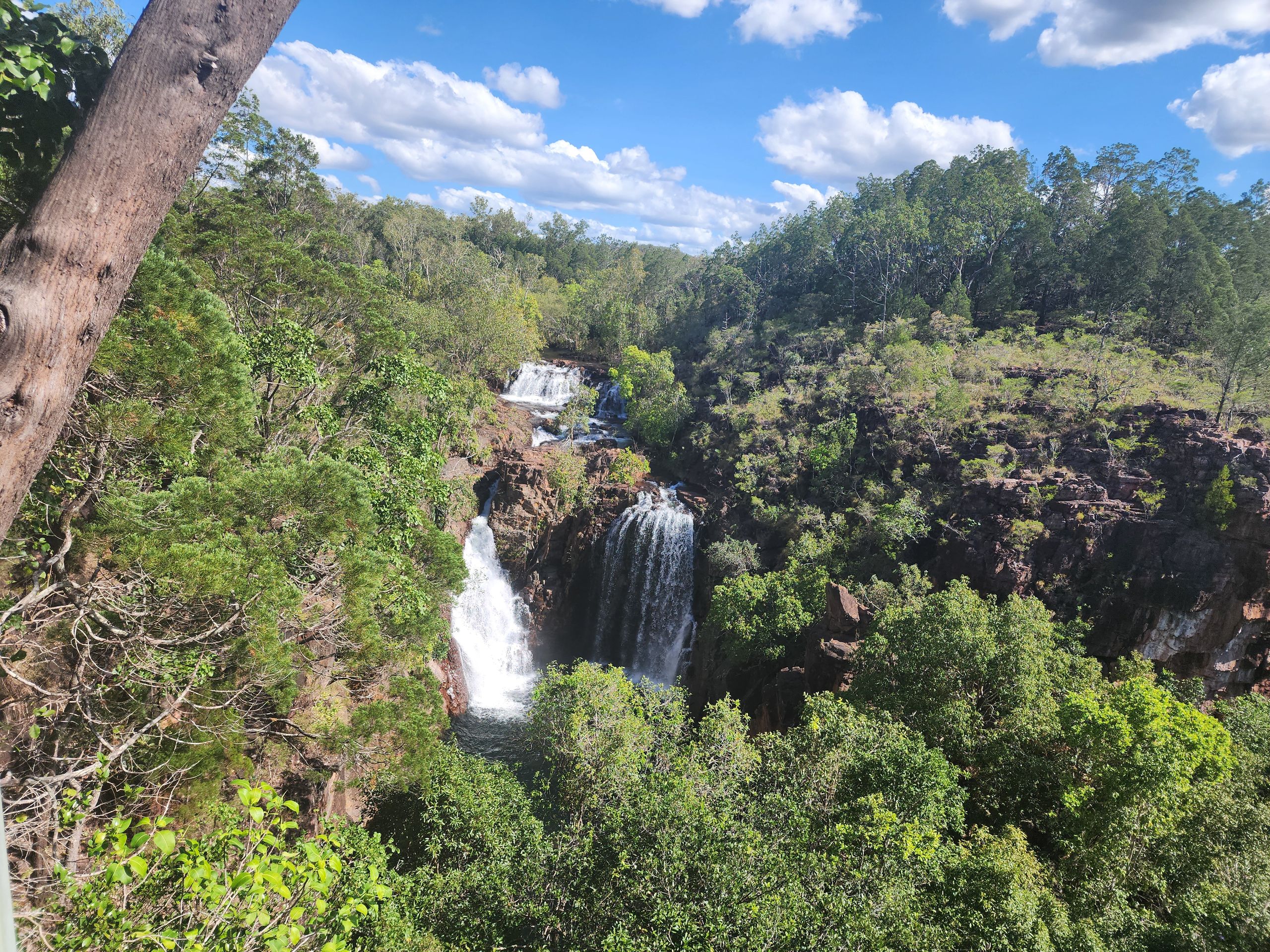
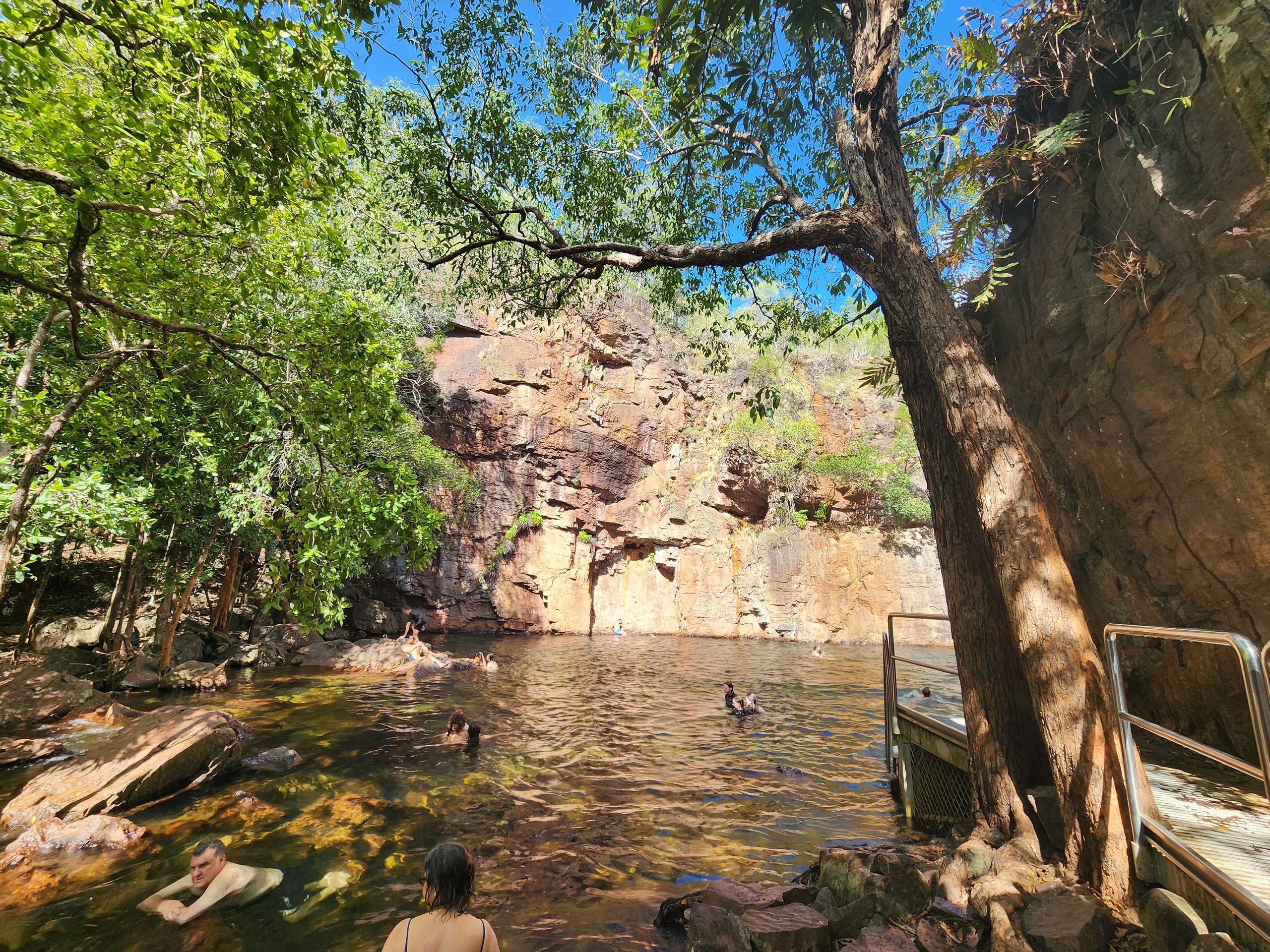
Indeed, we encountered many people coming the opposite way. From an observation platform, you could see the wide but low Florence Falls. Then we went down some steps into the wonderful monsoon rainforest and left to the rock pools, where we arrived after just 15 minutes.
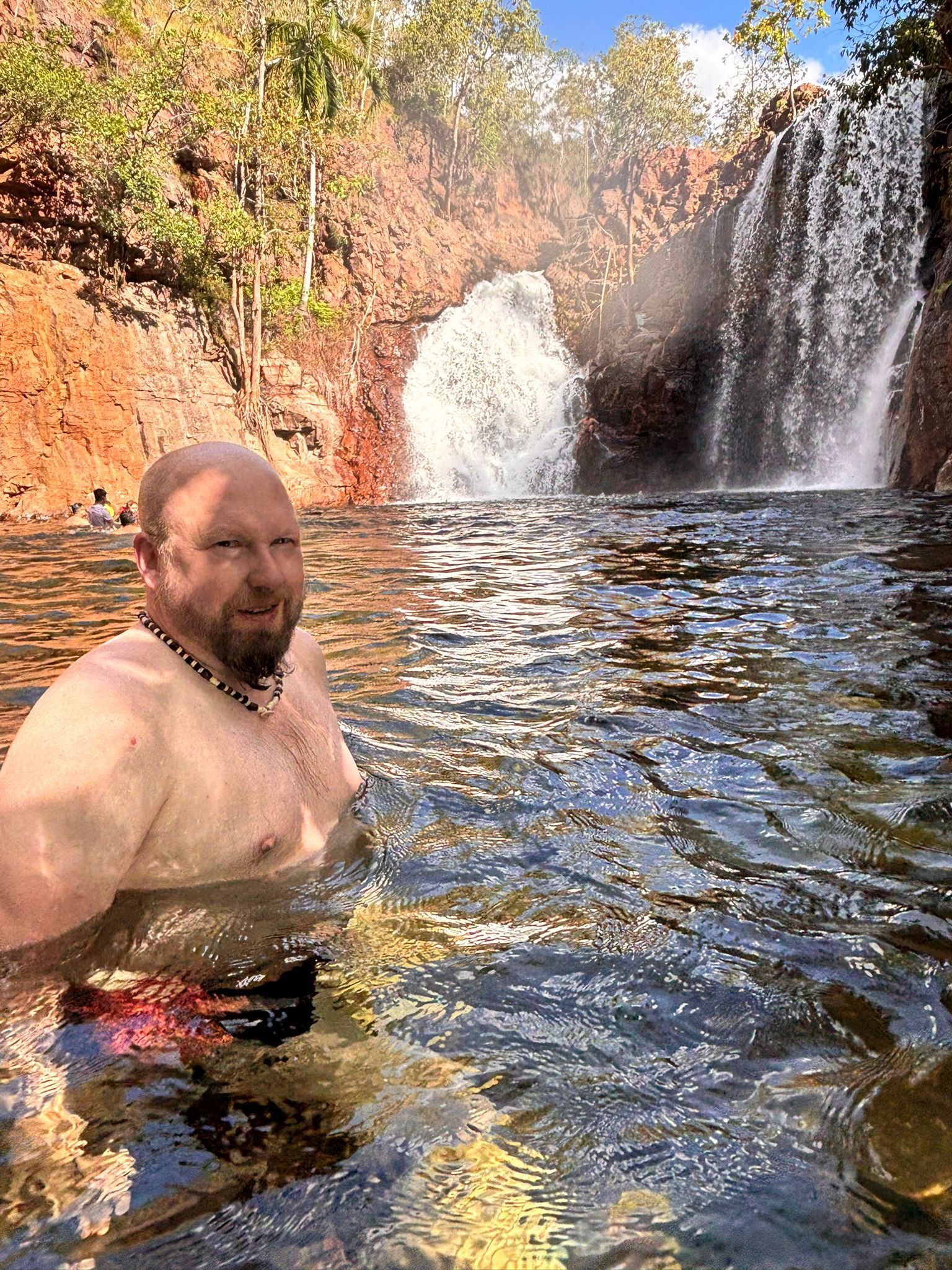
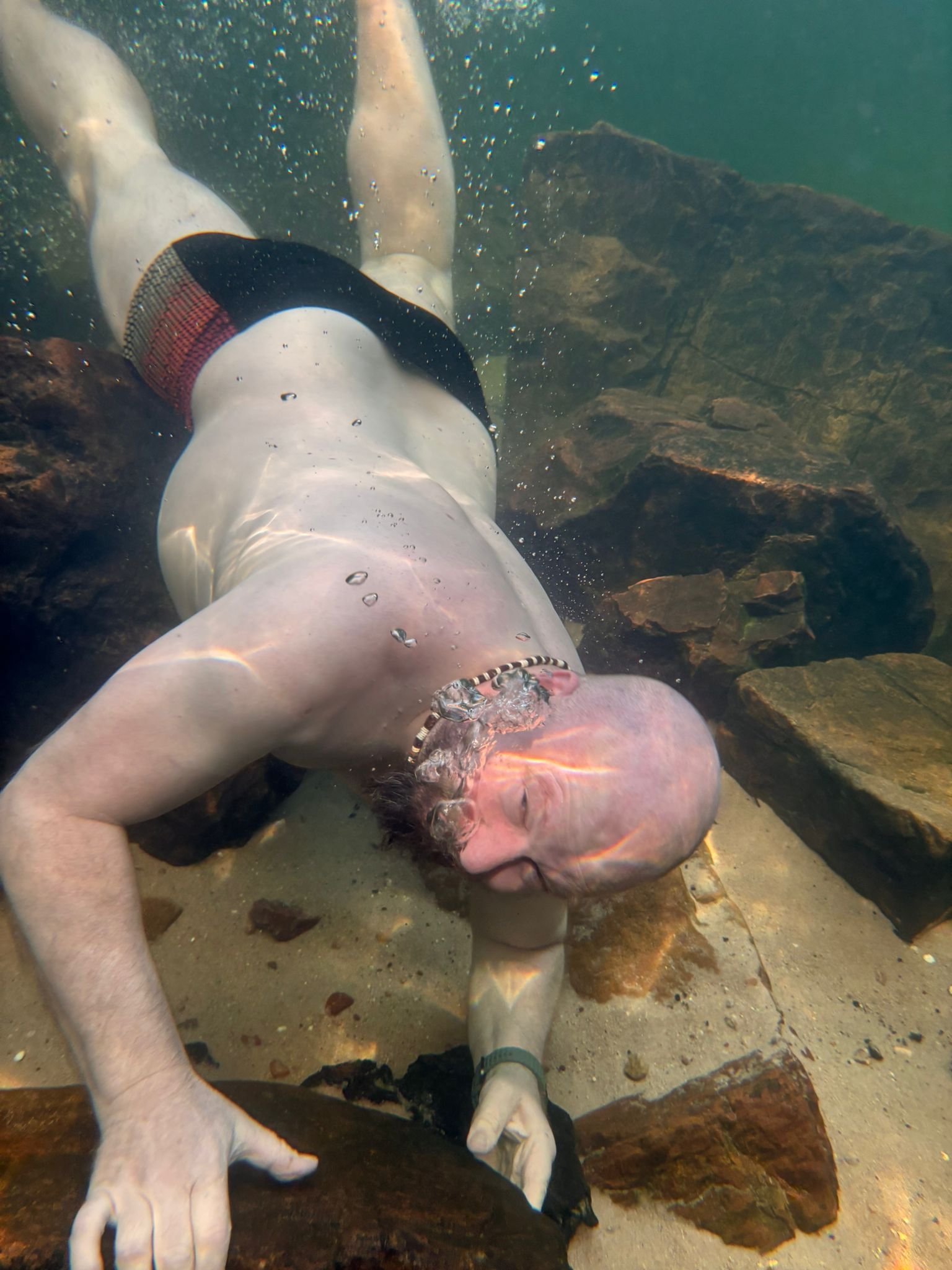
It was still quite busy, surely over 25 people there, but not too crowded. The water was surprisingly fresh, which was pleasant in the tropical heat. Large fish were swimming around. The current at the falls was too strong for me to get over there. It also got deep quickly. But we enjoyed the water.
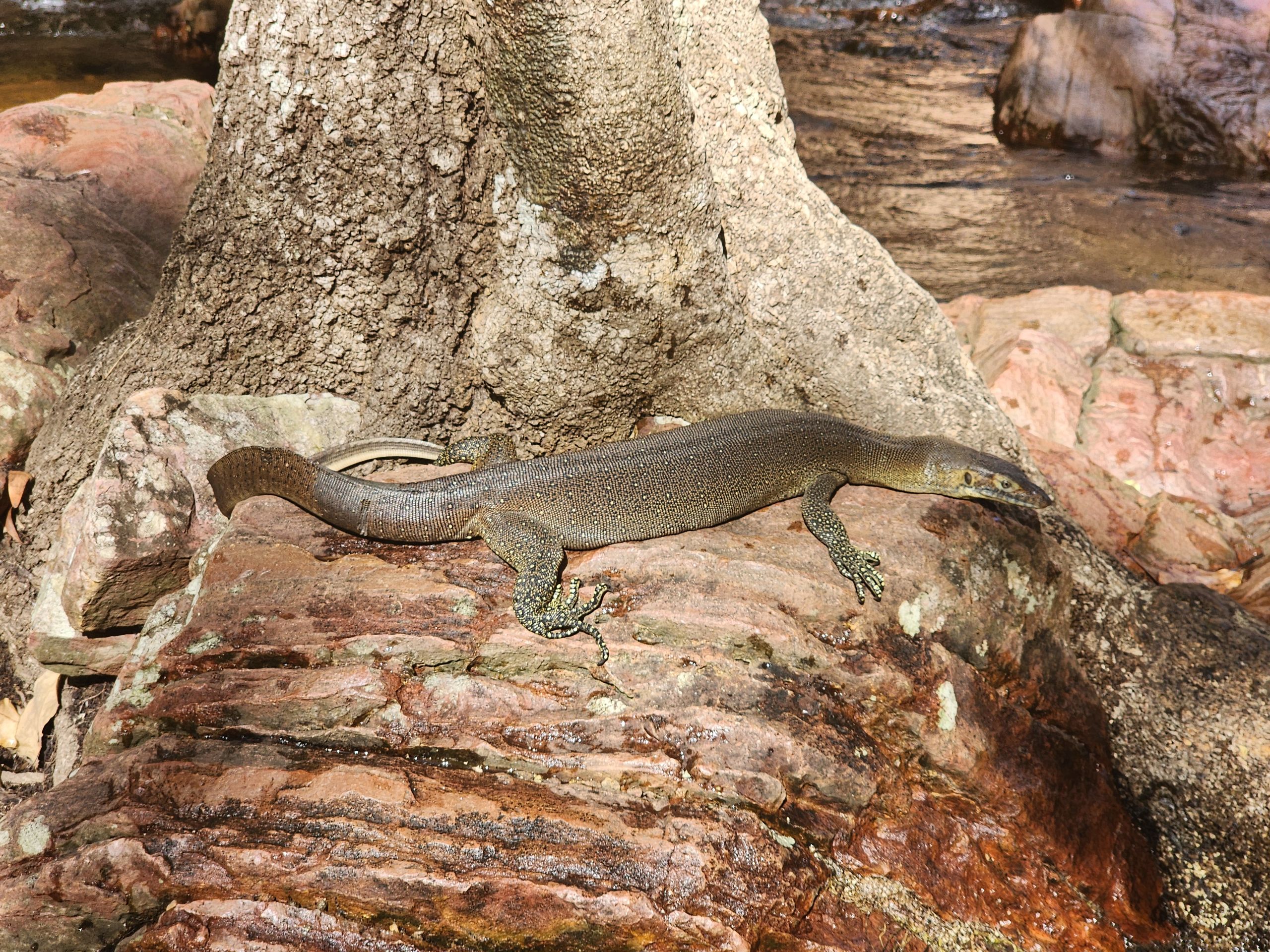
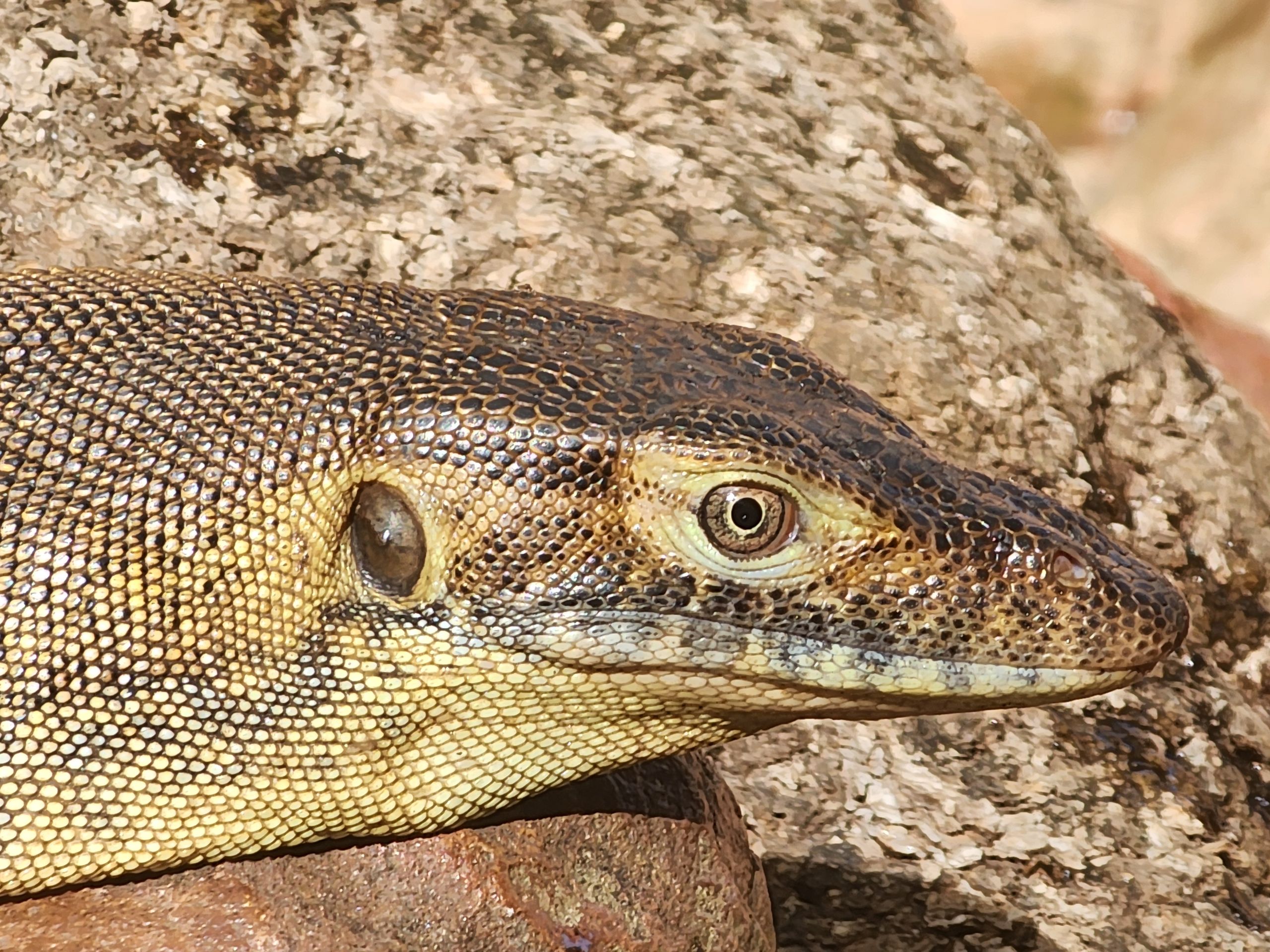
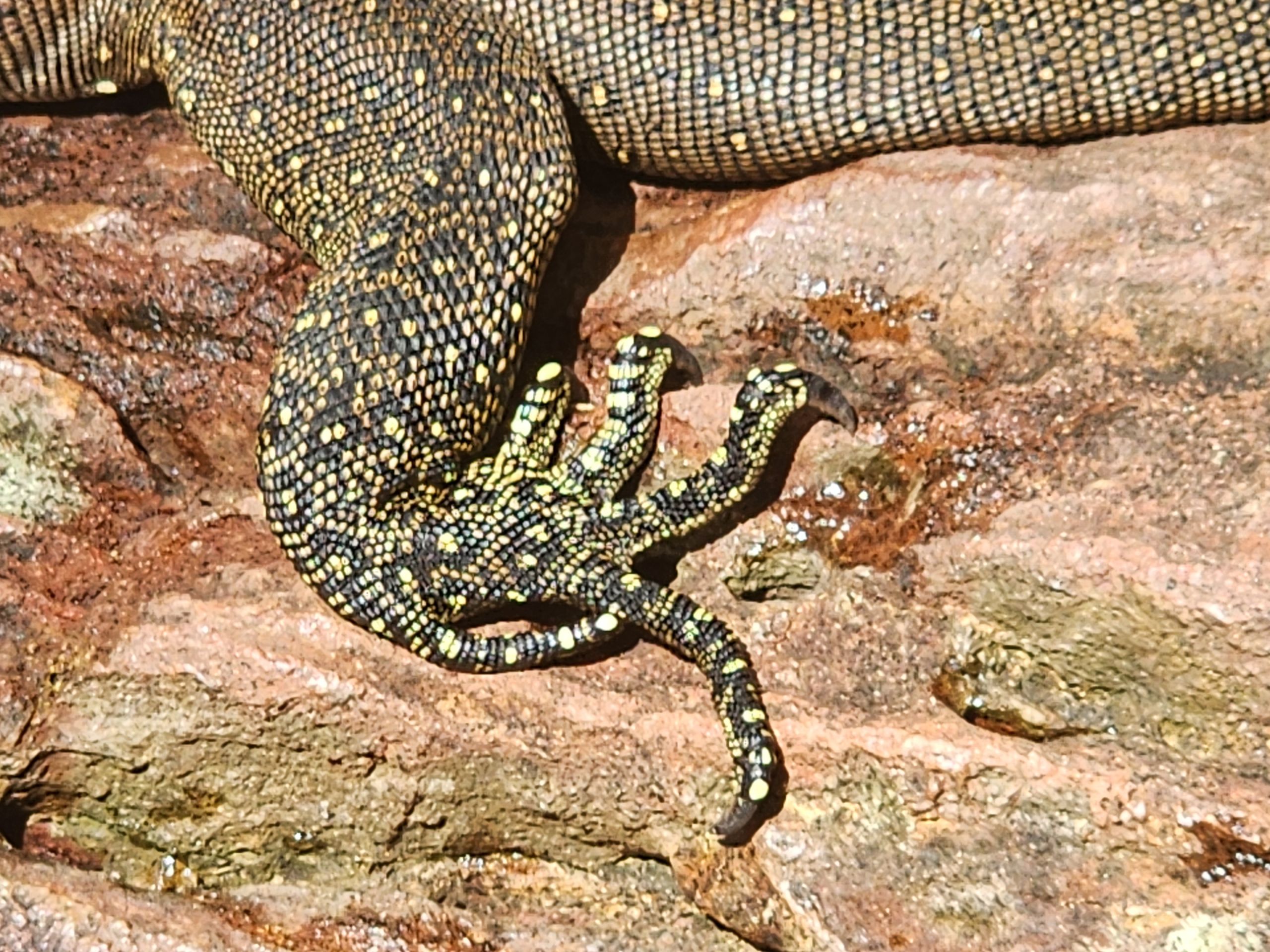
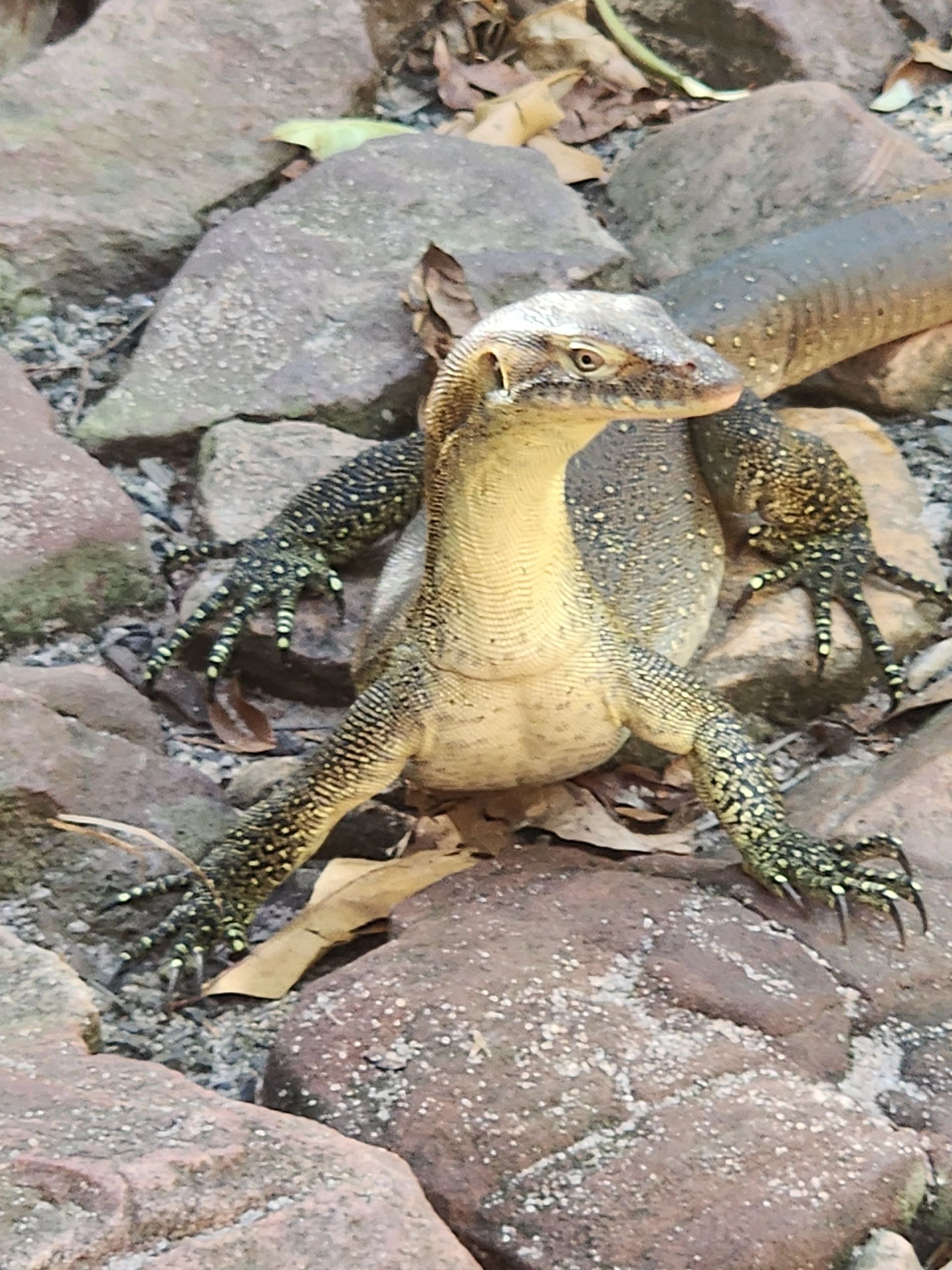
The highlight was a slender monitor lizard about 1 meter long sitting on a tree in the creek bed, completely undisturbed by the people. You could get within 1 to 2 meters of it without it reacting. No one dared to get closer.
Then it became active, swam through the creek, searched for cookie crumbs, and walked just a few centimeters past my feet!
On the way back, we took a 1km detour through the beautiful monsoon forest. Back at the camp, we made a fire and grilled. By the time we had eaten, it was already dark, and we took a short night walk into the forest. We saw some of the invasive cane toads, a kingfisher, and many different types of spiders: a fairly large wolf spider on the forest floor, one that resembled our cross spider hanging down from above, and another large but slender orb-weaver spider. But unfortunately, no marsupials.