
Day 17, May 11, through the grasslands of Outback Queensland to Julia Creek
To admire the sunrise at the Billabong, we slept in until after 6:00. Morning exercise was finally possible again. At 7:00, first the sky, then the water in the...

Published: 13.05.2026
Shortly after 7:00, we left Julia Creek. There were only 350 km of driving ahead of us, 4 hours of pure driving time. Yet we arrived only after almost 7 hours.
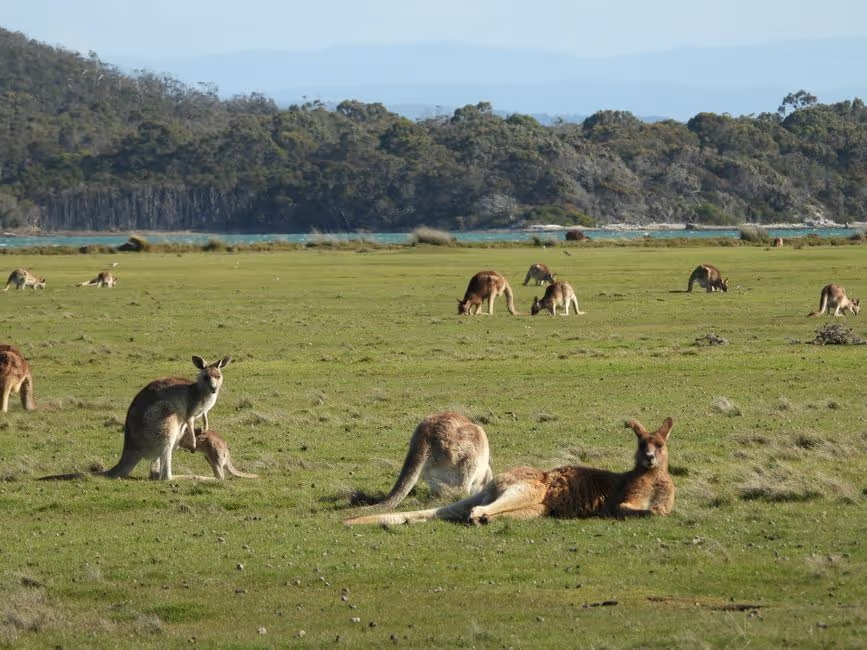
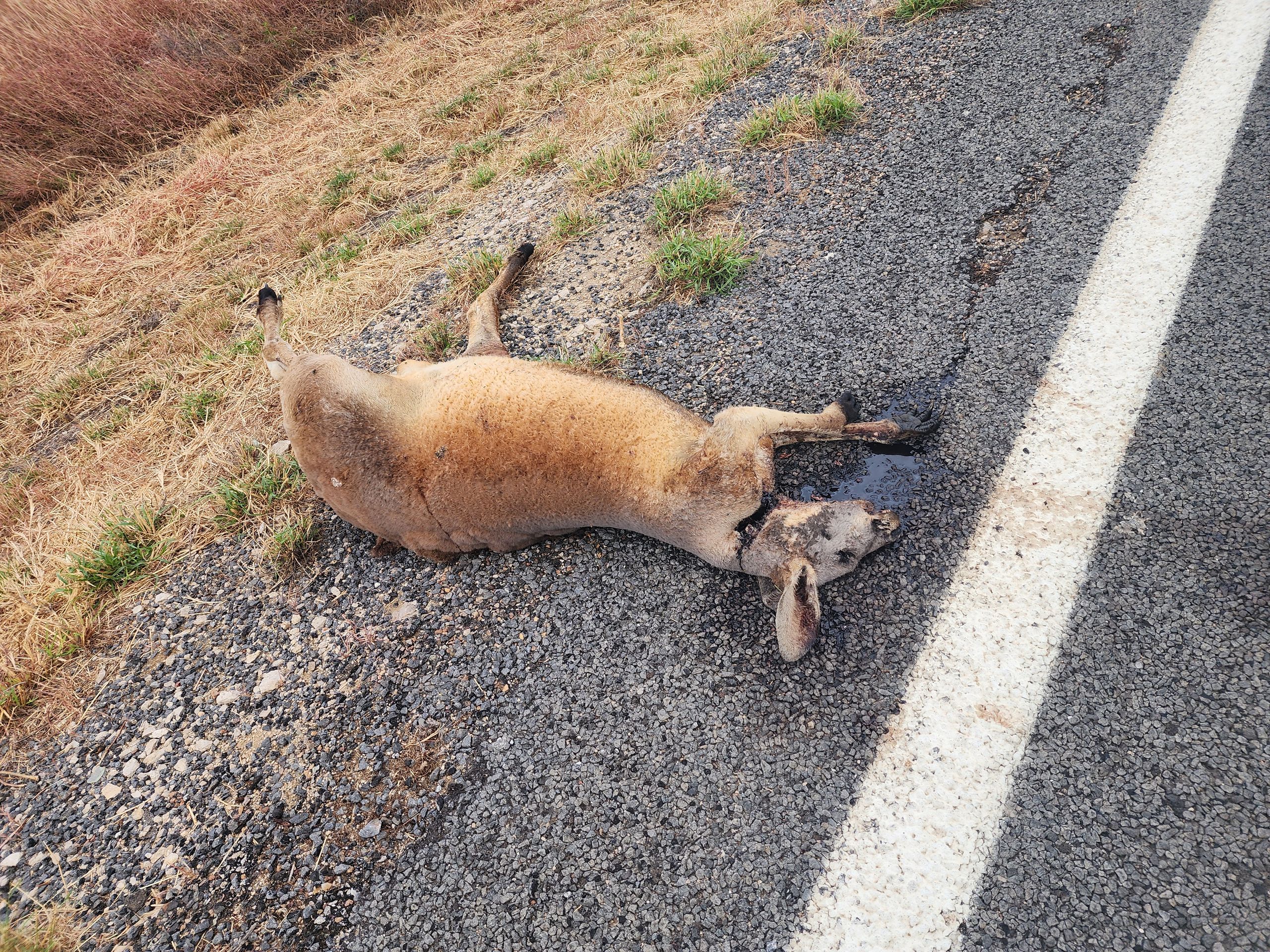
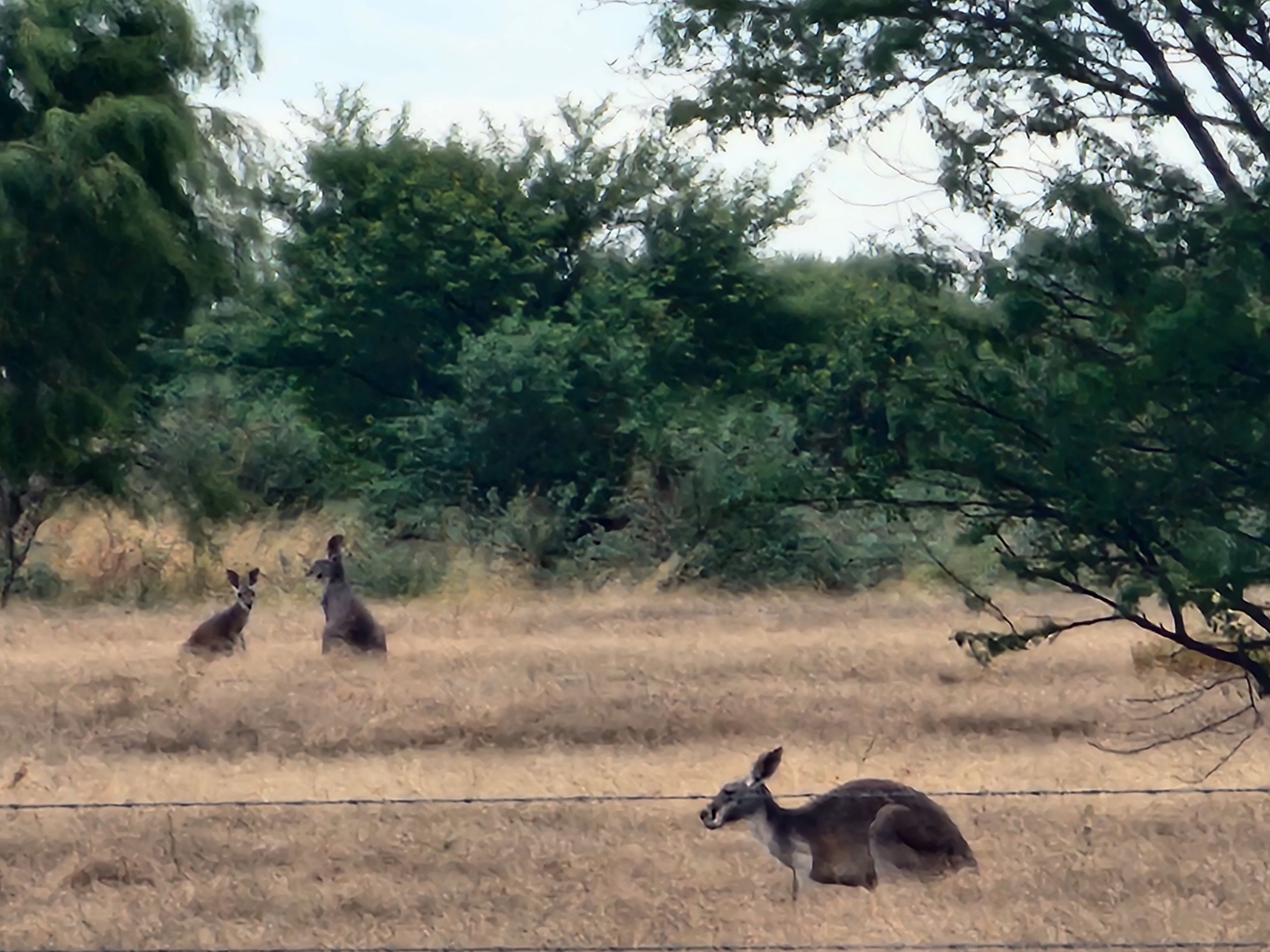
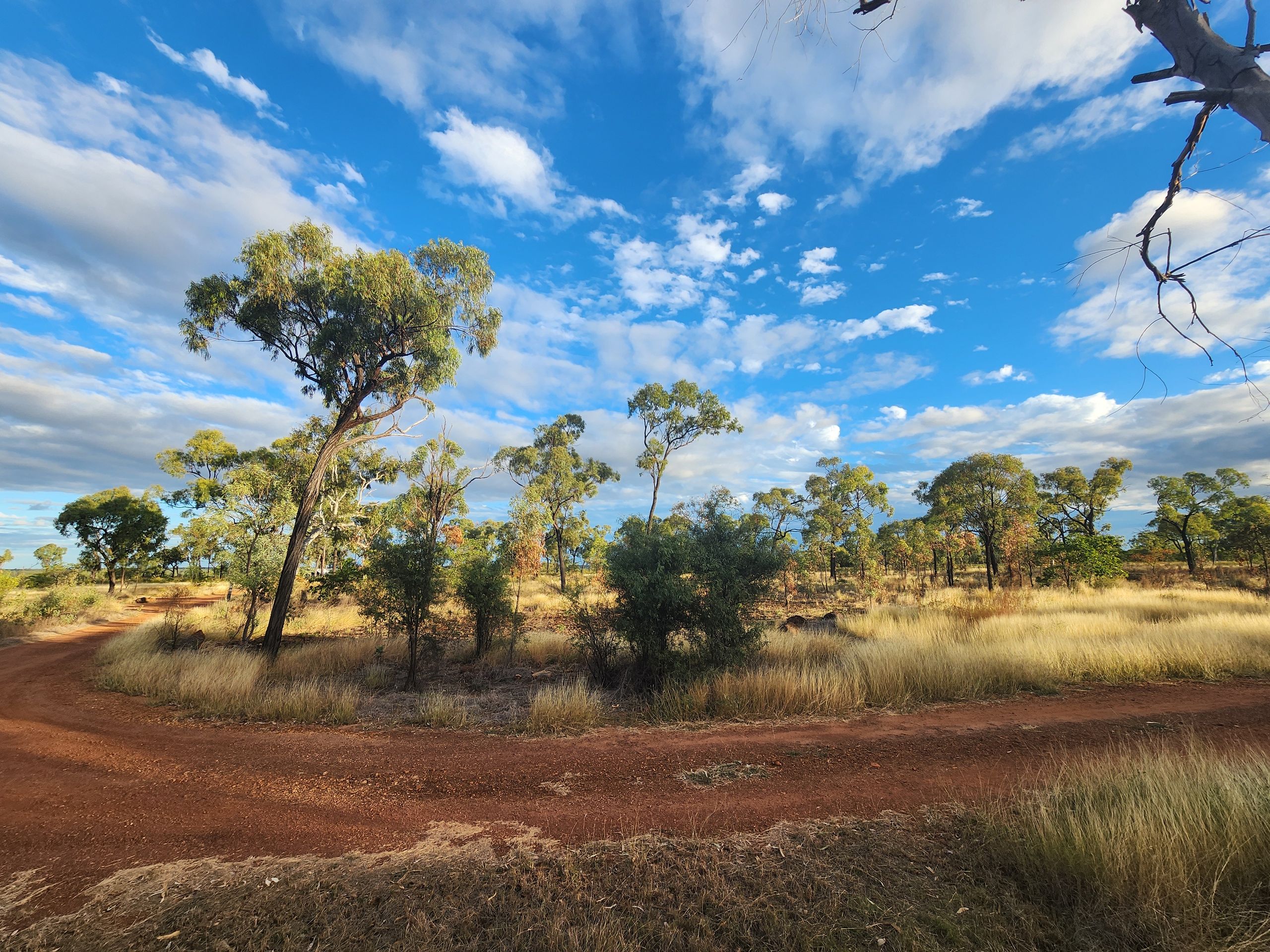
At first, the drive went through open savanna with a few trees and bushes here and there. A few dead red kangaroos in various stages of decay were visible next to the road, but not many. Then, finally, I spotted live ones, this time a larger mob, a bigger group than yesterday, about 50 meters beside the road: two large red males, two gray females, and one subadult animal. There were probably more further back, but I was so busy photographing that I can't say for sure. Unfortunately, the animals were shy and jumped away after a few minutes.
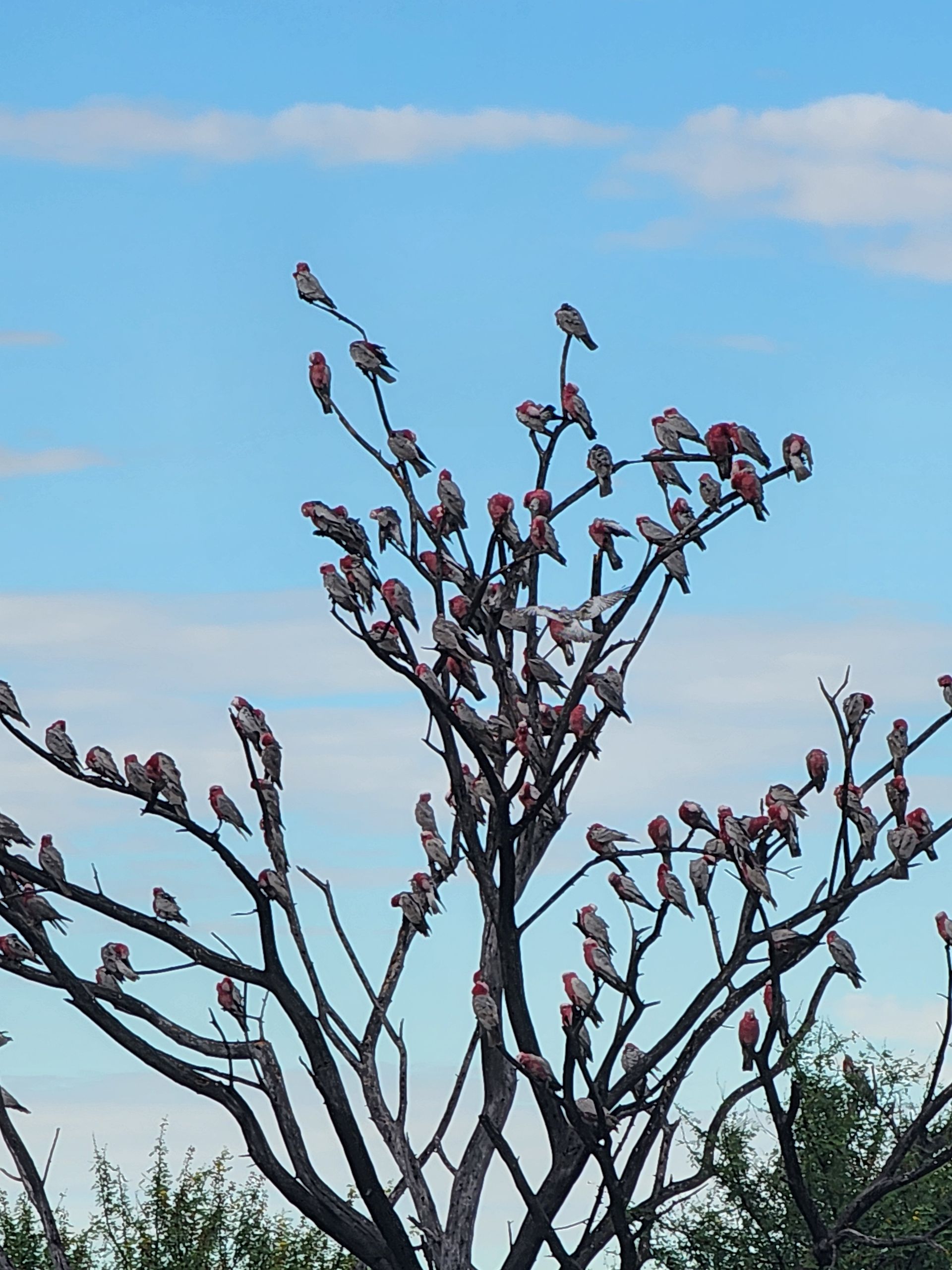
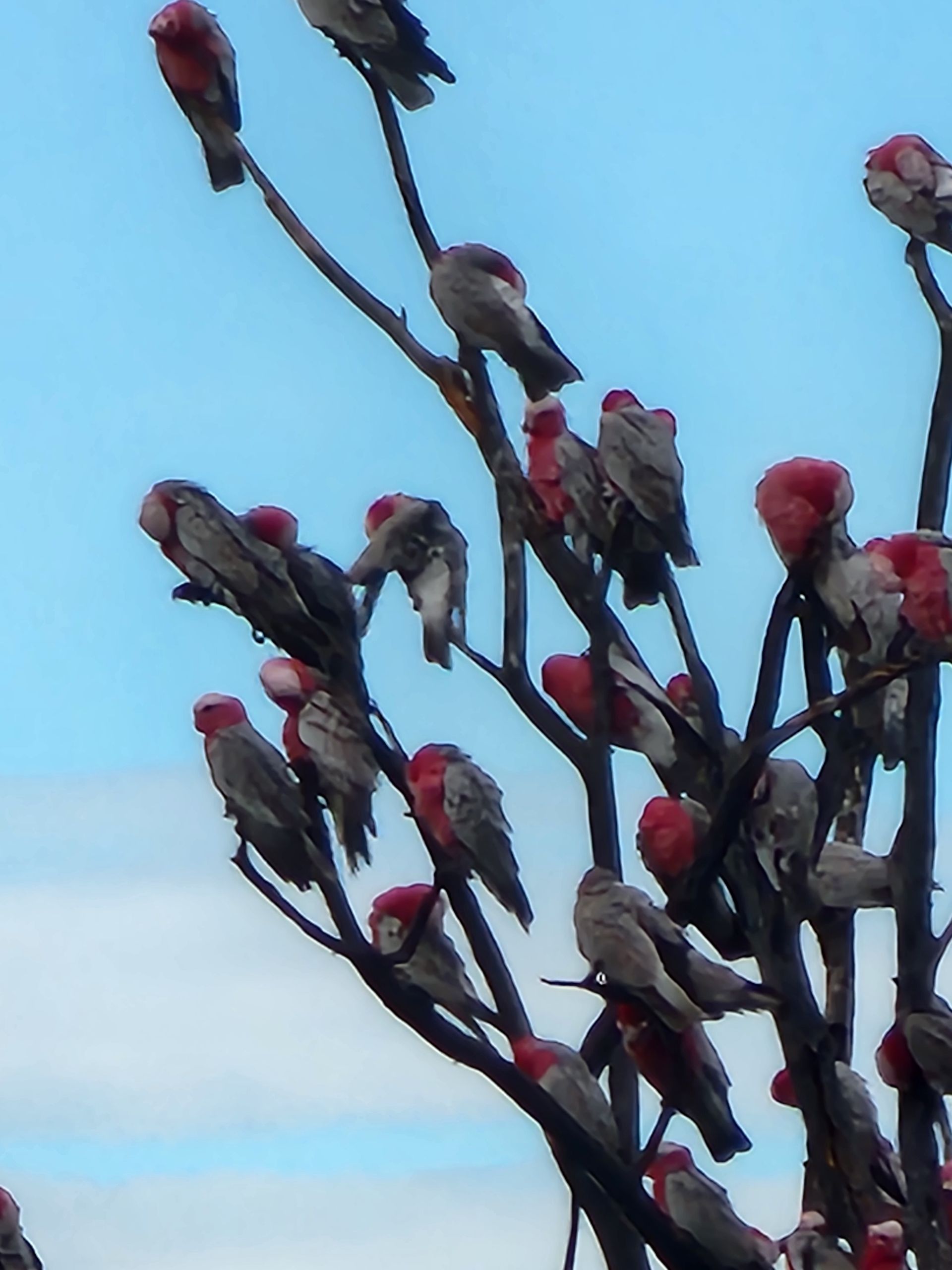
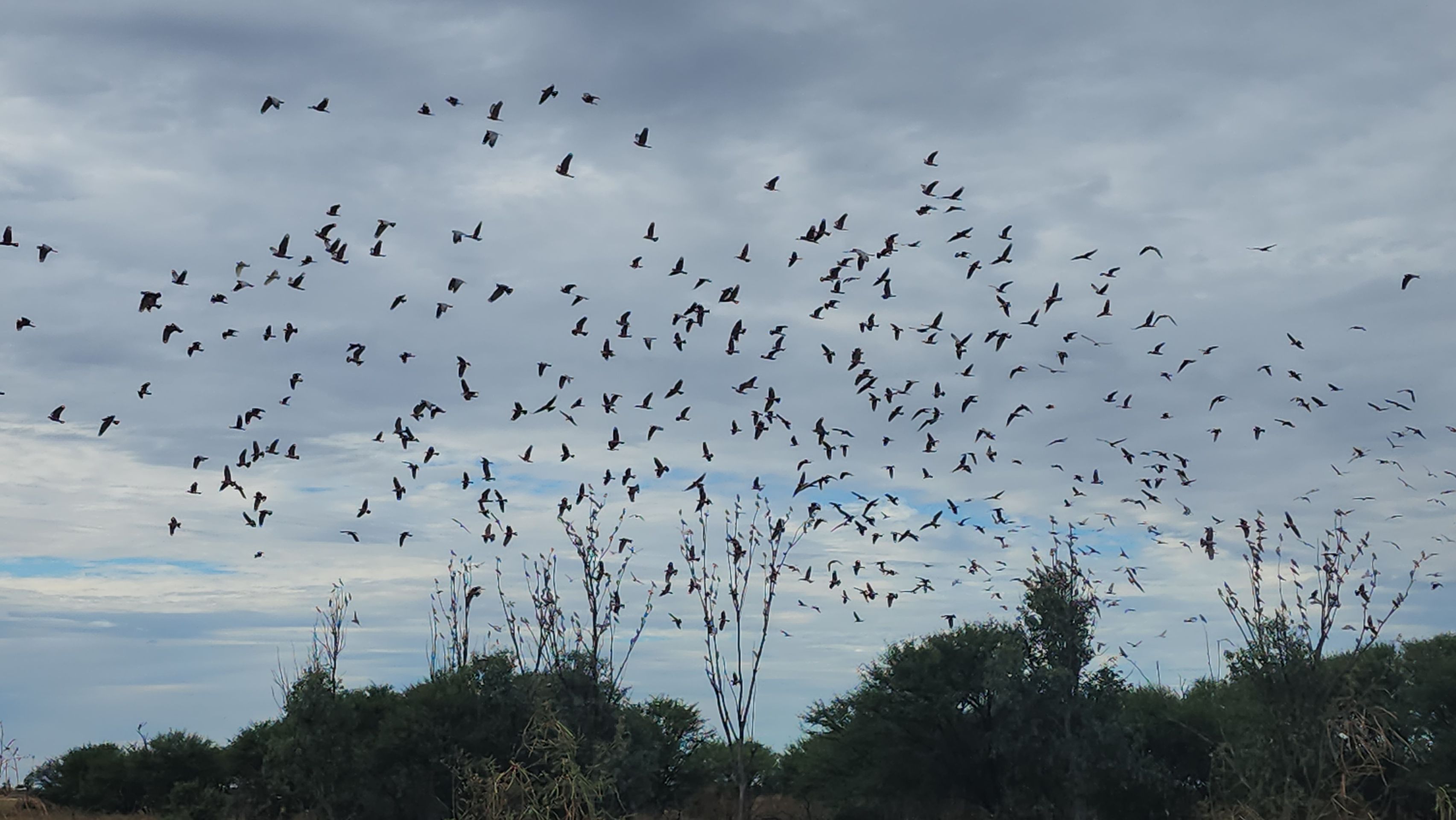
About 30 minutes later, the next highlight: pink cockatoos in the trees beside the road. And indeed, there were hundreds, the trees were full. Right by a rest area, allowing us to photograph the animals very well in peace. They weren't shy, but occasionally they would fly up in a huge flock before coming back down. Some landed to graze directly at the rest area, just a few meters away from us.
Distracted by kangaroos and pink cockatoos, we arrived in Richmond, our stopover, over an hour later than expected. The lake there, supposedly great for observing waterbirds according to ChatGPT, turned out to be a letdown, a dead water wasteland.
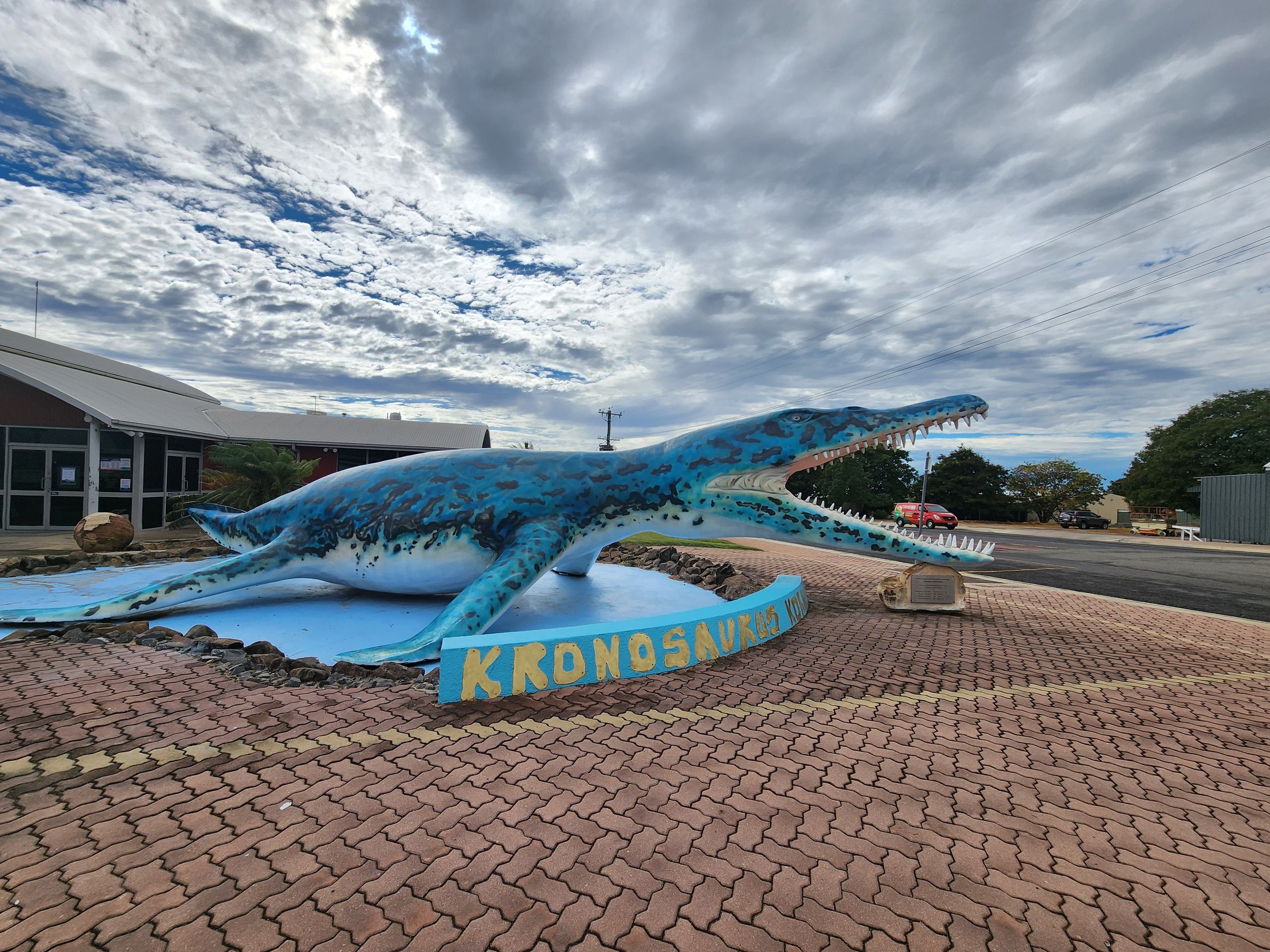
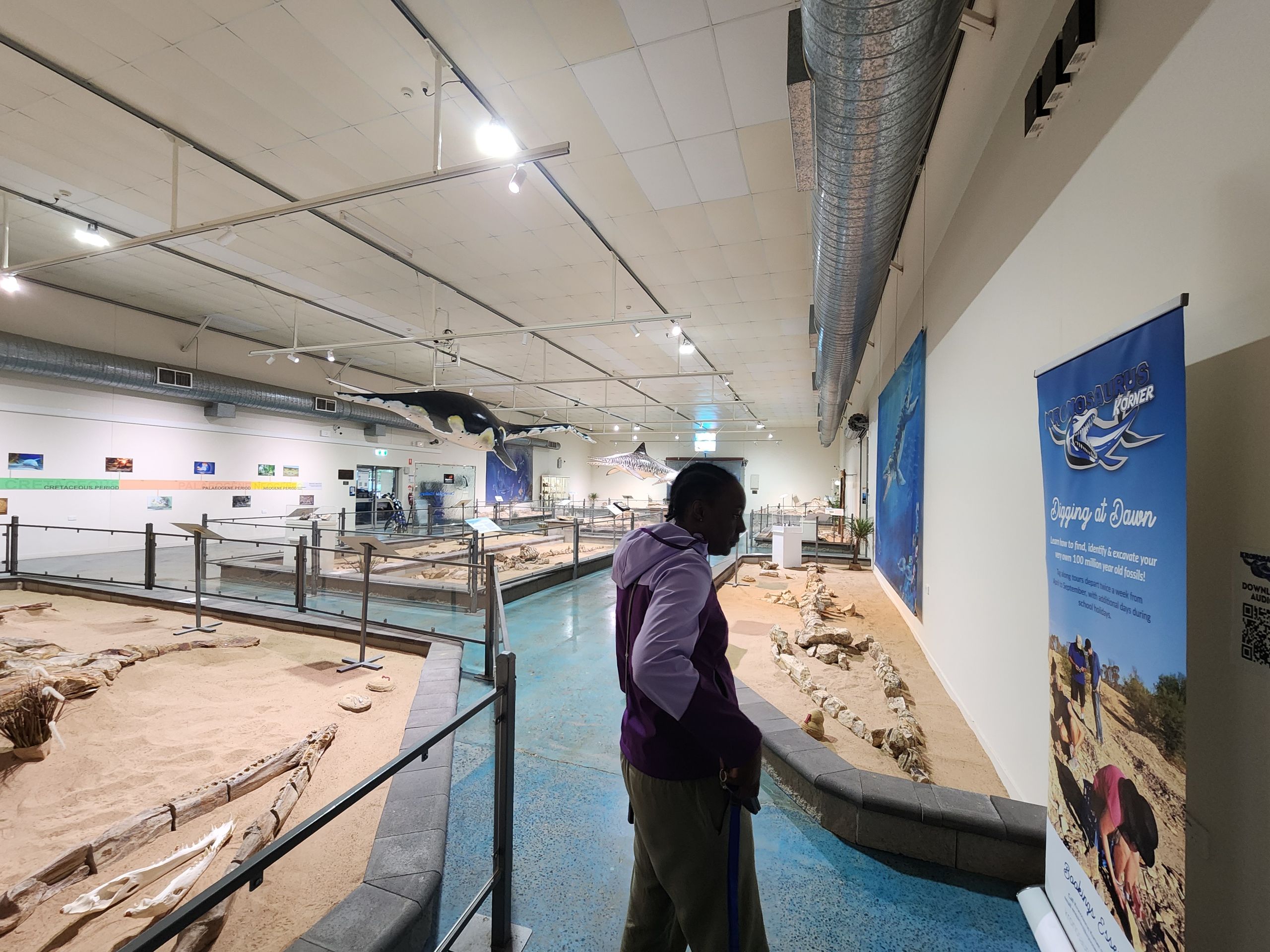
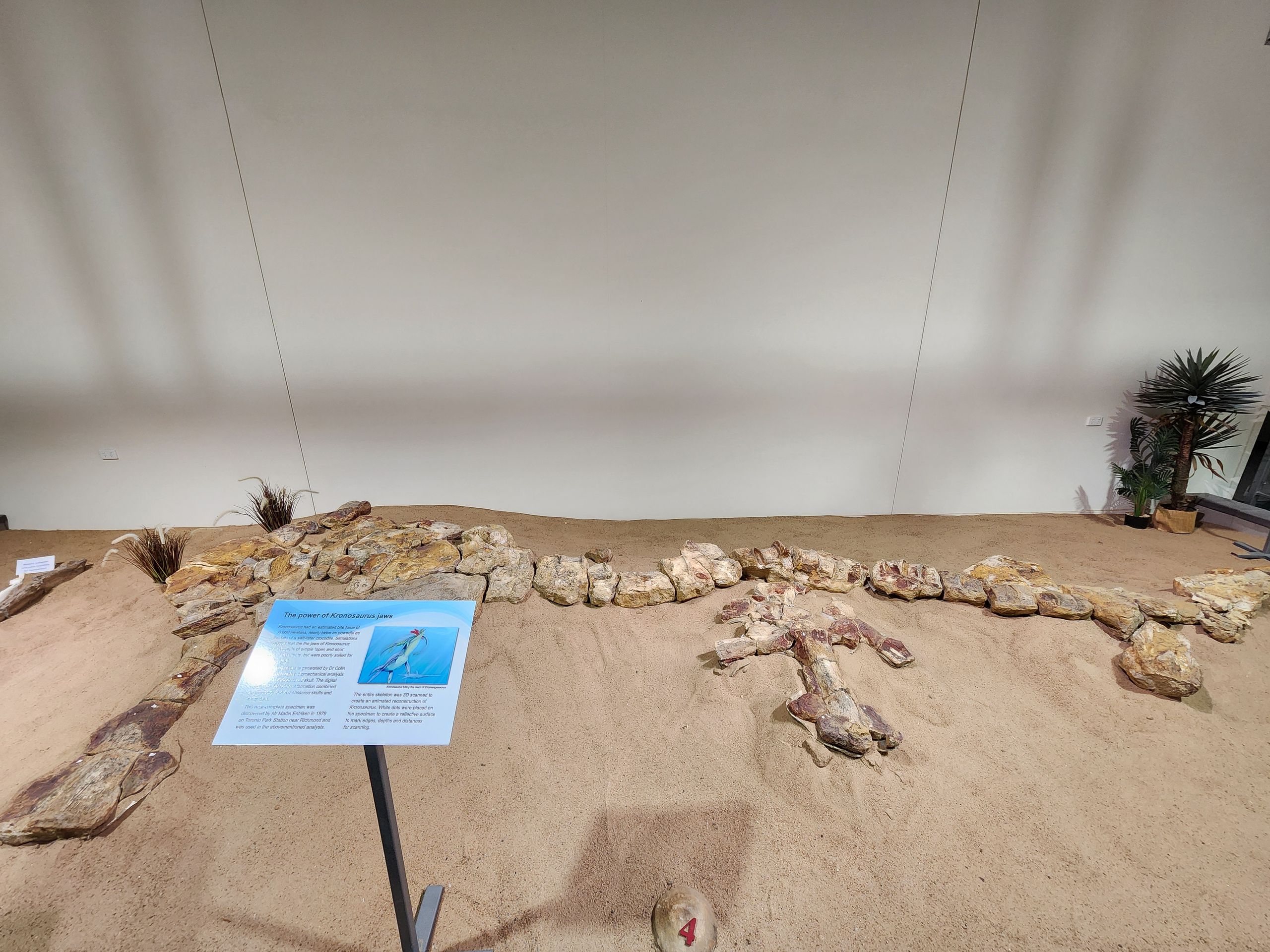
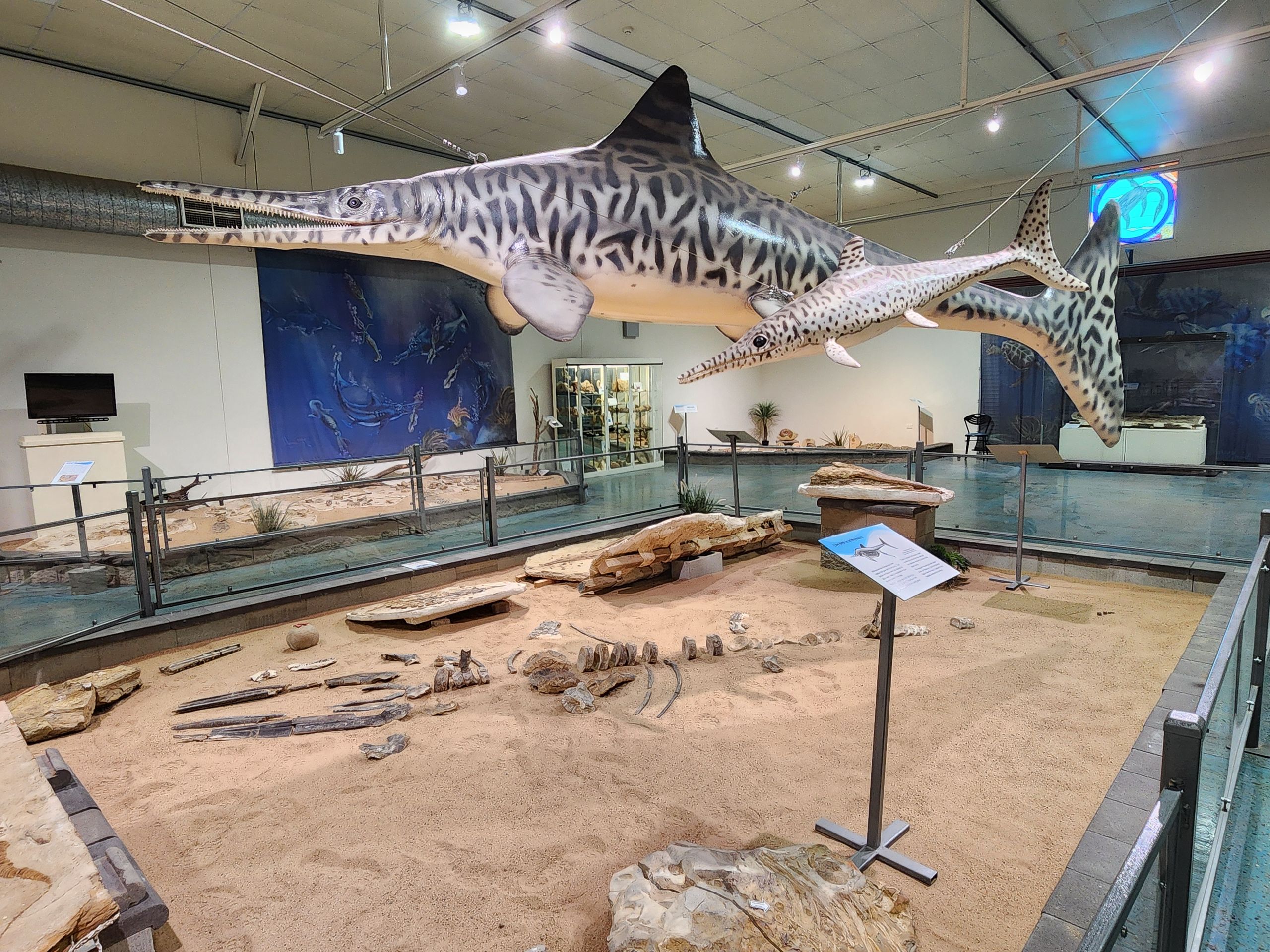
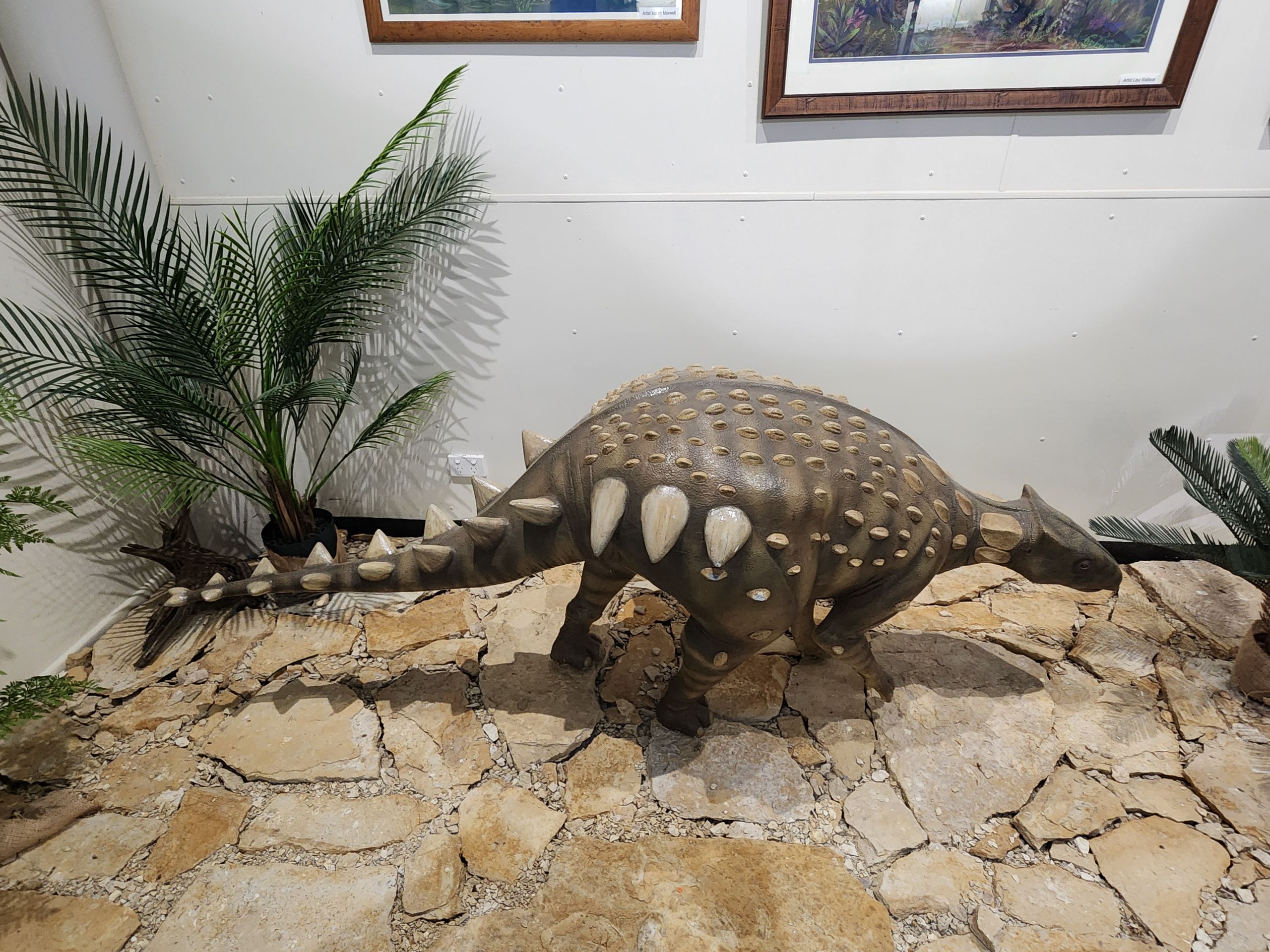
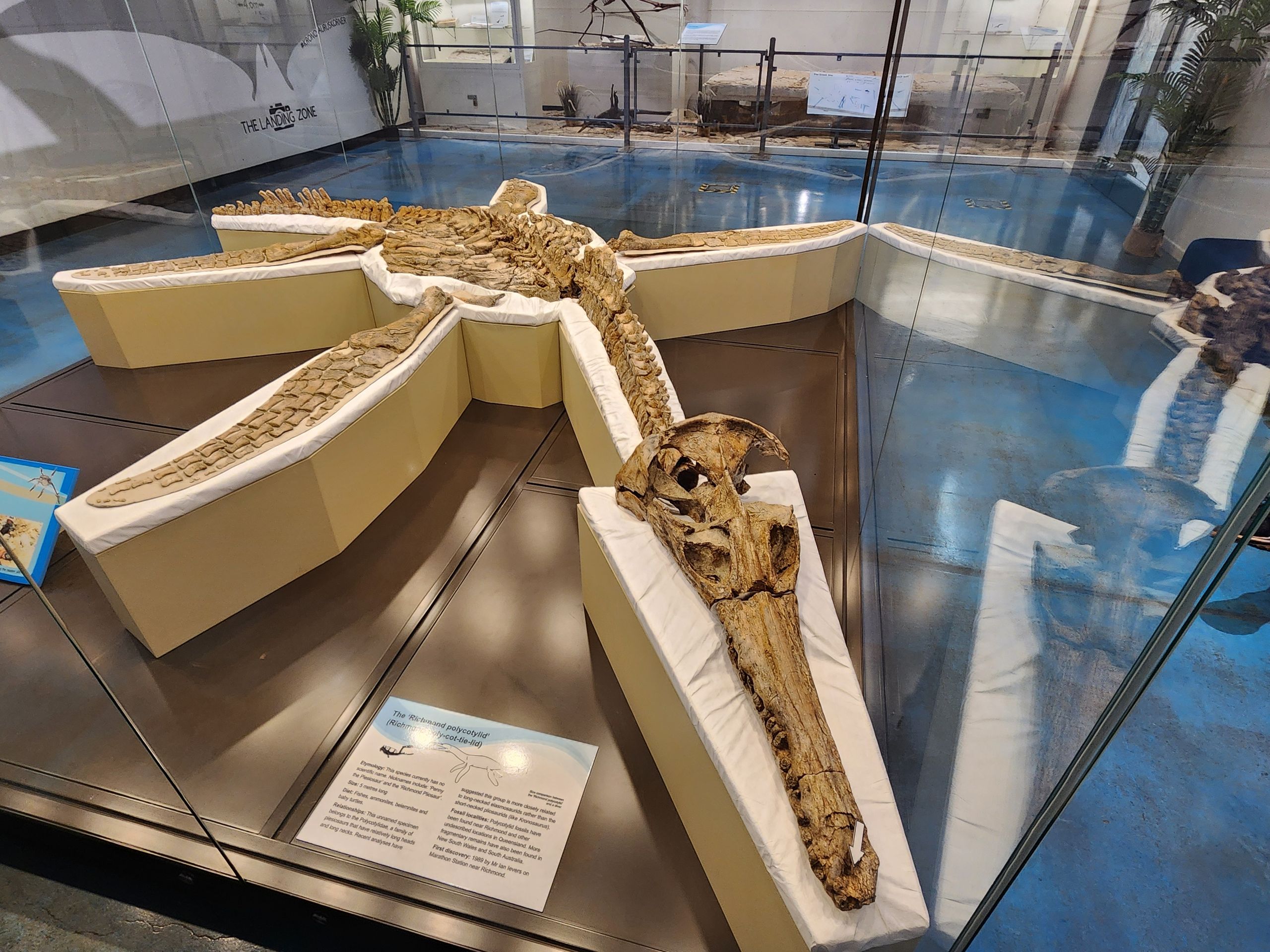
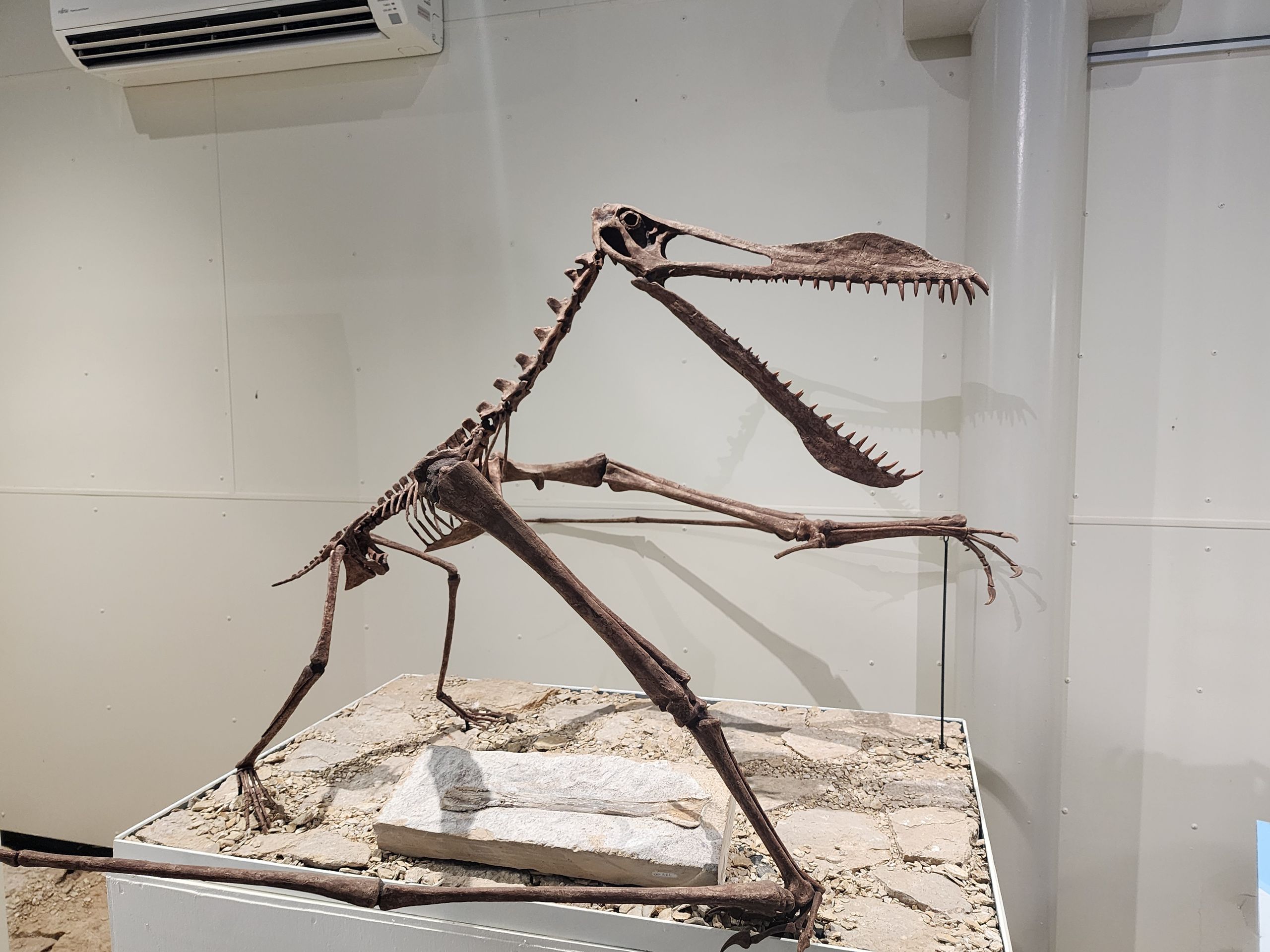
However, the Kronosaurus Museum was a hit. 100 million years ago, there was a shallow inland sea here, similar to that in Swabia, and filled with ichthyosaurs, plesiosaurs, and the mighty Kronosaurus, akin to a mosasaurus. The fossils were found on nearby farms. The founder of the museum was one of these farmers, who enthusiastically but also scientifically accurately guided us through the museum via the audio guide. After the poor museum experience yesterday in Mt. Isa, this was a lovely experience. However, 40 Australian dollars, about 24 euros, is quite a high admission fee for a museum that takes about an hour to explore.
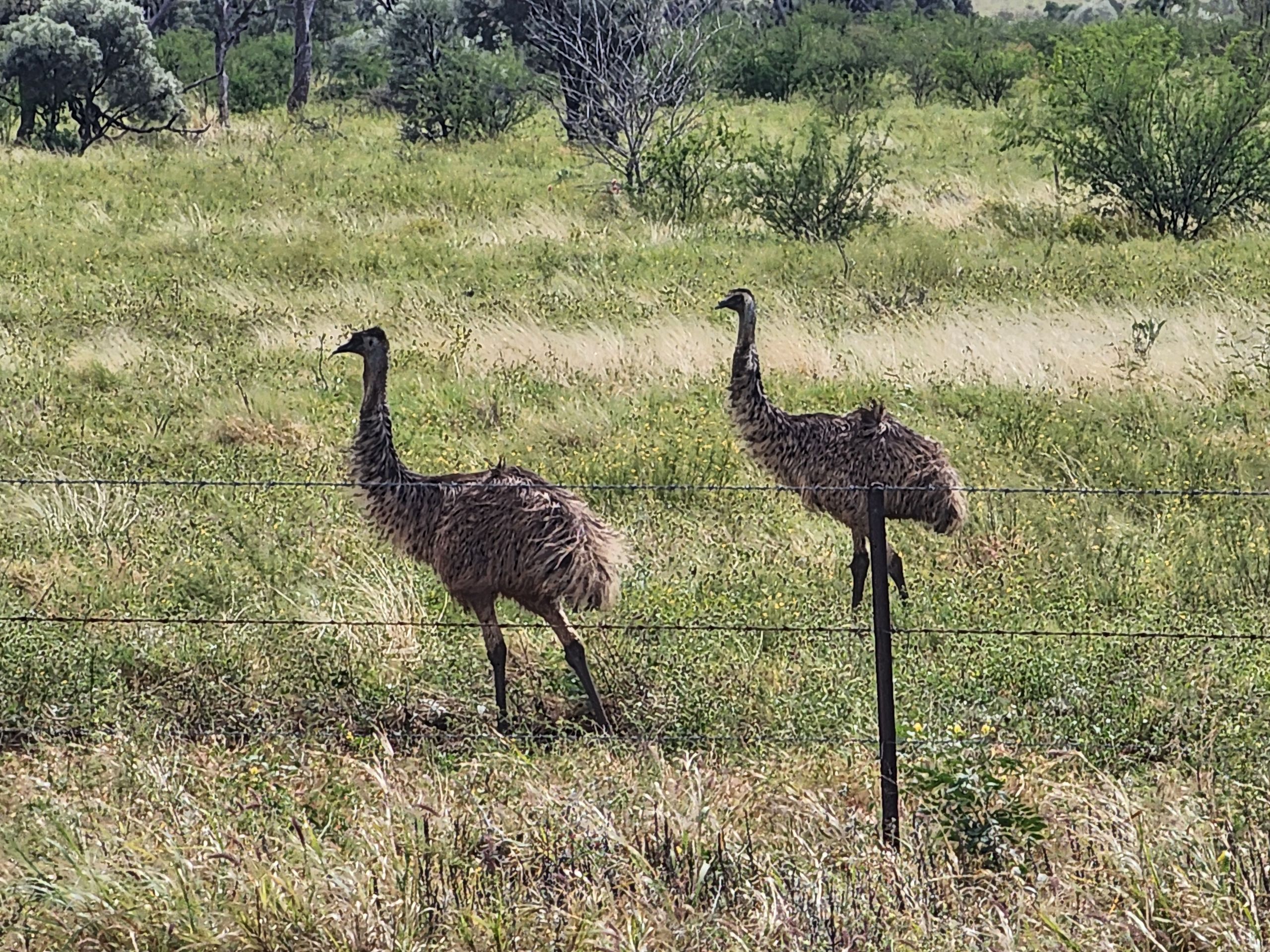
Back on the highway, we drove about 100 km further to Hughenden. The savanna became more open, and we passed through vast farmland, primarily used for cattle ranching. And finally, we saw what we had been on the lookout for since yesterday: wild emus, the large runners, the second largest bird in the world after the ostrich. Just 20 meters beside the road, behind the barbed wire fence meant for the cattle, were three of the large birds. Later, we saw more, further away, once in the midst of a herd of cattle. Now we had seen almost everything we wanted to see in the Outback, except the cockatiel, thorny devil, and frilled lizard unfortunately.
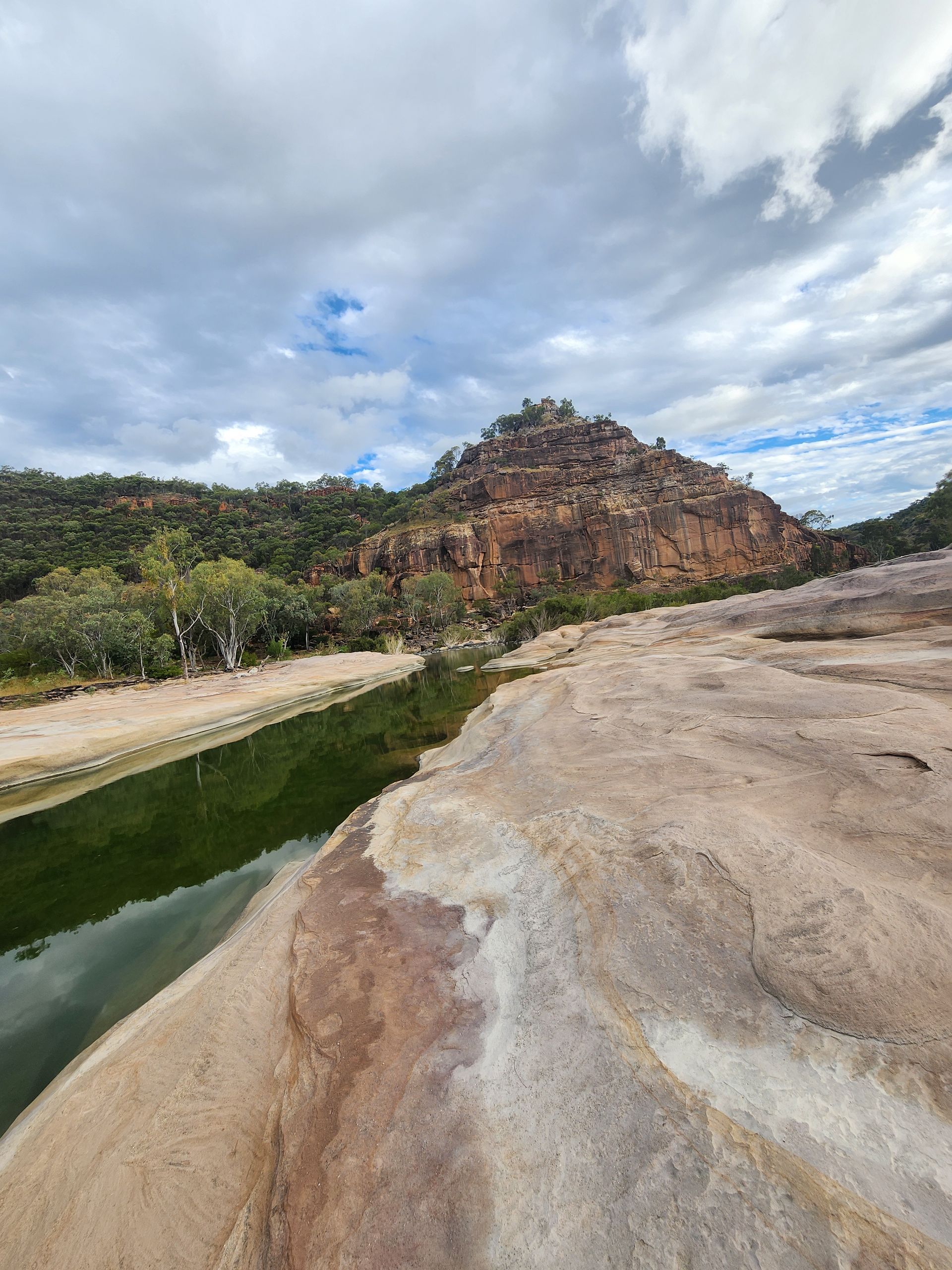
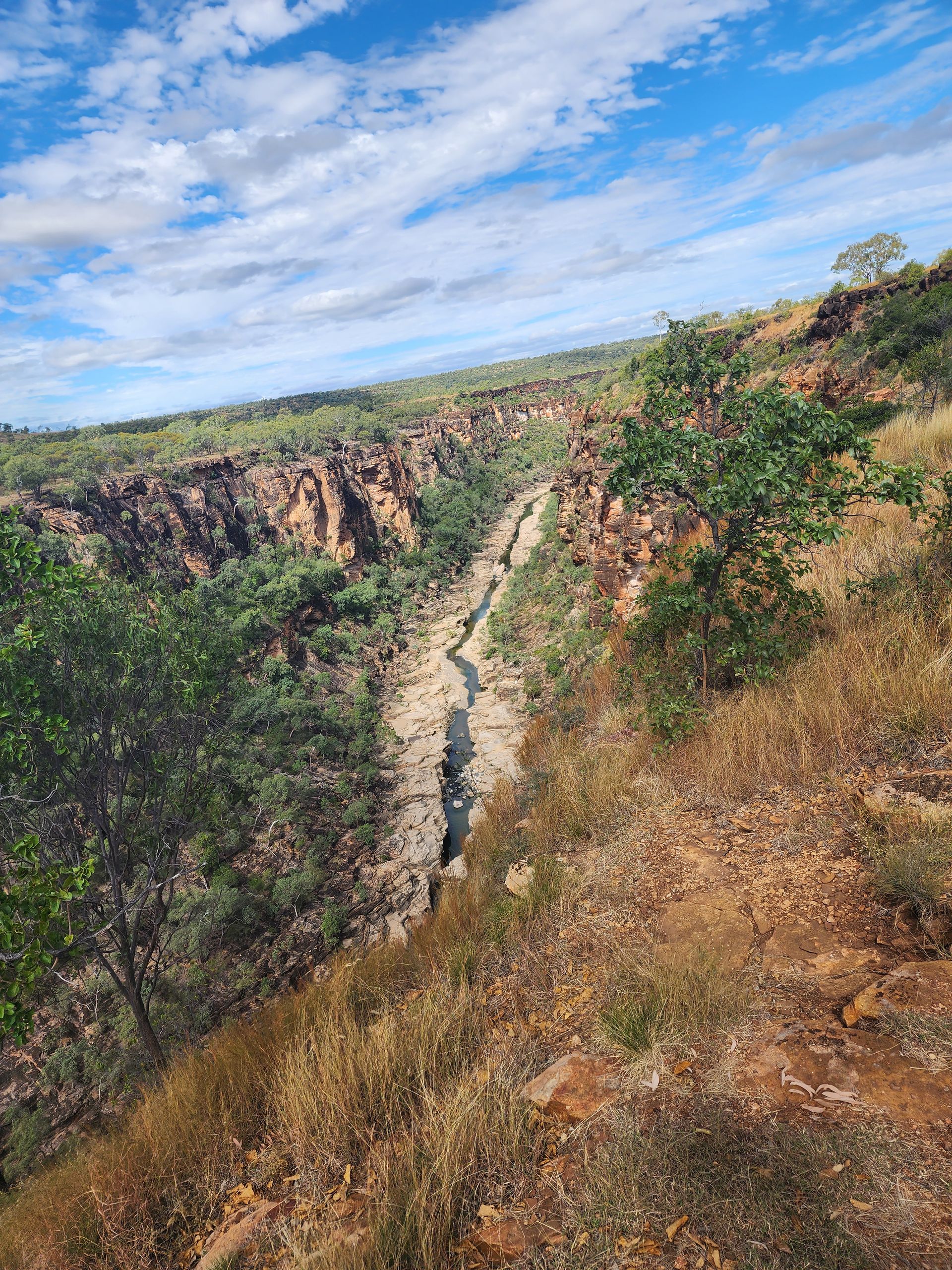
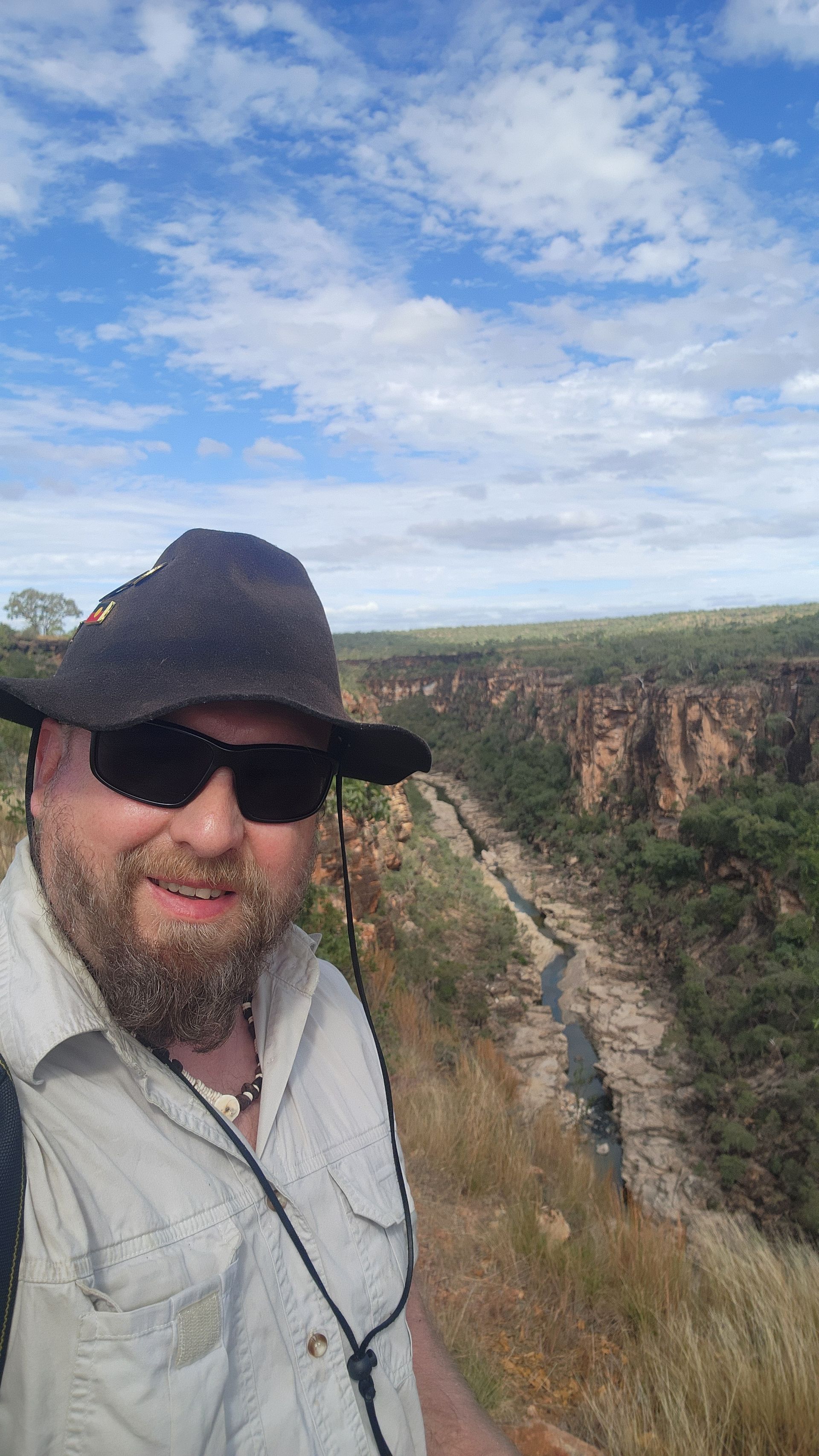
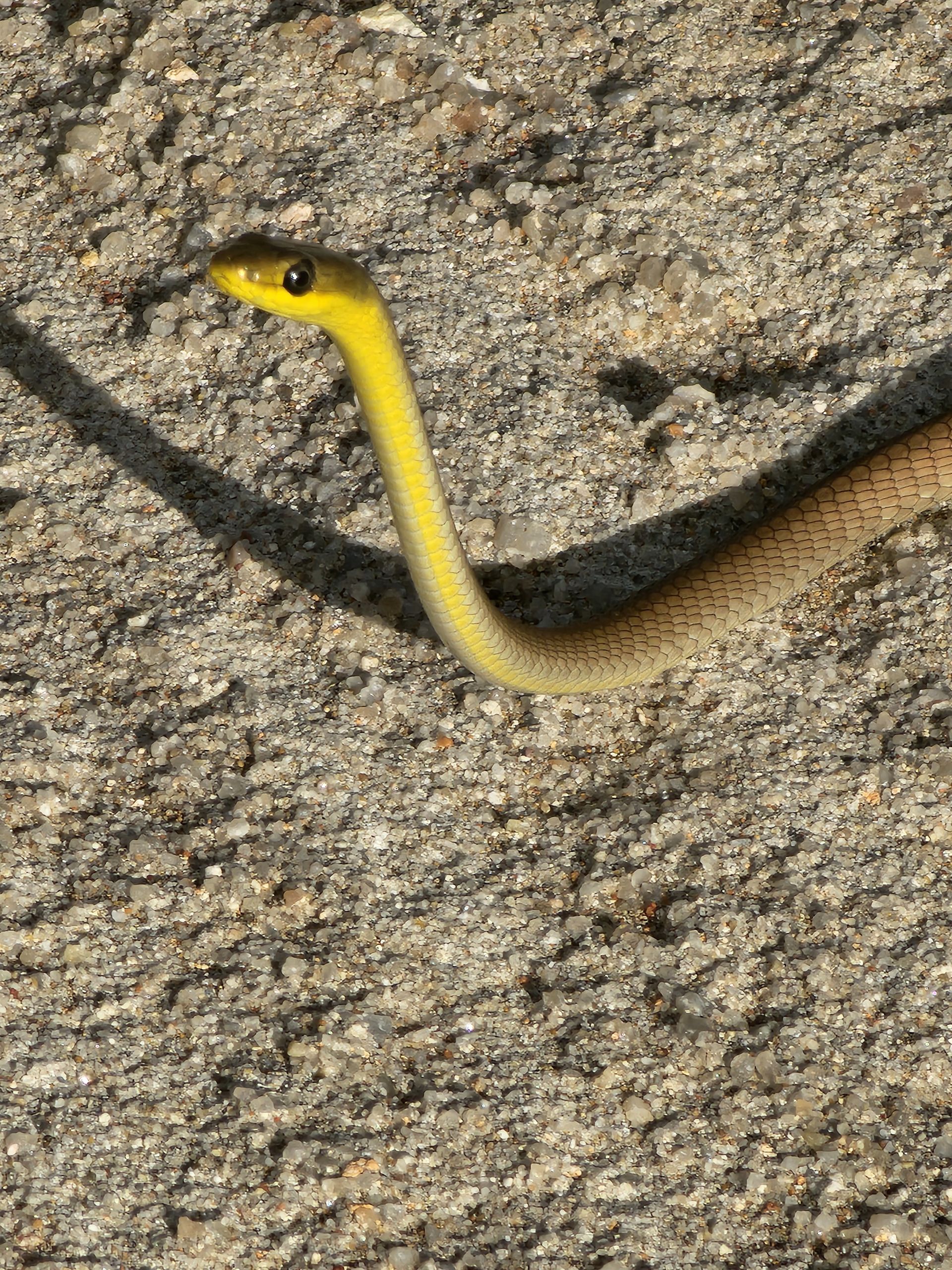
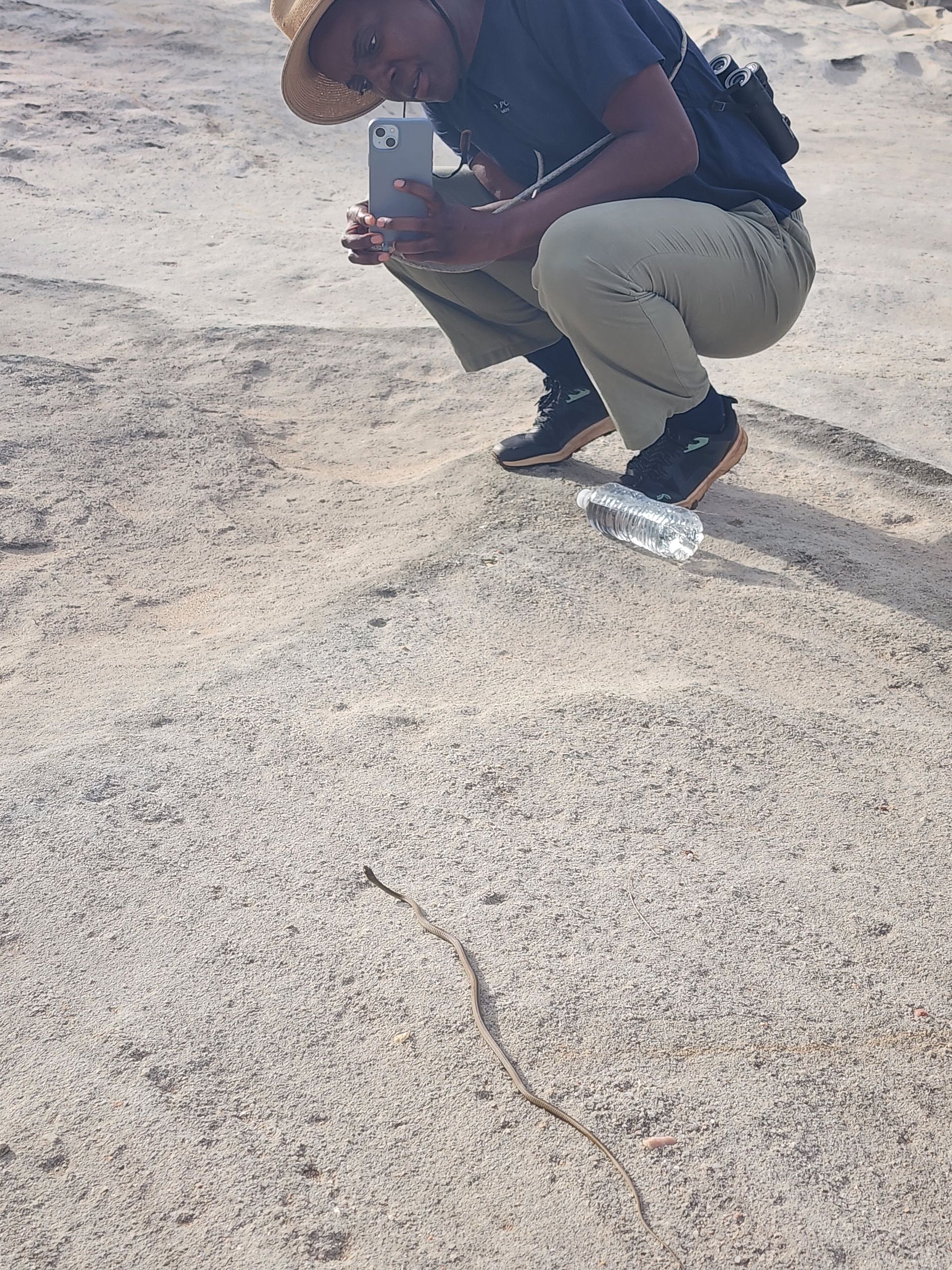
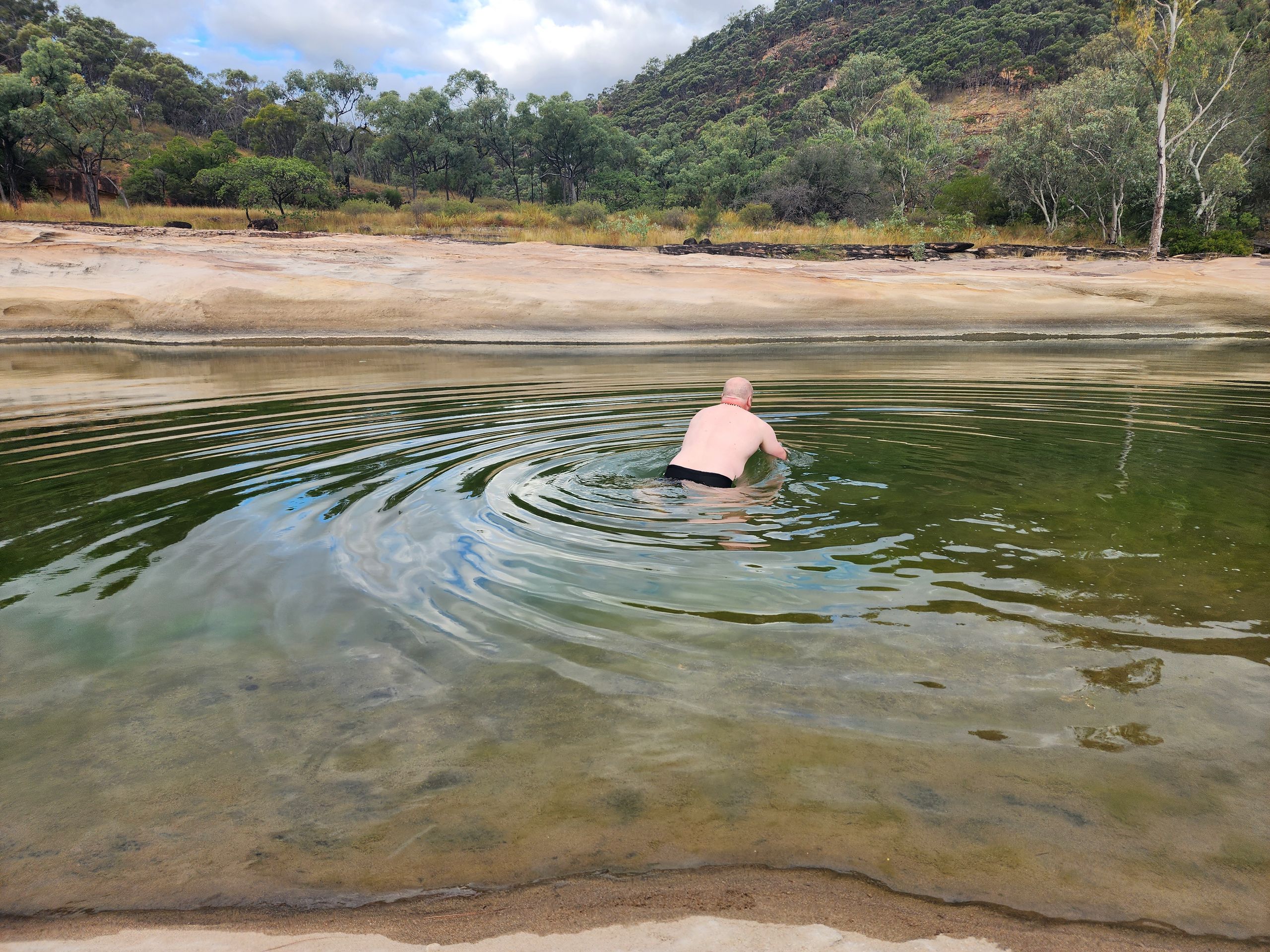
In Hughenden, we briefly visited the local supermarket, a Spar, for salad dressing and cold coffee. Then we turned north, about 60 km to Porcupine National Park, where we arrived at 14:00. From the lookout on the way to the campsite, there was a great view of the canyon. The campsite is very nicely located in tree savanna, with sites spaced out for privacy. There is only a drop toilet, but we have a shower in the camper. At 16:00, we took the short 3.5 km trail (including the return) down into the canyon, which is less narrow here than at the viewpoint. We saw a wonderful slender snake with a yellow head (which I still need to identify) and