I read quite a bit about walking the Camino and watched some travel vlogs on YouTube, particularly about the Camino Portugués.
I checked the hiking gear I already had and bought a lightweight 40-litre rucksack, a new pair of lightweight hiking boots and some outdoor clothing. Right from the start, I tried to keep an eye on the weight and pack only the bare essentials, because, according to the reports, nothing makes the Camino more gruelling than a rucksack that’s too heavy.
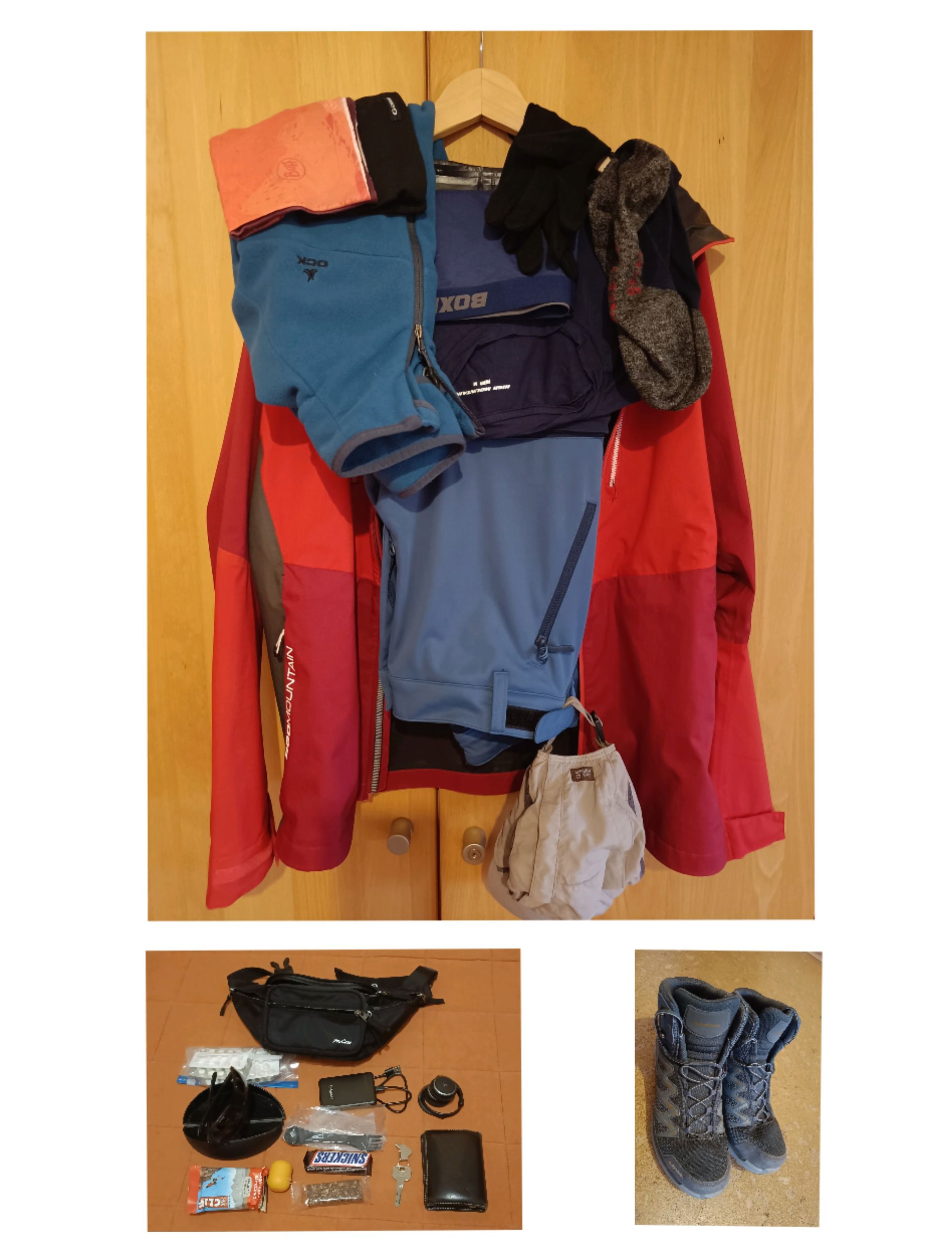
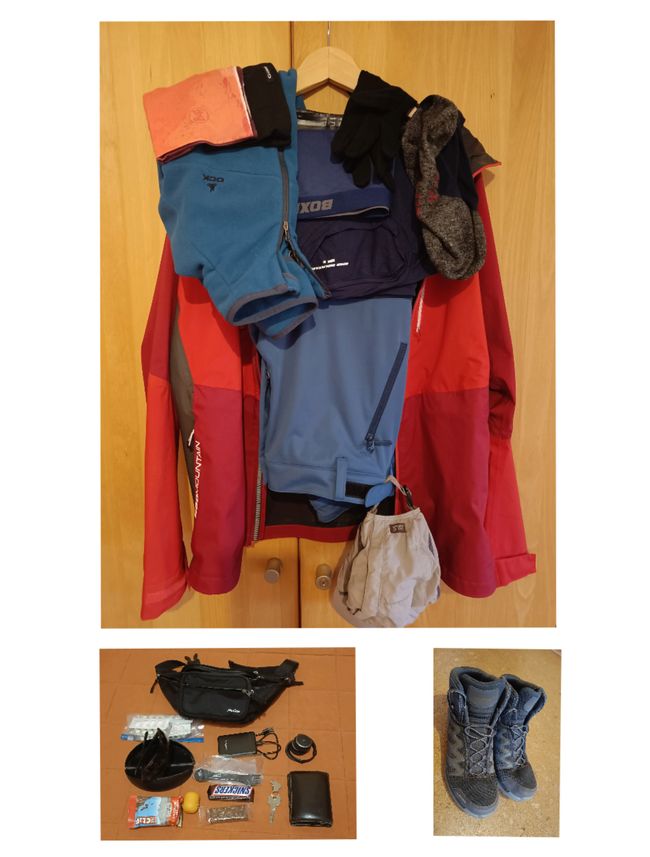
Items carried on the body and a bum bag
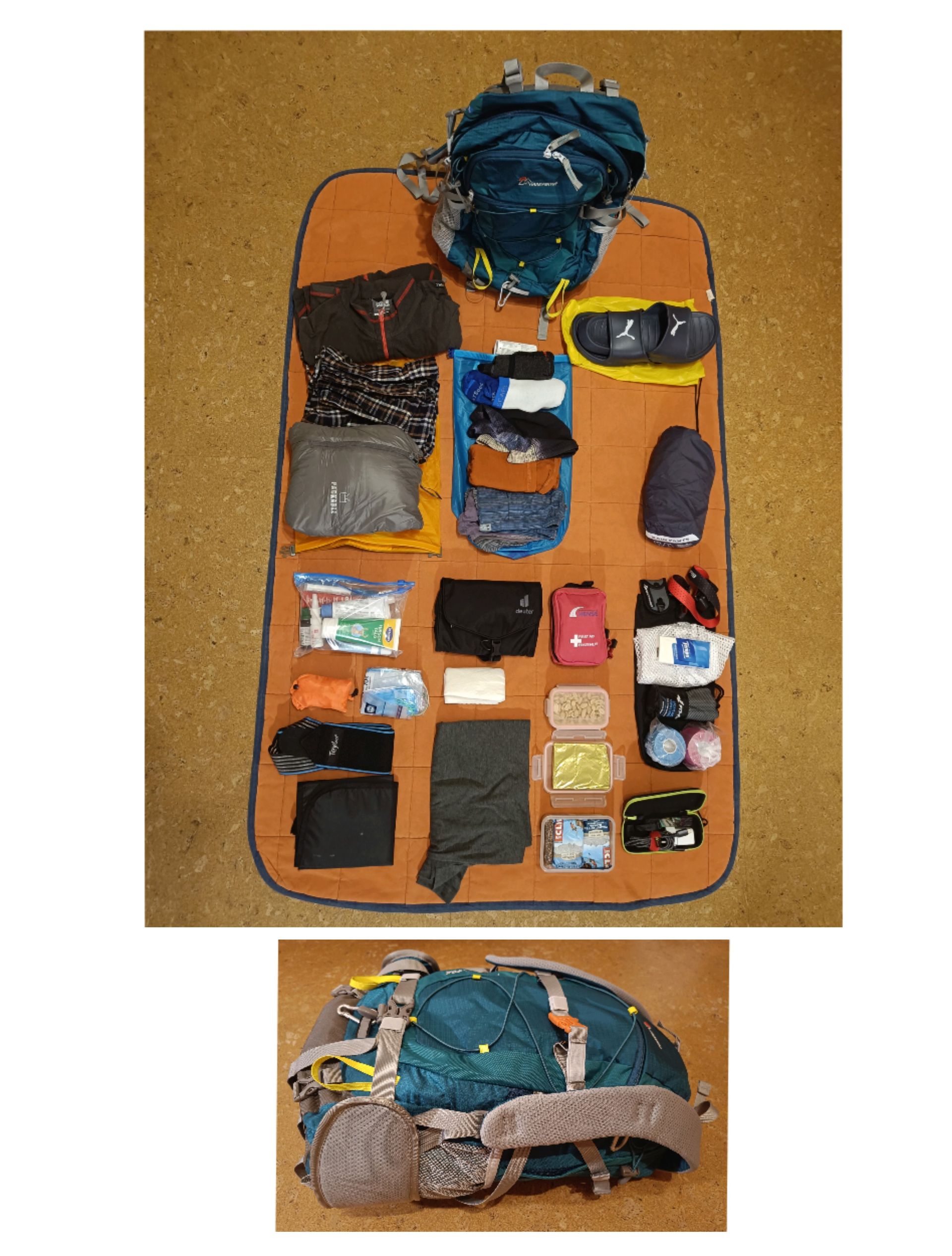
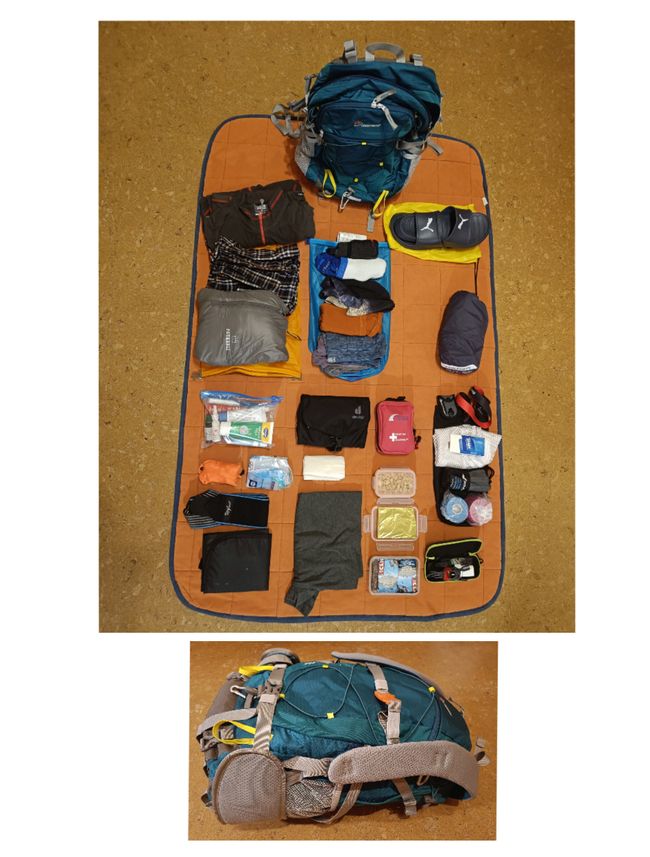
After I carried out a final equipment test with my fully packed rucksack on a 10km trail, I was absolutely knackered. I realised I needed to rethink my kit and sorted out a few things. After that, I managed to get the rucksack down to 6.5kg without the water bottles. With water and my walking poles attached, it will weigh around 8kg, which is the maximum load I want to carry.
Contents of the rucksack and packed as hand luggage
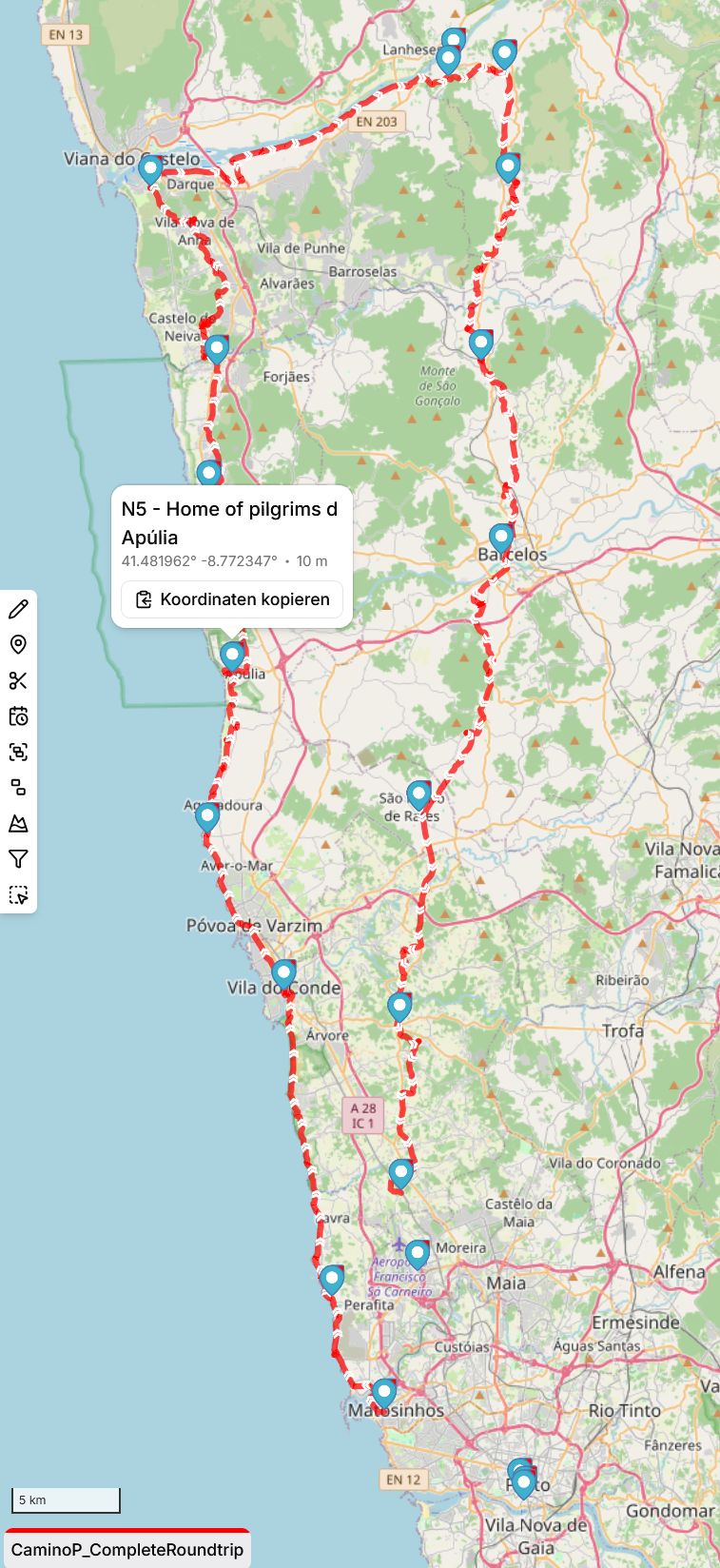
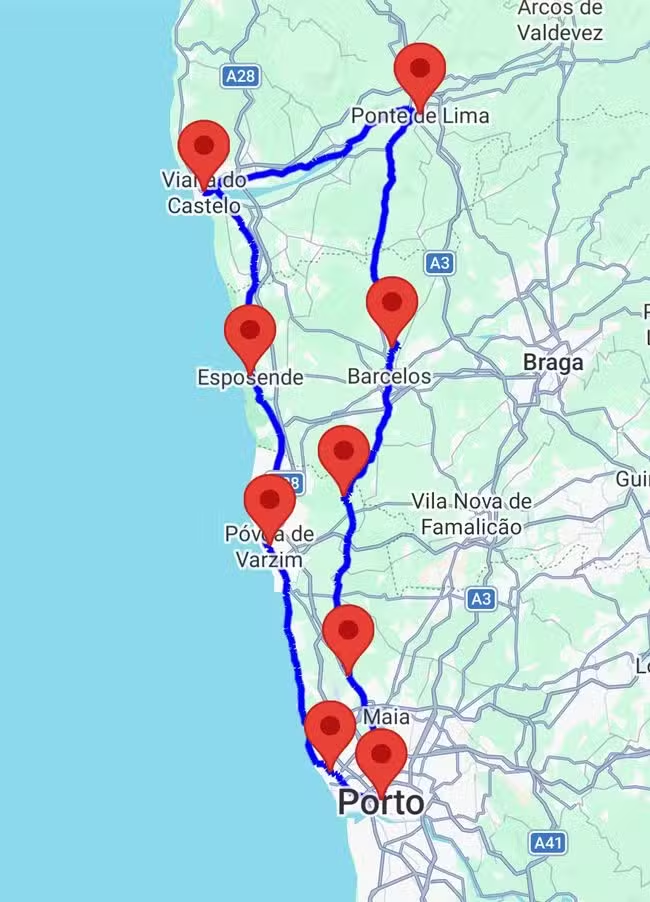
The other major planning task was to work out the route, including accommodation options. At the start, the AI helped me with some good suggestions and pointers on what I needed to bear in mind. As I want to follow my own version of the Camino rather than a standard route, I had to take a few more factors into account.
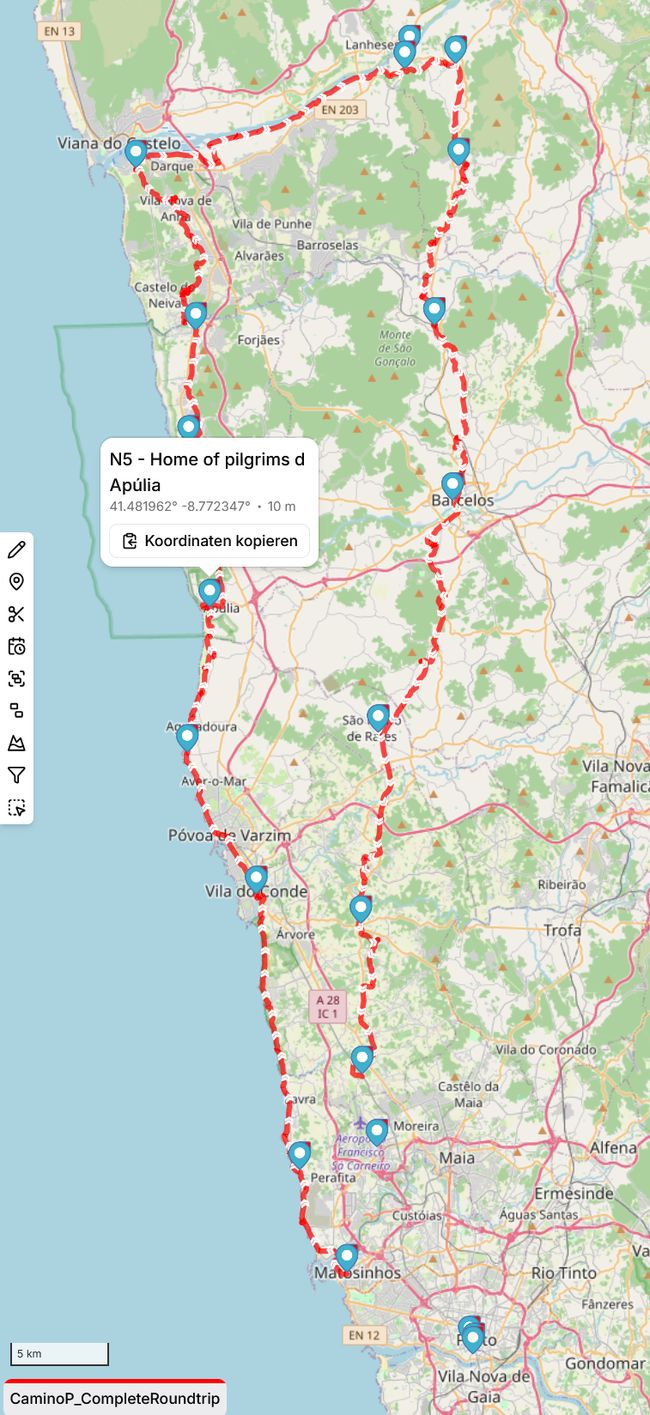
In the end, I not only drew up a detailed itinerary, but also used GPX.studio to create a GPX file of the entire route for navigation via an app, and I booked all the accommodation for the first week. Most of the bookings can be cancelled free of charge, so I’m on the safe side and won’t end up without a bed or be forced to walk any further.
Unfortunately, I wasn’t able to divide the sections evenly and had to settle for a 17km and a 20km route. Originally, my aim was to have sections of 10–15km.
Route Planning in gpx.studio
camino-portugues-roundtripLike a newsletter: every new post arrives via email.