前往秦皇岛的火车旅行

已发布: 22.09.2026
Qinhuangdao is the only city in China to bear the name of the first emperor. Qin Shihuangdi undertook a total of five inspection tours of his empire. The fourth tour, to Jieshi (碣石), present-day Qinhuangdao, took place in 215 BC. This journey served not only for inspection but also in the search for immortality. From there, he dispatched the court official Lu Sheng (卢生) on ships across the ocean to search for mythological gods and the elixir of eternal life on islands.
Incidentally, the emperor had previously sent an expeditionary force under Xu Fu (徐福) out to sea. One version of this legend states that Xu Fu, of course, did not find a miraculous elixir of immortality and faced the death penalty upon his return. Therefore, he sailed on, landed in Japan, and had a profound influence on Japanese culture, where he is highly revered.
But back to Qinhuangdao, because upon his return, Lu Sheng stalled the emperor with the omen "亡秦者胡也" (about which there is an interesting story that I will tell later) and then fled from the emperor himself. The historic moment of the naval mission is commemorated in a park surrounding the Qiuxian Palace on the coast.
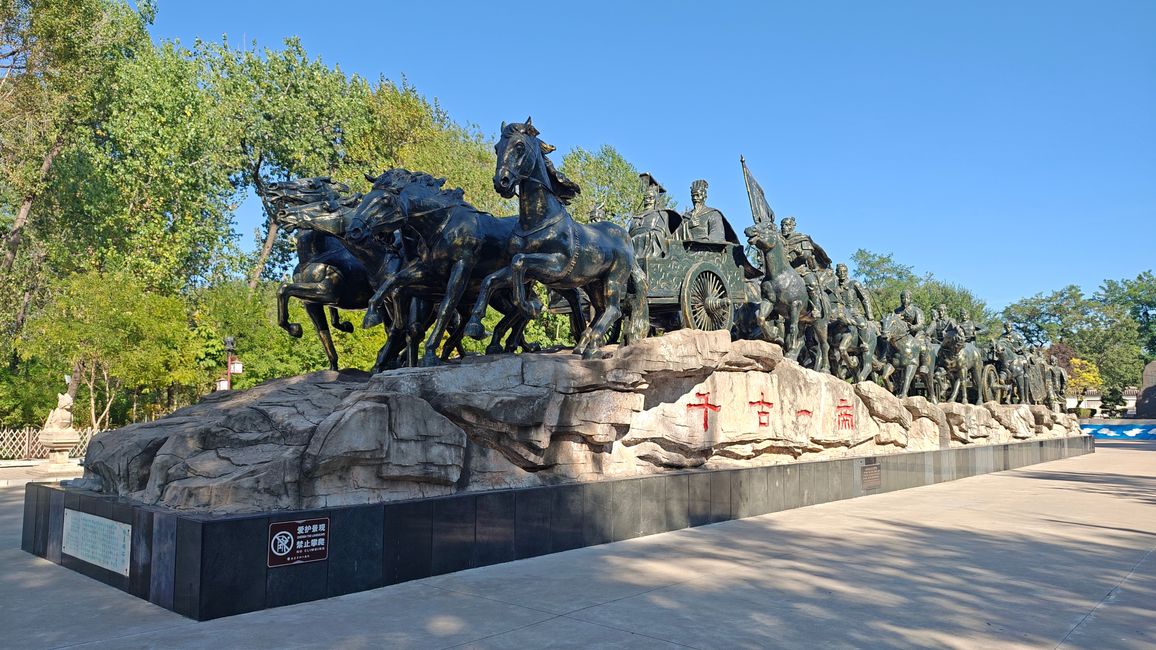
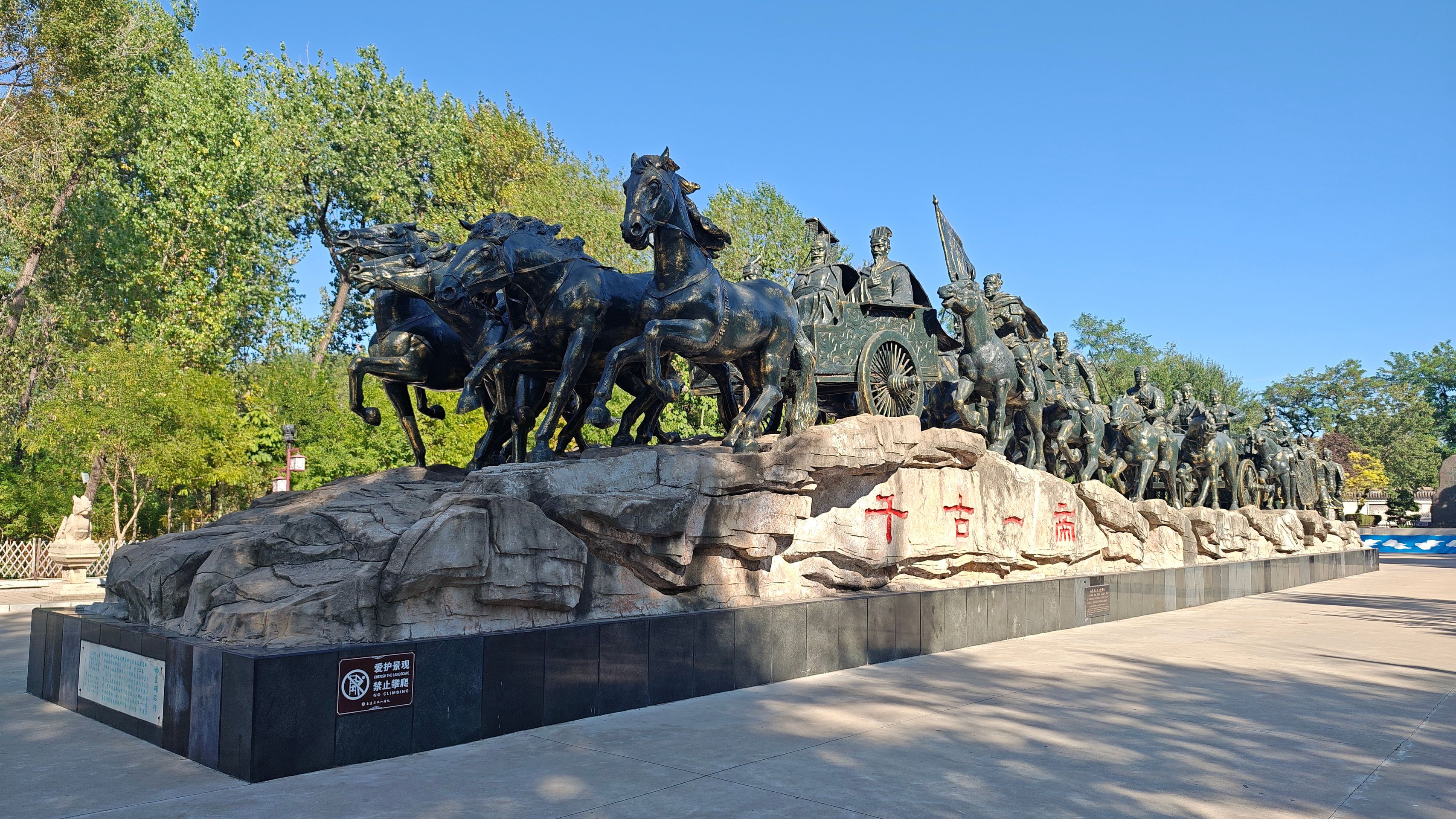
After visiting my wife's nephew's six-month-old baby (which was the reason we chose Qinhuangdao as our holiday destination), we drive to the coastal park and first encounter the entourage of Emperor Qin Shihuangdi.
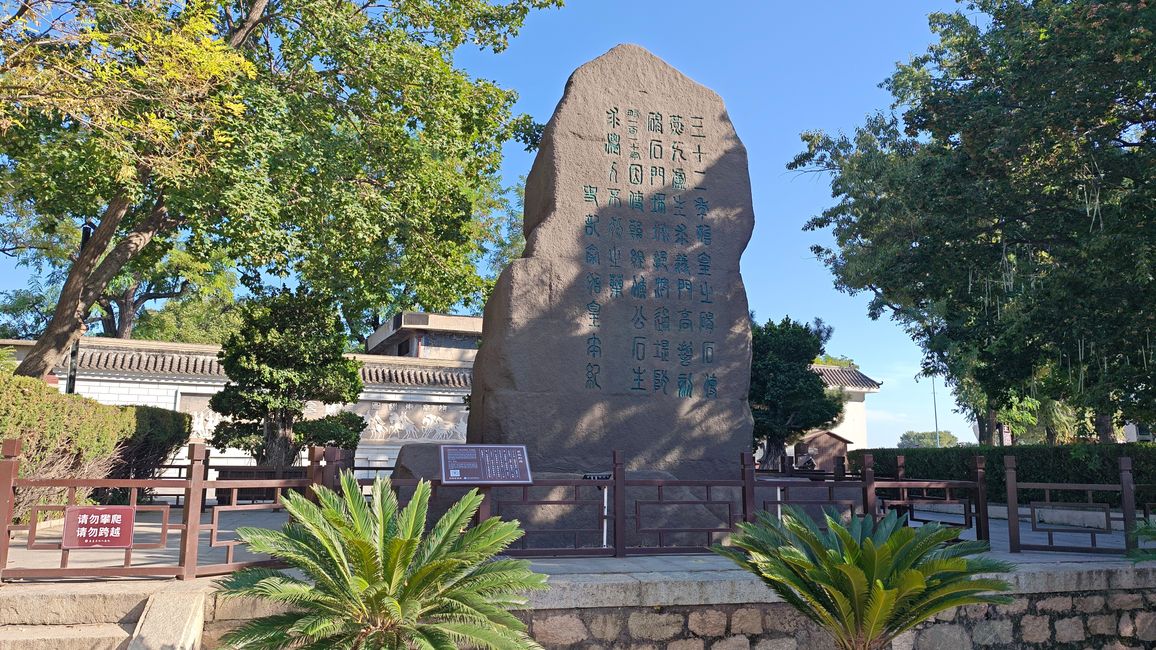
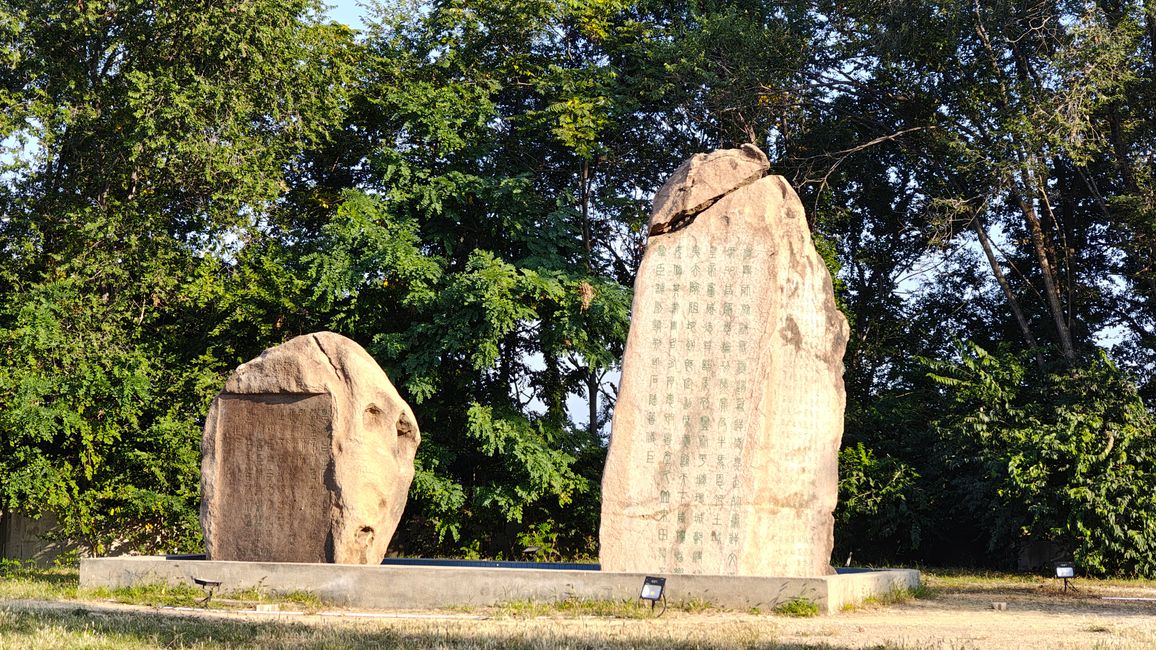
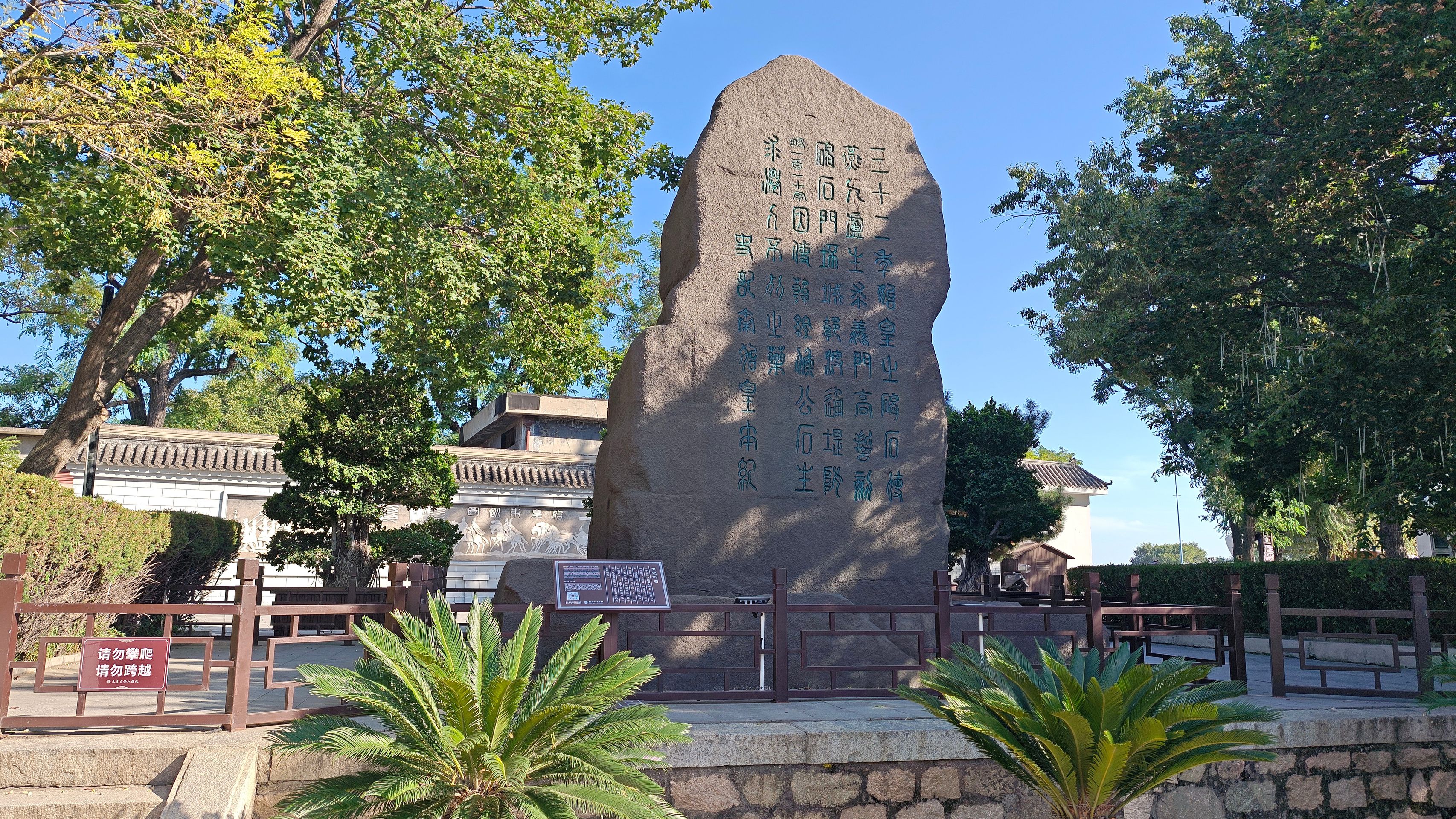
Then we come to a memorial stone where the record of the famous historian Sima Qian about the arrival of the emperor was engraved.
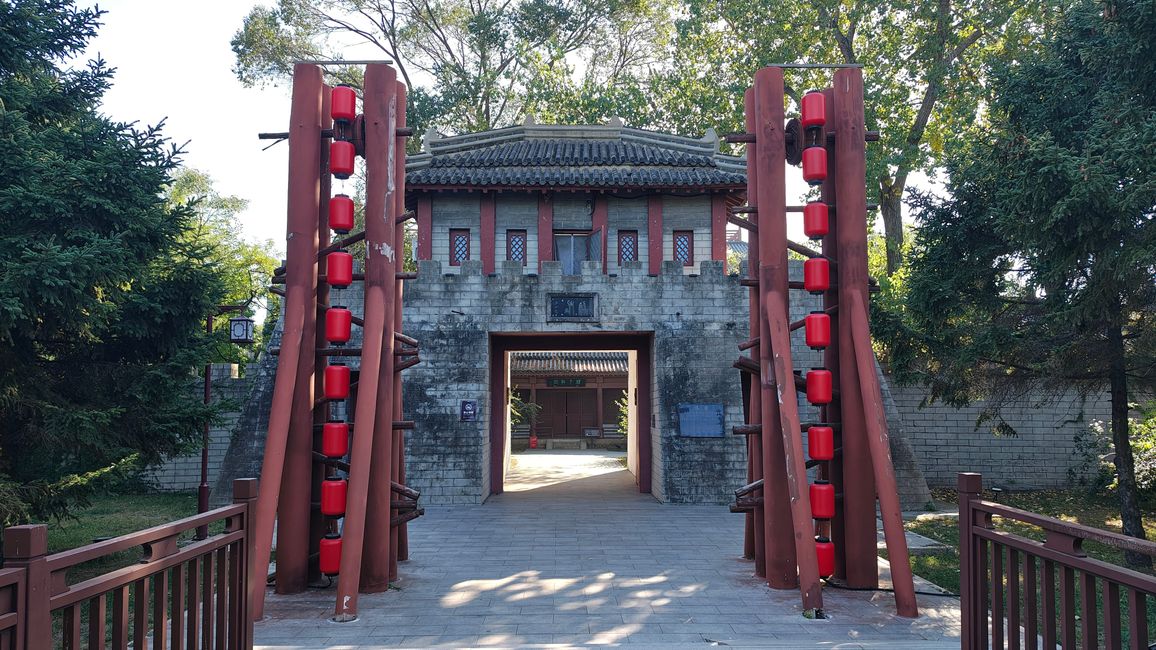
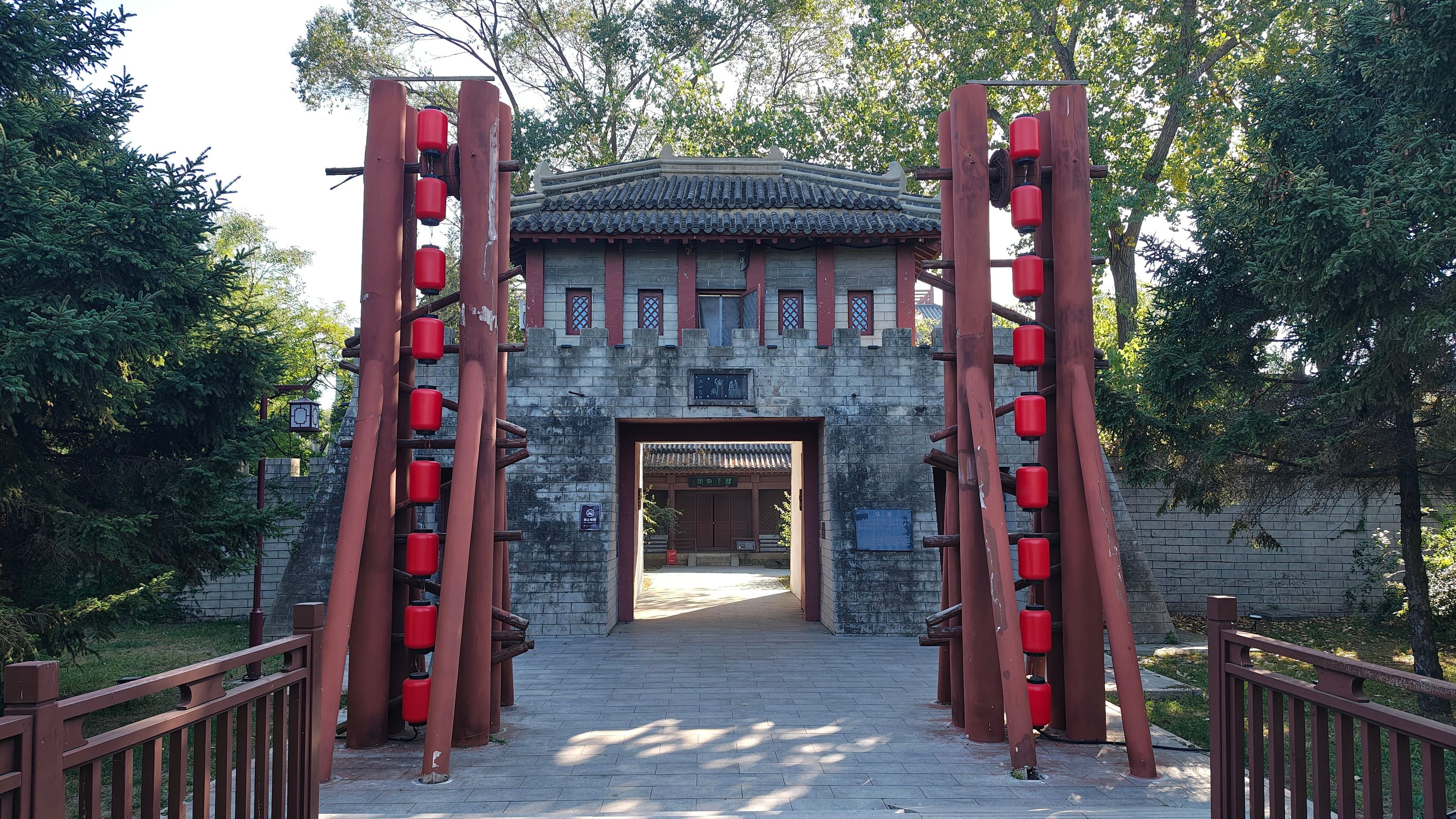
Moving to the right, the history of the city of Jieshi, i.e. Qinhuangdao, is depicted through the city gate and some buildings.
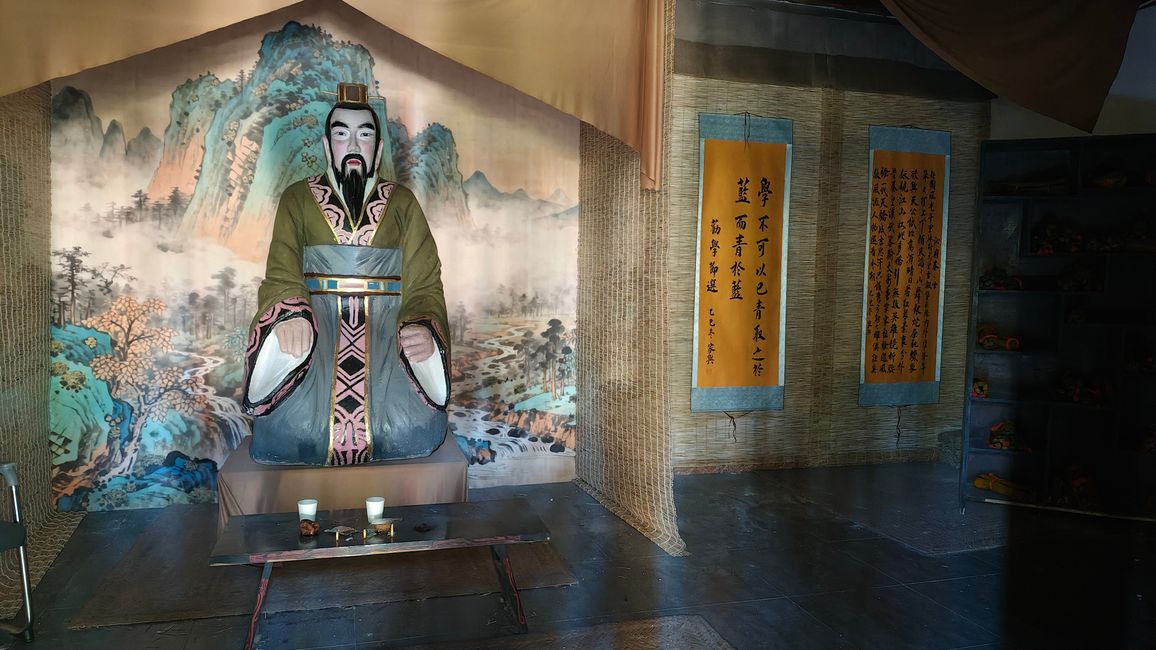
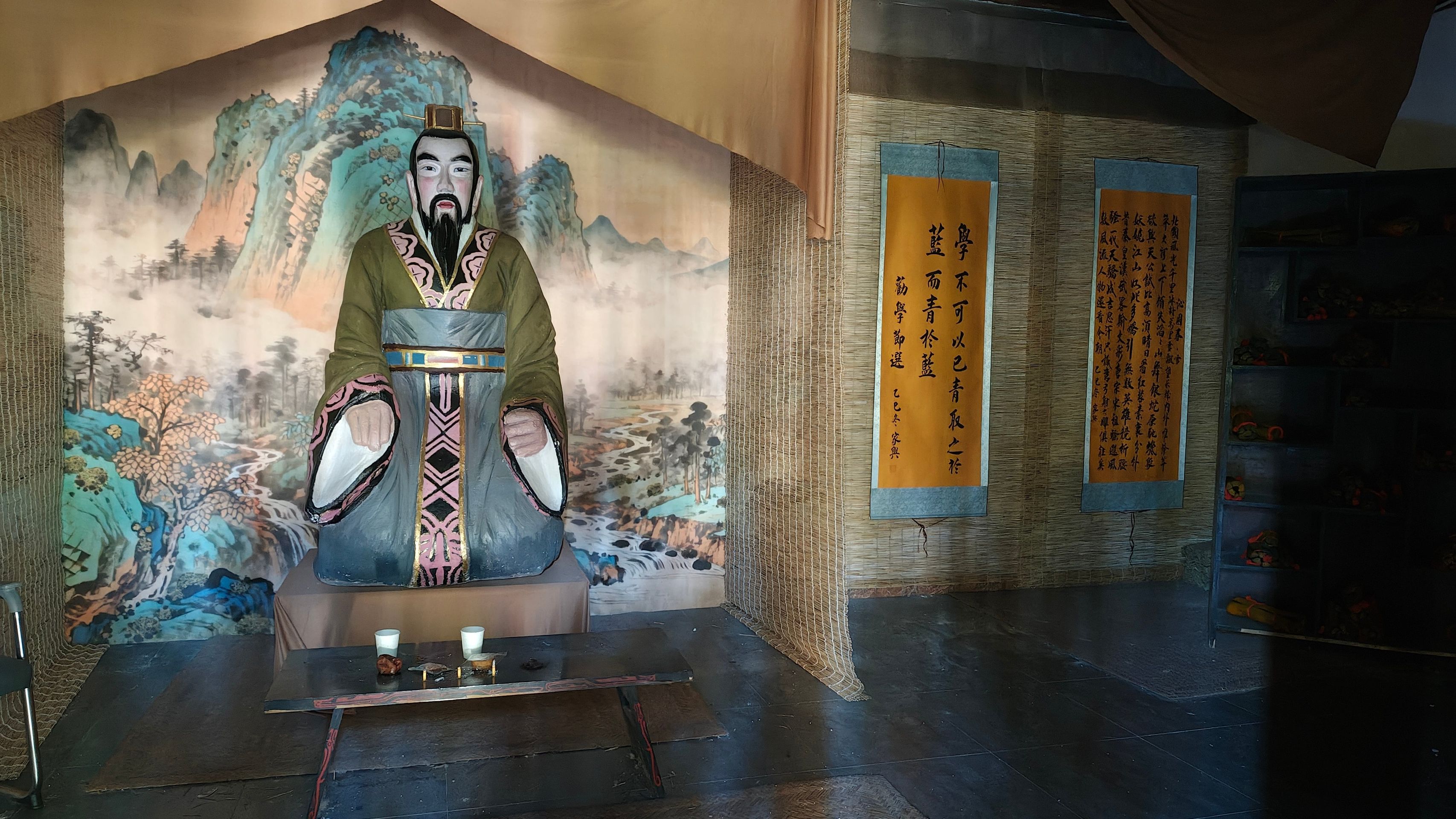
There is a building belonging to the Jixa Academy, which was strongly promoted during the Warring States period in the reign of Tian Wu (reigned from 374 BC to 357 BC) and had a significant influence on Confucianism.
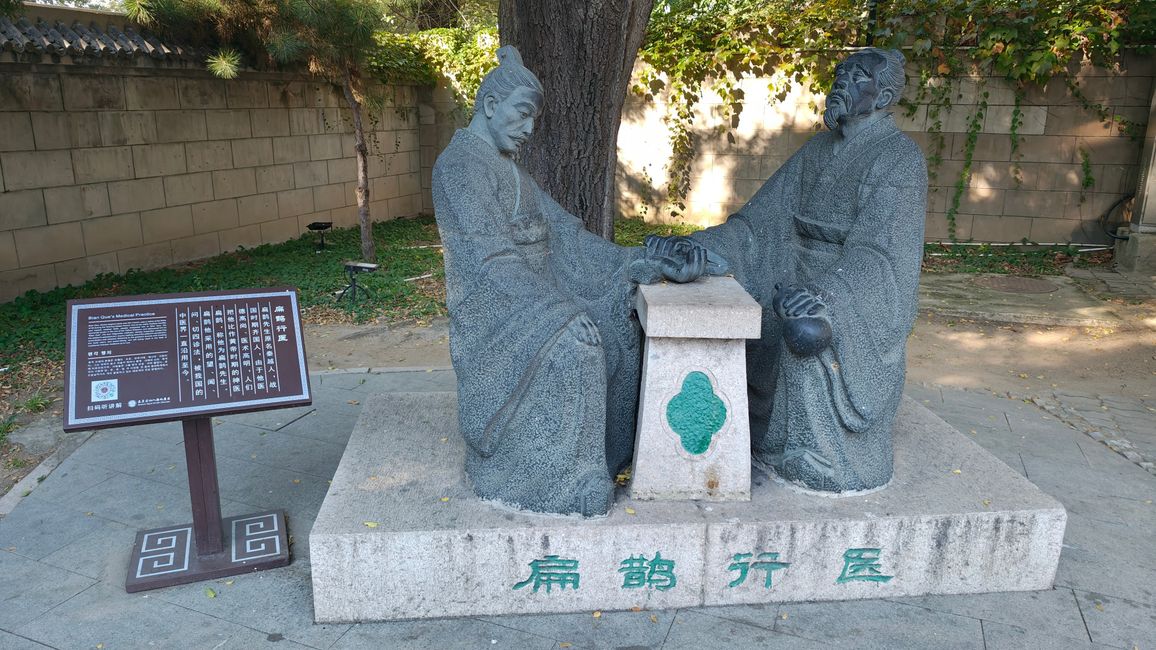
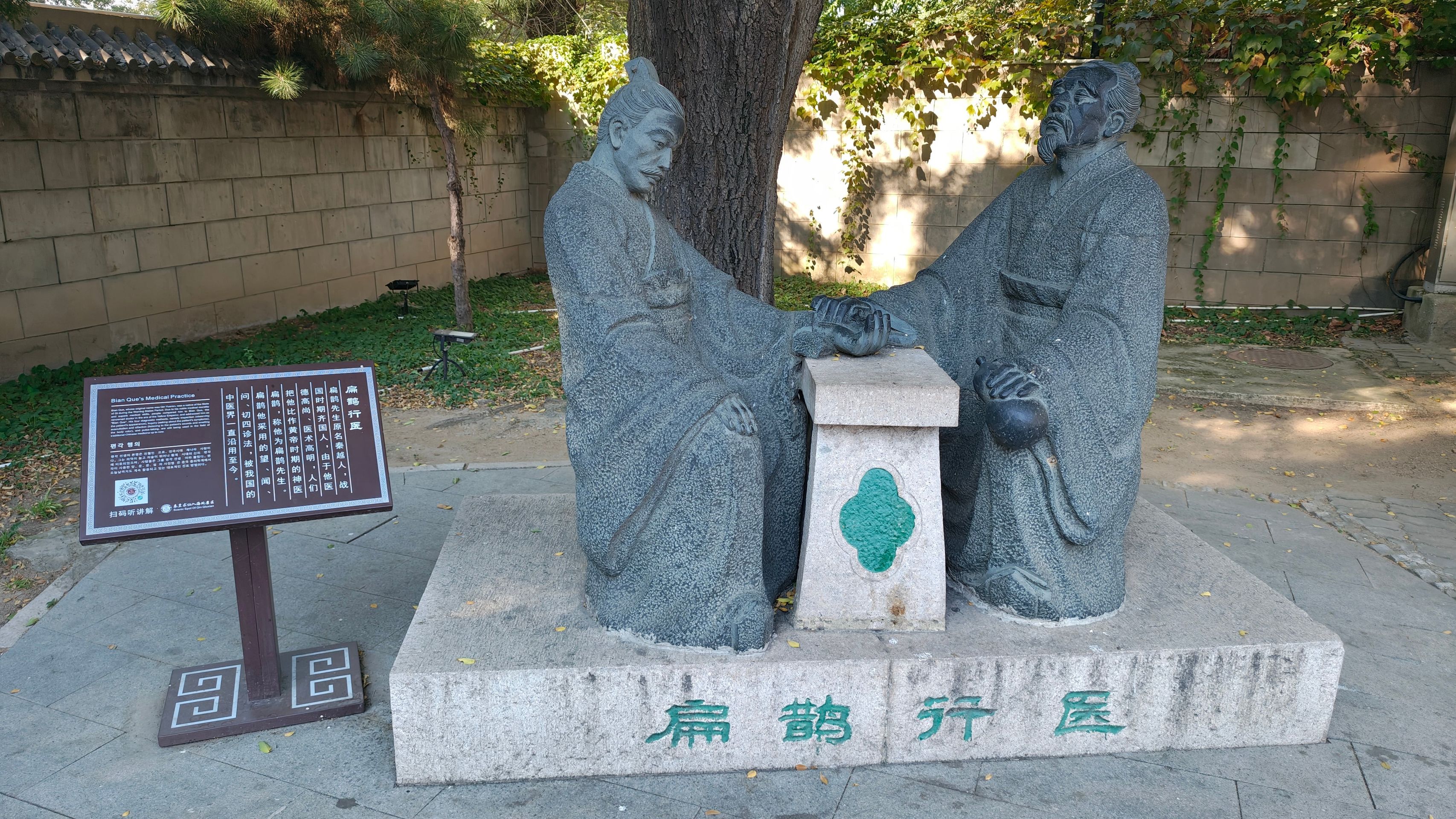
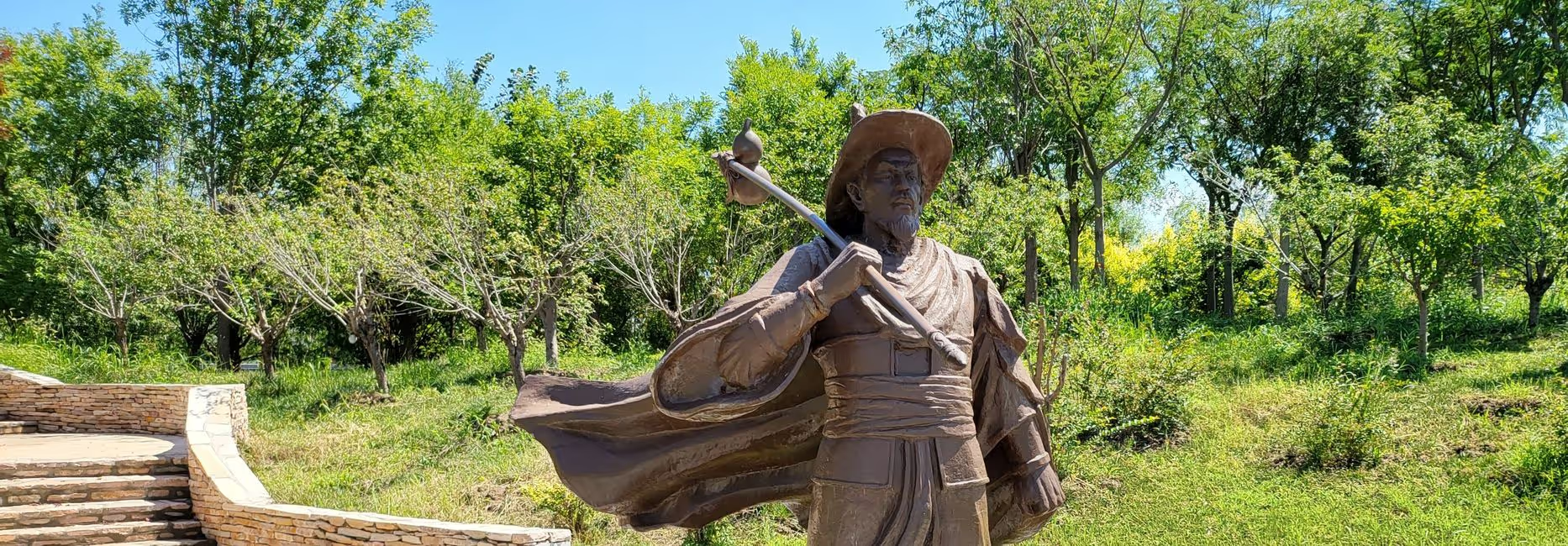
And lo and behold, we came across a statue of Dr. Bian Que, which bears a resemblance to the statue in the hospital in Cangzhou. Of course, out of respect for my wife, I didn't mention this, as her initial assumption pointed to a different person. See my blog post China: At Ease: A Visit to the Hospital.
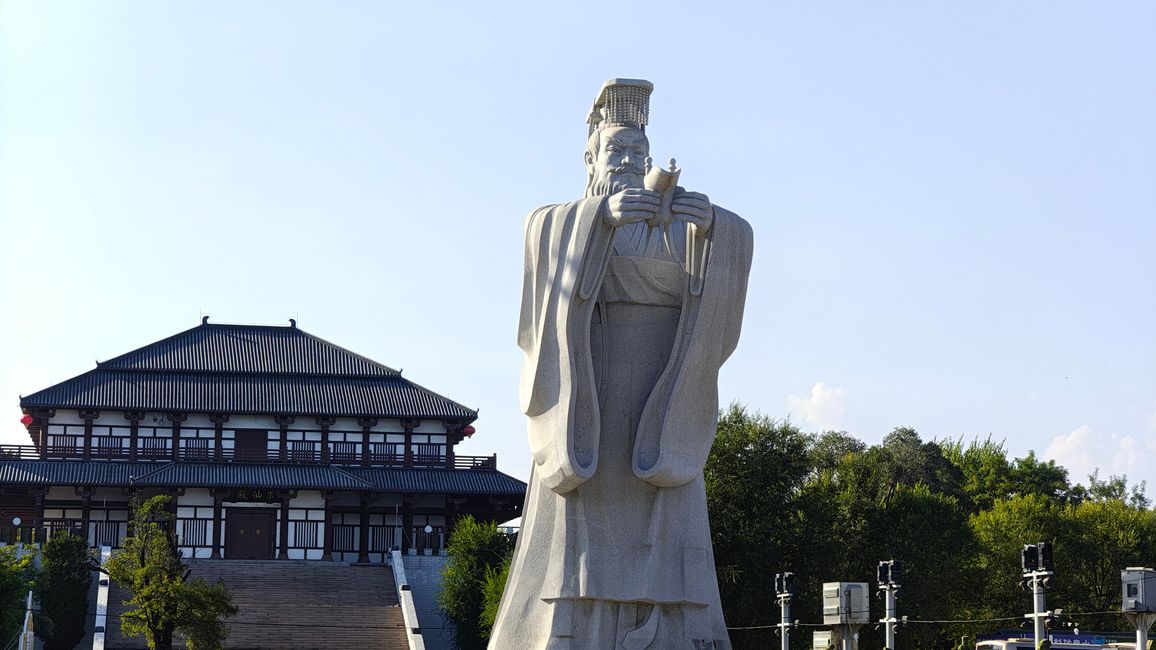
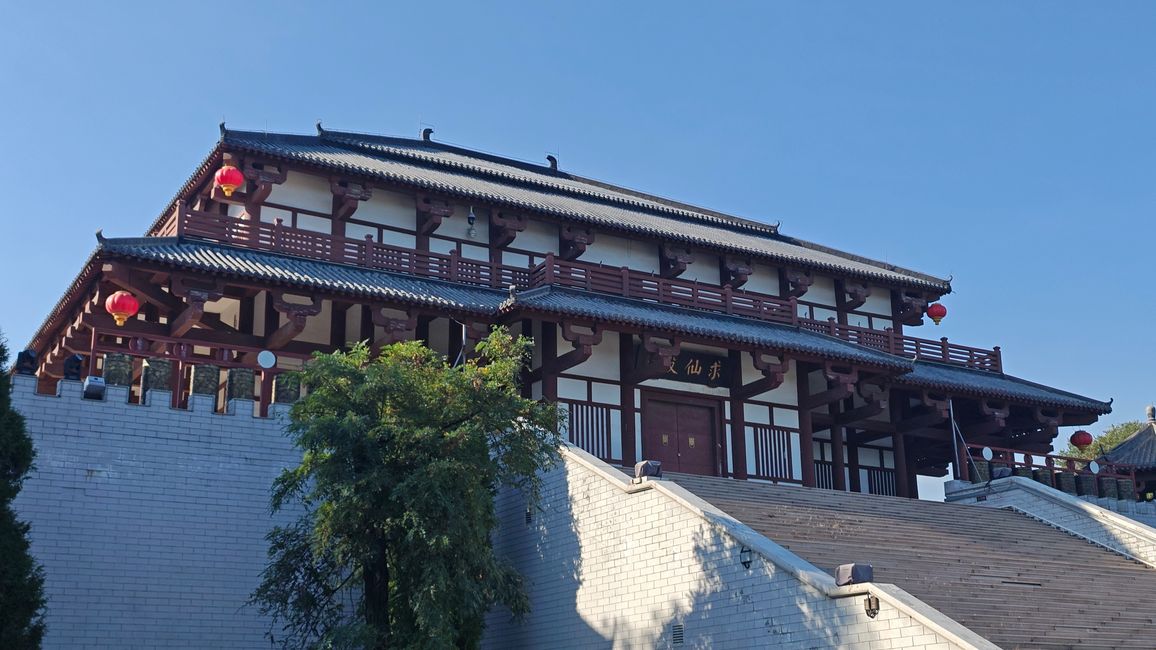
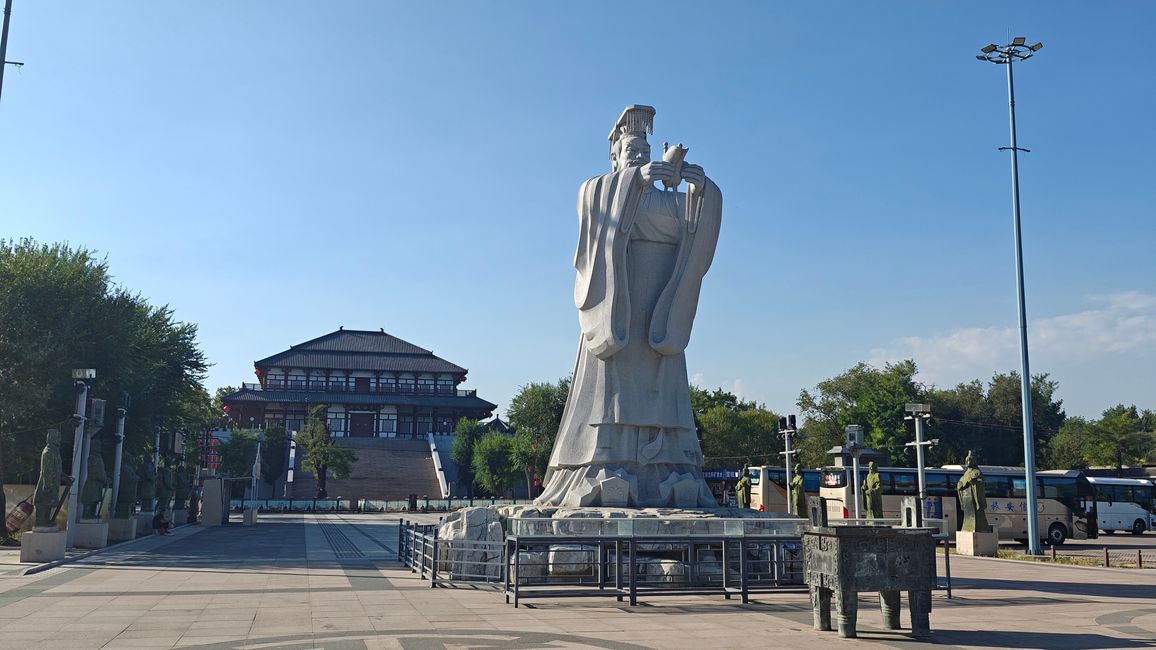
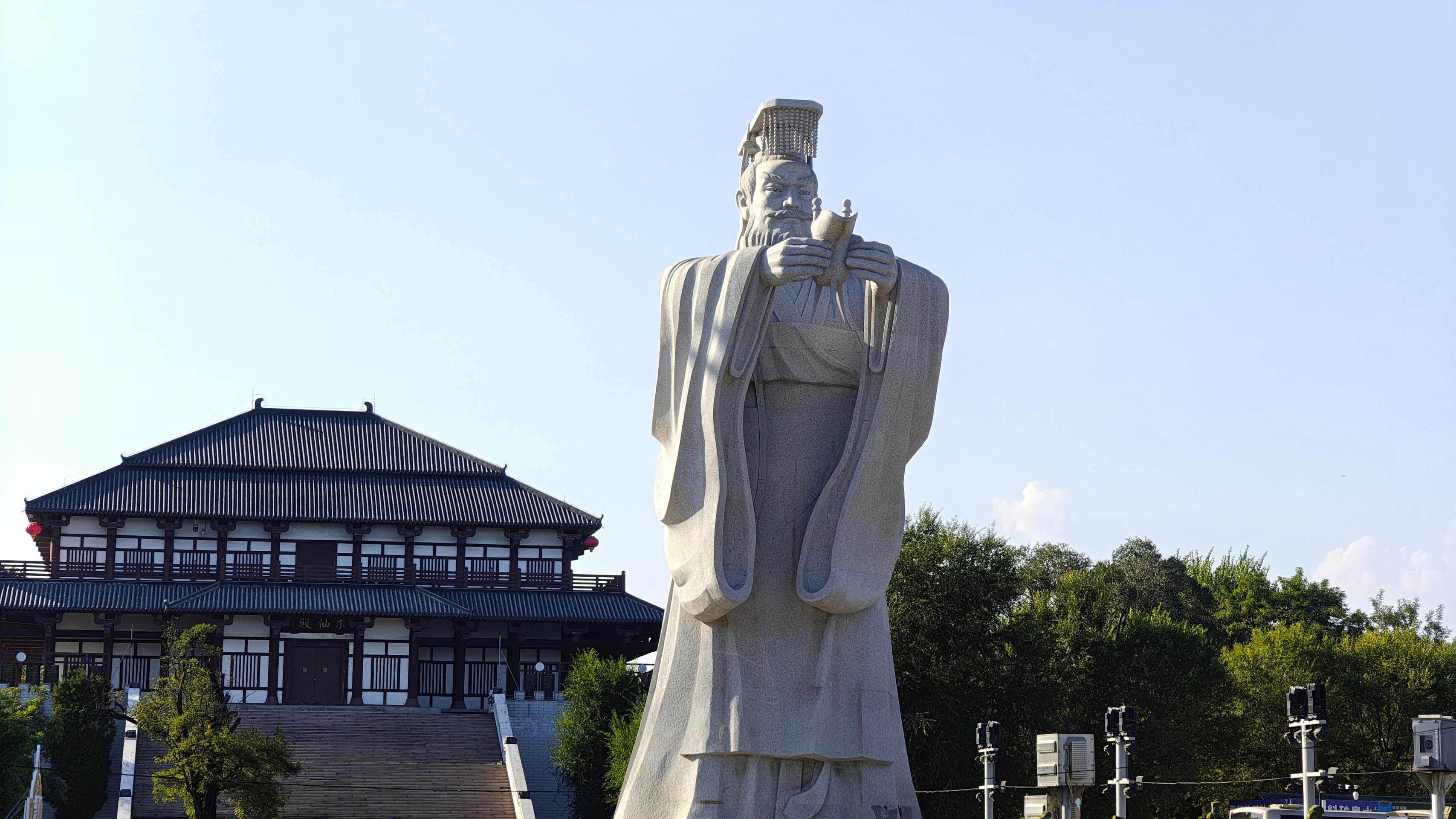
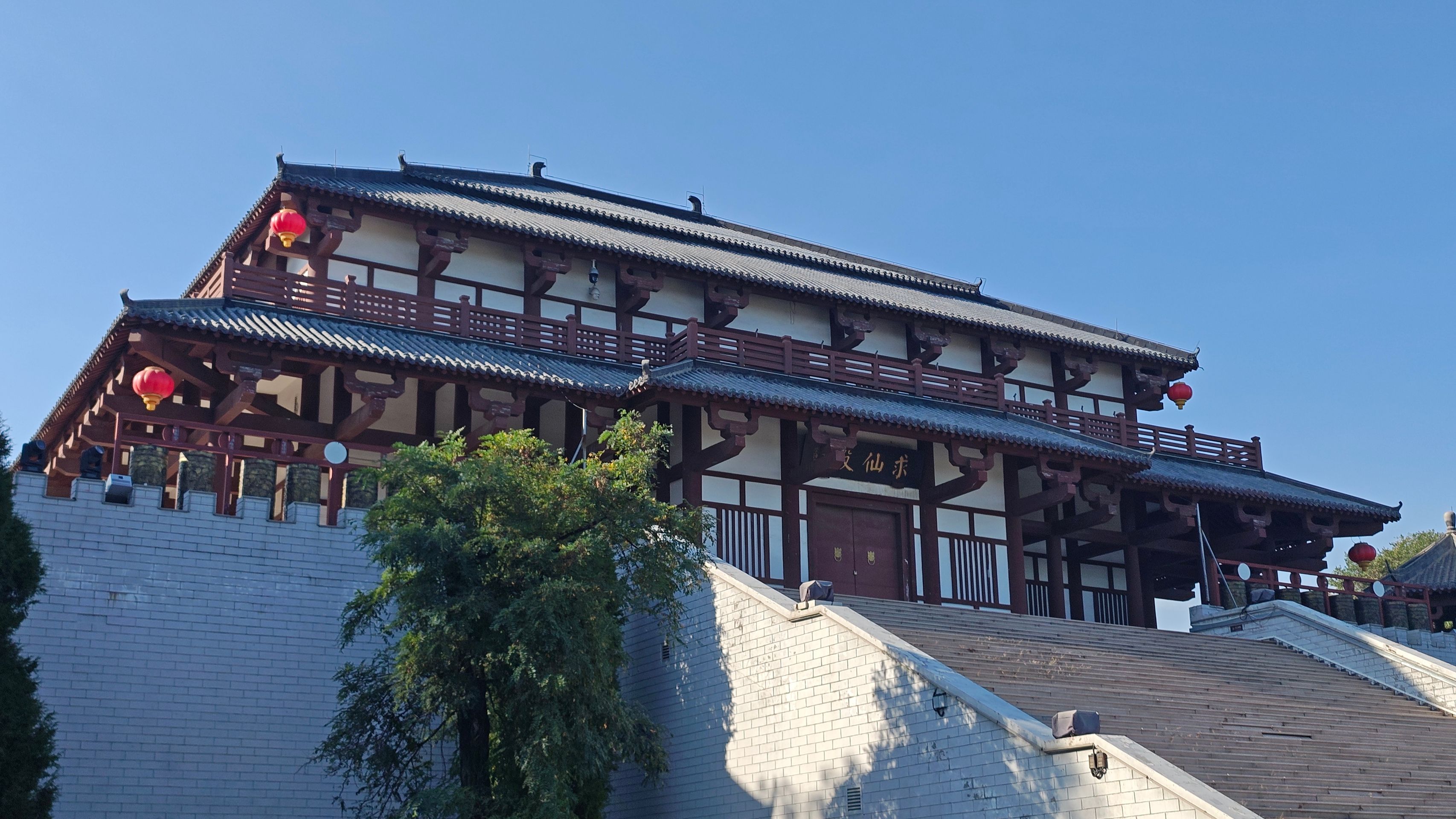
Finally, we arrive at the Qiuxian Palace, which has no historical function and only serves as a backdrop to commemorate the sea episode of the first emperor of China.
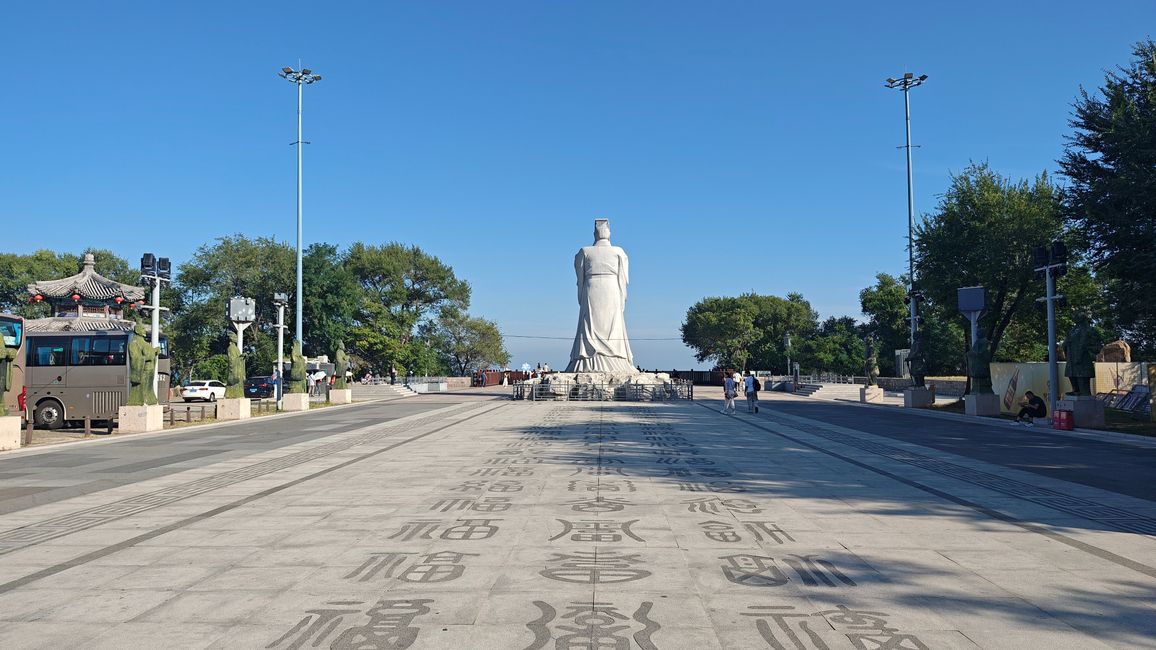
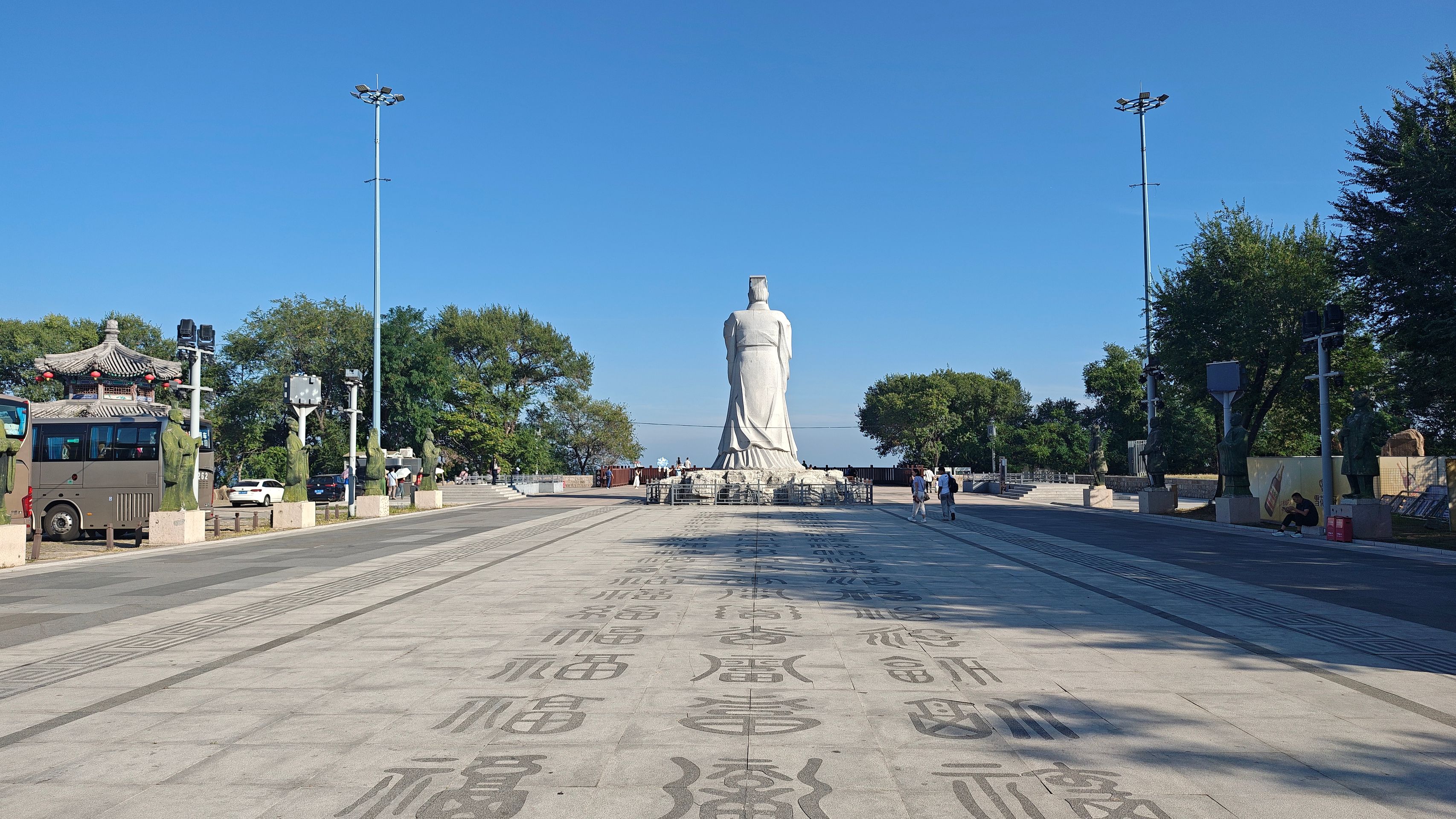
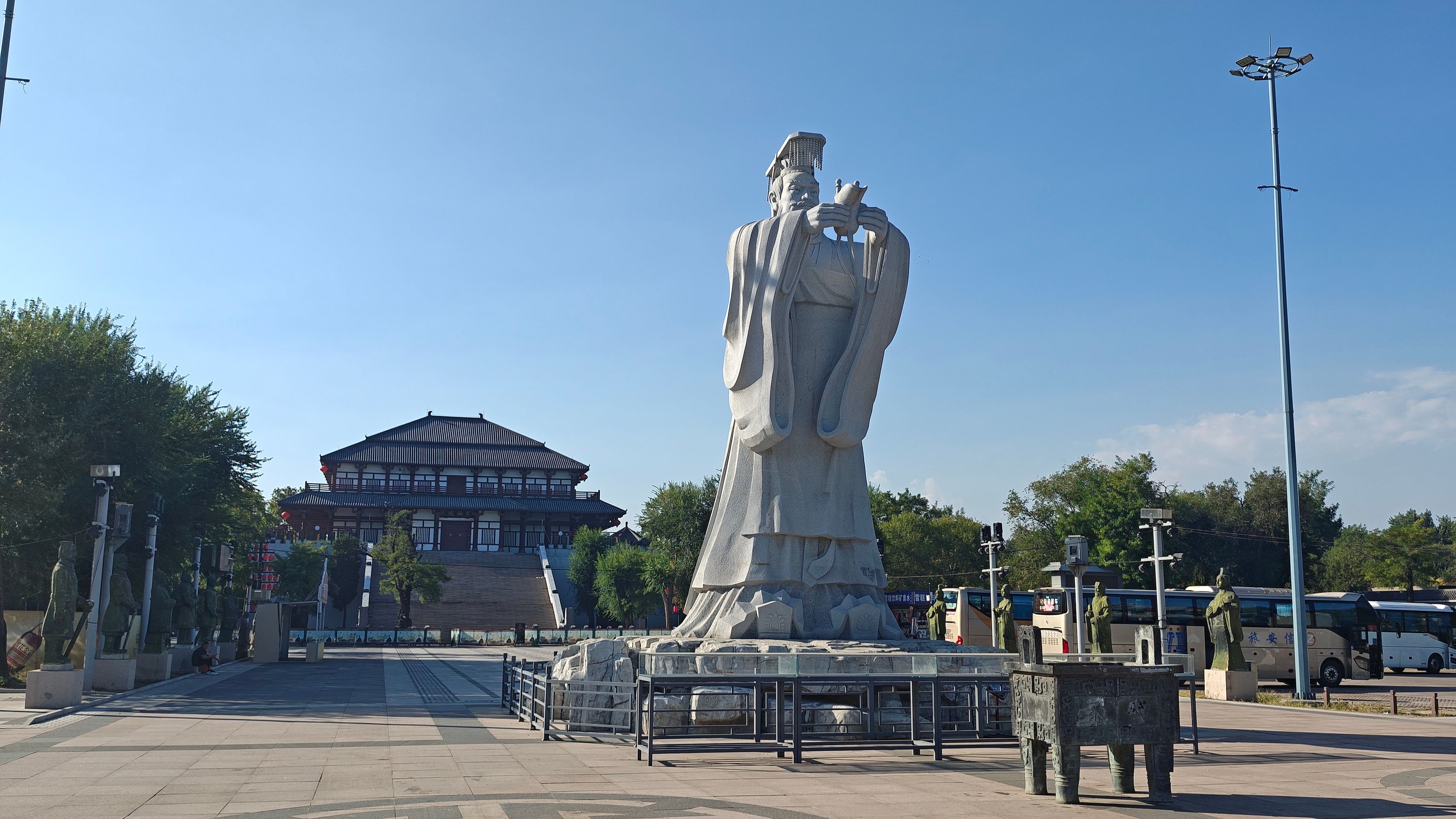
And he stands there as a gigantic statue with outstretched arms towards the sea. He holds a container in his hands, which is surely meant to symbolize the search for the elixir of immortality.
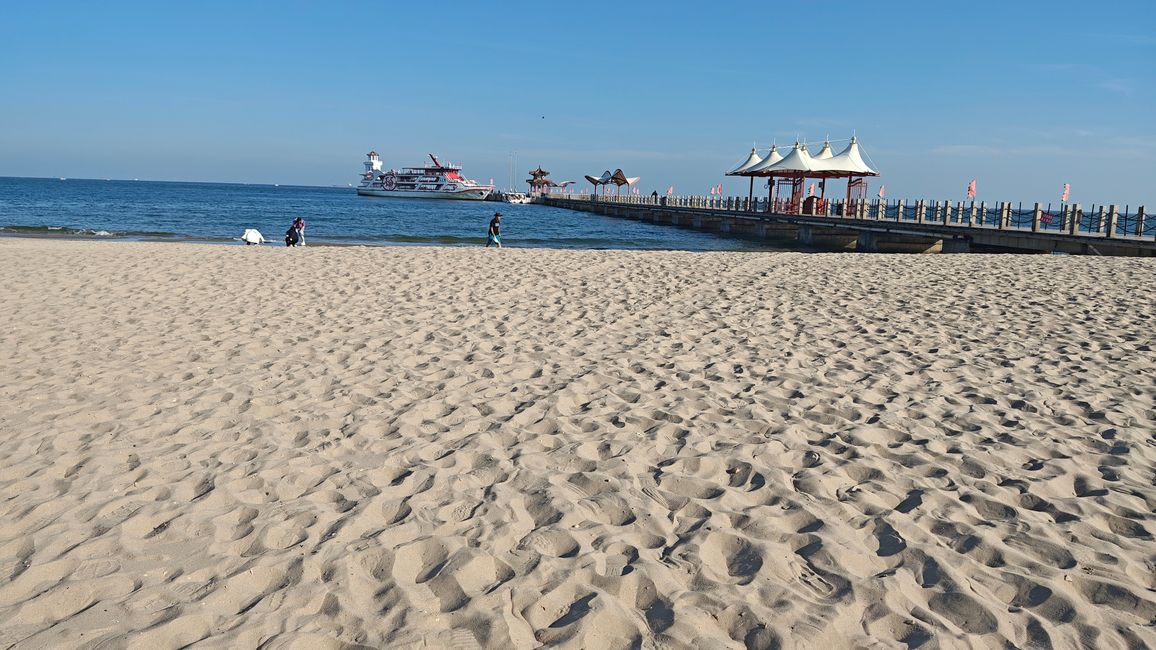
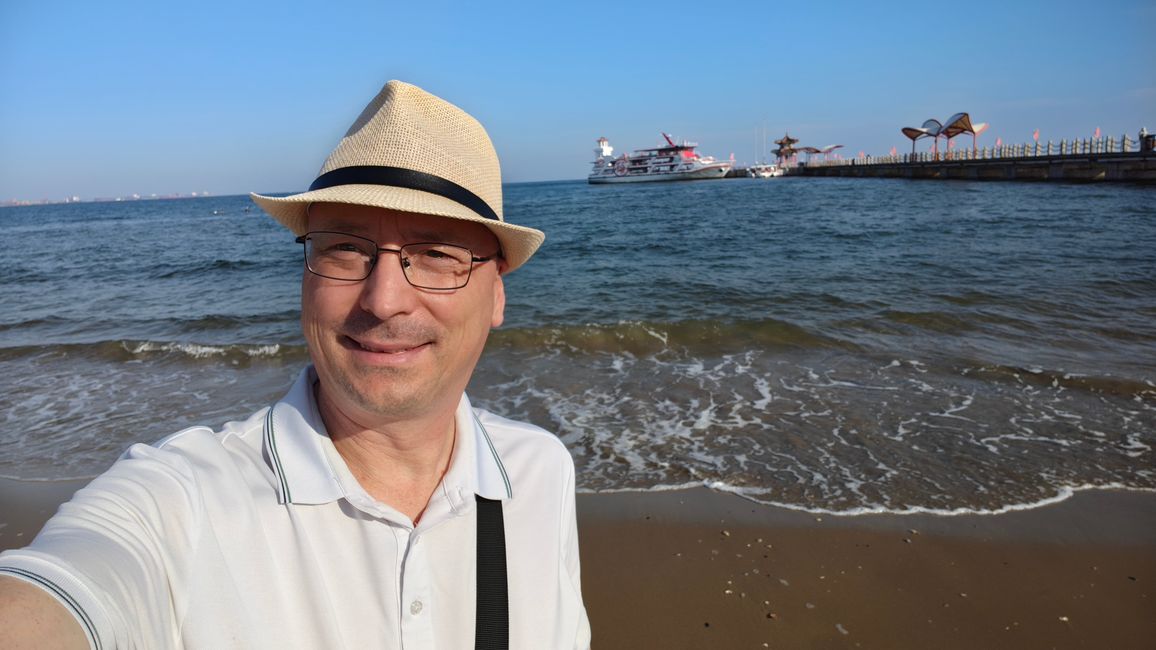
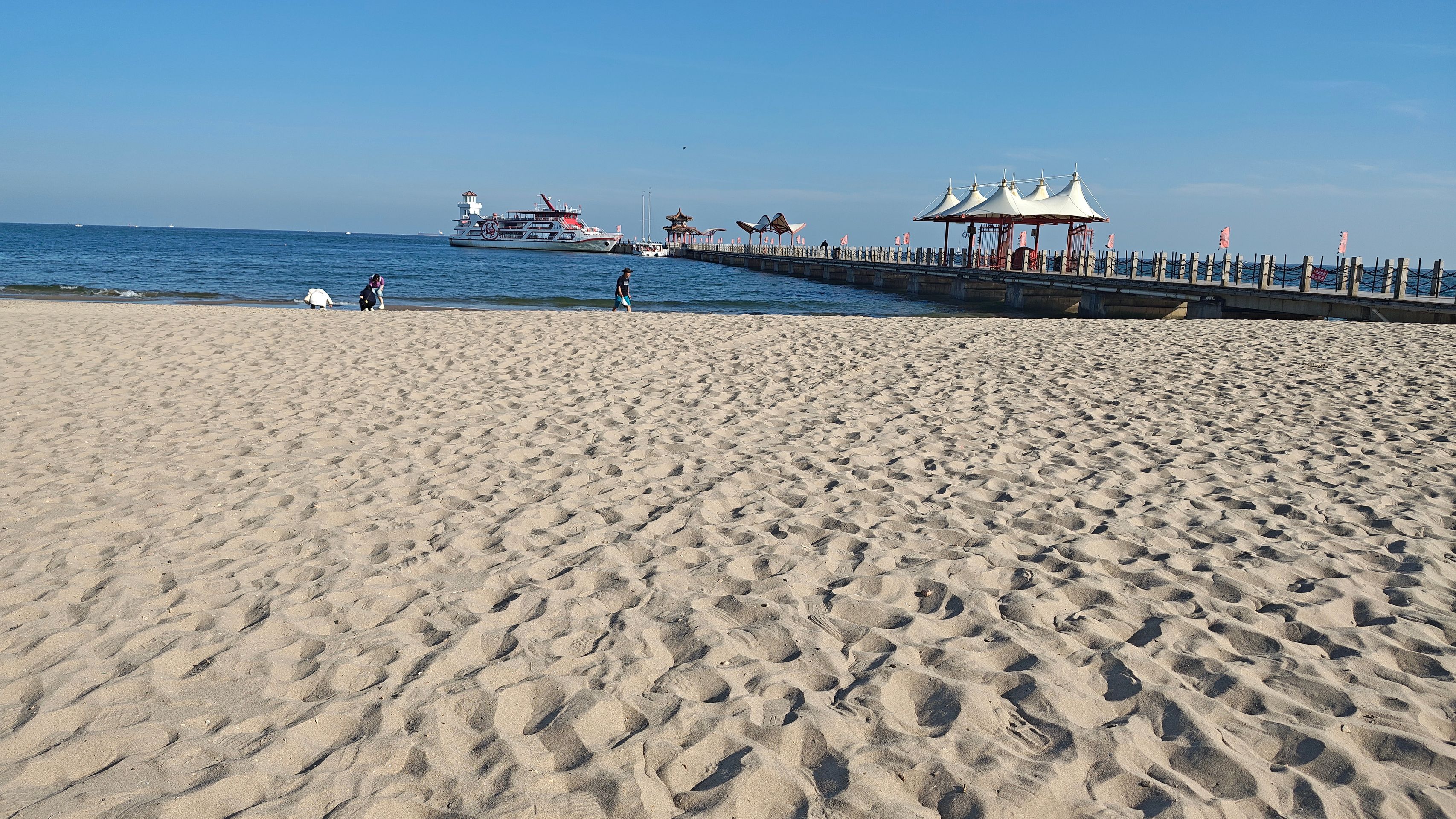
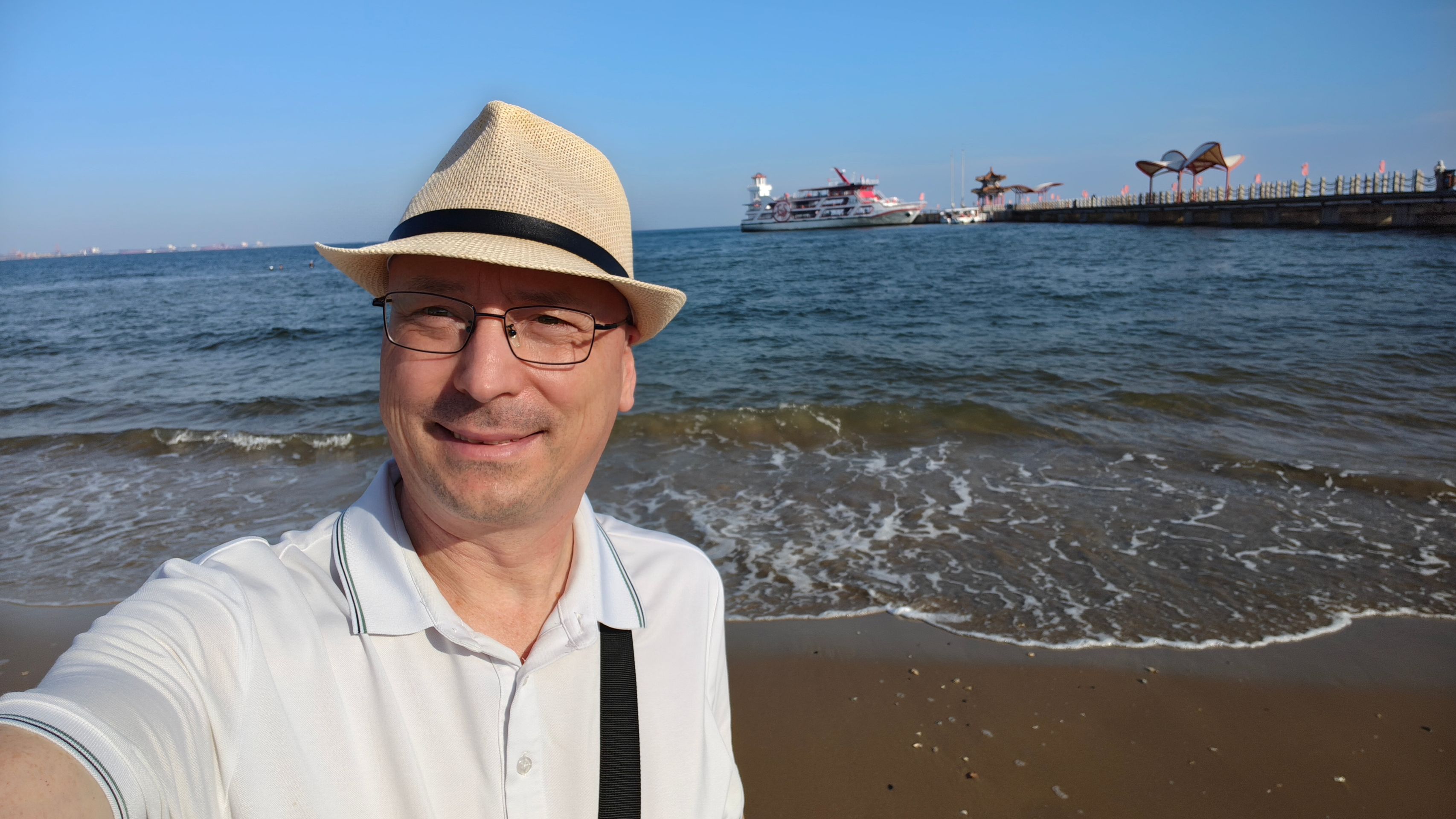
We now look out at the ocean, descend the stairs, are ushered through souvenir stalls, and stand on the sand at the beach of the Yellow Sea. It's the first time I've felt the Yellow Sea wash over my feet.
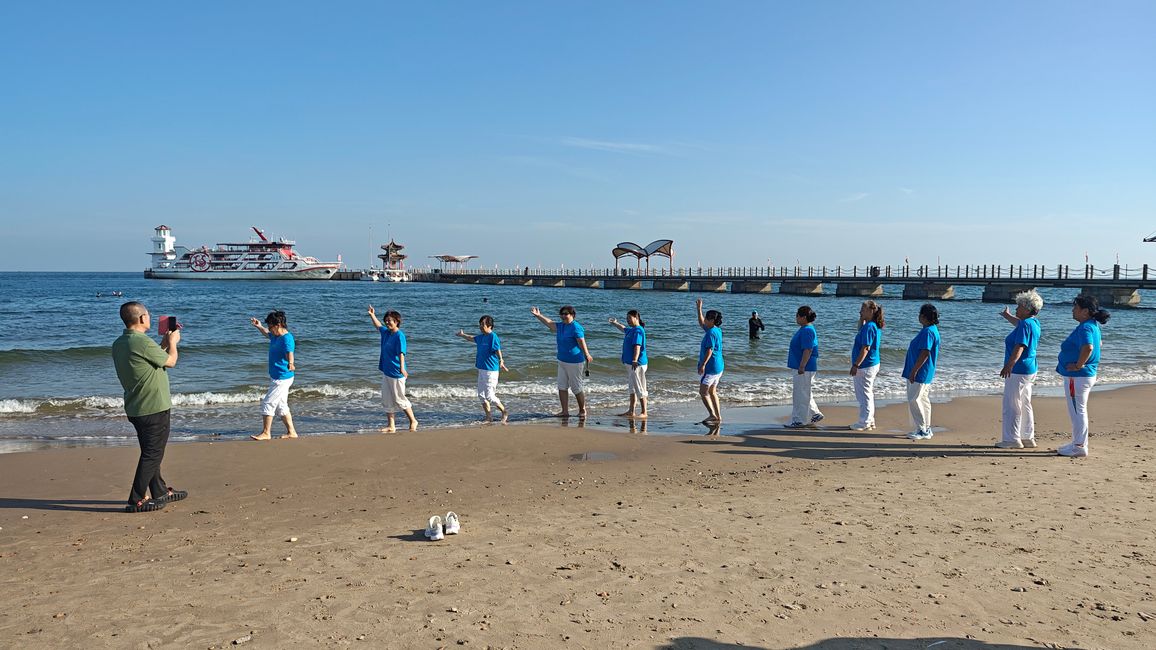
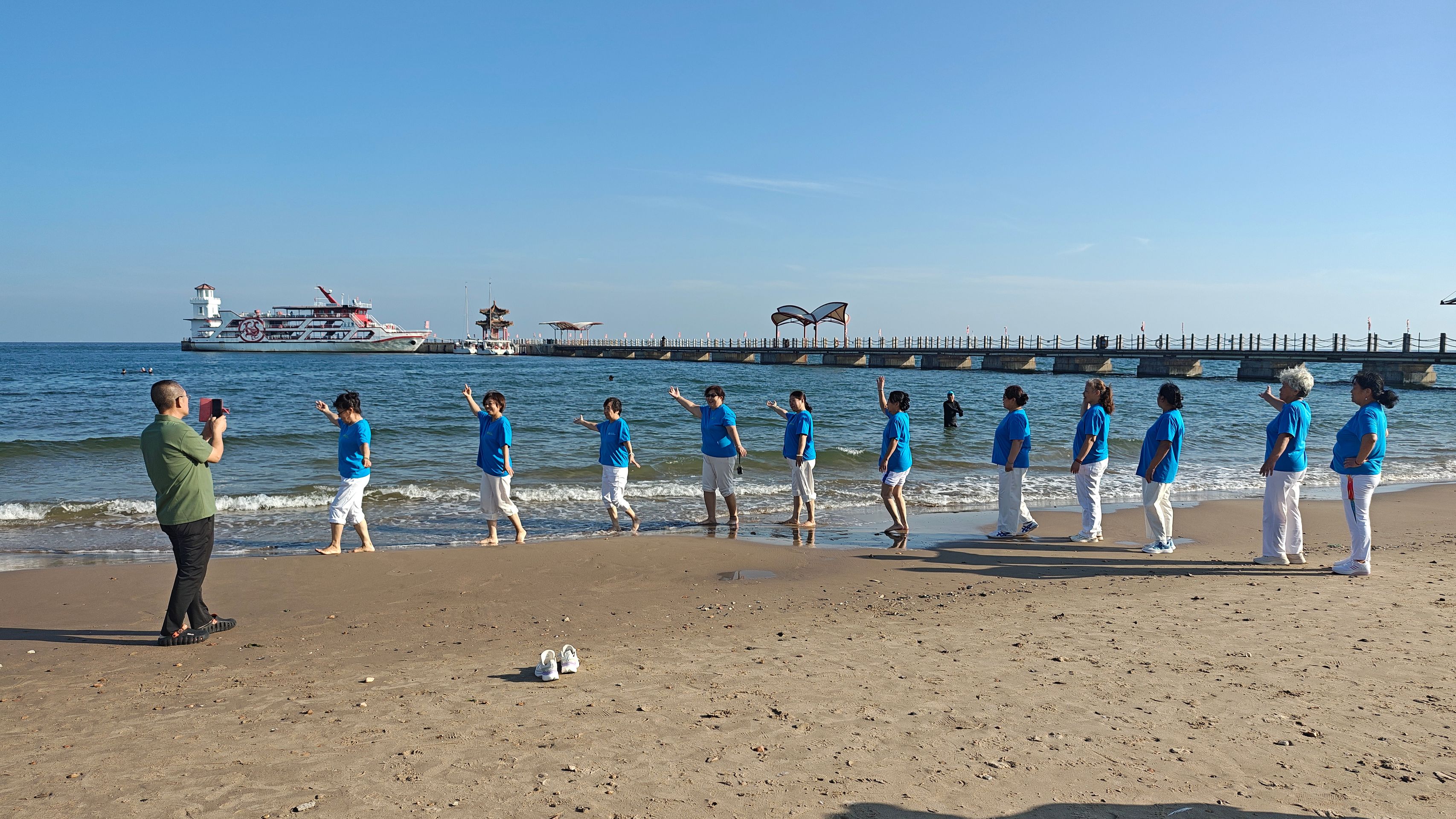
We see swimmers, anglers, and divers. A group of seniors in blue T-shirts are probably recording a TikTok video.
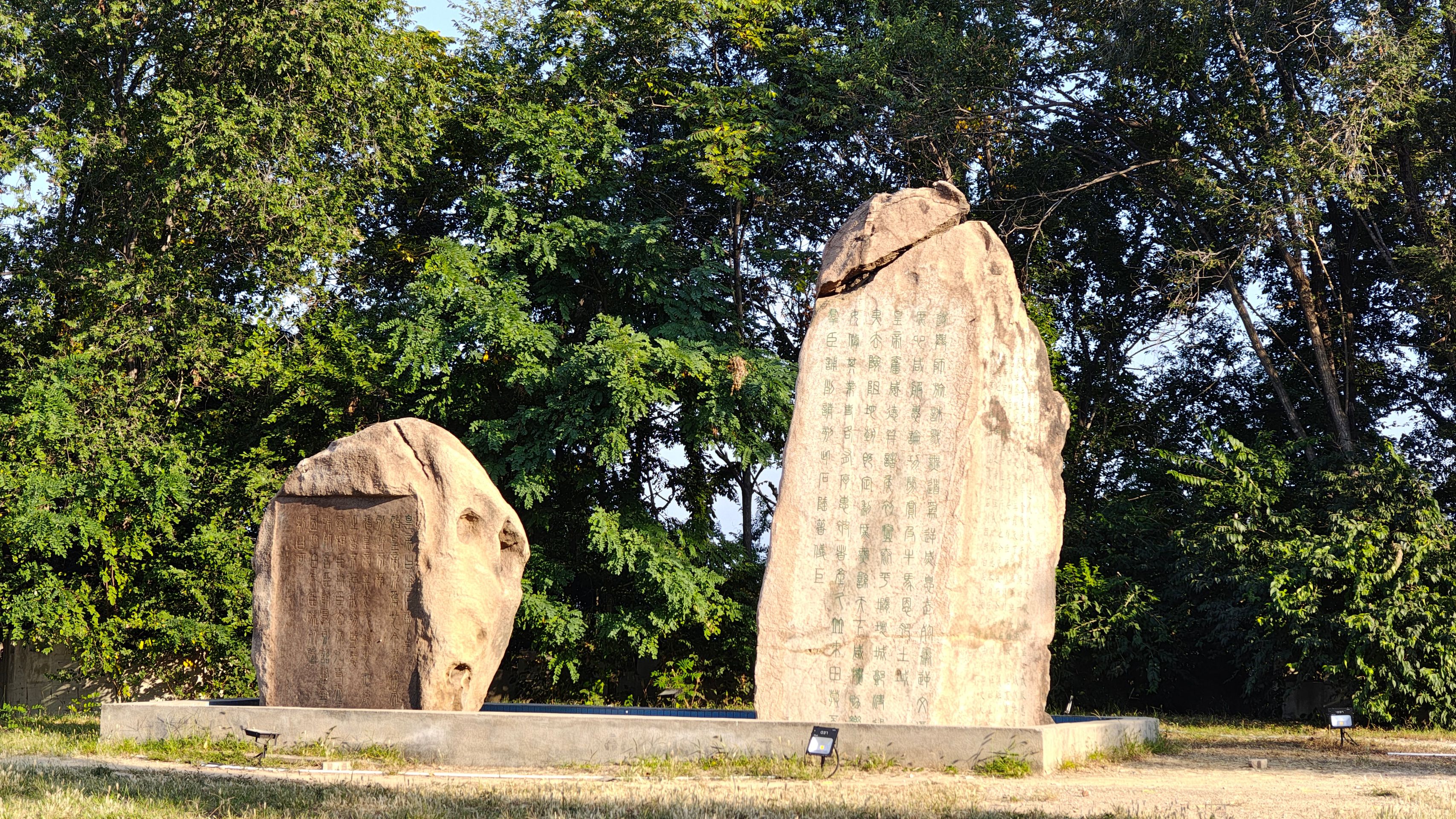
We strolled along the beach for a while and then returned to the park, passing a final stele that summarizes everything I've shared about the history of this place in this blog post. It was erected in 1991 when the park was founded. This custom of "historical words carved in stone" is still practiced in China today, and I personally find it a wonderful tradition.