Already in the Iron Age, people built at the site “Old Sarum”. Old Sarum
Later it was settled by Saxons and Normans.
Old Sarum In 1086, the lords of England had to swear their allegiance to William the Conqueror in the Norman castle that was built here.
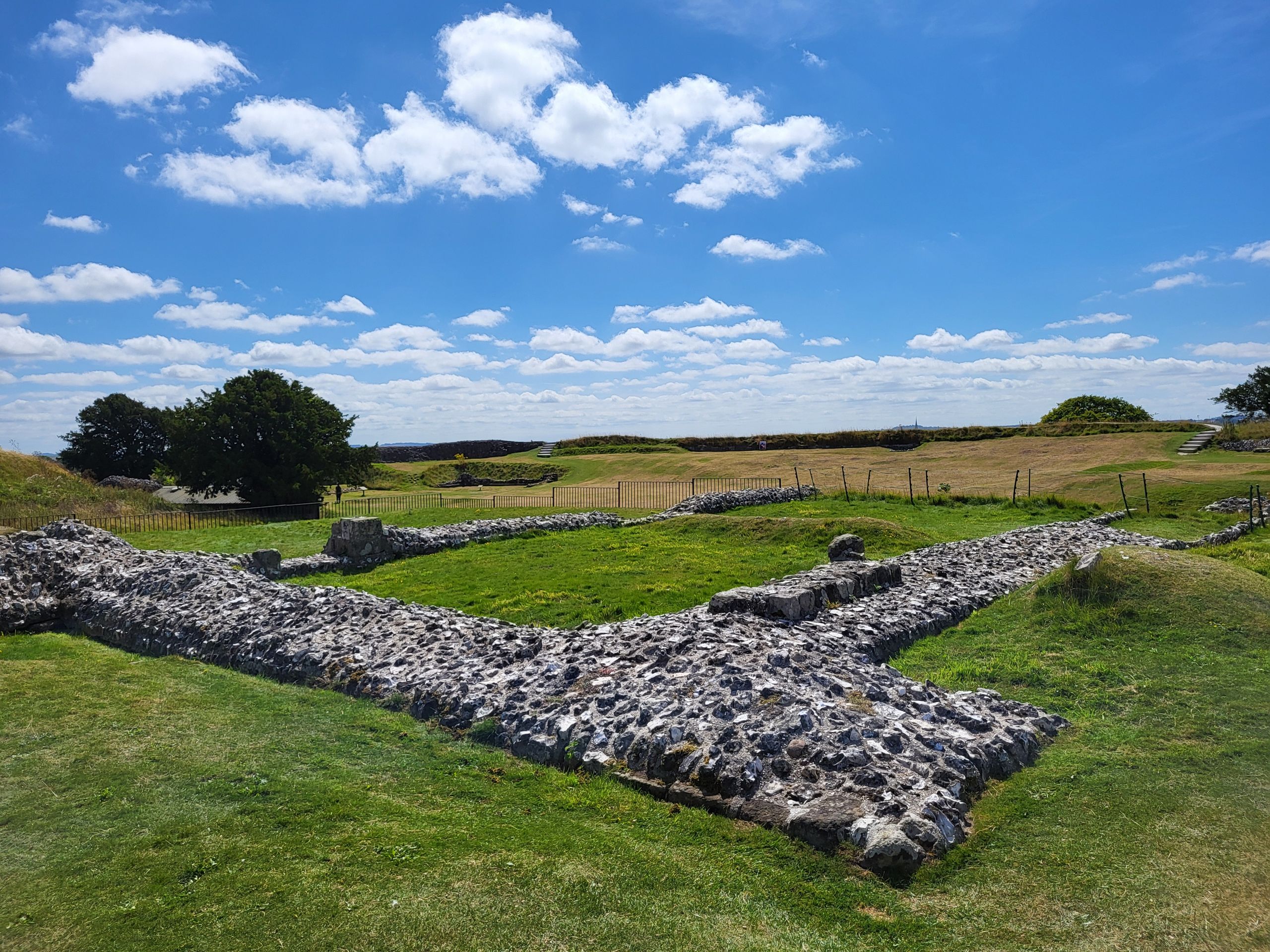
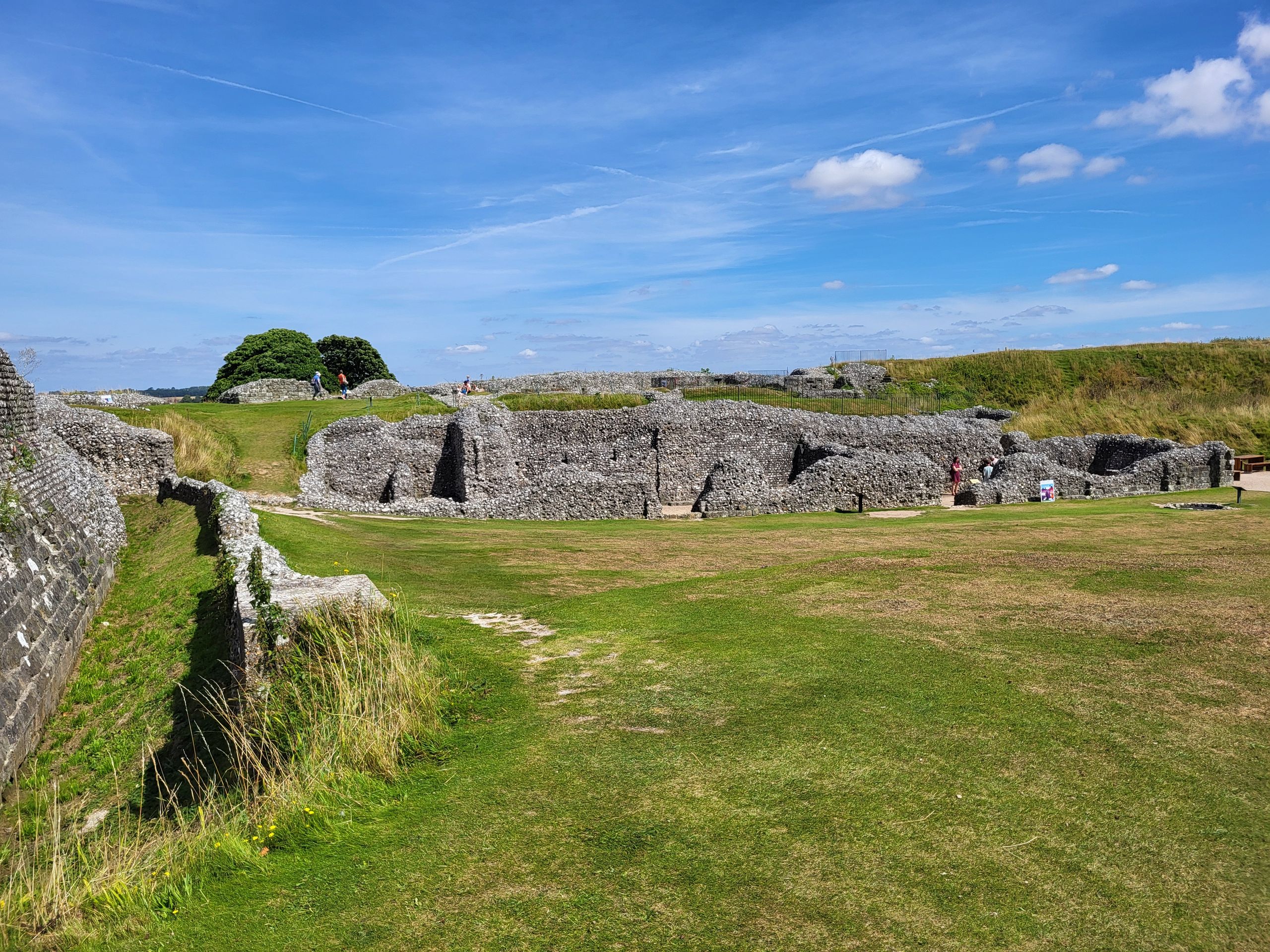
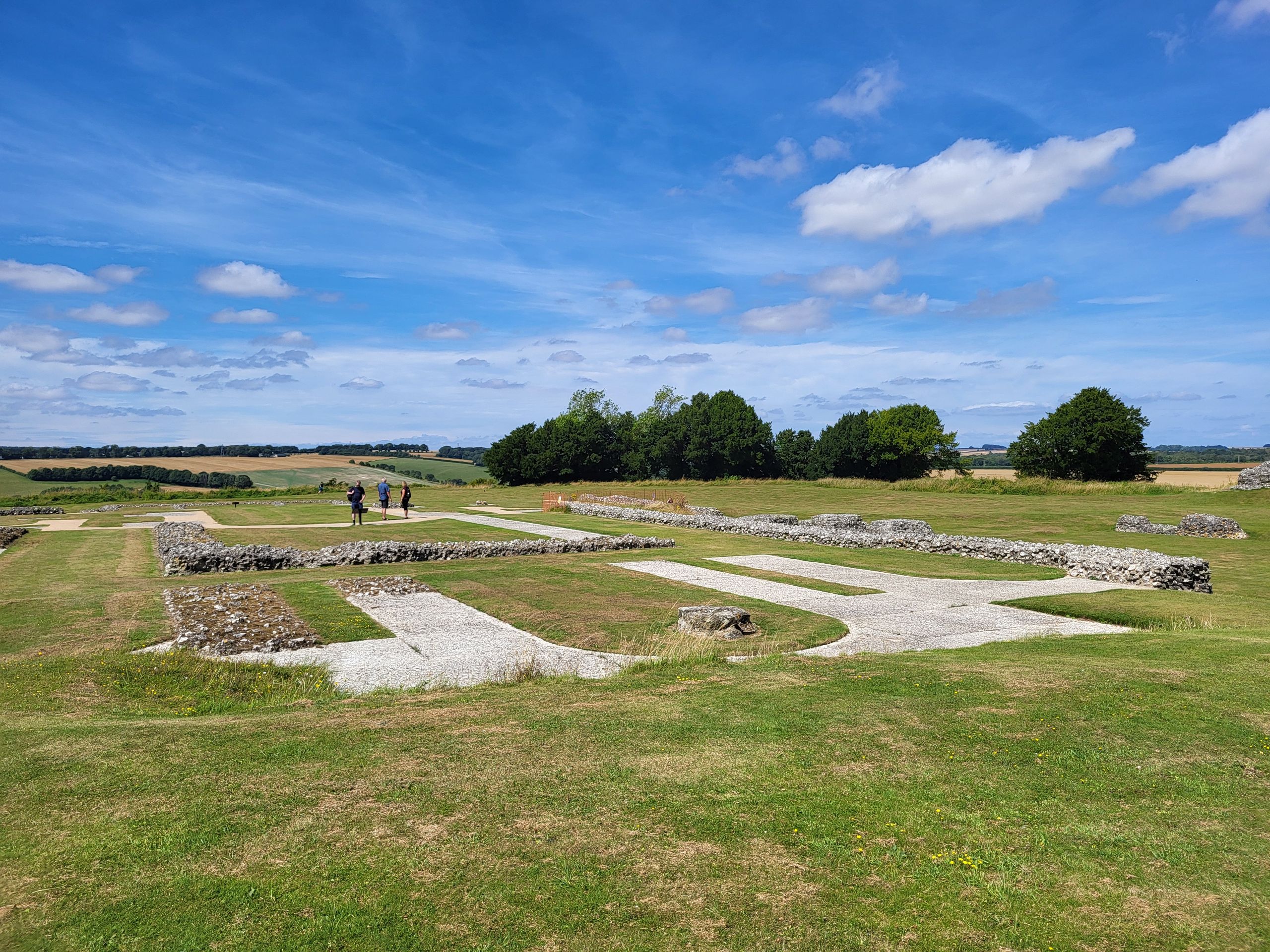
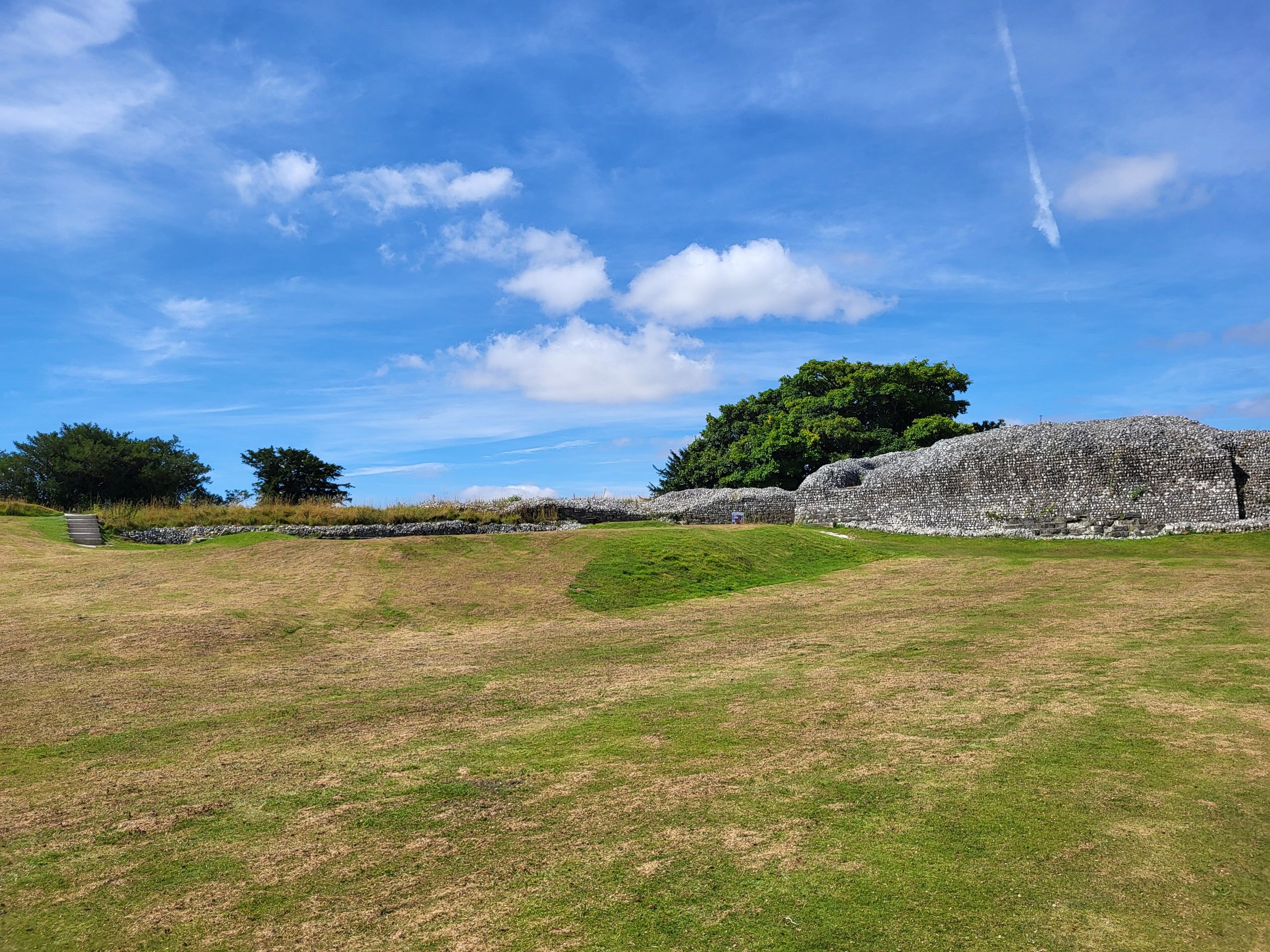
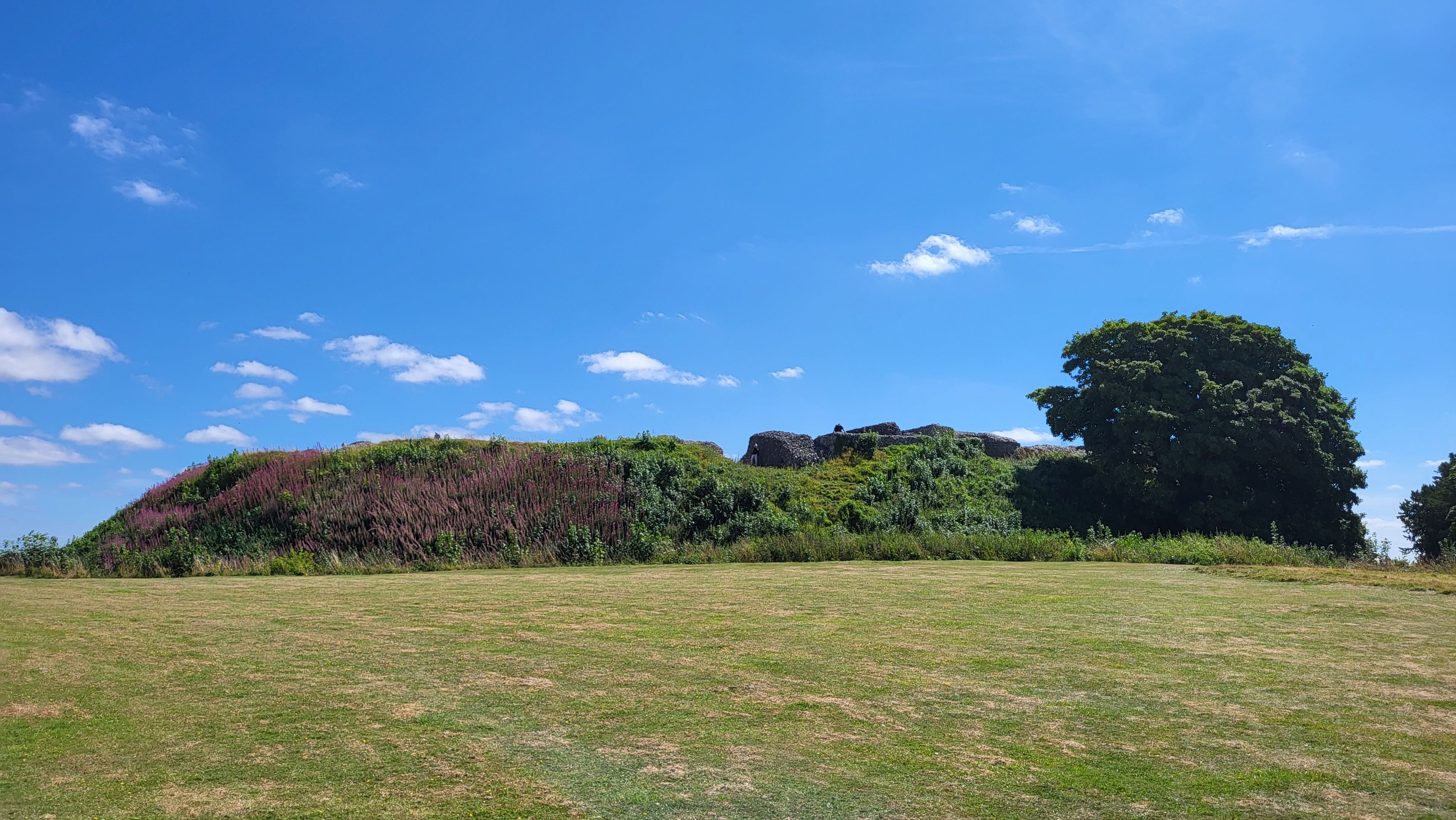
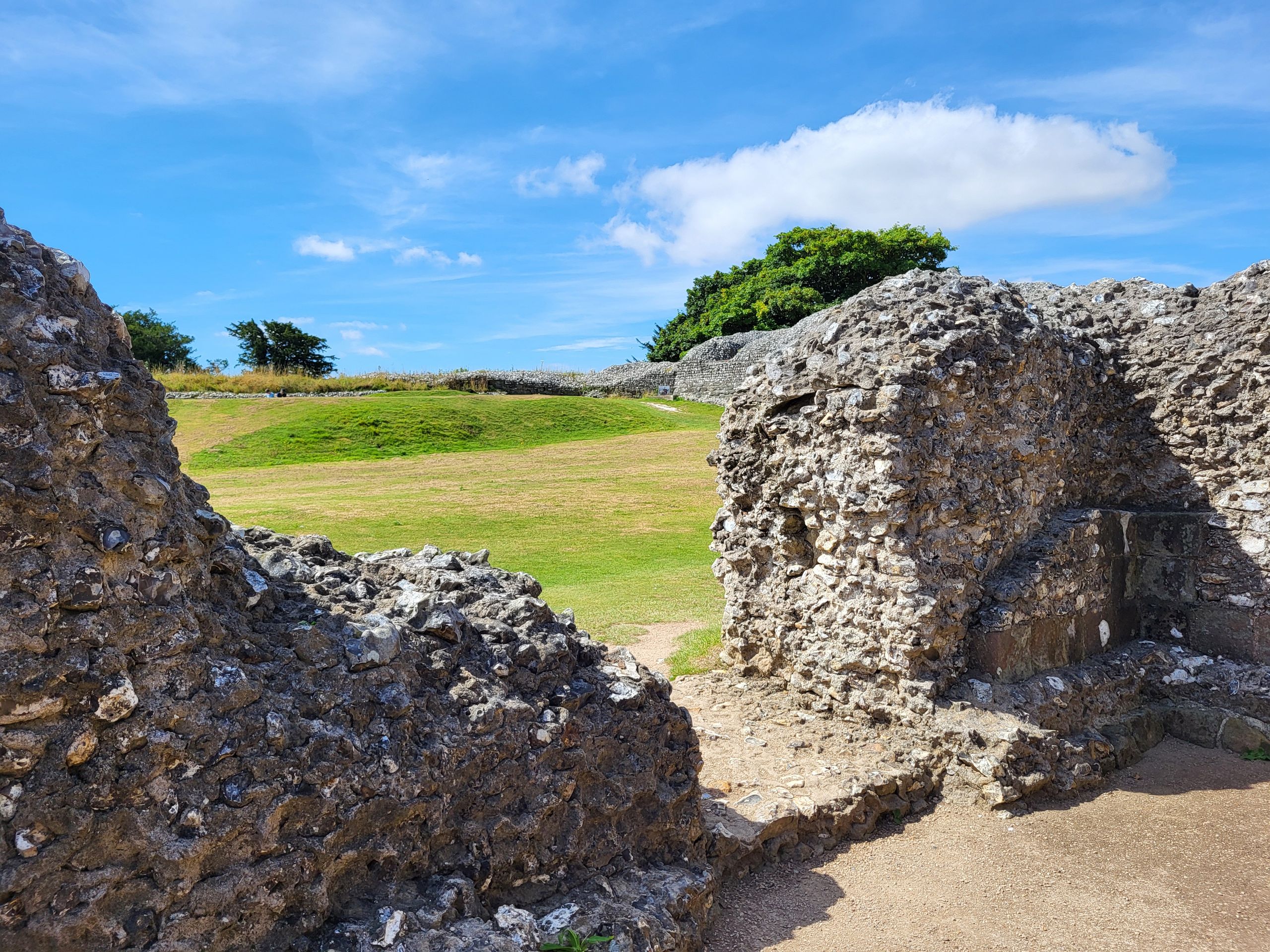
Old Sarum Today, not much remains of the former castle and the royal palace.
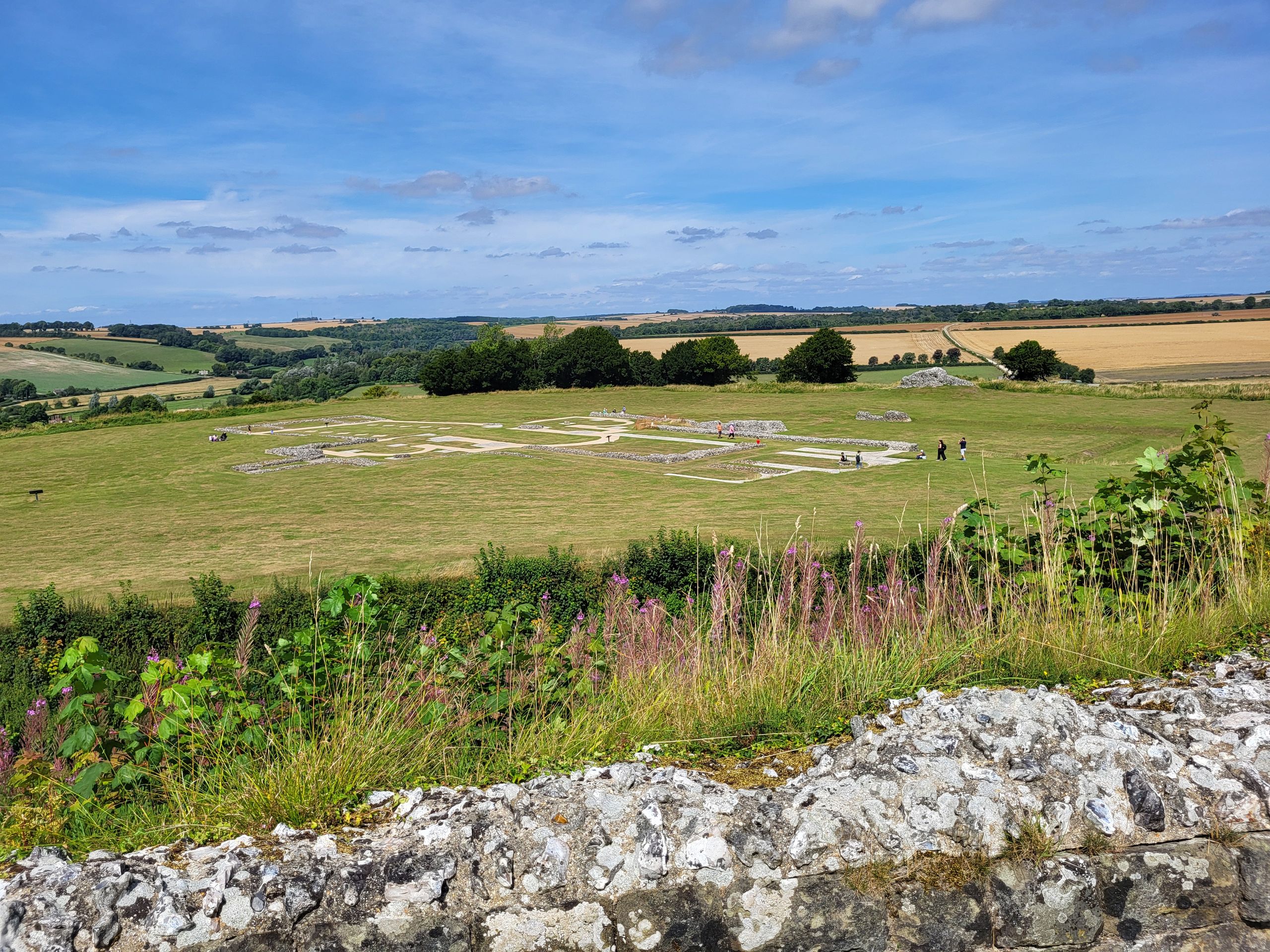
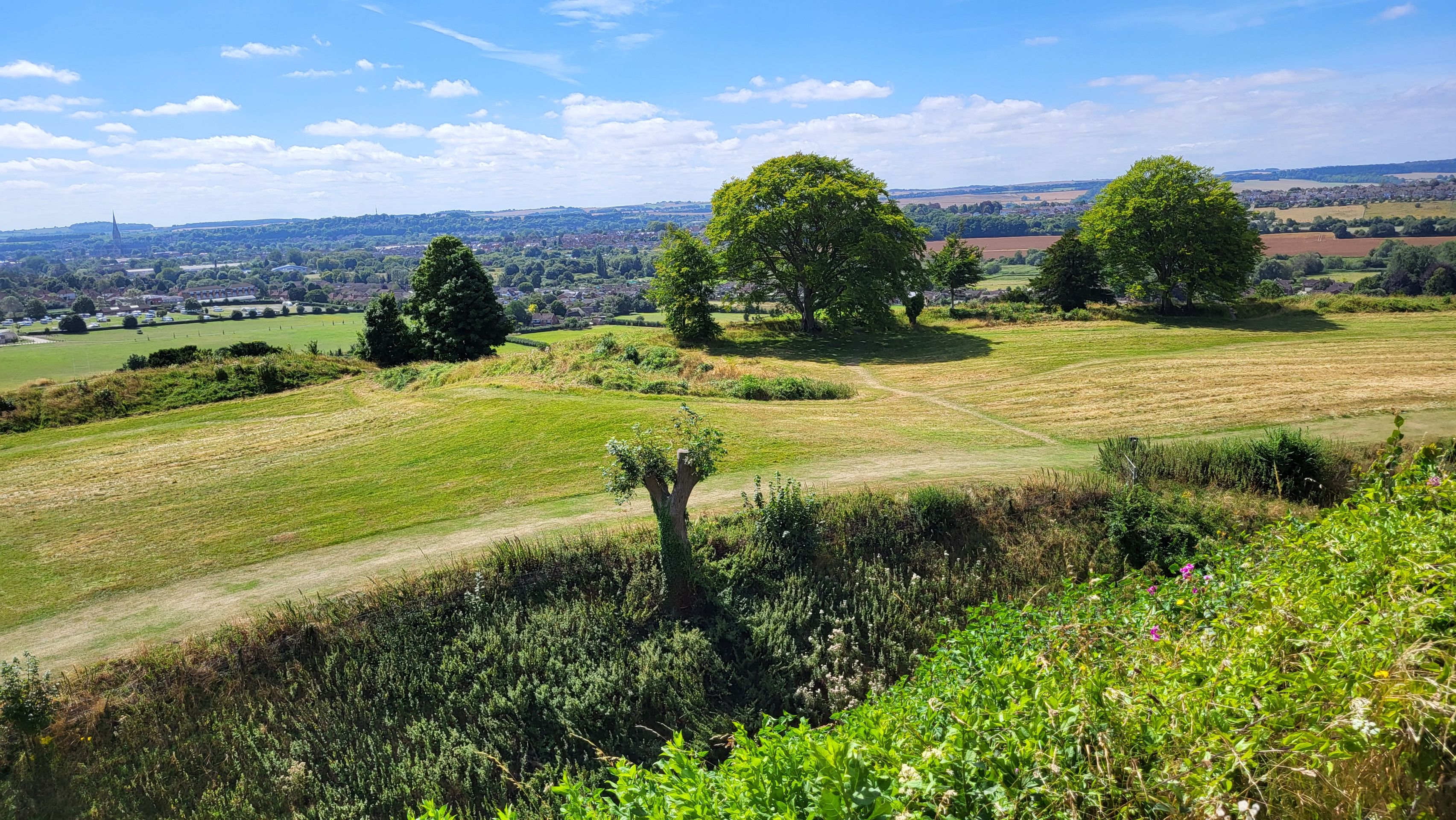
Old Sarum However, the ruin is beautifully situated on a hill and offers a nice view of the surroundings.
Old Sarum Even the foundation walls of the former Norman cathedral were (partially reconstructed) easily visible from the castle.
View of the former Cathedral Old Sarum In the 13th century, a new site with a cathedral was established in the valley, which later became the city of Salisbury.
Cathedral Old Sarum This initiated the decline of Old Sarum, which lost significance and gradually fell into decay.
Old Sarum At the entrance, we met a very diligent staff member from “English Heritage,” who offered us an upgrade of our only 16-day valid “Oversea Pass.” This allows us to see a few more attractions for free and also park there for free. Additionally, the validity has been extended to one year, so we are considering visiting the south of England again next year…
Old Sarum
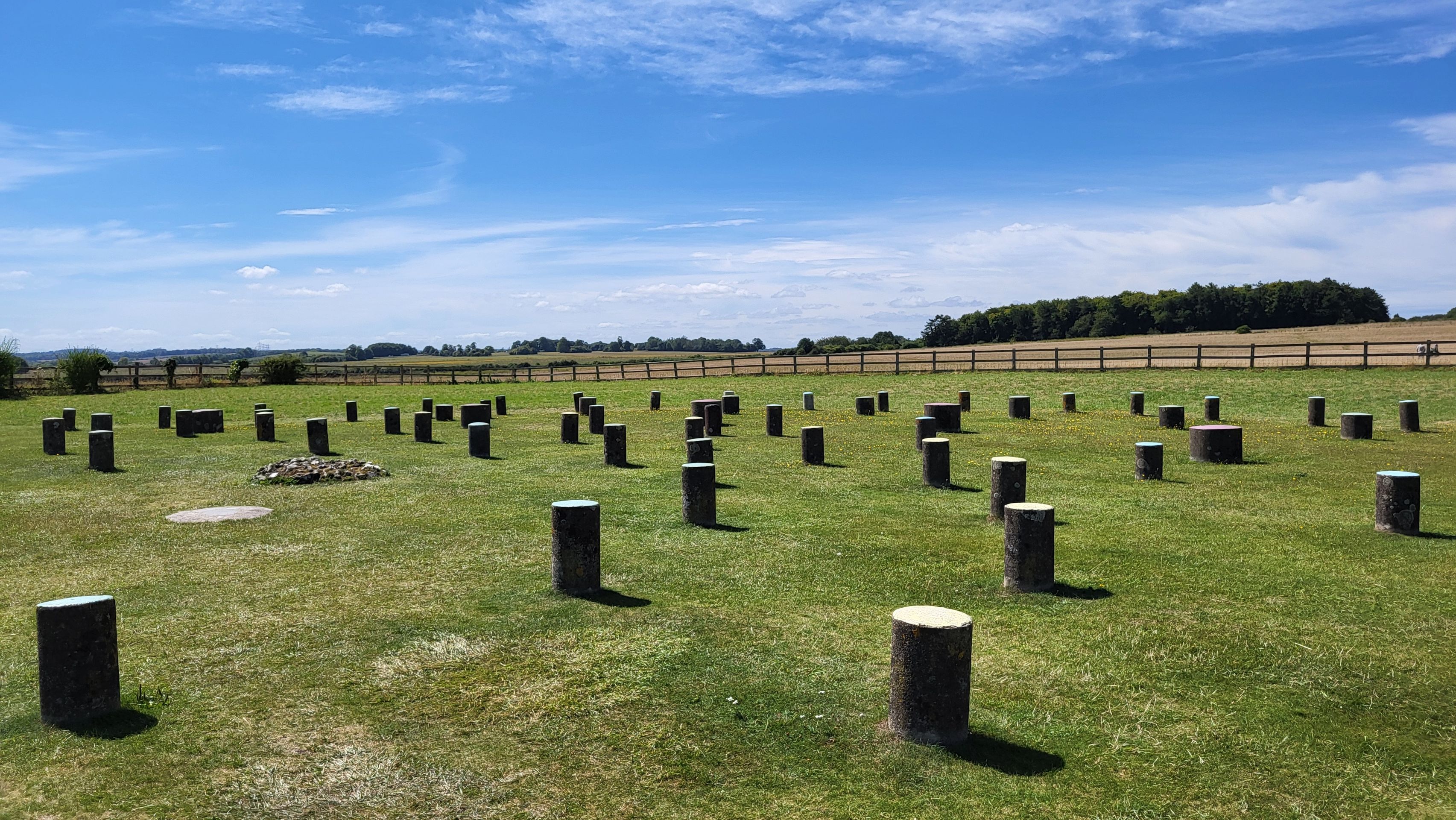
After visiting Old Sarum, we drove to the rather small excavation site “Woodhenge”.
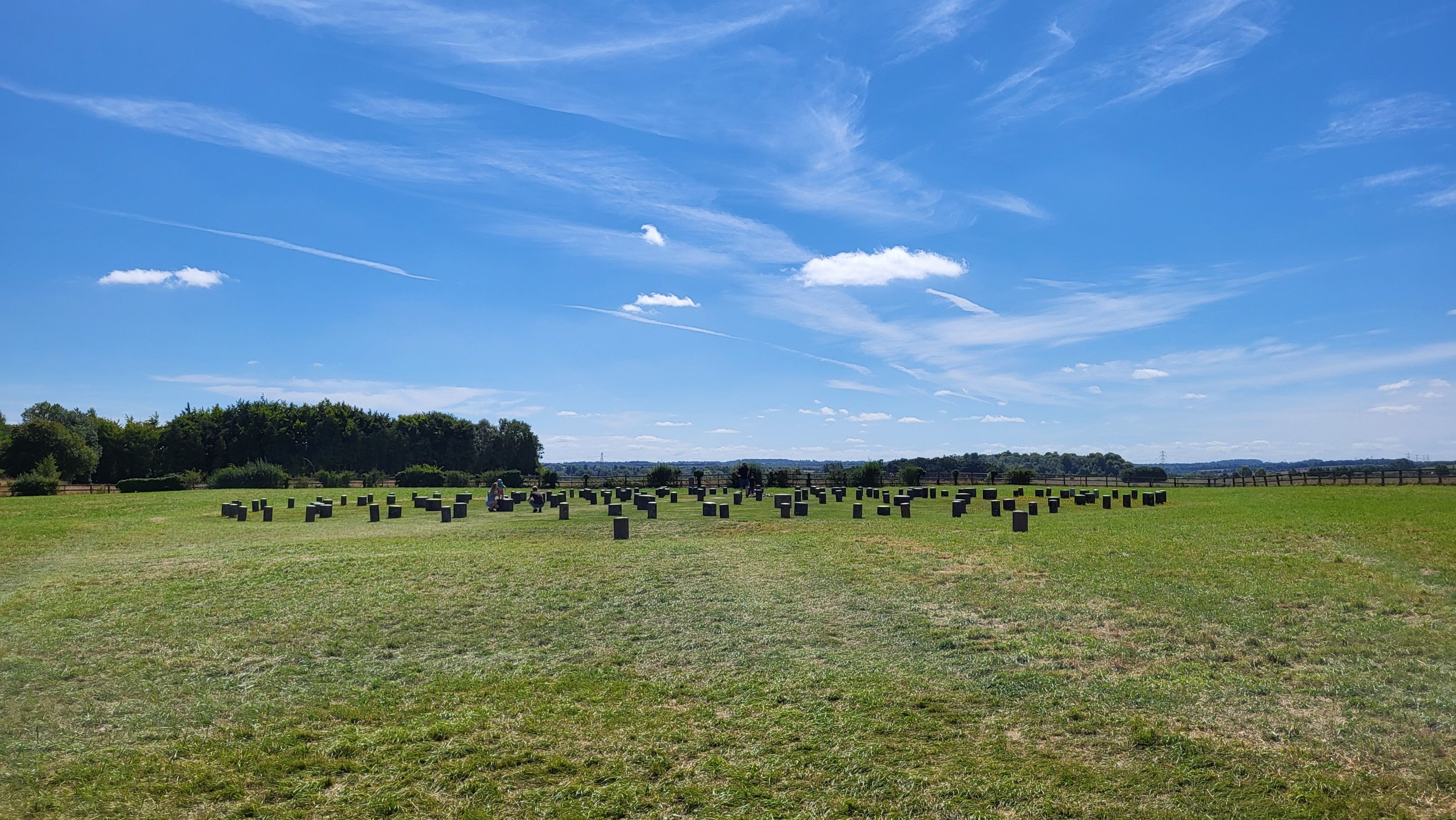
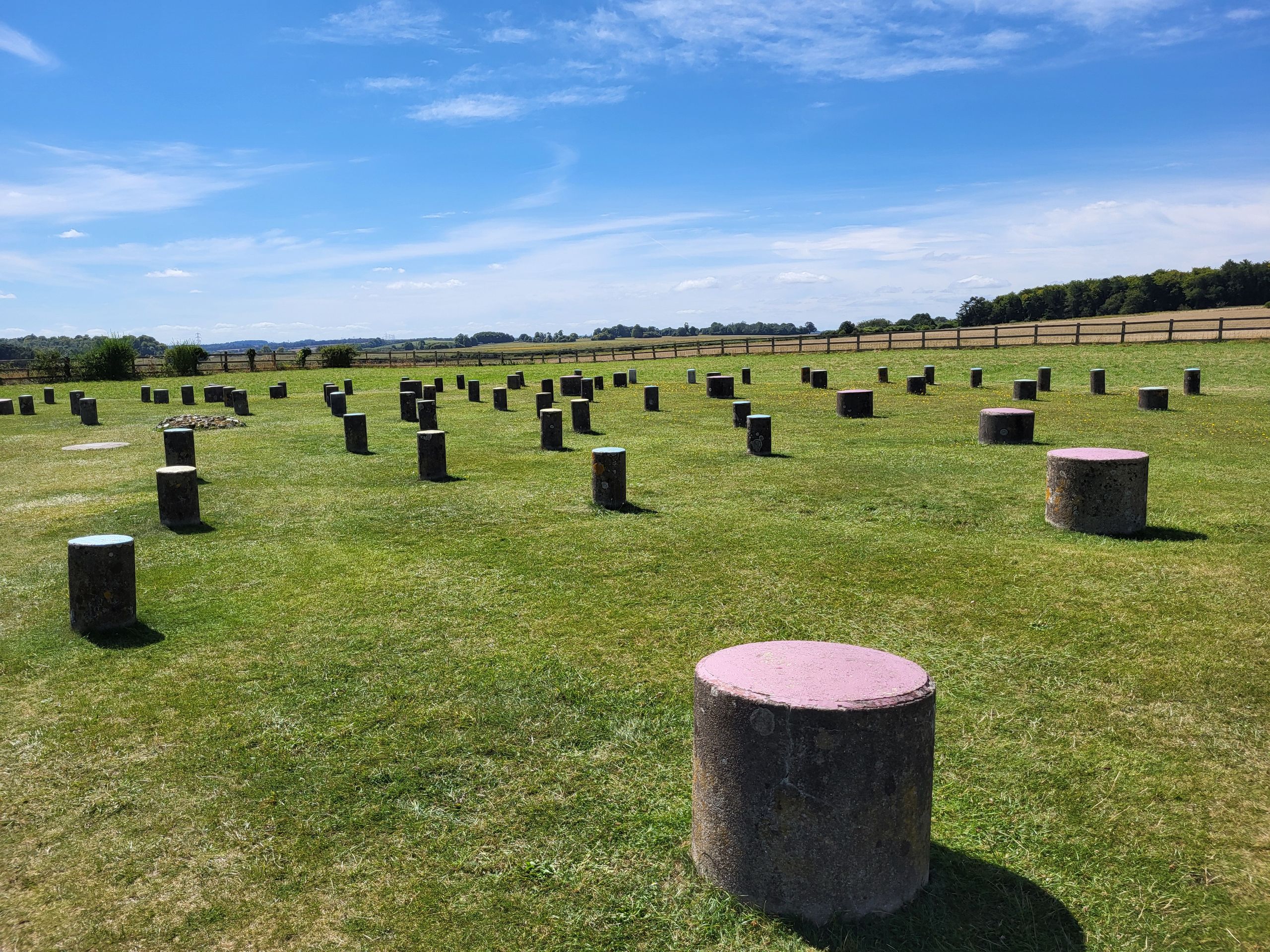
Woodhenge This is a neolithic monument that consisted of six concentric rings of wooden posts.
Woodhenge Of these, of course, nothing remains, but the spots where they originally stood are now marked by low concrete posts.
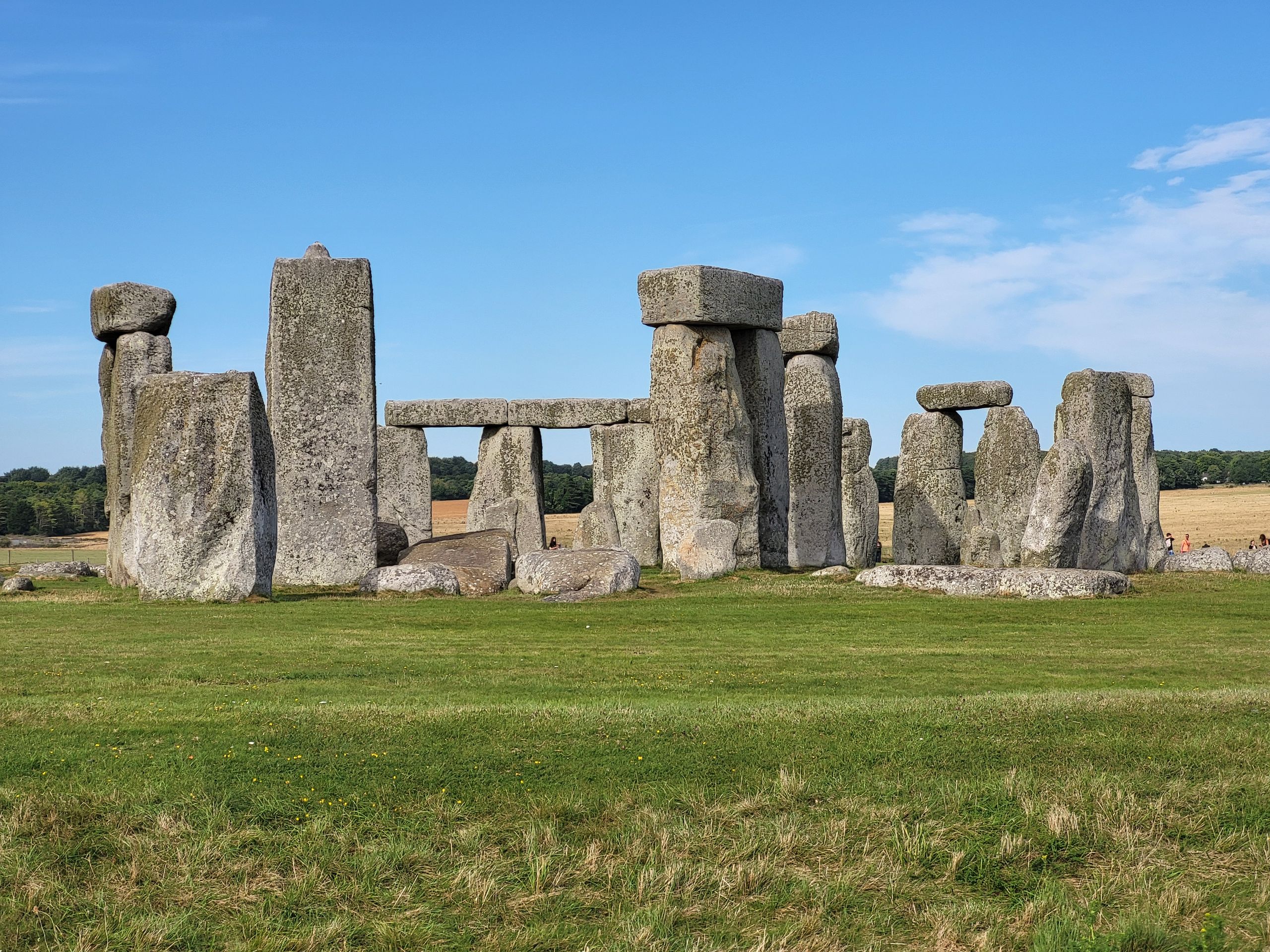
Woodhenge Woodhenge is part of the UNESCO World Heritage - along with the much more famous Stonehenge. Stonehenge
This was also our next destination. A huge parking lot awaited us - for which we didn't have to pay thanks to our newly acquired membership.
In front of the huge visitor center, which mainly consists of a shop and restaurant, there were already long lines of people.
We had booked the tickets in advance, so we were able to stand in the shorter line.
In the building, there is also an exhibition about the excavation site.
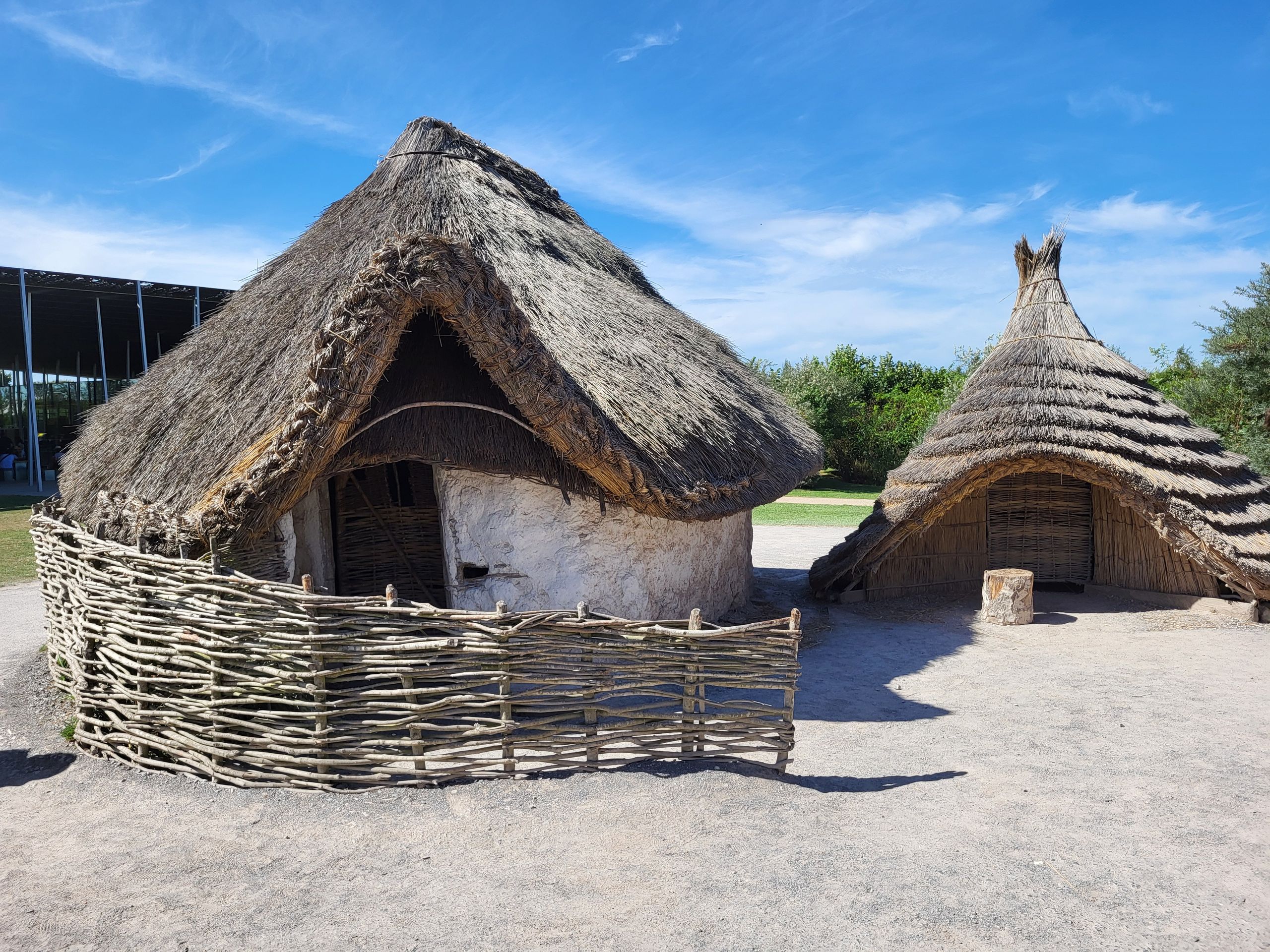
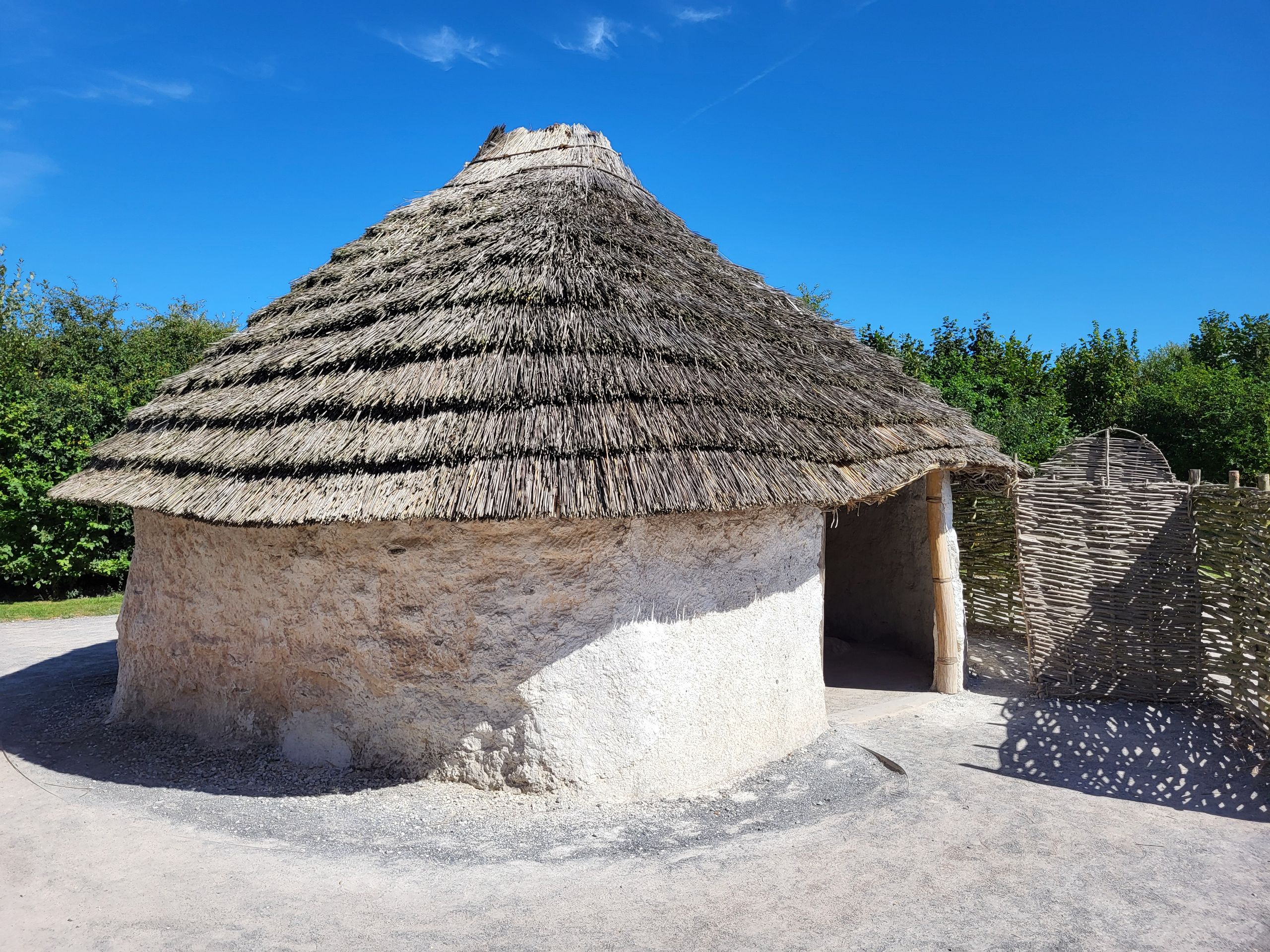
Neolithic Houses This also includes reconstructions of some neolithic houses that may have stood in the settlement near Stonehenge.
Neolithic House There is a free audio guide that can be downloaded to your phone and which guides you through the exhibition and the grounds.
Landscape Tour After the exhibition, we took the “Landscape Tour,” which guides the approximately 30-minute walk from the visitor center to the stone circle (alternatively, you can take a shuttle bus).
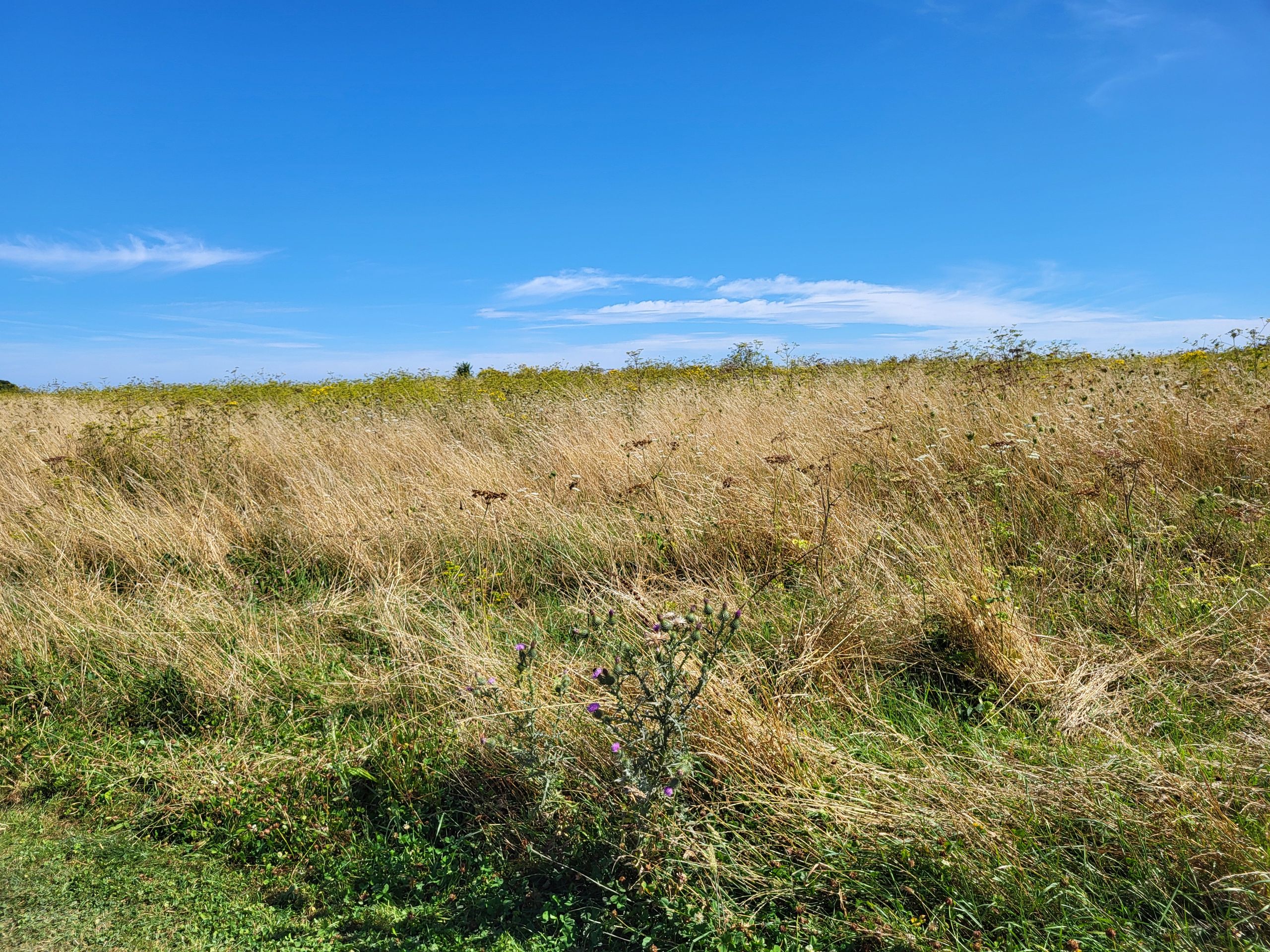
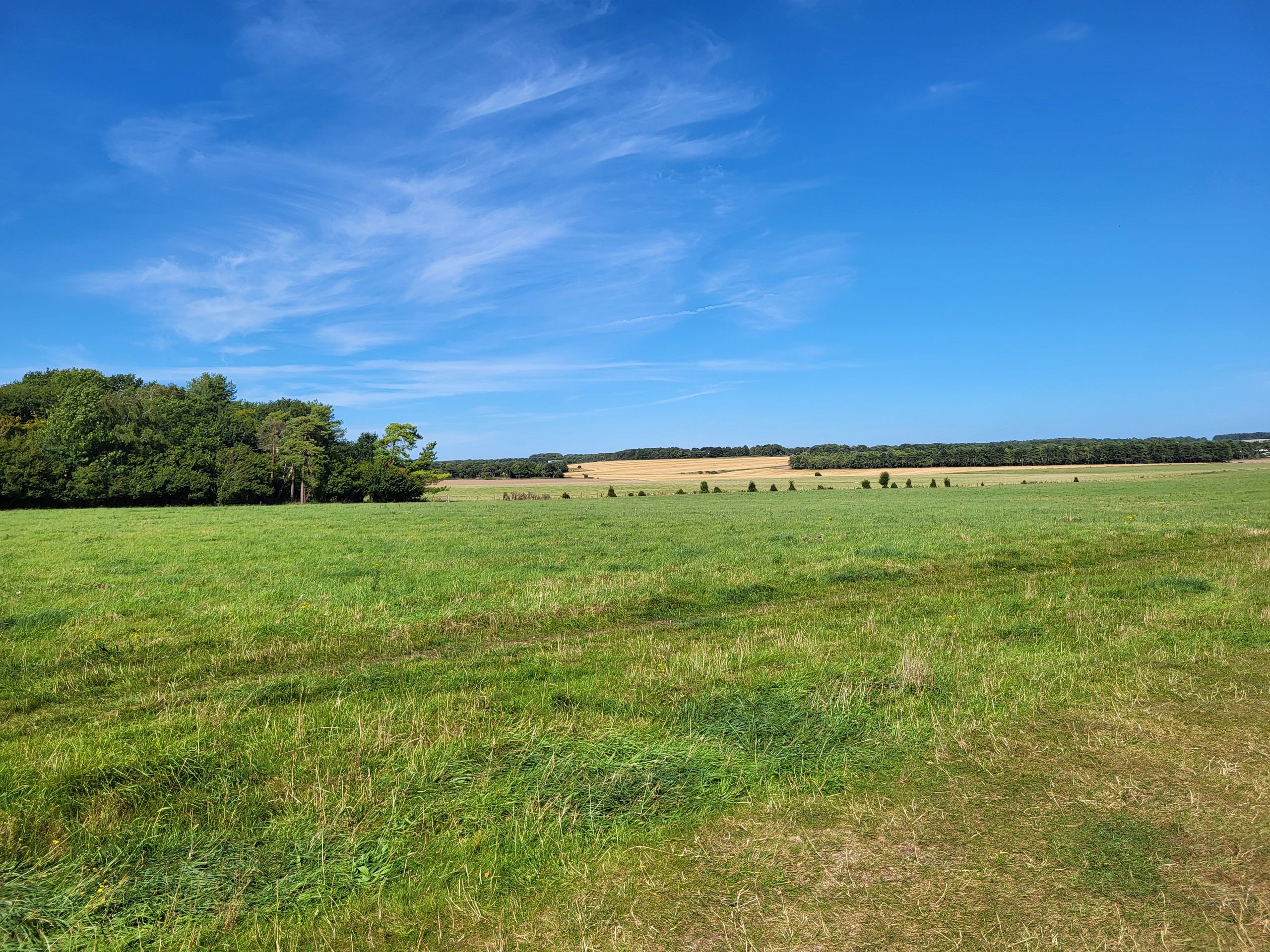
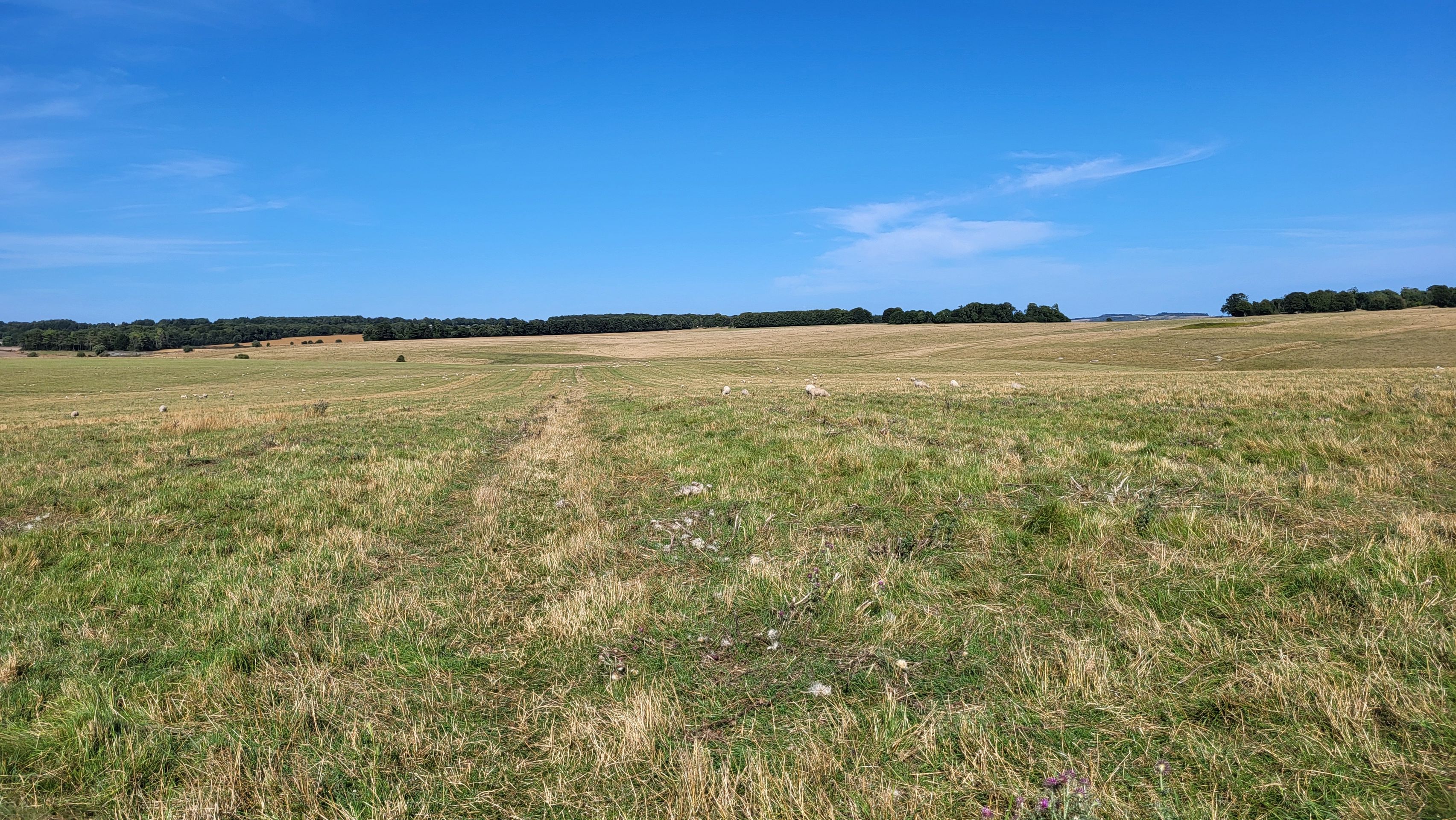
Landscape Tour The cult site also included an approximately 3 km long “Cursus,” a mound with a ditch, which was created before the stone circle. It was still discernible under the grass.
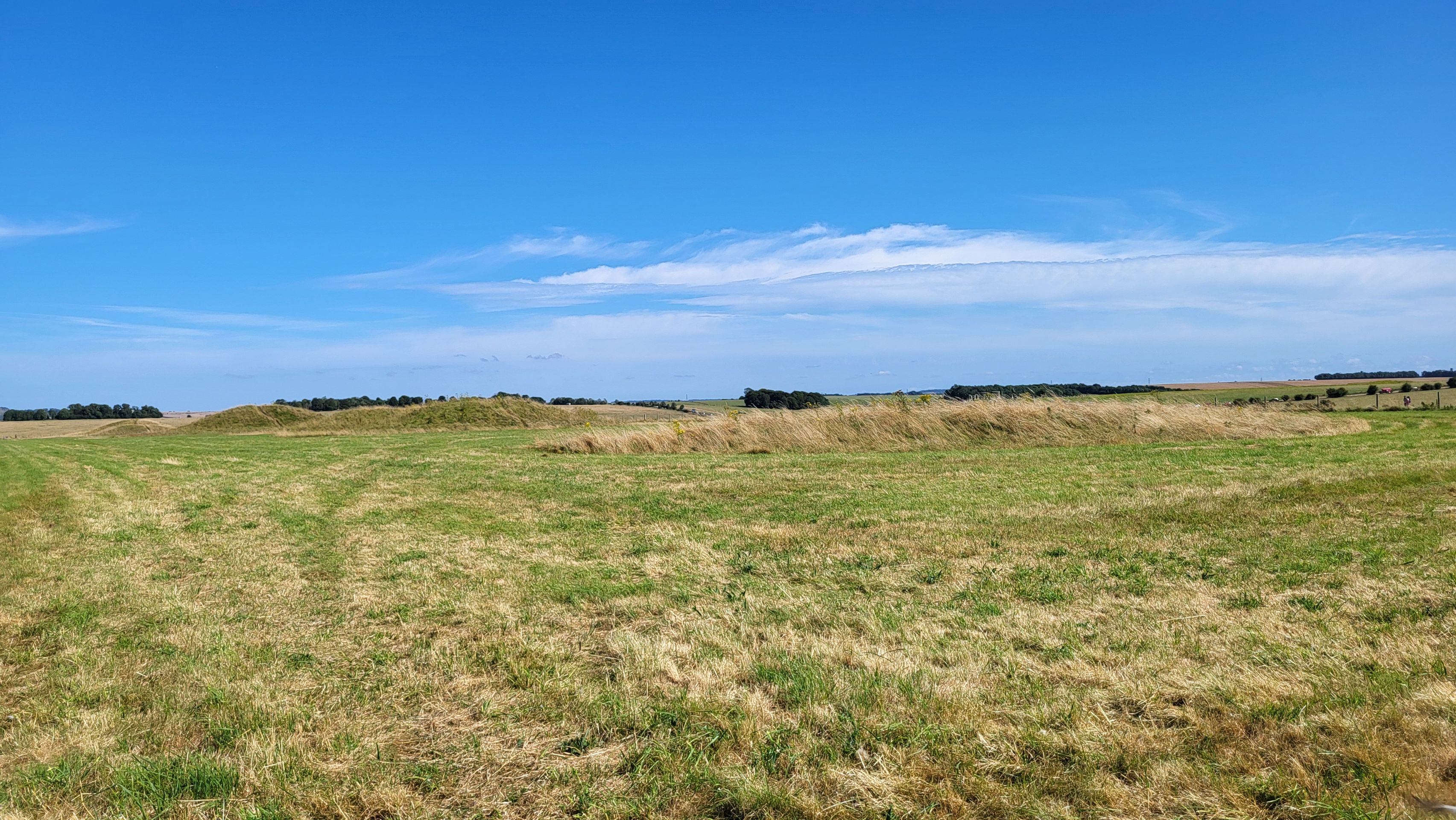
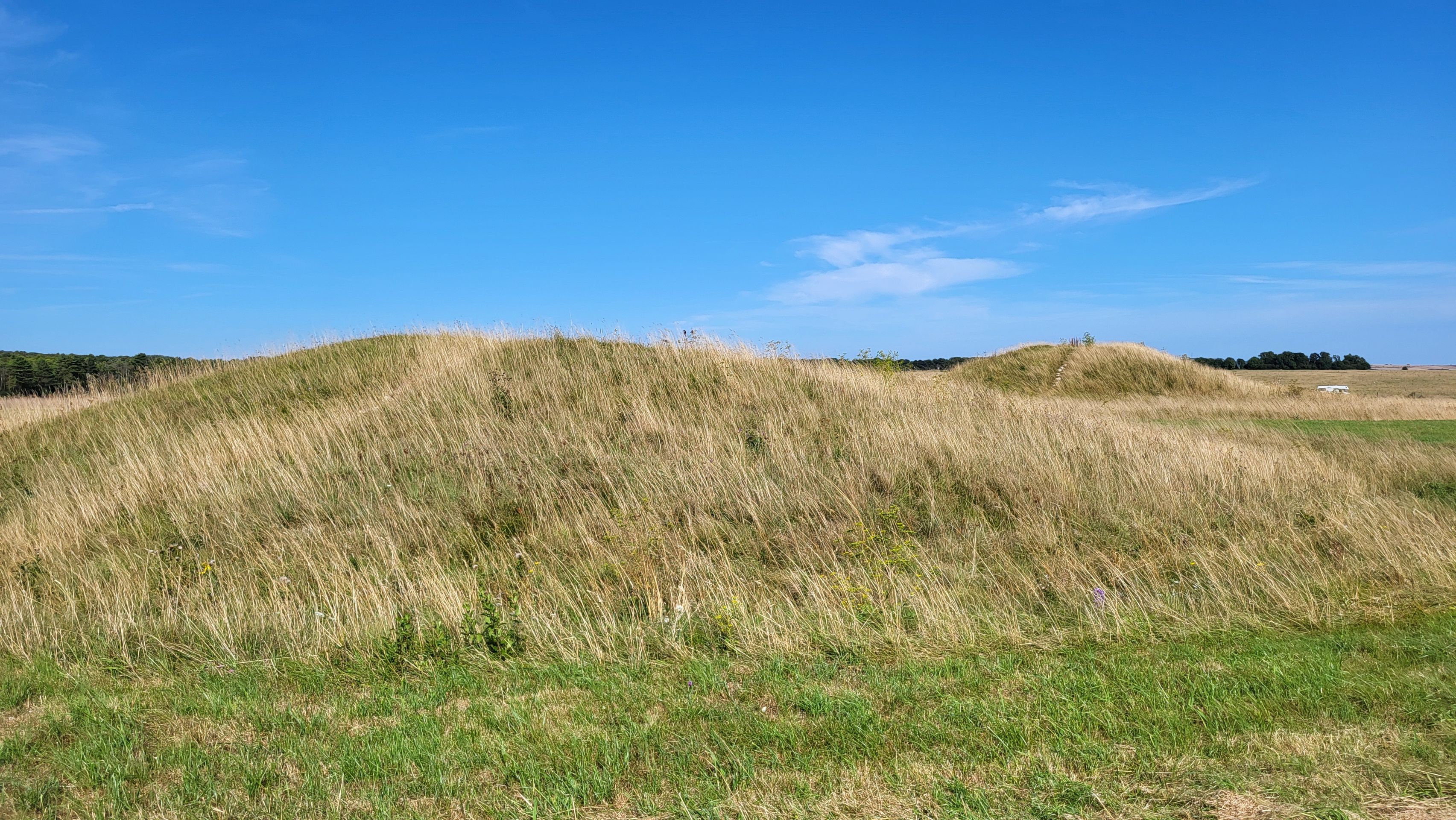
Barrows near Stonehenge The tour also led past several barrows.
Barrows near Stonehenge Unfortunately, it was not well marked, so we strayed from the path and did not walk properly on the “Avenue,” which leads from a hollow to the stone circle.
Avenue The audio guides at the stone circle, however, are highly recommended.
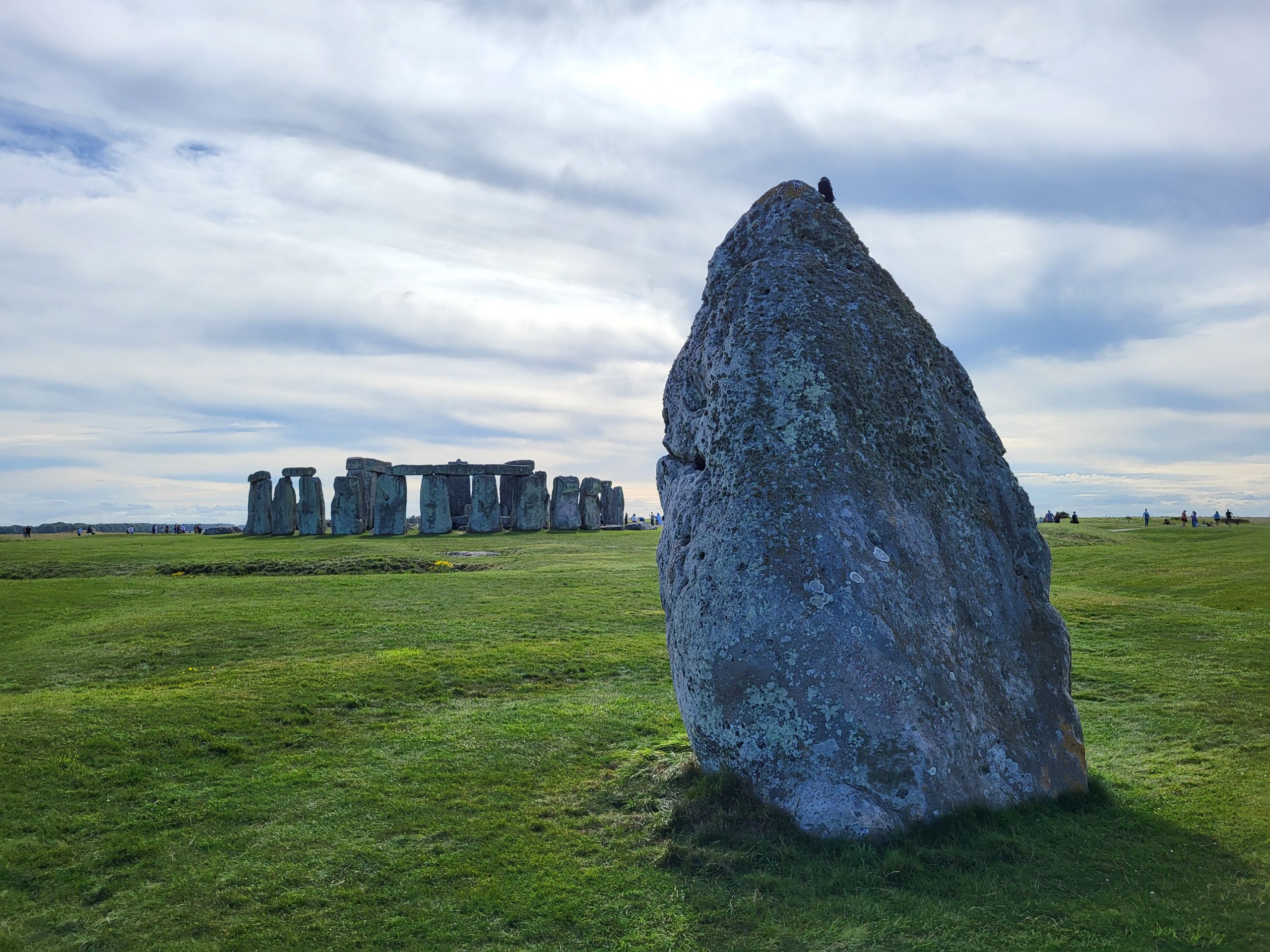
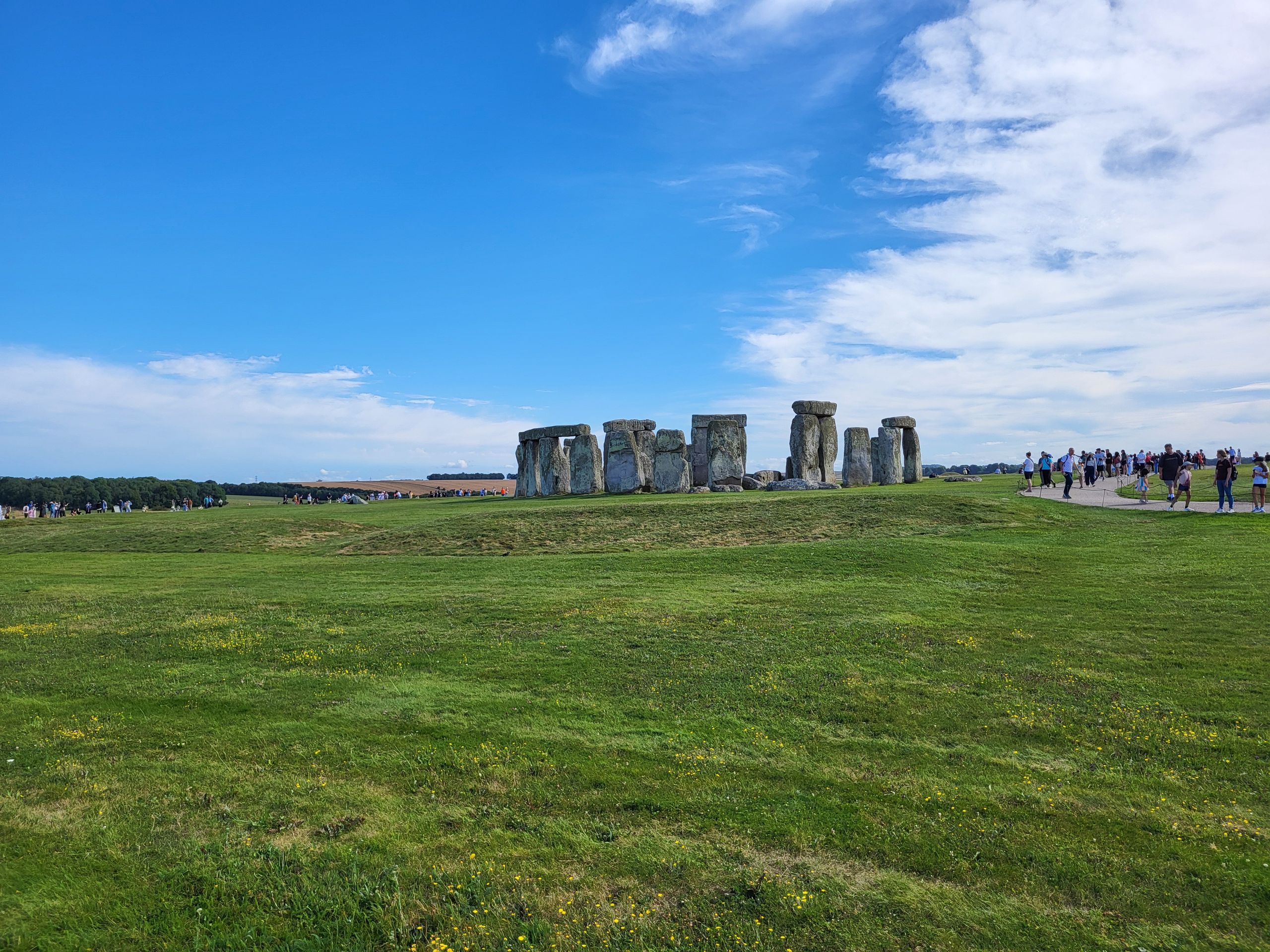
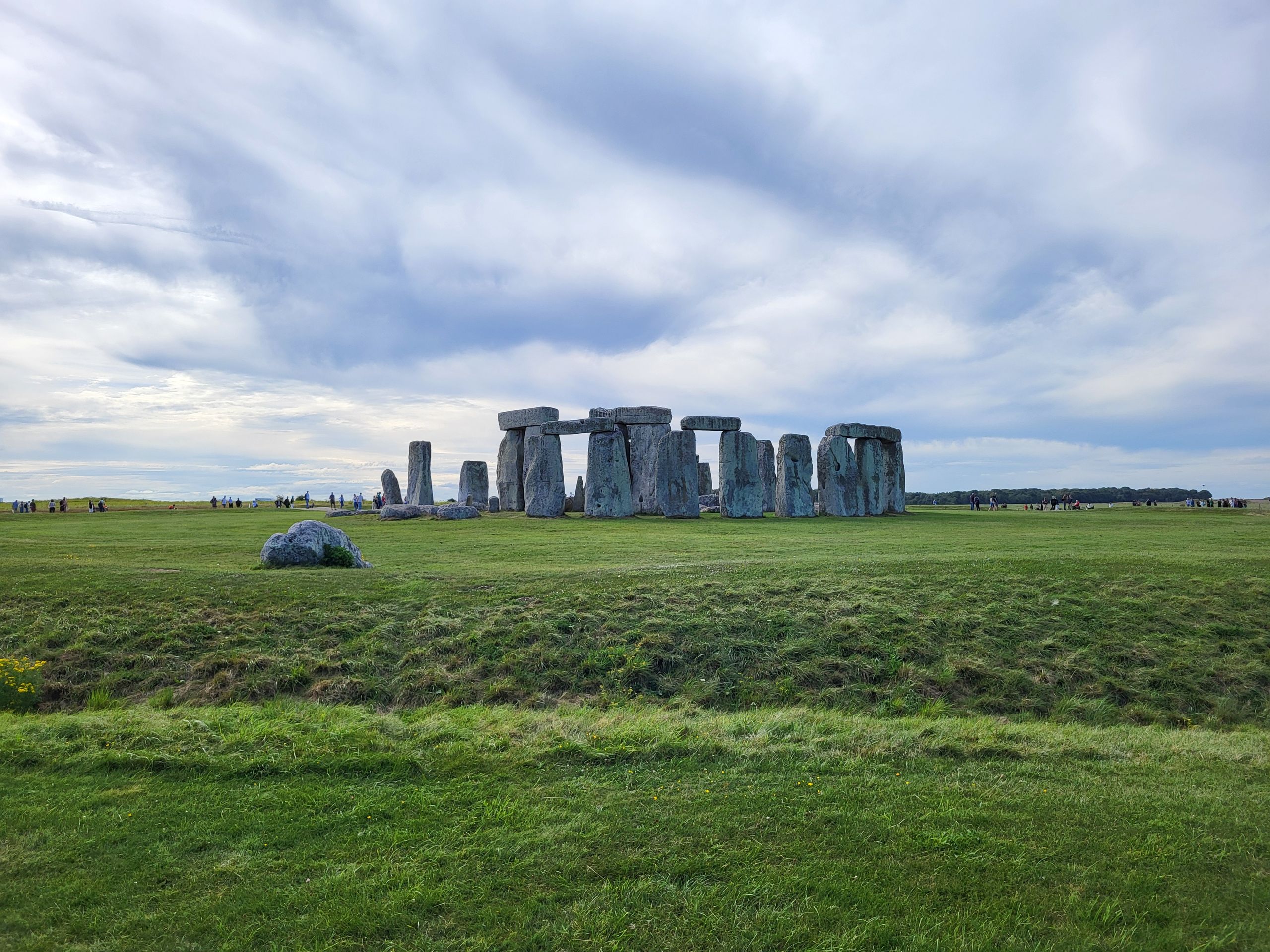
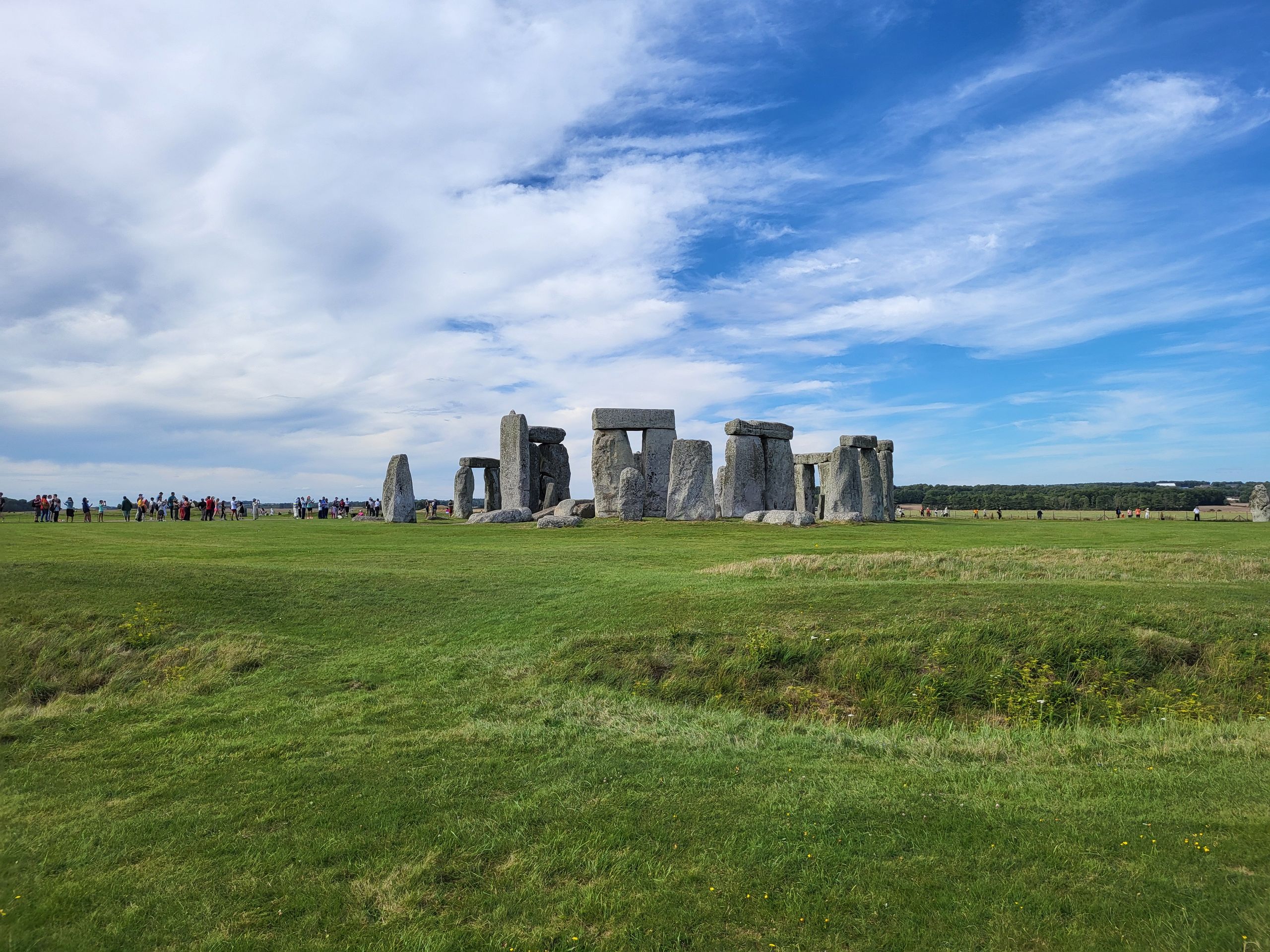
Stonehenge On site, we noticed that there were also many who saved on the (rather expensive) admission and drove near the stone circle via a side road. The public and free accessible path is behind the one that paying visitors use, but the stone construction can be seen well from there at least from a distance.
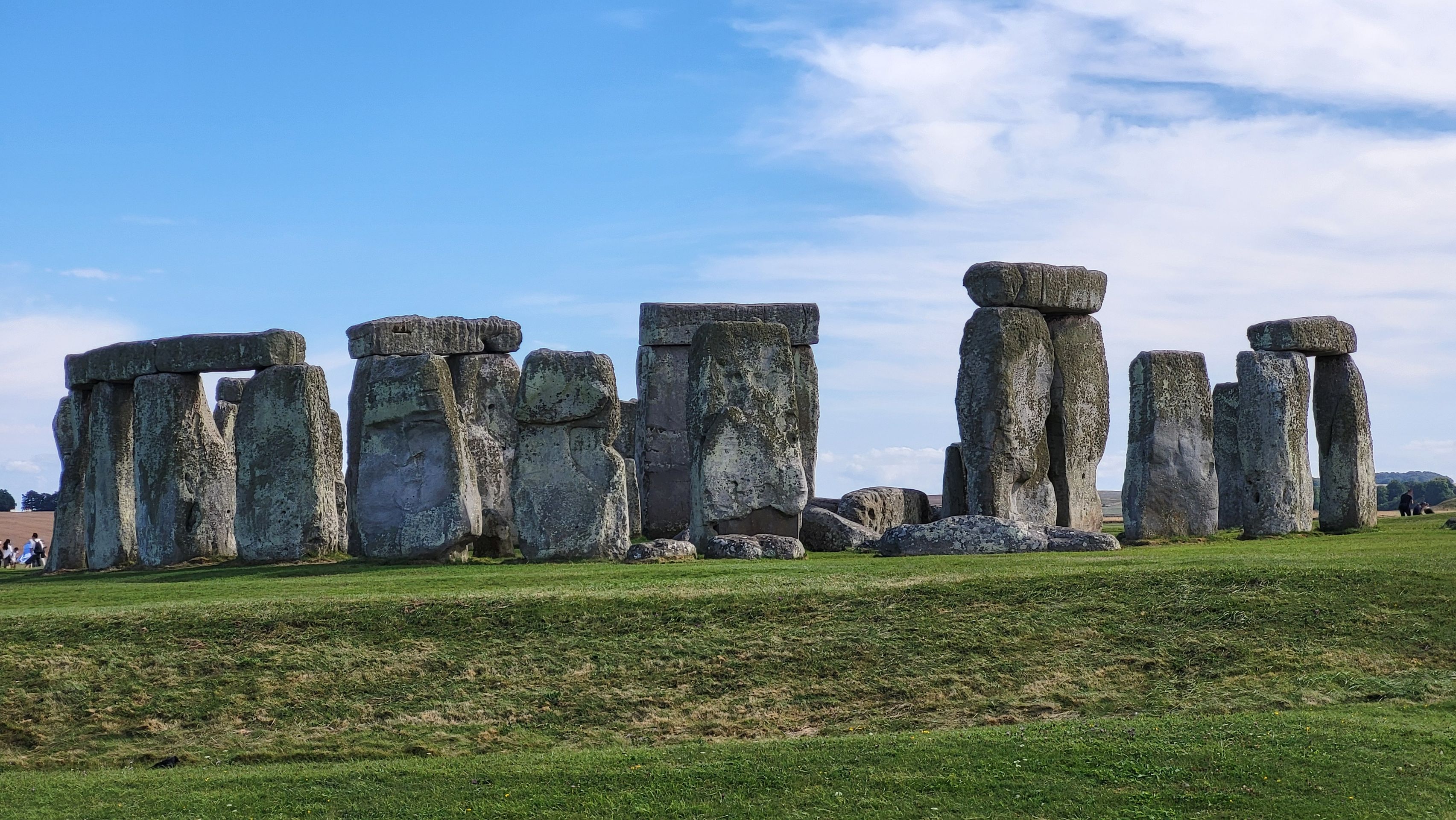
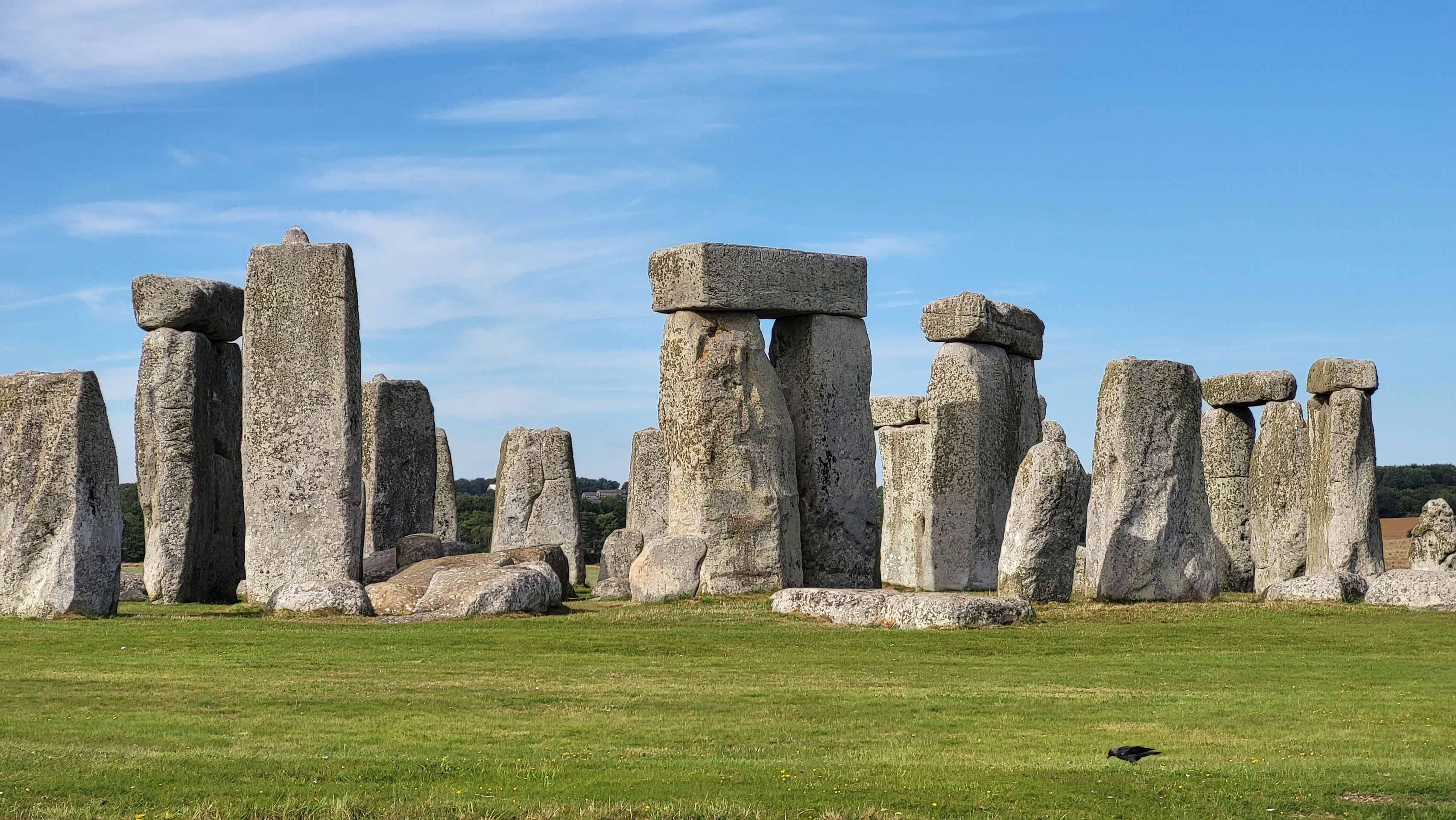
Stonehenge However, we were able to walk around the stone circle once and came relatively close to the stones at one point.
Stonehenge Entering the stone circle is not permitted for visitors in order to protect the structure.
Stonehenge We returned by shuttle bus and finished our visit to Stonehenge after about 2.5 hours on site.
peters-on-tourComme une newsletter : chaque nouvel article arrive par e-mail.