
Week 53 - Tanna, Vanuatu
Up front: we have now been traveling for a year! It's amazing how quickly this year has gone by and how much we have experienced. We are so grateful and looking forward to the...

Published: 17.05.2026
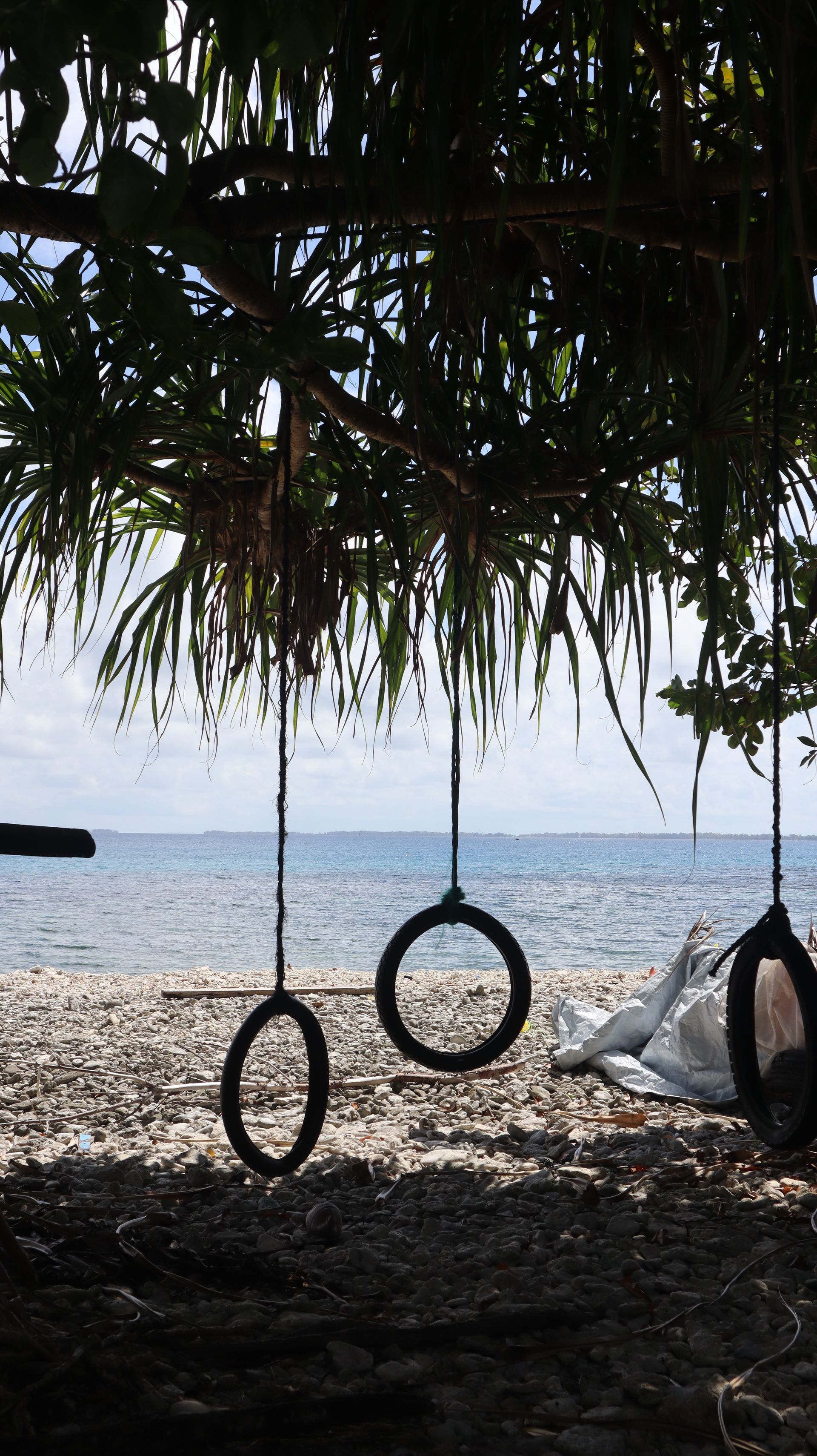
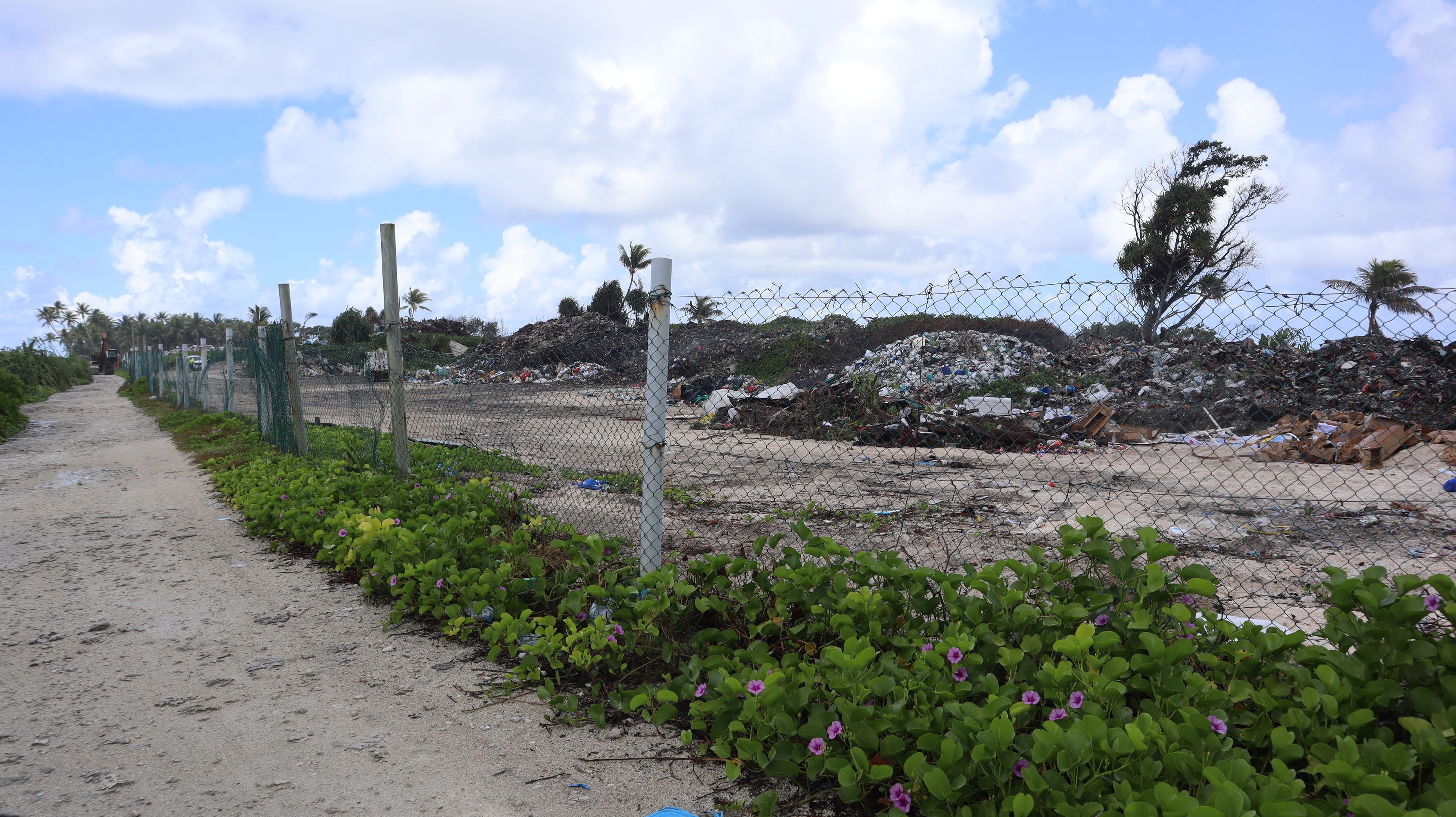
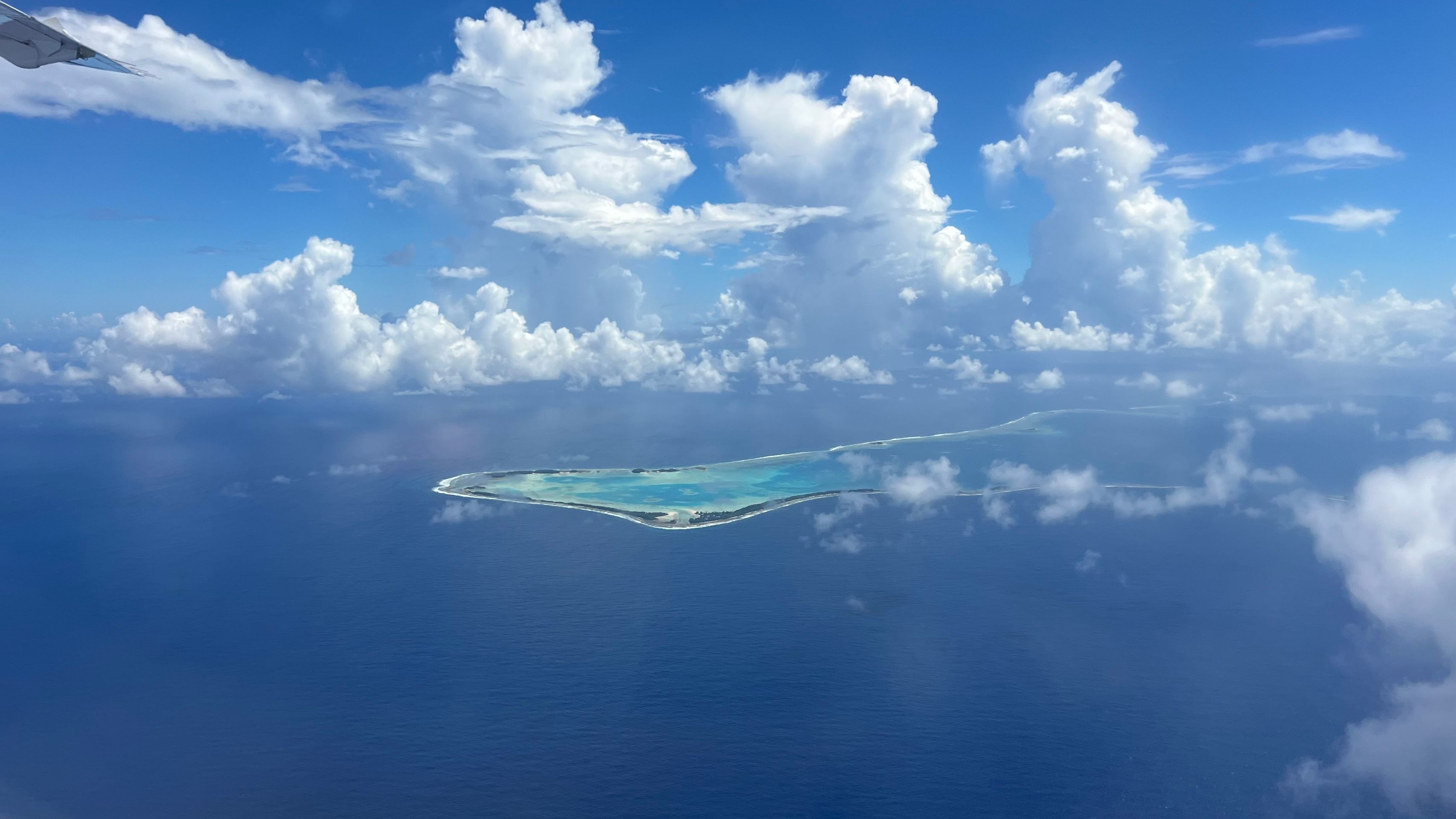
Tuvalu is one of the smallest countries in the world, covering just 26 km². It has fewer than 12,000 inhabitants, half of whom live on the main island, home to the capital, Funafuti. And that's exactly where we headed from Nadi on Monday.
Tuvalu has gained notoriety in recent years. It is the first country to be submerged by rising sea levels. Tuvalu lies on average only 1 meter above sea level. It is estimated that it will no longer exist by the year 2100. By 2050, it is likely that 50% of its land area will be submerged at high tide.
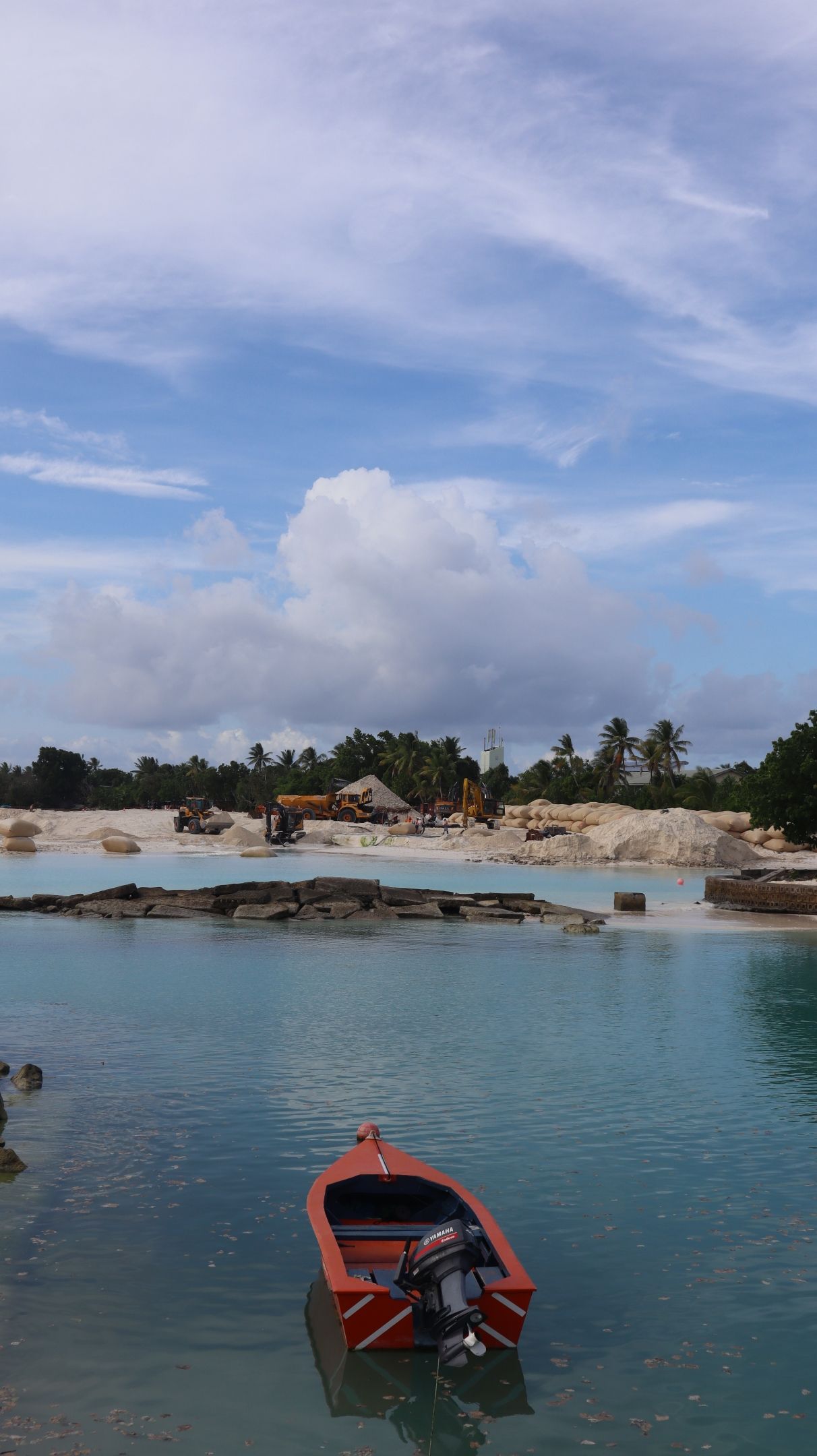
A barrier of 2x3 meter sandbags will be built along the coastline on the lagoon side to slow down land erosion and mitigate flooding.
Australia introduced a climate visa for its residents last year, and the first people have already relocated. Within several decades, all residents could have relocated.
Tuvalu has become the first country in the world to implement a "Digital Nation" to preserve its culture and history. Furthermore, Tuvalu will be the first country without its own land territory, meaning all government services will be provided digitally.
For more information: https://www.tuvalu.tv/about
Besides fishing and remittances from citizens working abroad, Tuvalu generates considerable revenue by renting out its .tv internet domain.
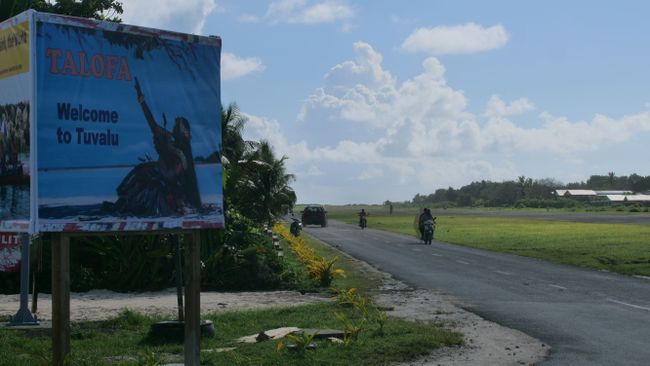
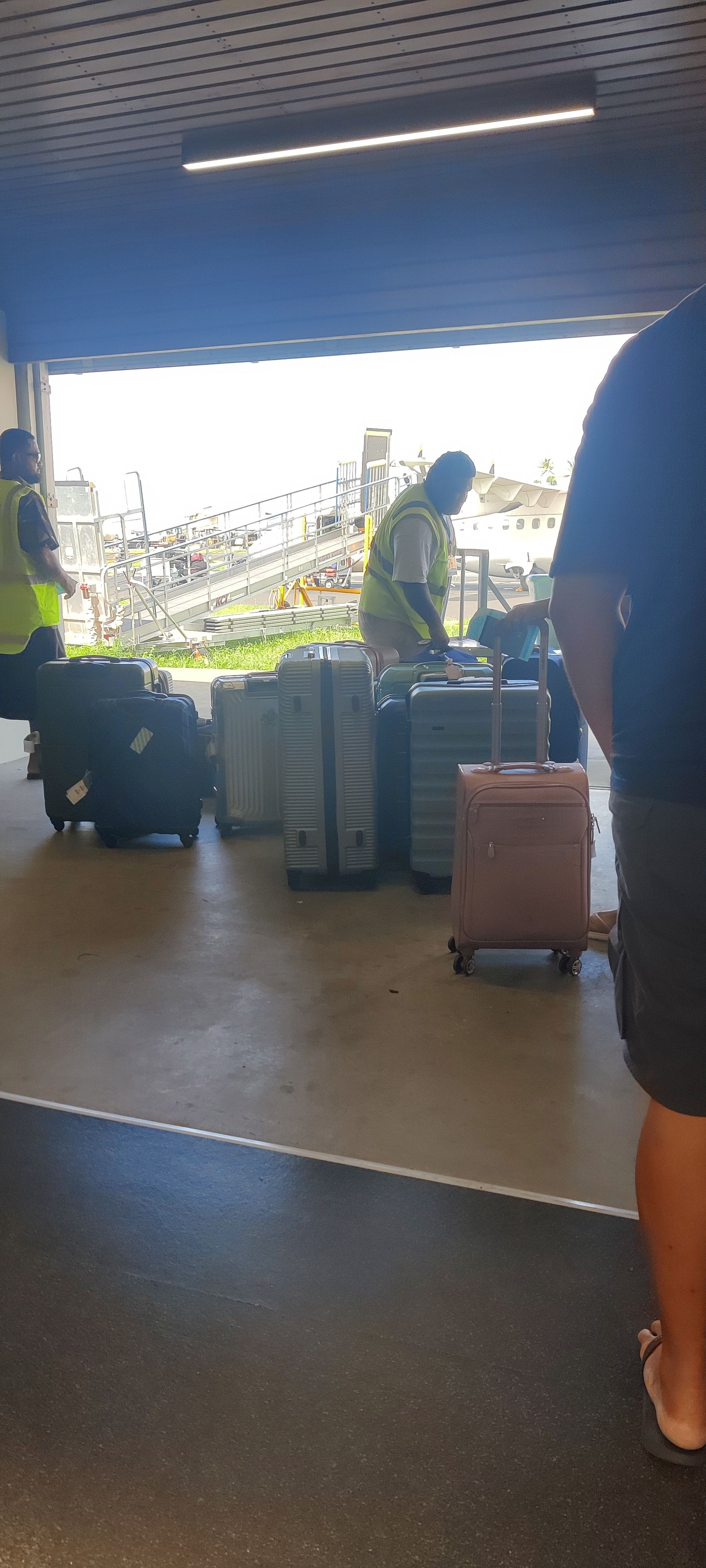
Even the arrival was spectacular. During the approach, we first saw only water, then a few palm trees, a few huts, and finally we landed. The international airport consisted of just one large building, and the luggage was carried 20 meters from the plane to baggage claim.
Our hotel welcomed us immediately after our arrival and transported our luggage to the hotel 500m away.
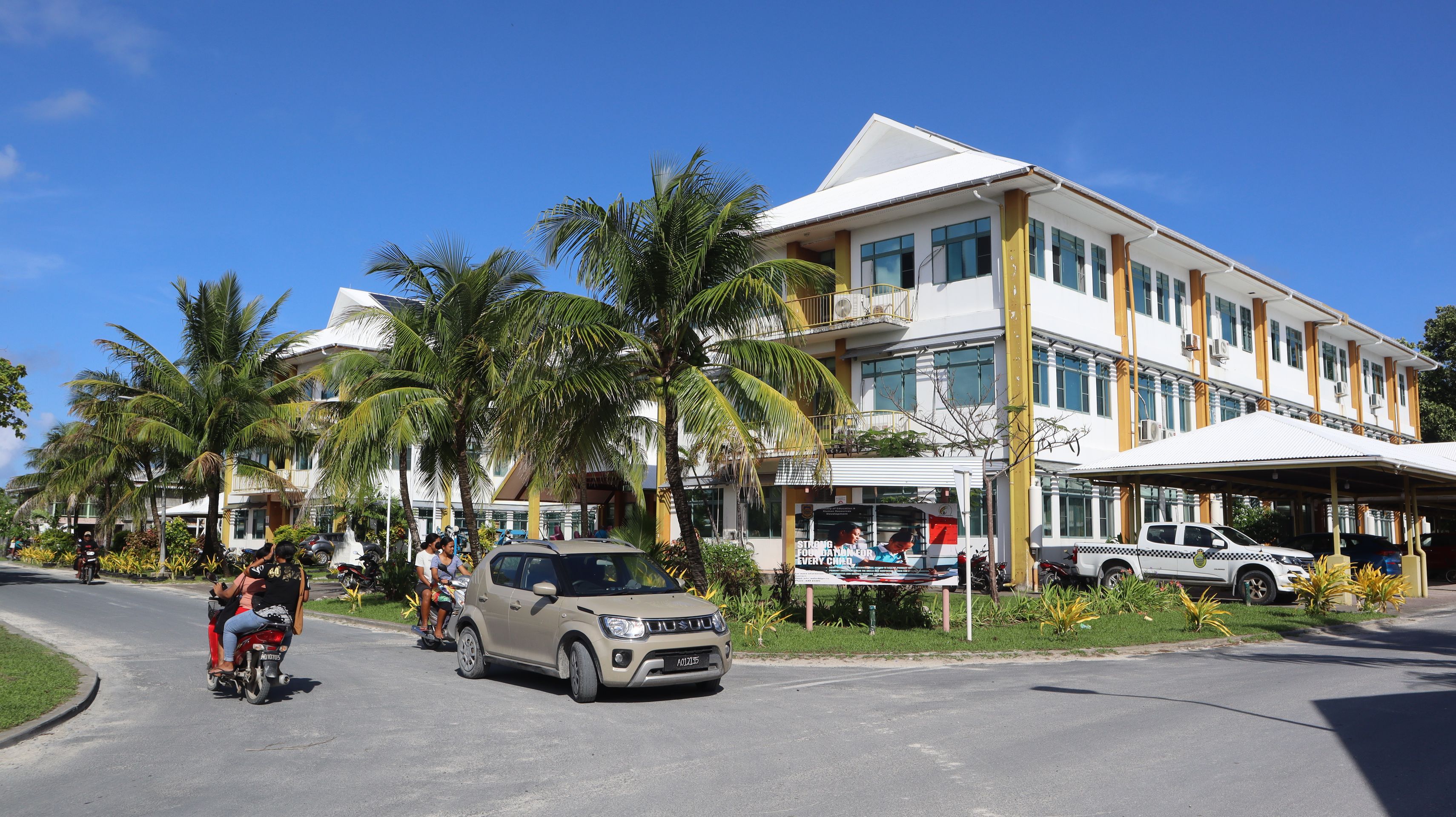
We spent the rest of the day exploring on foot along the main street and bought a few things at the supermarket.
After dinner, we took a walk to and along the runway. In the evening, it transforms into a meeting place and sports field for the locals. At one point, nets had been set up and volleyball was being played. Nearby, two rugby teams were facing off, and just a few meters further on, some excellent street football was on display.
Even during the day, scooters in particular drive just a few meters from the runway, and there are no fences or similar barriers. When a plane lands or takes off, this is announced with a loud siren, and traffic is briefly stopped by a barrier.
The next morning, we set off again on foot to explore the island. We wanted to walk to the southern tip and check out the beach there. Our mission was also to find other tourists so we could take a boat trip with them. It would have been significantly more expensive for just the two of us than with a few more people.
At the island's post office, which is known for its rare Tuvalu stamps, we met another tourist couple. They were from Germany, of course, and we immediately struck up a conversation. After buying postcards and stamps, we exchanged contact information so we could coordinate our boat trip.
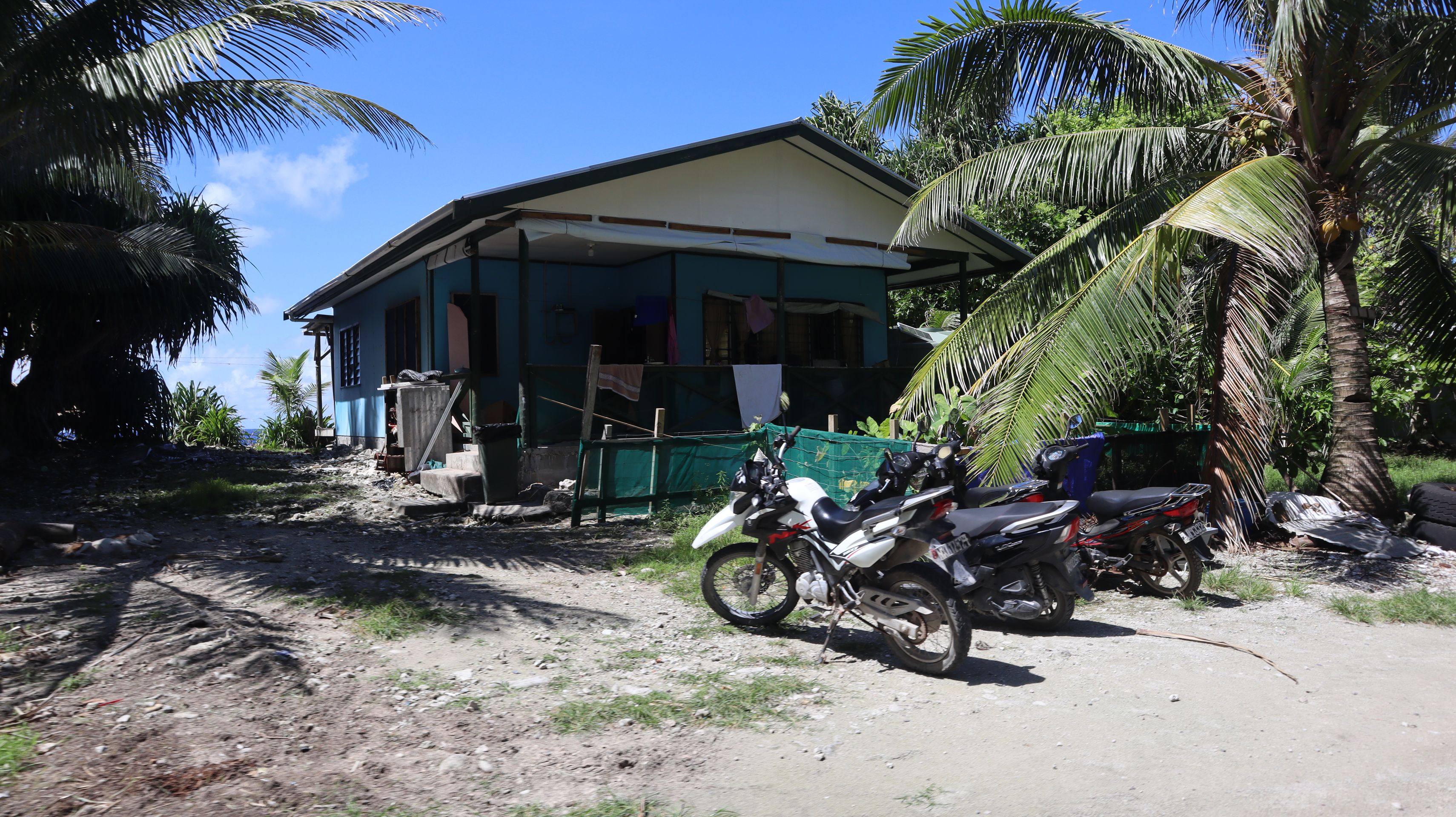
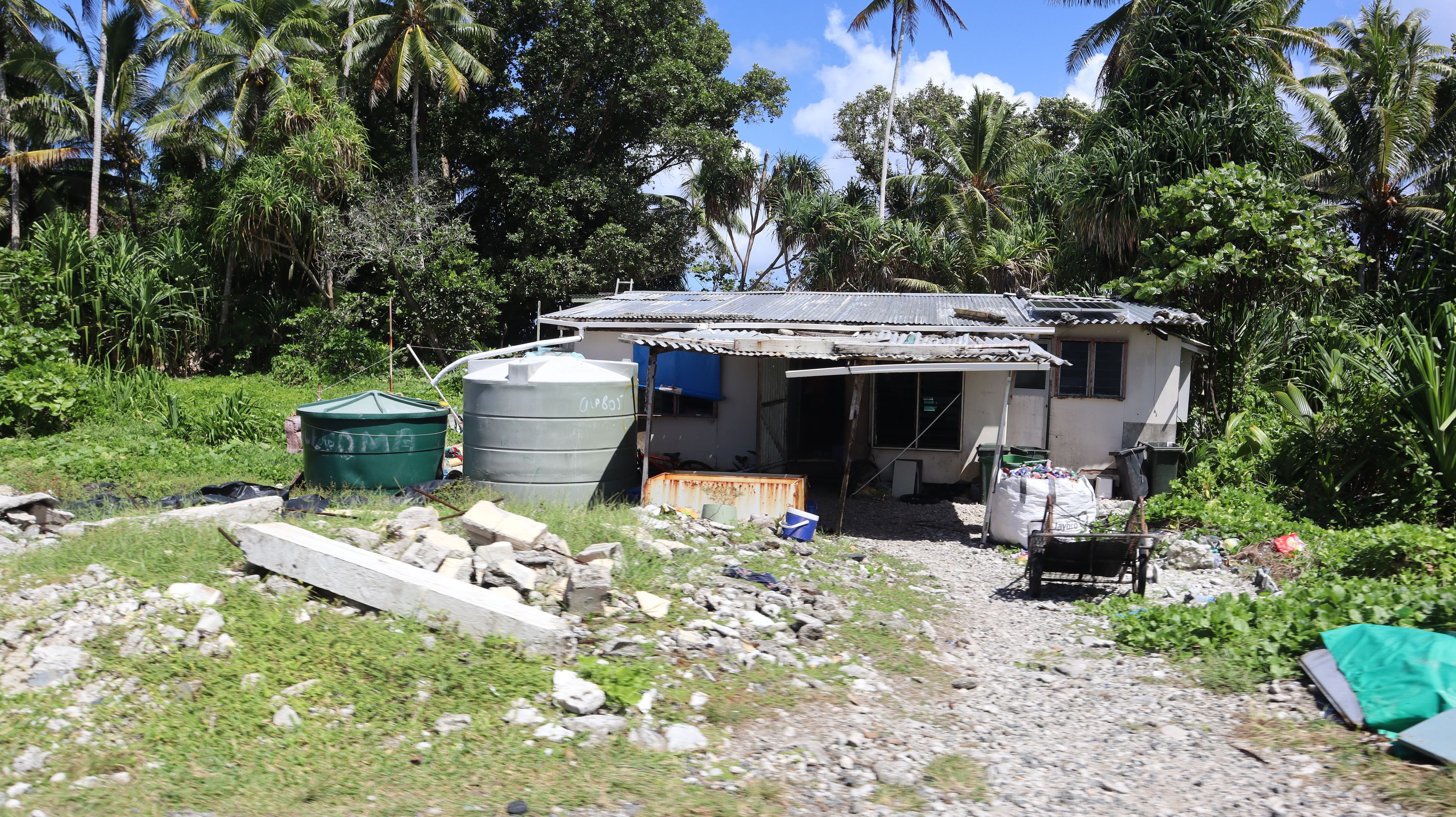
We then continued on foot to the end of the island. Along the way, we were greeted by children time and again. Most of the houses here were very simple and open-plan. They usually consisted of one large room with a roof, but no other rooms or walls.
Having reached the southern end, we cooled off a bit in the lagoon water before heading back.
In the afternoon, the boat trip for the next morning was finalized, and we were able to look forward to the following day. After dinner with Tim and Lina, we fell into bed, exhausted.
We were picked up well ahead of schedule for the boat trip. We were each taken by scooter from the hotel to the boat dock, where our skipper and the boat were waiting for us.
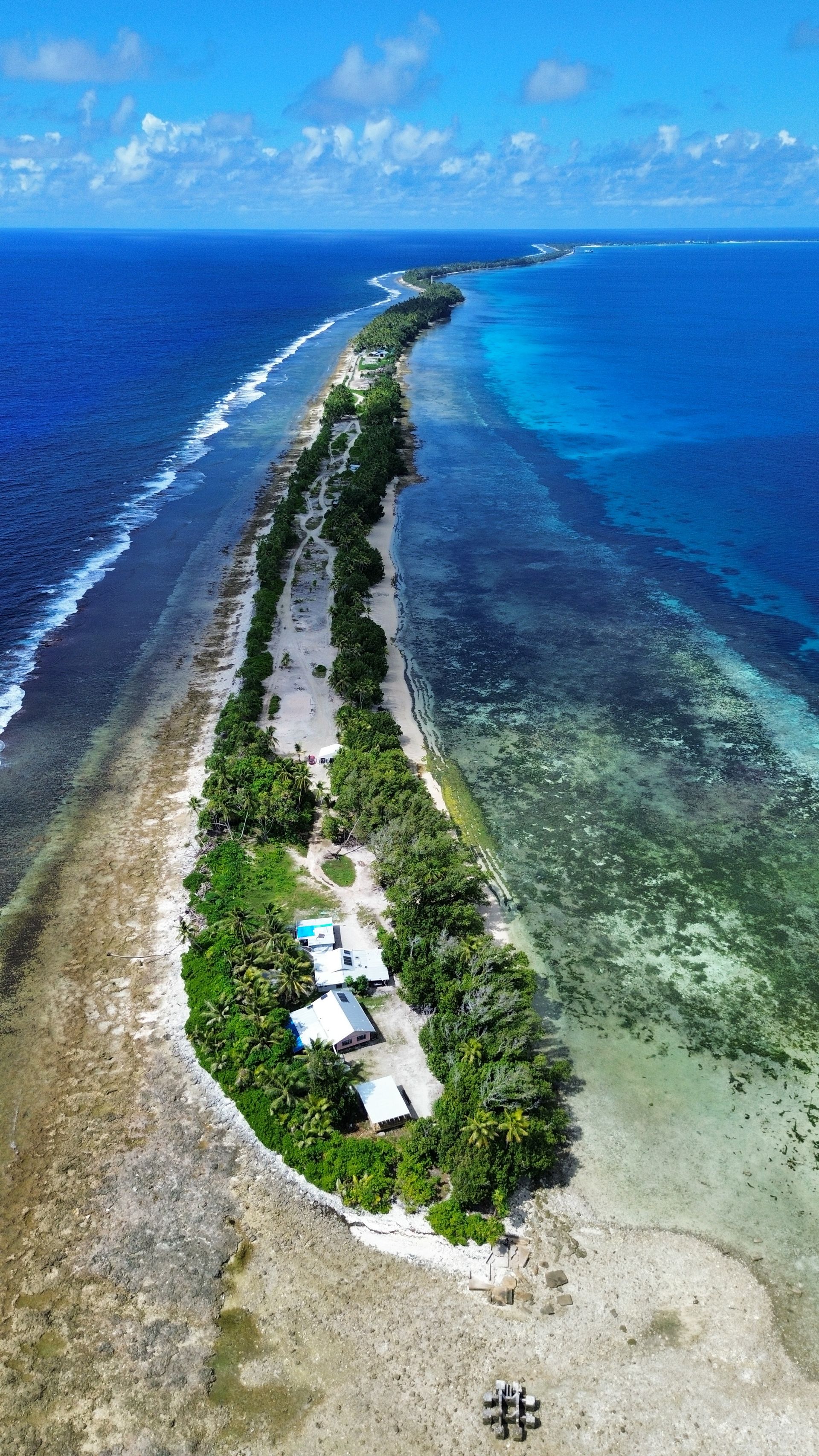
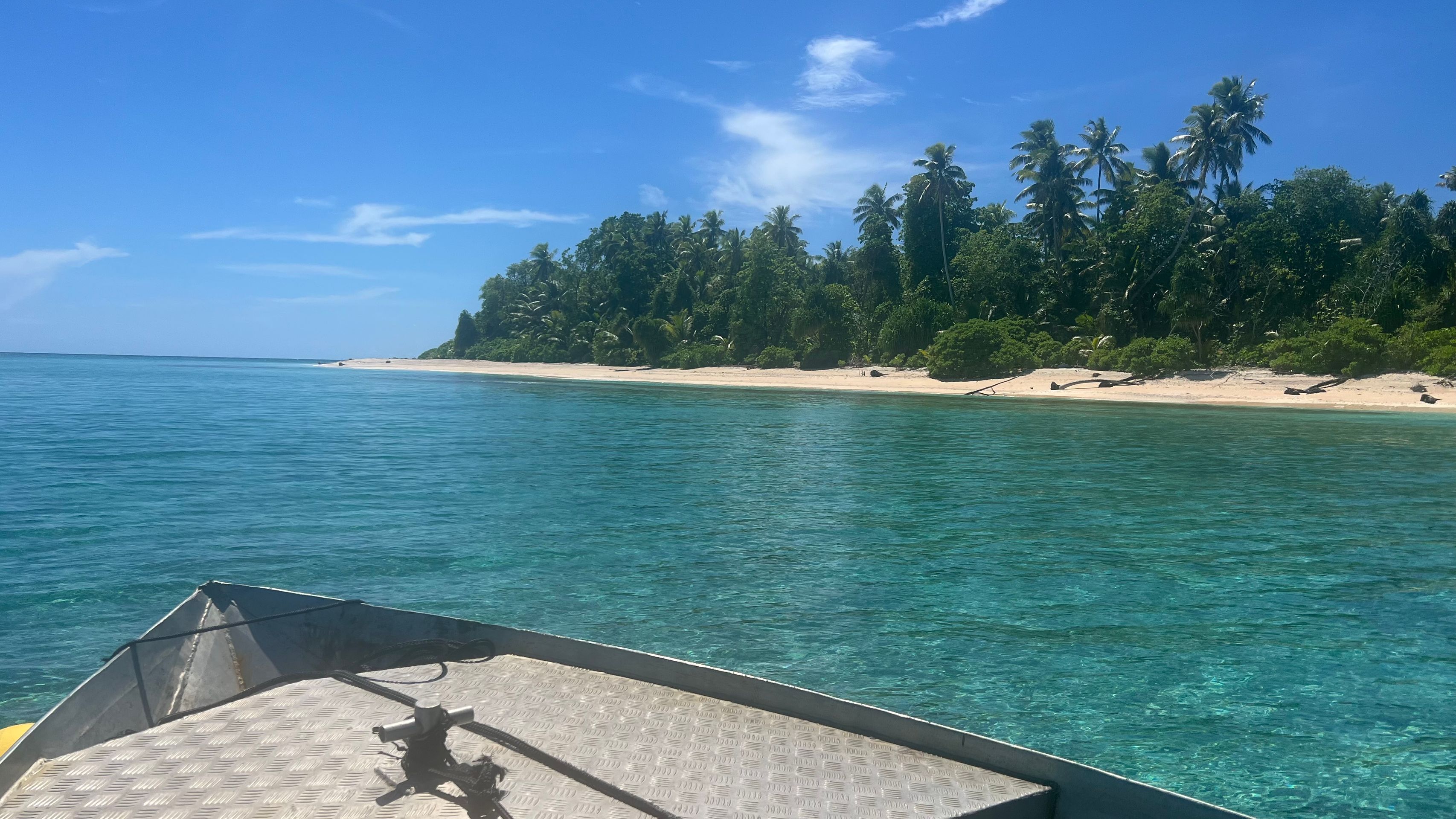
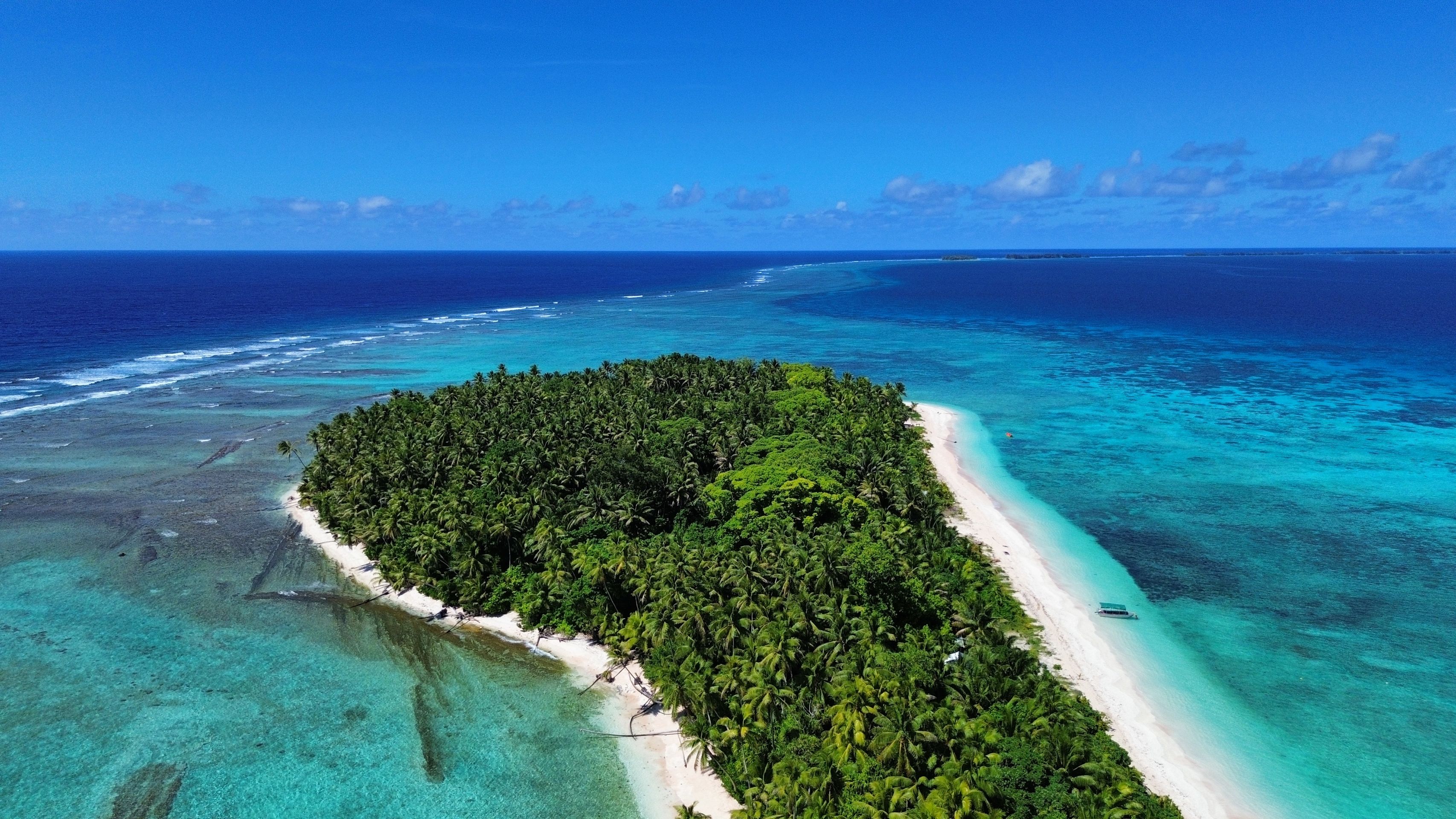
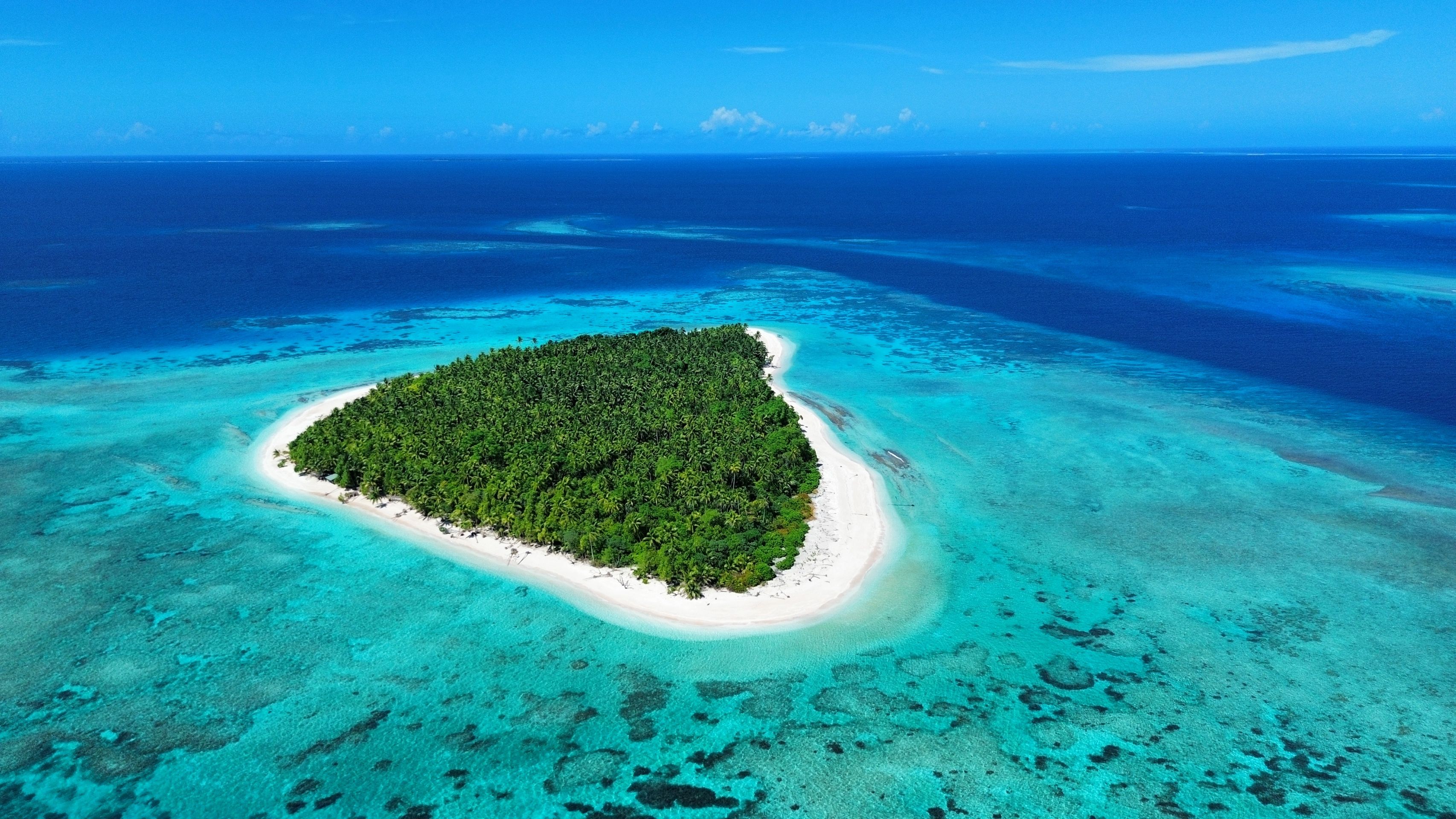
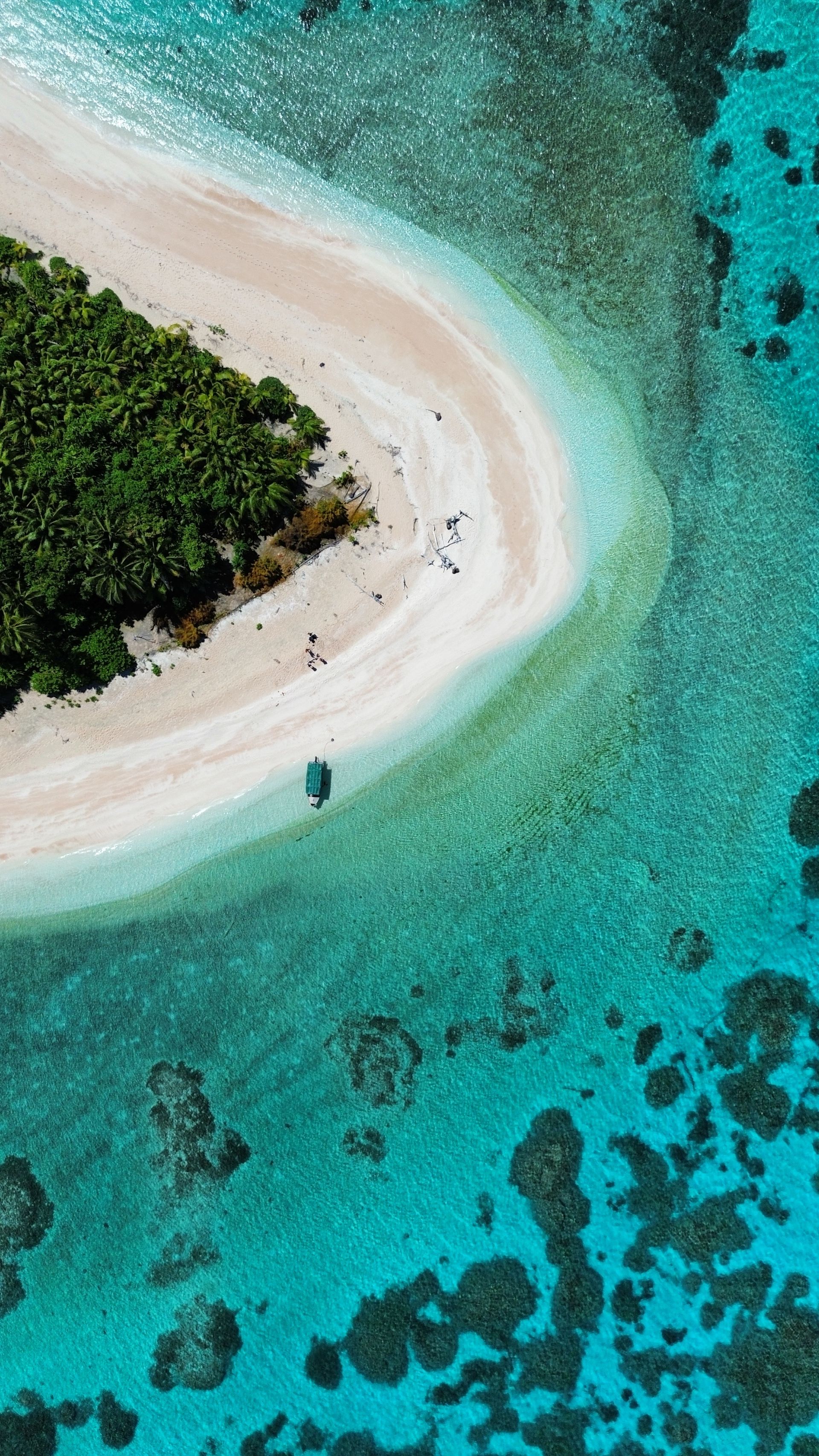
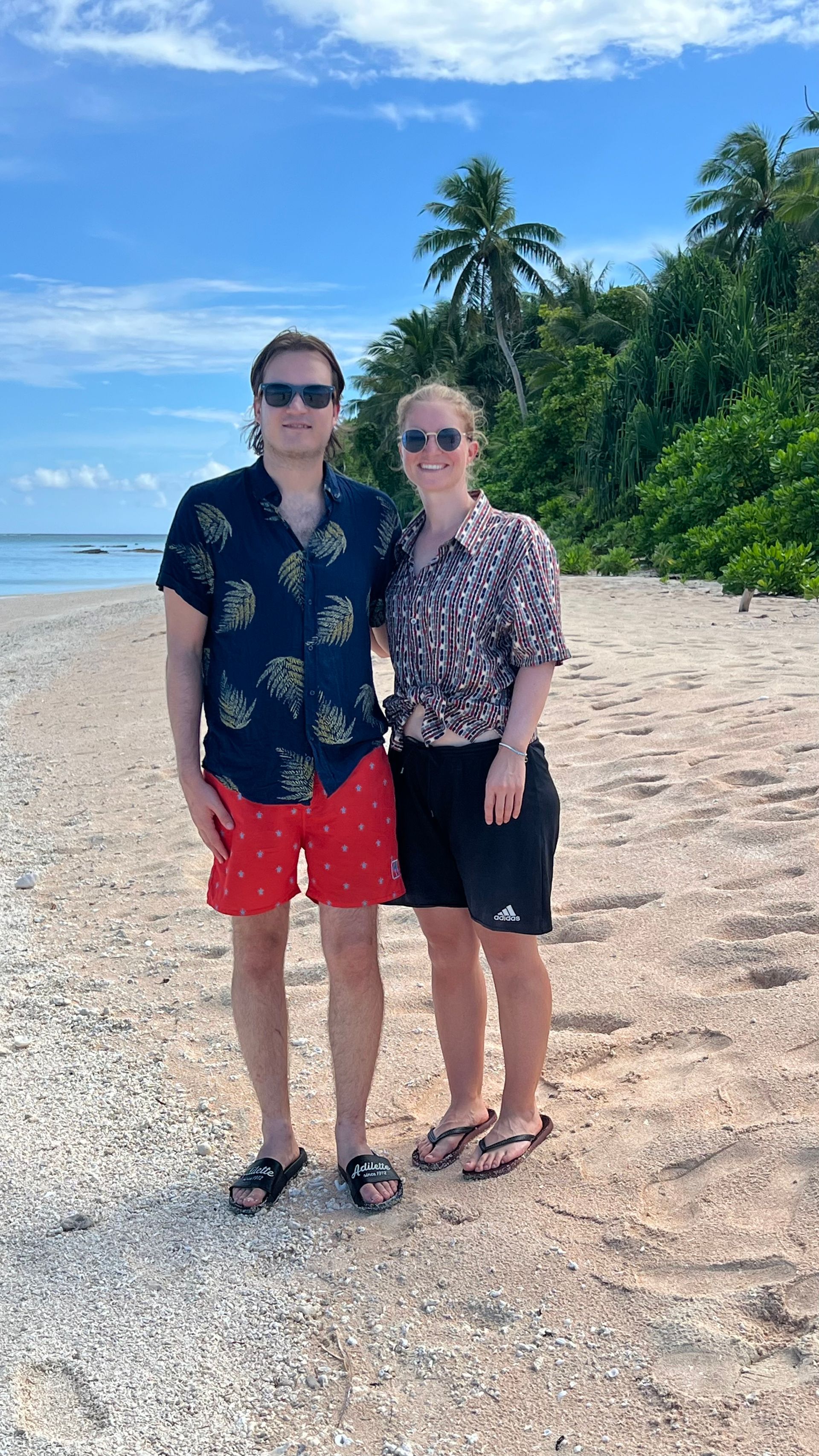
We crossed the lagoon and after almost an hour headed for a small, deserted island. We had the whole island to ourselves. The weather was also perfect, so we could really enjoy the beautiful sandy beach and the clear water. Tim and Julian launched their drones and took some great pictures. Afterwards, we went snorkeling.
Unfortunately, only some of the coral was still alive; most of it was already dead. This is due to both rising water temperatures and the major storms of recent years. Nevertheless, snorkeling was fun, and we saw lots of fish. Julian also spotted three turtles, but they all quickly scuttled off as soon as we approached.
We then continued on to a second island, this time a bit larger and inhabited. We had the beach to ourselves again and thoroughly enjoyed island life. After swimming and relaxing for a while, we unfortunately had to head back towards Funafuti. As a special treat, some dolphins came by the boat and accompanied us part of the way back.
The boat trip couldn't have been better, and it was even better with Tim and Lina because we got along incredibly well.
The next day we rented a scooter to drive around the rest of the island to its northernmost point.
First, however, we said goodbye to Tim and Lina, who were continuing on towards Fiji.
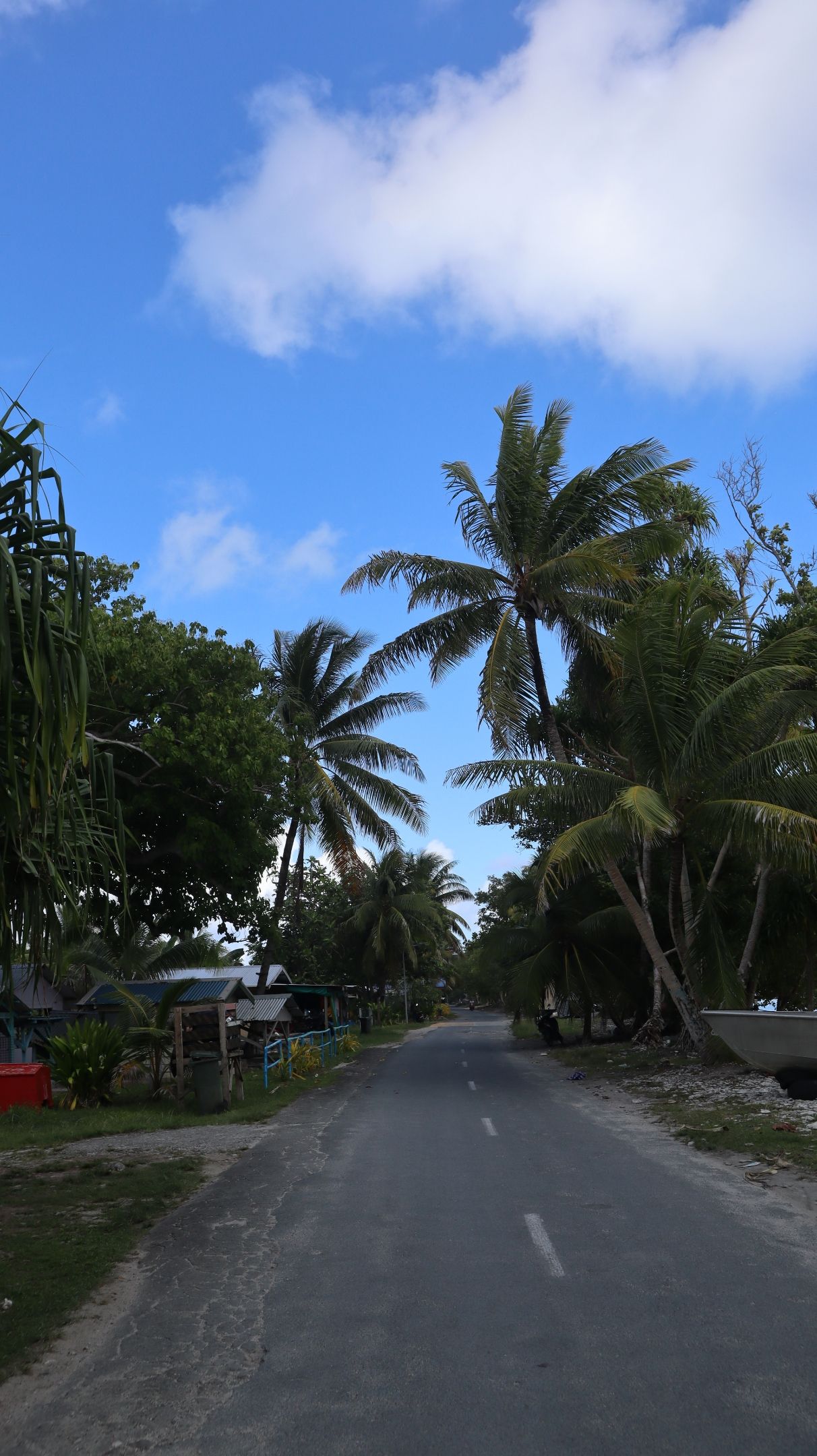
Then we sped north along the road until it ended. A few hundred meters more on foot and we had reached the end. We took our time on the way back, stopping frequently for photos and to admire the houses and huts of the locals.
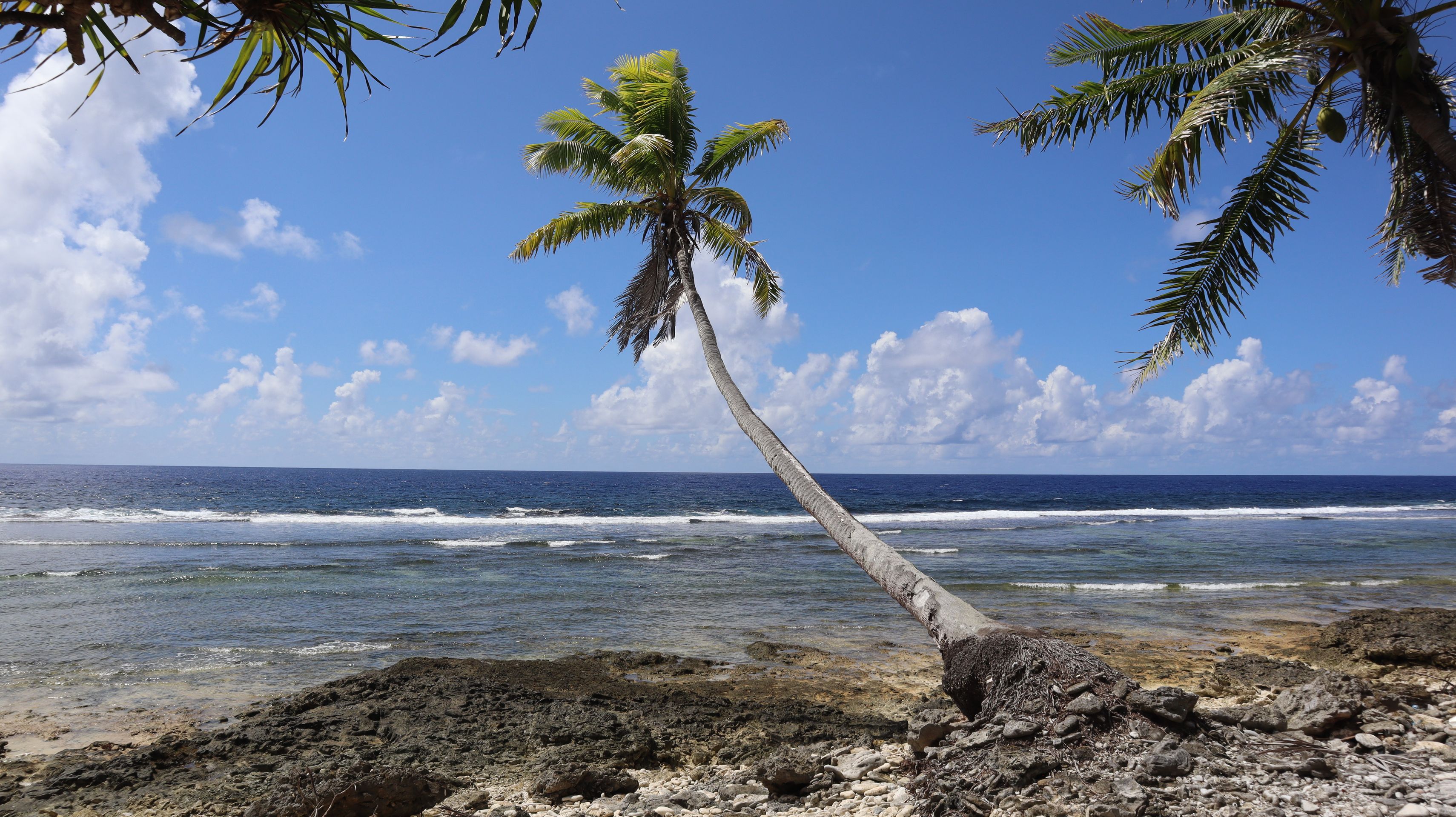
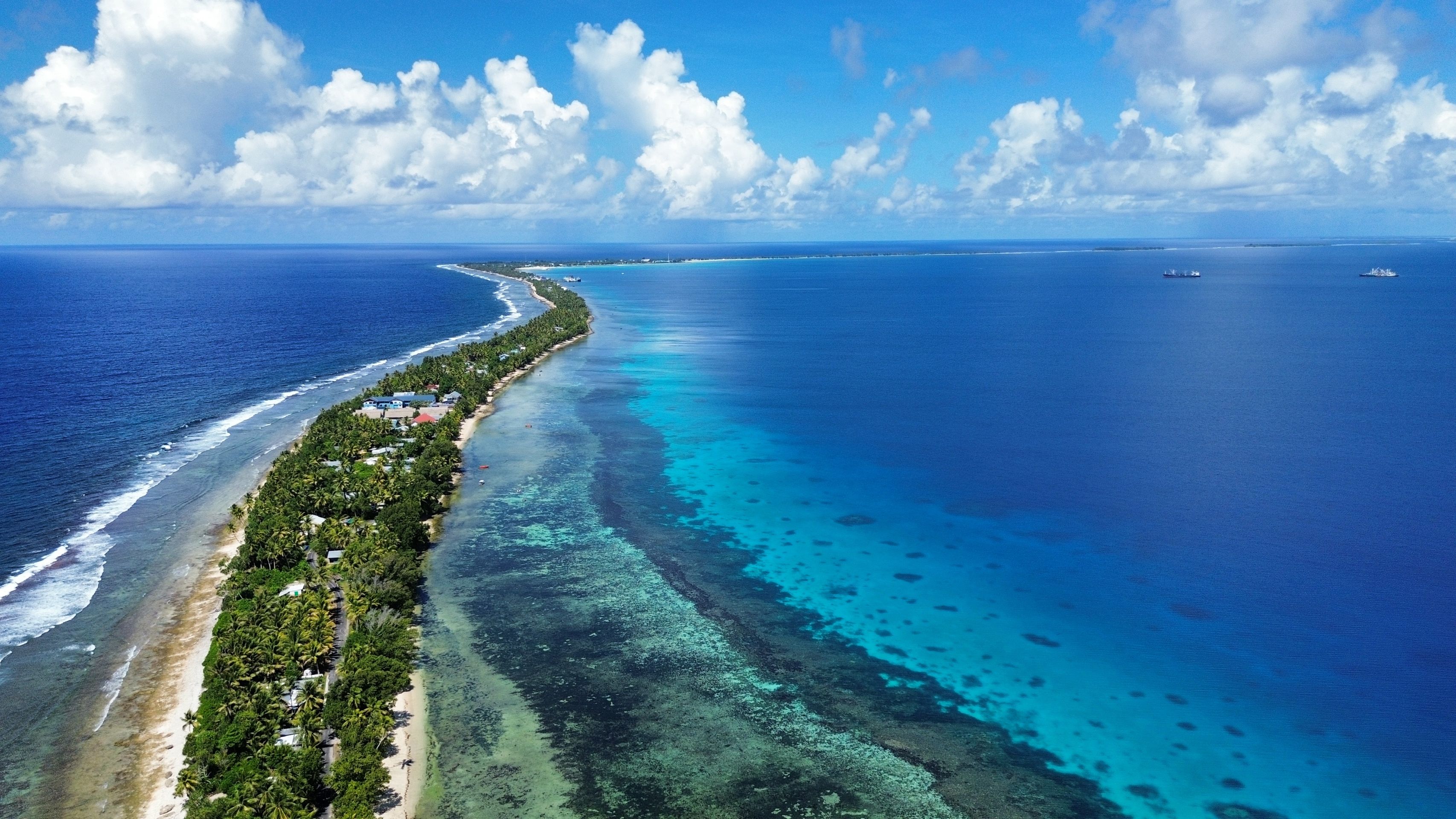
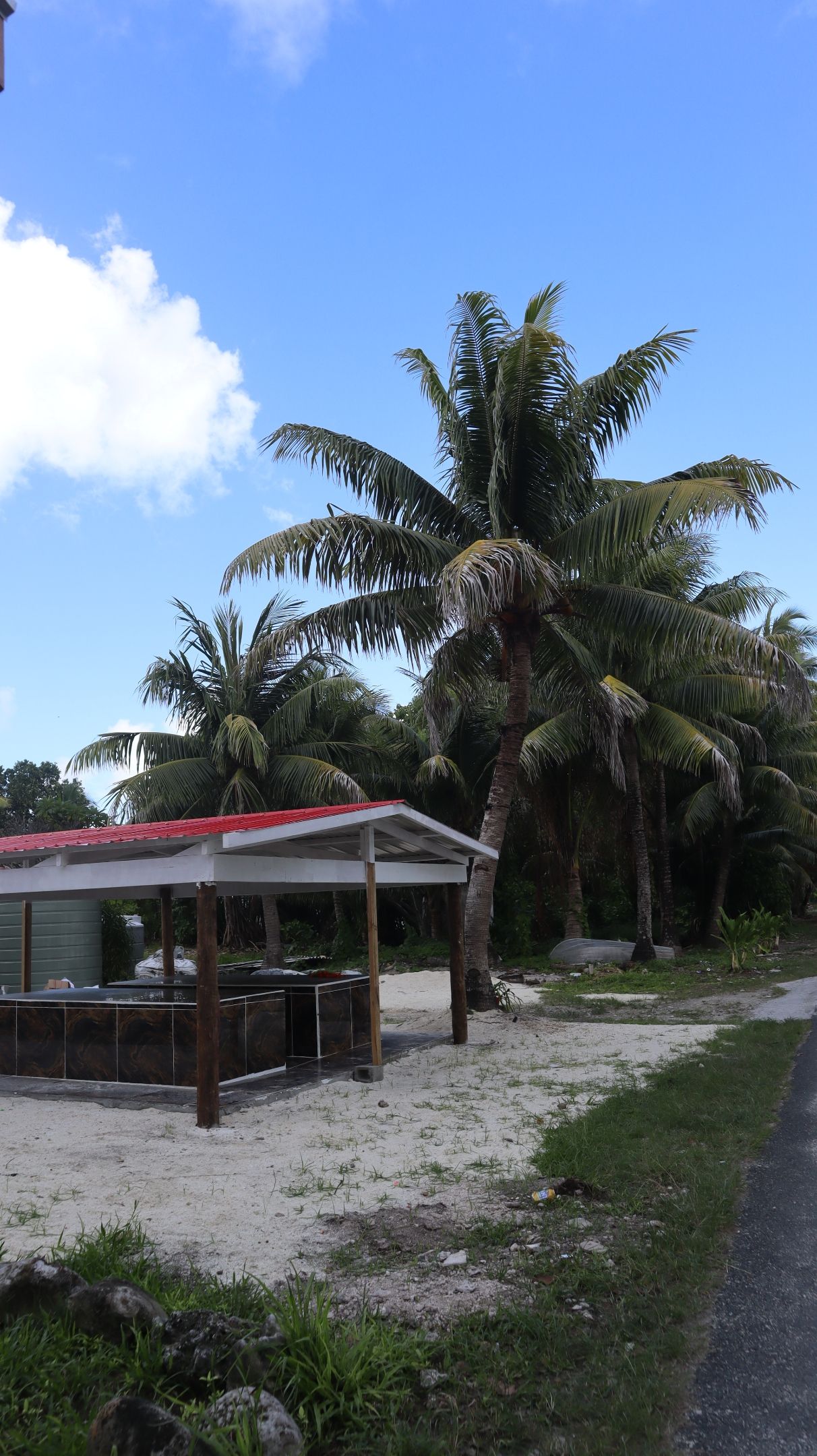
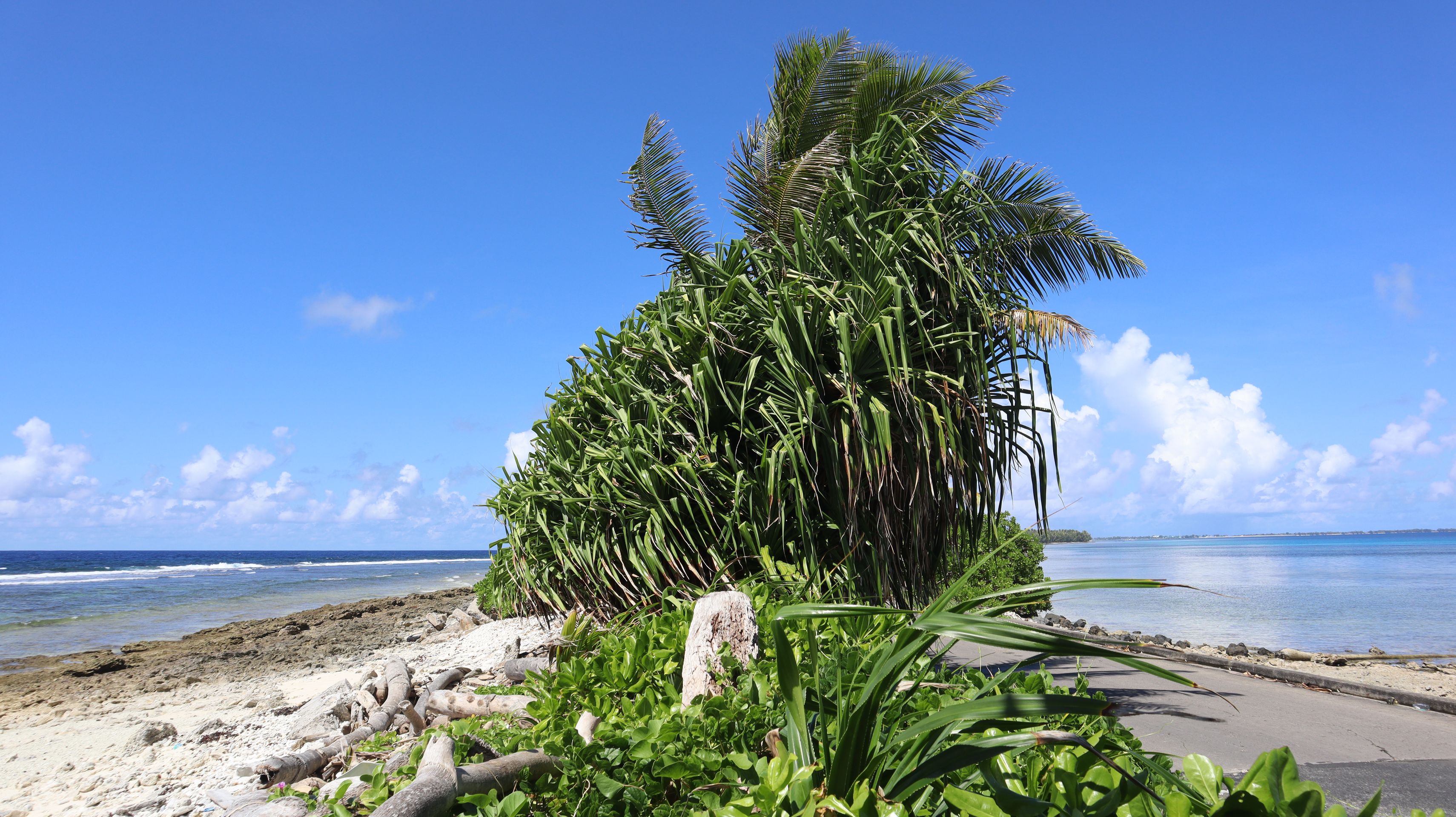
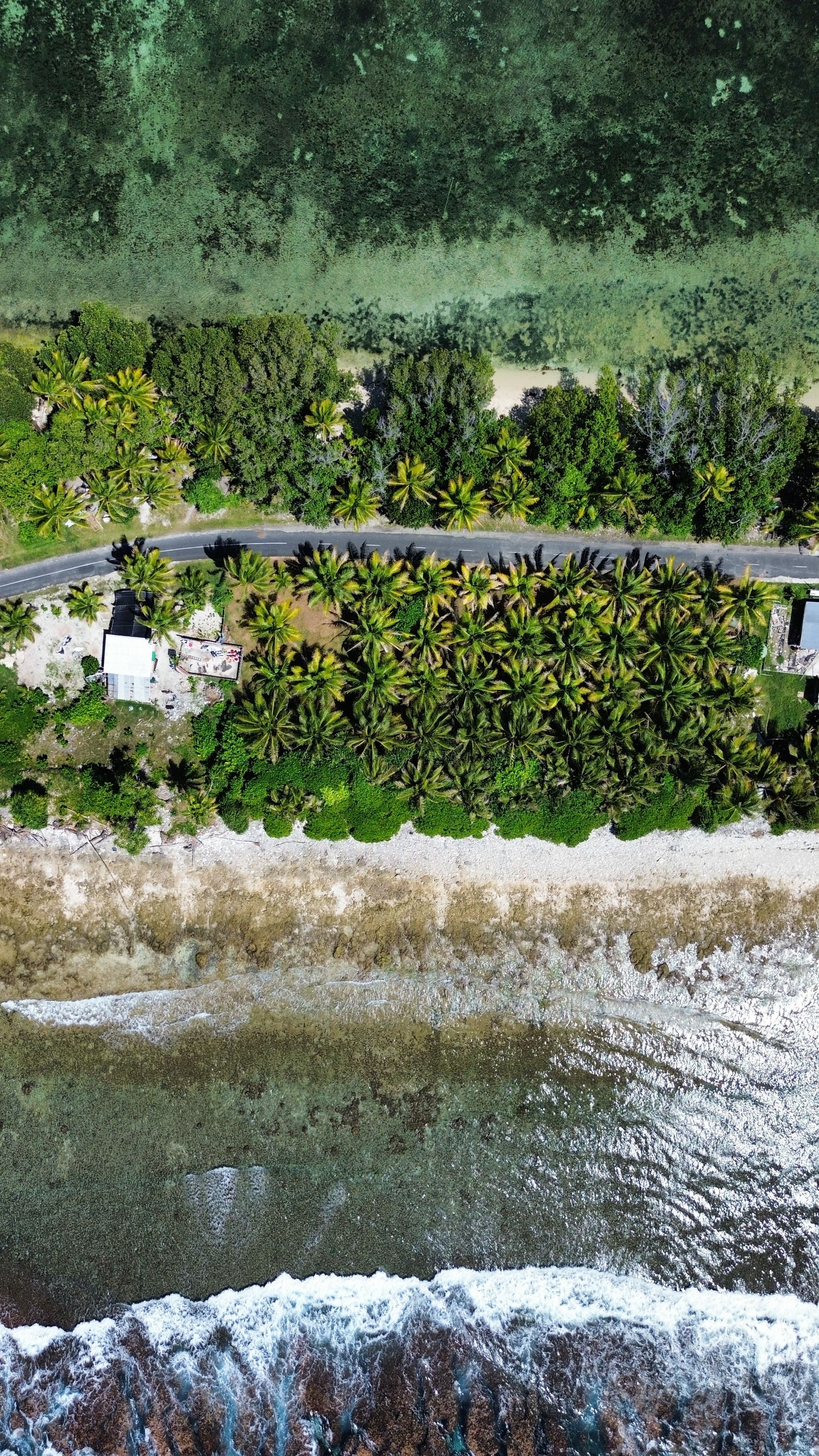
Especially at the northern end, we became acutely aware of just how narrow the island is. On one side, the open ocean with large waves and surf. Then a bit of beach, a few palm trees, the road, more beach, and then the lagoon with calm water and only small waves.
At its narrowest points, the island is actually only about 5 meters wide. It's only 12 km from north to south.
We noticed how small the island is and how few tourists it has, especially from the locals. They showed little to no interest in us. Only the children were curious, saying hello or giving us a high five. There are practically no tourist facilities, souvenir shops, or tour operators.
The few restaurants mainly offer Asian food. Local restaurants or dishes are nowhere to be found. The few restaurants and the large supermarkets are run by Taiwanese people. The two countries have an agreement, which is probably why a few Taiwanese people ended up in Tuvalu at some point.
Nevertheless, or perhaps precisely because of this, we felt very comfortable in Tuvalu. Everything was relaxed, and there were no overcrowded tourist attractions. We were practically alone in the restaurant; the locals always collected their food in large bowls for the whole family. The boat trip to secluded islands and beaches, practically all to ourselves, will surely remain a vivid memory for a long time. We also won't soon forget the atmosphere on the streets and especially on the runway.
Looking so directly at climate change also gives us pause for thought. The people of Tuvalu have contributed virtually nothing to climate change, yet they bear the consequences. Locally, however, this wasn't an issue, and people carry on with their lives, making the best of it.