Right in Trend
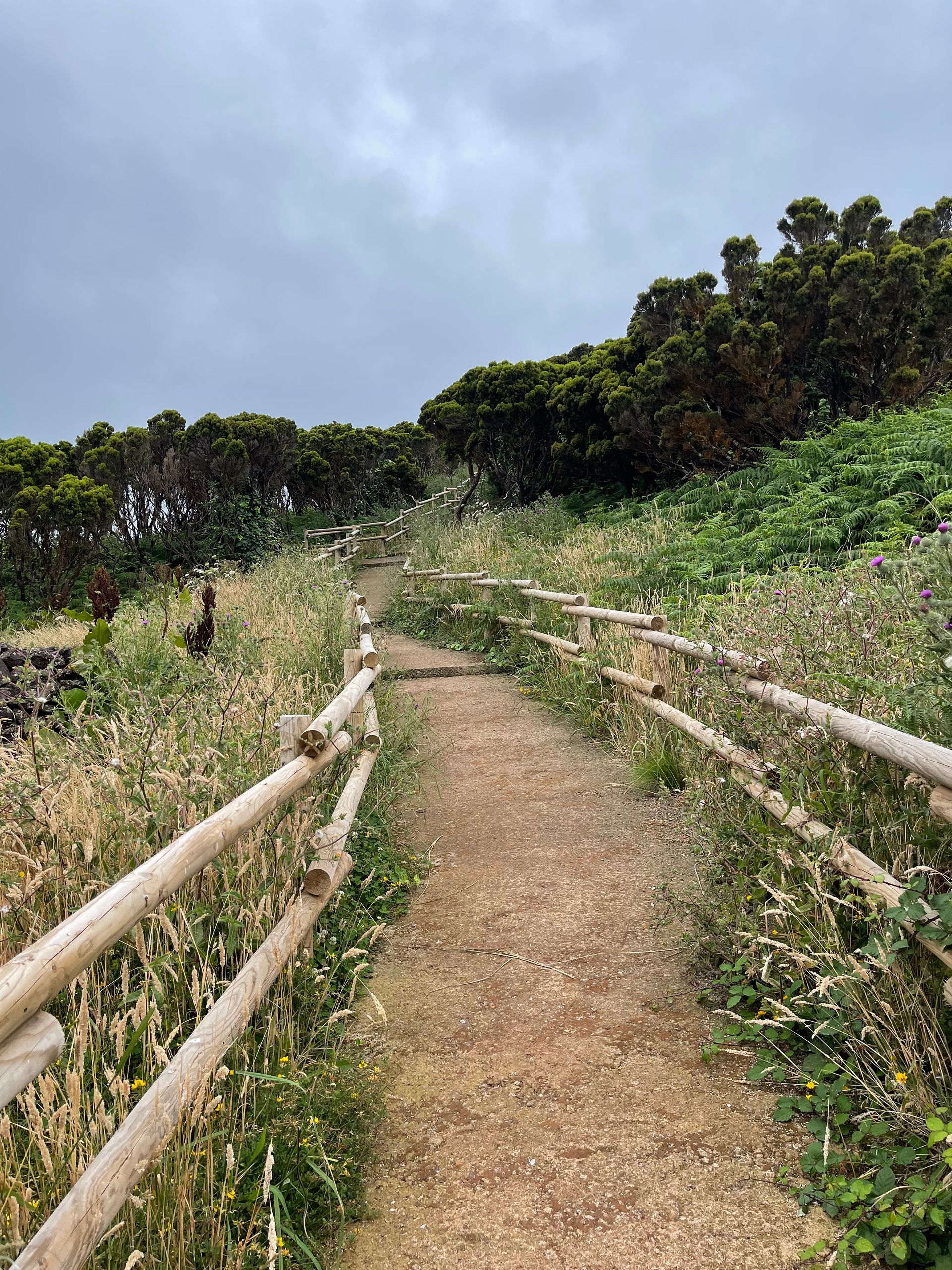
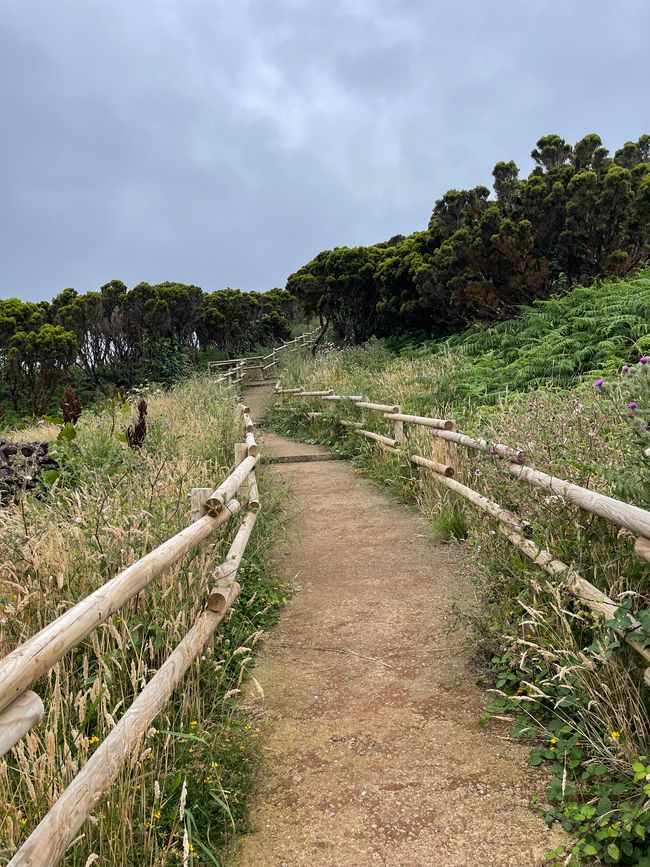
Today we are doing something for our health. We will try the latest trend - 8.4 km of health walking. While regular hiking primarily engages the leg, glute, trunk, and ba

Published: 25.07.2026
The weather invites us to have breakfast in the garden. When we arrived, we had scheduled the breakfast time for 8:40 AM (we had to do this because there is limited space in the breakfast room during bad weather - it doesn’t matter when the weather is nice, there are plenty of spots outside, but some guests don't adhere to the agreements and occupy the spots. That’s why we were asked if we would be willing to shift our time to 8:00 AM or 9:20 AM. We could choose spontaneously. And since we have a big heart for rule-breakers, we tried 8:00 AM, but failed miserably.
After yesterday's active day, today is again reserved for sightseeing. We still need to visit the western lighthouse, the cheese factory, and the last Piscina Natural in Velas.
We learned from Bernd and Christel (the couple we traveled with) that the tour is quite interesting, but you need to register in advance.
It fits perfectly that the cheese factory is on the way to the lighthouse. A quick pit stop to reserve the tour and a forced espresso, as it is currently raining small dogs.
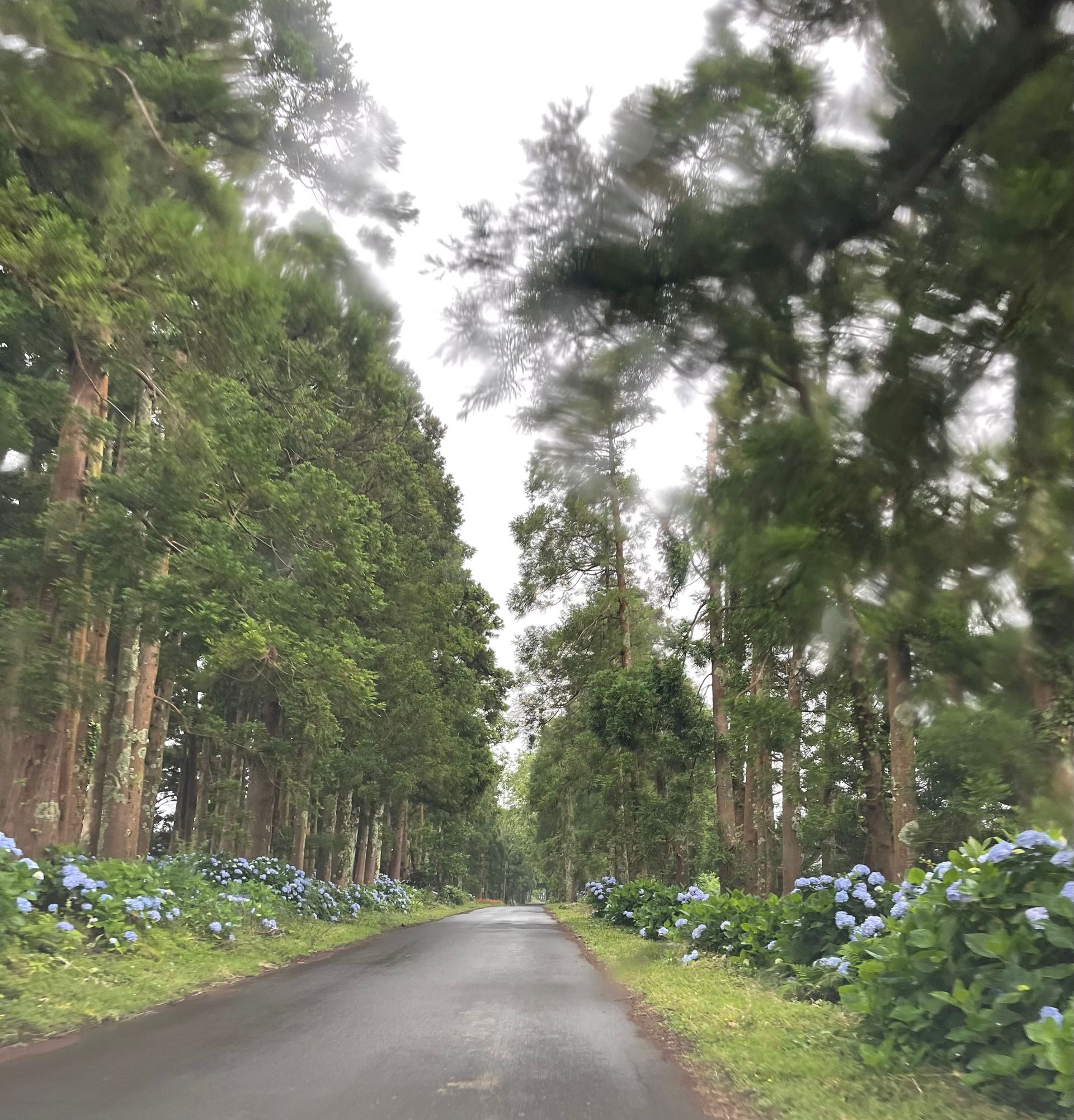
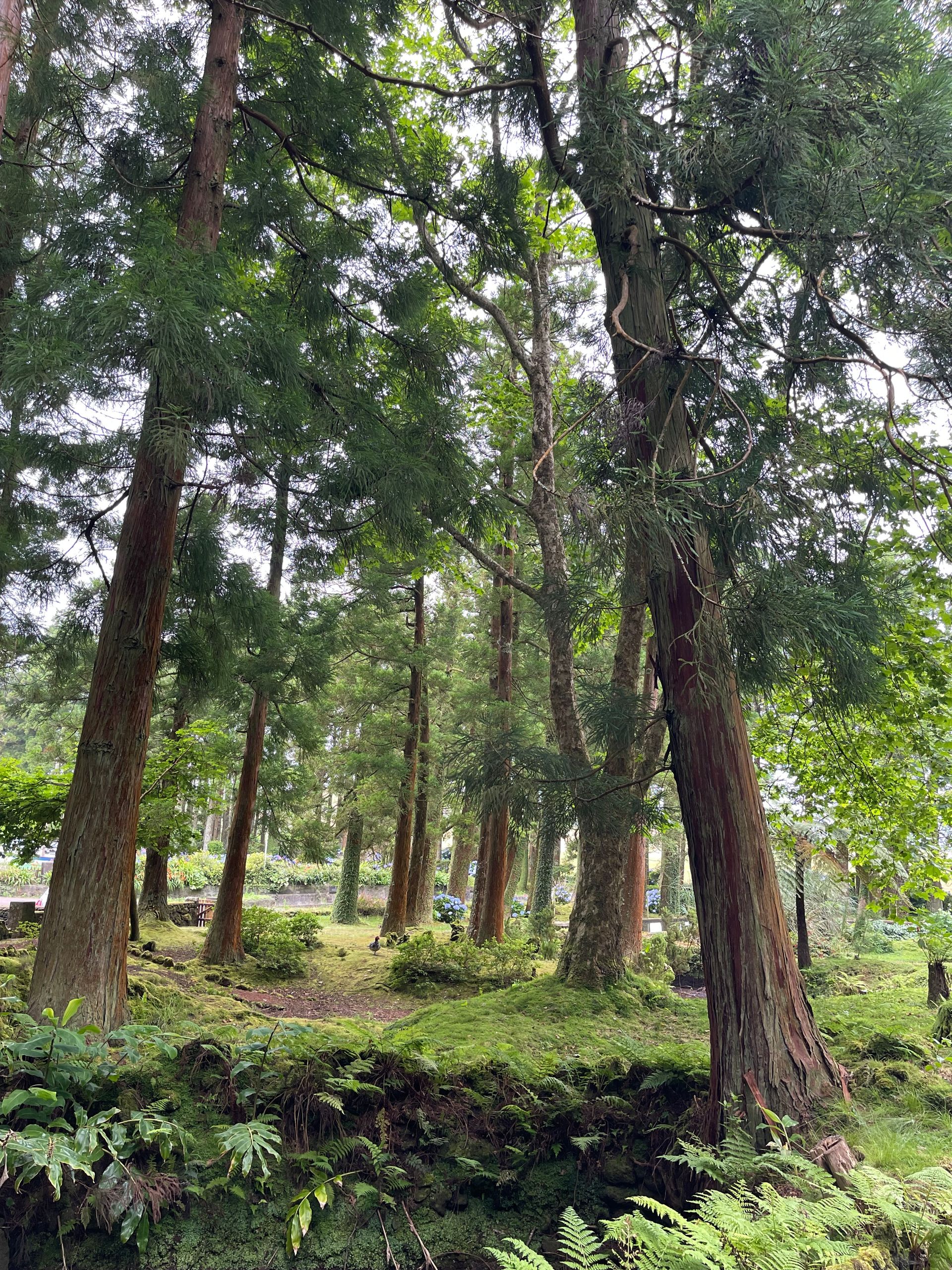
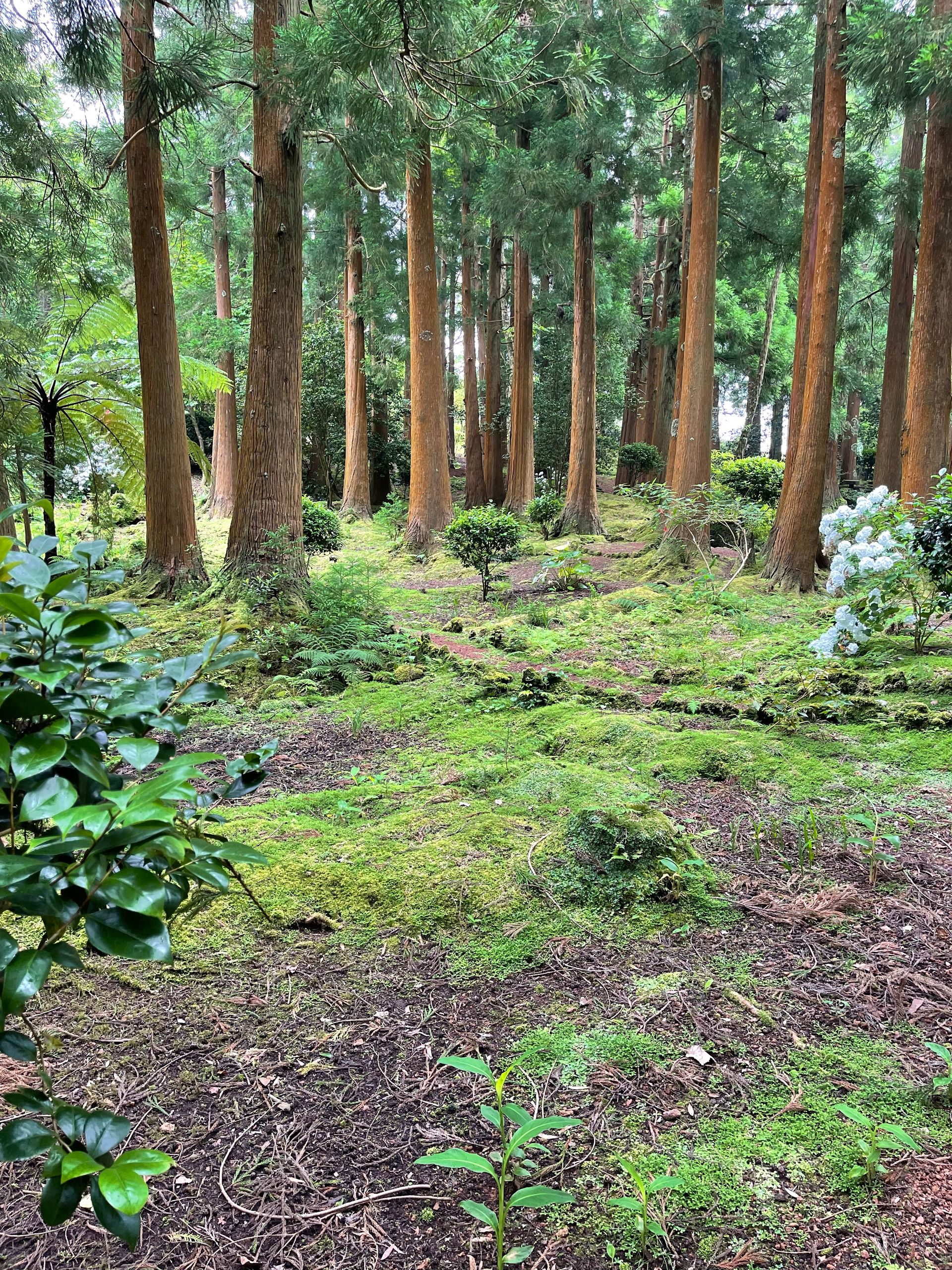
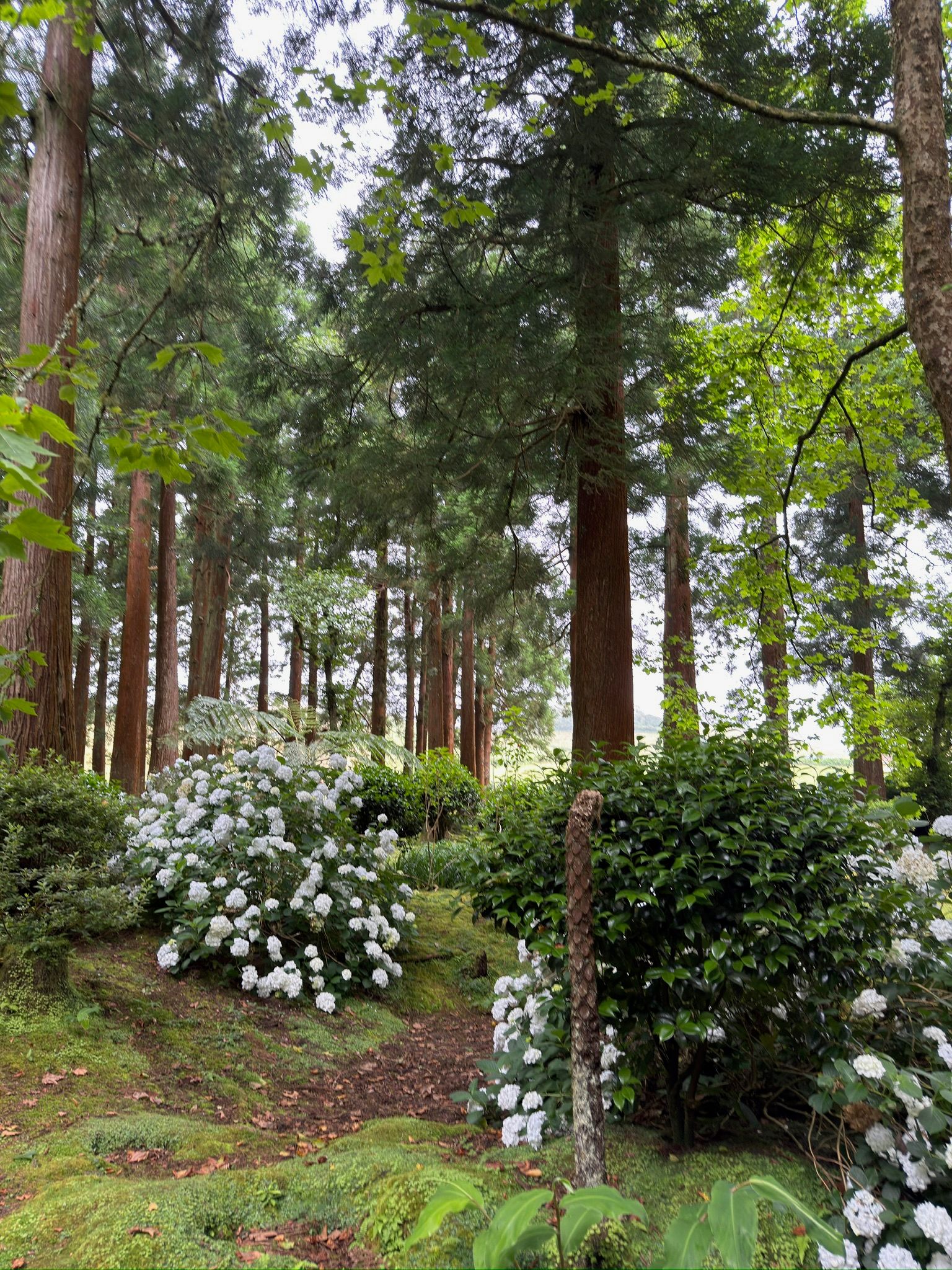
We take the upper road and pass through small forests
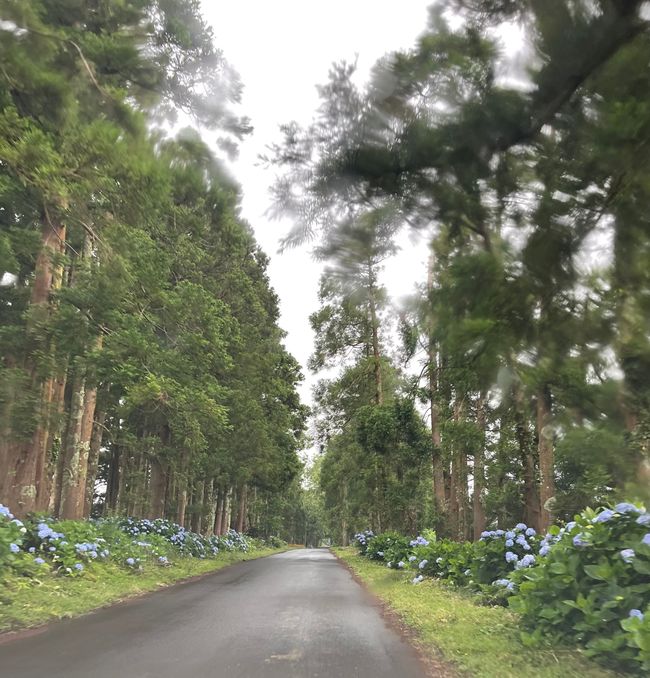
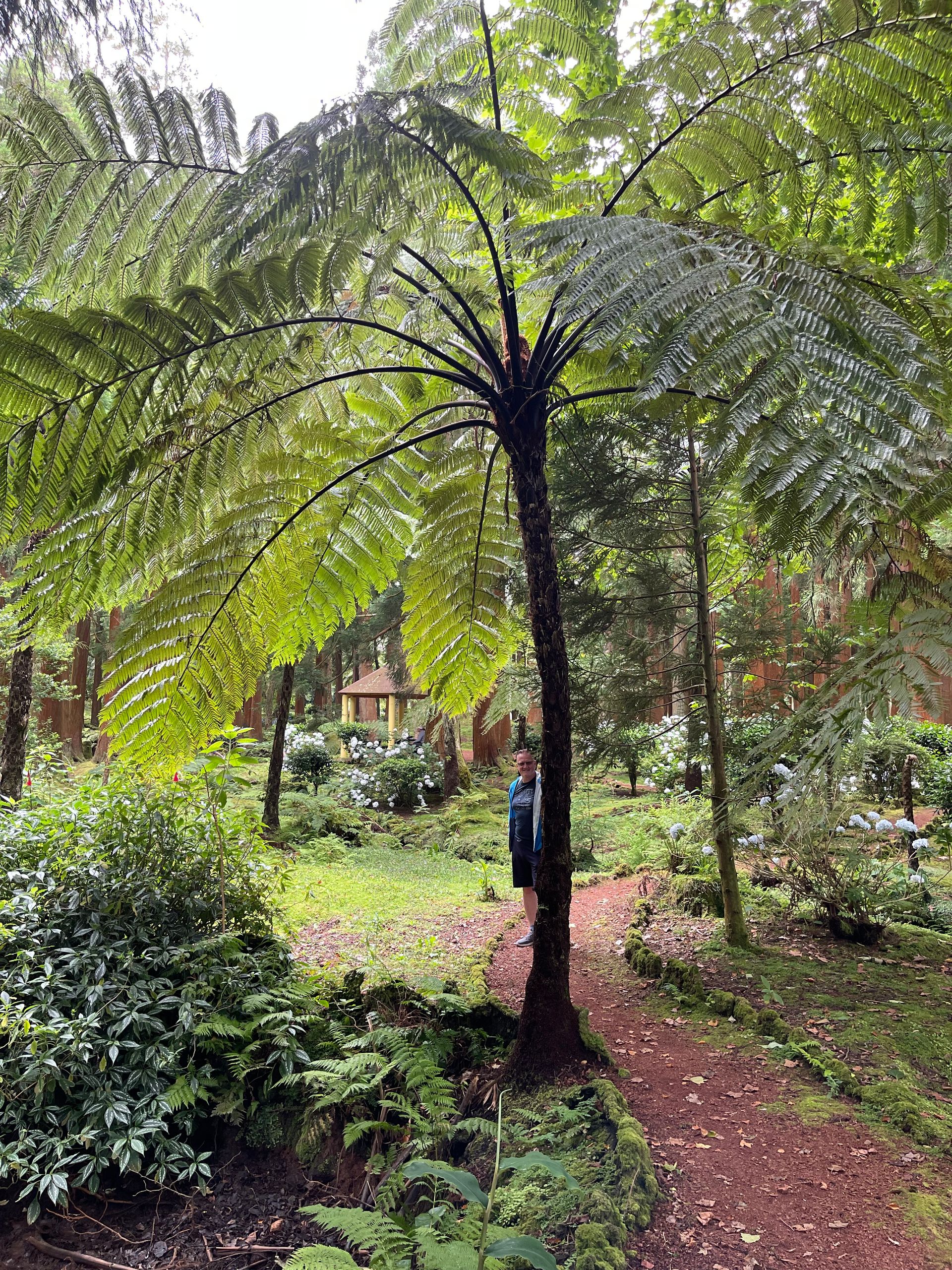
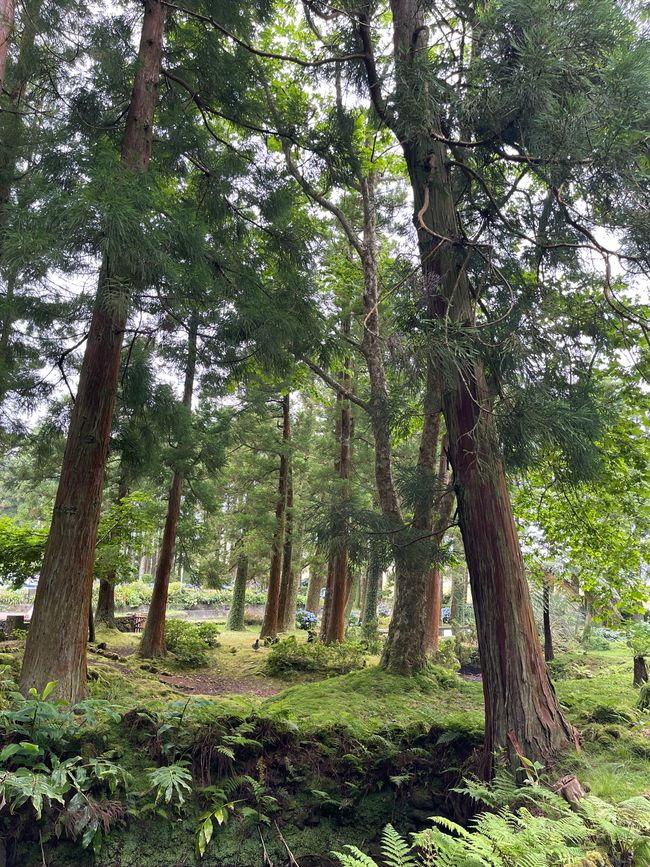
to the Parque Florestal das Sete Fontes. A small, beautifully landscaped oasis in the middle of nowhere. A great place to linger.
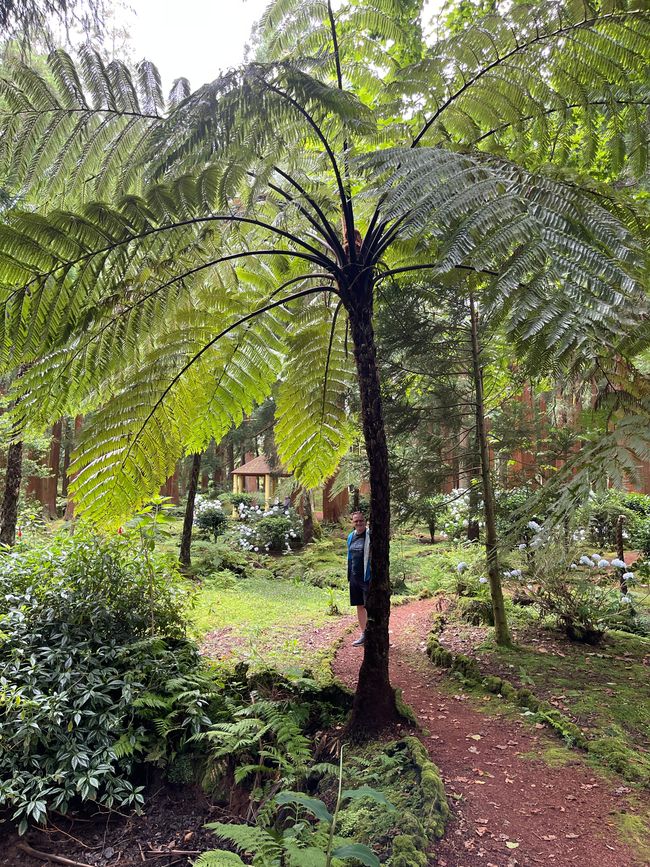
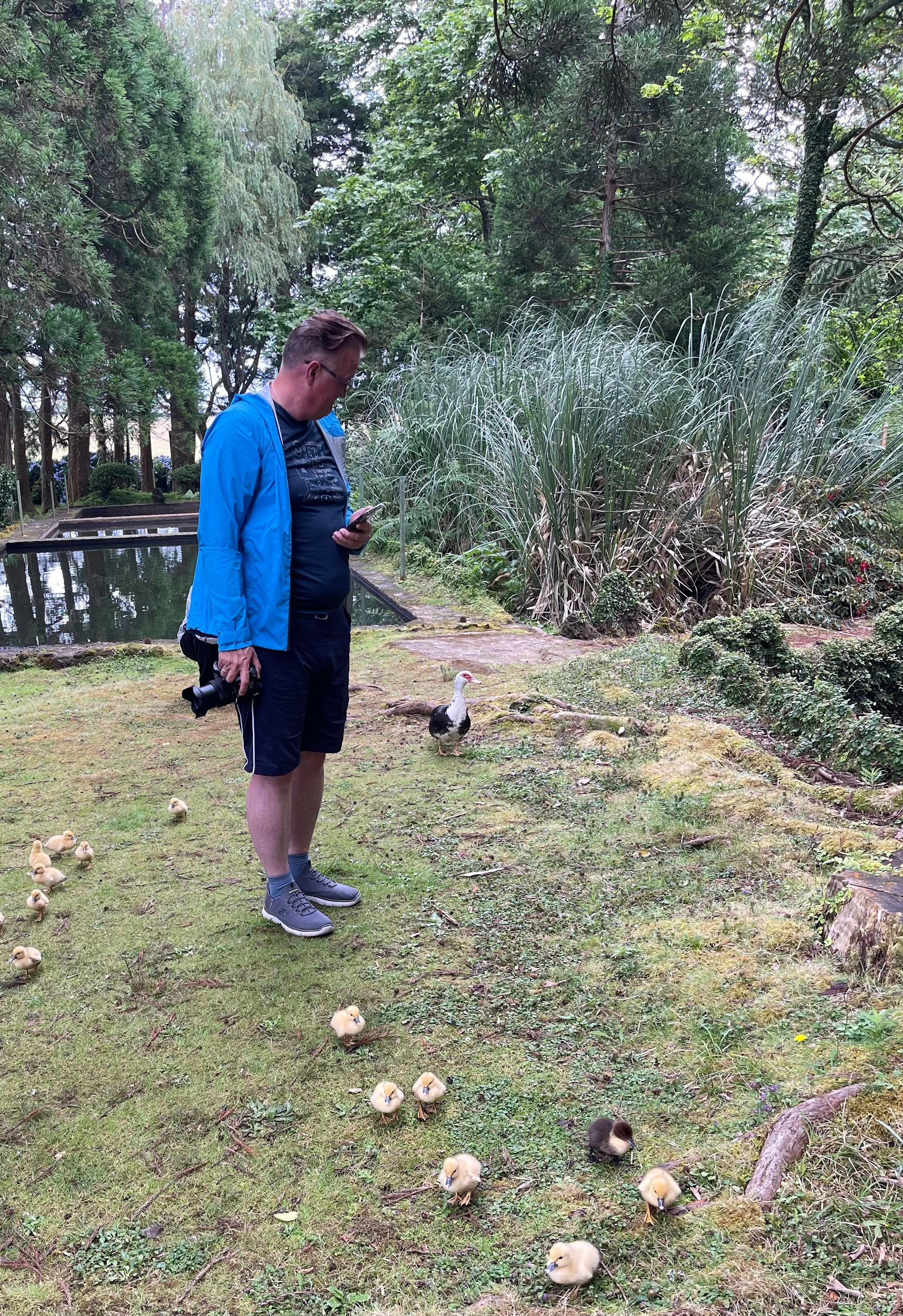
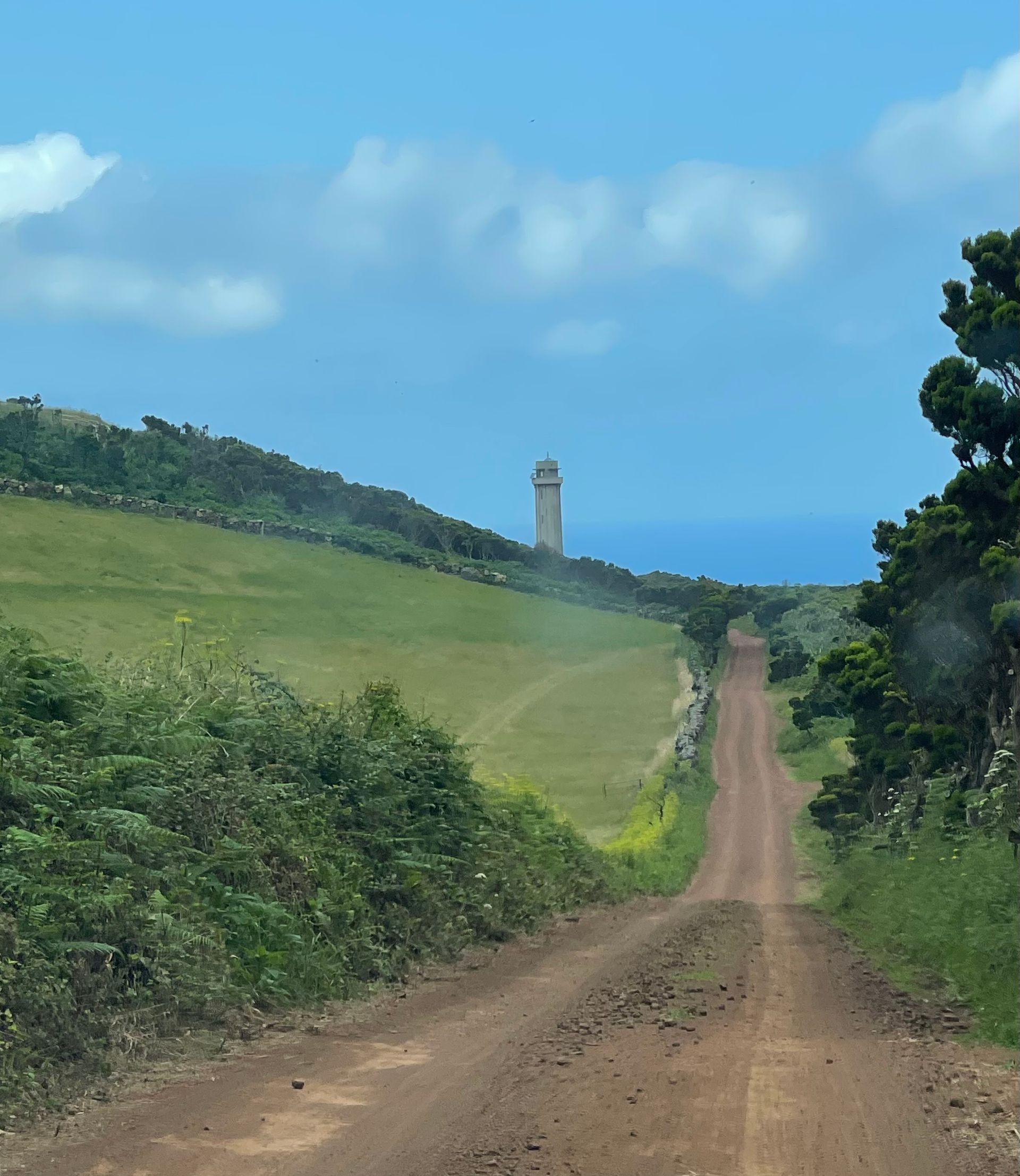
After a mother duck with about 20 ducklings has cleared the path, we continue on a gravel road toward the lighthouse.
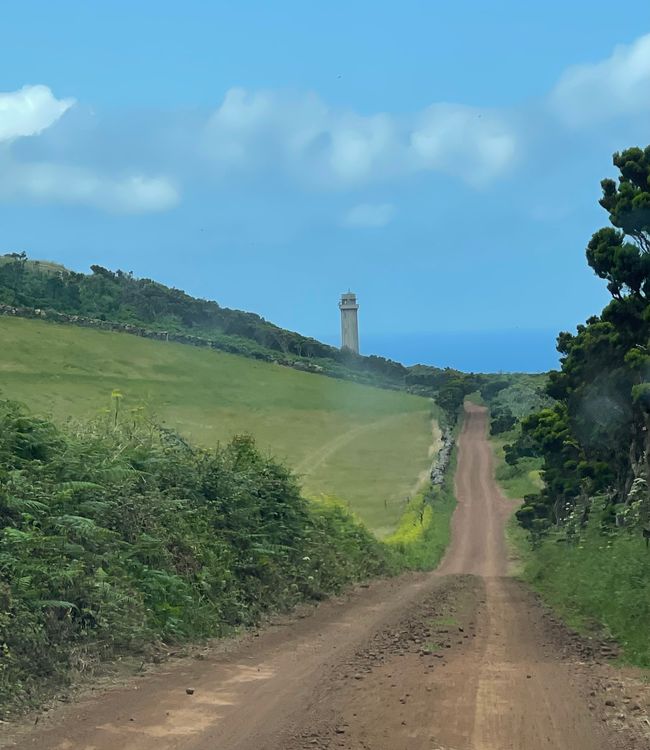
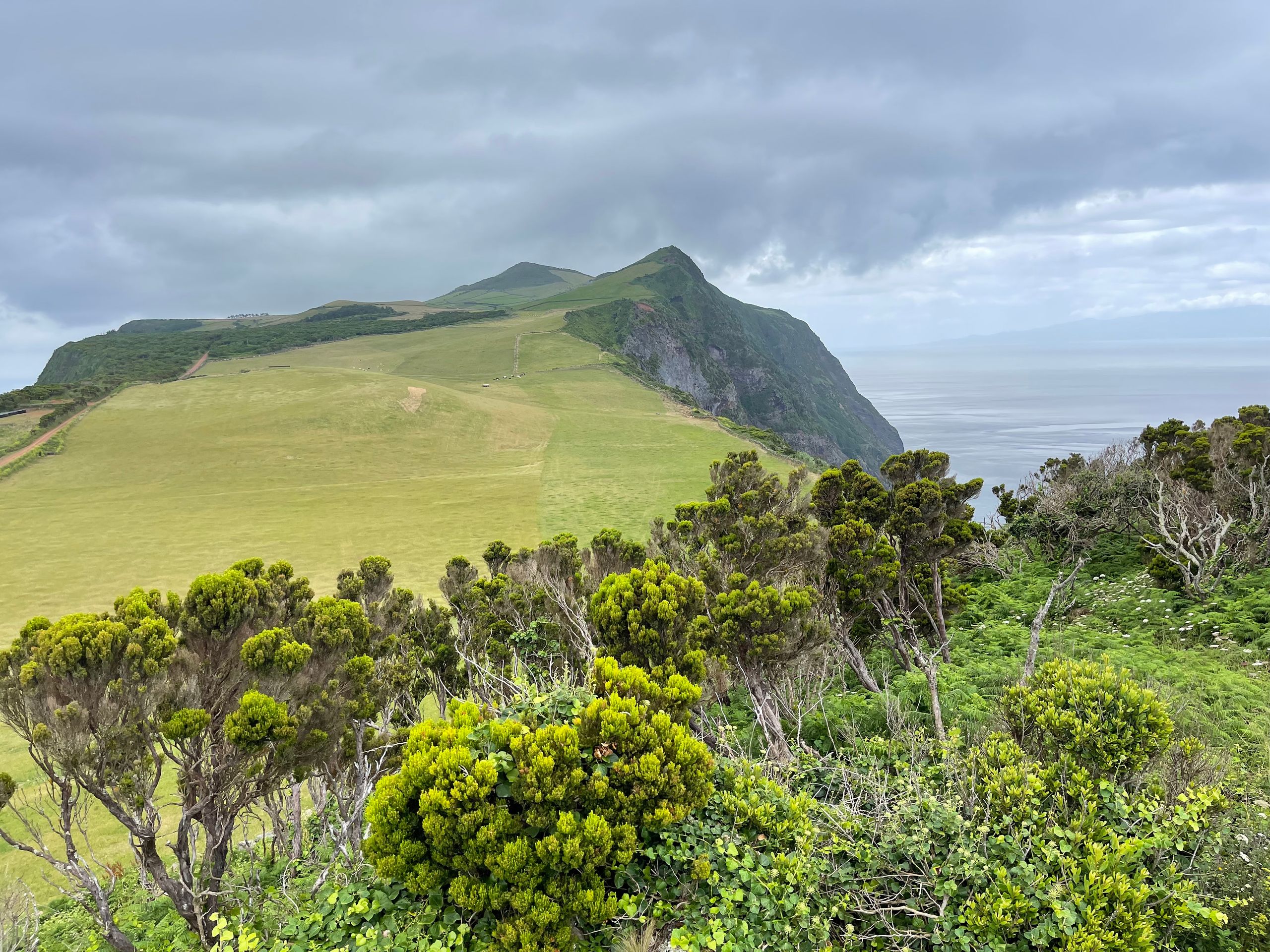
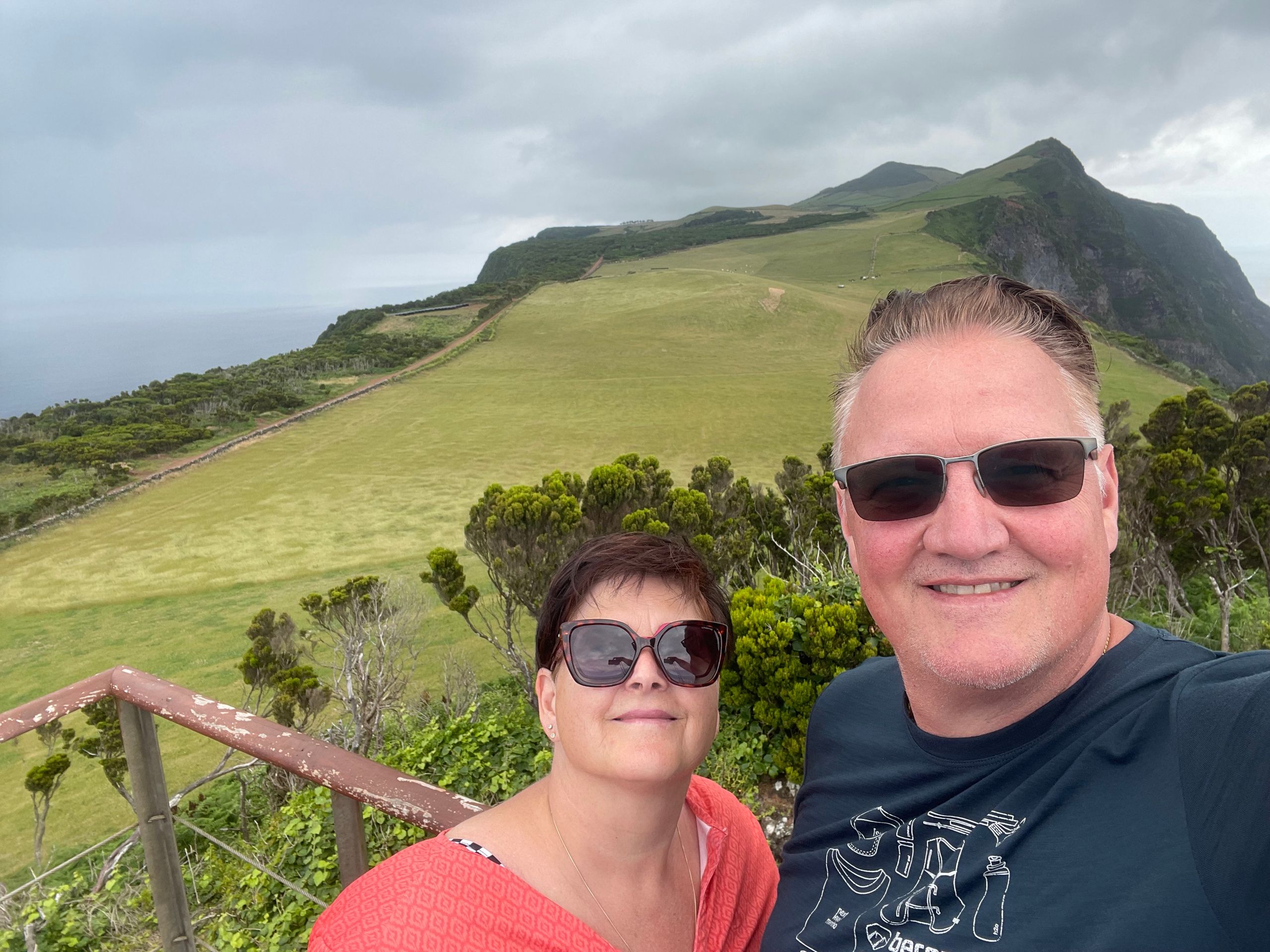
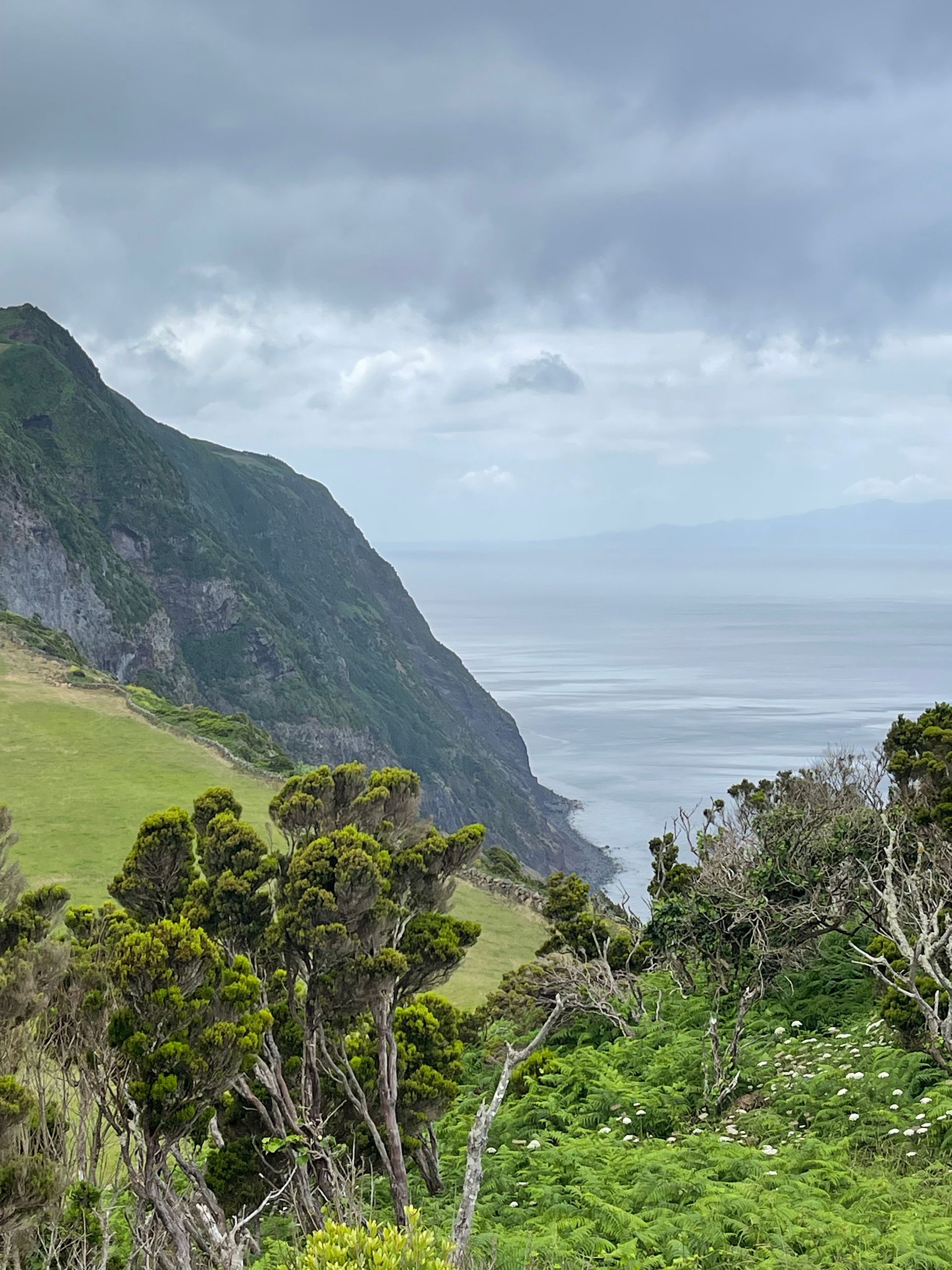
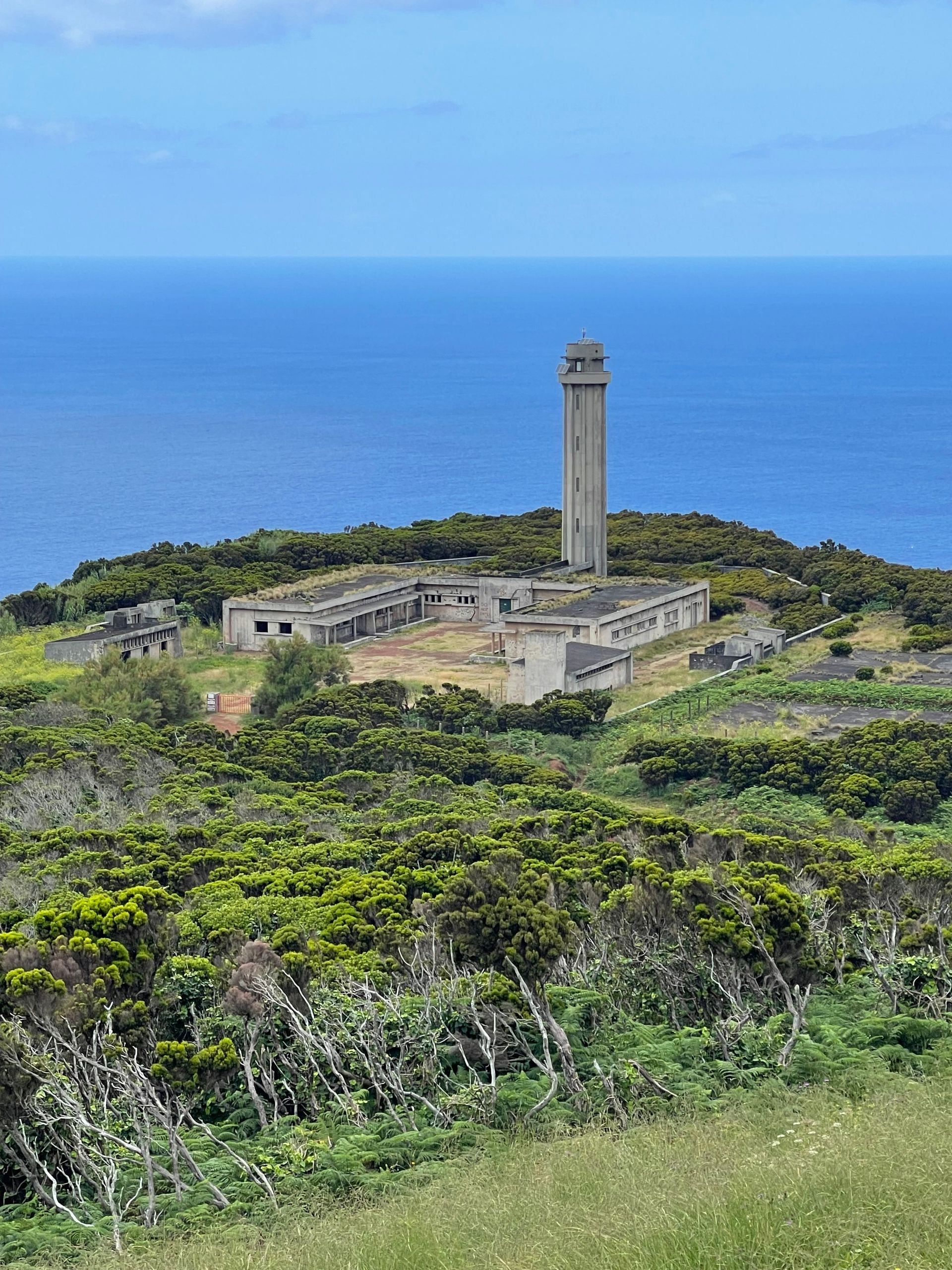
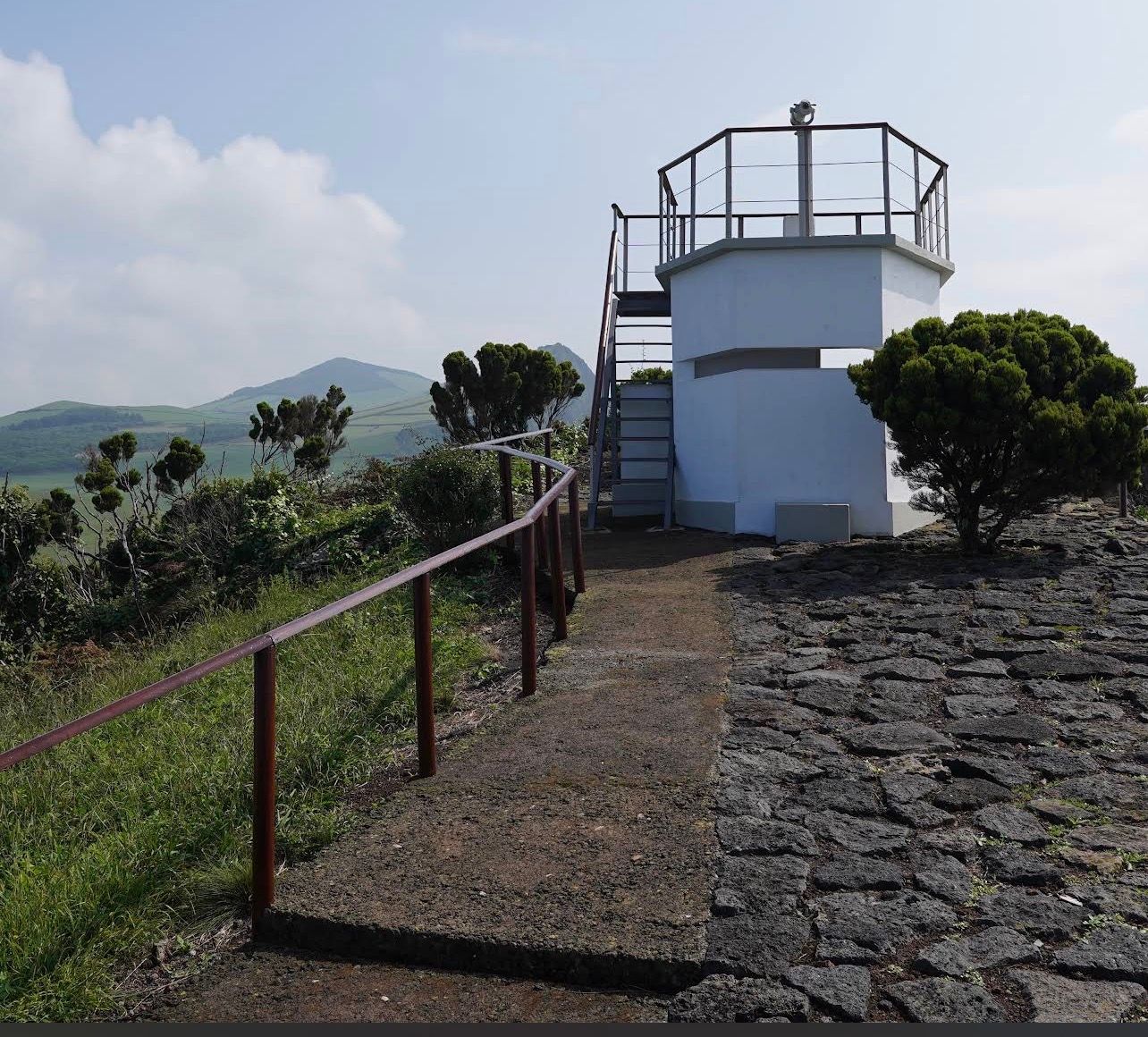
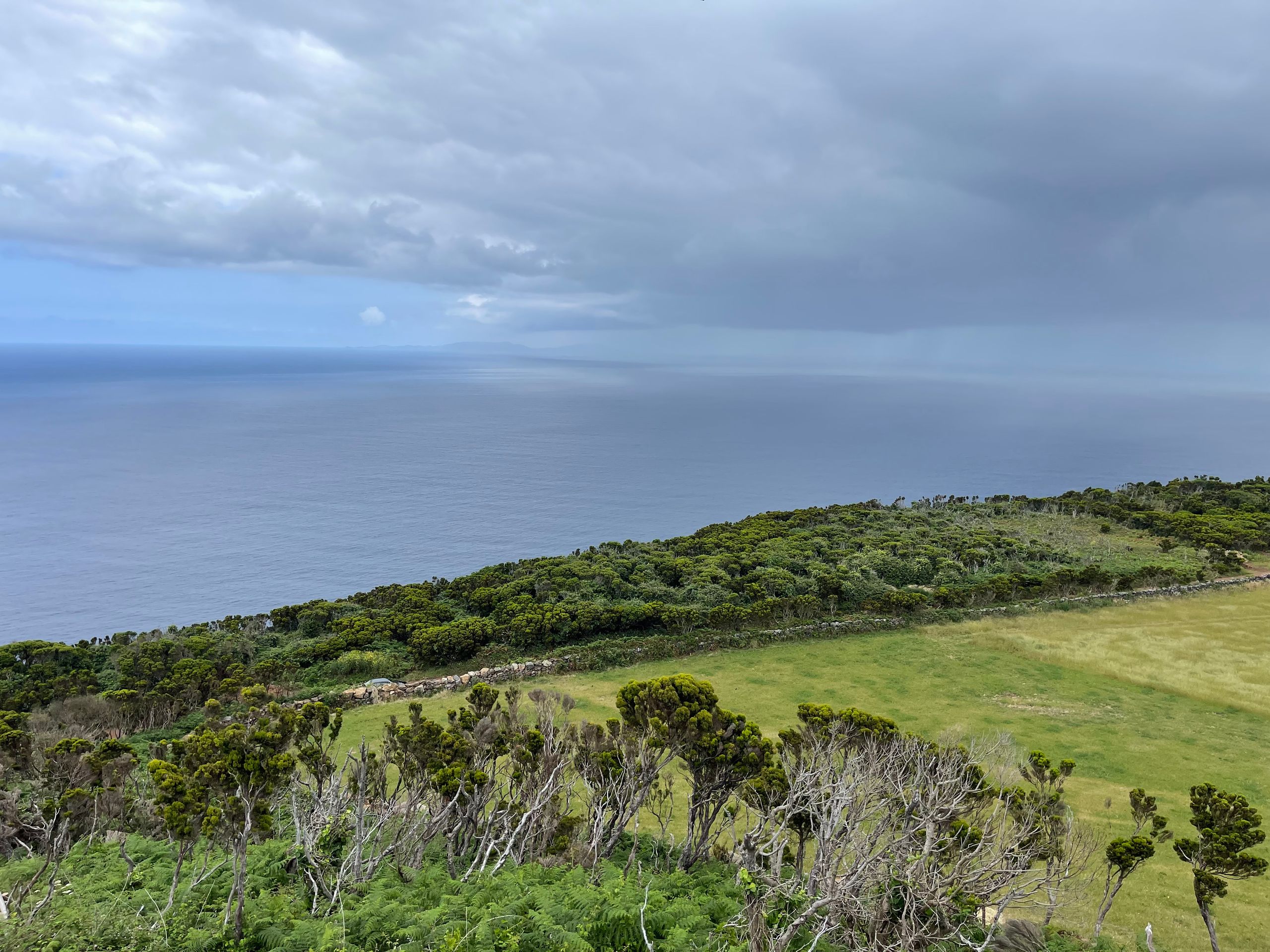
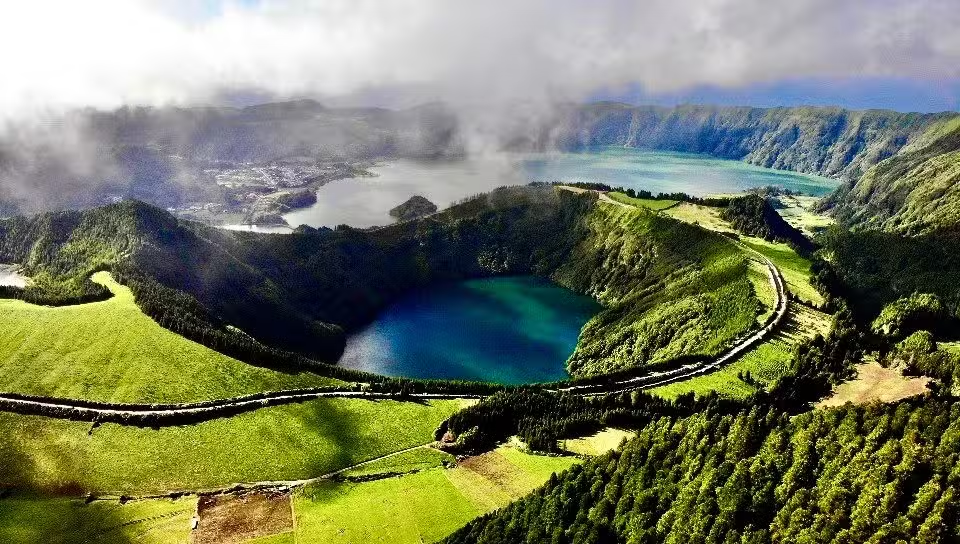
The lighthouse is closed and quite dilapidated, but from the viewpoint Vigia da Baleia you have a great overview.
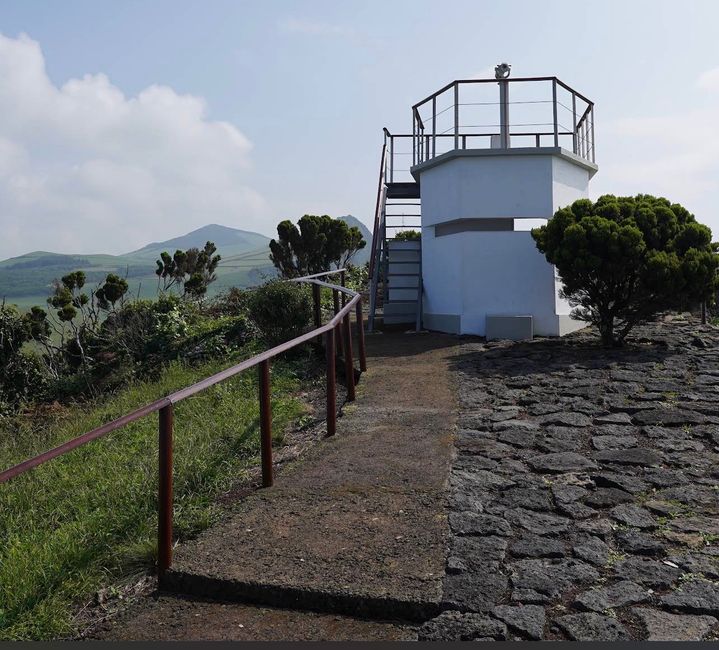
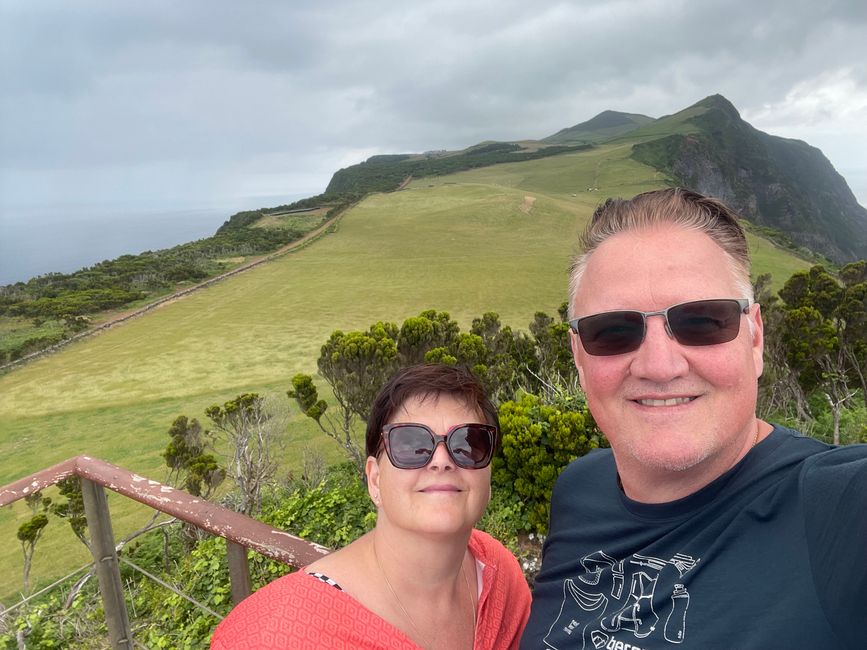
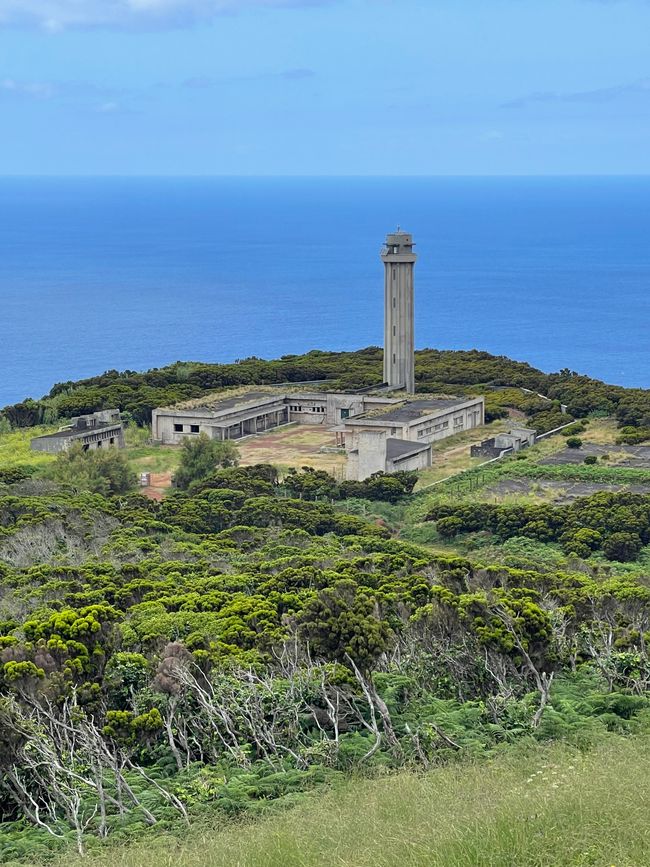
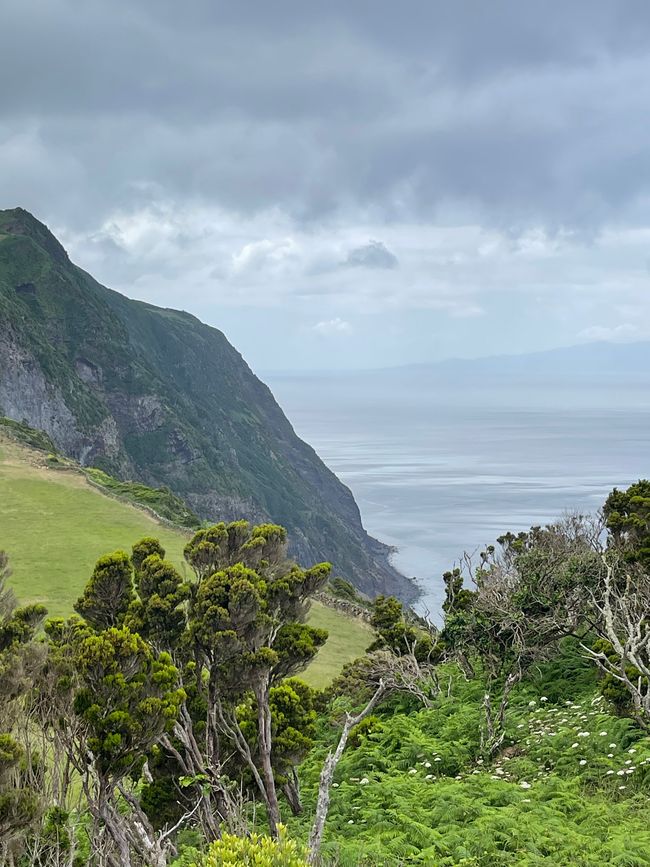
Apparently, on a clear day you can see 4 of the 9 islands. Today, after a great calf and fascia training during the ascent,
we can only see 3 islands: Pico, Fajal, and Graciosa. Terceira is hiding behind a thick rain cloud that is moving rapidly towards us.
On São Jorge, a cheese with a very strong, pure, and spicy aroma is produced.
The longer it matures, the stronger the taste. After 12 months of maturation, it already has a bit of sharpness.
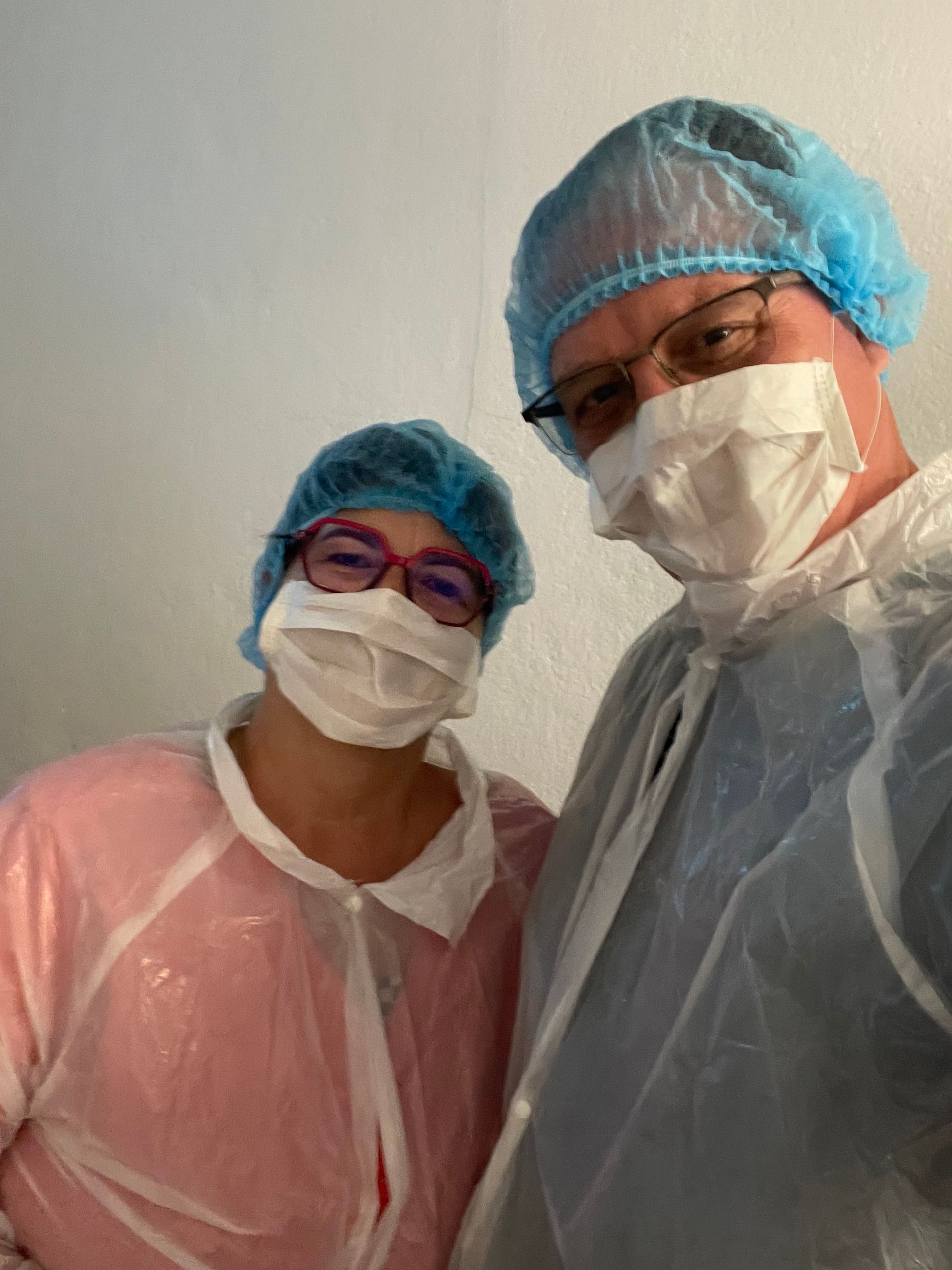
Before starting the tour, we must put on our protective clothing,
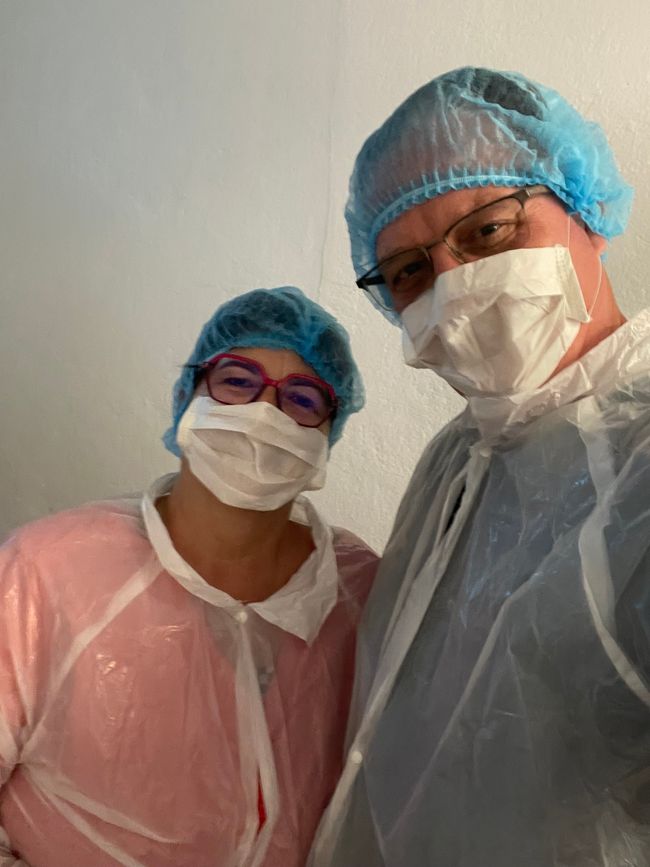
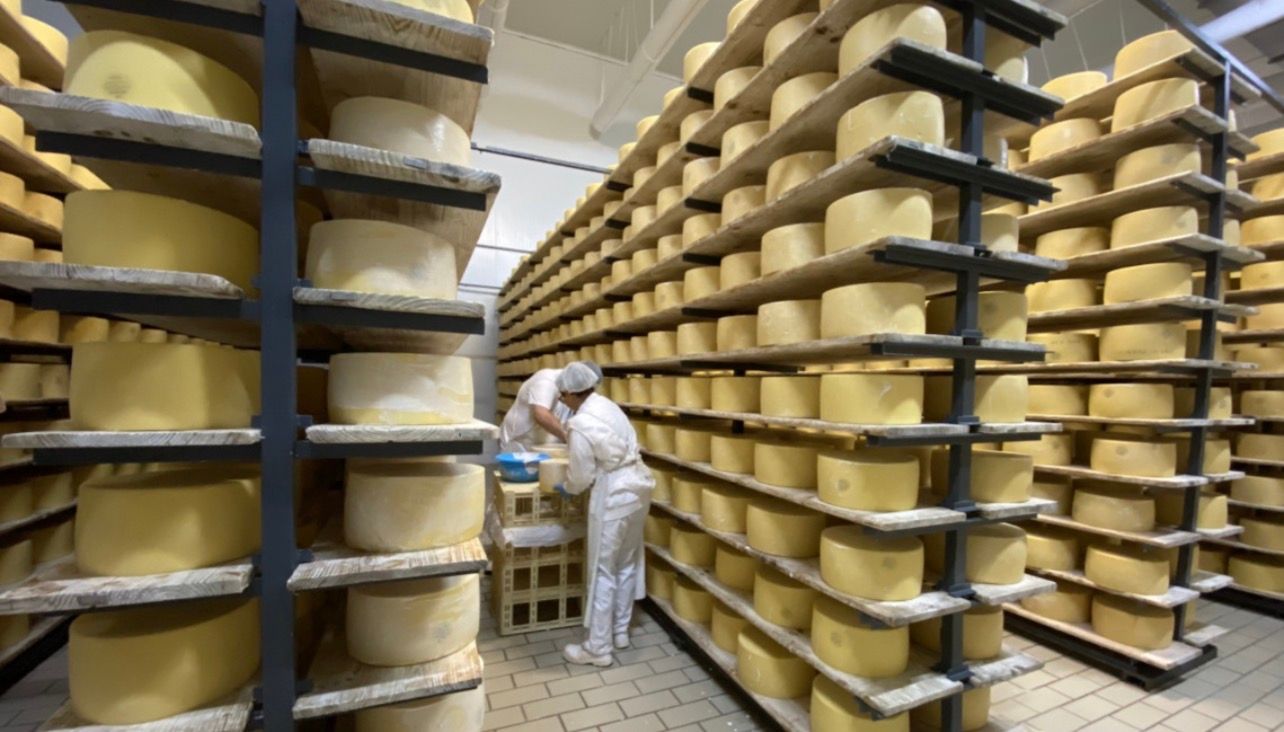
then we head to the production facility. Photography is strictly prohibited (that’s why the photos are from the internet)
Facts:
At the União de Cooperativas Agricolas de Lacticínios de São Jorge factory, 500 cheese wheels are produced daily. A 12 kg cheese wheel requires 120 liters of milk.
The milk comes only from the black-and-white Holstein-Friesian cows (German breed), as this milk has the right fat content, the right sweetness, and composition. The cheese contains only rennet and salt, which is mixed in by the workers manually in enormous troughs. I would say they don’t have ergonomic workplace consultations here.
And there is still room for improvement when it comes to occupational safety.
The cheeses must rest for 2 weeks after the press and during this time develop a wax layer.
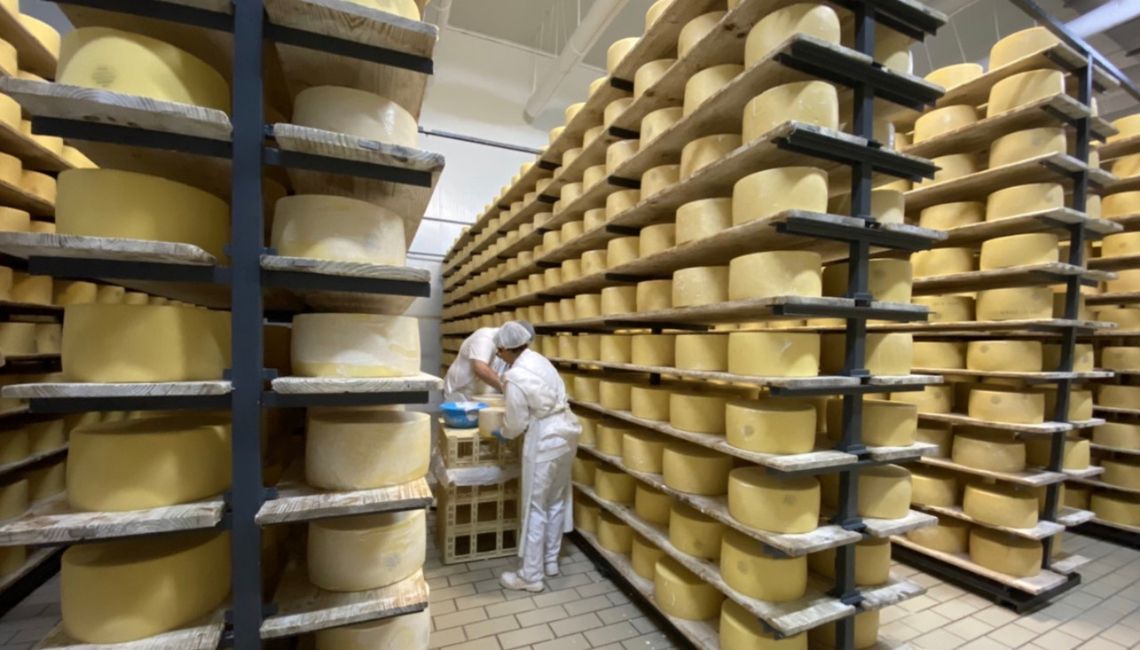
One day one side, the next day the other side. Everything done by hand. Each woman waxes 1000 cheese wheels a day, which she must take from the shelf beforehand. And to reach the upper cheese wheels, they climb acrobatically on the shelves. The oldest employee, who was just climbing the shelf during the tour (one leg on one shelf, the other leg on the other shelf), is 69 years old. All this without a safety line or elevator or platform ladder.
There are 3 processes that are almost fully automated here: the pressing of the cheese wheels and the cutting into pieces. After cutting, each piece is manually weighed and everything that is in excess is trimmed. Only then is it packaged (automated).
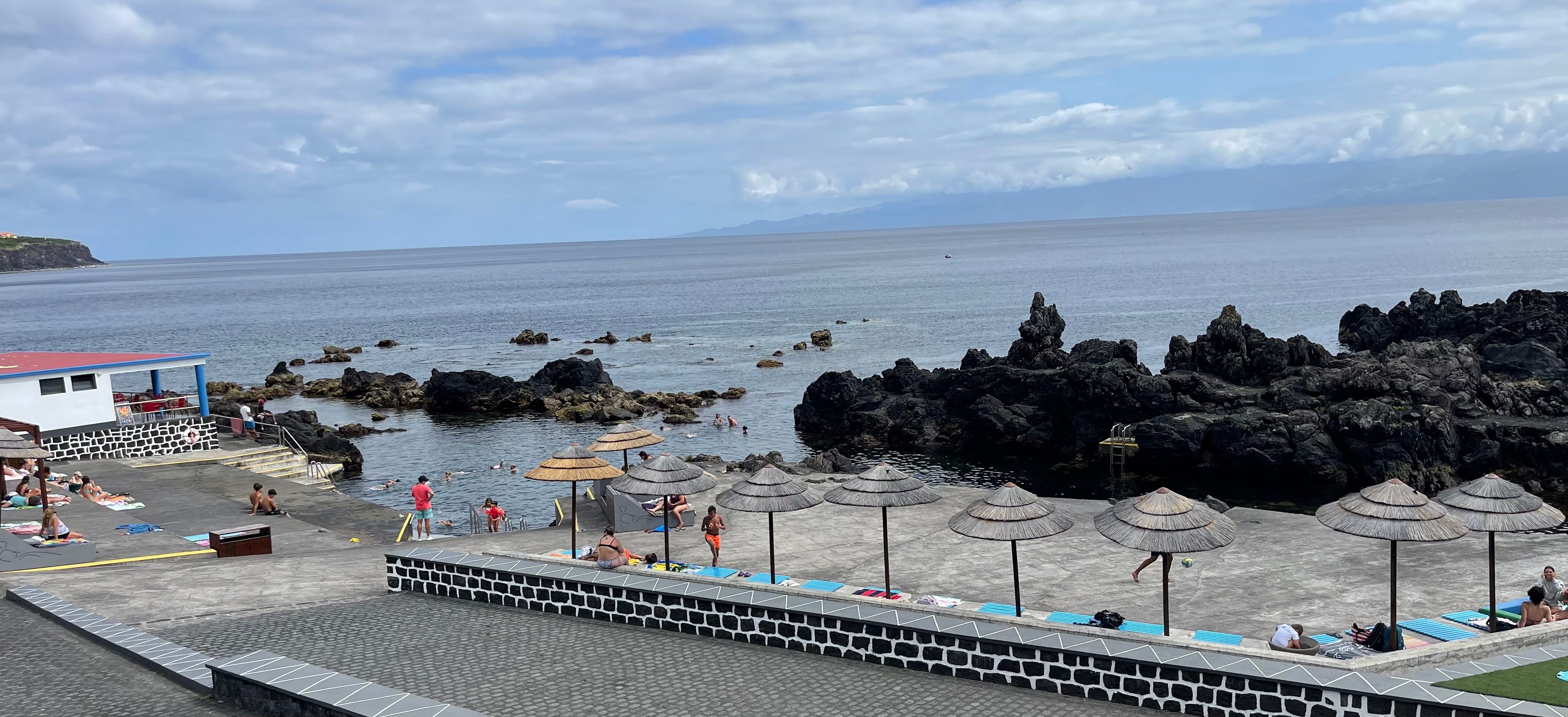
After a proper cheese tasting (included in the €7 admission fee), buying cheese, cheese knives, and jam, as well as another espresso, we head towards the seawater pool. I would say it’s the most beautiful thing we’ve seen so far.
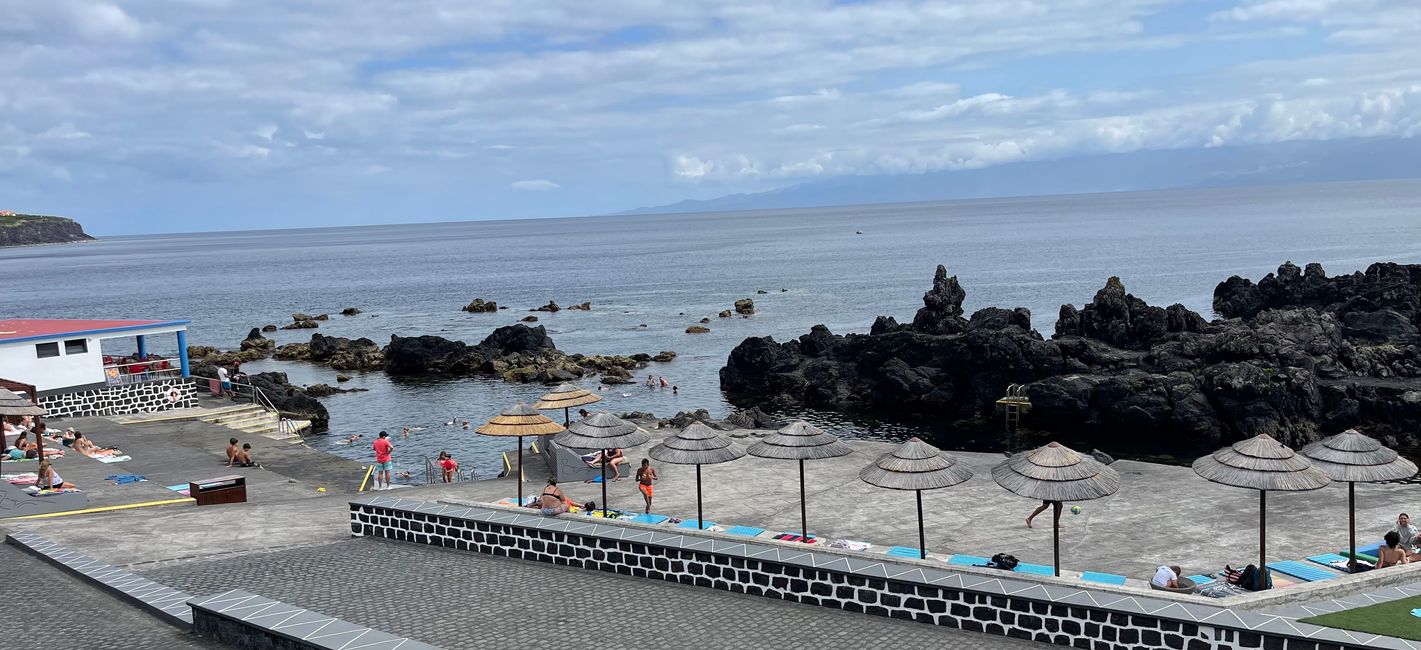
After a jump in the refreshing Atlantic, the sun comes just in time to warm you up again.
Today we have to pack our bags again, because tomorrow we are going to Pico.
Our landlady had recommended the restaurant right next door, A Quinta.
For us, it was a grab in the toilet. The water and beer were very liver-friendly warm. The shrimp in garlic were frozen shrimp. After being disappointed every time we've had meat, we decided on the catch of the day.
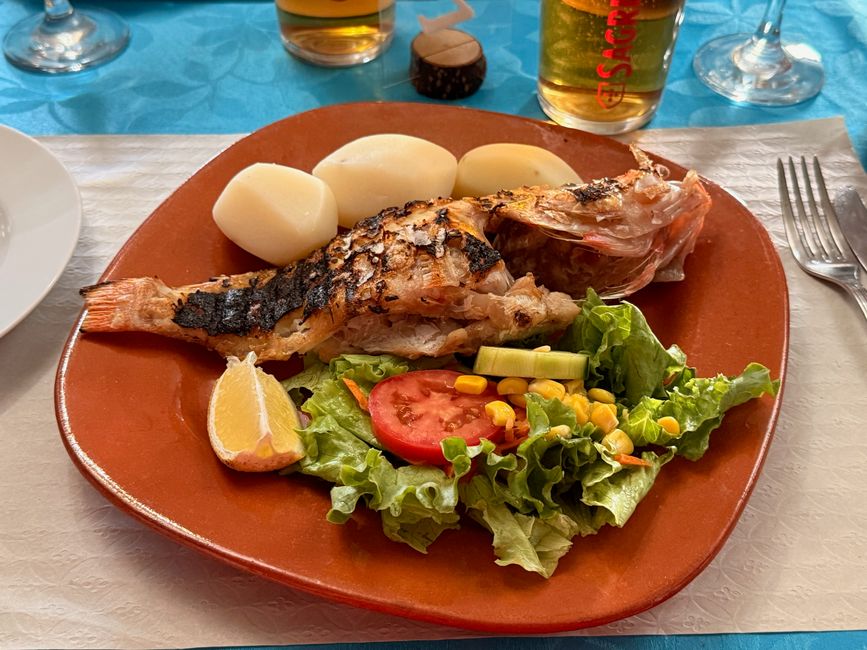
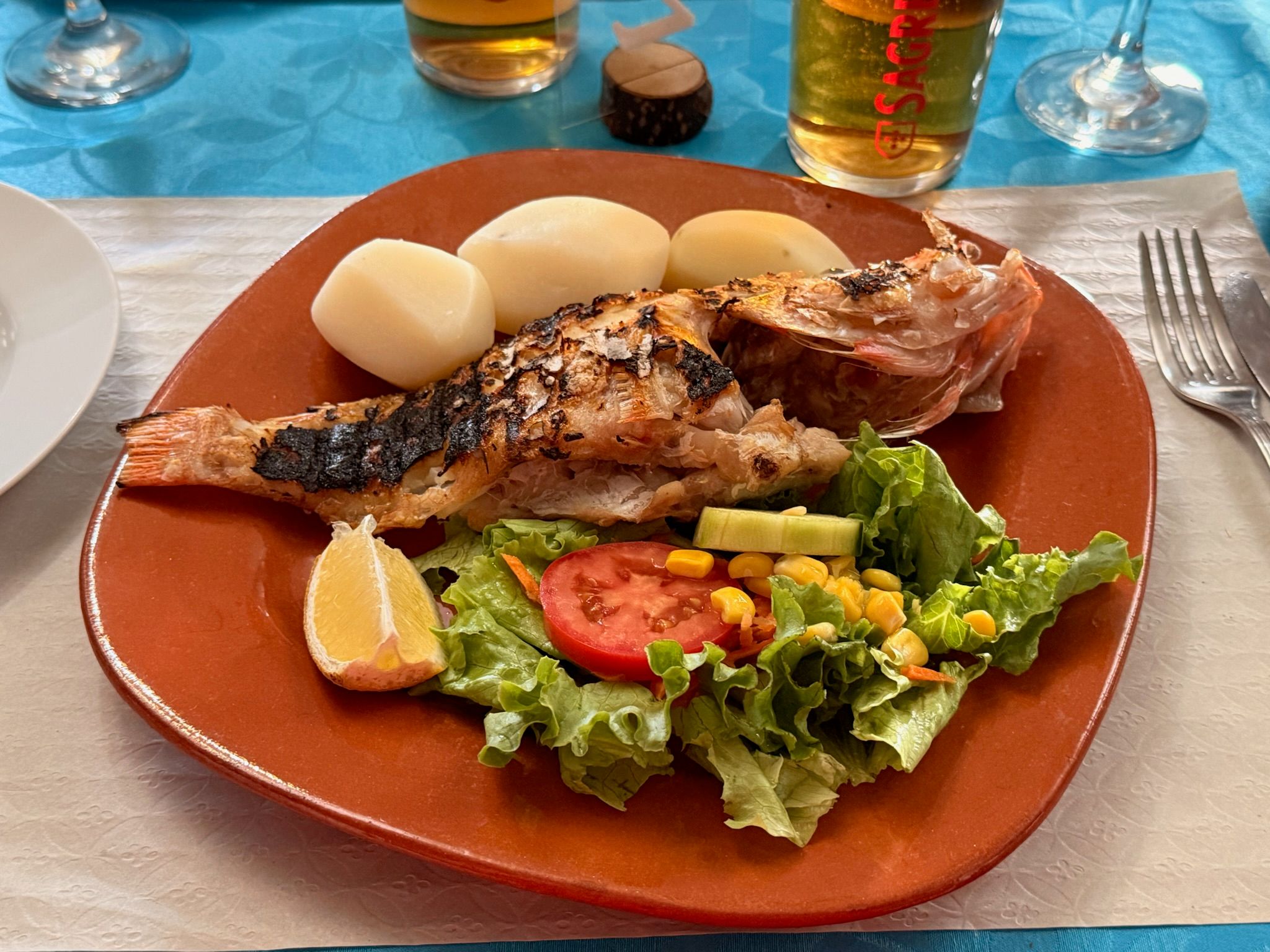
A red deep-sea fish with potatoes and salad. The salad was dry, completely without dressing, and in places already mushy. The fish was perfectly black grilled. Due to the intense grilling, the fish developed a strong borderline smell.
The waitress explained that Boca‑Negra naturally has a stronger smell.
Cooilot added:
“The fish belongs to the scorpion fish family. Its flesh is good, but raw it smells stronger than, for example, Cherne or Lírio.
With deep-sea fish that have a high collagen content (like Boca‑Negra), the smell doesn’t resemble the normal grilling smell, but can actually be barn-like. If it hasn’t been very fresh or if it’s been stored too warm, this smell intensifies massively.
This is no joke – chefs in the Azores know this problem.”
Our cook was apparently from outside🫣. Not a pleasant farewell.