Traditional craft villages around Hoi An - Part 2
The Kim Bong Carpentry Village is located on Cam Kim Island, south of Hoi An. Here, you can watch artisans create traditional woodwork, carvings, and boats. As early as t


Published: 24.07.2026



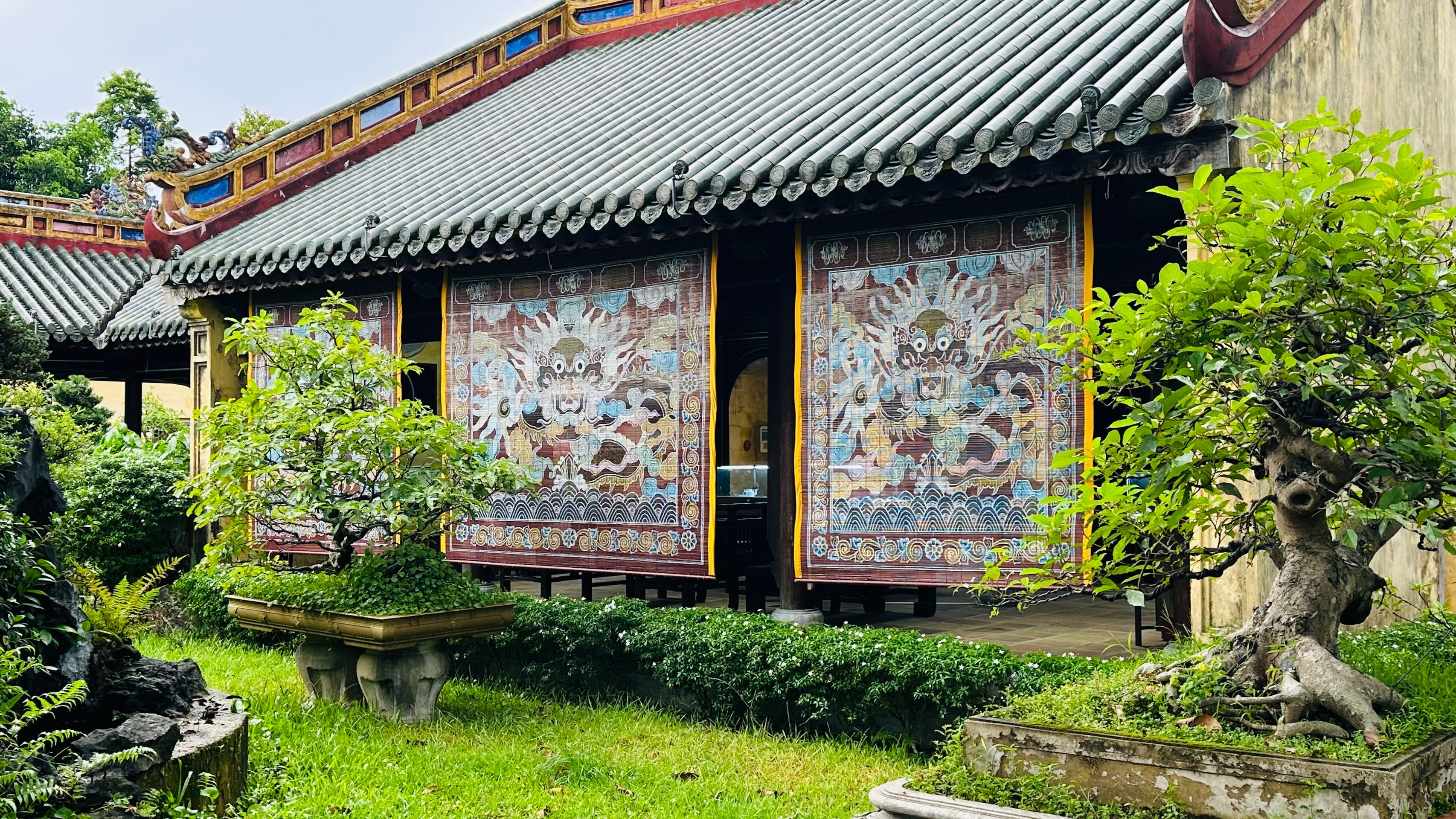
We decided to take a few days off from our vacation. Above all, though, we wanted to explore a few nearby places, so we booked two seats on a bus to spend a few days in the ancient imperial city of Hue and then spend some more time in Da Nang. Booking online was easy; the only thing that was a bit unclear at first was the exact bus stop.
The three-hour ride flew by, as we had a magnificent view through the huge windows. The seats had cooling and massage functions, and there was plenty of legroom—all for just ten euros per person.

It wasn’t far from the bus stop in Hue to our lodging, so we quickly dropped off our luggage and headed straight for the old imperial city.
I had imagined Hue to be similar to Hoi An—more small-town and rural, with markets instead of department stores. In fact, Hue is more comparable to Da Nang: there are high-rises and malls, as well as several parks with art on display and well-maintained sidewalks.
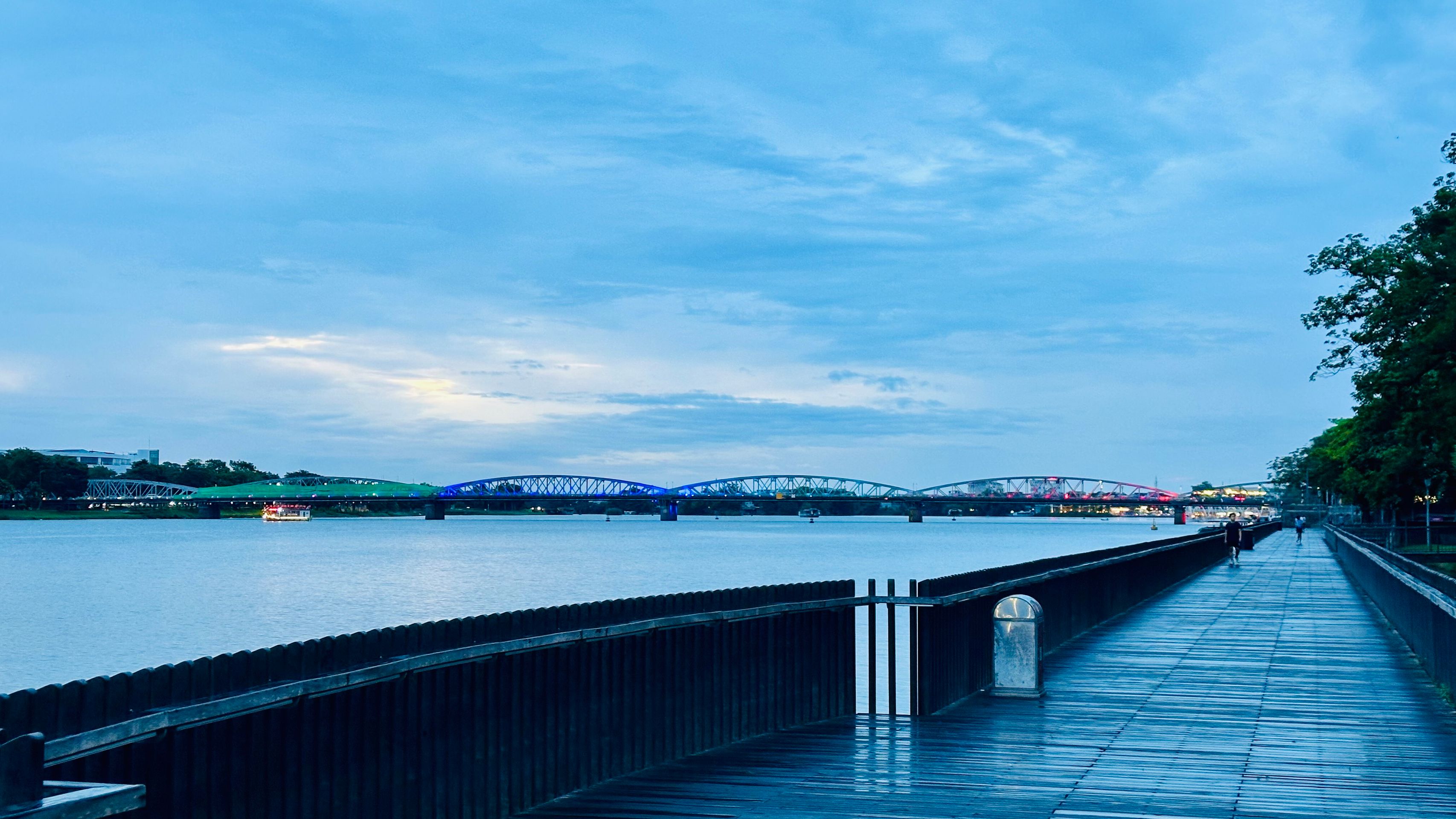
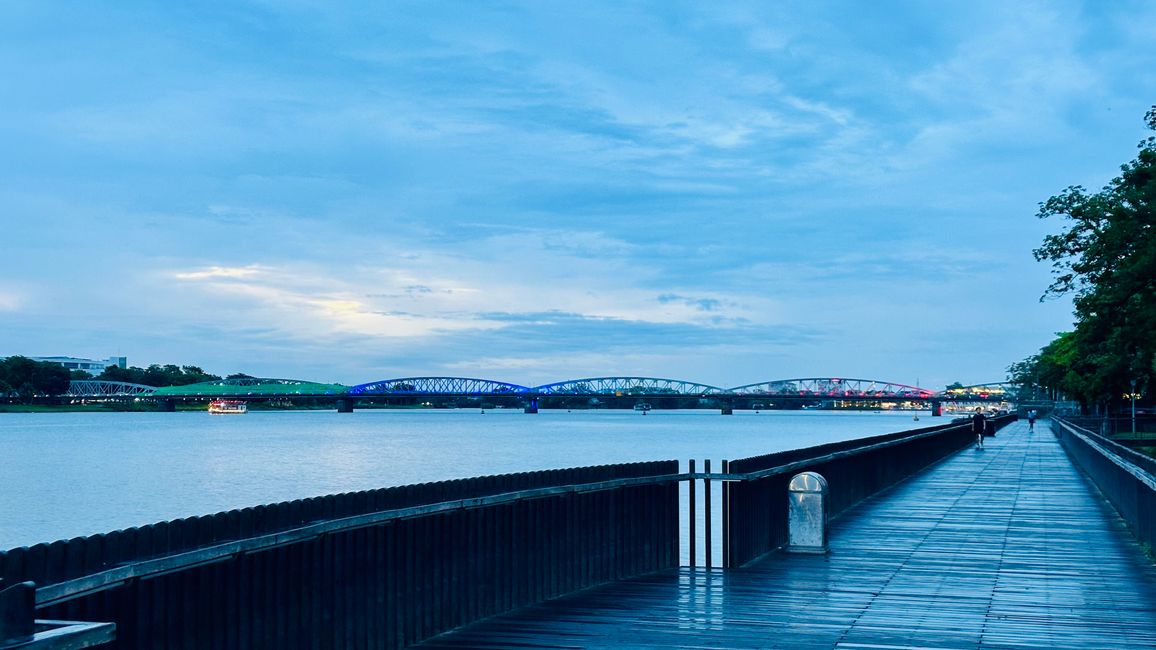
We strolled along the beautiful wooden promenade on the banks of the Perfume River and tried Sữa Chua for the first time—chilled yogurt in a plastic bag. It was an interesting change of pace and a welcome way to cool off.
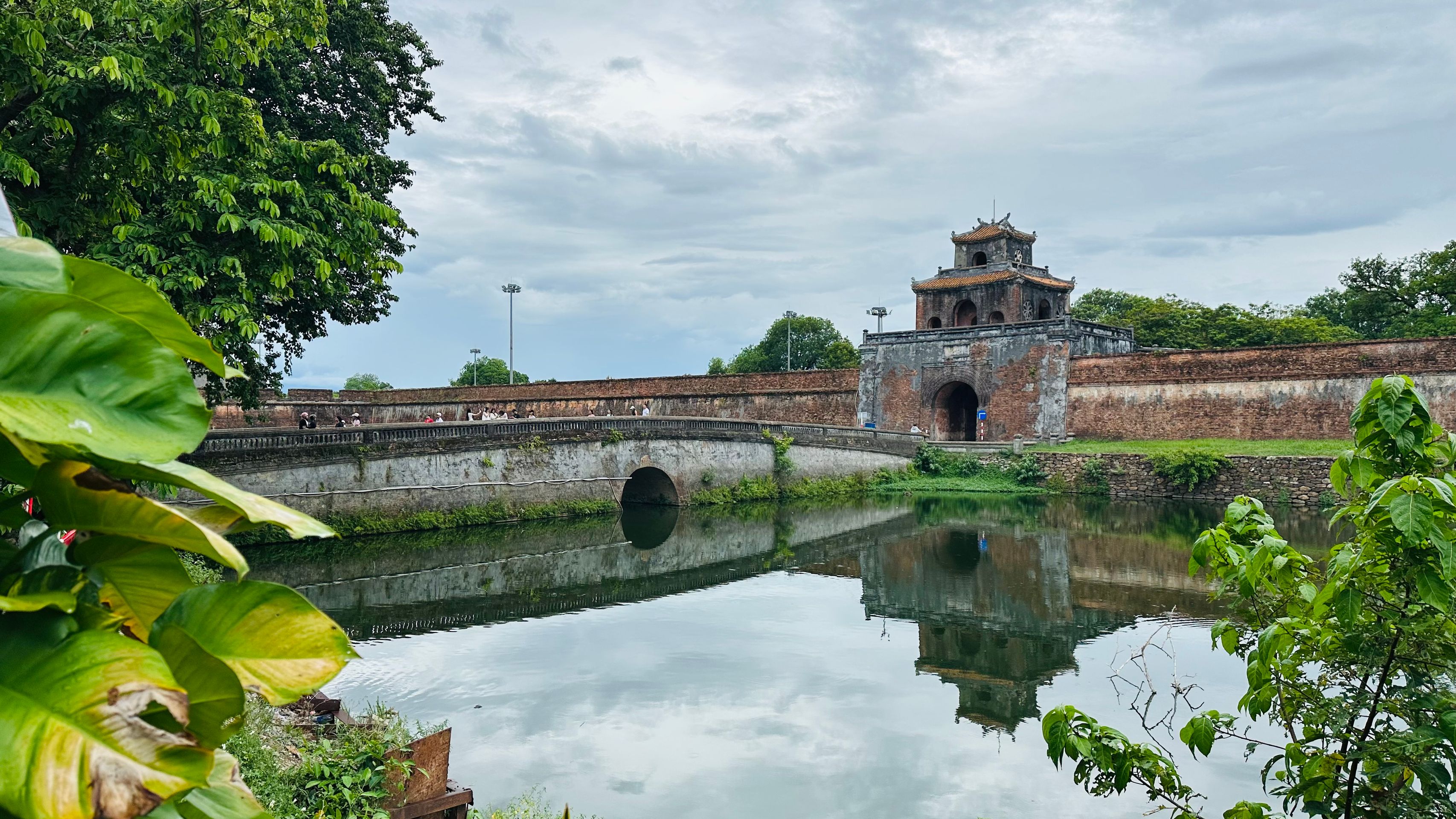
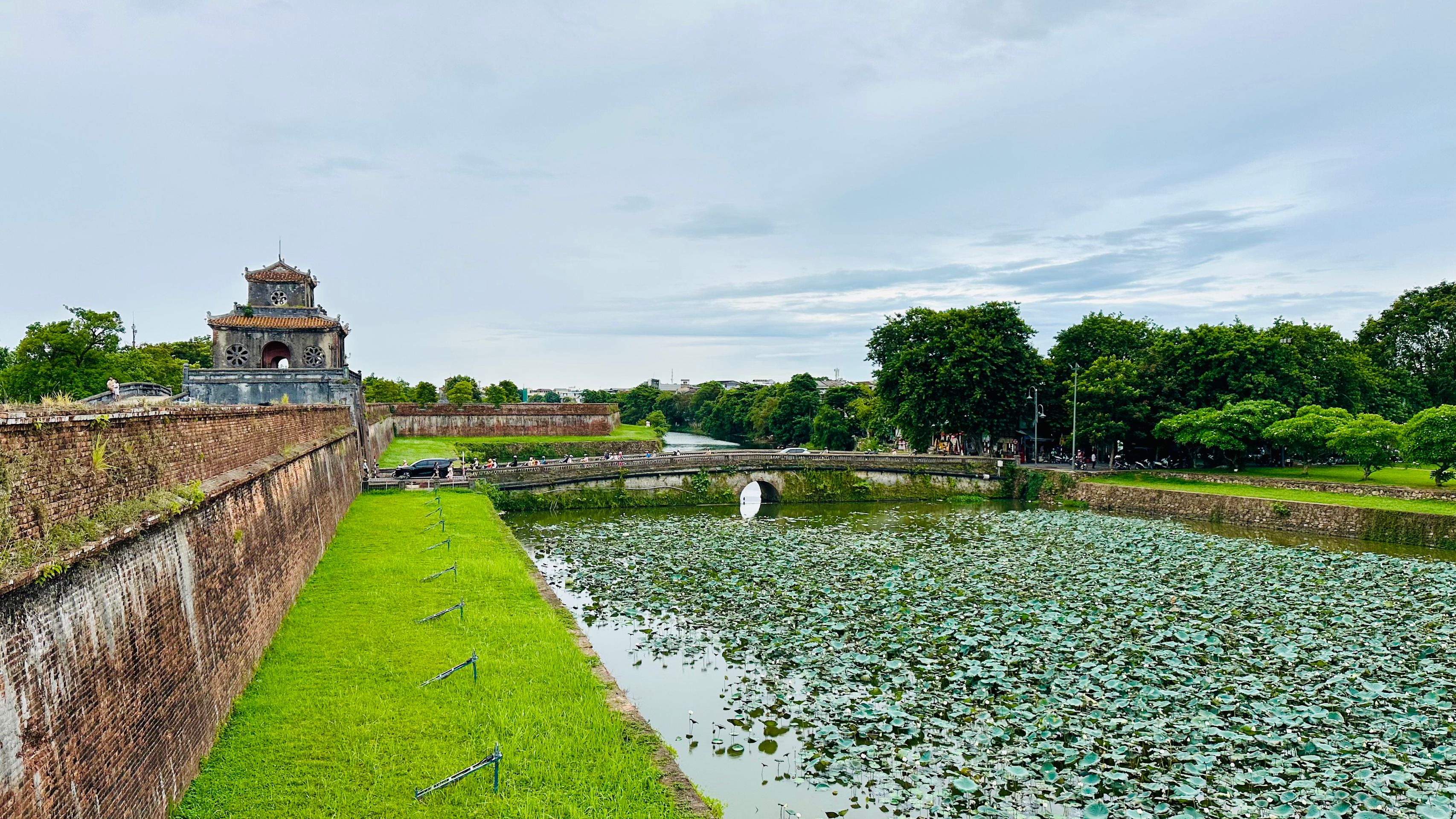
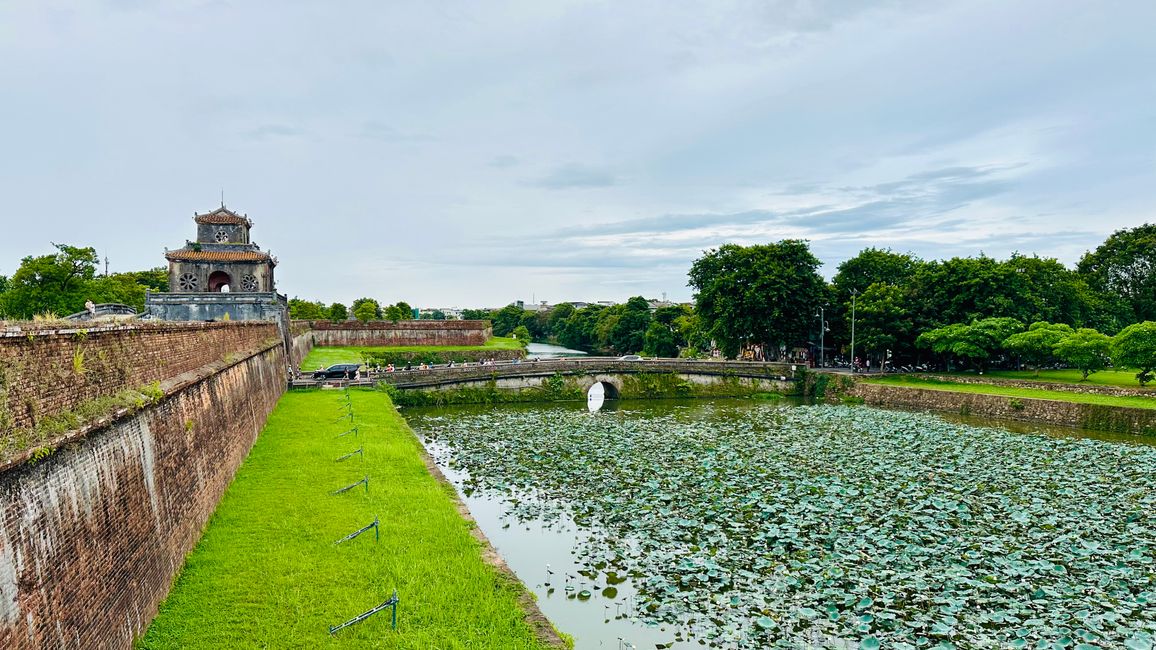
On our very first evening, we made a quick detour to the city walls of the old imperial city and were even able to walk along the top of them. The old town is surrounded by a moat full of lotus flowers—a truly beautiful sight.
What we hadn’t expected: the sightseeing spots closing right on time. When we wanted to walk back down the stairs to the street, we found ourselves facing locked gates. We then walked to several other gates, but those were already closed as well.
This vividly reminded me of Madeira, when we were also locked inside a park there and had to climb over the wall in an adventurous manner—not that a little climbing would really bother me.
So I had already been on the lookout for a good way down when a local across the street noticed our predicament. Waving his arms energetically, he guided us to a spot where we could descend and even organized a wooden ladder for the final stretch. So we first waded a bit through tall grass, then down a small ledge between scrap metal and underbrush. We finally made it down the second ledge via the rickety wooden ladder. We were very grateful to the local, but not entirely sure if he hadn’t been pulling our leg a bit in the end, because a little further on, the descent would have been much easier.
The next day, we set out to explore the surrounding imperial tombs of the Nguyen Dynasty. There are a total of seven official tombs, which are also part of the UNESCO World Heritage Site. At the respective ticket booths in front of the sites, you can purchase admission tickets individually or as a combined ticket that includes the other tombs and the citadel.
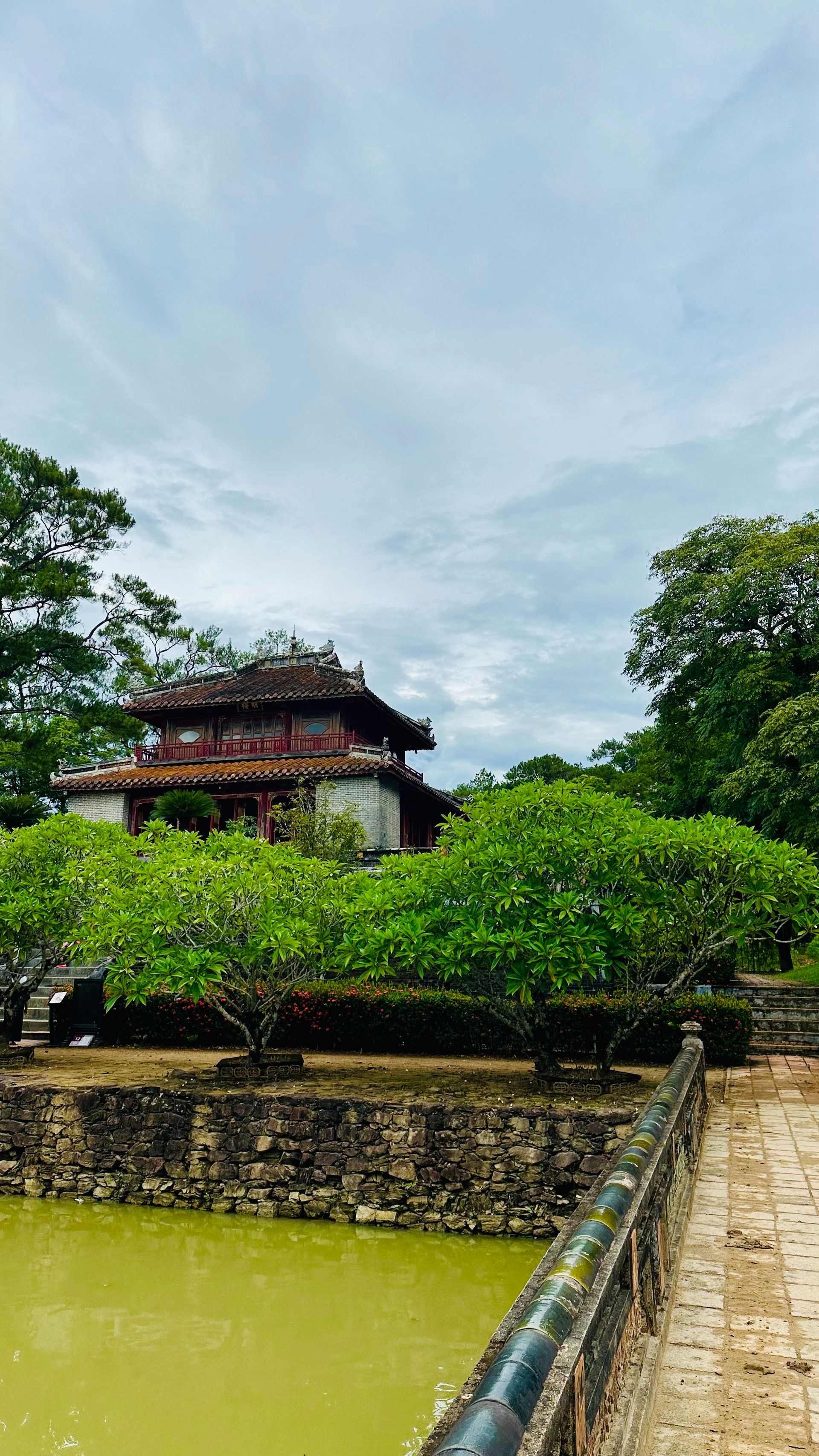
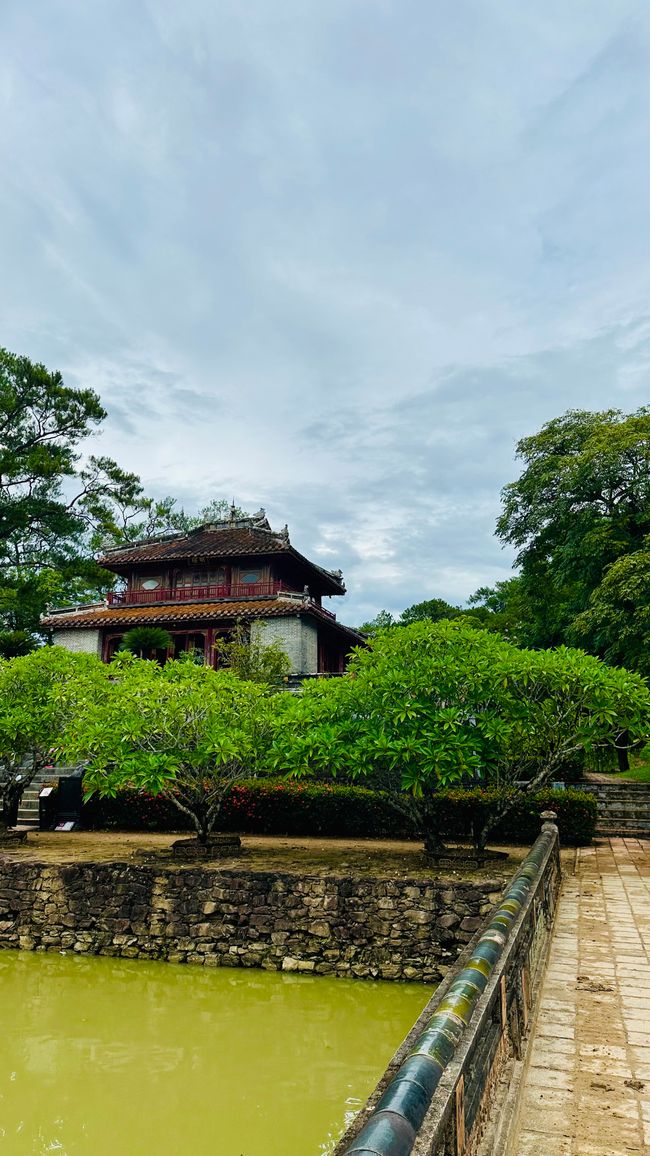
We started with the tomb of Minh Mang. A sprawling park has been laid out here—not quite as grand as expected, but definitely worth seeing, with beautiful ponds, several shrines, and statues. We weren’t able to tour the tomb itself, as it’s only open to the public once a year. Many Asian tourists took advantage of the backdrop to pose and take countless photos of themselves. All in all, it’s a worthwhile site—though we didn’t need the recommended two hours; 45 minutes was more like it.
At the exit, our driver (taxi) from the trip there was already waiting for us. He had apparently expected that we—or other visitors—would book a ride to our next destination.
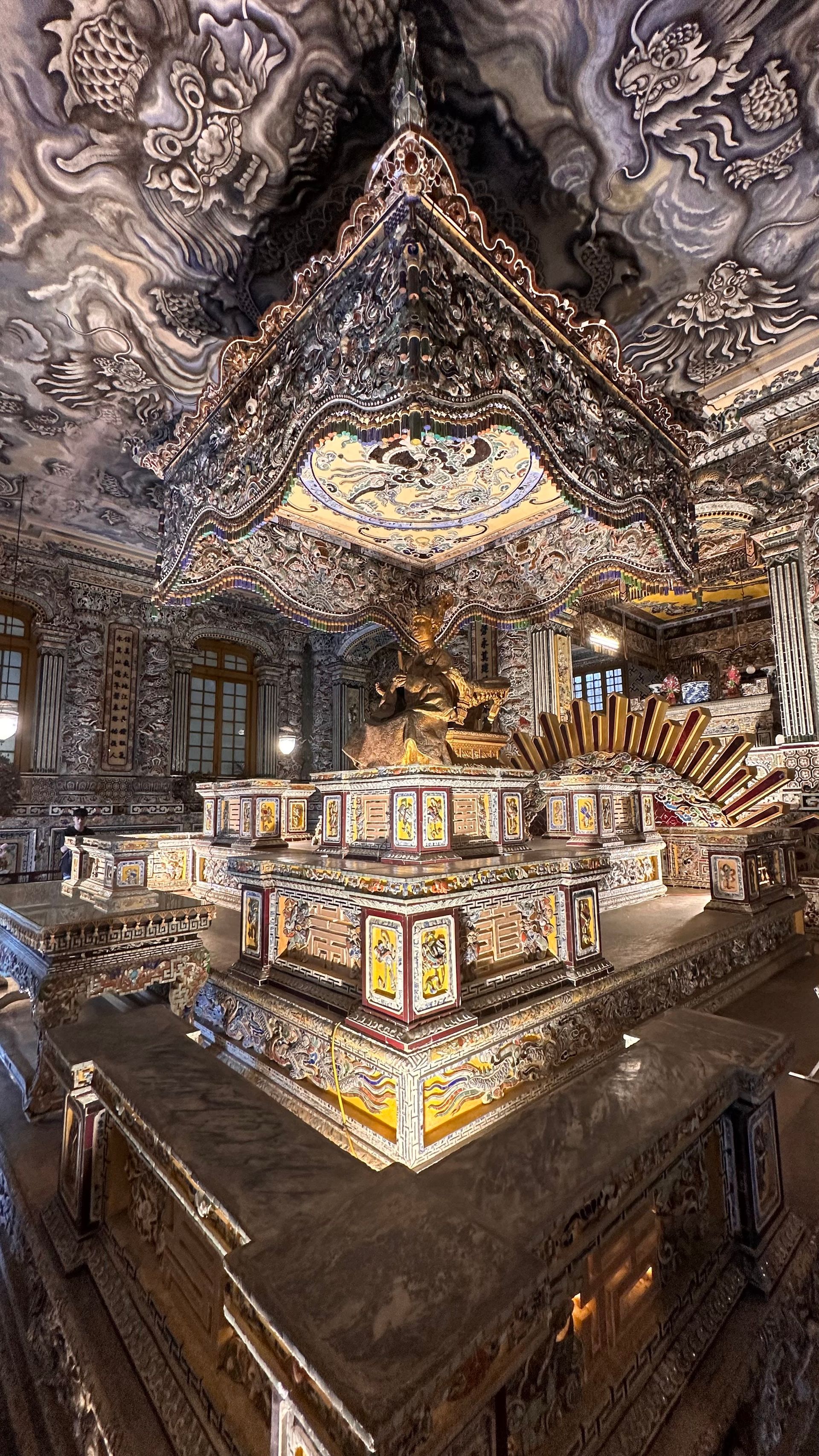
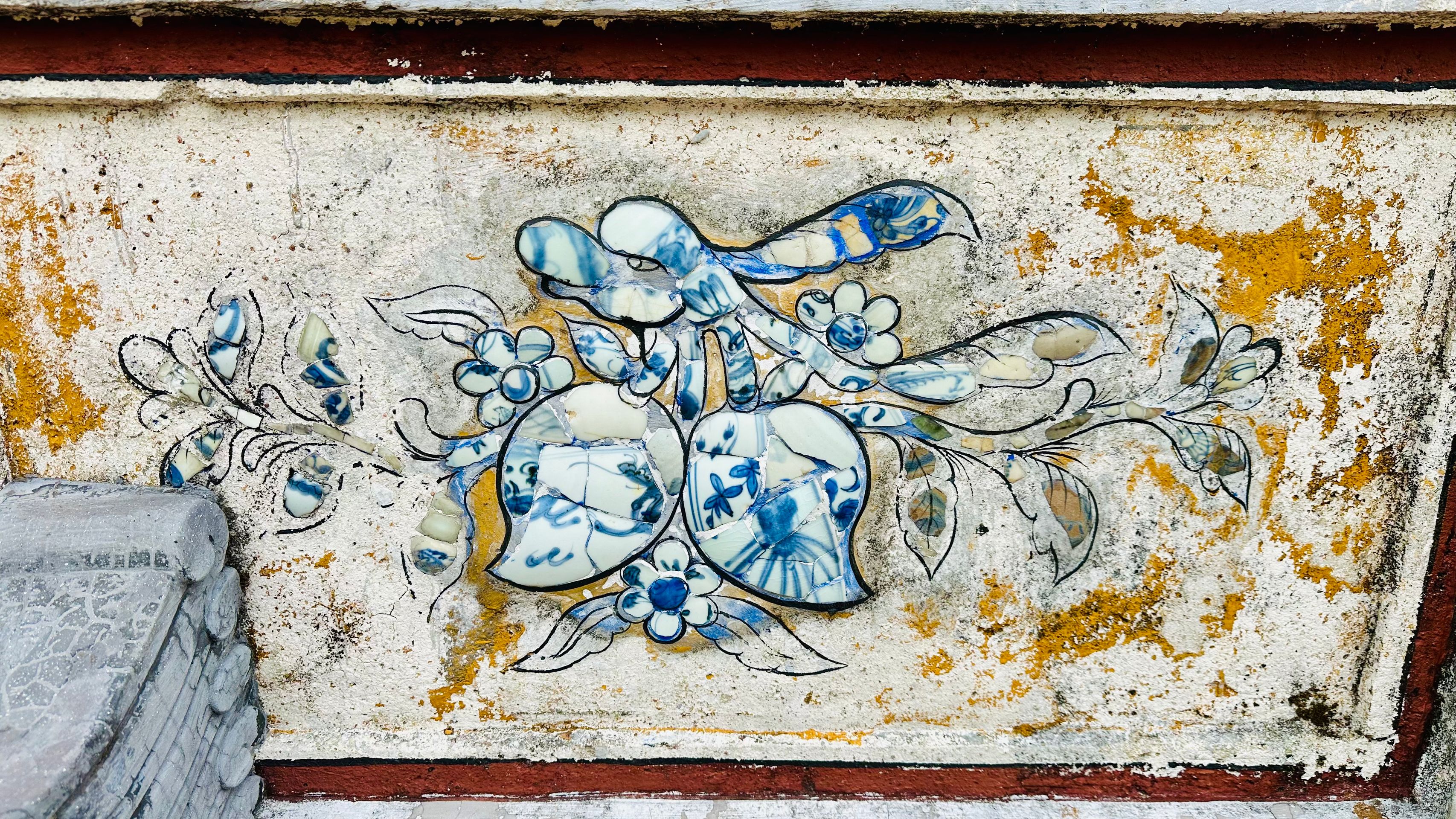
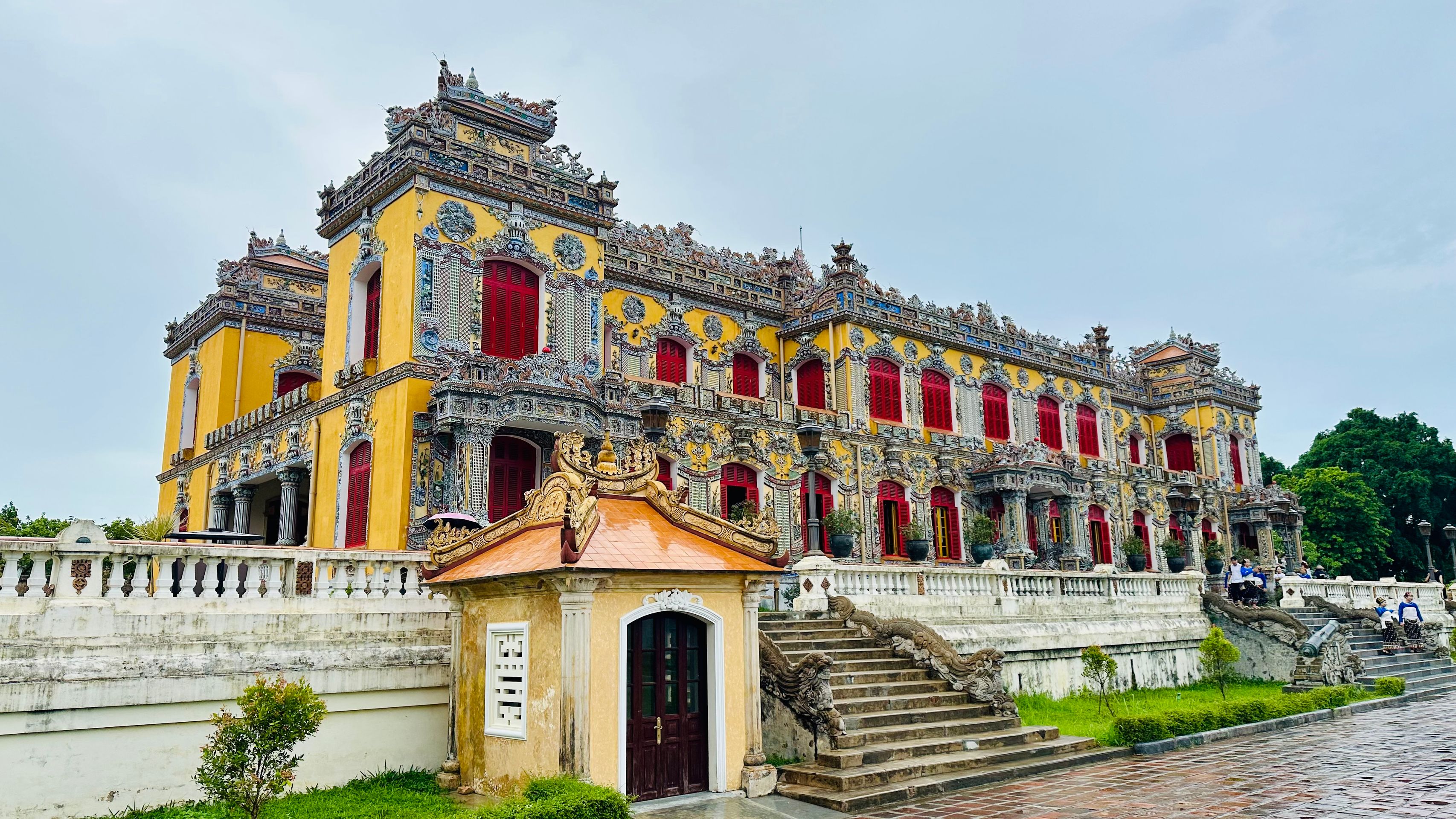
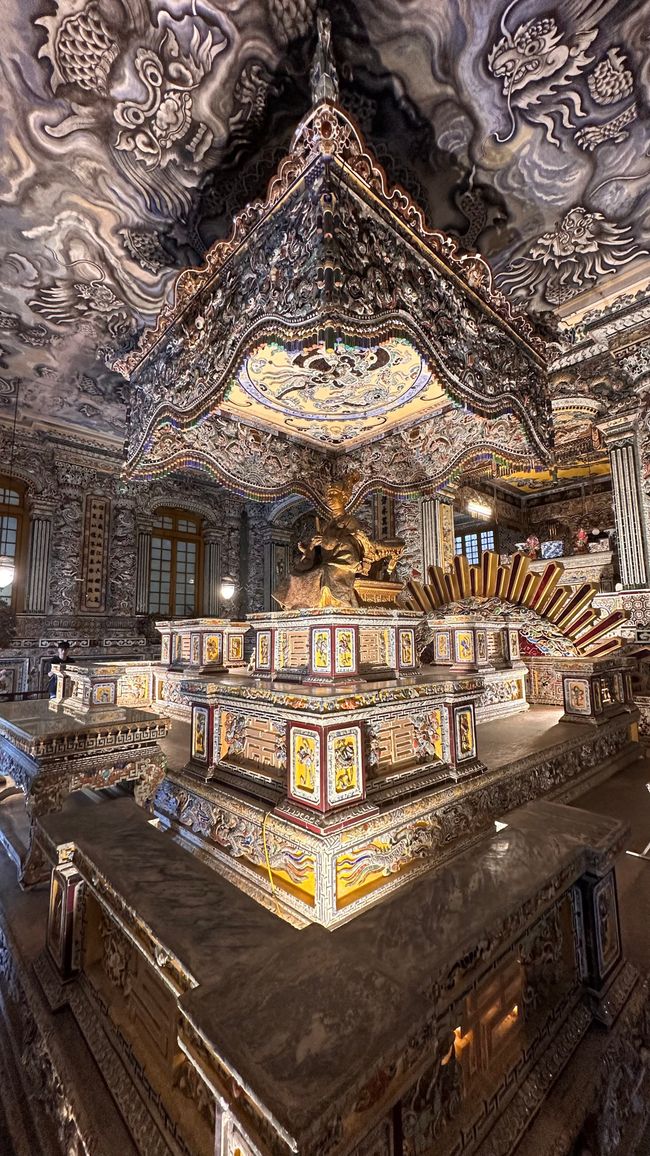
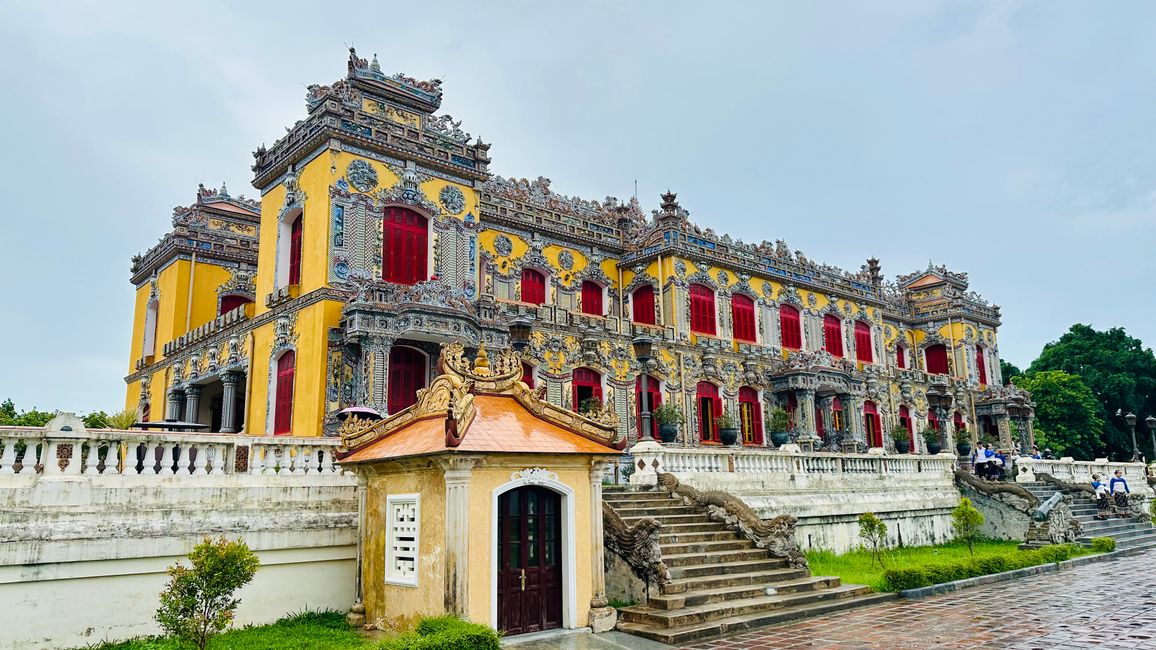
Our next stop was the tomb of Khai Dinh. Although the grounds were smaller than those of Minh Mang, they were significantly more magnificent. Beautiful structures, columns, and staircases made of dark stone stood against a breathtaking scenic backdrop. Since the ruler was heavily influenced by the West, a fascinating blend of styles emerged here: European elements in the Gothic and Baroque styles meet Vietnamese and Chinese ornamentation. The tomb itself is more reminiscent of a throne room—with plenty of splendor and ornamentation. The walls were even completely covered with ceramic mosaics. Here, too, many Asian visitors were having their pictures taken in every nook and cranny—people were even taking photos inside the souvenir shop.

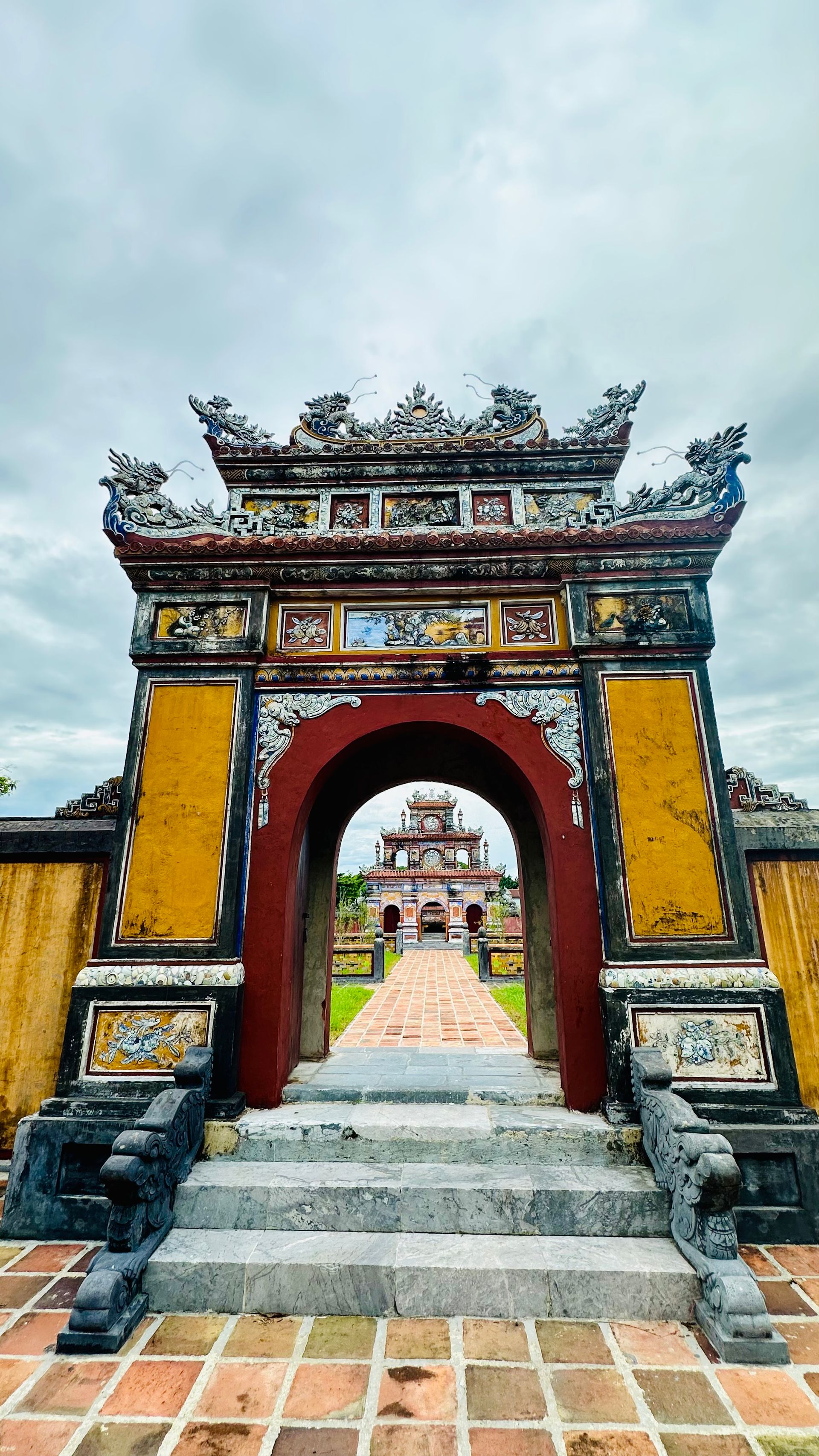
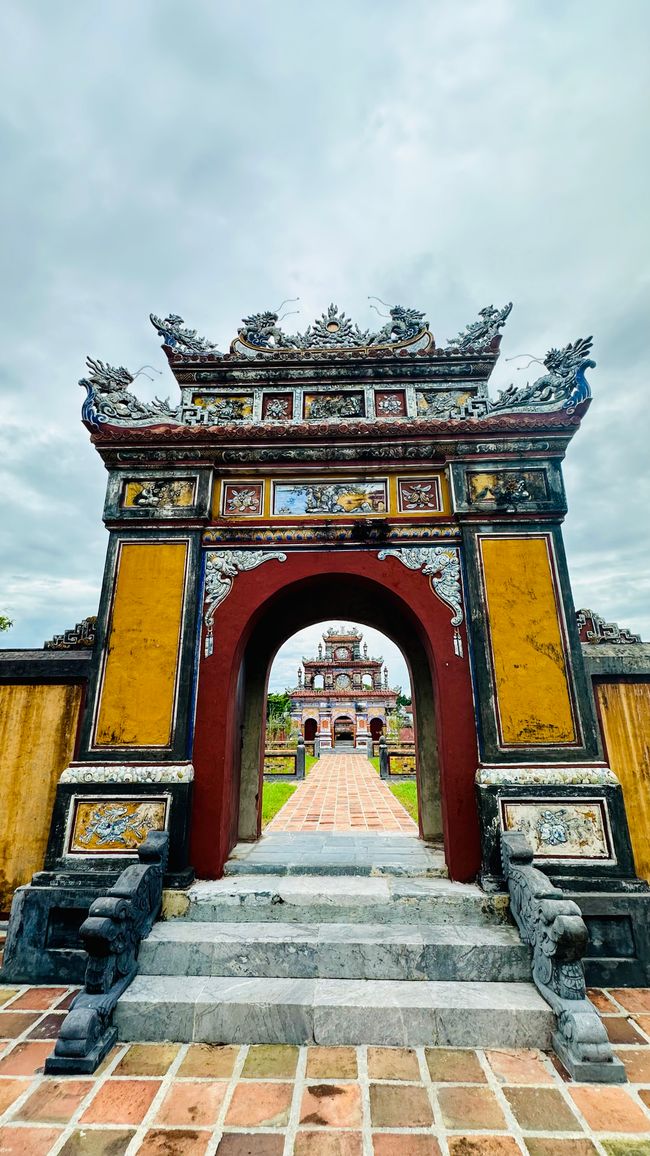
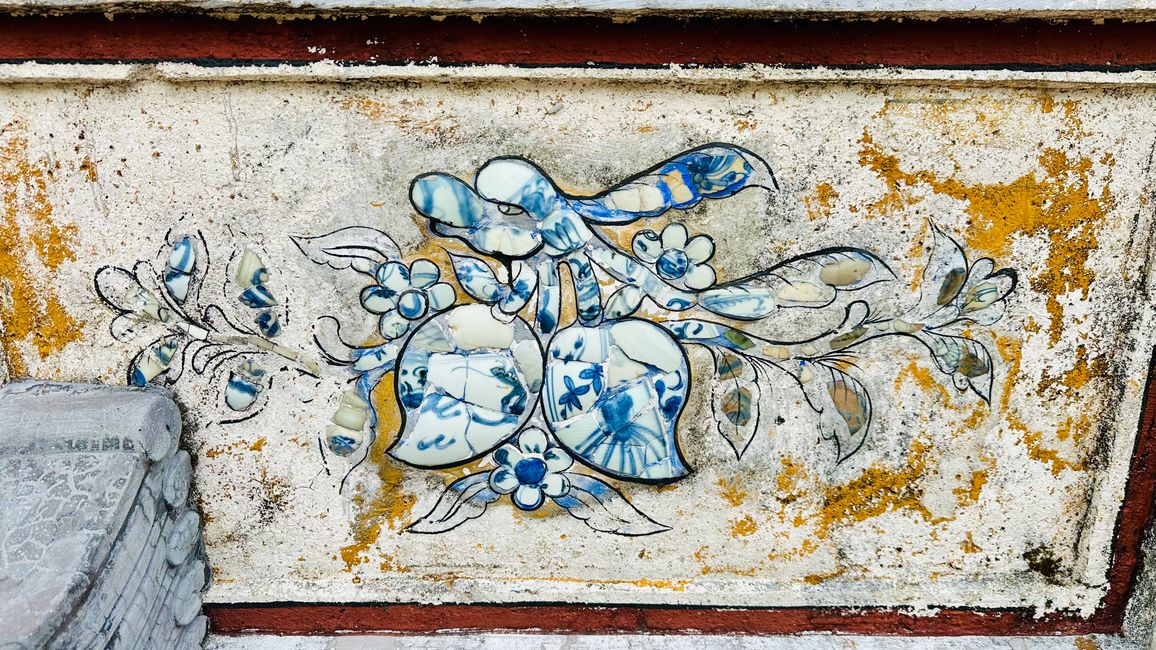
Our last tomb was that of Duc Duc. The Google reviews here were rather mixed, but we can recommend it as a real hidden gem. Admission was only 50,000 VND, and we had the entire complex all to ourselves. While the other tombs were overrun with tourists, here we were able to take in the intricate mosaic artwork and structures in peace—beautiful architecture set in a tranquil, natural landscape. A real highlight. By the way, the employee took his job very seriously: He first sold us the tickets, then escorted us through the entrance, and finally checked and stamped the tickets at the gatehouse.
We spent the hottest part of the day enjoying cold drinks and a visit to the “Snowqueen.” They serve a kind of firm soft-serve ice cream with fruit sauce there that tastes exactly like a fruit cake with a sponge cake base.

As our final cultural stop, we visited the old imperial city once more, this time to see the inner area—the citadel. We first walked to a lake further north and then planned to enter through the north entrance. But that was just our plan, because “passage” here doesn’t automatically mean both entry and exit: You were only allowed to leave. The only entrance is the main southern entrance. Why our tickets were still checked at the other entrances remains a mystery to me—we were checked and then not allowed in. So we walked the entire length back.
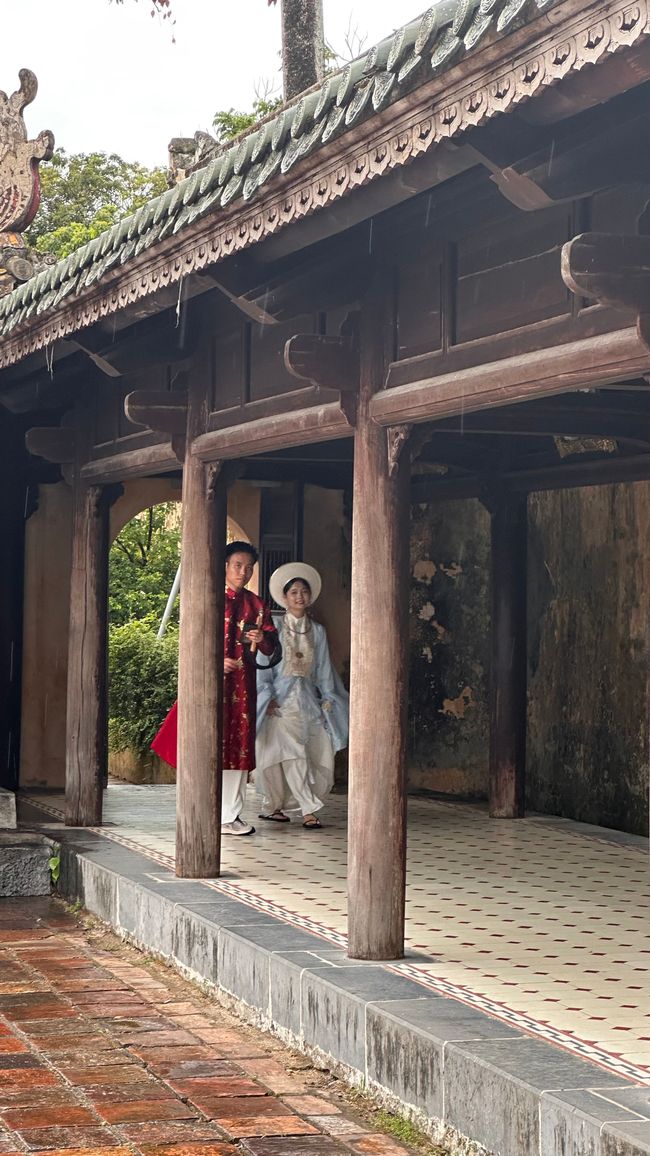
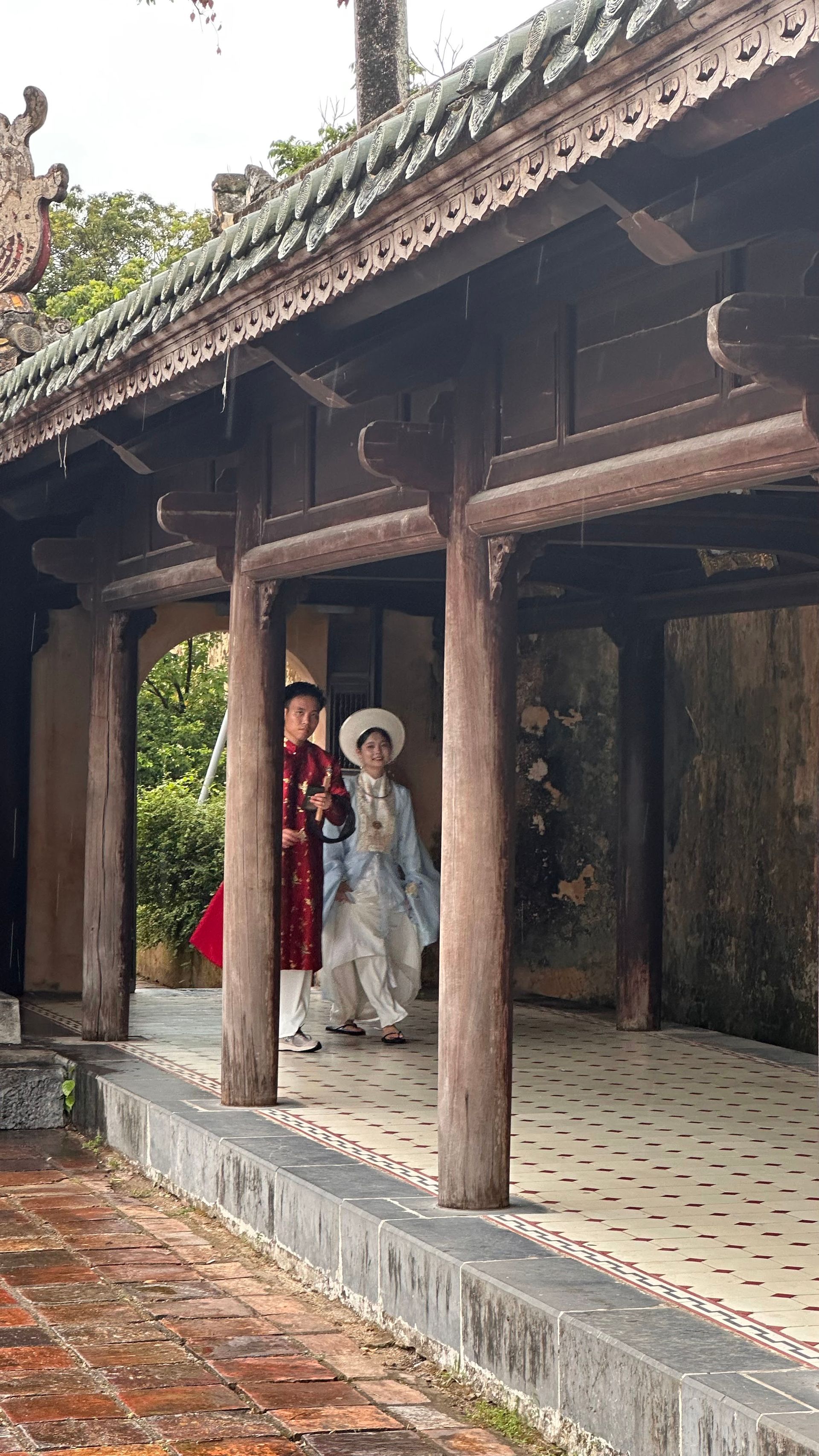
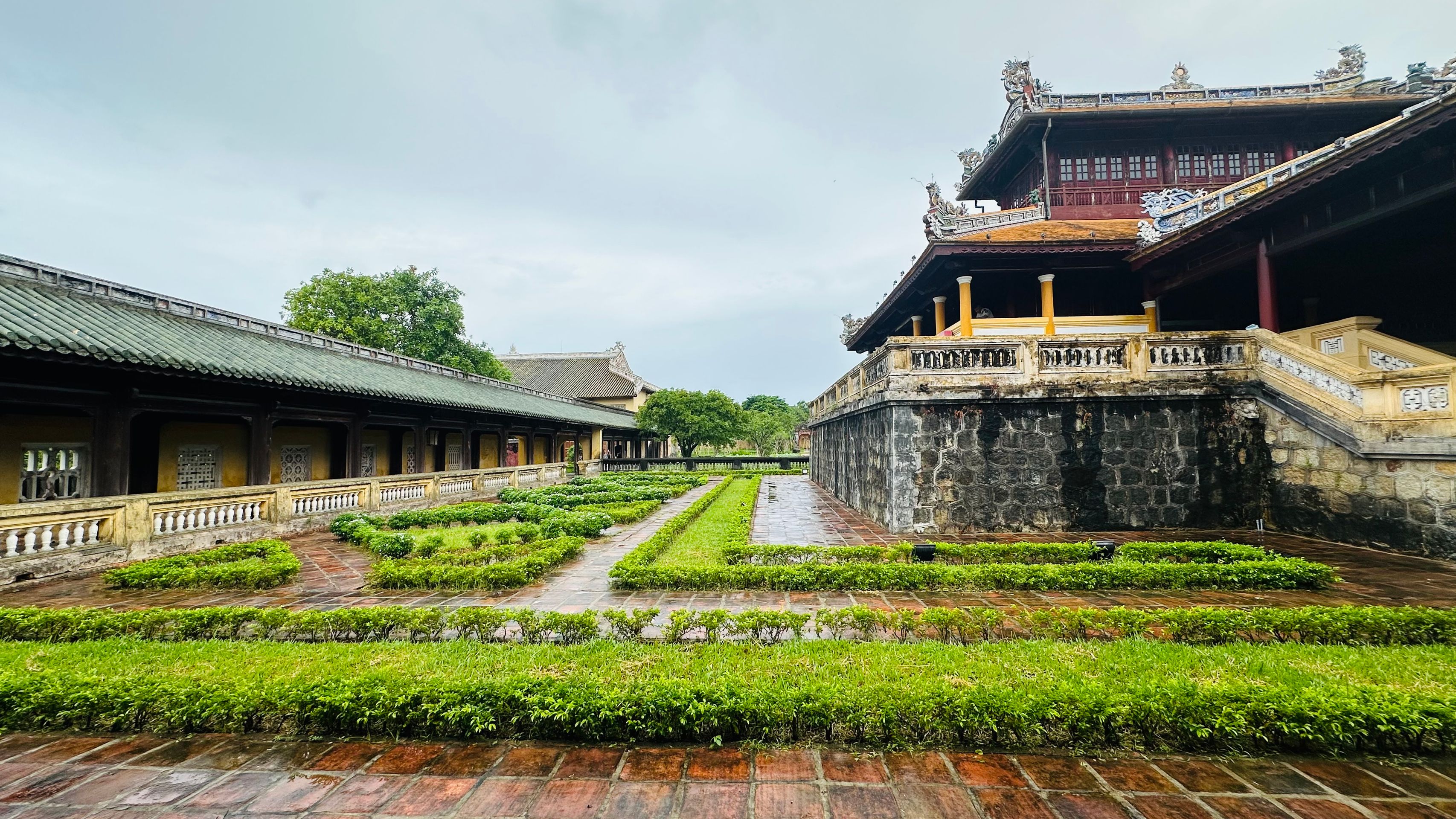
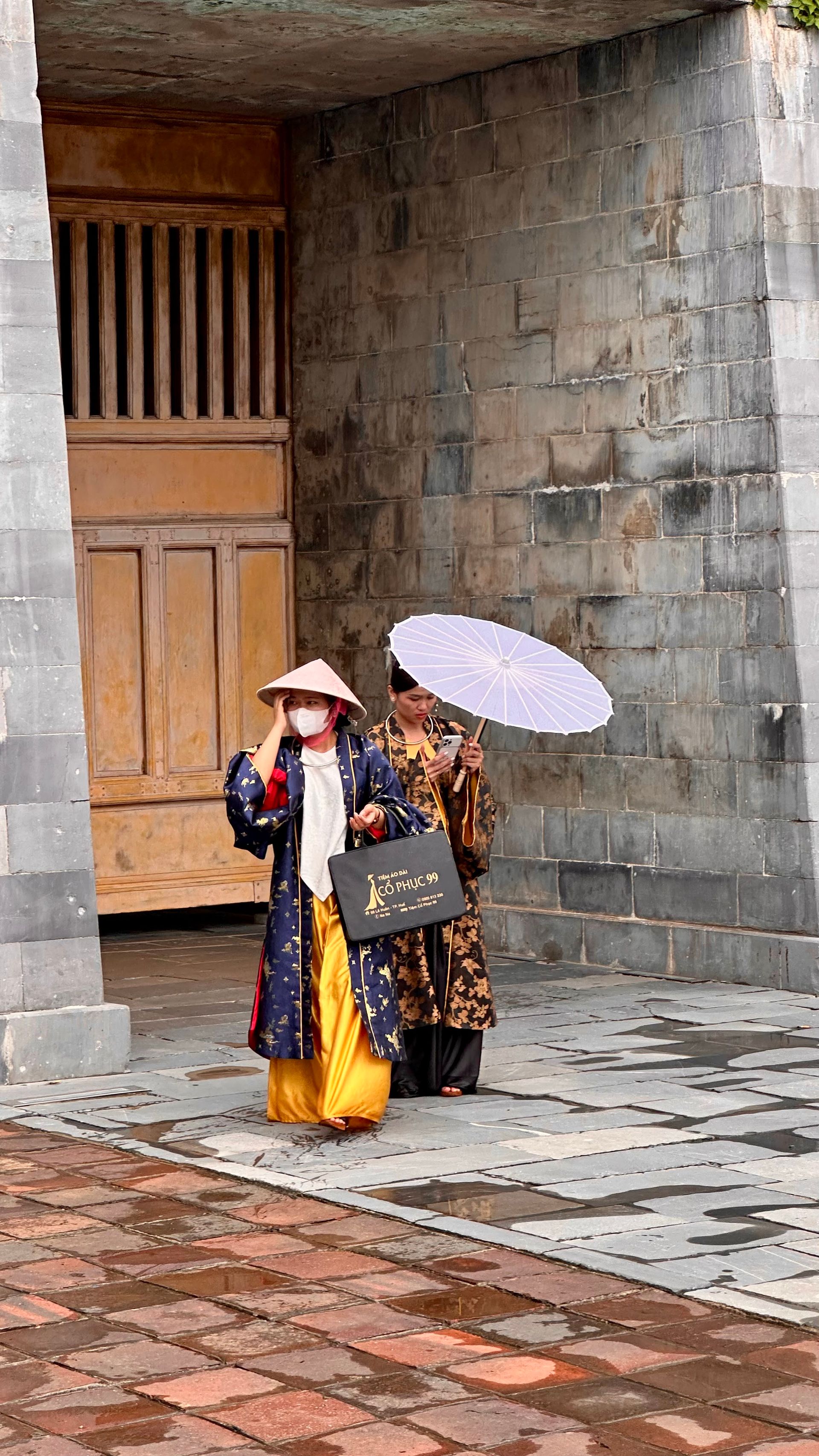
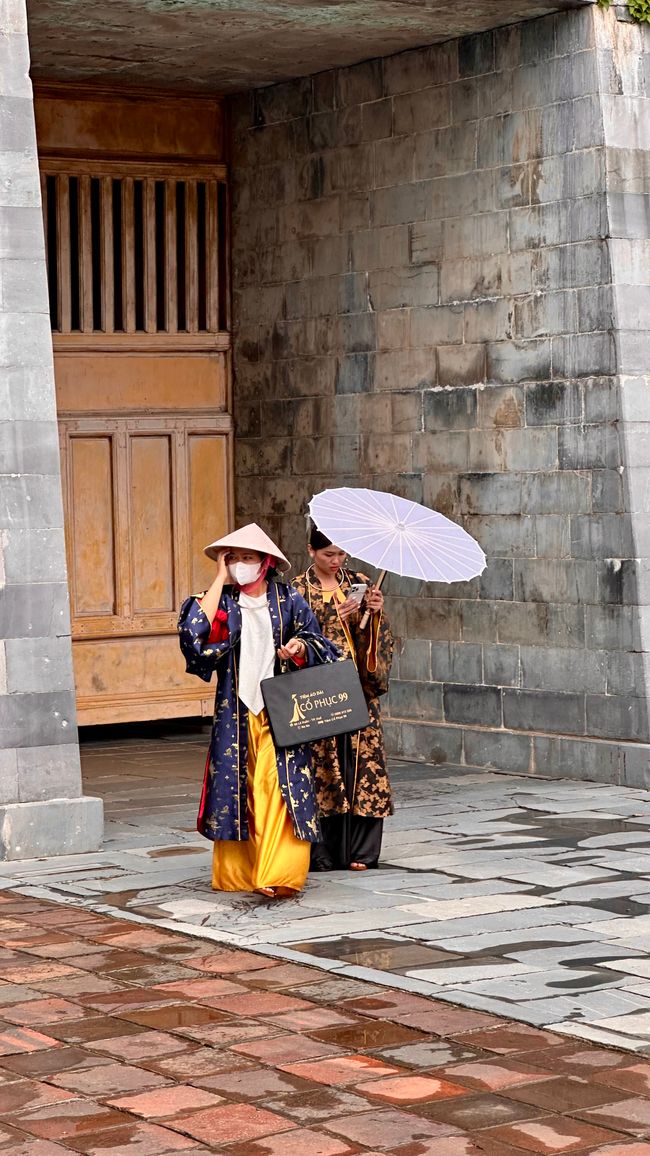
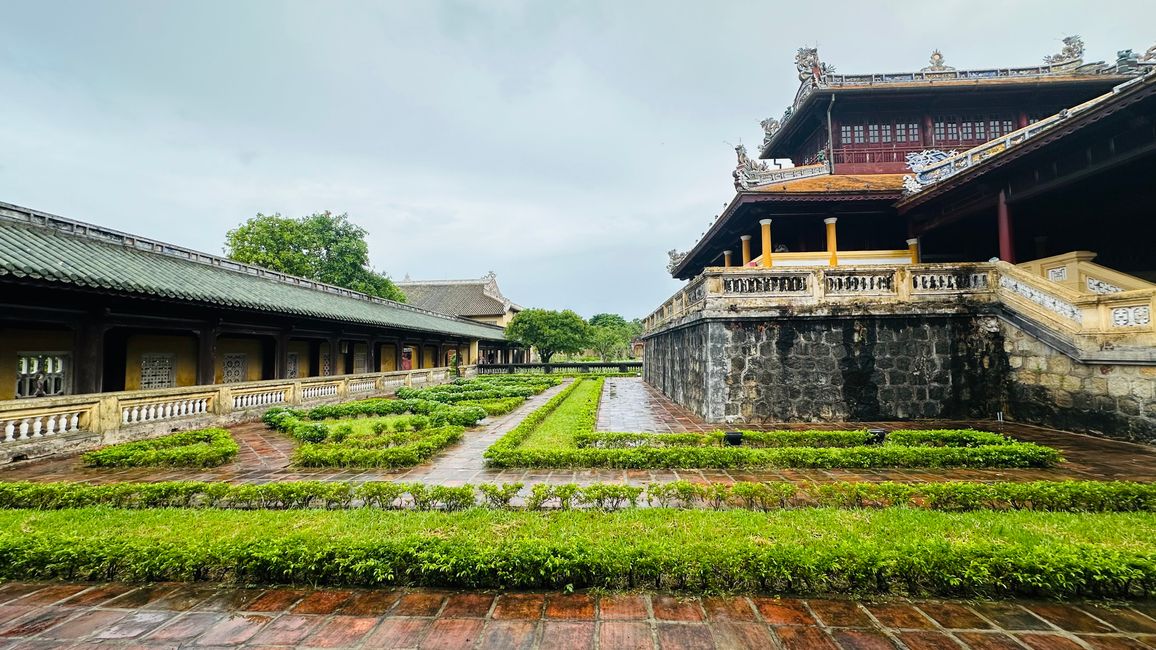
Inside the citadel, there are many long corridors and several magnificent, richly decorated buildings. Many Asian tour groups were moving through the complex, herded along by their guides, who didn’t allow any time to linger. Professional photo shoots were also taking place—the “models” were even dressed in traditional costumes.
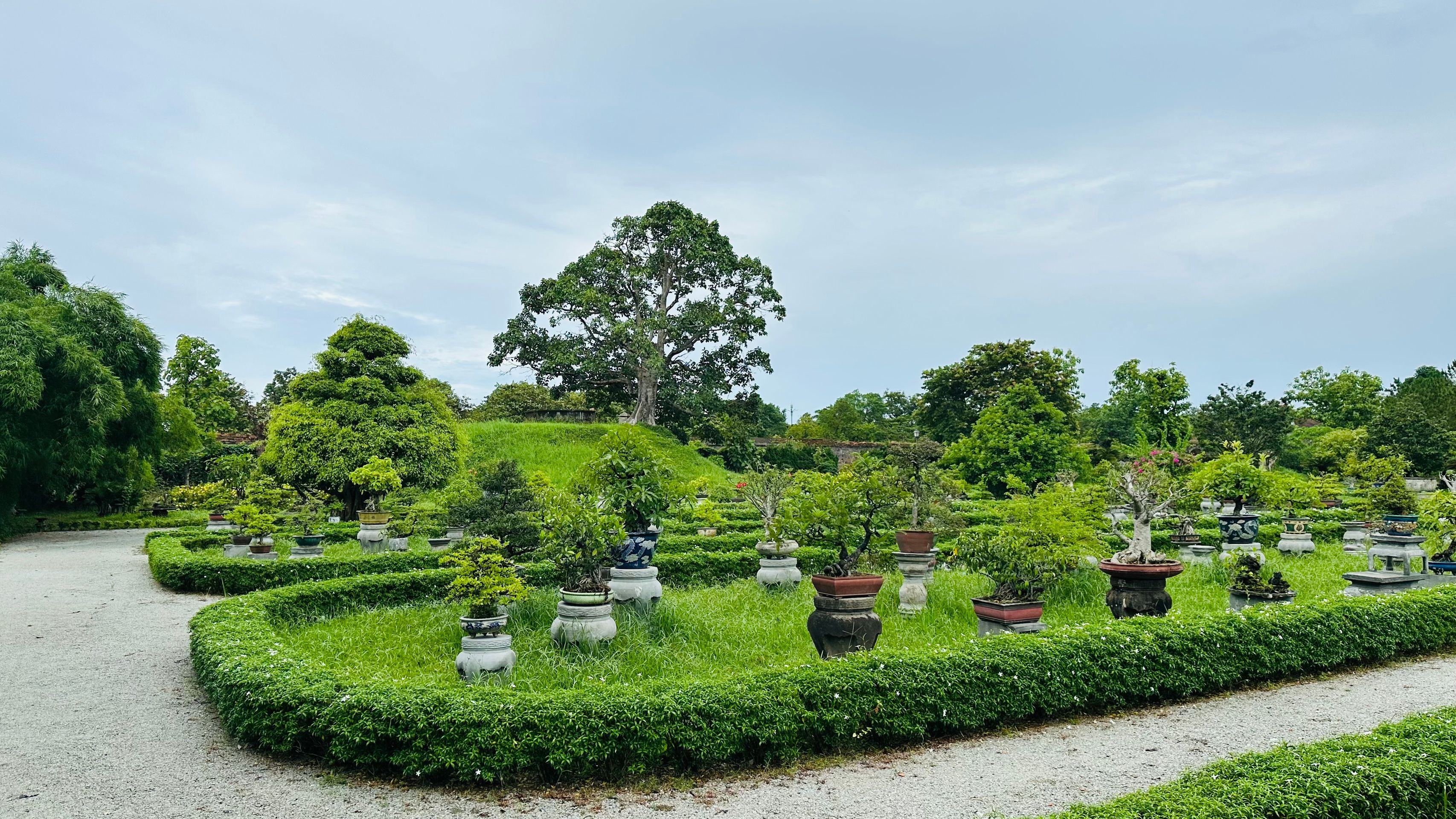
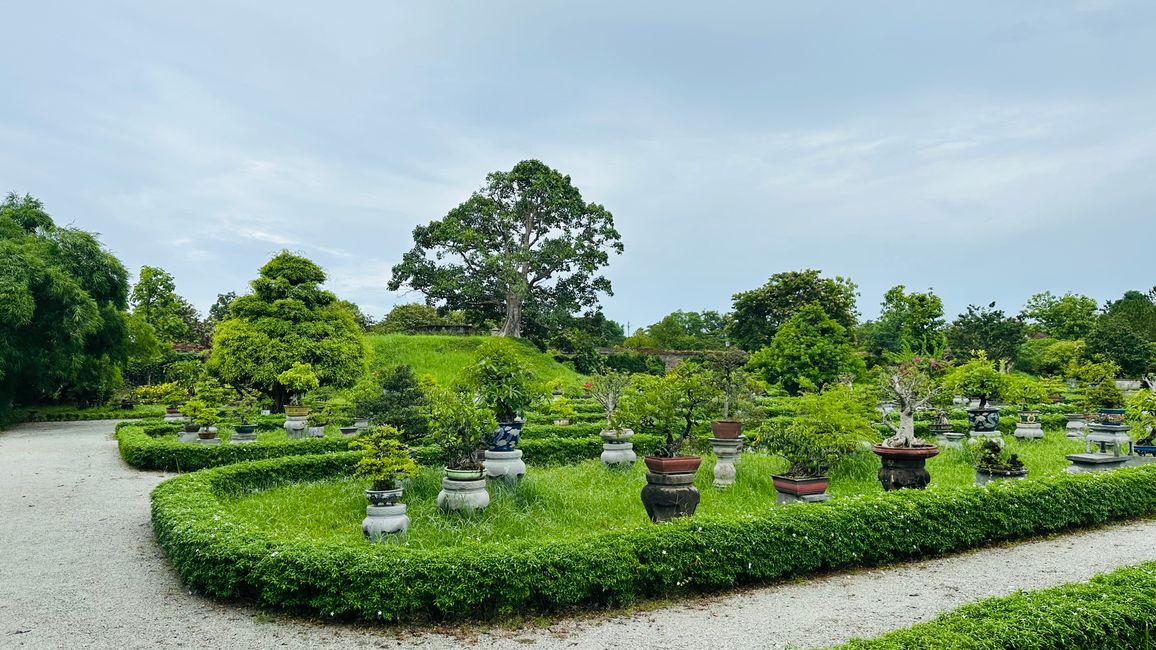
There are also quieter corners in the citadel, such as the garden with a large bonsai collection. My favorite spot was a small pavilion with a fish pond, where we waited out the rain and watched the water roll off the lotus plants. Meanwhile, behind us, the next photo shoot was already being set up—complete with appropriate lighting and at least three photographers.
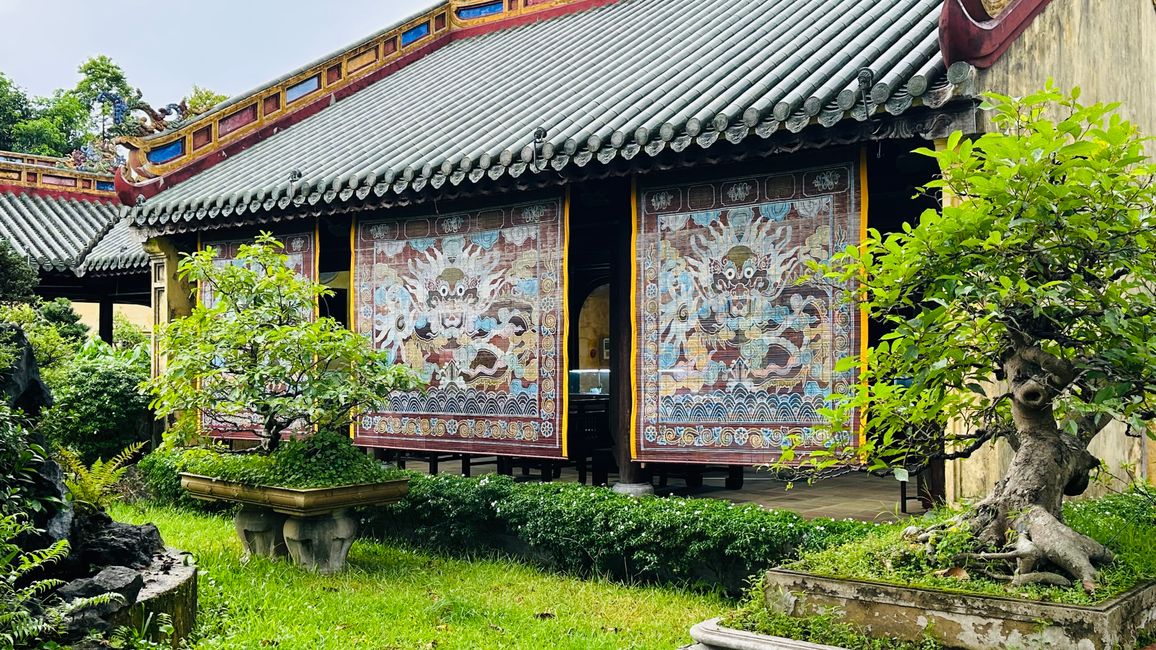
The buildings were very reminiscent of the tombs we’d seen that morning. The throne room, however, was very sparsely furnished—no furniture except for the throne—but the walls and ceiling were all the more lavishly decorated.
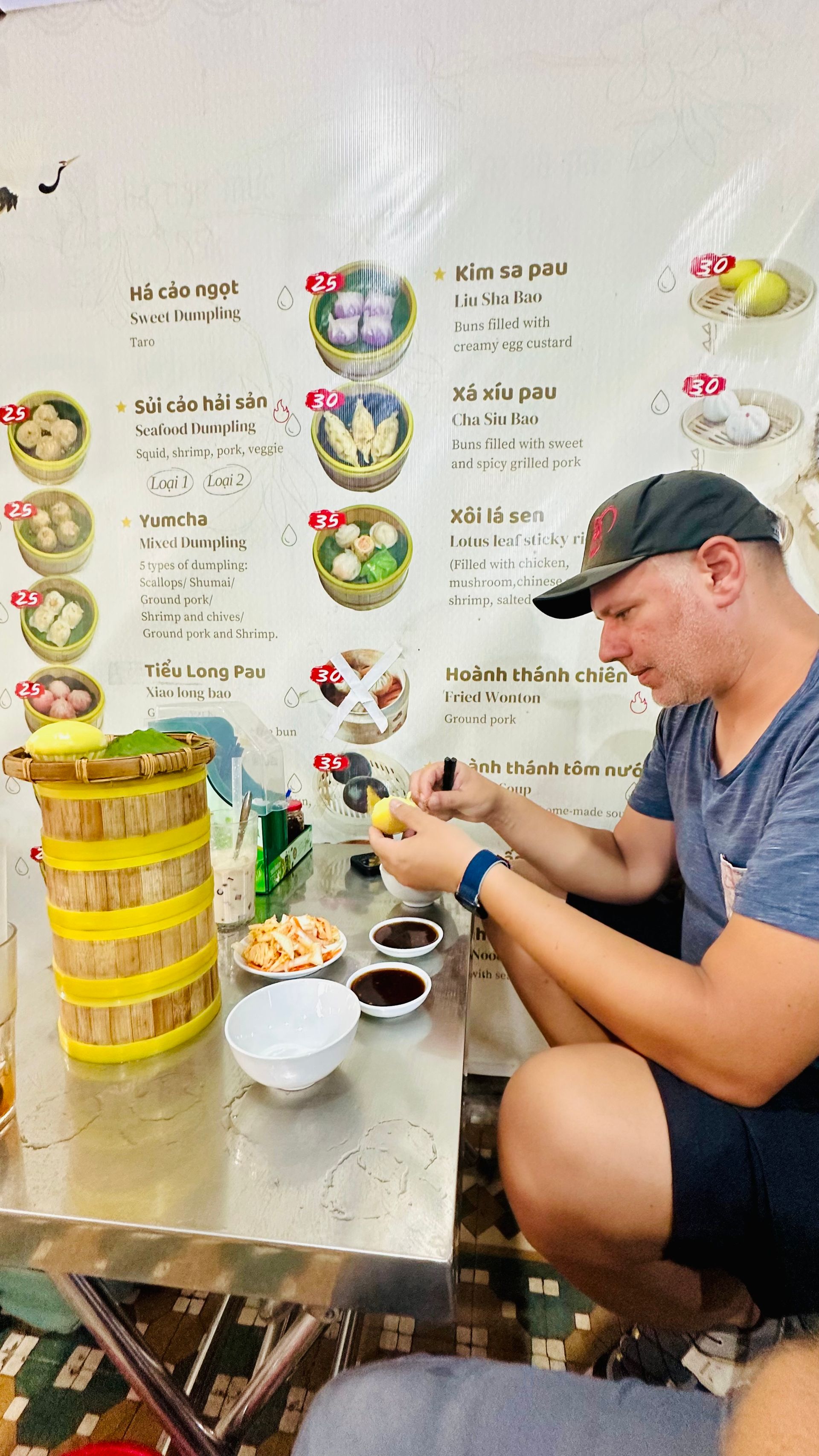
Shortly before closing time at 5:30 p.m., we headed back (so as not to get locked in again) and quickly stopped at a small local restaurant. Simon finally got his beloved baos here—steamed buns made of yeast dough with various fillings.
We were apparently the only Western guests, because we were immediately stared at and secretly photographed. And once again, we ate the meal the wrong way: the bowl of soup was supposed to be eaten together with the fried rice. You never stop learning. But everyone was very warm and just curious.
The next day, we continued on to Da Nang. The bus ride was once again very pleasant and comfortable. The hotel room, on the other hand, was a huge disappointment—it was the first time we’d ever canceled a reservation immediately after seeing the room. The smell from the shared bathrooms in the attached hostel could be detected both through the door and via the air conditioning. The window in the room looked directly into the lobby, so we could hear the noise from the nearby street as well as the conversations and music coming from the lobby. The fact that the sink wasn’t in the bathroom but in the bedroom—next to the sink in the kitchenette (why two sinks at all?!)—was certainly bearable, if a bit strange.
Since it was too late for extensive sightseeing and we hadn’t found alternative accommodations, we drove the 45 minutes back to Hoi An and returned to Da Nang the next day. After all, I still wanted to keep my dentist appointment.
My teeth were treated wonderfully at the Australian Dental Clinic. In addition to a cleaning, I had a retainer replaced, two veneers made, and a filling put in—all for just 2 million VND, which is about 67 euros.
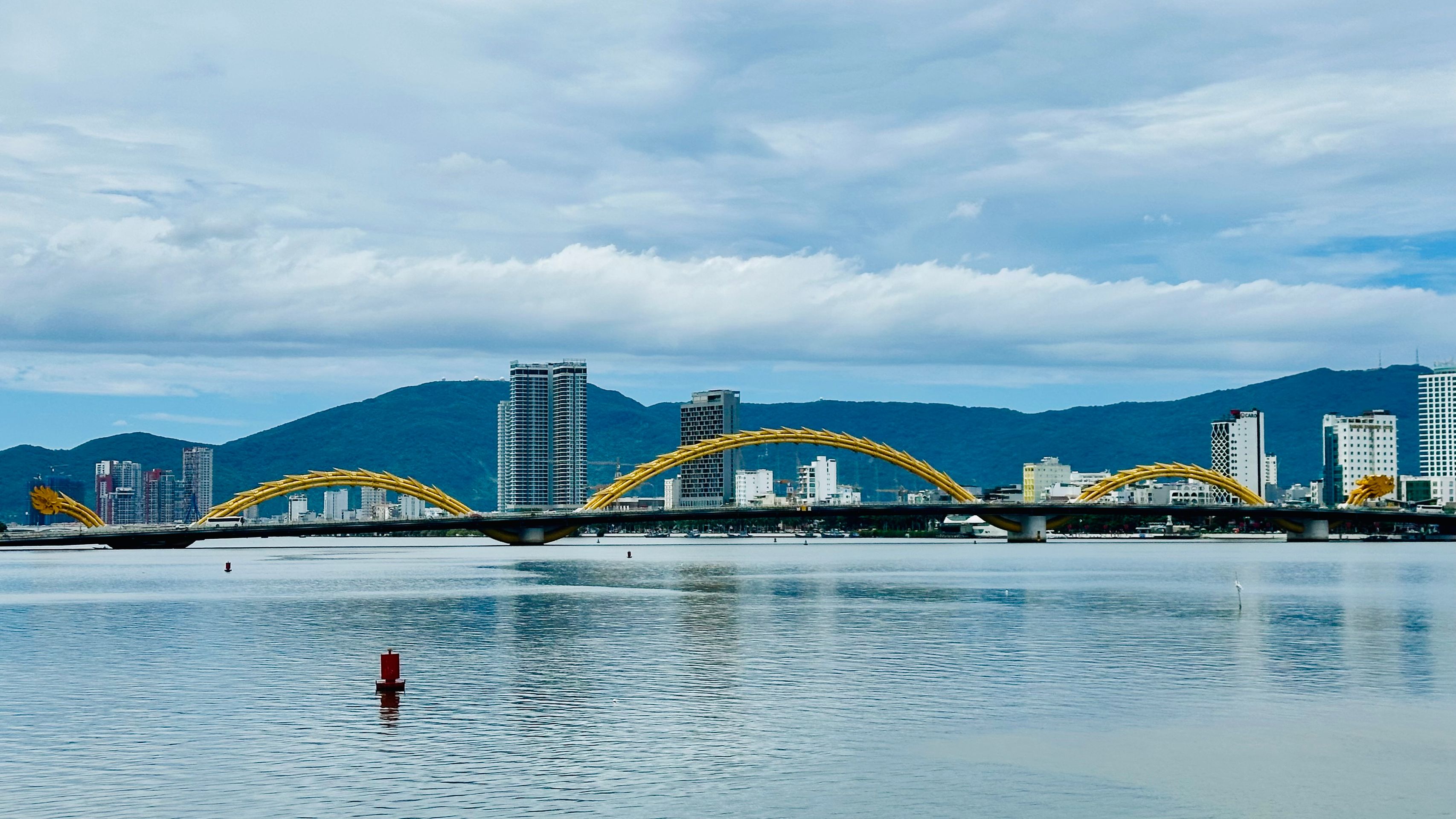
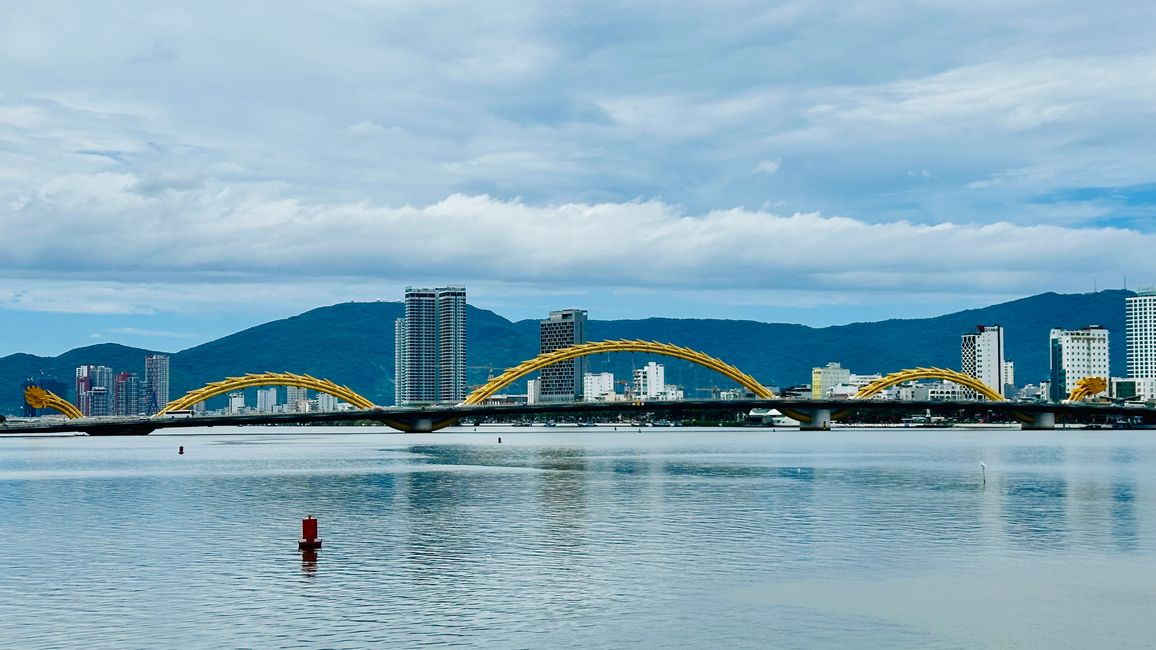
At lunchtime, we strolled through the city a bit and walked along the promenade to see the Trần Thị Lý Bridge and, of course, the famous Dragon Bridge.
We also strolled through the Han Market and the Con Market. The Han Market is geared more toward tourists: there’s plenty of dried fruit and nuts, and on the upper level, you can buy shoes, bags, T-shirts, and pants—though the same styles can also be found in stores throughout Hoi An. The Con Market, on the other hand, is geared more toward locals: in addition to fresh food, you’ll mainly find household items here, such as brooms and airtight containers.
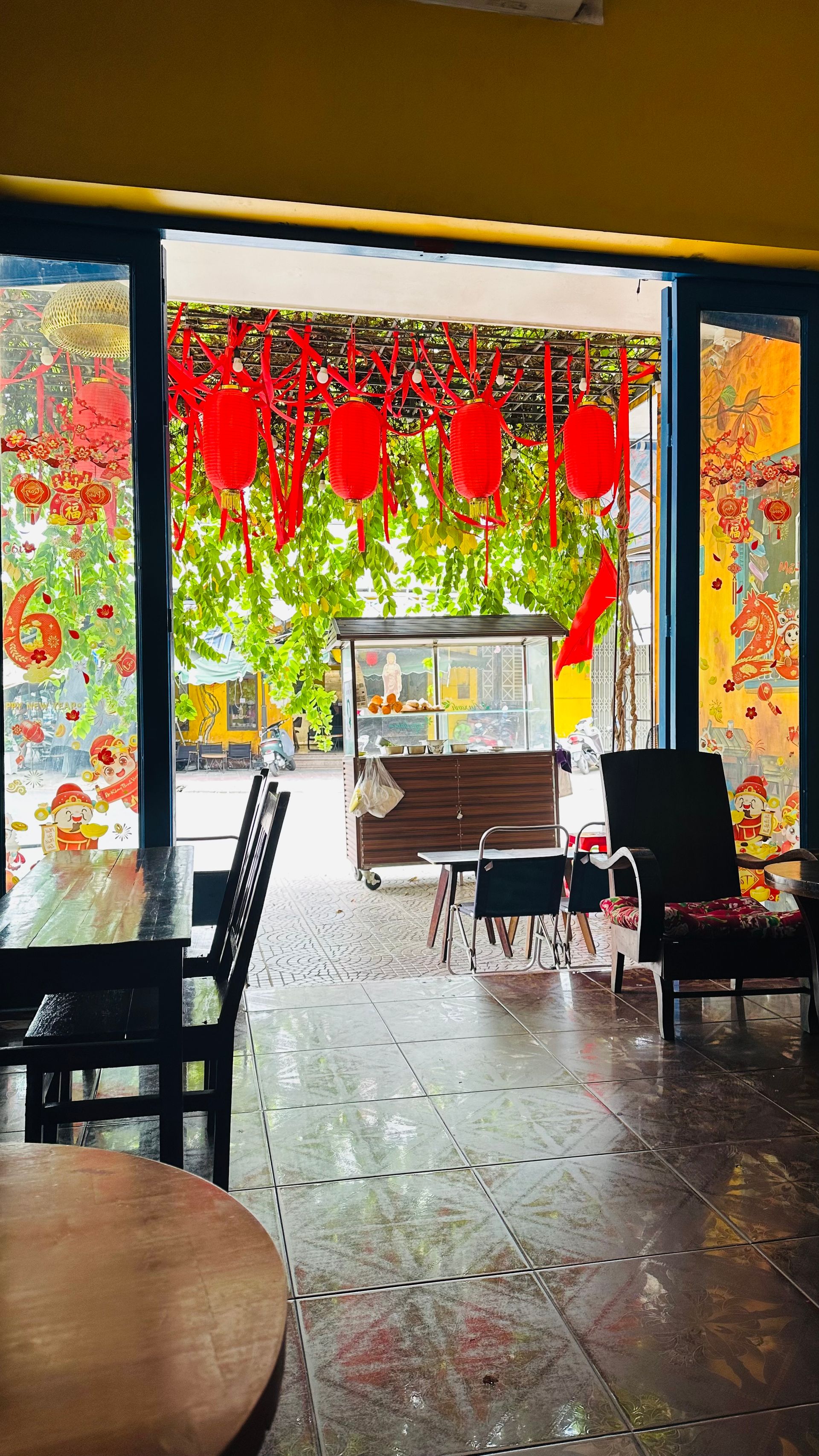
We really liked the “Lạc Thảo Viên” café; it serves delicious drinks and is a little oasis of calm. The walls are beautifully painted, and the entrances are lightly overgrown with flowering plants.
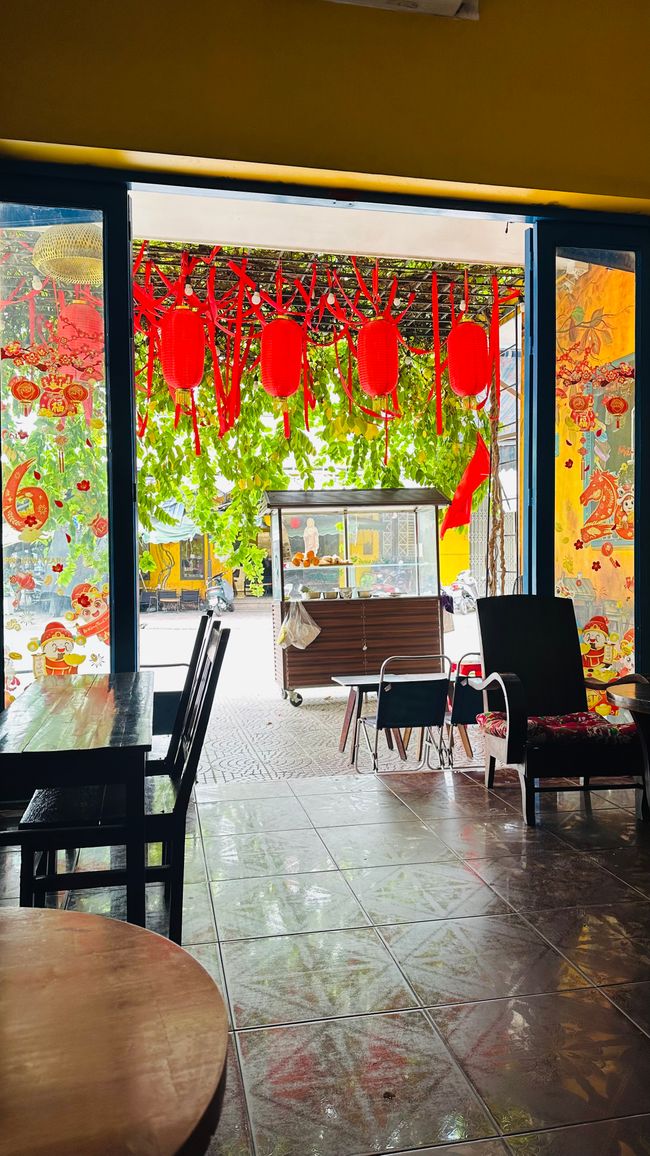
We also had a great meal at a small local restaurant specializing in summer rolls, the Tây Sơn Cuốn – Bánh Cuốn Bình Định.
Personally, Da Nang didn’t quite win us over—we just prefer areas closer to nature. But it’s definitely worth a trip for the food, drinks, and shopping.