


(2016) Following the large animals in the wilderness of Central Asia and conserving nature by Thomasz Pietrzak
Published: 20.12.2024
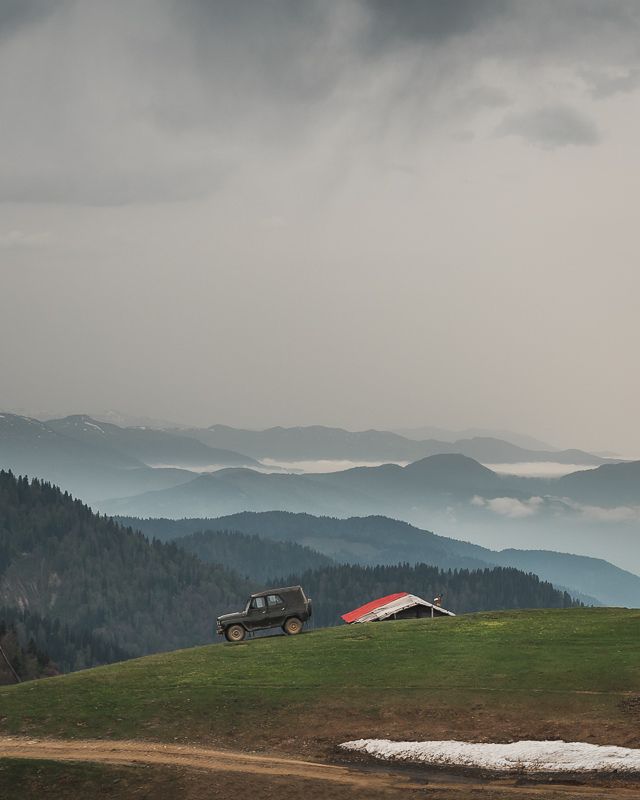
- December 09, 2016still following the track........ but?


- It is believed that Central Asia has gaps in knowledge, a region where large animals coexist. Many of them are still unknown for zoological exploration. The most charismatic are so-called unknown primates of Xinjiang-Kashgaria and a type of reptile, dinosaur-like varanid that occur in the wild areas. Thus, the mountainous Dżungaria are inhabited by forest and rocky dwellers such as wolverine (Gulo gulo) which is little known and a kind of dinosaur-like varanid is reported around Saryam Lake in Borohoro (Lai Kuan and Jian Qun, 1993). As for Kashgaria, there is an unrecognized terrestrial animal resembling the American badger (Lydekker, 1878). The natural history of that part of the world (especially Xinjiang) has been overlooked for years, with lost species remaining absent and only a few studies conducted by 'European scientists and philosophers' left. The natural history of the remote forests and mountains in the wild terra silvestre of North and Inner Afghanistan and the Uzbekistan wilderness has long been a subject for travelers, workers, and entrepreneurs. These areas are home to larger animals that have not been previously confirmed: various mustelids, Canidae, birds, lizards, and ruminants (i.e., the forests of Olipore?). Perhaps, the largest of the unknown animals of Inner Asia is a small kind of mammoth that survived in northern Tien Shan, but it could very well be mere fraudulent information for naive Europeans, provided by other Europeans. All cryptozoological identities must be approached cautiously, but the most crucial aspects are, of course, wildlife management practices. North and Inner Afghanistan is a habitat for rare animals, which were described by travelers to this country. One of them is a hoofed species similar to Naemorhedus and another 'hybrid' species of wild dog with wolf traits, and a bird of prey that is larger than an eagle. Field inventory could be a good solution for a project in remote Chinese Gansu searching for rare terrestrial animals (amphibians, reptiles), and Kandahar Wilds for reg-mahi, which is a sort of unique lizard (unpublished in 1967), and Uzbekistan's Zaamin Reserve for identifying rare forest leporids (Megalepus sp.?), which only exists as a myth effect of ethnozoological phenomena, such as the American waheela. A field proposal for a small project that can be carried out by Europeans in the wilderness of western Tian Shan (i.e., Zaamin and Chatkaly of Uzbekistan) is left for the future, taking the form of a complex campaign focused on what is now Chinese and Russian Turkestan. Here, the Tarim Basin bordering Tibet, in the wilderness of poplar forests and mountains, is inhabited by endemic animals recognized by locals and travelers to the country. Natural hazards in the wild areas of Inner Asia are still described at a point on the board for managing safety and other aspects of nature-based dangers. Decision-makers for pristine habitats in Borohoro Shan or further towards the wildest Kazakh-Chinese borders revealed priority activities for both studying rare animals and discovering new populations in the name of distribution updates. Wilderness conservation and saving their inhabitants in terra silvestre North and Inner Afghanistan, Western Tian Shan, and other forested/semi-arid zones in Uzbekistan are proposed small projects, but only documented here.

References:
Pan, B. & Zhang, Y. Sci. China Ser. D-Earth Sci. (2002) 45(Suppl 1): 174. doi:10.1007/BF02878405
1. 1878, Records of the Geological Survey of India:103 pp.
H. B. Lumsden · 1860, The Mission to Kandahar: With Appendices: 218 pp.
Lai Kuan and Jian Qun, 1993. ‘Dinosaurs: Alive and Well and Living in Northwest China?’, China Today XLII(2):59 pp.
edited version of doc (12.2024)
quatlusFolge diesem Blog und verpasse keine neuen Beiträge.
Answer