
Traditional craft villages around Hoi An - Part 1
The UNESCO World Heritage Site includes not only the city of Hoi An, but also the artisanal villages surrounding it. Our lodging is locat


Published: 24.07.2026
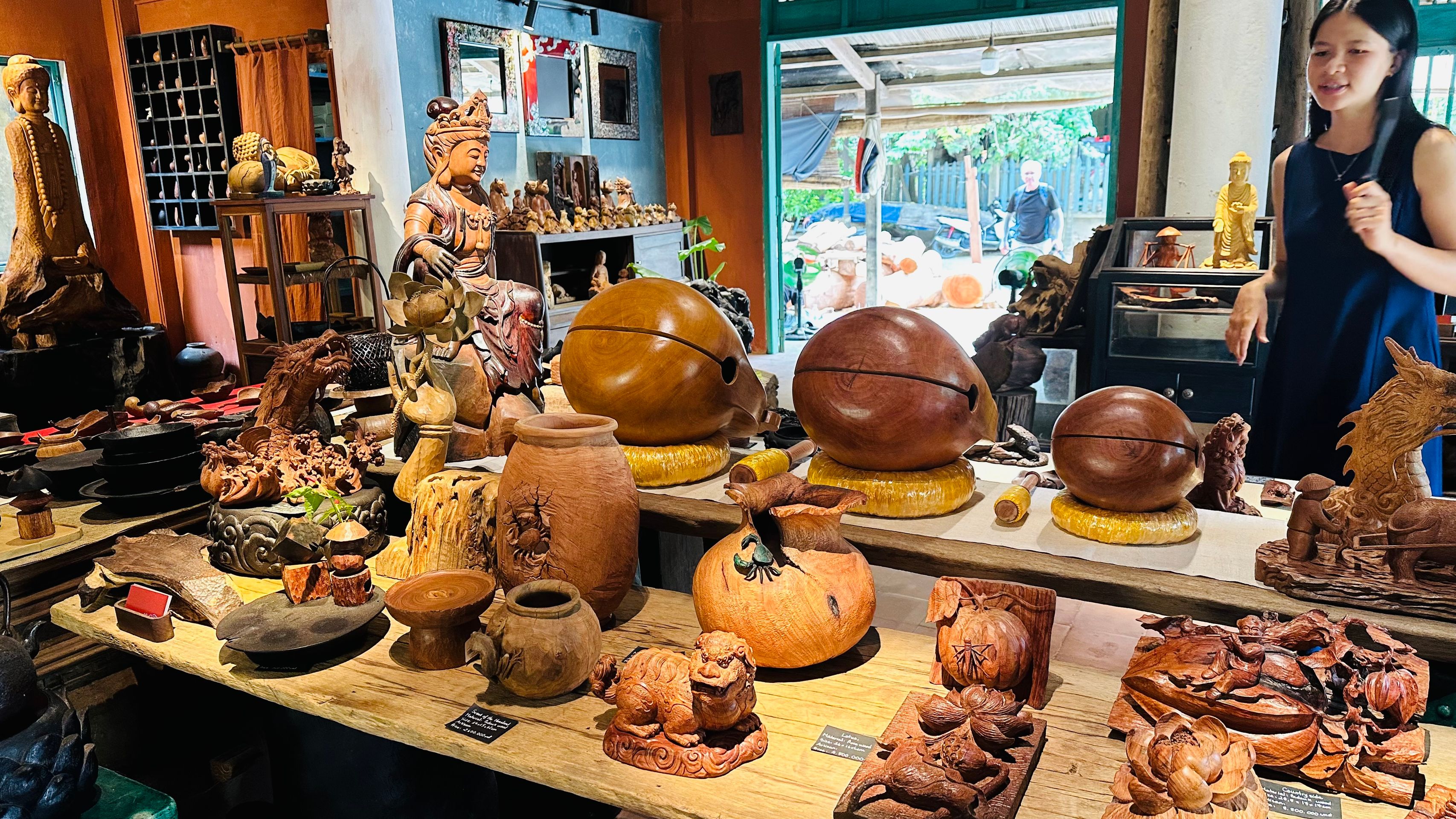
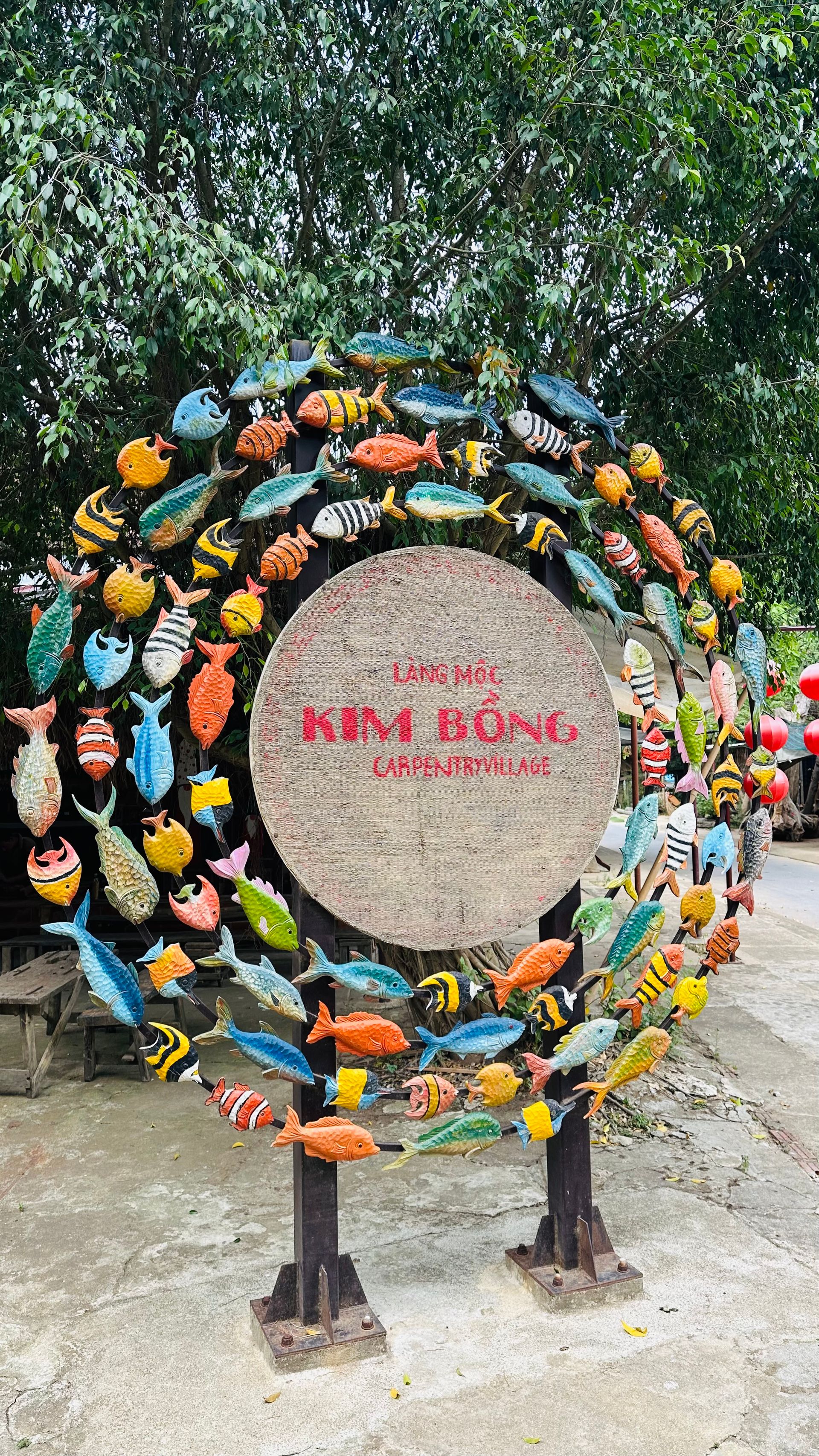
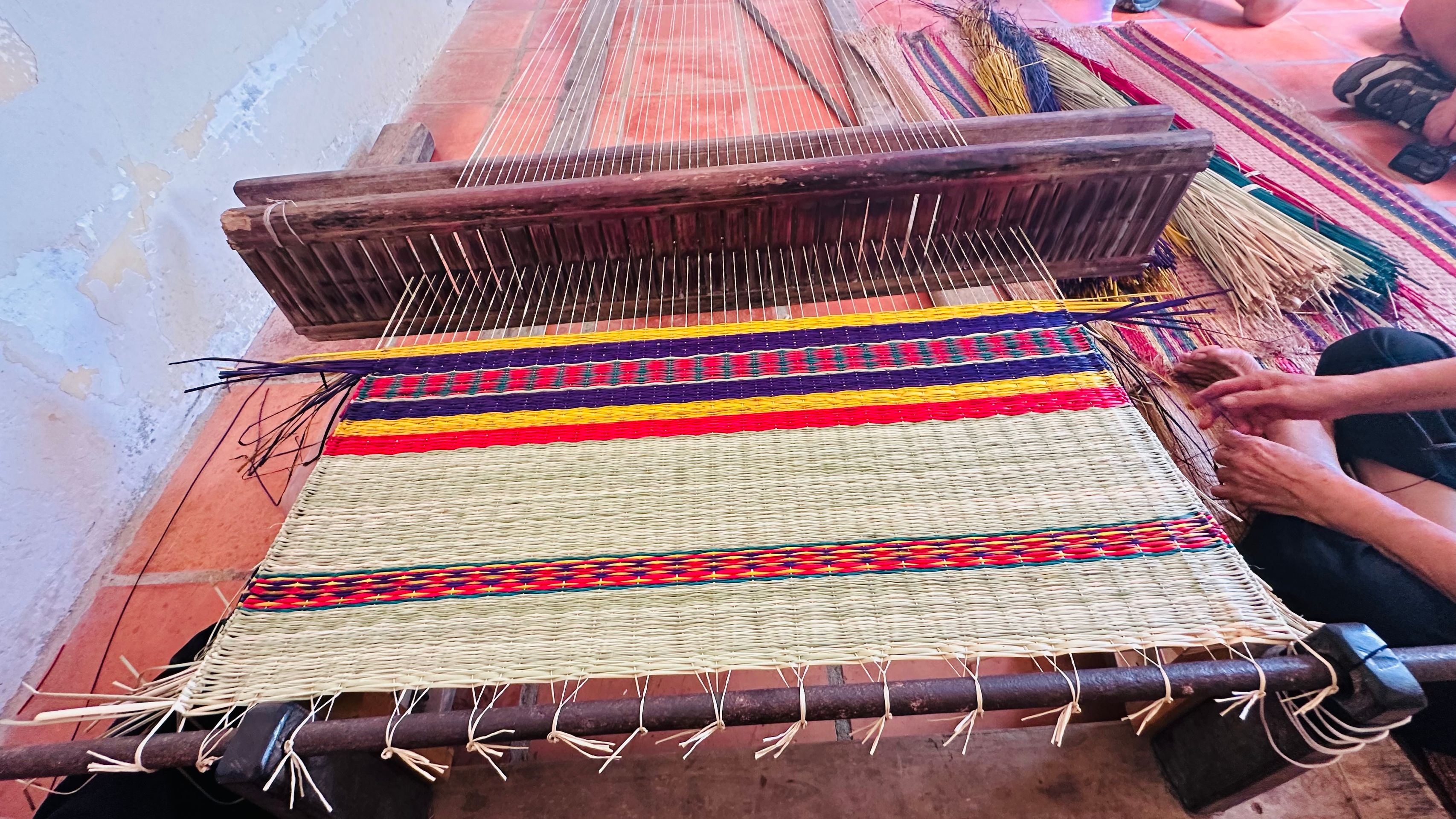
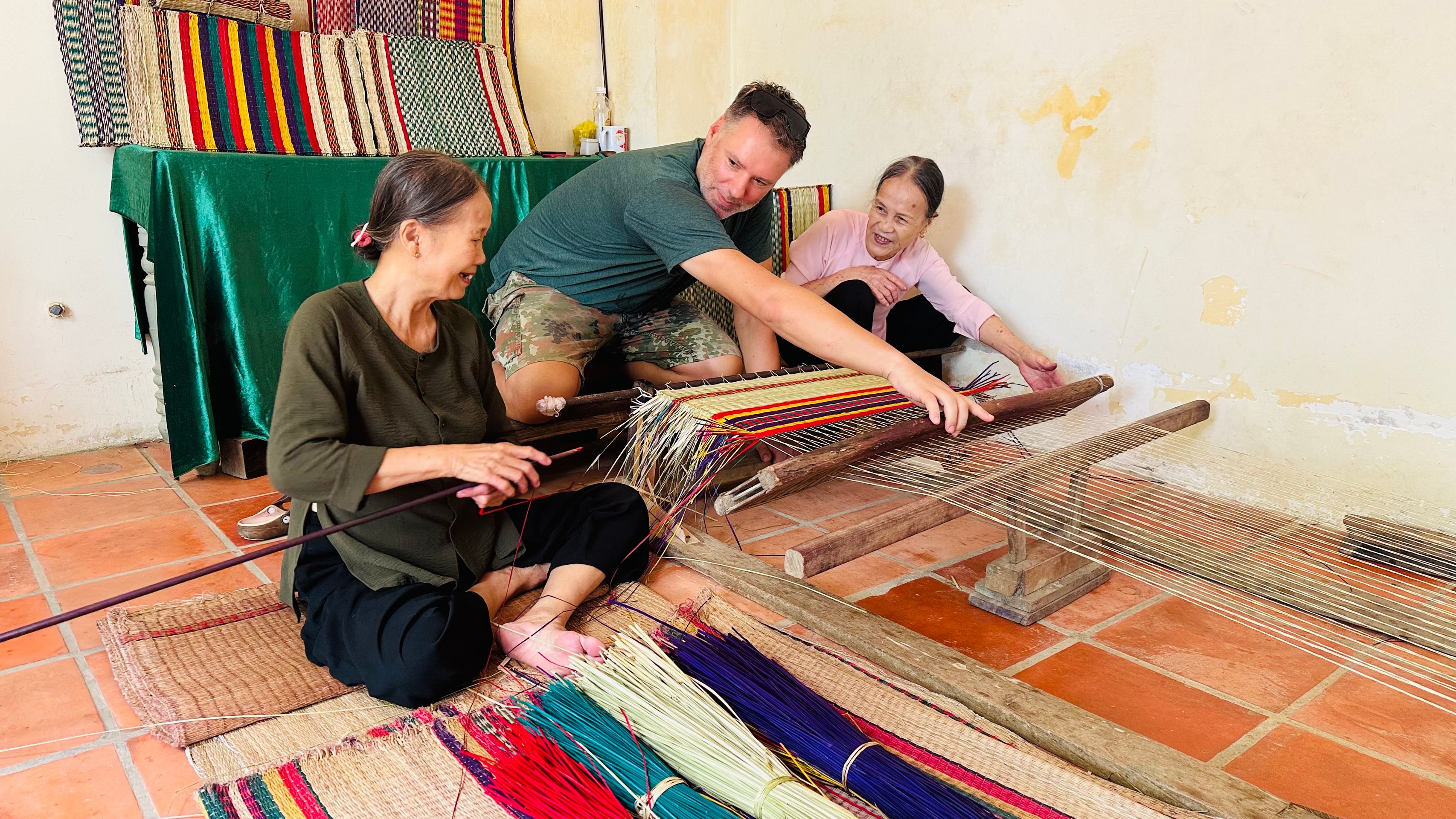
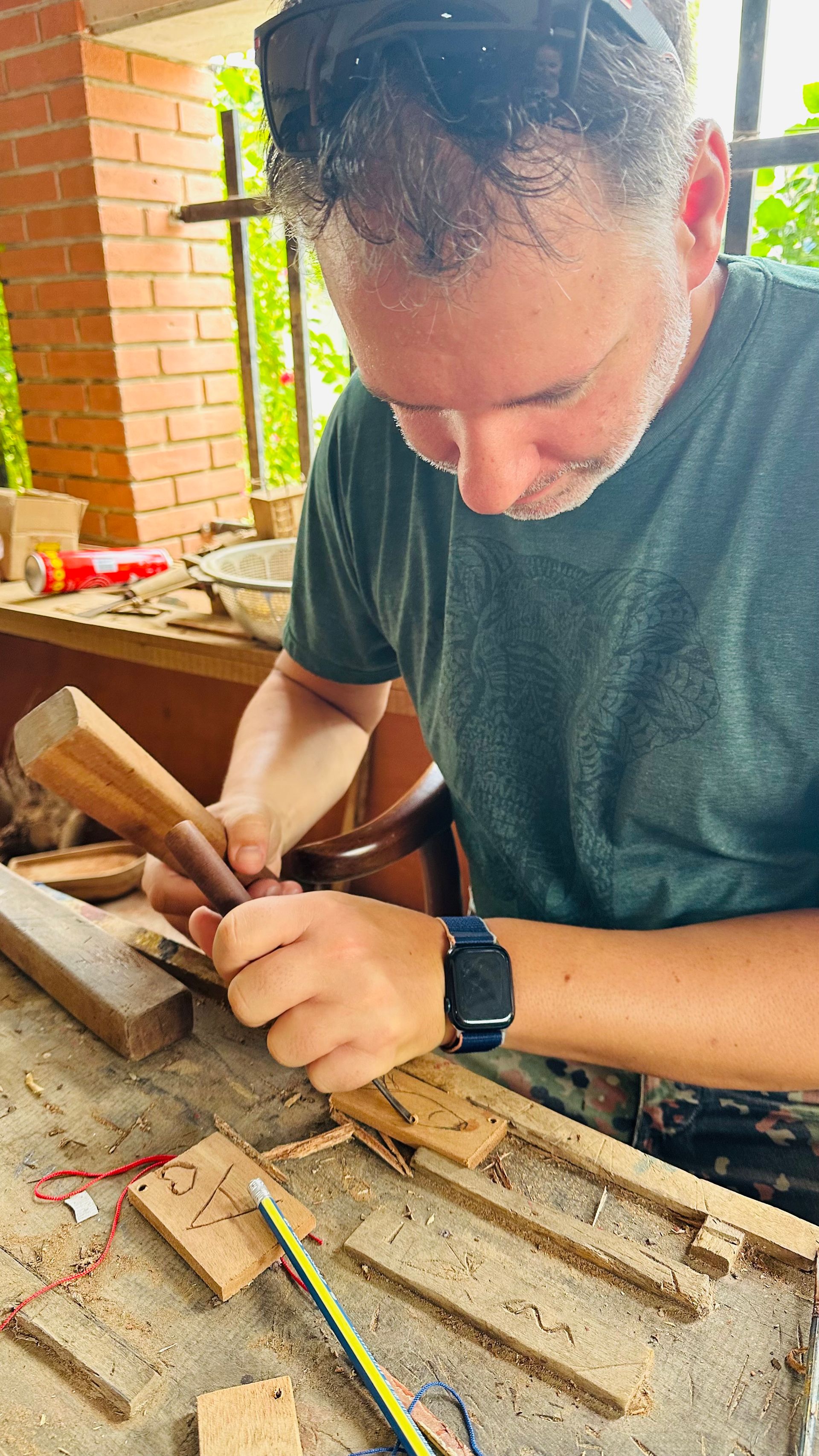
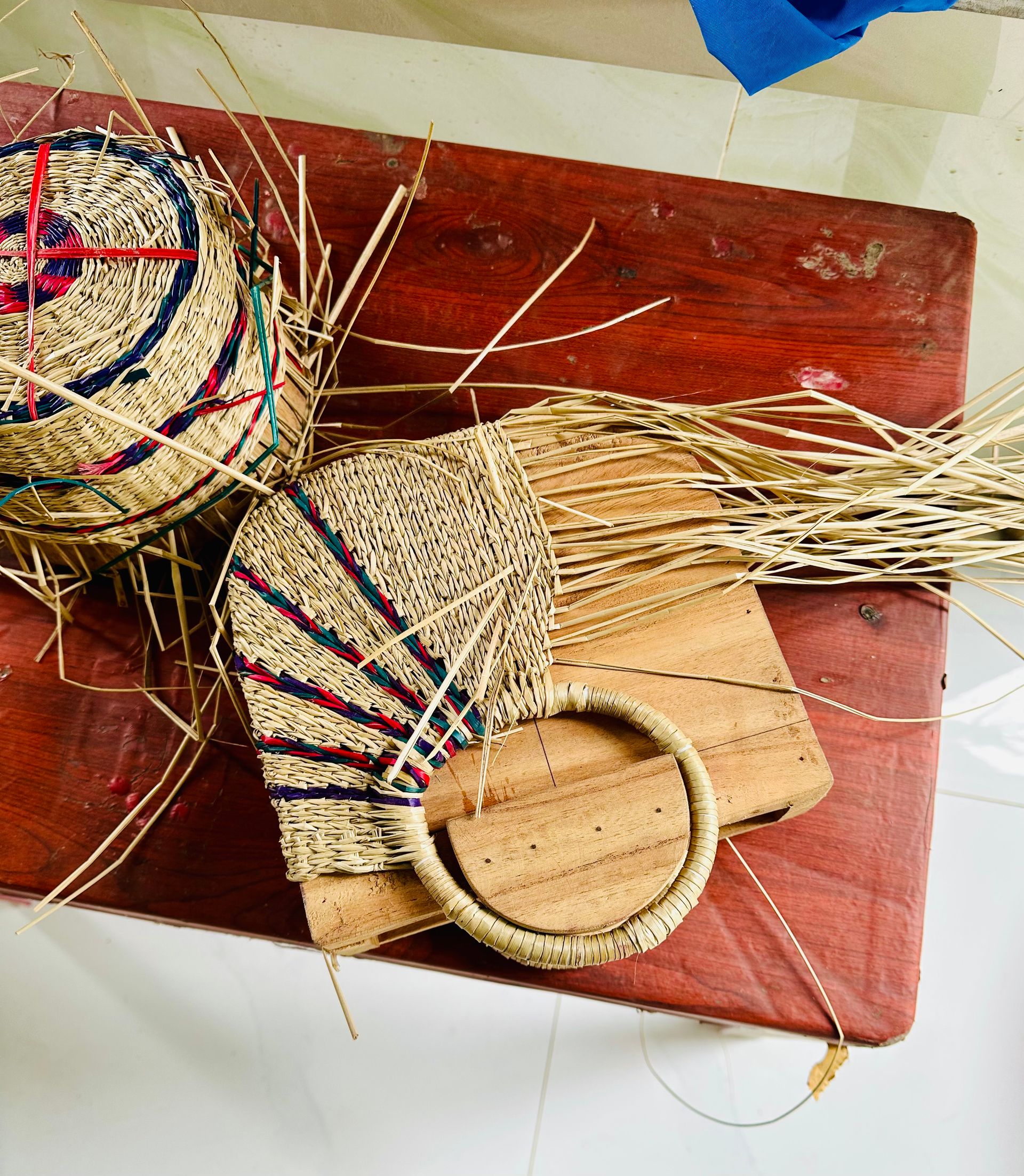
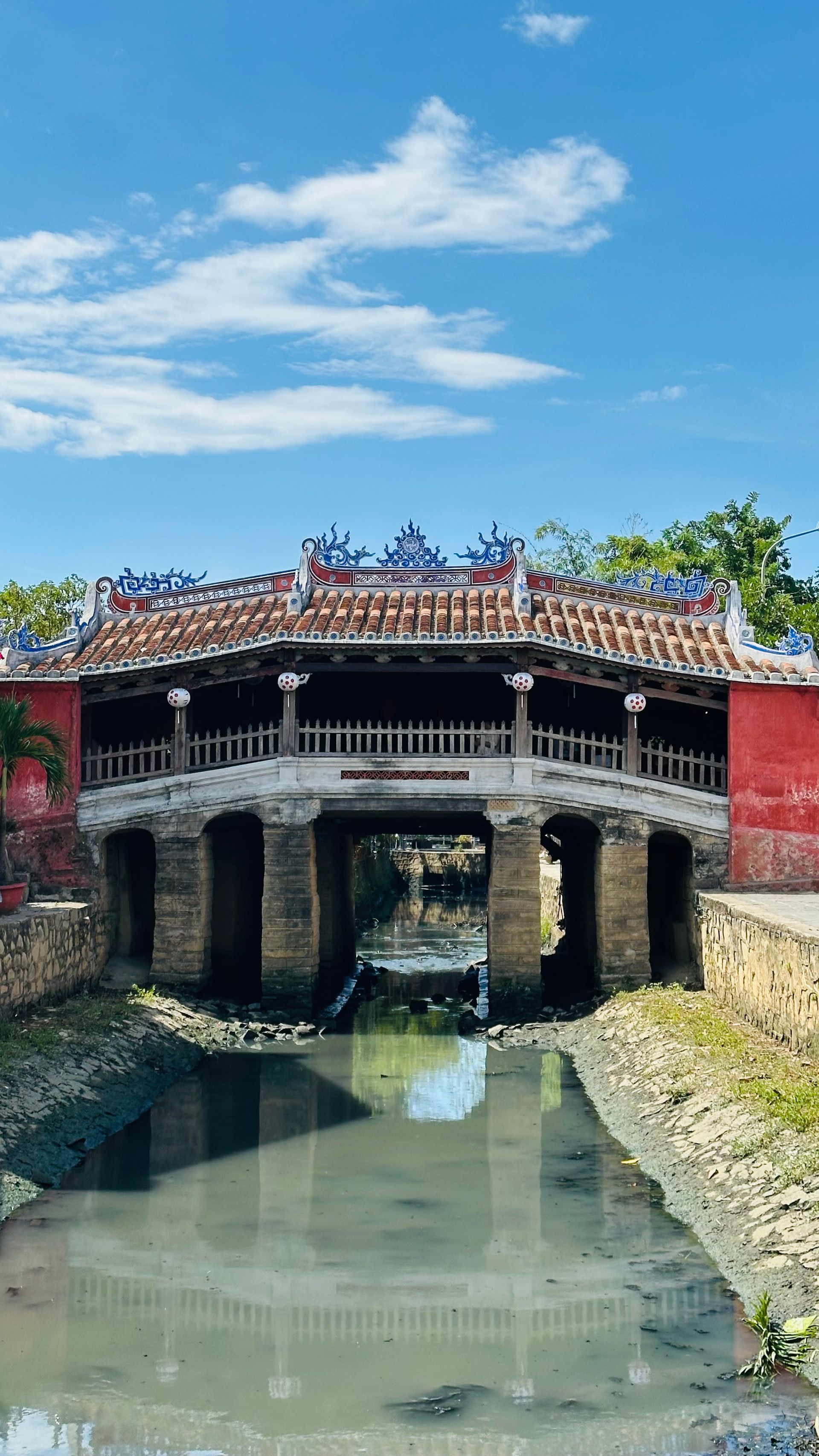
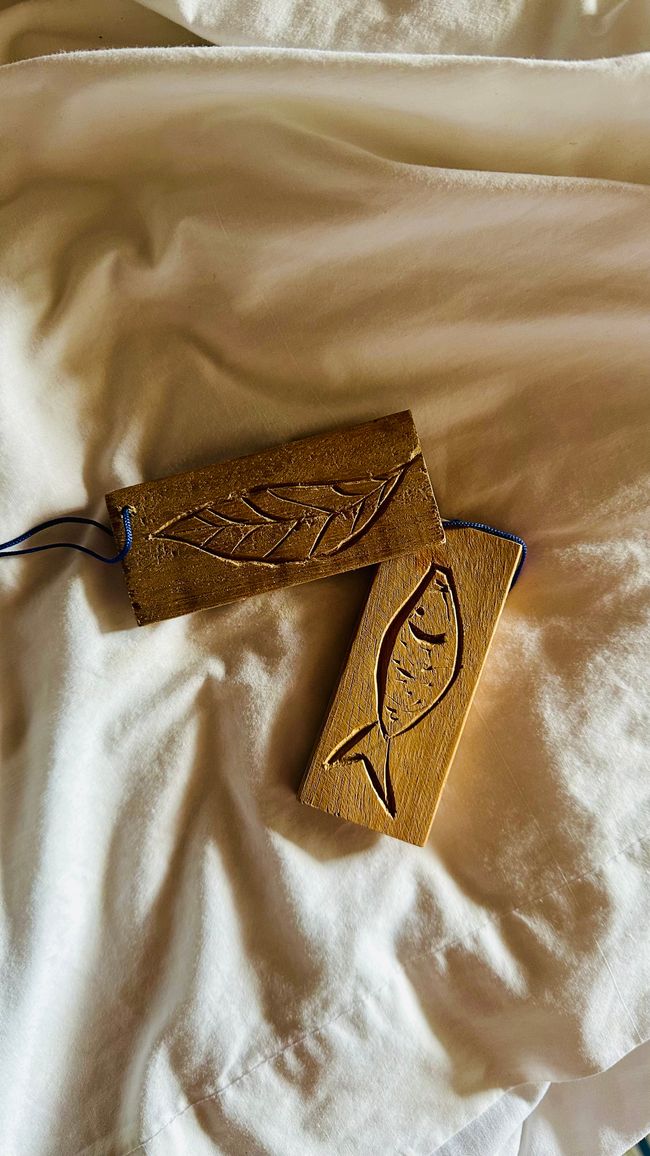
The Kim Bong Carpentry Village is located on Cam Kim Island, south of Hoi An. Here, you can watch artisans create traditional woodwork, carvings, and boats. As early as the 16th century, exquisite wooden structures were crafted here—a well-known example is the Japanese Bridge in Hoi An. Admission costs 35,000 VND per person, and for that price, you can try your hand at mat weaving for free and even attempt a small carving project. We had a lot of fun doing this, and it was exciting to try our hand at a craft and get to know the various tools.
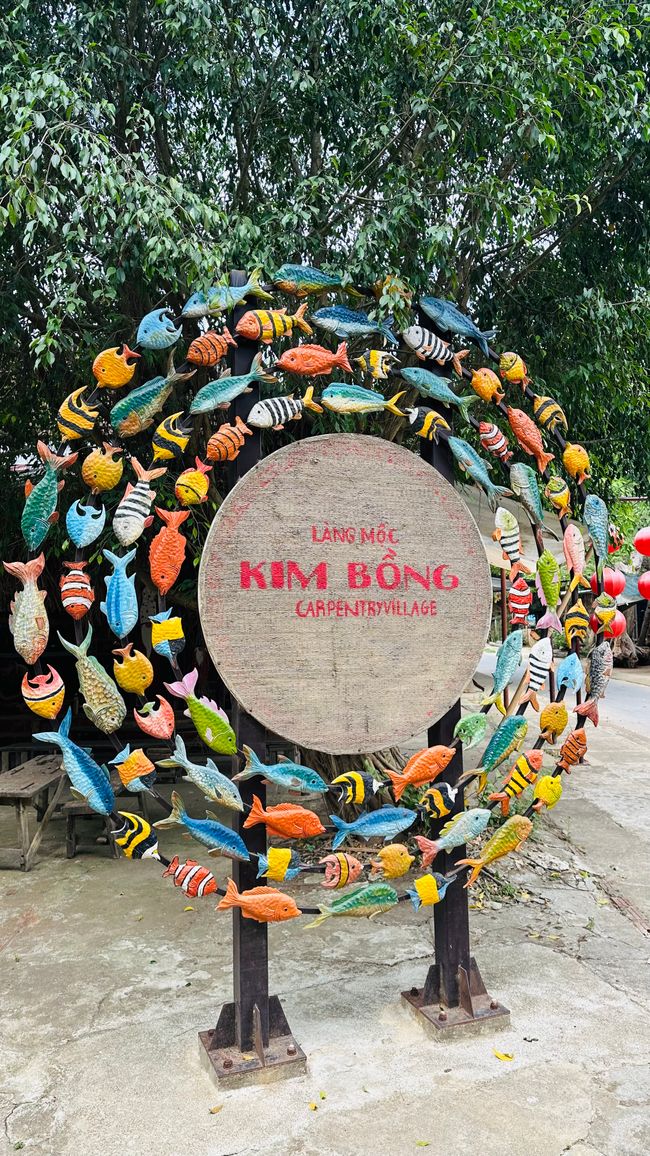
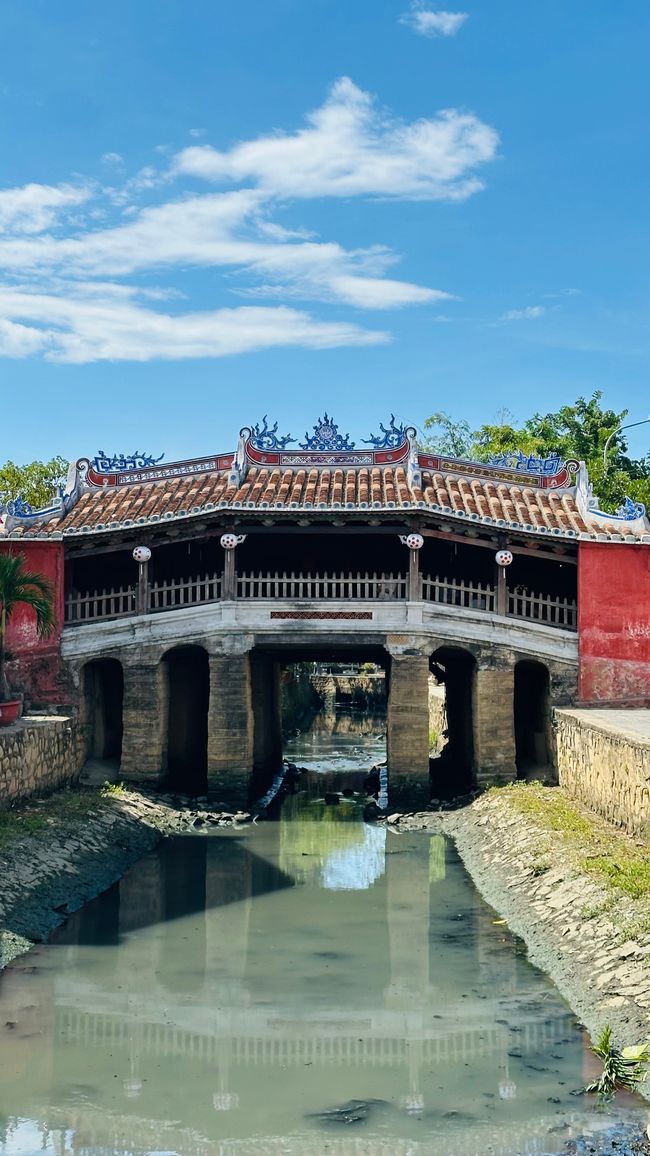
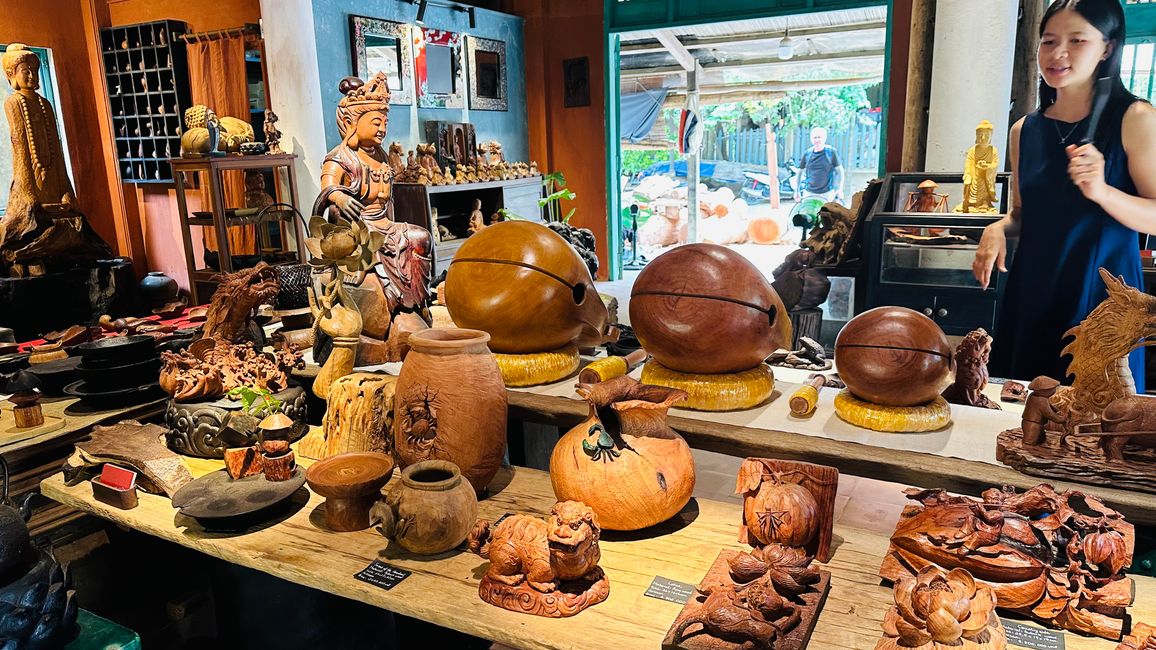
My favorite place was the shop “Ngô. (Wood Art and Workshop).” The exhibits were imaginative and beautifully crafted, and we learned a lot about woodworking. For example, jackwood (wood from the jackfruit tree) is often used for Buddha statues because it’s considered a particularly valuable, even almost sacred, material. A jackfruit tree isn’t cut down until it no longer bears fruit, and the wood is easily recognizable by its characteristic yellow color. By the way, as we were told, “Kim Bong” means “flowing golden wood”—which refers to this very jackwood.
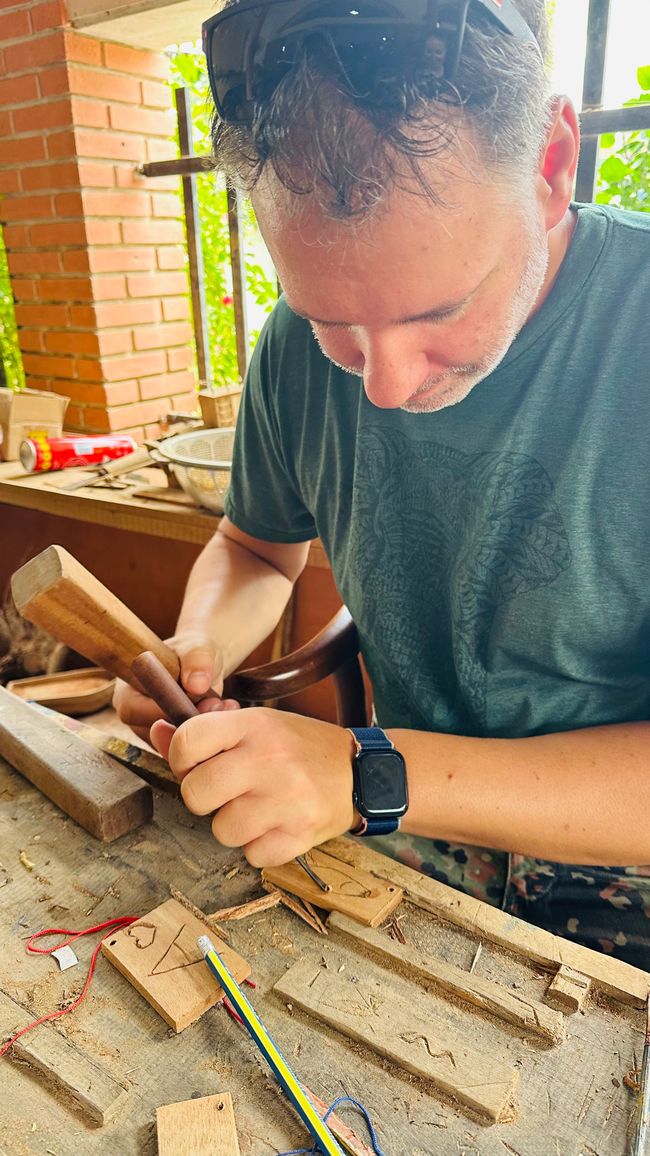
In Carpentry Village, there are many other shops and stations where you can try your hand at carving. To do this, small wooden panels are clamped in place, a design is sketched in pencil, and then carved out with a chisel and mallet—finish it off with a bit of sandpaper, and you’ve got a beautiful souvenir. In the northern part of the village, there’s also a shipyard where you can watch fishing boats being hauled ashore for repairs.
Hat Weaving
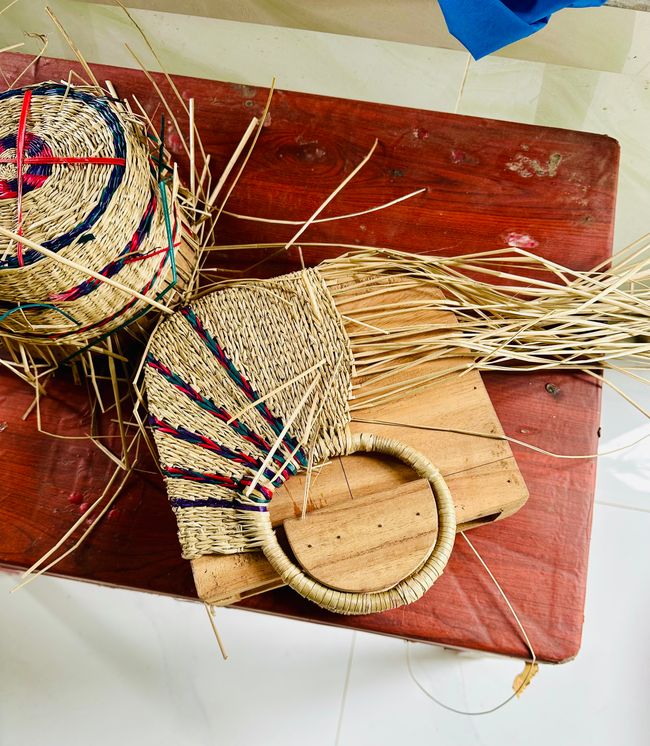
At “Thìn – Knitting Hats, Woven Basket,” you can buy hand-woven hats and bags and even try your hand at weaving.
Mat Weaving
The Ban Thach Mat-Weaving Village is located east of the Carpentry Village on the same island, and here, too, only a few family-run businesses remain. The village was founded in the 16th century by Vietnamese people from Nga Son, who brought with them a long tradition of mat weaving and wanted to sell their goods at the trading port of Hoi An. In the 1980s, the mats were mostly sold to the Soviet Union and Eastern Europe—those were the golden years of the Mat Village.
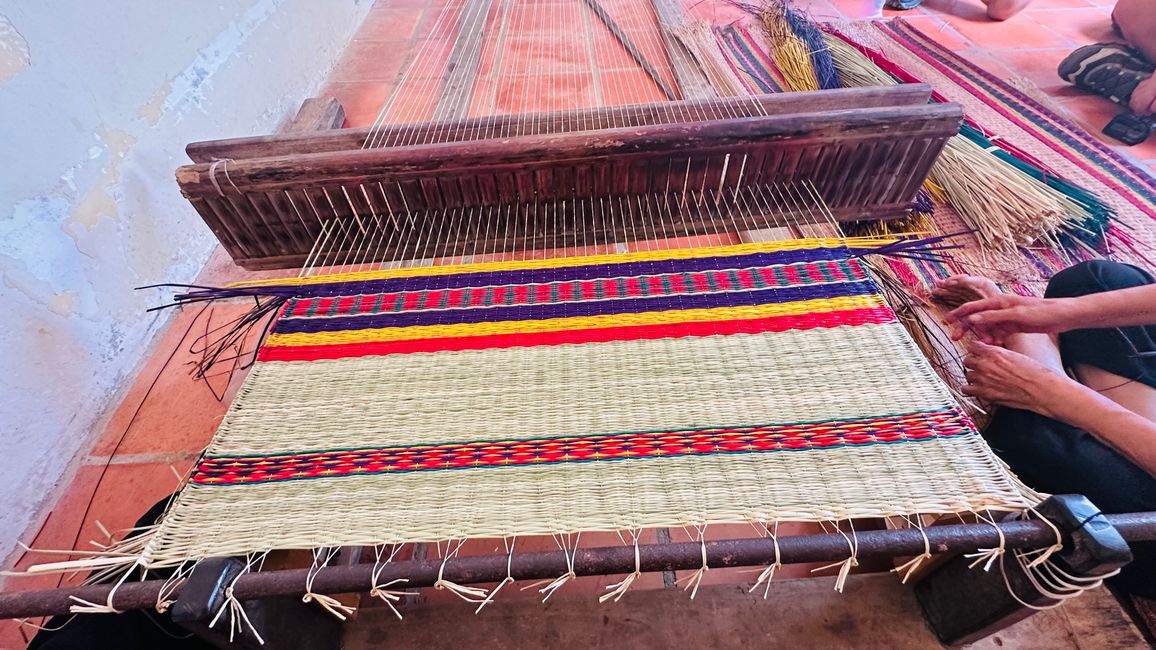
The mats are made from locally grown sedge plants. In the spring and fall, the plants are harvested, split, and dried, then dyed and woven into mats using a loom. The Vietnamese typically use the mats as floor coverings for sitting or eating, or as a cooling mat on the bed. They are even used in temples—richly decorated with dragons or phoenixes as a curtain in front of the altar.
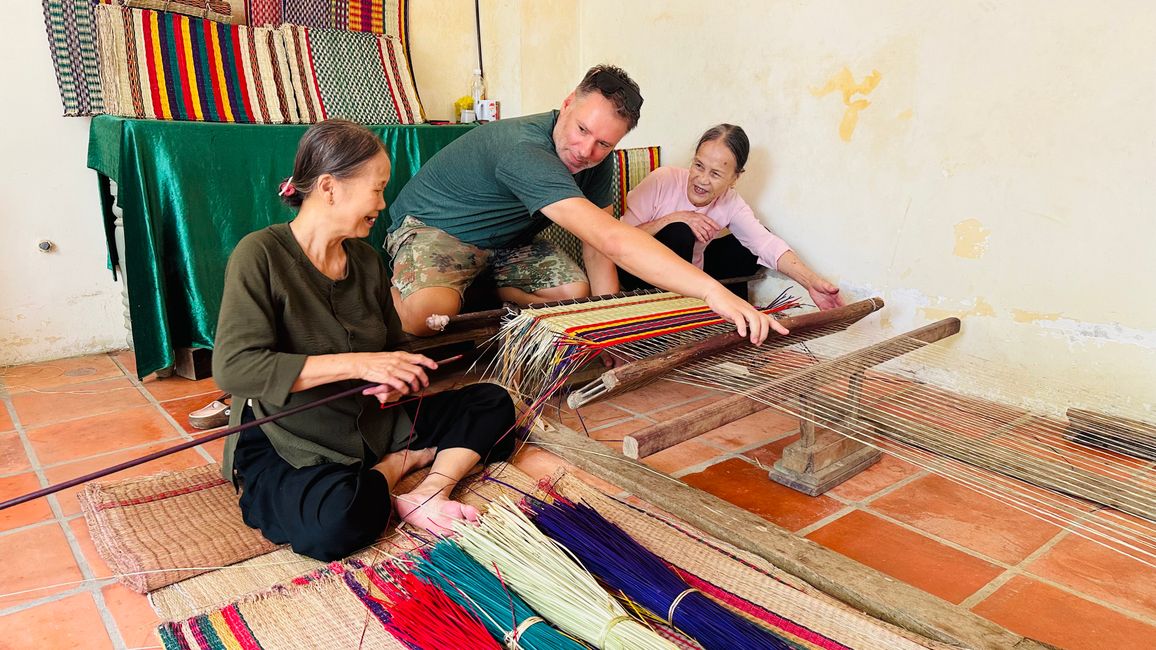
During a visit (free admission), you can try your hand at weaving. But there are several stations for this not only in the Mat Weaving Village but also in the Carpentry Village. We took turns squeezing in front of the loom, which of course isn’t designed for European-sized legs—but it worked. Simon sat behind it and, with his long arms, was still able to reach the weft comb. Two friendly older ladies showed us how it works:
By tilting the weaver’s comb toward you, the warp threads are lifted—always every other one—and the weft thread is threaded through using a forked stick. It is then pressed down against the previous threads with the reed. Next, you slide the reed forward and tilt it in the opposite direction to lift the threads that haven’t been lifted yet, and thread the next weft thread through. This gradually creates a tight weave.
Incense
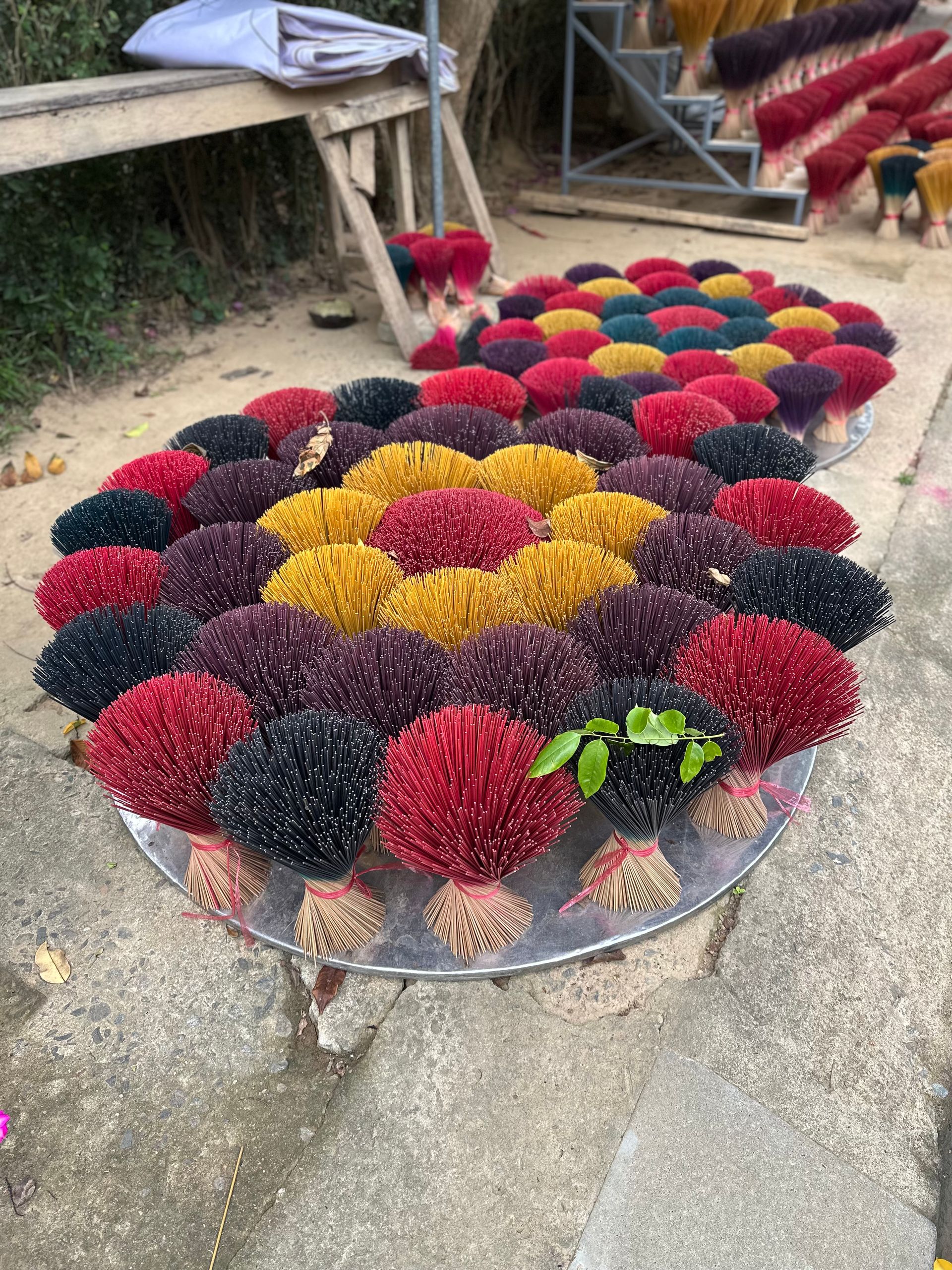
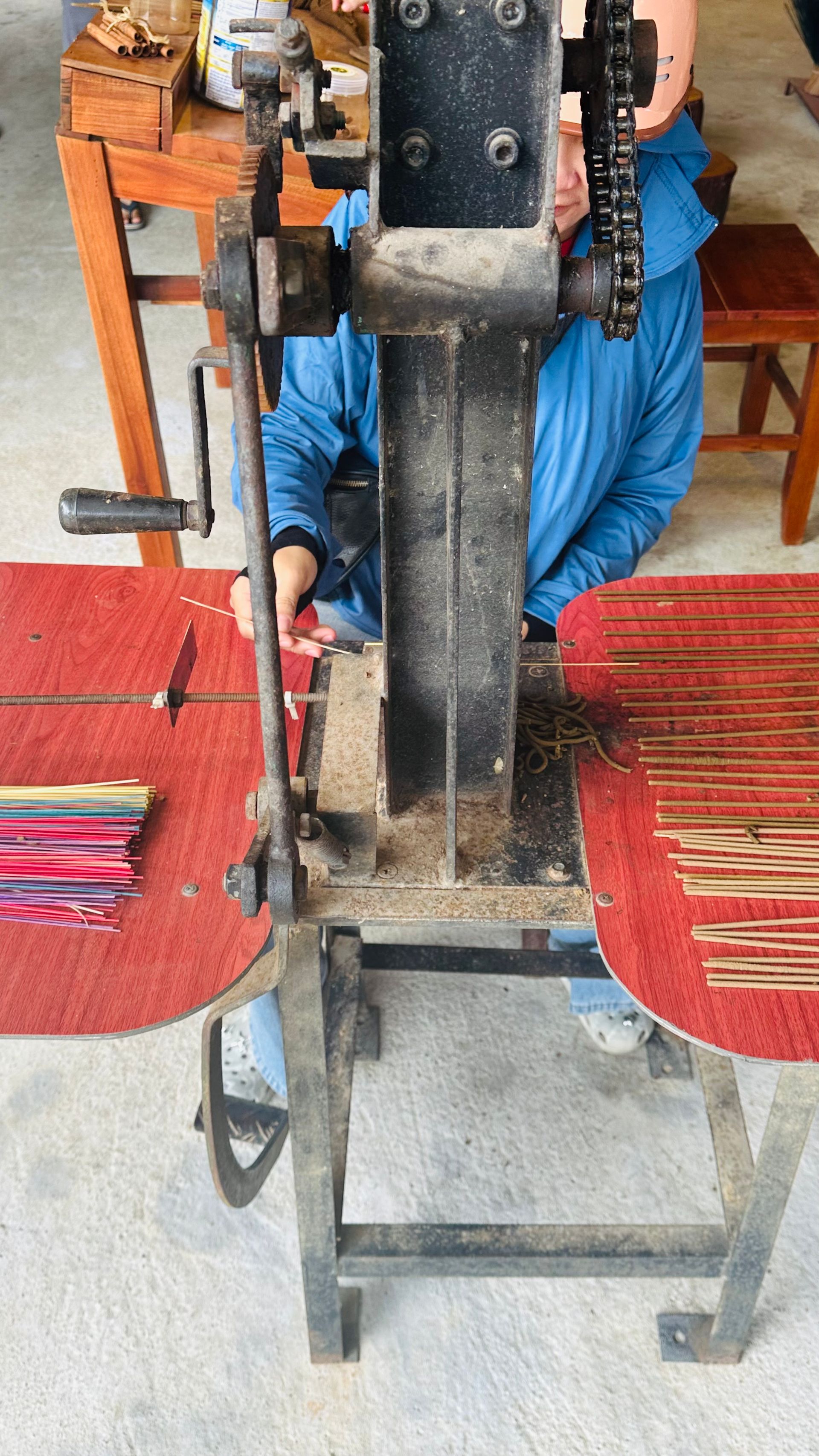
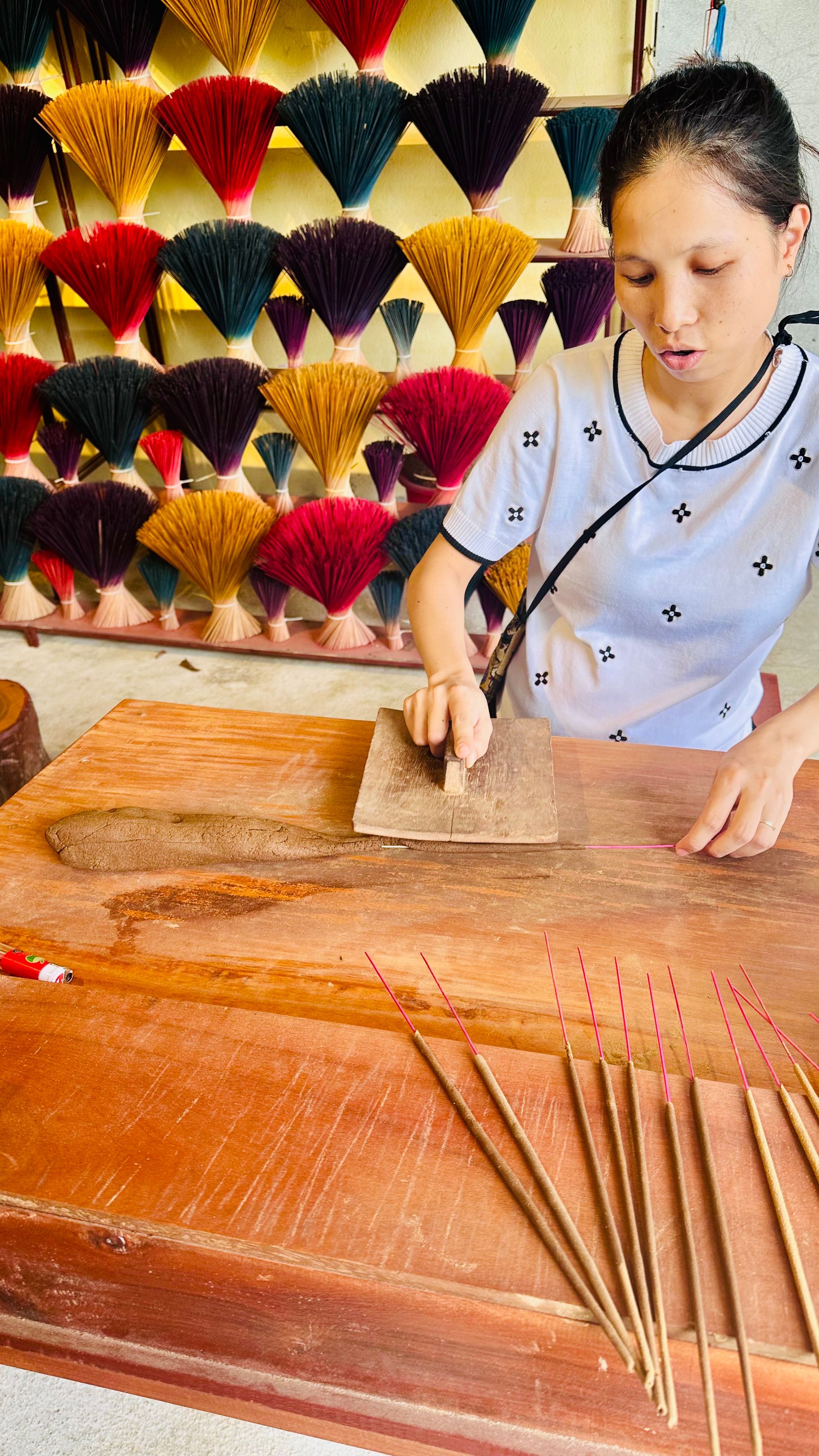
At “Phố Hội – Sightseeing and Experience of Incense Making Traditional Craft,” we were shown how incense sticks were made by hand in the past and are now made by machine. The core stick is always made of bamboo. The flammable paste is made from cinnamon and cinnamon tree sap, Chinese medicinal herbs, or agarwood, which is said to have the power to ward off evil spirits—it is also burned for this purpose in the Arab world. Otherwise, incense sticks are primarily used for relaxation and air purification.
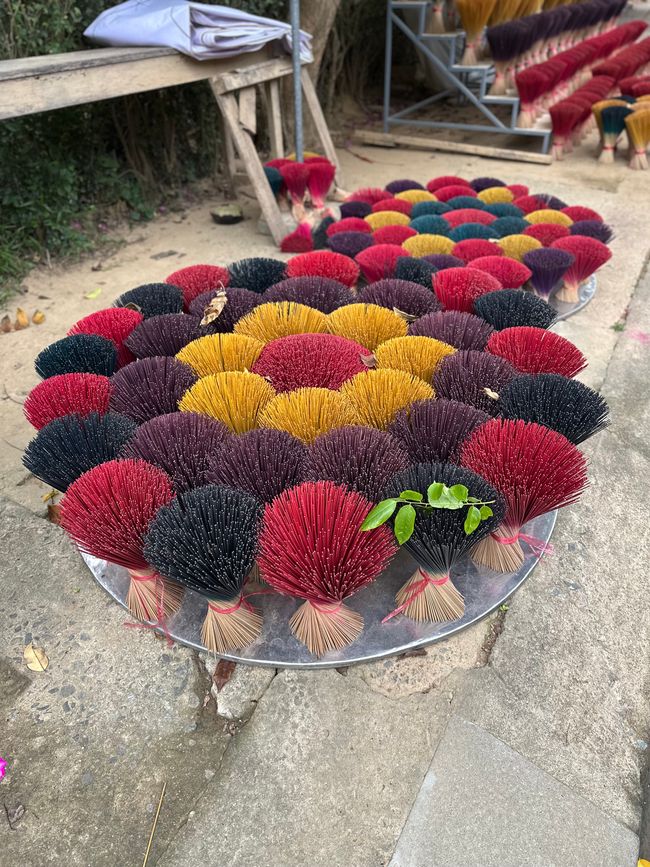
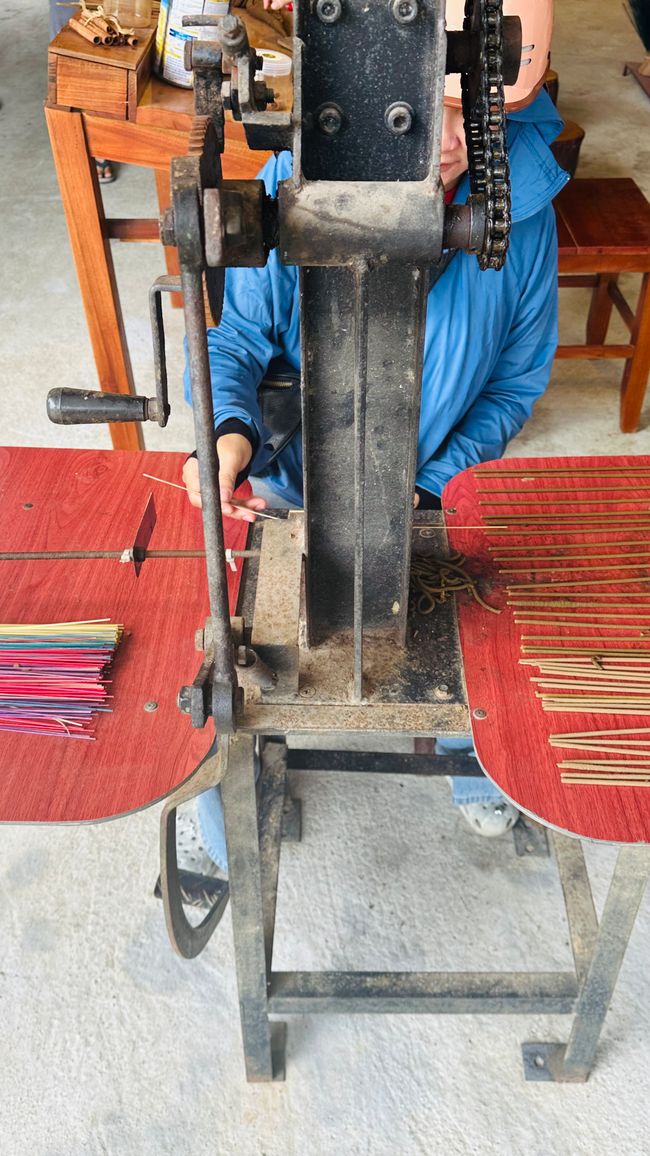
In machine production, the paste is filled into the top of a tube and the bamboo stick is threaded in from the side. By pressing a pedal, the stick is pushed to the other side, coated with the paste in the process, and ejected.
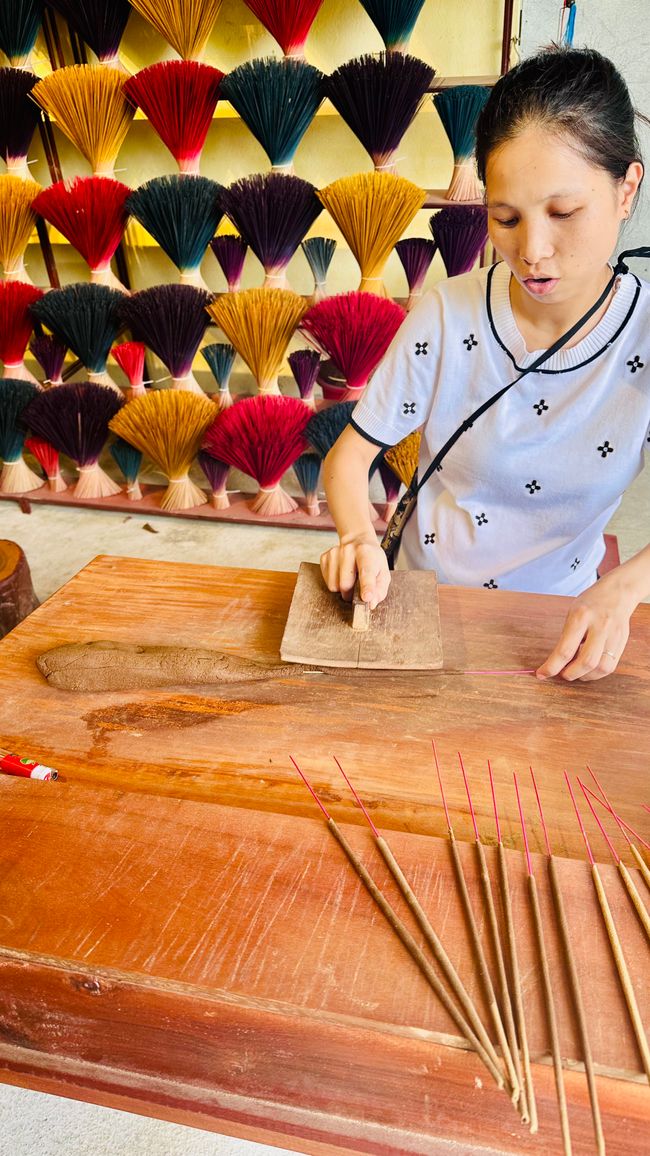
In hand production, the incense mixture is first shaped into a thin sausage using a grater board and then rolled around the bamboo stick.
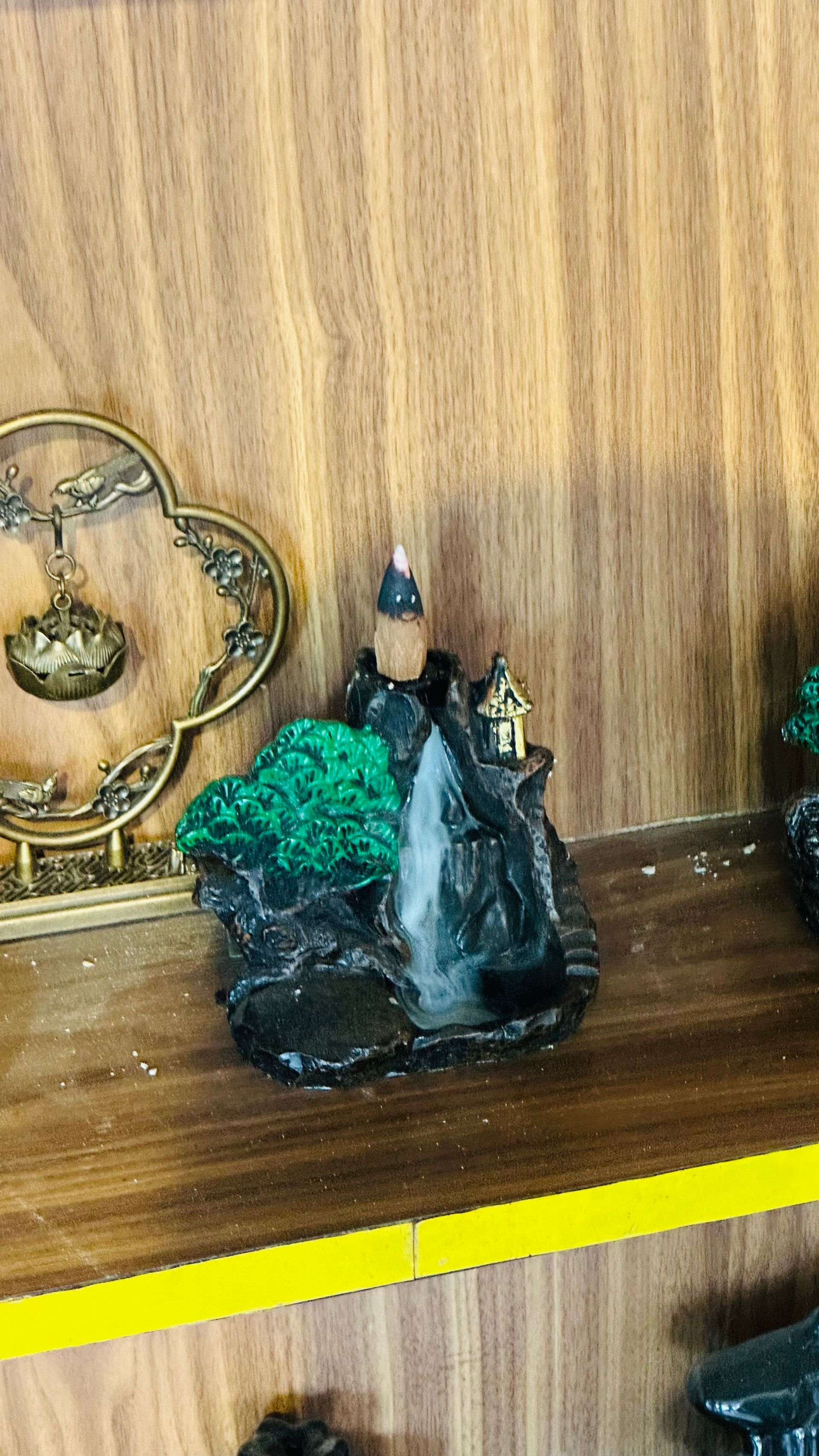
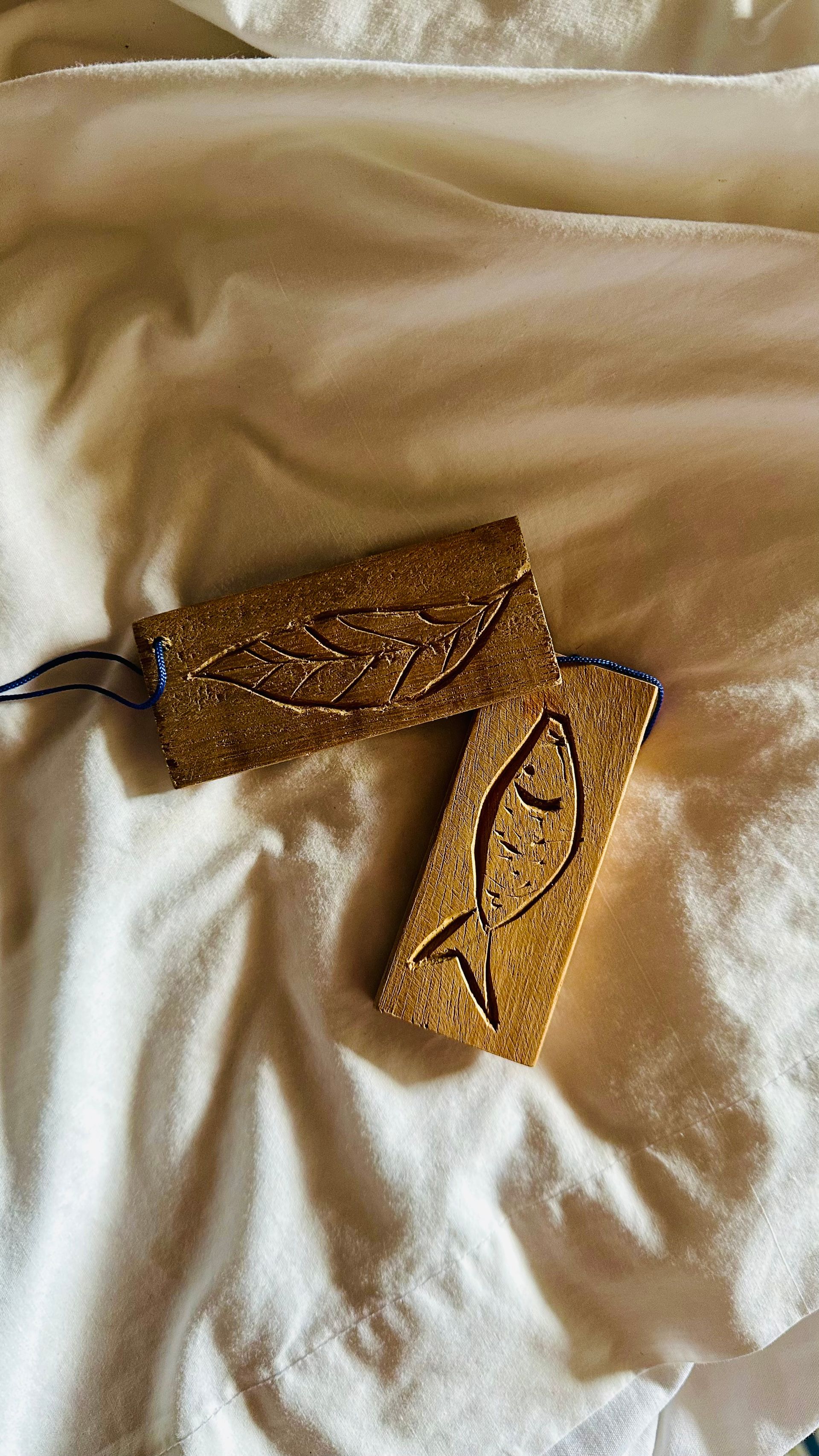
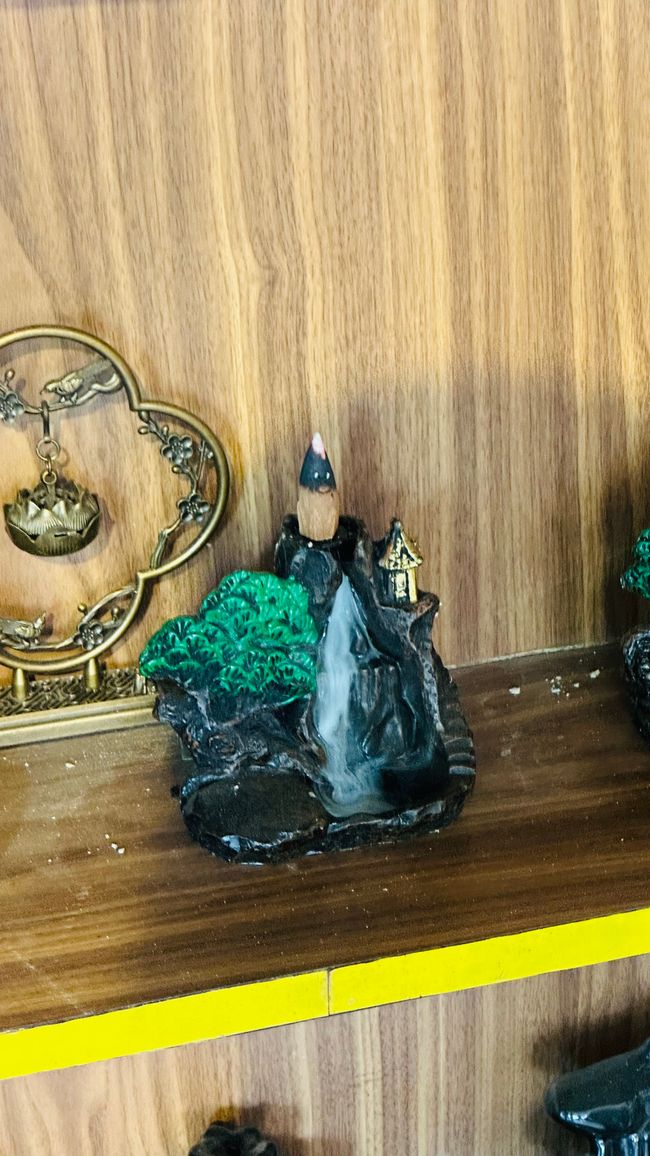
In addition, reverse-flow incense cones are also produced: The paste is pressed into wooden molds and dried. They are burned on special holders—essentially the Asian counterpart to the German Incense-Burning Figurines ("Räuchermännchen")—in the shape of Buddha statues, mountains, dragons, or lotus blossoms. Due to the unique cone shape, the smoke does not rise upward but sinks downward, flowing down the figure like a small waterfall.
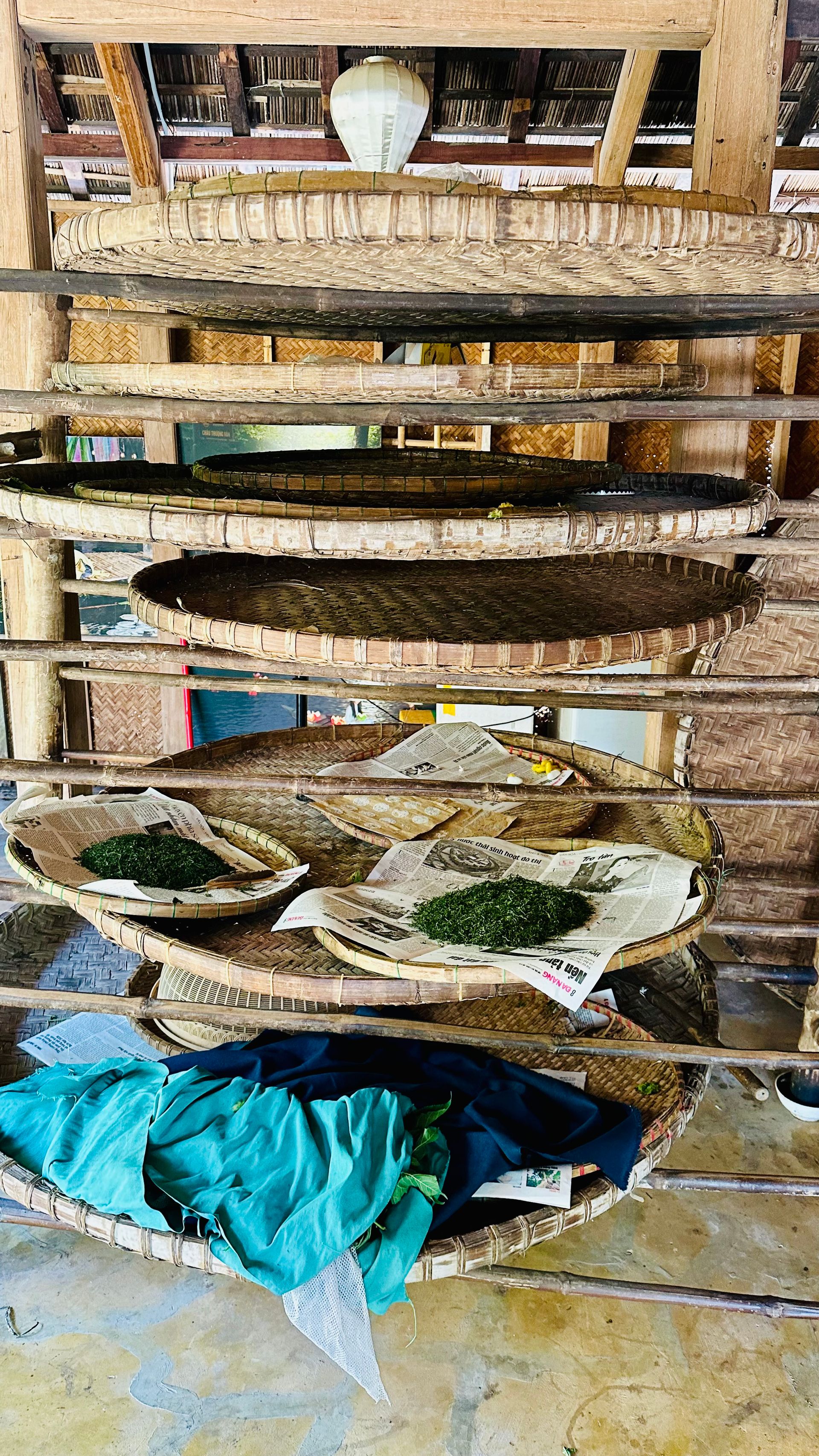
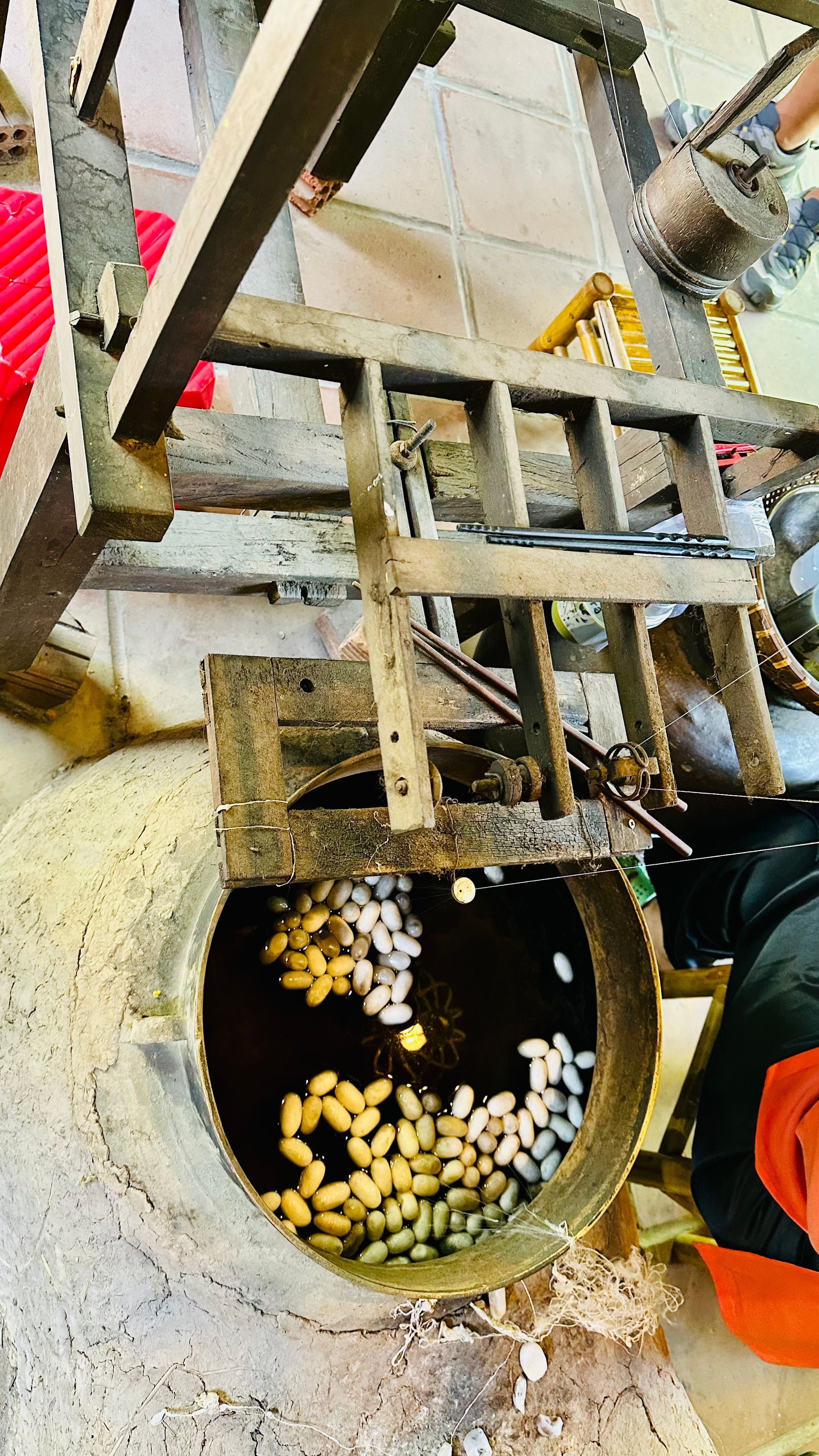
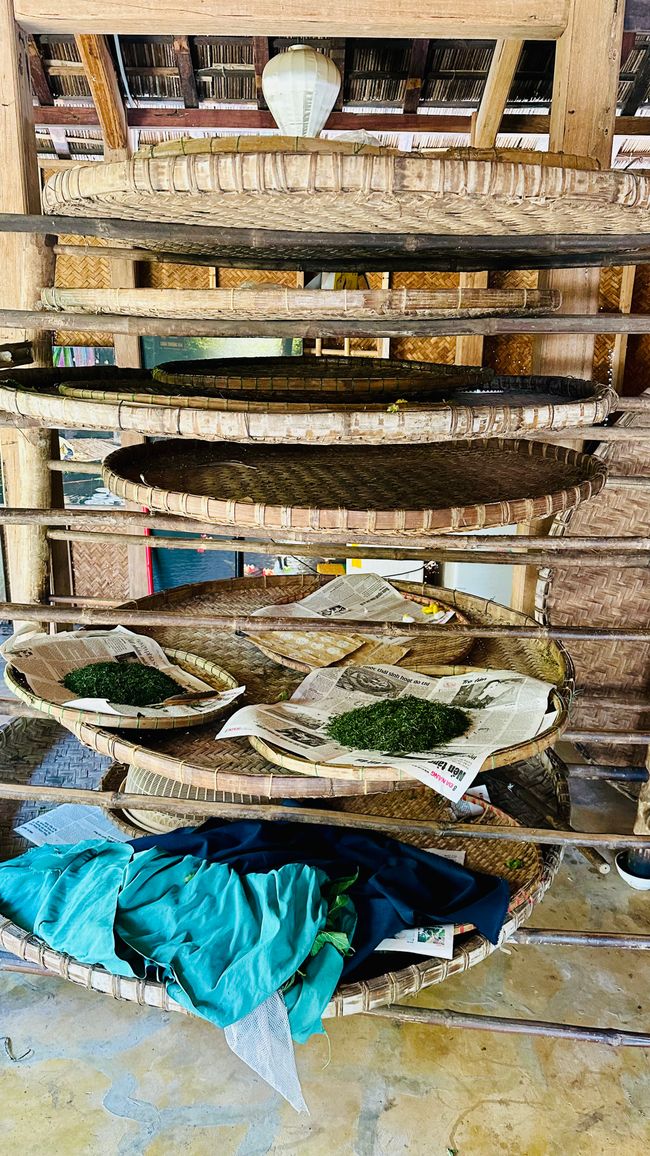
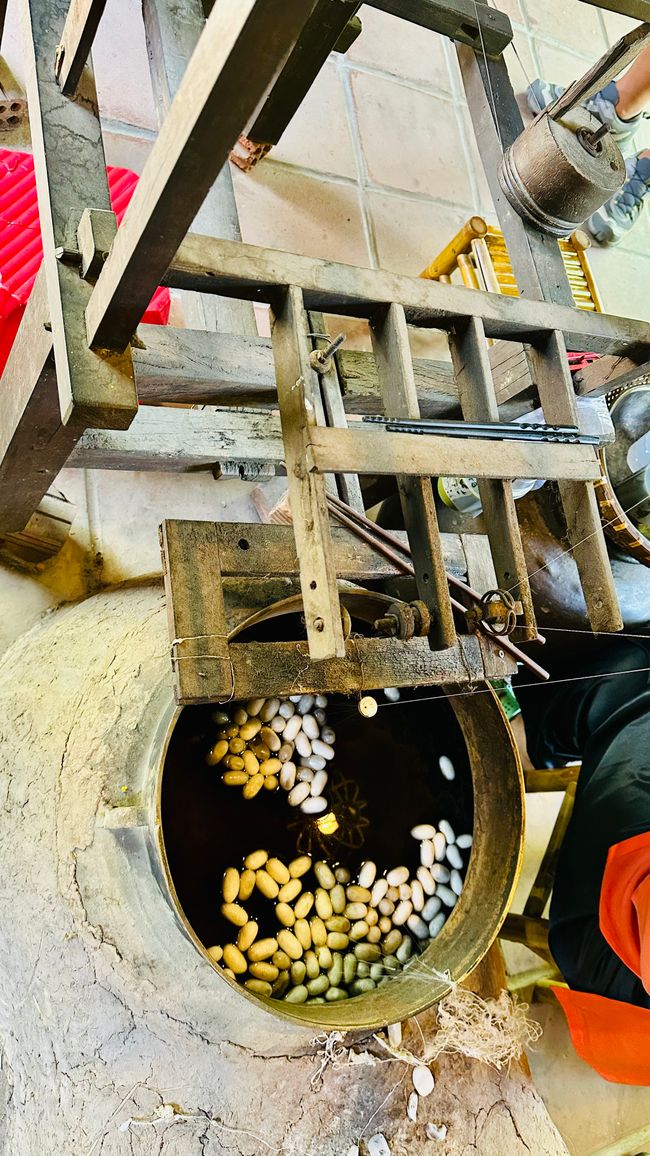
The Silk Village is located near the center of Hoi An and has become an open-air museum that showcases the traditional cultivation of mulberry trees, silkworm rearing, and silk production—including live silkworms. It’s located on the grounds of “Silk Village Hoi An – The Tourist Hotels,” and admission costs between 50,000 and 150,000 VND, depending on the guided tour you choose.
We didn’t find the entrance right away, as the grounds are so overgrown with lush vegetation, cafés, and bungalows that it’s easy to overlook the Heritage area. We stumbled upon the four or five bamboo huts more by accident and were able to see the silk-making process through the tools on display and even observe the live silkworms. Personally, I would have liked to see a bit more educational material—the huts seemed somewhat haphazardly squeezed into the grounds. The shop selling silk goods was, of course, placed in a much more prominent spot. Compared to the Carpentry or Pottery Village, the visit was less worthwhile. That said, this is just nitpicking, especially since we (unintentionally) managed to get around buying a ticket.
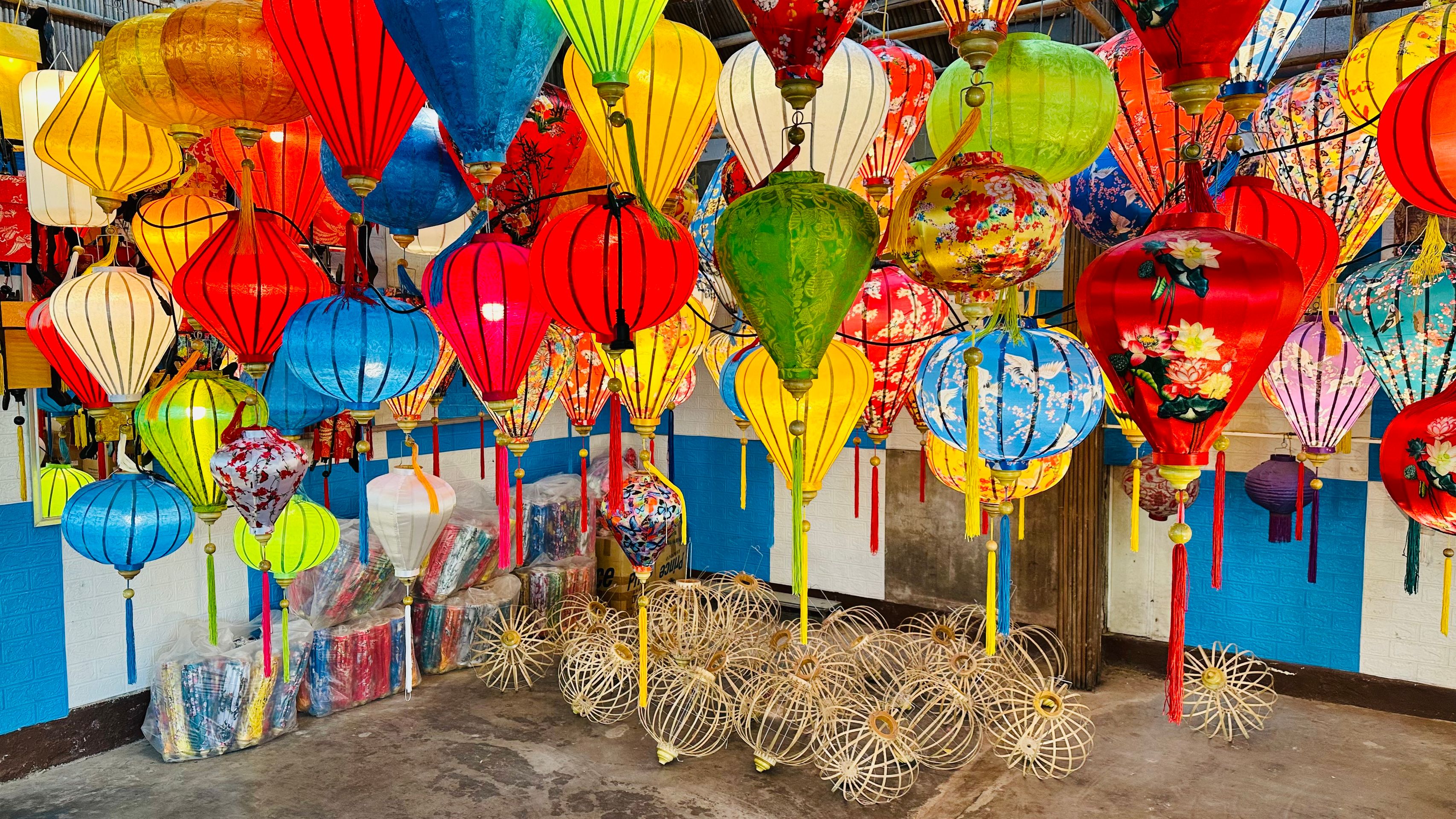
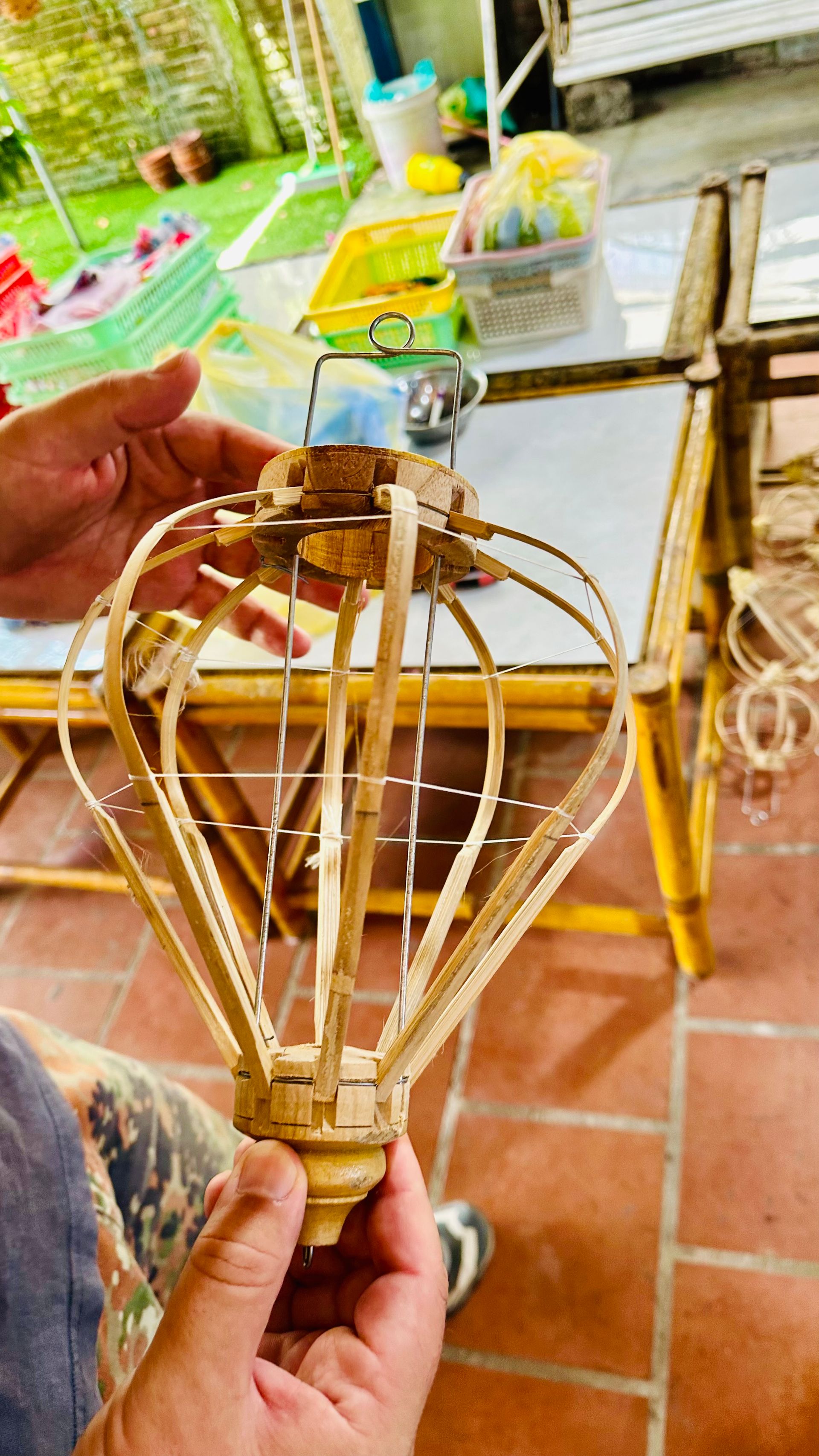
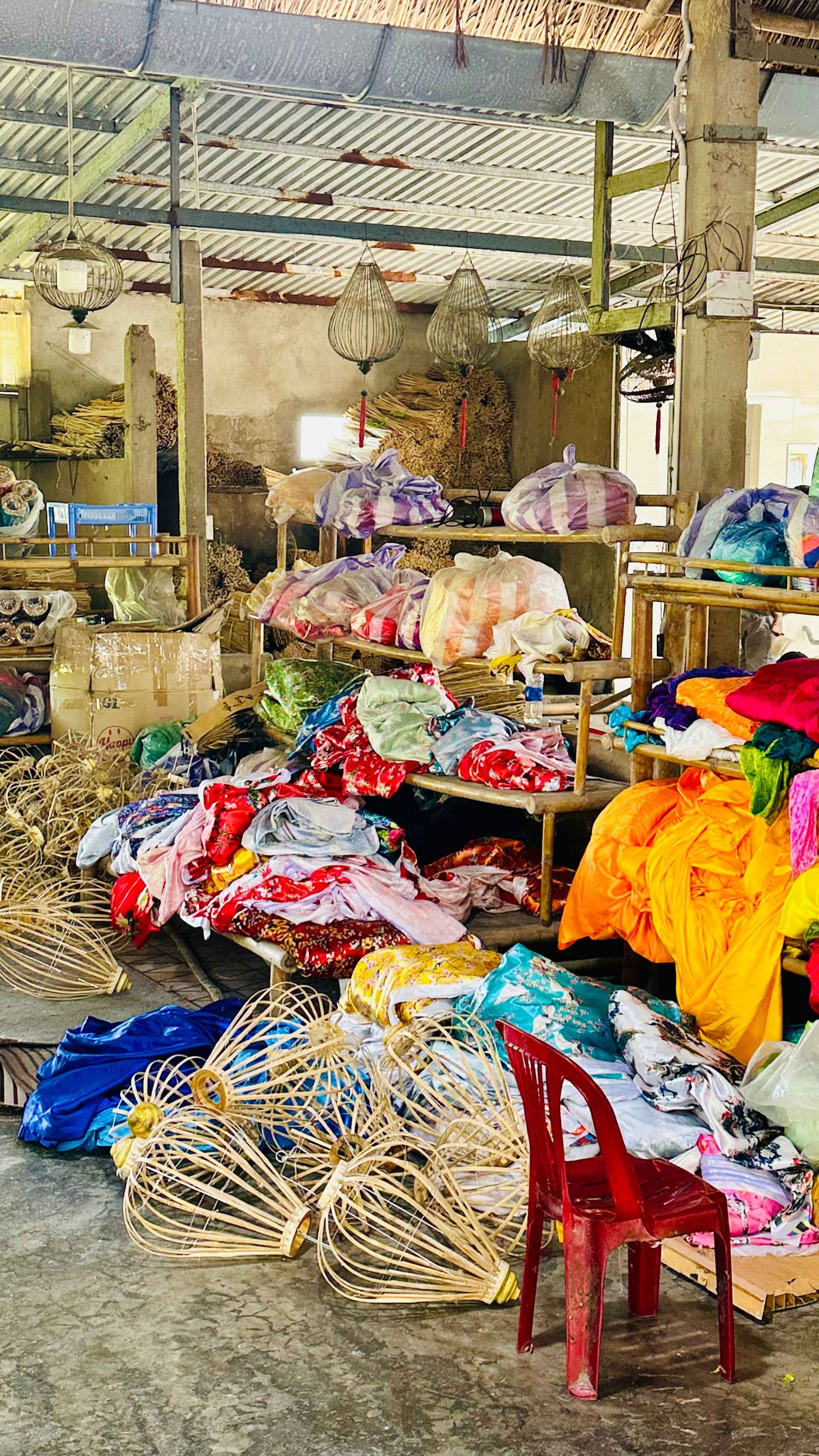
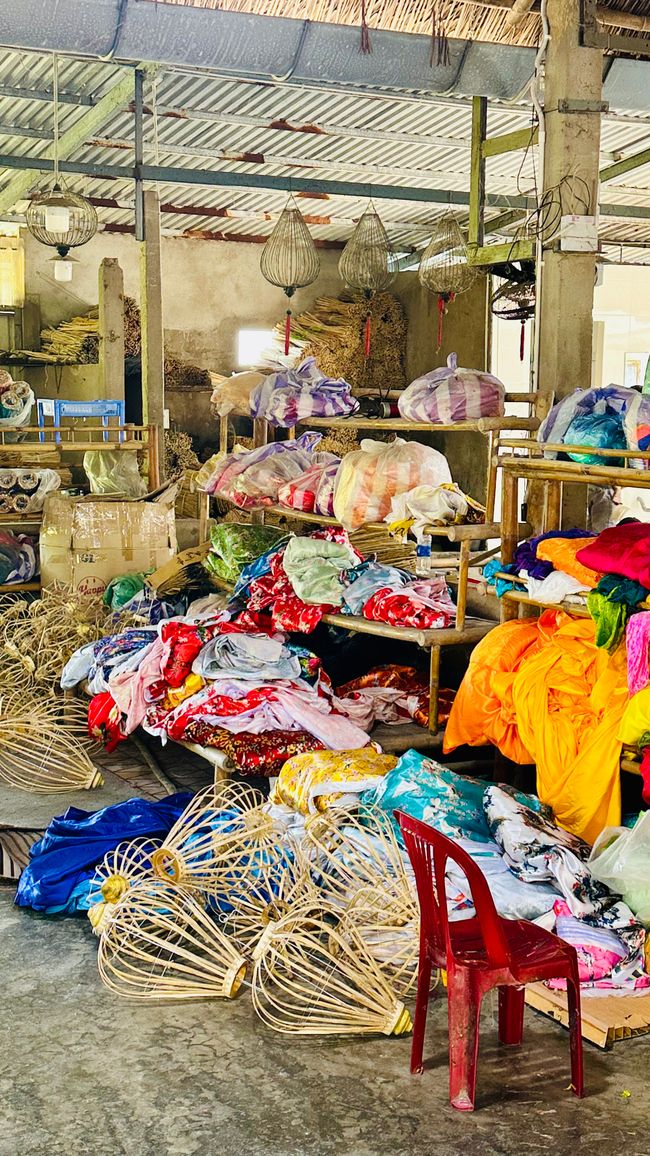
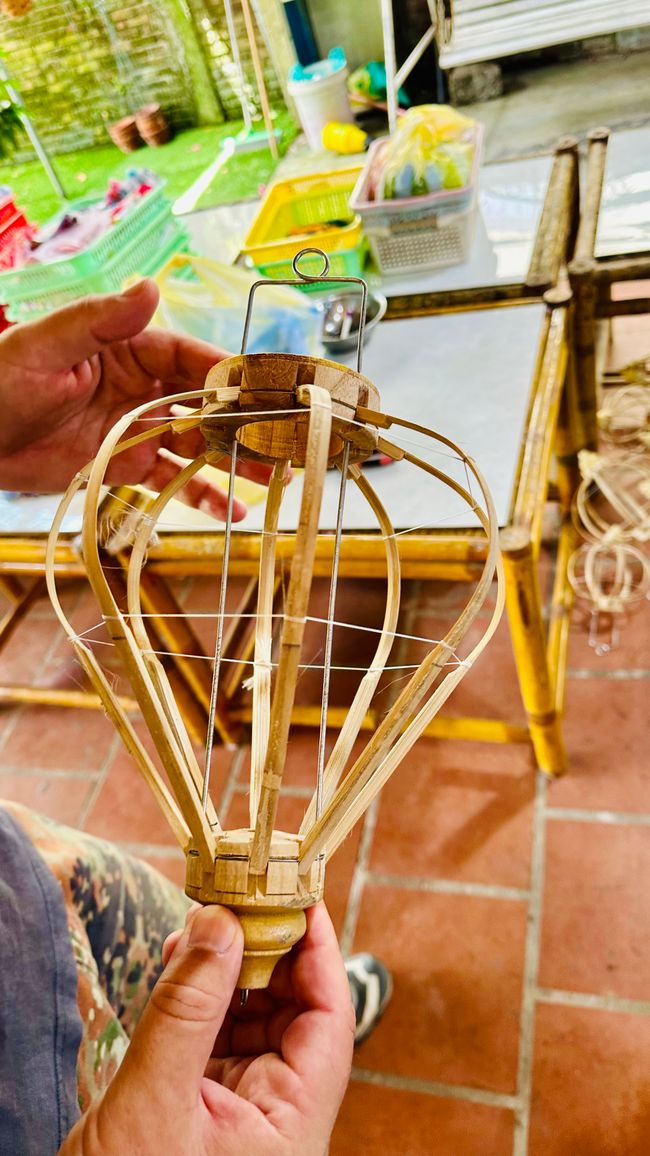
The Ha Linh Lantern-Making Village consists of just one workshop and is located near the rice fields between Tra Que and Hoi An. There, you can buy beautiful lanterns or make your own. Lanterns have been made in Hoi An since the 17th century. A small lantern covered with fabric costs 120,000 VND there, while a larger one costs 150,000 VND.
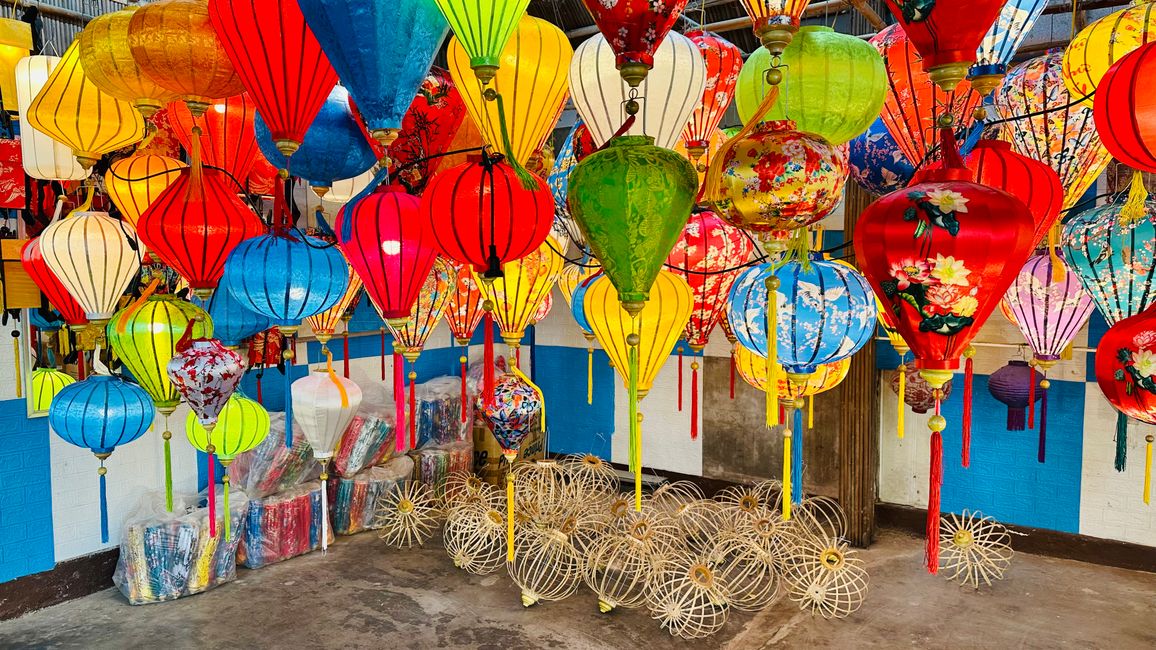
You can drop by on relatively short notice and get started—we were there on a Monday morning, and contrary to what some Google reviews might suggest, the staff were very friendly, showed us everything, and answered our questions. However, there are also many other shops in Hoi An that offer lantern-making workshops.
The Phuoc Kieu Bronze Casting Village is located southwest of Hoi An near Mai Son and was founded in the 17th century as one of the region’s largest bronze goods manufacturers. At that time, it supplied the imperial city and the trading port of Hoi An. Today, the village primarily produces religious objects: urns, gongs, candlesticks, and similar items. Although admission is free, it now appears to be a very small and sporadically staffed arts-and-crafts village with few active sales stalls, and there’s nothing to see regarding the manufacturing process. We therefore did not visit the site ourselves.
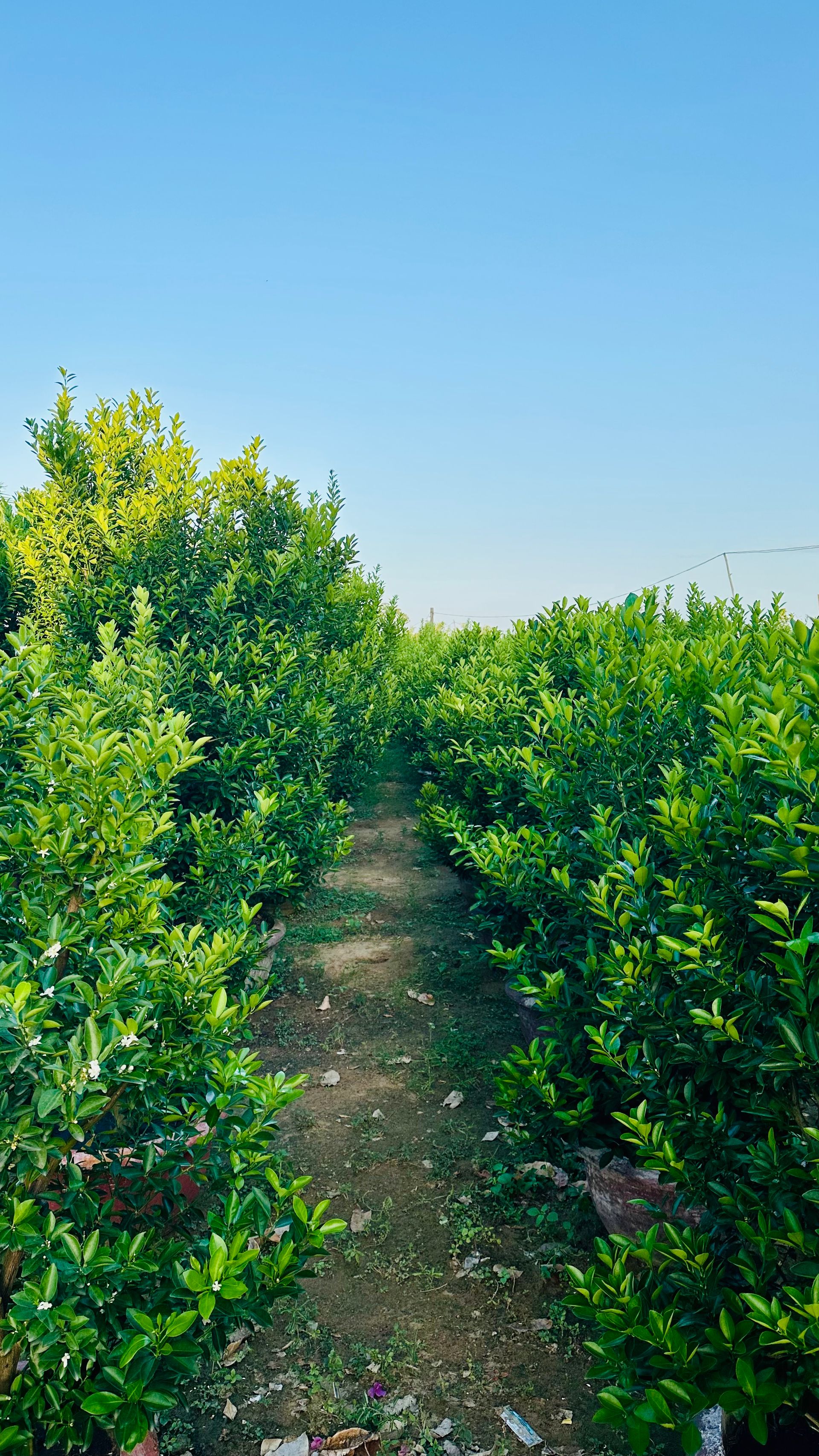
Cam Ha Kumquat Village is located northwest of Hoi An, where kumquat trees are cultivated on 65 hectares. However, these are not the fruits we’re familiar with—the small, oblong-round orange kumquats—but rather calamansi trees; the Vietnamese use the same term for both. We’d already encountered calamansi in the Philippines: On the outside, it looks like a slightly smaller lime, ranging from green to orange depending on the variety, with orange flesh and many seeds. Its flavor lies somewhere between lime and mandarin, and it’s mostly used to season dishes or as juice.
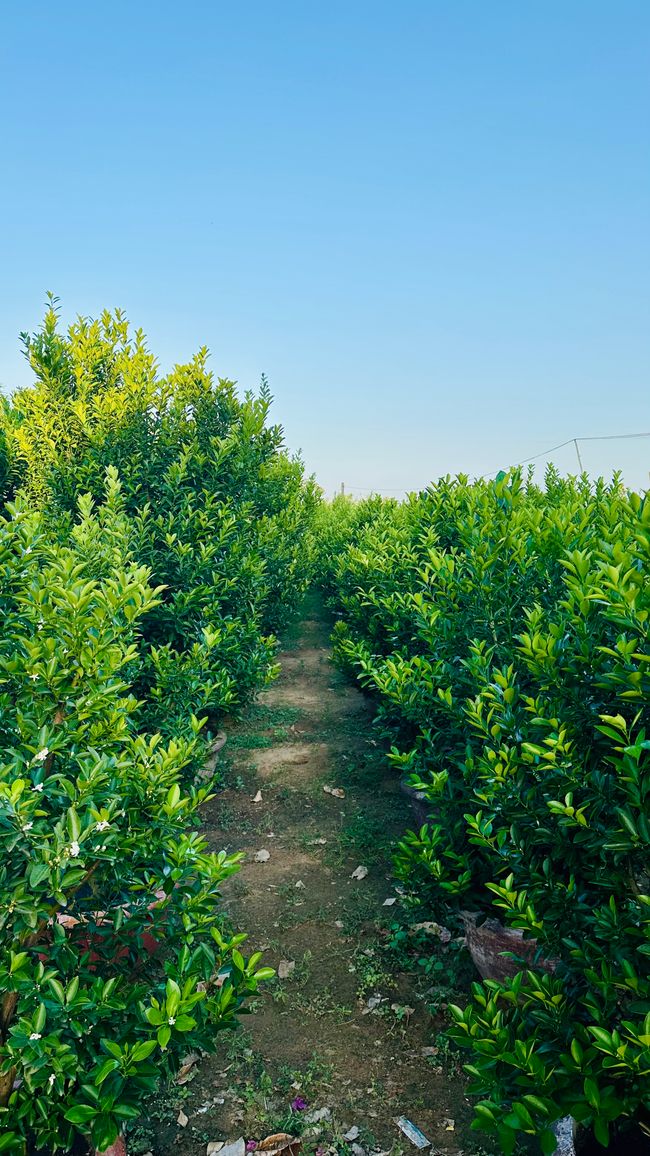
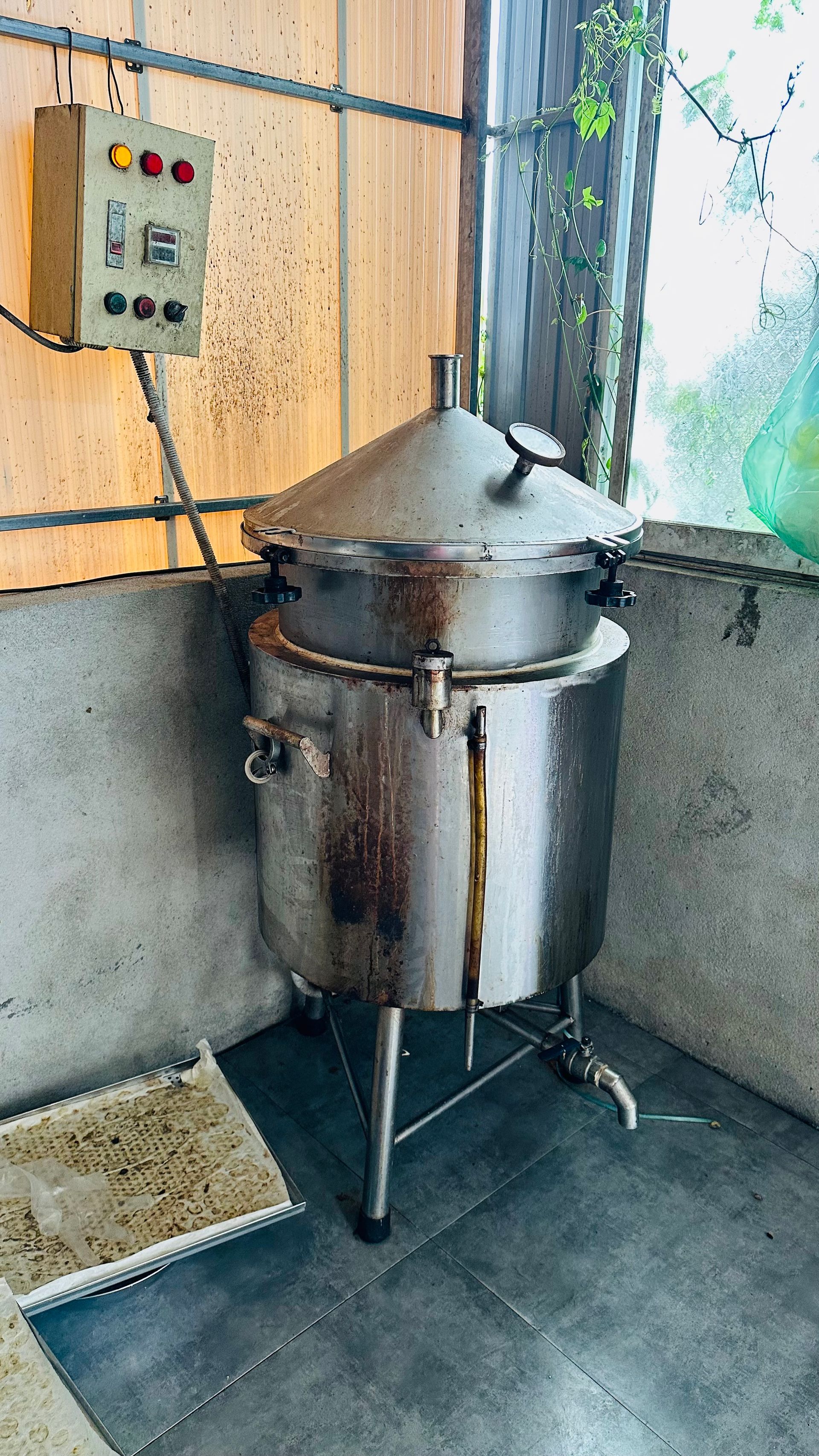
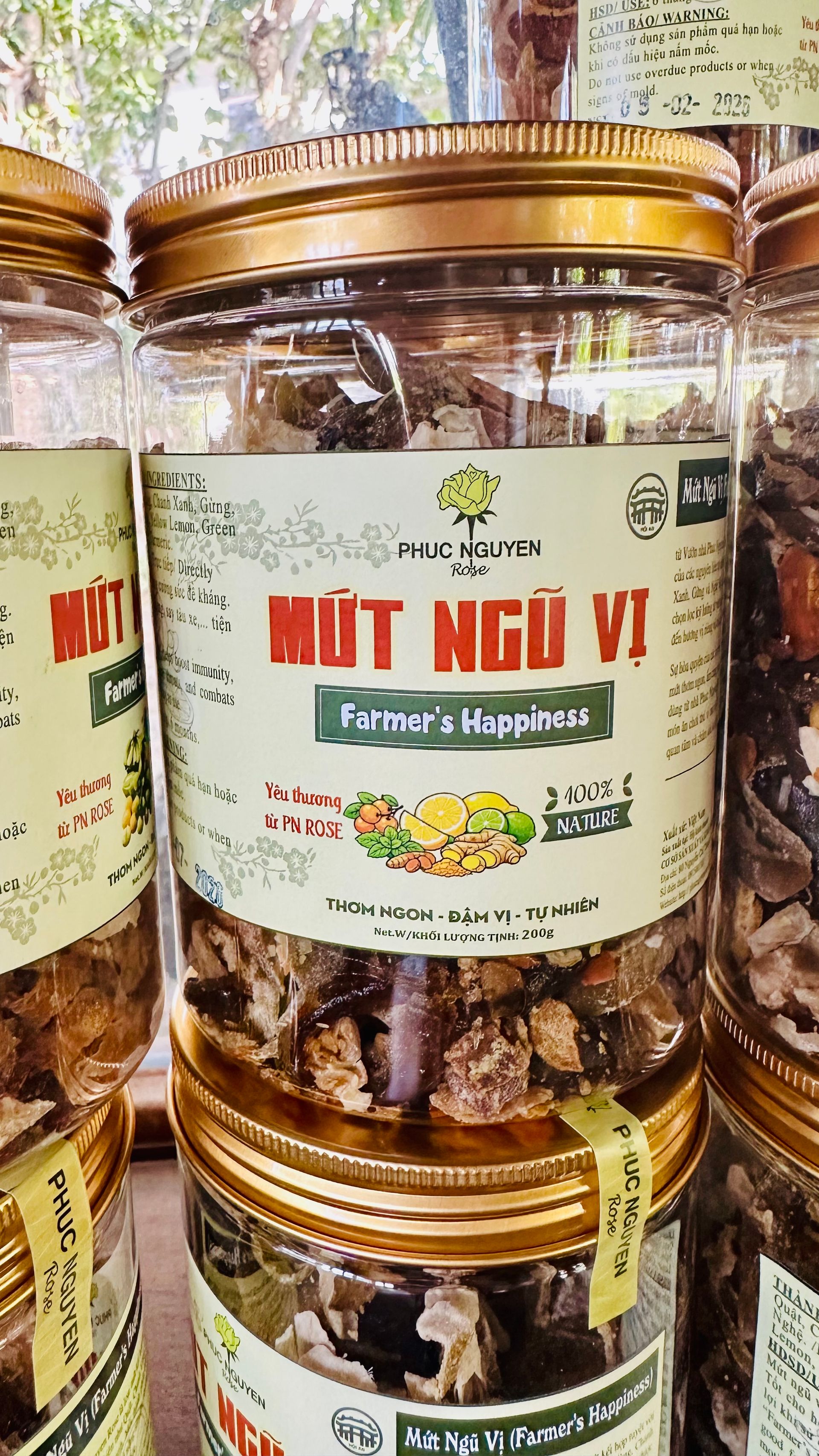
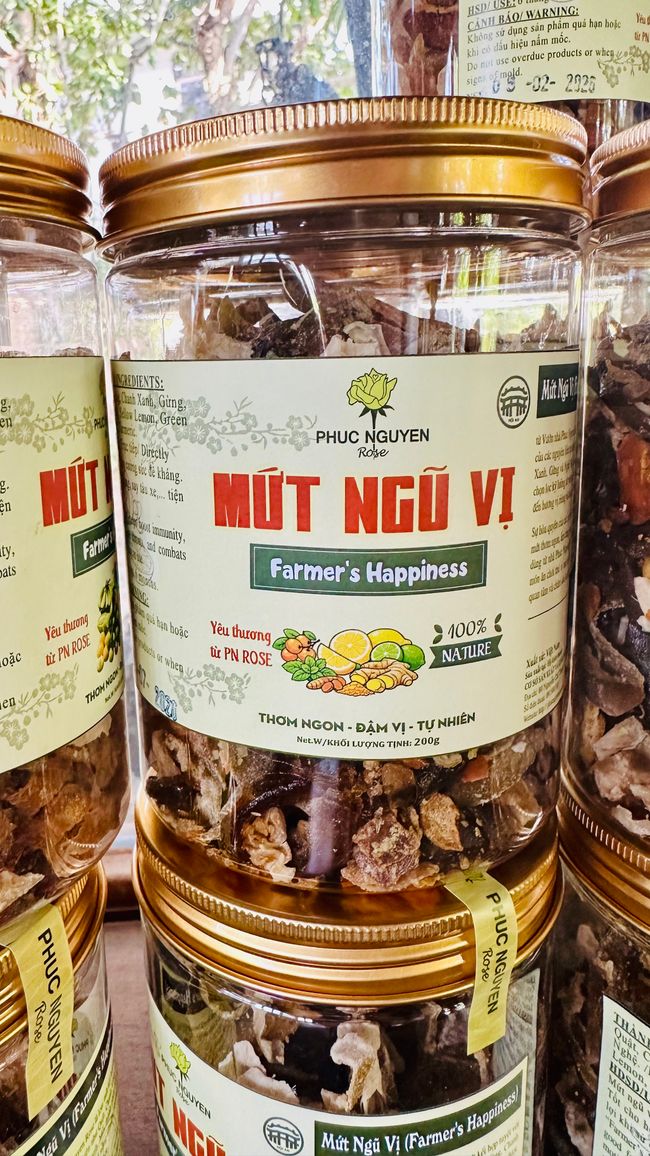
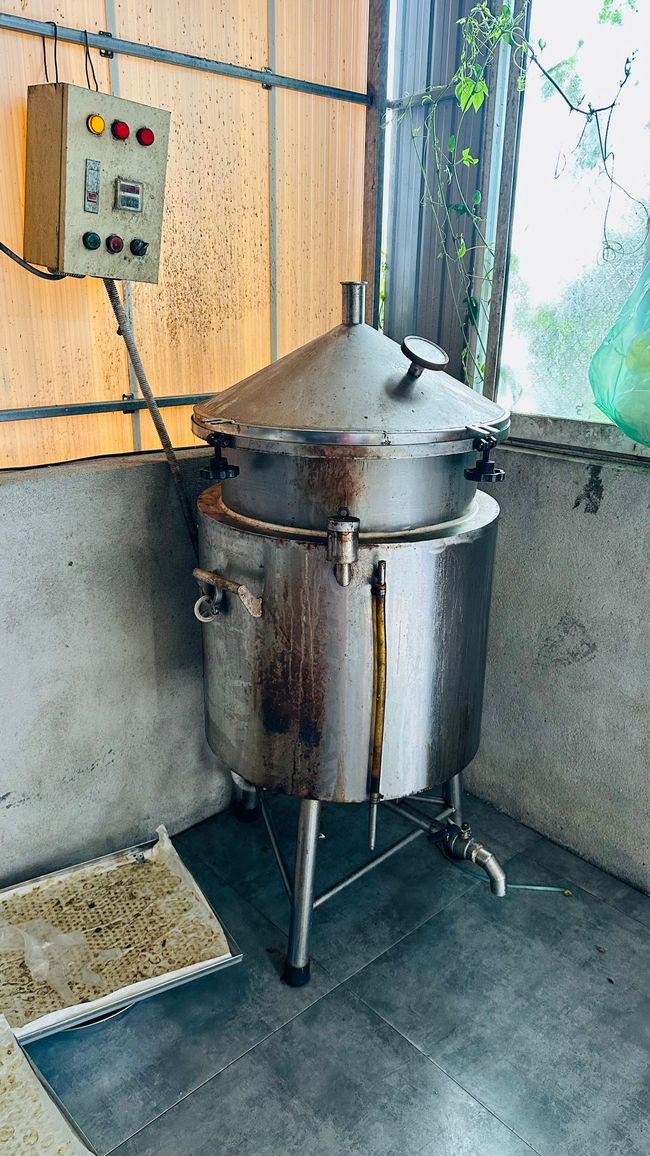
As far as we could tell, there isn’t an actual village, but rather various growing areas and garden centers. The best place to learn about the fruit is at the “Phuc Nguyen Rose Garden Café”: The family makes many products themselves, such as dried kumquat pieces, teas, and jams, and you can watch the production process on-site or shop in the small store. At the café, you can try kumquat juice or coffee and stroll through the adjoining garden.
In the surrounding area, it’s also possible to participate in a workshop on making rice paper—though this seems to be available only through an organized tour, such as one booked via GetYourGuide. Rice paper is as ubiquitous here in Vietnam as bread is back home: Virtually everything that isn’t soup is wrapped in it—for me, I’d previously known it mainly in connection with summer rolls.